17 Old Money Outfits for Women with a Timeless Aesthetic
How to use this guide
Treat trend ideas as styling prompts rather than rules. Start with pieces already in your wardrobe and adjust fabrics, layers, and proportions for your climate, comfort, occasion, and personal style.
The old money look has almost nothing to do with money. It is a discipline of restraint: fabrics that behave, tailoring that fits without pulling, and a palette that stays cool, muted, and unbothered. When I first started studying this aesthetic, I expected it to be about expensive pieces. It turned out to be about editing — removing everything that shouts so the quality can be heard.
Here is how to read quality with your hands and eyes. Good fabric has weight and recovery: pinch it and it springs back instead of creasing. Look for tight, even weaves, matte surfaces (shine usually means polyester pretending to be silk), and seams that lie flat. On fit, check three points: the shoulder seam ends at your shoulder bone, sleeves show a quarter inch of shirt cuff under a blazer, and trousers skim with one clean break — never puddling, never cropped into a question.
Color does the quiet work. The palette runs warm-neutral and cool-muted: navy, charcoal, camel, cream, forest green, deep burgundy, whites that lean ivory rather than optic. Silhouettes stay simple — straight lines, a defined but never cinched waist, hems at the knee or below. Keep these principles in mind; the seventeen outfits below are variations on this one philosophy.
Navy Blazer, White Oxford, and a Pleated Midi
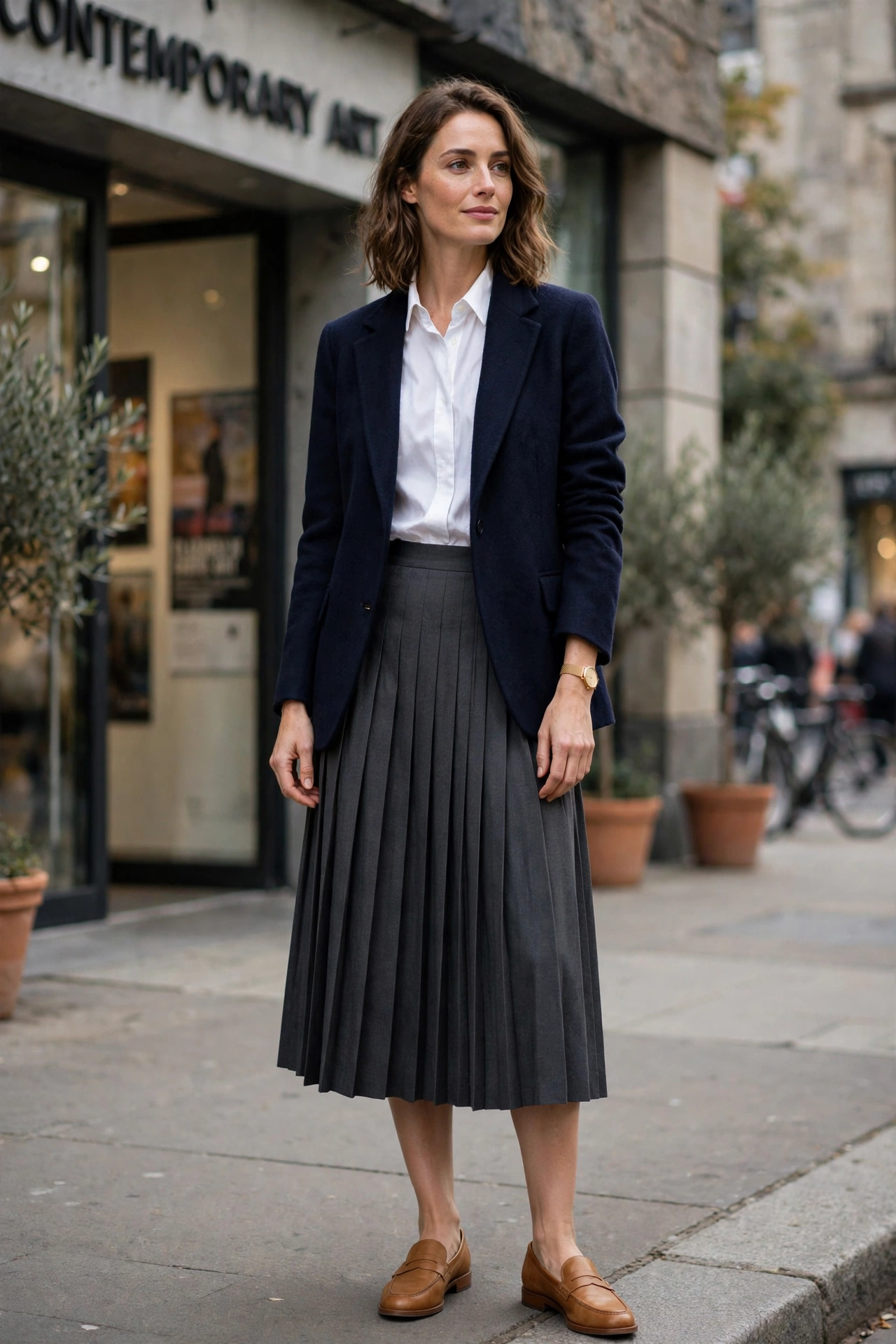
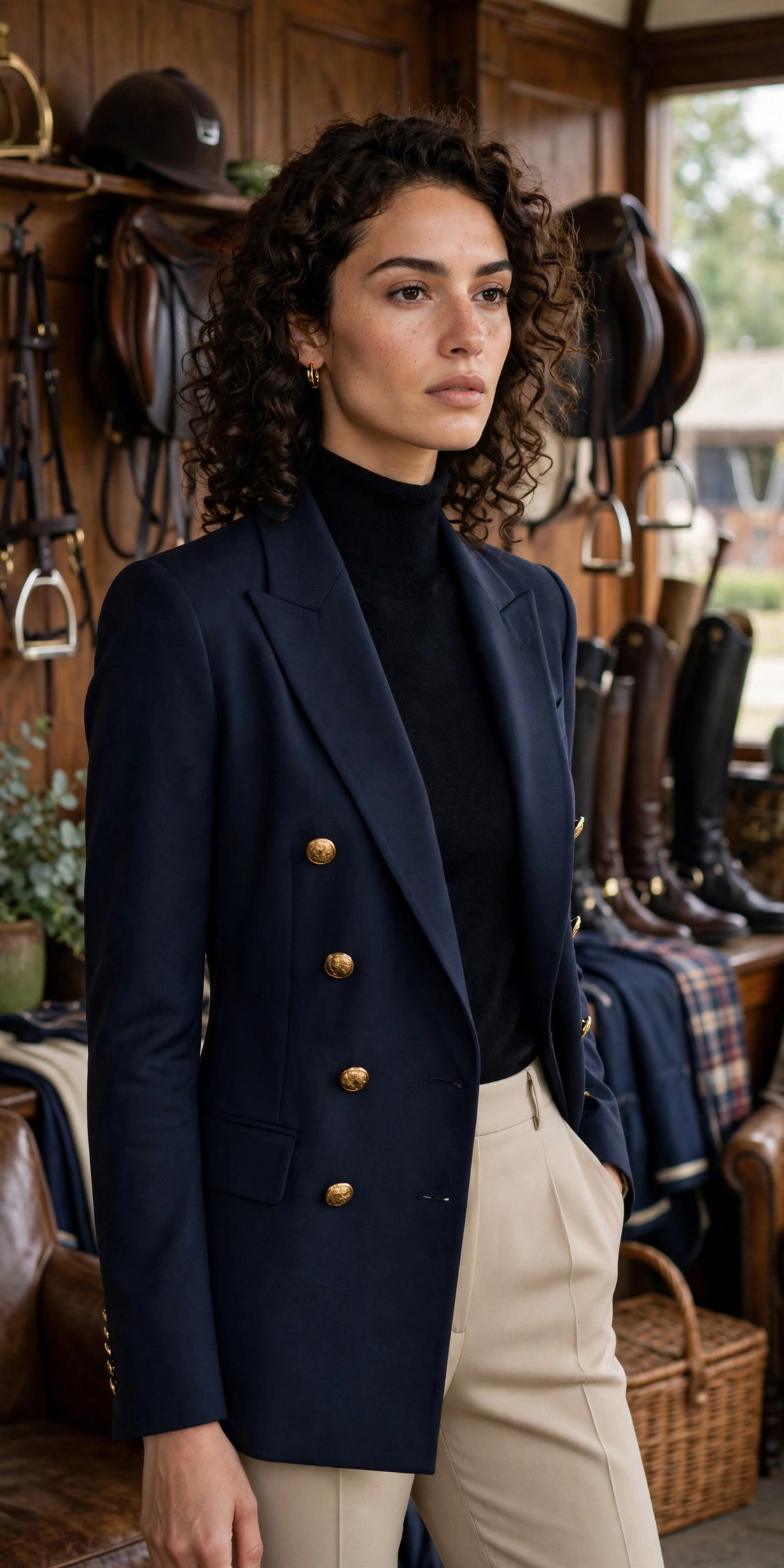
A single-breasted navy blazer in mid-weight wool twill — look for 8 to 9 ounces with natural, unpadded shoulders and a half-canvassed front so it drapes rather than boxes — over a crisp white cotton oxford with the top button undone, and a charcoal knife-pleated midi skirt in a fluid polyester-free crepe. The blazer's structure contrasts with the skirt's fluidity, the white shirt keeps the dark tones from looking funereal, and the midi length keeps everything legible and adult. Tuck the shirt fully and let the blazer's hem meet the skirt's waistband cleanly. For shoes, tan leather loafers keep it daytime; swap to black pointed pumps and the same outfit walks into dinner. This is the uniform for offices, gallery openings, and any room where you want to look considered without looking like you tried. A slim gold watch is the only jewelry it needs.
Cream Cashmere Sweater and Charcoal Trousers
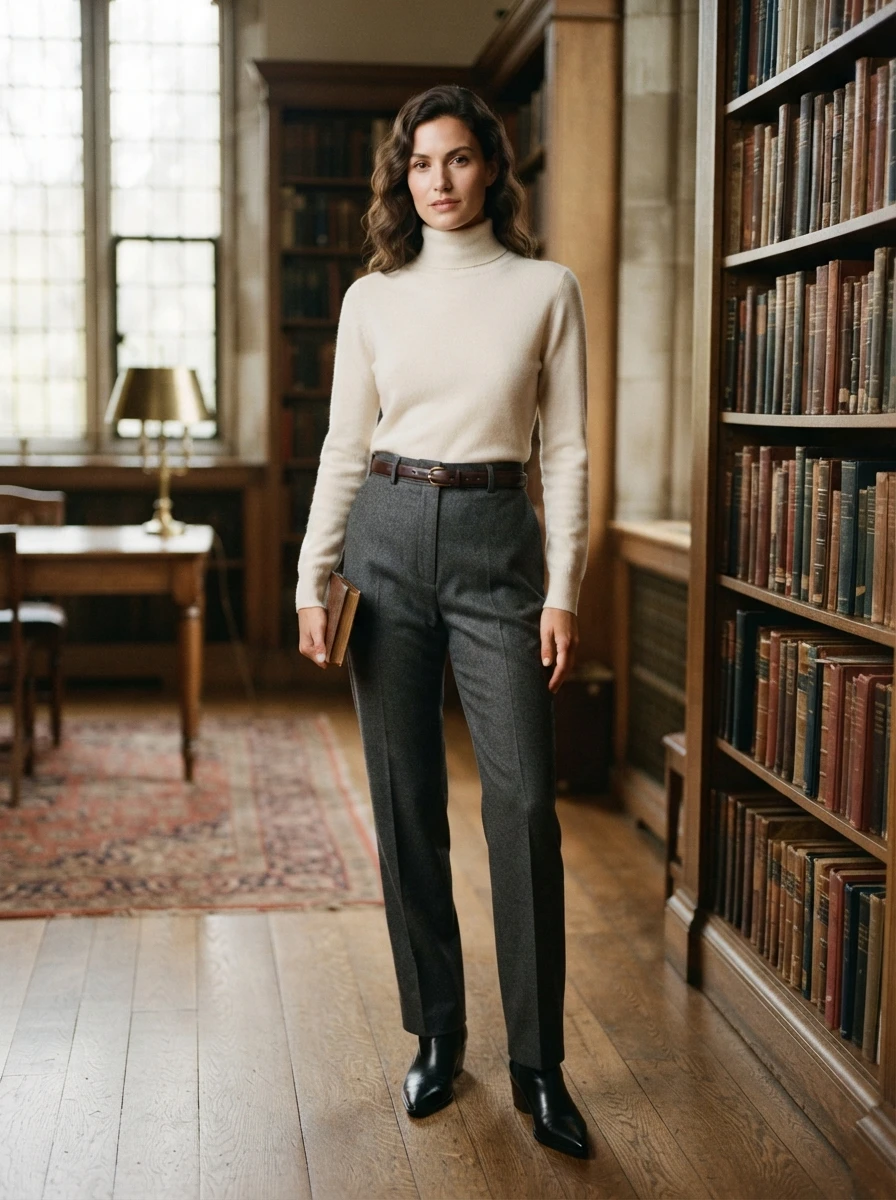
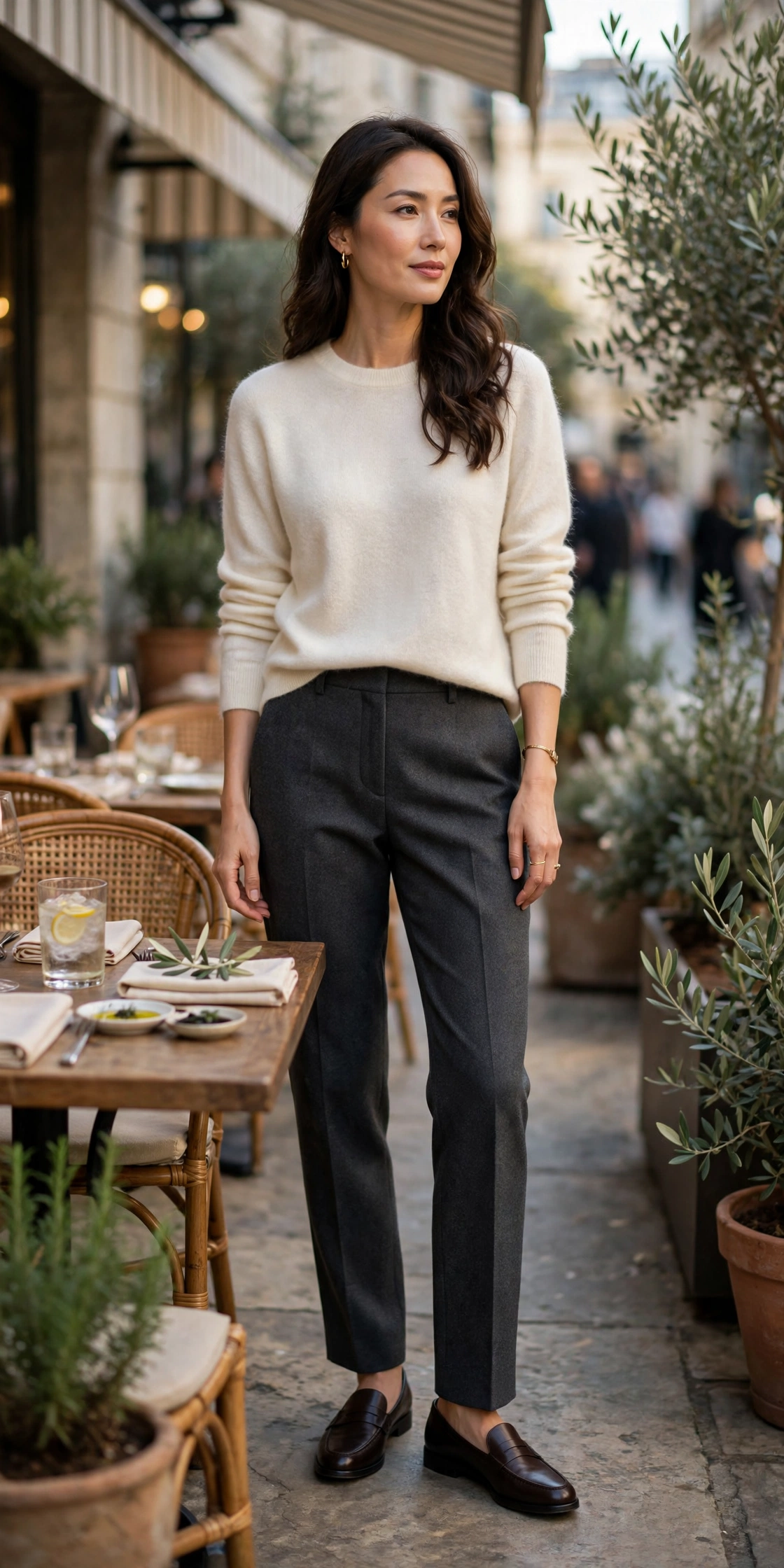
A cream crewneck sweater in a medium-weight knit — not so fine it clings, not so chunky it reads rustic — with charcoal flat-front trousers in wool gabardine that drapes straight from the hip. Look for two-ply cashmere or a cashmere-merino blend around 12 gauge; single-ply pills within weeks and thin knits show every line underneath. Cream warms the face while charcoal anchors the lower half, and the texture contrast between soft knit and smooth tailoring is what makes it look expensive rather than plain. Roll the sleeves once; it reads intentional rather than borrowed. Finish with dark brown loafers or simple black ballet flats and small gold hoops. This outfit works hardest on days with no dress code and high stakes — client lunches, parent-teacher meetings, travel days where you need to look polished at both ends.
Camel Wrap Coat Over a Silk Blouse
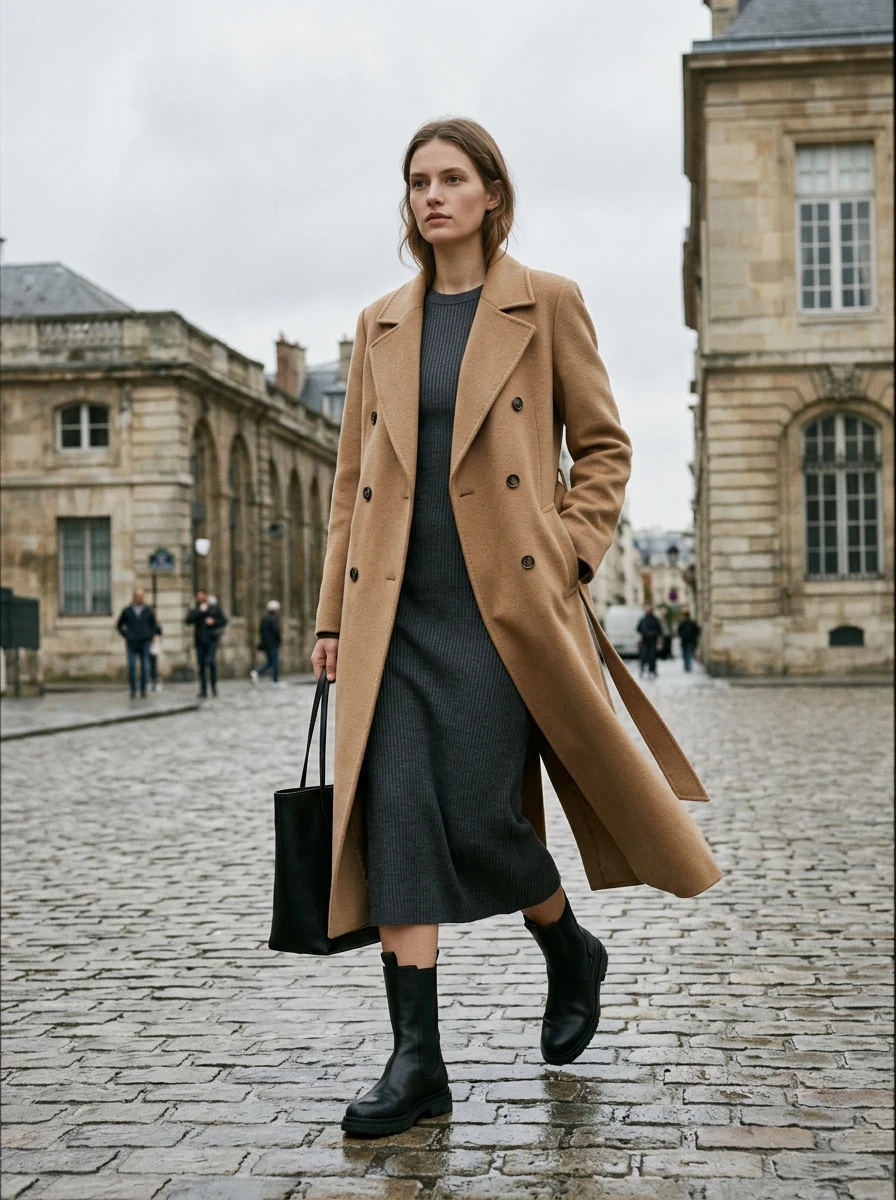
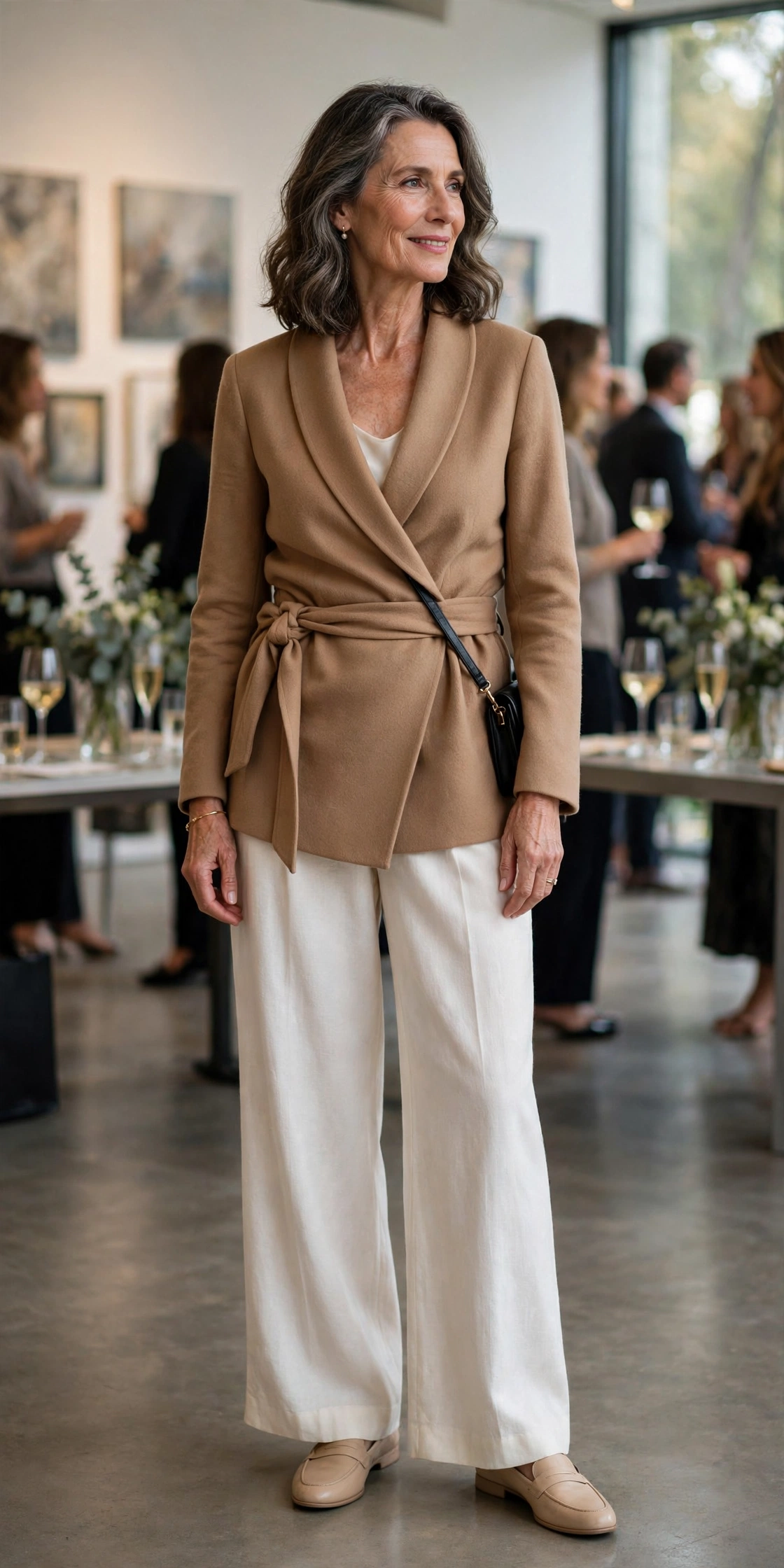
A camel double-faced wool wrap coat worn open over an ivory silk blouse with a relaxed collar, plus straight-leg dark denim with no distressing. Double-faced wool — two layers of fabric fused without lining — is the quality signal here; it moves like liquid and never needs the stiffness of cheap bonded coats. The wrap coat's belted waist creates a long, unbroken diagonal line that flatters nearly every figure, while the silk catches light softly against the matte coat — sheen as an accent, never the main event. Dark, clean denim keeps it grounded for daytime. Add tan ankle boots and a structured leather tote. This is the fall-to-winter transitional outfit: warm enough for a crisp afternoon, refined enough for an evening reservation, and the coat alone elevates everything it touches.
White Linen Shirt and Navy Chinos
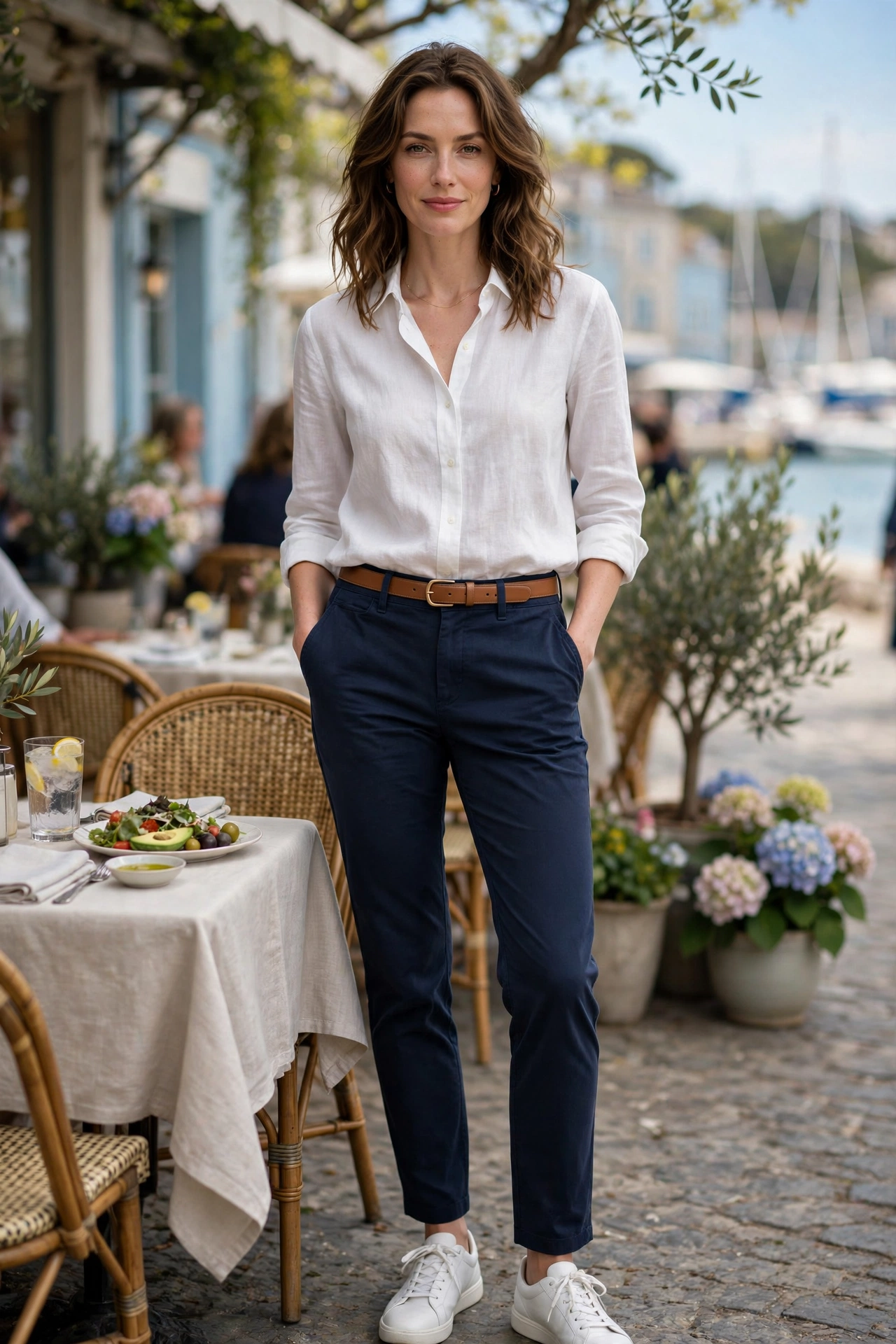
A white linen shirt with sleeves pushed to the elbow, tucked into navy chinos in cotton twill with a mid rise and straight leg. Choose a linen with some body — 5 to 6 ounces — so it wrinkles gracefully instead of collapsing; paper-thin linen reads cheap within an hour. Linen's natural slubs signal real fiber the way nothing printed ever will, and the matte navy keeps the crumple from reading sloppy. Tuck the shirttail all the way around and add a slim tan leather belt so the waist is defined. Effortless, but the clean belt line is doing the work. White leather sneakers or tan espadrilles finish it for warm weather; this is the outfit for spring lunches, coastal weekends, and any daytime event where overdressing would be worse than underdressing.
Black Turtleneck, Tweed Blazer, Dark Jeans
A fitted black merino turtleneck under an unstructured tweed blazer in a brown-and-navy check, with straight dark-rinse jeans. Go for an 18-gauge merino — fine enough to layer without bulk, substantial enough not to go sheer. Tweed is the texture engine here — its nubby weave catches light in a way flat fabrics can't — and the slim black base lets the blazer carry all the visual interest without competition. Keep the jeans dark and plain so the eye travels from the turtleneck's clean neckline up, not down. Black Chelsea boots or dark brown brogues complete it. This is the smart-casual armor for fall: dinners, theater evenings, weekends in the city. The tweed does the talking, so keep jewelry minimal — a simple watch, no necklace competing with the turtleneck's line.
Striped Breton Top and Cream Wide-Leg Trousers
A navy-and-white Breton stripe in a substantial cotton knit — at least a mid-weight jersey so the stripes don't distort across the bust — with cream wide-leg trousers in a fluid crepe that skims over loafers. The horizontal stripe widens the torso's visual field, which is exactly why the wide trousers balance it — volume below meets pattern above in a stable triangle. Use a full front tuck to define the waist so the width reads deliberate. Tonal ivory on cream is what makes stripes feel refined instead of nautical costume. Tan leather loafers and a woven leather belt keep it grounded; add a navy blazer over the shoulders for evening. This works for weekend brunches, travel, and creative workplaces — relaxed but unmistakably put together.
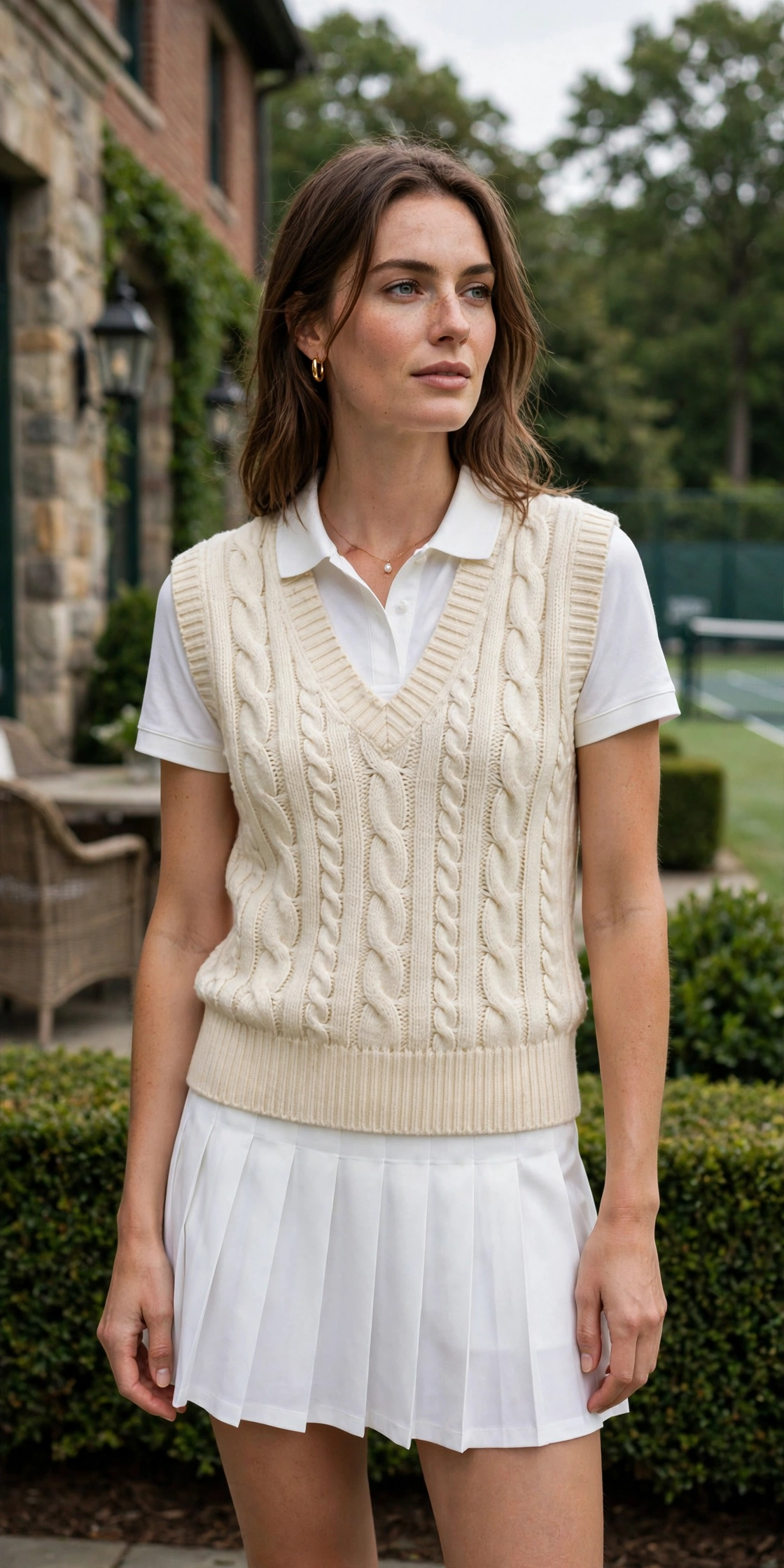
Ivory Cable-Knit Sweater and Pleated Tan Skirt
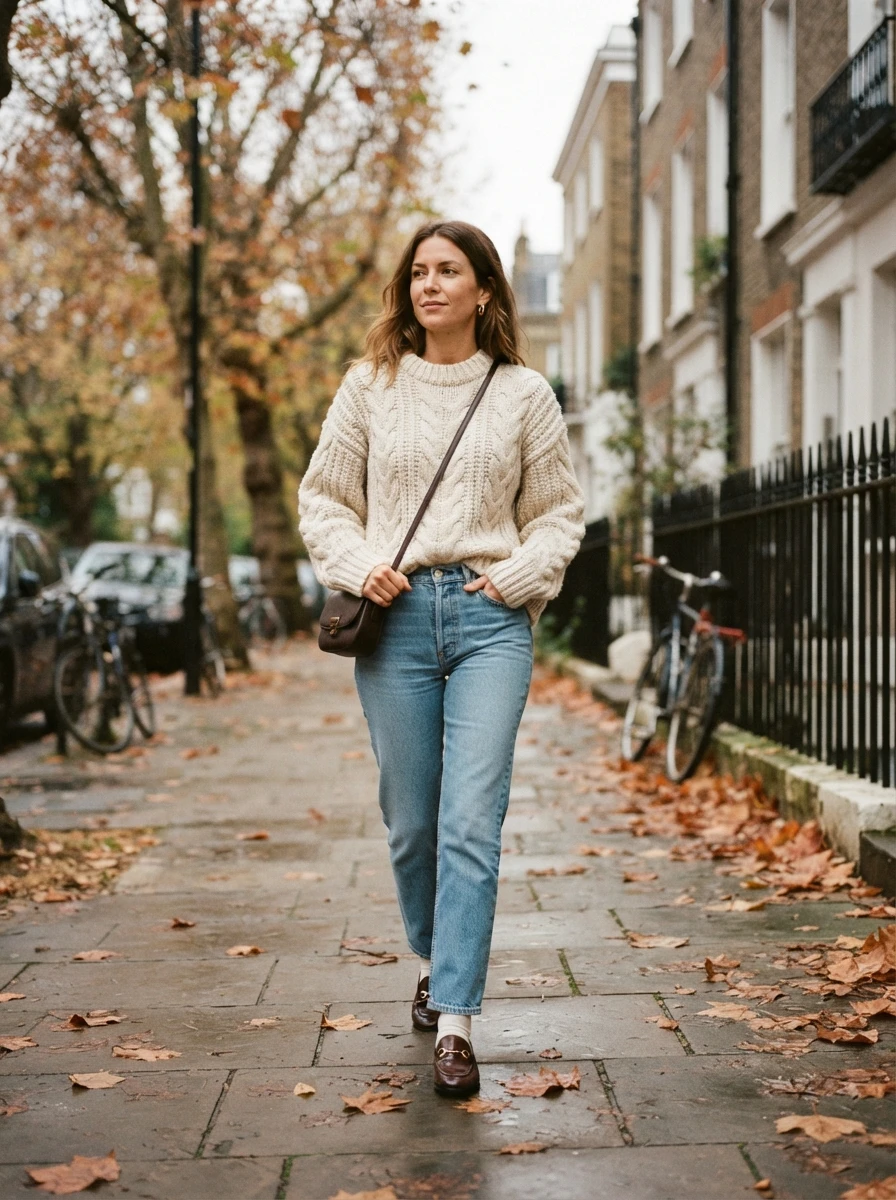
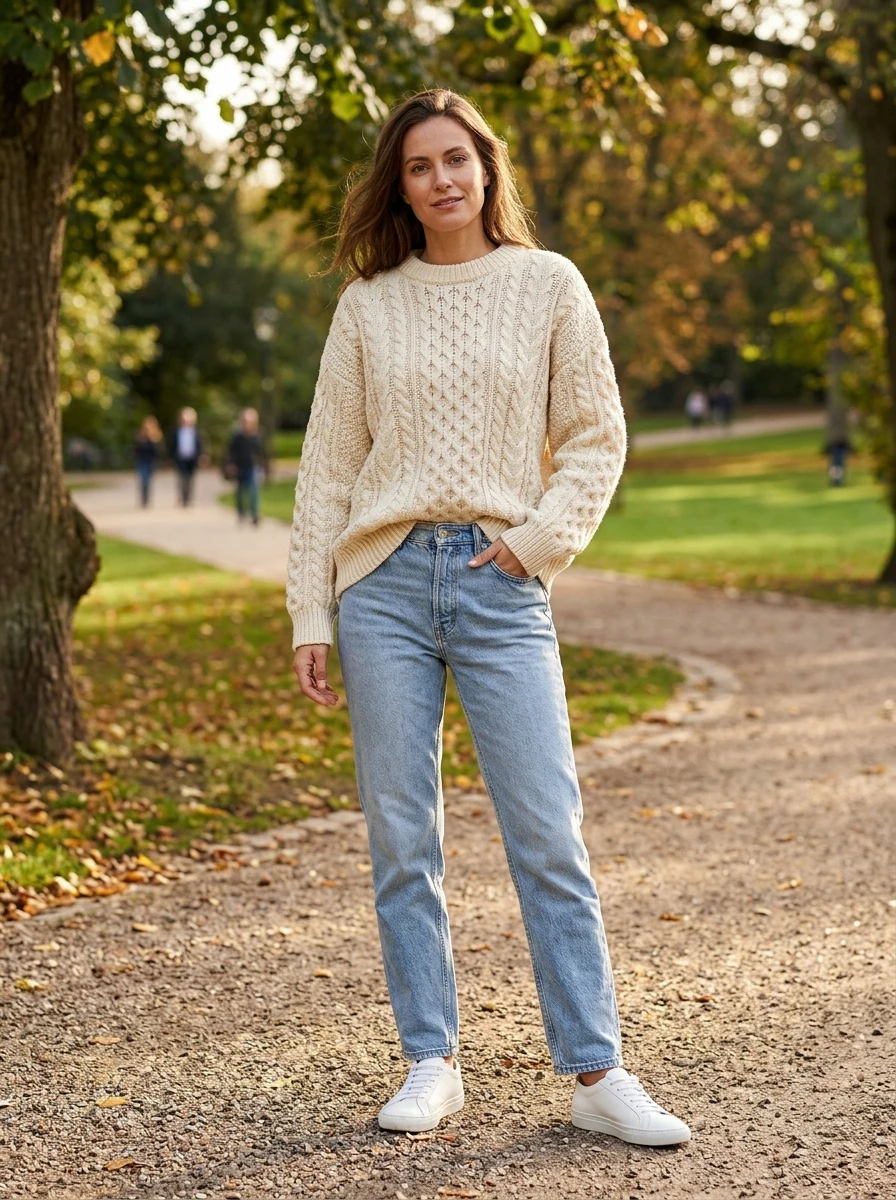
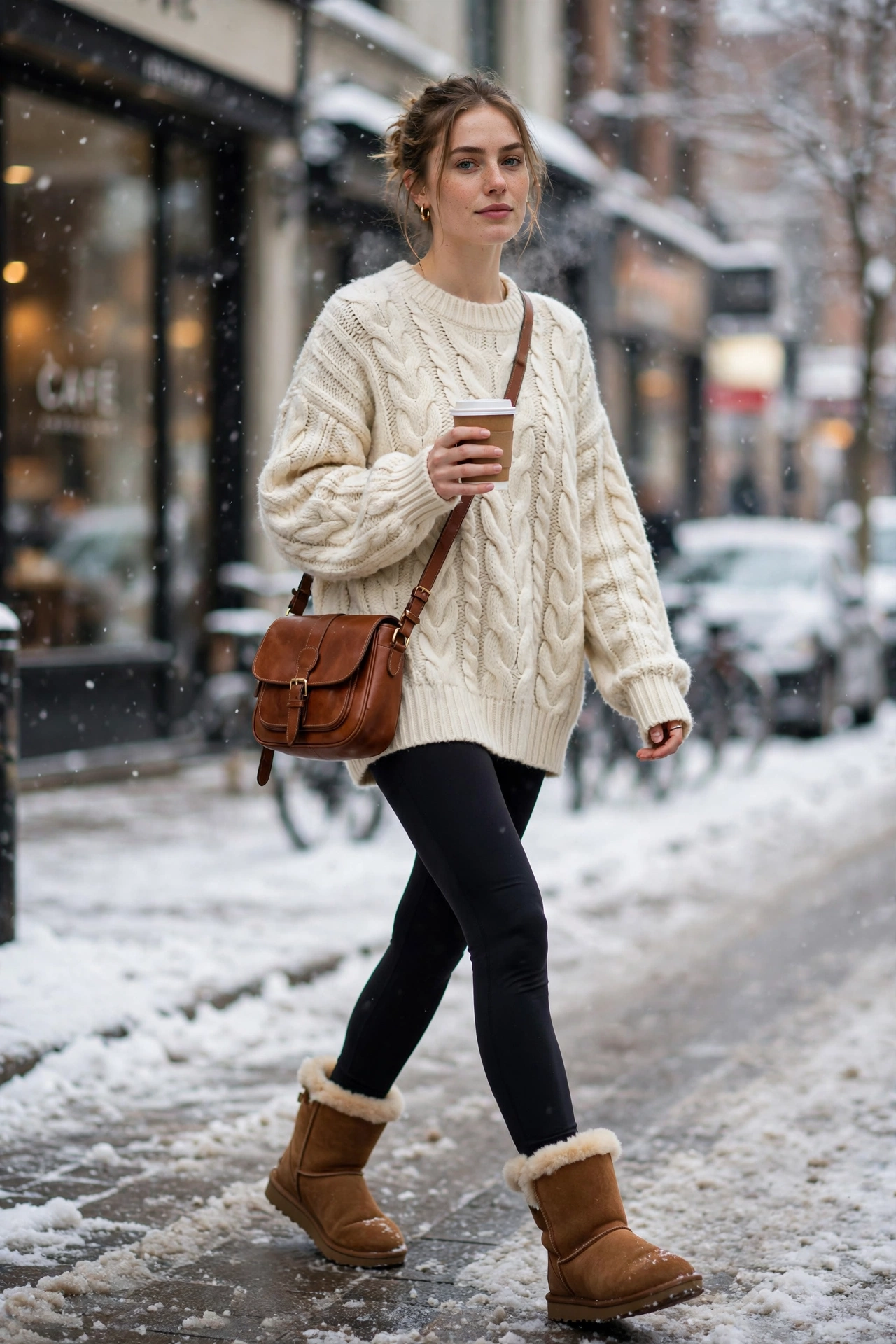
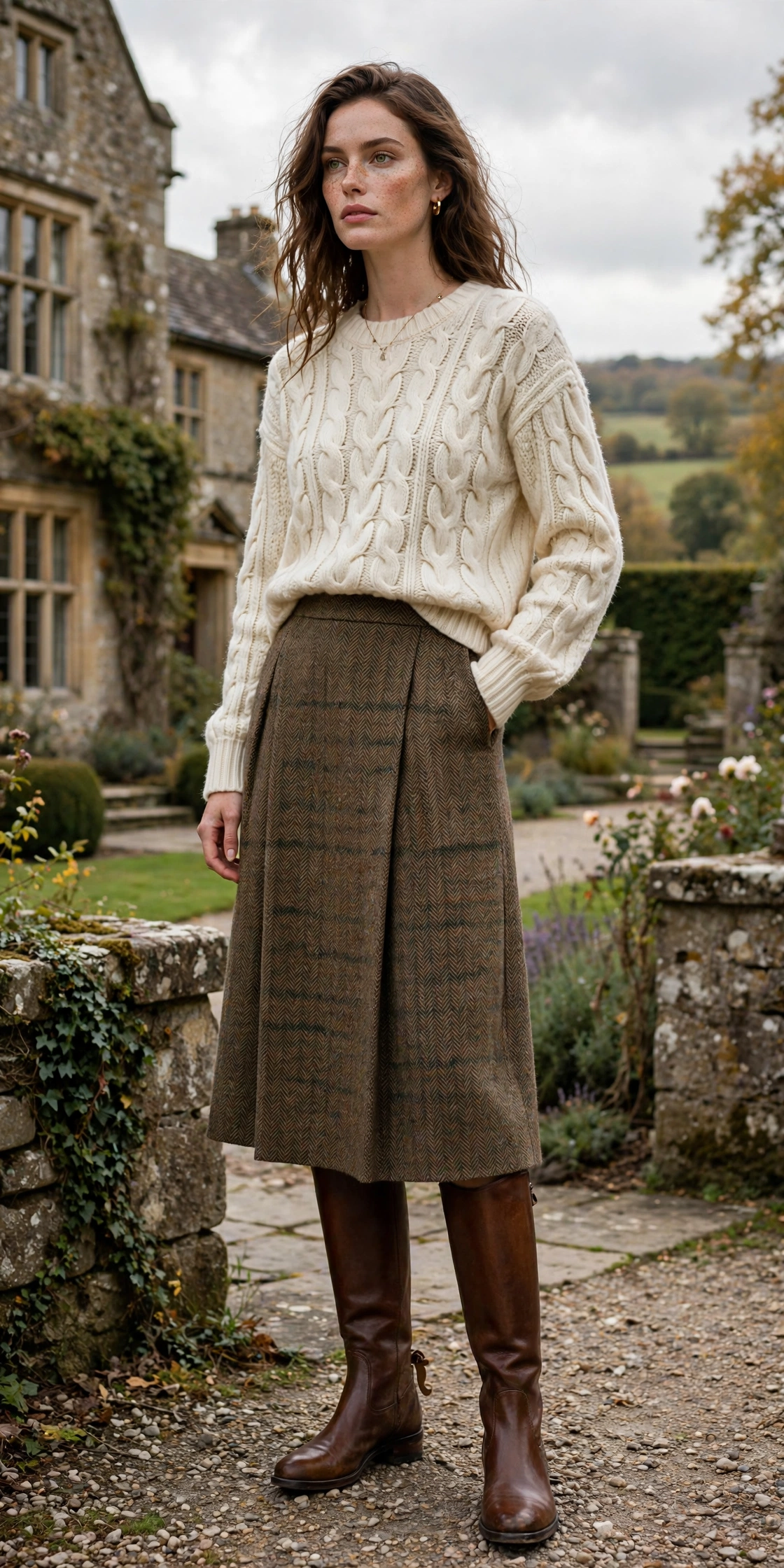
An ivory fisherman's cable knit, slightly relaxed through the body, tucked into a tan pleated skirt hitting just below the knee. Look for a 7-gauge knit in wool or a wool-cotton blend — the cables need loft to read, and flat acrylic cables look printed rather than knitted. The contrast is between the sweater's dimensional texture and the skirt's flat, swinging plane — texture talks while color stays in one warm family. The cables add interest around the face and shoulders without a single logo or print. A tan belt and simple studs are all it needs; knee-high boots in dark brown extend the line for cold days. This is the winter-weekend outfit — farmers' markets, holiday gatherings, fireside dinners — cozy without ever looking sloppy.
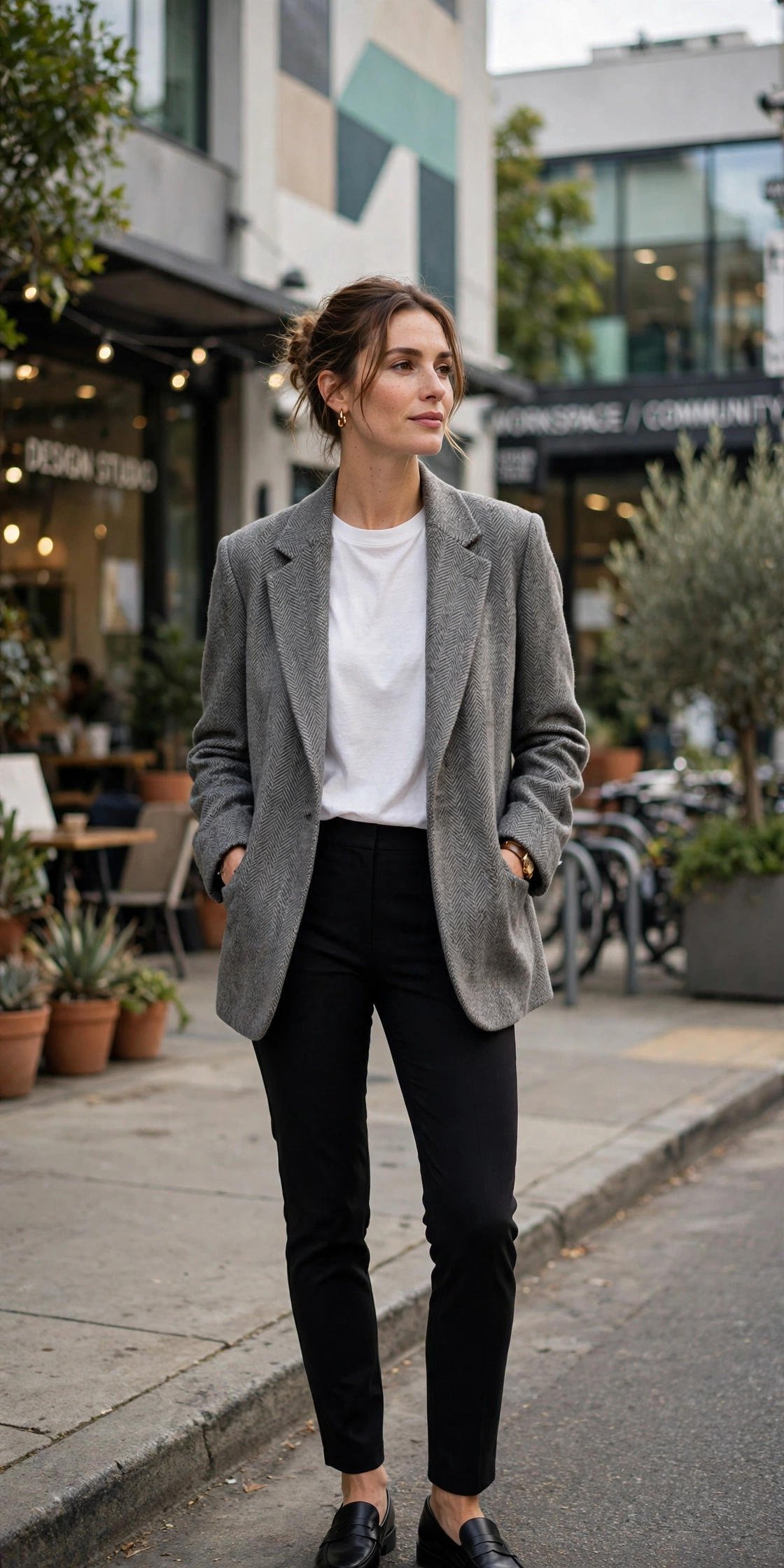
Grey Flannel Blazer, White Tee, Black Trousers
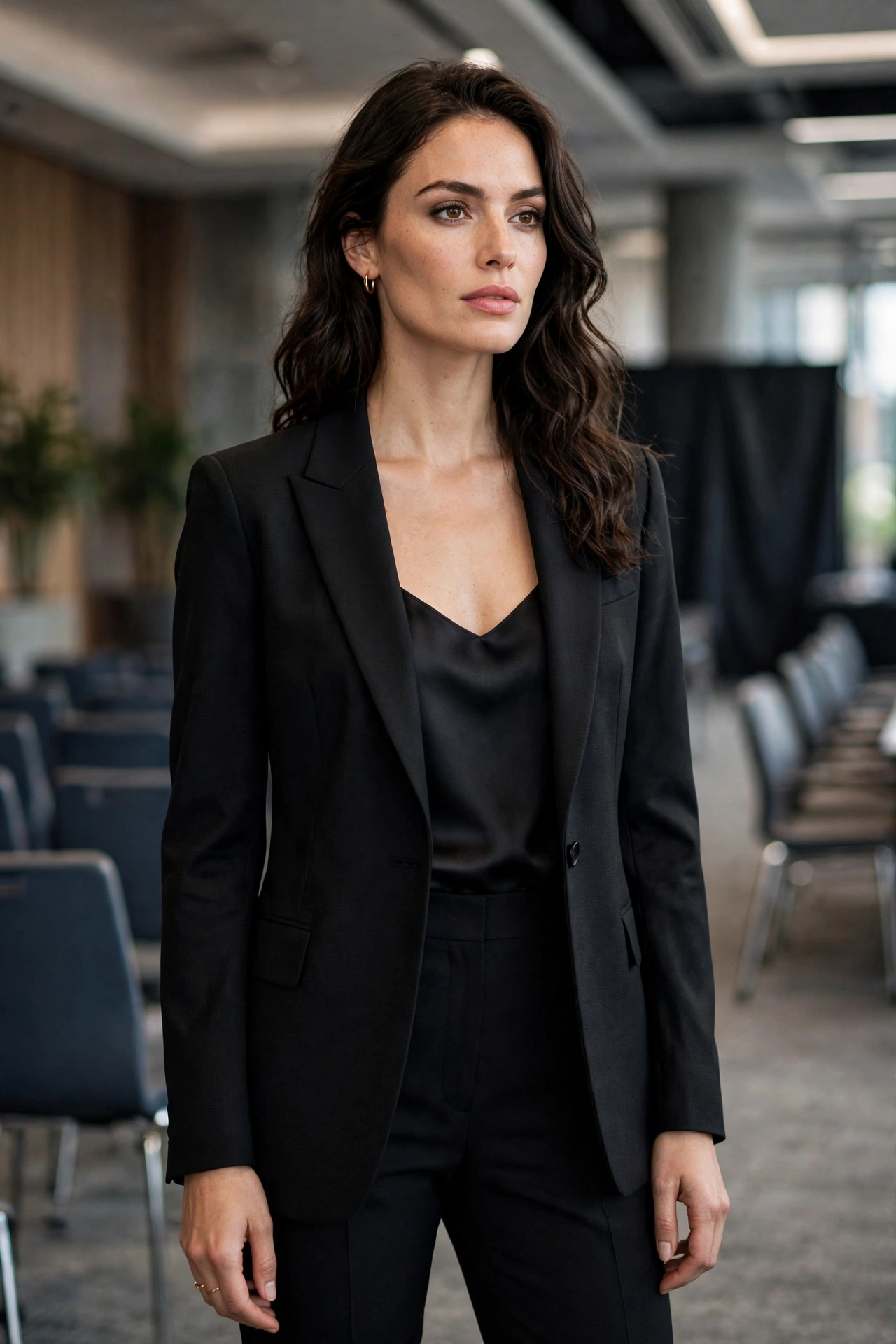
A grey flannel blazer in soft, matte wool — flannel's brushed nap is the whole point, so avoid anything with sheen — worn open over a plain white cotton tee with a clean neckline, plus black slim trousers. The flannel's nap gives the blazer a quiet richness that reads as quality from across the room, while the tee stops it feeling corporate — the mix of tailored and plain is the whole point. Make sure the tee is genuinely opaque with a high neckline; a stretched-out tee collapses the outfit. Spend on the tee: heavyweight Supima cotton, 220 GSM or more, holds its shape and neckline. Black loafers or minimal white sneakers depending on the setting. This is the modern uniform for creative offices, dinners with friends, and travel — tailored enough for respect, relaxed enough for comfort.
Forest Green Sweater Vest Over a White Shirt
A forest green fine-gauge sweater vest — 14 gauge merino, smooth enough to layer — layered over a white cotton poplin shirt with a crisp collar and visible cuffs, with straight-leg camel trousers in a cotton-wool twill. The vest adds structure exactly where it's needed — shoulders and torso — while leaving the arms free, which flatters more than a full sweater would. Green and camel are both earth tones, so the palette harmonizes naturally, and the white collar frames the face. Classic without a hint of uniform. Brown loafers and a tan belt complete it; this is ideal for fall office days, museum afternoons, and dinners where you want polish without a blazer's formality. The vest is also the smartest layering piece you can own — it adds warmth and shape without bulk under coats.
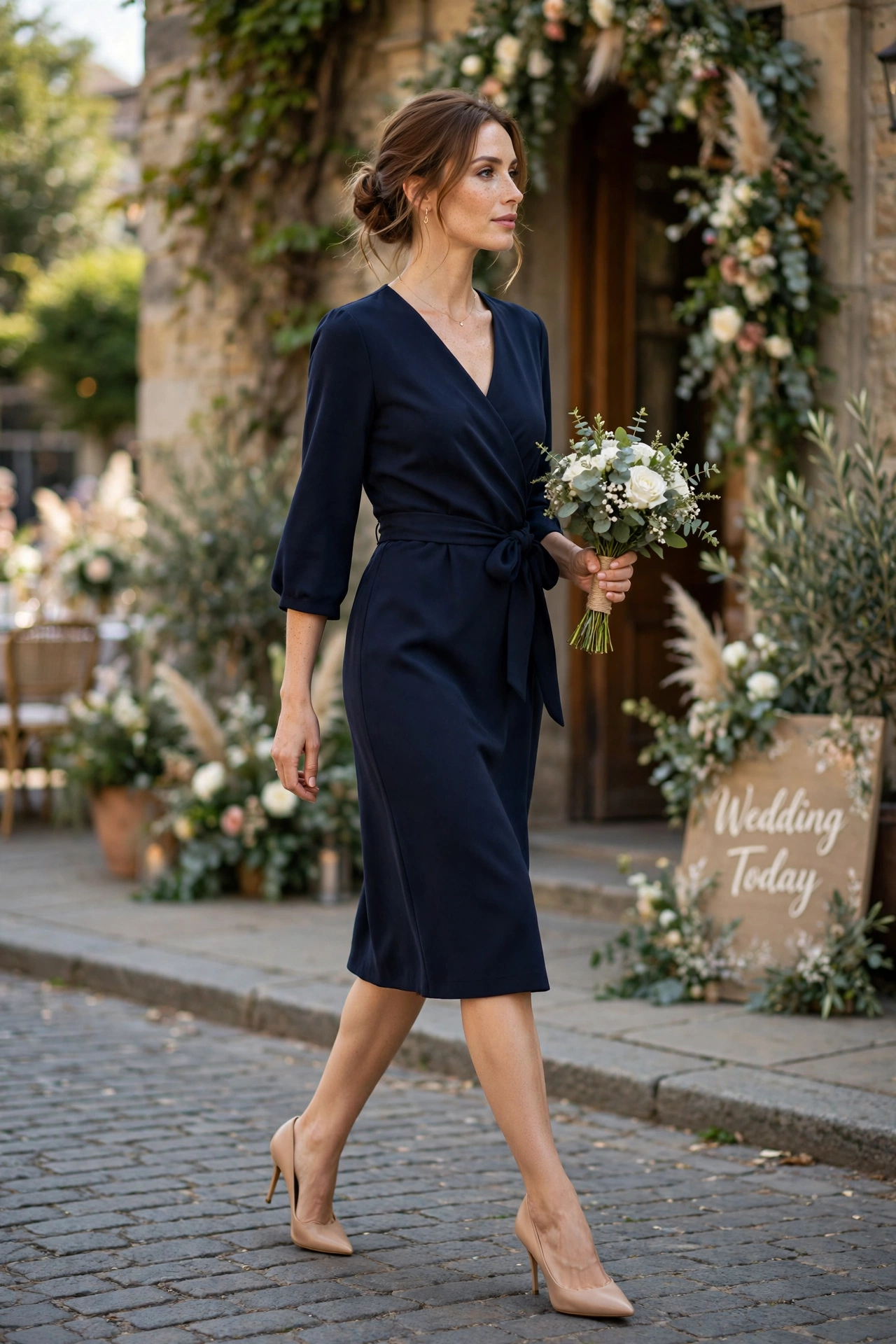
Navy Wrap Dress in Matte Crepe
A knee-length navy wrap dress in matte stretch crepe — look for a triacetate or wool-blend crepe with 3 to 4 percent elastane — with three-quarter sleeves and a true wrap closure tying at the natural waist. The wrap creates a diagonal neckline that elongates the torso and a defined waist the fabric itself enforces — no belt required. Matte crepe drapes without clinging and never shines under office lighting, which separates it from cheaper jersey versions. One dress, zero decisions. Nude or black pointed pumps for work; block-heel sandals dress it down for events. This is the single most useful dress silhouette in the old money wardrobe — it works for offices, weddings, funerals, and dinners, in every season, with only the shoes and coat changing.
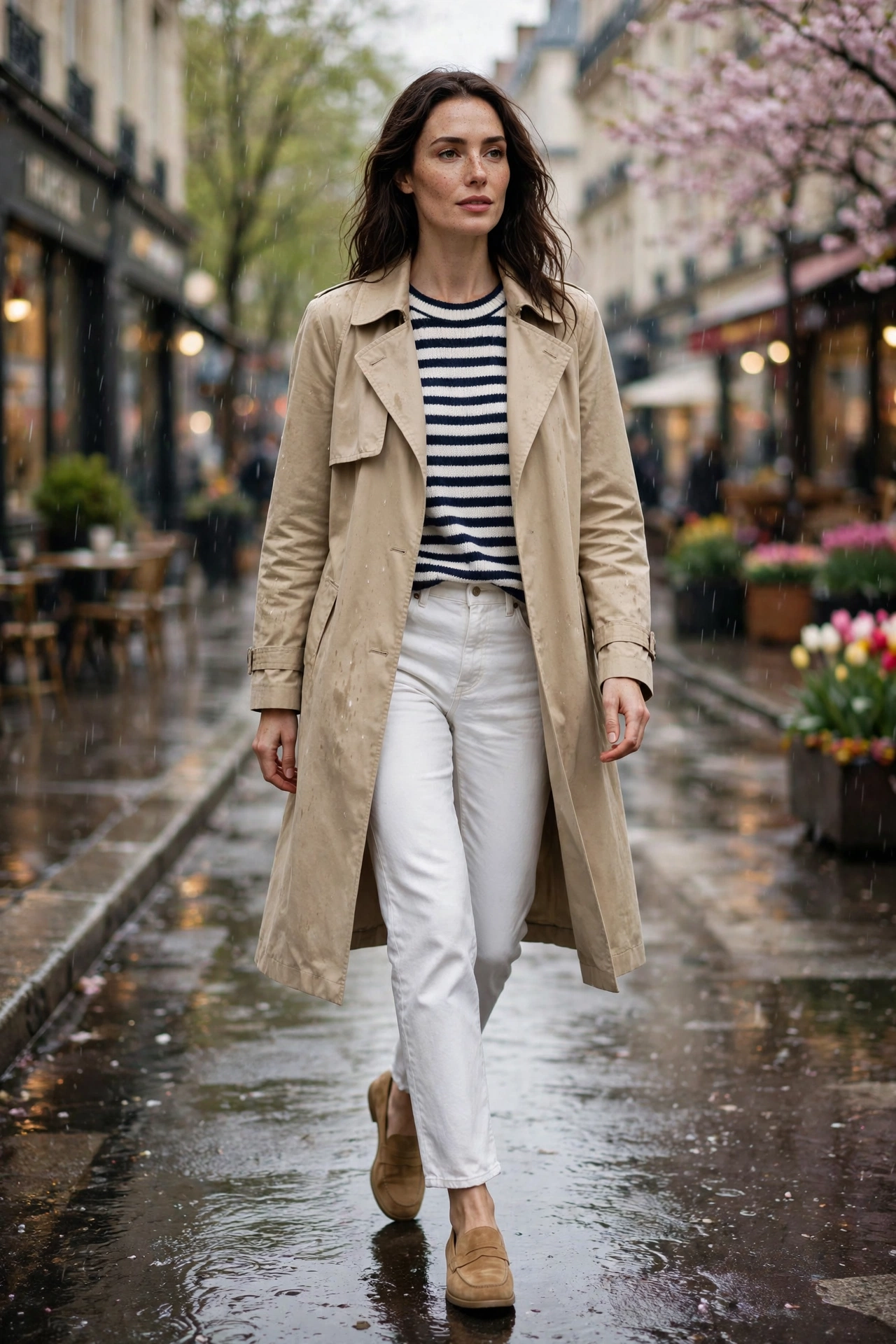
Beige Trench, Striped Shirt, White Jeans
A knee-length beige cotton-gabardine trench — the classic is a tight 2x2 twill weave that repels light rain — worn open over a thin navy-and-white striped knit, with white straight-leg jeans and tan loafers. The trench's length creates a long vertical column that makes everything underneath look intentional, and the gabardine's crisp hand holds the collar up properly. White jeans keep the palette light while the stripe adds just enough pattern to avoid flatness; choose a mid-weight white denim with no transparency. Belt the trench only when it's windy; open reads more relaxed. This is the spring uniform — rainy commutes, weekend trips, outdoor lunches. The trench is the hardest-working outerwear piece you can own, and this combination shows why.
Charcoal Cashmere Coat and All-Black Base
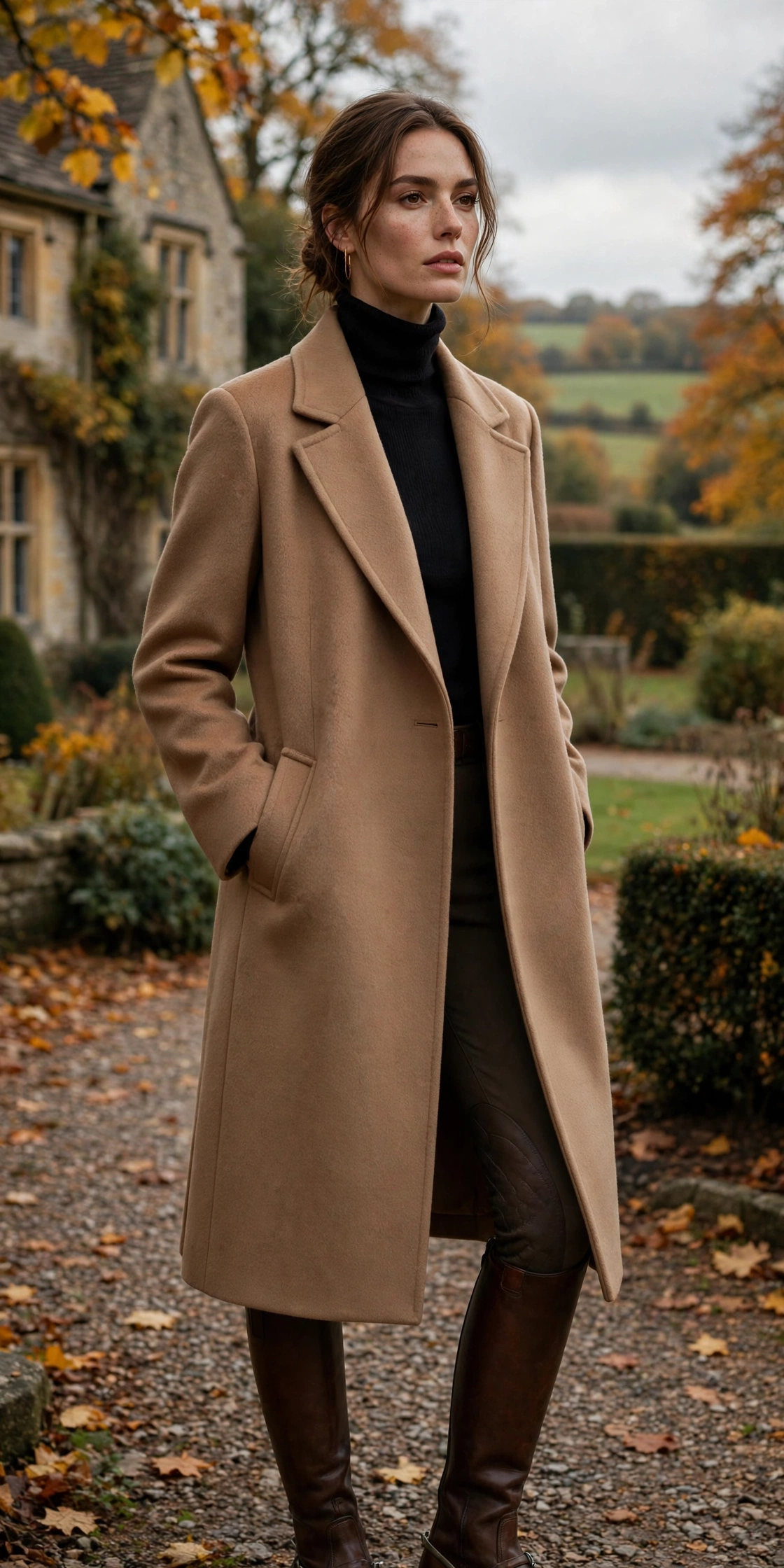
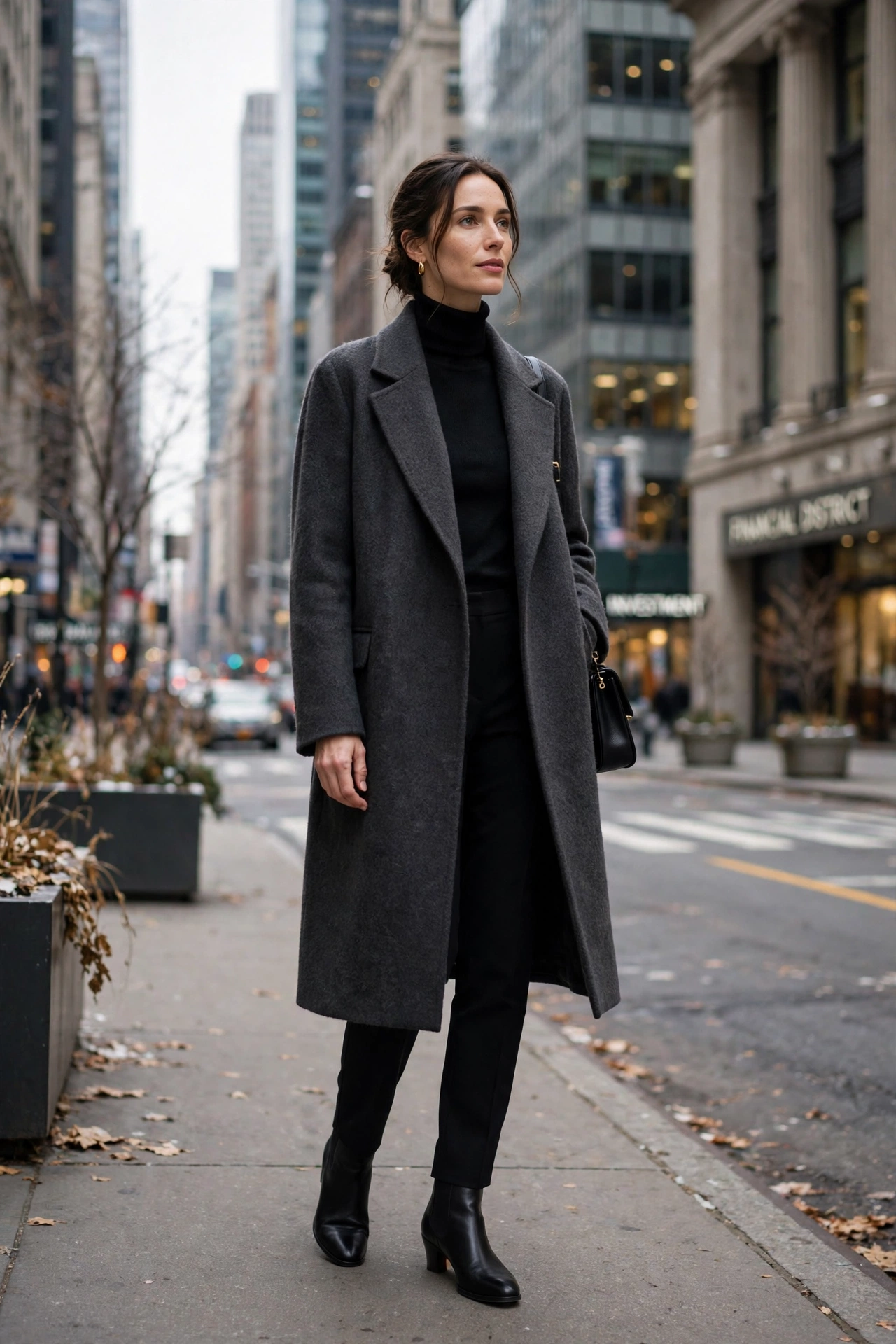
A charcoal cashmere-blend overcoat — even 10 to 20 percent cashmere transforms wool's hand — single-breasted with clean lapels, over a black turtleneck and black slim trousers. Monochrome black underneath turns the coat into the entire statement — one long line from neck to ankle, which adds perceived height and polish instantly. Charcoal against black gives depth instead of a flat void, and the coat's soft nap is the luxury signal, not any visible label. Black leather boots with a low heel keep the line unbroken. The outfit for being taken seriously before you speak: important meetings, evening events, winter travel. When the coat is this good, everything underneath can be simple — that is precisely the point of investing in outerwear first.
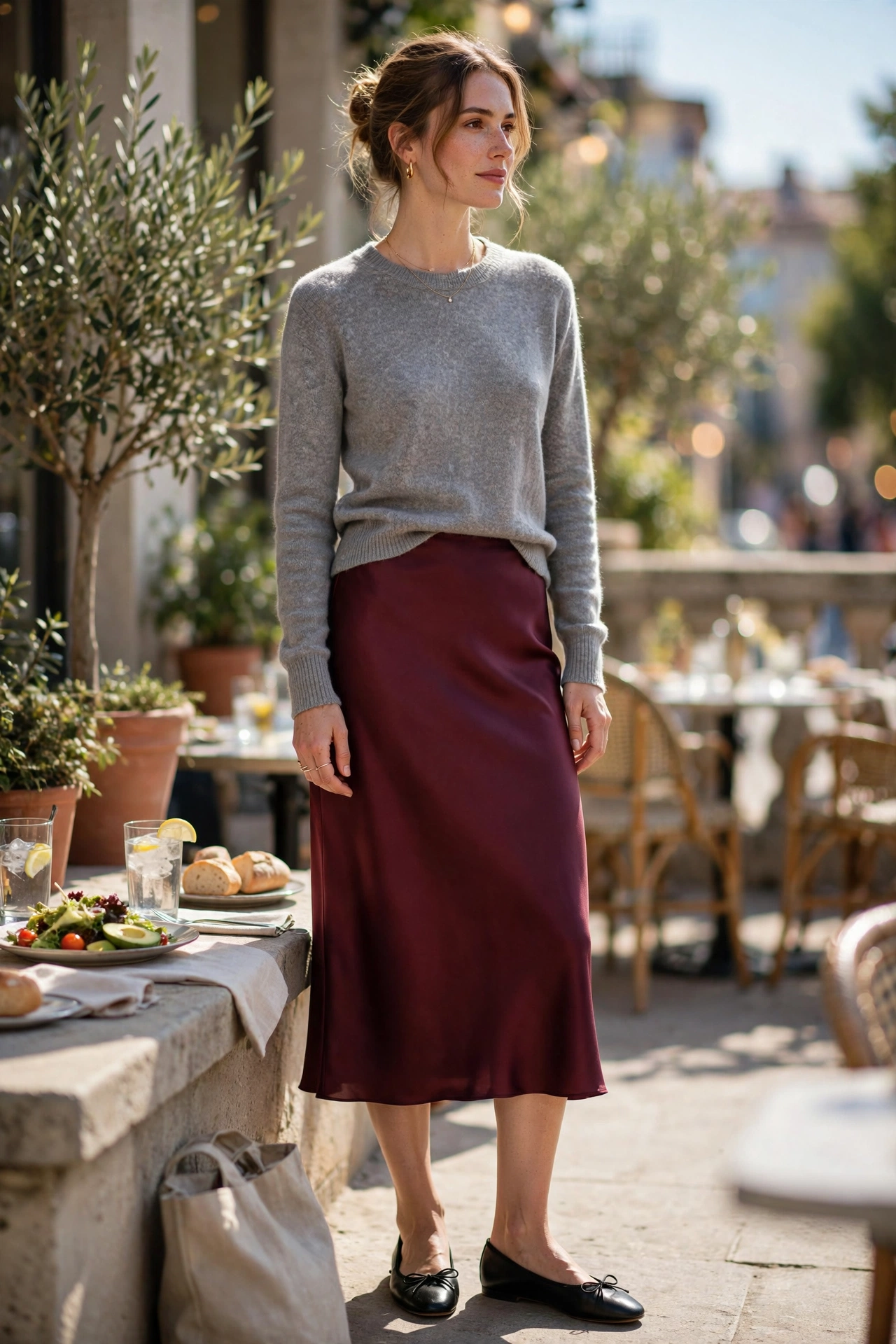
Burgundy Silk Skirt and Grey Knit
A burgundy silk slip skirt hitting mid-calf — bias-cut so it moves, in a mid-weight silk charmeuse or a good sandwashed silk — with a fine grey crewneck knit tucked in at the front. The silk's fluid drape against the knit's matte surface is a texture pairing that always looks considered, and burgundy is a deep color that reads expensive even in an affordable fabric. The grey keeps the rich skirt from tipping into evening territory, which makes it wearable at lunch. Keep the knit flat over the waistband so the tuck looks clean; a French tuck is enough. Black ballet flats or low block heels, minimal gold jewelry. This is the lunch-to-afternoon outfit — refined, comfortable, and interesting without trying. The skirt also packs beautifully for travel since silk resists wrinkling.
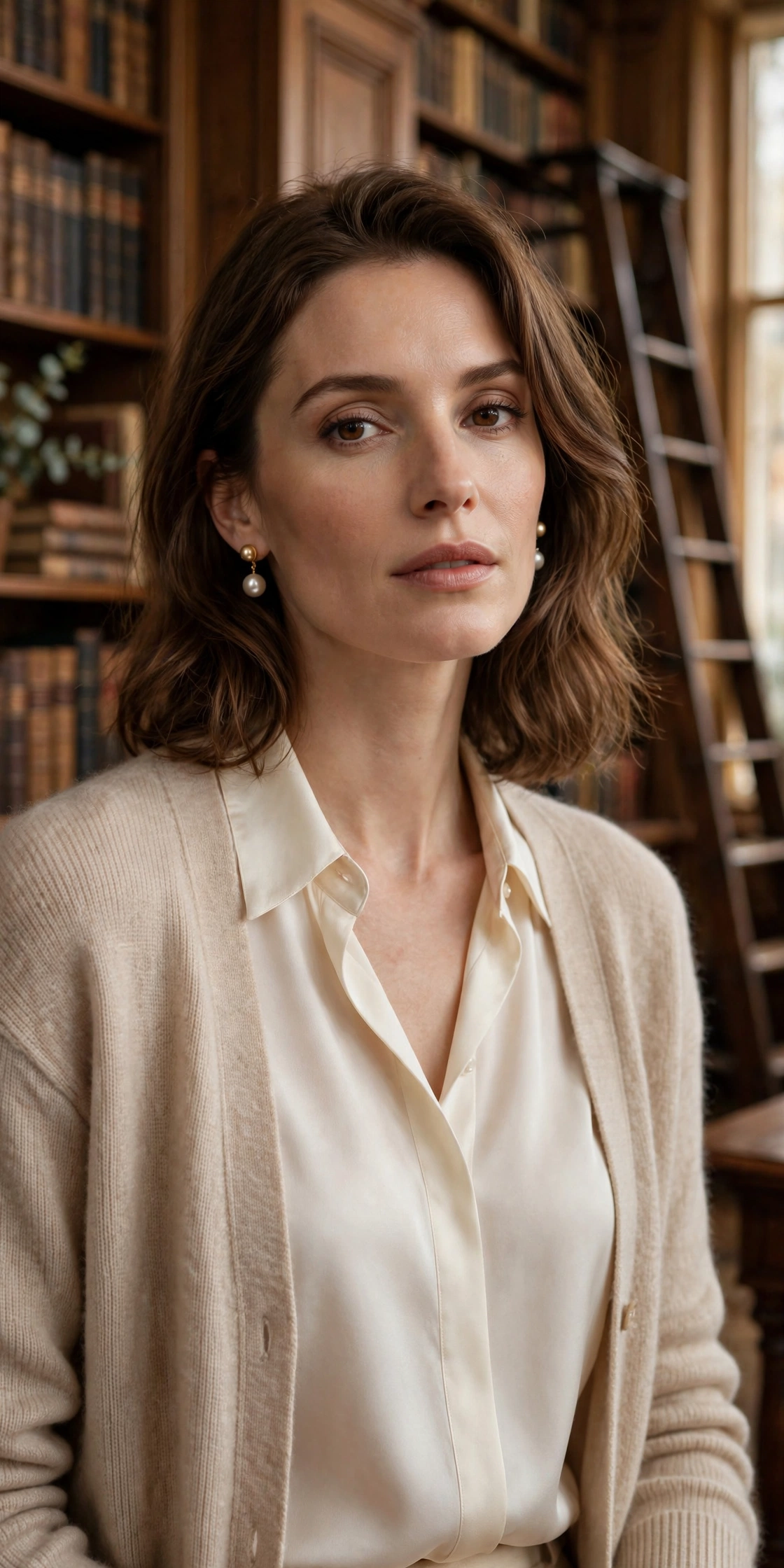
White Button-Down, Camel Cardigan, Pleated Skirt
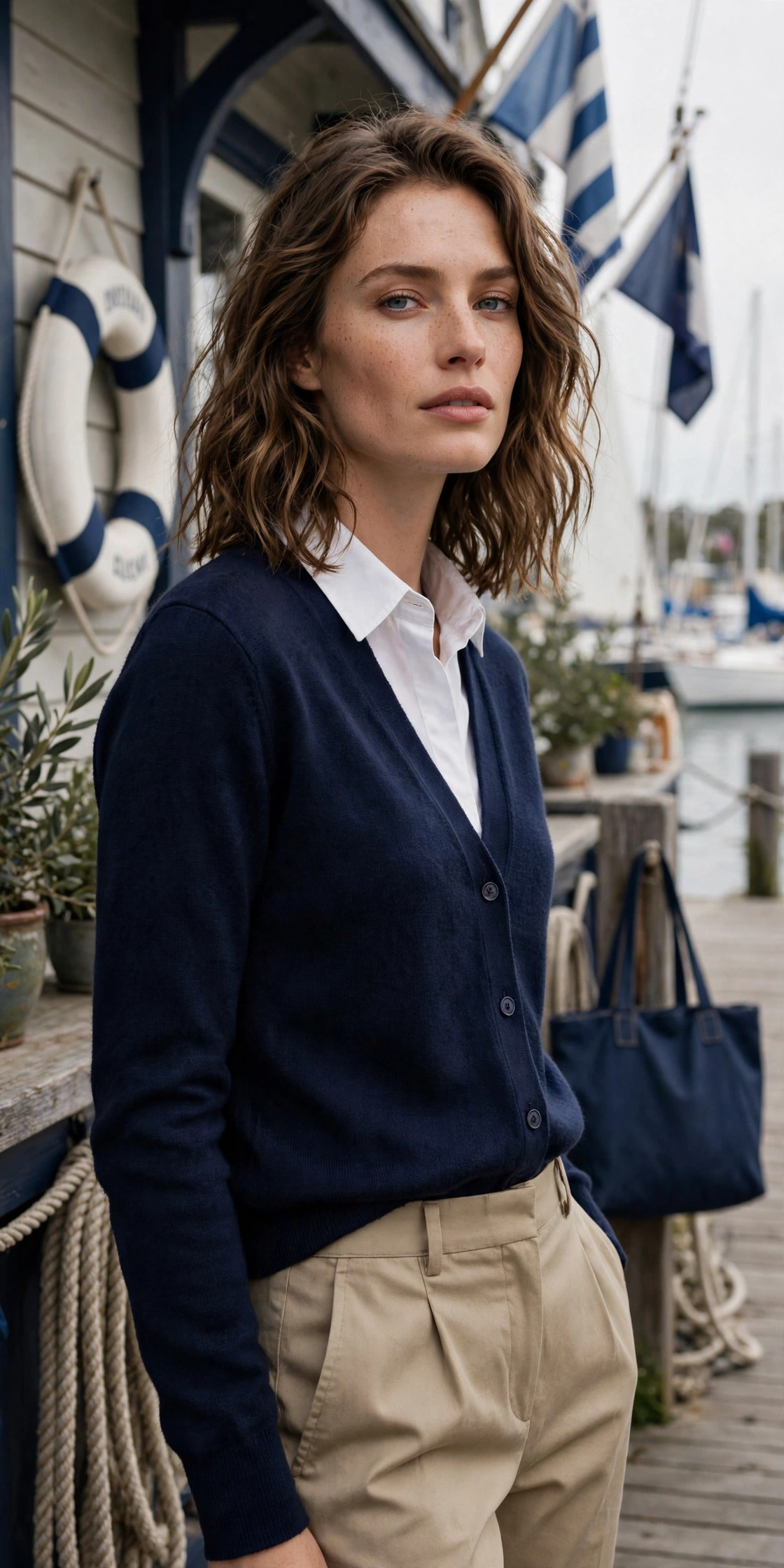
A white cotton button-down — oxford cloth or a crisp poplin — under an open camel cardigan in fine merino knit, with a grey pleated midi skirt. The layering order matters: the shirt's collar and cuffs frame the softer cardigan, giving the eye structure at the edges while the middle stays relaxed. Camel and grey are neutrals of different temperatures, and the white shirt mediates between them so the combination feels harmonious. A blazer outfit with the formality dialed down two notches. Tan loafers and a simple leather tote complete it. This is the work-from-office outfit for business-casual days, school events, and long days with multiple stops — comfortable, layered for temperature changes, and polished in every setting.
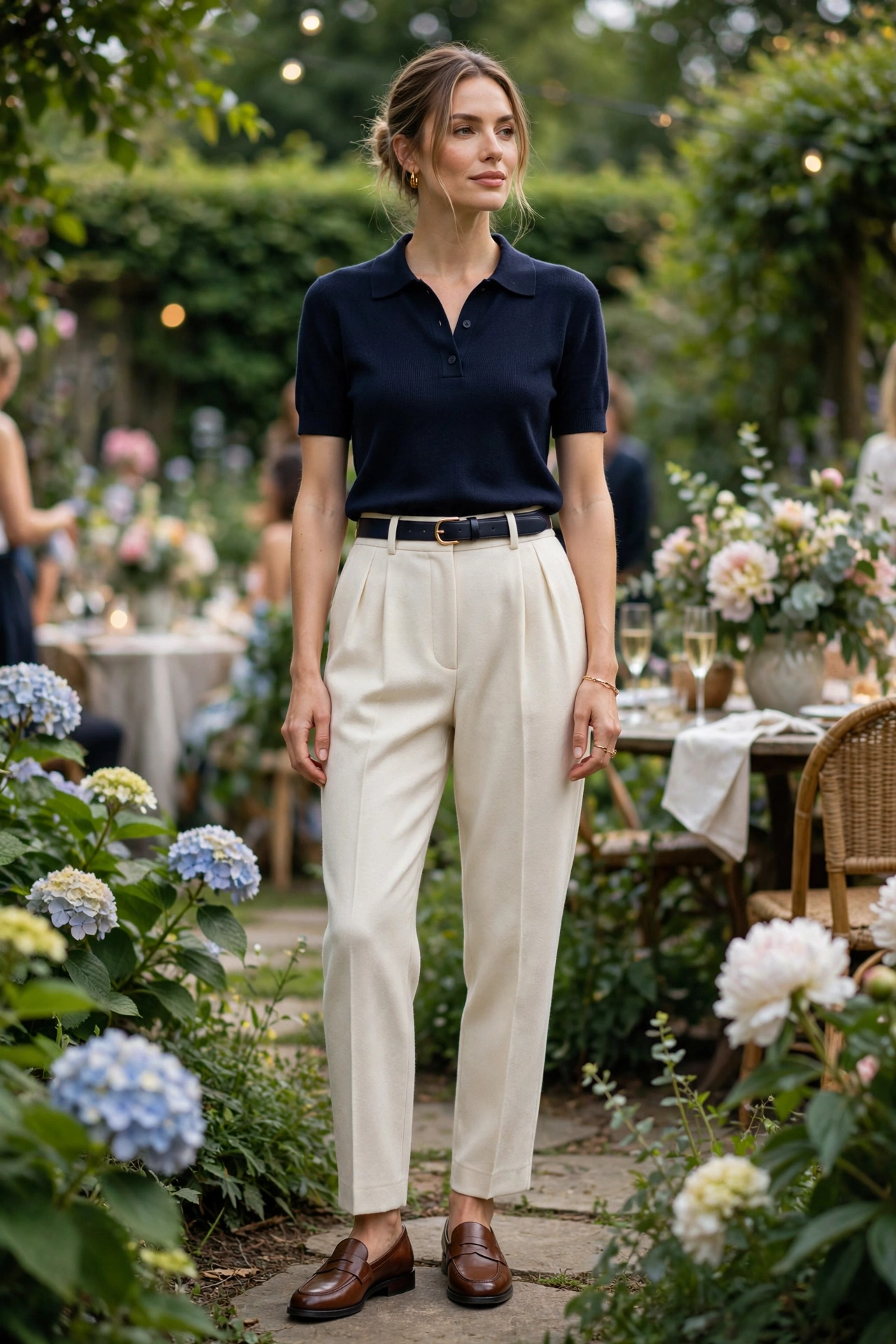
Navy Polo Knit and Cream Pleated Trousers
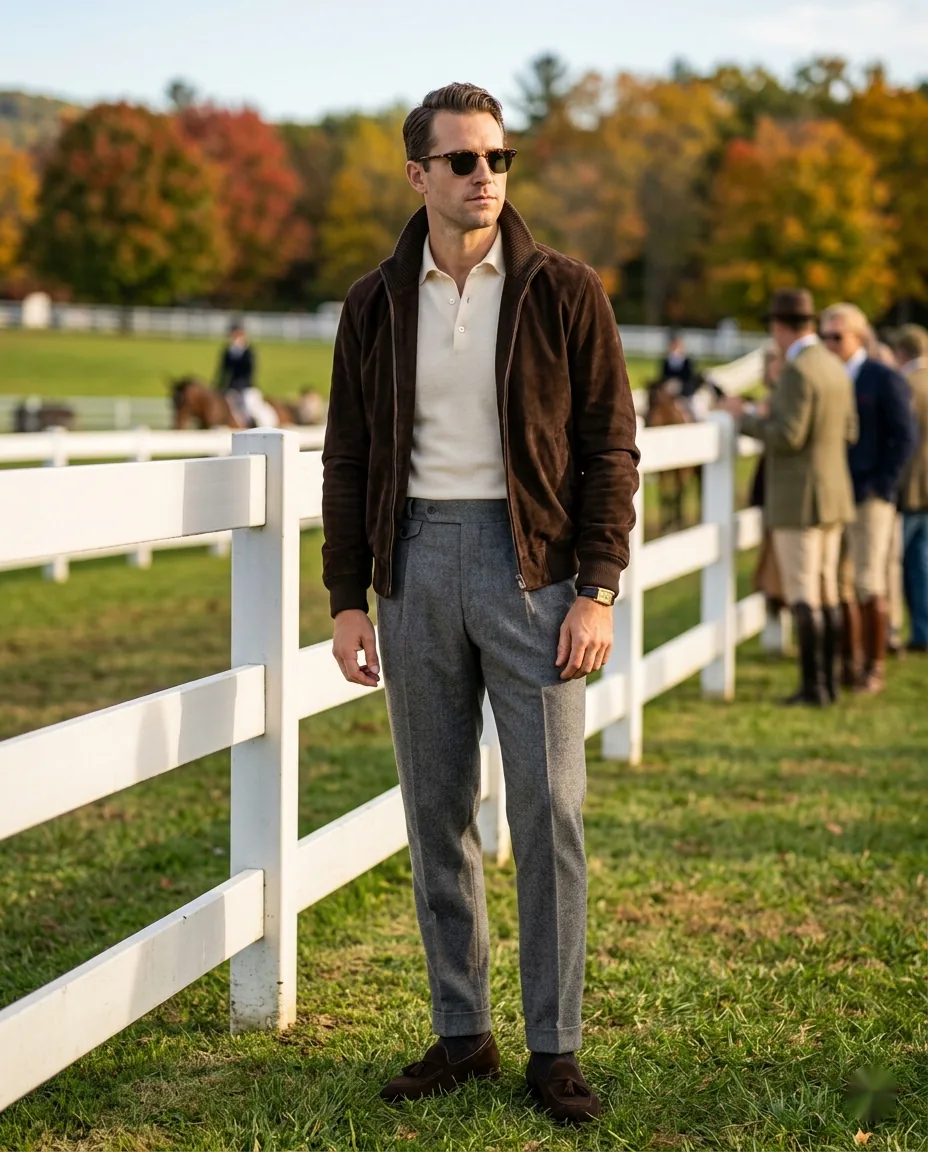
A navy fine-knit polo with a soft collar — 14 gauge merino or a cotton-silk blend, never piqué cotton which reads sporty — tucked into cream pleated-front trousers in a lightweight wool blend. The polo's collar gives the neckline a shirt's structure with a knit's ease — the quietest way to look put-together — and the trouser pleats add fullness at the hip that balances the slim top. Navy and cream never fails: crisp enough to look sharp, soft enough to avoid harshness. Tuck fully and show the waistband; add a slim navy belt for definition. Brown loafers or white sneakers depending on the day. This is the warm-weather answer to tailoring — golf clubs, garden parties, resort dinners — refined without a single stiff fabric.
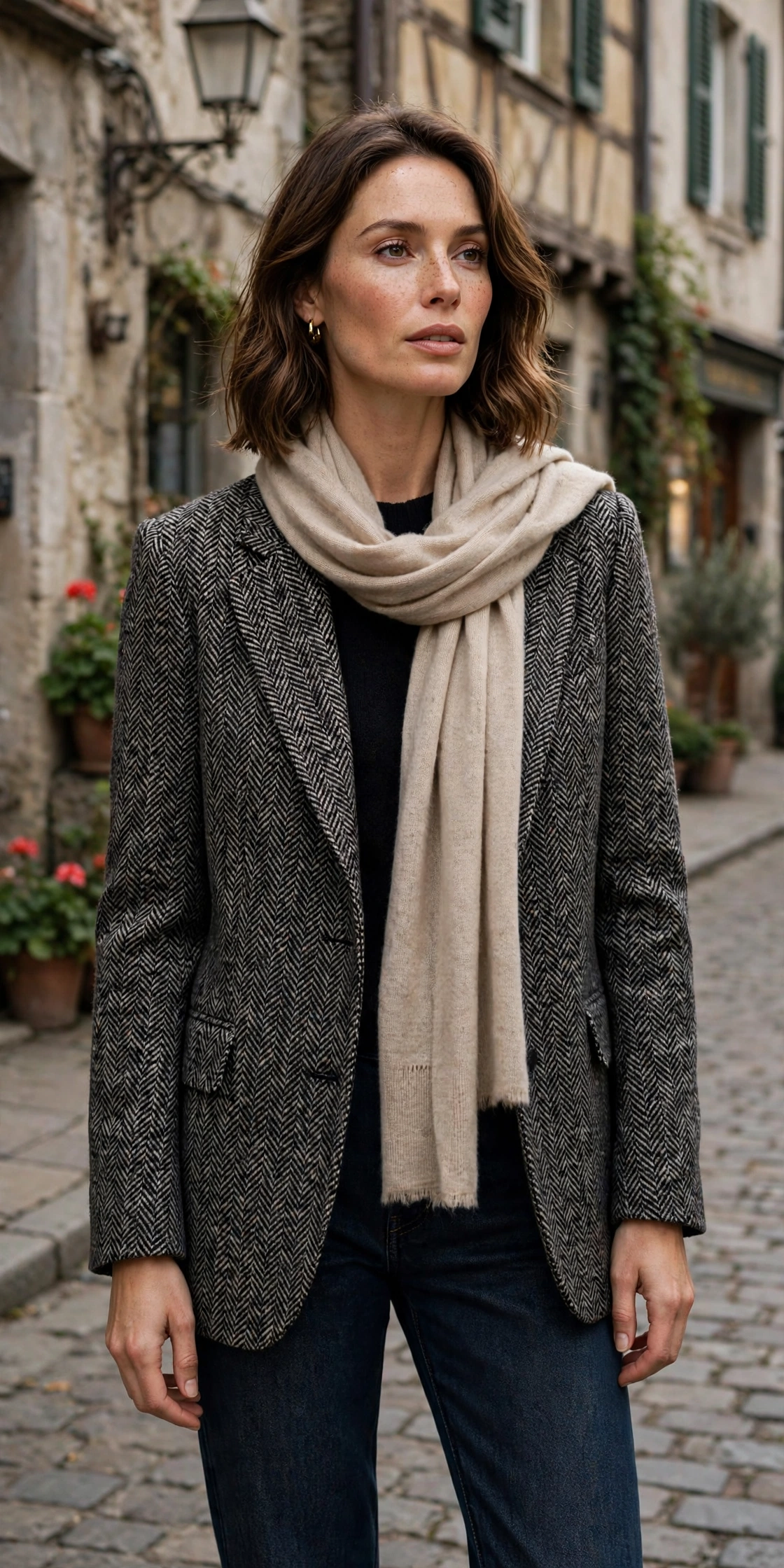
Herringbone Blazer, Black Turtleneck, Grey Skirt
A brown herringbone blazer in wool tweed — the broken twill weave is what creates that distinctive zigzag — over a black fine-knit turtleneck, with a grey pencil skirt ending just below the knee. Herringbone reads as texture from a distance, so it adds interest without competing with the clean black base — the skirt and turtleneck recede while the blazer holds attention. The pencil skirt's straight line continues the blazer's tailored language, keeping the silhouette coherent from shoulder to hem. Black knee boots or pointed pumps; keep hosiery sheer black or bare depending on season. This is the fall workhorse for offices, dinners, and events — the blazer alone transforms the simple black base into something with heritage and character.
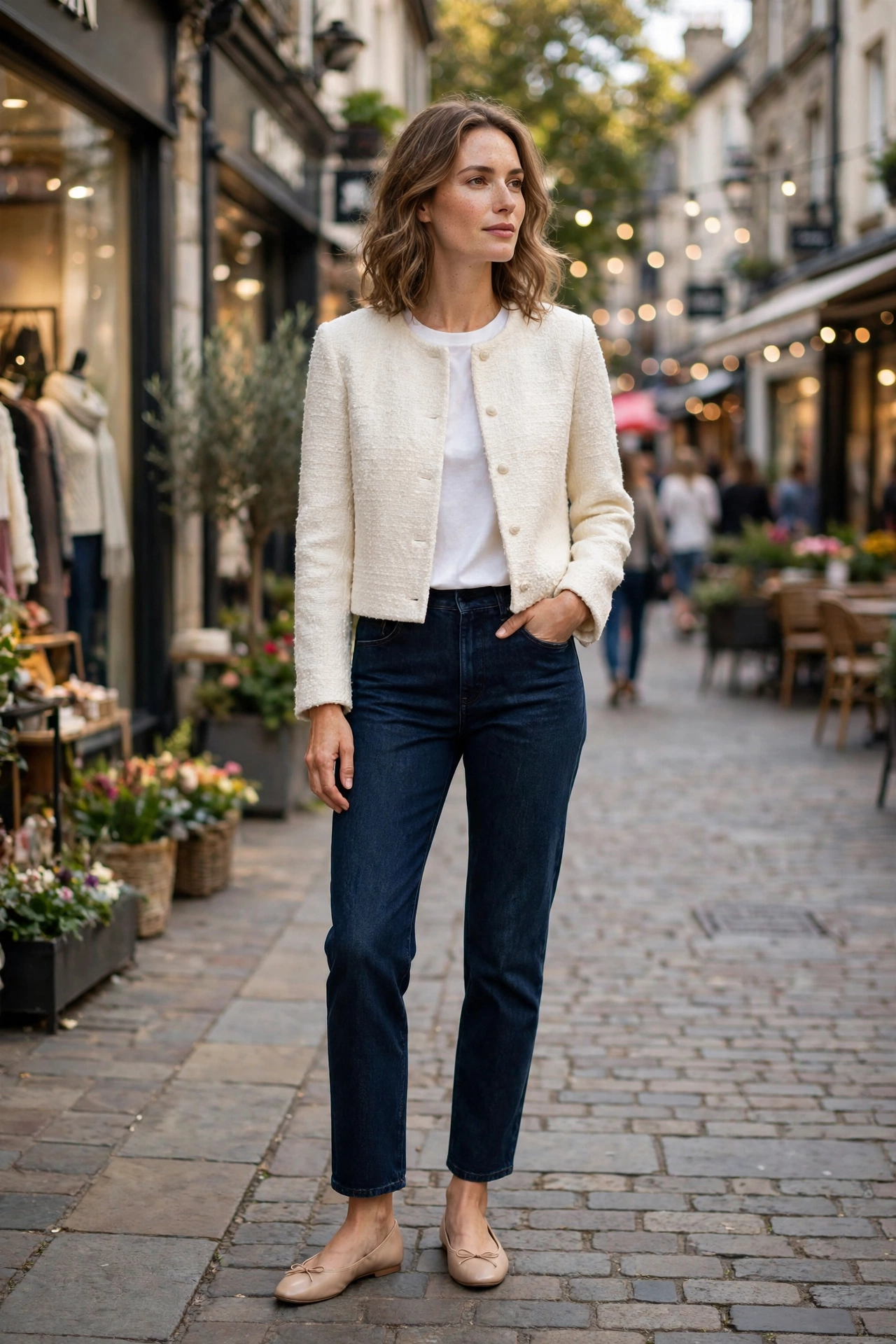
Ivory Tweed Jacket and Dark Indigo Jeans
A cropped ivory tweed jacket with a clean round neckline and no collar — the Chanel-style silhouette, but keep it unbranded — over a simple white tee with dark indigo straight-leg jeans. The tweed's woven texture elevates the tee-and-jeans base instantly — the jacket does all the luxury work while everything else stays simple. Ivory against dark indigo is a high-contrast pairing, and the cropped length defines the waist over the jeans' higher rise. Keep the tee plain and opaque; the jacket needs a quiet stage. Nude flats or white sneakers keep it daytime; swap to heeled boots for evening. This is the weekend-luxe outfit — brunch, shopping, casual dinners — where one remarkable piece carries an otherwise simple base.
Fabric and Fit: A Buying Guide
Knowing what to touch in a store matters more than knowing brand names. Here is how to shop for the fabrics this aesthetic depends on.
Wool: For blazers and trousers, look for Super 100s to 120s — finer than that wrinkles and wears faster; coarser looks dull. Flannel should feel brushed and matte; gabardine should feel smooth and dense. The pinch test never lies: squeeze a handful for five seconds. If it springs back with minimal creasing, the wool has good recovery and will look fresh all day.
Cotton: Oxford cloth for shirts (the basket weave gives it body), poplin for crispness, twill for chinos. Hold it to the light — if you can see through a white shirt easily, it will look cheap no matter the price. Heavyweight jersey (220 GSM+) for tees; anything thinner goes sheer and loses its neckline within months.
Cashmere and merino: Two-ply minimum for sweaters. Check the seams: fully-fashioned knits (shaped during knitting) beat cut-and-sewn every time. For merino, 18 gauge layers smoothly; 7 gauge gives chunky texture. Pilling is normal in the first wears — a cashmere comb handles it — but excessive pilling means short fibers and a short lifespan.
Silk: Mulberry silk, 19 momme or higher for blouses; sandwashed silk for a matte finish that reads modern. Avoid anything labeled "silky" — that word means polyester. Real silk warms to your touch; polyester stays cool and slippery.
What to avoid: high-shine synthetics, visible logos, anything that needs constant adjusting. If you are tugging it in the fitting room, you will hate it by noon.
Fit checkpoints: shoulders end at the bone, sleeves show a quarter inch of cuff, trousers break once, skirts sit at the natural waist without pulling. Tailoring costs less than one new garment and transforms everything — budget it yearly.
The Old Money Color System
The palette is not random; it follows a temperature logic. Warm neutrals — camel, tan, cream, ivory, chocolate — flatter warm skin and read approachable. Cool neutrals — navy, charcoal, grey, black — read sharper and more formal. The most refined outfits stay within one temperature family, or use white as a bridge between them, exactly as the camel cardigan and grey skirt pairing does above.
Build outfits on a 3-color maximum: one dominant neutral (60 percent), one supporting neutral (30 percent), one accent (10 percent). The accent should be deep, never bright — burgundy, forest green, or cognac rather than red or kelly green. Metallics follow the same rule: warm gold with warm neutrals, cool silver with cool neutrals, never mixed.
White deserves special attention. Optic white is harsh and modern; ivory and cream are soft and timeless. In this aesthetic, always choose the softer white — it photographs better, flatters more skin tones, and never looks like a uniform shirt.
For pattern, the ceiling is low: stripes, checks, herringbone, and subtle plaids. One pattern per outfit, always. The pattern's scale should be small to medium — large prints shout, and this aesthetic never shouts.
Wearing It Across Seasons
The philosophy doesn't change with the weather; the fabrics do. In spring, swap wool flannel for cotton twill and tropical-weight wool (7 to 8 ounces), trade turtlenecks for Breton stripes and linen shirts, and let the trench do the outerwear work. The color temperature can warm up slightly — more camel and cream, less charcoal.
Summer is linen and cotton season: the white linen shirt and navy chinos formula carries the whole aesthetic. Keep tailoring in unlined, unstructured cuts — an unlined blazer in cotton or linen breathes and still reads refined. Swap boots for loafers and espadrilles; the restraint stays, the weight drops.
Fall is this aesthetic's home turf. Bring back the tweeds, flannels, and cashmere; layer the sweater vest over shirts; let burgundy and forest green enter the rotation. This is when texture does the most work, because matte autumn light rewards nubby weaves.
Winter is about the coat. One excellent overcoat — camel, charcoal, or navy, in wool-cashmere — worn over simple bases carries December through February. Add the fisherman's knit, the turtleneck layers, knee boots. The rule stays the same in every season: quality fabric, clean fit, muted palette, one quiet detail at a time.
Frequently Asked Questions
How do I get the old money look on a budget without wearing logos?
Skip logos entirely — this look is about restraint, not labels. Spend on fit instead: a thrifted blazer tailored at the shoulders reads wealthier than an expensive one worn boxy. Hunt wool, cashmere, and silk secondhand, choose matte fabrics over shiny ones, and keep everything pressed. Ironing and shoe care are free and do more than any brand name.
Which fabrics should I prioritize for a timeless wardrobe?
Wool in its many forms — flannel, gabardine, crepe, tweed — for tailored pieces; cotton (oxford, poplin, twill) for shirts and chinos; cashmere or merino for knits; silk or silk-blends for blouses and skirts. Linen works in warm weather if you accept wrinkles as part of its character. Avoid high-shine synthetics; matte, natural fibers read as quality.
Is tailoring really worth paying for?
Yes, more than almost any single purchase. A tailor can nip a blazer waist, shorten sleeves to show the right cuff, and hem trousers to one clean break — three alterations that turn off-the-rack into made-for-you. Prioritize blazers, coats, and trousers, where fit is most visible. Budget the cost of one new garment a year for alterations and your whole wardrobe levels up.
Can I wear jeans and still look old money?
Yes, if the jeans are disciplined: dark indigo or black, straight or slim leg, no rips, whiskering, or thigh fading. Pair them with one refined piece — a wool blazer, cashmere sweater, silk blouse — so the denim reads as deliberate contrast rather than default casual. The jeans should be the quietest thing in the outfit.
How do I avoid looking like I'm wearing a costume?
Allow one heritage reference per outfit and keep everything else plain and modern. A tweed blazer is fine; a tweed blazer with a newsboy cap, brogues, and a pocket watch is a period drama. Clean loafers or simple boots keep it current. The goal is timeless — the outfit shouldn't be datable to any decade, including this one.
What shoes work best with this aesthetic?
Loafers (penny or horsebit) are the default — they work with trousers, skirts, and jeans. Add knee-high boots for winter, ballet flats for summer, white leather sneakers for casual days, and one pair of pointed pumps for evenings. Keep them in tan, brown, black, and navy. Avoid loud soles, heavy hardware, and anything that draws the eye downward.
How do I build this wardrobe from scratch?
Start with the formula pieces, not statement pieces: navy blazer, white oxford, charcoal trousers, cream sweater, camel coat, dark jeans, white tee. Seven pieces make dozens of outfits. Add one quality piece per season — a tweed blazer in fall, linen shirts in spring — and tailor as you go. In two years you will have a complete wardrobe; in five, a timeless one.
Does this style work for petite or plus-size figures?
Yes — the principles are proportion-based, not size-based. Petites should watch lengths: cropped jackets, knee-length hems, and monochrome columns add perceived height. Plus-size figures benefit from the same restraint: structured shoulders, defined waists, matte fabrics that skim rather than cling. Fit matters more than size in every case; tailoring is non-negotiable.
How do I keep neutrals from looking boring?
Texture is the answer. An all-neutral outfit in five different textures — cable knit, tweed, silk, suede, wool crepe — is visually rich without a single color. Vary the temperatures slightly (warm camel against cool grey, bridged by white), add one deep accent like burgundy, and let a single refined detail — a gold watch, a silk scarf — be the focal point.