Comfy Aesthetic Outfits for Women: Soft Pieces, Structured Style
How to use this guide
Treat trend ideas as styling prompts rather than rules. Start with pieces already in your wardrobe and adjust fabrics, layers, and proportions for your climate, comfort, occasion, and personal style.
It is 7 a.m., the softest thing in your closet feels like the only honest choice, and by 2 p.m. you catch your reflection in a storefront window and wonder whether you actually got dressed at all. That gap, between what feels good on the couch and what still looks intentional out in the world, is the real problem of comfy aesthetic dressing. Most of us own plenty of soft things; the missing piece is a logic for combining them so the softness reads as a choice rather than an accident.
That logic is this guide's actual subject. A comfy aesthetic outfit is one soft piece, a knit, a lounge set or a fleece, paired with one structured anchor, a straight leg jean, a trench coat or a hard edged shoe, so comfort reads as a deliberate style. The seventeen formulas below are built on a single principle: softness needs structure. A slouchy knit only looks good with one tailored anchor, a straight leg jean, a sleek boot, a coat with real shoulders. Texture does the work that bright prints usually do: bouclé, waffle knit, corduroy, fleece and velvet catch light differently, which is why a tonal outfit in three browns can look richer than a colourful one.
And silhouette follows a rule you can apply in seconds: volume on one half, line on the other. Think of each section as a module, not a mandate. Swap pieces between formulas freely; the principles underneath them are what repeat.
Why the Comfy Aesthetic Works: Softness Needs Structure
Every outfit that earns the word "aesthetic" is balancing a tension. On one side is comfort, brushed cotton, heavy knits, fleece, jersey that moves with you. On the other is legibility, the visual cues that tell the world this is a style, not pajamas. A defined shoulder, a waistband that sits where it should, footwear with a hard edge.
That is why a lounge set suddenly looks editorial under a trench coat. The set supplies softness; the coat supplies structure. The same mechanism explains why an oversized cable knit works over straight leg denim but disappears over wide sweatpants: the denim's straight column gives the eye something to follow. Whenever an outfit feels "off" in this genre, the cause is almost always too much softness on both halves and nothing anchoring the silhouette.
The Fabric Library: Know Your Textures
Comfy aesthetic dressing is a fabric first discipline. A few textiles carry most of the genre:
- Cable knit and ribbed wool: visual weight and stretch; the classic anchor knit. Wool blends hold shape better than pure wool and resist pilling longer.
- Waffle knit and thermal cotton: lighter warmth with a grid texture that reads well in close up and on camera.
- Fleece and sherpa: the warmest casual layer, best kept to one piece per outfit so it stays a note rather than a theme.
- Bouclé and mohair: fuzzy, light catching, softly structured. Mohair in particular makes even simple crewnecks look considered; store it folded, never on hangers, so it doesn't stretch.
- Corduroy and velvet: ribbed pile fabrics that add depth to tonal outfits. Fine wale corduroy looks dressier; wide wale reads rustic.
- Cashmere blends: the smoothest knit hand feel, excellent for fitted pieces like turtlenecks and sweater vests that sit under other layers. Real cashmere comes from the soft undercoat of cashmere goats, which is why it feels smoother than ordinary wool.
- Silk and satin: the fluid counterpoint to heavy knits. A satin slip or silk midi skirt against chunky wool is the genre's signature contrast.
- Jersey and French terry: the lounge set backbone, look for mid weight cotton blends that resist pilling rather than the thinnest, cheapest fleece.
Build your rotation around five or six of these and almost any combination will hold together.
How Comfy Differs from Soft Girl, Coquette and Blockette
Comfy shares a wardrobe with its aesthetic cousins, but the job is different. Soft girl dressing is about sweetness first: pastel palettes, bows, blush tones and a deliberately youthful softness. Comfy borrows the softness and drops the sweetness, trading pastels for oatmeal, charcoal and olive, and trading decoration for texture.
Coquette is romance with structure, lace, ribbons and fitted silhouettes that flatter the figure. Comfy keeps the romance out and the ease in: nothing here needs to be fitted, laced or adjusted. Blockette mixes one soft piece with one sporty piece for contrast. Comfy uses the same contrast logic, but the second piece is tailored, not sporty: a trench coat instead of a track jacket, a loafer instead of a sneaker.
If soft girl asks how sweet an outfit can look, and coquette asks how romantic, comfy asks how good it feels at 4 p.m. on a long day.
Oversized Knit and Straight Leg Denim
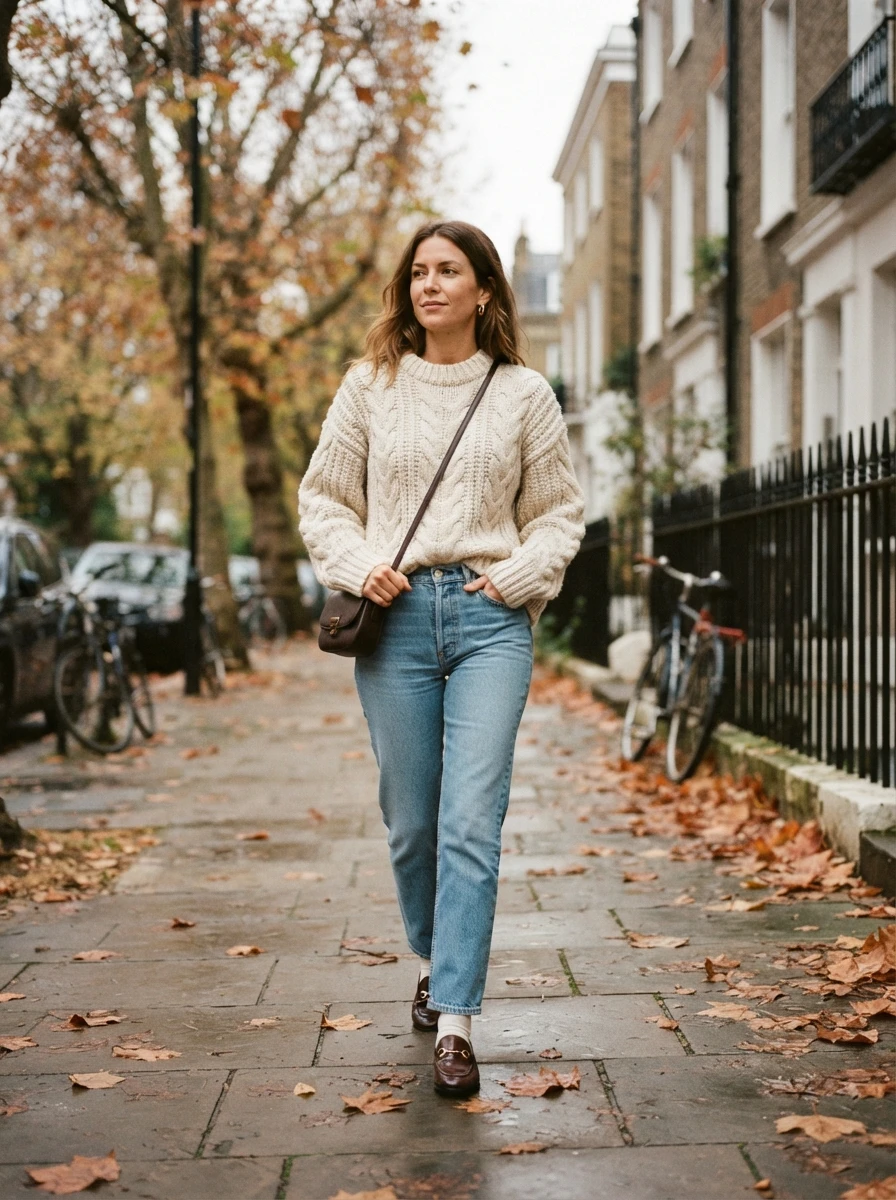
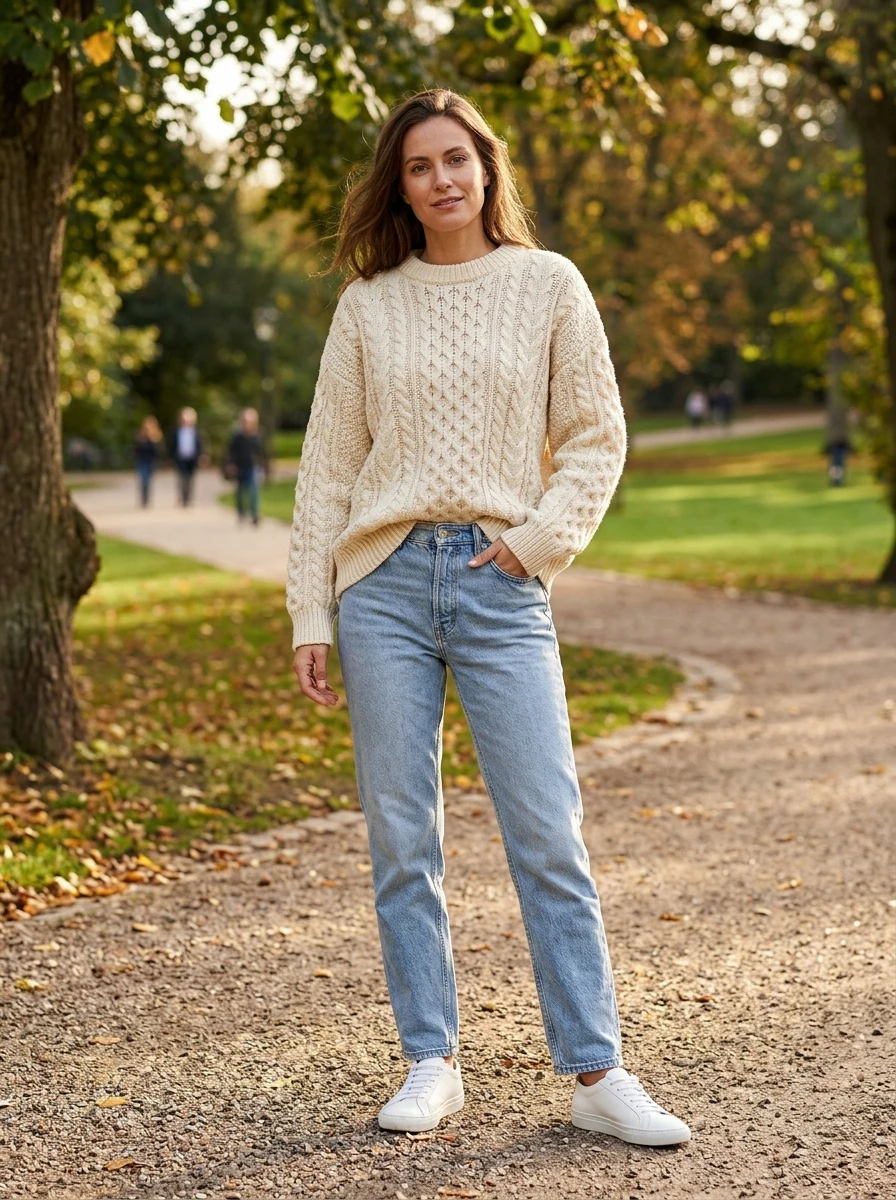
This is the genre's foundational formula, and it works because of silhouette logic: volume on top, a straight column below. Choose a chunky cable knit or a heavy ribbed turtleneck in cream, oatmeal, or charcoal, tucked lightly at the front into vintage wash straight leg jeans. The tuck matters: it creates a waistline where the sweater's volume would otherwise erase it.
Wear it with: swap the knit seasonally rather than the formula: a waffle knit henley in spring, a lighter ribbed turtleneck in autumn. Leather loafers keep it polished; white sneakers keep it casual. A long trench or a straight wool coat over the top adds warmth without competing with the sweater's volume.
Slouchy Sweater and Slim Leggings
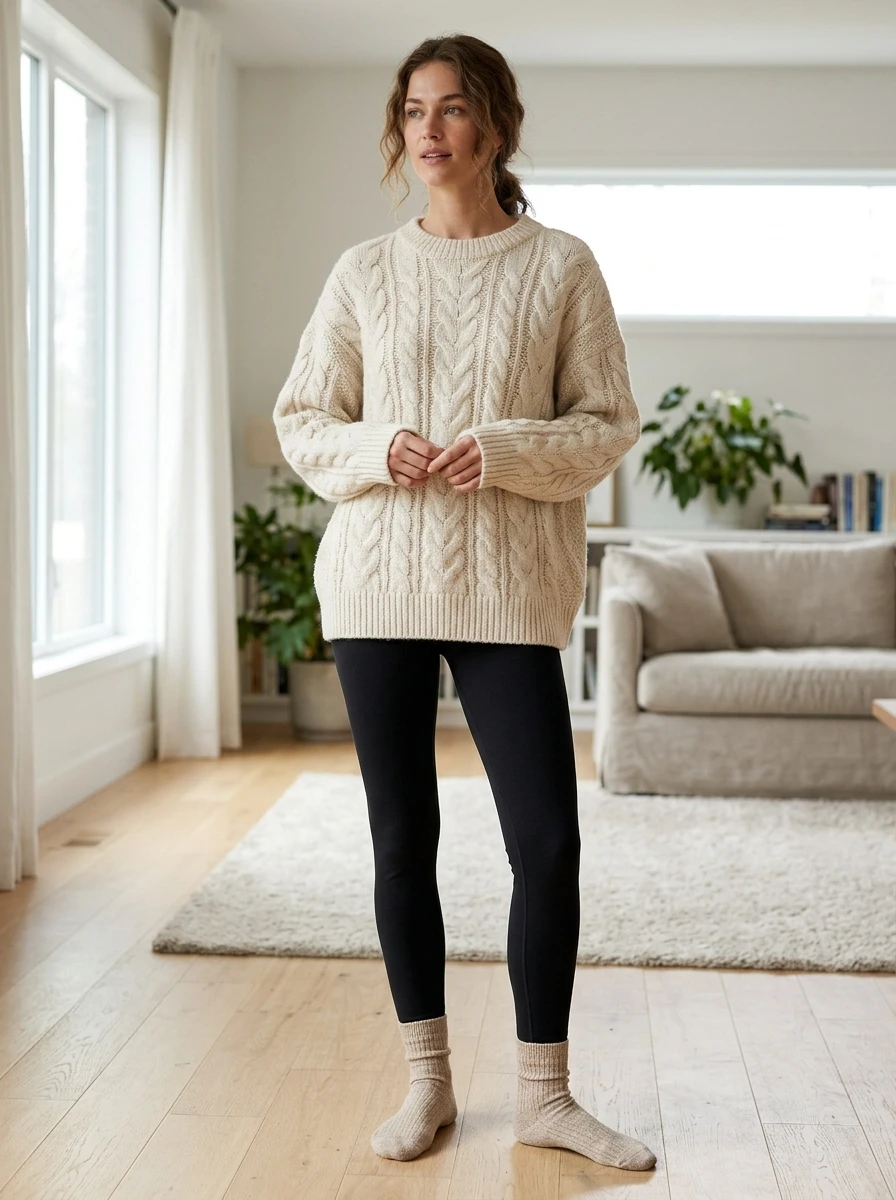
The home base version of the same principle. A thick cable knit sweater over high waisted, opaque leggings is the outfit that survives long work from home days and school runs alike, volume up top, a clean line below. The non negotiable here is legging quality: thick, opaque ponte or double knit fabric, not thin performance material that reads as activewear.
Fabric note: wool blend knits give the most warmth, though they reward careful handling: cool water, flat drying, folded storage. When the temperature drops further, this base takes a long coat and tall boots without changing anything else.
Tonal Dressing: One Colour Family, Many Textures
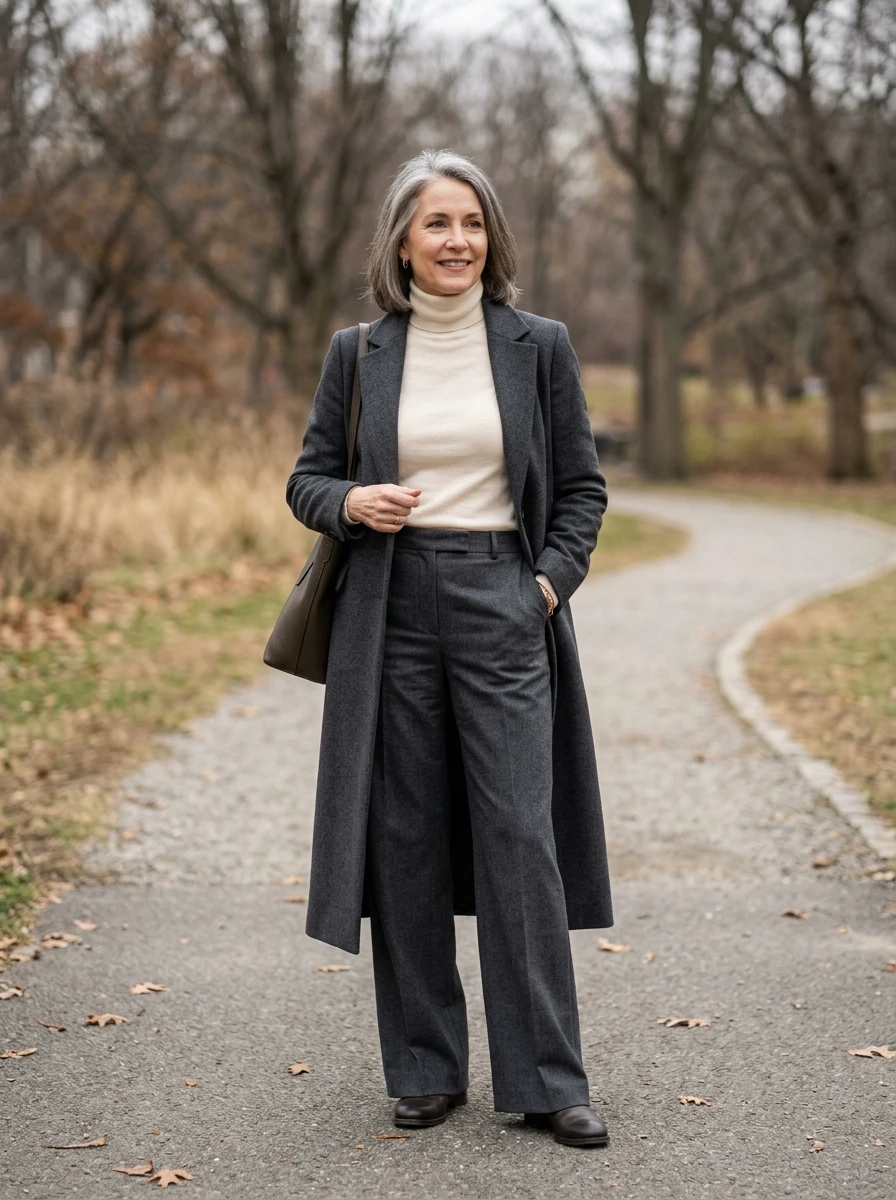
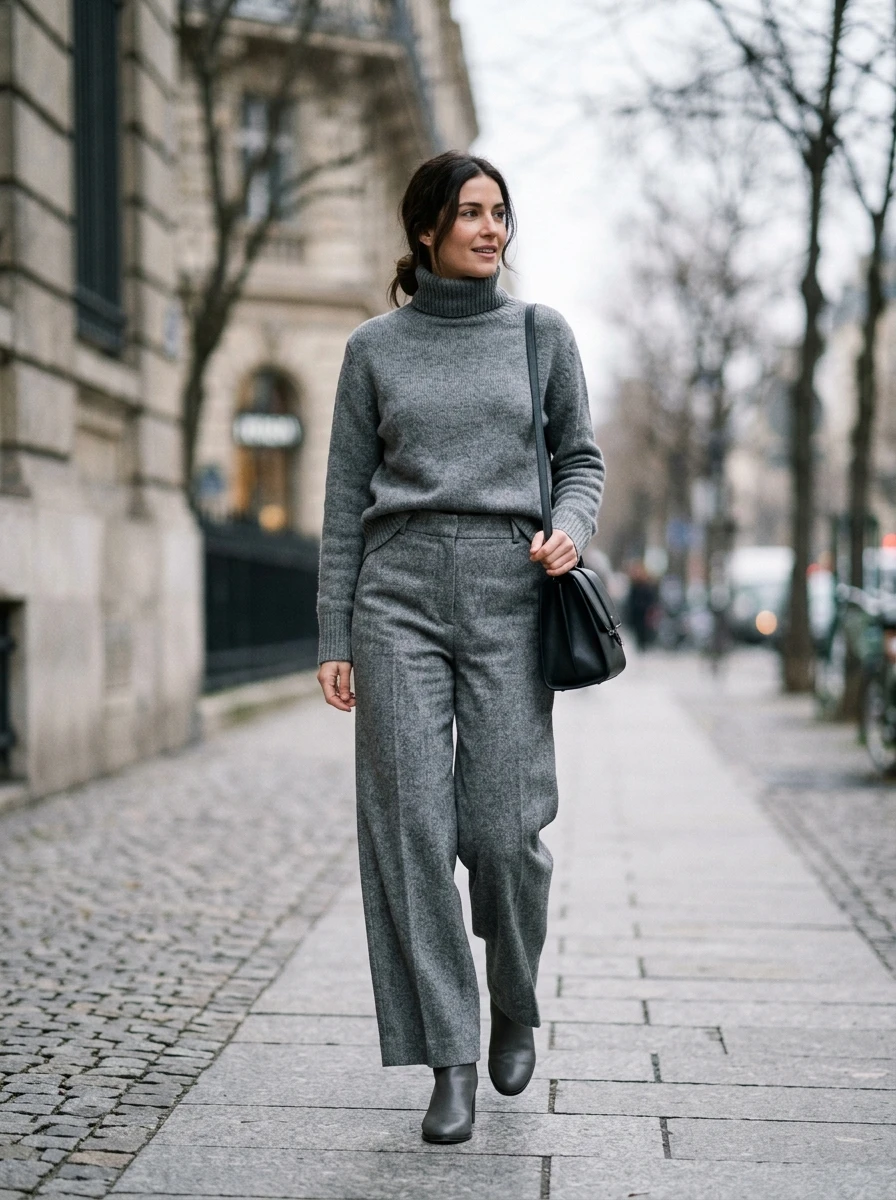
Sticking to one colour family is the fastest route to an outfit that looks planned. The trick is varying texture within the tone: a gray wool turtleneck tucked into matching wide leg trousers creates a long, lean line, and the rib of the knit against the flat weave of the trouser is what keeps it interesting. Olive cargo pants with a lighter olive knit and brown leather boots do the same work in earth tones; rust, chocolate, and camel layered together give a grounded autumn palette.
Fit note: monochrome dressing also simplifies cold weather layering. When coat, scarf, and sweater all sit in the same family, you can add or remove pieces without breaking the composition, which is practical for days that move between overheated interiors and cold streets.
Matching Lounge Set with a Structured Coat
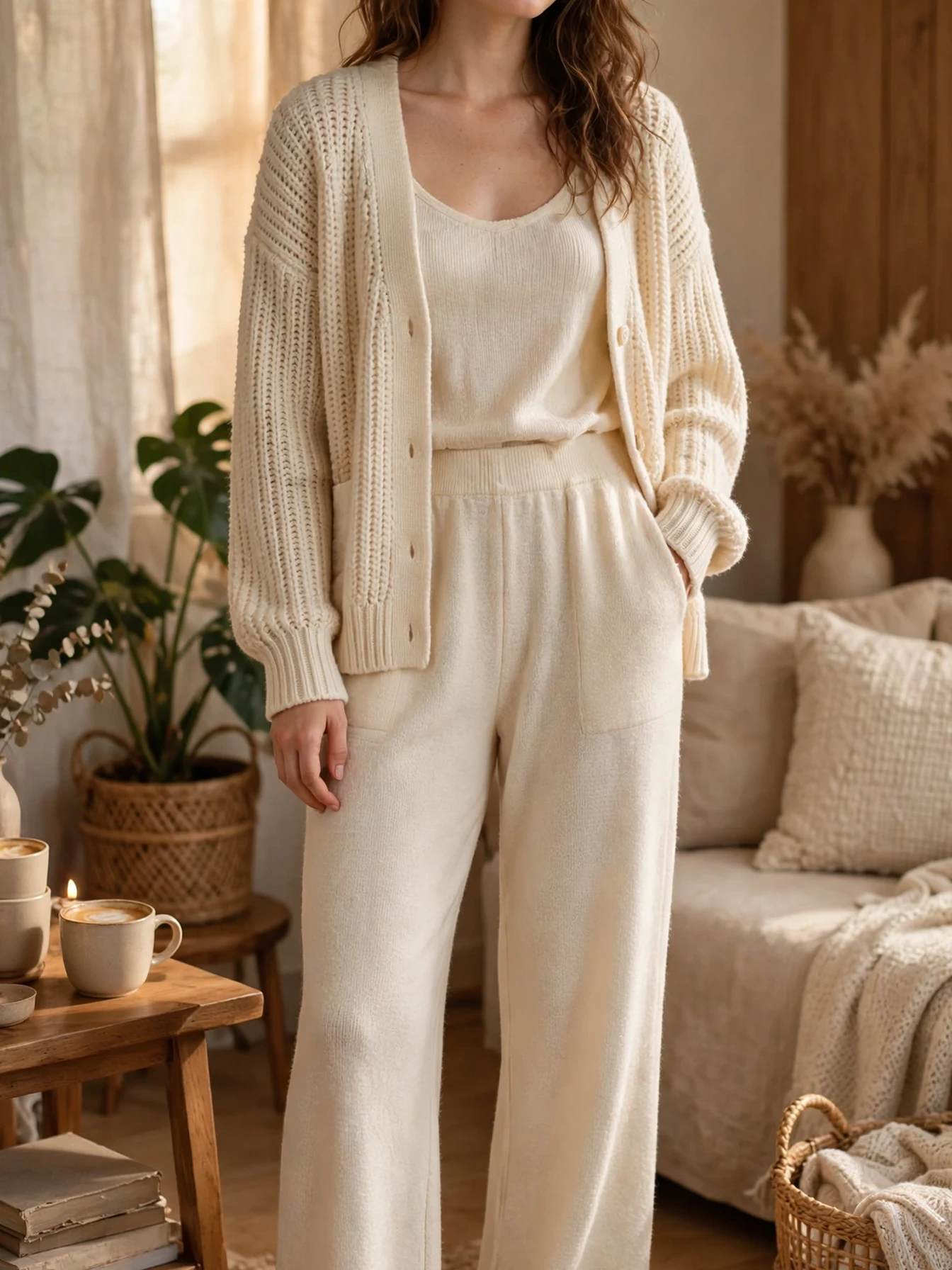
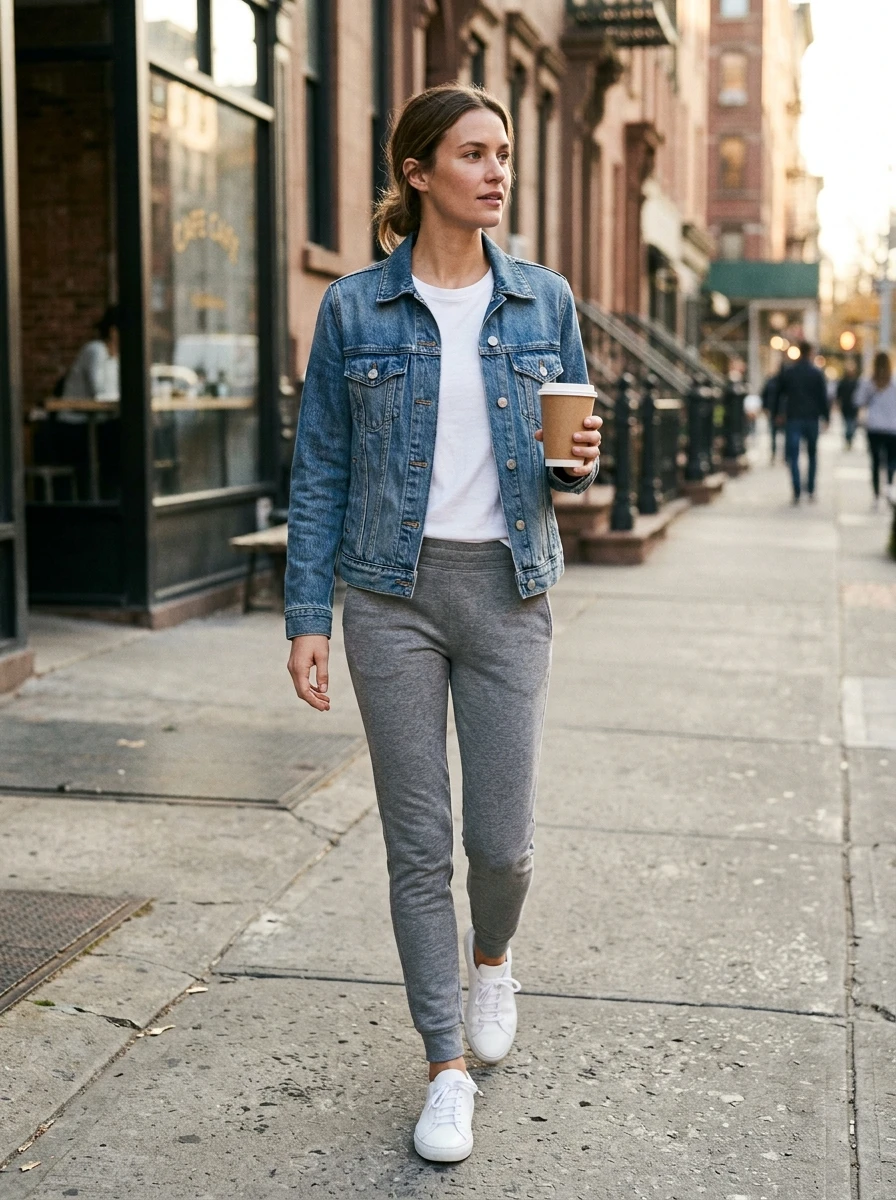
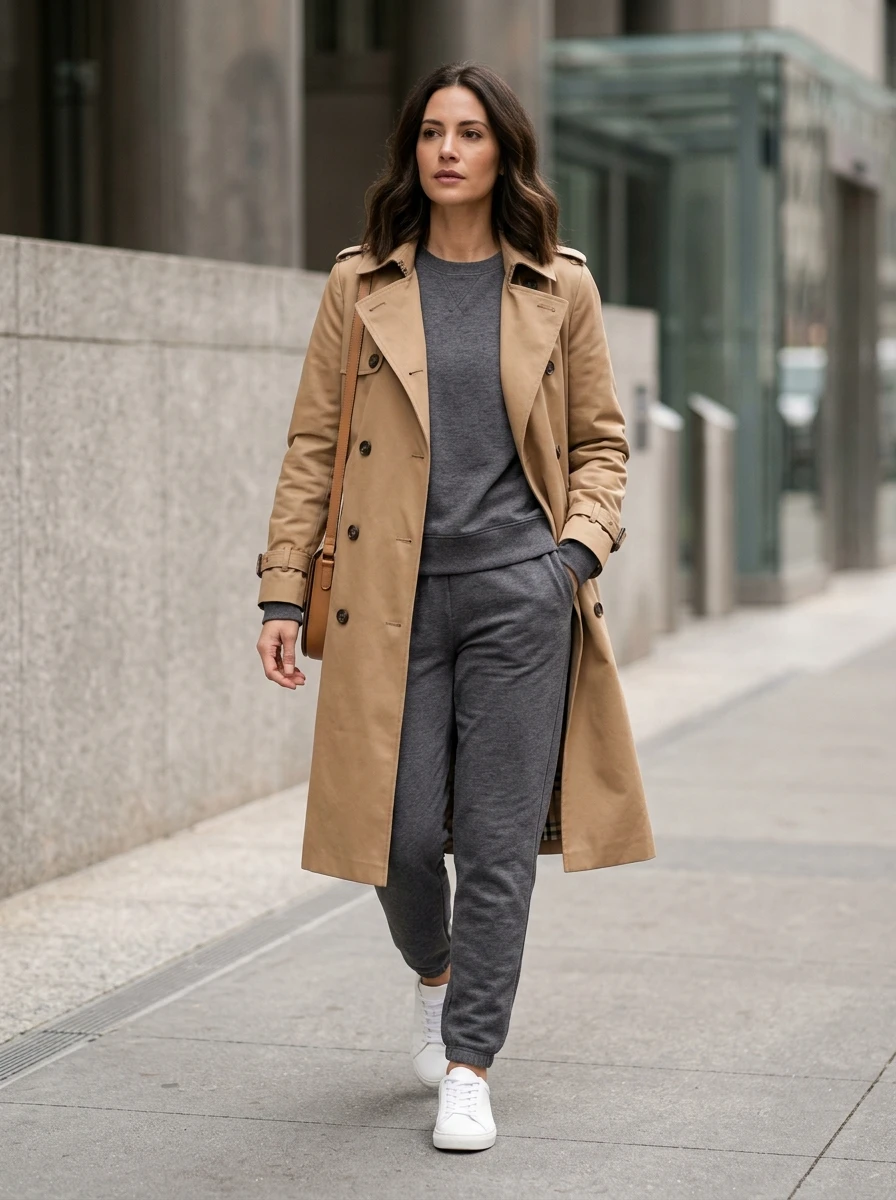
A coordinated jersey lounge set, sweatshirt and joggers in oatmeal, charcoal, or washed black, becomes a real outfit the moment a coat with architecture goes over it. The trench is the classic choice, but a straight wool coat or even a denim jacket in warmer months does the same job. The coat supplies the structure the soft set lacks.
Fabric note: choose mid weight cotton blend sets that resist pilling, and keep the palette neutral so the coat remains the focal point. Clean white sneakers underneath complete the intentional errands look. This is arguably the highest comfort to effort ratio in the entire guide.
Texture Contrast: Fuzzy Against Fluid
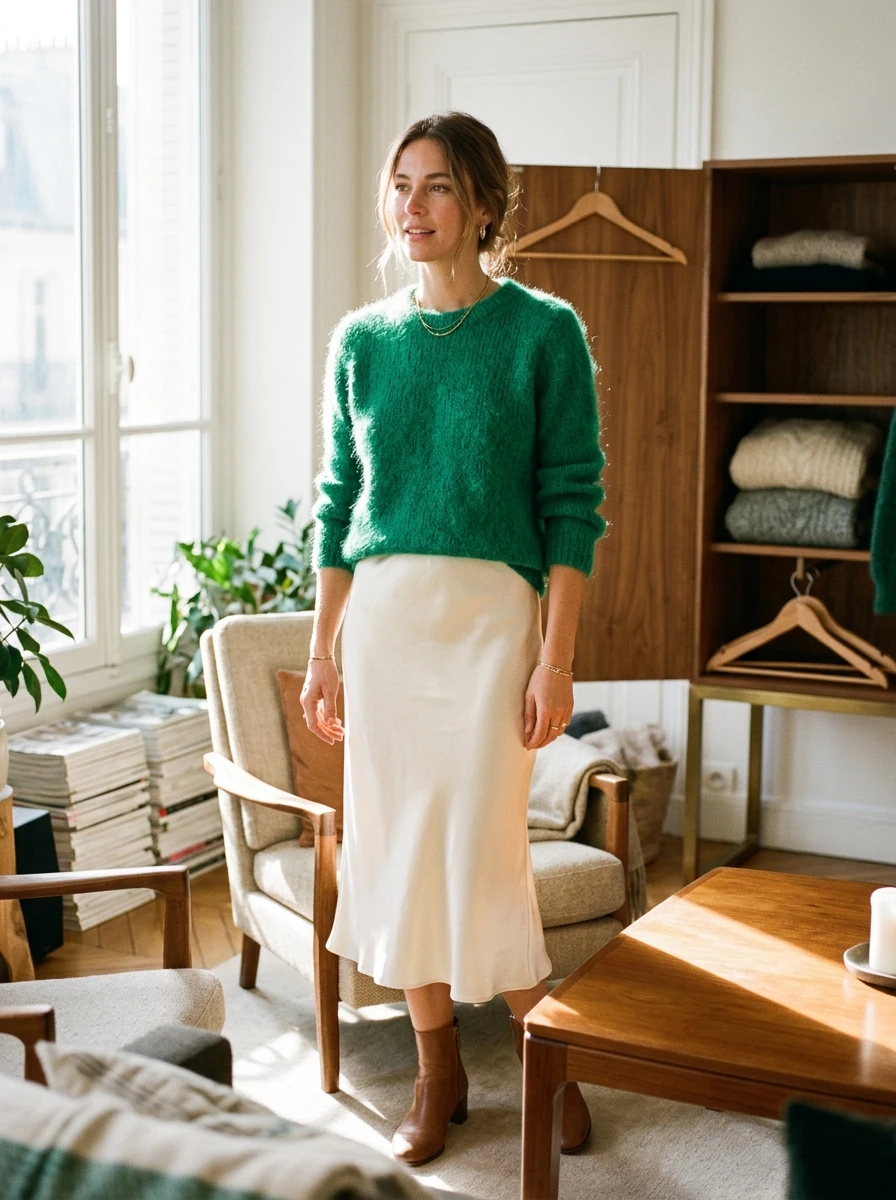
If tonal dressing is about harmony, this formula is about friction, and it produces some of the most striking outfits in the genre. A fuzzy mohair sweater over a satin midi skirt sets matte, light catching fibers against liquid sheen. A heavy knit cardigan draped over a slip dress does the same: the cardigan's weight gives the dress warmth and the dress gives the cardigan movement.
Colour pairing: the rule is one fuzzy piece, one fluid piece, nothing else competing. Keep colours close, ivory mohair with champagne satin, charcoal cardigan with a black slip, so the contrast lives in texture, not colour. These pairings carry you from a casual dinner to an evening at home without a change.
Corduroy and Velvet: Pile Fabrics for Cold Months
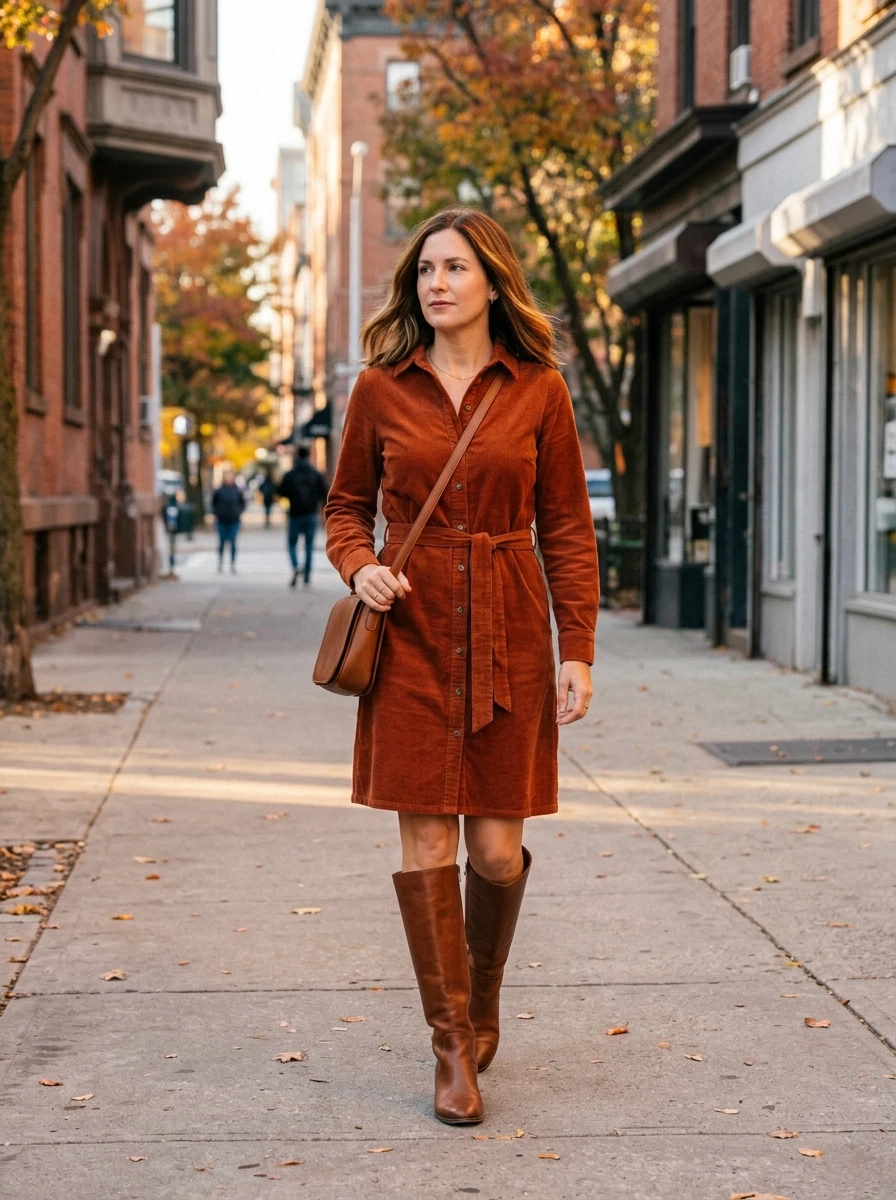
Ribbed pile fabrics are the comfy aesthetic's cold weather workhorses. A corduroy shirt dress, rust, tobacco, or chocolate, worn closed with knee high leather boots is a one piece autumn outfit that needs no styling. Fine wale corduroy reads almost like suiting; wide wale reads weekend.
Wear it with: velvet plays the evening version of the same role. A dark velvet midi skirt with a fitted cashmere sweater balances a rich, light absorbing fabric against a smooth, close fitting one, festive without formality, and comfortable for long dinners because neither piece restricts movement. A long open cardigan over a tee and corduroy trousers, finished with sturdy soled leather boots, covers the casual end of the spectrum in the same fabric family.
Denim, Three Ways
Denim is the genre's most forgiving anchor fabric, structured enough to balance any soft top, comfortable enough to live in. Three formulas cover most of the year:
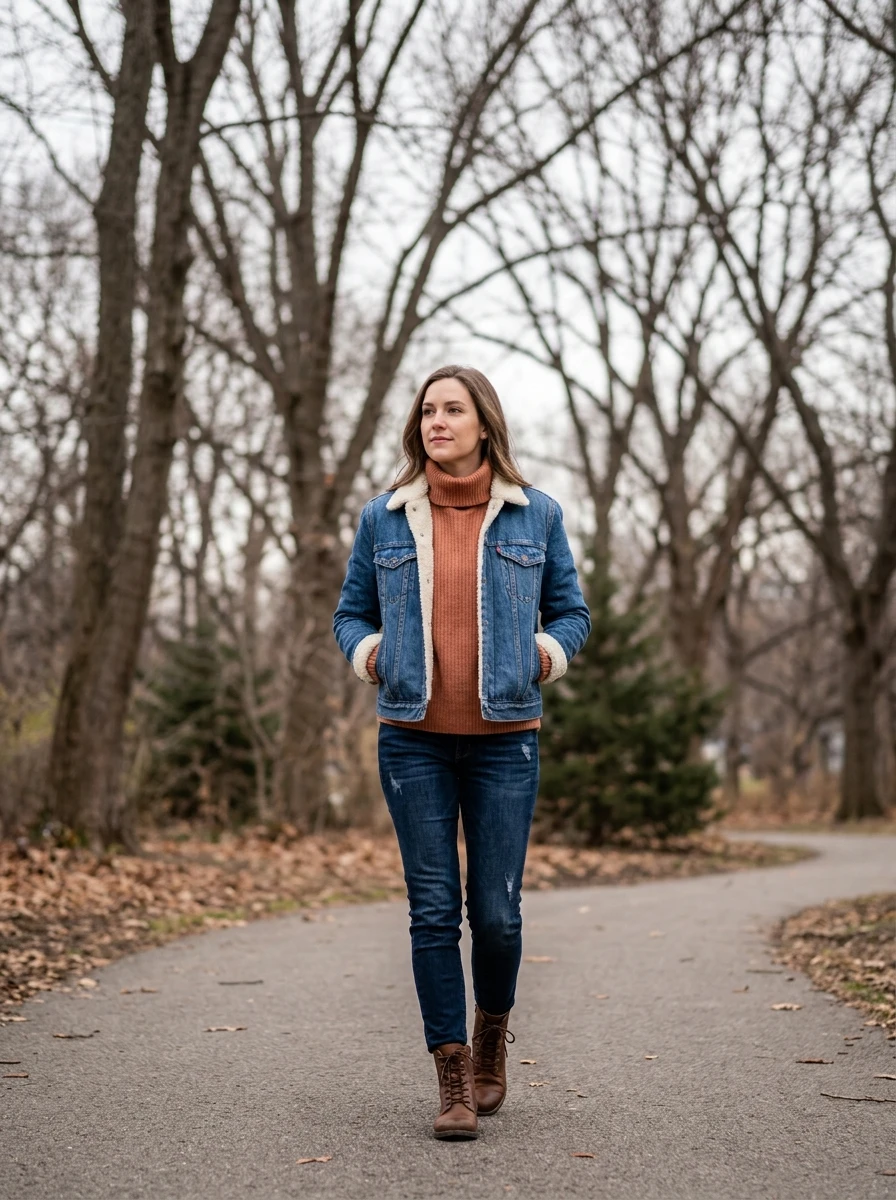
- Fleece lined denim jacket over a ribbed turtleneck. The sherpa collar adds visible texture and real warmth; look for a jacket with a little stretch so it doesn't feel stiff. Ideal for coffee runs and park walks.
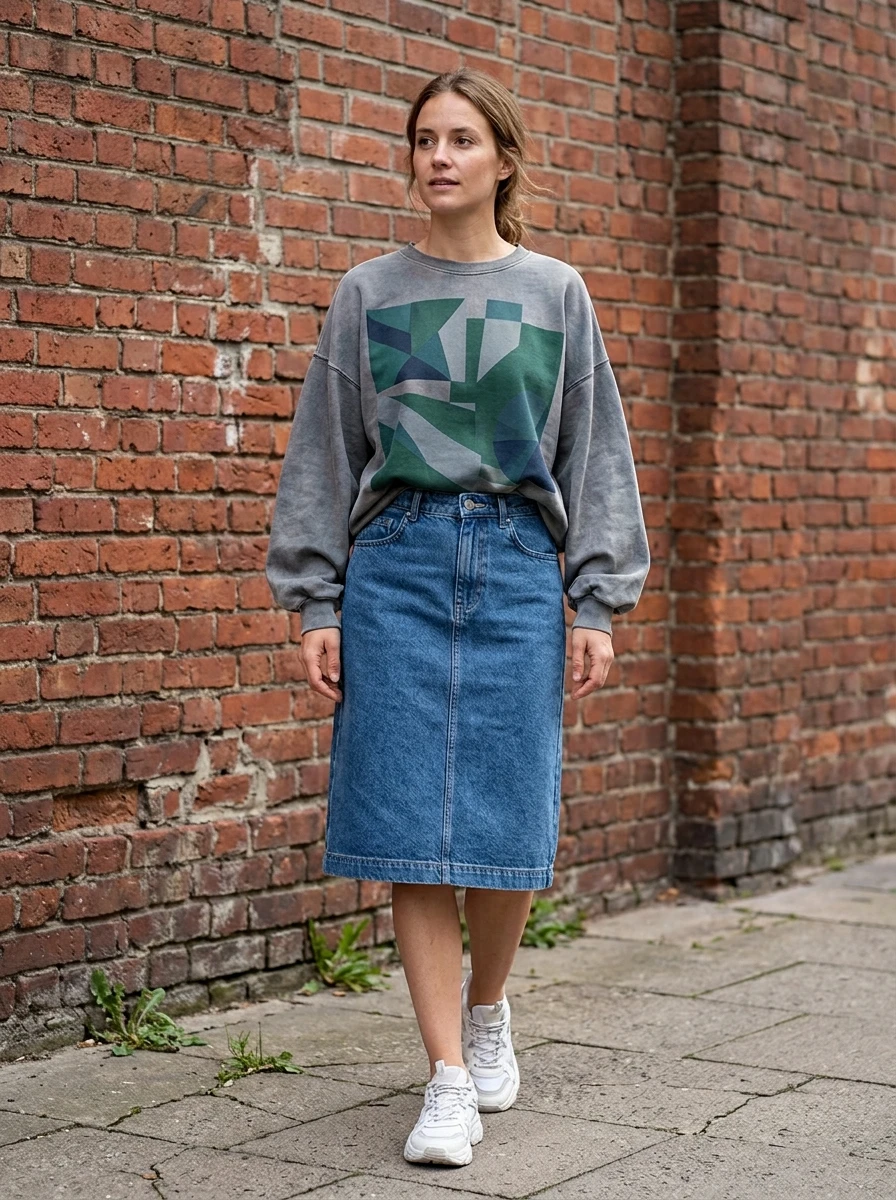
- Denim skirt with an oversized sweatshirt. Knee length, medium wash, and a light front tuck on the sweatshirt, never a full tuck, which bunches at the waist. Heavy denim against soft fleece is a perfect weight contrast.
- Jersey maxi dress under a classic denim jacket. The jacket gives the dress's fluid line a structured shoulder; tied around the waist in warm weather, it becomes a styling detail rather than a layer.
The Coat Does the Talking
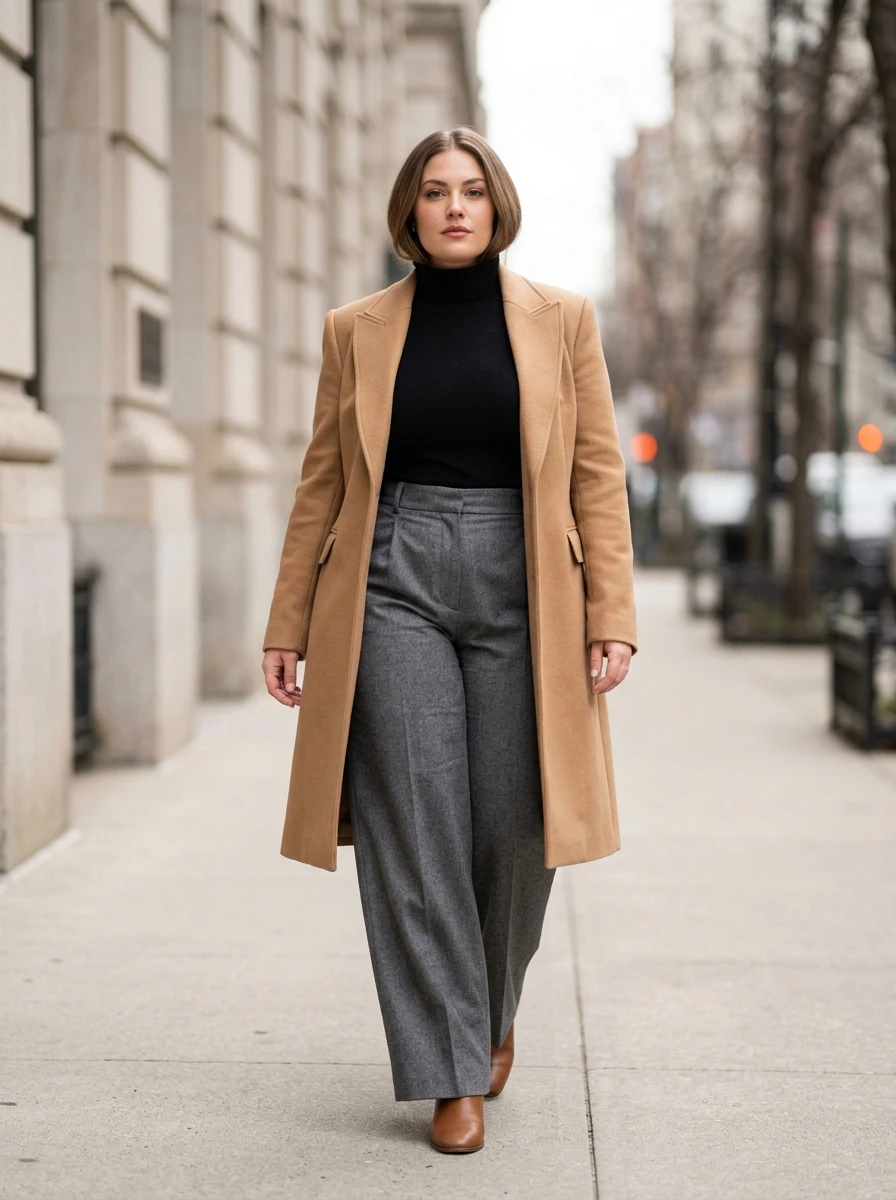
In winter, the coat is the outfit: everything underneath can be simple if the outer layer has presence. Four approaches, each with a different character:
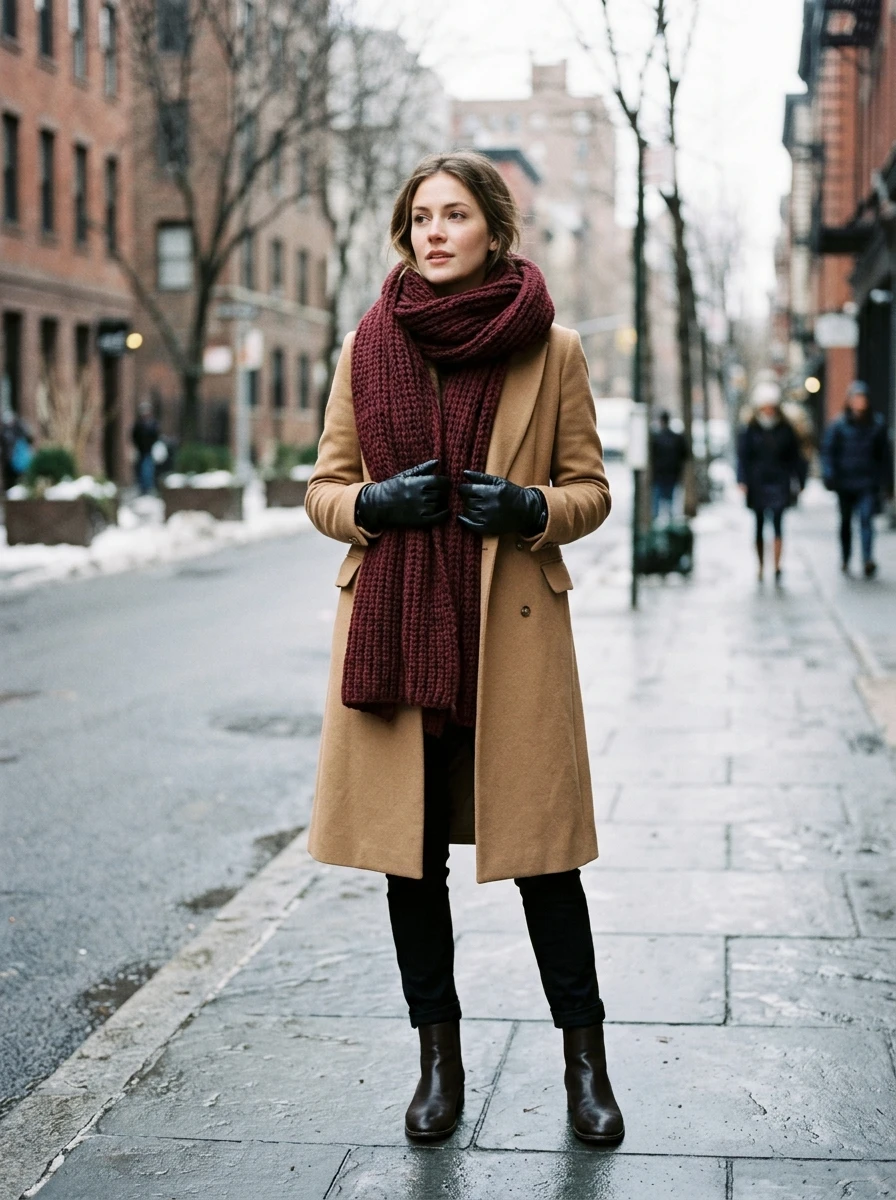
- Camel wool coat with an oversized scarf. Contrast the scarf colour against the coat, deep burgundy on camel is the classic, and choose a scarf with real heft; a thin one neither warms nor drapes. Leather gloves finish it.
- Shearling lined jacket with straight leg jeans. Rugged and warm, especially with wool socks and boots. Shearling is heavy, so reserve this for days you won't be carrying the coat indoors for hours.
- Long parka over leggings and tall boots. The sleek base keeps the parka's bulk from reading shapeless; a mid length coat with side vents is the better pick if full parkas feel restrictive.
- Quilted jacket with tailored trousers and a crewneck. The most polished of the casual options, water resistant, warm, and neat enough for casual meetings. Synthetic quilted shells are a solid lower cost alternative to down.
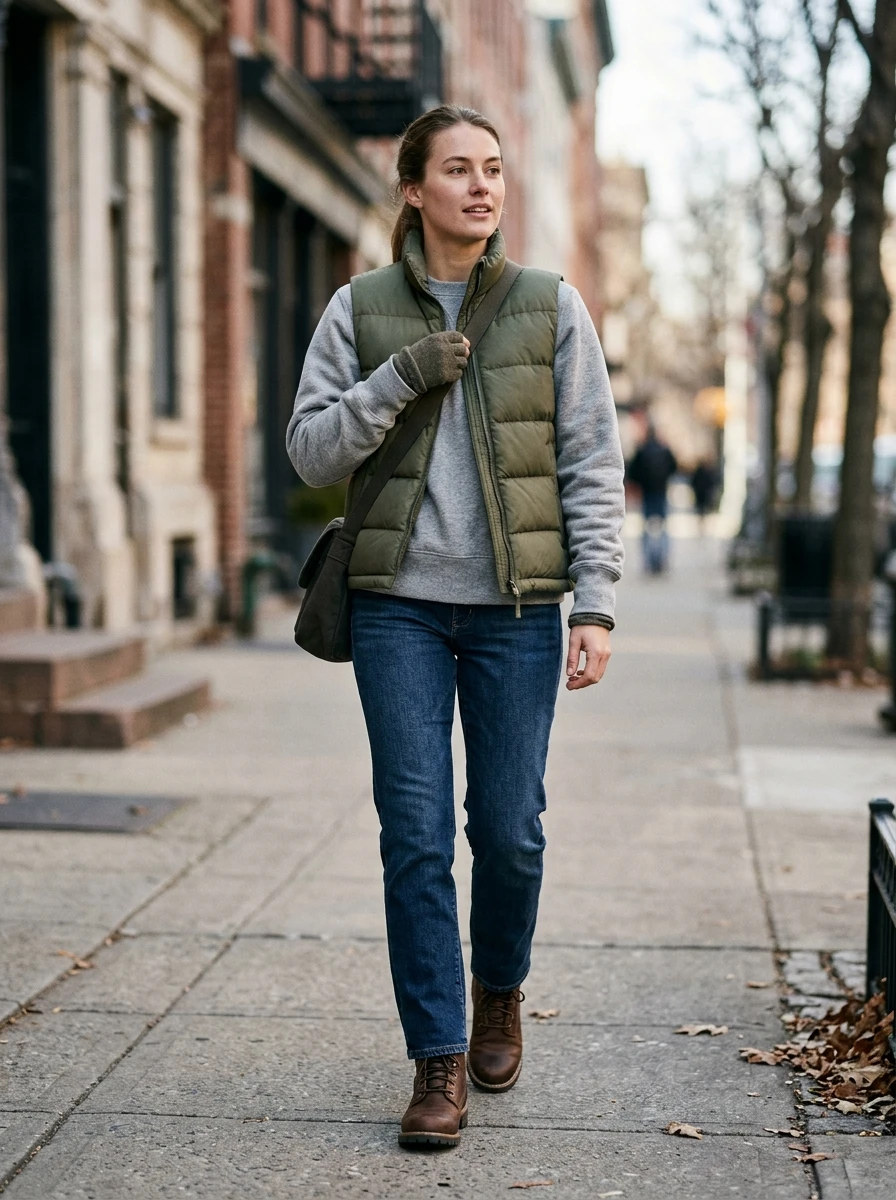
A lightweight puffer vest over a heavy cotton sweatshirt deserves mention as the active variant: core warmth with free arms for walks and outdoor chores.
Skirts That Stay Soft
Skirts keep the comfy aesthetic from defaulting to trousers, and the soft versions are the most versatile:
- Silk midi skirt with a boxy tee. The bias cut skirt's fluidity against a crisp cotton tee is a study in contrast; tuck the tee at the waist to define shape. Works from morning coffee to an afternoon at the library.
- Velvet midi with a fitted cashmere sweater. Evening leaning, as covered above, the fitted top anchors the skirt's richness.
- Slip dress under a chunky cardigan. The transitional season answer; the cardigan's weight is the warmth, the dress is the line.
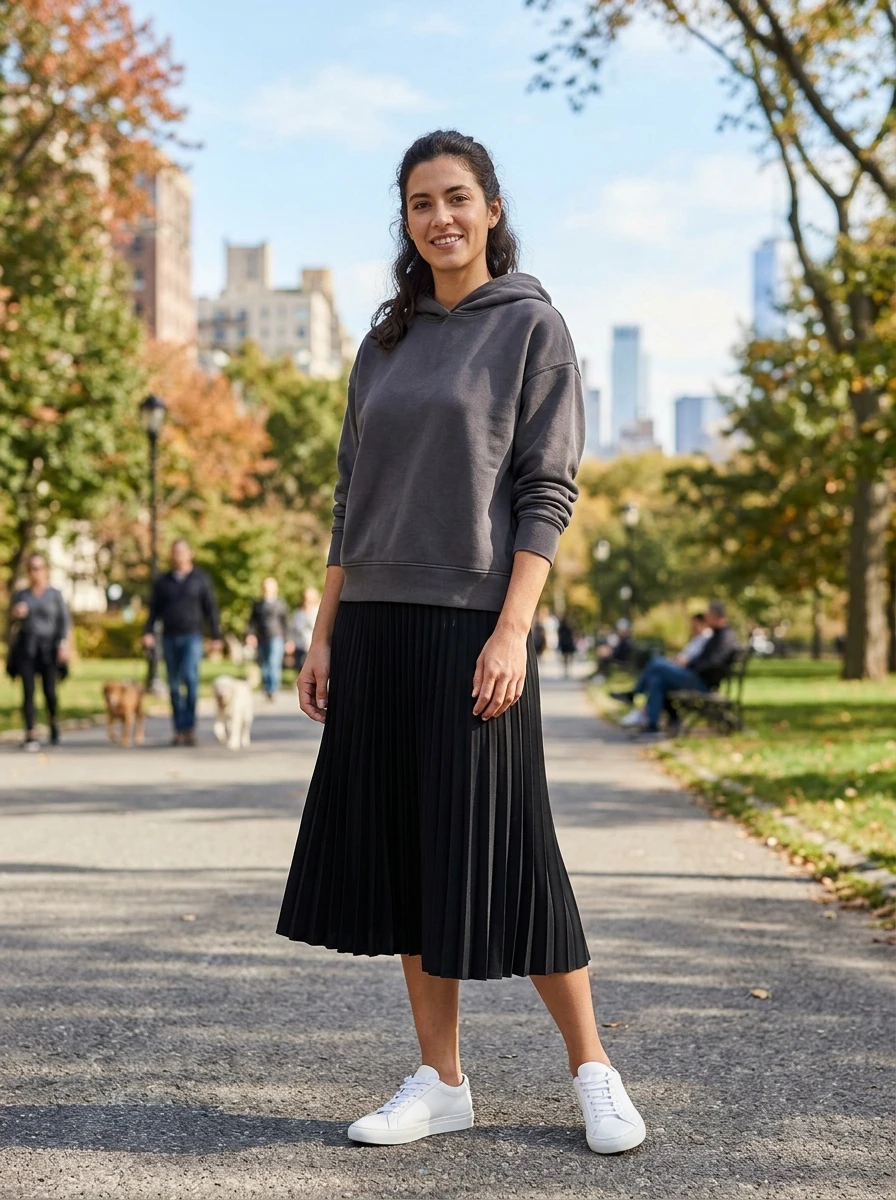
- Pleated midi skirt with a pullover hoodie. Streetwear adjacent and genuinely comfortable, a cropped hoodie keeps the waistline visible, a longer one leans relaxed. Sneakers ground it.
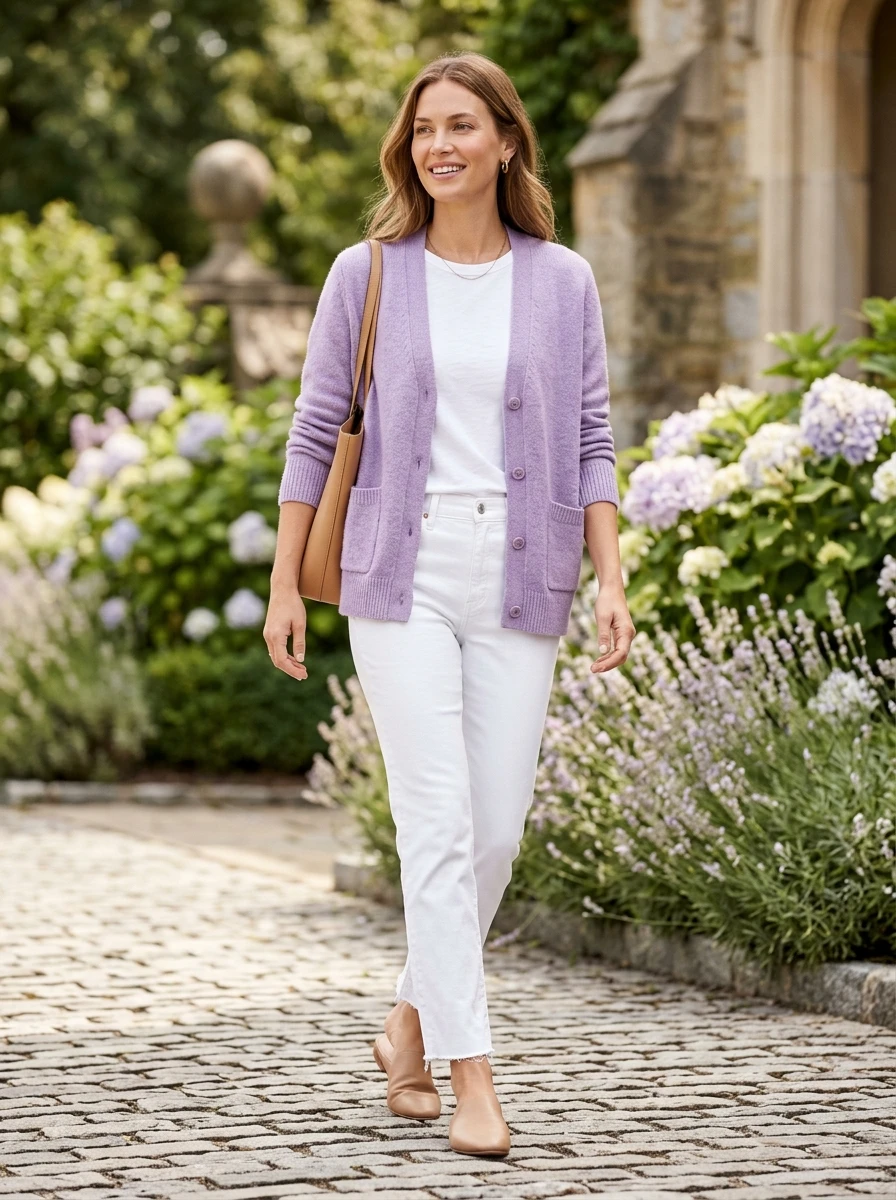
- Pastel cardigan with white denim. Lavender or mint against crisp white is a spring reset; choose a mid weight knit so the cardigan holds its shape, and finish with neutral mules or canvas sneakers.
Tailored Anchors for Soft Tops
These formulas flip the script: the structure comes from the bottom half or an outer layer, letting the top stay easy.
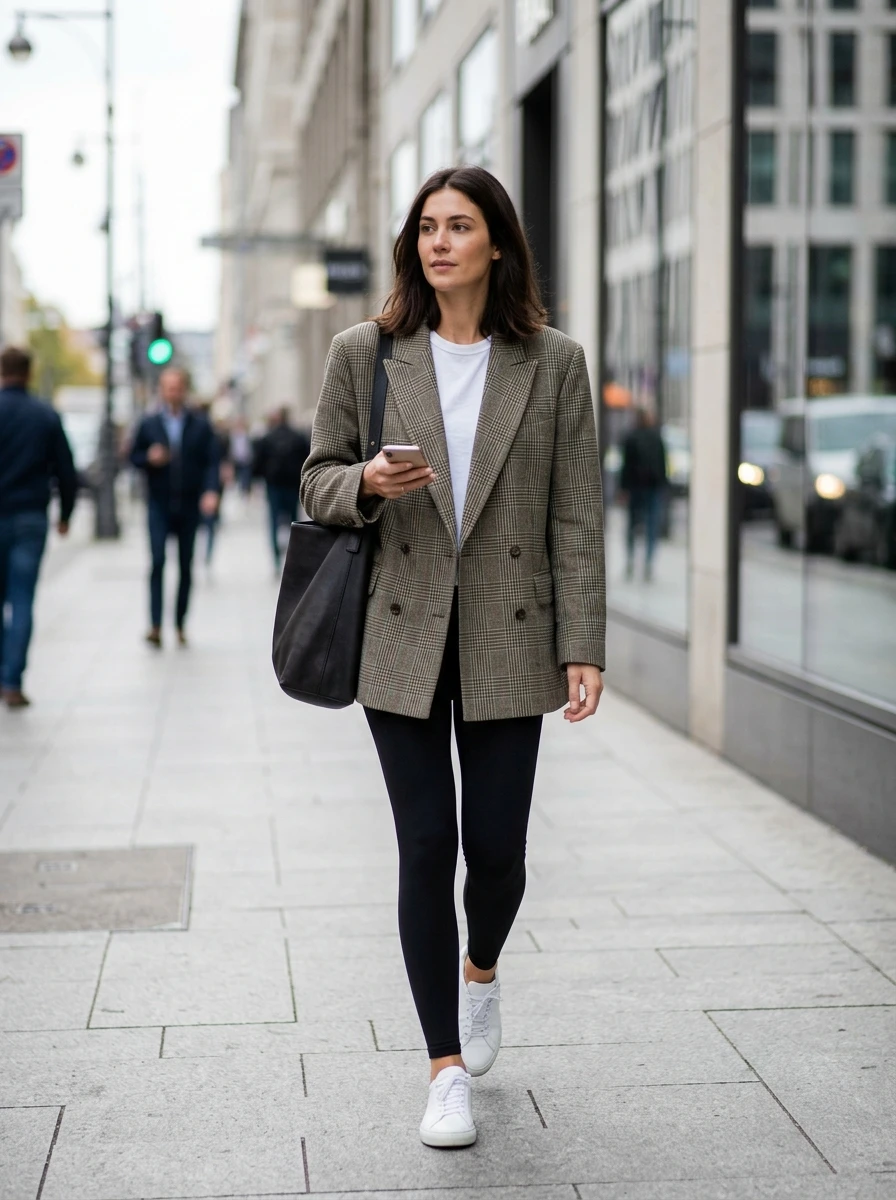
- Oversized blazer over leggings. The blazer's shoulder line and length do all the formal work; thick, opaque leggings and ankle boots keep it grounded. Cut the blazer oversized so movement stays easy.
- Sleeveless vest over a thin turtleneck. Clean and office friendly, with slim trousers and loafers. The layers adjust easily to fluctuating indoor temperatures, the vest comes off, the turtleneck stays.
- Collared shirt under a sweater vest. Preppy without stiffness; keep both layers light so you don't overheat indoors.
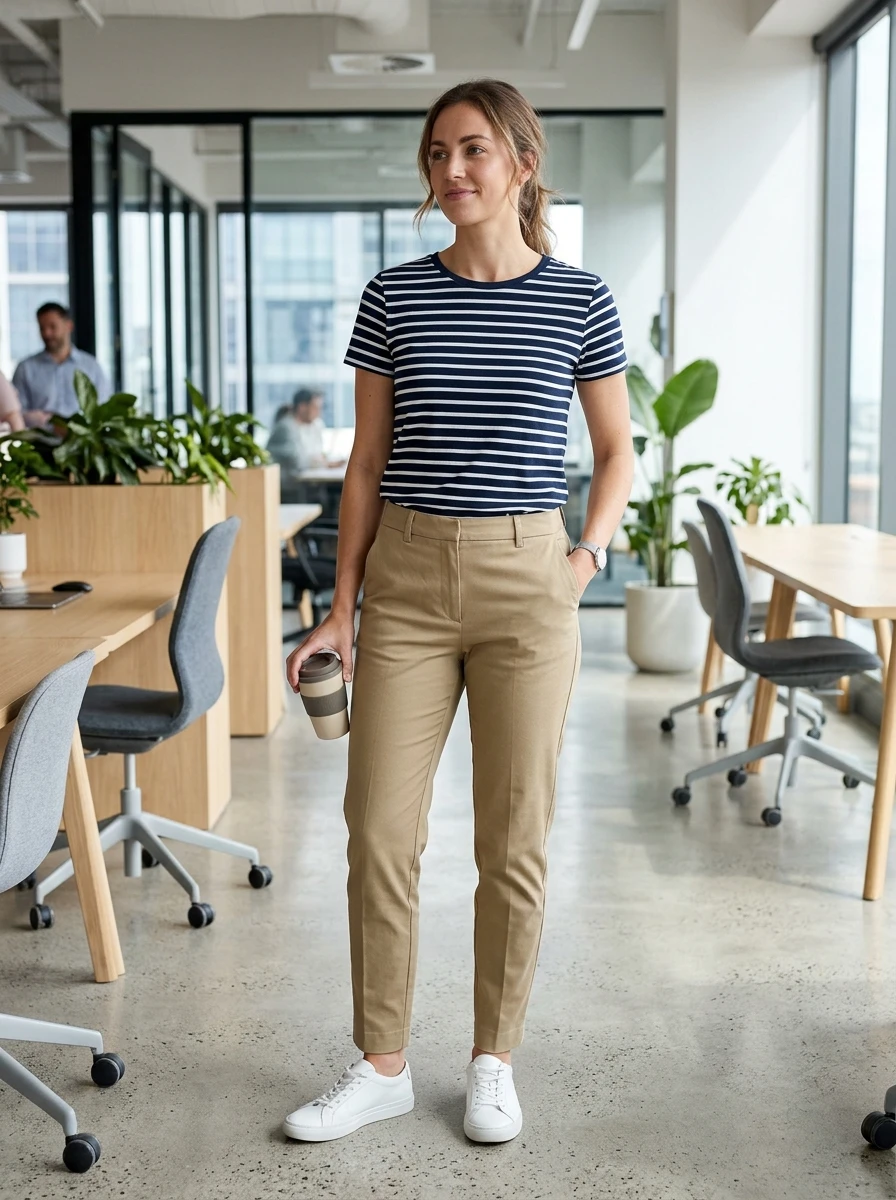
- Tapered chinos with a striped tee. Khaki or navy chinos, mid to high rise for sitting comfort, with a classic horizontal stripe. Tailored but all day wearable.
- Wide leg trousers with a fitted bodysuit. The bodysuit's snug line anchors the trousers' volume; hem the trousers to your shoe height so the cuffs don't drag.
- Cropped sweater with high rise trousers. The cropped length meets the high waistband to define the waist without any tucking, just ensure the sweater overlaps the trousers enough for comfortable movement.
Utility and Weekend Ease
For days built around movement, markets, walks, long Saturdays, utility silhouettes earn their place:
- Denim overalls over a striped long sleeve. Durable, low maintenance, and endlessly remixable; relaxed fit dungarees or a pinafore vary the same idea.
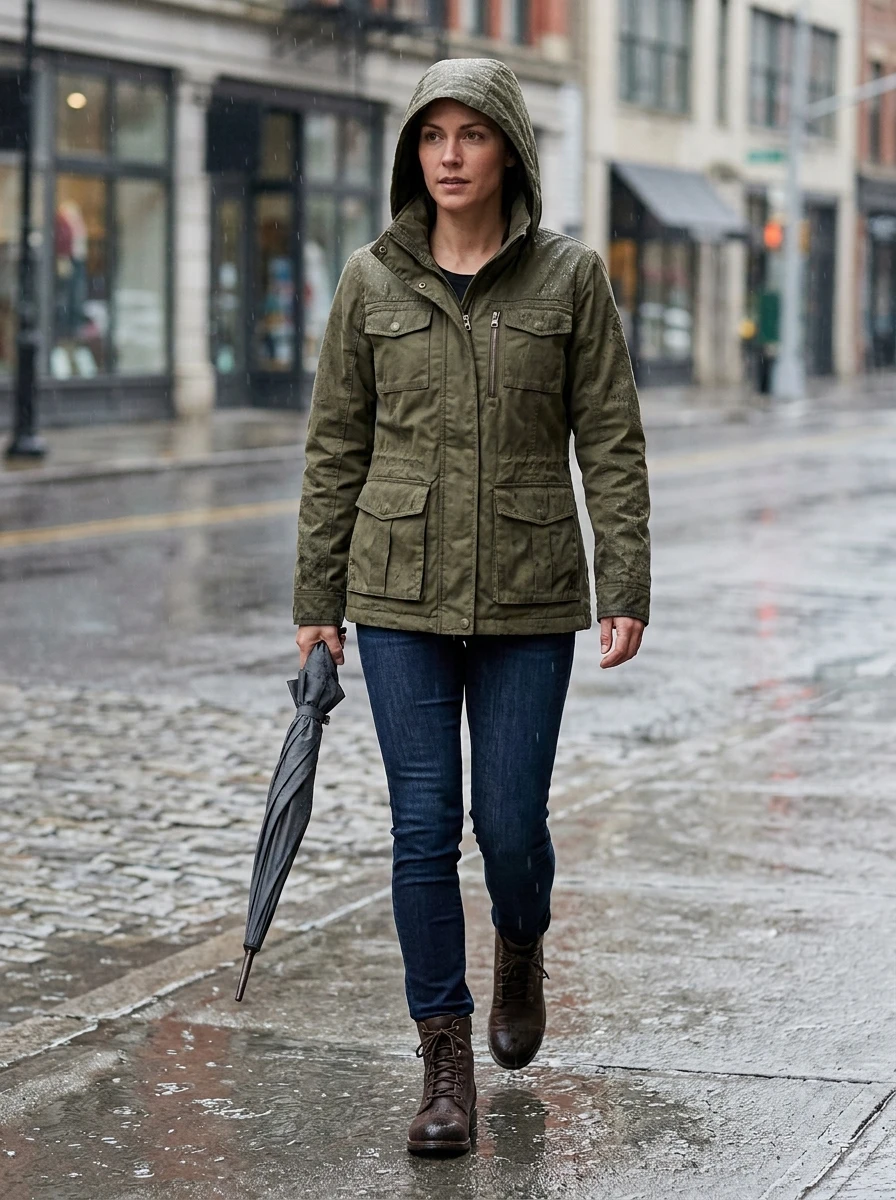
- Utility jacket over slim jeans. Canvas or cotton twill, multi pocket, with ankle boots. Genuinely weather capable and sharp in a utilitarian register.
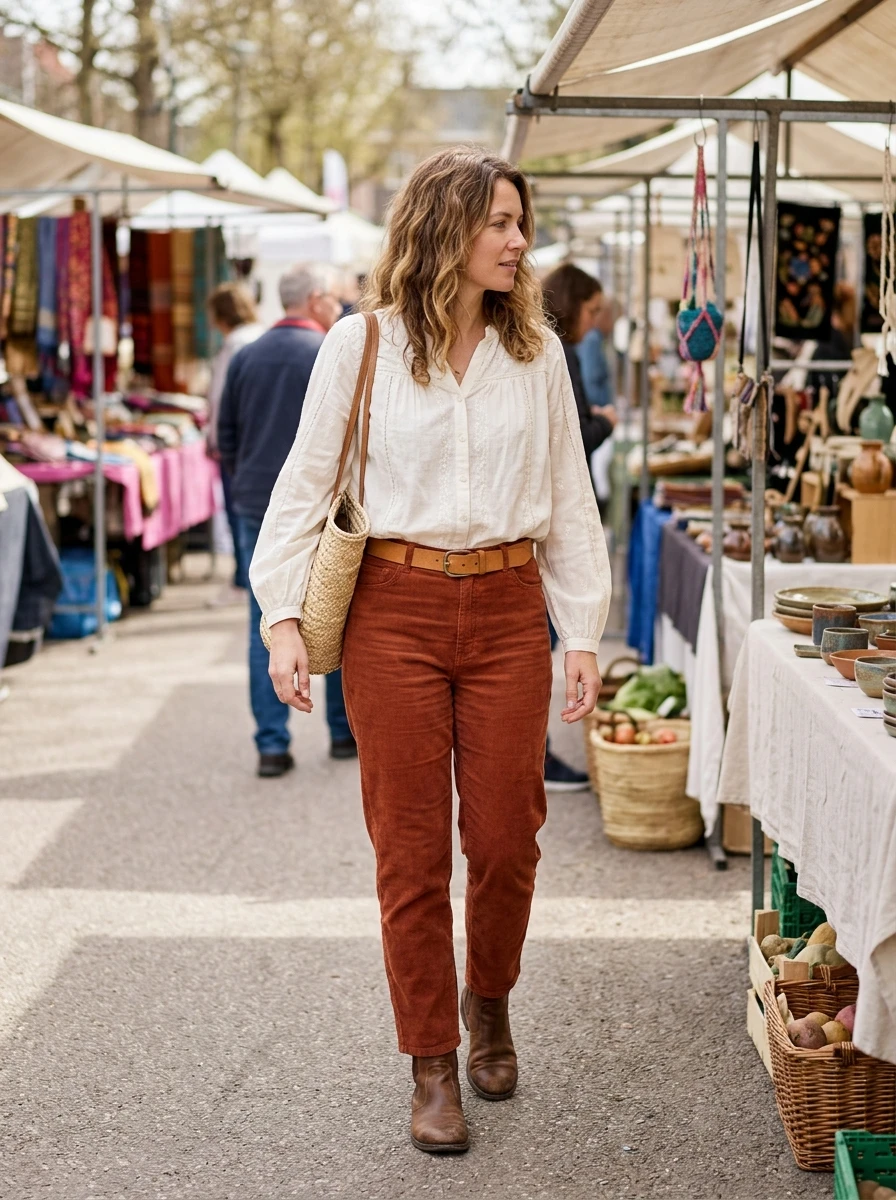
- Boho blouse tucked into high waisted corduroy trousers. Flowy sleeves against structured wide wale corduroy, with suede booties. Vintage corduroy from thrift stores often has better construction and more interesting colors than new mass market versions.
- Fitted turtleneck under a sleeveless jumpsuit. The jumpsuit's column is the structure; the thin turtleneck adds warmth without bulk. Check torso length so nothing pulls when you sit.
The Bright Knit Reset
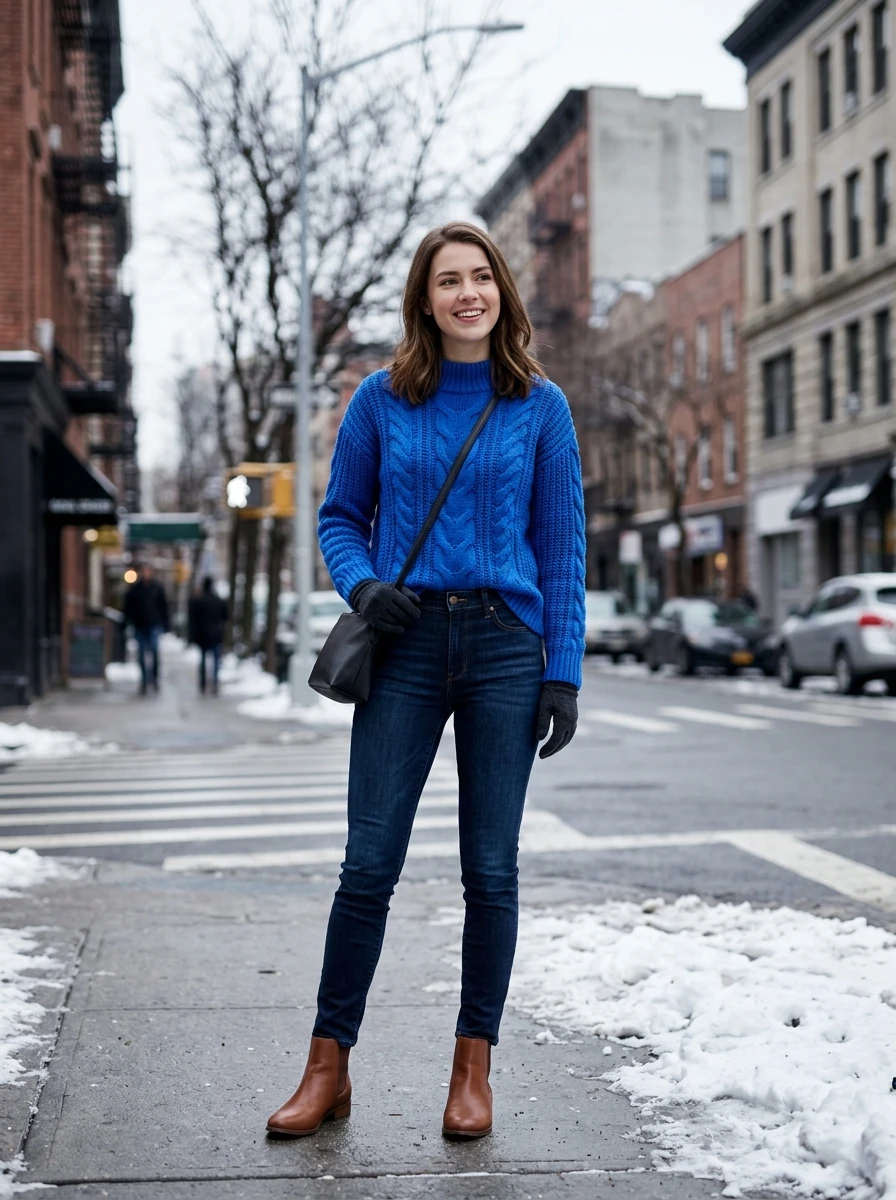
After months of neutrals, one saturated knit, bold red, cobalt, forest green, tucked into dark wash jeans resets the whole rotation. The discipline is restraint: one bright piece, everything else quiet. Simple sneakers or ankle boots keep the focus where it belongs. This is the easiest seasonal refresh you can buy, because a single sweater changes the read of jeans you already own.
Footwear: The Fastest Way to Change the Register
Shoes are the cheapest styling lever in this genre. The same sweater and denim base reads differently under white sneakers (casual), leather loafers (smart), and heeled ankle boots (evening). Tall boots add a sleek line under parkas and long coats; pointed flats streamline wide leg trousers; flat sandals relax a maxi dress. When choosing, weigh the day's walking honestly, the most aesthetic shoe is the one you don't have to think about by 4 p.m.
Layering Without the Bulk
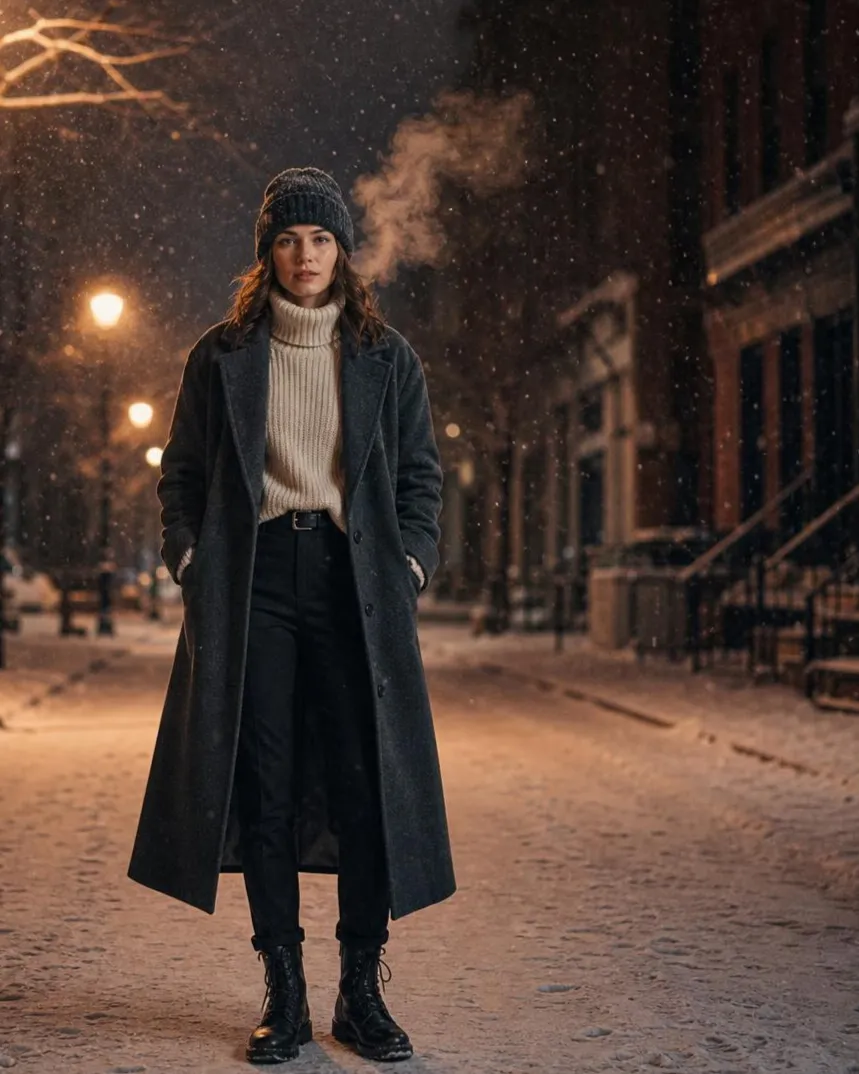
Cold weather comfort fails when every layer is thick. The better method: slim base layers, a thermal top or thin fitted turtleneck, under one voluminous statement piece, whether that's a chunky sweater, a long coat, or a puffer vest. One volume piece per outfit is the rule; two competing volumes is what creates the bundled, shapeless feeling people complain about. Dress the warm core and the cool extremities separately: insulated base, statement mid layer, wind blocking outer, and let accessories (scarf, gloves, socks) close the gaps.
Building Your Rotation
Treat these formulas as modules and the work gets simple: pick one anchor piece you already own, the cable knit, the trench, the corduroy trousers, and run it through three different formulas this week. Note which combinations you reach for twice; those are your personal uniforms, and they're worth investing in with better fabric. A rotation of six to eight strong modules covers nearly every day, because the principles underneath them (softness plus structure, volume balanced by line, texture over print) do the repeating for you.
The same module logic shapes our casual aesthetic fall outfits, if you want a seasonal version of this rotation.
Caring for the Fabrics That Make This Work
The soft fabrics this aesthetic depends on last years longer with minimal effort. Hand wash wool and cashmere in cool water with gentle detergent, and dry flat on a towel, never hang wet knits. For detailed guidance, Woolmark's wool care guide covers washing, drying and storage. Fold sweaters, especially mohair, rather than hanging them. Turn denim inside out before washing to hold color. Keep a lint roller near anything velvet. These are small habits, but they protect the texture contrast the whole look relies on.
Adapting the Formulas to Your Life
Two adjustments make any formula yours. For more polished settings, trade the softest piece for its structured cousin: hoodie becomes fine knit sweater, joggers become tailored trousers, while keeping the palette neutral. For your body, keep returning to proportion: volume on one half, a defined line on the other, and hems that meet your actual shoe height. A tailor's ten minute hem adjustment improves a wide leg trouser more than any styling trick. The formulas are starting points; the fit is the finish.
Common Questions About Comfy Aesthetic Outfits
Why do my comfy outfits look sloppy instead of stylish?
Almost always a structure deficit: too much softness with nothing anchoring the silhouette. Add one tailored element, a coat with shoulders, a defined waistband, a hard edged shoe, and keep volume to one half of the outfit. Texture contrast (a smooth shoe against a fuzzy knit, a crisp tee against a fluid skirt) also reads as intentional where uniform softness reads as accidental.
How do I layer for winter without looking bulky?
Use slim base layers and a single voluminous statement piece, one chunky sweater or one long coat, not both. Dress in thin to thick order (thermal, knit, outer shell), and let the coat be the outfit's focal point so everything underneath can stay simple.
Which fabrics should I prioritize first?
Cable knit wool blends, waffle knit cotton, mid weight French terry, corduroy, and one fuzzy texture like mohair or bouclé cover most formulas. Add one fluid fabric, silk, satin, or a bias cut jersey, for contrast pieces. Quality matters more than quantity here: five good knits outlast fifteen thin ones.
Can I wear these outfits to a professional office?
Yes, with one swap: replace the softest piece with its structured equivalent. An oversized blazer over leggings, a sleeveless vest over a thin turtleneck, or tapered chinos with a striped tee all read professional while staying comfortable, and the same logic runs through our everyday chic outfits. Keep the palette neutral and the footwear closed and clean.
How do I keep the look from feeling repetitive?
Rotate the variables, not the formulas: change the texture (cable knit to waffle knit), the tone (oatmeal to olive), or the shoe (sneaker to loafer). Tonal dressing and texture contrast give you enormous variety from a small wardrobe, because the eye registers fabric and color shifts as newness even when the silhouette repeats.
Your Personal Style Formulas: A Short Verdict
The through line of all seventeen ideas is a simple discipline: pair softness with structure, balance volume with line, and let texture do the talking. Start with the formulas closest to what you already own, run each through a week of real life, and keep the ones you reach for twice. A wardrobe built on repeatable modules, rather than one off outfits, is what makes getting dressed feel effortless instead of exhausting.