10 Everyday Outfits That Still Look Put-Together
How to use this guide
Treat trend ideas as styling prompts rather than rules. Start with pieces already in your wardrobe and adjust fabrics, layers, and proportions for your climate, comfort, occasion, and personal style.
Not every day needs a theme, but it helps when your outfit already has one built in. The gap between "photographs well" and "actually survives a full day of errands" comes down to whether the outfit has one point of real structure — a coat, a belt, a blazer shoulder — holding it together.
Ten combinations, each anchored by a different structural piece.
Charcoal Wool Coat
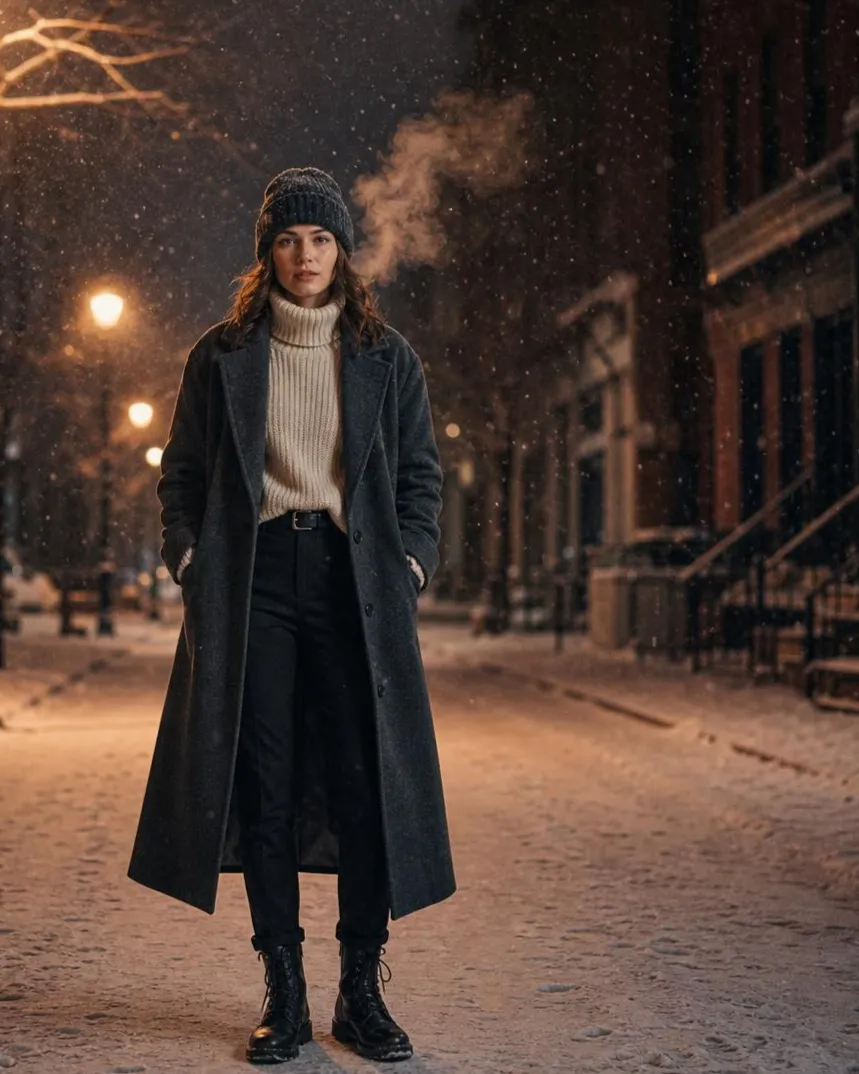
A floor-length charcoal coat, a cream ribbed turtleneck, slim black trousers, a knit beanie, combat boots. The coat is doing all the shaping work in this outfit — everything under it is deliberately simple and monochrome, which means one well-cut coat can carry the entire silhouette without needing anything complicated underneath.
Varsity Letterman Jacket
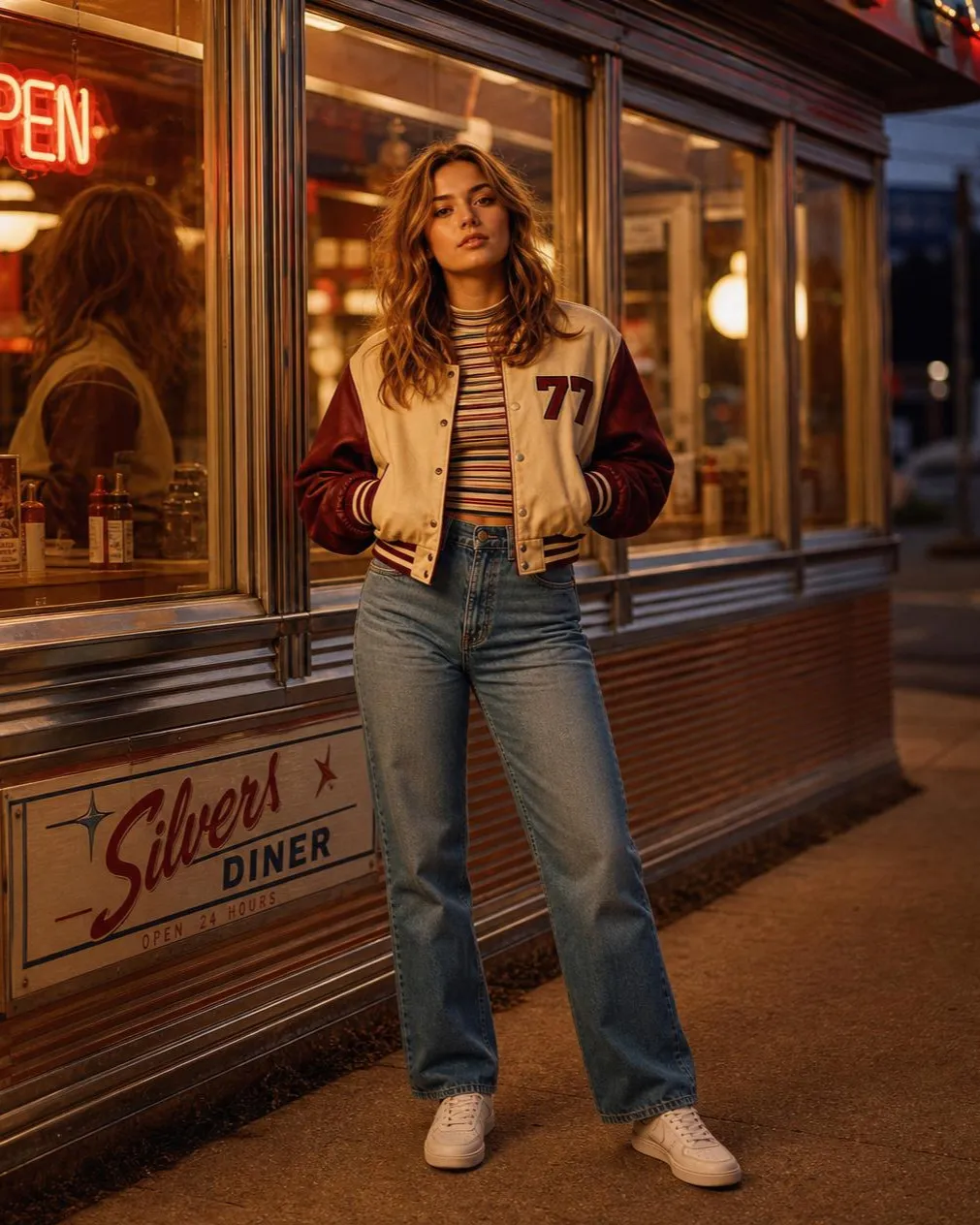
A cream and maroon varsity jacket, a striped turtleneck, high-waisted straight-leg jeans, white sneakers. The jacket's boxy shape needs a straight leg underneath to balance it — a wide or baggy jean here would stack volume on volume, while the straight leg gives the outfit exactly one loose element instead of two.
Corduroy Trucker Jacket
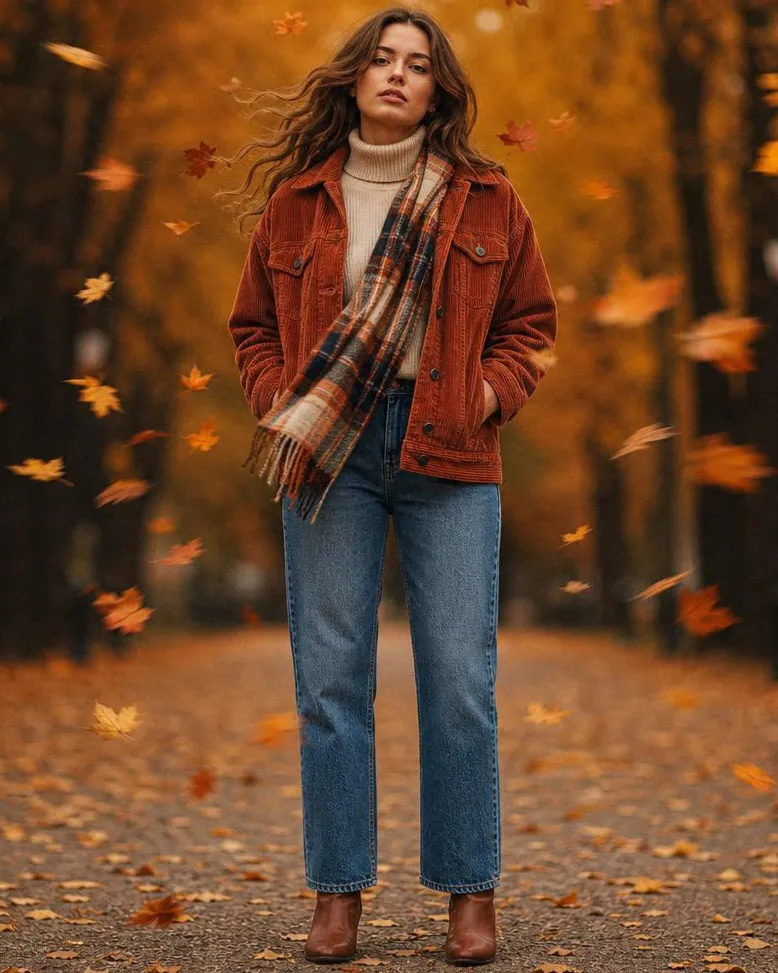
A rust corduroy jacket, a plaid scarf, straight-leg denim, brown ankle boots. Corduroy's ribbed texture is what keeps a fitted trucker silhouette from reading flat — the same jacket shape in smooth cotton would look plainer; the wale catches light and adds visual weight exactly where the jacket needs it.
Tailored Flannel Suit
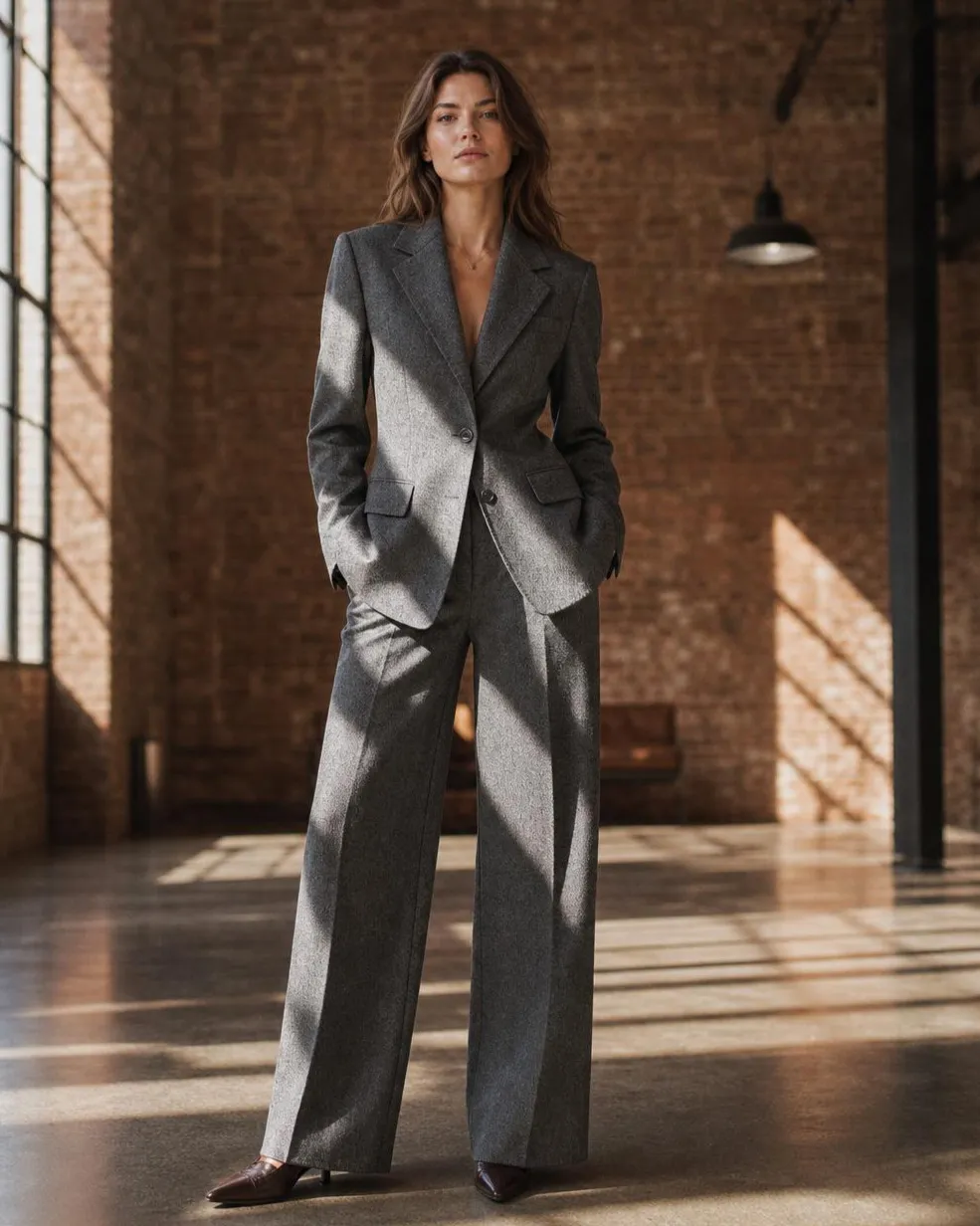
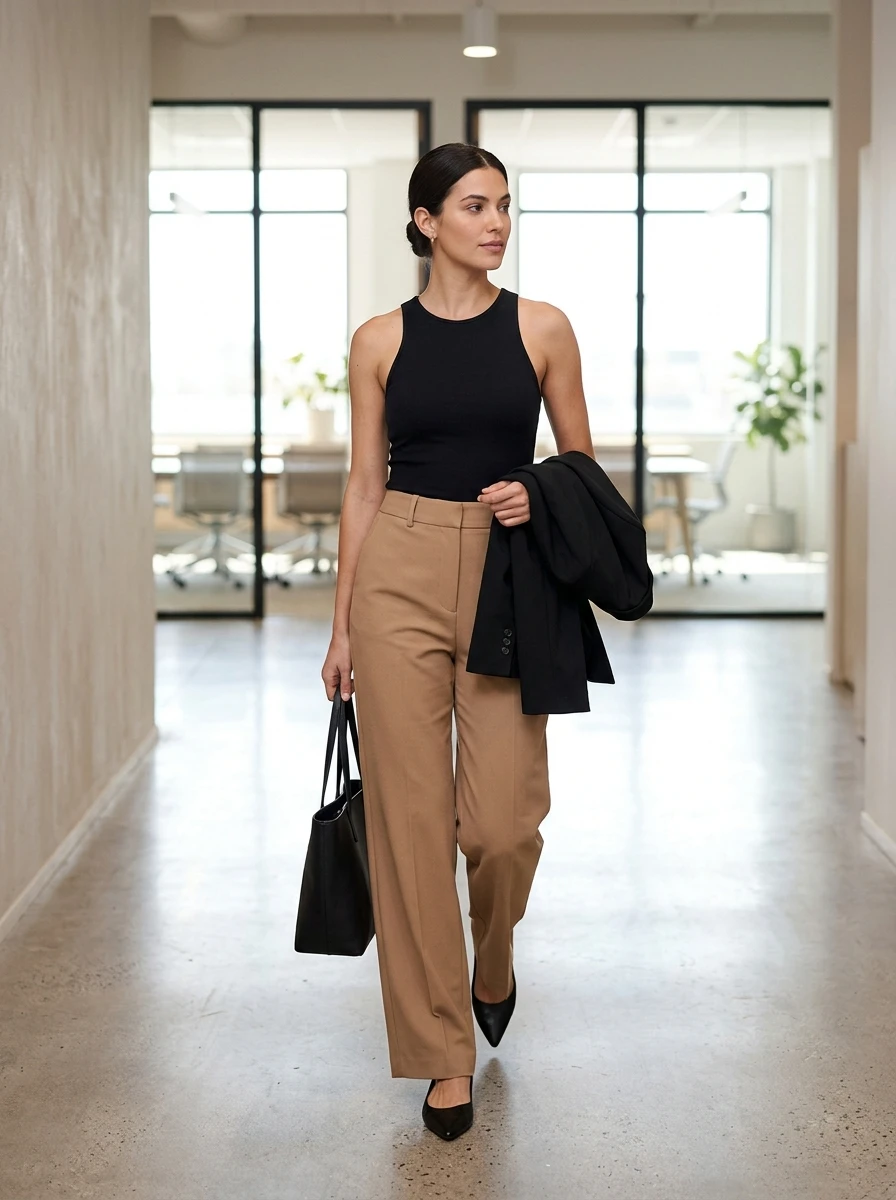
A grey flannel blazer and matching wide-leg trousers, pointed brown mules. Wide-leg trousers rather than straight or fitted ones is the choice that keeps a matching suit from reading corporate — a slim trouser with this blazer would look boardroom-strict, while the wider leg softens the formality just enough to wear outside an office.
Cable Knit Cardigan
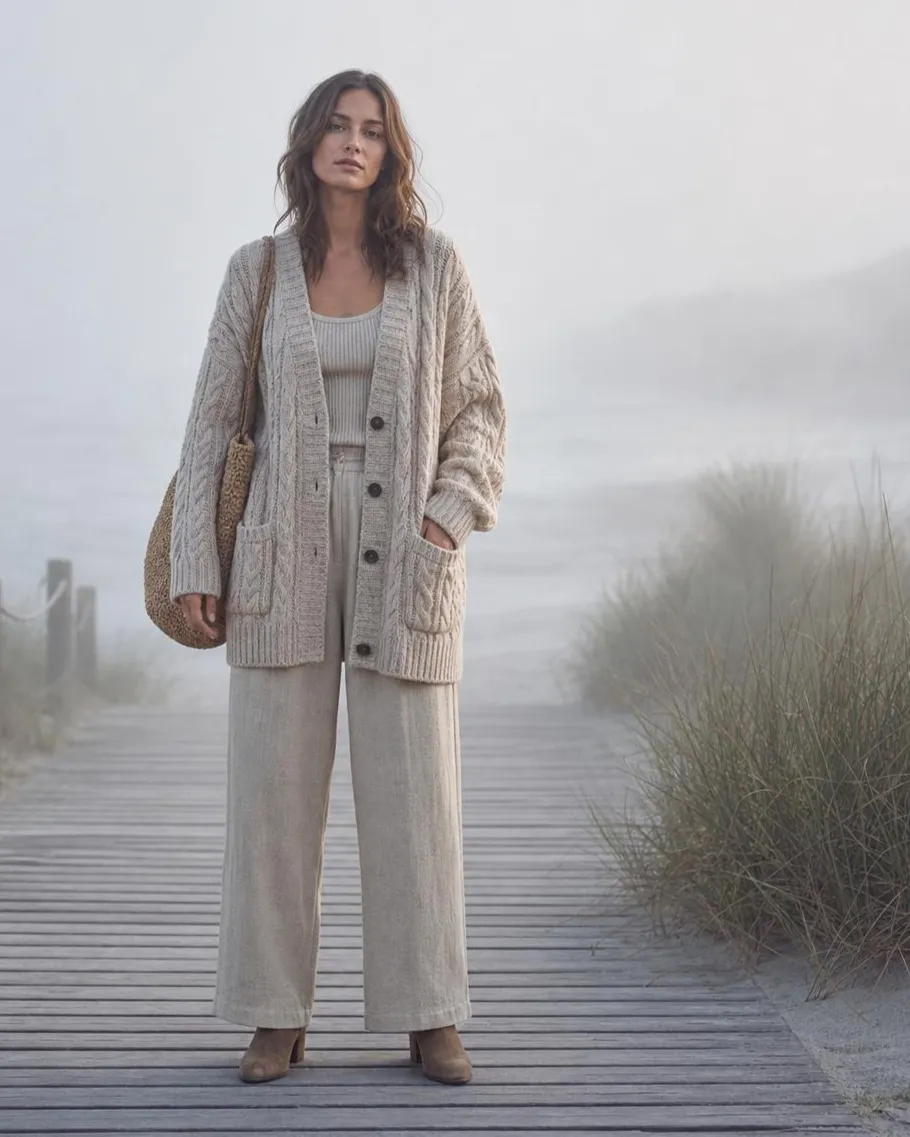
An oversized cable knit cardigan, a matching ribbed tank, wide trousers, a woven bag, suede boots. Keeping the tank underneath the same tone as the cardigan is what lets an oversized, chunky piece stay looking intentional rather than like you grabbed the biggest sweater in the closet — tonal dressing does the same job here it does everywhere else on this list: removing color breaks removes places for the eye to register "mismatched."
Belted Shirt Dress
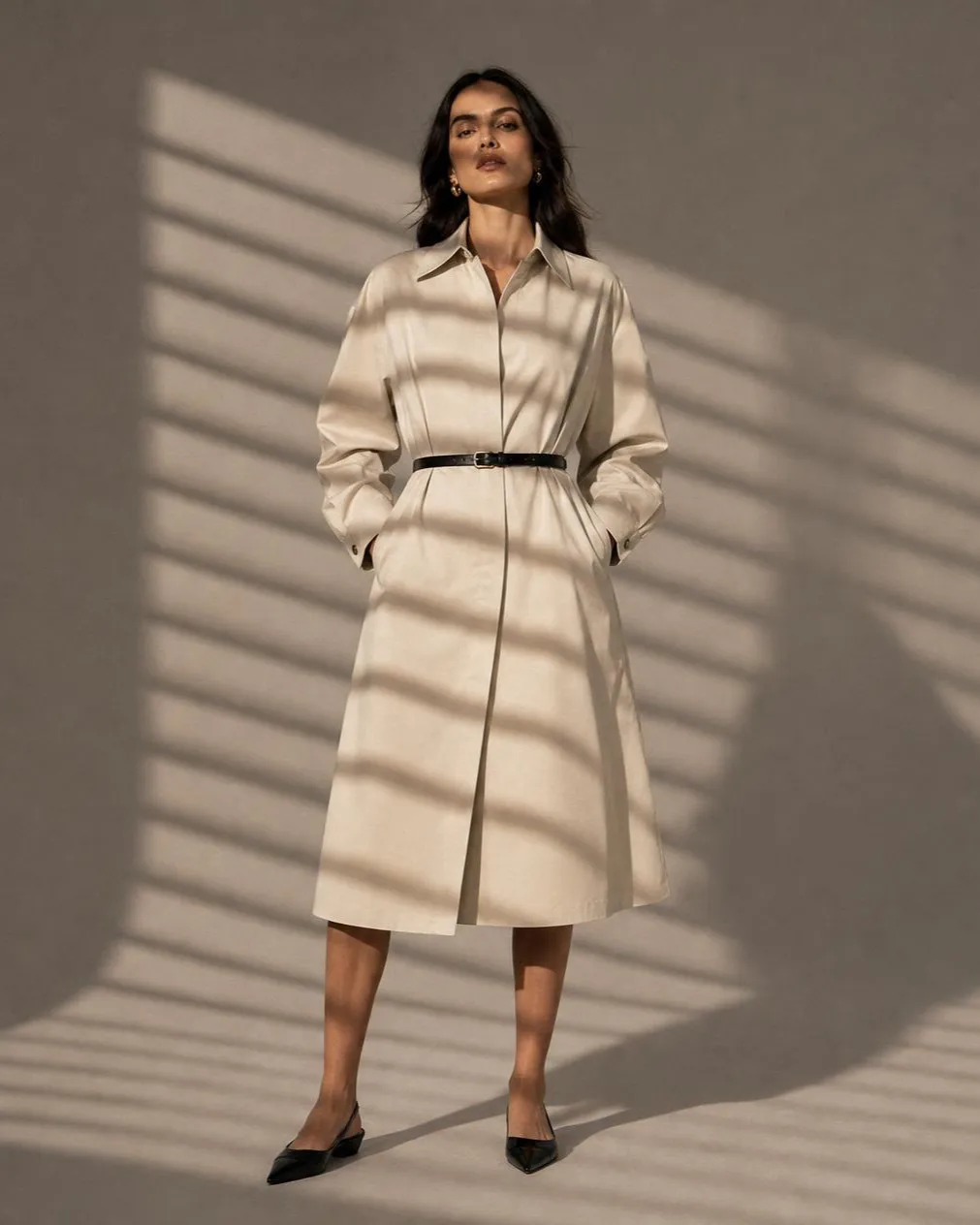
A beige shirt dress with structured shoulders, a thin black belt, slingback heels. This is the clearest single-anchor example on the list — take the belt away and a shirt dress this loose has no defined waist at all. The belt alone is doing the entire job of turning a boxy silhouette into a shaped one.
Puffer Vest
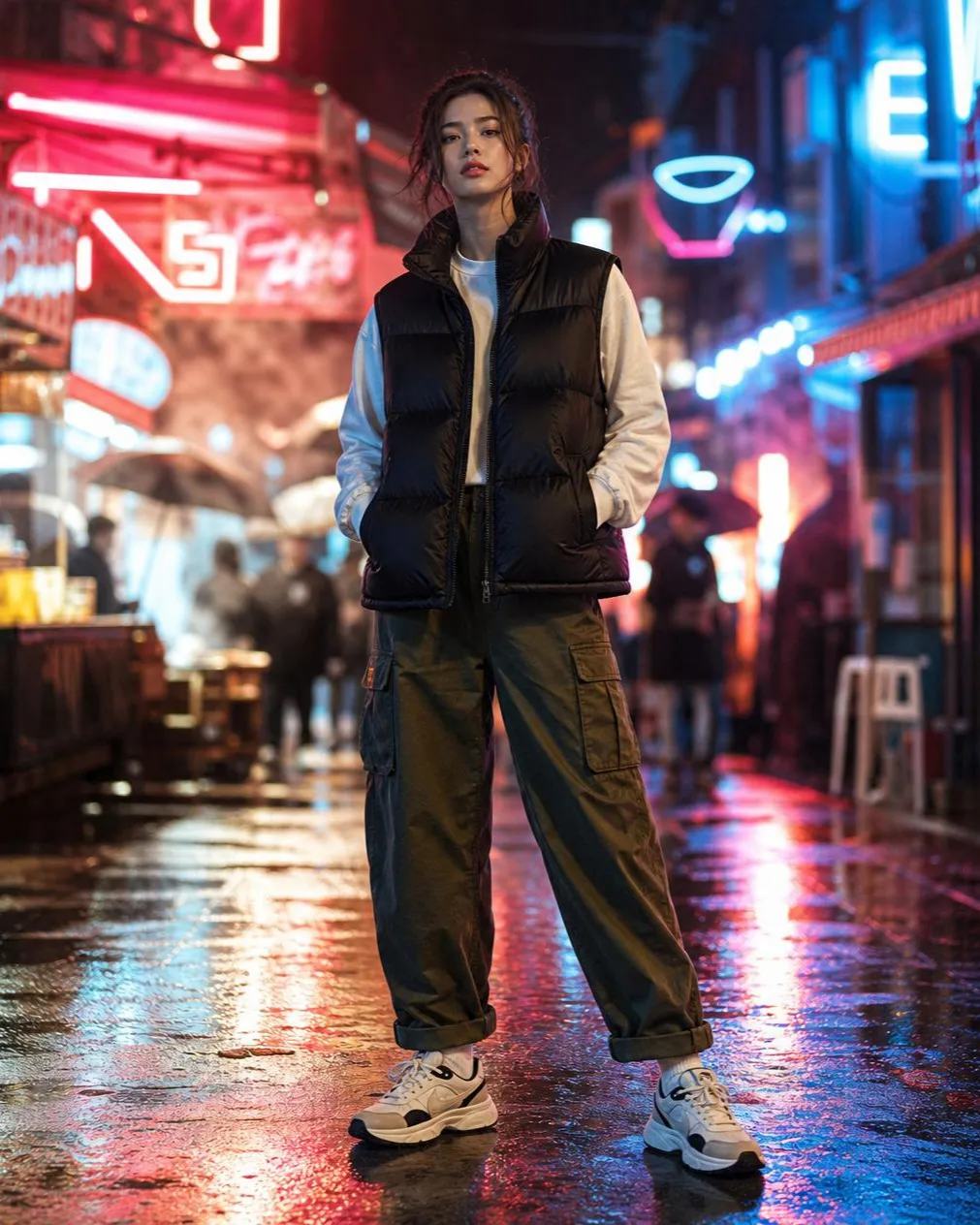
A black puffer vest, an oversized white sweatshirt, olive cargo pants, chunky sneakers. A vest rather than a full puffer jacket is the deliberate choice here — sleeves would add bulk on top of an already-oversized sweatshirt and already-voluminous cargo pants, and three loose elements stacked together is where this kind of outfit tips from street style into shapeless.
Sweater Vest

A forest green sweater vest over a white collared shirt, checked wool trousers, a leather satchel. The vest adds a second layer of visual structure — the shirt collar plus the vest's V-neck — without adding any sleeve bulk, which is exactly why dark academia styling leans on vests so heavily: maximum structure, minimum volume.
Oversized Blazer
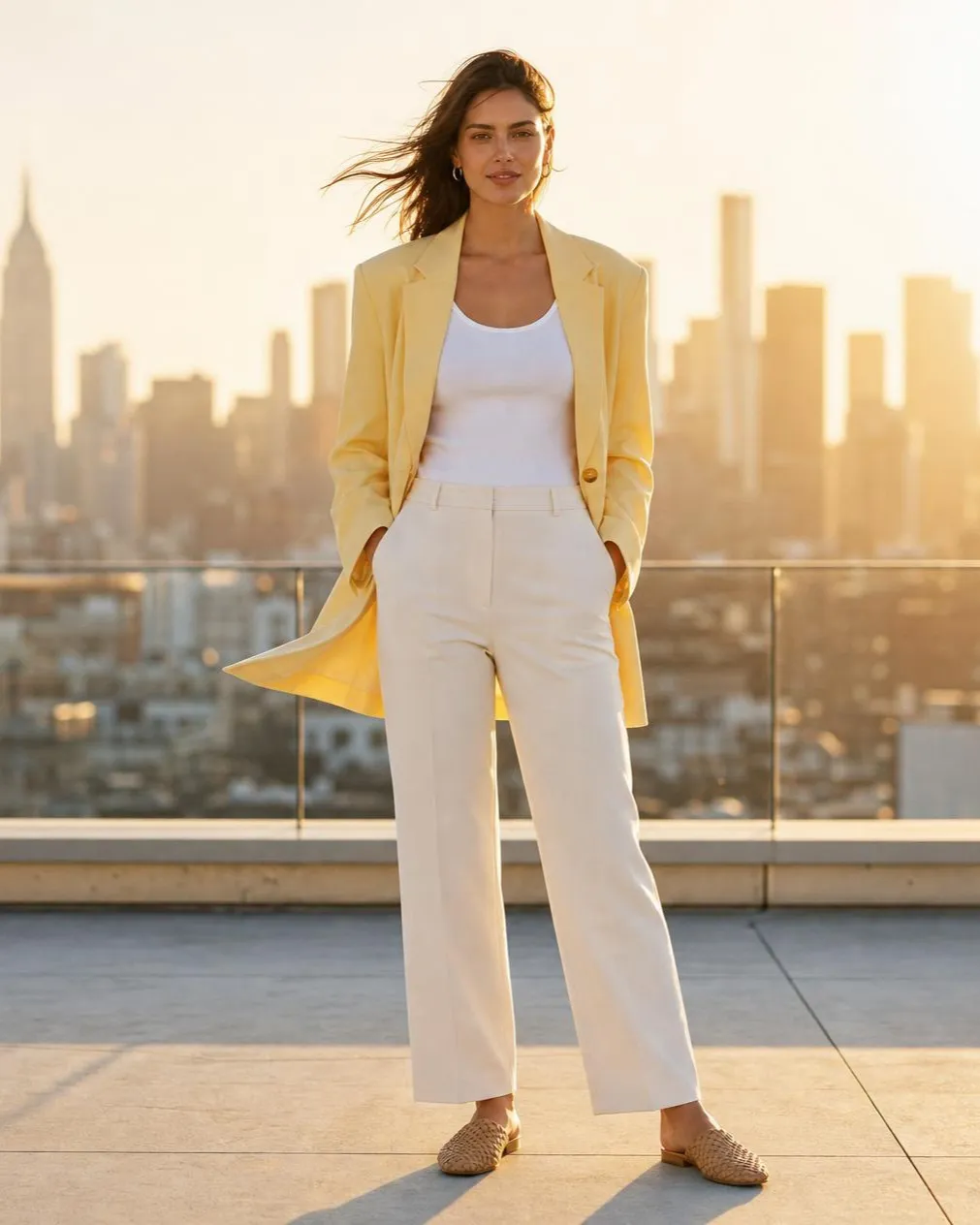
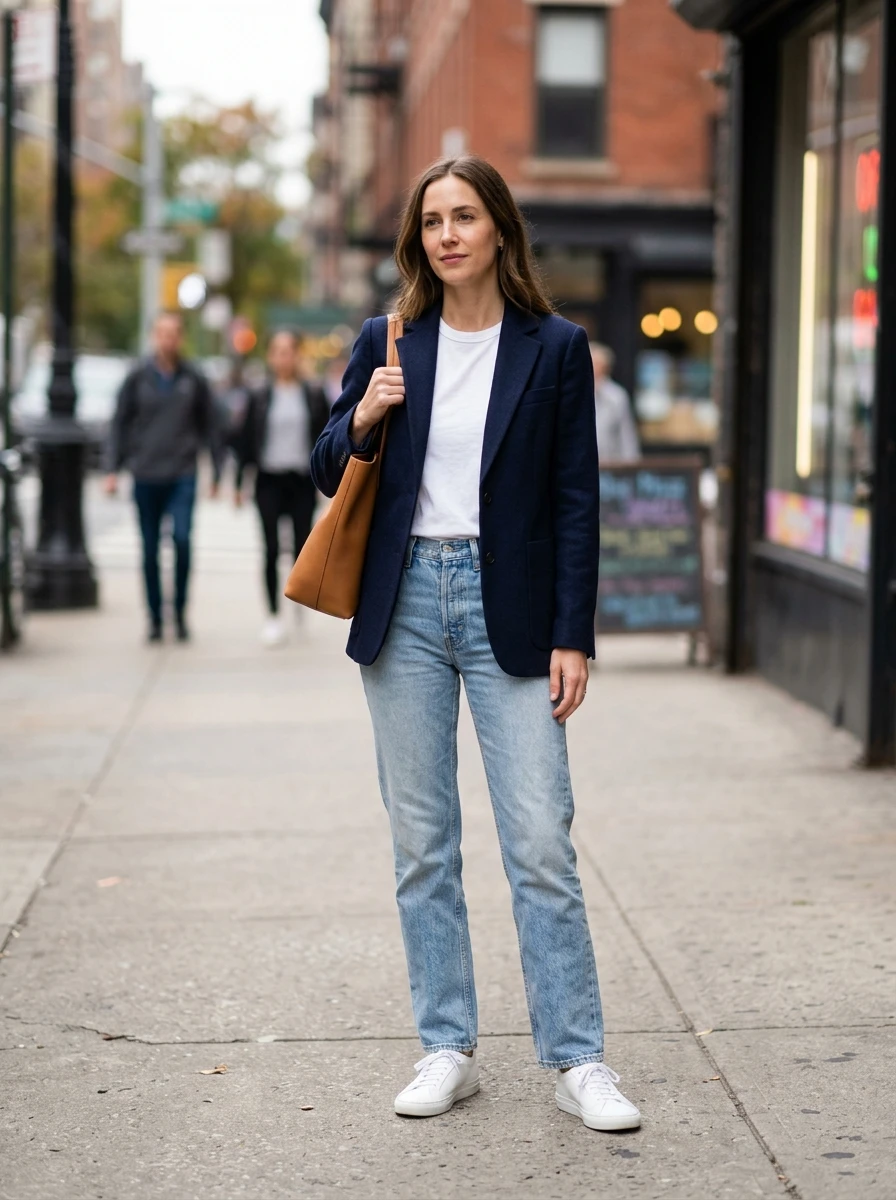
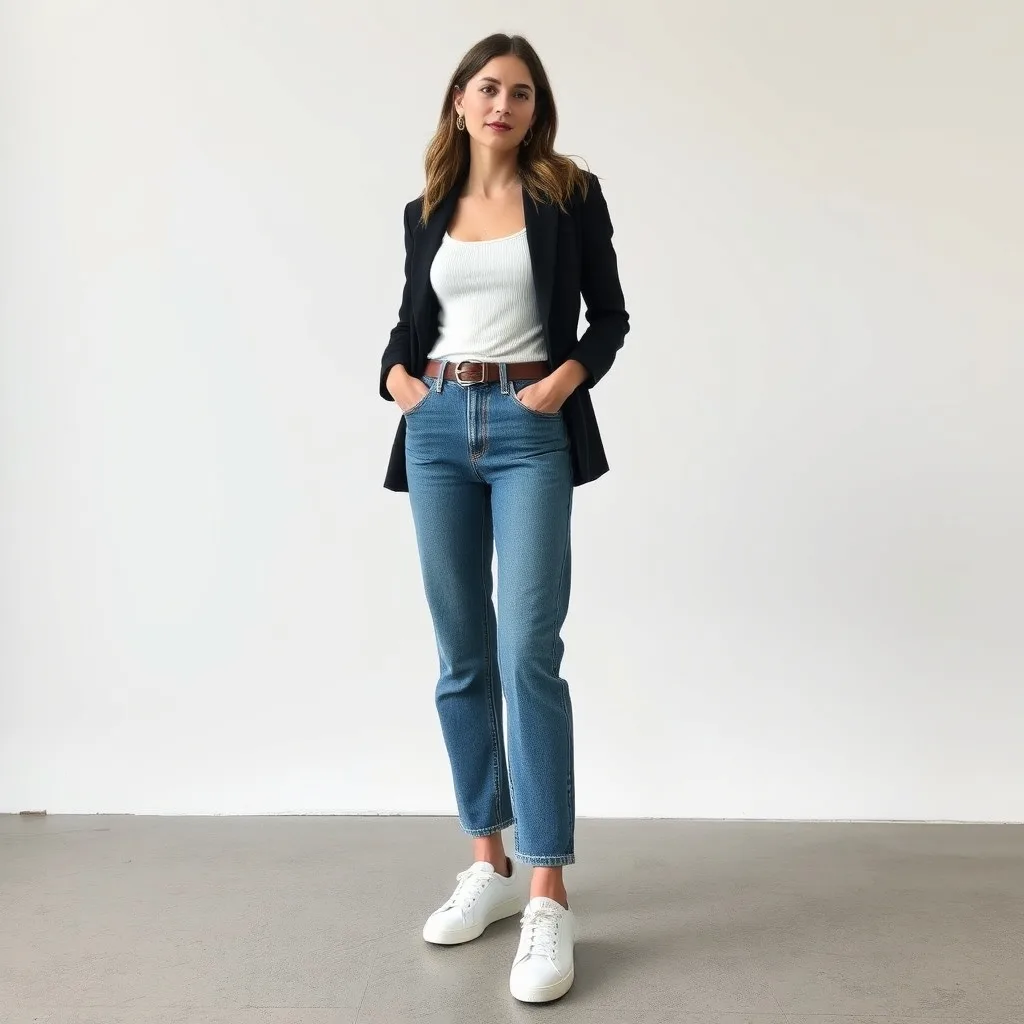
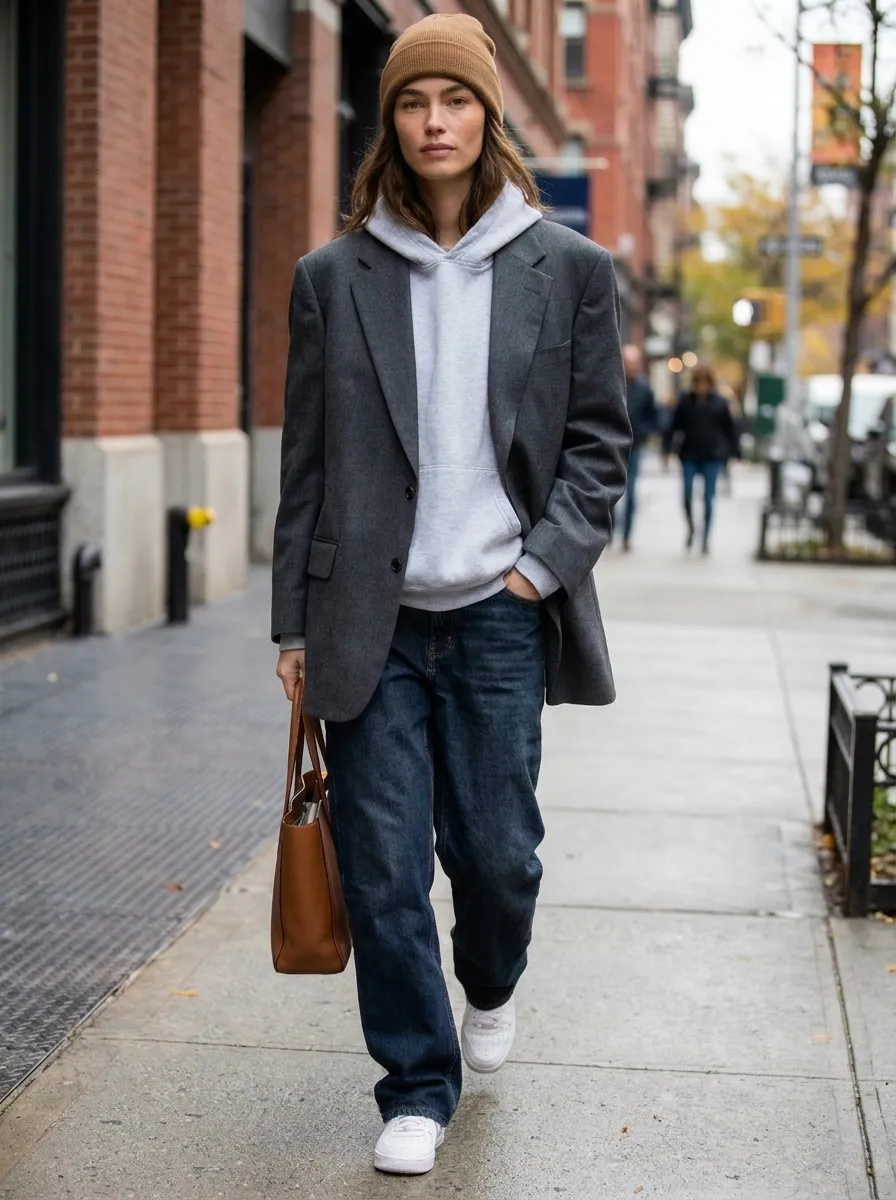
A butter yellow oversized blazer, a white tank, cream straight-leg trousers, woven mules. Color is the whole outfit's statement here, which is only possible because the shape stays simple everywhere else — a bold color on a complicated silhouette would compete with itself; on a straightforward blazer-and-trouser shape, the yellow gets to be the only thing you notice.
Long Wool Overcoat
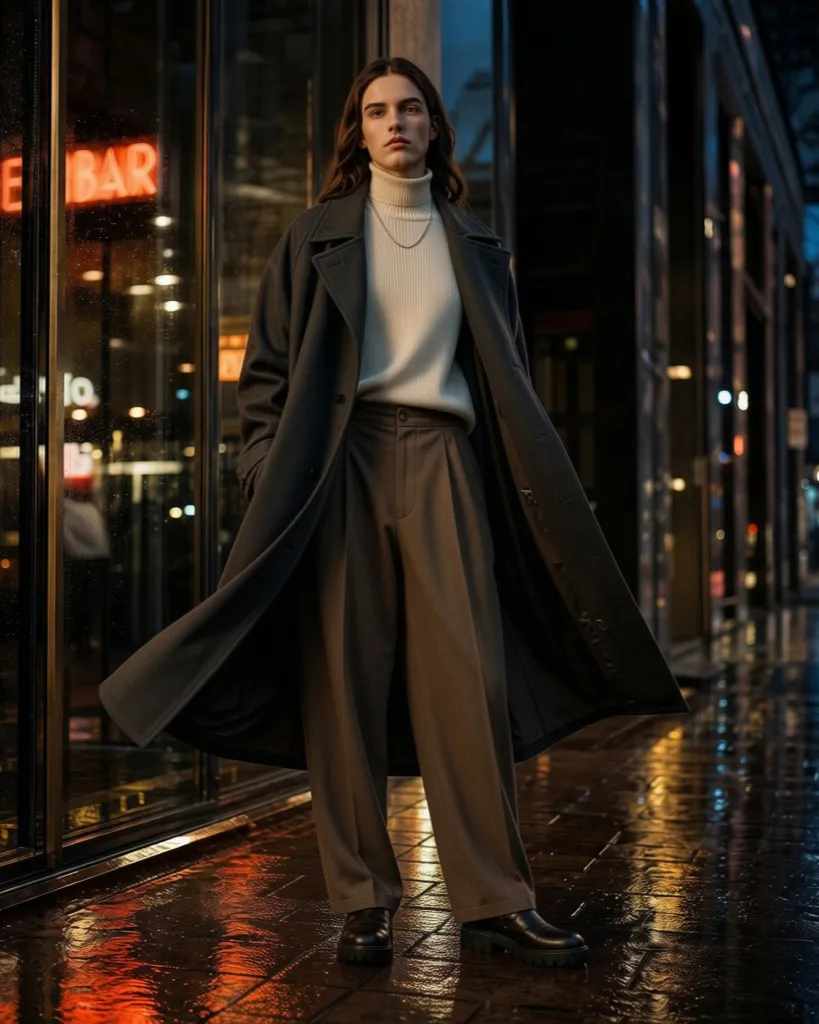
A long grey wool coat, a cream turtleneck, wide-leg brown trousers, chunky black boots. Same principle as the charcoal coat that opened this list — one substantial outer layer, kept deliberately simple underneath, so the coat's line is never interrupted by competing details.
Frequently Asked Questions About Aesthetic Outfit Ideas
What makes an outfit look aesthetic without expensive pieces?
Aesthetic style relies on fit and color, not price tags. Stick to two or three colors per outfit. Choose pieces that fit your body well. A cheap wool blend coat looks refined when tailored properly. Texture also matters more than brand names. Mix one structured piece with something soft.
How do you dress aesthetically for cold weather without losing style?
Layer smart, not bulky. Start with a fitted turtleneck, then add a long coat over straight leg trousers. Wool and cable knit fabrics hold shape better than cotton blends. Boots ground the whole look. Skip puffy jackets if you want a sharp silhouette during winter months.
Can you wear cargo pants with a fitted top for a casual look?
Yes, this combination works well. Cargo pants have volume, so balance them with something fitted on top. A plain sweatshirt or cropped tee keeps proportions even. Add sneakers for daytime errands. This pairing suits streetwear fans who want comfort without looking shapeless.
What is dark academia style and how do you wear it daily?
Dark academia mixes vintage prep with scholarly details. Think sweater vests, collared shirts, and checked wool trousers. Brown leather accessories complete the mood. Wear it to work, class, or coffee shop hangouts. Keep colors muted, mostly greens, browns, and creams, for an authentic feel.
How often should you rotate seasonal wardrobe staples like coats and knitwear?
Rotate heavier pieces like wool coats and cardigans every autumn and winter season. Store them properly during warmer months to avoid moth damage. Check for loose buttons or worn seams before each season starts. Quality staples last several years when cared for correctly, so invest wisely upfront.
What are budget friendly alternatives to designer tailored suits for women?
Look for flannel or wool blend blazers from mid range retailers instead of luxury labels. Fit matters more than fabric cost here. Tailoring a budget blazer at a local shop often costs less than buying designer pieces outright. Pair with simple trousers for a polished, affordable result.
The Short Version
Every outfit above has exactly one thing doing the structural work — a coat, a belt, a blazer shoulder, a vest — and everything else stays deliberately simple around it. That's the actual formula for "looks put together without looking like it took effort": one anchor, minimal competition.