Casual Aesthetic Fall Outfits: A Practical Guide to Looking Put Together
How to use this guide
Treat trend ideas as styling prompts rather than rules. Start with pieces already in your wardrobe and adjust fabrics, layers, and proportions for your climate, comfort, occasion, and personal style.
What does an ordinary Tuesday in October actually ask of an outfit? It asks for warmth without bulk, polish without effort, and something that still looks intentional by 4 p.m. "Casual aesthetic" sounds vague, but the dressing problem behind it is specific: how do you look put together without looking like you tried too hard? The answer is never more clothes, it is better logic. Every outfit below is built on one clear styling principle, explained so you can reuse the principle long after you have forgotten the specific outfit.
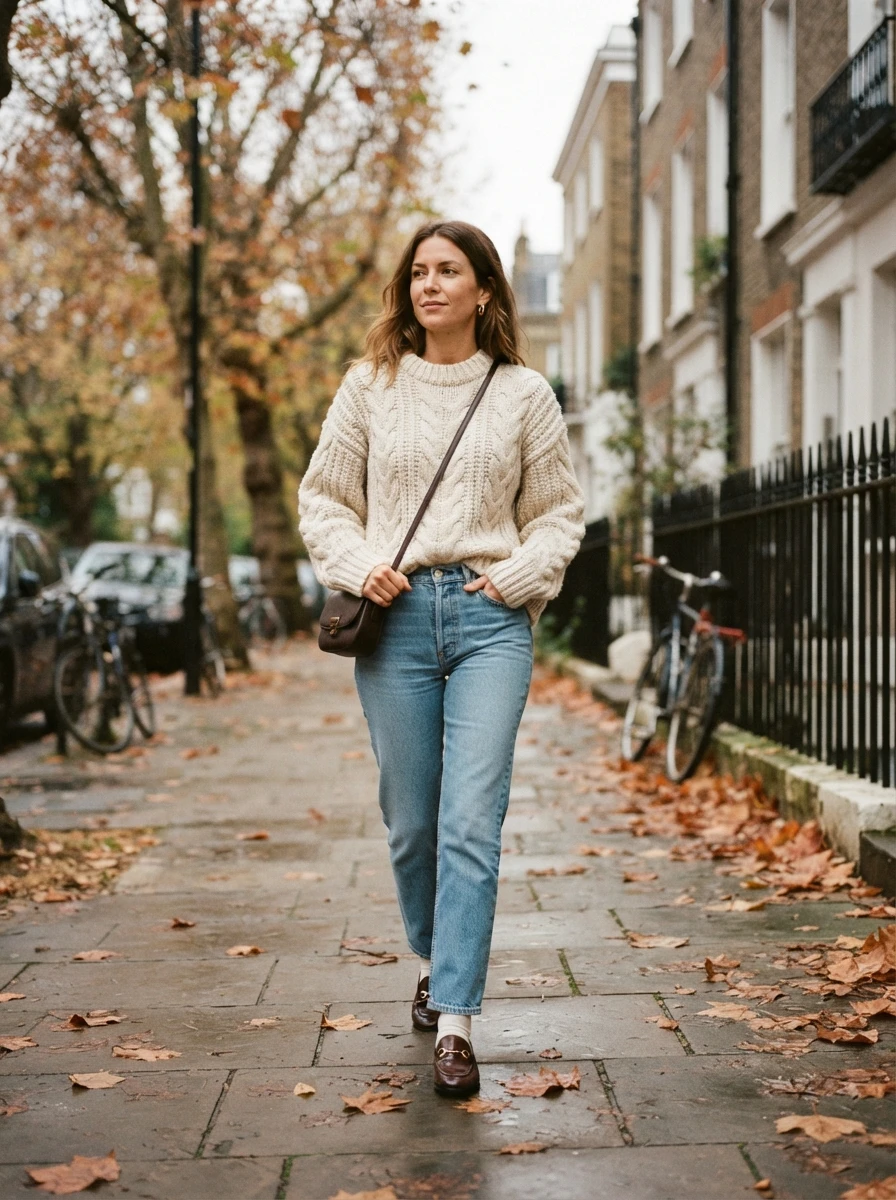
Oversized Knit Sweater and Straight Leg Denim
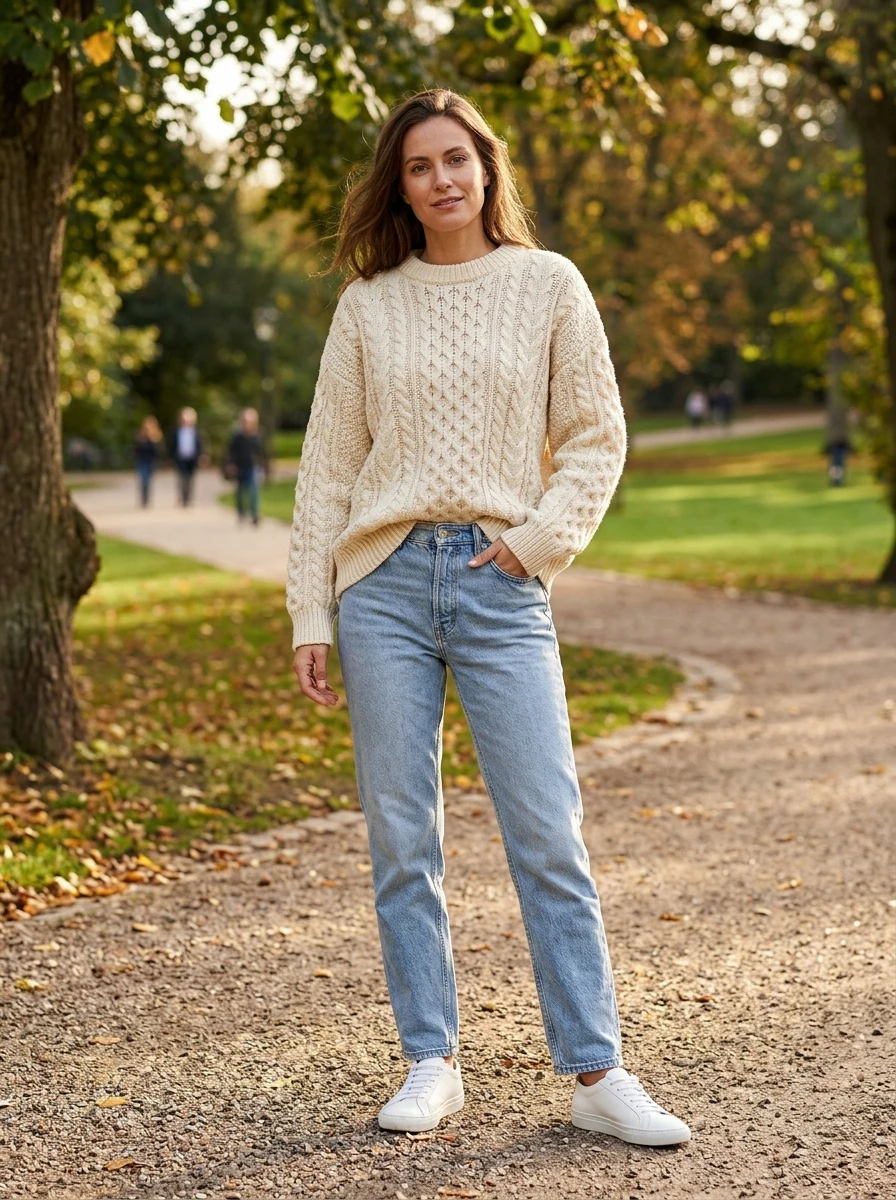
The principle: let one piece be the statement. A chunky cable knit in cream or oatmeal has enough visual weight, texture, volume, warmth, to carry an entire outfit. Everything else goes quiet: straight leg denim, simple loafers, no competing details. This is why the combination looks effortless; there is literally one decision in it.
Fit note: the sweater's hem should hit at the hip, not mid thigh. Longer than that and the proportion goes tunic like, which needs leggings, not jeans, to work.
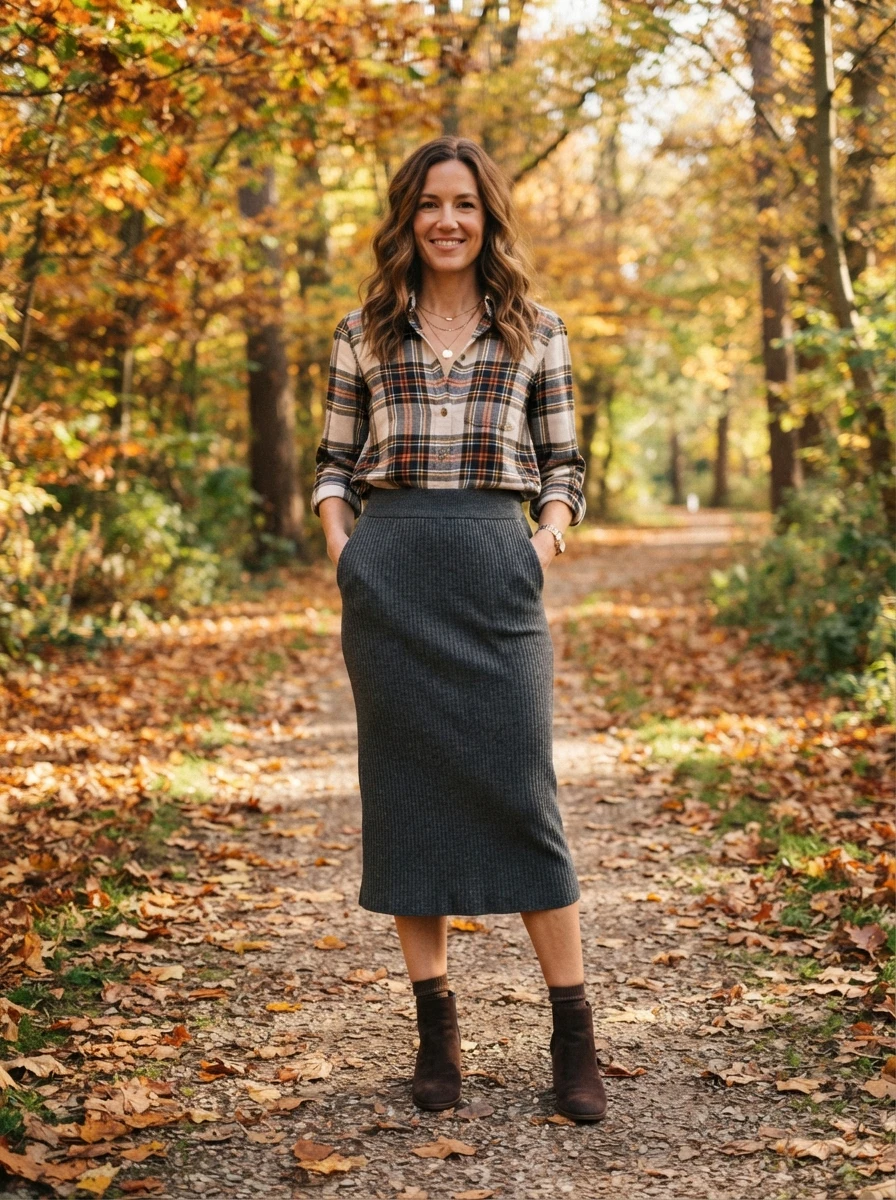
Flannel Shirt and Ribbed Midi Skirt
The principle: texture contrast creates interest without colour. A soft brushed flannel against a stretchy ribbed knit gives the eye two different surfaces to read, which makes a two piece outfit feel designed rather than thrown on. The tuck is doing structural work, flannel is boxy by nature, and without the tuck the outfit has no waist.
Wear it with: a front tuck only, letting the back drape, and a high waisted skirt so the tuck sits cleanly; a mid rise one fights it all day.
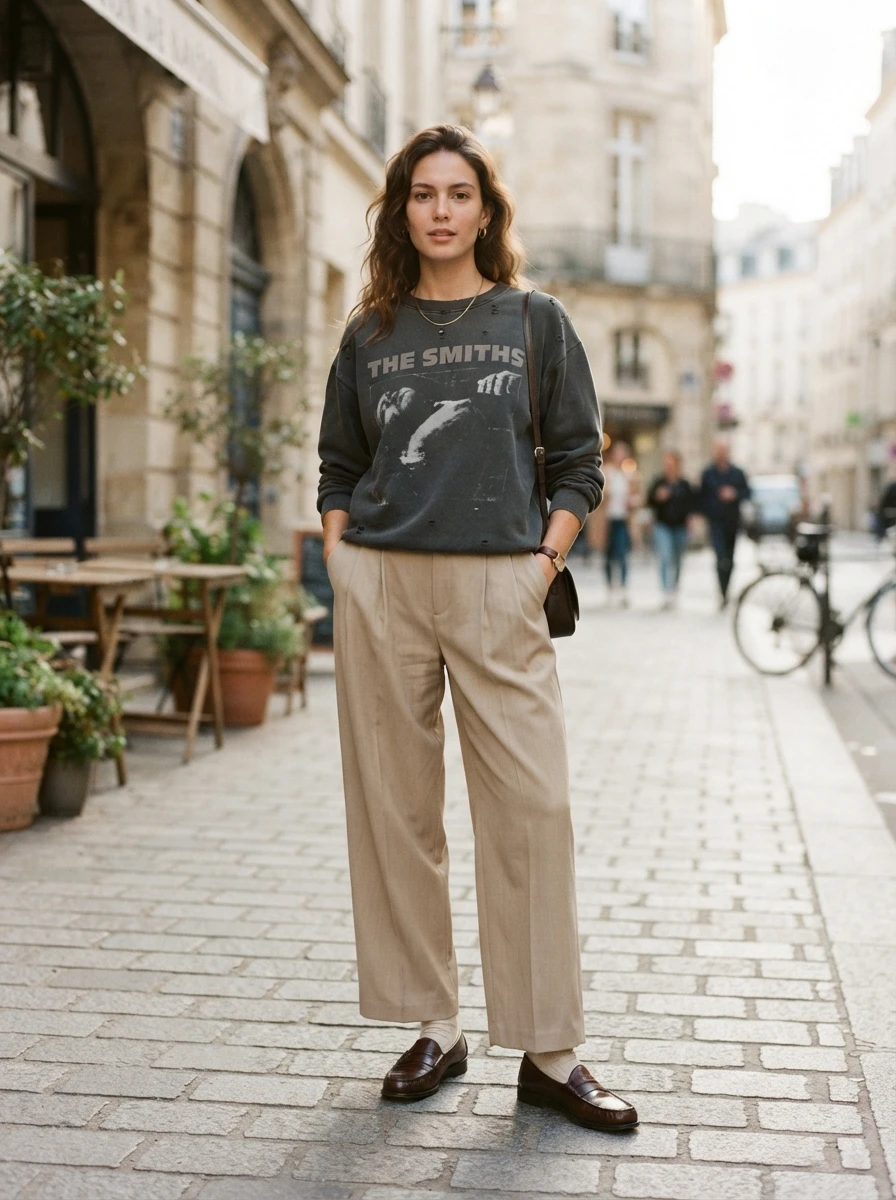
Graphic Crewneck and Relaxed Trousers
The principle: one casual piece, one refined piece. A faded graphic sweatshirt on its own reads as lounge; relaxed wide leg trousers on their own read as office. Together, each one corrects the other, the trousers elevate the sweatshirt, the sweatshirt relaxes the trousers. This is the high low formula, and it only works when both pieces are genuinely good: a pilled, stretched out sweatshirt does not get elevated by nice trousers, it just looks like laundry day.
Care tip: wash the graphic inside out, keep the trousers pressed, and the contrast does the rest.
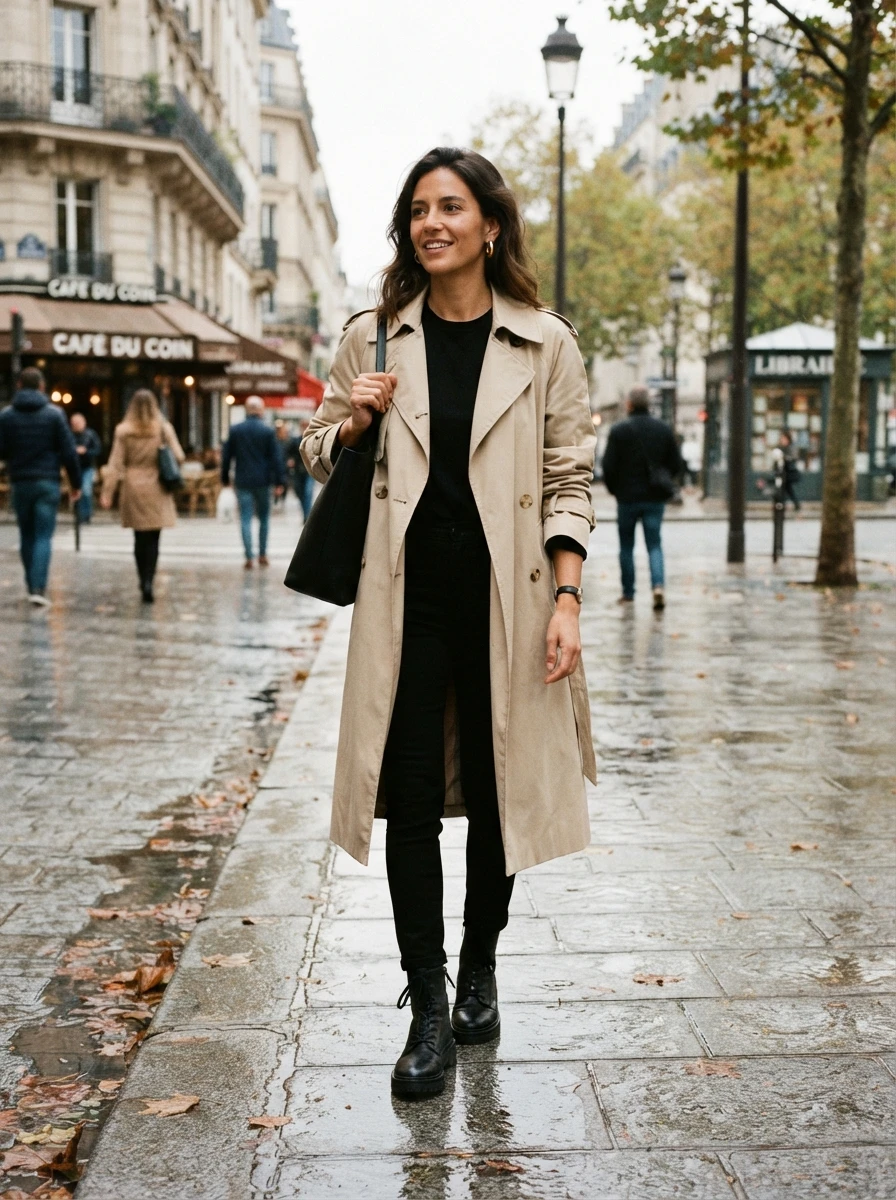
Trench Coat over Monochrome Layers
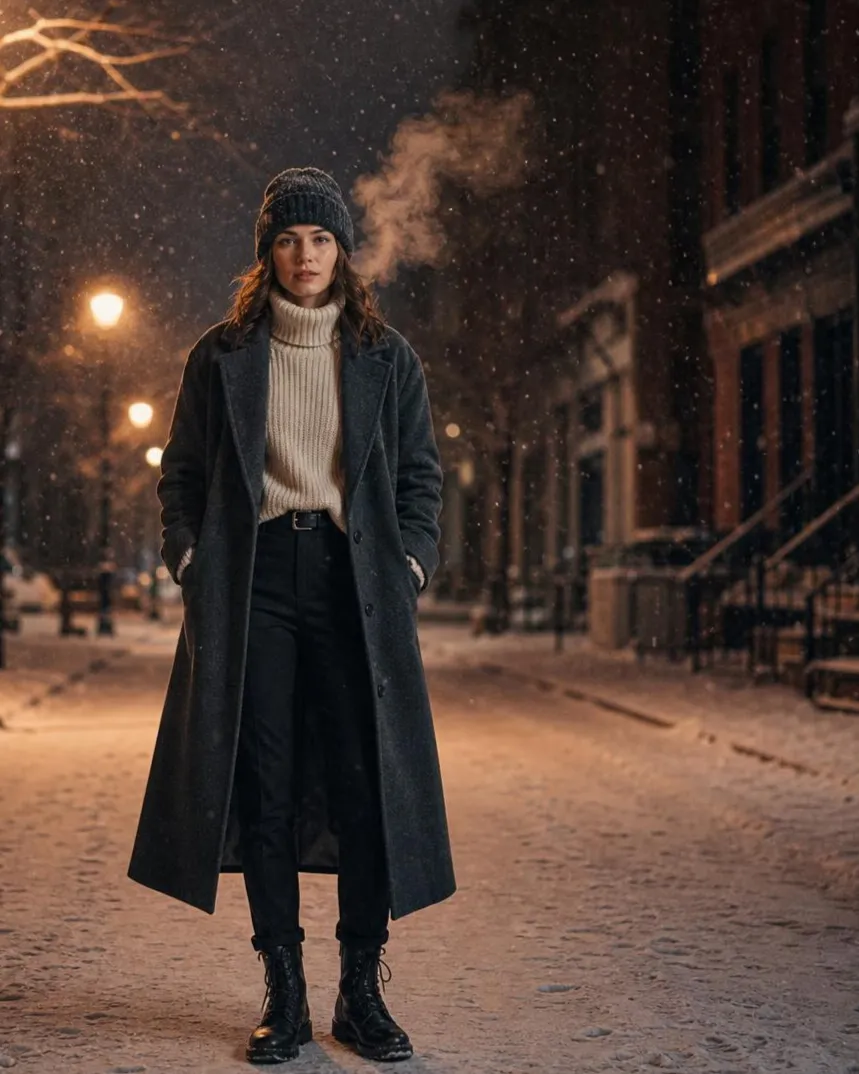
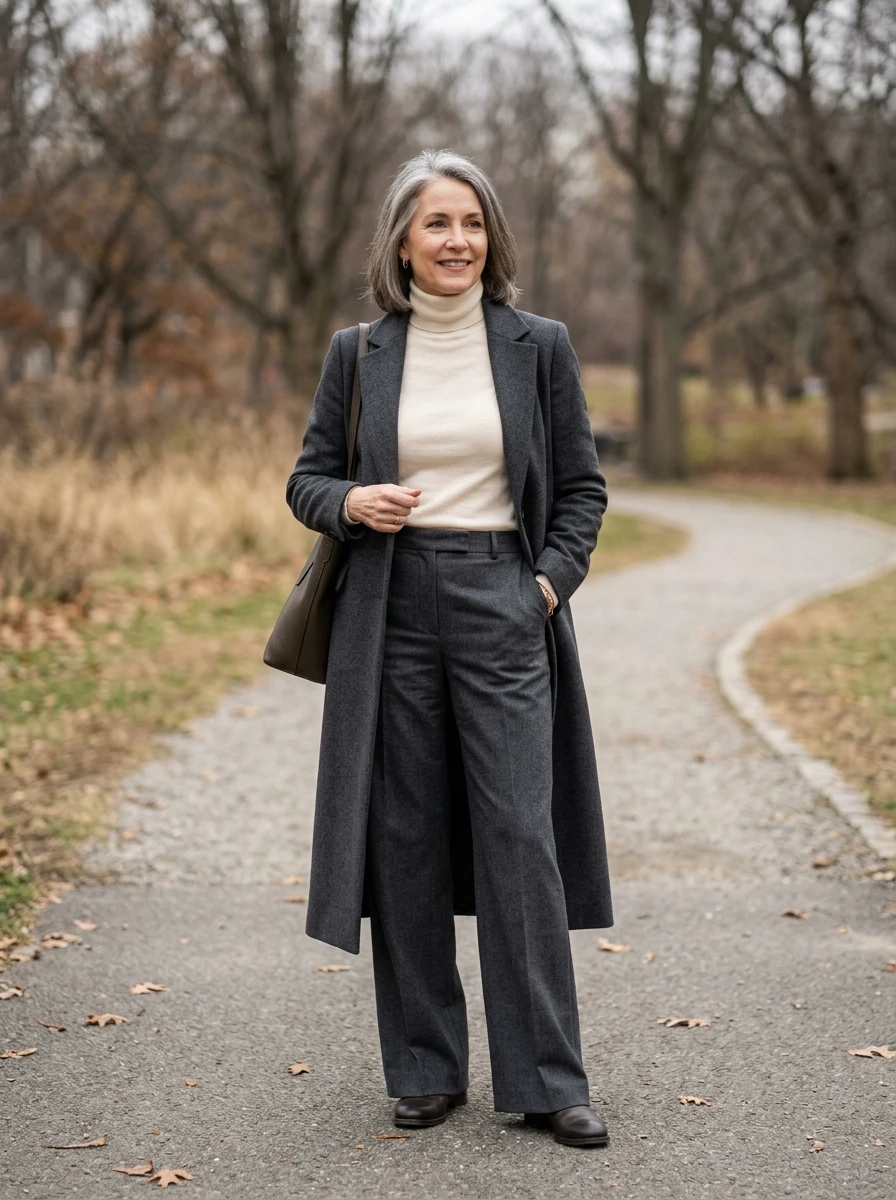
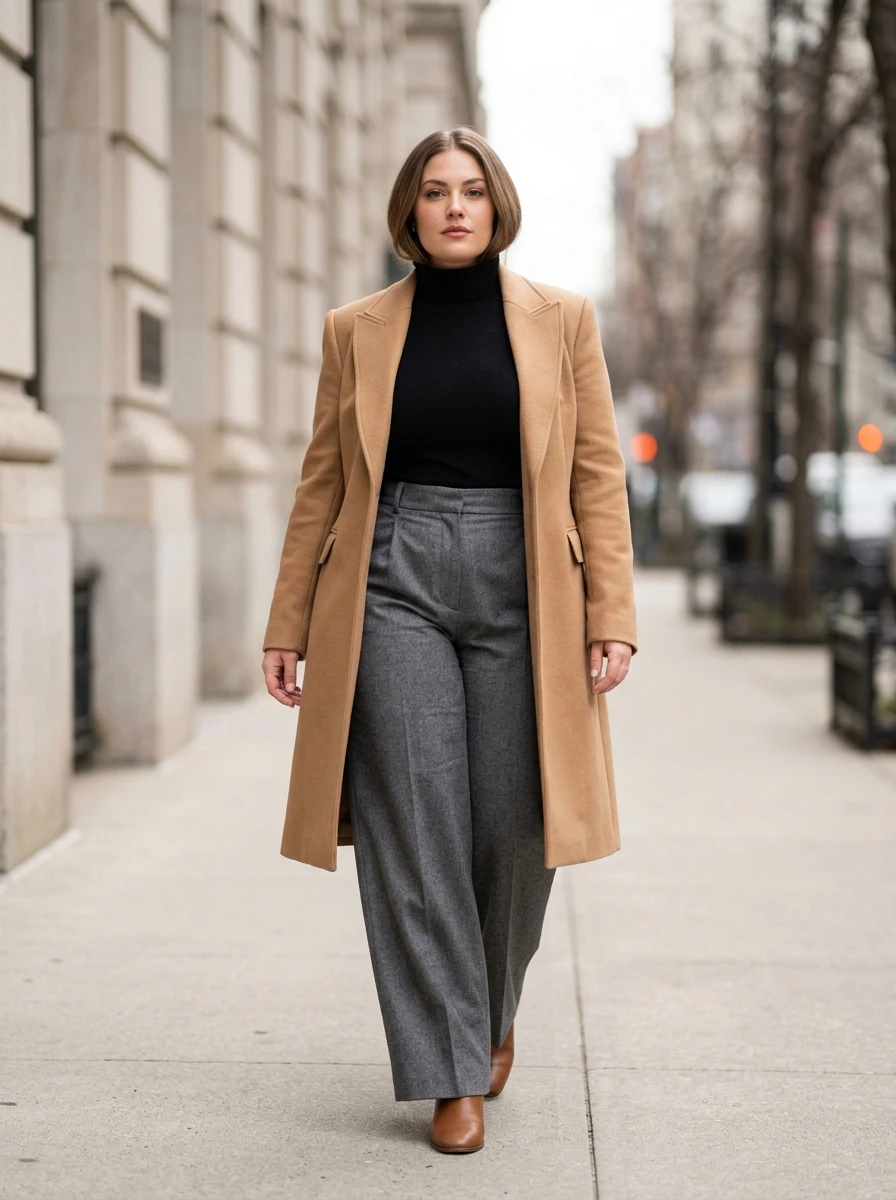
The principle: the long line. A trench over a black (or navy, or charcoal) base creates one continuous vertical column from shoulder to ankle, and the human eye reads unbroken verticals as elongating and elegant. That is the entire styling trick, there is nothing else going on, and nothing else needs to be. An unlined trench is the right weight for fall; a heavy lined one is for winter and will overheat you.
The same trench first thinking runs through fall outfits every woman needs, the generic fall hub this list hangs off. The monochrome base can be anything, tee and trousers, sweater and jeans, because the coat is providing all the structure.
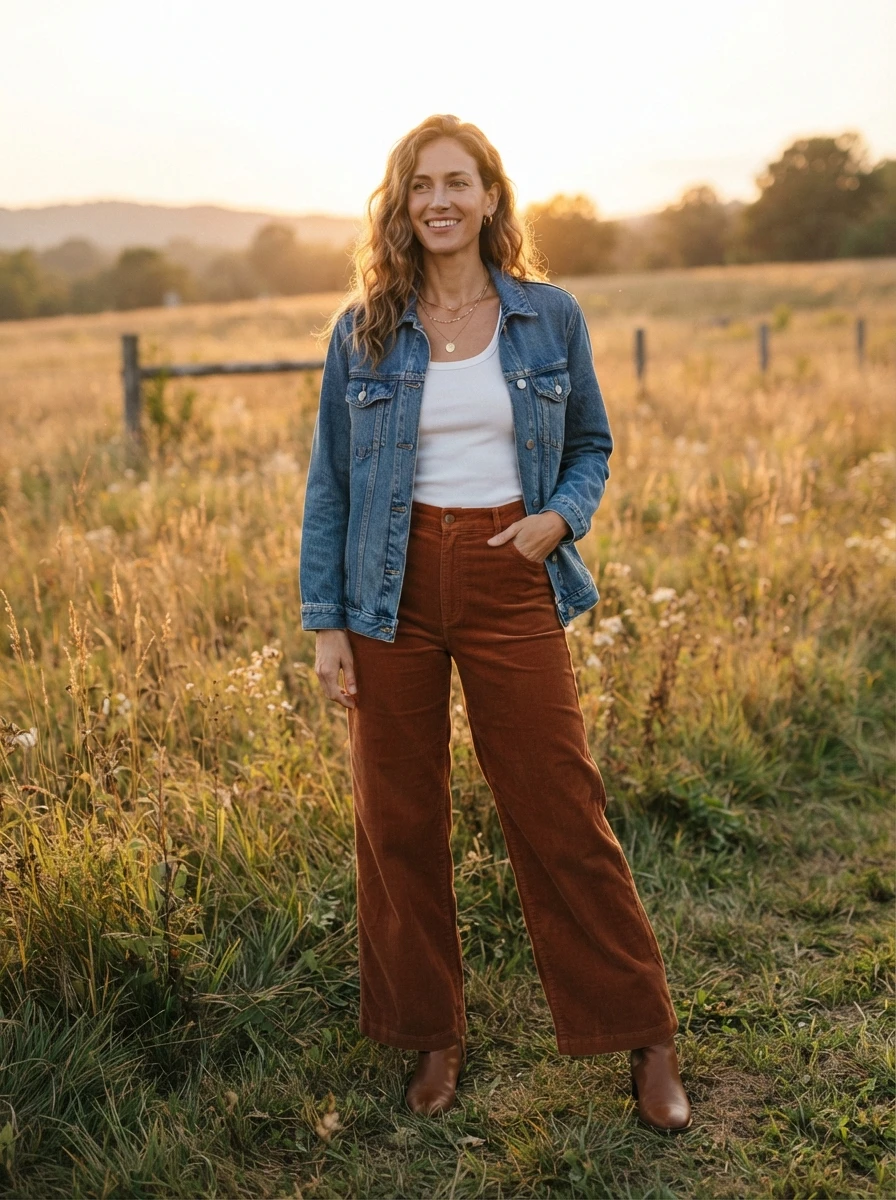
Denim Jacket and Corduroy Pants
The principle: related textures in autumnal colours. Denim and corduroy are both cotton twills with visible texture, so they speak the same visual language, rugged, warm, seasonal. Rust or olive cords with a blue denim jacket keep the palette in the fall family without matching too literally.
Fabric note: the white tank underneath is not filler; it is the breathing room the outfit needs. Two textured pieces plus a flat, simple base layer is the right ratio. Two textured pieces plus a patterned top would be visual noise.
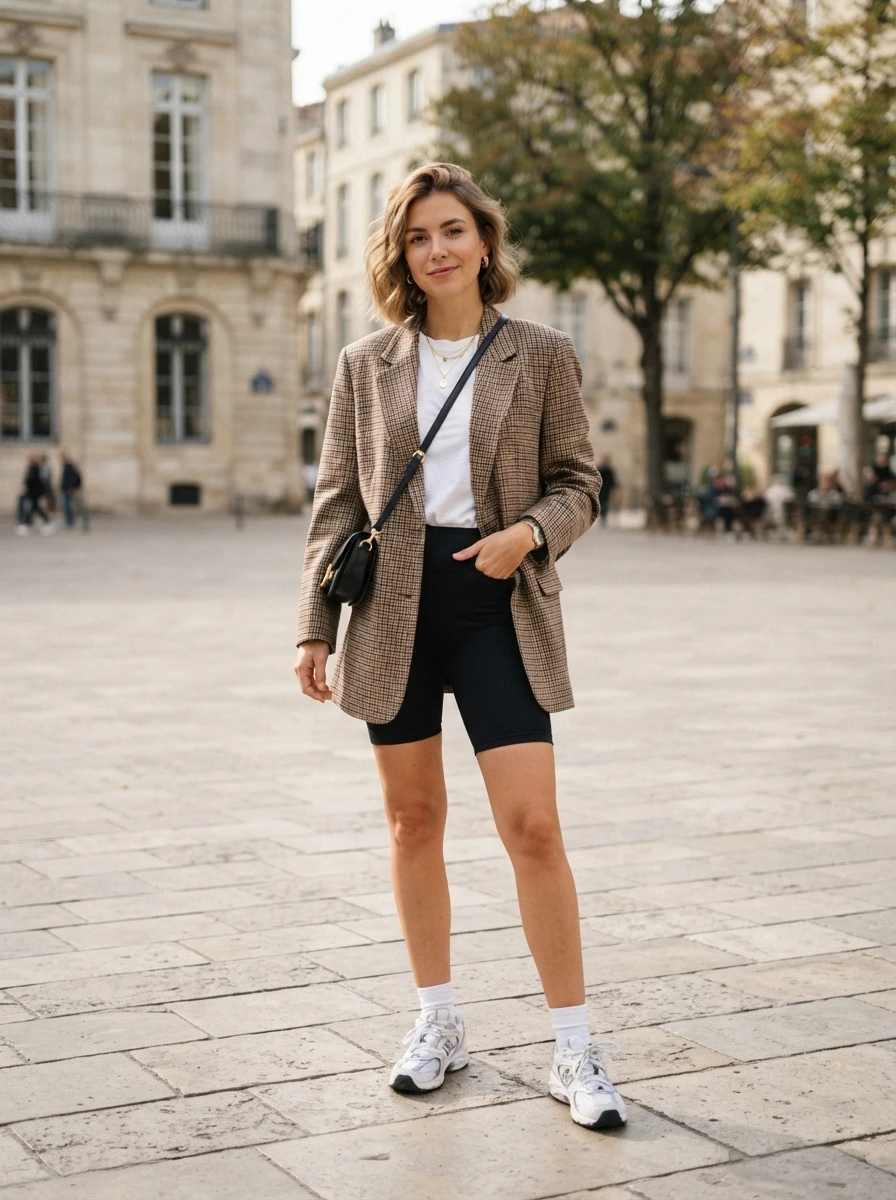
Oversized Blazer and Biker Shorts
The principle: extreme proportion contrast, carefully controlled. The blazer is doing all the "dressed" work and the shorts are doing all the "casual" work, and the outfit holds together only if the blazer's length is right, covering the hip completely. That length creates the long top/short bottom silhouette that reads as fashion rather than gym wear.
Fit note: the biker shorts must be opaque and structured (athletic grade, not fashion grade); anything sheer or flimsy collapses the entire premise. Chunky sneakers ground the base so the blazer can float above it.
For the sportier version of this same contrast, the blockette aesthetic guide pairs one soft piece with one hard piece and nothing else.
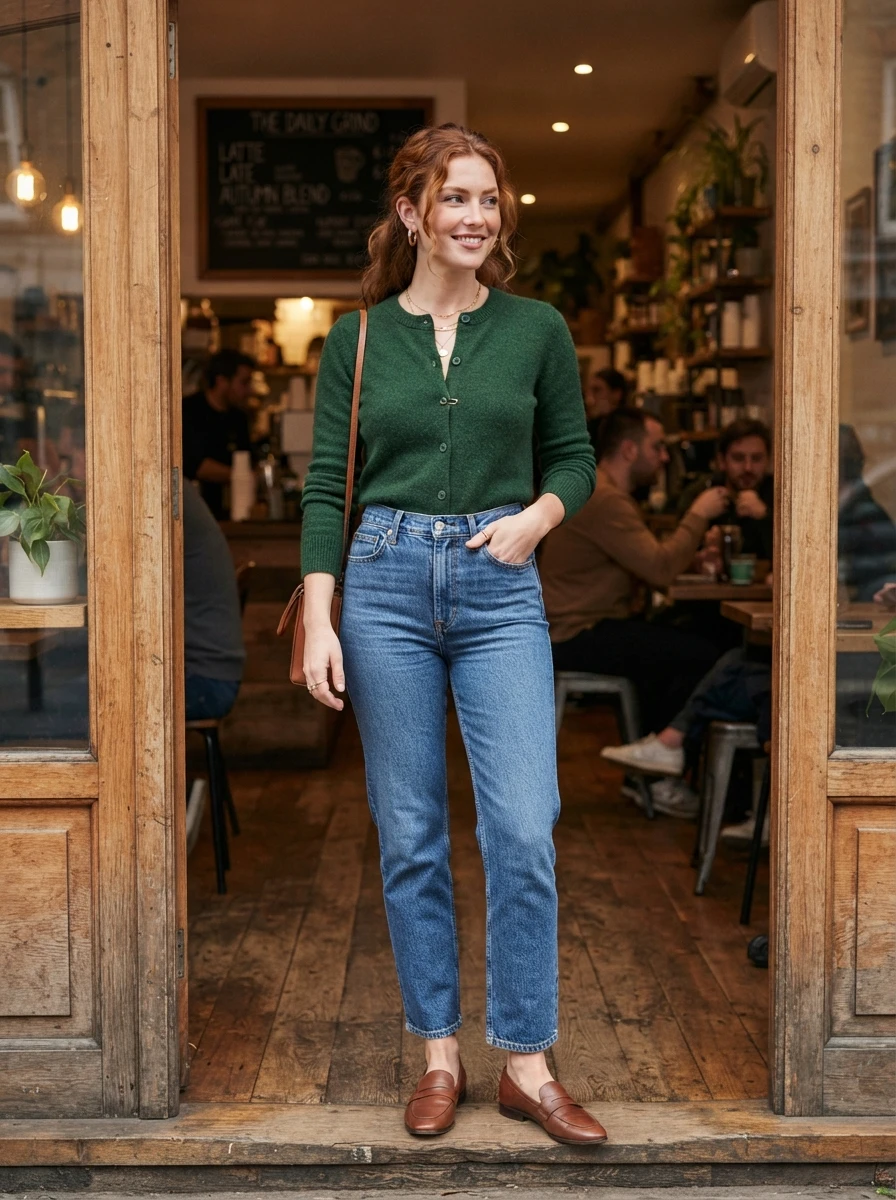
Cardigan Buttoned Up as a Top
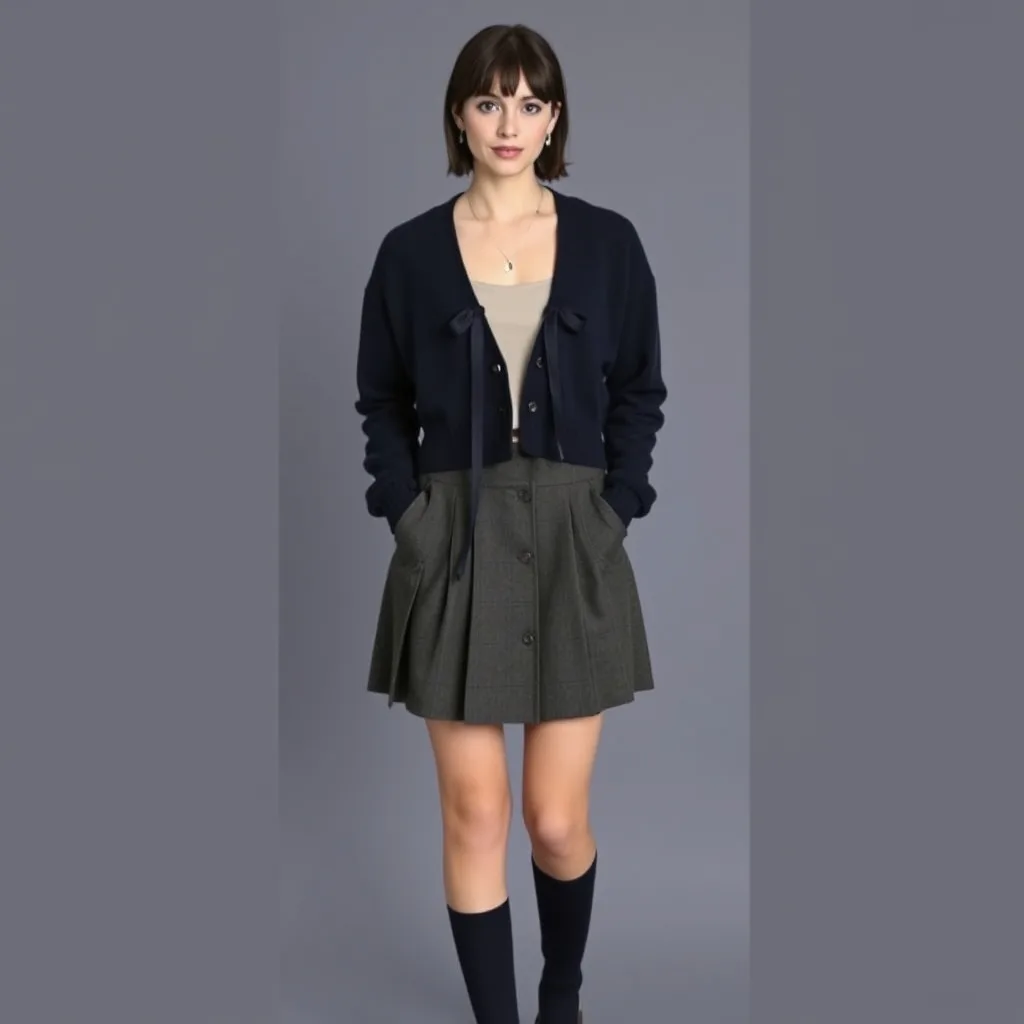
The principle: repurposing changes the garment's register. A cardigan worn open is a layering piece, background. The same cardigan buttoned fully becomes the top itself, foreground. That shift is what makes this feel like an outfit rather than an afterthought.
Fit note: it needs to be a fitted cardigan, because a boxy one buttoned up just looks like a boxy cardigan. The gap between buttons problem is solved with a cami underneath or a well placed safety pin, not by sizing up (which ruins the fitted line you are after).
A closer look at this is in easy early fall outfit trends anyone can try this season.
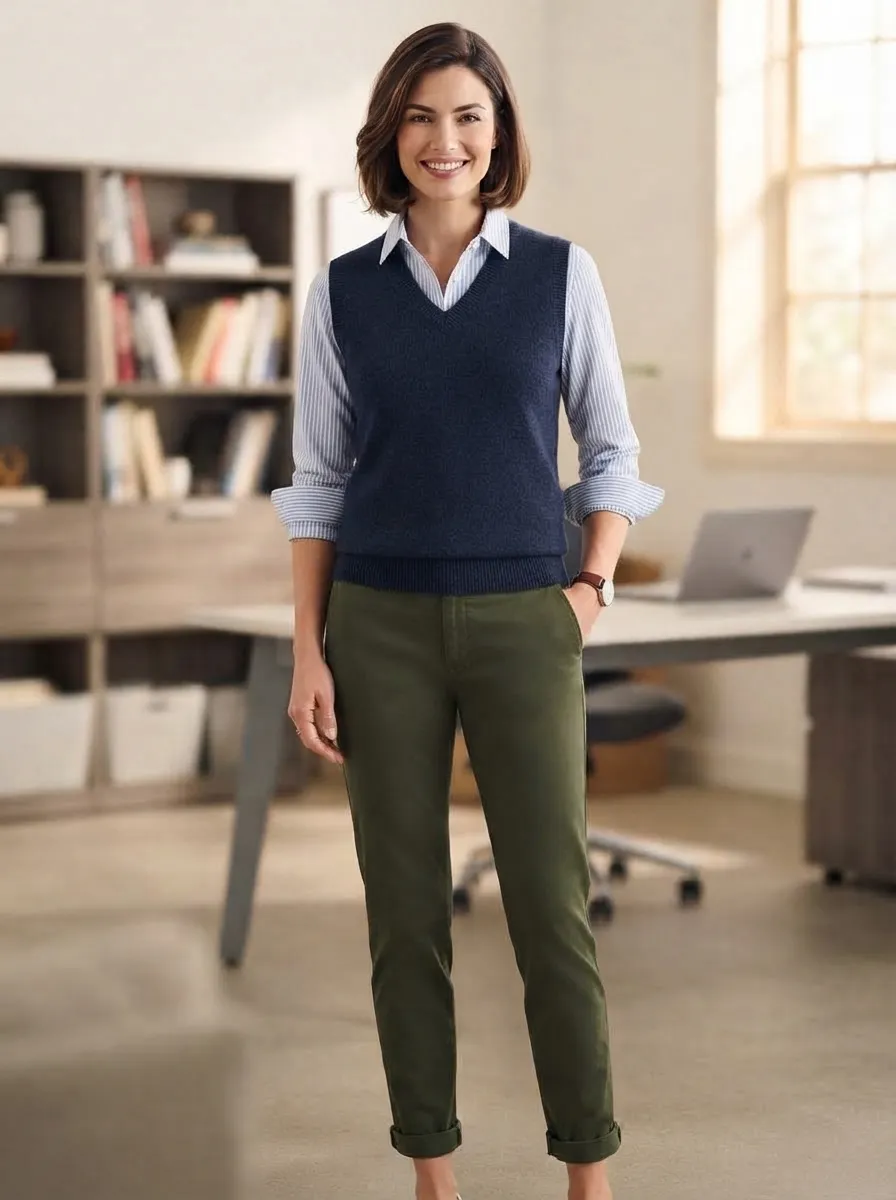
Sweater Vest over a Crisp Button Down
The principle: the shirt is the outfit's only pattern. A striped button down under a solid navy vest gives the eye one pattern to read and nothing else competing with it. The stripe scale decides the mood: thin stripes read neat and office ready, wide stripes read relaxed and weekend. The vest stays solid so the stripes stay the story, and the trousers stay olive and plain for the same reason.
This is the reverse of the usual sweater vest logic, where the knit leads; here the shirt leads and the vest frames it. Keep the shirt's collar crisp and the cuffs visible past the vest armholes, since those two white edges are what mark the outfit as styled rather than layered by accident.
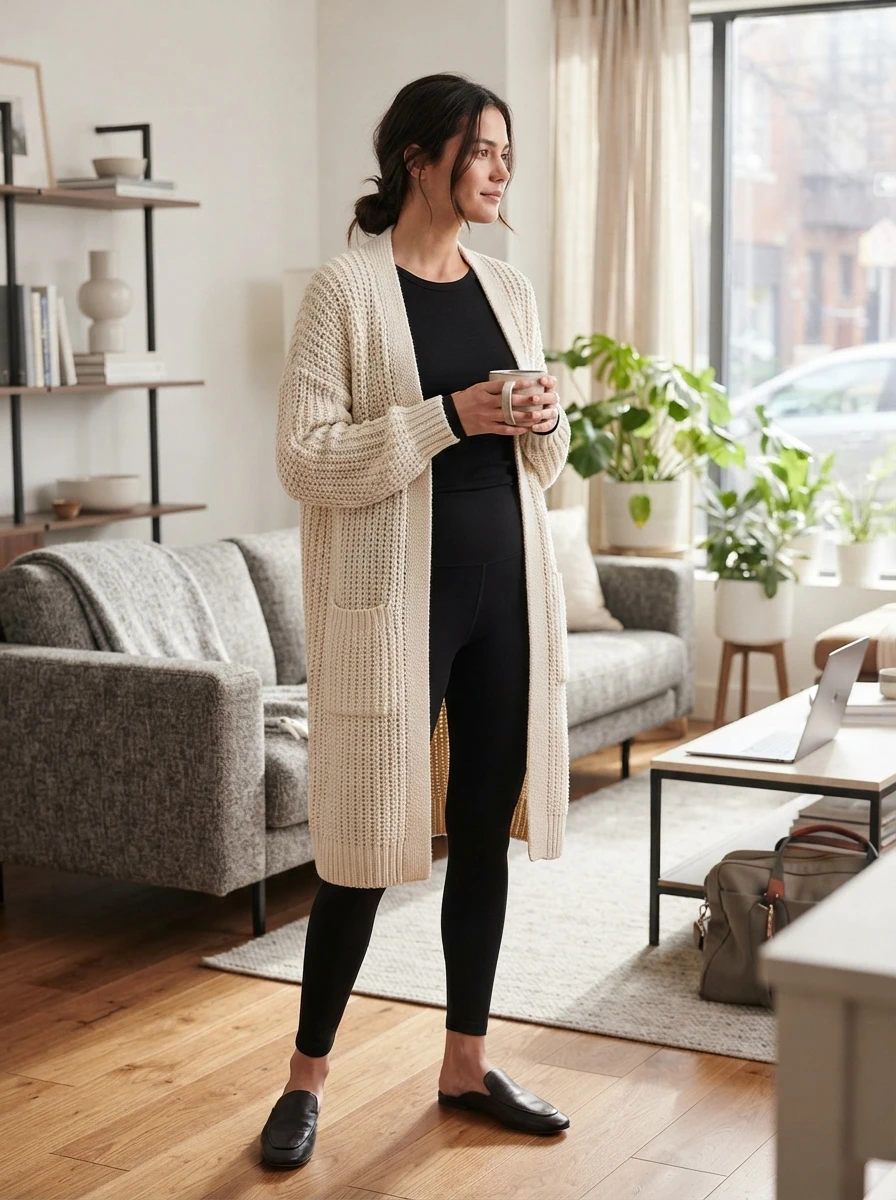
Longline Cardigan and Leggings
The principle: the indoor coat. A longline cardigan is the layer you keep on inside, in offices and cafes where a trench would be too much and a blazer too stiff. It works because it behaves like a coat without acting like one: open front, long line, pockets, but soft enough to sit in for hours.
Fabric note: the cardigan needs a midweight knit to drape properly; a fine knit clings to the leggings underneath and loses the line, while a heavy knit turns the whole outfit into a blanket. Belt it once at the waist if the open drape feels shapeless, or leave it open over a fitted base. Either way the base layer stays fitted, since the cardigan is already supplying all the volume this outfit can hold.
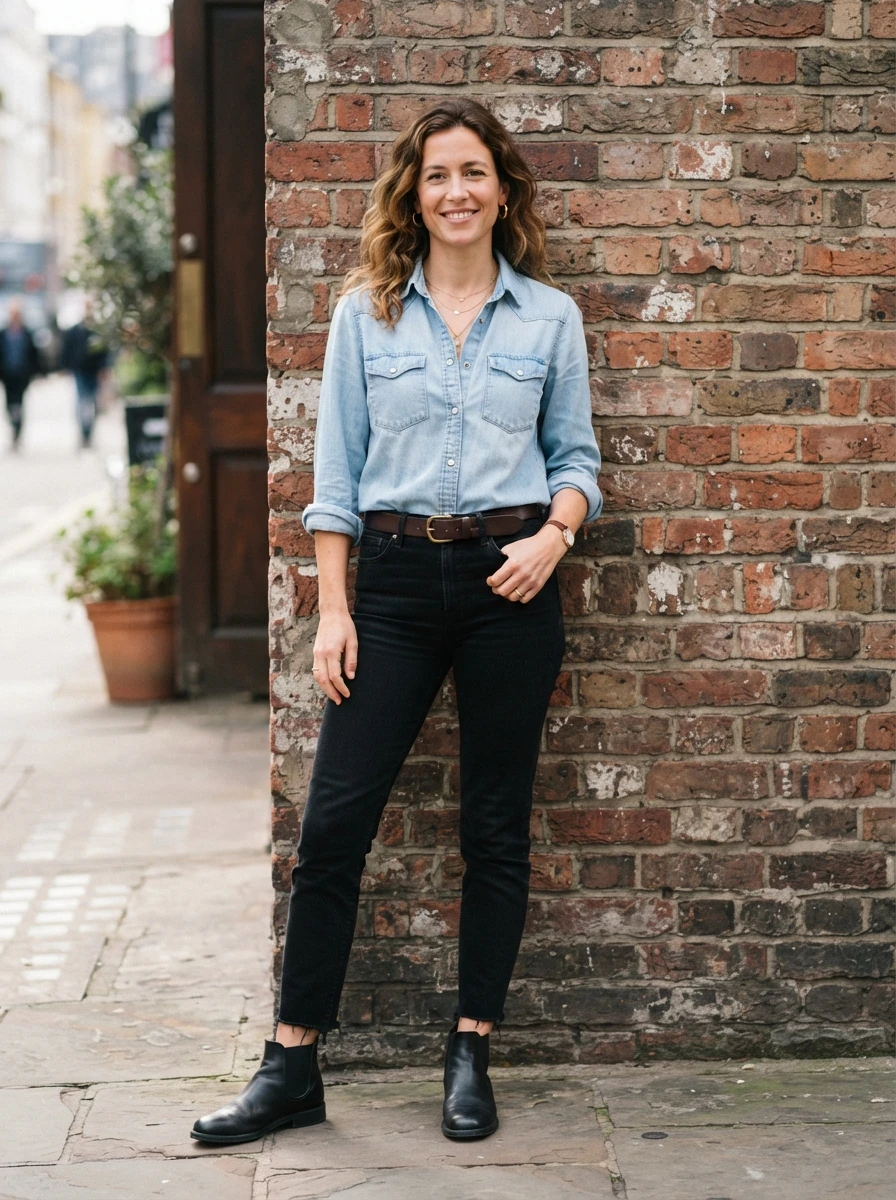
Denim Shirt and Black Jeans
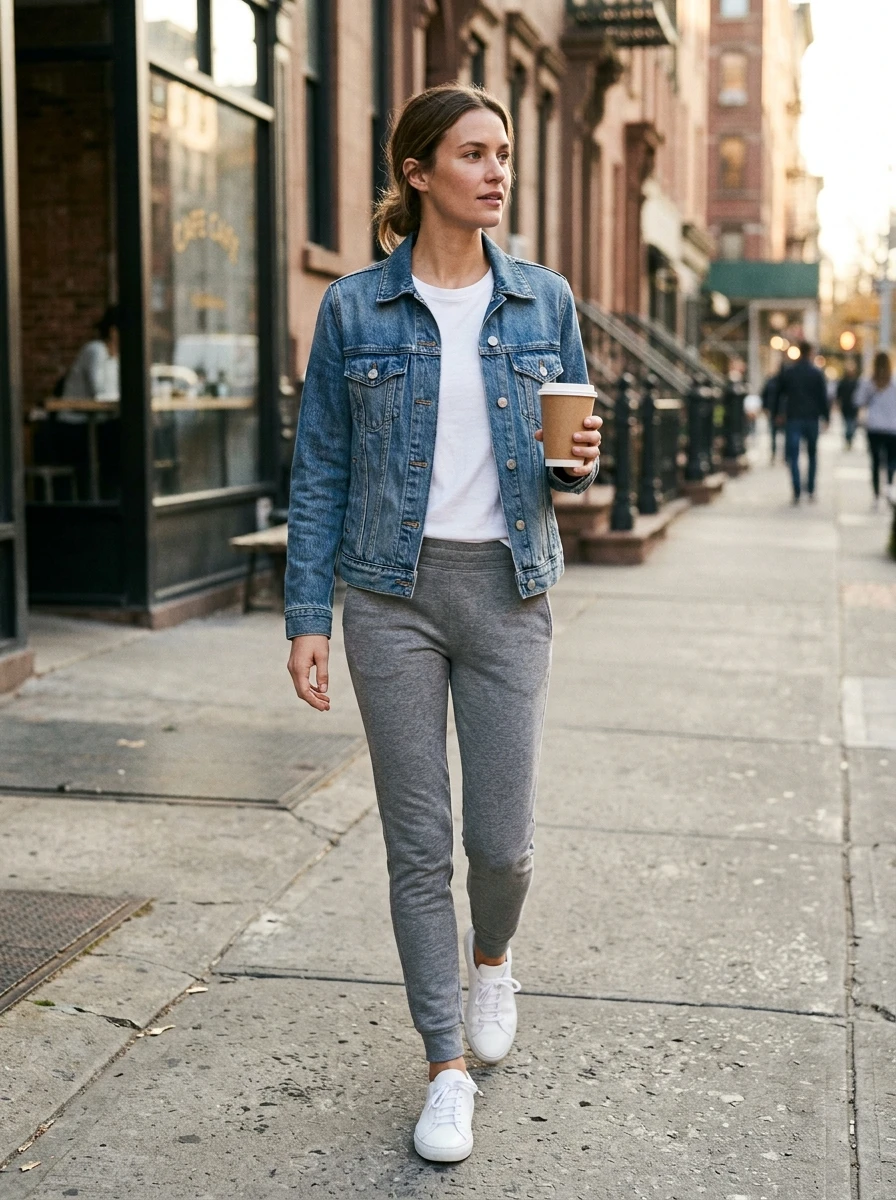
The principle: tonal contrast within one fabric family. Light wash denim shirt against black jeans, same material language, completely different values. That contrast is what keeps double denim from reading as a uniform (the Canadian tuxedo problem is matching washes, not wearing denim twice).
Wear it with: the sleeves rolled to the elbow, a denim shirt with the sleeves worn long and buttoned reads as workwear; pushed to the elbow it reads as weekend. A belt at the waist gives the eye the breakpoint between the two denims.
Puffer Vest and Long Sleeve Tee
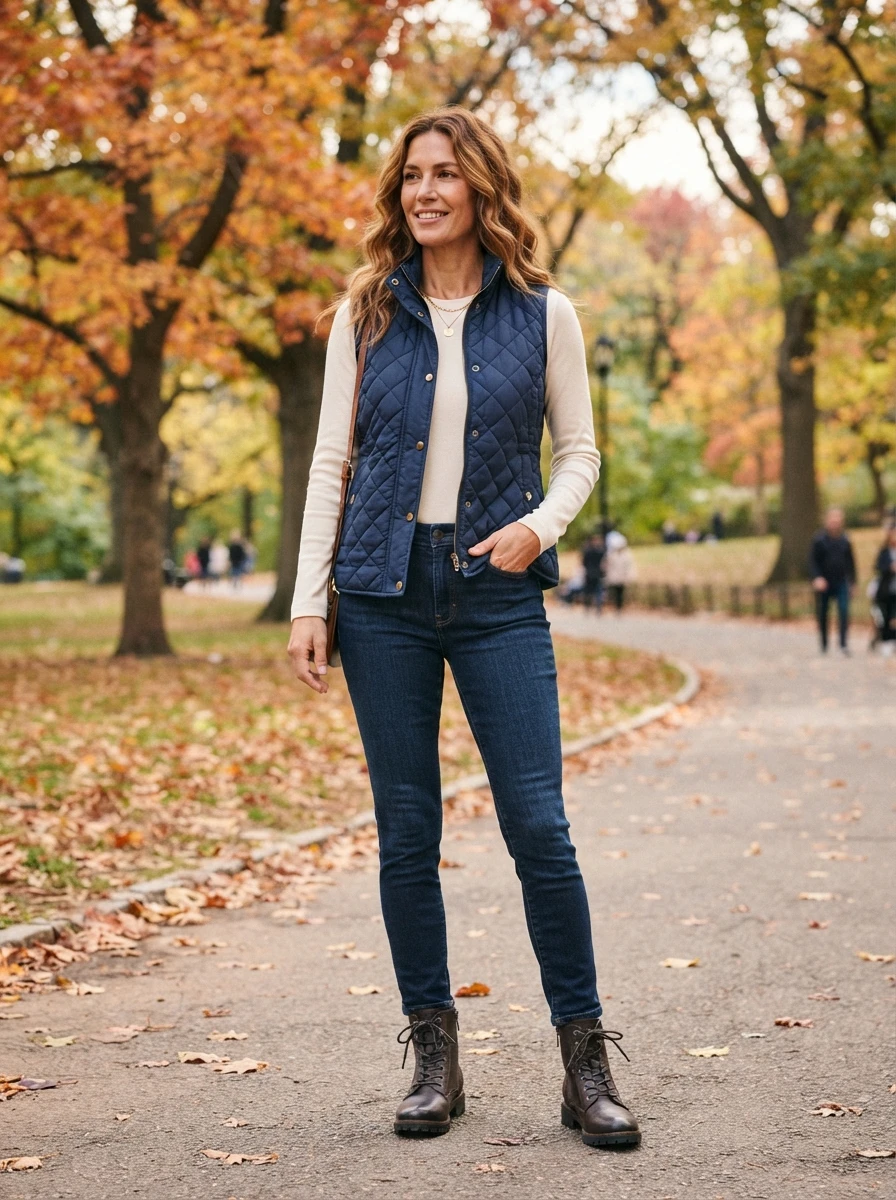
The principle: strategic warmth. A vest warms the core, where your organs are, where warmth actually matters, while leaving the arms free for movement and temperature regulation. It is the most efficient warmth to fabric ratio in outerwear.
Fit note: the styling logic is volume management: the vest brings the volume, so everything else stays slim (fitted tee, dark denim, streamlined boots). A quilted rather than baffled vest keeps the volume controlled; big puffy baffles need even slimmer companions to balance.
Leather Jacket and Floral Dress
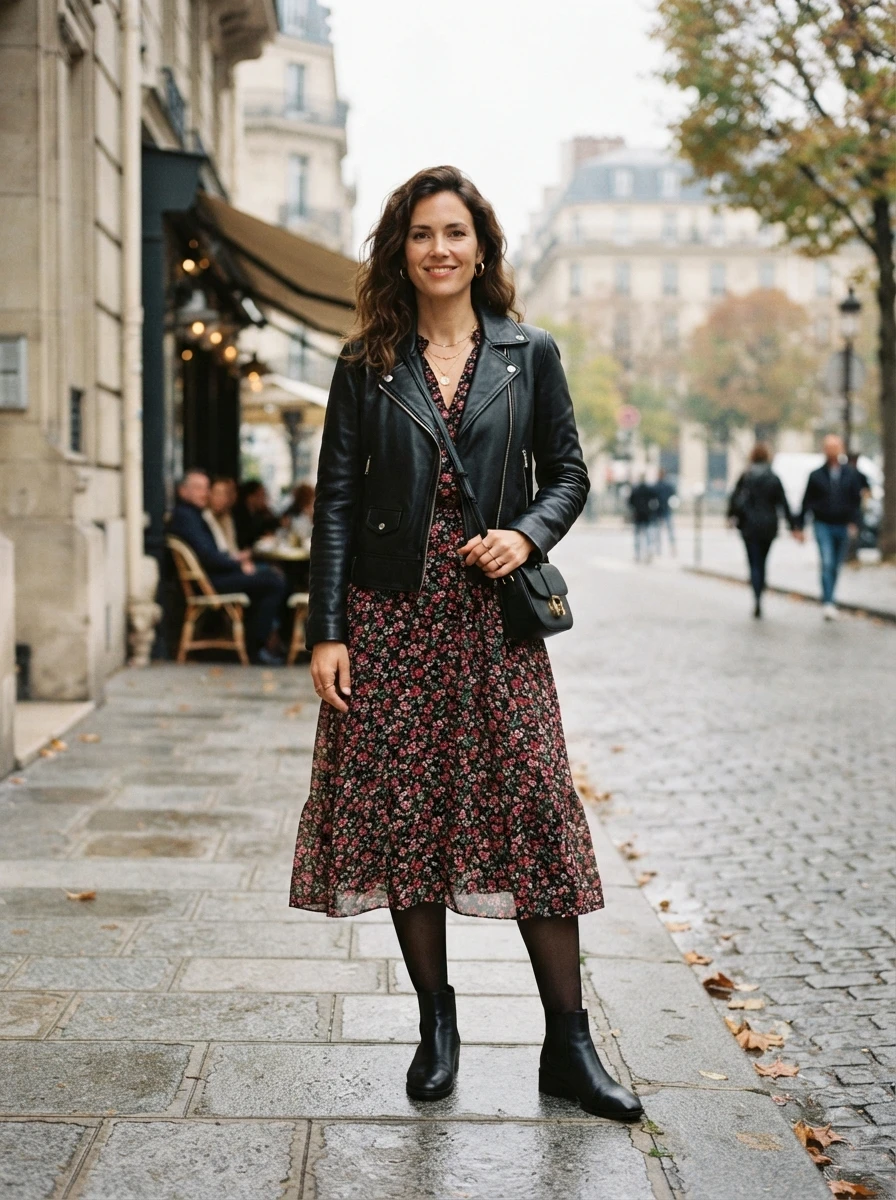
The principle: hard/soft contrast. The leather jacket's structure, weight, and edge against the floral dress's fluidity and print, each piece makes the other look more deliberate. The jacket stops the dress from reading as precious; the dress stops the jacket from reading as tough. This is the same mechanism as the moto jacket and slip dress formula, applied to daytime.
Fit note: the jacket should hit at the hip so the dress's skirt flows freely below it; a longer jacket would cover the dress's waistline and kill the proportion.
The same hard and soft contrast drives the coquette fall outfits, where the soft side leads instead of the hard side.
Utility Jacket and White Jeans
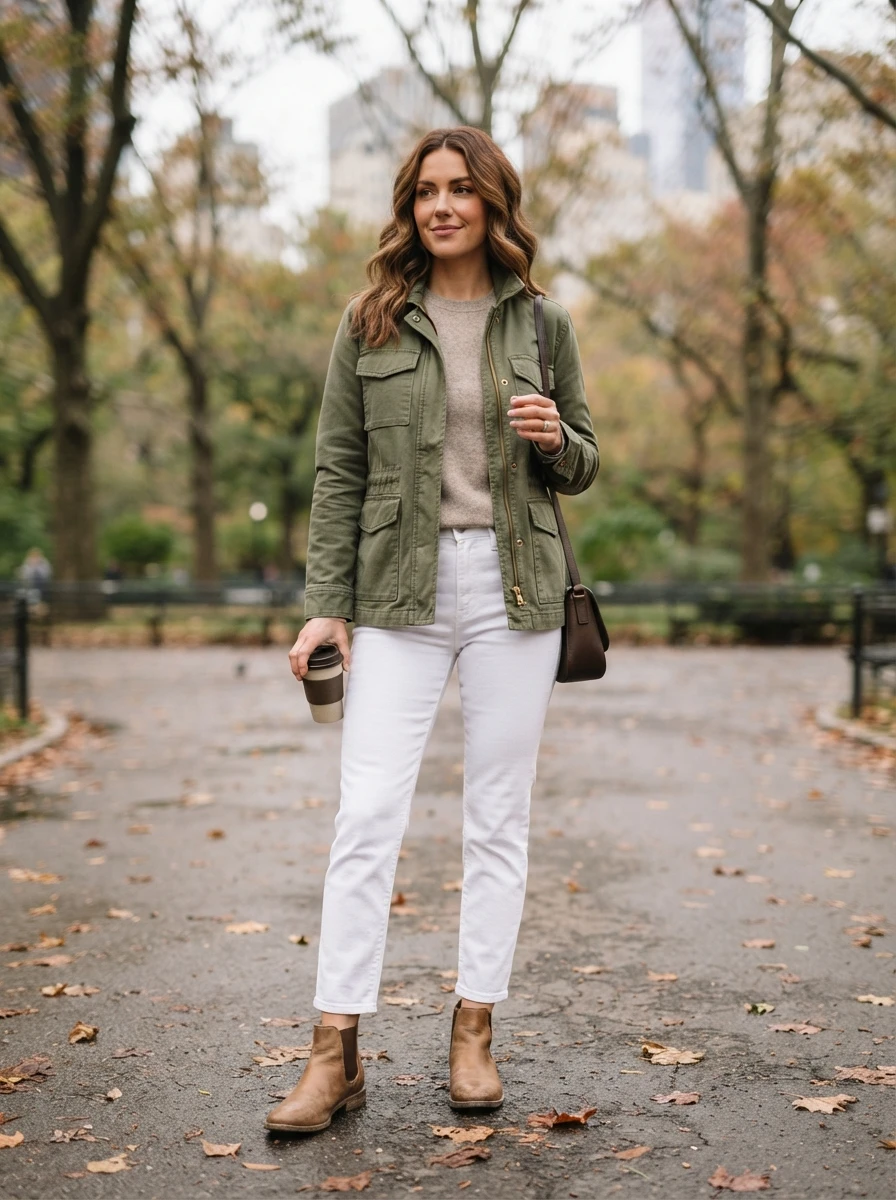
The principle: earthy structure against clean white. An olive or khaki utility jacket brings pockets, seaming, and a rugged texture; white jeans bring brightness and simplicity. The contrast is what makes white jeans feel like fall instead of leftover summer, the jacket is doing the seasonal signalling.
Wear it with: the rest of the outfit quiet (grey or tan underneath) because the jacket jean contrast is already the whole story. White jeans demand confidence about the environment; this is a dry day, clean street outfit, and there is no shame in checking the forecast.
Chunky Scarf and Simple Coat
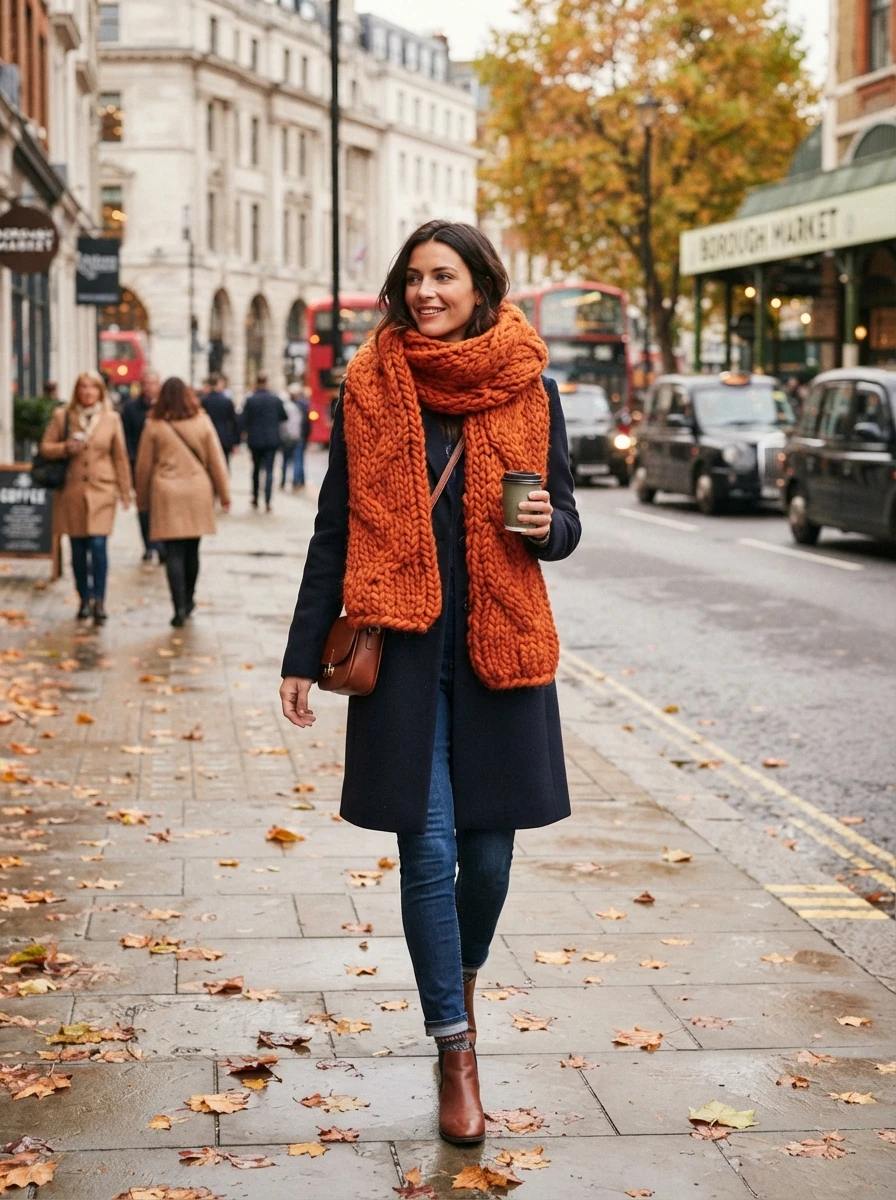
The principle: one focal accessory carries a simple base. A basic wool coat in navy or camel is a background; the chunky scarf is the entire personality of the outfit. This is the most efficient styling move on this list, it transforms a coat you already own without buying anything else.
Colour pairing: the scarf should contrast the coat (cream scarf on navy coat, rust scarf on camel coat) because a matching scarf disappears into the coat and the focal point effect vanishes. Wrap it generously; a skimpy scarf on a big coat looks like an afterthought.
If this is your direction, basic style casual curvy fall outfits this season goes further.
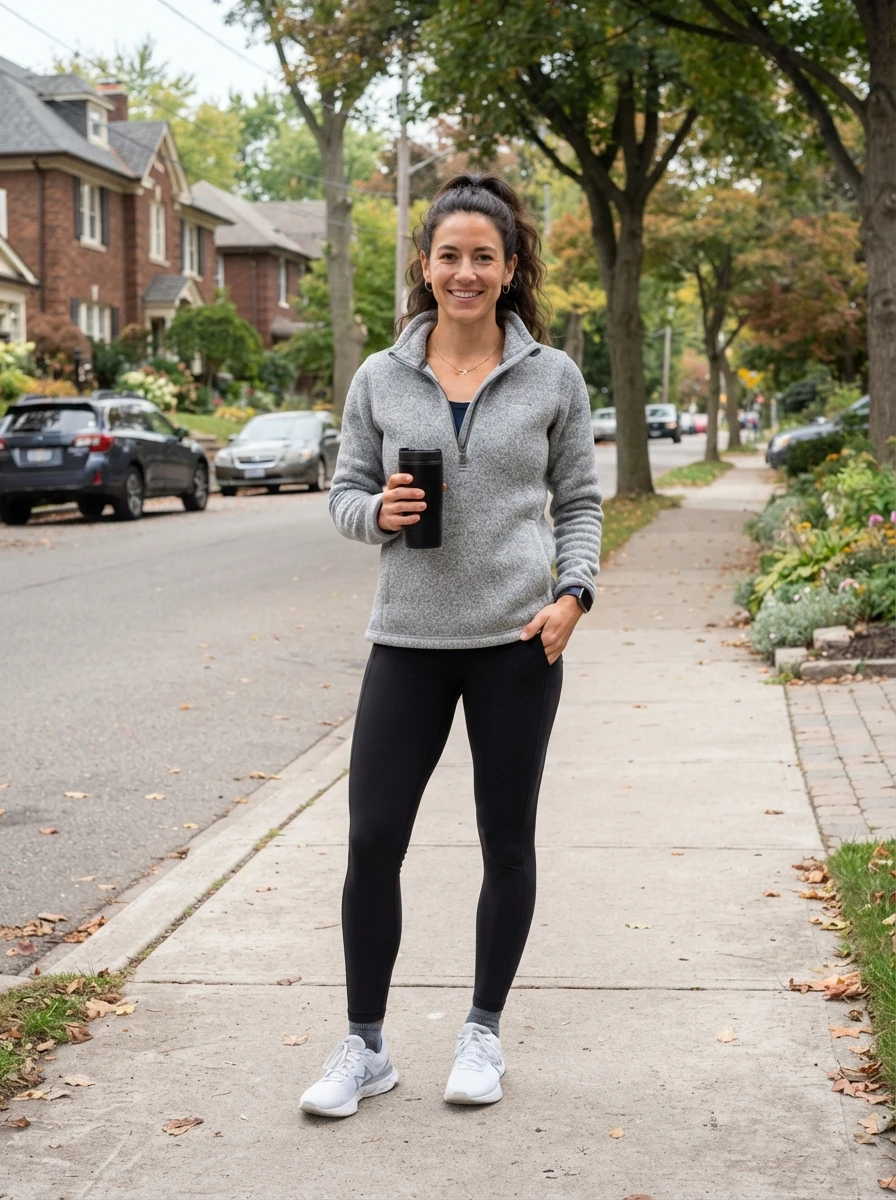
Half Zip Pullover and Leggings
The principle: adjustable everything. The half zip is a thermostat you wear, zipped up for the cold morning walk, down for the warm afternoon. That adjustability is the whole reason this beats a regular sweatshirt for fall's temperature swings.
Fit note: the pullover should hit at the hip, not below; longer cuts over leggings start to look like a dress without a bottom half. Fleece lining adds real warmth, but it also adds bulk, for mild fall days, an unlined technical knit is the better call.
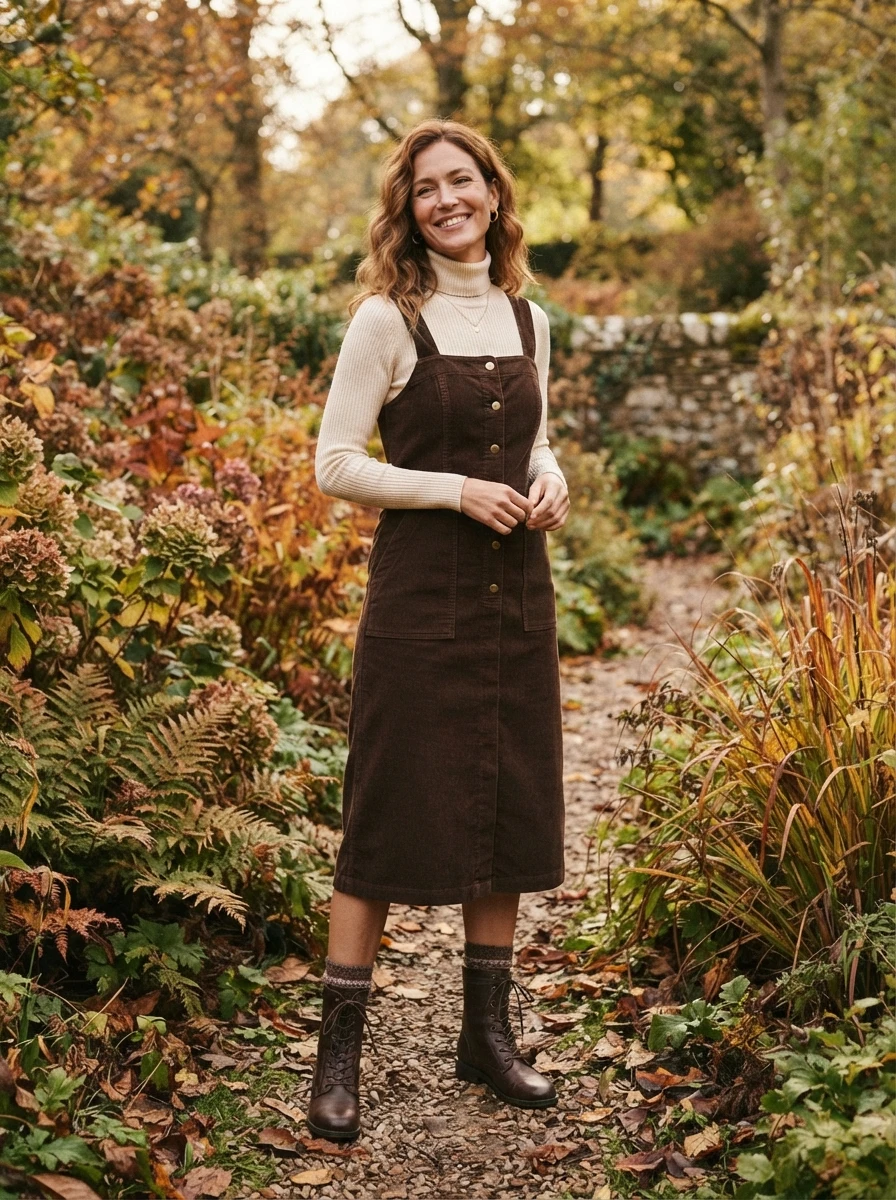
Turtleneck and Pinafore Dress
The principle: corduroy carries the season. A pinafore in corduroy is the fall signal all on its own, so the turtleneck underneath plays support, not lead. The wale of the corduroy sets the tone: a wide wale reads bold and vintage, a fine wale reads neat and quiet.
Fabric note: pick the wale first, then match the turtleneck to it in a thin jersey or modal that will not bunch at the armholes. The pinafore brings the structure and the autumn texture; the turtleneck brings the warmth invisibly. Mid calf boots finish the vertical, with as little bare leg showing as the day allows.
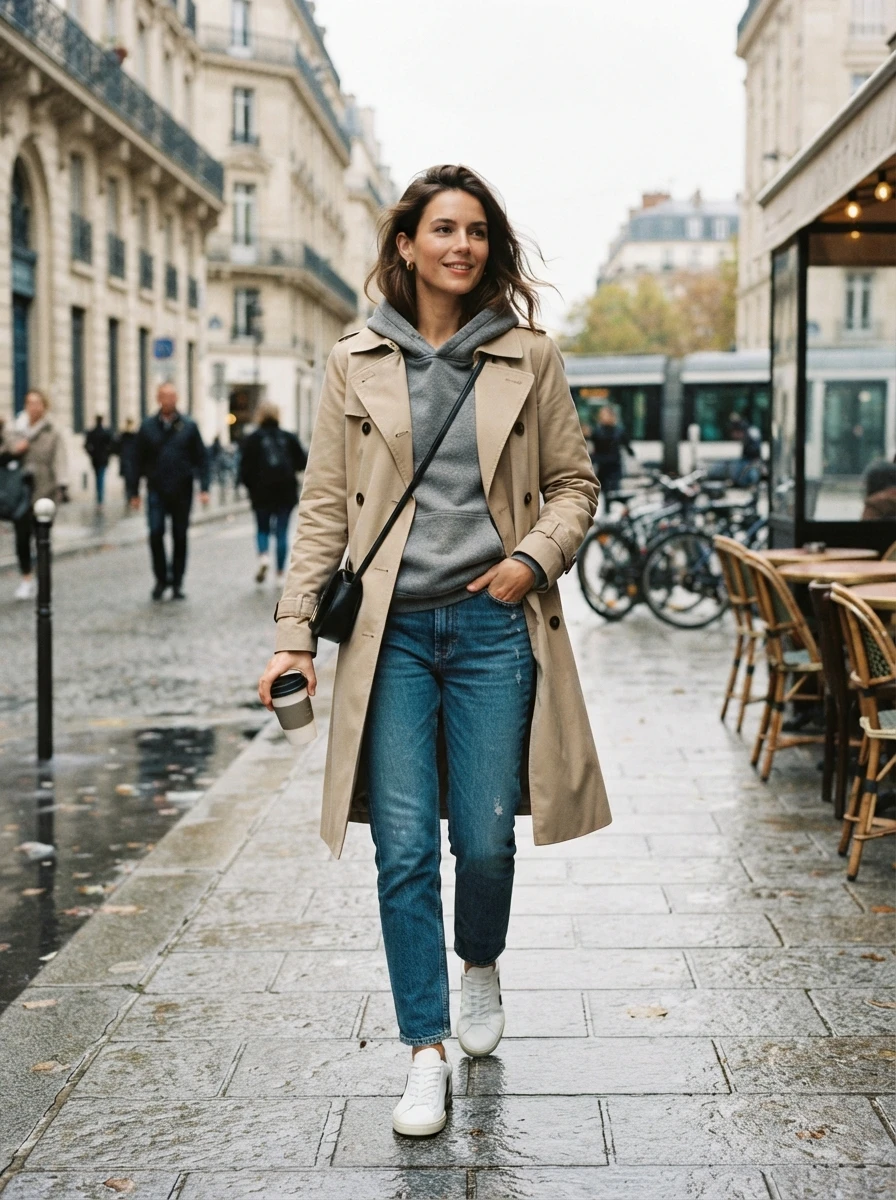
Hoodie and Trench Coat
The principle: the casualizer. A trench coat on its own can read as formal or severe; a hood underneath instantly relaxes it, the soft jersey hood against the crisp cotton gabardine is a texture and formality contrast that makes the whole outfit feel modern.
Fit note: the hoodie must be thin enough that the coat still closes comfortably; a thick hoodie under a fitted trench strains the shoulders and ruins both pieces. This is the outfit for days when you want to look polished without feeling polished, the coat does the looking, the hoodie does the feeling.
Common Questions About Casual Fall Dressing
What is the fastest way to look put together in fall?
Build every outfit on one clear principle, one statement piece, one contrast, one focal point. Overdressed happens when everything is competing; put together happens when one thing leads and the rest supports. A trench over a monochrome base, a scarf over a simple coat, one decision per outfit is enough.
How do I tell casual apart from sloppy?
Fit and fabric condition. The same hoodie and trench outfit reads as casual when the hoodie is clean and structured, sloppy when it is pilled and stretched. Casual is a styling choice; sloppy is a maintenance failure. Keep knits depilled, denim hemmed, and shoes clean, and casual always reads as intentional.
Can I build most of these outfits from pieces I already own?
Probably most of them. The list is designed around common wardrobe pieces, denim jackets, cardigans, white tees, straight jeans, not exotic purchases. The new skill is not buying; it is the principles: contrast, proportion, the breakpoint, the focal point. Apply those to your closet and you will find the outfits are already there.
How do I dress for fall temperature swings without carrying a huge bag?
Choose layers that adjust rather than layers you must remove entirely. The half zip, the open cardigan, the removable scarf: a layer you can vent (unzip, unbutton, push up sleeves) handles a 20 degree swing; a layer that is either on or off does not. Dress in adjustable pieces and the weather stops being a problem.
Which textures actually say fall?
Corduroy, chunky knit, leather, suede, flannel, quilted nylon. These read as autumn because of their visual weight and warmth associations. You do not need all of them, one or two per outfit is the right dose. A corduroy pant with a denim jacket, a leather jacket over a floral dress: the texture is the season.
Five Principles to Keep, Seventeen Outfits to Forget
Seventeen outfits is a lot to remember, and you do not need to. What you need are the five ideas underneath them: let one piece lead, use contrast deliberately, always give the eye a breakpoint, keep one focal point, and dress for the temperature swing. Internalize those and your own closet starts generating outfits on its own. For the same ideas with a softer, comfort first slant, aesthetic outfit ideas for any day and Who What Wear fall outfit ideas both show the principles at work on different wardrobes.