How to Style Chic Winter Outfits for Women That Stay Warm and Polished
How to use this guide
These are editorial styling suggestions, not a one-size-fits-all formula. Adapt each look to your wardrobe, proportions, climate, comfort, budget, and the occasion; the most useful idea is the one you can genuinely wear.
What actually makes a winter outfit feel chic — the coat, or the way the layers underneath it behave? Most cold-weather outfits fail long before anyone sees them, because the coat will not close over the knit, the boots cannot handle wet pavement, or the base layer traps sweat and leaves you colder than you started. The fix is rarely a new wardrobe. It is a layering order that holds up from the first cold morning to the last errand of the day: a thin fitted base, a warm middle layer, and a coat that closes over both, finished with shoes made for cold ground.
Proportion does the rest of the work. One bulky piece per outfit is the rule that keeps winter looks from turning shapeless — a chunky knit pairs with slim trousers or a straight skirt, while a long coat sits best over a fitted knit. Wool, cashmere, and down warm without much weight, while a cotton base layer holds moisture and chills you. Colour works the same way: build on one dark neutral such as black, charcoal, or navy, then add a single warm accent in camel, cream, burgundy, or olive.
The 22 outfits below, plus 15 extra combinations, cover workdays, snow days, parties, travel, and weekends. Each one names the pieces and the order they go on, so getting dressed stops being a morning negotiation with the closet. If your winter wardrobe feels thin, start with a minimalist winter capsule wardrobe and build these outfits from those core pieces.
The Everyday Uniform: Wool Coat and Chunky Knit
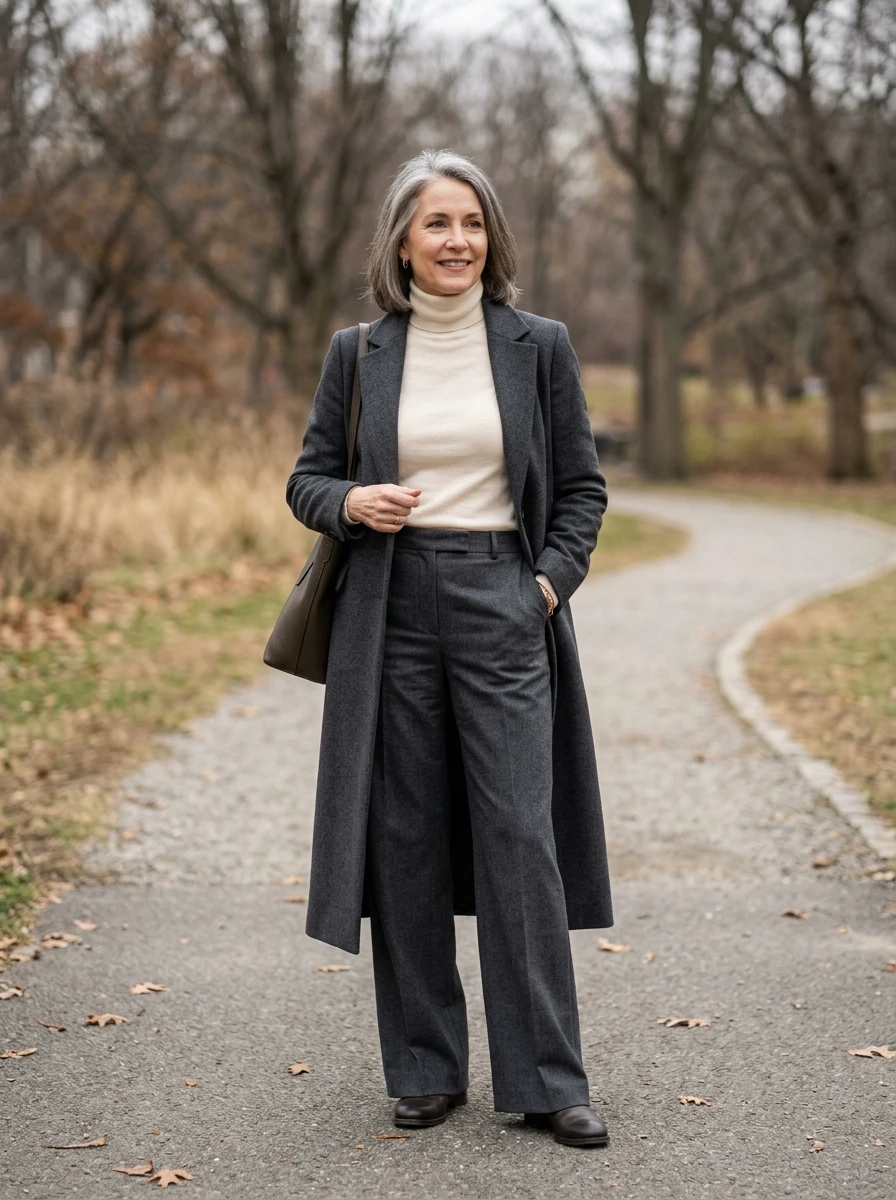
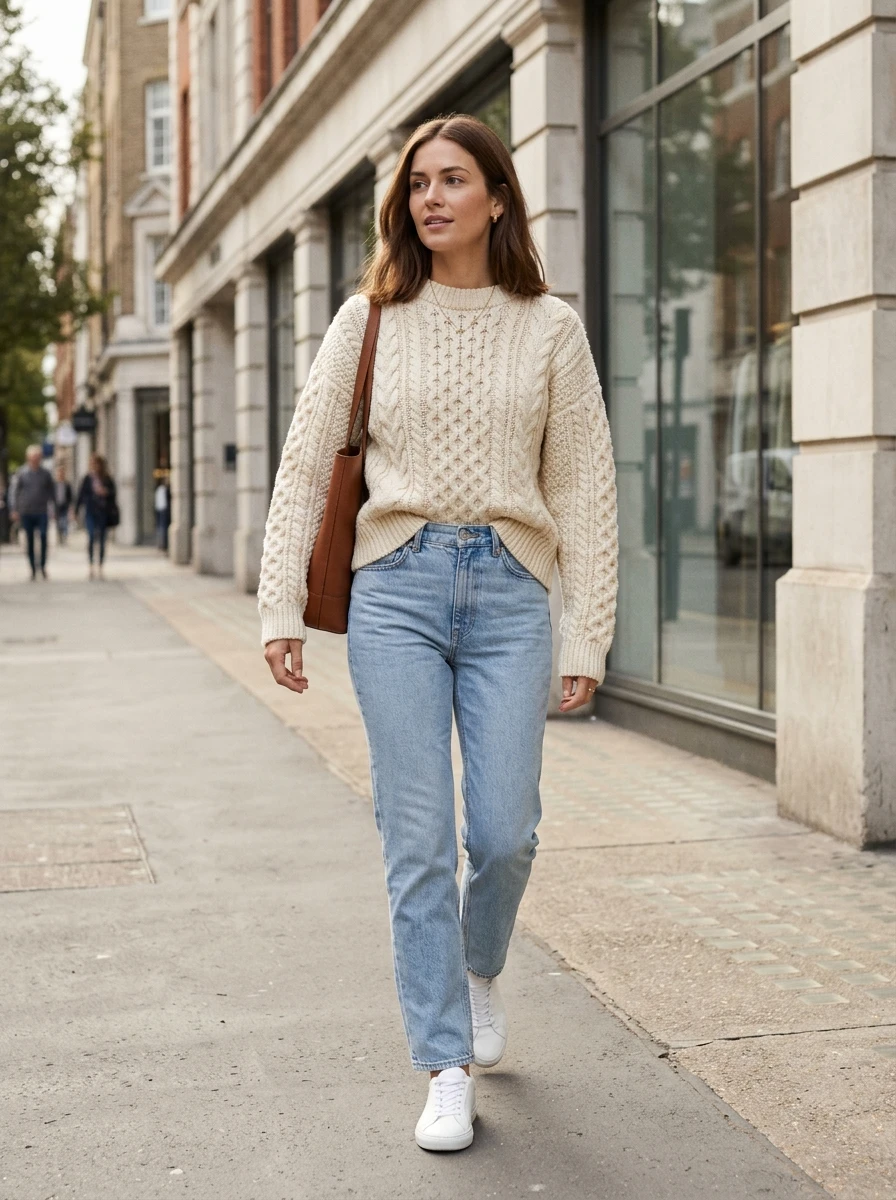
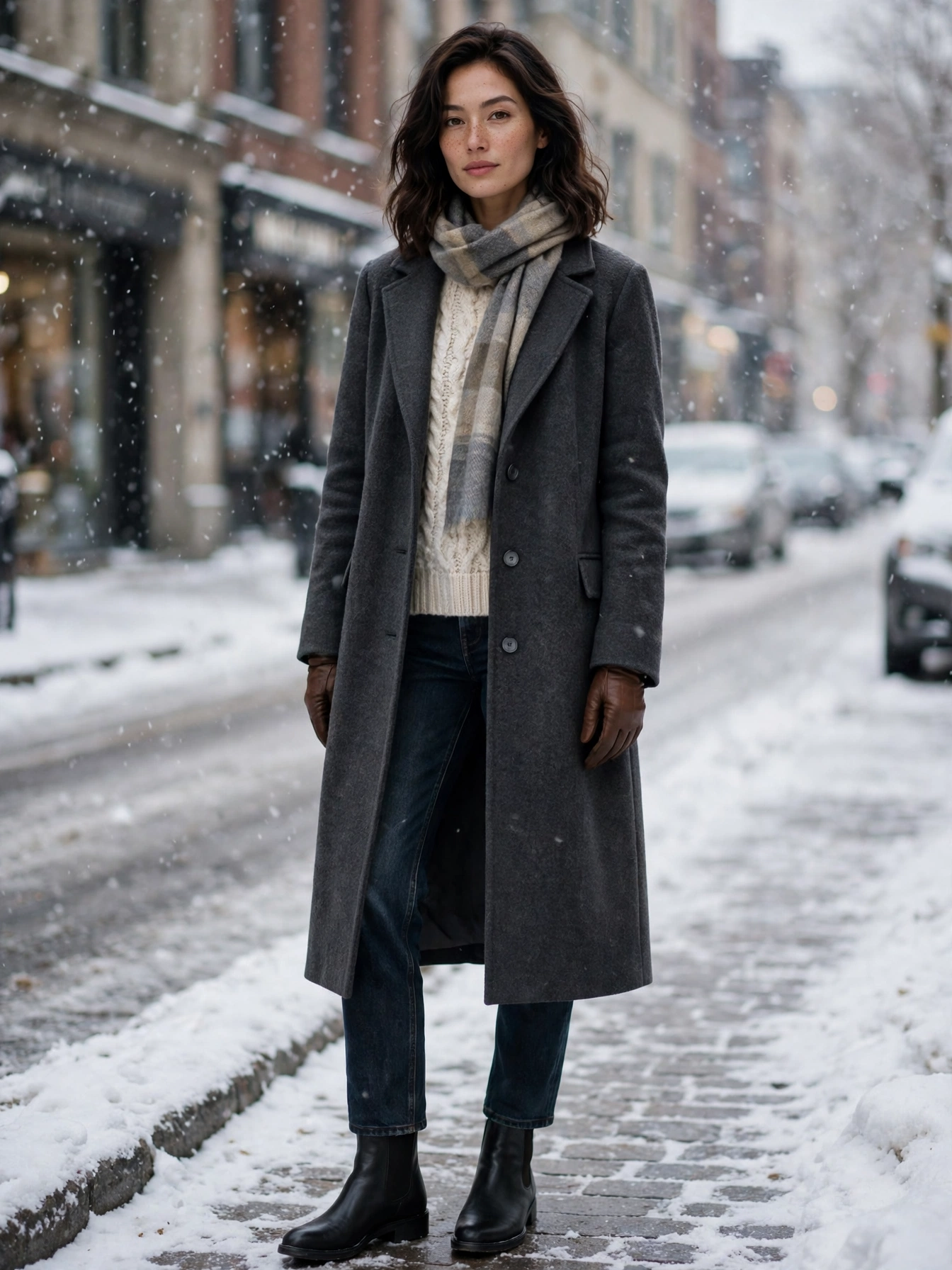
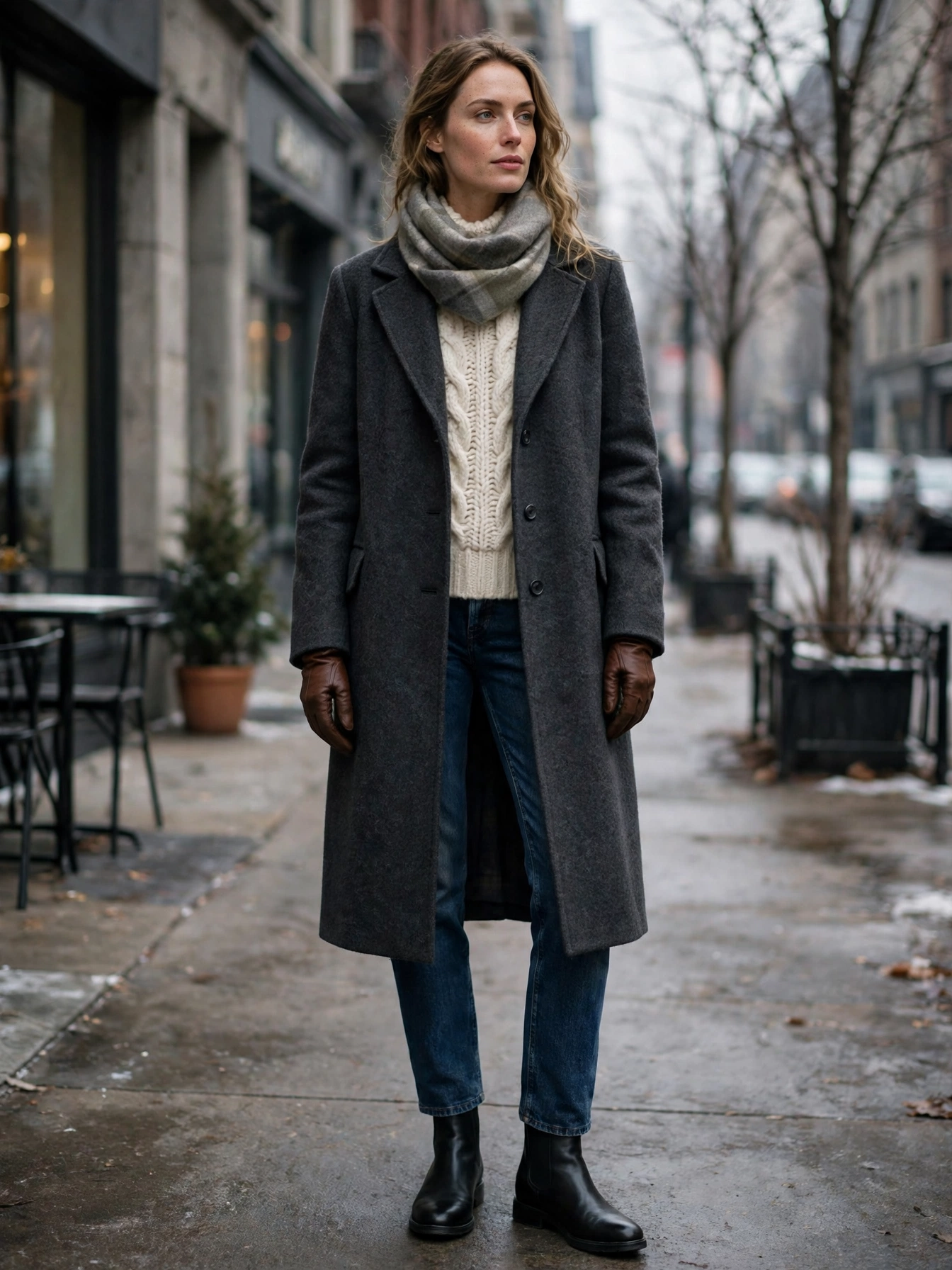
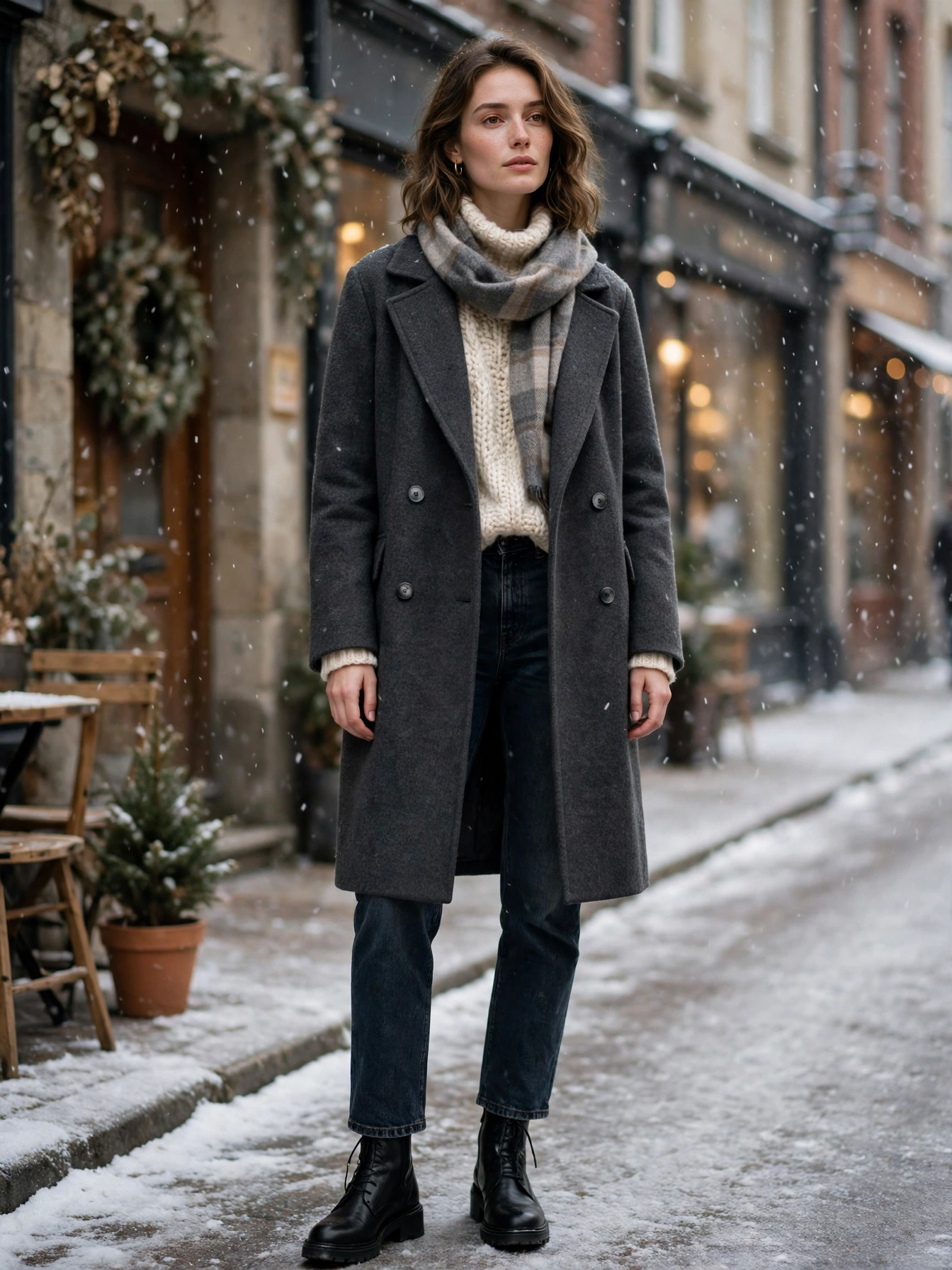
A charcoal wool coat over a cream chunky knit sweater, dark wash jeans, and black ankle boots is the combination most women reach for daily, because it works almost everywhere. The coat should fall below the knee for real warmth, and the knit should be thick enough to matter but not so thick that the coat will not close. A wool scarf in a muted plaid and leather gloves finish it. The cream knit brightens the face against the dark coat, while the dark jeans keep the whole outfit grounded.
On very cold days, a thin thermal top under the knit works as a hidden base layer. The outfit suits work, errands, and dinner out, and it changes character all winter with a different scarf, coat colour, or pair of boots.
Fit note: try the coat on over the knit before buying — a coat that only closes over a thin top will sit unworn all winter.
Puffer Coat and Slim Jeans for the Coldest Days
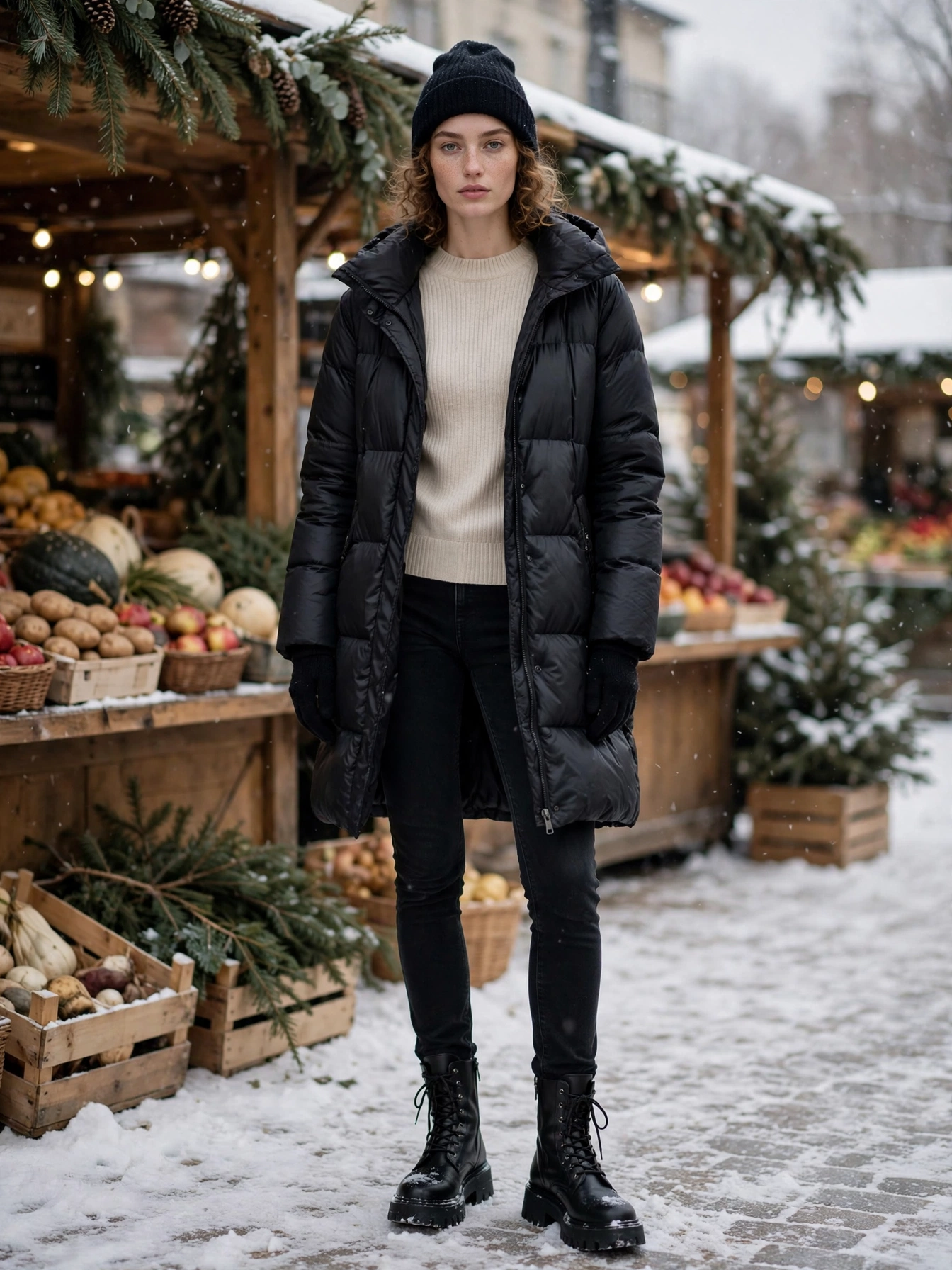
A black puffer coat with a fitted sweater, slim dark jeans, and chunky boots handles the coldest days without looking as if you gave up. Choose a puffer that falls to mid thigh rather than a cropped one, so your core stays covered, and pick boots with a grippy sole for icy pavements. A beanie and gloves in black let the accessories disappear into the coat.
The slim jeans matter here because a puffer already adds volume on top, and a wide leg below would make the whole shape look heavy. If you need more warmth, layer a thermal top under the sweater. For more ideas on warm boots that still look good, these UGG outfits with a winter aesthetic show how cozy boots fit into polished winter outfits. Wear this for snow days, school runs, and outdoor markets.
Fabric note: a wool or wool-blend sweater insulates far better under a puffer than a cotton one, which holds damp and cools down fast.
Long Cardigan and Leather-Look Leggings
A long charcoal cardigan over a black fitted top, with faux leather leggings and black ankle boots, is warm, stretchy, and polished enough for lunch out. The cardigan should fall below the knee so it acts like a light coat indoors, and the leggings should be thick, not sheer, so they read as trousers rather than gym wear. A long pendant necklace and a structured tote complete the look. The trick is the top: it must be long enough to cover the waistband of the leggings, or the outfit loses its polish.
In real cold, a wool coat over the cardigan still layers cleanly. This also travels well, because every piece stretches and nothing wrinkles badly in a car or on a train.
Wear it with: ankle boots for lunch out, or a wool coat over the top when the temperature drops.
Turtleneck and Wool Trousers: A Quiet Office Pairing
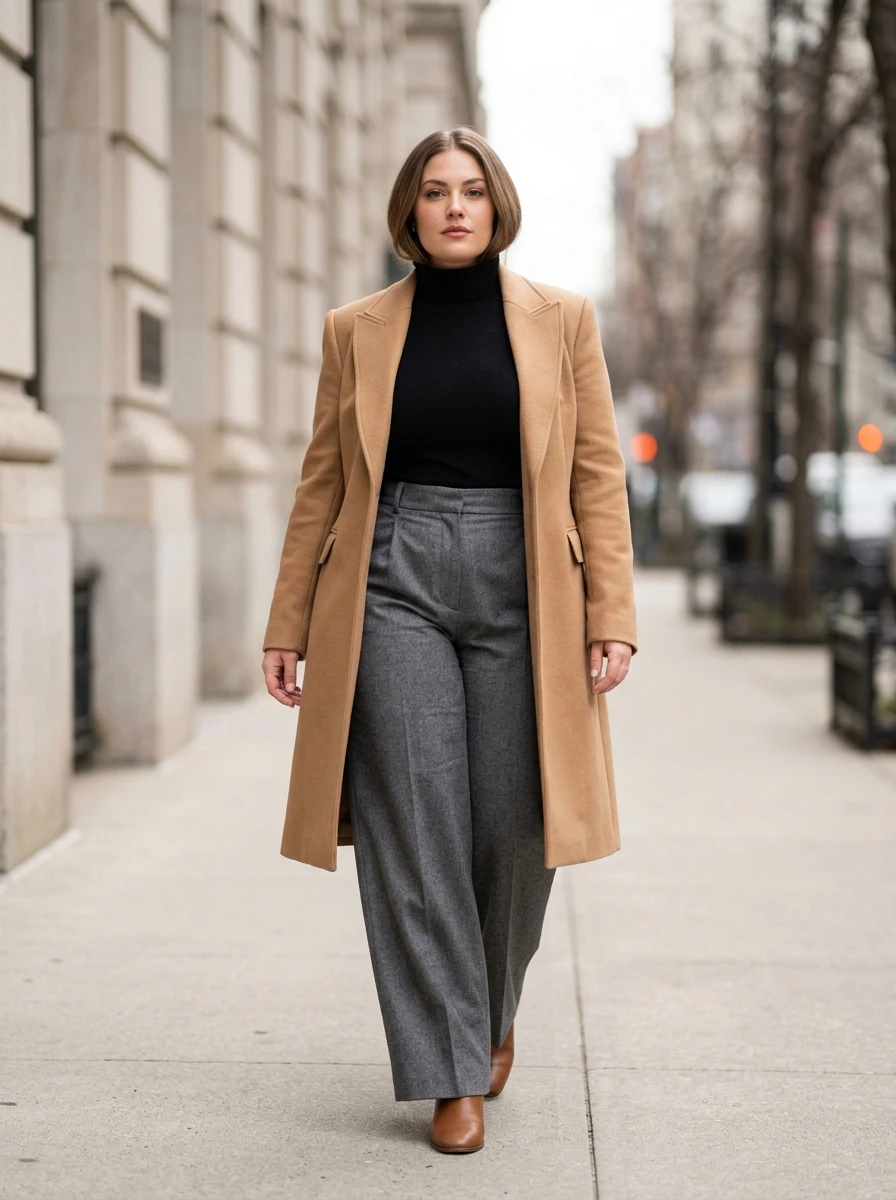
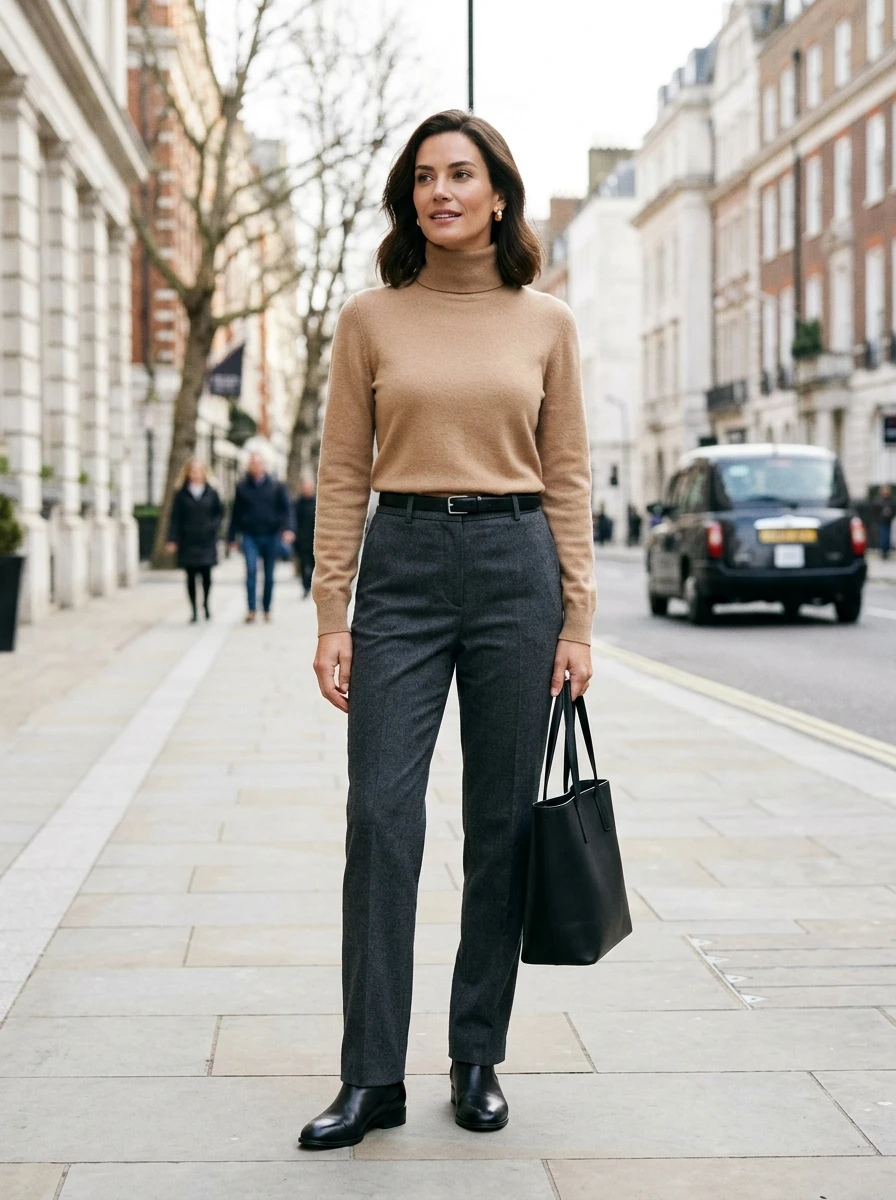
A black fitted turtleneck with grey wool trousers, black loafers, and a camel coat is a quiet office outfit that also works for dinner. The turtleneck keeps your neck warm without a scarf, the wool trousers hold their shape all day, and the camel coat adds the one warm colour in the outfit. Choose trousers with a high waist and a straight leg, and make sure the turtleneck is fitted enough to tuck in cleanly. Simple gold studs and a structured shoulder bag finish it.
If the office runs warm, remove the coat and the turtleneck and trousers still look complete. For more polished work layers in this style, these classy outfits for women over 40 in fall use the same neutral palette with wool and camel. Wear this for workdays, meetings, and smart lunches.
Care tip: wool trousers hold a press best when hung after wear rather than folded, and they need far less washing than cotton trousers.
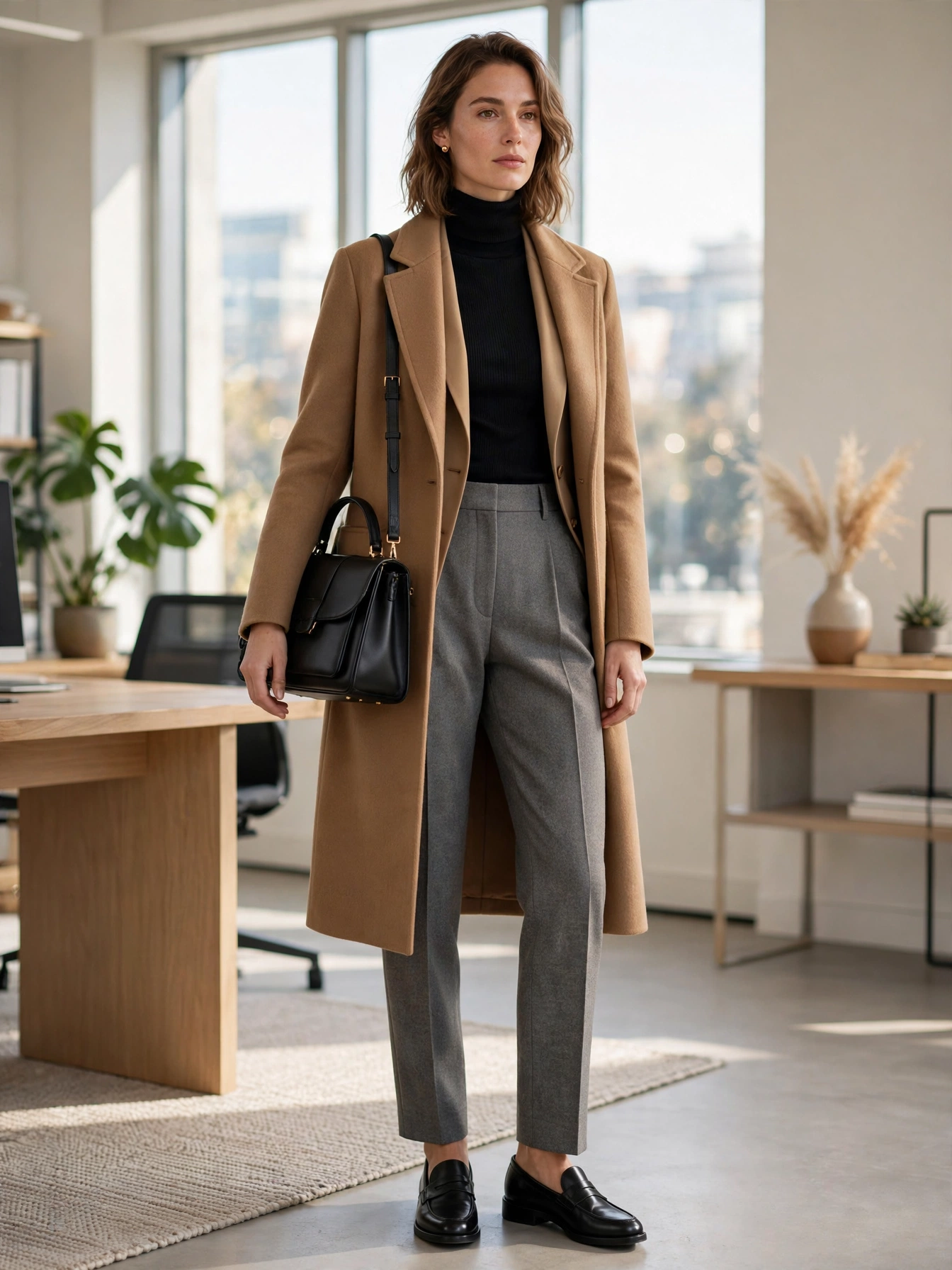
Faux Fur Coat and Black Dress for Winter Evenings
A cream or black faux fur coat over a black midi dress, with heeled ankle boots and a small clutch, is the winter evening outfit that needs almost no accessories. The coat is the statement, so the dress underneath stays simple: long sleeves, a clean neckline, and a length that falls below the knee. Simple gold hoops and a dark lip colour are enough. The coat should fall to mid thigh or below the knee; a cropped faux fur coat over a midi dress chops your proportions.
On very cold evenings, opaque tights keep the outfit dressy and warm. This suits holiday parties, anniversary dinners, and any winter evening where you want to look glamorous without wearing sequins. Keep the bag small so the coat stays the focus. The same faux fur texture leads our 20 classy elegant winter outfits.
Fit note: check the coat's shoulder line over the dress — a coat that pulls across the shoulders will gap at the front all evening.
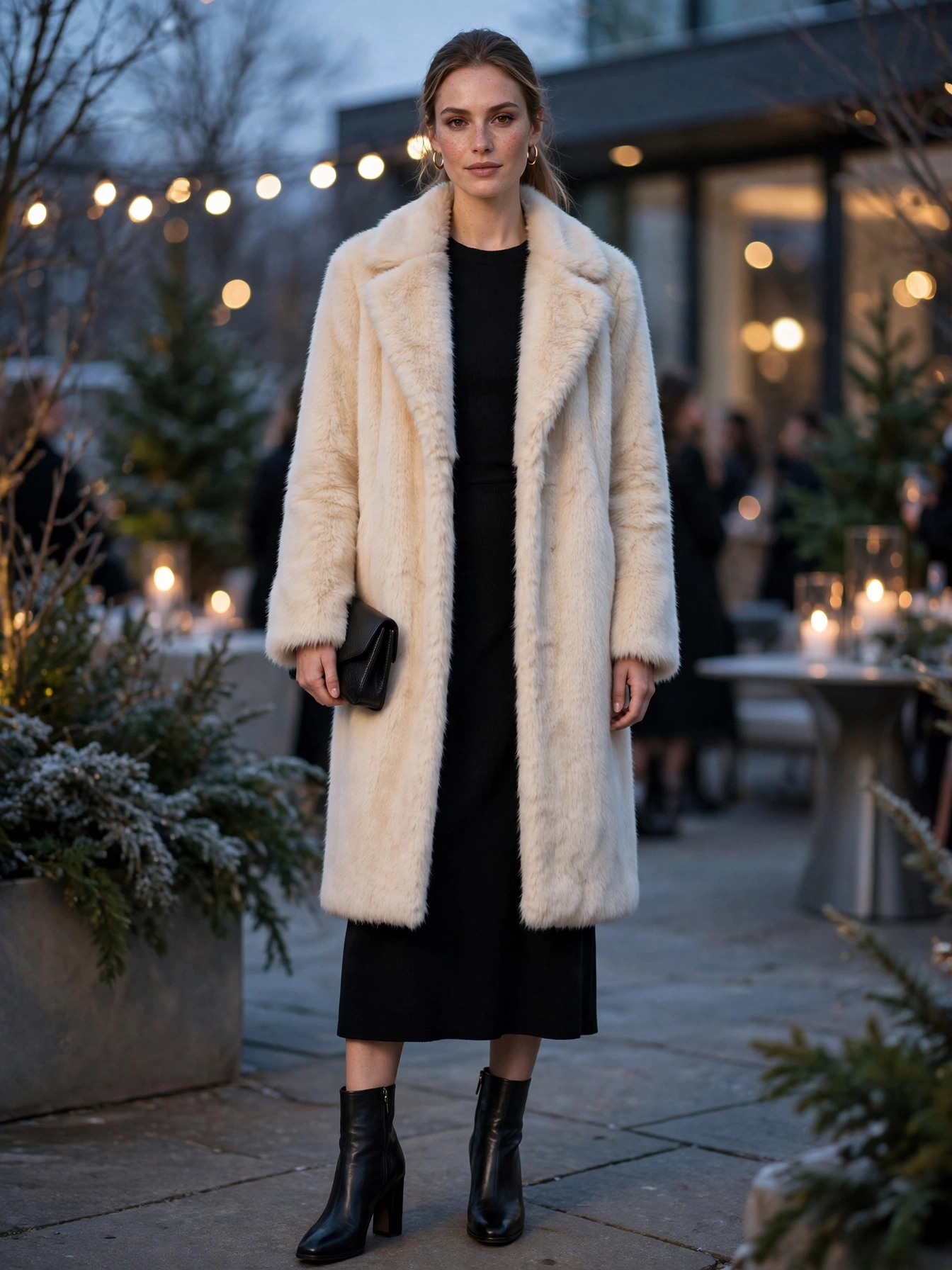
Quilted Jacket and Wide-Leg Jeans
An olive quilted jacket over a cream knit sweater, with wide-leg jeans and white sneakers, is a relaxed weekend outfit that still looks considered. The quilted jacket adds texture, the cream knit brightens the olive, and the wide-leg jeans balance the shorter jacket. Choose a jacket that falls to hip length so the proportions stay clean, and pick sneakers with a simple shape rather than a chunky running style. A crossbody bag and a beanie in cream finish it.
If the day turns colder, swap the sneakers for ankle boots and add a scarf, and the outfit moves into colder weather without changing the base. This is ideal for farmers markets, casual lunches, and walks where you want warmth without a heavy coat.
Colour pairing: olive and cream is a low-contrast combination, so keep accessories in the same soft range — tan, cream, or black — rather than adding a third strong colour.
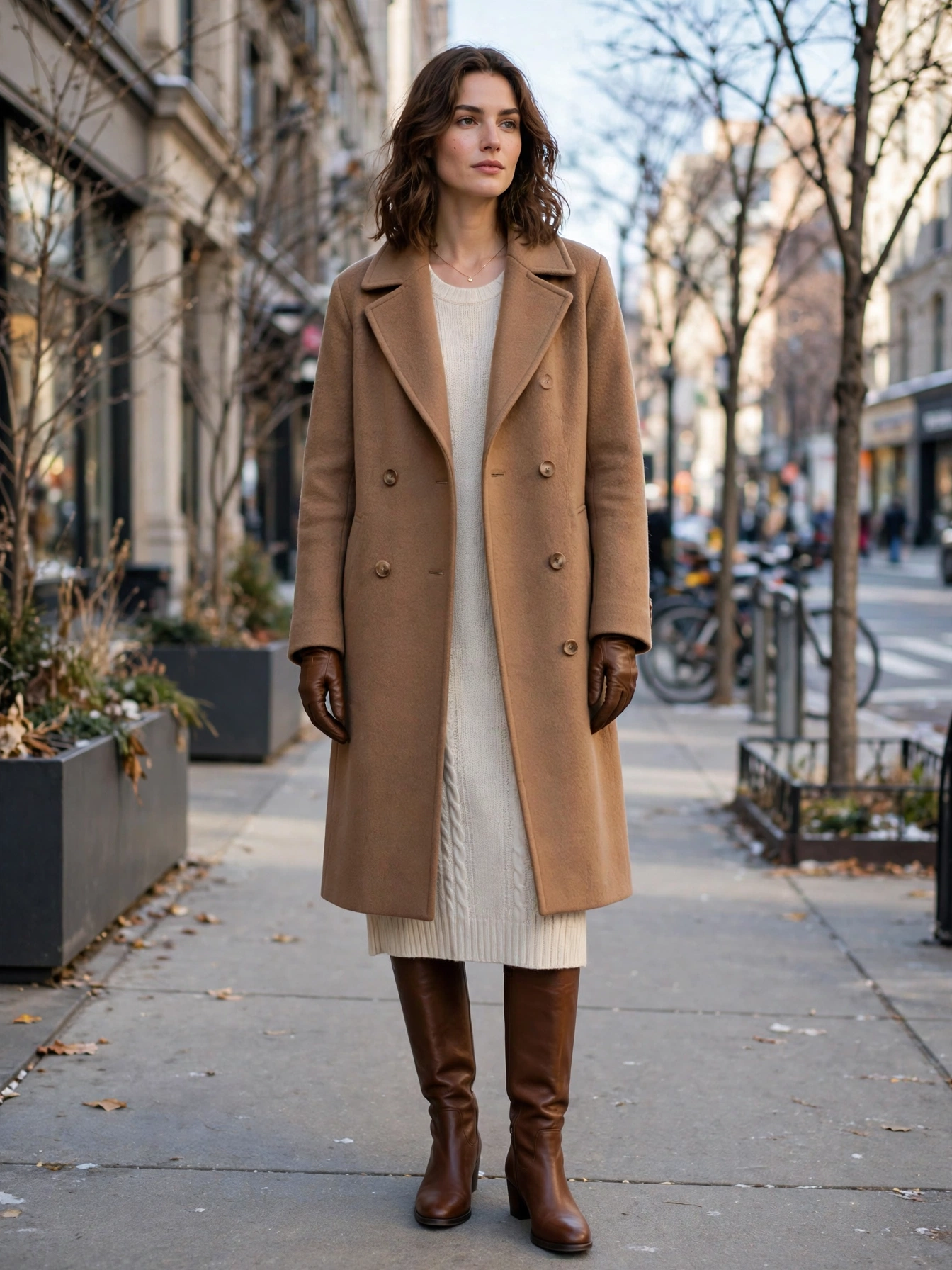
Camel Coat and Cream Knit Dress
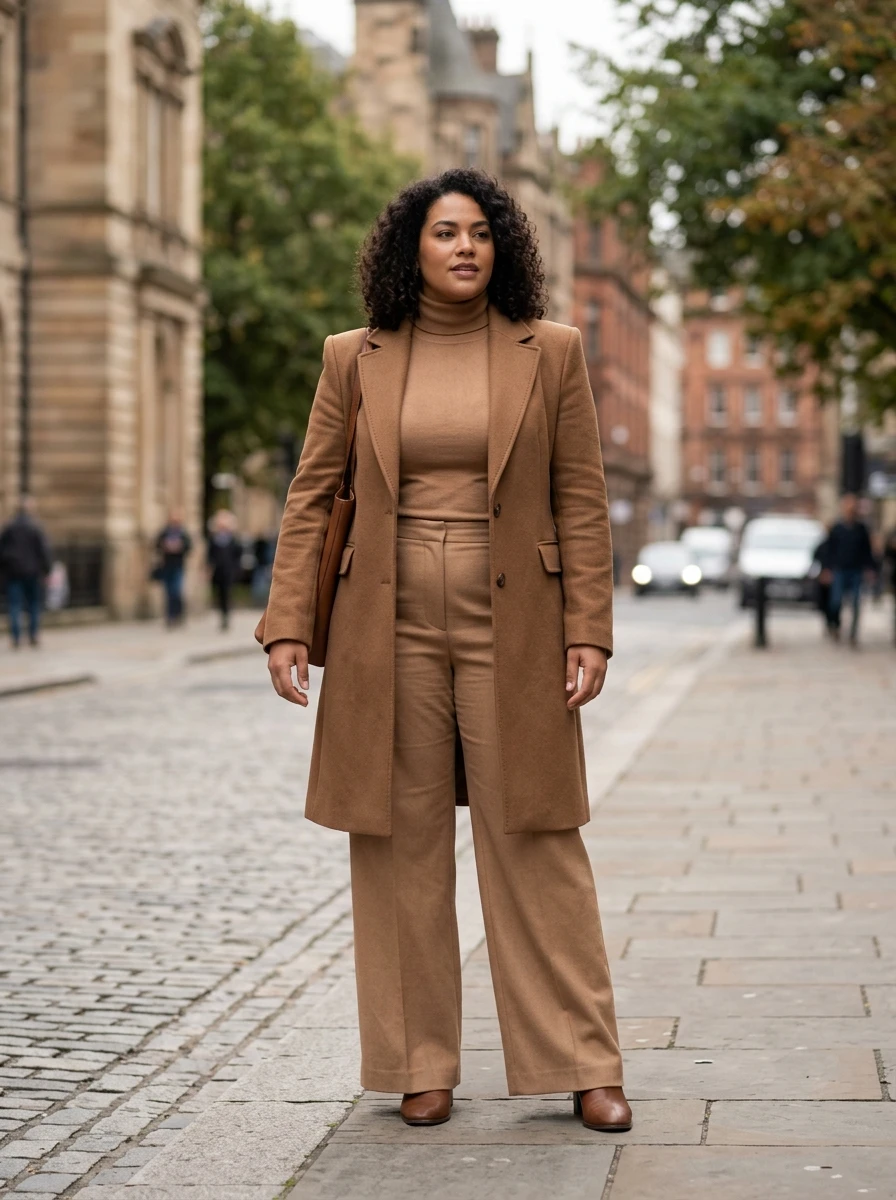
A camel wool coat over a cream knit dress, with tall brown boots and leather gloves, is one of the most flattering winter pairings you can wear. The camel and cream combination looks expensive without any logo or bright colour, and the knit dress stretches comfortably through a long day. Choose a dress that falls below the knee so it pairs cleanly with tall boots, and pick a coat that falls to a similar length or slightly longer. A simple gold necklace and a structured tote in tan complete the look.
On very cold days, opaque tights in a skin-tone shade keep the outfit reading light. For a similar soft palette in a dressier cut, these classy outfits for women over 50 use cream and camel the same way. Wear this for lunch, church, or a daytime event. For the same camel and cream palette on a Thanksgiving table, see our 18 cozy Thanksgiving outfit ideas.
Fabric note: a wool or wool-blend knit dress holds its shape through a long day; a thin acrylic knit bags at the seat and knees by afternoon.
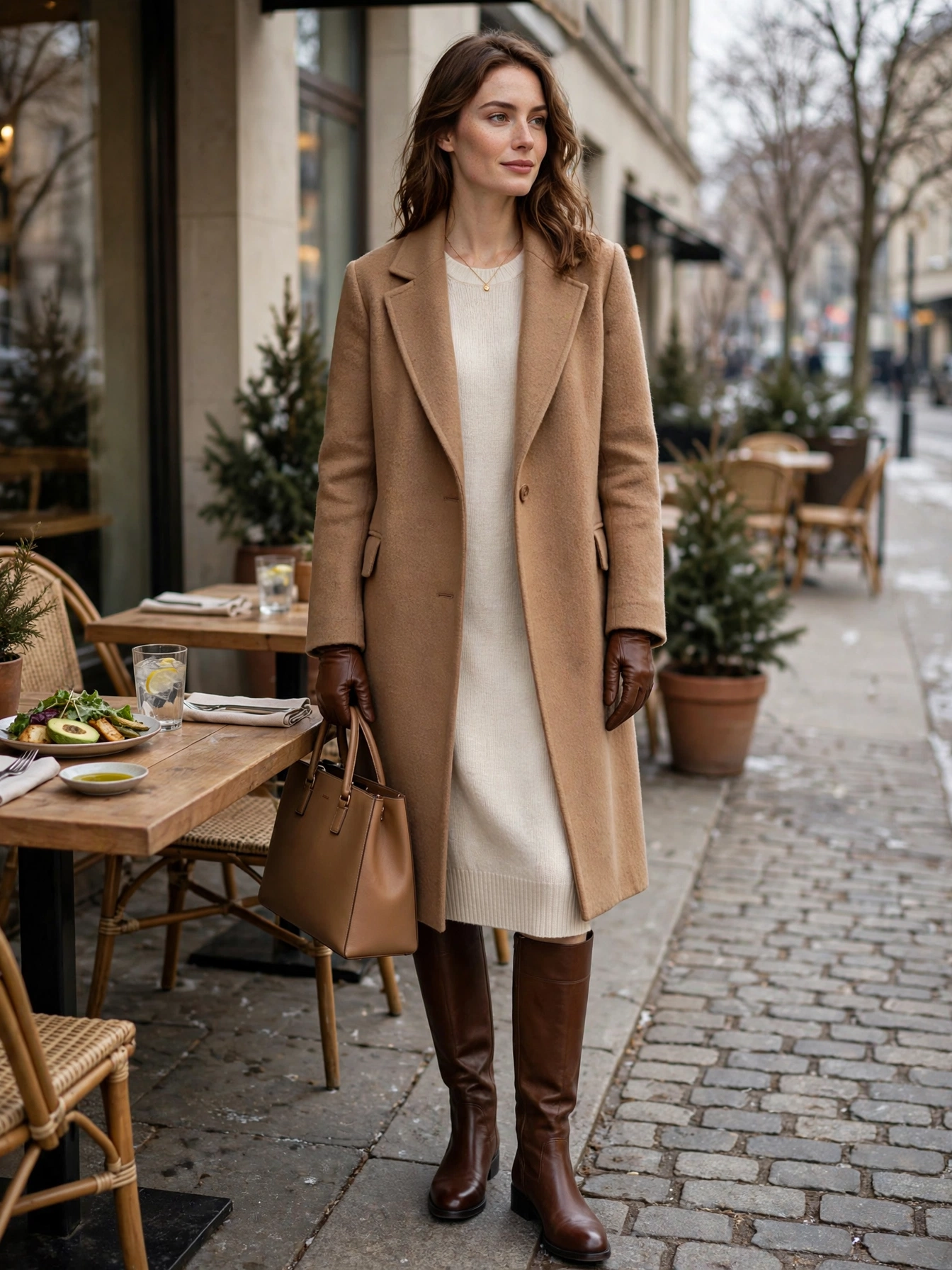
Parka and Sweater: The Snow-Day System
A parka with a hood, worn over a thick sweater, straight-leg jeans, and waterproof boots, is built for real snow rather than light cold. The parka should fall to mid thigh and close fully, with a hood you will actually use, because a parka that gapes at the neck defeats its purpose. Choose a sweater in wool or a wool blend, not cotton, so it keeps insulating when you come inside damp from snow.
Add waterproof boots with a good sole, warm gloves, and a beanie that fits under the hood. Keep the jeans straight-leg so they tuck neatly into the boots without bunching. This is not a fashion outfit and it should not try to be one; it is a warmth outfit, and it works for shovelling, walking the dog, and any day when the weather is the main event.
Wear it with: waterproof boots first — on a snow day, dry feet matter more than any other piece in the outfit.
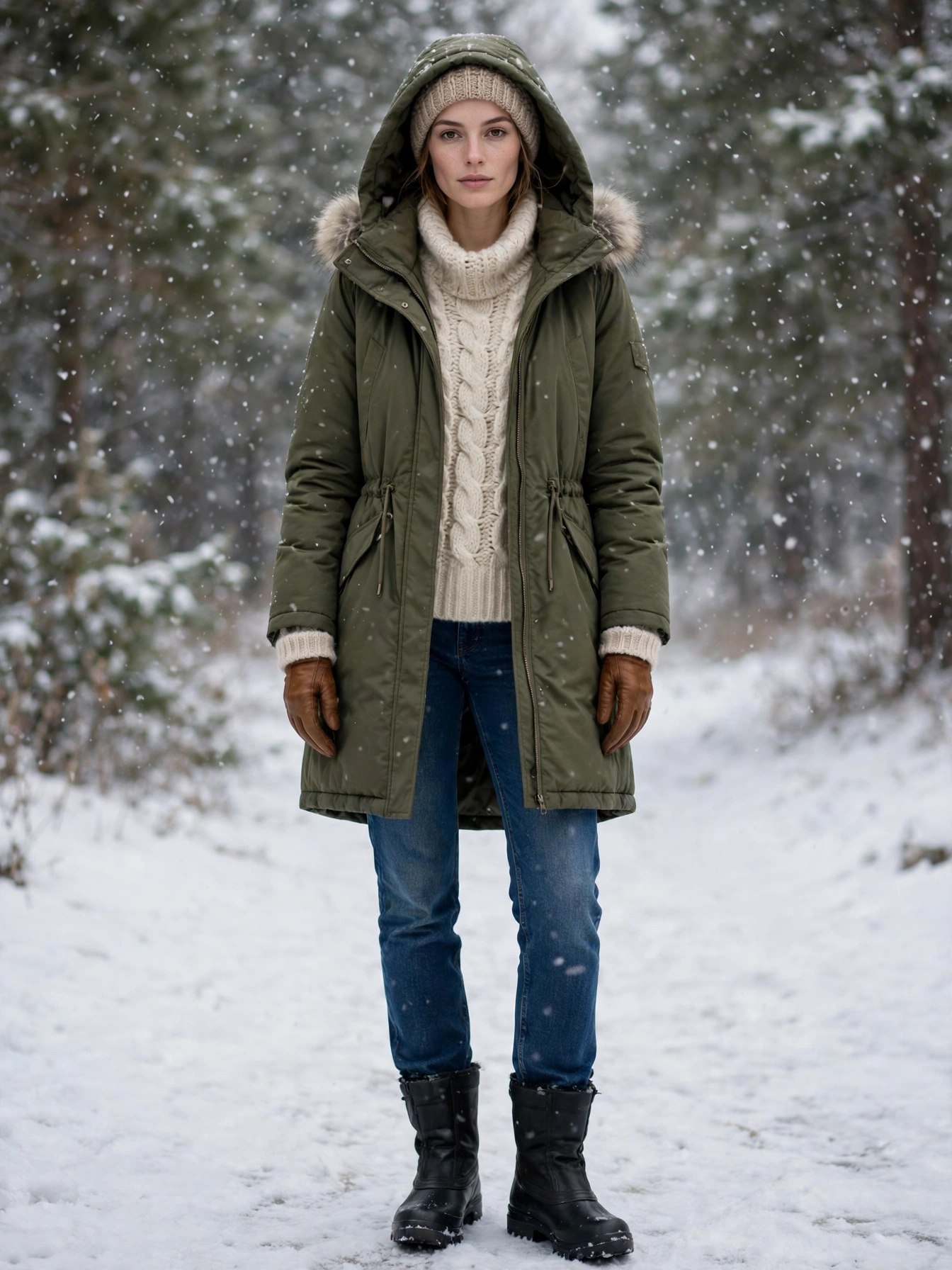
Leather Trousers and Chunky Knit — A Texture Contrast
The whole outfit is a texture argument: smooth, almost reflective faux leather against a deeply textured cable knit. That contrast is what makes two simple pieces look designed rather than thrown on. The knit should hit at the hip, because longer overwhelms the leather's sleek line and shorter leaves a gap that breaks the silhouette. Because leather does not breathe, the knit needs to be the warm piece; a cotton-rich blend keeps it comfortable for long wear without the itch of pure wool against skin.
Keep accessories simple — black ankle boots and a plain crossbody bag — so the texture contrast stays the focus. A fitted knit also works here if the cable knit feels too heavy, as long as the knit still carries the warmth.
Care tip: wipe faux leather trousers with a damp cloth after wear and hang them rather than folding, so creases do not set into the surface.
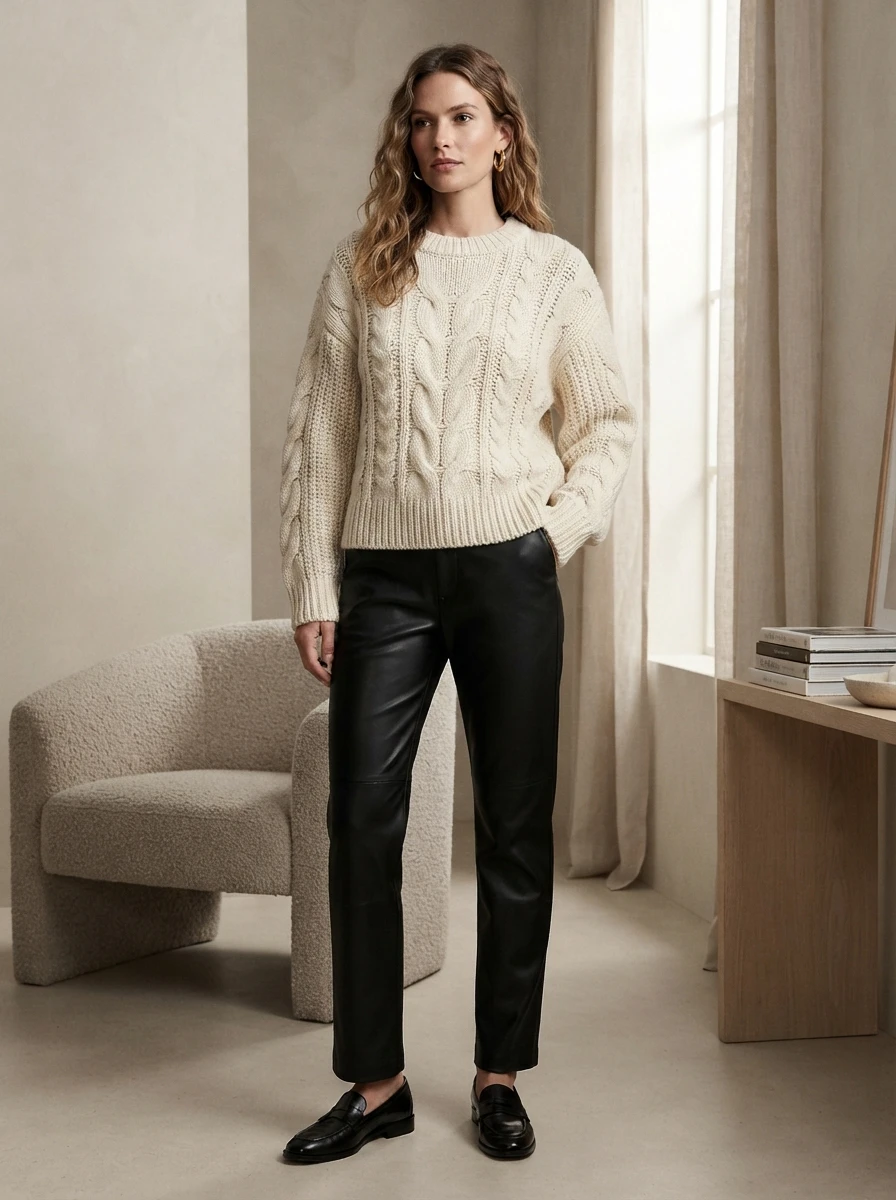
Hoodie Under a Wool Coat
A grey hoodie worn under a long dark wool coat, with straight-leg jeans and white sneakers, is the outfit that makes a hoodie look deliberate instead of lazy. The coat must be long, falling below the knee, and structured enough to hold its shape over the hoodie, or the layers collapse into bulk. Let the hood sit over the coat collar at the back, keep the jeans dark and straight, and add a simple crossbody bag. The contrast is the point: soft hoodie inside, sharp coat outside.
On cold days, a scarf over the coat collar still leaves the hood working underneath. For more ways to style this base, these hoodie outfits for winter show how a hoodie pairs with coats, skirts, and boots. Wear this for errands, travel, and casual days when you want comfort with a polished outer layer.
Fit note: a mid-weight hoodie layers cleanly under a structured coat; a thick fleece-lined hoodie bunches at the collar and shoulders.
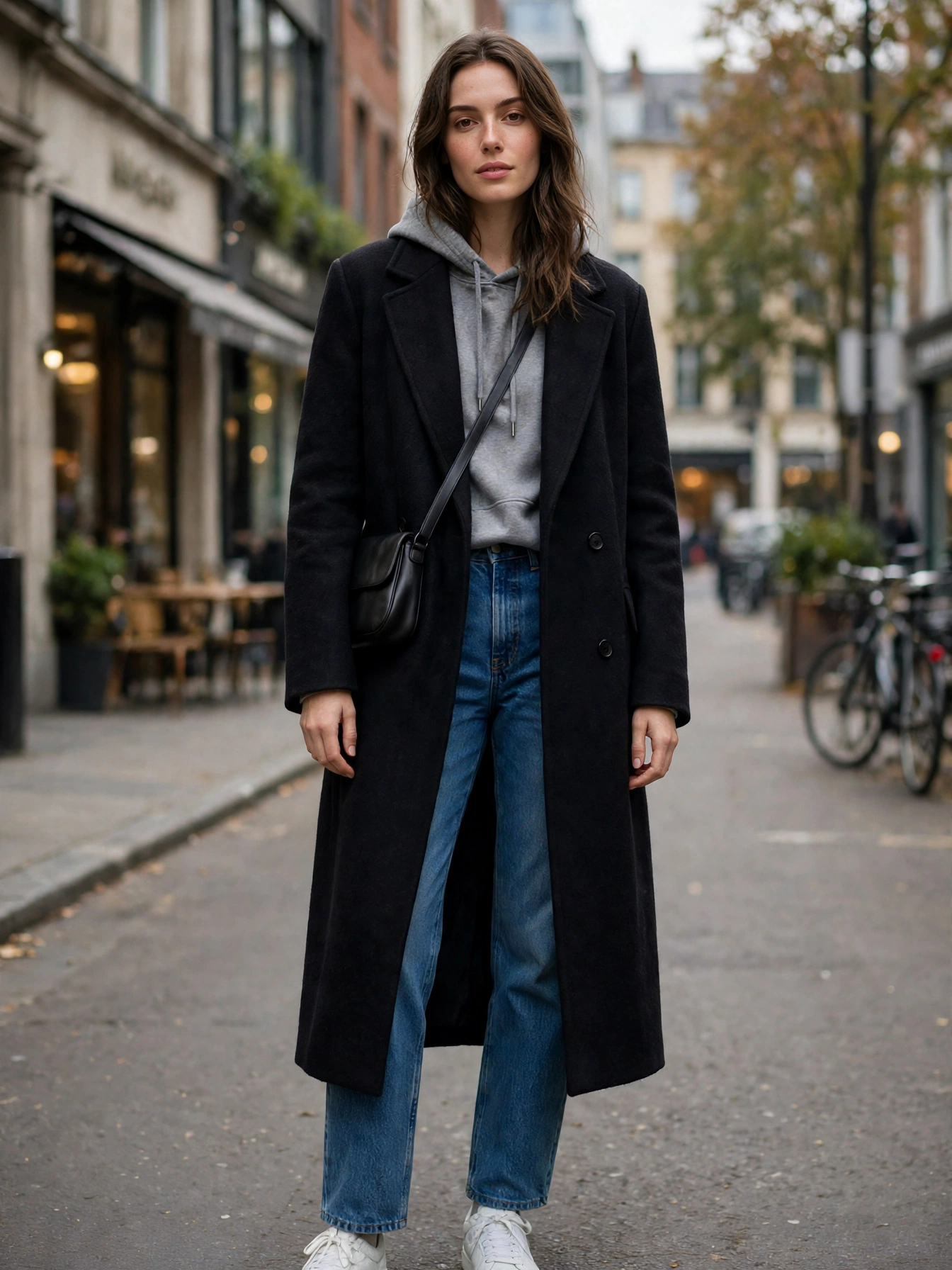
One Plaid Scarf, One Dark Coat
A dark charcoal or black wool coat, with a large plaid scarf as the single colour in the outfit, over a black knit and dark jeans, is the easiest way to add personality to a winter base. The scarf should be big enough to wrap twice and still drape, in a plaid with burgundy, navy, or green. Keep everything else dark and simple: black ankle boots, black gloves, and a dark bag, so the scarf stays the focus.
This trick works because winter coats are expensive to replace, but scarves are not, so one new scarf refreshes a coat you have worn for years. If you want more colour, choose a scarf with a red base; if you want quieter, choose one with a navy base. Wear this for work, errands, and any day when your coat is doing most of the work.
Colour pairing: let the scarf carry the only pattern — a patterned coat underneath it would compete rather than complement.
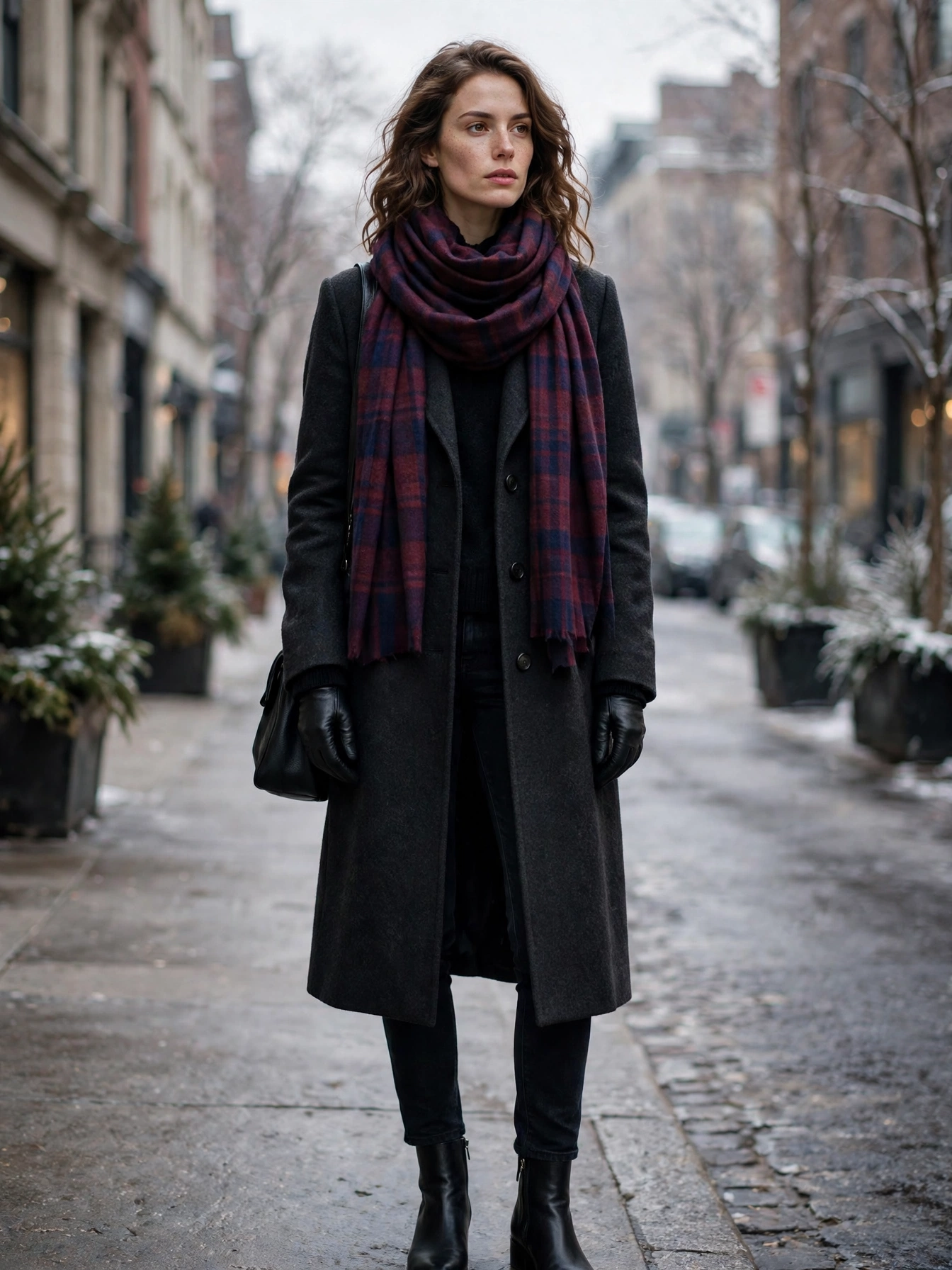
Wool Midi Dress and Knee-High Boots for Snow Days
A charcoal wool midi dress with knee-high flat boots, thick tights, and a long wool coat is the snow-day version of one-piece dressing: nothing to tuck, nothing to match, and every layer hidden under the coat.
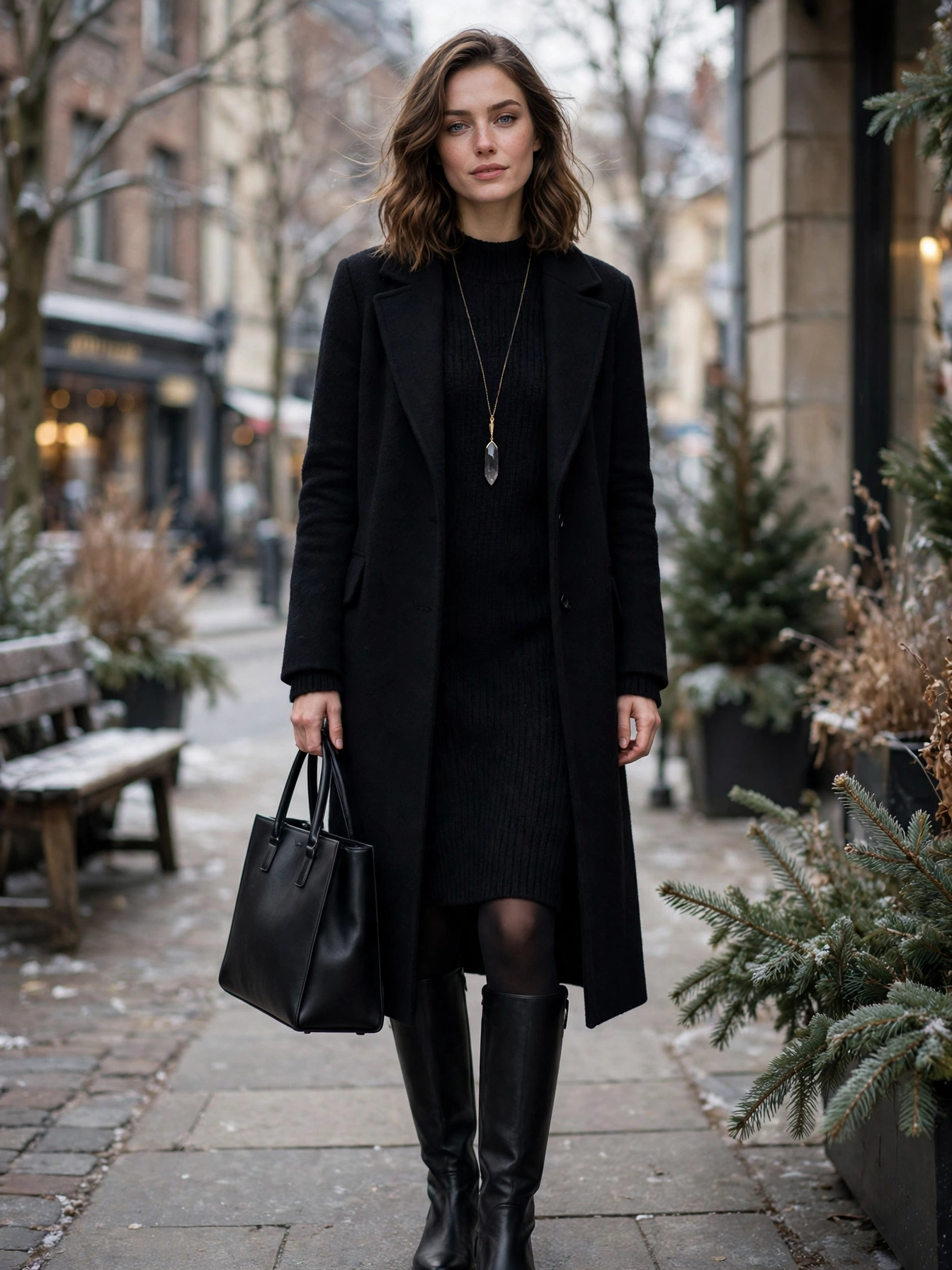 The dress should be knee length or longer so the boots meet the hem with no bare leg, and the knit should be dense enough that the coat is the only outer layer you need. Add leather gloves and a crossbody bag worn under the coat so it stays dry. This is the outfit for school runs, snowy errands, and days when the forecast, not the occasion, decides what you wear.
Fabric note: a dense wool knit resists wind far better than a loose open knit, so check the weave before relying on the dress alone under the coat.
Leather Jacket and Knit Midi Skirt
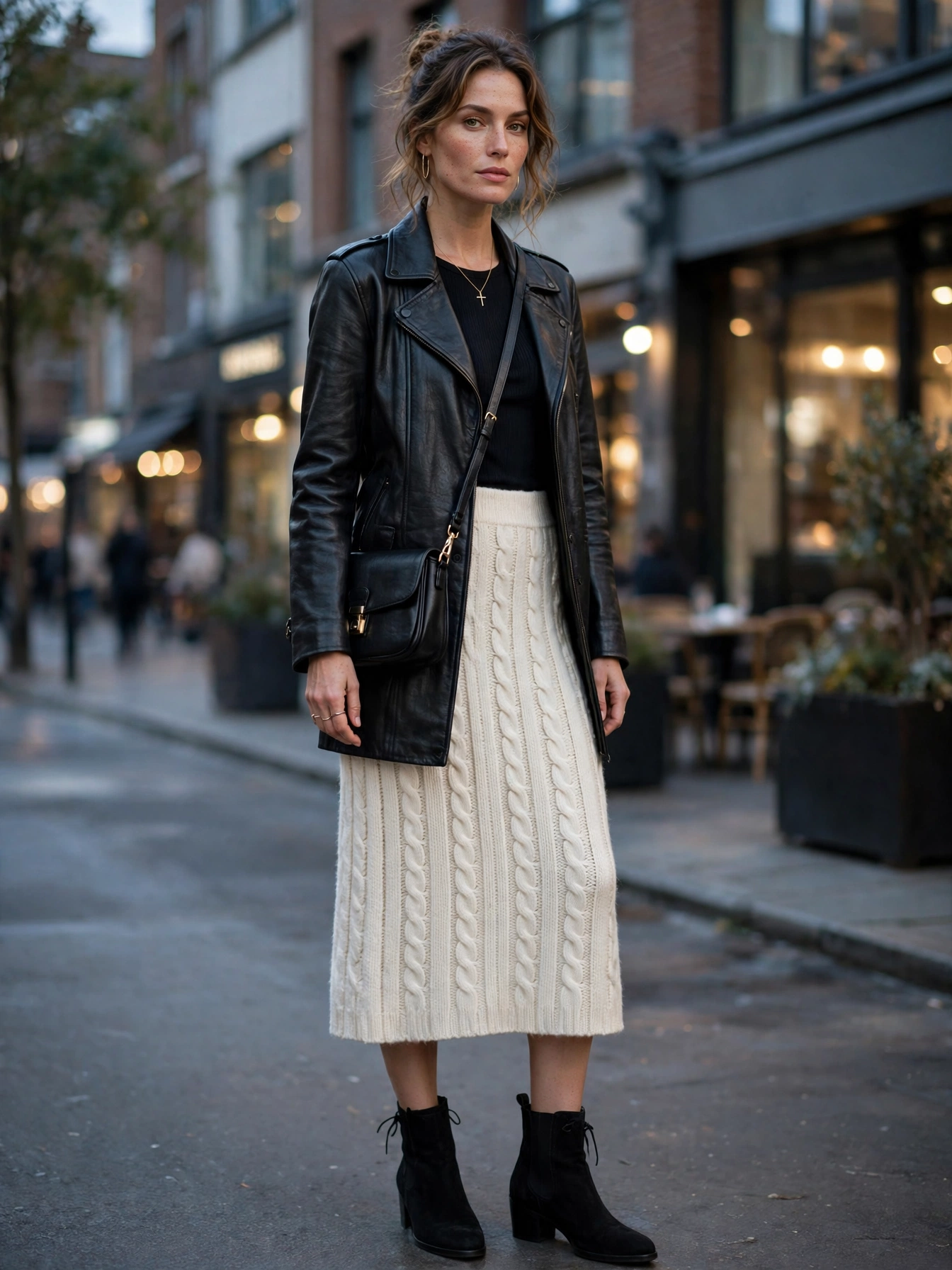
A black leather jacket over a cream or grey knit midi skirt, with a fitted black top and ankle boots, balances edge with softness. The leather jacket adds structure, the knit skirt adds warmth and movement, and the fitted top keeps the layers from looking bulky. Choose a skirt that falls below the knee and a jacket that falls to hip length, so the proportions stay clean. Simple silver or gold jewellery and a crossbody bag finish it.
On cold days, opaque tights and a scarf keep the outfit working. This is a good outfit for a night out, a casual dinner, or a day when you want to look a little sharper than jeans allow. The pieces split apart easily too: the jacket works with jeans, and the skirt works with a chunky sweater.
Wear it with: opaque tights and ankle boots when the temperature drops, keeping the skirt length below the knee so the proportions hold.
Cream Layers From Head to Toe
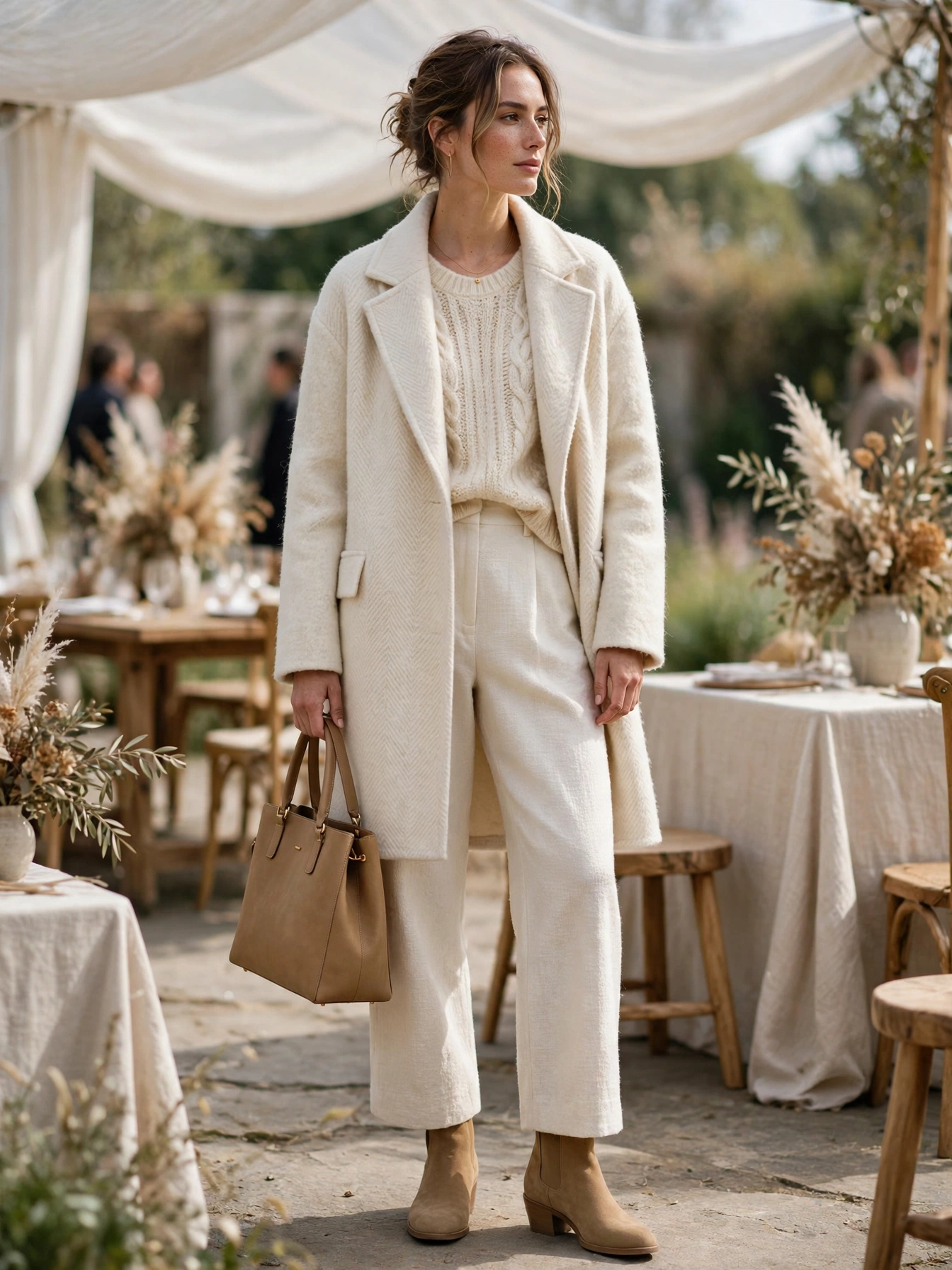
A cream wool coat, a cream knit sweater, and cream wide-leg trousers, with tan boots and a tan bag, is a monochrome outfit that looks polished without any bright colour. The trick is texture: the coat should be smooth wool, the knit should be chunky or ribbed, and the trousers should be a flatter fabric, so the layers do not blend into one flat block. Keep the shades close but not identical; a slightly darker cream coat over a lighter cream knit reads as intentional.
Add minimal gold jewellery and keep the bag structured. This palette borrows from old money outfits for women, where cream on cream does the quiet work. Wear this for lunch, daytime events, or any day when you want to look refined. It needs a lint roller in your bag, because cream shows everything.
Care tip: cream wool shows lint and pet hair fast, so a quick roll before leaving the house is part of wearing this palette, not an afterthought.
Burgundy Coat and Black Basics
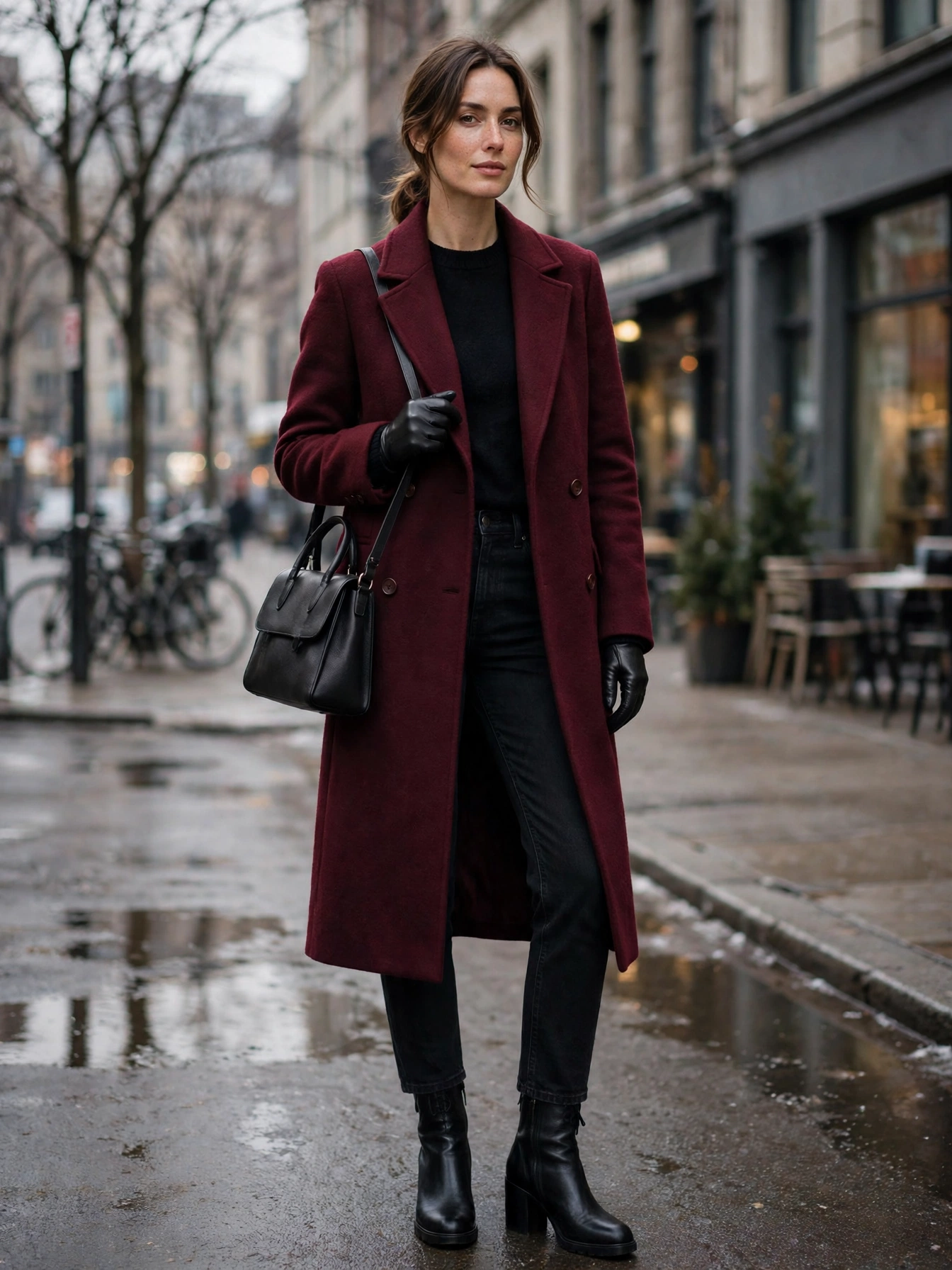
A burgundy wool coat over a black knit sweater, black straight-leg jeans, and black ankle boots is the fastest way to look dressed in winter. The coat is the only colour, so the base underneath can be the simplest black pieces you own. Choose a coat that falls below the knee, and make sure the black knit is fitted enough to layer cleanly under it. Add black gloves and a dark bag, or a gold necklace if you want one warm accent near your face.
This outfit works because burgundy flatters most skin tones and reads as a winter colour without trying hard. If burgundy feels too bold, the same formula works with a forest green or navy coat. Wear this for work, dinner, and travel, and keep the coat as your one investment piece in this outfit.
Colour pairing: burgundy over black needs no second accent — one warm metal, gold rather than silver, is enough near the face.
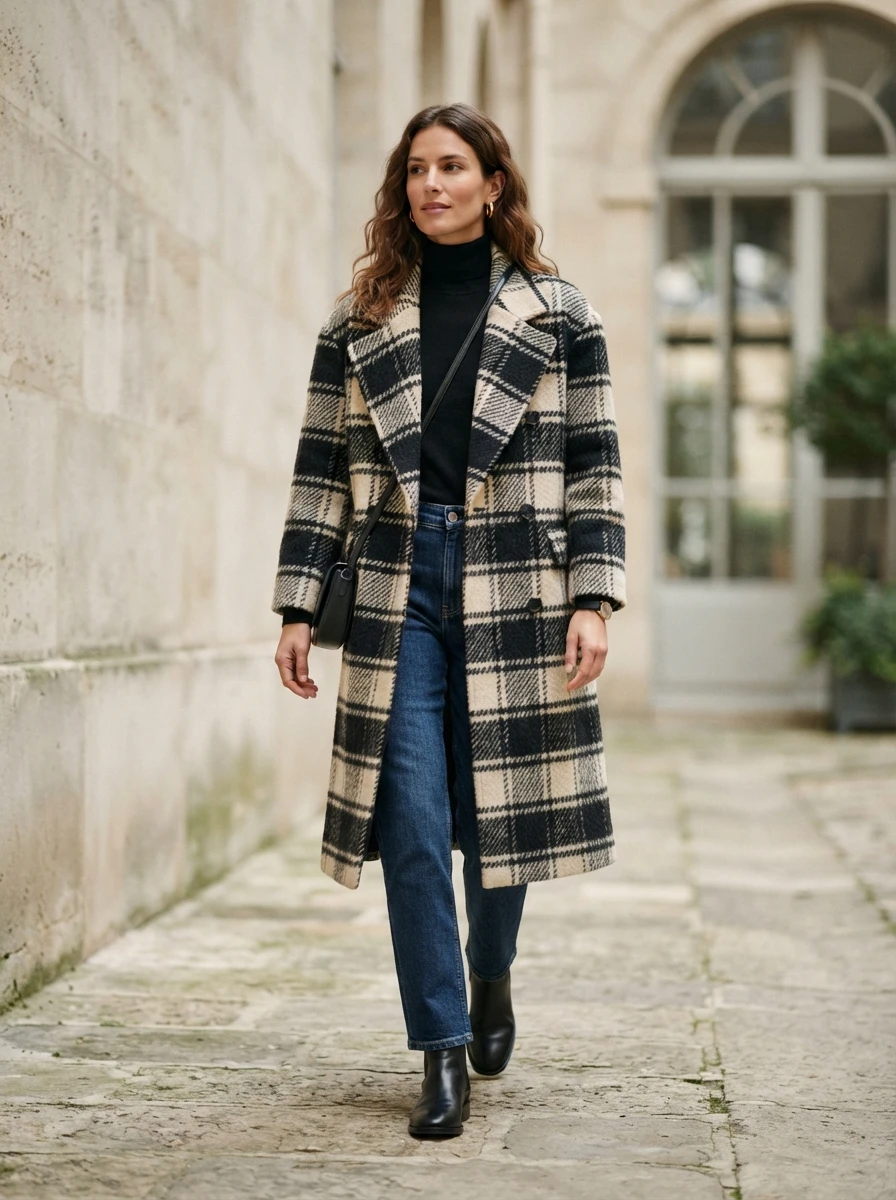
Checkered Coat and Simple Jeans
A bold check coat is the easiest statement in winter dressing because the coat is the outfit, and everything underneath just needs to not argue with it. That is why the jeans and sweater below should be simple, dark, and quiet. The check's scale matters: larger checks read modern and graphic, small checks read traditional. Let the coat be the only pattern; a patterned scarf on top of a checked coat is where good outfits go wrong.
Keep the boots and bag plain — black ankle boots and a dark crossbody — so nothing competes with the check. This works for errands, lunch, and any day when a plain coat would feel flat but a full statement outfit would feel like too much.
Fit note: the coat should close comfortably over the sweater with no pulling at the buttons; a check pattern makes a tight fit obvious.
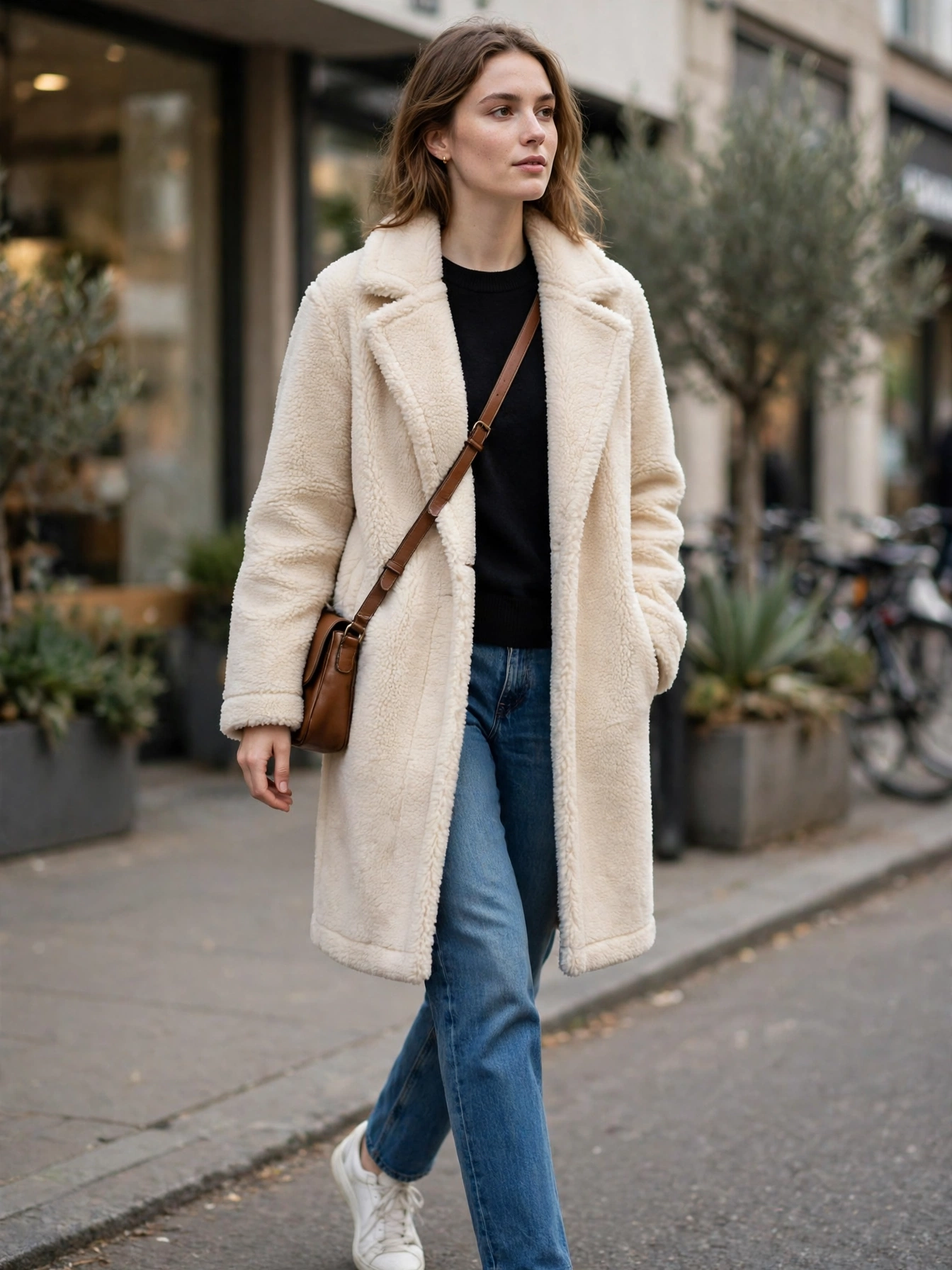
Teddy Coat and Jeans for the Weekend
A cream or tan teddy coat over a simple black sweater, straight-leg jeans, and white sneakers is a cosy weekend outfit that still looks put together. The teddy coat is the texture, so everything under it stays plain and dark. Choose a coat that falls to mid thigh, and keep the sweater fitted so the coat does not add too much bulk on top. A crossbody bag and simple stud earrings finish it.
On very cold days, swap the sneakers for ankle boots and add a scarf, and the outfit moves into colder weather. This is ideal for casual lunches, shopping, and walks, and it is one of the most forgiving winter outfits because the coat hides whatever is underneath. Pick a teddy coat with a clean collar rather than an oversized one if you want it to look polished.
Fabric note: teddy fabric sheds and collects lint, so brush it down after wear and keep it away from dark velvet or corduroy in the closet.
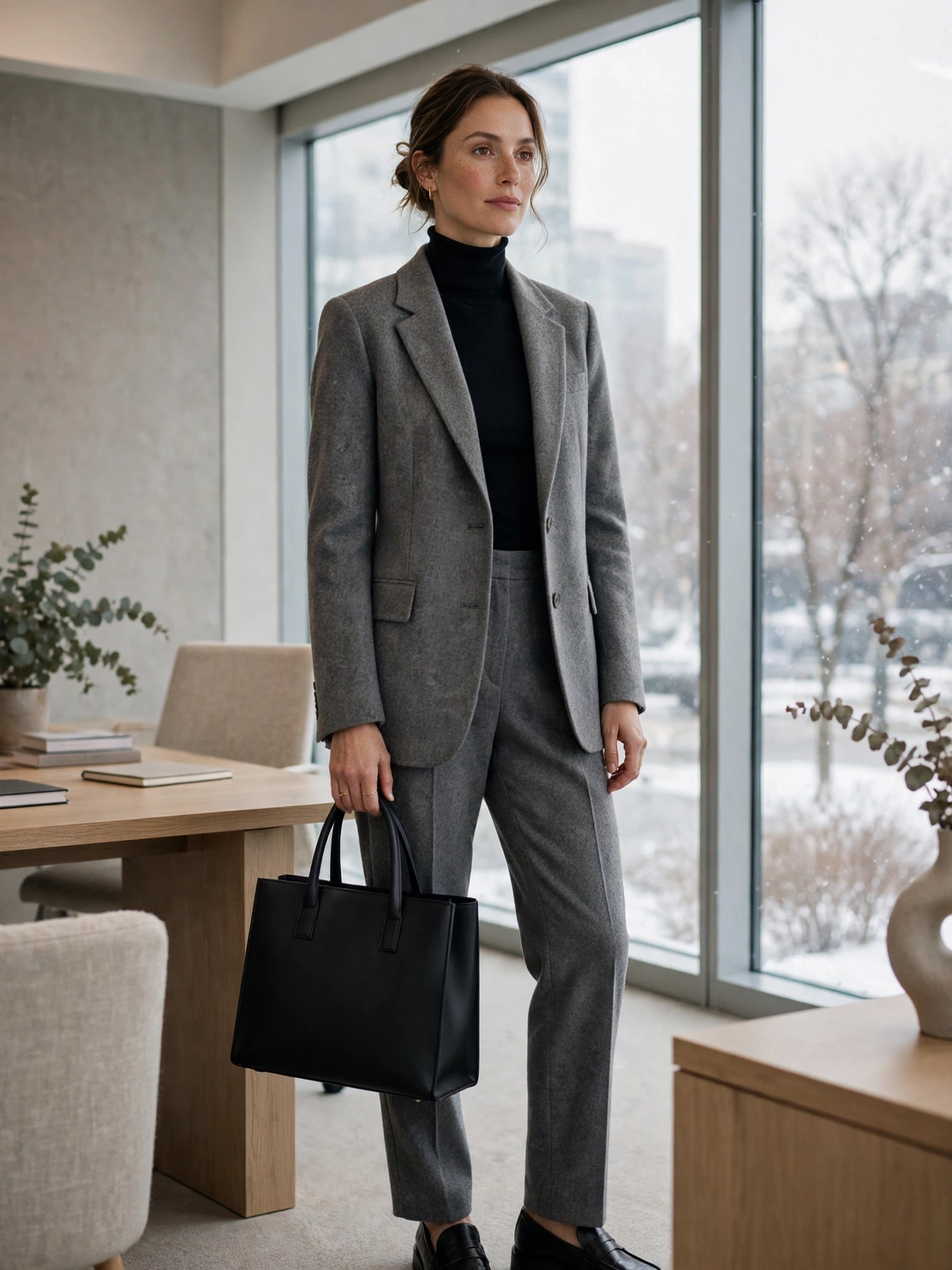
Wool Suit for the Office
A grey wool blazer and matching trousers, worn over a black turtleneck with black loafers, is a winter office outfit that stays warm without a separate coat indoors. The wool suit insulates on its own, and the turtleneck replaces both a blouse and a scarf. Choose a blazer that closes comfortably over the turtleneck, and trousers with a straight leg that break cleanly over loafers. A structured tote and minimal jewellery complete the look.
If you commute in cold weather, wear a long wool coat over the suit and leave it at your desk. For more office layers in this style, these formal outfits for women show how a suit changes with different tops and shoes. Wear this for workdays, presentations, and meetings where you need to look sharp all day.
Fit note: the blazer must close over the turtleneck without pulling — if it only fits over a blouse, it is not a winter blazer.
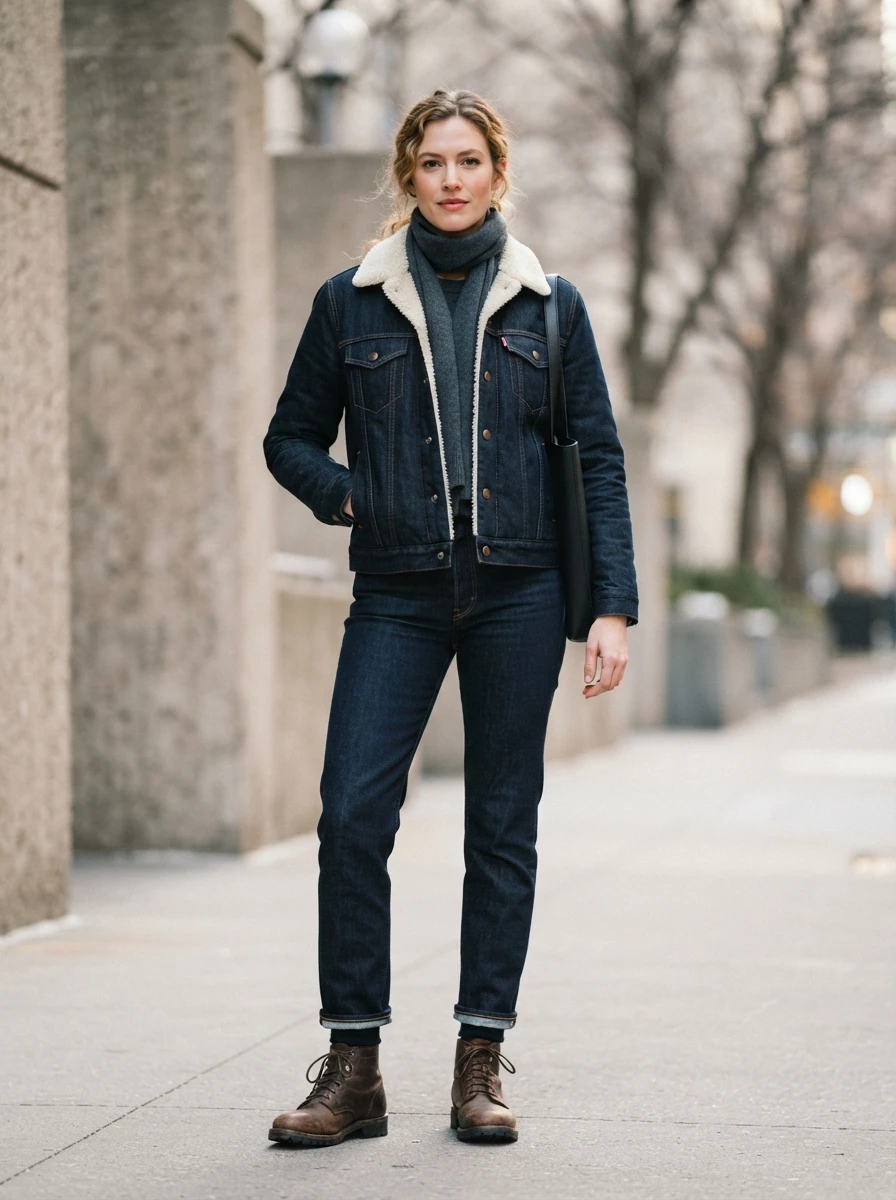
Denim on Denim with Shearling
Double denim works in winter when both pieces go dark, because matching dark washes read as a single intentional textile rather than two jeans fighting. The shearling collar is what makes it seasonal: that ring of texture at the neck draws the eye up and breaks the denim's flatness, while actually insulating where heat escapes. Keep the jacket's fit close; an oversized shearling over baggy jeans is volume everywhere.
Finish with dark ankle boots and a plain black or tan bag, and keep the top underneath simple — a fitted black or cream knit. The darker the washes, the more polished the pairing reads, and the denim softens with wear rather than looking tired.
Care tip: wash dark denim inside out in cold water to slow fading, since the matched dark wash is what makes this pairing work.
Shearling Jacket and Straight Jeans
A shearling jacket, with its soft lining and suede or leather outside, over a black fitted top, straight-leg jeans, and ankle boots is warm, structured, and easy to wear. The jacket should fall to hip length and close fully, because a shearling jacket that gapes loses its warmth. Keep the top fitted so the jacket sits cleanly, and choose jeans in a dark wash so the outfit stays polished. A crossbody bag and simple stud earrings finish it.
On very cold days, a thin thermal top under the fitted top works as a hidden layer. This is a good outfit for weekends, casual dinners, and travel, because the jacket works as both warmth and style. Shearling jackets last for years, so choose one in tan or black that pairs with most of your wardrobe.
Wear it with: a dark wash jean and ankle boots — a light wash would break the polished line the shearling sets up.
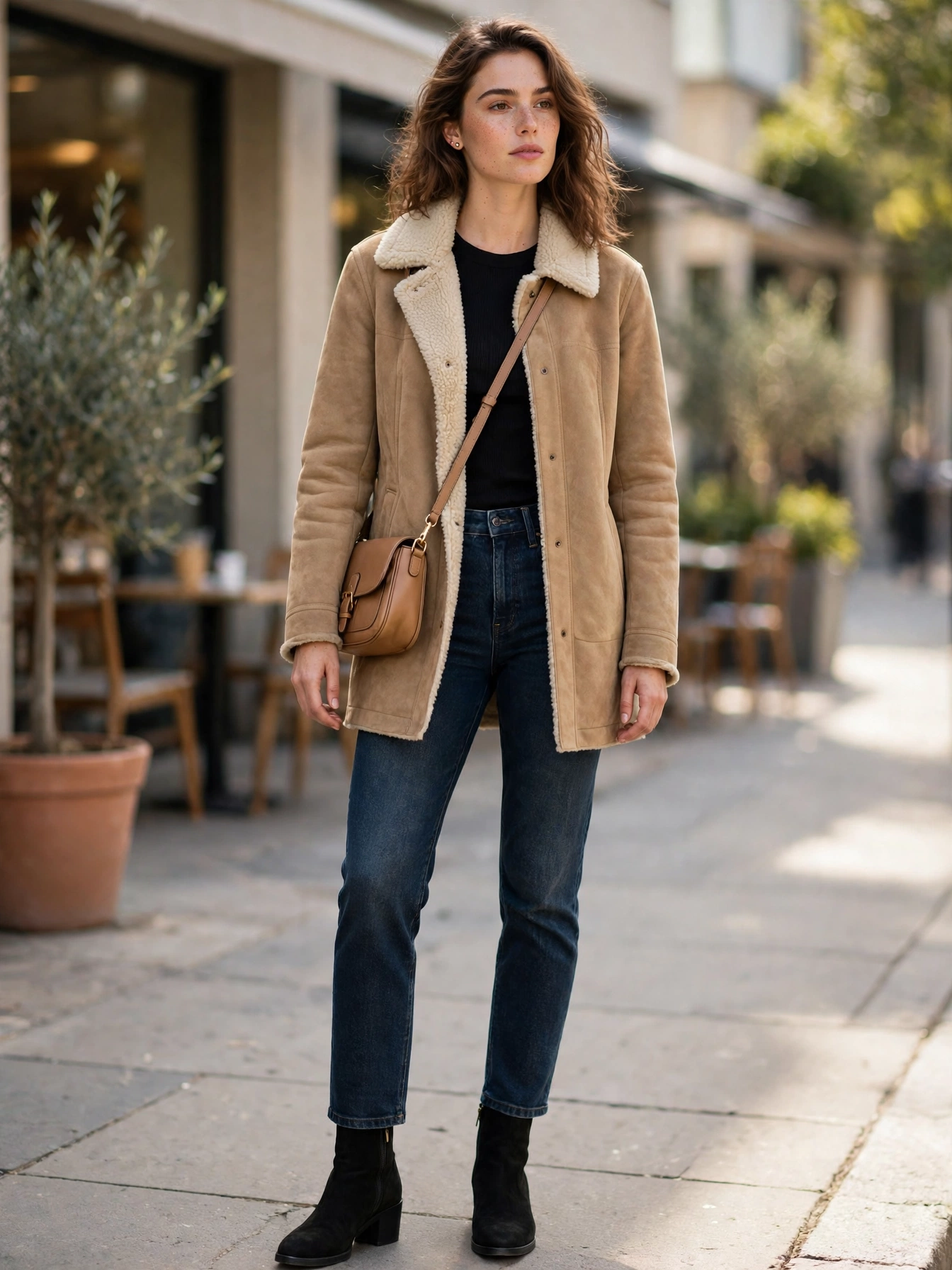
All-Black Winter Layers
A black wool coat, a black knit sweater, black straight-leg jeans, and black ankle boots, with one texture change in each layer, is a monochrome outfit that never looks boring. The coat should be smooth wool, the knit should be chunky or ribbed, and the jeans should be a matte denim, so each layer reads separately even though the colour is the same.
Add a black leather bag and black gloves, and let one accessory break the pattern if you want: a gold necklace, a plaid scarf, or a burgundy lip colour. The advantage of all black is practical too: it hides stains, it packs well, and every piece pairs with the rest of your wardrobe. Wear this for work, travel, and any day when you want to look sharp without deciding on colours. Keep a lint roller handy, because black shows lint fast.
Fabric note: the texture changes are what stop this from reading as a uniform — smooth wool, ribbed knit, matte denim — so do not skip the ribbed knit.
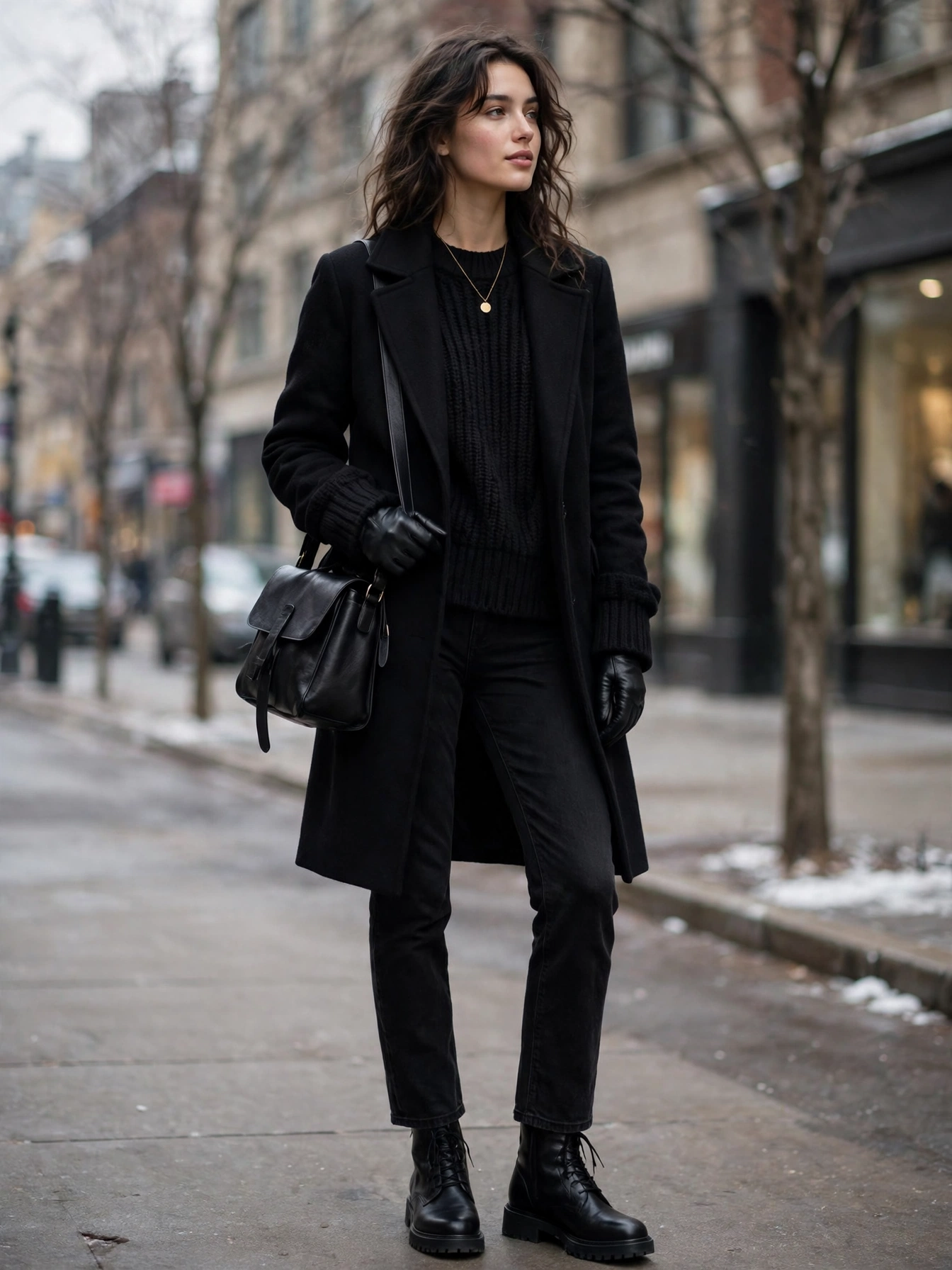
Thermal Base Layers Under a Wool Suit for the Coldest Commute
A thin thermal top and thermal leggings worn under a wool suit, tailored trousers, a fitted knit, and a long wool coat, is the coldest commute outfit that still looks like workwear. In the photo the visible layers are a charcoal knit set under a long wool coat with white sneakers at the station; the thermals sit underneath, invisible by design, which is exactly the point.
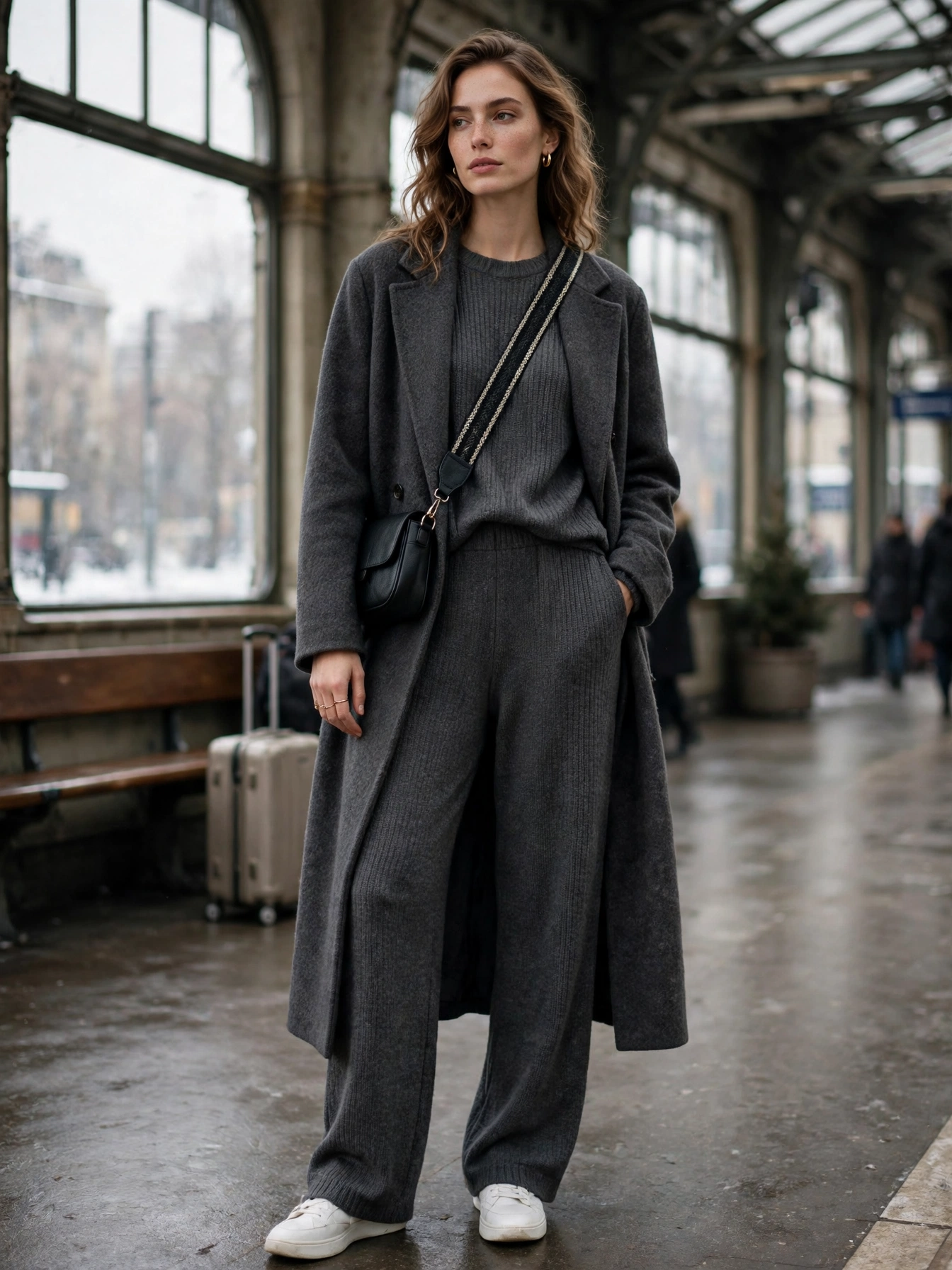 The thermals are the hidden layer: no bulk at the waist, no visible lines, and the suit keeps its shape because nothing underneath fights it. Choose thermals in black or nude so they disappear at the collar and cuffs, and finish with insulated ankle boots that fit under the trouser hem. This is the outfit for platform waits, icy walks to the office, and days when the temperature outside has nothing to do with the temperature at your desk.
Fit note: thermals must sit flat at the waistband — any bunching under tailored trousers shows through the suit.
Bonus: More Winter Outfit Ideas
Bomber Jacket and Cargo Pants
The bomber-cargo combination is military derived, which means it is built on function, and function reads as confidence. It works as an outfit (rather than a uniform) when the fits are contemporary: a slightly cropped bomber, tapered cargos, clean sneakers. All olive would be costume; break it with black or cream pieces so it reads as inspired by rather than dressed as. This is the weekend errands formula for anyone who finds pretty winter outfits impractical — it is warm, it moves, and the silhouette is deliberate.
Fit note: tapered cargos keep the shape clean under a cropped bomber; a wide cargo leg would double the volume on the bottom half.
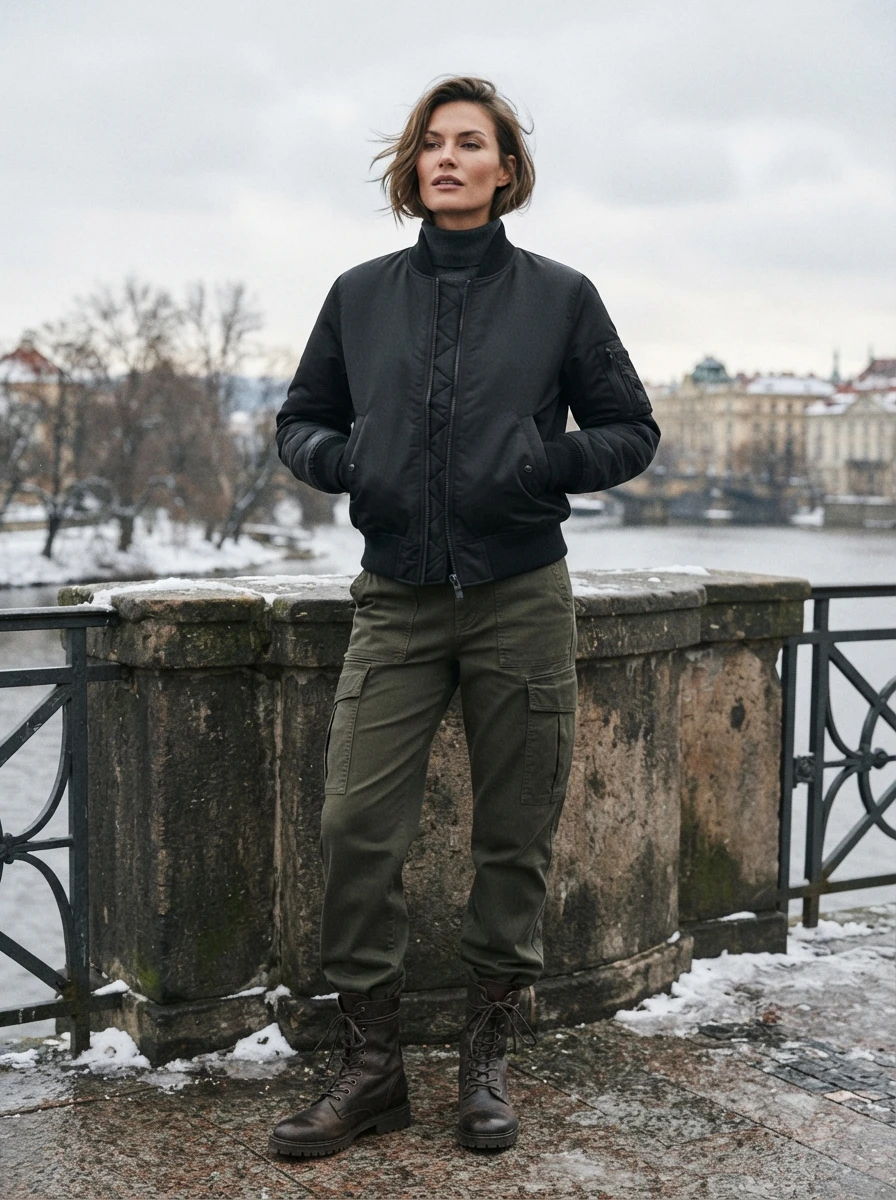
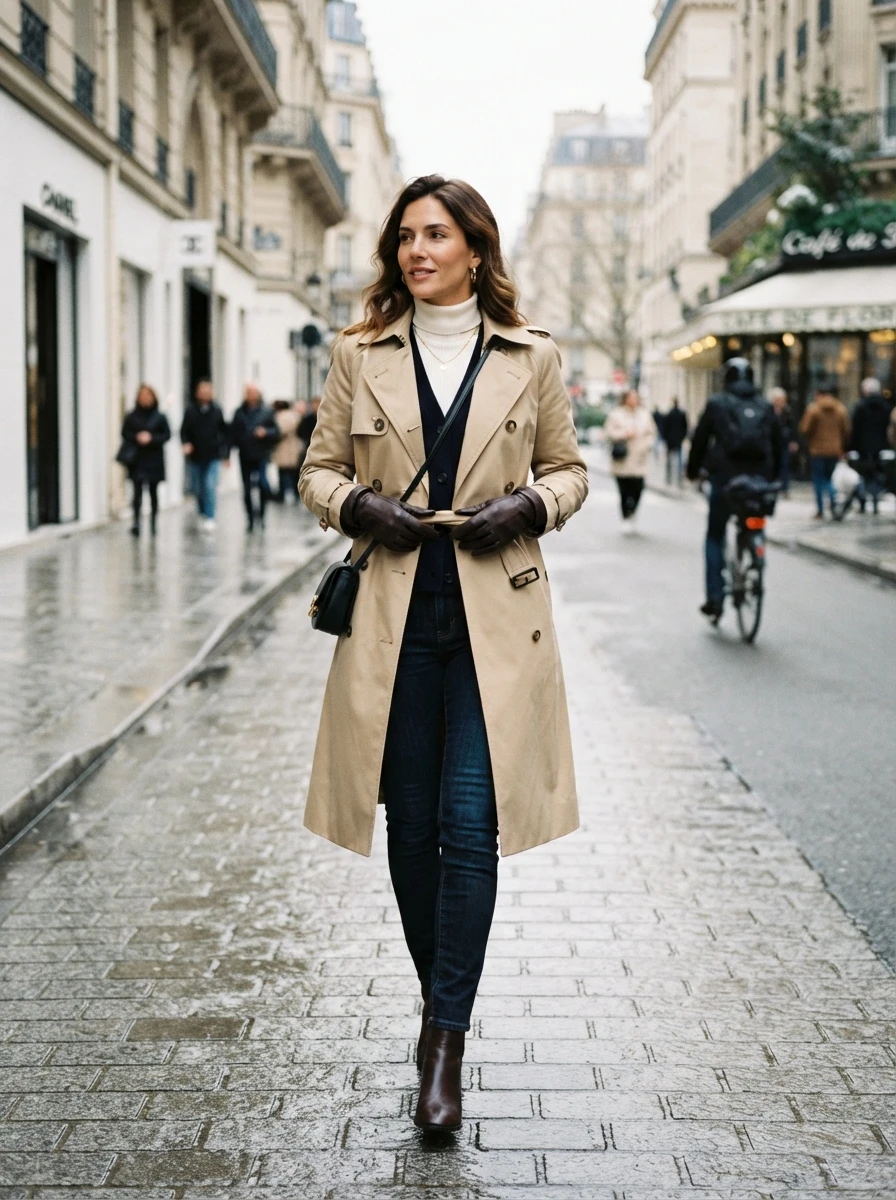
Trench Coat with Thermal Layers
The trench is not just a fall coat — with proper thermals underneath, it is a winter system. A silk or merino base layer plus a fine-gauge sweater under a belted trench gives you three thin warm layers that move freely, which beats one thick sweater that restricts. The belt defines the waist over all of it, so the layering never reads bulky. This is the commuter's formula: the trench handles wind and rain, the thermals handle cold, and you arrive looking like you dressed for the meeting, not the weather.
Fabric note: merino or silk against the skin wicks moisture and stays warm; cotton thermals under a trench chill once you come indoors.
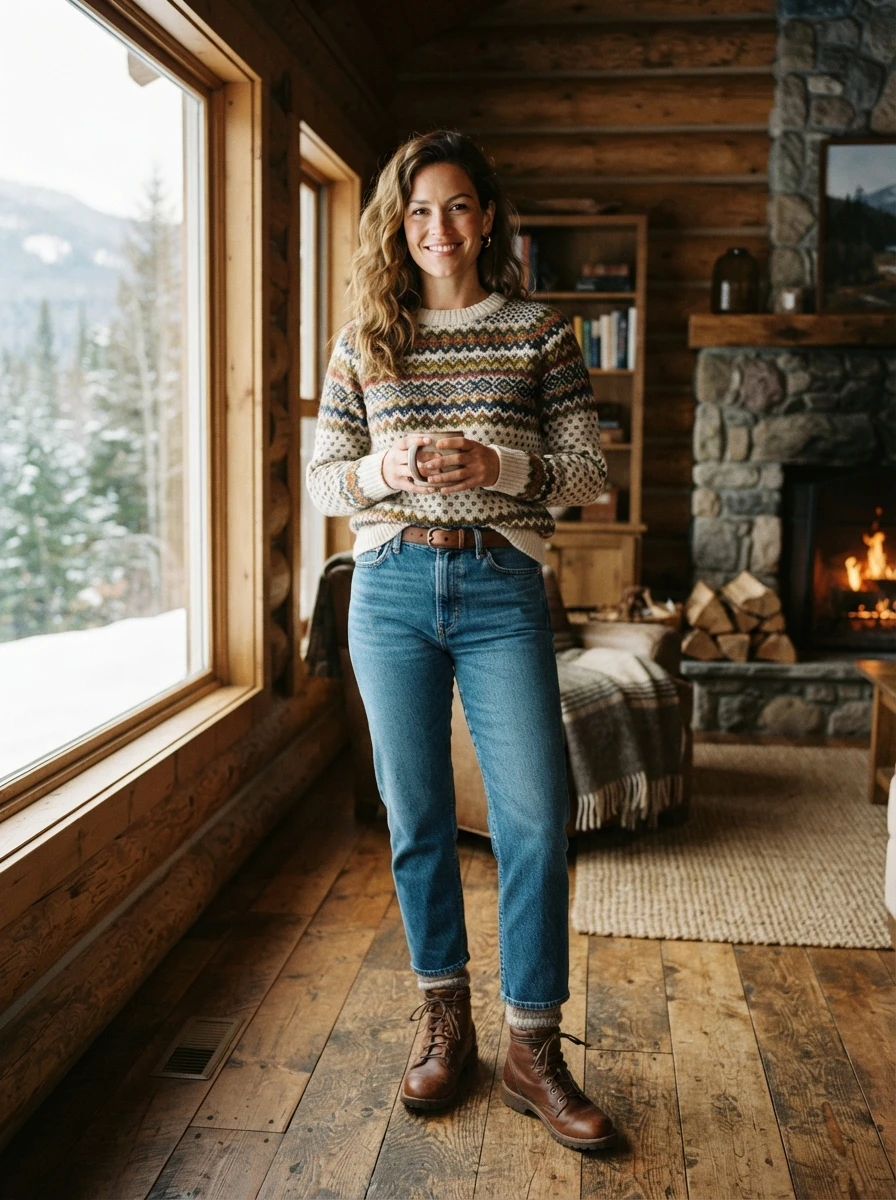
Fair Isle Sweater and Jeans
Fair Isle is winter's only socially acceptable novelty knit, and it works because the pattern is traditional rather than trendy — it has been around for a century, so it never looks like you are chasing something. The pattern is busy by nature, which means everything else goes quiet: dark straight jeans, simple boots, no competing prints. Let the sweater be the single decorative element. A Fair Isle in a restrained palette (navy, cream, grey) reads sophisticated; the multi-bright versions read ski lodge, which is fine if that is the brief.
Wear it with: dark straight-leg jeans and plain boots, and nothing else patterned — the sweater needs a quiet frame.
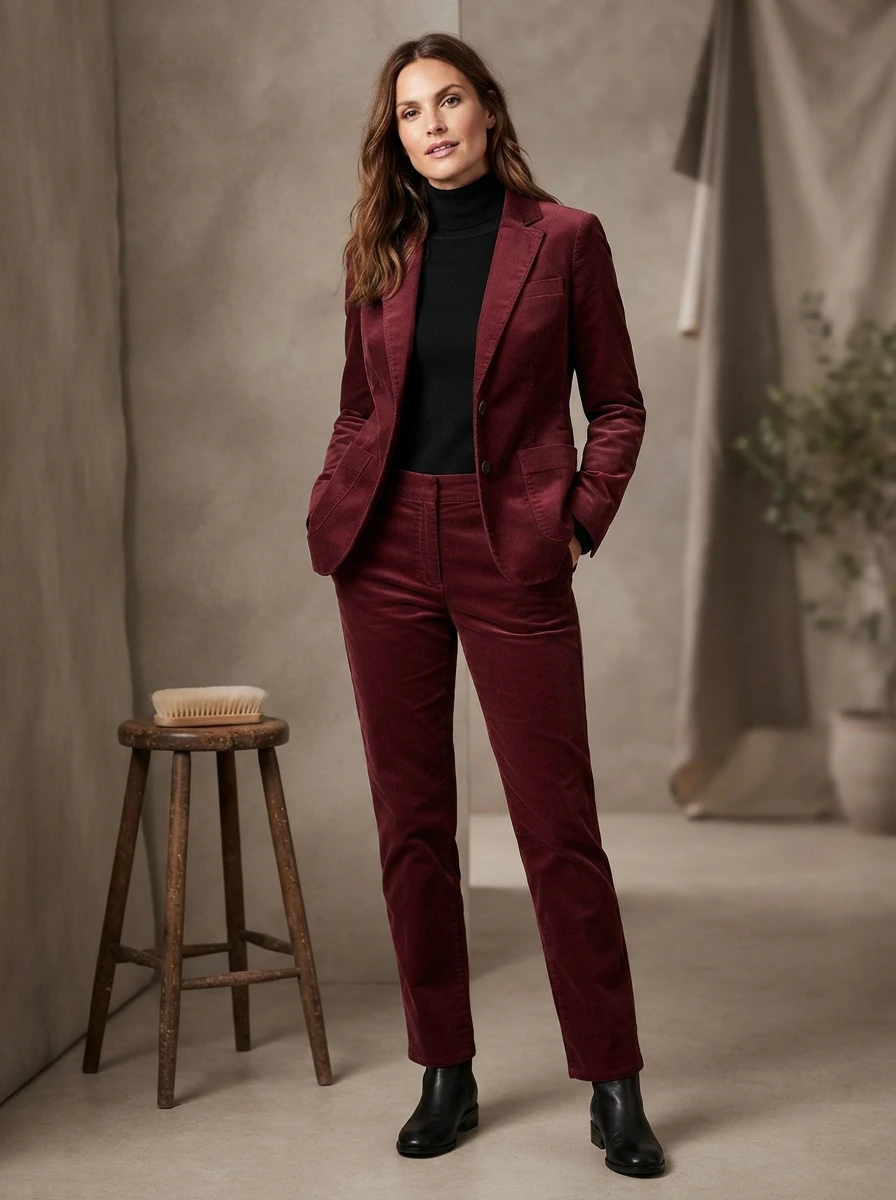
Corduroy Suit and Turtleneck
A corduroy suit — jacket and trousers in the same wale — is winter's answer to the summer linen set: matched, relaxed, but seasonally weighted. Corduroy's ridges give the suit a visual texture that flat suiting lacks, which means it never looks corporate. The turtleneck underneath should be fine gauge and fitted; a chunky knit would fight the suit's clean lines. Rust or chocolate brown leans into corduroy's autumnal character. This is the outfit for creative workplaces where a wool suit would feel stiff but jeans would feel underdressed.
Fabric note: match the wale across jacket and trousers — a wide wale on one piece and a fine wale on the other breaks the suit.
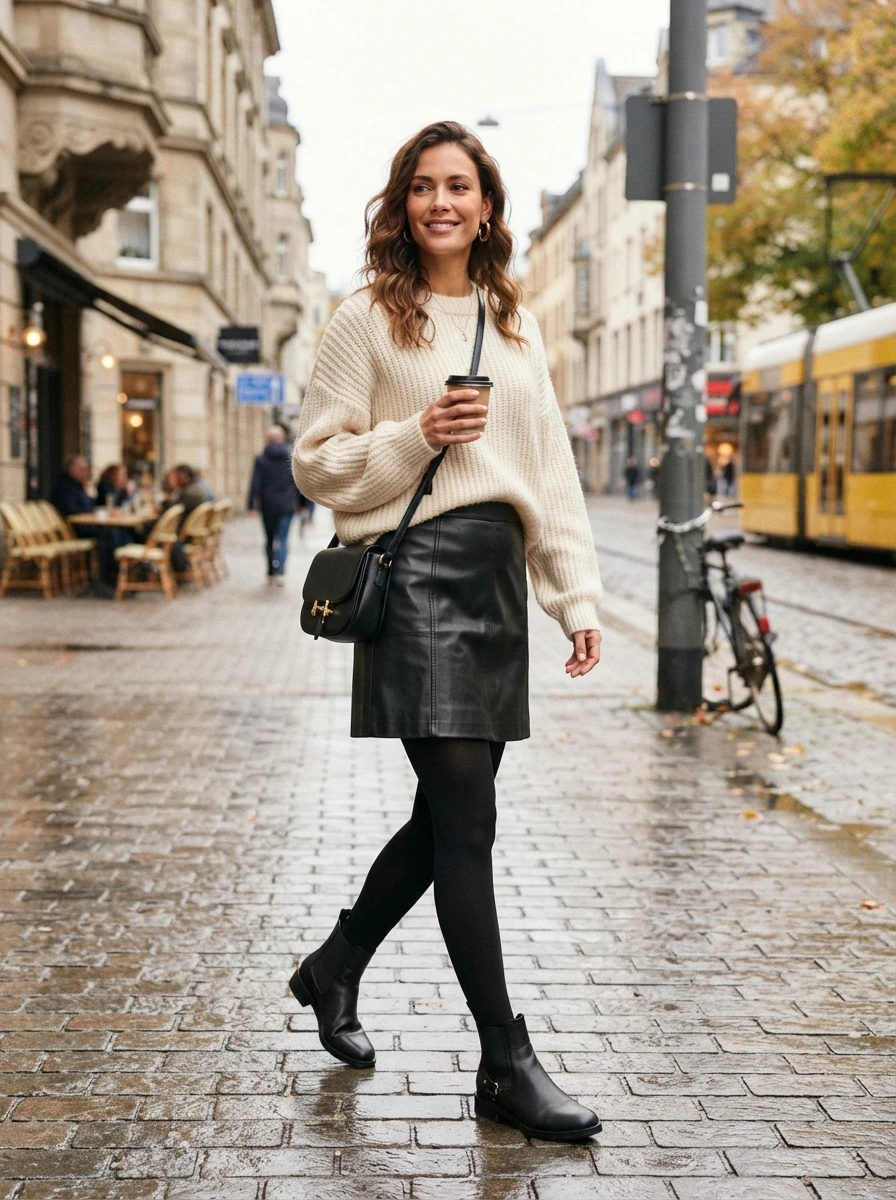
Leather Skirt and Thick Tights
A leather skirt in winter works for the same reason leather trousers do: the smooth, structured surface contrasts with everything soft around it. Thick opaque tights (100+ denier) make it genuinely warm, and an oversized knit on top balances the skirt's sleekness with volume. Knee-high boots close the gap between hem and shoe. The skirt should hit at or just below the knee; shorter reads evening only in winter light, longer starts competing with the boots.
Fit note: the knit should cover the waistband and sit at the hip — a shorter top leaves a gap that breaks the outfit's balance.
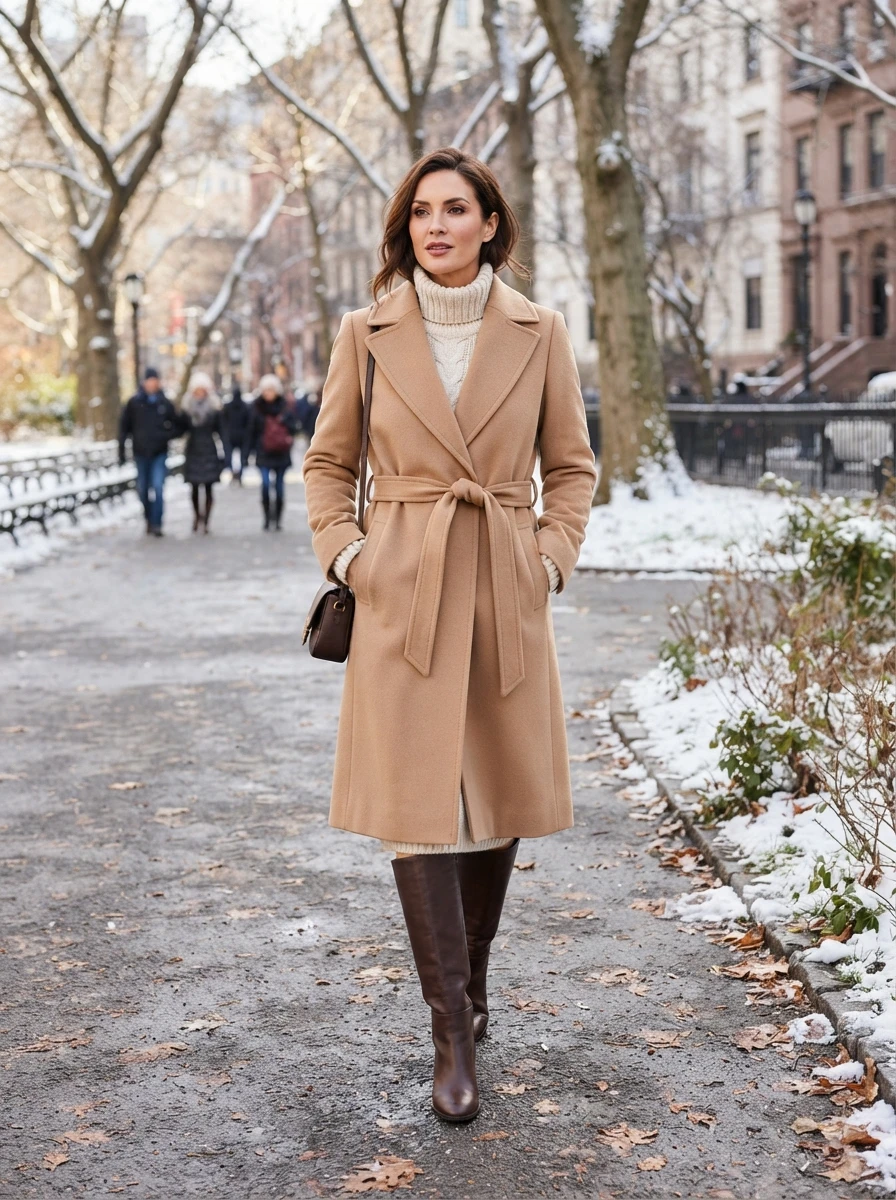
Wrap Coat and Knee Boots
The wrap coat is winter's most flattering outer layer because the belt does what no puffer can: it defines a waist over layers. Tied at the natural waist, it creates an hourglass over even a chunky sweater — the coat tailors itself to you. Knee boots underneath continue the leg line from the coat's hem down without interruption. This is the formula that looks polished over literally anything, which makes it the best travel coat in existence: one coat, endless bases, always pulled together.
Care tip: a wrap coat holds its shape best when the belt is tied rather than knotted flat, and stored hanging with the belt looped, not bunched in a pocket.
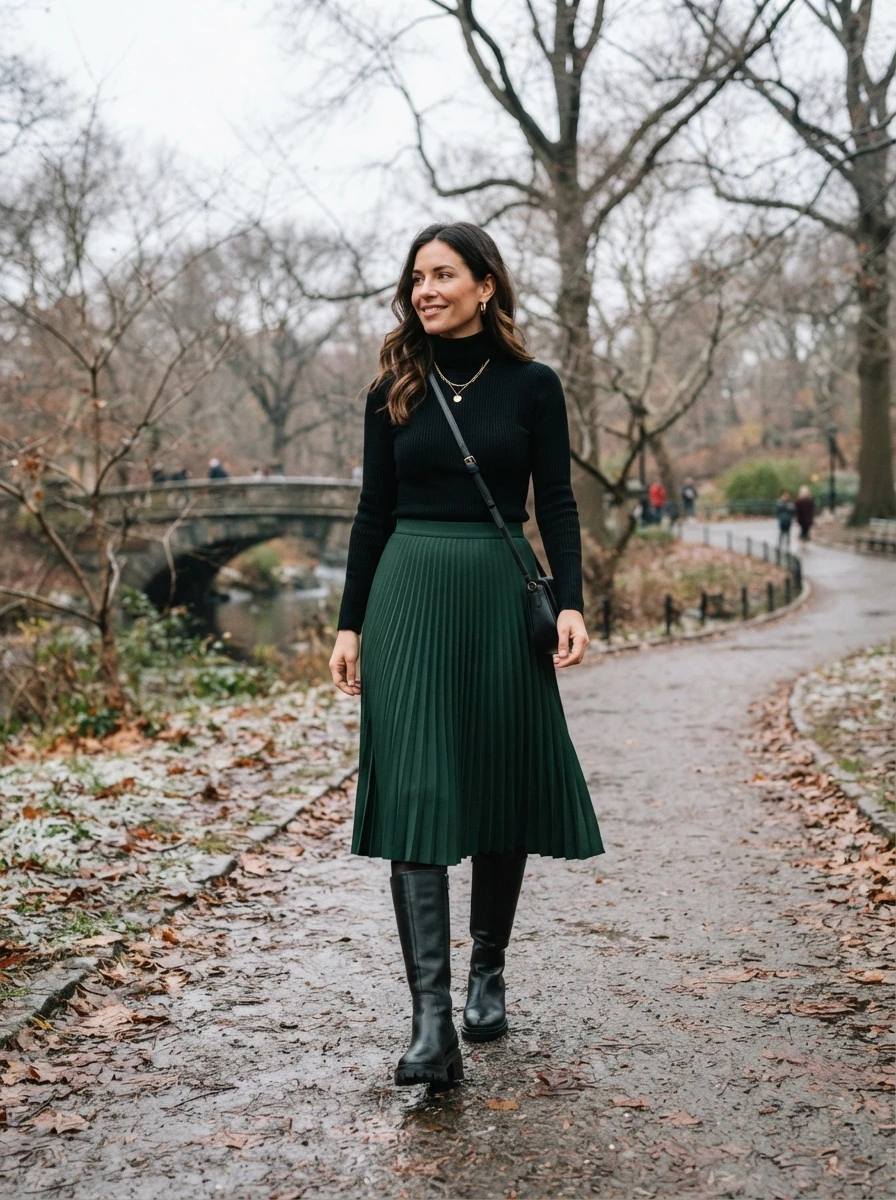
The Midi Skirt and Tall Boots
This is winter's most elegant formula because it solves the season's hardest problem — how to wear a skirt when it is freezing — with pure geometry. Opaque tights (80 denier minimum) plus knee-high boots leave no exposed skin, and the small gap between the midi hem and the boot top shows just enough leg to keep the silhouette from becoming a column. A fitted turtleneck up top balances the skirt's movement. Forest green or navy for the skirt: dark enough for winter, interesting enough to beat black.
Colour pairing: forest green or navy against a black turtleneck and black boots keeps the skirt as the single colour in the outfit.
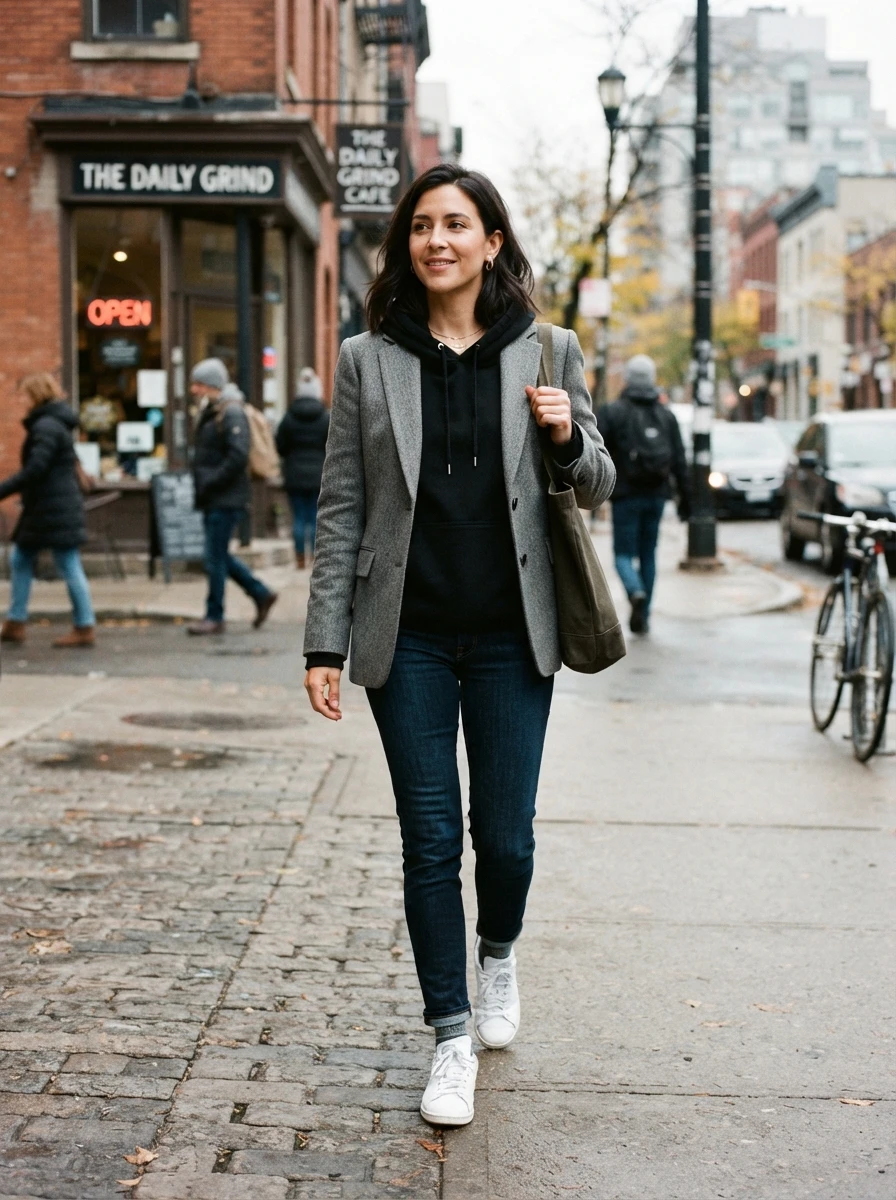
Oversized Blazer and Hoodie
Streetwear's best trick is the high-low collision: a tailored wool blazer (structure, polish) over a thick cotton hoodie (comfort, ease). It works because the contrast is total; if the blazer were casual too, the outfit would just be sloppy. The blazer needs room in the shoulders for the hood; a blazer that pulls across a hoodie looks like a mistake. Slim jeans and clean sneakers below keep the bottom half quiet so the top half's tension stays the focus.
This is a weekend formula, deliberately casual, which is perfect for everything except the office.
Fit note: size the blazer for the hood — try it on over the hoodie, not over a tee, or the shoulders will pull.
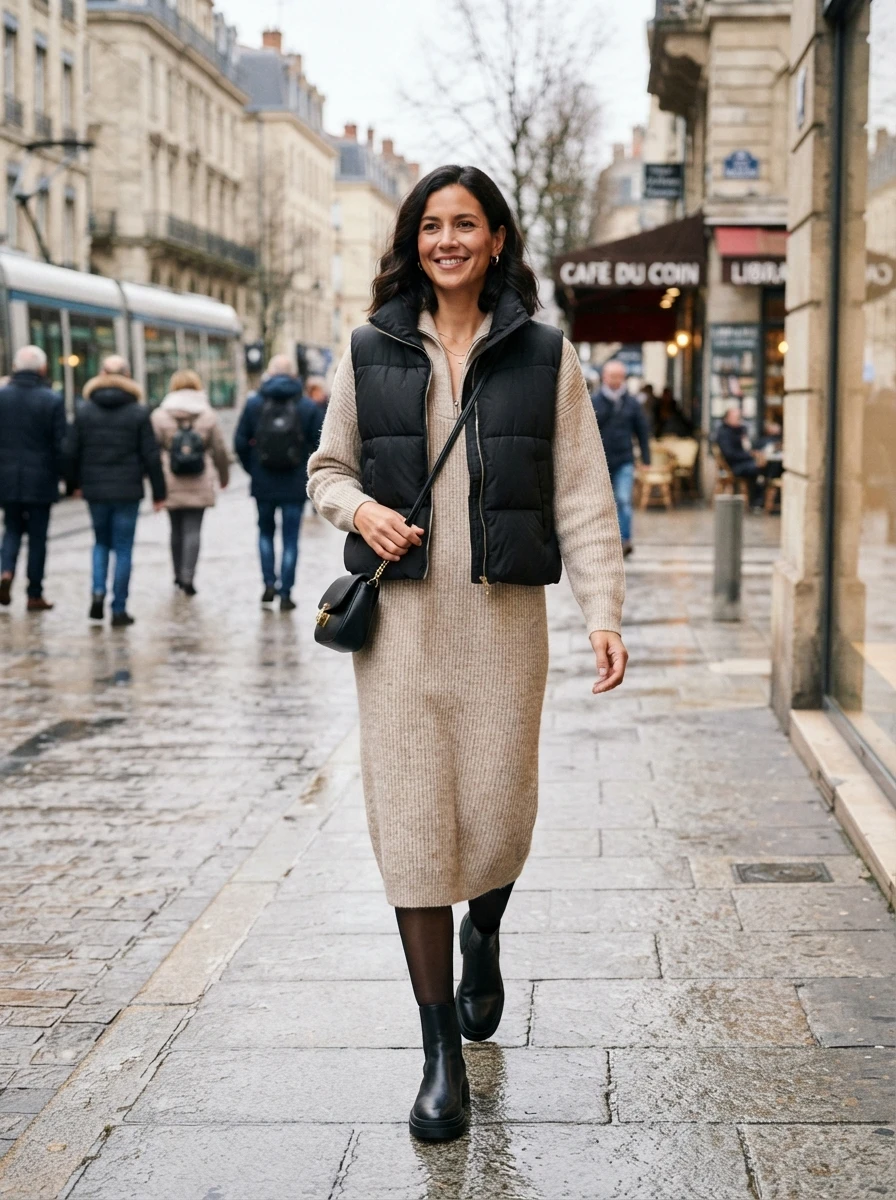
The Puffer Vest and Sweater Dress
A sweater dress is already a complete outfit; the cropped puffer vest adds core warmth without the arm restriction of a full coat. The crop matters, because a long vest over a dress hides the dress entirely, while a cropped one frames it. Choose the dress in a fine-gauge knit rather than chunky cable; the vest provides the insulation, so the dress can stay sleek. Neutral dress, black vest, and the whole thing reads as one deliberate cold-weather system instead of two separate ideas.
Fabric note: a fine-gauge knit dress layers cleanly under a vest; a chunky cable knit bunches at the waist and ruins the vest's line.
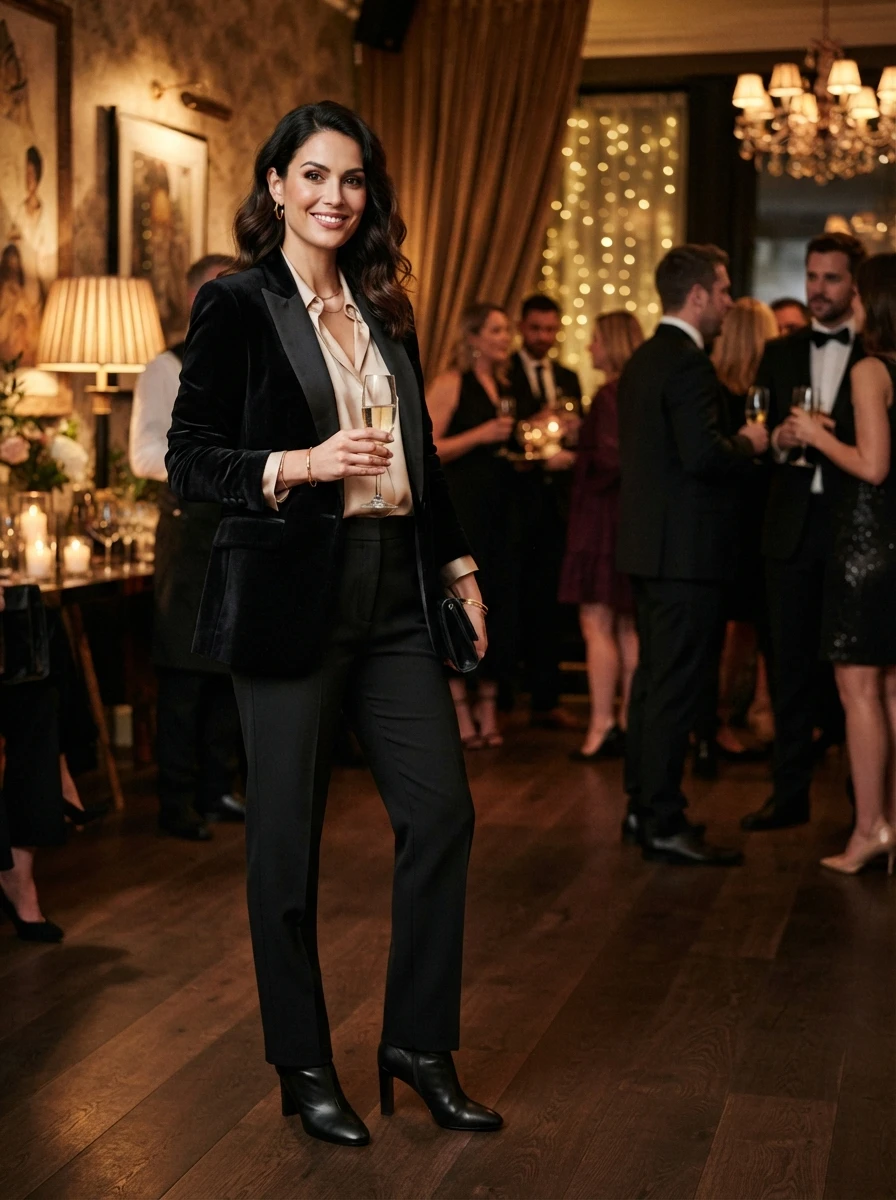
Velvet Blazer and Silk Blouse
Winter evenings reward fabric drama, and velvet against silk is the richest pairing in the closet: matte pile against liquid sheen, heavy against light. Deep tones — emerald, burgundy, midnight — are what make velvet read luxurious instead of dated; bright or pastel velvet is much harder to carry. Keep the trousers simple and dark so the top half's texture contrast stays the event. One piece of jewellery, not a stack, because the fabrics are already doing the decorative work.
Care tip: velvet crushes if folded tightly, so hang the blazer and keep it away from heavy coats pressing against it in the closet.
Fleece-Lined Leggings and Oversized Shirt
The secret to making leggings look like an outfit instead of gym wear is what goes over them: an oversized button-down or flannel in a substantial fabric (not a thin tee) gives the top half enough presence to balance the leggings' simplicity. Fleece-lined leggings solve the actual winter problem — warmth — while looking identical to regular ones. The shirt should cover the hip; that coverage line is the difference between intentional and underdressed. Knee-high boots over the leggings add the structure that sneakers cannot.
Fit note: the shirt must cover the hip when you move, not just when you stand still — check it sitting down before leaving the house.

Shearling Jacket and Wide-Leg Trousers
A shearling jacket is inherently bulky, so the wide-leg trousers are not a contradiction — they are a commitment. Volume on top and bottom works when it is clearly deliberate, in the same way a fashion editorial commits to a silhouette. The key is the waist: a tucked-in fitted top marks where you are under all that volume. Keep the colour story tight (all neutrals, or shearling tan with black trousers) so the silhouette, not the colours, is the statement.
This is a cold weekend outfit, dramatic, warm, and unapologetic.
Wear it with: a tucked-in fitted top to mark the waist — without it, the volume on both halves has no anchor.
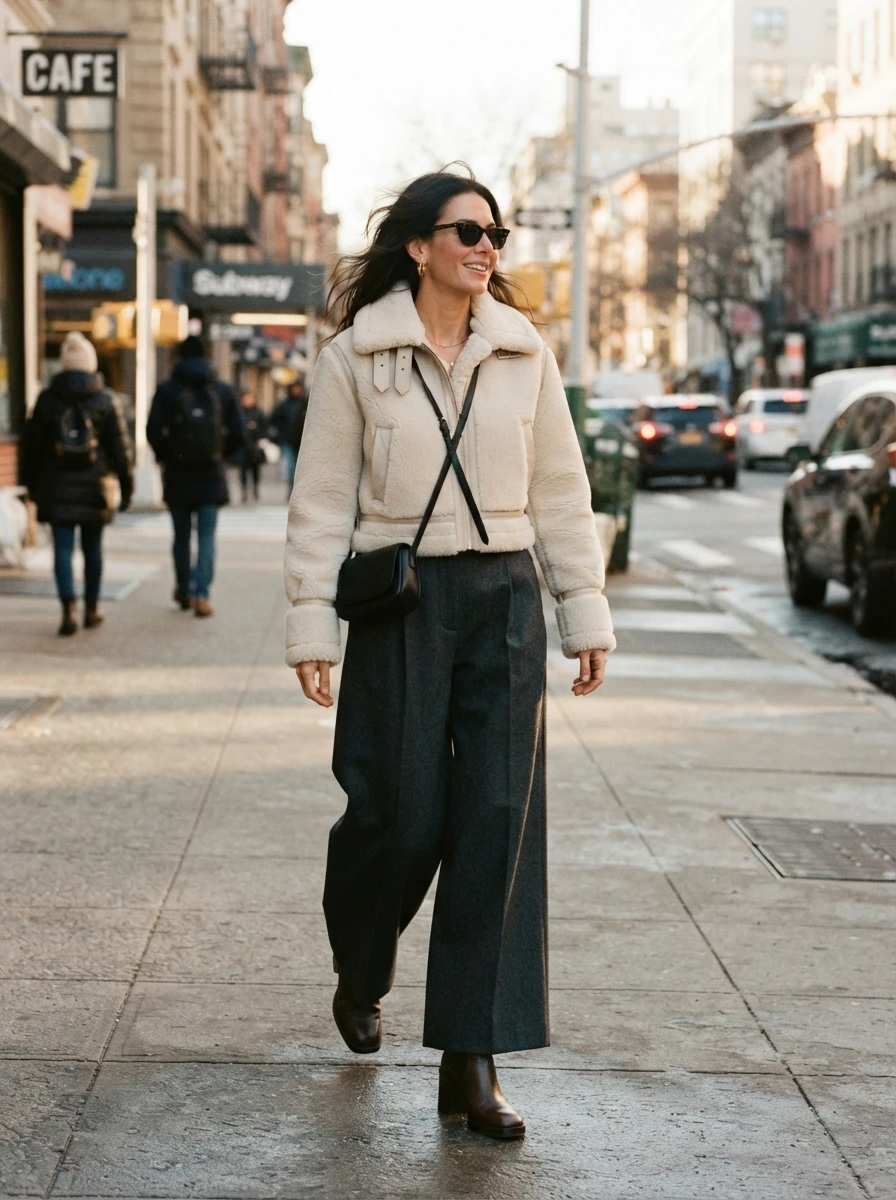
Quilted Jacket and Slim Chinos
Quilting adds visual texture to outerwear the way cable knit does to sweaters: the stitching breaks up flat fabric and adds interest without colour or pattern. A quilted jacket in olive or navy over slim chinos is the smart-casual winter uniform, structured enough for dinner, relaxed enough for daytime. The jacket should end at the hip; longer quilting starts reading as outerwear for hiking. Keep the layers underneath thin, because the quilting is the insulation, and doubling up underneath just adds bulk.
Fabric note: the quilting itself insulates, so a thin merino layer underneath is enough — a chunky knit under a quilted jacket adds bulk without warmth.
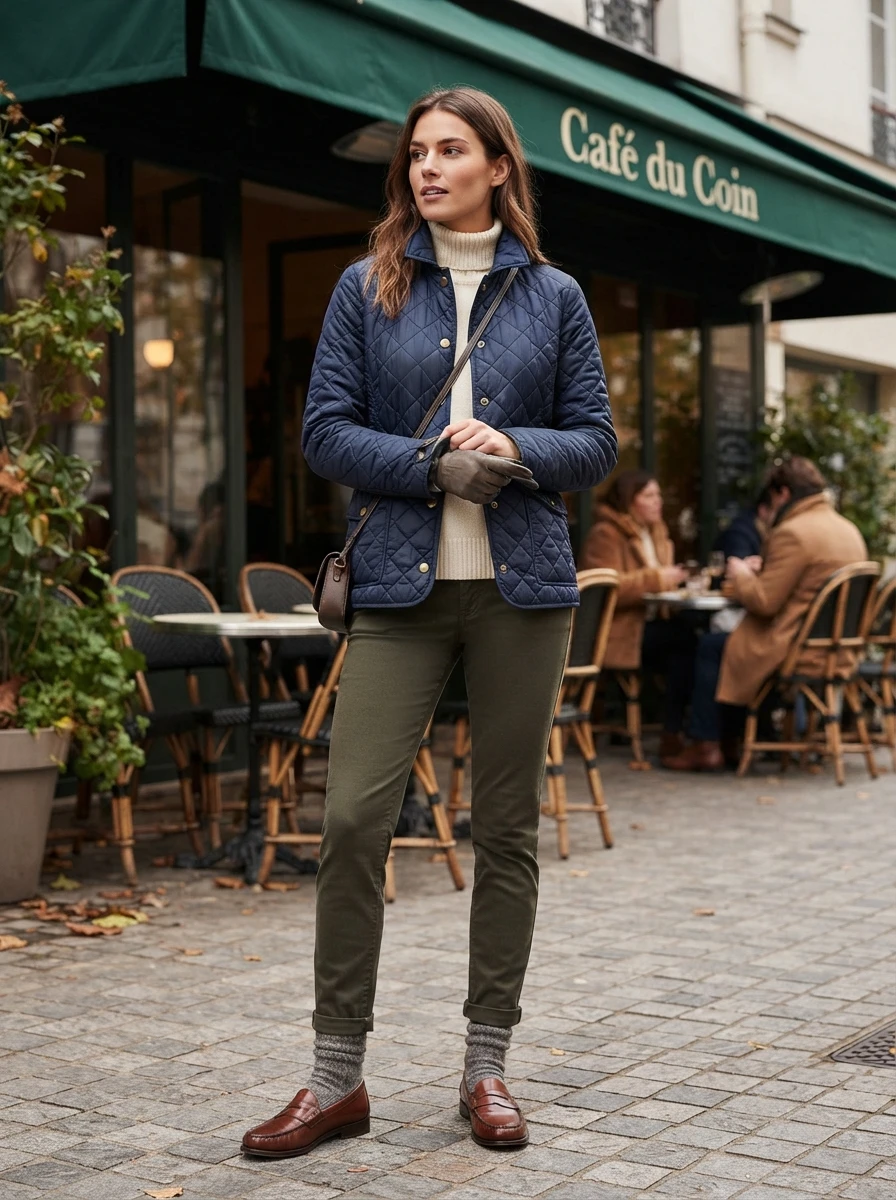
Plaid Blazer and Turtleneck
A plaid blazer over a turtleneck is winter's answer to the fall version, with one critical difference: the turtleneck must be fine gauge. A chunky knit under a blazer strains the shoulders and ruins the blazer's line; a thin merino turtleneck adds warmth without volume. The plaid is the pattern, so the trousers go solid and dark. This is the office formula for the coldest months, and it reads as warm as it is, which matters, because shivering in a blazer with nothing under it helps nobody.
Fit note: the blazer's shoulder line is the test — if it pulls over the turtleneck, the turtleneck is too thick for the jacket.

Faux Fur Coat and Jeans
The faux fur coat is winter's maximalist move, and maximalism only works with restraint everywhere else: simple dark jeans, a plain top, minimal jewellery. The coat is the outfit; everything else is a frame. Hip length or slightly longer keeps the proportion wearable, because full-length fur is a different (evening) proposition. This is the formula for the coldest days when you want to feel glamorous without trying: the coat does 90 percent of the work, which is exactly the point.
Colour pairing: keep the base dark and plain — black or dark wash denim with a black top — so the coat's texture carries the whole outfit.
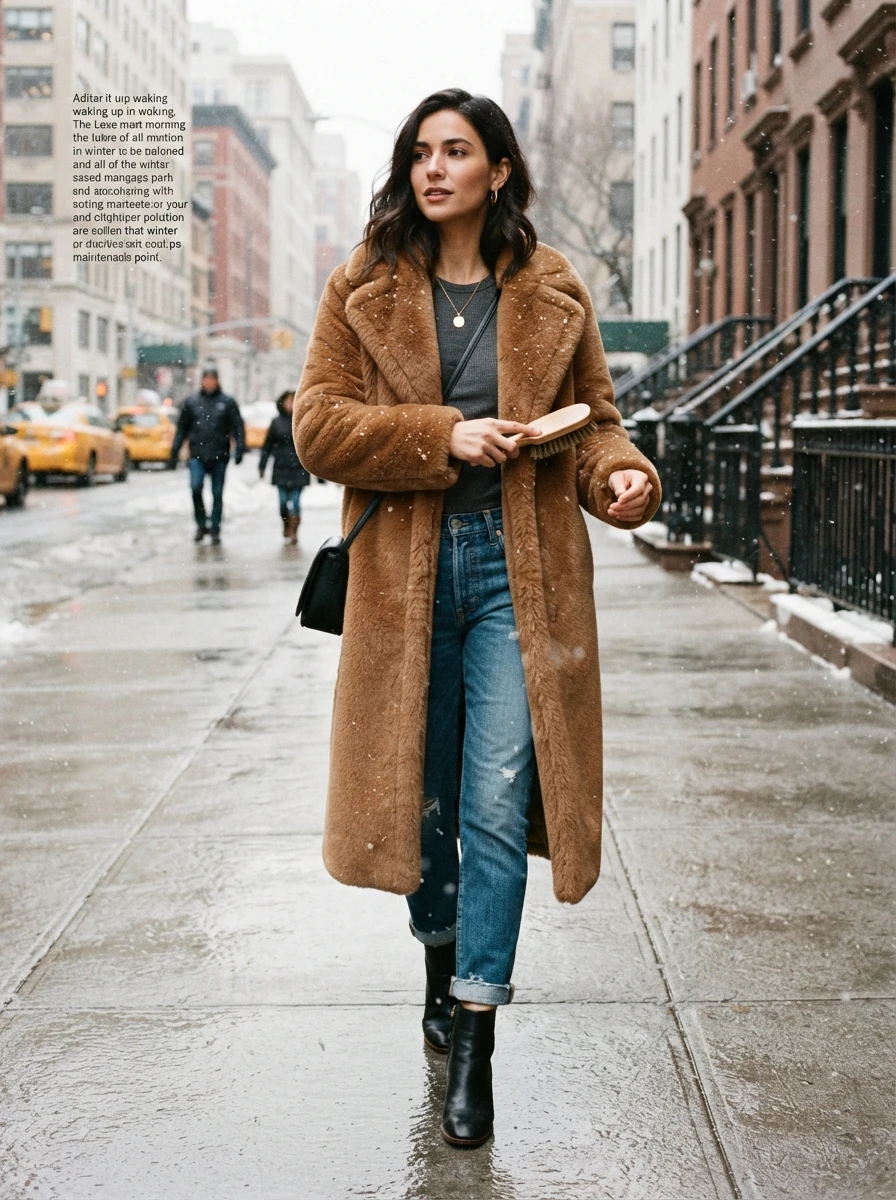
How to Build a Winter Layering System That Actually Works
Build from the skin out, in three layers. The base layer should be thin and fitted: a thermal top, a fitted long-sleeve top, or a thin turtleneck. Wikipedia's layered clothing entry explains why these thin trapped-air layers keep you warmer than one thick one, and Patagonia's layering basics shows the same system with outdoor examples. Its job is to trap warmth against your body, so it must fit close; a loose base layer lets cold air in and does nothing.
The middle layer is your insulation: a chunky knit, a fleece, or a sweater dress. This is the layer that holds the heat, so choose wool or a wool blend over cotton, which holds moisture and leaves you cold. The outer layer is your coat, and it must close over both layers below it. Try the full combination on before you buy a coat, because a coat that fits over a thin top but not over a chunky knit will sit in your closet all winter.
Proportion keeps the layers from looking bulky. Wear only one bulky piece at a time: a chunky knit goes with slim trousers, while wide-leg trousers pair better with a fitted knit. If you wear a long coat, keep the layers underneath shorter than the coat so nothing bunches at the hem. Accessories are warmth too: a scarf seals the neck, a hat keeps heat from escaping, and gloves matter more than most people think, because cold hands make the whole body feel cold.
Finally, build your winter wardrobe around a minimalist winter capsule wardrobe so the layers repeat across outfits instead of each outfit needing new pieces. When the system works, getting dressed in winter takes five minutes, and you stop choosing between warm and polished.
Frequently Asked Questions
How many layers do I actually need on a cold day?
Three layers cover most cold days: a thin fitted base layer, a warm middle layer like a knit sweater, and a coat that closes over both. A scarf, hat, and gloves add extra warmth without another clothing layer. If you are still cold, thicken the middle layer rather than adding a fourth layer, which usually just adds bulk.
Which winter coat is warmest for daily wear?
A long wool coat or a down parka is warmest for most people. Wool coats suit dry cold and look polished for work and evenings, while down parkas suit wet snow and very low temperatures. The warmest coat is the one that falls below the knee, closes fully at the neck, and fits over your thickest sweater.
Can I wear cream or white in winter without looking washed out?
Yes. Cream, ivory, and soft white look beautiful in winter, especially in knit and wool textures. Wear cream as a sweater, a coat, or trousers, and pair it with tan, camel, or black accessories so the light shade has contrast. Keep a lint roller in your bag, because light colours show lint and pet hair quickly.
How do I layer for work without looking bulky?
Wear only one bulky piece at a time and keep the rest fitted. A chunky knit goes with slim trousers, and wide-leg trousers pair with a fitted knit. Choose wool and down over thick cotton, because they insulate with less volume, and let your coat be the longest layer so the silhouette stays clean.
What boots actually work on snow and ice?
Waterproof boots with a grippy sole are best for snow and ice. Choose a pair that closes fully and has enough room for warm socks. Fashion boots with smooth soles slip on ice, so save those for cleared pavements and keep a practical pair for real snow days.
What should I wear under a wool coat so the outfit still works indoors?
Wear a fitted turtleneck under a wool blazer or suit, with wool trousers and loafers, and add a long coat for the commute. The office layers should look complete without the coat, since you will remove it at your desk. Keep a scarf in your bag for the walk home rather than wearing it all day indoors.
Your Winter Outfit Checklist
Before you buy anything new, run through this list against the outfits above:
- One coat that closes over a chunky knit — below the knee, wool or down, in black, charcoal, camel, or burgundy.
- One warm middle layer in wool — a chunky knit or a fine-gauge turtleneck, not cotton, which holds moisture and chills you.
- One thin base layer — a thermal or fitted long-sleeve top in black or nude that disappears under everything else.
- Boots for the ground, not just the outfit — waterproof with a grippy sole for snow days, ankle boots for everything else.
- One accent, not three — a plaid scarf, a burgundy coat, or a camel coat carries the colour; the rest stays dark and quiet.
- Texture over colour in monochrome — smooth wool, ribbed knit, and matte denim keep an all-black or all-cream outfit from reading flat.
Start with the pieces you already own, check them against this list, and fill only the gaps. The best winter outfit is the one that keeps you warm, closes properly, and still looks like you on purpose.