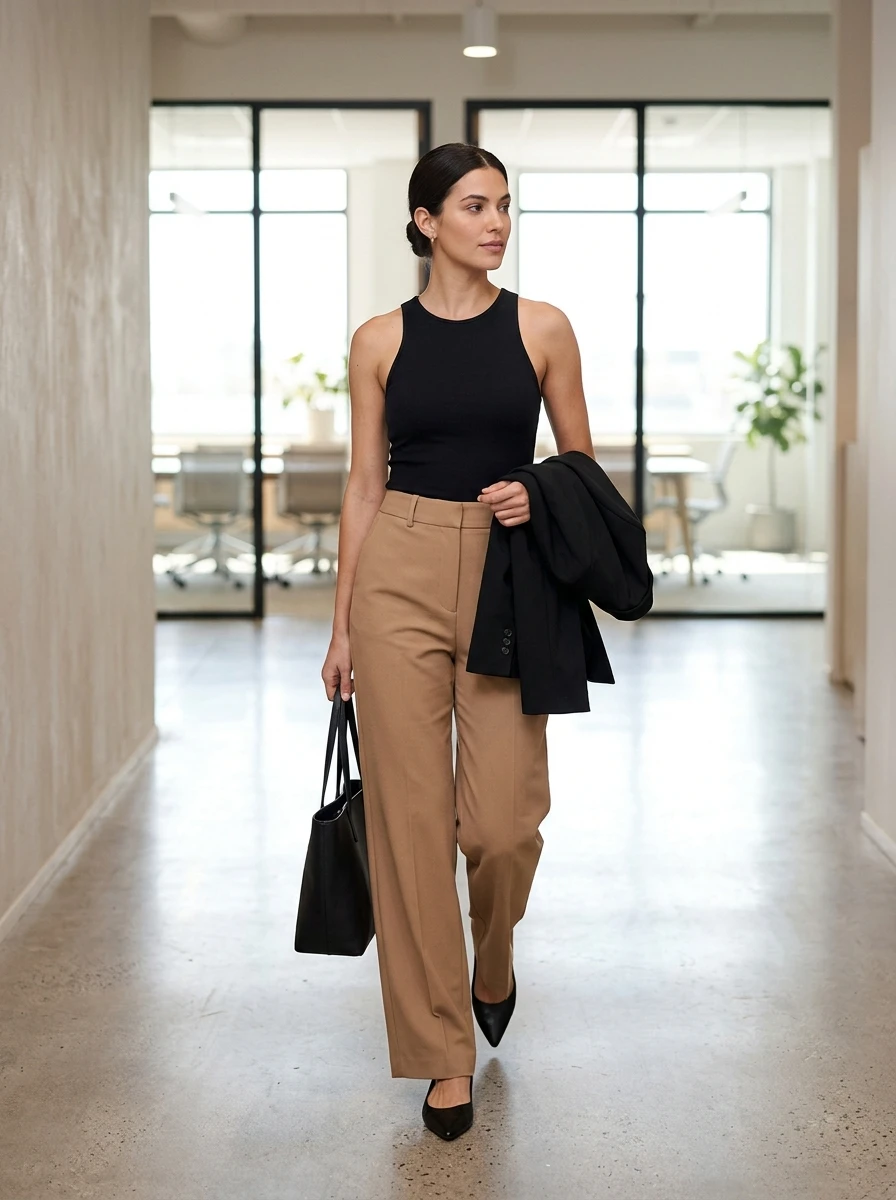
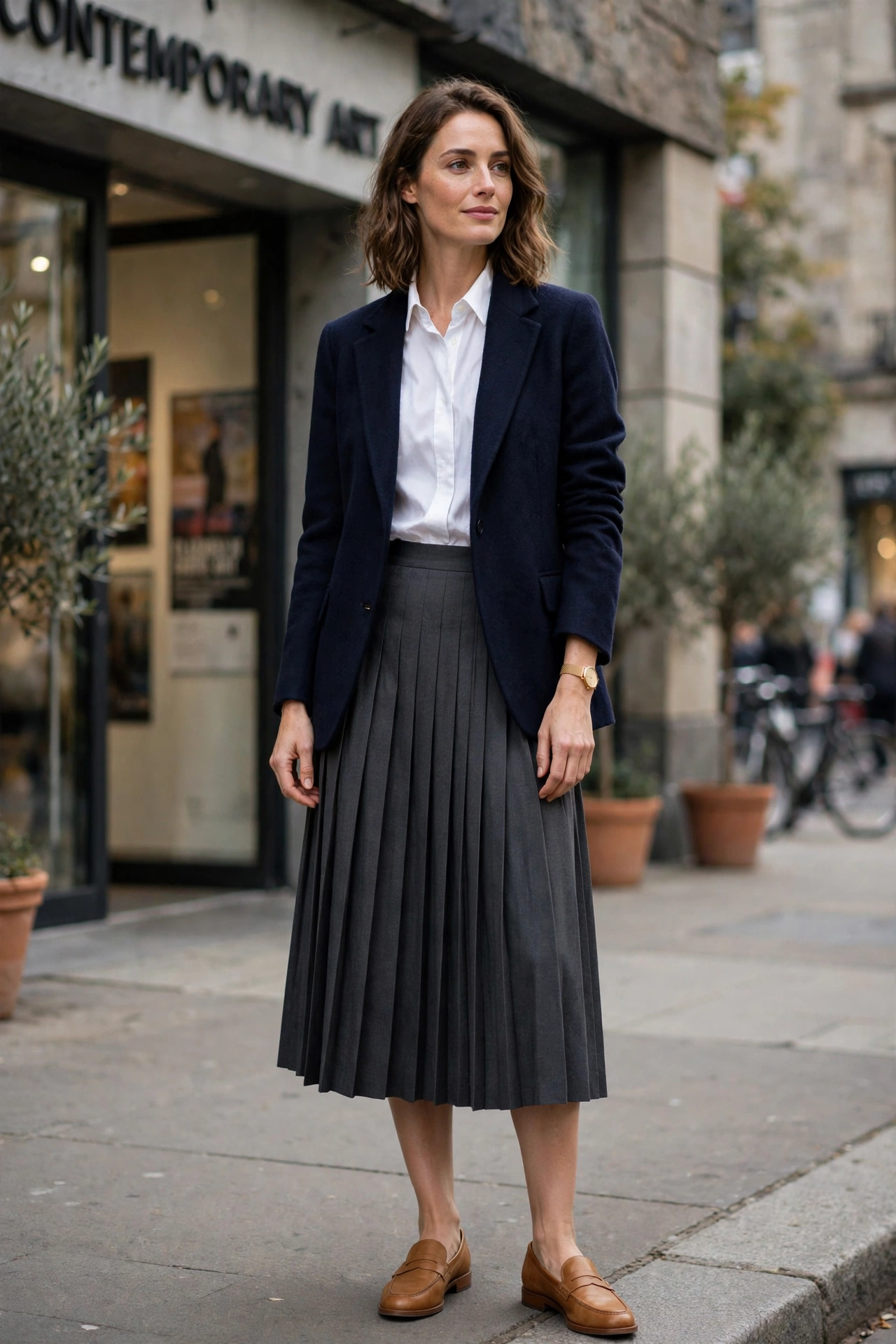
16 Formal Outfit Ideas for Women with Classy Style Inspiration
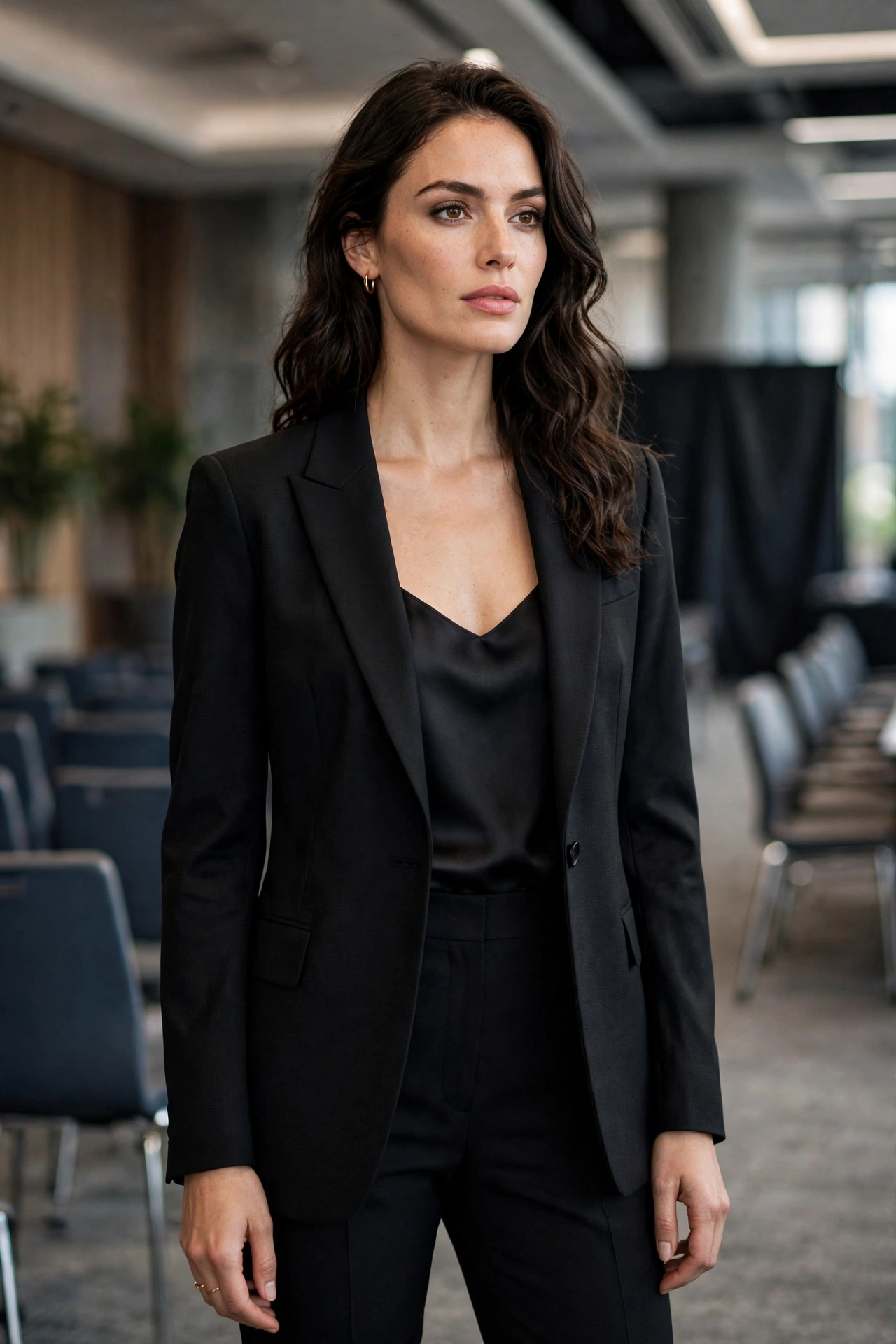
How to use this guide
These are editorial styling suggestions, not a one-size-fits-all formula. Adapt each look to your wardrobe, proportions, climate, comfort, budget, and the occasion; the most useful idea is the one you can genuinely wear.
Formal dressing runs on two currencies: structure and restraint. Structure is tailoring — shoulder seams that sit at the shoulder, waists that are defined rather than tight, hemlines that break cleanly. Restraint is the absence of noise: one focal point per outfit, a disciplined palette, nothing competing. "Classy" isn't a personality trait; it's what happens when every element of an outfit agrees with the others.
Fabric weight is the invisible variable most people miss. Crepe, wool suiting, and ponte hold their shape against the body; thin, clingy fabrics surrender to it. A sheath dress in ponte looks formal; the same cut in thin jersey looks like a slip — the pattern is identical, the fabric does the rest. Color discipline: navy, charcoal, black, ivory, and camel recede and let the cut talk. One deep saturated color per outfit at most — burgundy or forest, never bright.
Proportion follows the two-thirds rule: in a jacket-and-trouser outfit, the eye should read roughly two-thirds one piece and one-third the other — a cropped jacket with high-rise trousers, or a long blazer with a shorter skirt. When the split is fifty-fifty, the eye stalls at the middle and the outfit reads static. Shoe logic closes the system: heel height, toe shape, and hemline work as one unit. Pointed toes lengthen, block heels stabilize, and the hem should break just above or at the shoe's vamp. The sixteen formulas below are each built on these mechanics.
Navy Suit and Ivory Silk Blouse
The cornerstone. A single-breasted navy suit with a notch lapel and natural shoulder — no exaggerated padding, which dates the silhouette — an ivory silk blouse, and pointed pumps. Navy is softer than black but equally formal; it reads authority without severity, which is why it's the default in rooms where black would feel funereal. The silk blouse's slight sheen is the only texture play needed; keep jewelry to studs and a watch, because the suit is already complete.
Trousers should break once at the shoe — pooling fabric destroys the line the tailoring built, and a full break reads as carelessness in formal settings. The jacket's shoulder seam must sit at your actual shoulder; everything else can be altered, shoulders can't (affordably). This is the interview, boardroom, and client formula — the outfit that has closed more deals than any other combination in this guide.
Black Sheath Dress and Pointed Pumps
A knee-length sheath in ponte or crepe with pointed-toe pumps and a structured tote. The sheath's power is its uninterrupted line from shoulder to knee — no waist seam, no flare, nothing breaking the column. Ponte holds the shape through a full day; it should skim with enough ease to sit comfortably, because a sheath you can't sit in is a costume. Check the back vent allows a full stride — if there isn't one, it's too tight regardless of how it looks standing.
Pointed pumps extend the leg line the dress starts — the toe shape is doing real work here, adding visual inches. One bracelet, stud earrings; the dress is the statement, so nothing else auditions for the role. The tote should be structured leather that stands on its own; a slouchy bag collapses the formality. Fifteen minutes to dress, zero decisions to make, appropriate everywhere from funerals to fundraisers.
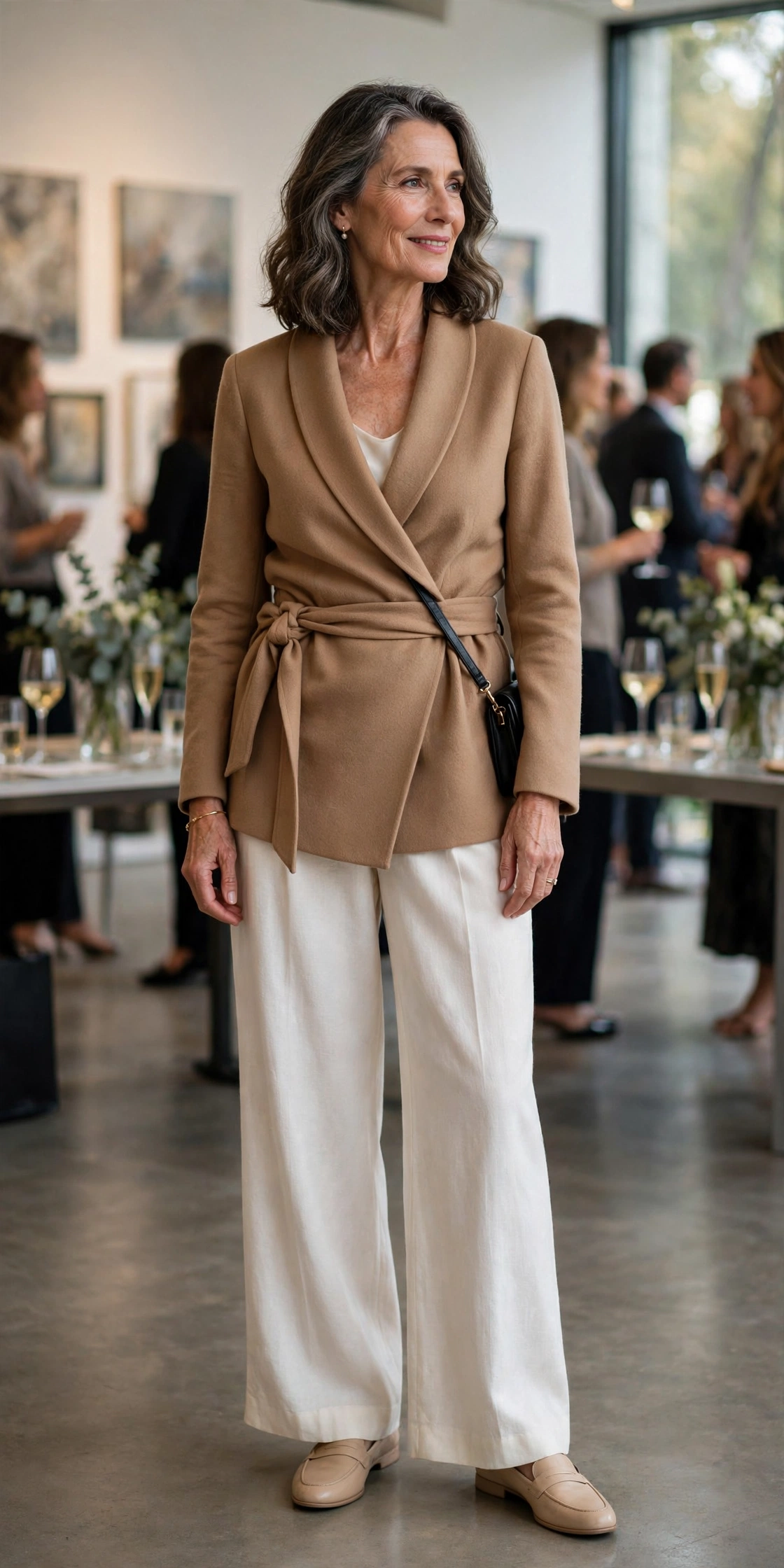
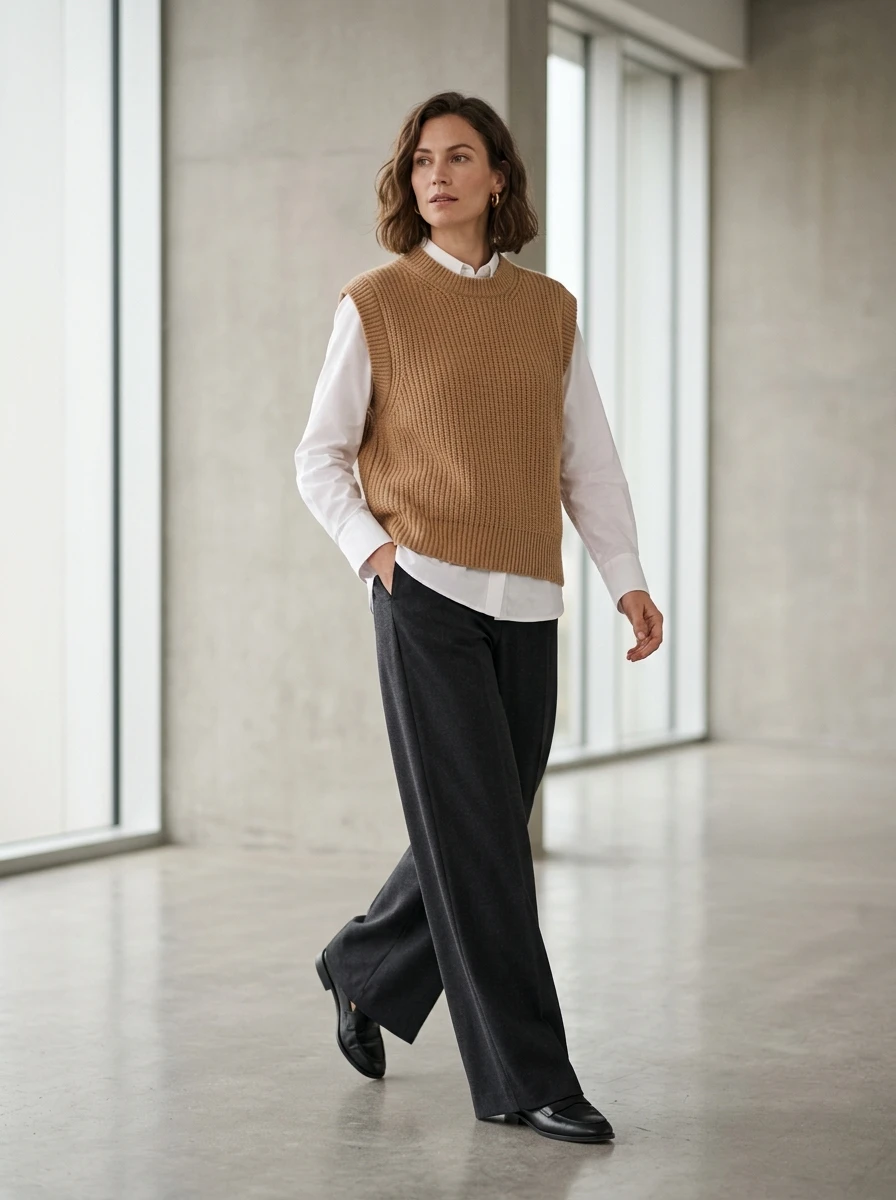
Charcoal Wide-Leg Trousers, Fitted Blazer, and Loafers
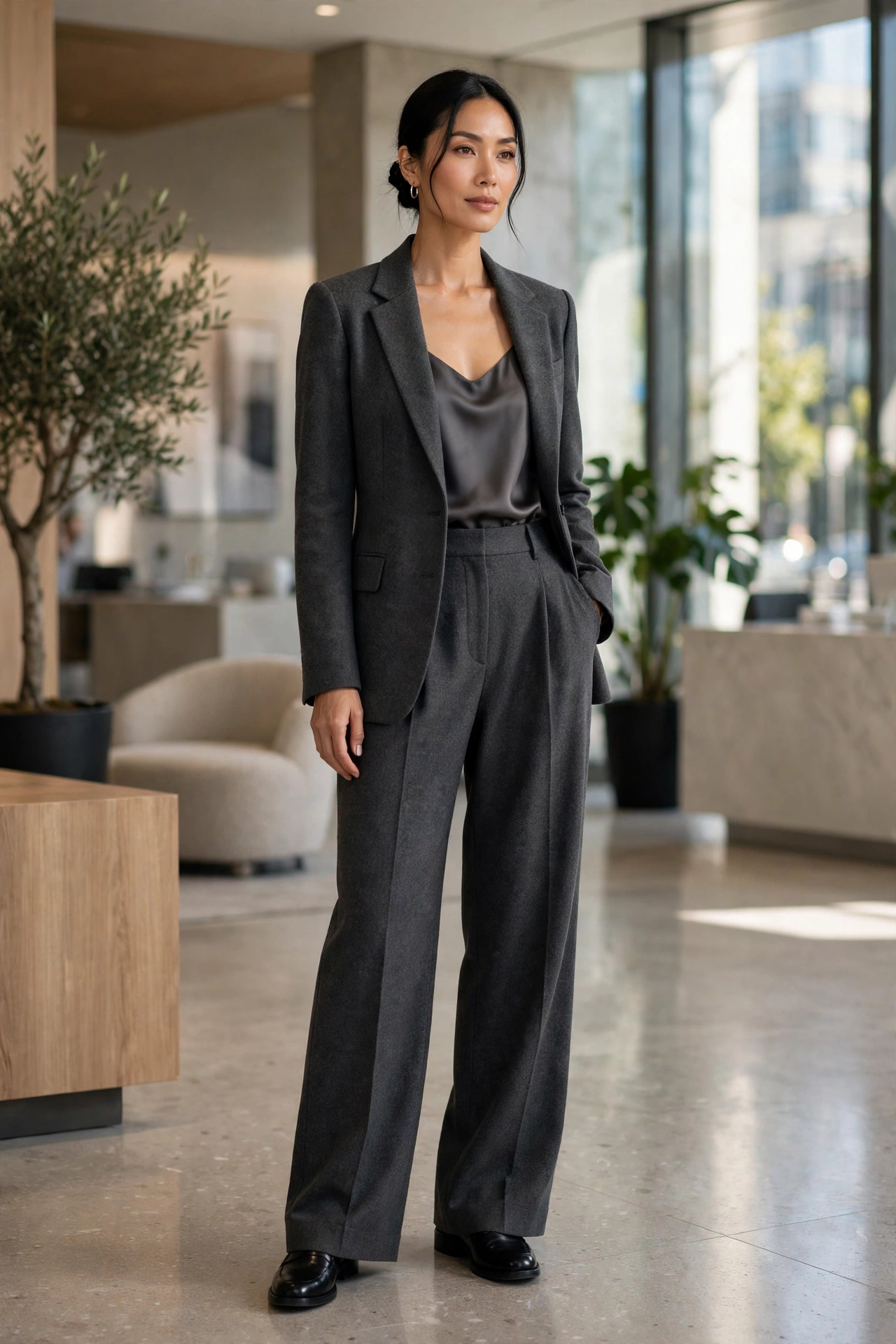
Wide-leg trousers in charcoal wool with a fitted — not oversized — blazer and polished loafers. The fitted blazer is essential; an oversized blazer over wide legs is all volume with no line, and the outfit dissolves into fabric. The blazer should nip at the waist and hit at the hip, creating the two-thirds/one-third split with the trouser. The loafer's low profile keeps the trouser's long line intact, where a chunky shoe would chop it at the ankle — this is why shoe volume must be inversely proportional to trouser volume.
Tuck a fine-gauge knit or silk shell underneath; anything bulky at the waistband ruins the line. Charcoal is the thinking person's black: formal, but with more depth and less severity. The trousers need a clean hem that just kisses the loafer — no break, no pooling. This is the creative-director formal: authority with taste, structure without stiffness.
Ivory Suit for Summer Formal
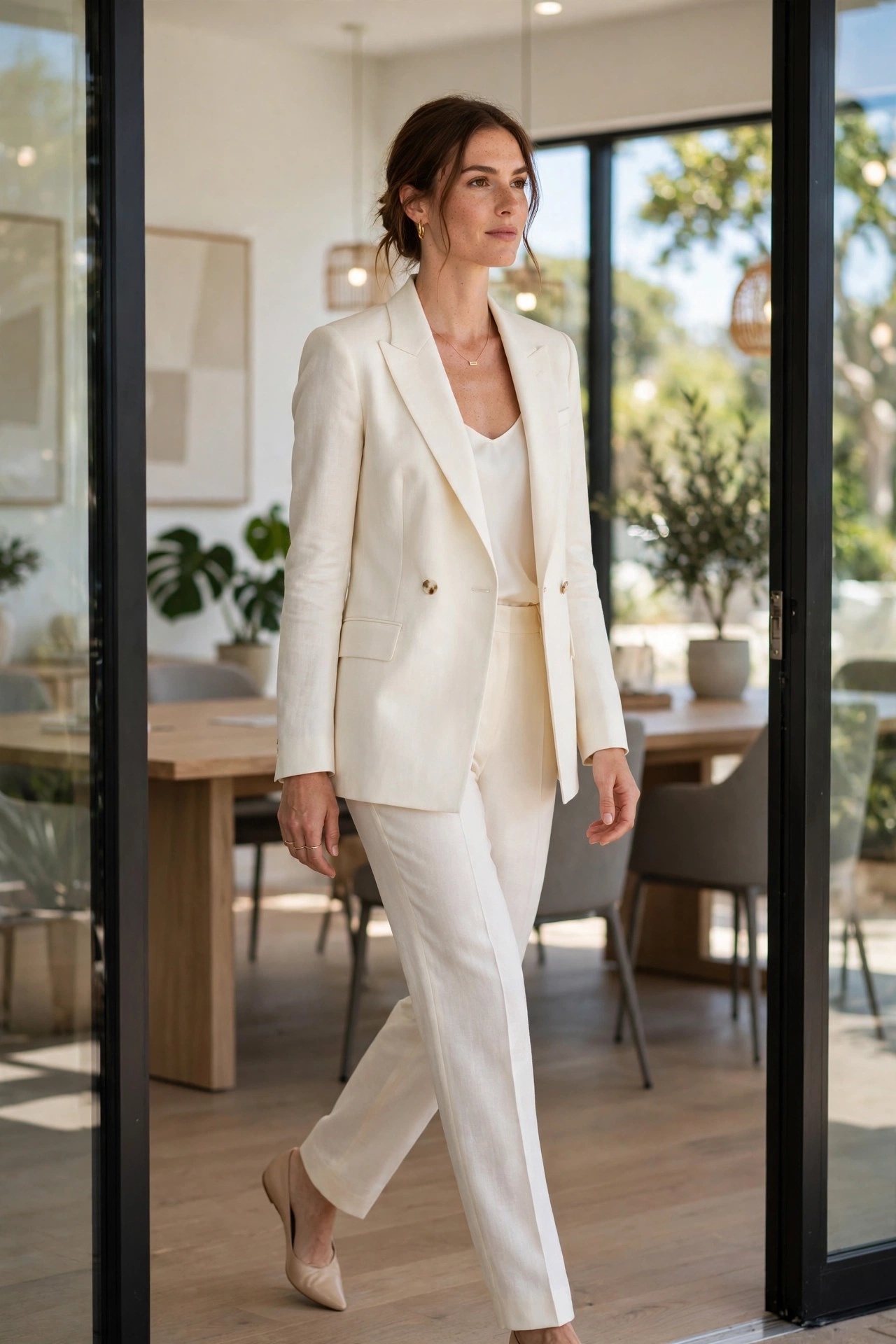
The warm-weather power move: an ivory or ecru suit in lightweight tropical wool or a linen-wool blend, nude pointed flats, and minimal gold jewelry. Ivory demands clean lines — every wrinkle shows, so the fabric needs structure; a linen-wool blend beats pure linen, which wrinkles if you look at it. Half-canvas construction if you can find it; fused fronts bubble in heat.
Keep underpinnings nude-for-you to avoid show-through — this is non-negotiable with ivory, and white underwear under ivory is the error almost everyone makes once. The flats should be pointed and nude-for-you too, extending the leg line the suit starts. This is high-maintenance formality, but nothing looks more commanding in a summer meeting than head-to-toe ivory done right. It signals confidence precisely because it's difficult; ease is the luxury.
Pencil Skirt, Tucked Blouse, and Kitten Heels
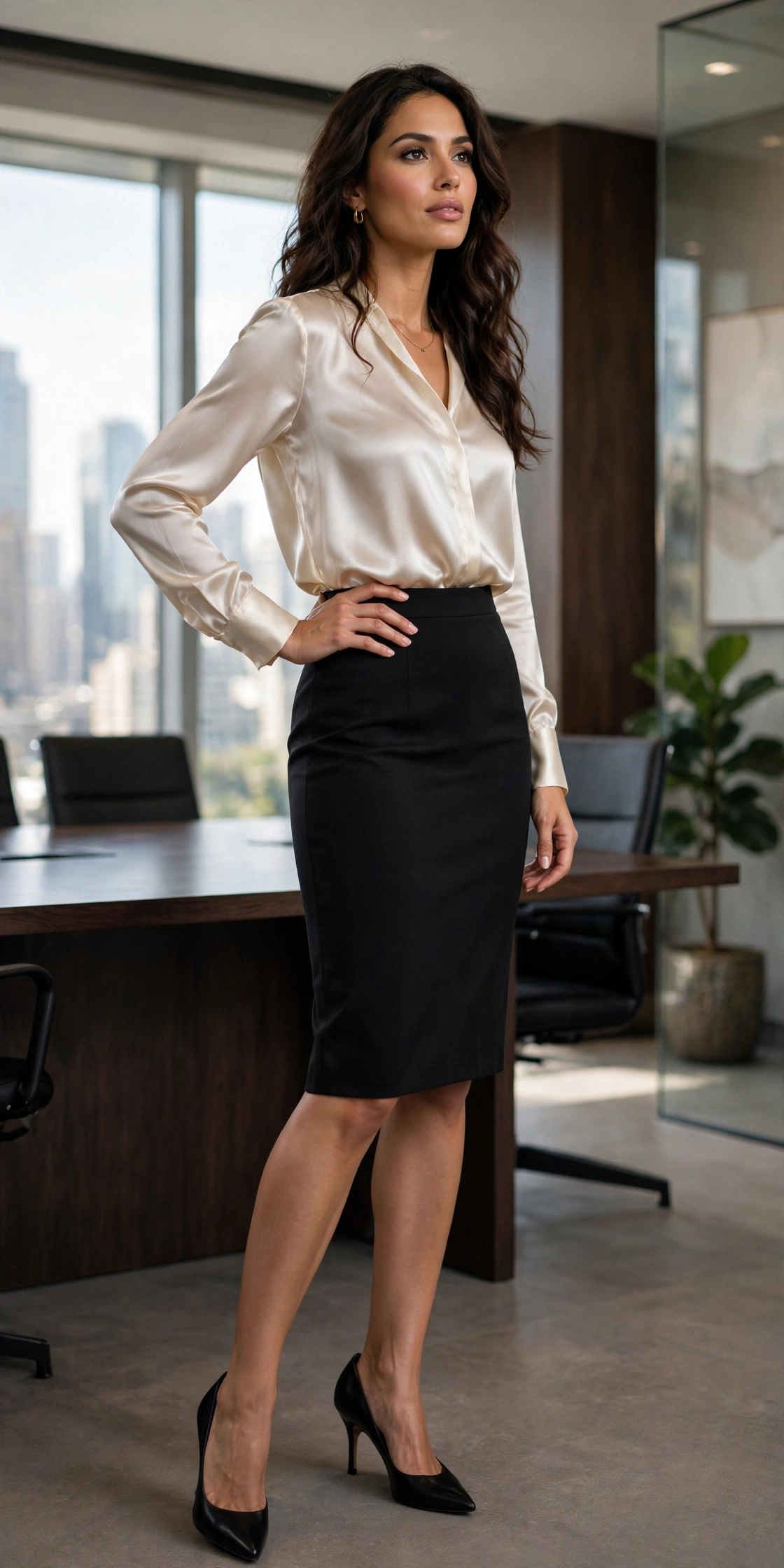
A knee-length pencil skirt in a suiting fabric, a blouse tucked with a clean flat front, and kitten heels. The kitten heel is the most underrated formal shoe — polished, walkable for full days, and it keeps the hem-to-shoe proportion elegant without a stiletto's severity. The skirt must allow a full stride; if you can't walk normally, it's too tight, not too formal — test it by climbing stairs in the fitting room.
The blouse tuck is doing work: a clean front tuck (not bloused, not half-out) keeps the waistline crisp. Silk or a silk-blend holds the tuck; cotton poplin works but needs re-tucking by afternoon. A slim belt in the same tone as the shoes ties the whole thing together — tonal, never contrasting, because the belt should connect, not interrupt. The most repeatable office formula on this list.
Wrap Blazer Dress
A blazer dress with a wrap closure: the lapel gives the authority, the wrap gives the waist definition, the knee length keeps it office-appropriate. The wrap must overlap generously — a skimpy wrap gaps when you sit, so look for interior snaps or ties that secure it; this is the number one fit failure in wrap dresses and it's fixable only by construction, not styling. The lapel should be a real notch lapel with structure, not a soft shawl collar, because the lapel is what's doing the formal work.
This is one-and-done dressing: no separates to coordinate, no tuck to manage, no matching to think about. Black or navy; the silhouette is the interest, so the color stays quiet. Pumps or pointed flats depending on the day. For mornings when decisions are expensive, this dress makes exactly one — and it's the right one.
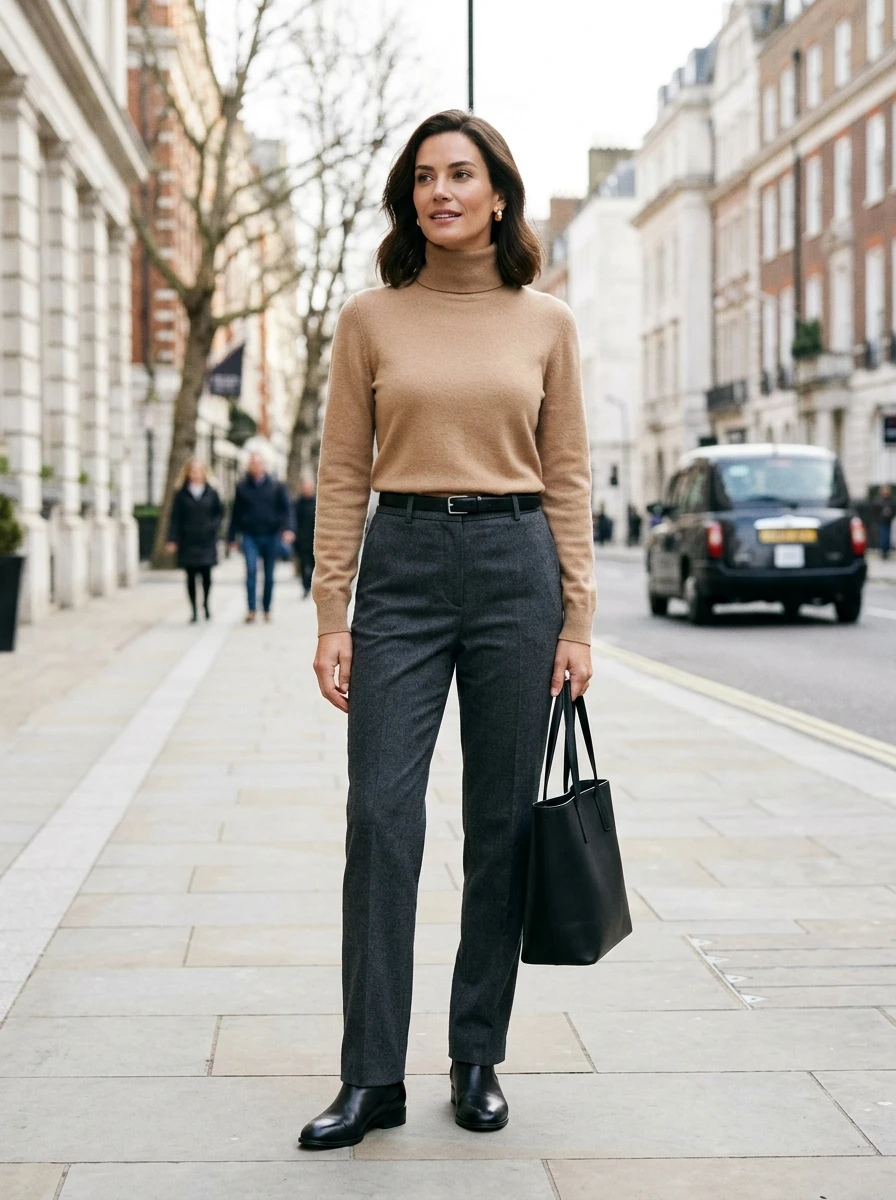
Camel Coat, Black Turtleneck, and Tailored Trousers
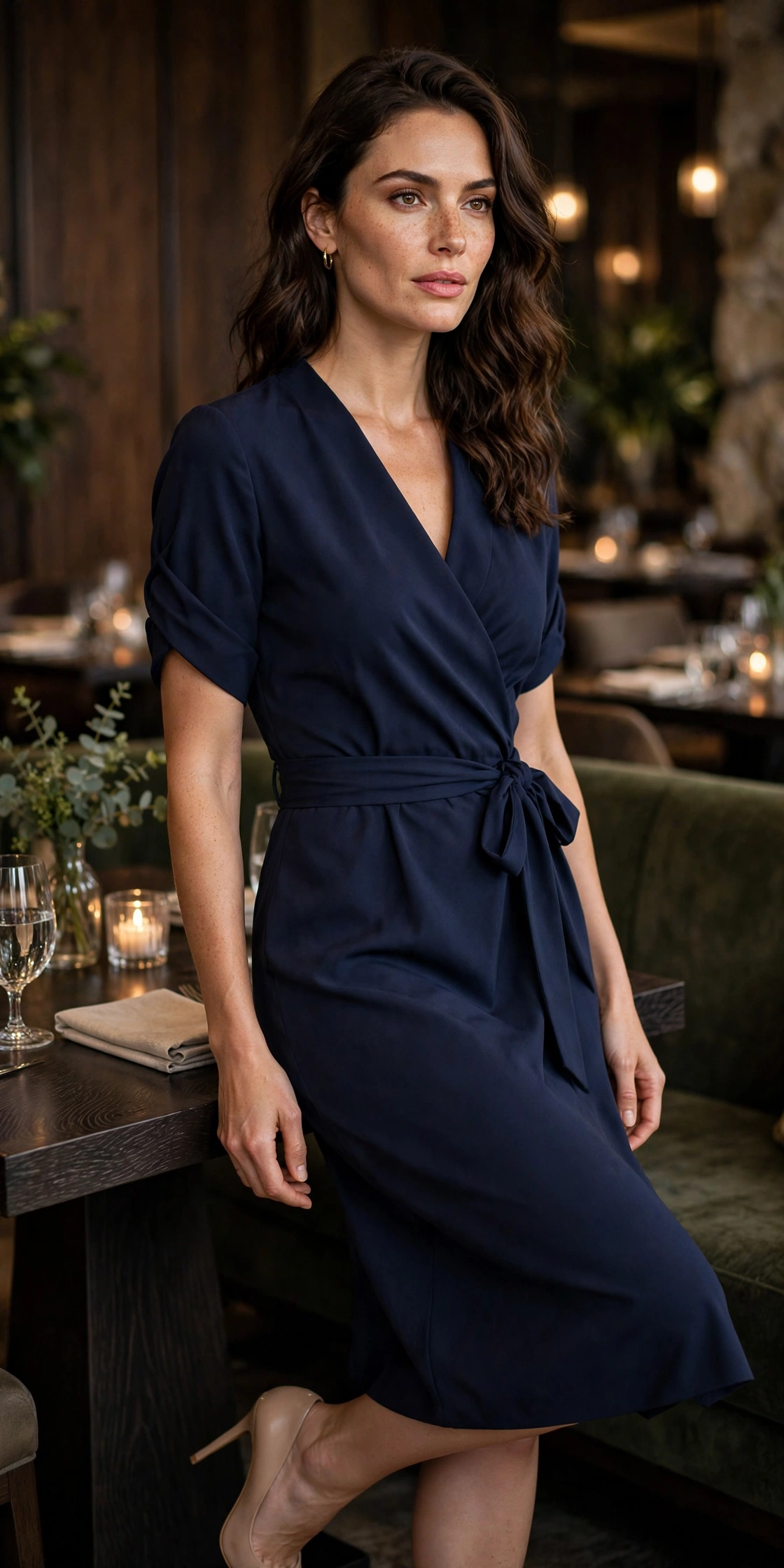
For formal days in cold weather: a camel wool coat over a black turtleneck and tailored black trousers, with pointed boots. The camel-over-black contrast is the outfit — warm neutral against a dark base, with the turtleneck's clean line connecting them into one column. The coat should hit at or below the knee; shorter coats chop the trouser line and the whole thing becomes casual. Look for a single-breasted style with clean lines — double-breasted camel coats are beautiful but they add width.
The turtleneck must be fine-gauge merino, fitted, in true black — a faded or pilling turtleneck under a beautiful coat is like a scuffed shoe with a good suit. The trousers should be tailored wool with a sharp crease; the crease is a vertical line that extends the leg. This works because it's essentially a monochrome base with one luxurious outer layer doing all the talking. The coat is the investment piece; everything under it can be simple.
Pleated Midi Skirt and Structured Blazer
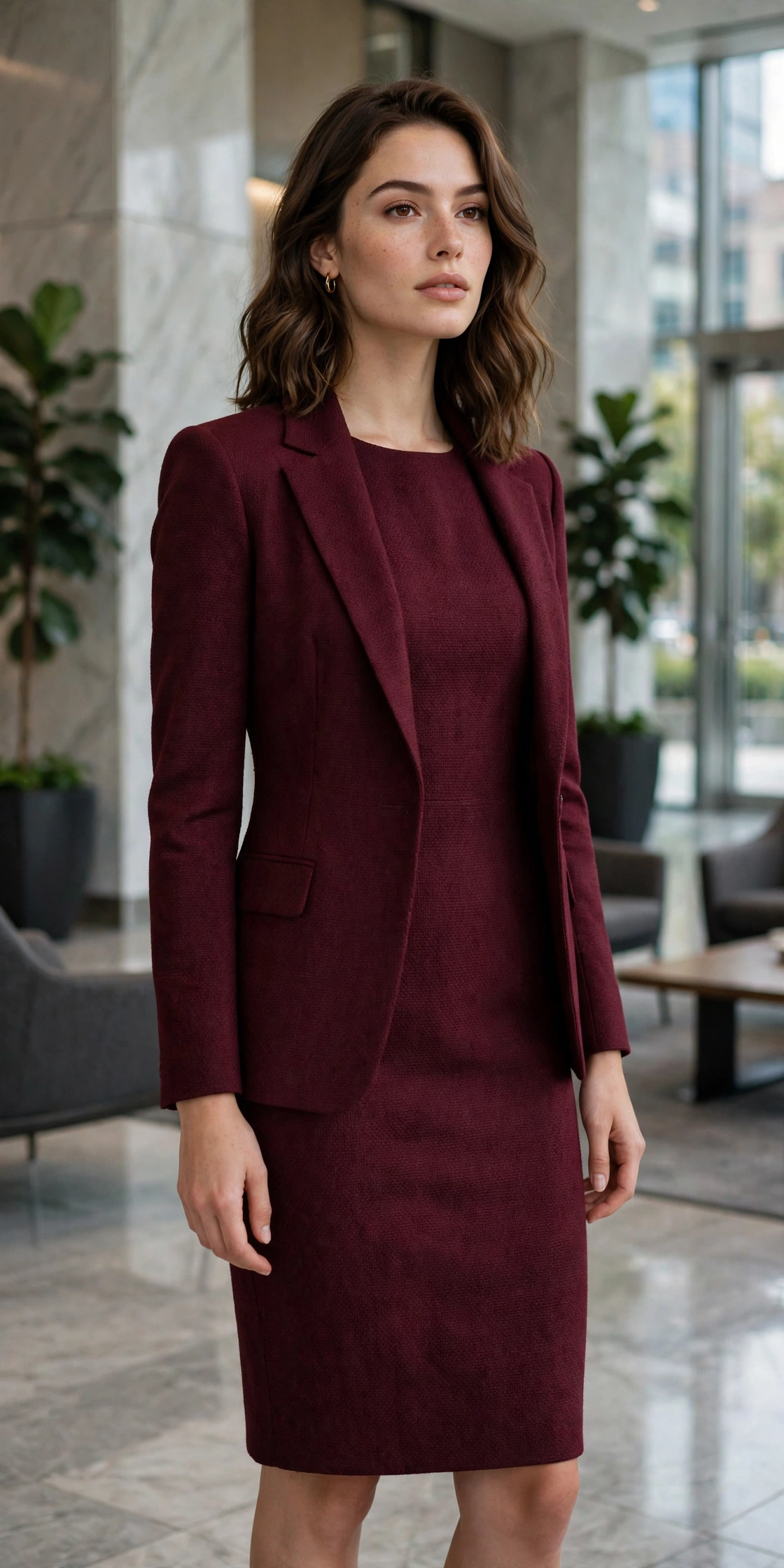
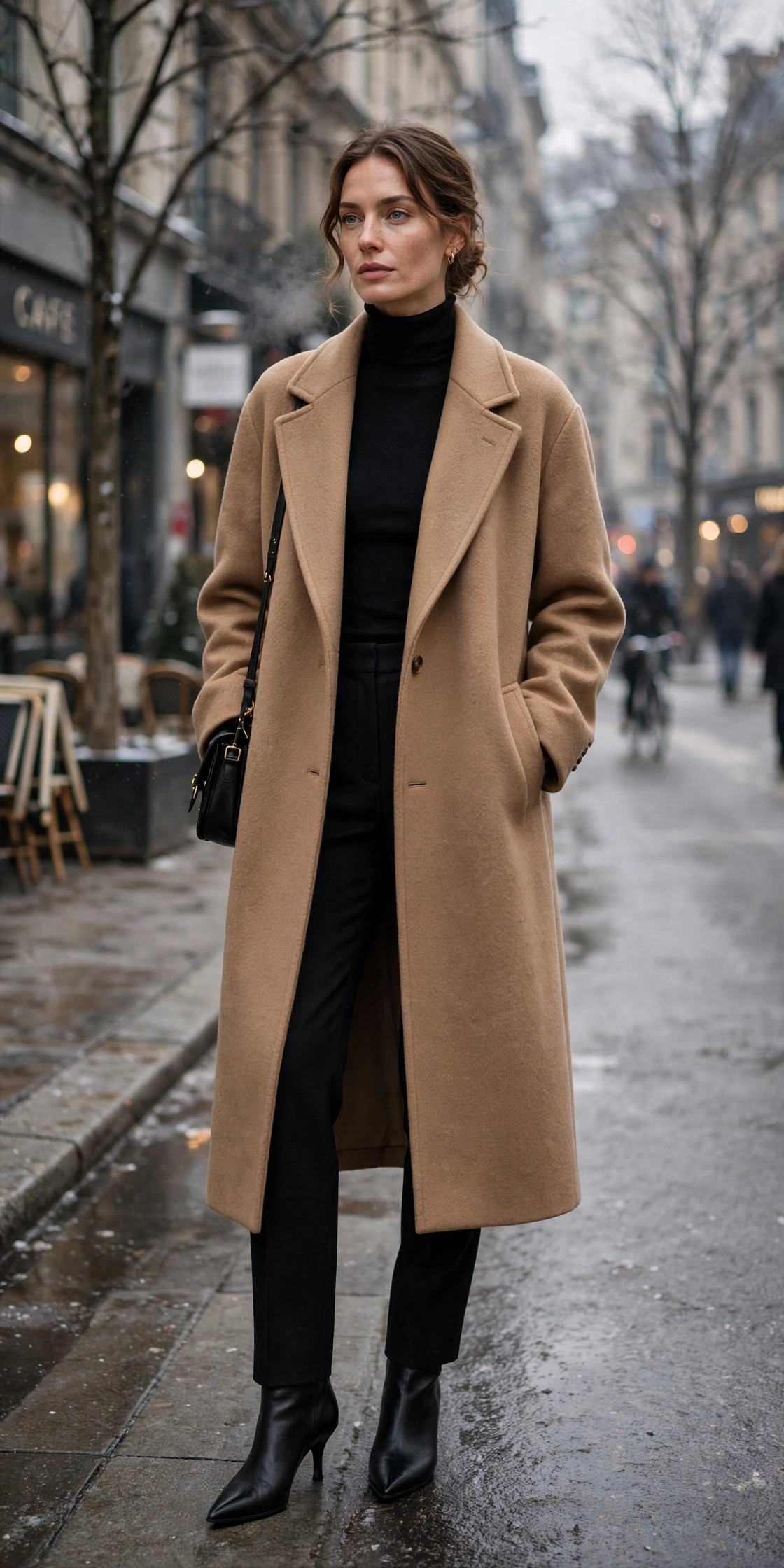
A pleated midi in a dark tone — navy, espresso, forest — with a structured blazer that has a real shoulder and a nipped waist, plus pointed flats. The pleats' vertical folds elongate; the blazer's structure keeps the pleats' softness from reading romantic rather than formal. The blazer should hit at the hip, since longer blazers swallow the skirt's waistline and the whole proportion goes long-and-shapeless. Keep the top underneath simple and dark — a shell or fine knit; the texture contrast between pleats and suiting is interest enough without a third element.
The pleats should be knife pleats in a fabric with memory (polyester blends hold pleats best, wool second); cotton pleats relax by noon. The blazer's buttons matter: tonal, not contrasting — contrast buttons turn the whole thing preppy rather than formal. This is the formula for women who find suits boring but need the same authority.
White Shirt, Black Palazzo Trousers, and Statement Belt
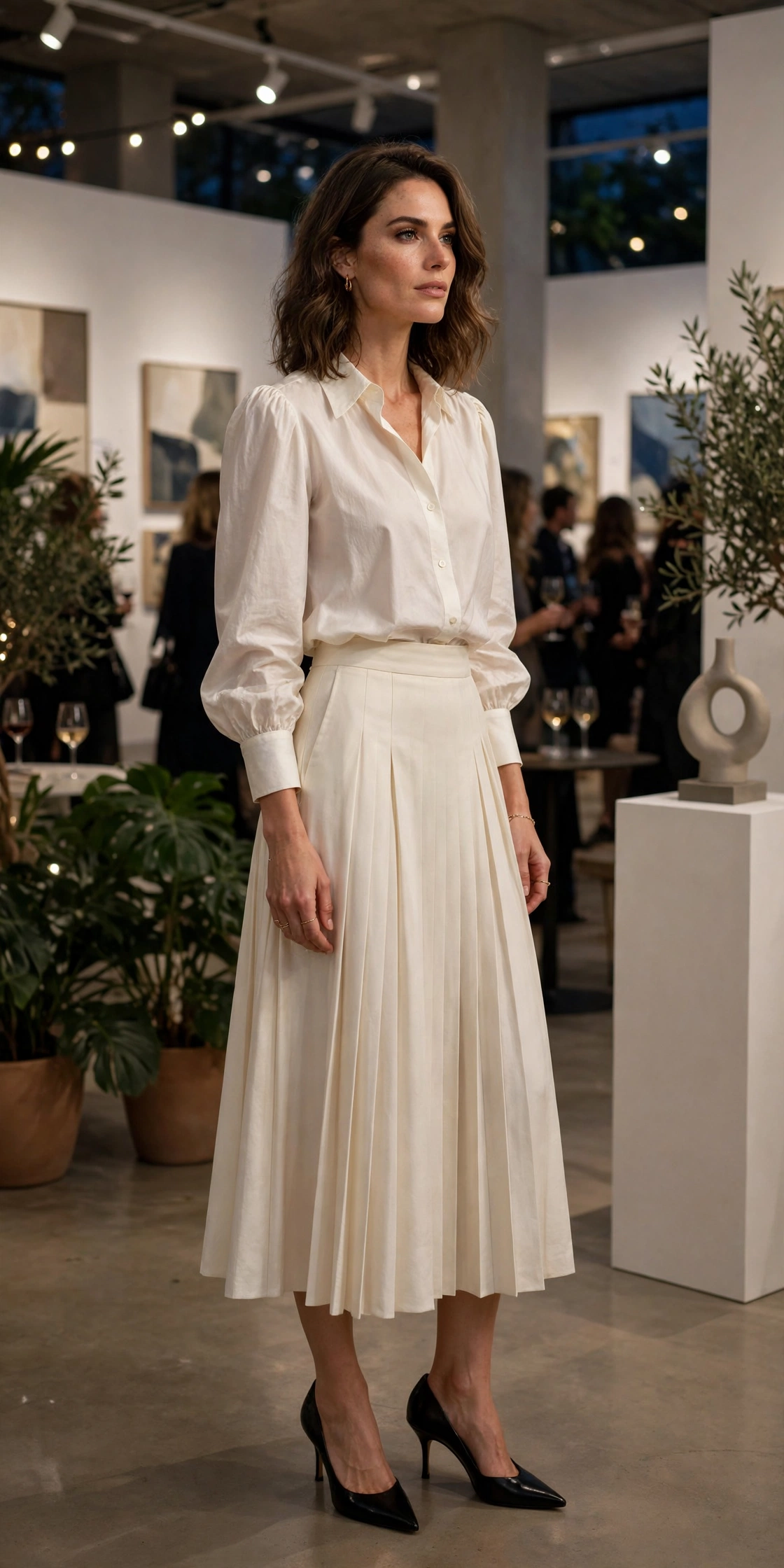
A crisp white poplin shirt, tucked with sleeves to the wrist, black palazzo trousers, and a polished belt with an interesting buckle. The belt is the single focal point — everything else is black-and-white discipline, so the buckle gets the entire stage. It should be genuinely interesting: sculptural, vintage, architectural — not merely shiny. Palazzo trousers need height, even a low heel, or they pool; the wide leg demands the shirt stay fitted, because volume below plus volume above is a tent.
The shirt's poplin should be crisp with some body — limp white shirts look tired by 10 a.m. French cuffs are optional; a clean barrel cuff is fine. This is minimalism performing as formality, and it works in rooms where a full suit would overdress — galleries, creative agencies, fashion-adjacent industries. The discipline of the palette is what makes it formal, not the individual pieces.
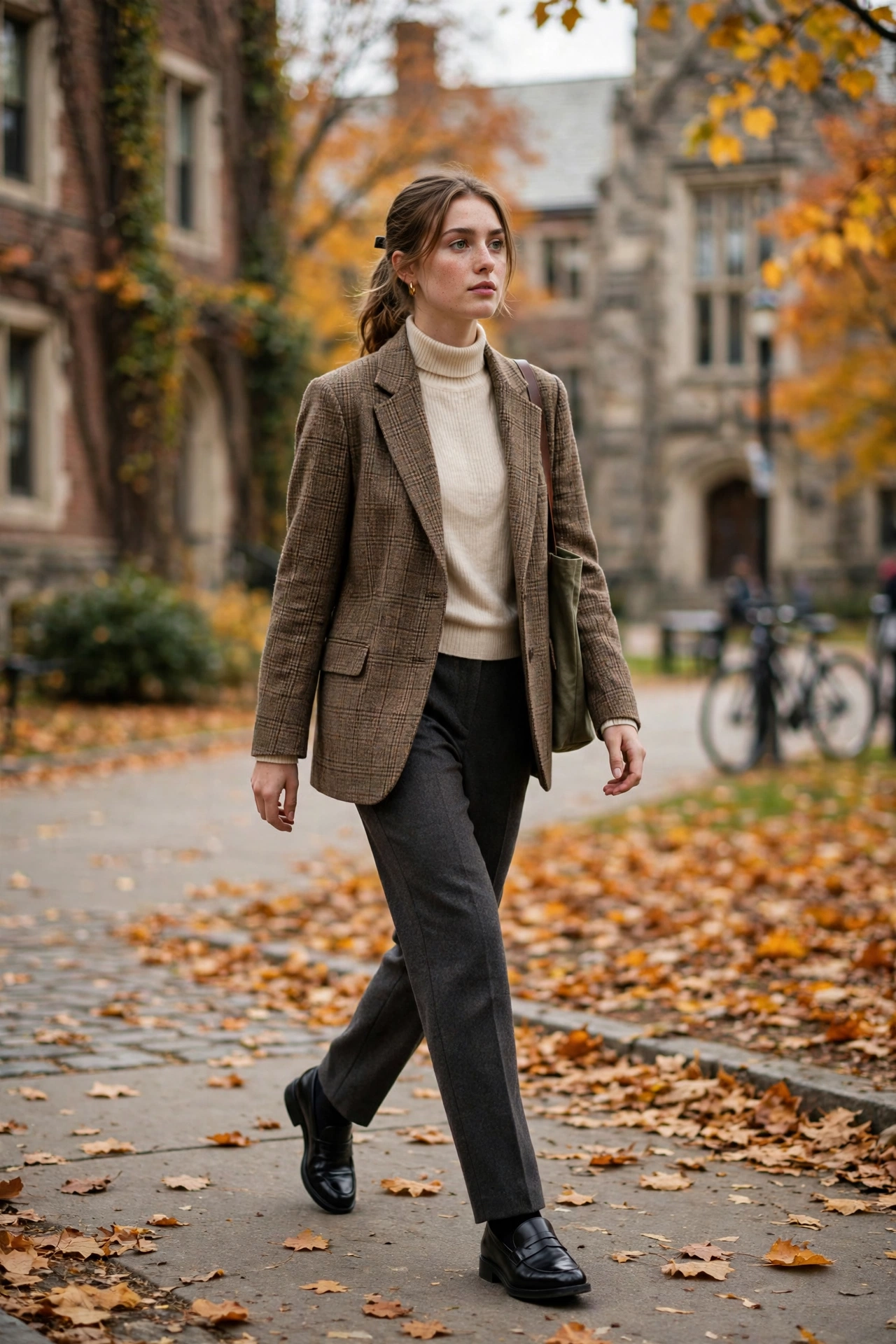
Tweed Blazer and Wool Trousers
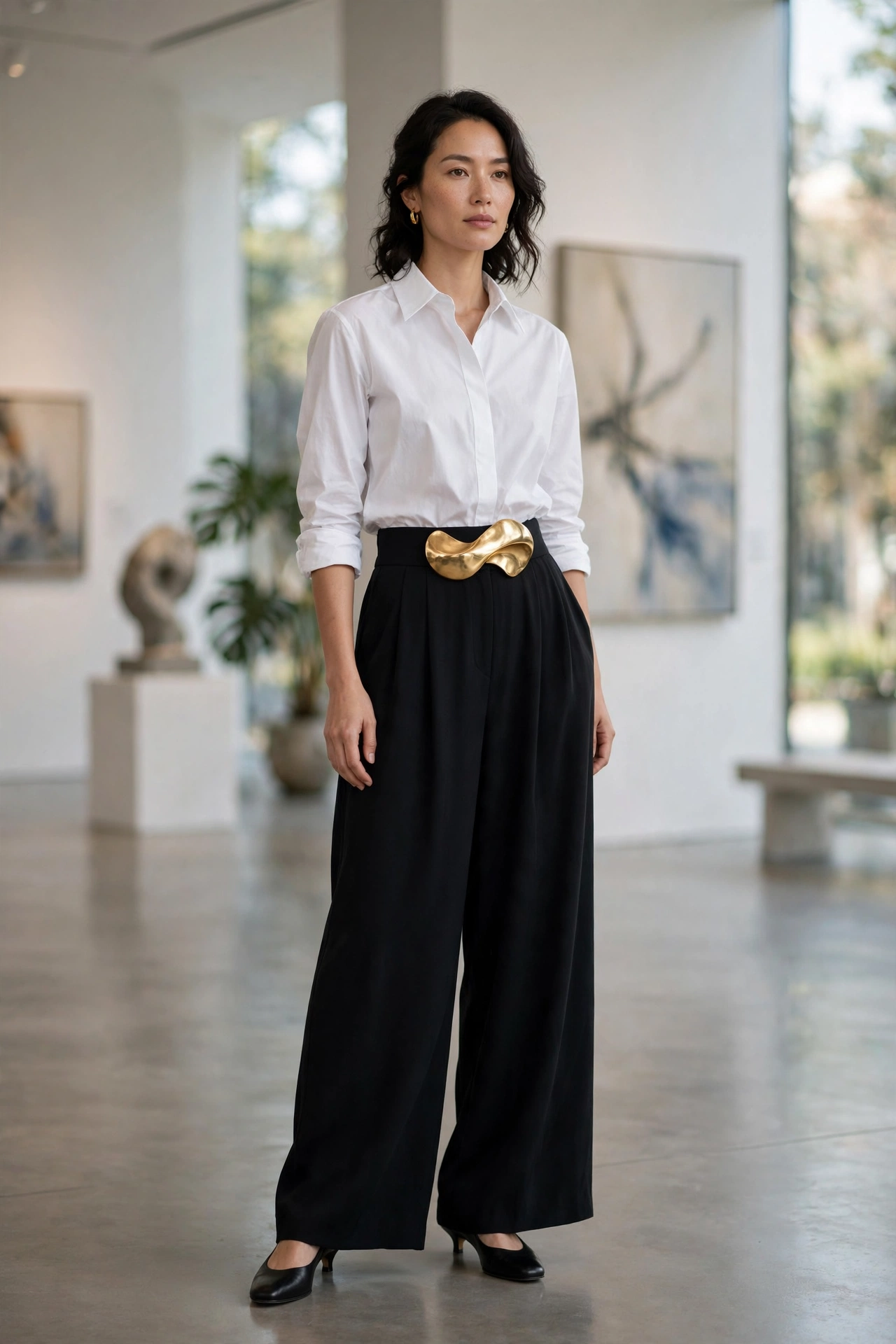
A tweed blazer in a muted check — brown, gray, or olive-based — with charcoal or navy wool trousers and loafers. Tweed's texture is the interest: heritage-formal, the academic version of power dressing. Keep the trousers plain and dark so the tweed dominates; two patterns fight for the same attention and both lose. The blazer's buttons should be tonal — horn or smoked — not contrasting; contrast buttons turn heritage into costume.
The tweed should be real wool with a tight weave, not printed imitation — the texture needs to catch light dimensionally across the check. Trousers in smooth tropical wool contrast the tweed's roughness; that smooth/rough friction is the pairing logic. October through March — perfect for universities, publishing, and anywhere intellect is the currency.
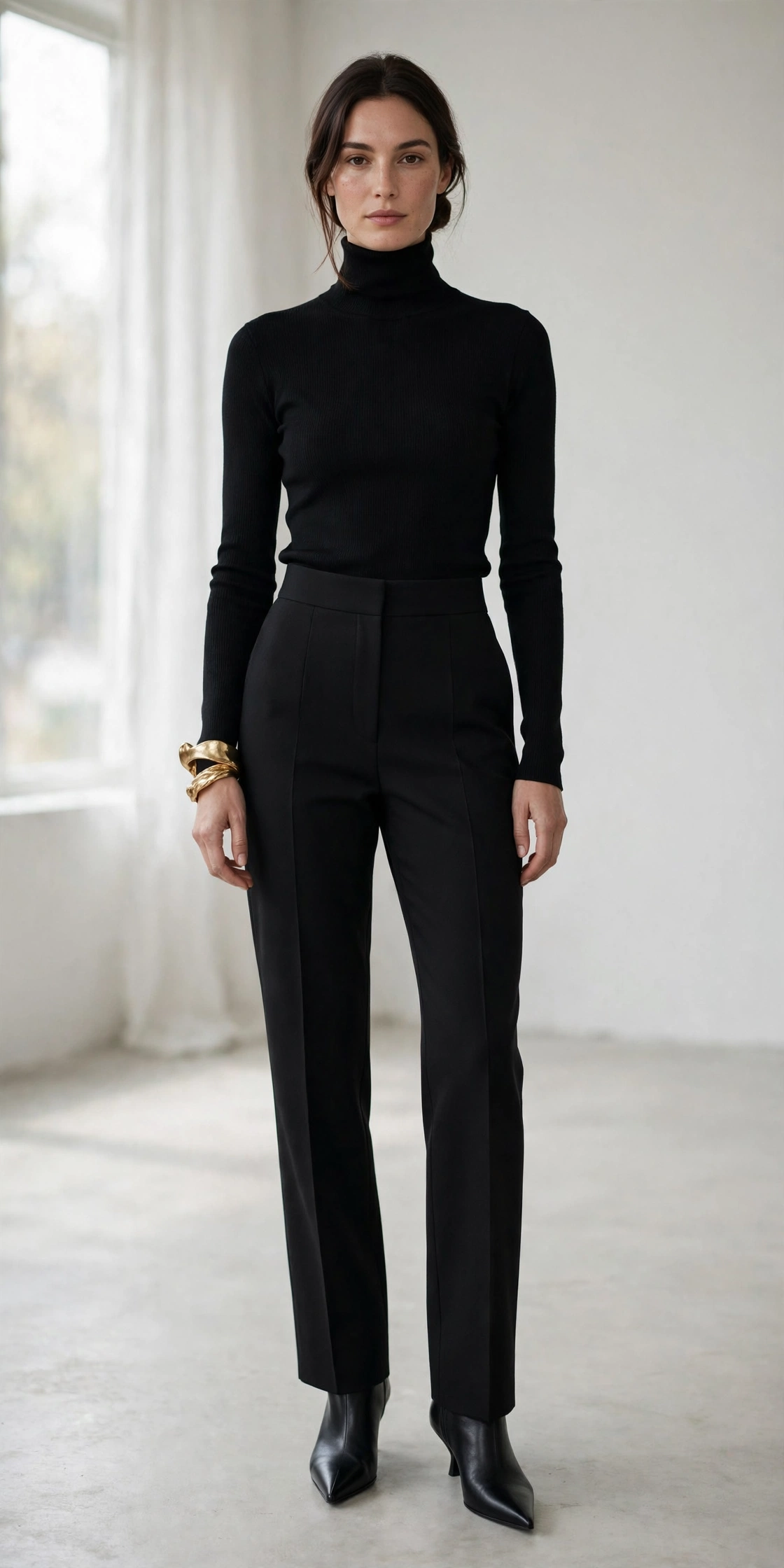
Monochrome Black Column
Black turtleneck or shell, black straight trousers, black pointed boots or pumps: one continuous dark column. Monochrome black elongates more than any single garment trick because the eye never stops moving — there is no horizontal break to stall on. But the textures must vary — knit plus suiting plus leather — or it reads flat, since all-matte black absorbs light and loses all definition. That's the failure mode: three matte blacks becomes a void.
One piece of jewelry with presence — a cuff, a sculptural earring — gives the eye somewhere to land; without it, the column has no focal point and reads as uniform rather than outfit. The trousers should have a crease or a clean front; the top should be fitted. This is the art-world, fashion-industry formal: severe, intentional, and impossible to get wrong once the textures are right.
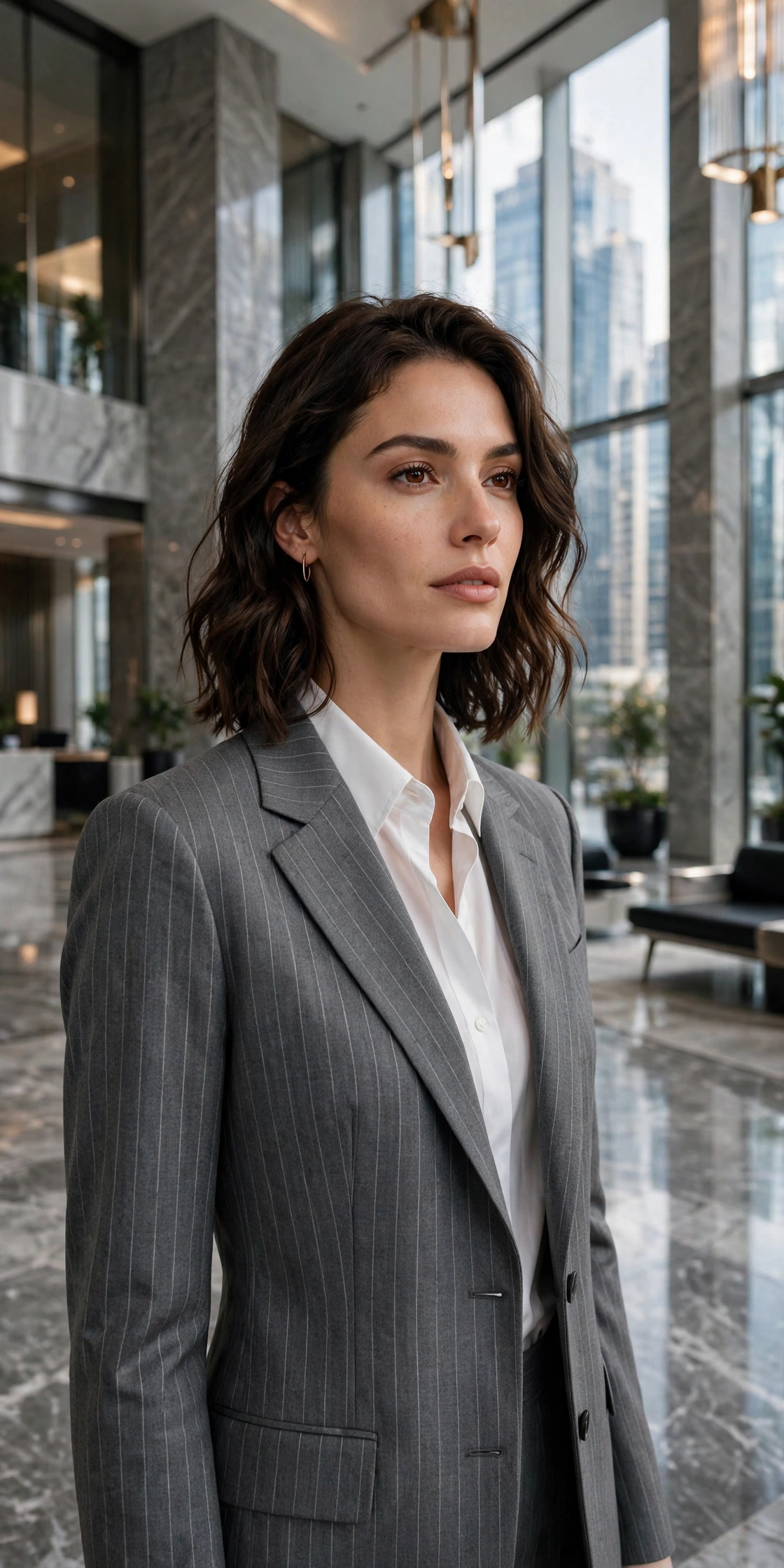
Gray Pinstripe Suit
The quietest power suit: gray pinstripe, single-breasted, with a white shirt and black pointed shoes. Pinstripes are vertical lines — they elongate while they formalize, doing double duty that no solid can match. The stripe should whisper, not shout: a hairline stripe reads refined where a chalk stripe reads aggressive, almost theatrical. Keep everything else plain; the suit carries enough pattern for the whole outfit.
The shirt must be crisp white poplin or twill — the contrast with gray pinstripe is the classic pairing for a reason. The suit's construction matters more here than in solids because the stripe reveals every flaw: check that stripes match at the seams and the lapel, which is the mark of real tailoring. The formula for days when you want authority without drawing a crowd — the suit speaks, you don't have to.
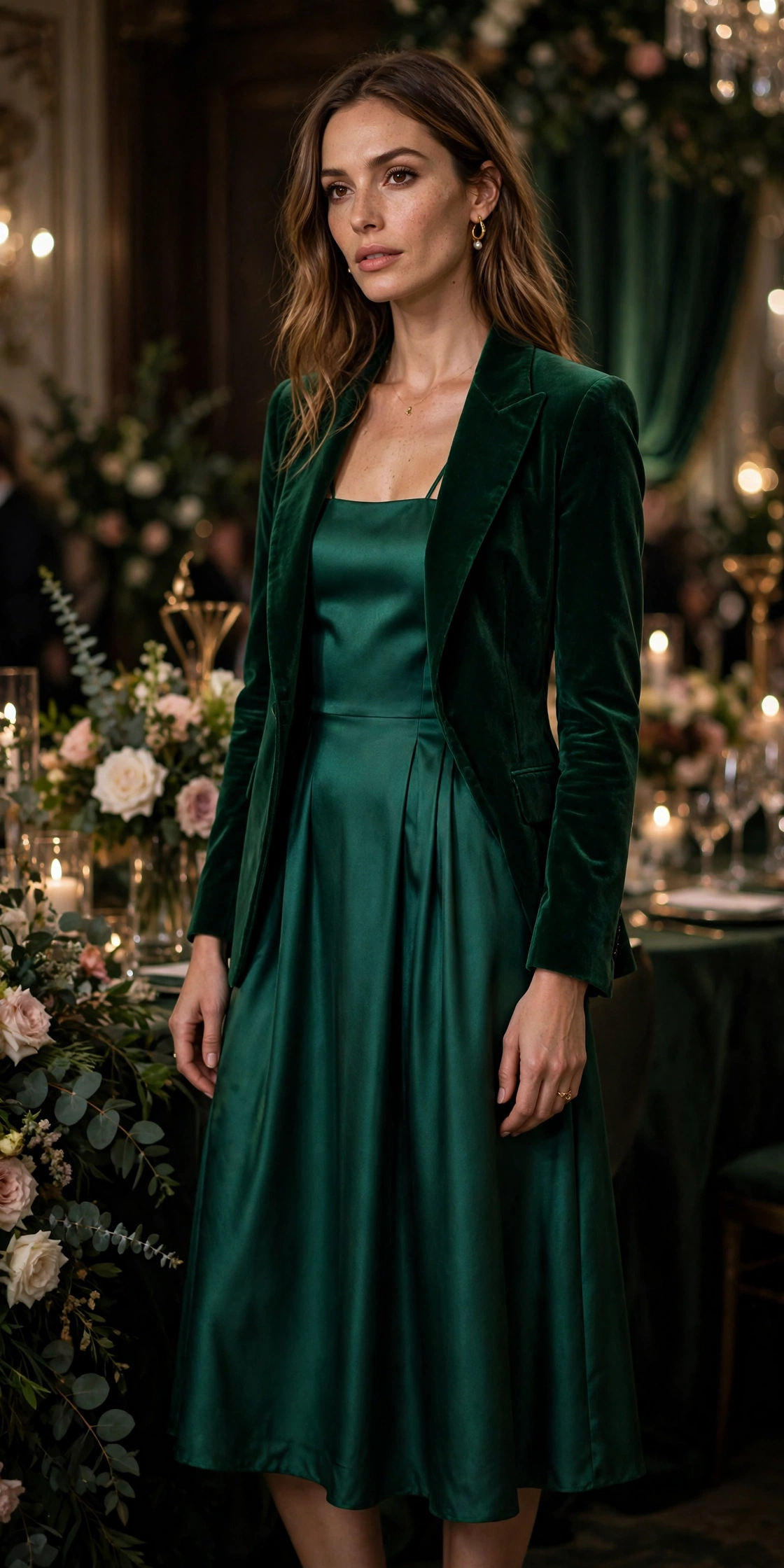
Satin Midi Skirt, Cashmere Sweater, and Blazer
A satin midi skirt in a deep tone — espresso, forest, midnight — with a fine cashmere sweater in a lighter neutral and a structured blazer over it. The satin's sheen against cashmere's matte is the texture play; the blazer's structure keeps the softness formal rather than louche. The sweater must be fine-gauge and fitted — chunky knits with satin read as pajamas, which is the fastest way to ruin this. The blazer should be dark and clean-lined, hitting at the hip.
The skirt's bias cut matters: it should skim and move, not cling statically. Formal with warmth, well suited to creative workplaces, holiday parties, and winter events where a full suit would feel cold — literally and figuratively. The deep tone keeps the satin from reading bridal; the blazer keeps the softness from reading casual. Three textures, one disciplined palette.
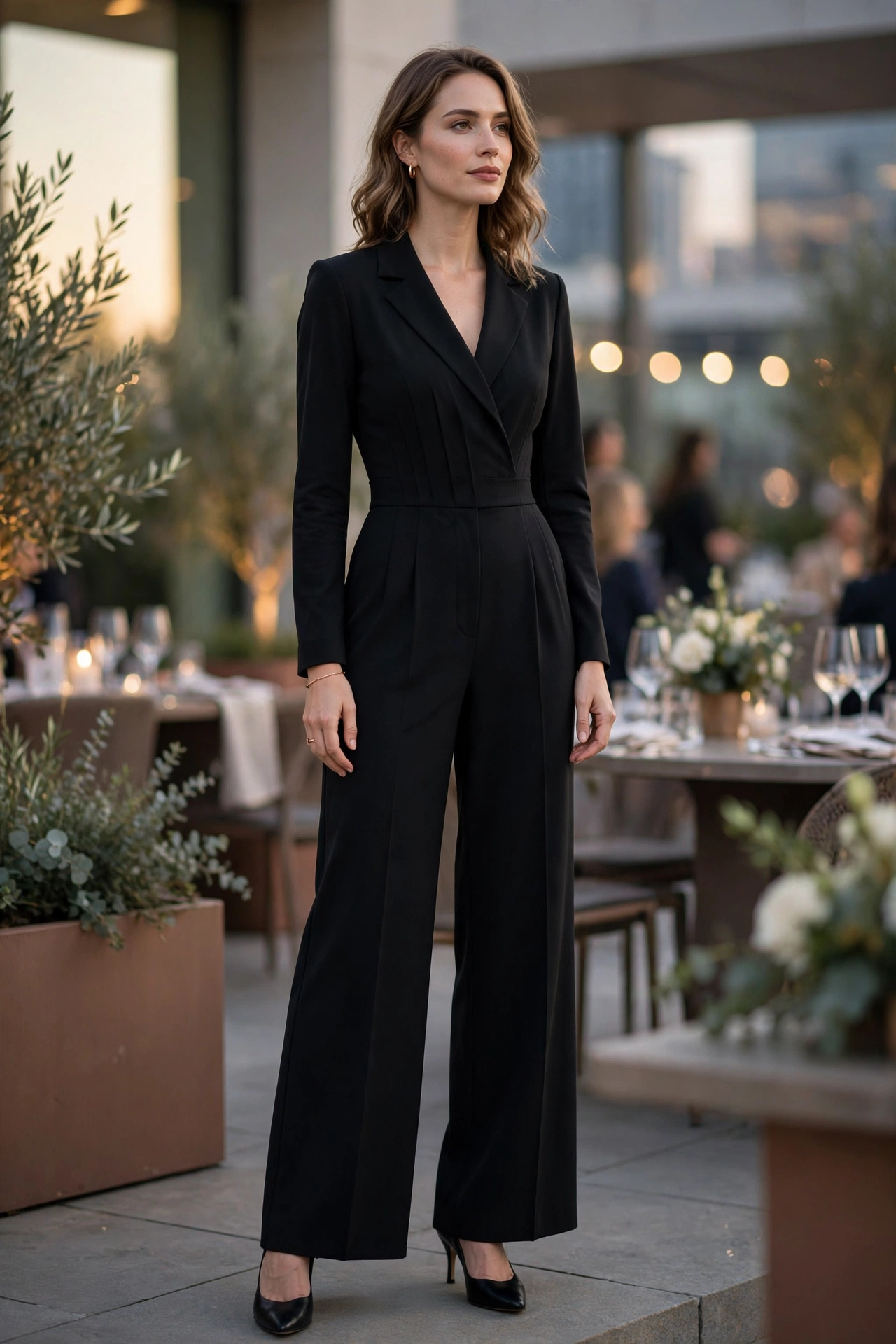
Tailored Wide-Leg Jumpsuit and Heels
A wide-leg jumpsuit in a suiting fabric with a defined waist — belted or seamed, never elastic-gathered — and heeled sandals or pumps. The jumpsuit is one-and-done formality, but the waist definition is non-negotiable: an undefined jumpsuit reads as a boiler suit, and no shoe fixes that. The wide leg needs the heel for the same reason palazzo trousers do — without height, the fabric pools and the line dies.
Choose dark, solid colors; prints turn a jumpsuit casual instantly. The fabric should be a suiting-weight crepe or tropical wool with structure — jersey jumpsuits are the casual version of this formula. Add a blazer over it for the most formal rooms; the blazer's lapels add the tailored signal the jumpsuit's simplicity lacks. Check the torso length in the fitting room — jumpsuits are cut for an average torso, and a too-short rise is unwearable. The modern power move for women who find dresses impractical.
A-Line Formal Dress and Low Heels
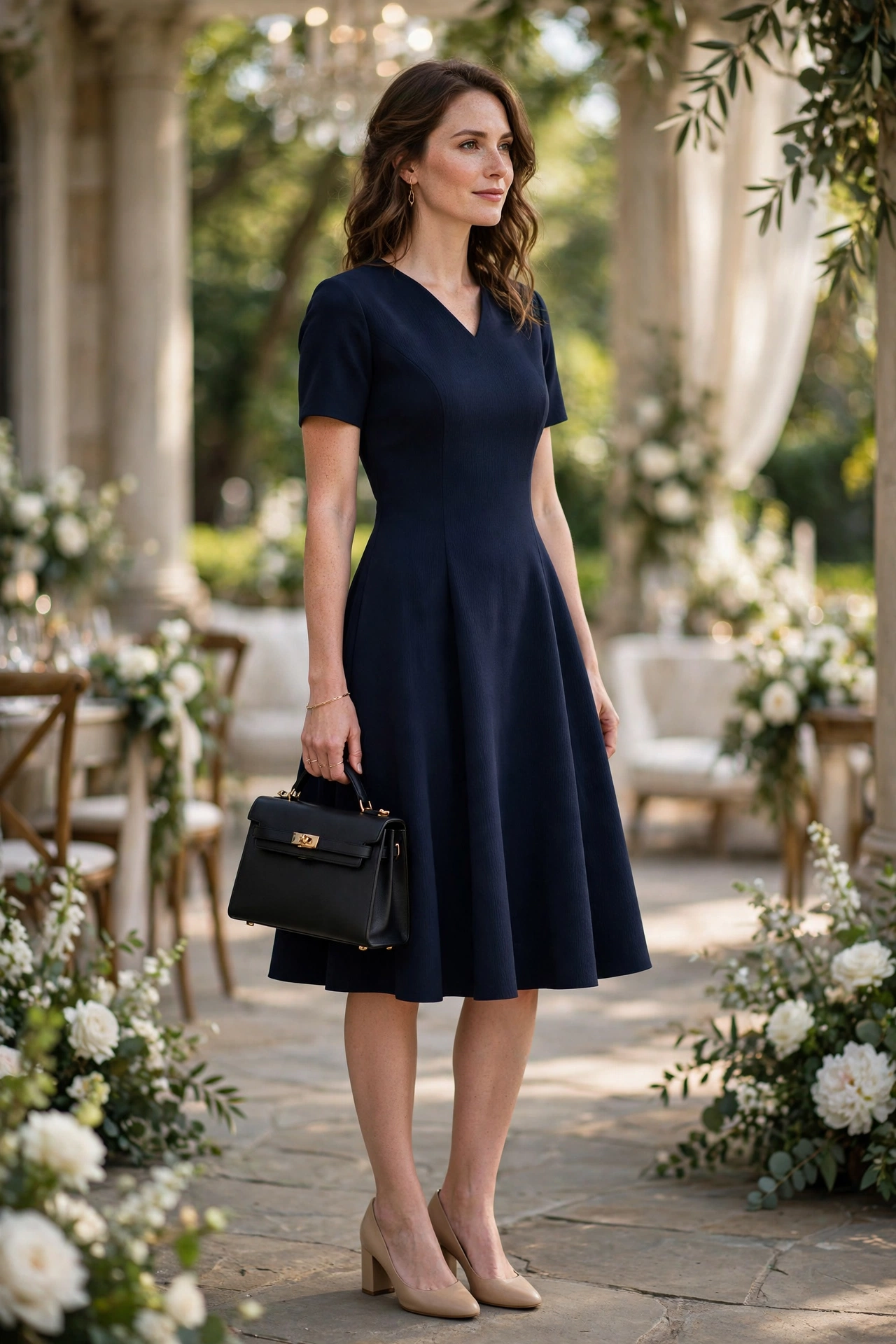
A knee-length A-line dress in crepe with low block heels and a structured clutch. The A-line's flare gives movement while the crepe holds the shape — formal without stiffness, which is why this is the event formula rather than the office one. The dressier fabric and the clutch signal occasion; the same dress with a tote would read daytime. Keep the neckline modest — boat, scoop, or V, nothing plunging — and the hem at the knee; the A-line does the work, so everything else stays restrained.
The crepe should have weight and a slight texture; thin crepe collapses and the A-line loses its architecture. Low block heels keep it walkable through long events — stilettos at a four-hour event become the story instead of the outfit. The clutch should be structured and small; oversized bags fight the dress's clean line. Weddings (as a guest), galas, formal dinners — the occasions where polish matters more than edge.
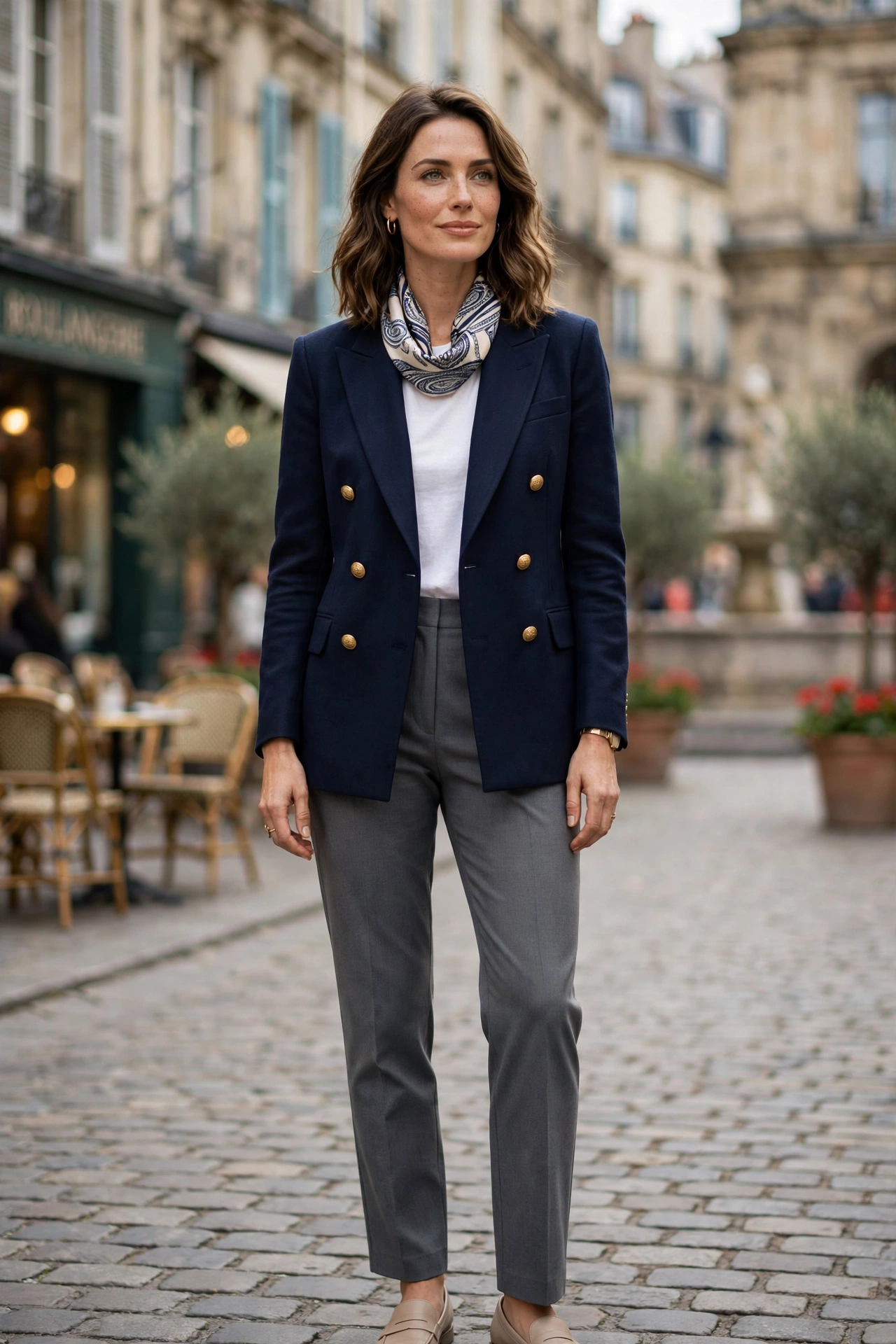
Double-Breasted Blazer, Straight Trousers, and Silk Scarf
A double-breasted blazer — the overlapping front is inherently more formal than single-breasted, with its built-in symmetry and structure — with straight-leg trousers and a silk scarf at the neck instead of a blouse. The scarf is the softening agent; it keeps the double-breasted's severity from reading rigid. Tie it simply — a single loop or loose knot — since elaborate knots fight the blazer's clean lines.
Navy blazer, gray trousers, patterned scarf in the same palette: classic and finished. The scarf's pattern is the single permitted print — keep it in the navy-gray-ivory family so it harmonizes. The blazer must button without pulling; double-breasted fronts show strain immediately. The most European formula on the list.
The formal fabric guide: what to buy, what to skip
Fabric is the difference between formal and almost-formal, and it's where most wardrobes fail silently. Buy: ponte (the workhorse — holds shape, resists wrinkles, skims), crepe (fluid but structured, the event fabric), tropical wool and wool blends (breathable suiting that holds a crease), silk and silk blends for blouses (the sheen reads as luxury), and fine-gauge merino or cashmere for knits. These fabrics hold their architecture against the body instead of surrendering to it.
Skip: thin jersey (collapses, clings, photographs badly), cheap polyester sold as "satin" (wrong kind of shine, static-prone), anything unlined that should be lined, and stretch fabrics with no recovery (they bag by afternoon). The scrunch test works here too: squeeze, release, count to three — formal fabrics recover, informal ones don't.
Lining deserves its own note: a lined garment behaves like a better version of itself. Lining creates the air gap that prevents cling, adds the weight that improves drape, and hides construction. When choosing between two similar pieces, the lined one is almost always the more formal one. And check the lining's quality — a good lining is smooth (Bemberg or similar), not the scratchy polyester that makes you regret the purchase by noon.
Tailoring tweaks worth paying for (and what to skip)
Off-the-rack is a starting point, not a finished product — and a few cheap alterations transform formal dressing more than any new purchase. Worth it: hemming trousers to the right break ($15-25, the single highest-impact alteration), taking in a blazer waist ($30-50, creates the nipped silhouette that reads as custom), shortening sleeves to show a half-inch of shirt cuff ($20-30), and tapering a wide trouser leg slightly ($25-35). These four cover ninety percent of fit problems.
Also worth it: adding a waist stay or interior button to a wrap dress ($15), and bra-strap holders on shells and camisoles ($10) — the tiny fixes that prevent public malfunctions. Skip: shoulder alterations on blazers (rebuilding a shoulder costs nearly as much as the blazer and rarely looks right), major size-downs (more than one size distorts proportions), and hemming complex original hems (hand-rolled silk, lettuce edges) unless the tailor specializes in it.
Build the alteration cost into the purchase decision: a $80 blazer plus $40 in tailoring will look better than a $200 blazer that almost fits. And find your tailor before you need one — the good ones book out, and rushing alterations before an event is how mistakes happen.
Frequently Asked Questions
Suit vs. separates — which is more formal?
A matching suit is more formal, always — the match signals intention. But well-chosen separates in the same formality register get you ninety percent of the way there, with more flexibility: one blazer with three bottoms covers a week. If you're buying one thing, buy the suit; if you own separates, keep fabrics and tones aligned.
What heel height is actually appropriate for formal settings?
The two to three inch range: polished without impracticality. Kitten heels are the most underrated formal shoe — elegant and walkable for full days. Above three and a half inches, the shoe becomes the outfit's focal point, which breaks the restraint rule. Pointed toes read more formal than round at any height. And comfort is a style variable, not a compromise: a confident walk in loafers beats a wobble in stilettos every time, because posture is visible and pain is legible.
How do I look formal without wearing a blazer?
Put structure elsewhere: a sheath dress, a tailored jumpsuit, a crisp shirt with palazzo trousers, or a fine knit with a pencil skirt. The blazer is just the most obvious structure-delivery device. What matters is clean lines, a defined shoulder or waist, and fabrics with weight. A structured tote and pointed shoes add formality without a single lapel. The eye reads "formal" from architecture, not from any one garment.
Are there real color rules for formal dressing, or is it just tradition?
The discipline is real: navy, charcoal, black, ivory, and camel recede and let the cut lead. One deep saturated color — burgundy, forest, oxblood — per outfit is fine; brights pull focus and read less formal. The rule isn't "never wear color." It's "color is the accent, never the argument." And the discipline extends to metals: one metal family per outfit (all gold or all silver), because mixed metals are a second focal point.
How do I make one suit work for five days?
Vary the interior and the shoe: different blouses or shells (silk, cotton, fine knit), different shoes (pumps, loafers, boots), and rotate one accessory (a scarf one day, a belt another). Wear it as separates on two days and the full suit on three — the blazer with different trousers, the trousers with a different top. Nobody registers the suit itself; everybody registers the styling around it. That's the whole secret of a working wardrobe.
How do I keep formal clothes looking formal all day?
Wrinkle management starts at purchase: ponte, tropical wool, and crepe resist creasing; linen and thin cotton don't. Sit properly — perching on chair edges crushes backs and seats. Keep a travel steamer or wrinkle-release spray where you dress, and do a midday check: re-tuck, smooth the blazer. The difference between morning-formal and evening-tired is usually maintenance, not quality.
What should I wear to a formal event when I don't know the dress code?
Aim for the middle of the formality range: a sheath or A-line dress in a dark neutral, or dark separates with a blazer. It's easier to look slightly overdressed (which reads as respect) than underdressed (which reads as disregard). Bring the layer that adjusts you up or down — a blazer over a dress formalizes it, removing it relaxes it. And when truly uncertain, ask the host; nobody has ever been judged for asking.
Can petite women wear wide-leg trousers and long coats formally?
Yes, with proportion management. Hem trousers to just kiss the shoe — pooling fabric erases petite frames. Choose a higher rise to maximize the leg line, and keep the top fitted and tucked. For long coats, the hem should hit at or just below the knee, and the coat should be single-breasted — double-breasted adds width petite frames can't spare. Tailoring isn't optional here; it's the whole game.
How do I transition a formal outfit from day to evening?
Change three things: the shoe (flats to heel), the bag (tote to clutch), and one detail (statement earring, or a belt). The base outfit stays the same — that's the point of a formal foundation. Keep an evening kit at the office or in the car: heels, clutch, jewelry. Fifteen minutes and three swaps turn a workday into a night out.