The Complete Winter Workwear Guide for Women
How to use this guide
These are editorial styling suggestions, not a one-size-fits-all formula. Adapt each look to your wardrobe, proportions, climate, comfort, budget, and the occasion; the most useful idea is the one you can genuinely wear.
Picture your Tuesday morning in January. The platform is close to freezing, the train carriage is overheated, and by the time you sit down at your desk the air conditioning is set for someone else entirely. Three climates before lunch, one outfit. That is the real test of winter workwear, and it is the test most outfits fail. They keep you warm outside and leave you sweating at your desk, or they look sharp in a meeting and leave you shivering on the platform.
The good news is that the fix rarely means buying anything new. Your closet already holds the raw material: wool trousers, a decent blazer, knit dresses, dark denim, boots that have survived at least one season. What changes everything is the logic underneath the outfits, how layers should stack for offices, why certain textures and colors read as professional in winter light, and how to balance proportions so warmth never costs you your silhouette. Learn the principles once, and your mornings start solving themselves.
Layer Like an Office, Not a Hike
Office layering follows different rules than outdoor layering. Outside, you stack for insulation against wind and rain, and your base layer never needs to look like anything. In an office, the opposite is true: the heating is usually set high, which means you will spend most of the day stripped down to your base layer. So your base layer has to be presentation worthy on its own, and everything above it has to be easy to remove without ruining what stays.
The formula that works: a thin, smooth base; a textured or structured middle; and a commute proof outer that comes off at your desk. The base should sit close to the skin, a thin merino wool turtleneck, a silk camisole, a heat retaining knit tee. Thin matters here for a mechanical reason: bulky bases ruin the drape of everything layered over them.
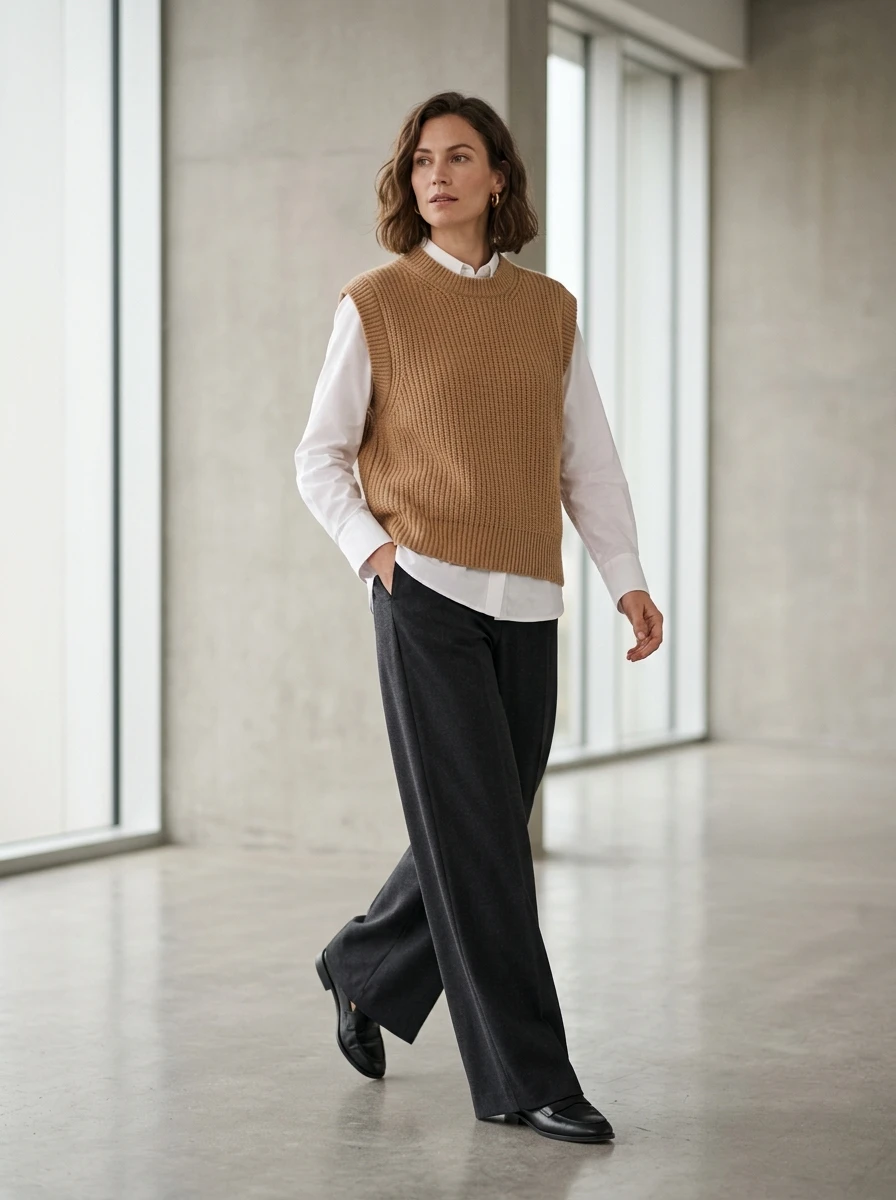
Wear it with: a fitted turtleneck slid under a sleeveless shift dress or a wool vest keeps your arms covered without creating bunched fabric at the armholes, which is where sloppy layering almost always reveals itself.
The middle layer is the visible part of your outfit, the sweater, the blazer, the vest. This is where warmth and style overlap, and it is the layer worth investing in because it is the one your colleagues actually see. The outer layer, by contrast, is commute armor: a wrap coat, a trench, a wool blend coat. Its only job is to handle wind and slush, and it should come off the moment you arrive.
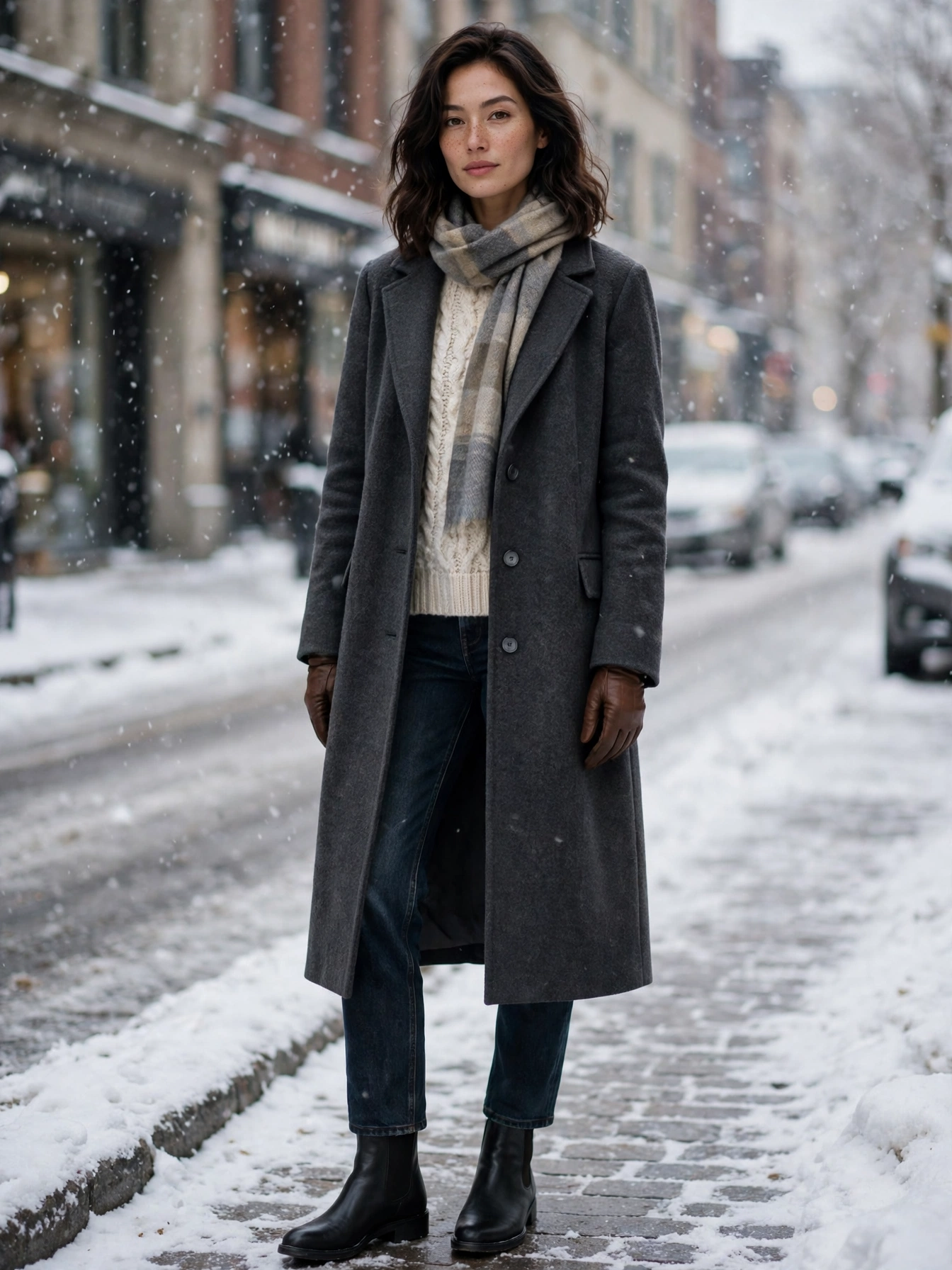
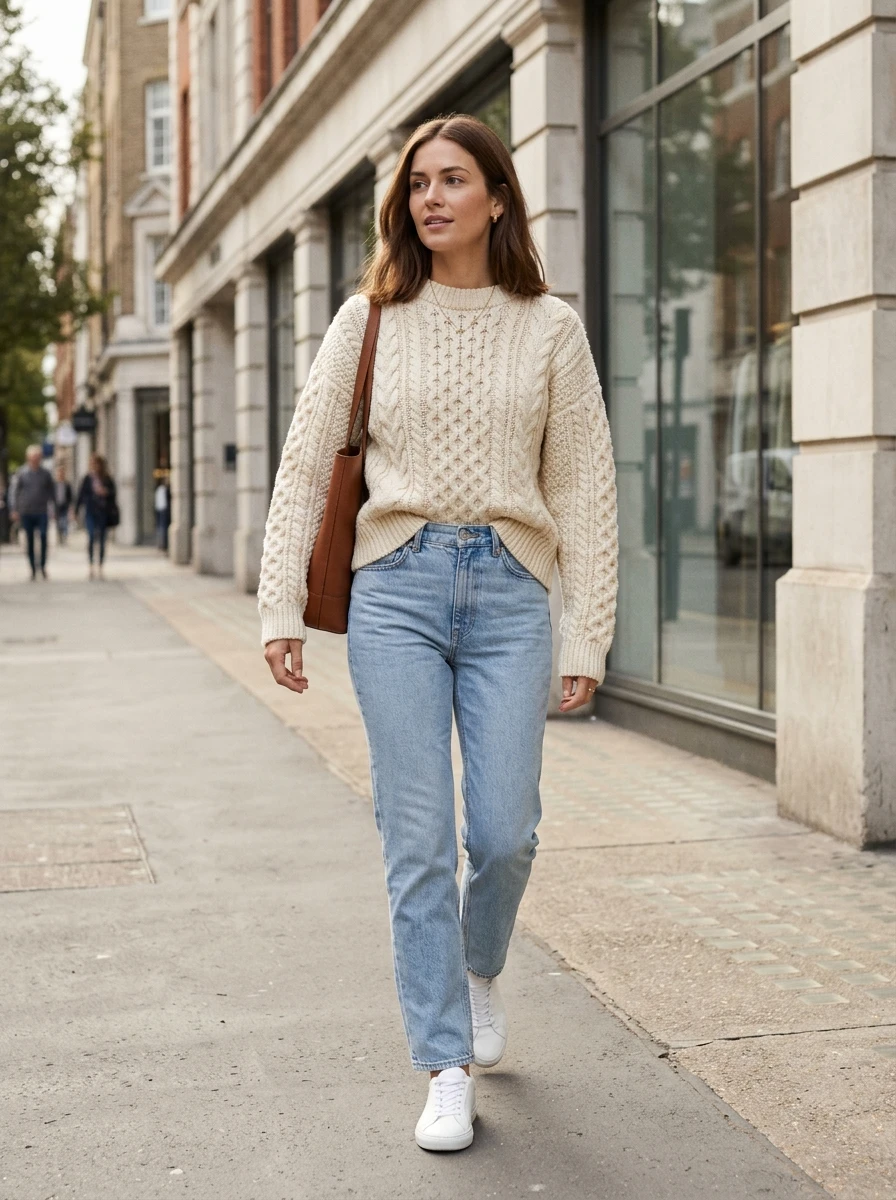
Fit note: a structured trench over tailored trousers and a simple sweater handles the commute beautifully. When the temperature genuinely drops, swap the trench for a wool blend coat rather than piling a scarf and an extra sweater under a coat that is too light, piling is what creates that bundled, shapeless look.

One more principle: never let your layers fight each other. Two chunky pieces stacked together, a heavy cable knit under a thick coat, create bulk at the shoulders and arms that no tailoring can hide. Pair heavy with light: chunky knit over a silk camisole, a heavy wool blazer over a thin turtleneck bodysuit. The contrast in weight is what keeps the silhouette clean.
Let Texture Do the Styling
Here is why winter dressing looks effortlessly rich when it works: cold weather fabrics are naturally varied, and contrast between them does the styling work for you. A smooth fabric against a nubby one reads as intentional detail from across the room. It is the fastest way to make a simple outfit look designed rather than assembled.
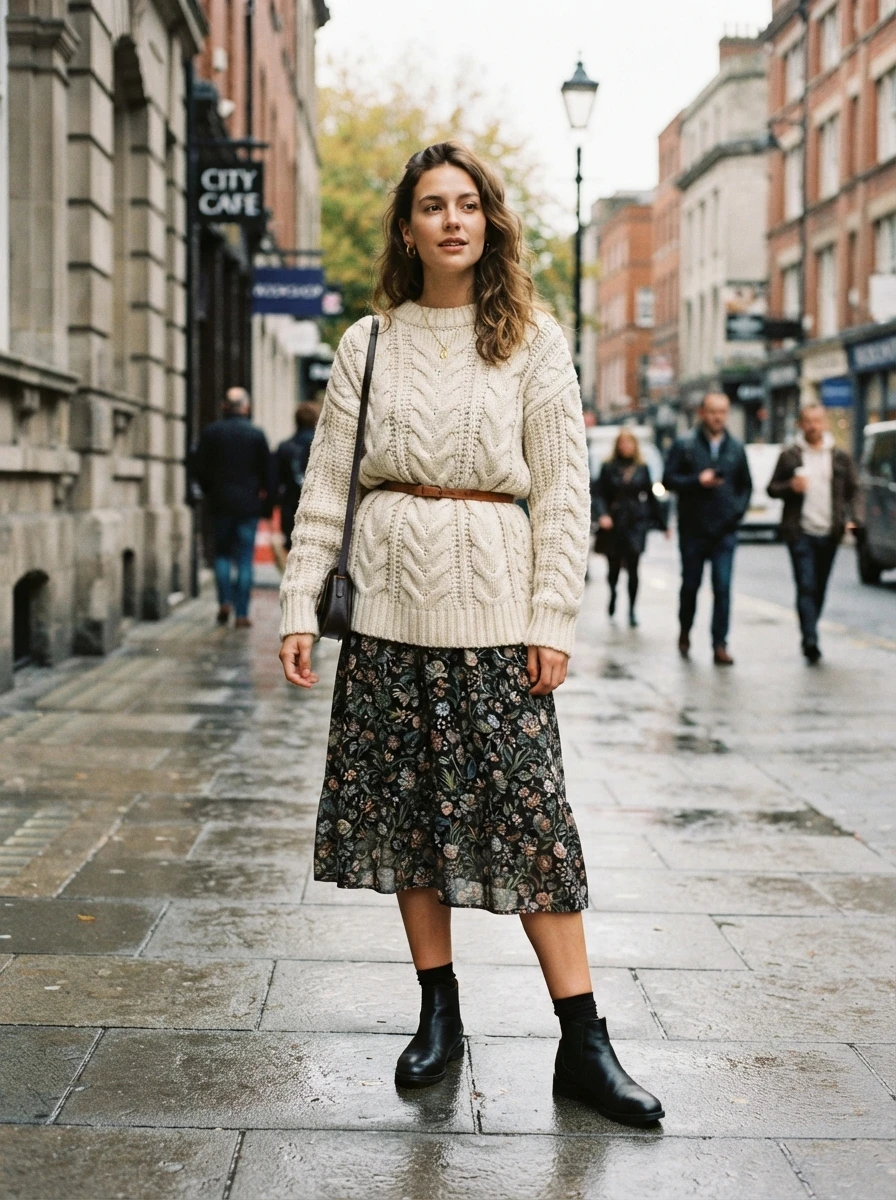
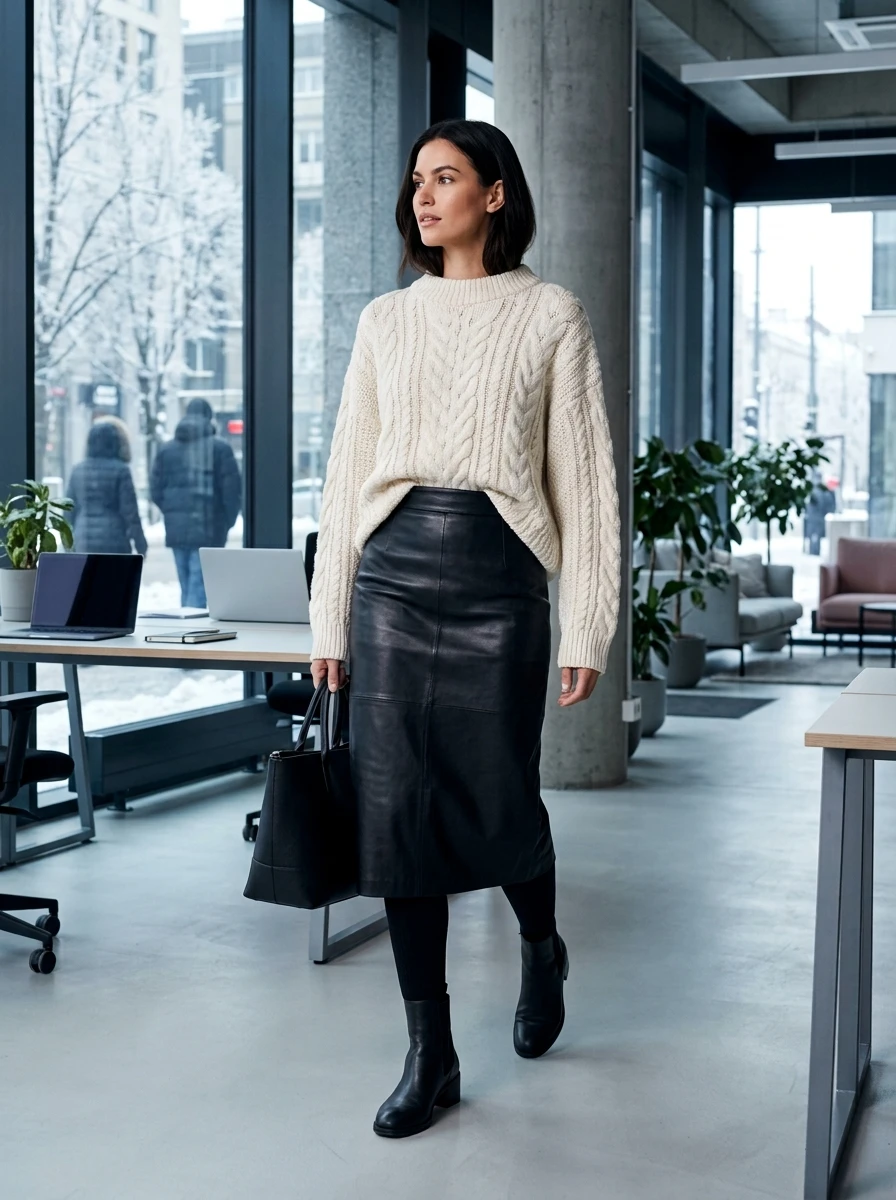
Wear it with: a black leather midi skirt with a chunky cream cable knit tucked in at the waist. The logic is balance, the skirt is sleek and structured, the knit is soft and voluminous, and the tuck defines the waist so neither piece overwhelms the other. The leather brings an edge that keeps the cozy knit from reading as weekend wear, while the knit softens the leather so it does not read as evening.
On genuinely cold mornings, opaque thermal tights under the skirt keep the outfit functional without changing how it looks.
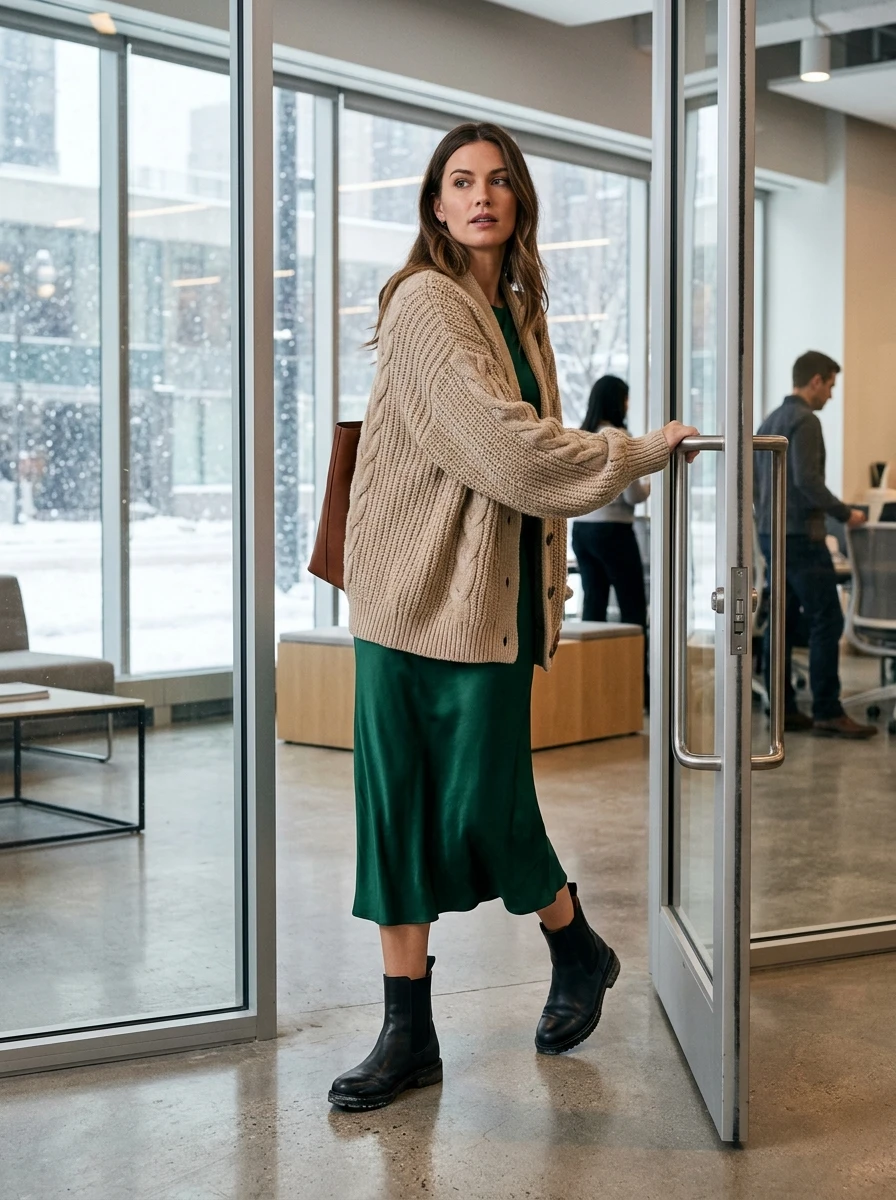
The same principle applies to mixing weights: an oversized cardigan layered over a silk midi dress. The silk is delicate and fluid; the heavy knit is matte and substantial. Together they create depth that a single fabric cannot, and the contrast lets the cardigan act as both warmth layer and styling piece. This is also why tweed works so well over dark denim, the nubby, heritage texture of the jacket elevates the smooth, casual denim without any extra effort.
Fabric note: a black tweed jacket with dark wash black jeans and a simple black turtleneck bridges smart casual and refined, and it suits Fridays or client lunches where you want polish without stiffness.
If you remember one rule from this section: when an outfit feels flat, do not add a pattern, add a contrasting texture. A velvet blazer over a silk camisole, corduroy against a ribbed knit, cashmere next to leather. Pattern shouts; texture converses, and winter is the season with the most interesting textures in your closet.
Build Palettes First, Outfits Second
Winter light is gray and flat, which means your color choices matter more than in summer, colors either cut through the gloom or disappear into it. The outfits that look intentional in January are built as palettes first and collections of pieces second.
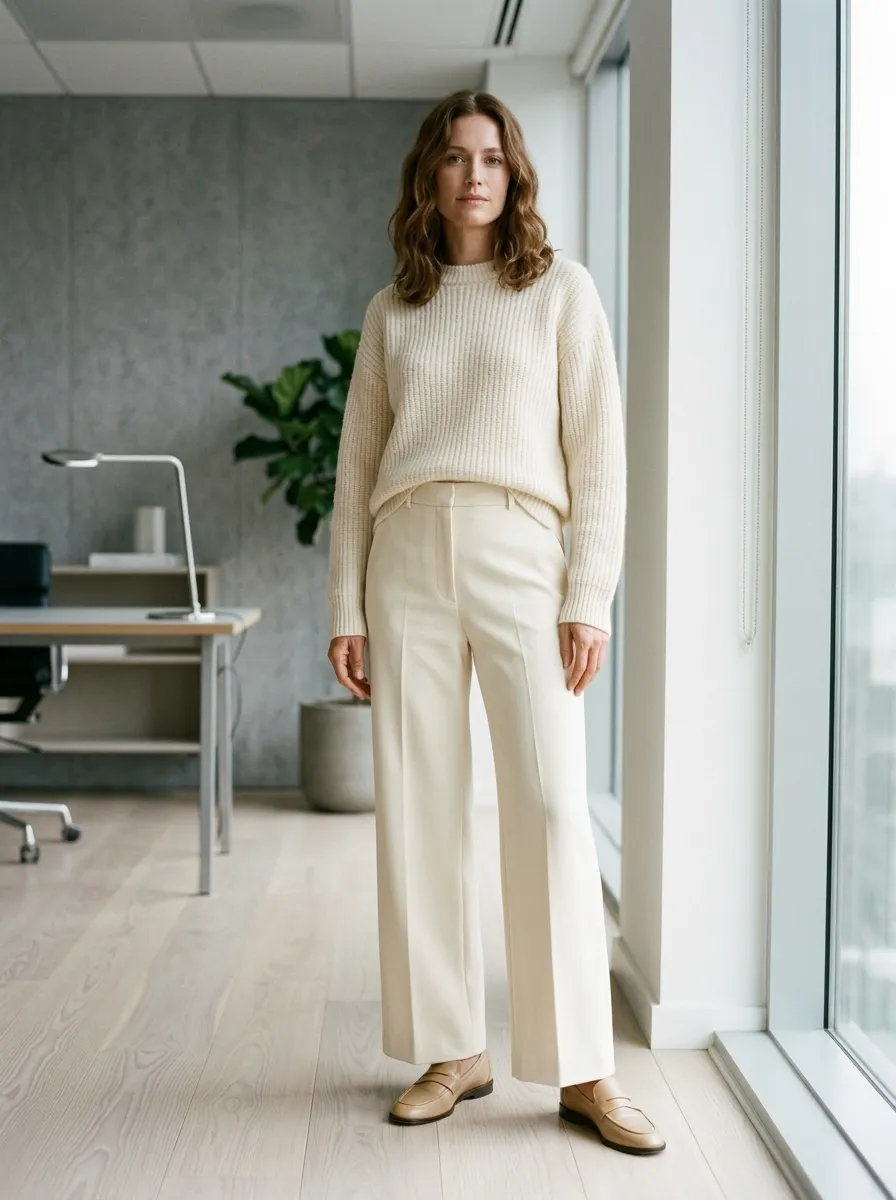
Monochromatic neutrals are the strongest winter palette for a reason. Cream wide leg trousers, a matching wool sweater, beige leather loafers, worn together, light tones look deliberate and bright against dark winter skies. The critical detail is undertone consistency: keep your whites, creams, and beiges all warm or all cool. Clashing undertones, a yellow cream sweater over a blue white trouser, read as accidental, and nothing undermines a monochrome outfit faster.
When the undertones align, the outfit reads as one considered column of color, which is also why it elongates your silhouette.
For days when neutrals feel too quiet, saturated jewel tones do the heavy lifting. Emerald green tailored trousers with a black silk blouse and pointed ankle boots bring life to a gray week without sacrificing authority. The principle: let one saturated color be the statement and keep everything else neutral. Mixing emerald, sapphire, and plum in a single outfit creates visual noise; one jewel tone against black, charcoal, or navy lets the color do its work.
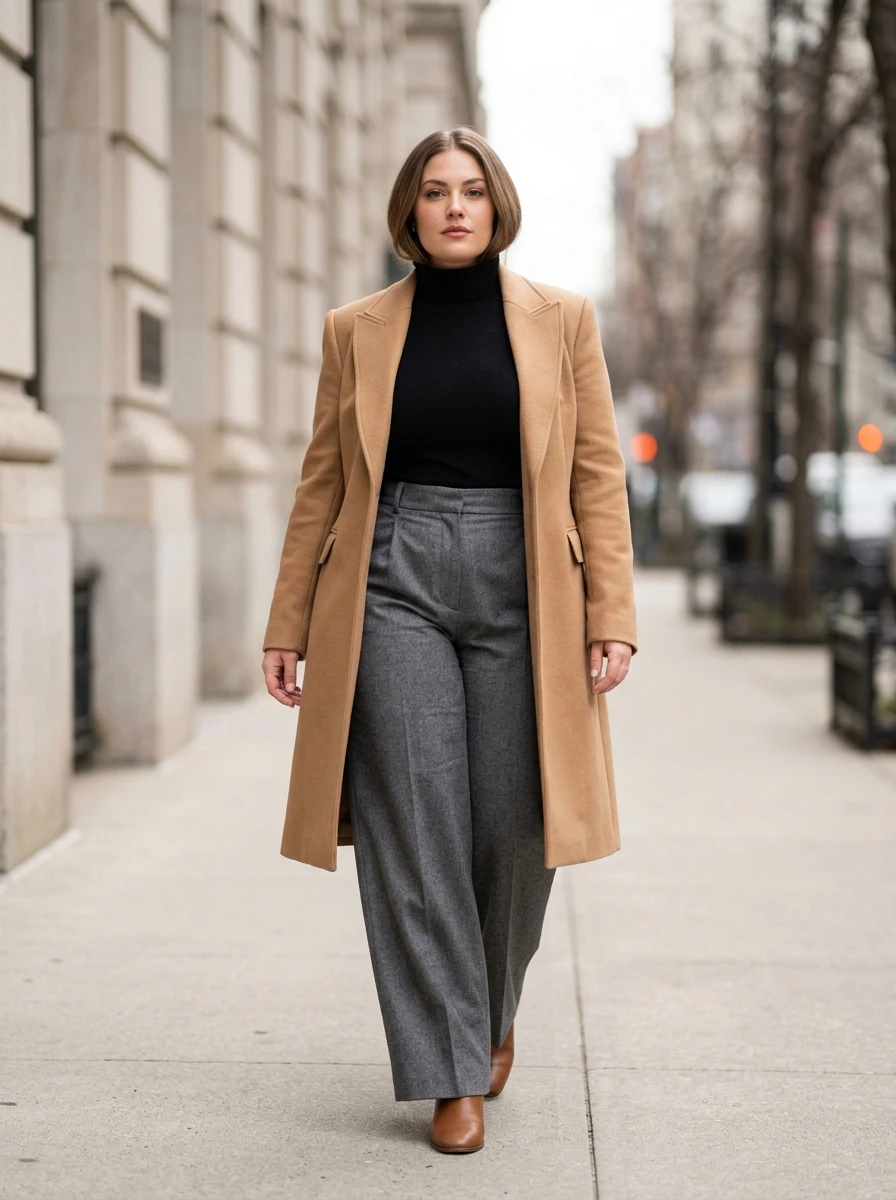
Color pairing: camel and navy is the cannot fail combination, the warm camel against the cool navy creates natural contrast that looks expensive in any season. A camel wool coat over navy trousers and a navy turtleneck is warm, balanced, and finished with nothing more than simple jewelry. And tonal gray works when you commit to a temperature: charcoal wool trousers, a light gray cashmere sweater, and a textured herringbone blazer, all in cool grays, look cohesive and high end.
The failure mode is mixing warm and cool grays, which reads as muddy rather than tonal.
One Volume, Everything Else Slim
Every winter work outfit that looks good follows the same silhouette logic: one voluminous piece, everything else slim. Two voluminous pieces make you look swallowed; two slim pieces in heavy winter fabrics can look severe. One volume plus one slim equals intentional.
The most common application is the oversized blazer. An oversized plaid blazer over slim black trousers and a simple white silk shell works because the rest of the outfit stays narrow, your frame stays visible, so the blazer reads as a style choice rather than a coat you are drowning in. The silk shell underneath matters too: its smoothness contrasts with the textured wool and keeps the neckline refined where the blazer opens. For damp commutes, leather ankle boots instead of loafers keep the look sleek while handling slush.

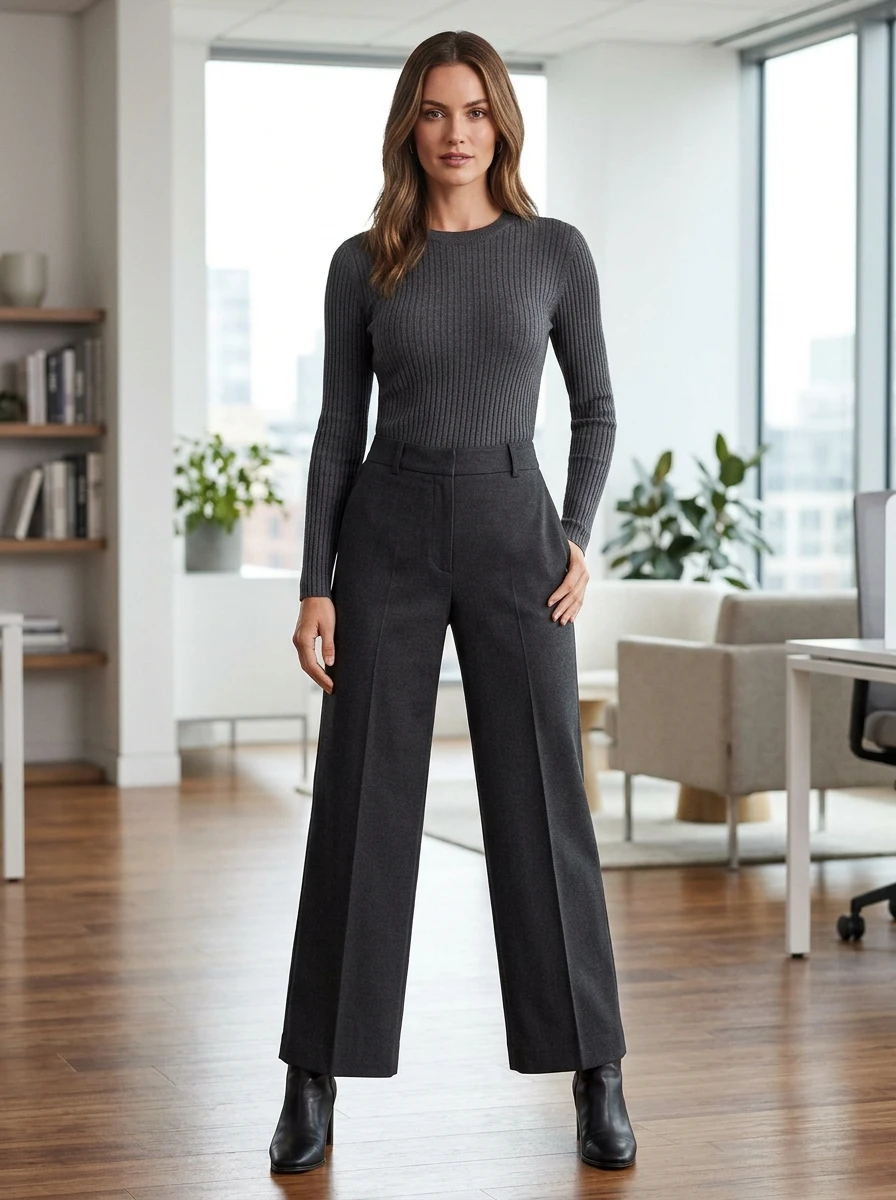
Flip the equation and it works the other way too. High waisted wide leg trousers demand a fitted top, a tucked in bodysuit or a slim ribbed sweater, to keep the proportions deliberate. The tucked top defines your waist, and the wide leg creates a long, lean line from hip to floor. There is a practical detail that makes or breaks this one: the hem. Wide leg trousers dragging in slush ruin both the fabric and the line, so get them tailored to skim just above your shoe.
Fit note: a heavy gauge cardigan belted at the waist over a classic black pencil skirt works because the skirt stays slim while the knit provides the volume, and the belt defines the transition between them. Choose a belt that sits flat, since a bulky buckle on top of a thick knit adds a lump exactly where you do not want one.
And a fitted black bodysuit tucked into high waisted wide leg trousers, finished with a long trench, creates one clean column from shoulder to ankle, the trench adds coverage without competing, because its vertical lines echo the trousers rather than cutting across them.
Why does this matter more in winter? Because heavy fabrics amplify mistakes. A summer volume clash is a minor wrinkle; a winter one, thick wool against thick wool, adds visual bulk that reads as ten pounds. Get the proportion right and winter fabrics become an asset: their structure holds a silhouette instead of collapsing.
Tailoring Is Warmer Than You Think
Tailored pieces are not just about formality, they are some of the warmest things you own, because suiting fabrics are woven dense and close to the body. The trick is choosing cuts with enough ease to layer underneath.
A navy suit with a slightly relaxed fit, worn with a crisp white button down and polished loafers, remains the authority playbook for high stakes environments. Deep navy projects seriousness without the severity of black, and the relaxed cut leaves room for a thin thermal layer underneath on bitter days. Keep the footwear sharp, a structured suit needs shoes with clean lines; worn or overly casual shoes break the outfit at the ankle, which is the first thing people notice after your face.
Wear it with: high waisted pinstripe trousers with a matching fitted vest over a long sleeve tee read fresh rather than costume y. The tee underneath is doing quiet work: it adds warmth and coverage while keeping the vest from looking like evening wear. If the sleeveless cut runs too cold for your office, swap the vest for the matching blazer, same outfit, different insulation.

Texture does tailoring's styling work in winter. A black tweed jacket with dark wash black denim and a simple black turtleneck sits exactly on the line between smart casual and refined, the tweed's heritage texture signals intention, which is what makes the denim acceptable. Similarly, high waisted corduroy trousers in chocolate brown with a cream mock neck top bring a tactile richness that reads cozy yet deliberate; corduroy's raised wale traps air, so it is genuinely warmer than flat cotton twill.
Color pairing: a tailored gray suit with a plain white tee comes alive with one bright silk scarf, the scarf sits near your face where color has the most impact, so keep it small and fluid rather than bulky, which would crowd the blazer's neckline.
The Denim Rules for the Office
Jeans can work in professional settings, but only under strict conditions, and those conditions are non negotiable. Dark wash, no distressing, no frayed hems. A clean, uniform indigo or black reads as a trouser alternative; faded or ripped denim reads as weekend, and no blazer fully overrides that signal. Straight leg and slim fits are the safest silhouettes; wide leg jeans work only with a hem that clears the floor.
The formula that never fails: a structured blazer over dark wash denim with a crisp white button down tucked in. A wool blend blazer adds the warmth and texture a cold morning demands, and the white shirt defines the waist so the outfit has structure. This is the meeting safe denim outfit, approachable yet authoritative, and it works because every piece except the jeans is fully traditional. MasterClass explains how to style a blazer for work, including the shoulder fit that makes or breaks the look.

From that base, you can move in two directions. Dressier: a classic tweed jacket with slim fit dark jeans and pointed flats, the tweed mimics suiting, so the outfit reads as a relaxed suit rather than casual Friday. Softer: a cream silk blouse tucked into cropped flare jeans with block heel ankle boots and a thin leather belt, the flare's volume balances the blouse's fluidity, and the block heel keeps you stable through a long day.
Fabric note: for offices where denim is firmly established, a navy velvet blazer with dark wide leg jeans and a simple camisole brings a festive richness that suits holiday season Fridays.
White denim deserves its own note, because it is the piece people retire in October and should not. White jeans with a chunky burgundy or forest green cardigan over a silk camisole look fresh and intentional in winter, the deep color of the knit makes the white denim feel like a deliberate contrast rather than a seasonal mistake. Keep a stain pen in your bag; that is the entire maintenance strategy.
One Piece, Zero Decisions
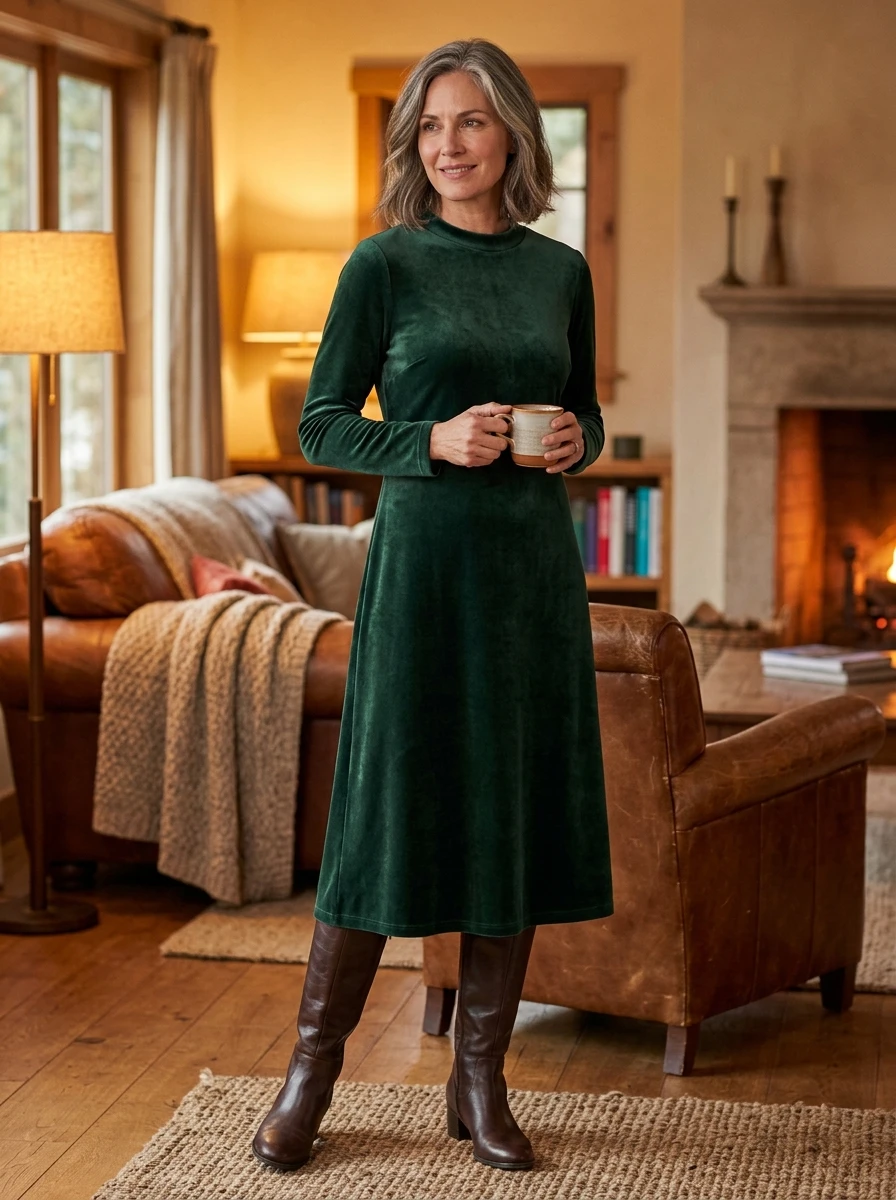
When decision fatigue hits, one piece outfits are the answer, a single silhouette means no proportion math and no matching tops to bottoms. In winter, the sweater dress is the workhorse: a midi length knit in deep forest green with leather knee high boots requires almost no styling and delivers maximum warmth. The reason it works so well is coverage ratio, boots meeting the hem means almost no exposed skin, so you stay warm without extra layers.
Choose a midi length rather than mini, and if static cling is an issue with your knit, a simple slip underneath solves it.

Wear it with: a wide leg jumpsuit layered over a thin white turtleneck is the modern equivalent, one clean column from shoulder to ankle. The jumpsuit must be cut in a substantial fabric like heavy crepe; lightweight versions cling and lose both warmth and structure. The turtleneck underneath extends the jumpsuit into deep winter and adds a crisp white accent at the neckline.
And for texture lovers, a heavy cable knit tucked into a satin midi skirt with ankle boots pairs the season's two best fabrics, soft wool against sleek satin, in a combination that suits office days and dinner plans equally.
Fit note: the shirt dress earns its place too: a structured neutral shirt dress cinched with a thin leather belt, worn with tights and knee high boots, is one decision instead of five. Check the fabric weight, too light and it wrinkles through a day of sitting; a mid weight cotton or wool blend holds its line from morning meeting to evening.
Skirts That Handle Real Cold
Skirts are entirely viable in winter once you stop treating them as summer pieces. The formula: heavy fabric plus opaque tights plus boots that meet the hem. Each element covers what the others cannot.
A chestnut brown corduroy midi skirt with a fitted cream ribbed knit tucked in is the textbook version, the corduroy's thickness insulates far better than cotton or silk, the ribbed knit's stretch keeps the tuck smooth, and the tucked waist defines your shape so the midi length does not overwhelm. This pairing suits creative workplaces where tactile, seasonal fabrics read as polished rather than casual.

The variables you can swap: a pencil skirt with a medium weight sweater tucked in for client facing days (the skirt's sharpness balances the knit's softness), or a pleated midi with a fitted mock neck sweater, where the skirt's movement keeps a long day feeling fluid. On the legs, opaque black tights, 80 denier and up, are the baseline; knee high or over the knee boots add a second layer of protection exactly where wind hits.
Care tip: a midi dress with tall boots works on the same principle: when the boot shaft disappears under the hemline, there is simply no gap for cold air. Keep tights out of the dryer, heat is what thins them and shortens their life, and rotate two pairs so neither wears through at the toe midweek.
Your Coat Is the Outfit
Here is an underappreciated truth: for most of your colleagues, your coat is your outfit. They see it on the commute, in the elevator, and at lunch, the twenty minutes you spend coatless at your desk is the minority of your visible day. So the coat deserves the same thought as everything under it.
A belted wrap coat is the most flattering outer layer you can own, because the belt defines your waist over whatever is underneath, tailored trousers and a silk blouse, a sweater dress, even jeans. It transitions from commute to office without a costume change, and you can adjust the belt as layers come off. Over business casual basics, it is instant polish; over a navy turtleneck and navy trousers with a camel coat, it is the camel and navy palette at its most elegant.
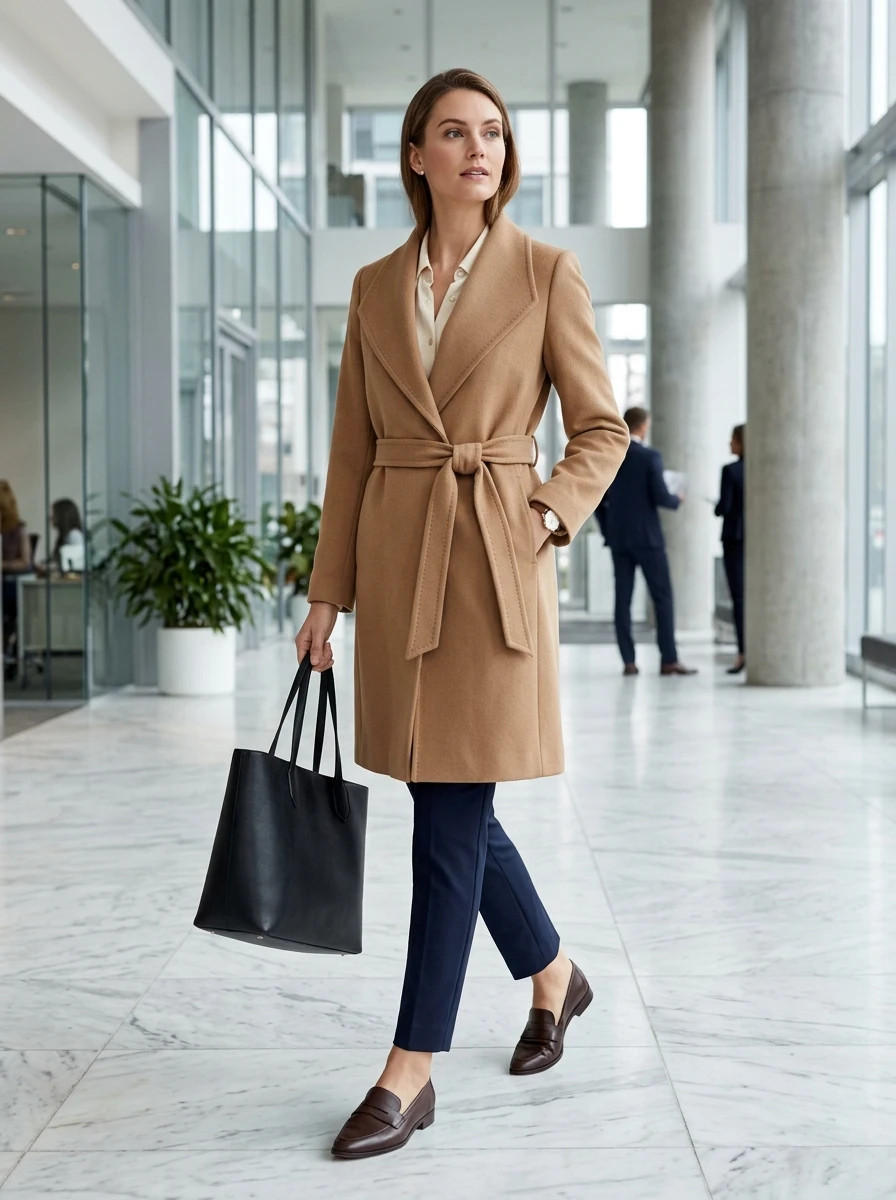
Length matters more than brand. A coat that ends mid thigh leaves your legs exposed on the platform; one that hits below the knee protects your tights, your skirt hem, and your trousers from slush. And match the coat's weight to reality: a trench is perfect for crisp autumn commutes, but when the temperature genuinely drops, switch to a wool blend coat rather than suffering through a light layer, being cold all morning is not a style choice, it is a planning failure.
Woolmark explains how to care for wool coats and knits so they hold their shape through the season.
Shoes: Where Weather Meets Professional
Shoes make or break winter work outfits because they are where weather meets professionalism most visibly. Leather ankle boots with a non slip sole are the default for a reason: they handle slush, protect against cold, and look sharp with trousers, skirts, and dresses alike. Suede ankle boots in taupe or brown bring a softer fall winter feel, but they need a protective spray before their first wear, suede and road salt are enemies.
Fabric note: knee high and over the knee boots earn their place through insulation logic: paired with midi skirts and dresses, they eliminate the exposed skin gap entirely, which is why a sweater dress with knee high boots feels so much warmer than the same dress with ankle boots. For milder days and casual offices, polished leather loafers with wool socks bridge the gap between comfort and polish, the wool sock is doing real thermal work while staying invisible. And one pairing rule: match shoe weight to outfit weight.
Chunky boots with a delicate silk dress create a visual disconnect; sleek boots or pointed flats keep the lines coherent.
Common Questions About Winter Workwear
What should my base layer be for a heated office?
A thin, smooth piece that looks presentable on its own: a merino wool turtleneck, a silk camisole, or a heat retaining knit tee. Offices run warm, so you will spend most of the day in this layer once your coat comes off. Thick bases bunch under blazers and ruin the drape, so keep the base thin and let the middle layer carry the warmth.
Can I wear skirts through the whole winter?
Yes, with three non negotiables: a heavy skirt fabric (wool, corduroy, or tweed, not cotton or silk), opaque tights of at least 80 denier, and boots whose shafts meet or disappear under the hemline. That combination leaves no exposed skin and no thin fabric for wind to cut through. A midi length is more forgiving than a mini, since it reduces the area your tights have to cover.
How do I wear jeans to work without looking casual?
Keep the jeans dark and plain, indigo or black, zero distressing, a tailored cut, and make them the single casual element in the outfit. Pair them with traditionally formal pieces: a wool blazer, a crisp button down, leather shoes. If your office leans conservative, keep denim to Fridays or skip it, no outfit is worth the anxiety of wondering if you misjudged the dress code.
Wool or synthetic blends for winter workwear?
Wool regulates temperature naturally and breathes, which matters when you are moving between a freezing platform and an overheated office, you overheat less and stay comfortable longer. Synthetics and wool synthetic blends offer more stretch, easier care, and lower cost, which is practical if you travel or prefer machine washable pieces. For the pieces closest to your skin and the ones you wear longest (trousers, sweaters), wool or wool blends are worth it; for outer layers and travel pieces, synthetics are the pragmatic choice.
How do I stop winter outfits from looking bulky?
The fix is almost always the same: one heavy layer, one light layer, never two heavy ones together. A chunky knit over a silk camisole, a heavy wool blazer over a thin turtleneck bodysuit. Bulk comes from doubling up on thick pieces, especially at the shoulders and arms. Keep one volume per outfit and the silhouette stays clean.
How do I keep winter fabrics looking good all season?
Pilling is the main enemy, run a fabric shaver over wool and cashmere knits every few weeks and they will look new for years. Hang trousers, skirts, and blazers on proper hangers (clip hangers for trousers, shaped hangers for jackets) so they hold their creases and shoulder lines. And follow the care labels: most wool and cashmere wants hand washing or a delicate cycle and flat drying, which prevents the stretching and felting that makes knits look tired by February.
Your Winter Workwear Checklist
Good winter workwear is not about owning more, it is about understanding what you own. Before you leave the house tomorrow, run through this list:
- Base layer: thin, smooth, and presentable on its own, merino, silk, or a fine knit tee.
- Middle layer: one textured or structured piece, the sweater, blazer, or vest your colleagues actually see.
- Outer layer: a commute proof coat, belted and below the knee, that comes off at your desk.
- Volume check: one voluminous piece per outfit, everything else slim.
- Color check: one saturated tone at most, undertones that agree, warm with warm and cool with cool.
- Legs and feet: opaque tights at 80 denier and up for skirts, boots that meet the hem, shoe weight matched to outfit weight.
- Fabric check: contrast a smooth fabric with a nubby one instead of adding another pattern.
Start tomorrow with one change: pick the coat first, then build inward. You will be surprised how quickly the rest of the outfit decides itself.