How to Build Early Winter Outfits From Pieces You Already Own: 19 Remixes That Work
How to use this guide
These are editorial styling suggestions, not a one-size-fits-all formula. Adapt each look to your wardrobe, proportions, climate, comfort, budget, and the occasion; the most useful idea is the one you can genuinely wear.
What does the first properly cold morning of the season actually demand? Not a new wardrobe — a new way of looking at the one you already have. The summer dress hanging at the back of the closet, the button-down you stopped reaching for in October, the scarf folded into a drawer: each one is a winter piece that has not yet been asked to do the right job.
Early winter is a layering problem, not a shopping problem. Temperatures in the 40s and 50s reward combinations — thin under thick, fitted under relaxed, soft against structured — more than any single heavy coat. The nineteen outfits below are built entirely from staples most closets already hold, and the newness in each one comes from technique: the order layers go on, where a hem falls, and which texture sits next to which.
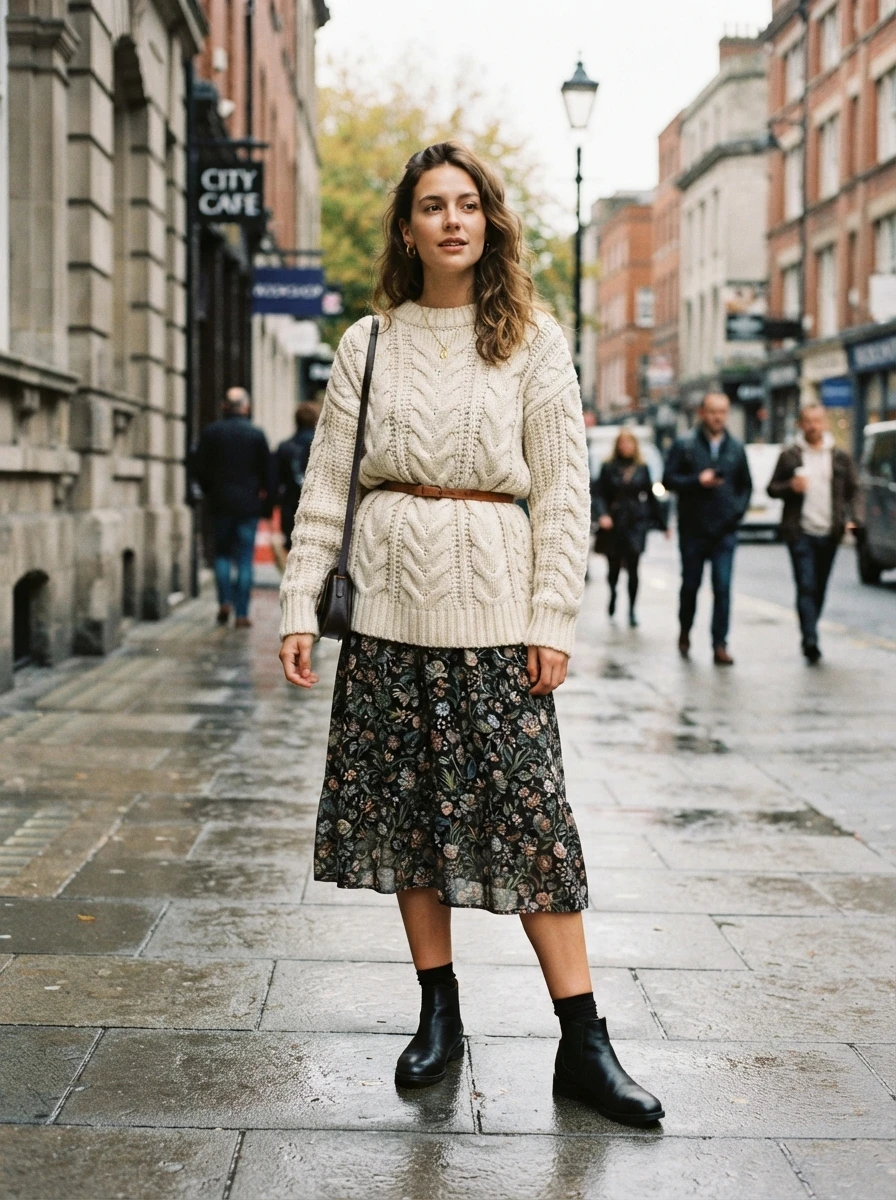
Oversized Sweater Over a Midi Dress — the Dress Becomes the Skirt
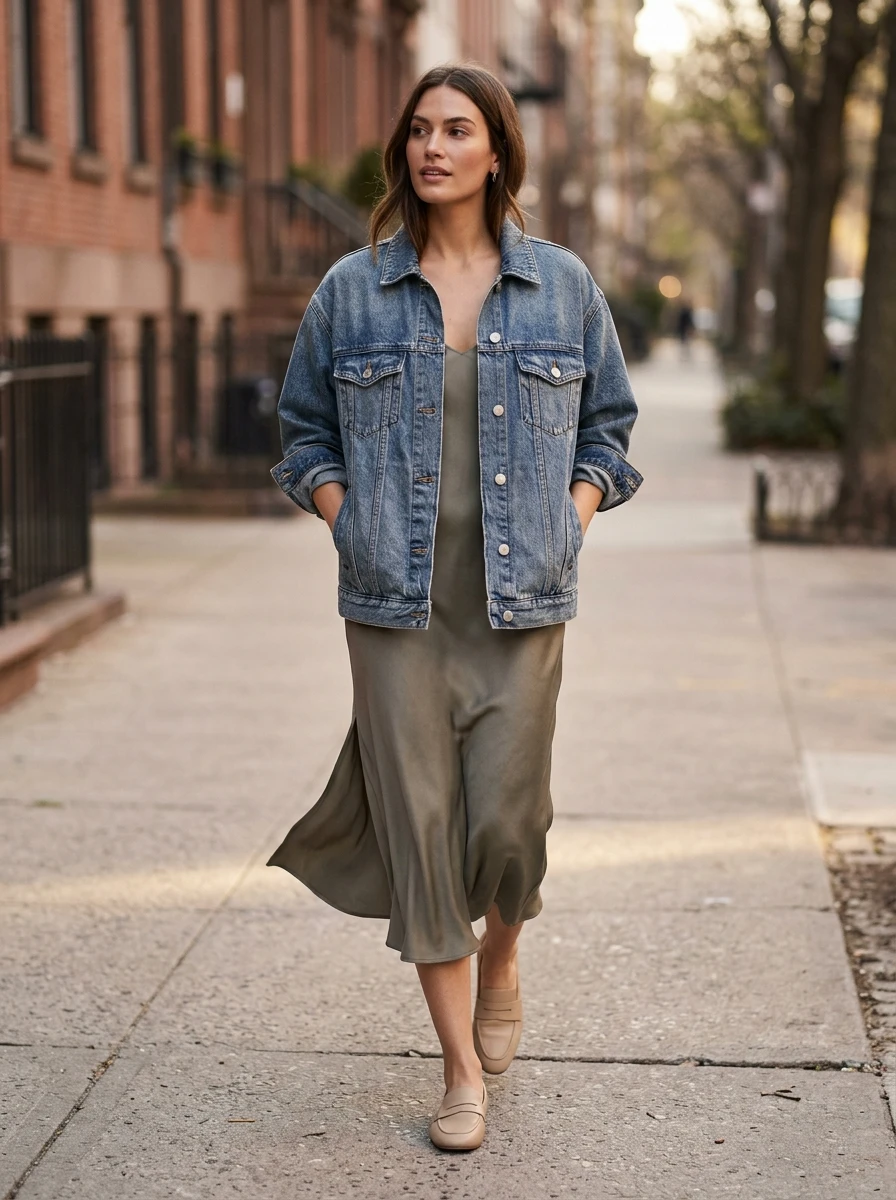
The moment an oversized sweater goes over your summer midi dress, the dress stops being a dress and starts being a skirt — and you never have to retire it for the season. The sweater should hit mid-thigh so the dress's hem still shows; a sweater that swallows the dress entirely wastes the layering. The textures do the talking here: soft knit over fluid dress fabric reads as deliberate, not improvised. Add tights and boots, and a dress you wore in August is now a November outfit. No new purchase required — just a new order of operations.
Fit note: if the sweater is very oversized, add a slim belt at the waist so the silhouette stays defined instead of shapeless. More ways to remix what you own are in these winter outfits, built on layers you already have.
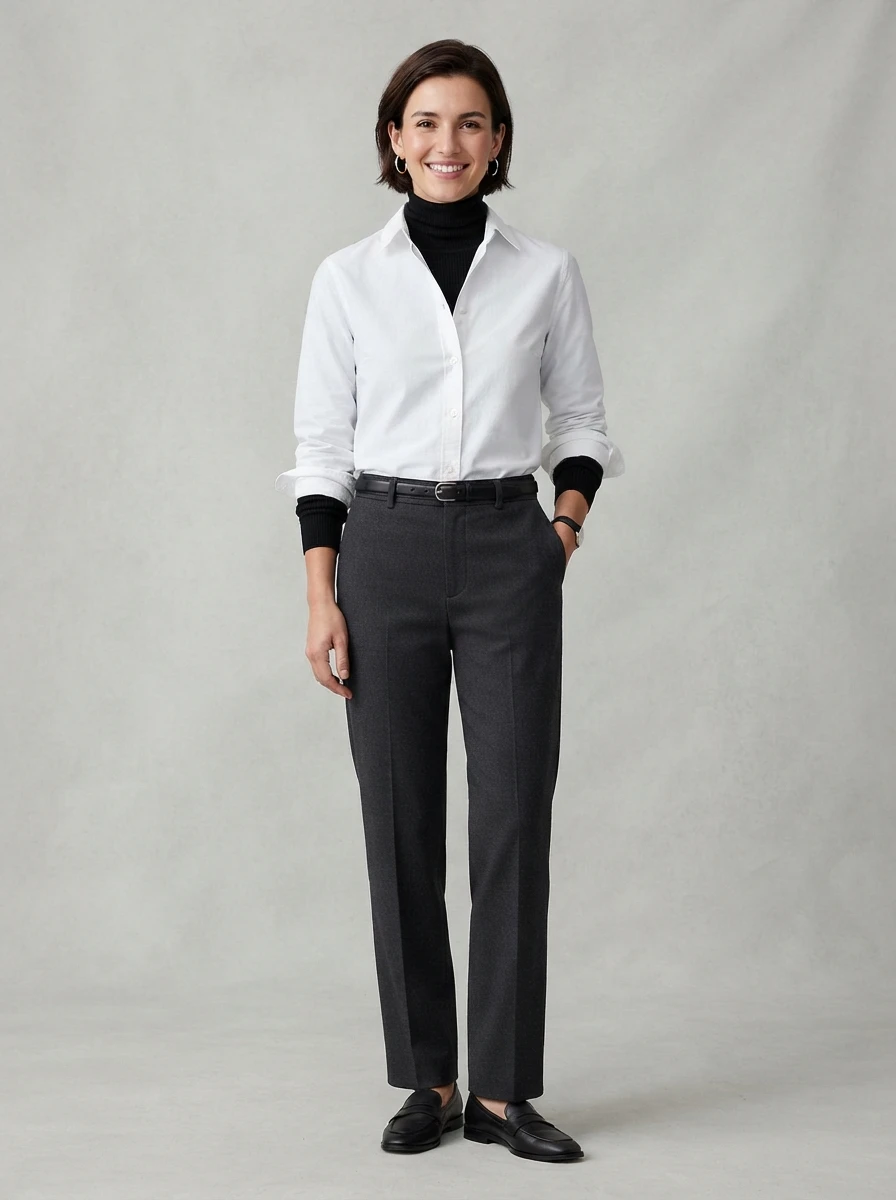
Turtleneck Under a Button-Down: Two Light Layers, Real Warmth
Wearing a turtleneck under a button-down flips the shirt's role from top layer to mid-layer, which instantly makes your existing shirts winter-appropriate. The turtleneck should be thin — merino or a cotton-modal blend — so the shirt buttons without strain, and the collar peeking above the shirt's collar adds a visible layering detail. Leave the shirt open and it becomes a light jacket; buttoned, it is a preppy layered top. Either way, two summer-weight pieces combine into genuine warmth through the trapped air between them.
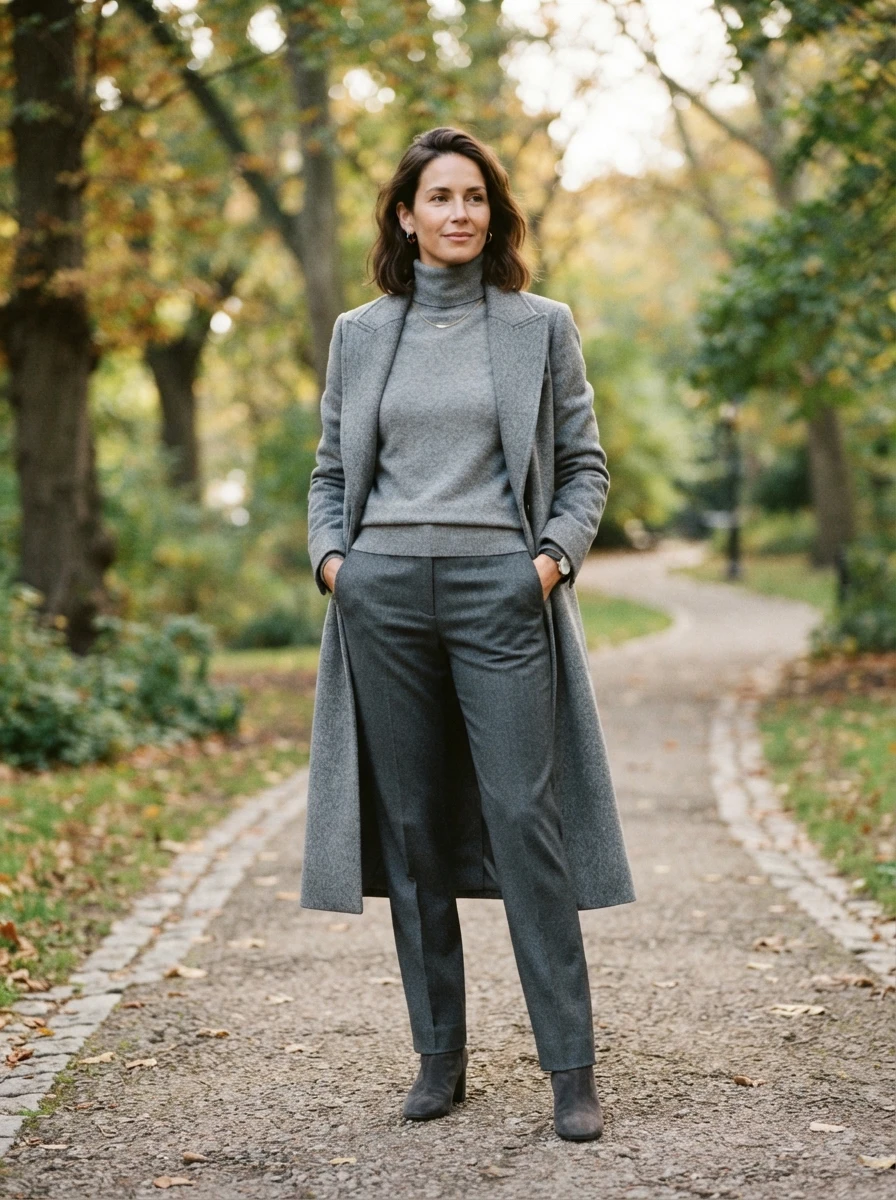
One Colour Family, Every Knit You Own
Pull every knit you own in one colour family — cream sweater, beige cardigan, tan scarf — and wear them together. Monochrome makes disparate pieces look like a planned outfit because the single palette removes every visual interruption. The textures must vary, though: smooth, nubby and ribbed knits side by side keep the look dimensional, while a single texture across the whole outfit falls flat. This technique rescues the "nothing matches" feeling: when everything is one colour, everything matches. It is the fastest way to make old pieces feel like a new outfit. The layering logic here is exactly what the layering guide teaches: thin warm layers that trap air between them.
Fabric note: wool, cashmere blends and cotton knits all mix well in one palette — the difference in hand-feel is what keeps the outfit interesting.
The Denim Jacket Fix: A Wool Scarf Does the Work
Your denim jacket's problem in early winter is not style — it is the open neckline leaking warmth. A substantial wool scarf solves it completely: wrapped loosely, it insulates the neck and chest while adding the colour and texture the denim jacket needs to feel seasonal. The scarf should be oversized enough to tuck into the jacket's front; a skimpy scarf looks like an afterthought. This single addition extends your denim jacket's season by two months — the highest return of any technique on this list.

Trousers Tucked Into Tall Boots
Tucking trousers into tall boots transforms both pieces: the trousers gain a streamlined, equestrian line, and the boots become the outfit's focal point instead of just footwear. The trousers need to be slim through the calf or the tuck bunches; wide-leg trousers do not tuck cleanly. The boot shaft should be tall enough that no gap shows between boot and trouser. This technique makes your existing trousers feel new because you have never seen their line interrupted this way — same pants, completely different silhouette.
Wear it with: a fitted knit on top to keep the streamlined line going from shoulder to boot.
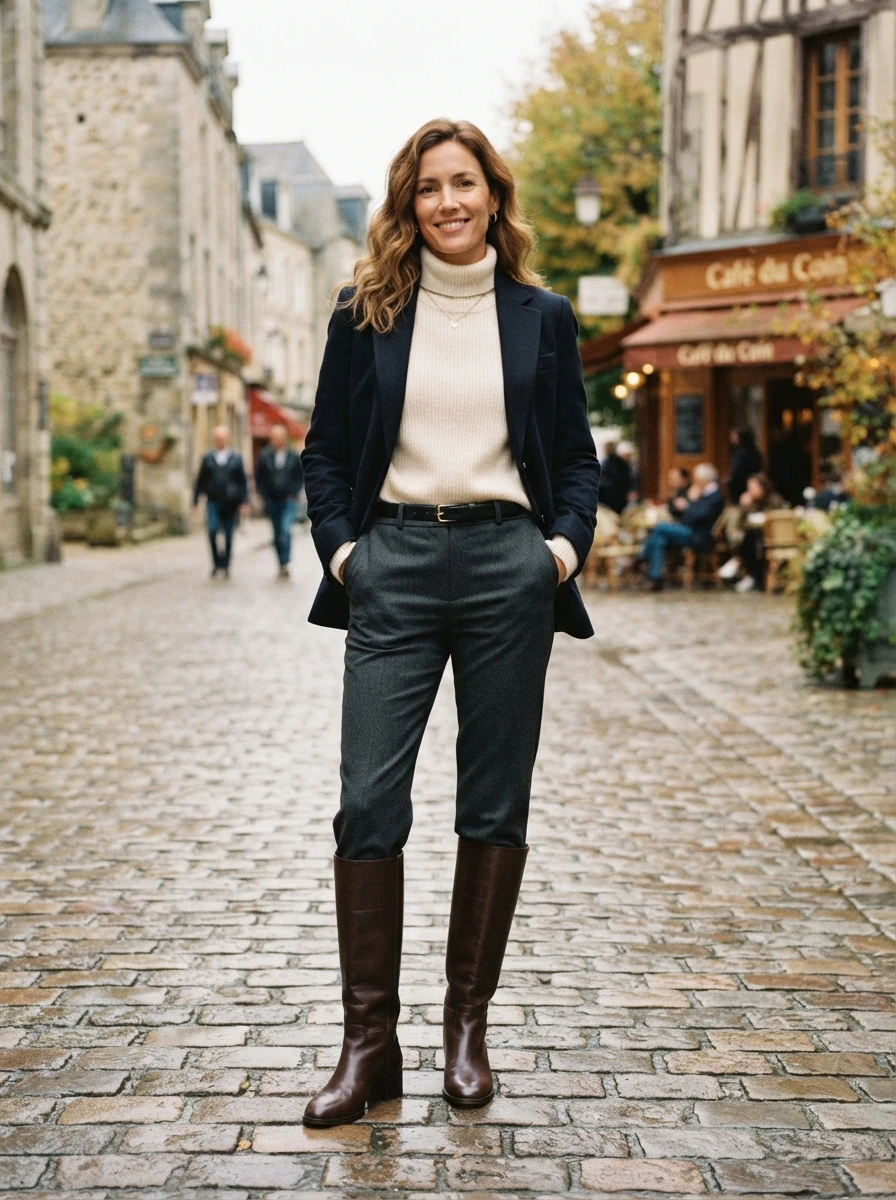
Button the Cardigan and Call It a Top
Button your cardigan all the way and wear it as a top — tucked into trousers or a skirt, it is a completely different garment from the open layer you are used to. The cardigan-as-top works because the button placket creates a vertical line that reads as intentional, especially in a fine-gauge knit. It must fit closely; an oversized cardigan buttoned up looks like you are wearing someone else's clothes. This doubles your cardigan collection overnight: every open layer is also a potential top.
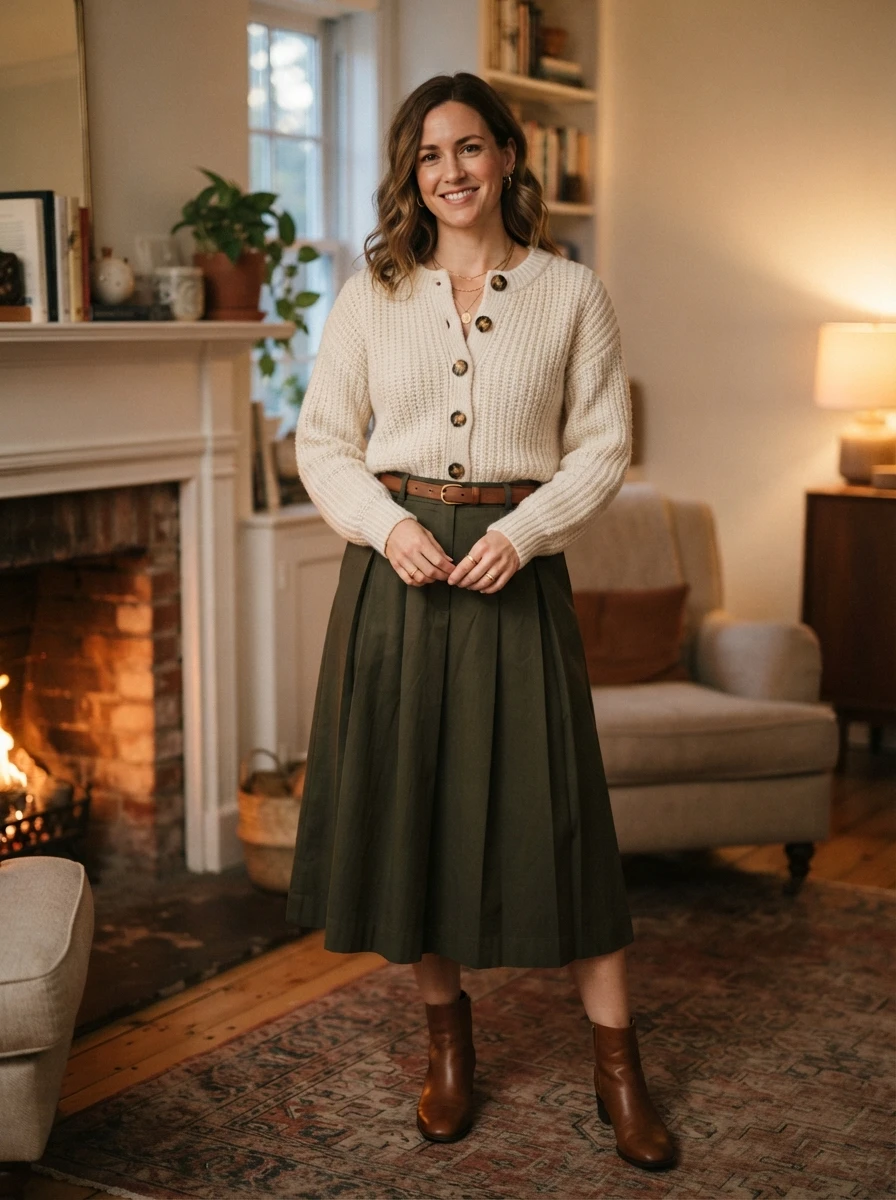
Vest Over a Thick Sweater: Warmth Where It Counts
A vest — puffer, quilted or knit — over your thickest sweater solves the early-winter dilemma of needing core warmth without a full coat. The vest adds insulation exactly where you lose heat, the torso, while leaving your arms in the sweater's mobility. It must fit over the sweater without compressing it; size the vest for layering, not for wearing alone. The two-texture torso — quilted over knit, for instance — also looks deliberately styled. It is the 45-degree outfit that a coat would overdress.
Fit note: check the armholes before you commit — a vest that pulls at the shoulders over a chunky sweater will ride up all day.
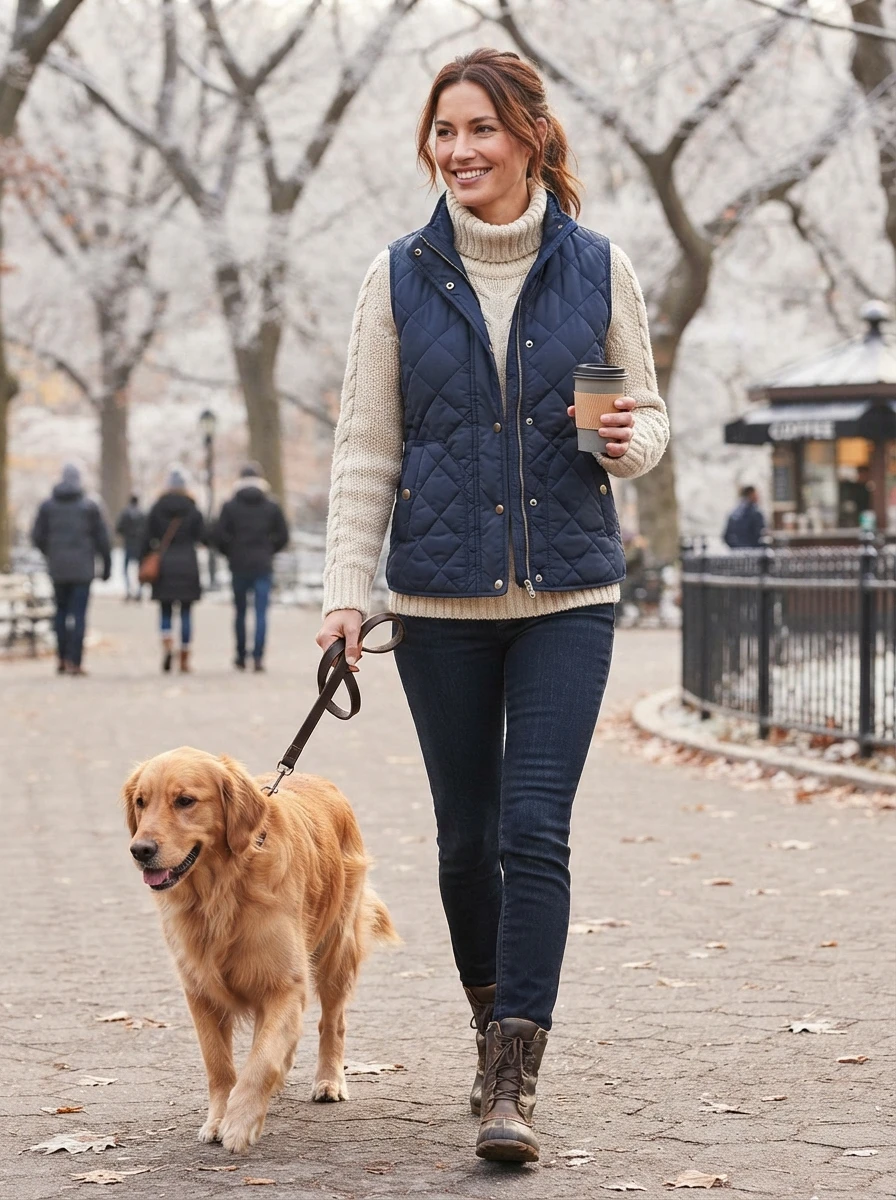
Blazer Over a Hoodie — the High-Low Swap
Your blazer plus your hoodie is the high-low combination that makes both pieces feel new: the blazer's tailoring sharpens the hoodie, and the hoodie's softness relaxes the blazer. The hoodie should be plain and relatively fitted — a bulky graphic hoodie fights the blazer's lines. Let the hood sit out at the back; it is the visible signal that the formality is intentional, not accidental. This is the weekend version of office wear, built entirely from pieces you already own.

The Long Cardigan as a Coat
The long cardigan over leggings works when the cardigan is long enough to be the outfit's main garment — mid-thigh minimum, knee-length ideal. At that length, the cardigan functions like a coat, and the leggings are simply the slim base it needs. The cardigan must have some structure, a defined shoulder and a substantial knit, or it reads as a bathrobe; belt it if it hangs straight. This is the work-from-home outfit that also handles school pickup and errands — the cardigan's length does the work of "dressed" while everything underneath stays comfortable.
Care tip: heavy knit cardigans keep their shape longer when folded rather than hung, since hanging stretches the shoulders out of shape.
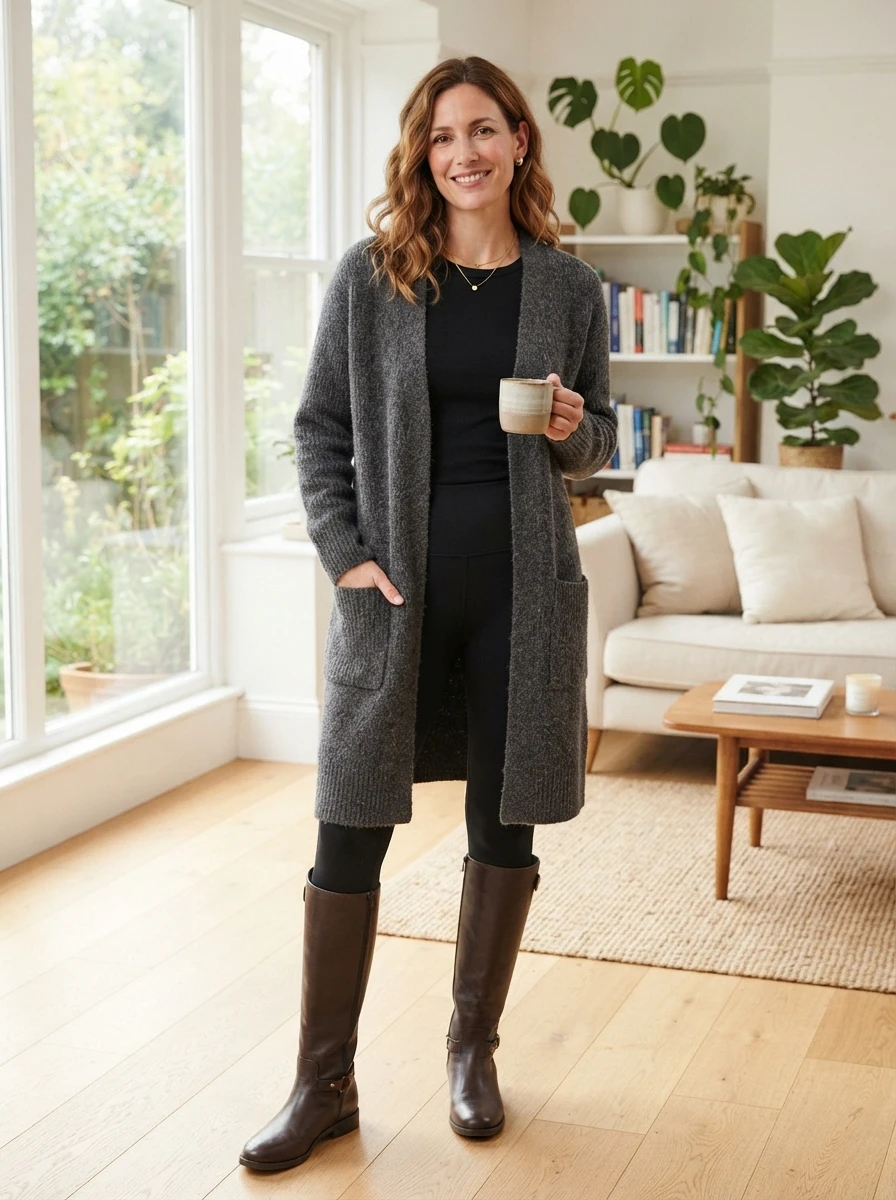
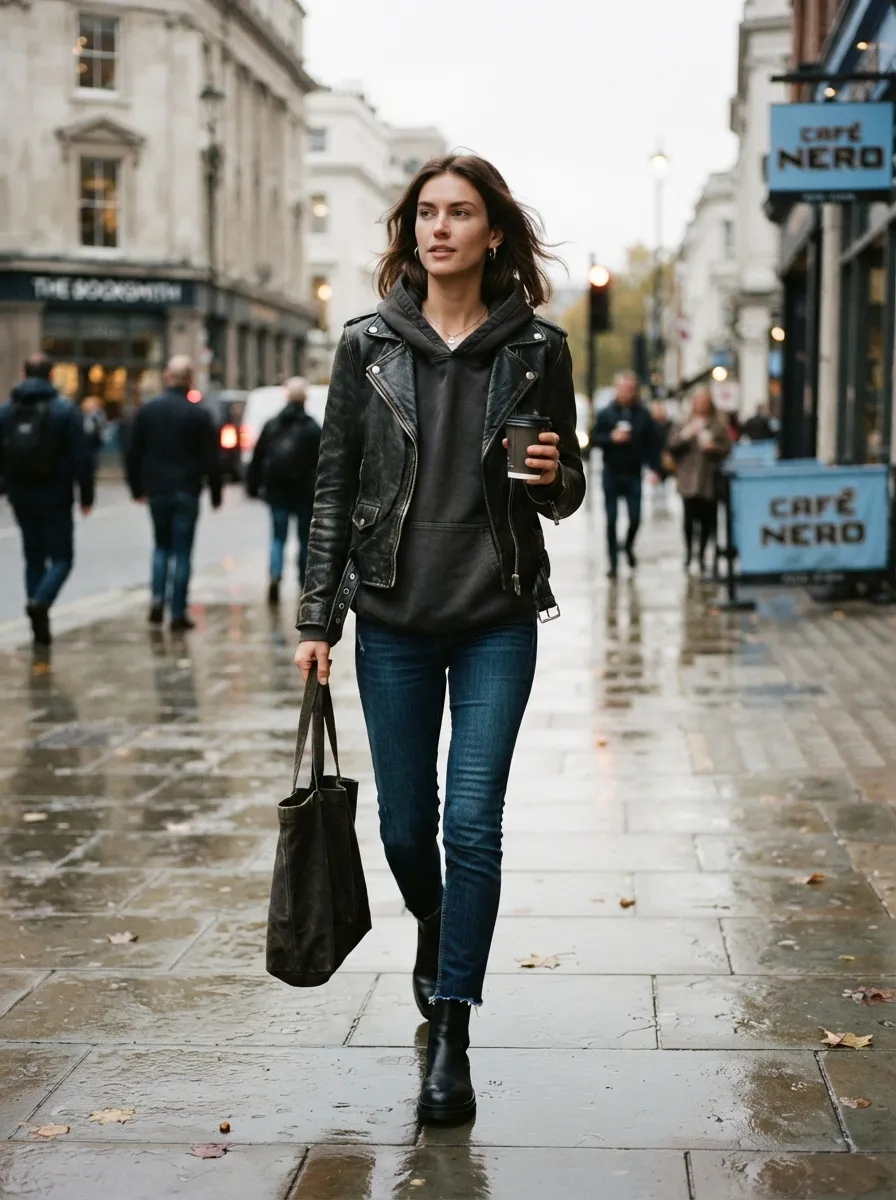
Leather Jacket, Hoodie Underneath
The leather jacket's edge plus the hoodie's softness is a combination greater than either piece alone — the jacket gains approachability, the hoodie gains attitude. The hoodie should be thin enough to fit under the jacket without bunching at the shoulders; this is a layering-fit issue, not a style one. Zip the jacket halfway to show the hoodie's layer, or fully for a cleaner line. It is the going-out outfit for people who do not do going-out outfits — comfortable, warm and effortlessly cool.
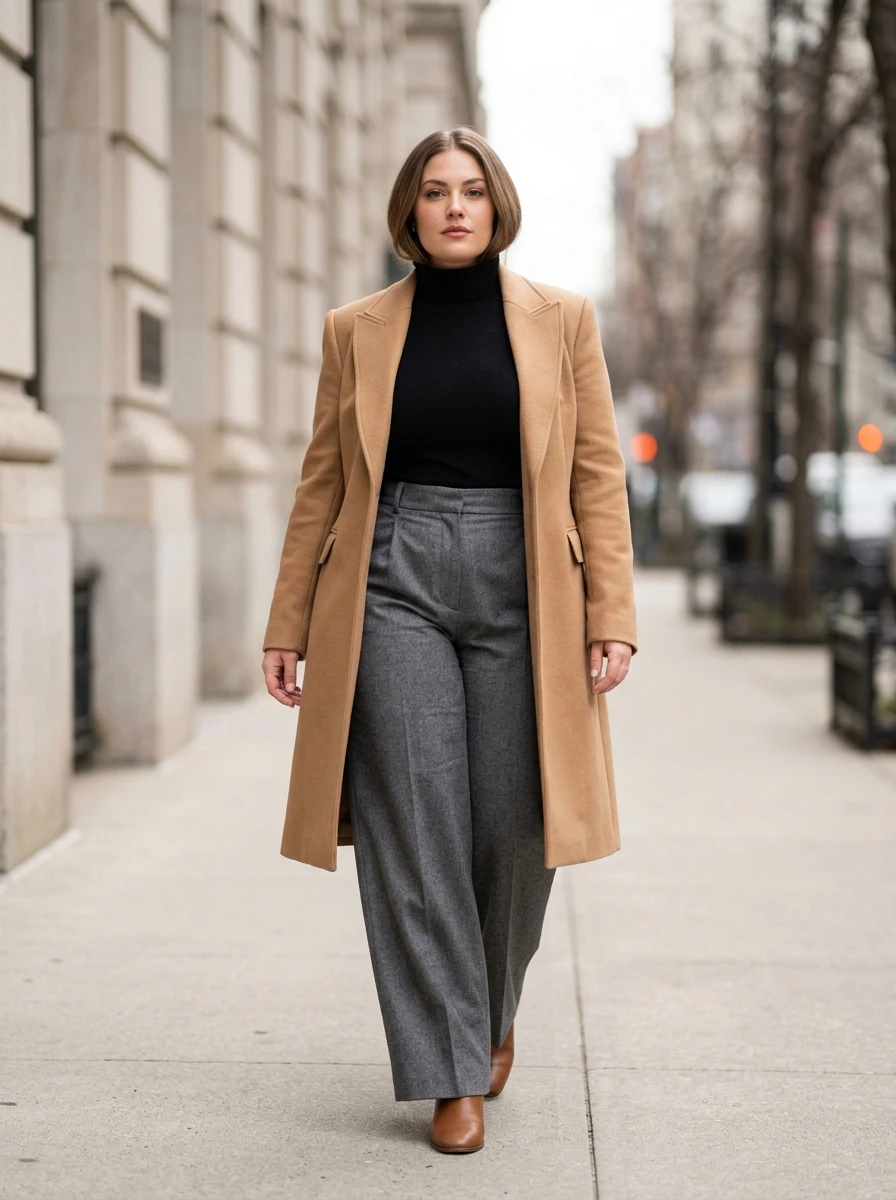
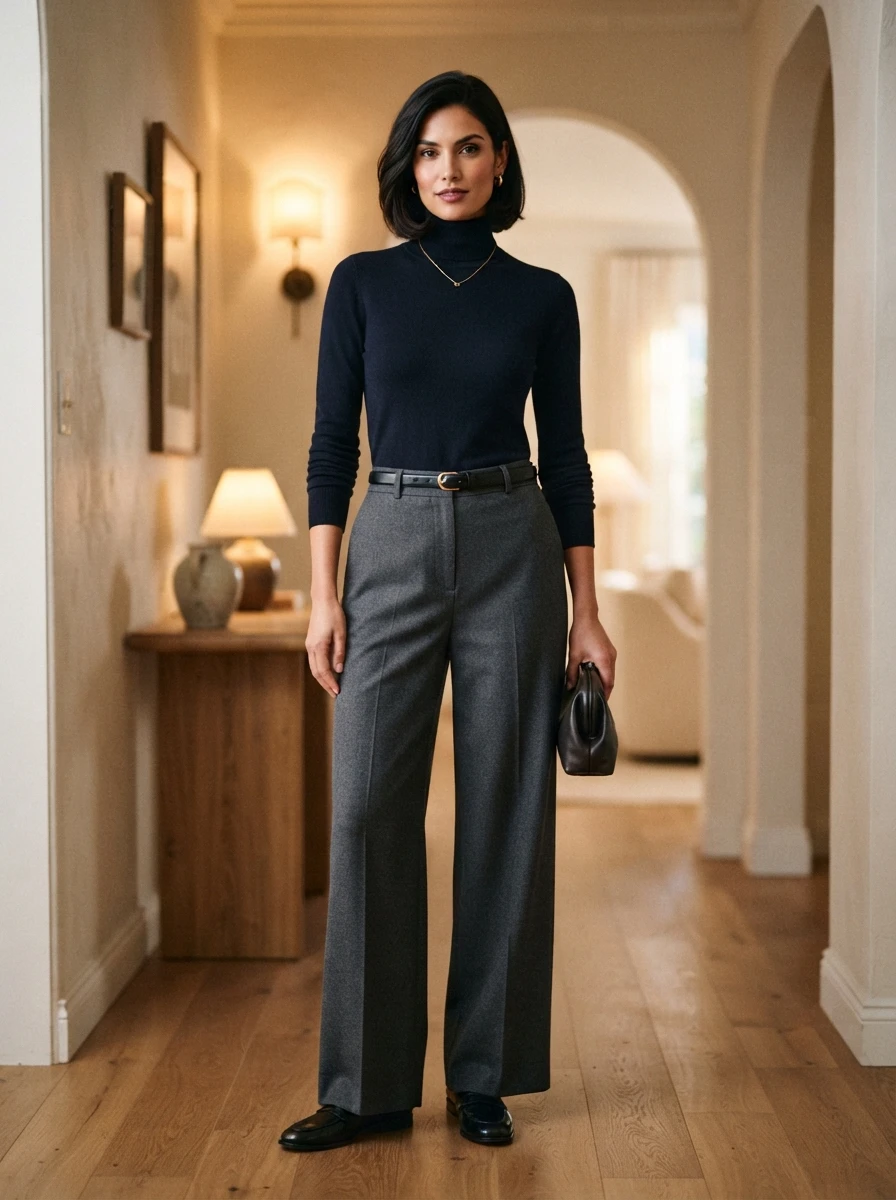
Wide-Leg Trousers Meet a Fitted Turtleneck
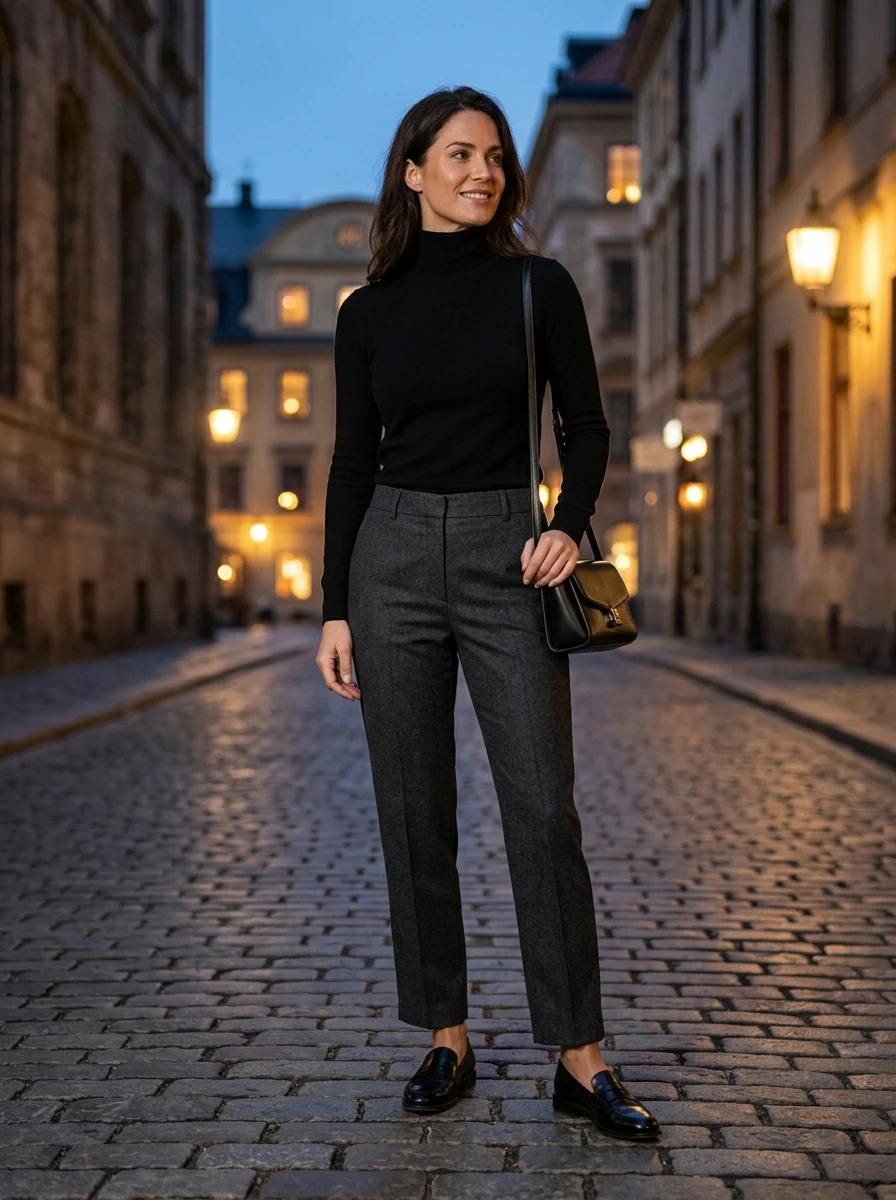
Your wide-leg trousers plus the fitted turtleneck you already own is the proportion formula that never fails: volume below, sleek above, defined at the waist where they meet. The turtleneck must be fitted — any looseness on top doubles the outfit's volume and loses the balance. Tuck it fully so the trousers' waistband creates the clean horizontal line. This is the dinner-out outfit hiding in your closet: the trousers bring the drama, the turtleneck brings the polish, and you bought nothing.
Wear it with: pointed-toe boots or heeled ankle boots, which keep the wide leg from pooling and preserve the long line.
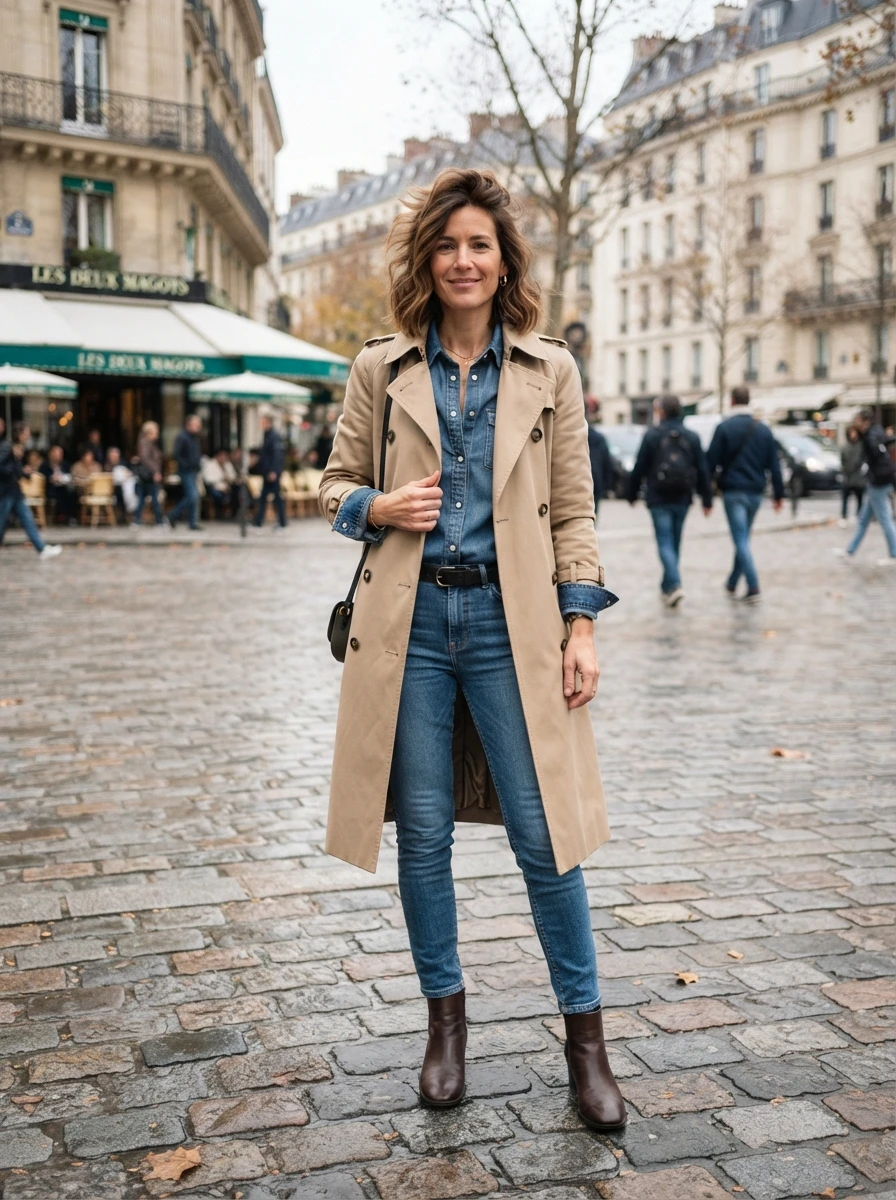
Double Denim, Framed by a Trench
Double denim works when the two denims differ — dark jeans with a lighter chambray shirt, or vice versa. Identical denim top and bottom reads as a uniform; contrasted denim reads as intentional. The trench coat over it is what elevates the whole thing: its structure and length frame the denim pairing and add the tailored element that makes double denim feel styled rather than accidental. Belt the trench to define the waist. It is the Canadian tuxedo, civilised.
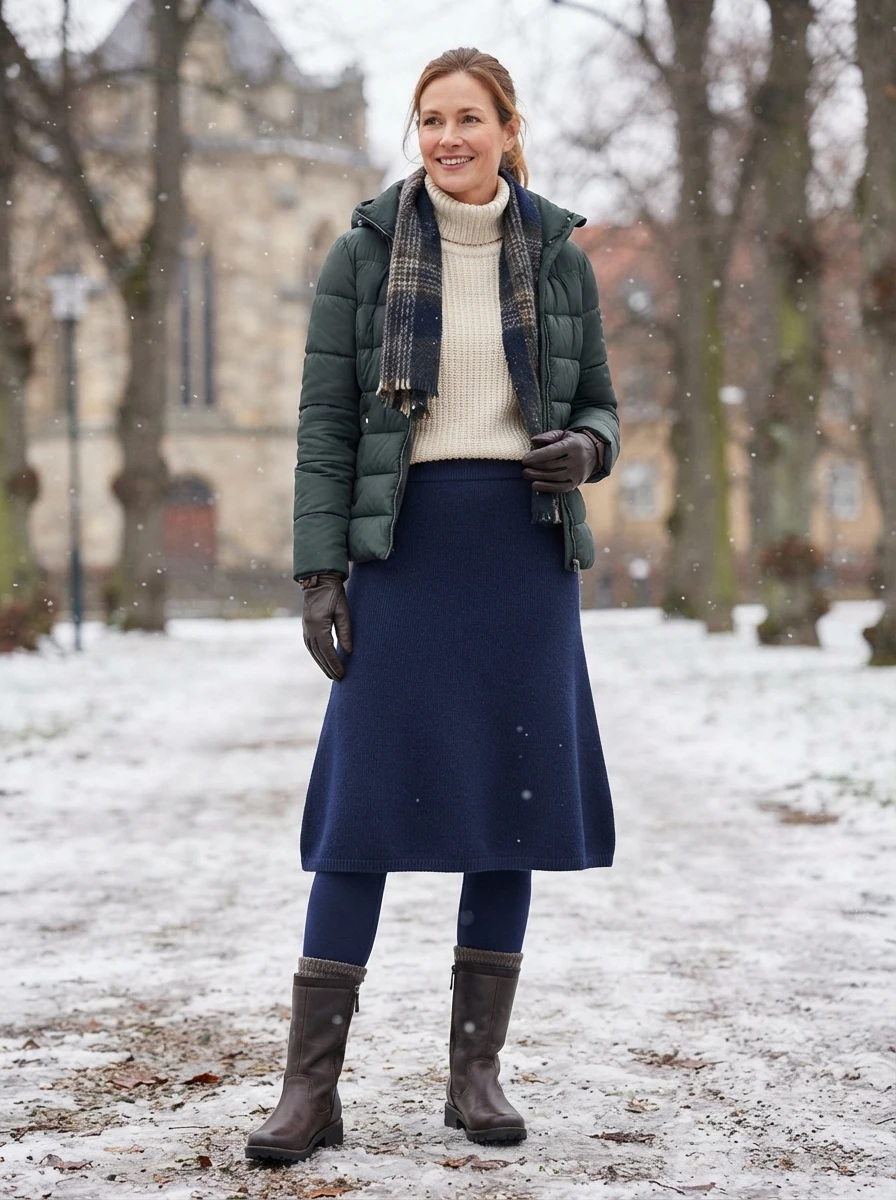
Fleece-Lined Leggings Rescue Your Skirts
Your summer skirts survive winter with one addition: fleece-lined leggings underneath. The leggings provide the insulation the skirt lacks, and because they are slim, they do not change the skirt's line at all. The skirt should be midi length or longer so the proportion reads as intentional; a mini over leggings is a different outfit. Knee-high boots bridge the remaining gap. This technique effectively doubles your skirt collection for winter — every summer skirt is now a winter skirt with the right base layer.
Fabric note: fleece-lined leggings come in cotton and synthetic blends; the cotton-blend versions breathe better for all-day wear indoors.
Sweater Vest Over a Long-Sleeve Tee
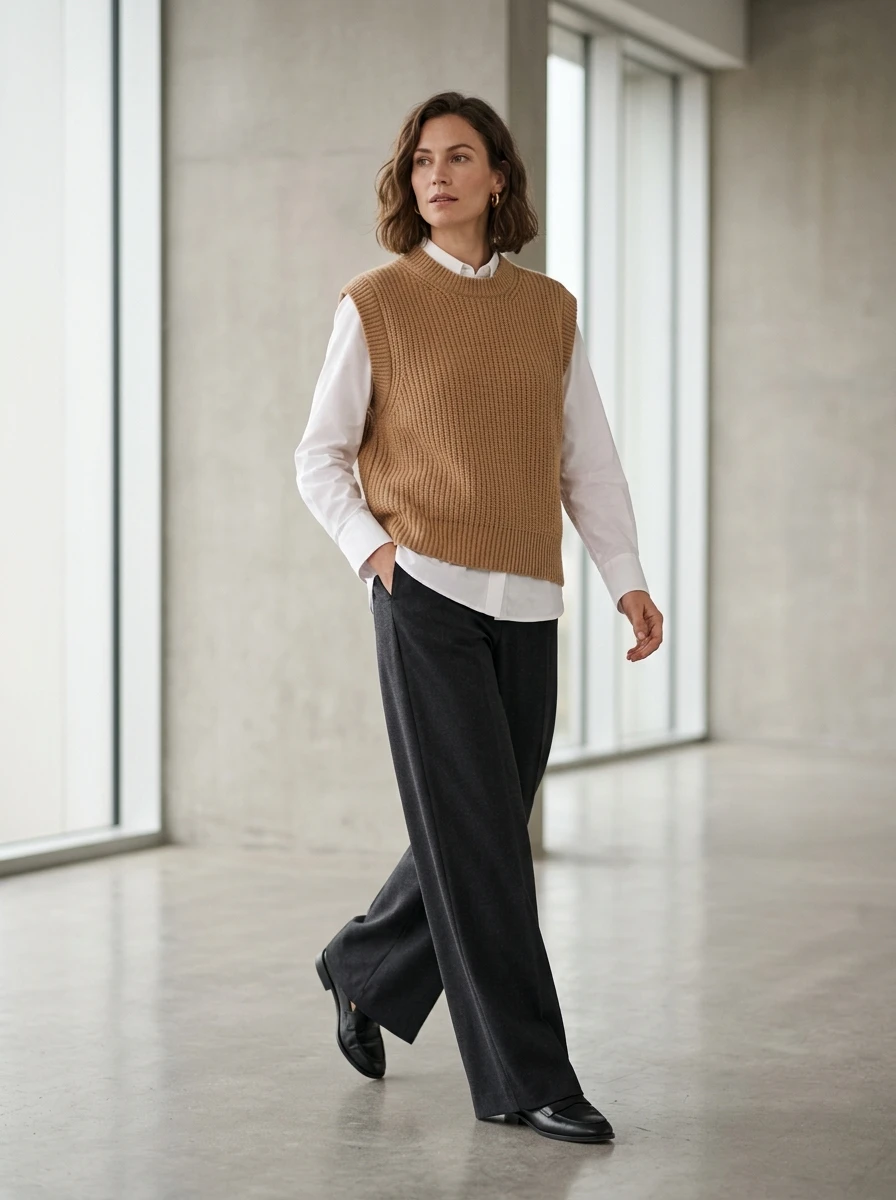
The sweater vest over a long-sleeve tee is the layering trick that makes two basic pieces look like a considered outfit. The vest adds the visual interest — texture, pattern, colour — while the tee provides the coverage and the sleeve. The vest should be slightly relaxed to drape over the tee rather than compress it. It is also the perfect use for the sweater vest you bought and never knew how to wear — the tee underneath solves the bare-arm problem that kept it in the drawer.

The Oversized Scarf, Belted Like a Poncho
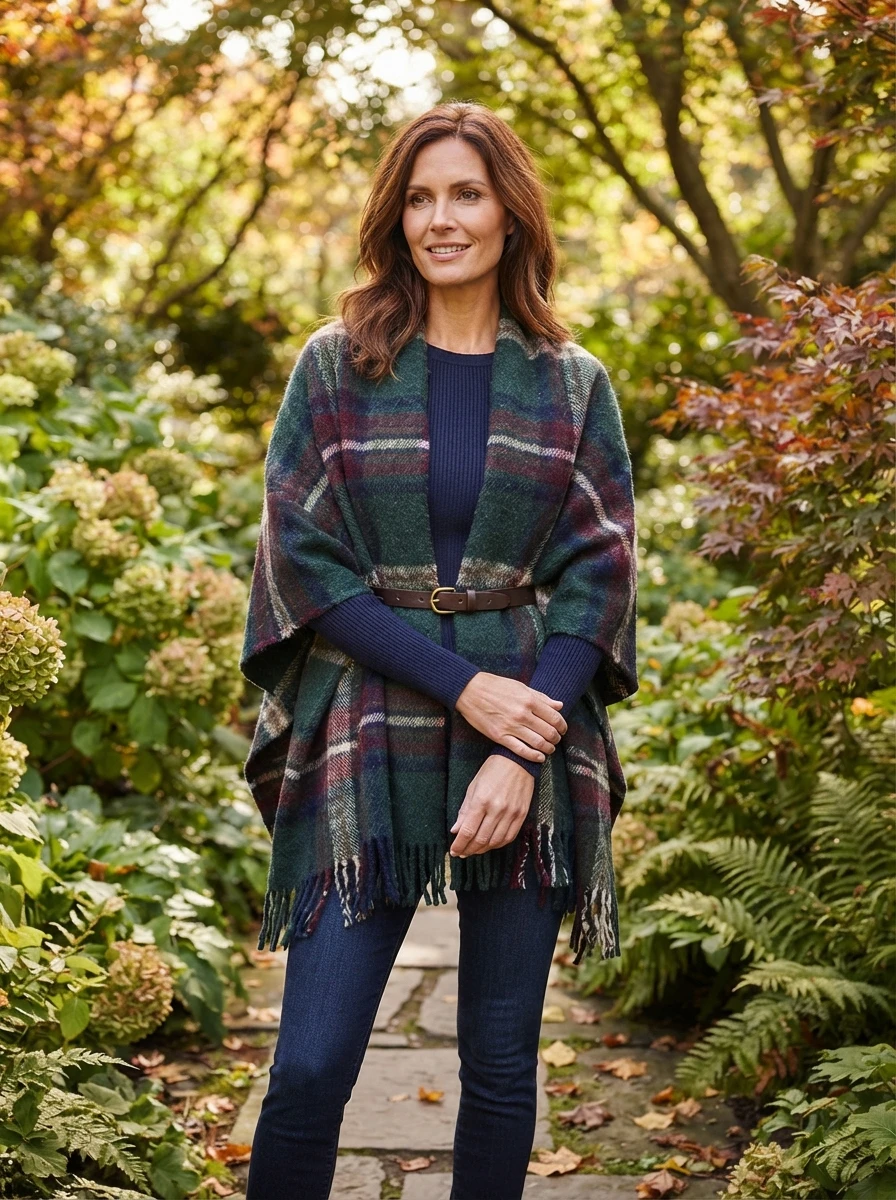
Drape your largest scarf over your shoulders like a poncho, belt it at the waist, and you have an entirely new outer layer. The belt is essential — without it, the draped scarf slides and looks accidental; with it, the scarf becomes a structured garment with a defined waist. The scarf must be genuinely oversized, blanket scarves work best; a regular scarf does not have the wingspan. This is the zero-cost "new coat" — the same scarf you have owned for years, completely different function.
Fit note: a slim belt keeps the look clean; a wide belt can overwhelm the drape and fight the scarf's soft folds.
A Thermal Under the Silk Blouse — Invisible Warmth
The silk blouse you wore all summer becomes winter-appropriate with a thin thermal underneath — the thermal is invisible, but it changes the blouse's season entirely. The thermal must be ultra-thin, silk-weight or fine merino, and close-fitting; anything bulky ruins the blouse's drape. A nude-for-you thermal disappears under light blouses; black works under dark ones. The blouse looks exactly the same from the outside — the warmth is a secret between you and the thermometer. This is invisible engineering at its best.

Leather Trousers and a Chunky Knit
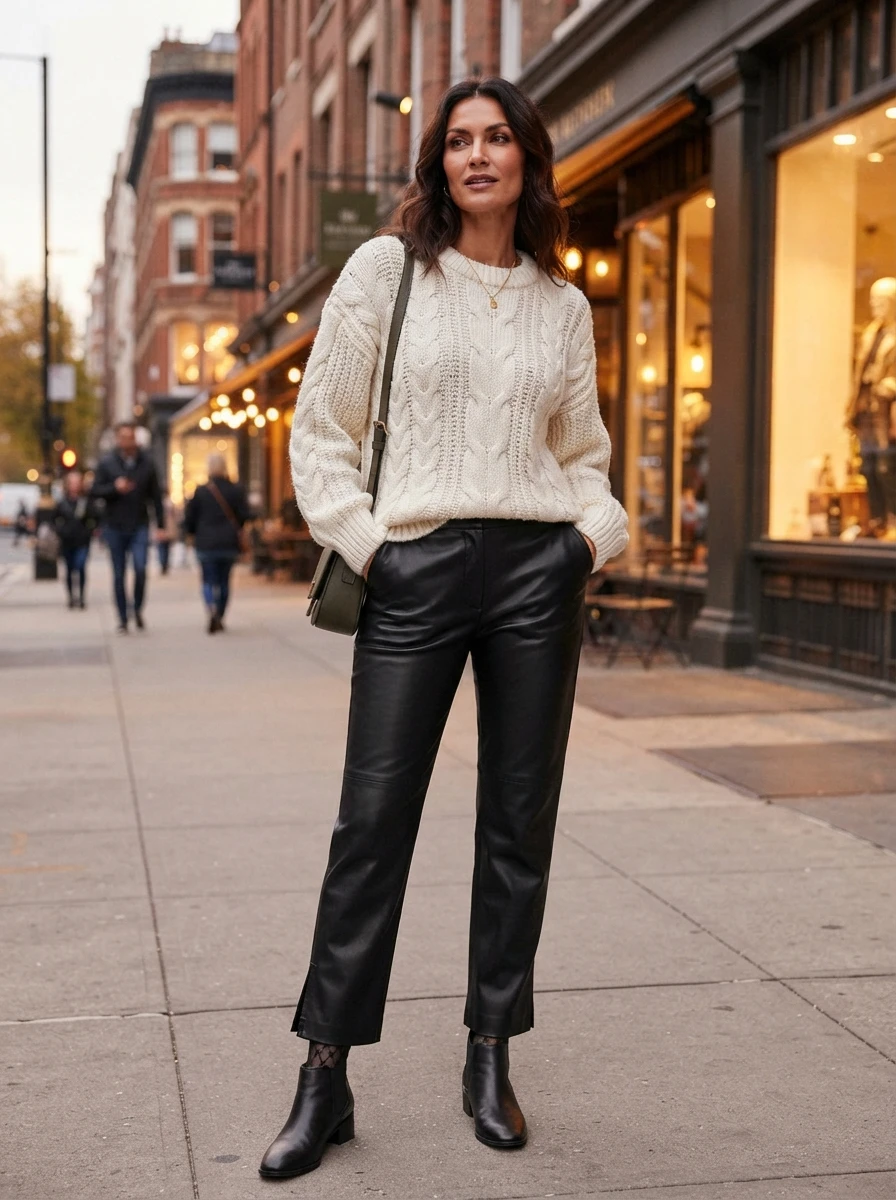
Leather trousers plus a chunky knit is the texture-and-proportion formula: sleek and structured below, soft and voluminous above. The knit's chunkiness is balanced by the trousers' slim line — the same volume rule as always. Half-tuck the knit so the trousers' waistband anchors the outfit; a full untucked chunky knit over leather trousers hides the proportion. The leather also blocks wind, making this genuinely warmer than it looks. It is the outfit that proves "dressed up" and "comfortable" are not opposites.
Care tip: wipe leather trousers with a damp cloth after wear and hang them rather than folding, so creases do not set into the surface.
Corduroy Trousers With a Turtleneck
Your corduroy trousers plus a simple turtleneck is the textured alternative to plain pants-and-sweater — the corduroy's ribs add visual interest that flat fabrics do not, which makes the whole outfit feel more considered with zero extra effort. The turtleneck should be fine-gauge and tucked in so the corduroy's waistband shows; the ribbed texture is the outfit's design detail and it deserves visibility. In rich tones — burgundy, forest, chocolate — this is the autumn-to-winter outfit that looks far more styled than its two pieces suggest.

Maxi Skirt, Sweater Tucked In
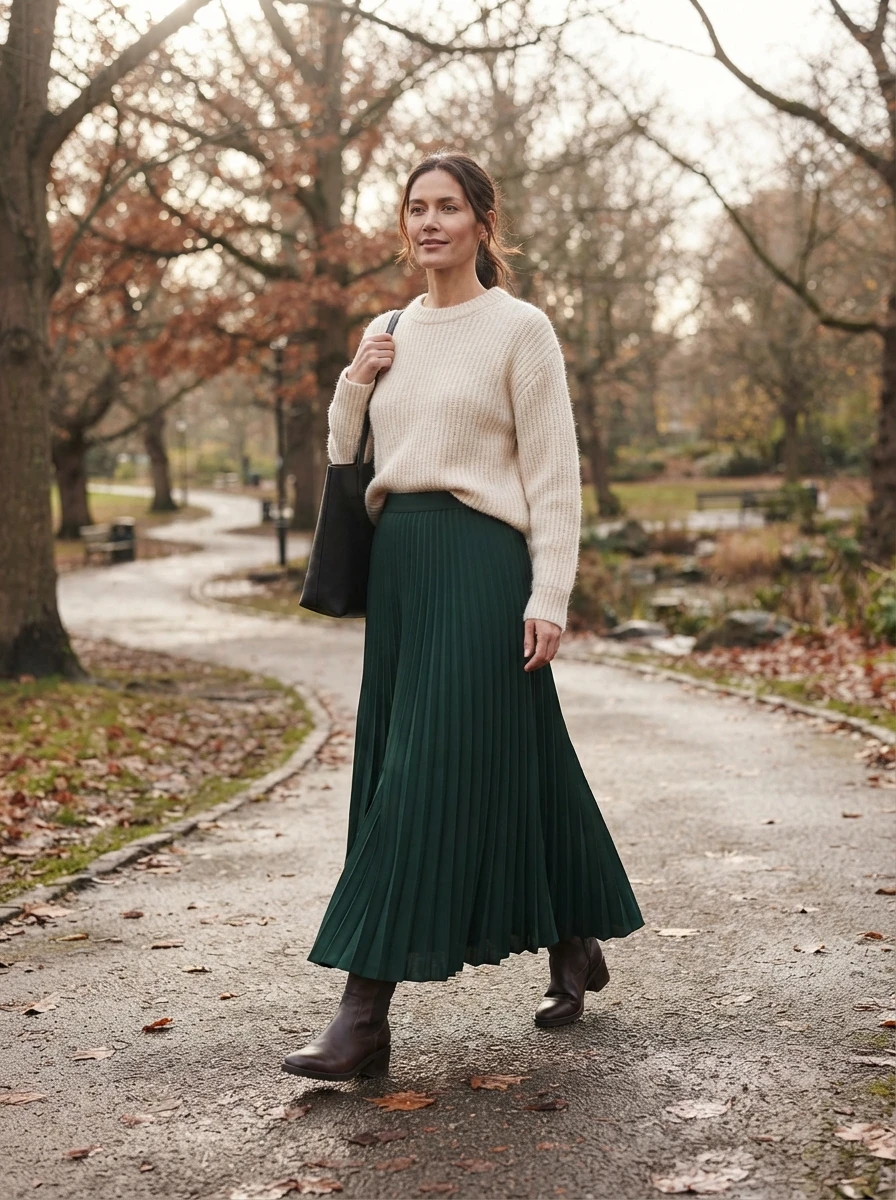
The maxi skirt with a tucked-in sweater is winter's most comfortable elegant outfit — the skirt's full length provides complete coverage while the tucked sweater defines the waist. The sweater should be fine or medium gauge; a very chunky sweater overpowers the skirt's drape. The tuck must be real, not a half-hearted front tuck — the waist definition is the entire structure of the outfit. Boots underneath, any height, complete it invisibly. It is the closest thing to wearing a blanket while looking refined.
Wear it with: a long pendant necklace or a slim belt to break up the expanse of fabric between waist and hem.
Common Questions About Early Winter Outfits
Which pieces should I start with when remixing my closet for early winter?
Start with the pieces you wear most: one oversized sweater, one turtleneck, one long cardigan and one wool scarf. Those four alone unlock the dress, shirt, skirt and denim-jacket techniques above, so they cover more outfits than any single new purchase would.
Can a summer dress really work in November?
Yes, with two additions: a sweater over it and tights underneath. The sweater changes the dress's silhouette into a skirt, and the tights handle the warmth — the dress itself never needed to be a winter garment, it just needed winter company.
How do I layer without looking bulky?
Layer thin to thick and fitted to relaxed, from the inside out. The base layer should be the thinnest and most fitted thing you own; each layer after it can be slightly looser. Bulk happens when a thick layer goes under a fitted one — the order matters more than the pieces.
What is the one technique that saves the most money?
The sweater-over-dress switch. It converts an entire category of your wardrobe — dresses — into another season, requires no new purchases, and works with almost any sweater-and-dress combination you already own.
When do I actually need to buy something new?
When the temperature drops below freezing for good. Early winter in the 40s and 50s is a layering problem the techniques above cover; deep winter is when a proper coat, insulated boots and real thermals become non-negotiable, and that is a different list.
Before You Step Out: A Quick Checklist
- Base layer thin and fitted? Thermals and fine knits go closest to the skin; nothing bulky underneath a fitted piece.
- One volume, one line? If the bottom is wide, the top is fitted — and the waist is defined somewhere.
- Textures mixed? At least two different textures in the outfit, so the layers read as intentional.
- Hem and boot gap closed? Tights, tall boots or a longer hem — no bare gap at the ankle.
- One winter addition per summer piece? A sweater, a scarf or a thermal — enough to change the season, not so much that the outfit disappears under layers.
Tick all five, and the outfit is ready — built from pieces that were already hanging in your closet.