Gym Outfits for Women: Training Looks Built from Pieces You Already Own
How to use this guide
Treat trend ideas as styling prompts rather than rules. Start with pieces already in your wardrobe and adjust fabrics, layers, and proportions for your climate, comfort, occasion, and personal style.
Here is the uncomfortable truth about gym outfits: most "gym style" content is just athleisure fashion, clothes that look like workout gear but were designed for coffee runs. Actual training has specific demands: fabric that moves sweat away from skin, seams that do not chafe under a barbell, waistbands that stay put during burpees, and leggings that do not go sheer in a squat. This guide covers both: how to look good and how to make sure the clothes actually work.
The good news in the title is real: you probably own most of what you need. A gym wardrobe is not about buying a matching set for every day. It is about understanding which properties matter (fabric composition, fit, support) and auditing what you already own against them.
What actually matters in workout clothing
Three things, in order: fabric function, fit security, and support level. Everything else, colour, pattern and brand included, is secondary.
Fabric function means moisture management. Cotton absorbs sweat and holds it against your skin; that is fine for a walk, miserable for HIIT. Synthetics (nylon, polyester) with spandex wick moisture outward and dry fast. For low intensity work (yoga, stretching, walking), cotton blends are genuinely comfortable. For anything that makes you sweat hard, synthetics are not a preference, they are the difference between comfortable and distracted.
Fit security means: does it stay where you put it when you move? Waistbands that roll, straps that slip, shorts that ride, these are not minor annoyances, they are what make you adjust your clothes instead of focusing on your form. High waistbands with wide, flat elastic stay put. Drawcords are worth their weight in gold.
Support level means matching the sports bra to the impact. Low impact (yoga, pilates): light support, comfort priority. Medium (cycling, weight training): medium support, encapsulation or compression. High impact (running, HIIT, dance): maximum support, wide underband, structured straps. Wearing the wrong level is not just uncomfortable, it is the reason many women dread cardio. If you want to see how those fabric claims translate into actual products, Under Armour's fabric technology breaks down what each knit is engineered to do.
Which Fabric for Which Workout
Match the fabric to the sweat level, not the trend. The table below is the shortcut: find your workout, then check the fabric before you buy or reach for a piece you own.
| Workout | Best fabric | Why it works |
|---|---|---|
| HIIT and running | Nylon or polyester with spandex | Wicks sweat fast and dries before the next interval |
| Heavy lifting | Moisture wicking synthetics | Stays dry under a barbell and resists chafing |
| Yoga and pilates | Cotton blends or seamless knits | Soft, flexible and breathable at low sweat levels |
| Outdoor cold runs | Brushed tech fleece | Traps warm air with a smooth face that blocks wind |
| Recovery and stretching | Seamless knits | No seams pressing into skin during floor work |
Cotton earns its place only at the low end of that table. The harder you work, the more synthetic your fabrics should be, which is exactly why the squat test in the next section matters: a legging that goes sheer under stretch fails no matter what the label promises.
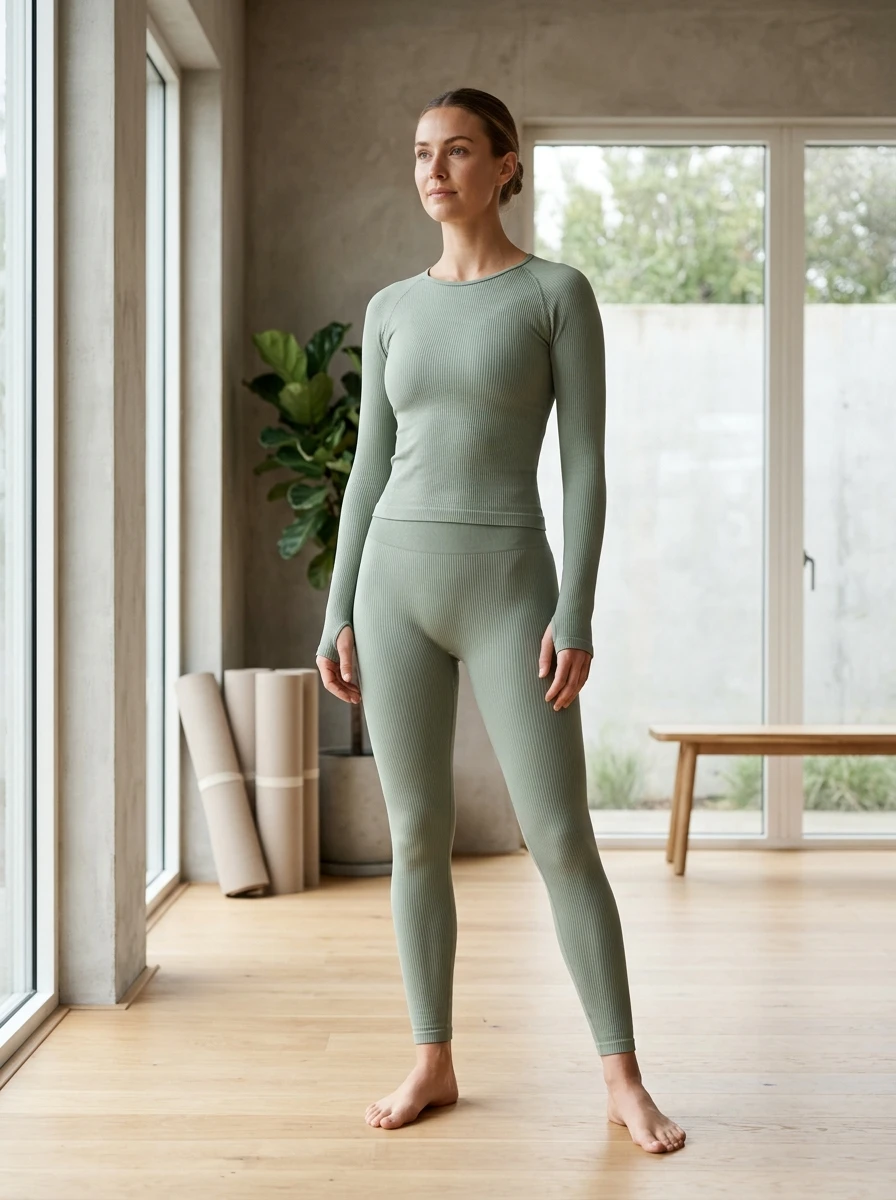
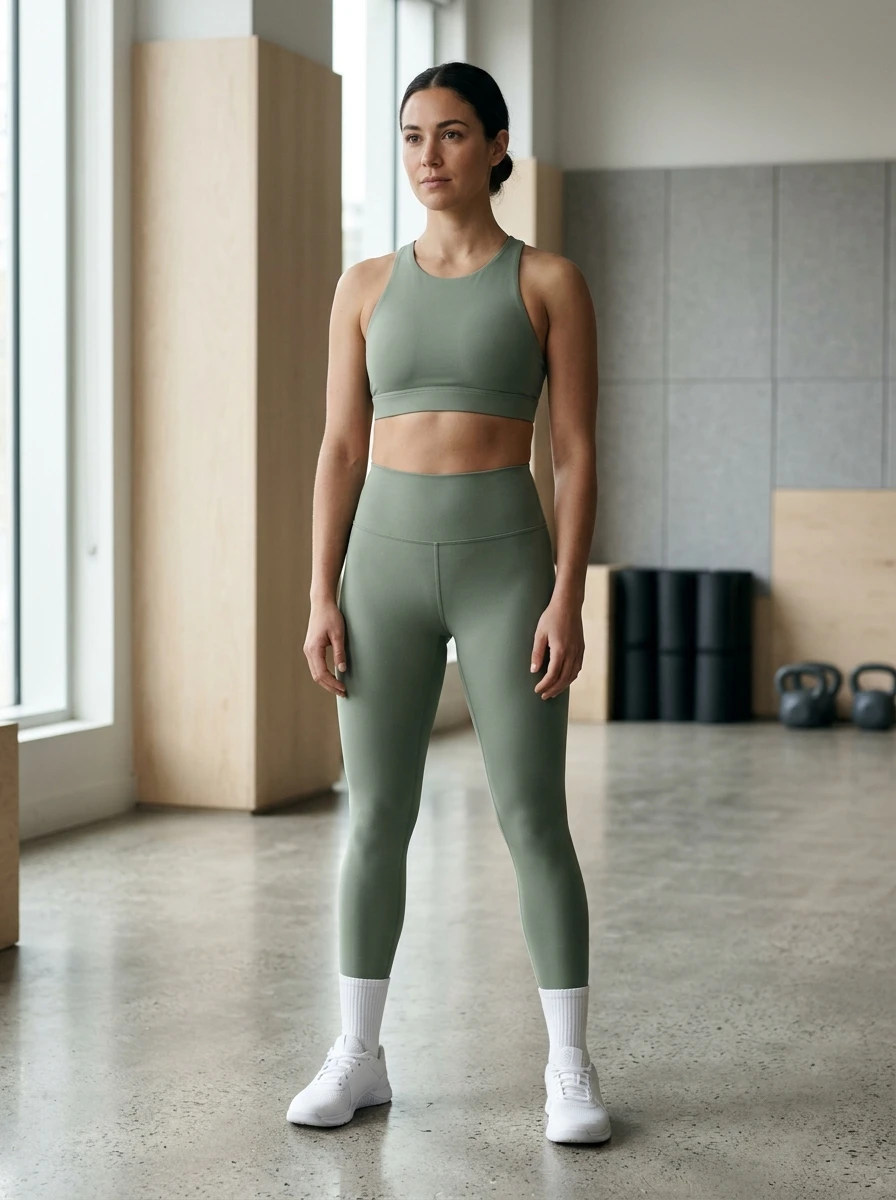
Monochromatic Sage Set
A matching set works for the gym for a psychological reason as much as a visual one: when your outfit looks intentional, you train like someone who takes training seriously. The sage monochrome specifically photographs well and looks clean, but the functional check matters more: the leggings need to pass the squat test (bend deeply in front of a mirror; if the fabric goes sheer or shows underwear lines, they are lounge leggings, not training leggings).
Fabric note: matte, high spandex fabrics pass; thin, shiny ones usually do not. White socks and clean trainers finish the look, but honestly the shoes matter more than the outfit: worn out trainers cause more gym problems than any clothing choice.
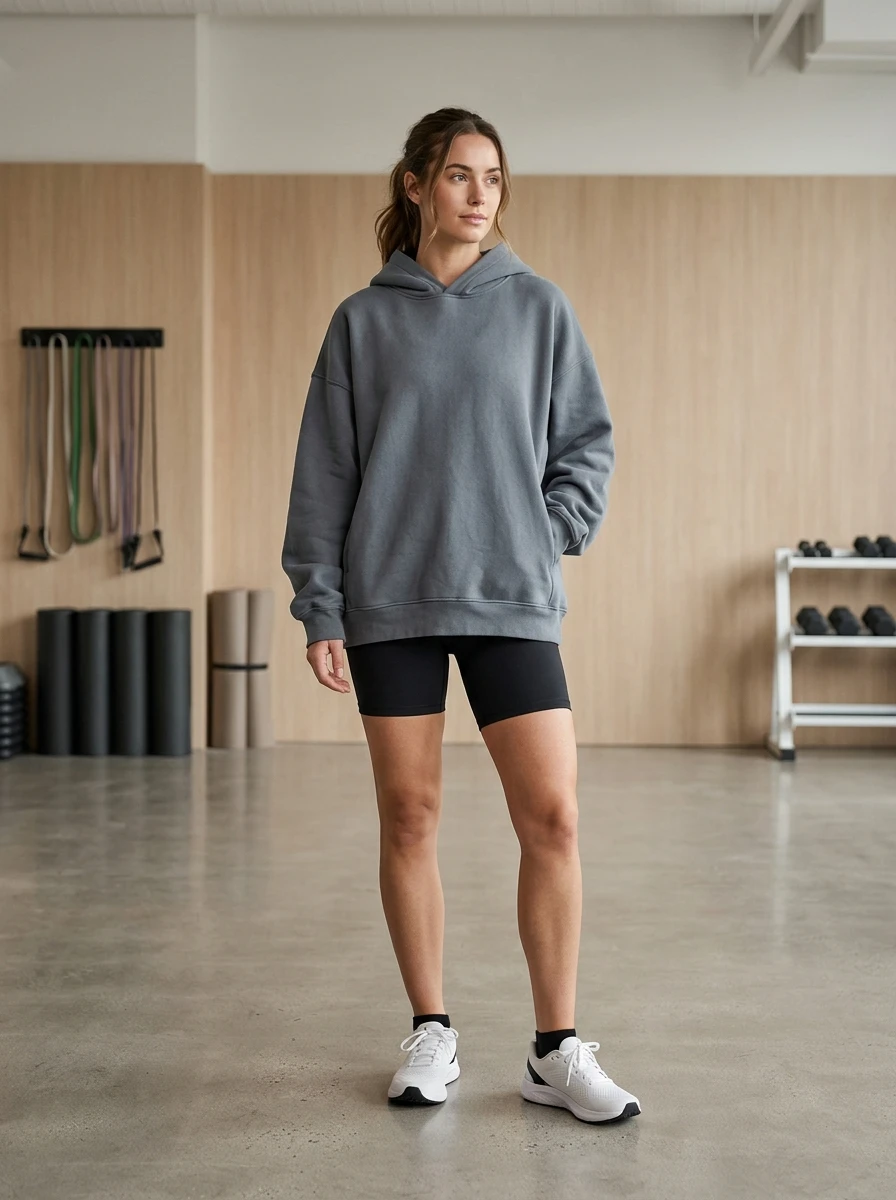
Oversized Hoodie and Biker Shorts
This is the gym's most honest outfit: comfort on top, function on the bottom. The proportion logic, loose top, fitted bottom, keeps you from looking shapeless while giving you full range of motion.
Fit note: the functional detail that matters: the hoodie is for getting to the gym and warming up, not for the workout itself. Heavy cotton traps heat, and once you are working hard, an oversized hoodie becomes a sweat soaked burden. Plan to lose it after ten minutes. Biker shorts need a wide, high waistband to stay put; the thin elastic on fashion biker shorts rolls the moment you bend over.
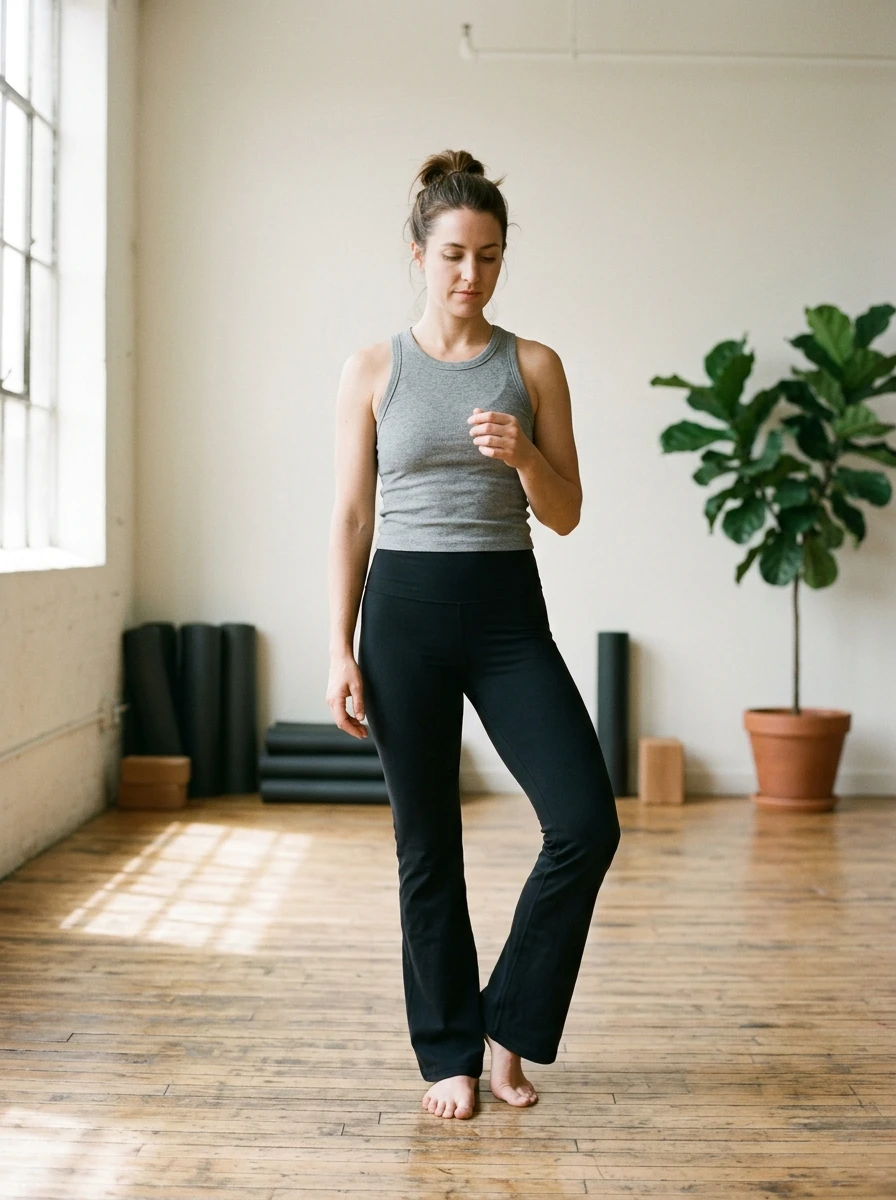
Seamless Ribbed Tank and Flare Leggings
For yoga and pilates, the priorities flip: you are barely sweating, so moisture management matters less than freedom of movement and comfort in floor positions. Seamless construction earns its keep here: no side seams means nothing digging into your ribs during side planks or spinal twists. The ribbed texture has a practical benefit too: it grips slightly, so the tank does not ride up in downward dog the way smooth fabrics do.
Flare leggings (the "yoga pant" revival) work because the flare balances the fitted top and gives your ankles room in cross legged positions. Cotton blends are genuinely fine for this intensity, save the technical synthetics for days you actually sweat.
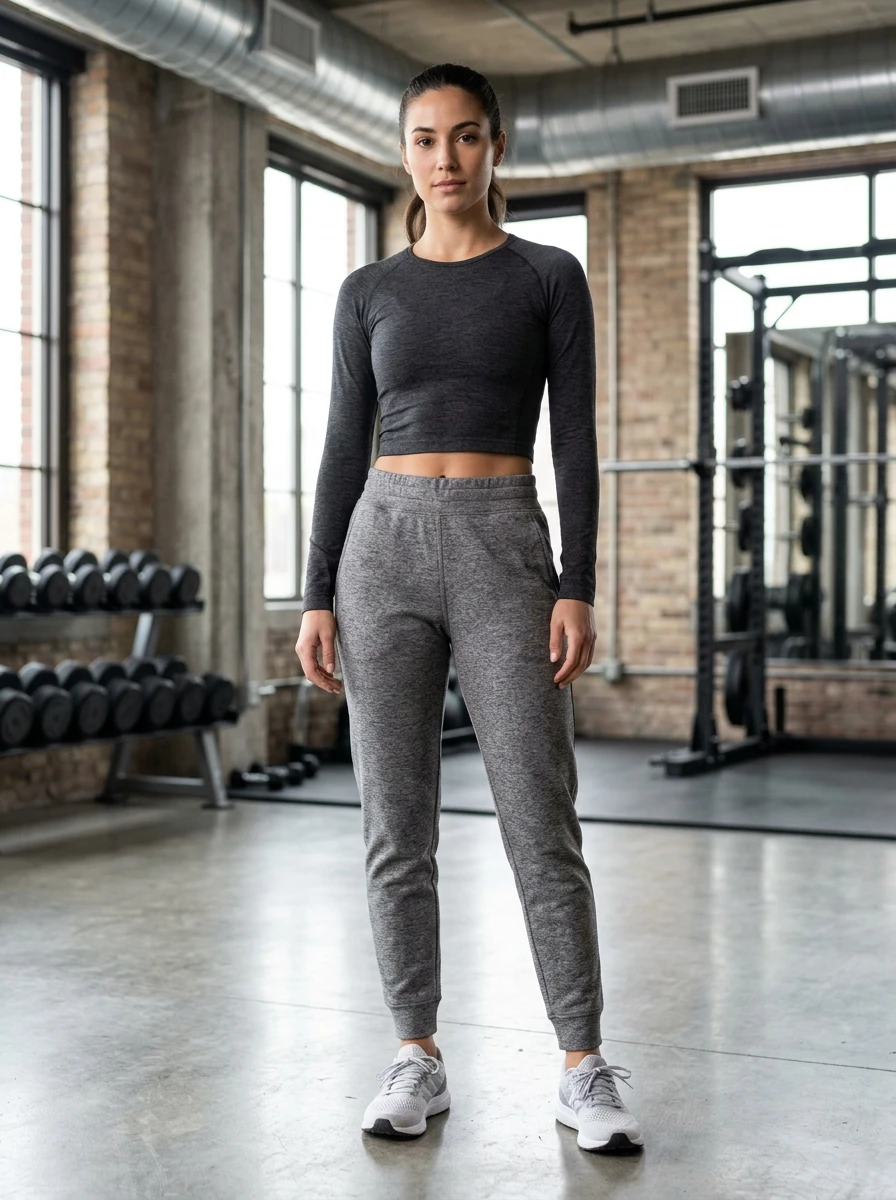
Tech Fleece Joggers and Crop Top
Cold weather training has a specific problem: you are freezing for the first ten minutes and overheating for the rest. The jogger and crop top combination solves it by putting the insulation where you need it (legs, which warm up slowly) and keeping the core ventilated (where heat builds fast).
Fabric note: tech fleece, the smooth faced, brushed back fabric, is warmer than its weight suggests because the brushed interior traps air. The crop top is not about showing skin; it is about not having excess fabric bunching under your arms when you move. For outdoor winter runs, this is the formula: warm legs, vented core, and a layer you can add on top for the walk home.
More in this vein: early winter outfit ideas using pieces you already own.
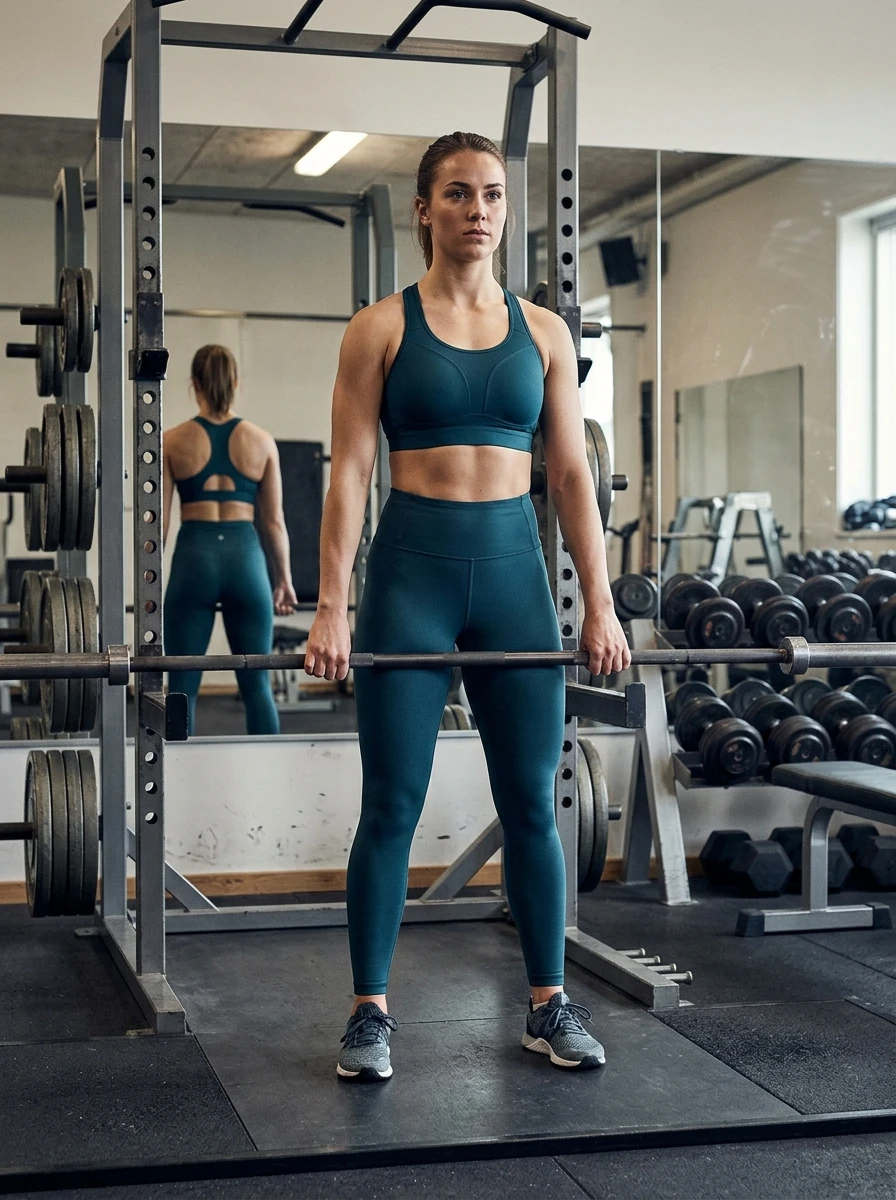
High Support Racerback and Leggings
For heavy lifting, your clothes have a job: disappear. A racerback with a wide underband distributes support across the back instead of concentrating it on narrow straps that dig during overhead presses. High waisted leggings stay put through deep squats and deadlifts, mid rise waistbands roll the moment you hinge at the hips, which is constantly in a lifting session.
Fabric note: moisture wicking synthetics, because a heavy lifting session produces more sweat than people expect, and damp cotton against skin under a barbell is a recipe for chafing. This outfit is not fashionable; it is functional. That is the point.
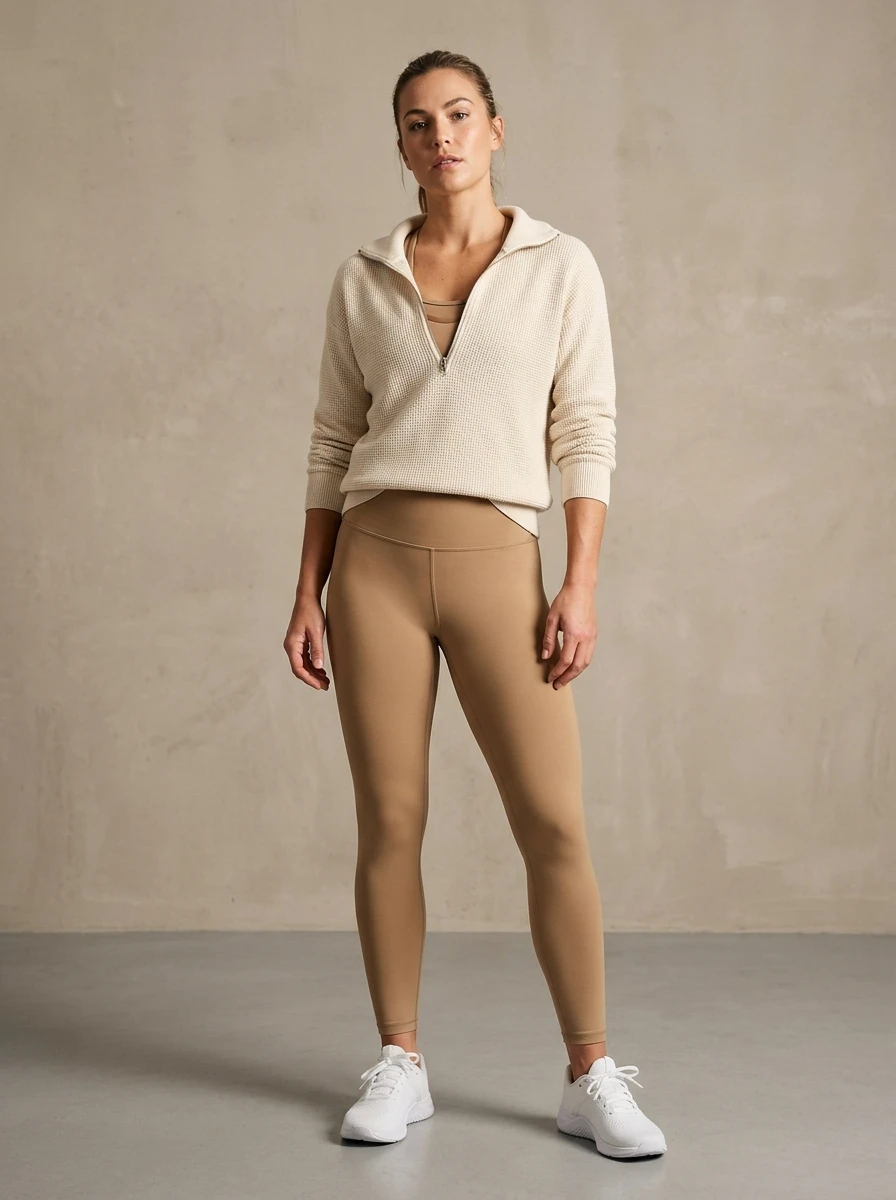
Cream and Tan Neutral Tones
The neutral gym palette works because it makes getting dressed effortless, everything matches everything, so a 6 a.m. gym session requires zero decisions. But there is a functional warning baked into light colours: white and cream leggings go sheer under stretch. It is physics, light fabric stretched thin transmits more light. The rule is simple: light colours on top are fine; light colours on bottoms need the squat test before you trust them.
Wear it with: a cream quarter zip over a tan bra gives you the aesthetic with zero risk, since the leggings (the sheer prone piece) stay dark. This is also the outfit formula that transitions best to errands after, neutrals do not scream "gym."
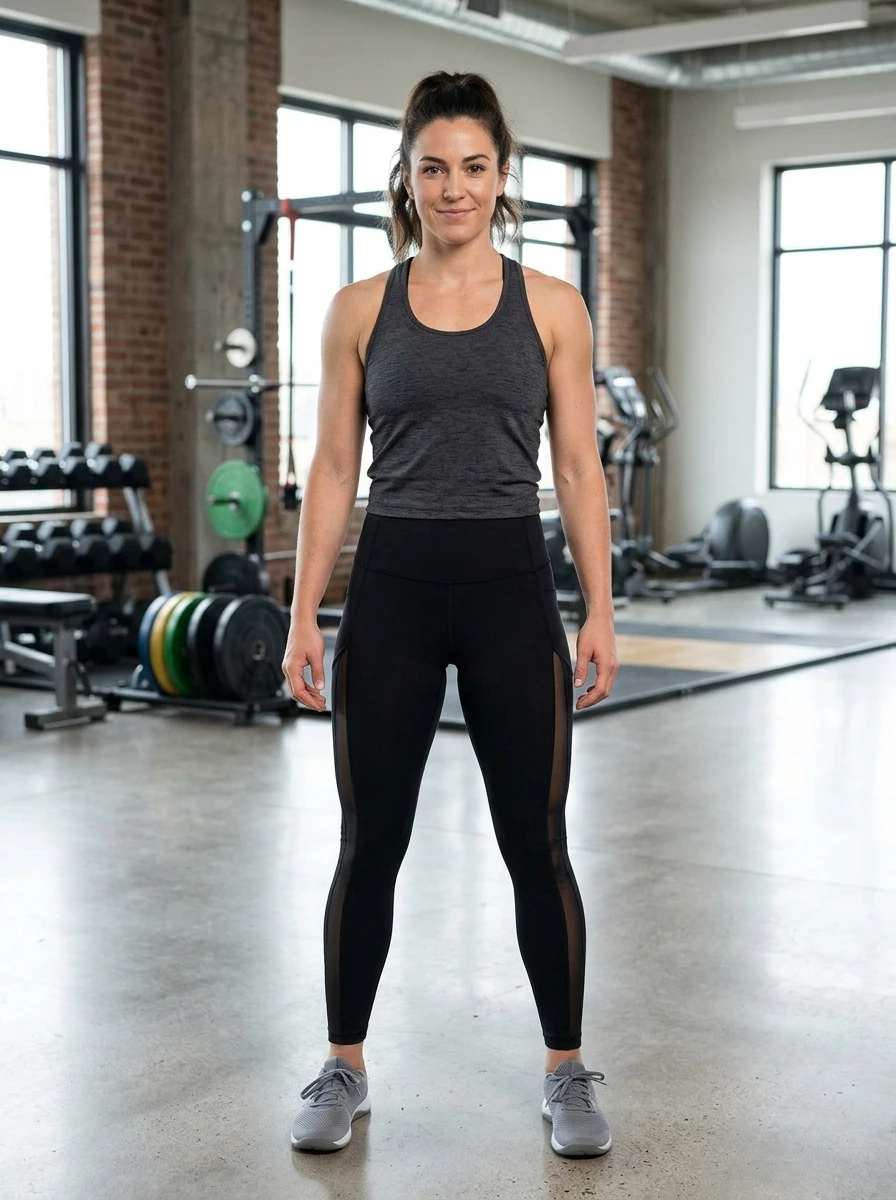
Mesh Panel Leggings and Tank
Mesh panels are functional ventilation, not decoration. They go where heat builds: behind the knee, along the calf, at the lower back. In a heated studio or a summer gym with weak AC, that airflow is the difference between finishing strong and overheating at minute twenty. The styling logic is that the mesh also breaks up the visual mass of black leggings, so they look designed rather than plain.
Fit note: mesh panels reduce the fabric's opacity in exactly those zones, so check them in the squat test too, ventilation mesh that is also sheer mesh is a problem.
Vintage Windbreaker Set
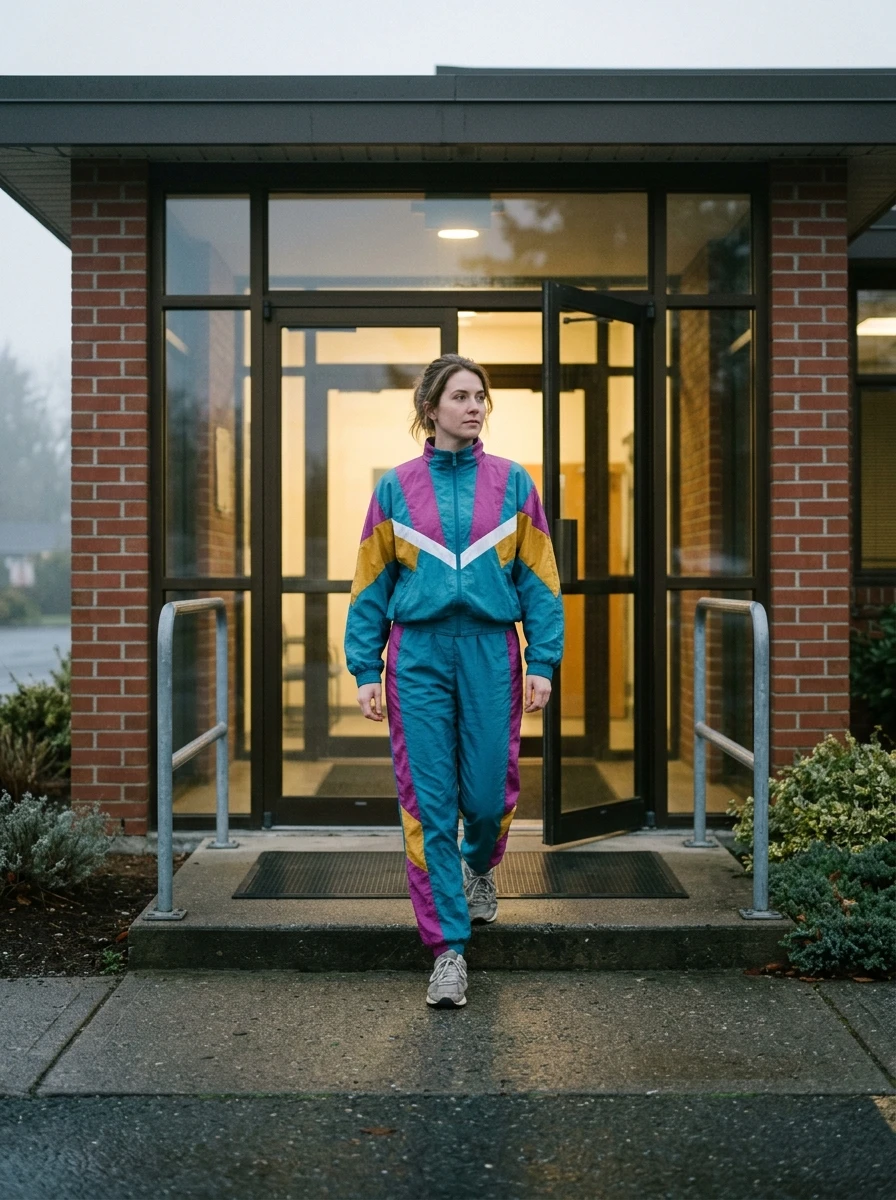
The windbreaker set is the ultimate "pieces you own" outfit: that old track jacket in the back of your closet finally has a job. For outdoor training and cool weather warmups, a windbreaker does something no other layer does: it blocks wind while weighing almost nothing, and it packs into its own pocket. The retro aesthetic is a bonus, not the point.
Fabric note: functionally, look for one with underarm vents or a mesh lining; a fully sealed windbreaker turns into a sauna within minutes of real exertion. Thrifted 90s windbreakers are often better made than new fast fashion ones, heavier zippers, better linings. For more retro styling, try these Y2K inspired outfits featuring vintage Von Dutch shoes.
Compression Bodysuit
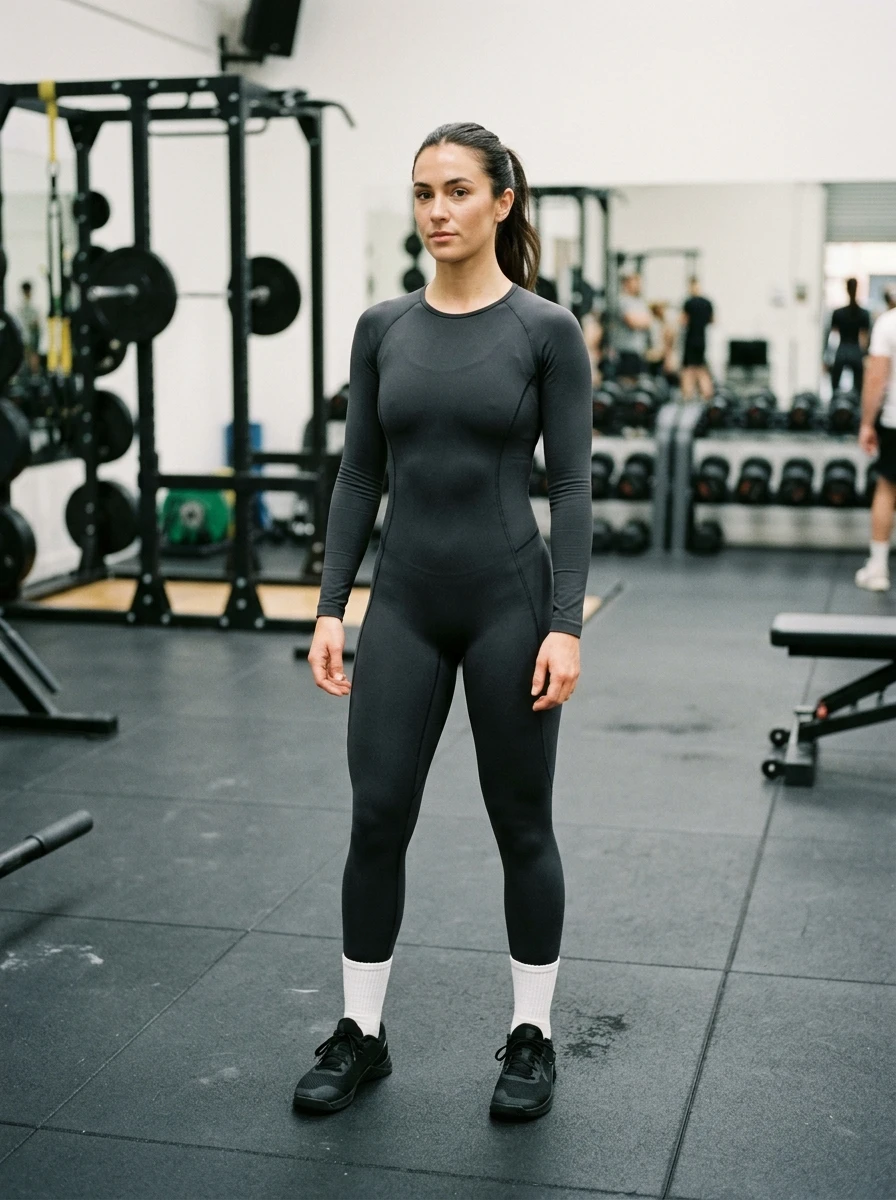
The bodysuit's advantage is total fit security: one piece, no waistband to roll, no top to ride up, nothing to adjust between sets. For circuit training and HIIT, where you are moving constantly between exercises, that zero maintenance quality is genuinely valuable.
Fit note: the tradeoff is real and worth naming: bathroom breaks require near full undressing, which is annoying enough that it rules bodysuits out for long sessions for many women. The compression level matters too, light compression smooths and stays comfortable; firm compression looks sleek but can restrict breathing during hard cardio. Know which you are buying.
Long Sleeve Half Zip and Bike Shorts
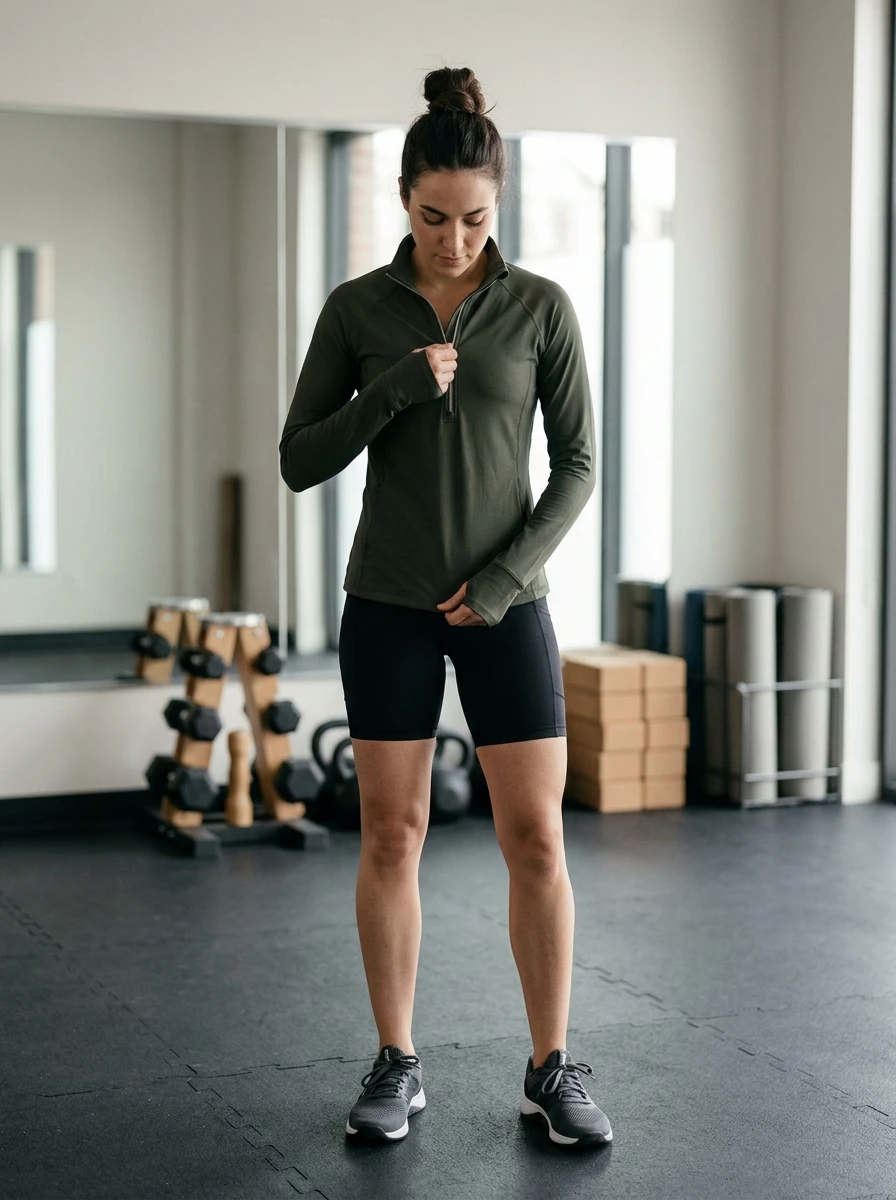
This is the temperature regulation uniform: full coverage for the cold walk in, easy venting the moment you warm up. The half zip is the key mechanism, a quarter zip opening dumps heat fast without requiring you to remove the layer, which matters because stripping mid workout breaks your flow. Bike shorts keep the lower half cool once your heart rate climbs.
Care tip: the quality detail that separates good from disposable: the zipper. A cheap zipper snags, separates, and eventually fails, and a half zip with a broken zipper is just a weird long sleeve shirt. YKK or equivalent hardware is worth checking for.
Navy and White Classic
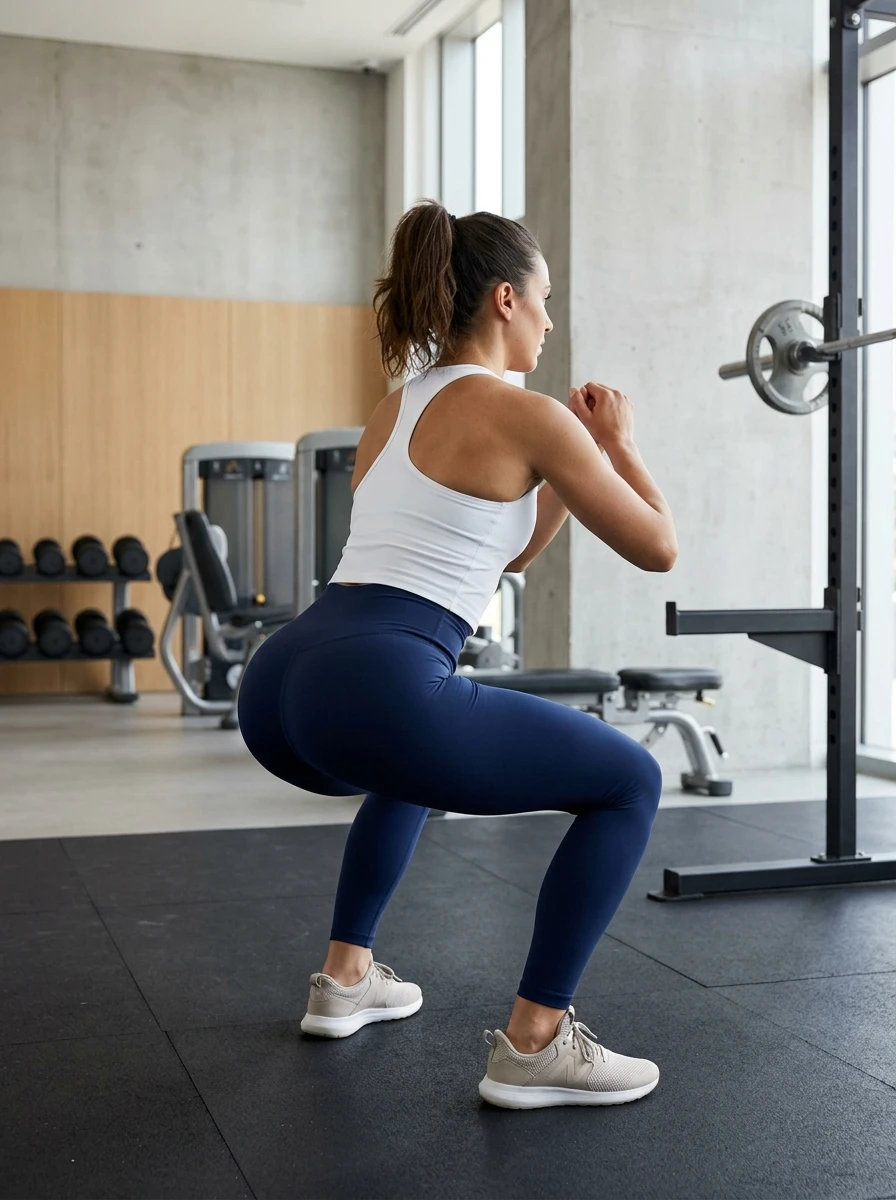
Navy is the thinking woman's black for the gym: dark enough to be forgiving (hides sweat marks better than grey, does not show lint like black), but with more visual interest. The white tank on top keeps the contrast crisp, and here is the practical reason for white up top rather than navy: sweat shows less on white than on saturated colours, counterintuitively, because there is no dye to darken unevenly.
Fit note: the navy leggings still need the squat test, dark does not automatically mean opaque, especially in thin fabrics. This is the colour combination that looks most "put together" with the least effort, which is why it is a classic.
Cropped Hoodie and High Waist Leggings
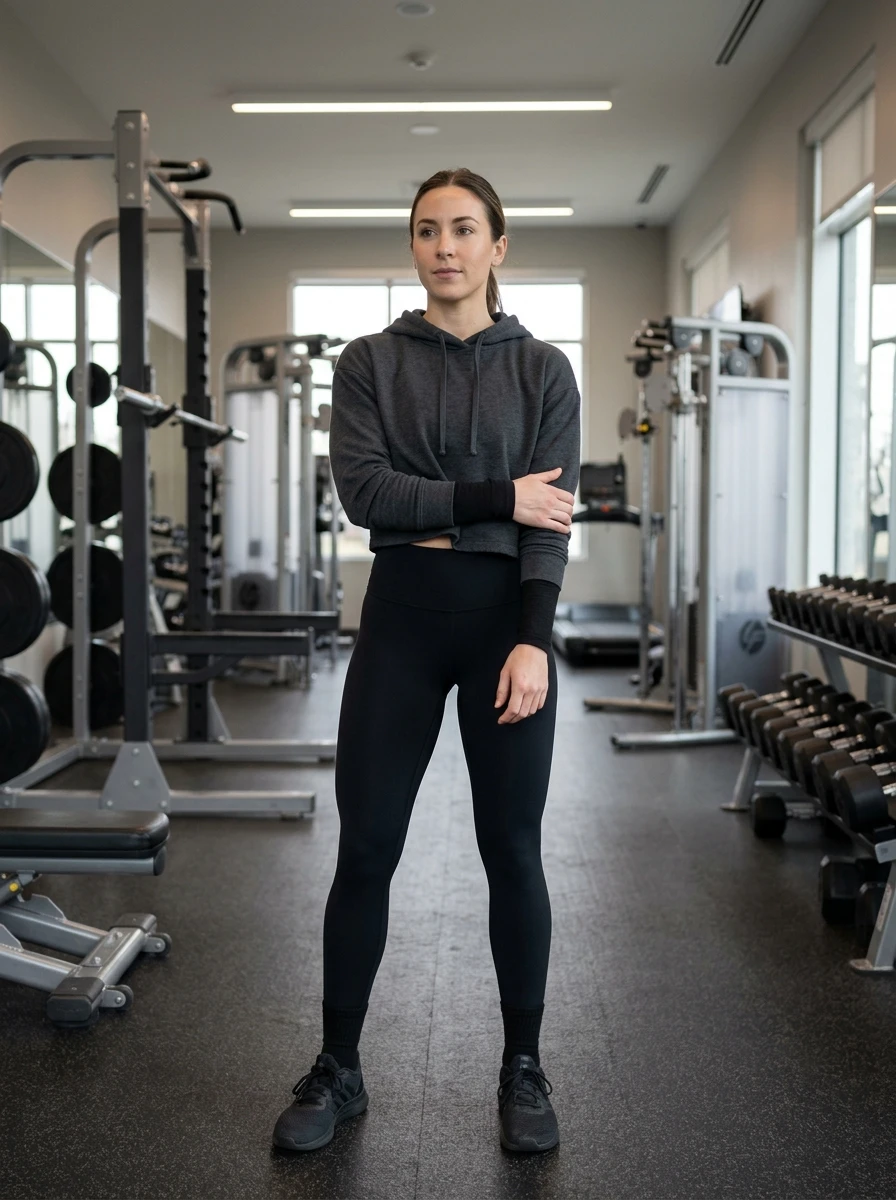
The cropped hoodie works because the high waisted legging does the coverage work, the two pieces meet at the natural waist, so there is no exposed midriff unless you want there to be. It is the modest version of the crop top trend, and it is more practical: the hoodie's warmth stays, the leggings' security stays, and you get the modern proportion without the chill.
Wear it with: for winter gyms (which are somehow always freezing until you are moving), layer a thermal long sleeve under the hoodie, the crop length means the thermal peeks out below, which actually looks intentional.
Seamless Knit Set for Recovery Days
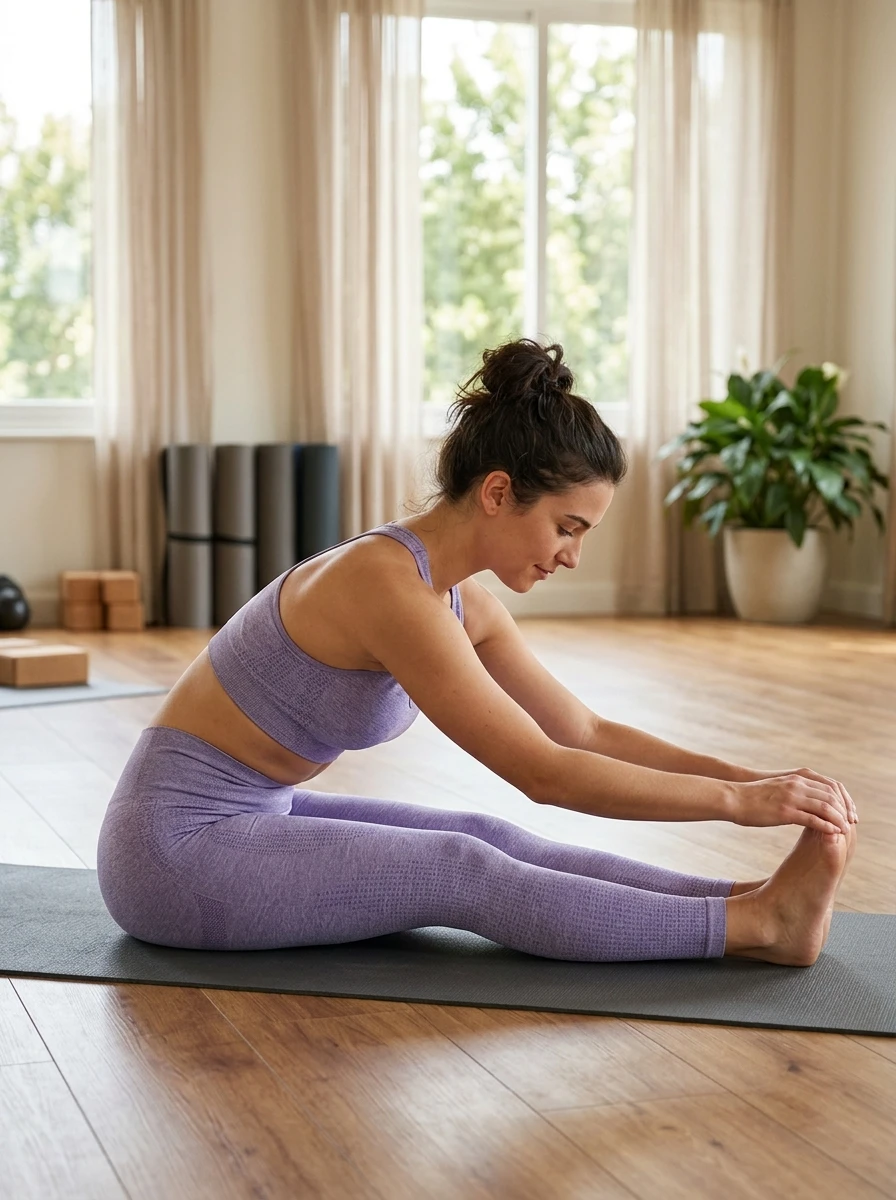
Not every gym visit is a workout, mobility work, stretching, foam rolling, and rest day movement have different clothing needs. Seamless knits excel here because there are no seams to press into your skin during floor work, and the same soft knits anchor our comfy aesthetic outfits, and the soft texture feels like recovery rather than performance.
Fabric note: the honest limitation: these fabrics are delicate. They pill, they lose shape, and they do not wick, so they are genuinely bad for sweaty training and genuinely perfect for everything else. Wash cold, hang dry, and keep them away from velcro (gym bags are full of it).
Athletic Skort and Tank
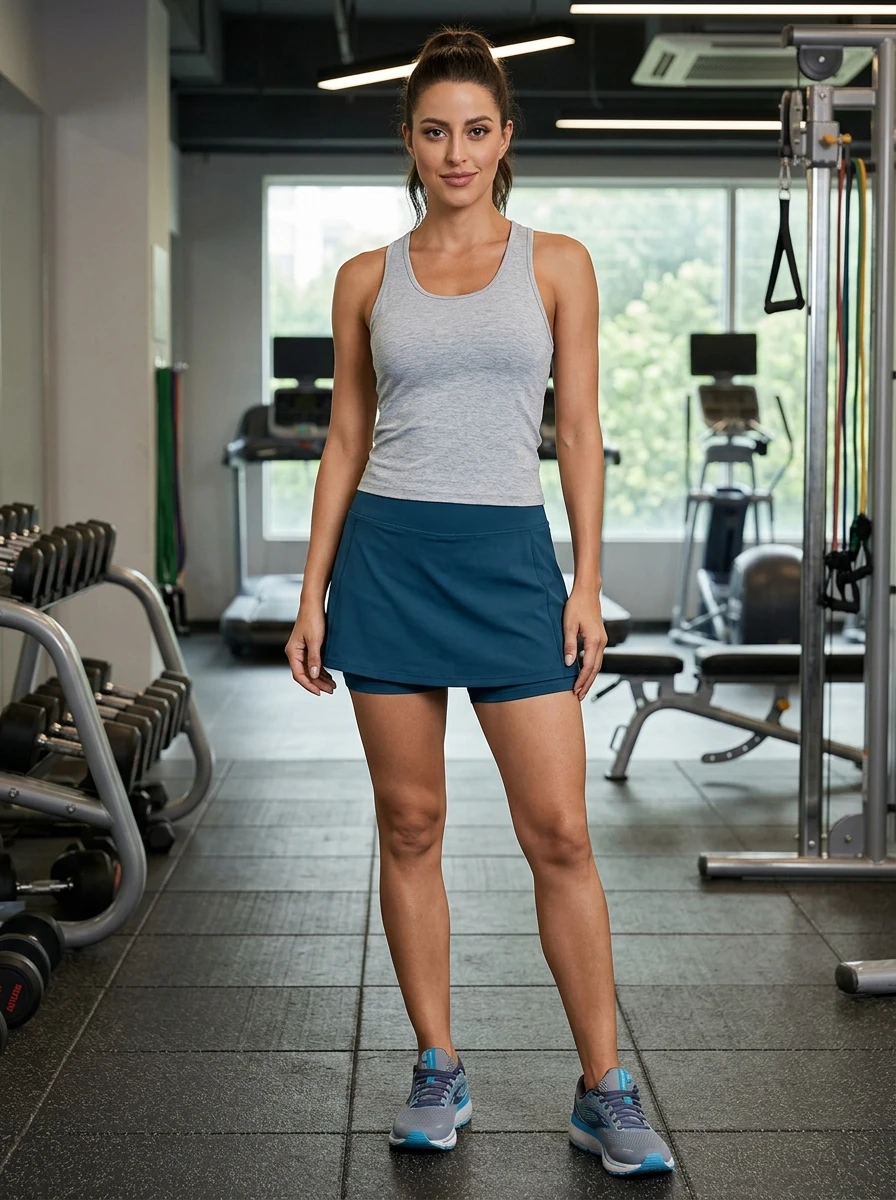
The skort deserves more respect: it is the only gym bottom that gives you the coverage confidence of a skirt with the security of shorts. For women who feel exposed in leggings but restricted in loose shorts, it is the answer.
Fit note: the functional detail is the undershort gripper, silicone strips at the leg opening that prevent ride up. Without them, the undershorts creep and the whole point is lost. The tank on top should be slim but not tight; the skort is already providing the visual interest, so the top's job is to stay out of the way.
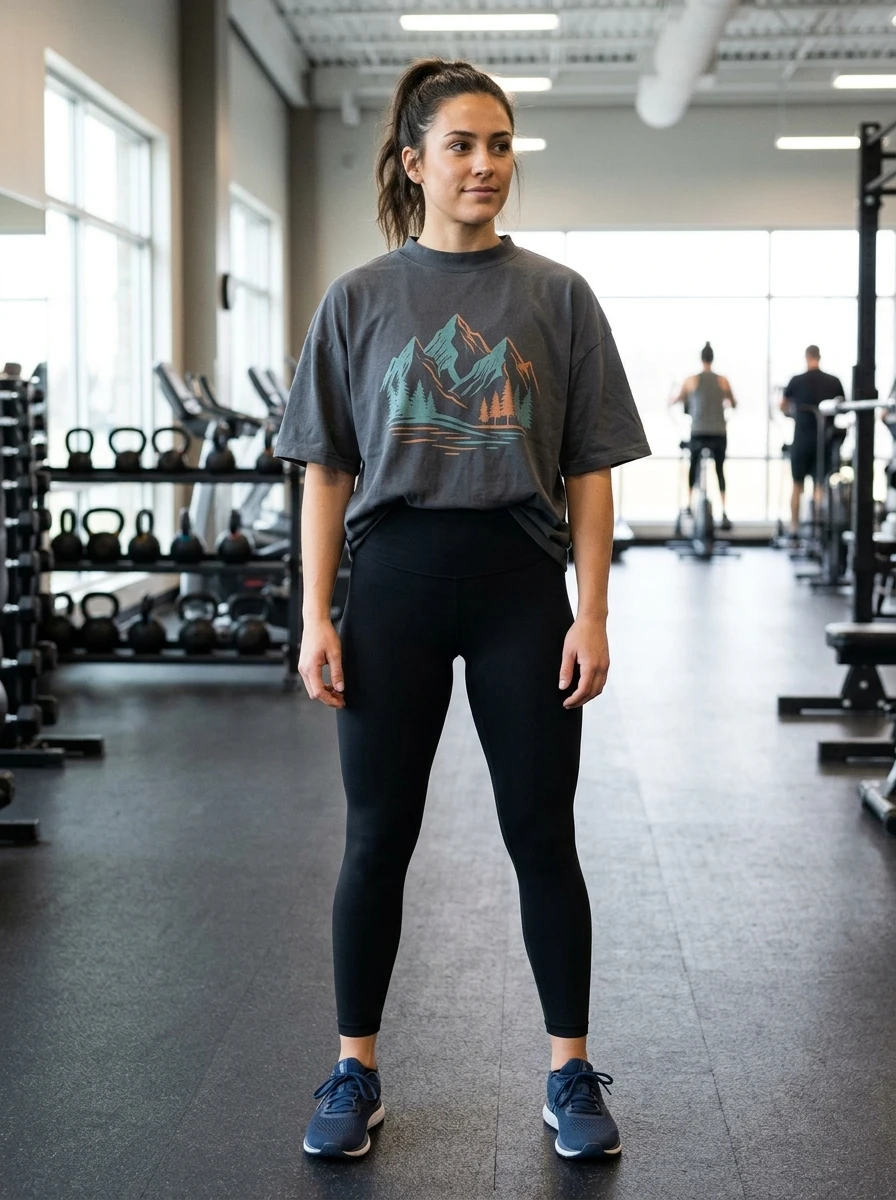
Oversized Graphic Tee and Leggings
The tucked oversized tee is the gym outfit for people who do not want to think about gym outfits, and the tuck is what makes it work. A front tuck into high waisted leggings defines the waist, keeps the tee from billowing during bent over movements, and transforms "I grabbed whatever" into a deliberate silhouette. The neckline check is practical, not prudish: a wide, loose neckline gaps when you bend forward, which is constant in training. A higher or tighter neckline stays put.
This is the outfit that proves the thesis of this guide, you already own everything here. That gym to street crossover is exactly what athleisure means in practice: pieces built for training that still look right outside the gym.
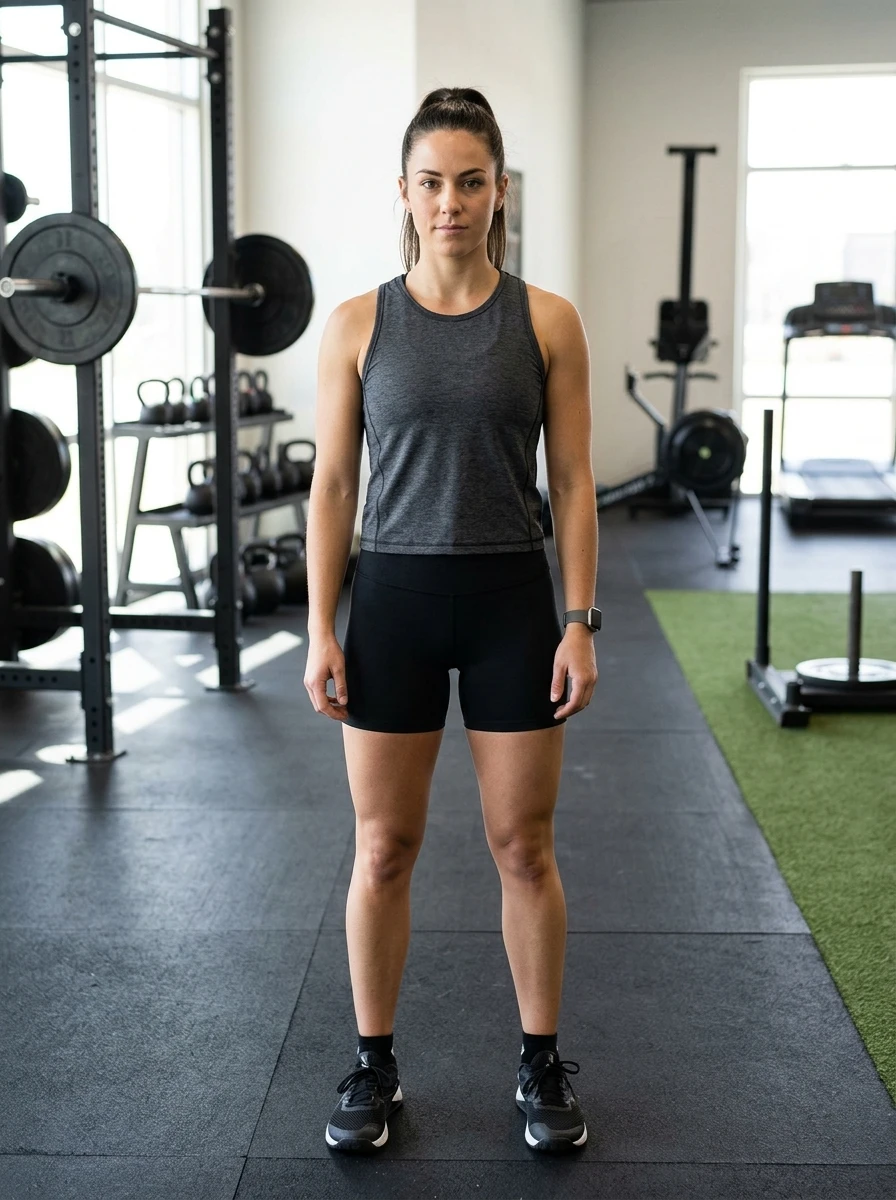
Performance Tank and Compression Shorts
For running and HIIT, this is the professional's uniform, and every detail is functional. The tank's moisture wicking fabric keeps sweat from pooling; the compression shorts' wide waistband and leg grippers keep everything locked in place through thousands of strides. There is no decoration here because decoration would be dead weight.
Fit note: the honest budget note: this is the one category where cheap versions genuinely underperform: a $12 compression short loses its grip elastic in months, while a well made one lasts years. If you train hard regularly, this is where your clothing budget should go.
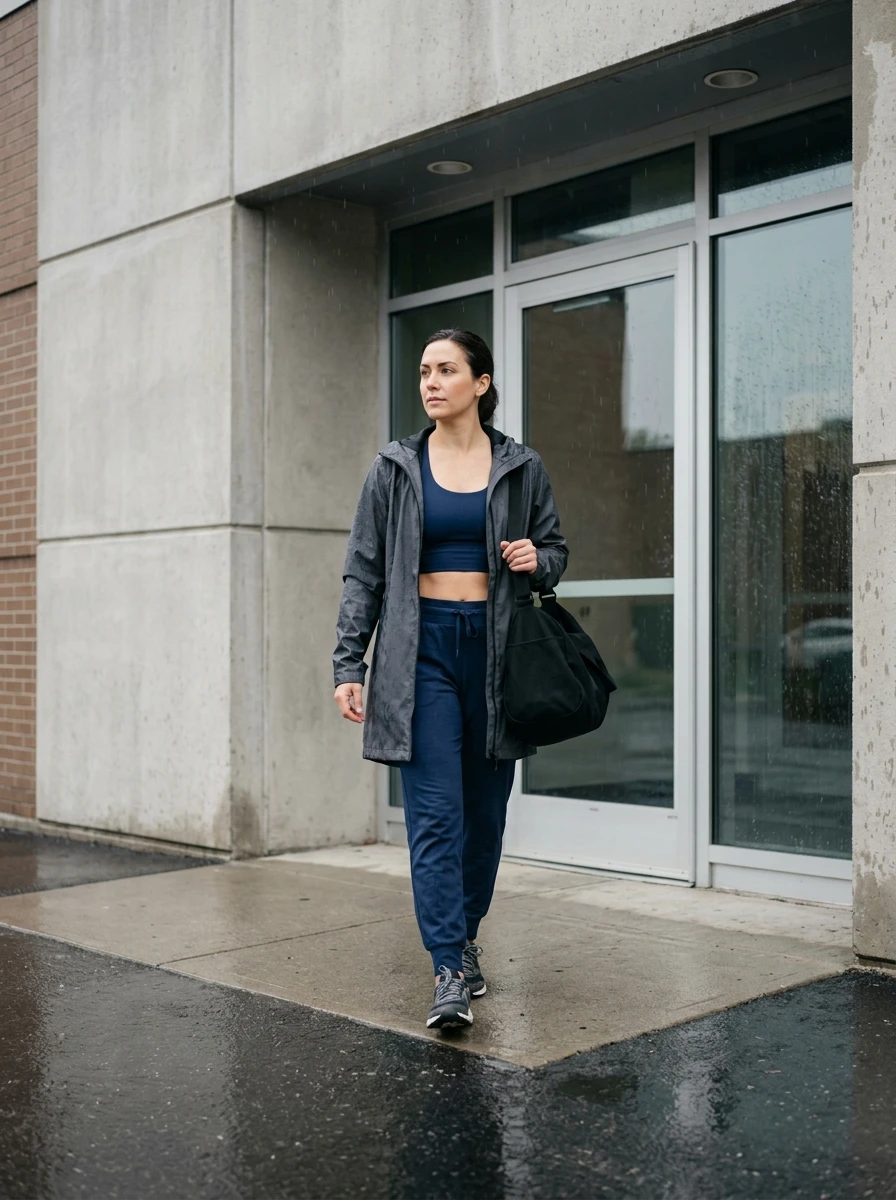
Longline Bra and Joggers
The gym to street outfit: a longline bra gives more coverage than a standard sports bra (useful if you are self conscious, useful if it is cold), and joggers are the most socially acceptable gym pant outside the gym. The cuffed ankle is the detail that makes joggers work: it shows the shoe, keeps the proportion clean, and stops the fabric pooling. For the commute, throw any jacket over this and you look dressed; the longline bra reads as a top, not underwear, which is the whole trick.
In rain, a packable shell over the top completes the system. The same sporty energy carries into how to style the viral blockette aesthetic coquette sportswear trend.
Common Questions About Gym Clothing
How do I test whether my leggings are actually squat proof?
Do the bend test at home: in front of a mirror, in good light, bend into a deep squat. If the fabric goes sheer, shows underwear lines, or the colour washes out under stretch, those are lounge leggings, not training leggings. Matte fabrics with high spandex content (15%+) pass most reliably; thin, shiny fabrics usually fail.
Where should I spend money, and where can I save?
Spend on: sports bras (support is engineering, cheap ones fail), shoes (injury prevention), and compression shorts if you run. Save on: tops (a basic technical tee performs the same at any price), hoodies, and joggers. The pieces closest to high impact movement deserve the budget; everything else is negotiable.
Can I wear cotton to the gym?
For low intensity work, yoga, pilates, walking, stretching, absolutely, and it is often more comfortable. For anything that makes you genuinely sweat (HIIT, running, heavy lifting), cotton becomes heavy, stays wet, and chafes. The rule is intensity matched fabric: the harder you work, the more synthetic your fabrics should be.
How do I stop my activewear from smelling permanently?
The smell is bacteria thriving in synthetic fibers. Wash cold (heat sets the odor), skip fabric softener (it coats fibers and traps bacteria), and never leave sweaty gear balled up in a bag, hang it to air dry immediately, even before washing. A cup of white vinegar in the wash every few weeks resets the fibers.
How many gym outfits do I actually need?
Three to four, rotated: one for heavy training days, one for lighter days, one in the wash, one spare. The "pieces you own" thesis holds, most women already own enough; the upgrade is usually just one proper sports bra and one pair of squat proof leggings, not an entire new wardrobe.
Train in Clothes That Work as Hard as You Do: A Quick Checklist
- Fabric matched to the workout: synthetics for sweat, cotton blends for low intensity only.
- Every legging passes the squat test before it earns a training day.
- Support matched to impact: light for yoga, medium for lifting, maximum for running and HIIT.
- Waistbands stay put: wide, flat, high waisted, with a drawcord where it counts.
- Shoes checked before the outfit: worn out trainers cause more problems than any clothing choice.
The best gym outfit is not the cutest one, it is the one you forget you are wearing. Fabric that manages sweat, fits that stay put, support matched to impact. Audit your closet against those three things before buying anything new. You will probably find you are already equipped, and now you know why each piece works.