How to Dress Old Money: 10 Outfits That Look Effortlessly Expensive
How to use this guide
Treat trend ideas as styling prompts rather than rules. Start with pieces already in your wardrobe and adjust fabrics, layers, and proportions for your climate, comfort, occasion, and personal style.
Stand on a busy street in October and watch the coats go by. Most of them are fine. Then one passes, camel wool, no logo, a scarf knotted loosely at the neck, and it looks expensive before you have registered a single label. What made the difference? Not the price tag. The coat was probably not new, and the rest of the outfit was almost certainly ordinary. The difference was discipline: natural fabric, a narrow palette, a fit that had clearly been thought about.
That is the whole trick of old money dressing, and it is good news, because discipline costs nothing. The ten outfits below are built from the same six rules, and every one of them works with pieces most wardrobes already hold. Learn the rules first, then let the outfits show you how they play out in real combinations.
Six Rules Before the Outfits
Start with fabric, not labels. Wool, cashmere, silk, linen, and cotton carry a matte density that synthetic blends cannot fake. A secondhand wool coat will always look richer than a polyester blazer in the same color, because natural fibers drape and recover where cheap blends collapse and cling. When you are choosing between two similar pieces, touch them first and buy the better fabric.
MasterClass explains merino wool in detail, including why the fine fibre feels soft and how to care for it, which makes thrifting wool less of a gamble. Shop secondhand for wool coats, cashmere sweaters, and leather loafers first. The same buy less but better logic sits behind the five piece capsule wardrobe guide, which builds a whole season from a handful of pieces.
Let a narrow palette do the quiet work. Old money style runs on roughly six colors: camel, cream, navy, black, grey, and white. The restriction is the point. When every piece you own sits inside that palette, almost any combination reads as intentional, which is a large part of what effortlessly expensive actually means. Nothing clashes, so nothing looks like it required effort.
Tonal dressing creates luxury through texture contrast in the same color family, cream wool trousers with a matching silk blouse, for example. One rule worth learning: do not mix cool white with warm cream in the same outfit; side by side they make each other look muddy instead of deliberate. Pick a temperature and commit. The palette also absorbs one sharp accent without losing its restraint. A single colour worn head to toe is also the engine of the aesthetic anchor outfits, where one coat carries the whole silhouette.
Fit is the difference between expensive and sloppy. In this aesthetic, the gap between polished and careless is rarely the item itself. It is the fit. Trousers hemmed to the right length, a blazer that sits clean through the shoulder, a sweater that hits at the hip rather than swallowing you. Pressing matters too: a steamed blazer over a wrinkled shirt undoes itself, so iron or steam everything before it goes on your body.
Proportion is the subtler half of fit. Volume needs a counterweight. A chunky knit wants slim trousers; an oversized coat wants a fitted layer underneath. One volume piece per outfit; everything else fitted. A black blazer is the most useful tailored piece to own first, since it covers the same ground as a navy blazer in a darker register.
Borrow the details from real life. Old money's most distinctive trick is that its references come from actual activities, tennis, sailing, riding, country weekends, rather than from fashion. Details that come from a real function beat details that are just styled. A silk scarf tied at the neck, a leather belt with a plain buckle, loafers that could actually walk somewhere.
These register as authentic because they are. The old money guide for men applies the same fabric and palette rules to menswear, with the same emphasis on real function over decoration. Avoid anything that looks like it was designed to signal wealth; the signal comes from the authenticity, not the decoration.
Soft dressing still counts. Not every old money outfit is tailored. A white cotton sundress with a knit cardigan slipping off the shoulders reads as old money because the fabric is natural and the palette stays entirely neutral. Restraint in color and material matters more than restraint in silhouette. A wrap dress with knee high leather boots needs almost no styling to look complete, because a solid color one piece in a good fabric already has the clean lines the aesthetic wants.
The same goes for layering soft pieces. A fine gauge cardigan over a silk slip dress creates evening elegance through texture contrast, matte knit against fluid silk, without a single tailored seam. A cashmere crewneck tucked into a pleated midi skirt handles office dressing with the same logic: soft fabrics, clean lines, neutral tones. A cashmere crewneck and pleated skirt is also one of the warmest formulas in the chic winter outfits guide, which builds cold weather looks from the same neutral palette.
Close the loop with quiet details. With fabric, palette, fit, and references in place, the last five percent is accessories, and the rule is restraint again. Small gold jewelry over silver; a leather belt with a plain buckle whose hardware matches your other metal; a silk scarf at the neck or on a bag handle for texture; tortoiseshell or classic black sunglasses.
Shoes stay in the classics: leather loafers for most occasions, knee high boots with coats and trousers, simple white sneakers for the sportier looks. Nothing with a visible logo, nothing in a bright color.
Details also mean maintenance, which is the least glamorous and most visible part of the aesthetic. Hand wash cashmere cold and lay it flat to dry; store wool coats on wide hangers; comb pilling off knits with a fabric comb; steam blazers so the crispness survives. Clothes that look cared for read as expensive regardless of what they cost, and clothes that look neglected read as cheap regardless of what they cost.
One Wool Coat, Two Cold-Weather Looks
Winter dressing at its most functional: one fitted layer against one structured coat. Chunky on top and chunky on bottom swallows your frame, but a fitted knit under a structured wool coat keeps the silhouette legible. Both versions below run on that single proportion rule, and both lean on fabric, not decoration, to look expensive.
Camel Coat with Charcoal Knits
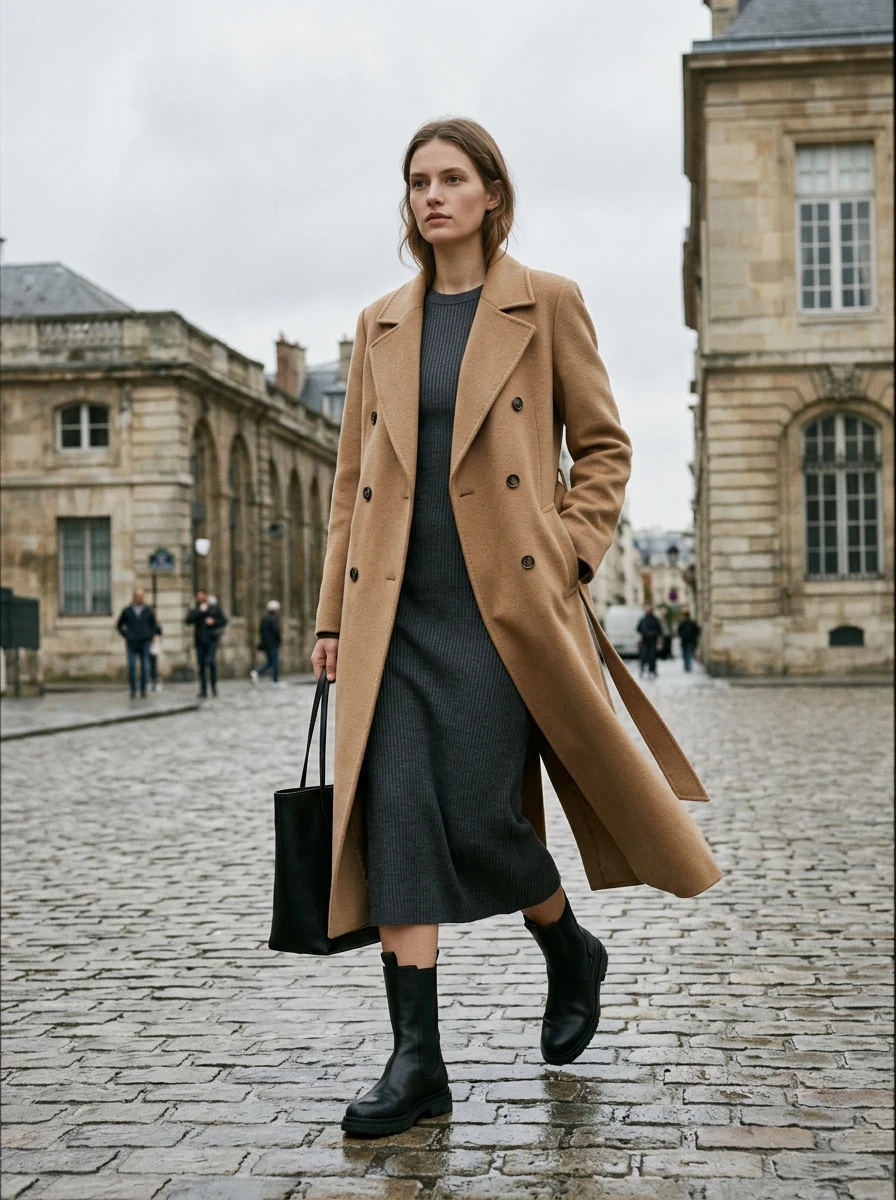
A camel wool coat worn open over a charcoal ribbed knit dress, black ankle boots, a black tote. The matte wool coat against the ribbed knit does the expensive signaling here more than any single piece. Both have a soft, matte texture that reads as tactile rather than flat, which is why this combination looks richer than the same silhouette in smooth leather and flat cotton would. The lesson: when the fabrics are right, the color story barely has to work.
Fabric note: ribbed knits hold their shape better than flat jersey in a dress, so the silhouette stays clean under an open coat instead of collapsing at the waist.
Turtleneck and Wool Coat
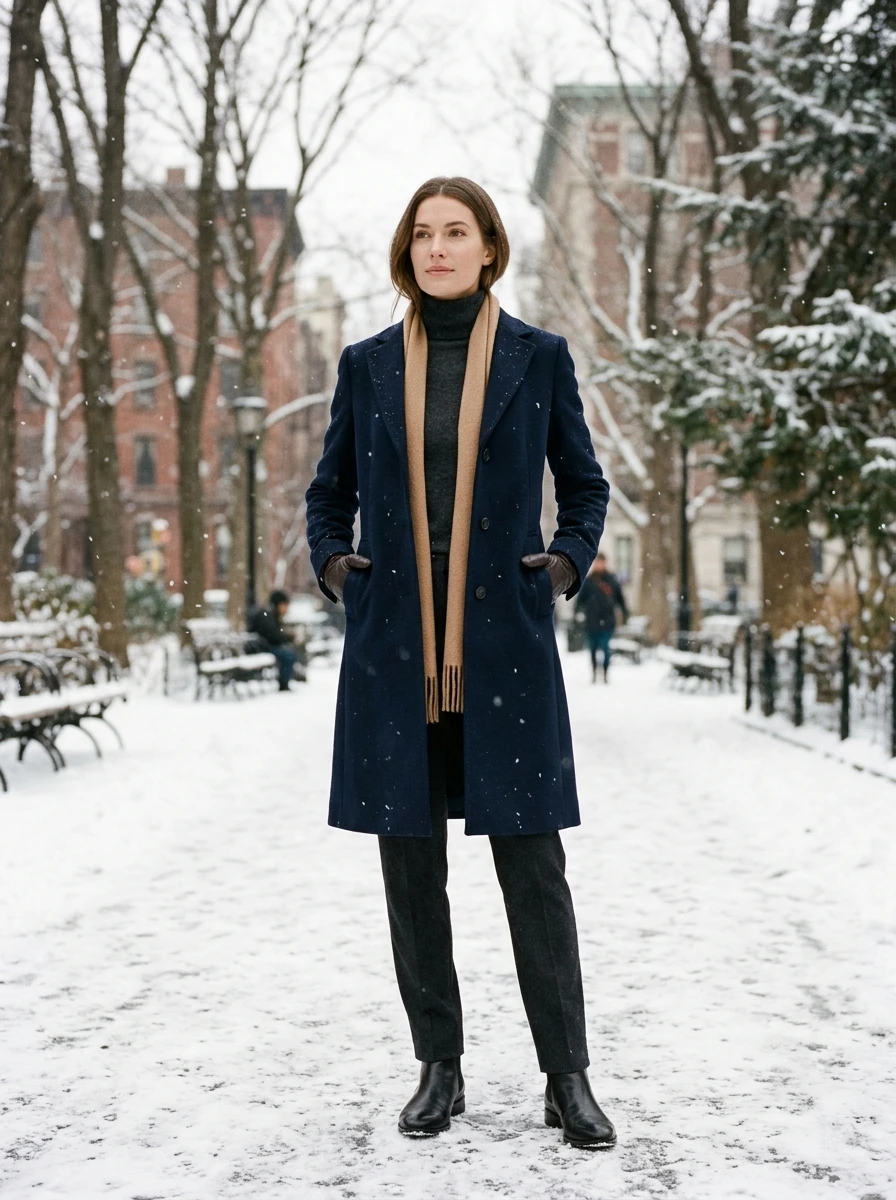
A fitted charcoal turtleneck layered under a structured navy wool coat, with a camel scarf, dark trousers, and black boots. The fitted knit against the structured coat is the key proportion. A scarf in a complementary neutral, like ivory or oat, adds warmth without cluttering the line. This is the same coat over knit formula as the camel version, swapped into a colder palette for a snowy day.
Fit note: the turtleneck must sit close to the body with no bunching at the waist, or the coat will pull and gape at the front instead of hanging straight.
A Trench Coat Over All Black
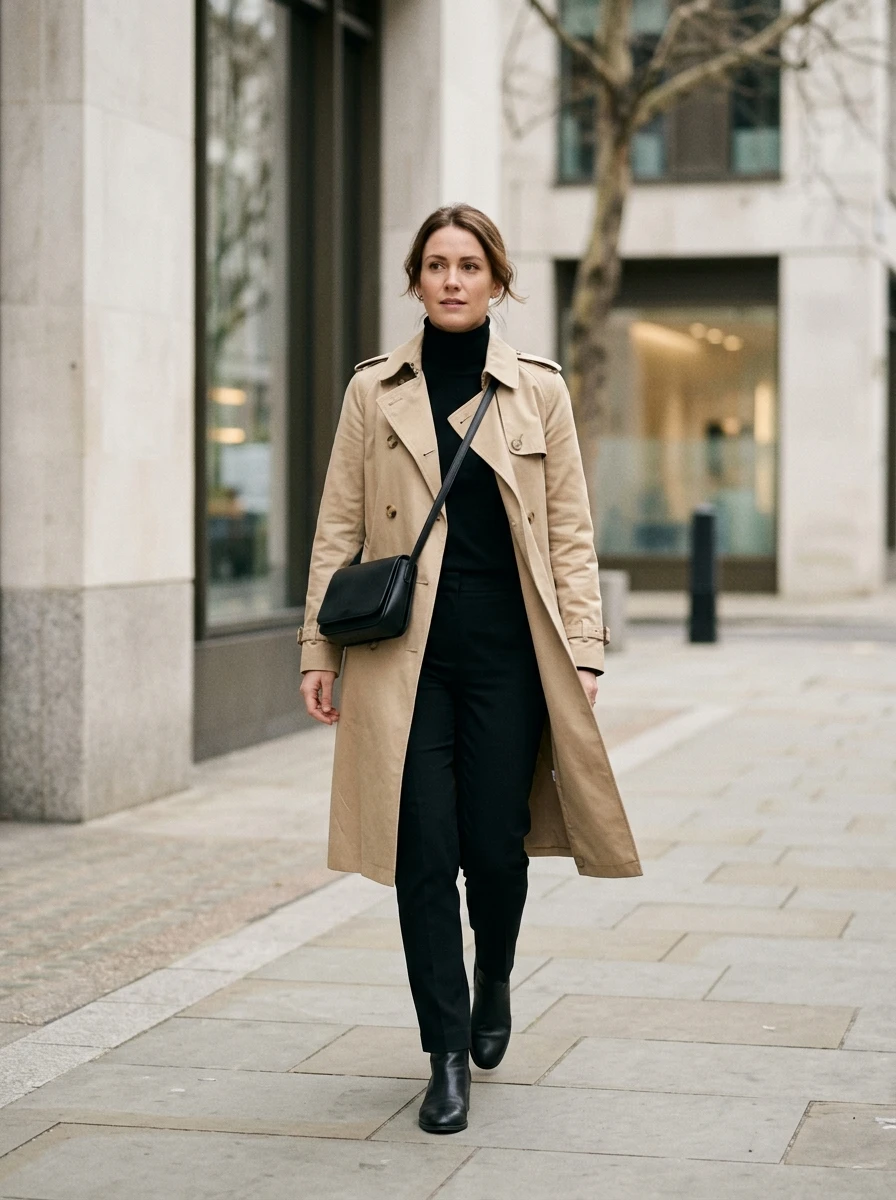
A classic beige trench worn open over an all black base, a black turtleneck, black trousers, black boots, and a black crossbody bag. The black underneath does something specific: it makes the trench's camel tone the single color event in the outfit, which is why this combination looks so pulled together with so little thought. Belt the trench for structure, or leave it open in warmer months and let the base layer show.
Wear it with: a crossbody bag worn high on the hip keeps the long line of the trench unbroken, and black boots in the same tone as the trousers lengthen the leg instead of cutting it at the ankle.
Monochrome Cream, Done in Three Textures
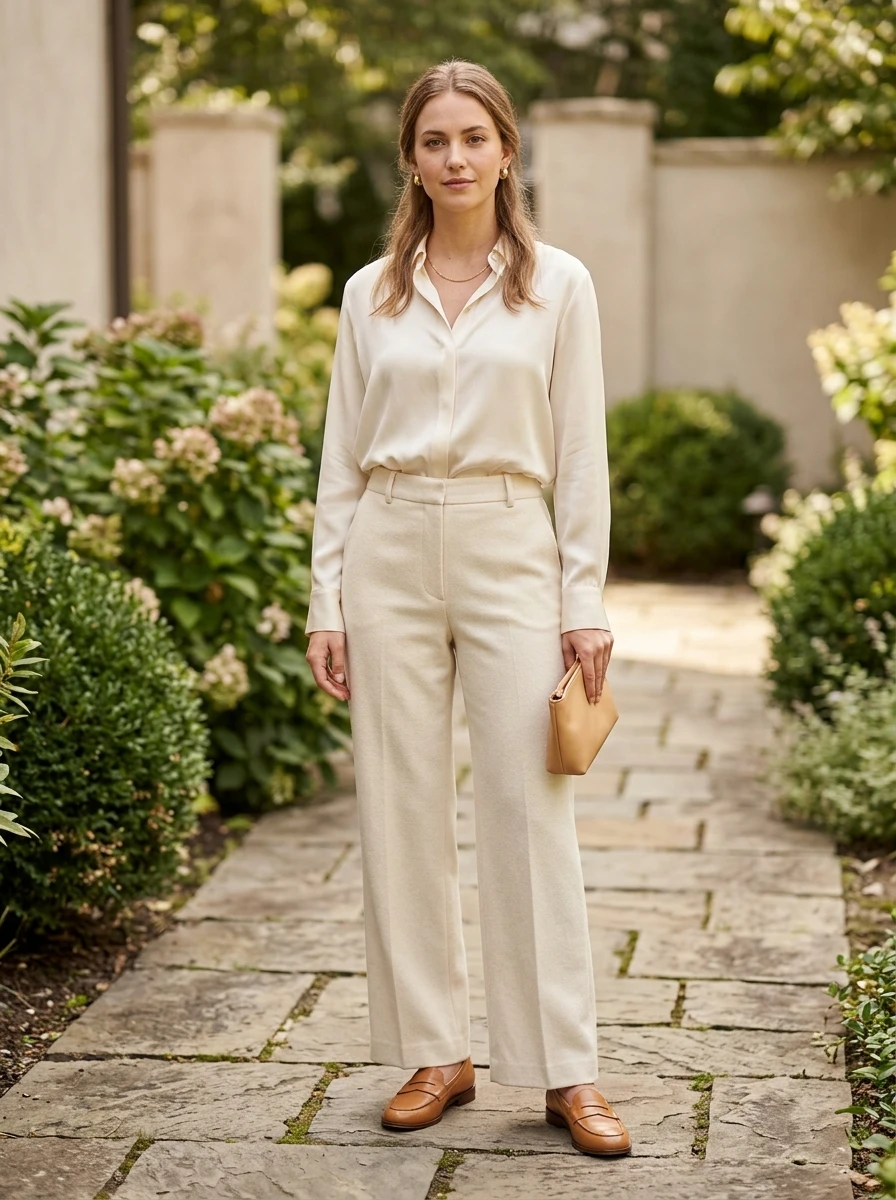
Cream wool slacks, a matching silk blouse, tan leather loafers, and a small tan clutch, tonal dressing at its most literal. Notice what carries it: the trousers are matte wool, the blouse has silk's soft sheen, the loafers are grained leather. Three different textures in one color family is what makes monochrome read as luxury instead of a uniform.
Fabric note: keep the cream tones in the same temperature family. A cool white blouse next to warm cream trousers makes both look off, while matching warm tones read as one deliberate choice.
Navy Blazer and Breton Stripes: The Smart-Casual Formula
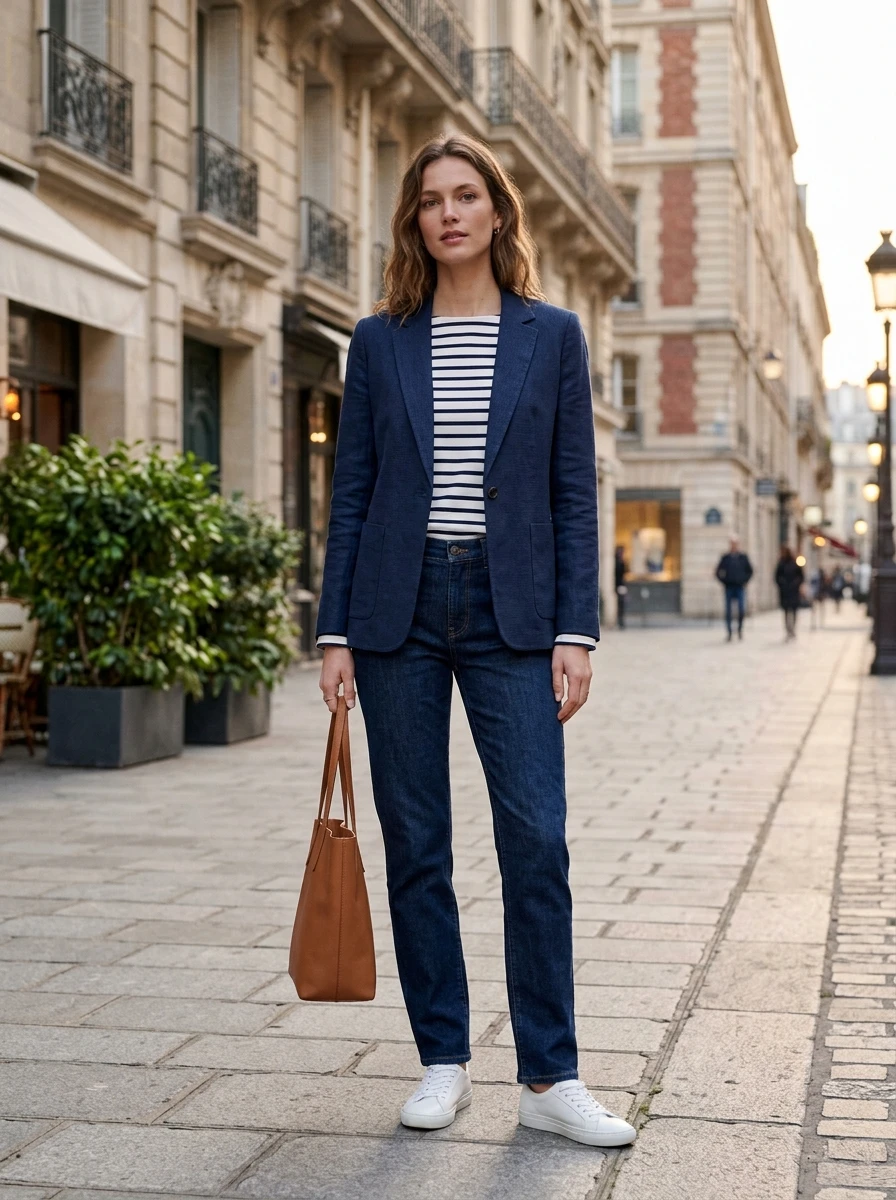
A structured navy blazer over a Breton striped long sleeve shirt, with dark denim, white sneakers, and a tan tote. The blazer's structure is what elevates a striped tee from weekend casual to brunch ready. Shoulder line and lapel against soft cotton is the contrast that makes this pairing work. This is the formula for smart casual dressing in this aesthetic: one tailored piece, one soft piece, both in the neutral palette.
Fit note: the blazer shoulder seam should sit exactly on your shoulder. If it drops past the shoulder, the whole outfit tips from tailored into borrowed, and the striped tee underneath cannot rescue it.
The Tailored Vest and Wide-Leg Trousers
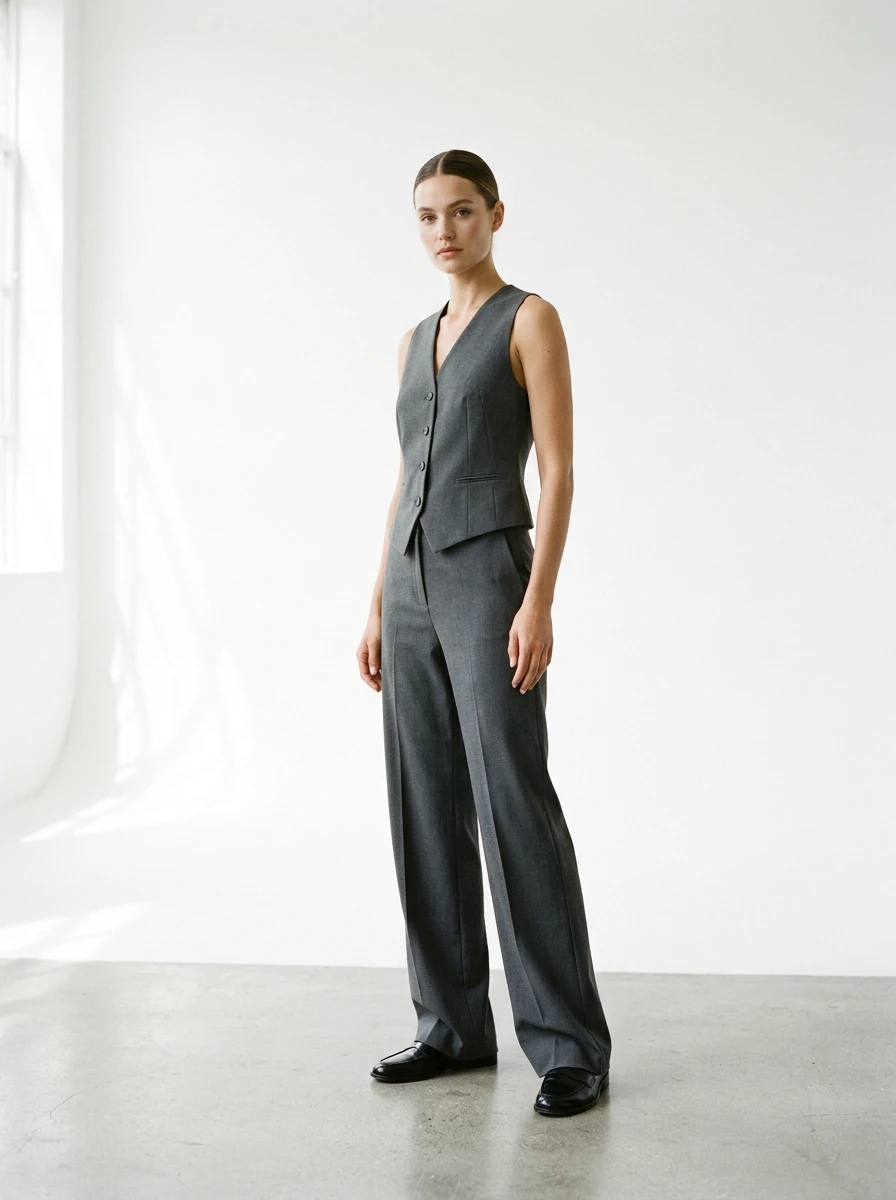
A fitted grey waistcoat worn as a top with matching wide leg trousers and black loafers, sleek, modern, and still rooted in tradition. Wide leg trousers need the same rise and hem discipline as the wide leg jeans guide explains, since the leg line starts at the waist, not the knee. The fit check that matters here is the armhole: a vest that gaps at the armholes ruins the whole clean line, so this is one of the few old money pieces worth tailoring properly.
When the vest sits flush, the long unbroken line of matching separates does the rest.
Fit note: try the vest on with the trousers and raise your arms. If the armholes pull open, have them taken in; a vest cannot be fixed by styling around it.
Why a Tweed Jacket Earns Its Place
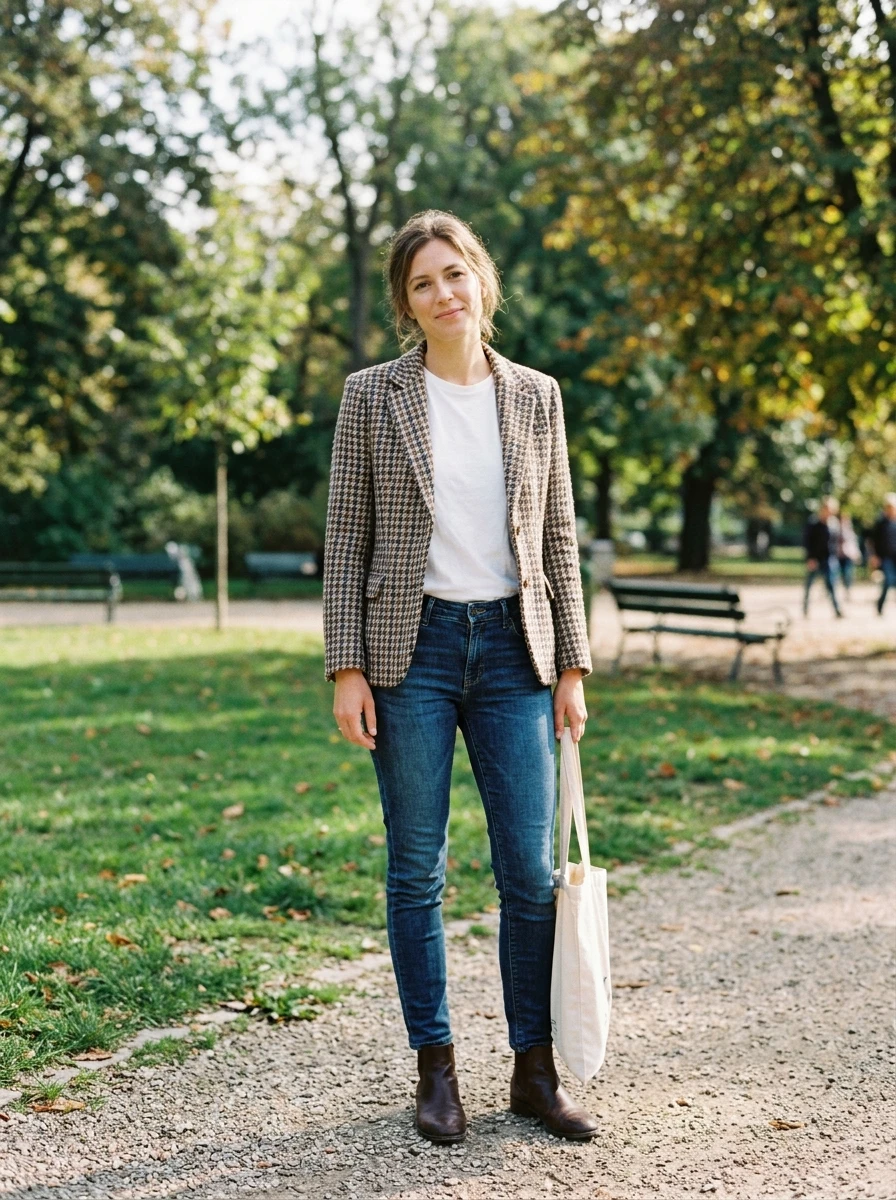
A structured houndstooth tweed jacket over a simple white tee and slim dark denim, with brown boots and a canvas tote. Tweed's nubby texture is the whole point. It is a country fabric with centuries of real use behind it, which is why it carries authority that a smooth blazer in the same cut would not. The Harris Tweed Authority sets the standard for genuine Harris tweed, woven by islanders at their homes in the Outer Hebrides, which is why the fabric carries that authority.
The denim keeps it from feeling stiff or traditional; the jacket keeps the denim from feeling ordinary.
Care tip: brush tweed with a soft clothes brush after wearing and air it out before storing. Tweed rarely needs washing, and over-washing is what flattens its texture.
Riviera Stripes with Wide-Leg Trousers
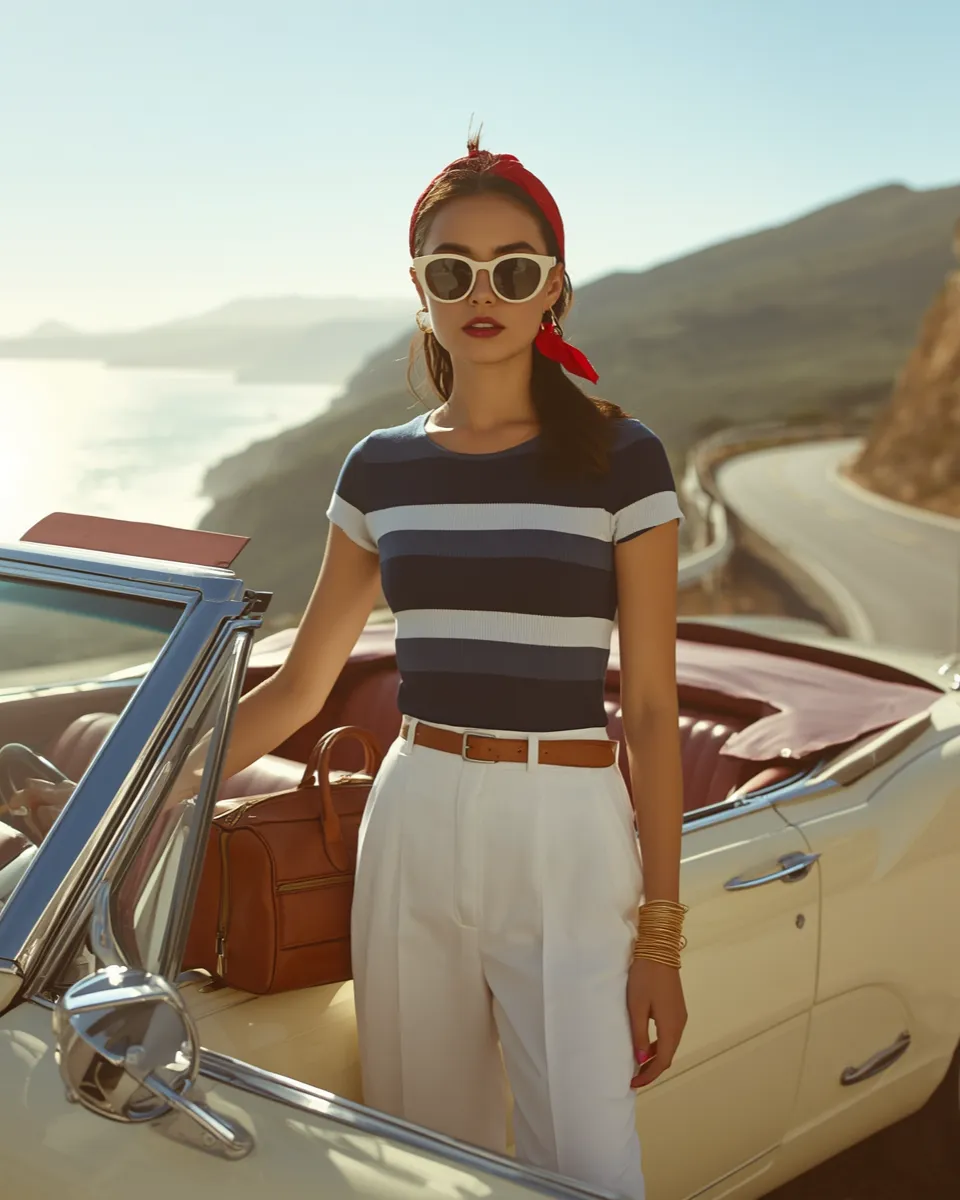
A navy and white striped short sleeve knit top, high waisted white wide leg trousers, a slim tan belt, gold bangles, white cat eye sunglasses, a red headscarf, and a tan leather bag. Riviera dressing runs on high contrast, navy stripes against white trousers, which is the one place this aesthetic allows real visual punch. The red headscarf works as the single sharp color note because everything else stays quiet enough for one accent to register.
Wear it with: keep the jewelry to one metal, gold here, and let the belt and bag share the same tan tone so the red scarf stays the only accent competing for attention.
Two Vests Borrowed from Real Life
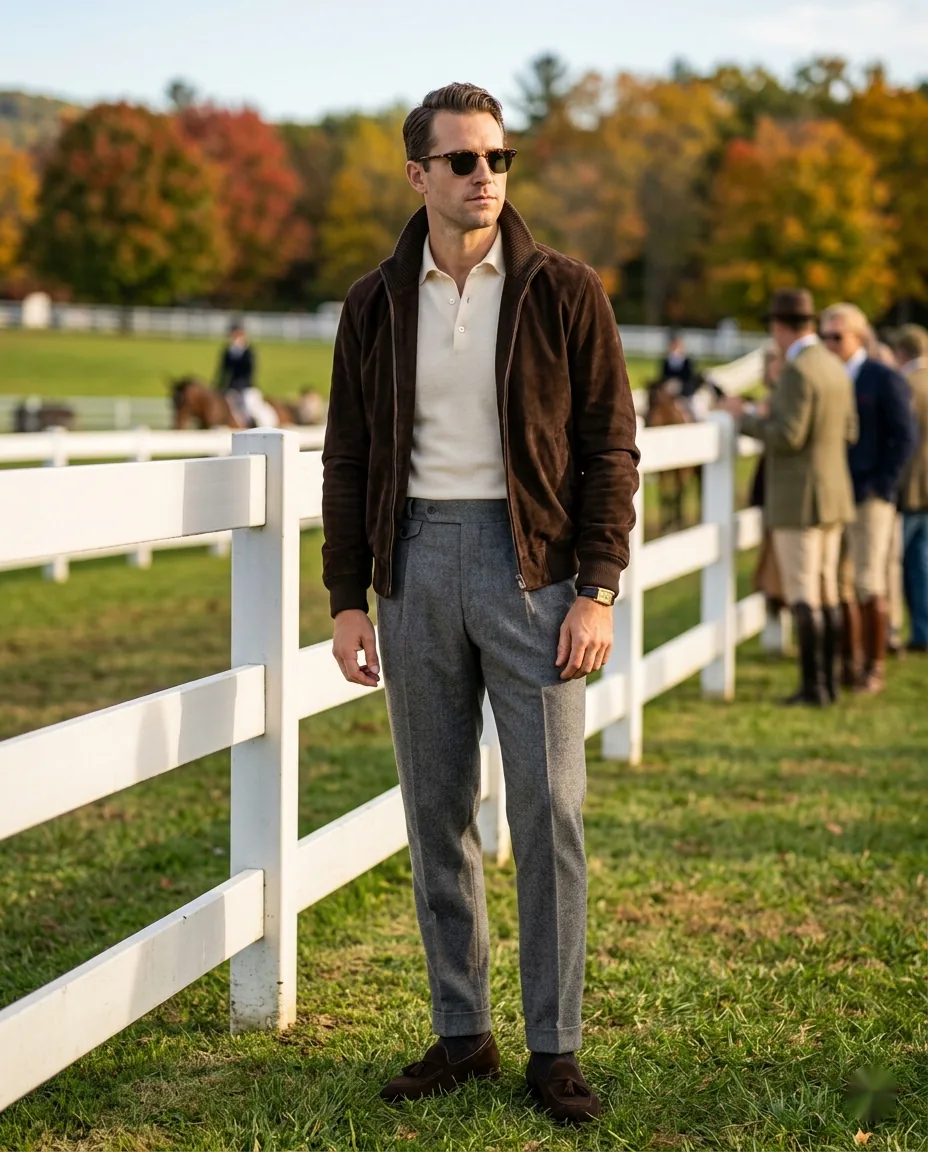
The vest is old money's most honest layering piece, and it comes in two registers. One is borrowed from the stable, quilted and buckled. The other is borrowed from the tennis club, ribbed and pleated. Both work for the same reason: the reference comes from a real activity, and every fabric and color stays soft and tonal.
Quilted Vest with Ribbed Sweater and Silk Scarf
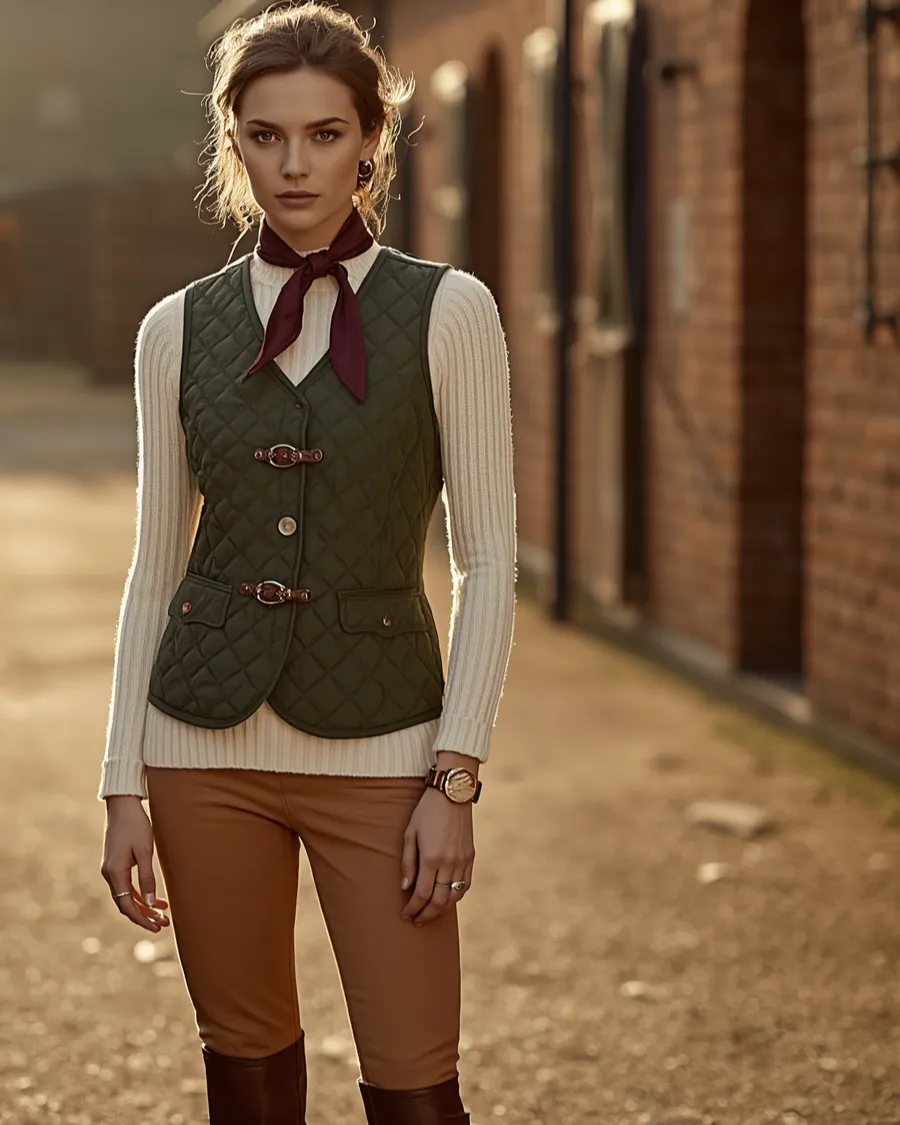
A quilted olive vest with buckled closures, a cream ribbed turtleneck, a burgundy silk scarf tied loosely, rust trousers tucked into tall boots. The buckles are genuine equestrian hardware, the same closures used on actual riding gear, which is why this reads as borrowed from a real activity rather than styled to look like one. That authenticity is doing more work than any styling trick could.
Fabric note: quilted nylon or cotton holds its shape over a ribbed knit without adding bulk, which is why this vest layers cleanly instead of puffing up at the waist.
Cream Sweater Vest with Pleated Tennis Skirt
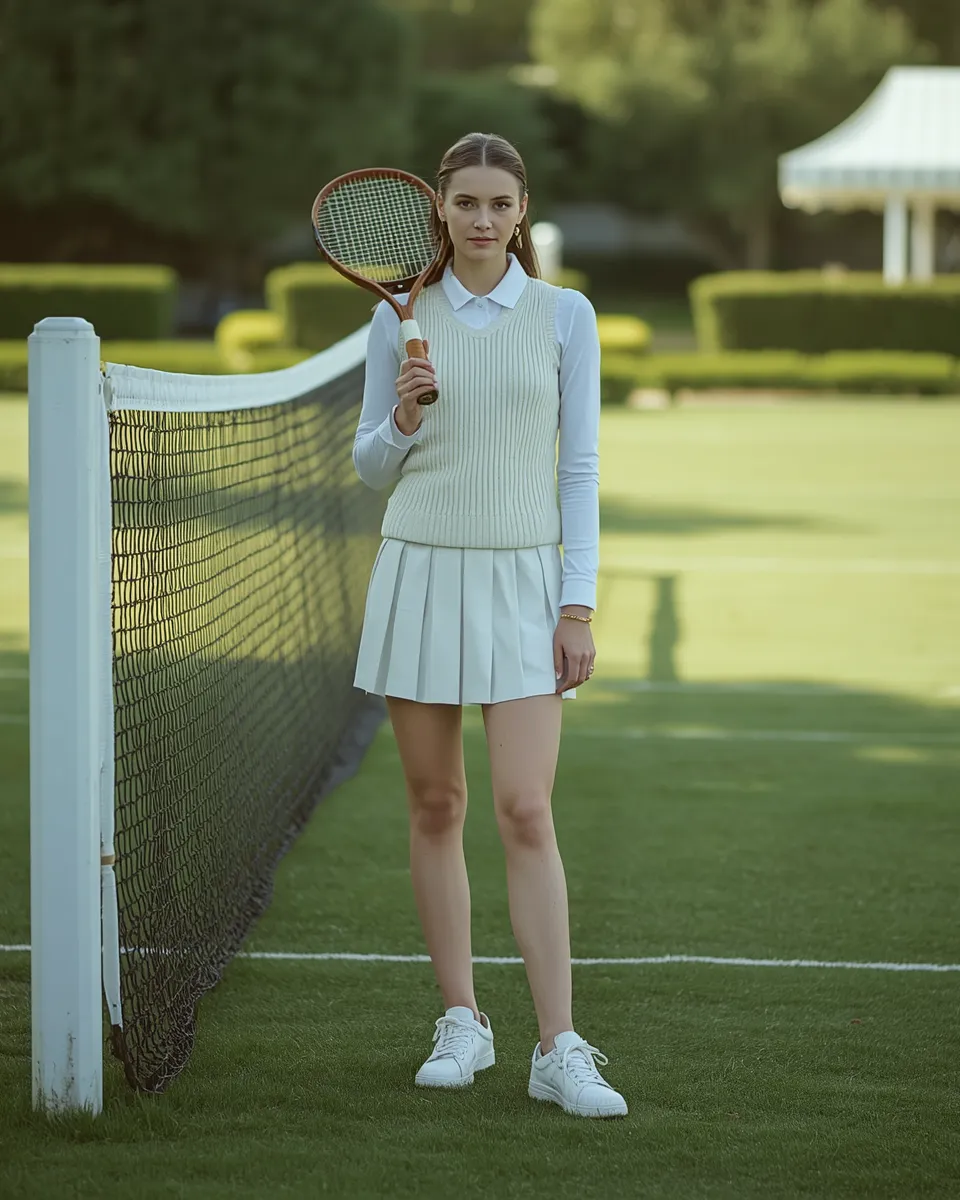
A ribbed cream sweater vest over a white collared shirt, a pleated white tennis skirt, white sneakers, gold studs, a wooden racket in hand. Old money's most literal reference, actual tennis club dressing, stays wearable because every fabric is soft and every color is tonal cream on cream. The sport reference survives as texture; nothing here is a costume.
Fit note: the vest should end at the waistband of the skirt, not below it. A longer vest hides the pleats and turns the outfit into a shapeless column.
Soft Knits, Two Ways
Not every old money look needs tailoring. These two run on the same soft logic: a matte knit against a fluid fabric, in quiet tones, with one structured accessory doing the tailoring work. One is for the office and the library, the other is for the evening.
Cashmere Crewneck and Midi Skirt
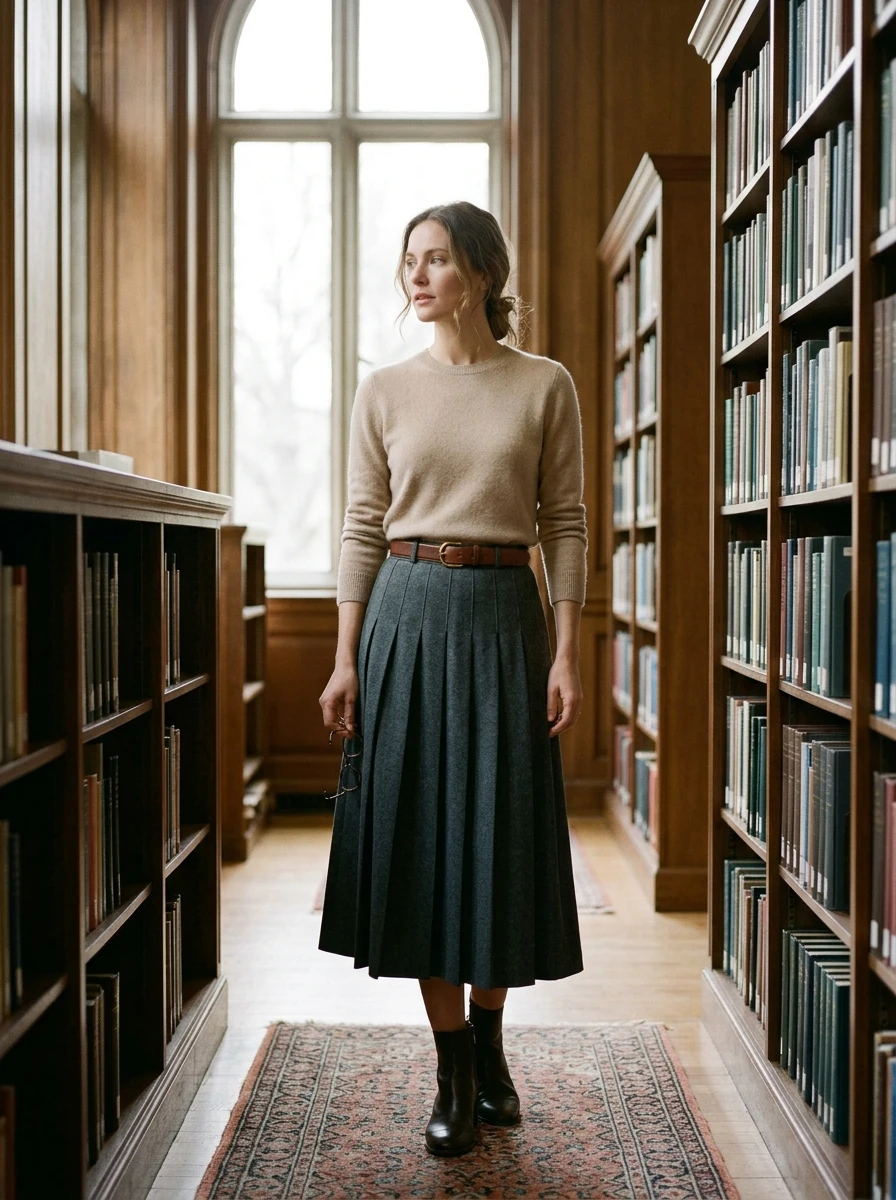
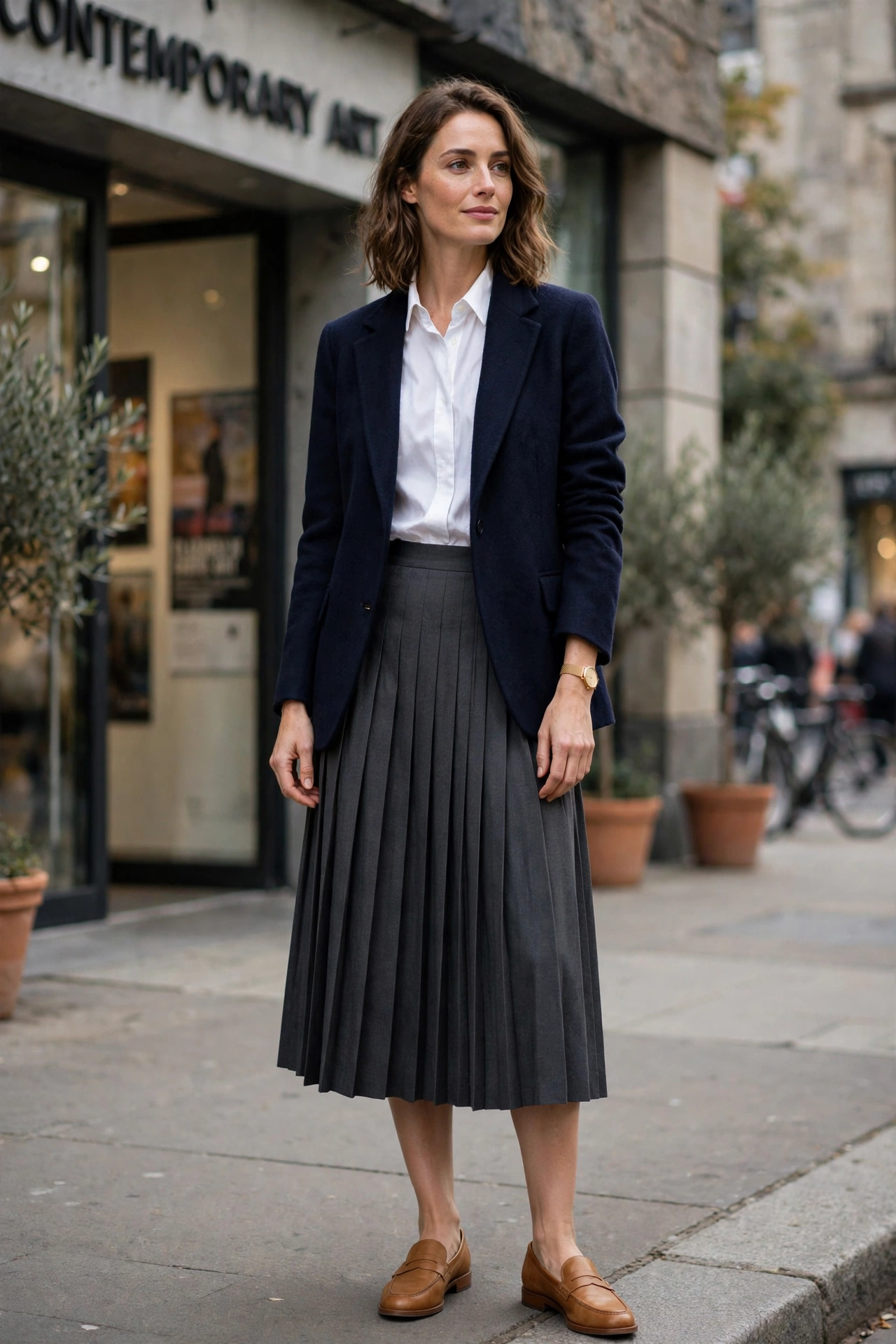
A neutral beige cashmere crewneck tucked into a dark pleated midi skirt, cinched with a tan leather belt, dark boots. The belt matters more than it looks. It defines the waistline so the softness of the sweater and the movement of the skirt don't blur into shapelessness. One structured accessory can do the tailoring work for an otherwise soft outfit.
Care tip: fold cashmere, never hang it. Hanging stretches the shoulders out of shape, and a stretched crewneck loses the clean line this outfit depends on.
Cardigan and Slip Dress
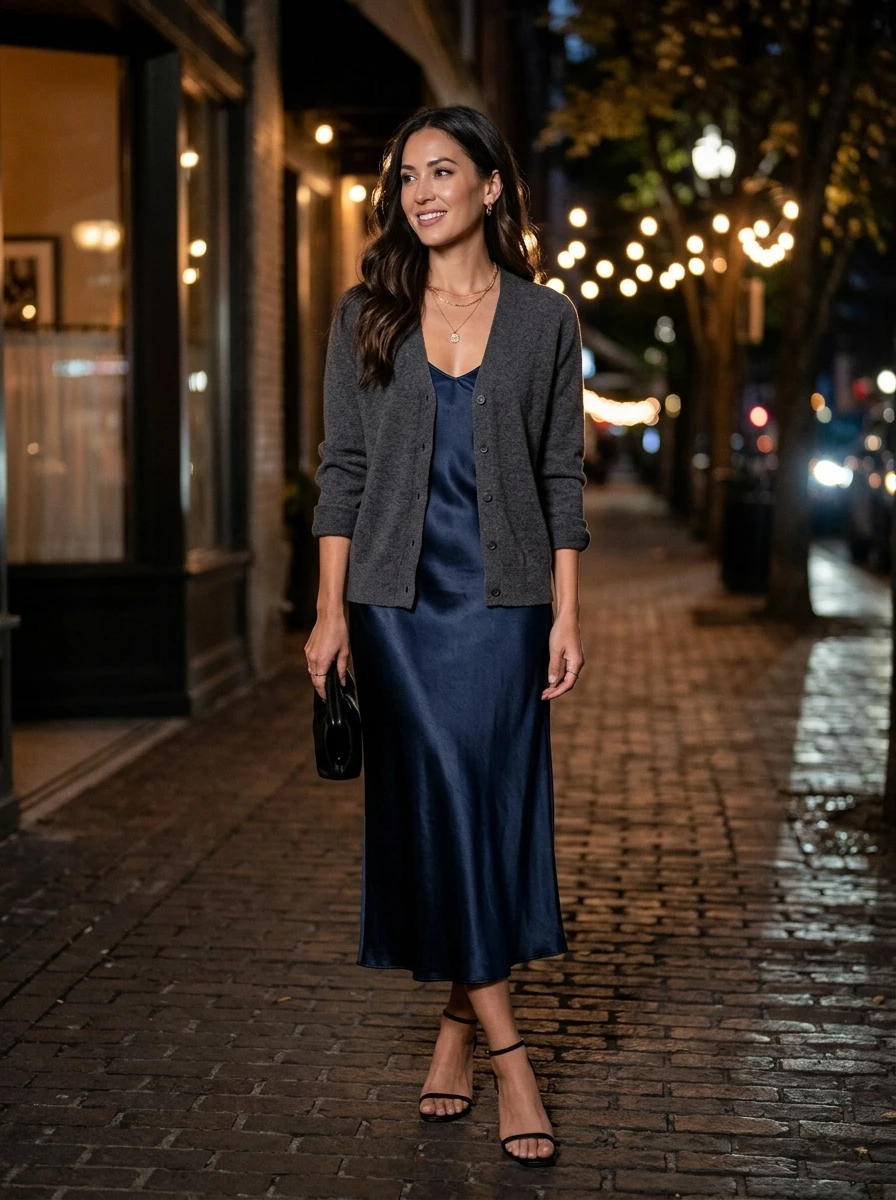
A fine gauge grey button up cardigan worn over a navy silk slip dress, black strappy heels, a small black clutch. The contrast is the whole outfit: the cardigan's matte knit against the slip's fluid sheen, both in quiet tones. This is evening dressing for the aesthetic, warmth and coverage without hiding the elegance underneath, and not a logo in sight.
Fabric note: fine gauge knit is the right weight here. A chunky cardigan would fight the slip dress's drape; a fine knit lies flat and lets the silk move underneath it.
The White Button-Down, Dressed Down
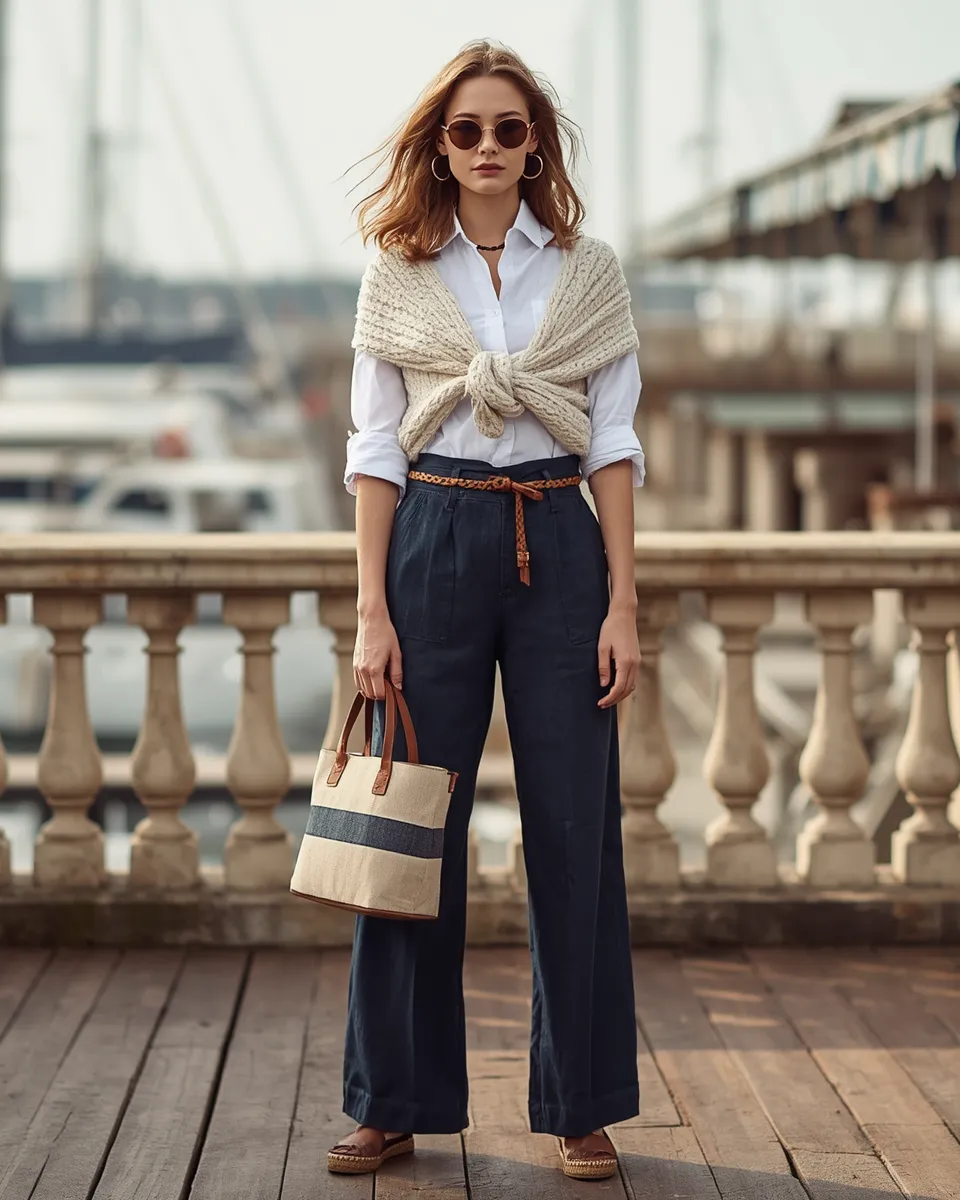
A crisp white button down with rolled sleeves, a chunky cream knit wrap knotted over the shoulders, high waisted navy wide leg trousers, a thin braided belt, espadrille sandals, and a canvas tote. This is the aesthetic's most casual register, denim, rolled sleeves, espadrilles, and it holds together because the trousers are wide leg rather than straight, echoing the tailored silhouette of the more formal looks even though the fabric is casual. Proof that the principles travel across dress codes.
Wear it with: knot the knit wrap loosely so it drapes rather than bunches, and keep the belt thin. A wide belt would split the long line the wide leg trousers are creating.
Questions Worth Asking Before You Start
What makes an outfit read as old money rather than just plain?
Four things working together: natural fabrics (wool, cashmere, silk, linen, cotton) with real texture, a tight neutral palette, tailoring that fits your body, and one quiet detail, matched hardware, a tonal accessory, a genuine functional reference, that signals the outfit was planned. Remove any one and the look slides toward generic. Remove the logos and loud prints and you're most of the way there.
Can you build this wardrobe mostly from what you already own?
Usually, yes. Start by auditing your closet for the neutral basics you already have, a white shirt, dark trousers, a simple sweater, a decent coat, and check them against the four principles above. The most common gaps are fit (trousers that need hemming, a blazer that needs steaming) rather than missing items. Add one quality piece at a time, a wool coat, leather loafers, instead of overhauling everything at once.
How do you stop the look from tipping into costume territory?
Keep one element relaxed. If the outfit is tailored, blazer, trousers, let the fabric be soft or the sleeves be rolled. If the reference is literal, like tennis or equestrian, keep every color tonal so it reads as texture rather than theme. And wear the clothes like you own them: the aesthetic is supposed to look lived in, not museum kept.
Which shoes and accessories finish these outfits?
Leather loafers cover most occasions, casual to dressy. Knee high boots pair with coats and trousers in cold months; simple white sneakers work for the sportier looks. Accessories stay small and gold, studs, a thin pendant, with a plain buckled leather belt, a silk scarf, and tortoiseshell sunglasses. Match your belt hardware to your jewelry; that tiny coordination reads as intentional.
How should wool and cashmere be cared for so the pieces last?
Hand wash cashmere in cold water with gentle detergent and lay flat to dry. Never hang knits, which stretches the shoulders. Store wool coats on wide hangers, brush pilling off sweaters with a fabric comb, and keep everything cedar lined or with cedar blocks to deter moths. Wash wool as rarely as you can get away with; airing it out usually suffices.
A Quick Checklist Before You Leave the House
- Fabric check: is every visible piece a natural fiber, wool, cotton, silk, linen, or cashmere?
- Palette check: are all the colors inside the six neutrals, with at most one accent?
- Fit check: shoulders sit where they should, hems hit where they should, nothing pulls or gaps?
- Temperature check: warm creams together, cool whites together, never mixed?
- Detail check: one quiet accessory, hardware matched, no visible logo anywhere?
- Care check: steamed, brushed, de-pilled, and actually pressed before it went on?
If you can tick all six, the outfit will read as old money whether the pieces cost a little or a lot. That is the real verdict of this aesthetic: it rewards discipline, not spending. The same four principles travel into autumn in the fall outfits guide, where the palette widens slightly but the discipline stays.