6 Old Money Fall Outfits for Men (Premium Style Guide)
How to use this guide
These are editorial styling suggestions, not a one-size-fits-all formula. Adapt each look to your wardrobe, proportions, climate, comfort, budget, and the occasion; the most useful idea is the one you can genuinely wear.
There's a specific kind of stress that comes with dressing for fall when the goal is "looks expensive" without "trying too hard" written all over it. Go too casual and you lose the plot. Go too formal and it reads like costume. Old money style lives in the narrow gap between those two failure modes, and most men default to one or the other because nobody explains what's actually happening in the outfits that get it right.
What's happening, most of the time, is fabric and restraint — not logos, not trend pieces, not anything that needs explaining. Six outfits below, each broken down for what actually makes it read as quietly expensive rather than just "fall clothes."
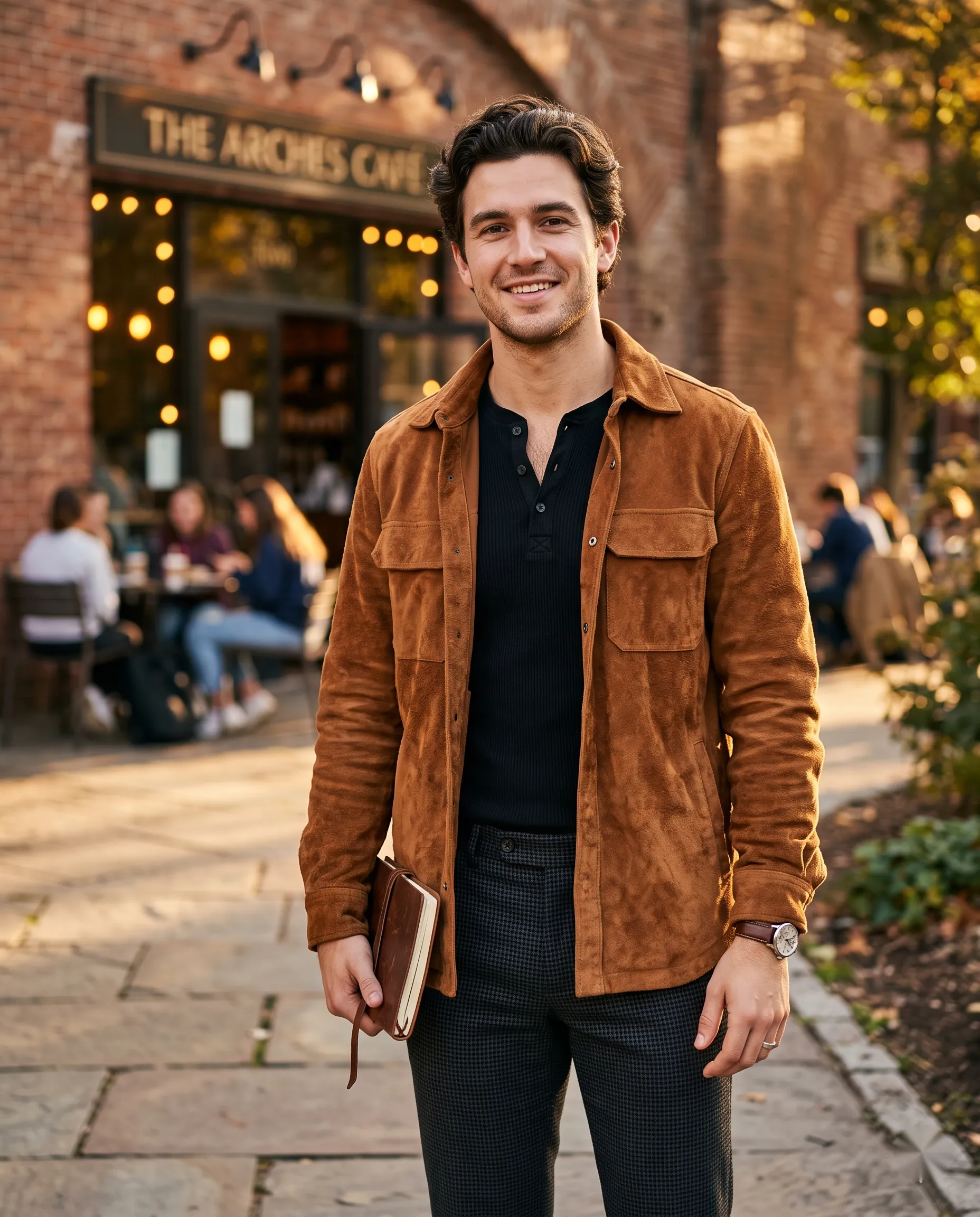
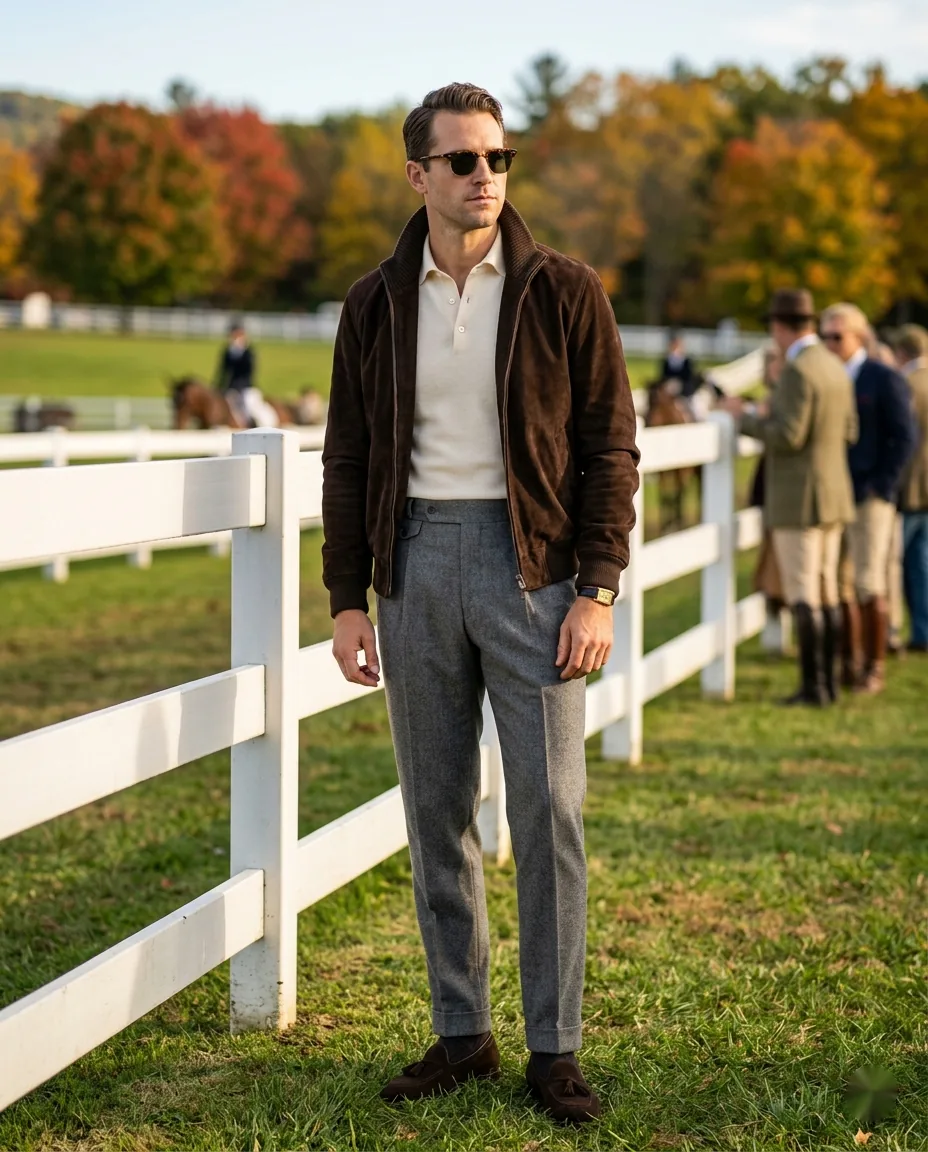
The Chocolate Suede Jacket & Grey Flannel Trousers
A dark chocolate suede jacket over a cream knit polo, grey flannel trousers with a generous pleat sitting high on the waist, dark brown suede tassel loafers. The ribbed collar on the jacket is doing more than it looks — it's a sporting detail borrowed from equestrian wear, which is exactly the reference this whole outfit is making without saying so directly. High-waisted, pleated trousers are the other quiet signal here: pleats went out of fashion in mainstream menswear for a couple of decades, so wearing them well now reads as someone dressing from knowledge rather than what's on the rack this season.
The Glen Plaid Overcoat & Dark Polo Rainy Day Look
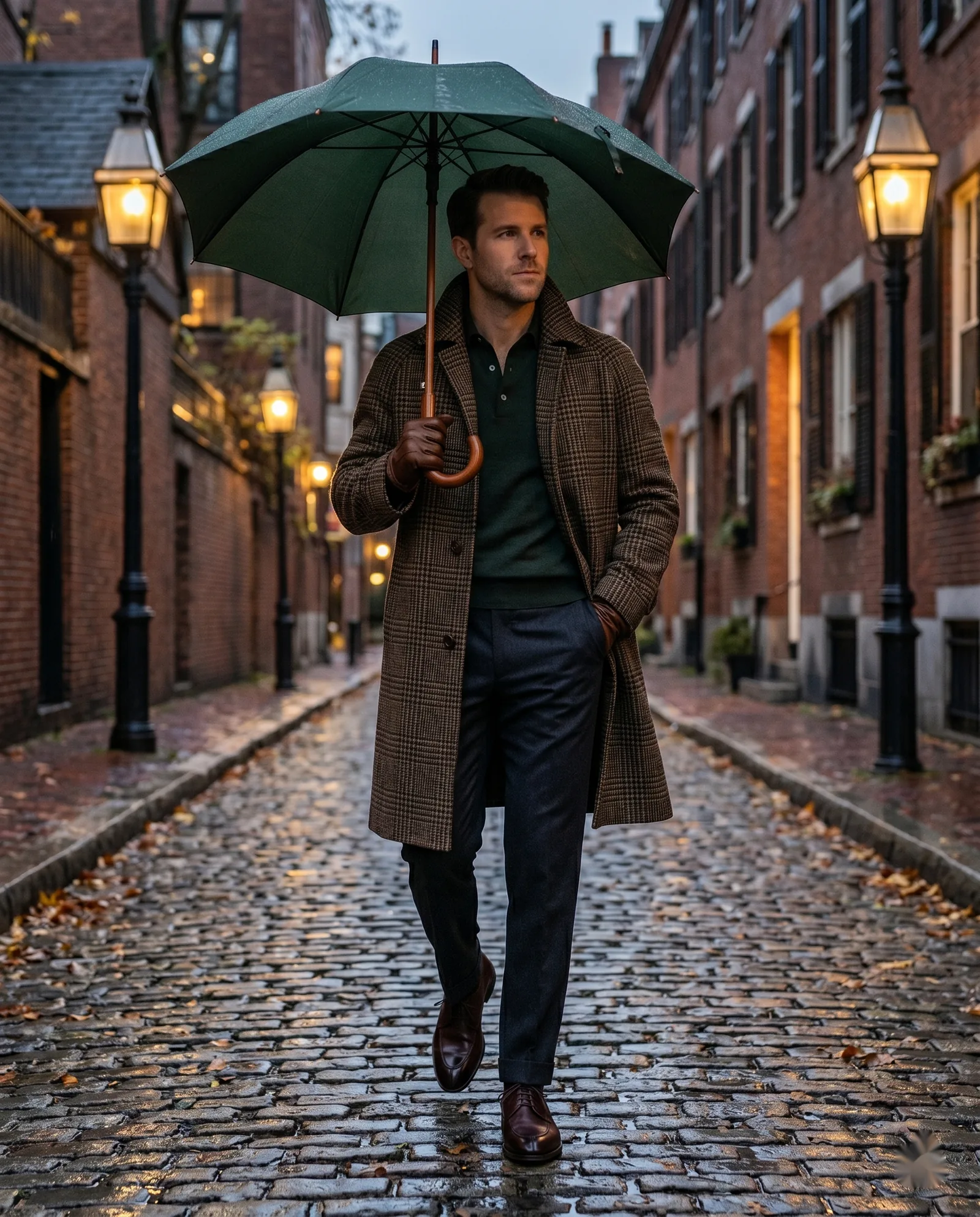
A brown glen plaid overcoat worn open over a forest green knit polo, navy pleated trousers, burgundy leather Oxford shoes, a wooden-handle umbrella. Wearing the coat open rather than buttoned is the actual trick to this look — a buttoned overcoat in the rain reads as someone dressed for the weather, while an open one worn with confidence reads as someone who simply didn't let the weather change their plans. Burgundy shoes against grey, wet pavement is also a deliberate contrast choice: black would have disappeared into the scene, and burgundy is warm enough to stand out without looking flashy.
The Quilted Vest & Cashmere Turtleneck Estate Look
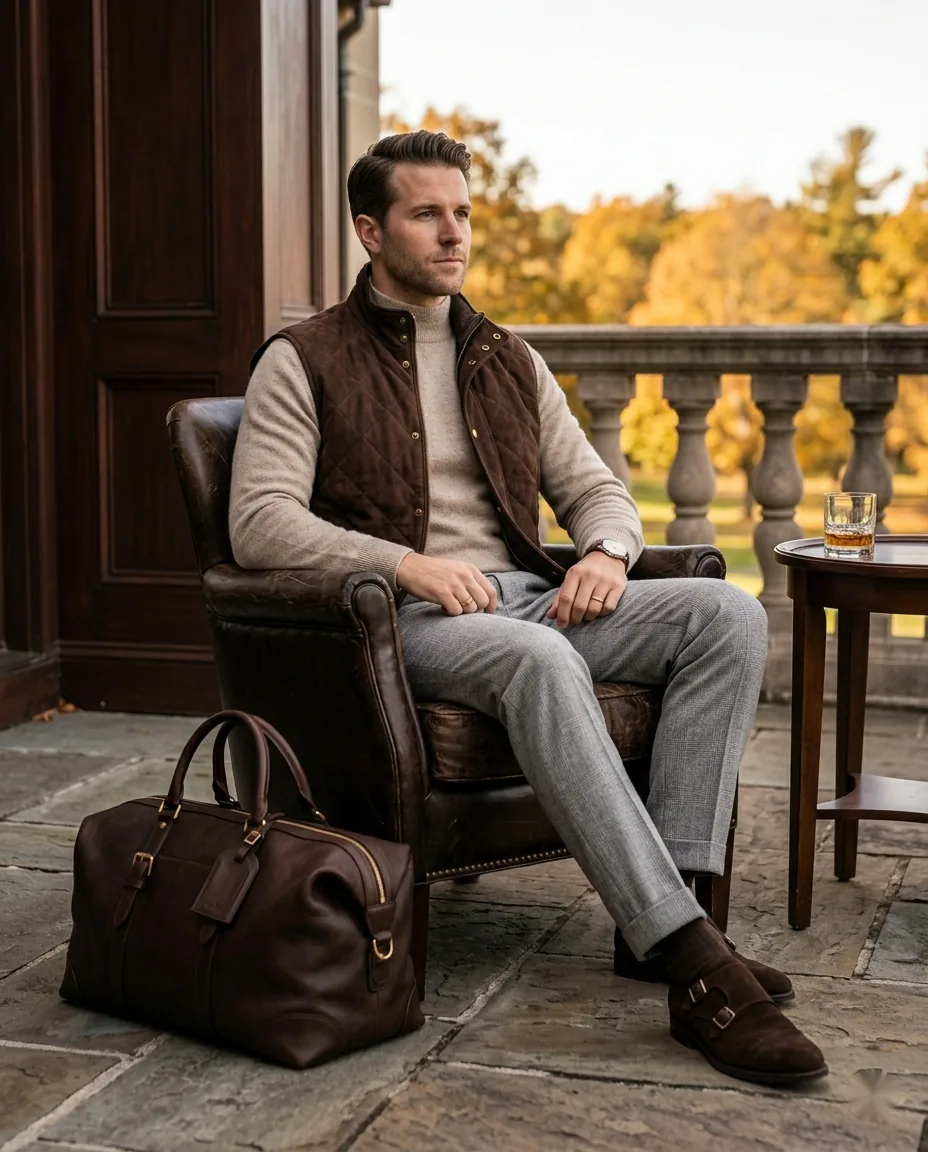
A dark chocolate quilted vest over a camel cashmere turtleneck, light grey glen plaid trousers, dark brown suede double monk strap shoes, a leather duffle with gold hardware. The quilted vest is the hardest-working piece in old money outerwear because it adds warmth without adding bulk to the shoulder line — a puffer jacket would have done the same job for warmth but killed the tailored silhouette underneath. Double monk strap shoes read more formal than a loafer but less formal than an Oxford, which is exactly the register this "dressed-down but still put together" outfit needs.
The Navy Shawl Cardigan & Tan Corduroy Trousers Look
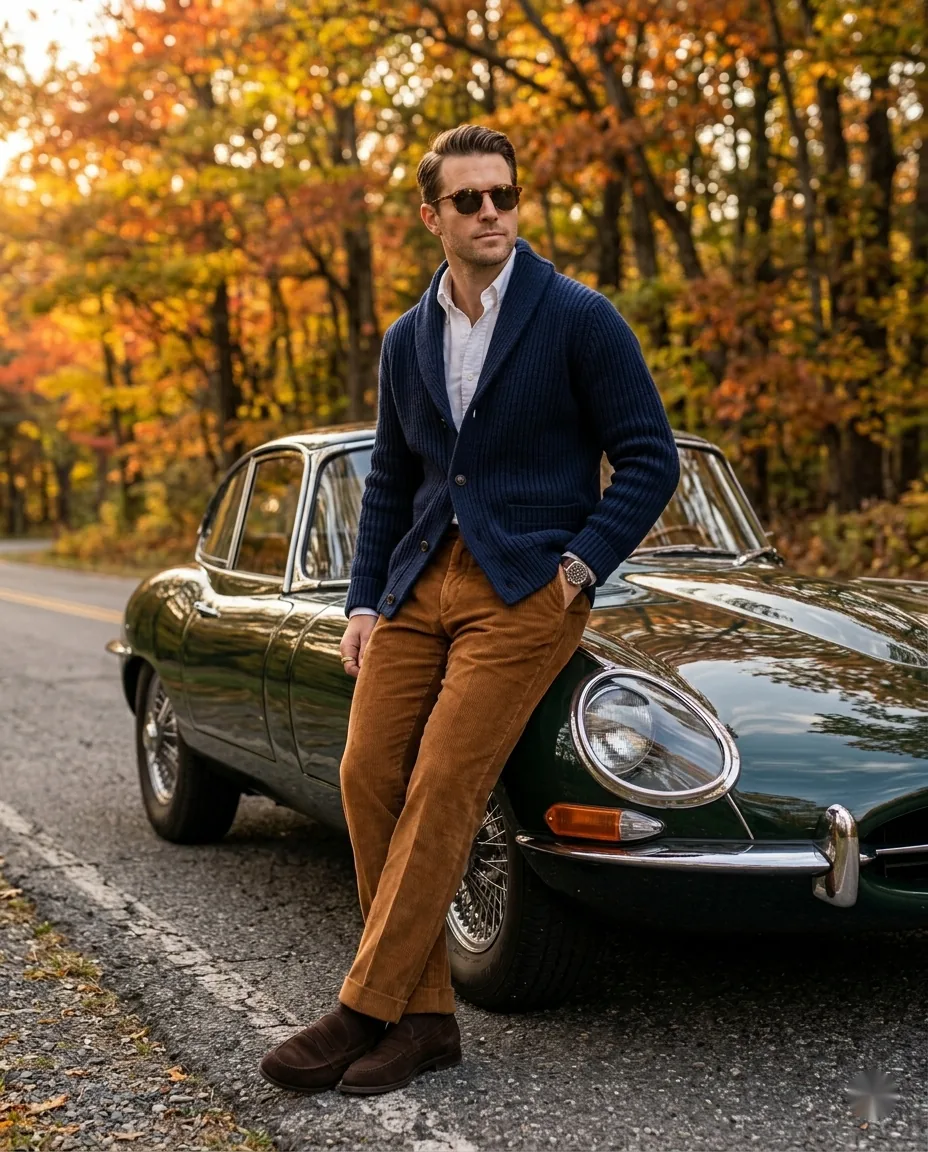
A chunky navy shawl-collar cardigan over a crisp white Oxford shirt, tan corduroy trousers, dark chocolate suede loafers, a rose gold dress watch. Corduroy is the fabric doing the seasonal work here — its visible wale (the ridged texture) reads as more considered than flat cotton chino, without being as formal as wool trouser fabric. The shawl collar on the cardigan matters more than it seems: a crewneck sweater in the same navy would flatten the outfit, while the collar gives it a lapel-like structure that echoes tailoring even though the piece itself is knitwear.
The Camel Overcoat & Charcoal Sweater City Look
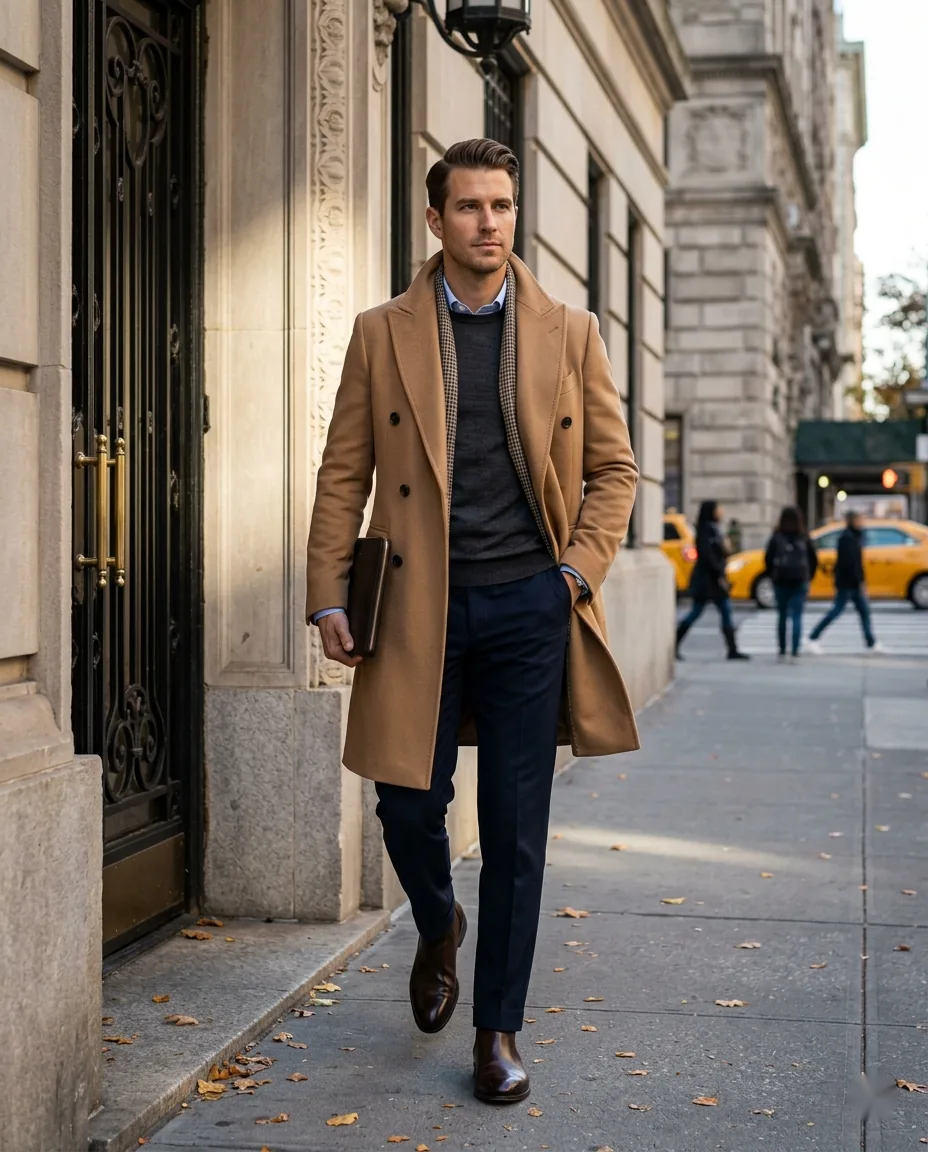
A double-breasted camel wool overcoat, a charcoal crewneck over a light blue dress shirt, a houndstooth scarf, navy tailored trousers, brown Chelsea boots, a slim leather portfolio. The camel overcoat is arguably the single most recognizable piece in this entire aesthetic, and the reason is proportion, not color — double-breasted construction adds structure across the chest and shoulders that a single-breasted coat can't match, which is what makes it read as substantial rather than just "a coat." Carrying a slim portfolio instead of a bag is the last detail worth noting: it signals you're not hauling your whole day around with you, which is its own quiet form of showing off.
The Olive Tweed Field Jacket & Cable Knit Turtleneck Look
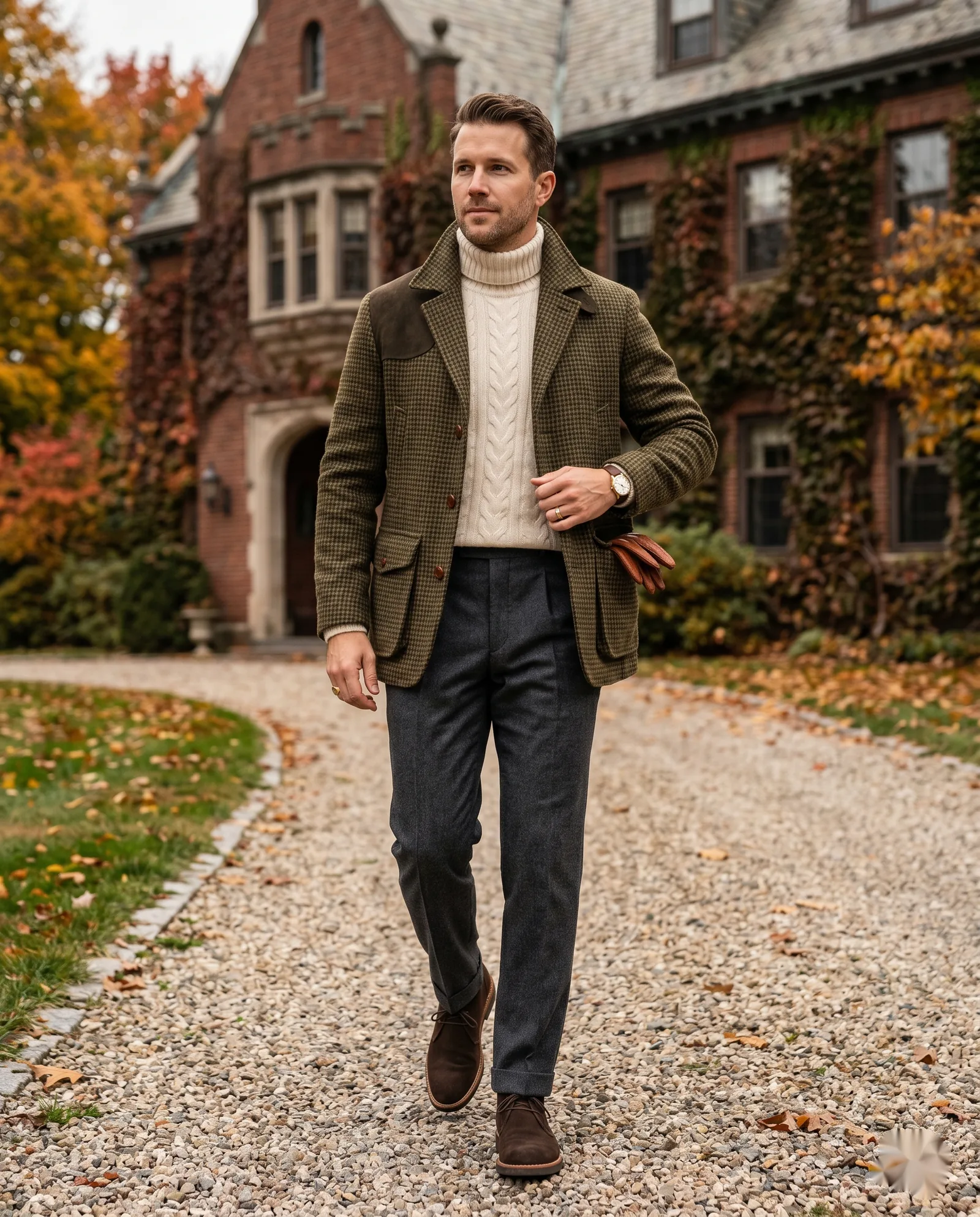
An olive houndstooth field jacket with suede shoulder patches, a cream cable knit turtleneck, charcoal flannel trousers with a clean pleat, dark brown suede chukka boots, tan leather gloves. Shoulder patches are a functional holdover from shooting jackets — originally there to protect fabric from gun recoil — and wearing them now is one of the clearest "heritage menswear" signals you can put on without it feeling costumey, precisely because the detail has a real, traceable origin rather than being decorative. Chukka boots are the right call underfoot here specifically because they're low enough to move naturally across gravel or uneven ground, unlike a dress boot built for pavement.
Getting the Fabric and Fit Right
Old money dressing runs on three rules more than any specific outfit combination:
Natural fabrics over synthetic blends. Wool, cashmere, corduroy, and tweed all age and photograph well regardless of price point. Polyester and acrylic blends can look cheap even brand new, no matter how well-cut the garment is — the fabric itself reads before the silhouette does.
A tight, restrained palette. Camel, navy, charcoal, and olive make up the entire color story across all six outfits above for a reason. Anything brighter or logo-heavy breaks the effect immediately, since the whole aesthetic depends on looking like the clothes weren't chosen to be noticed.
Fit before spend. A well-tailored coat in mid-range fabric will read as more expensive than an ill-fitting piece in premium material, every time. If there's one place to actually spend money, it's alterations — not the garment itself.
Old Money Style Questions, Answered
What fabrics define the old money aesthetic?
Wool, cashmere, tweed, corduroy, and crisp cotton form the foundation of this look. These natural fabrics age well and photograph as quietly expensive, unlike synthetic materials that tend to look cheaper over time.
Do you need designer pieces to pull off old money style?
No. Fit and fabric quality matter far more than the label. A well-tailored coat from a mid-range brand will read more expensive than a poorly fitted designer piece.
What colors work best for old money fall outfits?
Camel, navy, charcoal, and olive form the core palette. These neutral, muted tones are what give the aesthetic its understated, timeless feel across every season.
How do you build an old money wardrobe without overspending?
Focus on secondhand and vintage shops for wool coats and tailored pieces, since quality outerwear often holds up for decades and costs a fraction of new designer prices. Fit and fabric matter more than where the piece came from.
Building Toward Timeless Style
Old money dressing rewards patience more than any other aesthetic, since the pieces that define it are built to last years, not one season. Start with a single coat or sweater in genuine wool or cashmere, get it tailored properly, and build outward from there. Restraint — not spending — is what actually defines the look.