How to Style Minimalist Fall Outfits With Pieces You Already Own
How to use this guide
These are editorial styling suggestions, not a one-size-fits-all formula. Adapt each look to your wardrobe, proportions, climate, comfort, budget, and the occasion; the most useful idea is the one you can genuinely wear.
What if the closet already holds everything needed for fall, and the only missing piece is a clear way to put it together? That is the question behind minimalist fall outfits: fewer pieces, chosen with intent, combined by a rule that can be reused again and again. Instead of starting from a blank wardrobe each morning, start from a principle — one volume, one colour with two textures, or one strong outer layer — and let the rest of the outfit follow from it.
The eleven combinations below work from staples most closets already contain: a blazer, a trench, a knit, straight-leg jeans, a slip dress, a wool scarf. Each one explains the logic first, so a piece can be swapped without losing the shape of the outfit.
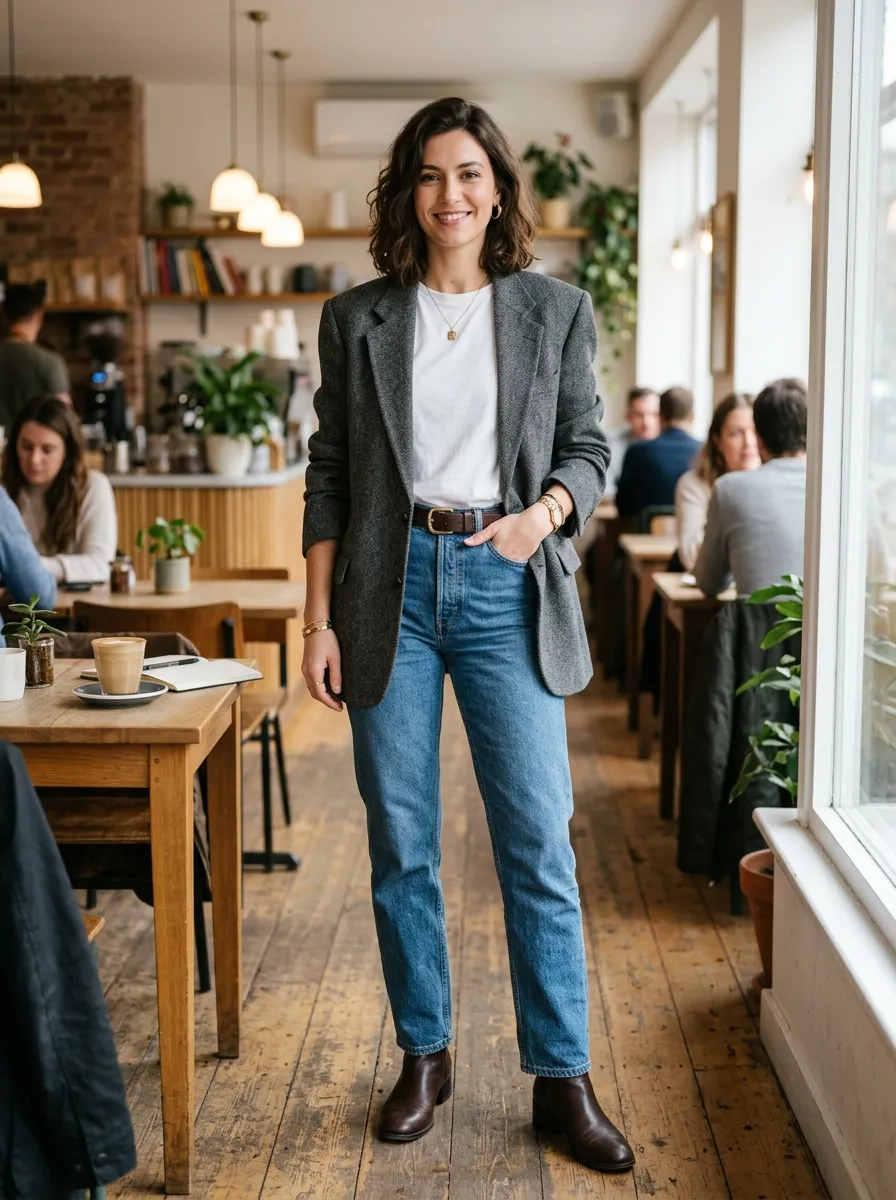
Oversized Blazer and Straight-Leg Denim: Let One Piece Carry the Volume
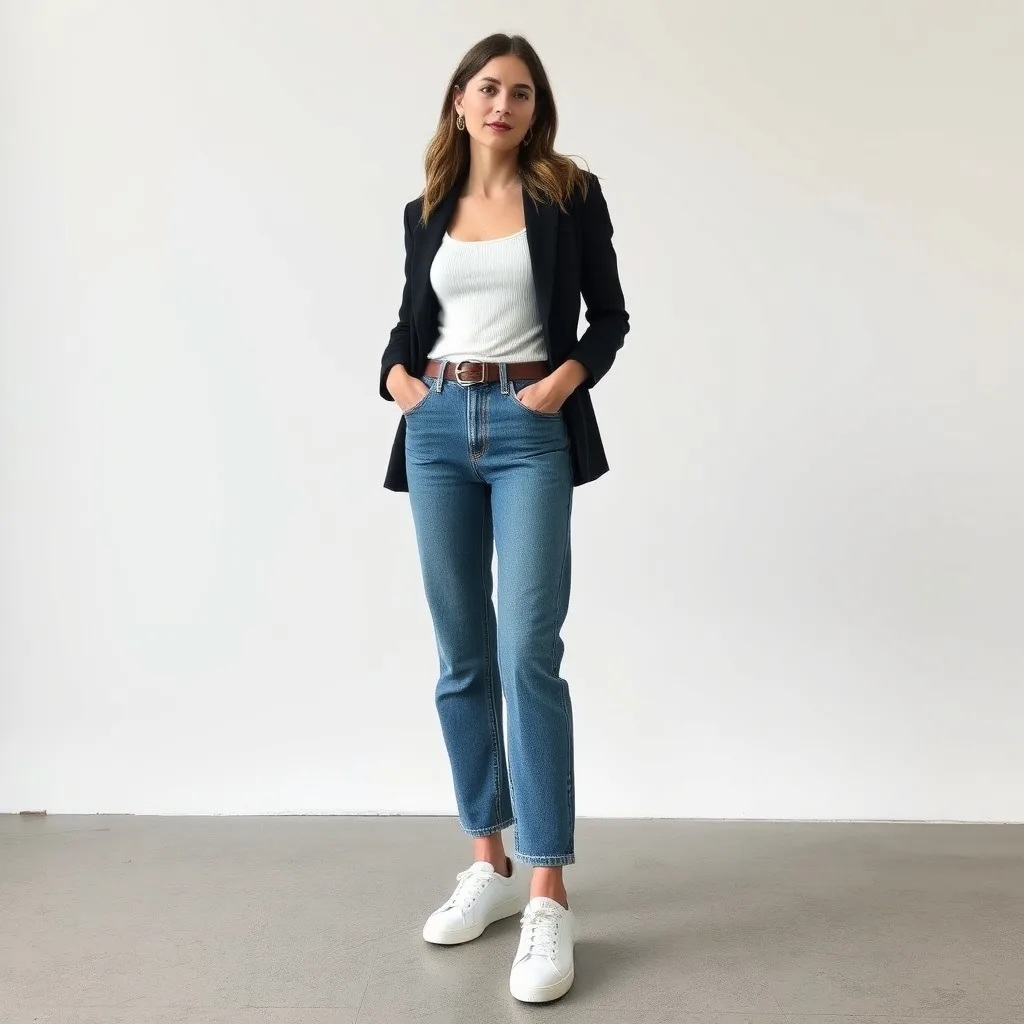
A structured oversized blazer over straight-leg jeans works because the volume lives in exactly one place. The blazer's dropped shoulders and roomy body create the silhouette's interest, while the jeans stay clean and straight so they do not compete. A tucked white tee keeps the interior simple, and a belt marks the waist; without that horizontal line, an oversized top can swallow the shape of the outfit.
Fit note: Choose a blazer in a mid-weight wool blend or a firm cotton twill, since a fabric with some structure holds the oversized shape instead of collapsing. The same rule transfers to any oversized top — a blazer, a coat, a chunky knit — paired with any straight bottom, from jeans to tailored trousers. One volume, one clean line. That is the whole equation, and the blazer half of it gets a closer look in black blazer outfits for work and weekends.
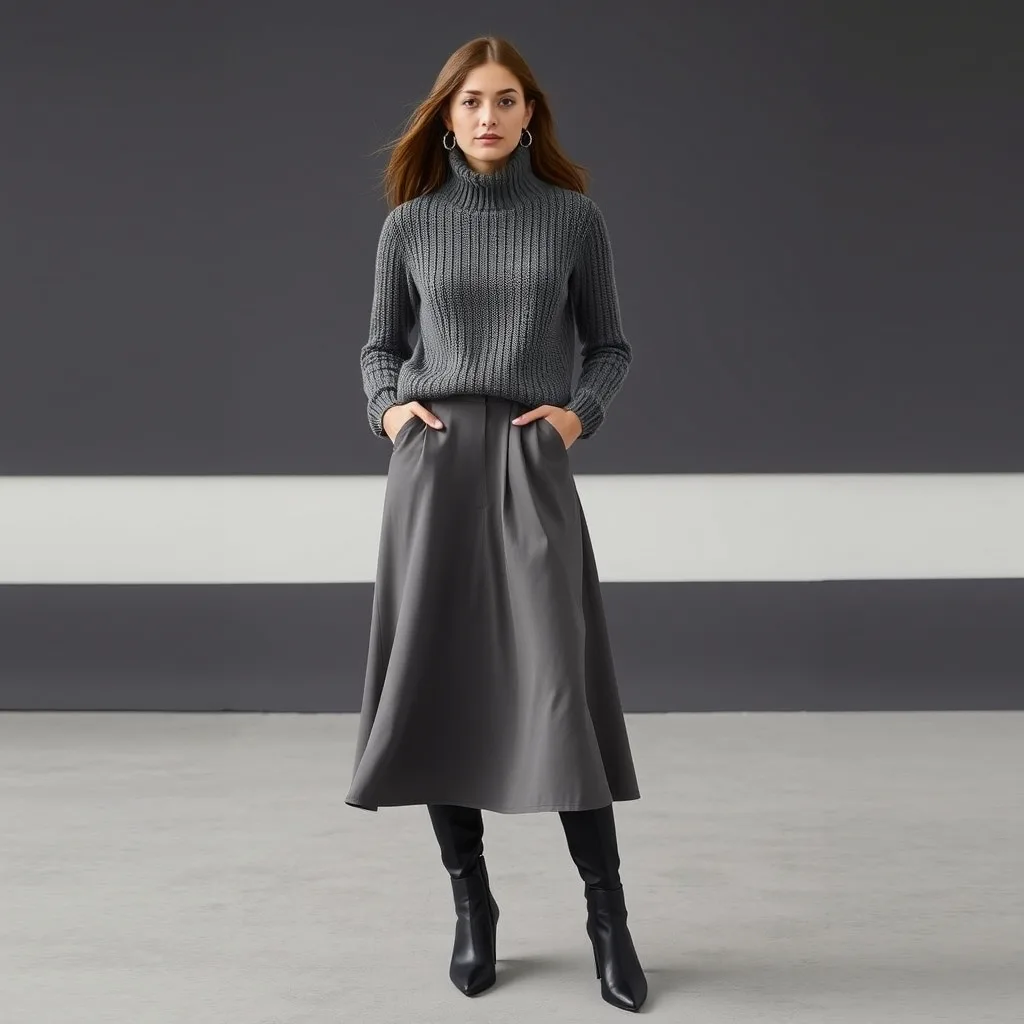
Monochrome Knitwear and Midi Skirt
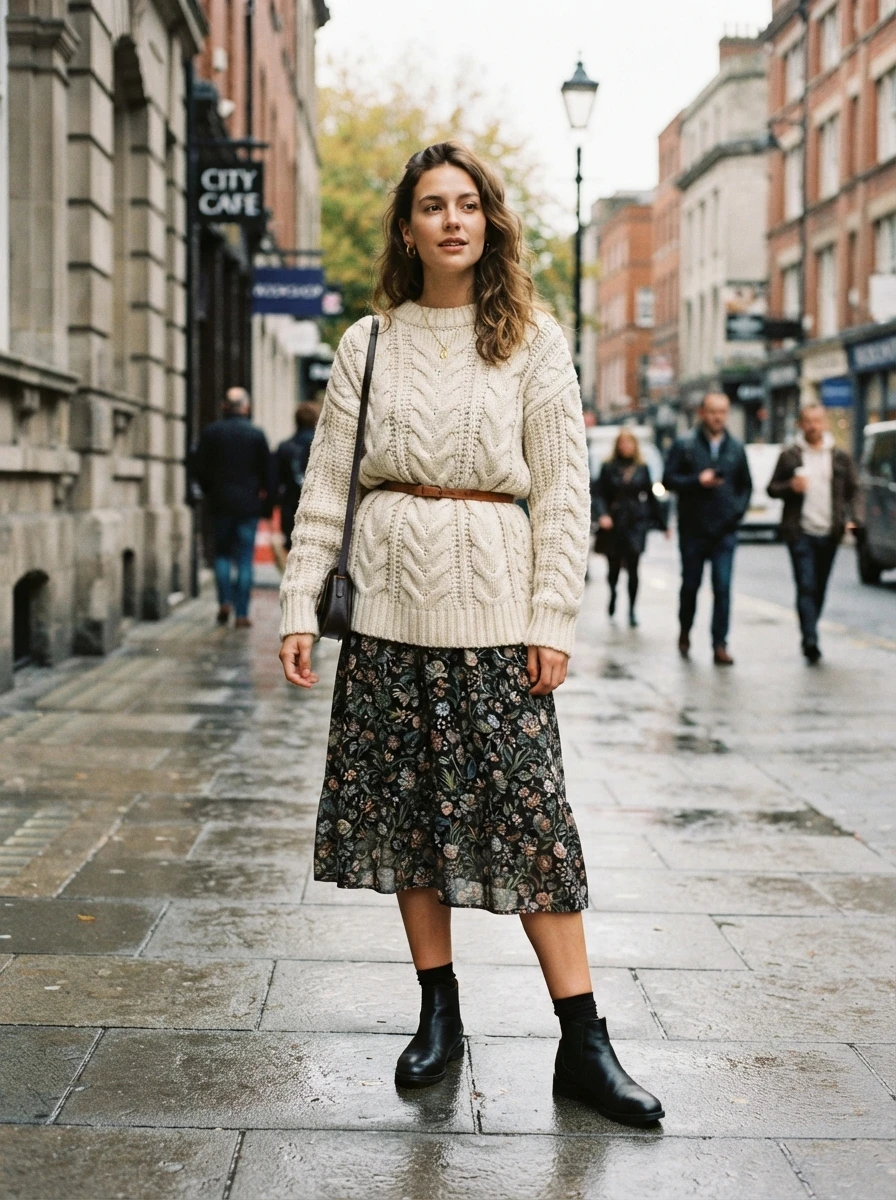
Head-to-toe monochrome in a single texture looks flat: a beige knit with a beige crepe skirt blurs into one undifferentiated column. The fix is textural contrast within the same colour family, such as a chunky cable-knit turtleneck against a fluid silk or fine wool midi skirt. The eye reads the colour as unified, which is what makes monochrome look polished, while the surfaces keep it interesting.
Fabric note: Pair a heavy knit with a smooth, fluid fabric, and keep the knit in wool or a wool blend so it holds its texture. Shoes can be anything tonal: suede boots, leather loafers, or clean white sneakers. The same one-colour thinking shapes chic old money fall outfits to inspire your next look.
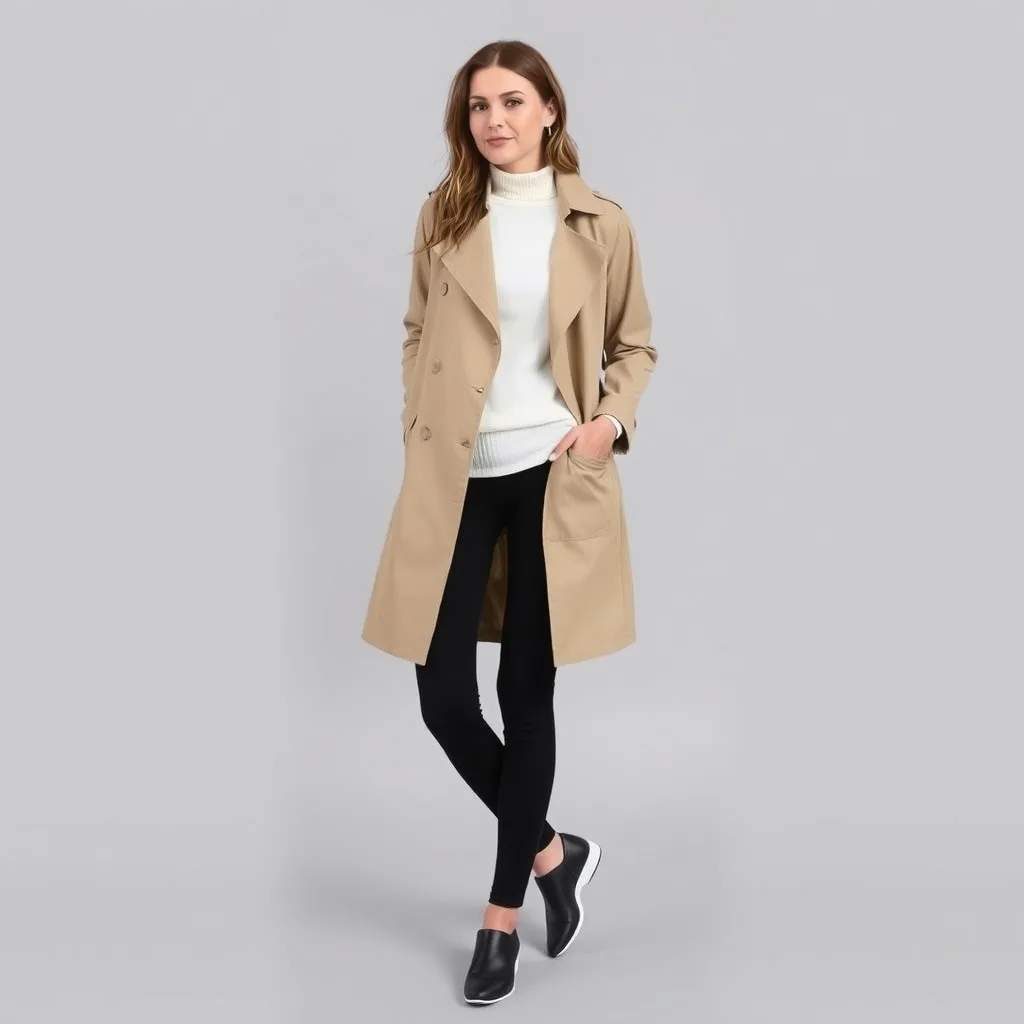
What Happens When a Trench Coat Leads the Outfit?
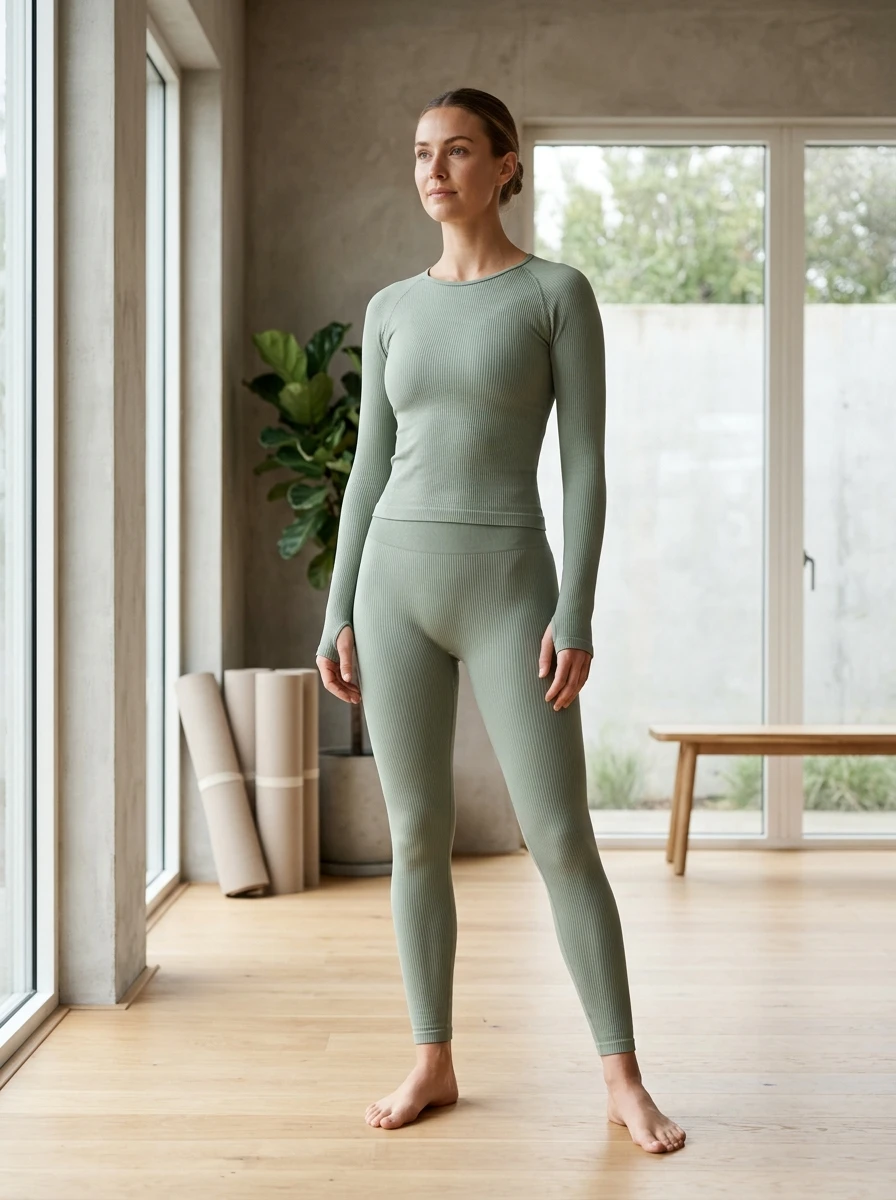
Leggings and a ribbed long-sleeve top are athleisure on their own; the same two pieces under a crisp tan trench coat read as a considered outfit. The trench does three jobs at once: it adds structure, it adds length, which elongates the legging line, and it signals intention. The leggings underneath must be matte, opaque, and ankle length — shiny or footed leggings undo the polish instantly. A slim crossbody bag keeps the hands free and the silhouette clean.
Wear it with: A water-resistant trench in cotton gabardine turns this into a uniform for rainy fall days, and a ribbed top in a cotton-elastane blend keeps its shape under the coat. This is the combination to reach for on mornings when comfort matters but the outfit still needs to look deliberate.
Button-Down Shirt and Knit Vest — Make the Layers Visible
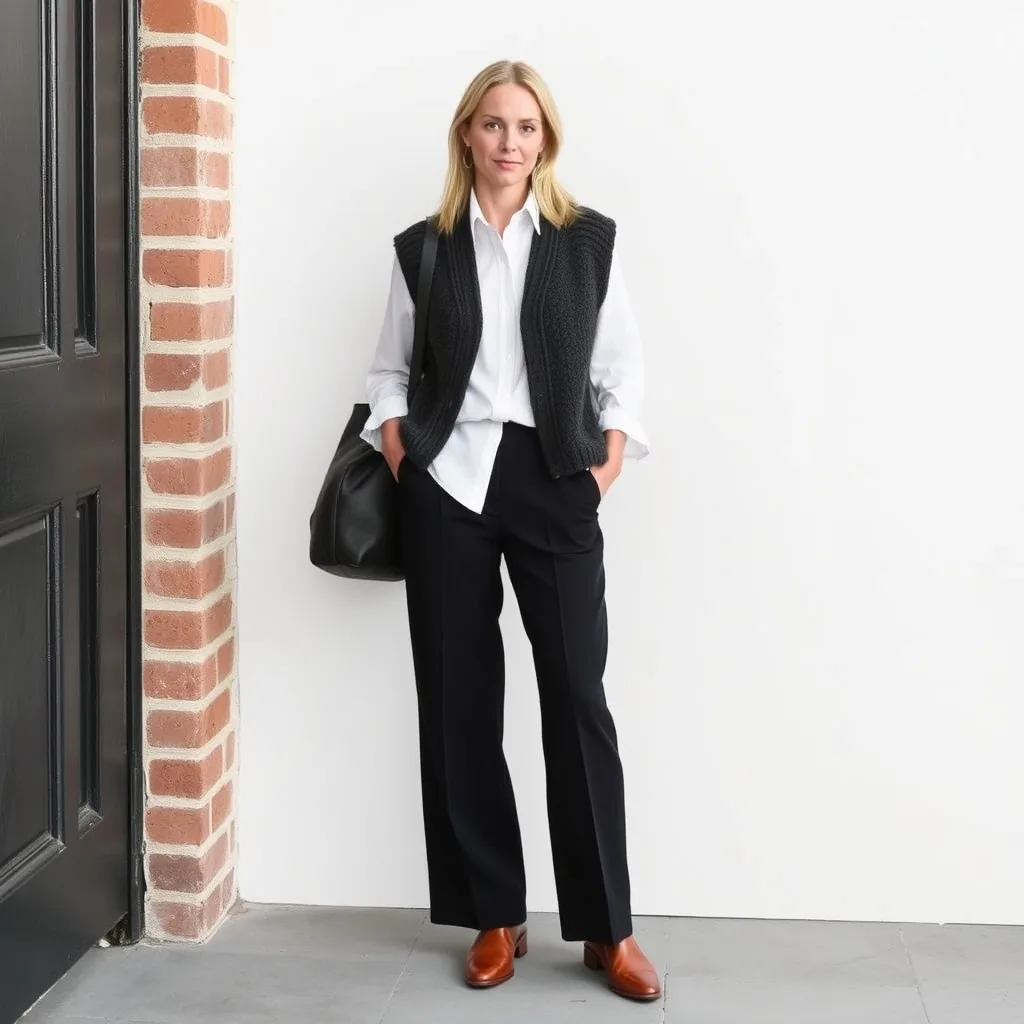
A knit vest over a button-down only reads as a deliberate outfit if the shirt is doing visible work: the collar should pop, the cuffs should show, and the hem should peek below the vest by a few centimetres. Otherwise the vest is just a sleeveless sweater and the shirt is wasted. Pair it with a pleated midi skirt or tailored trousers; the vest's clean lines need a bottom with some structure to balance the softness of the knit.
Care tip: Press the shirt collar before dressing, since a limp collar is the one detail that makes this look unintentional. A crisp cotton poplin shirt holds its collar far better than a soft, washed cotton. The shirt itself deserves the same care, and white button down shirt outfits show how one good shirt carries a whole outfit. Keep the rest simple: a leather tote, ankle boots, or loafers.
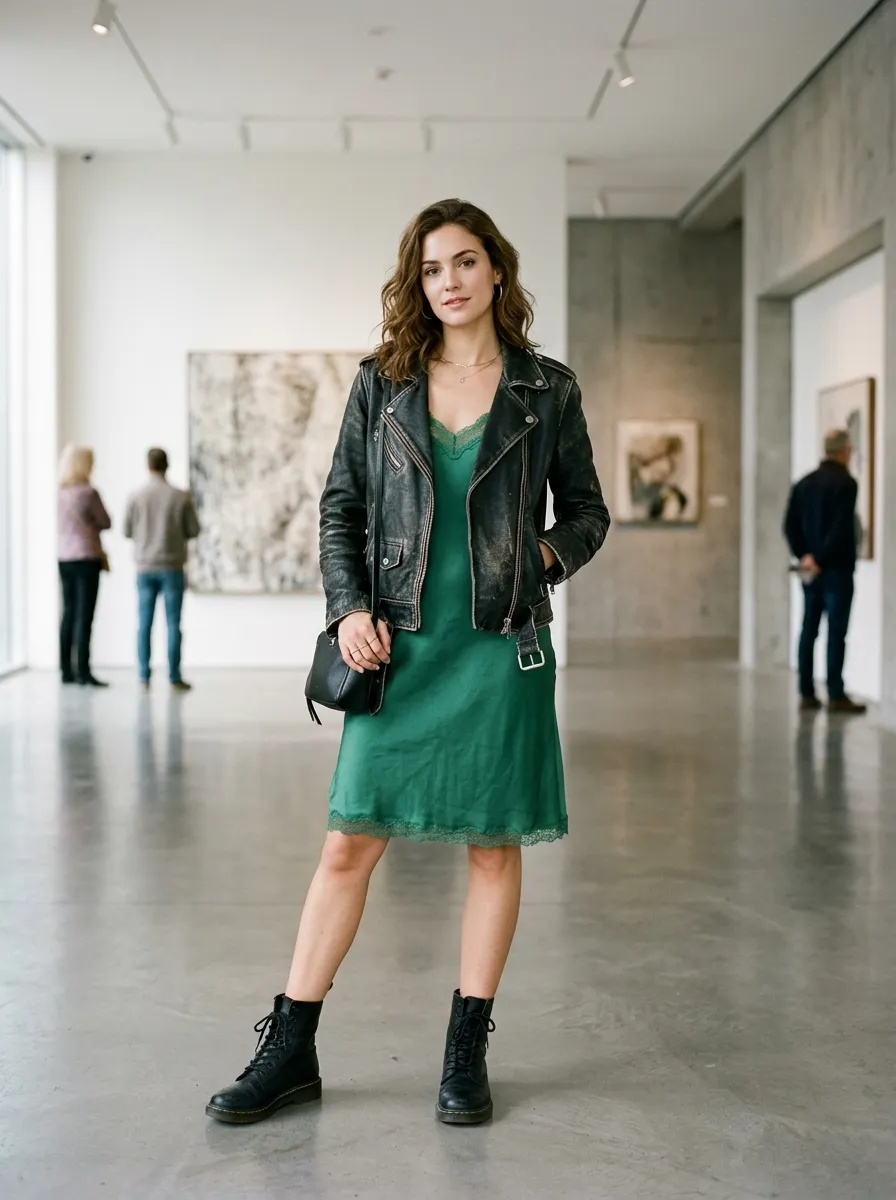
Leather Jacket and Slip Dress
A delicate slip dress on its own reads as evening; add a cropped leather jacket and the outfit becomes a daytime look. The contrast is doing all the work — the dress's fluidity against the jacket's structure, the dress's sheen against the leather's matte finish. Keep the slip dress in a solid, muted tone, such as black, chocolate, or olive, so the texture contrast is the story, not a print.
Fabric note: Choose a slip dress in silk, satin, or a smooth viscose blend, since a fluid fabric drapes cleanly under a structured jacket. Ankle boots anchor the outfit and keep it grounded; swapping sneakers for boots takes the same combination from a gallery afternoon to dinner. A similar edge-first combination appears in doc martens outfits for every season.
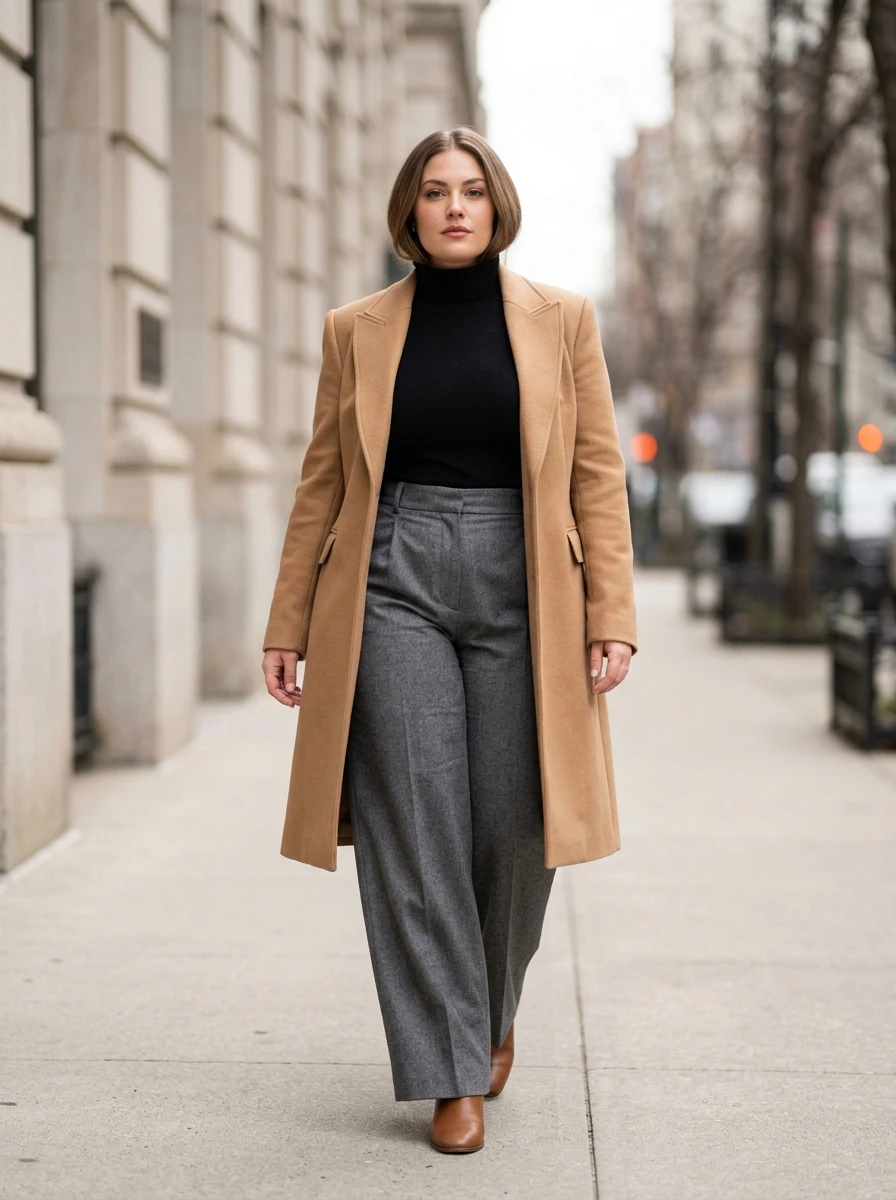
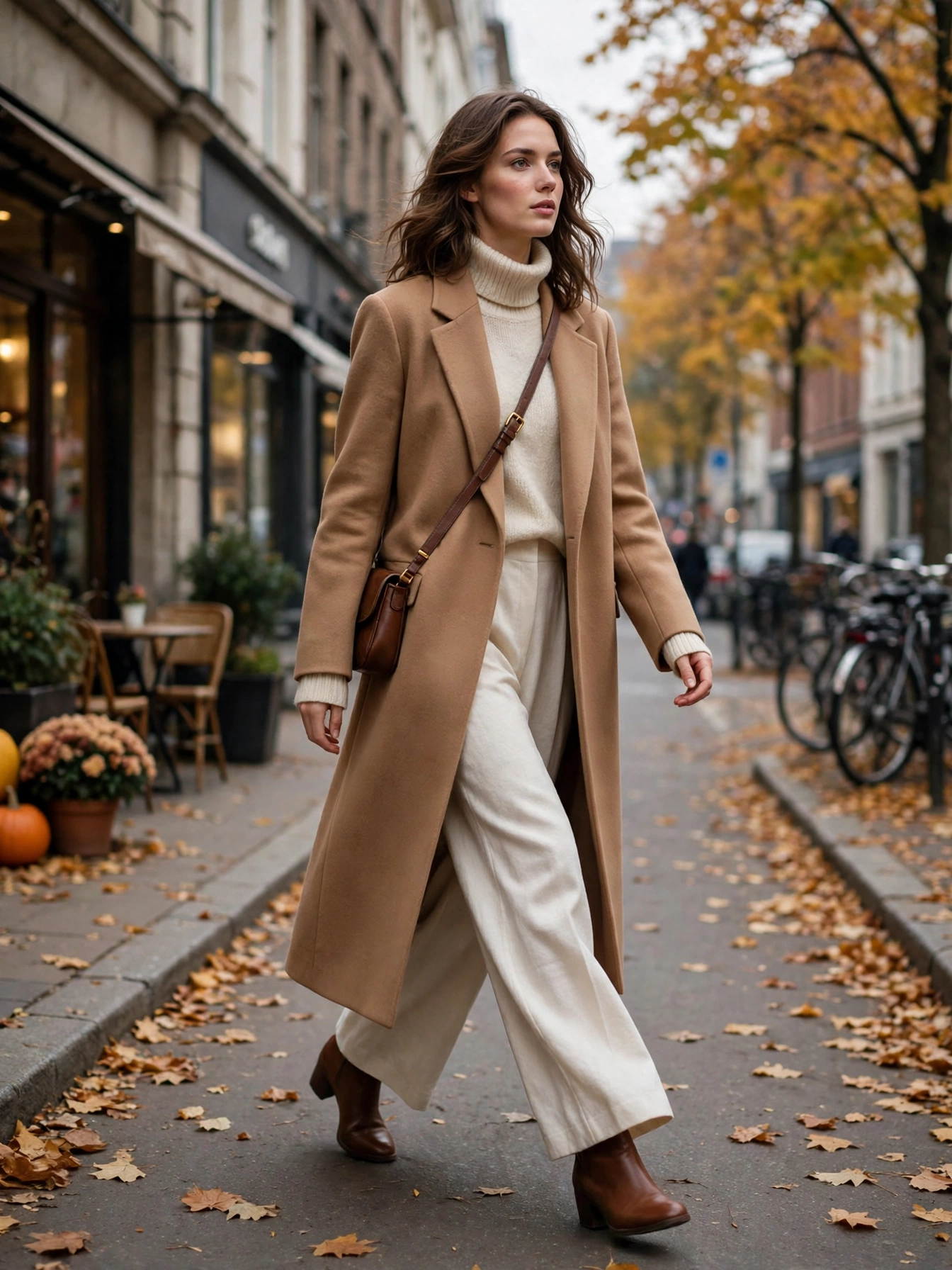
The Coat Is the Outfit: Camel Coat and Wide-Leg Trousers
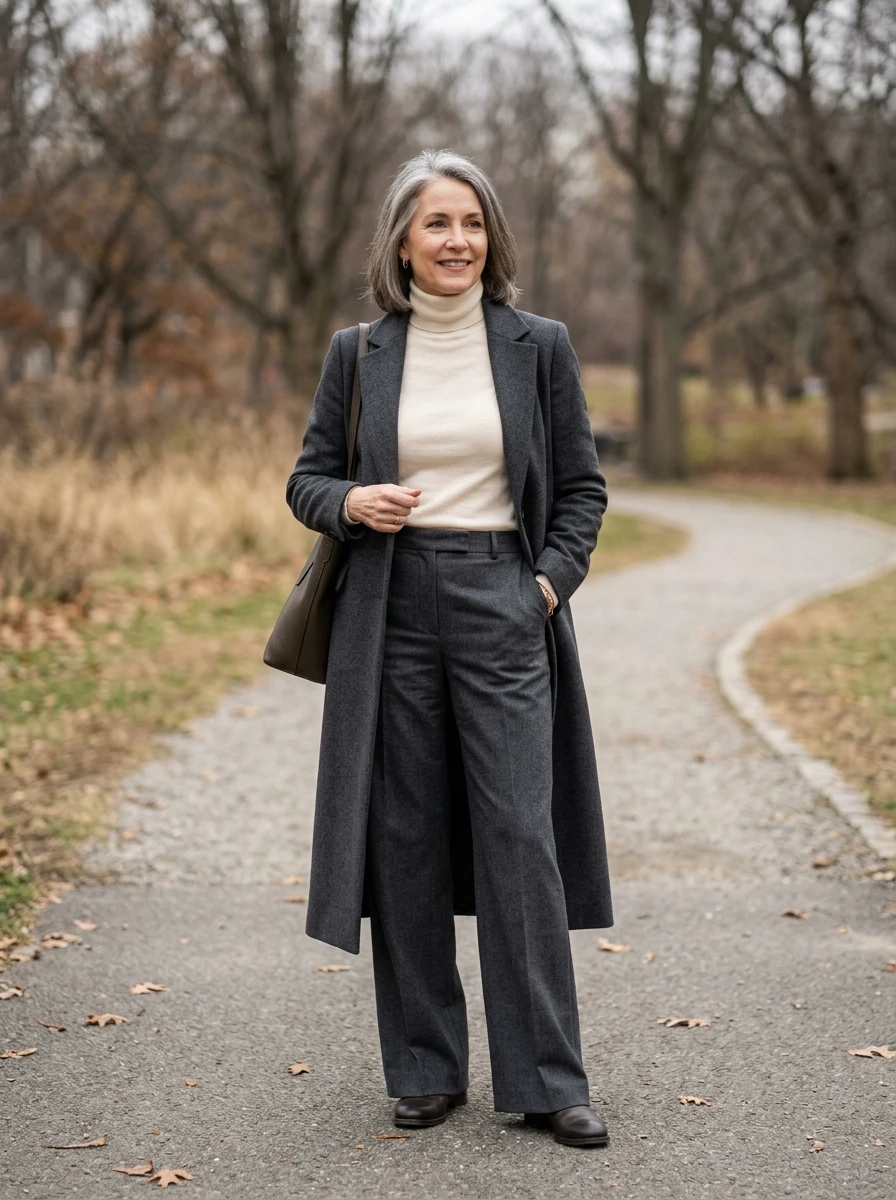
A camel coat in a classic cut — single-breasted and knee length — over matching camel wide-leg trousers and a cream top creates a tonal outfit that looks polished without trying. The key is keeping the shades in the same family: warm camel with warm cream, not cool grey. When the coat is this strong, everything under it can be simple, because the coat is the statement piece.
Fit note: The coat should be structured, not slouchy; a soft, unstructured coat over soft trousers looks like loungewear. A tight edit like this is the heart of a capsule wardrobe built from five timeless pieces. Any tonal palette works the same way: all black, all cream, all camel, or all grey.
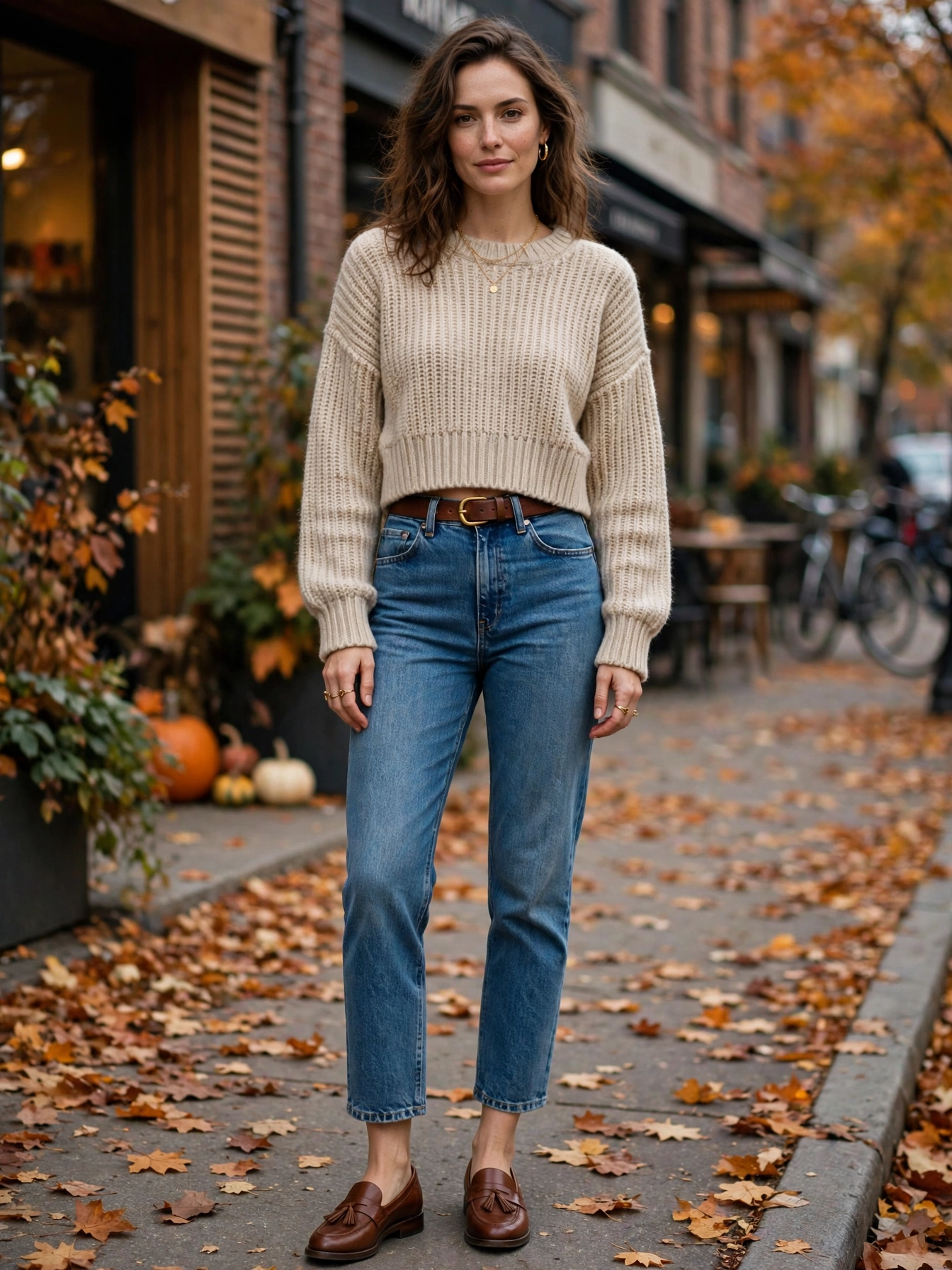
Cropped Sweater and High-Waisted Denim
A cropped sweater with high-waisted jeans works when the sweater's hem meets the jeans' waistband exactly. That meeting point creates a defined waist without a belt, and the proportions stay clean. The trick is the length of the sweater: a true crop that ends above the waistband leaves a gap and breaks the line, while a longer sweater that covers the waistband looks like an ordinary sweater. Get the hem to meet the waistband and the outfit snaps into place.
Wear it with: Loafers or boots with a slim profile, so the shoe does not add bulk at the ankle. A wool or cotton-blend knit in a medium weight holds the cropped shape best; a very fine knit can stretch out of shape by the end of the day. The cropped sweater's short hem is doing the work of a belt, and whenever two garments' hems meet at the waist, definition comes for free.
Plaid Shirt and Dark Denim — Let the Pattern Speak
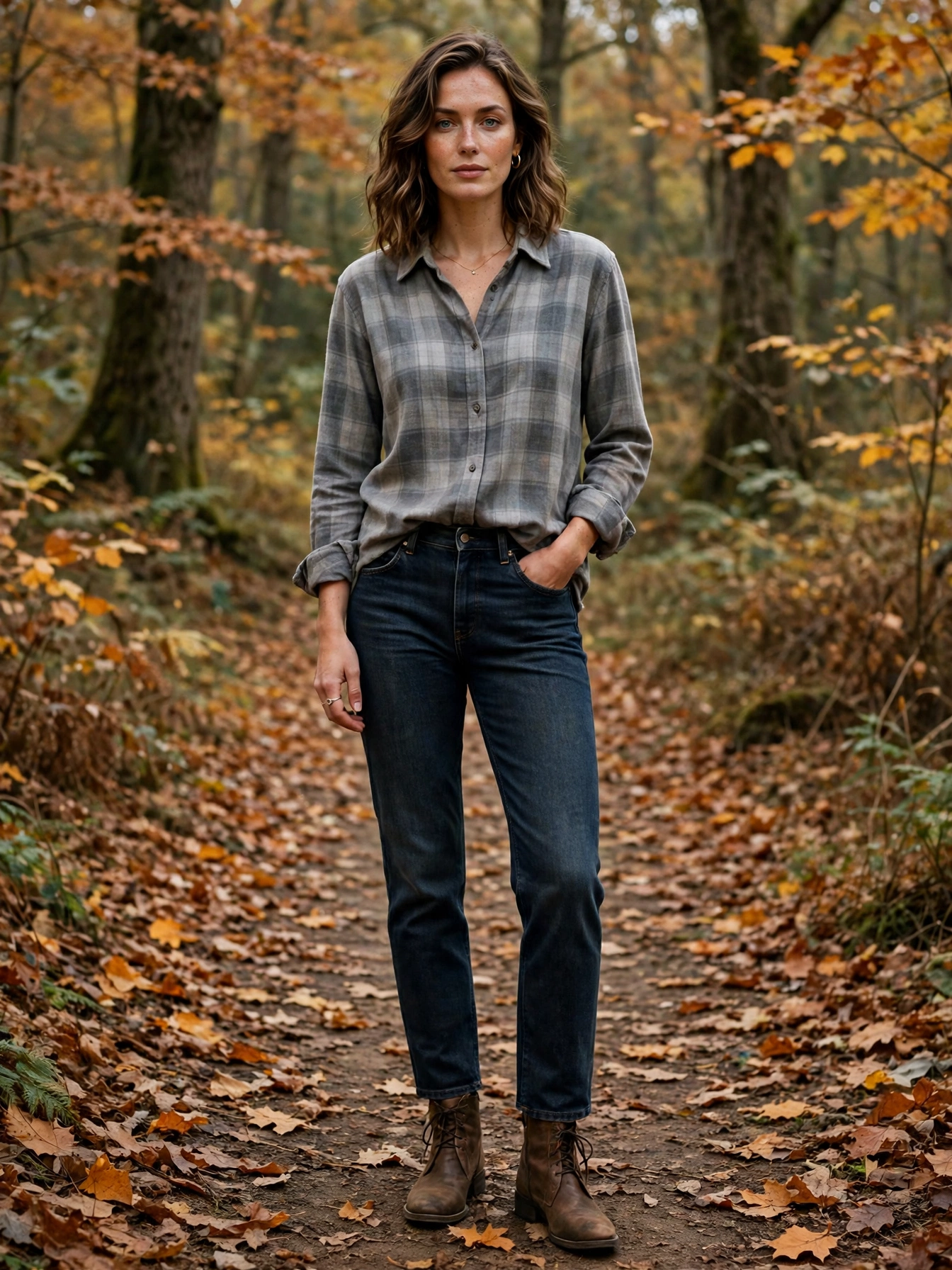
A plaid shirt in a muted palette, such as grey, brown, or olive, with dark denim creates an outfit where the pattern is the statement and the denim is the support. Choose a plaid with a small, tight repeat; a large, loud check competes with the denim's texture and looks like a costume. The plaid shirt should be the only pattern in the outfit — a patterned scarf or a printed bag on top of it is too much.
Fabric note: A brushed cotton flannel plaid suits cooler days, while a lighter cotton plaid works for early fall. Wear the shirt tucked into dark, straight-leg jeans with a simple belt, and add a leather jacket if the weather calls for it.
Denim Jacket and Corduroy Trousers
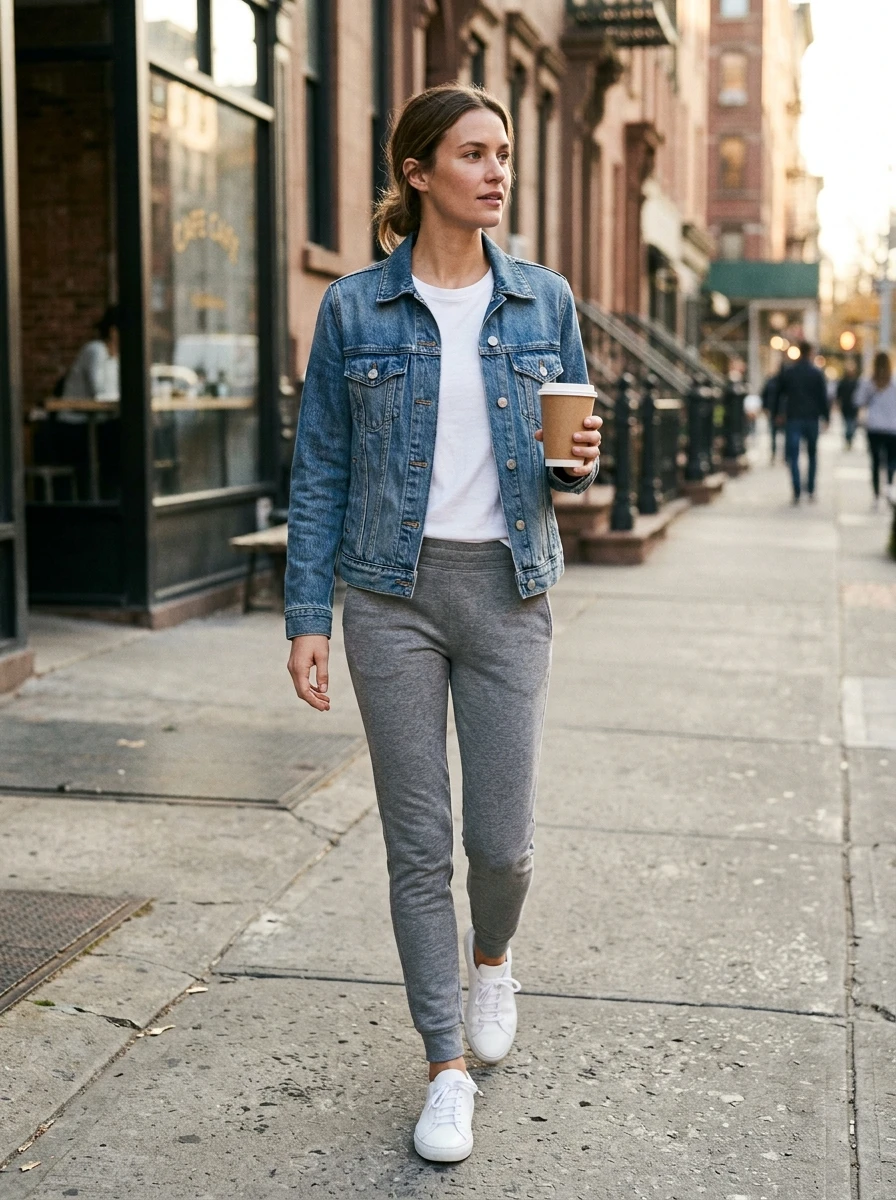
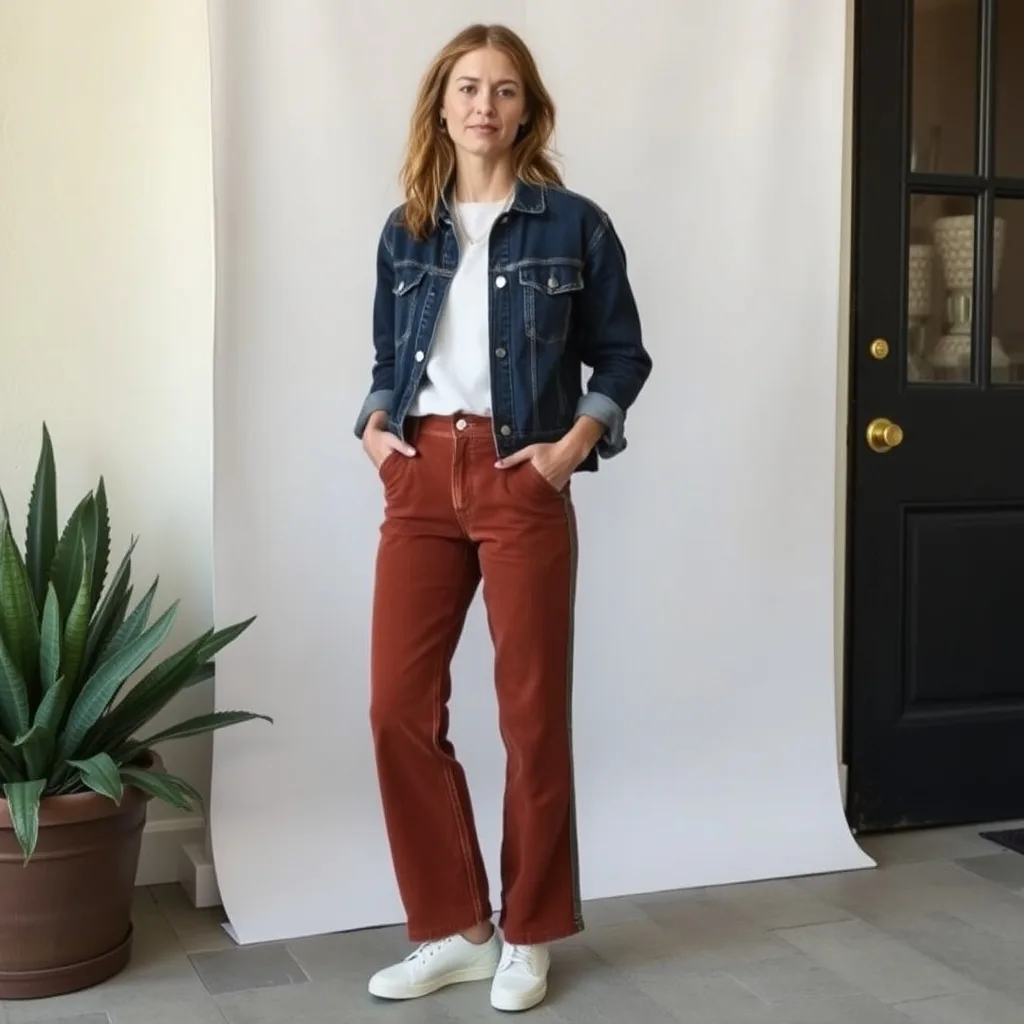
A denim jacket with corduroy trousers works because both fabrics are textured, workwear-inspired, and tough, so the outfit reads as cohesive even though the colours are different. Choose a denim jacket in a classic wash and corduroy trousers in a muted tone, such as olive, brown, or burgundy. The textures do the talking here, so keep the colours simple: one denim blue, one muted corduroy tone, and a plain white tee underneath.
Care tip: Wash denim and corduroy inside out in cold water to protect the colour and the corduroy pile. Wear ankle boots or clean sneakers, and keep accessories minimal — the pairing works because of shared toughness and separated tones. That is what keeps rugged pairings looking styled instead of accidental. For more denim-first fall combinations, try wide leg jeans outfits that balance proportions.
Wool Scarf and a Simple Base
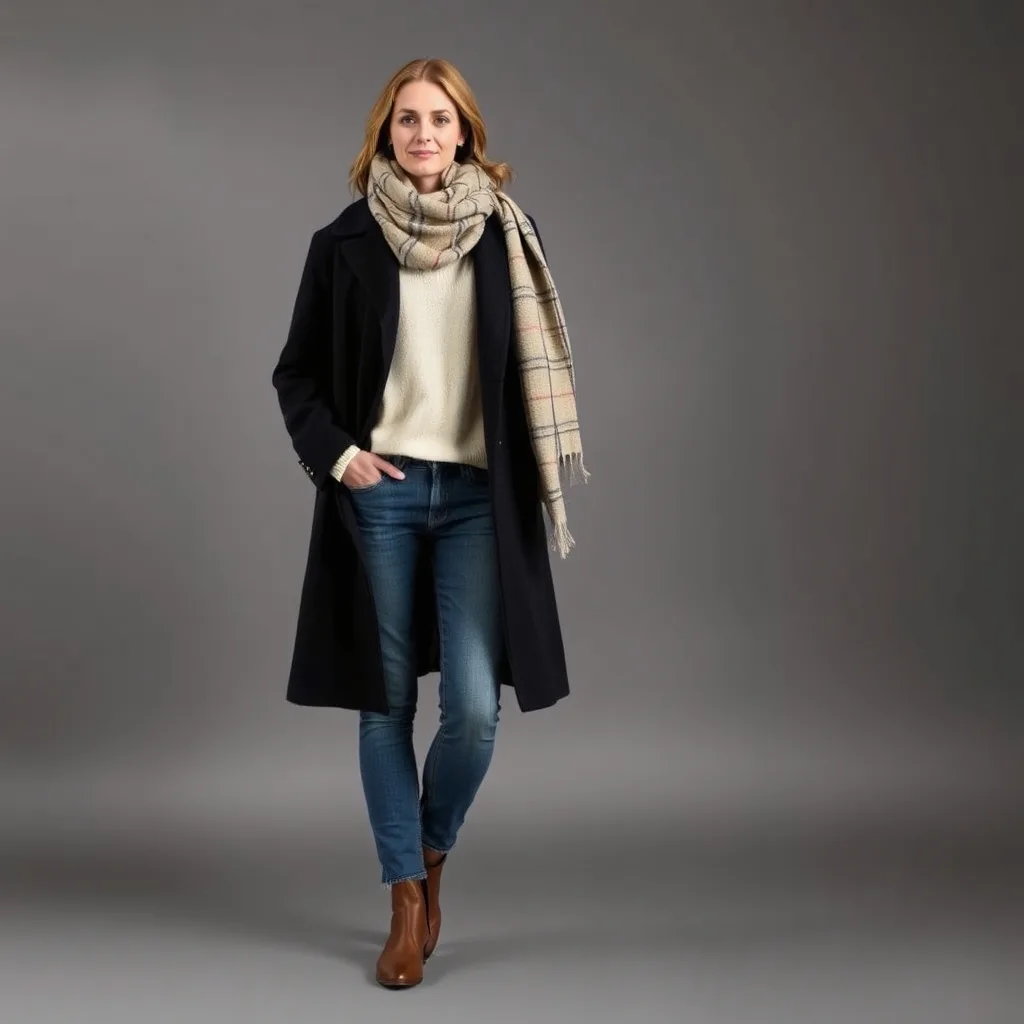
A wool scarf in a muted tone, such as grey, camel, or burgundy, over a simple base — straight-leg jeans, a white tee, and a coat — adds the one note of colour and texture that makes the outfit feel finished. Choose a scarf long enough to drape, not a short neckerchief, and let it hang rather than wrapping it tightly.
Wear it with: A soft merino or lambswool scarf, which drapes smoothly and stays comfortable against the neck. The scarf should be the only pattern or the only warm colour in the outfit; if the scarf is doing the work, everything else can be simple. The layering logic behind it matches MasterClass's guide to layering clothes. For a deeper grounding in the less-but-better approach, MasterClass's minimalist fashion guide explains how restraint becomes a style system.
Black Midi Dress and Ankle Boots: The Simplest Combination of All
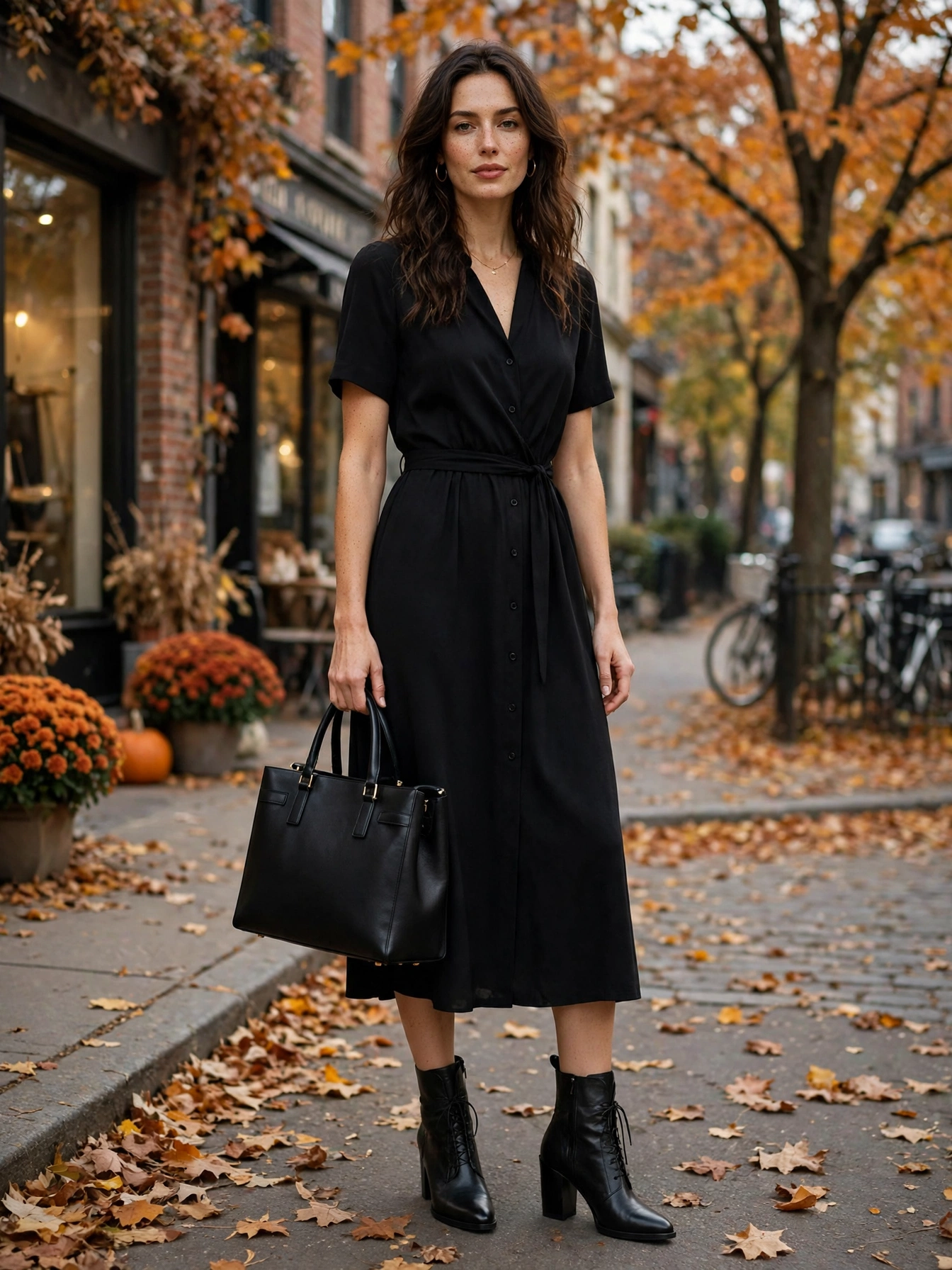
A black midi dress in a simple cut — no ruffles, no embellishments — with ankle boots and a structured bag is the most versatile fall outfit in this set. Add a coat for warmth, swap the boots for sneakers for a casual day, and the same dress works for three different occasions.
Fit note: The dress should hit at mid-calf; shorter and it looks summery, longer and it drags. A ponte knit or a firm crepe holds that clean midi shape without clinging. The same simple base carries the casual aesthetic fall outfits in this guide's sister list. Any simple dress in a neutral shade works the same way: black, navy, camel, or grey.
FAQ
How can I keep minimalist fall outfits from looking flat?
Add one contrasting element: texture, pattern, or a single warm accent. Minimalism is not about removing interest; it is about concentrating it in one place so the outfit has a clear focal point, whether that is a chunky knit, a camel coat, or a wool scarf.
Which fabrics work best for minimalist fall outfits?
Wool, cotton gabardine, leather, silk, and corduroy carry most of these combinations. The rule is to mix surfaces rather than colours: a matte fabric next to a smooth one, or a heavy knit next to a fluid skirt, keeps a simple palette from looking dull.
Can I wear the same minimalist fall outfit to work and on weekends?
Yes, with a shoe and outer-layer swap. The camel coat, the trench, and the black midi dress combinations are office-appropriate with structured shoes and a tailored coat, and the same bases turn casual with sneakers and a denim or leather jacket.
How many colours should a minimalist fall outfit use?
Two or three at most, and ideally from one family: camel with cream, black with grey, or olive with brown. When the palette stays narrow, texture and proportion do the styling instead of colour.
What is the easiest minimalist fall outfit to start with?
The black midi dress with ankle boots. It needs no layering logic and no colour matching — add a coat when it is cold, swap the boots for sneakers when it is casual, and the outfit is complete.
A Quick Checklist Before You Head Out
- One focal point only: a volume piece, a texture contrast, a strong coat, or a single accent.
- Two textures at minimum, even when the whole outfit is one colour.
- Hemlines that meet cleanly at the waist, or a belt that marks it.
- Shoes in a slim, tonal profile that do not add bulk.
- One pattern at most, and no competing prints.
The verdict is simple: minimalist fall dressing is not about owning less for its own sake. It is about knowing which pairs work, and which fall outfits every woman needs when the temperature swings. Learn the principle behind each combination, and the closet becomes a set of outfits that can be repeated, swapped, and trusted.