How to Wear Y2K Outfits for Women: A Street-Style Guide to the 2000s Look
How to use this guide
Treat trend ideas as styling prompts rather than rules. Start with pieces already in your wardrobe and adjust fabrics, layers, and proportions for your climate, comfort, occasion, and personal style.
Picture a sidewalk in 2002: a low-slung jean, a shrunken tee, a sneaker with a sole thick enough to balance the whole silhouette. The look feels instantly familiar, yet most attempts at it today land somewhere between costume and plain early-2000s clothing. What separates the two is not the pieces themselves but the rules underneath them.
Y2K fashion is a design language from roughly 1999 to 2004, and it has a grammar worth learning. Its core codes are low rises, exposed midriffs, shrunken tops, shiny or techy fabrics, visible logos, mini lengths, and chunky footwear. Learn the codes and you can speak the language without dressing up as a decade.
The history is well documented on Wikipedia's Y2K fashion page, which traces how the look moved from the runway to the street, and the broader 2000s in fashion overview puts the era in context.
The mechanics matter more than the pieces. Y2K proportion works by inversion: a tiny cropped top with a low-slung bottom creates a long torso line and a shorter leg line, the opposite of today's high-rise logic. Texture does the second half of the work: velour against rigid denim, metallic against matte cotton, mesh layered over solid.
The friction between a shiny surface and a flat one is what makes a Y2K outfit read as intentional. Two flat fabrics in era cuts can look like plain 2000s clothes, but one technical fabric electrifies the whole thing.
Color temperature matters more than people think. The palette splits two ways: icy pastels (baby blue, lavender, frosted pink, mint) and saturated primaries (cobalt, cherry red, kelly green). Mixing the two families in one outfit reads chaotic rather than referential. The modern rule that keeps it wearable: pick one era code per outfit, the low rise or the baby tee or the chunky sneaker, and keep everything else contemporary. One code reads as homage; four reads as a theme party.
Two neighboring aesthetics share Y2K's codes and are worth knowing apart: the logo-heavy Von Dutch look in our 7 Y2K inspired outfits featuring vintage Von Dutch shoes, and the softer romantic side in our 12 nostalgic 2000s coquette fall outfits.
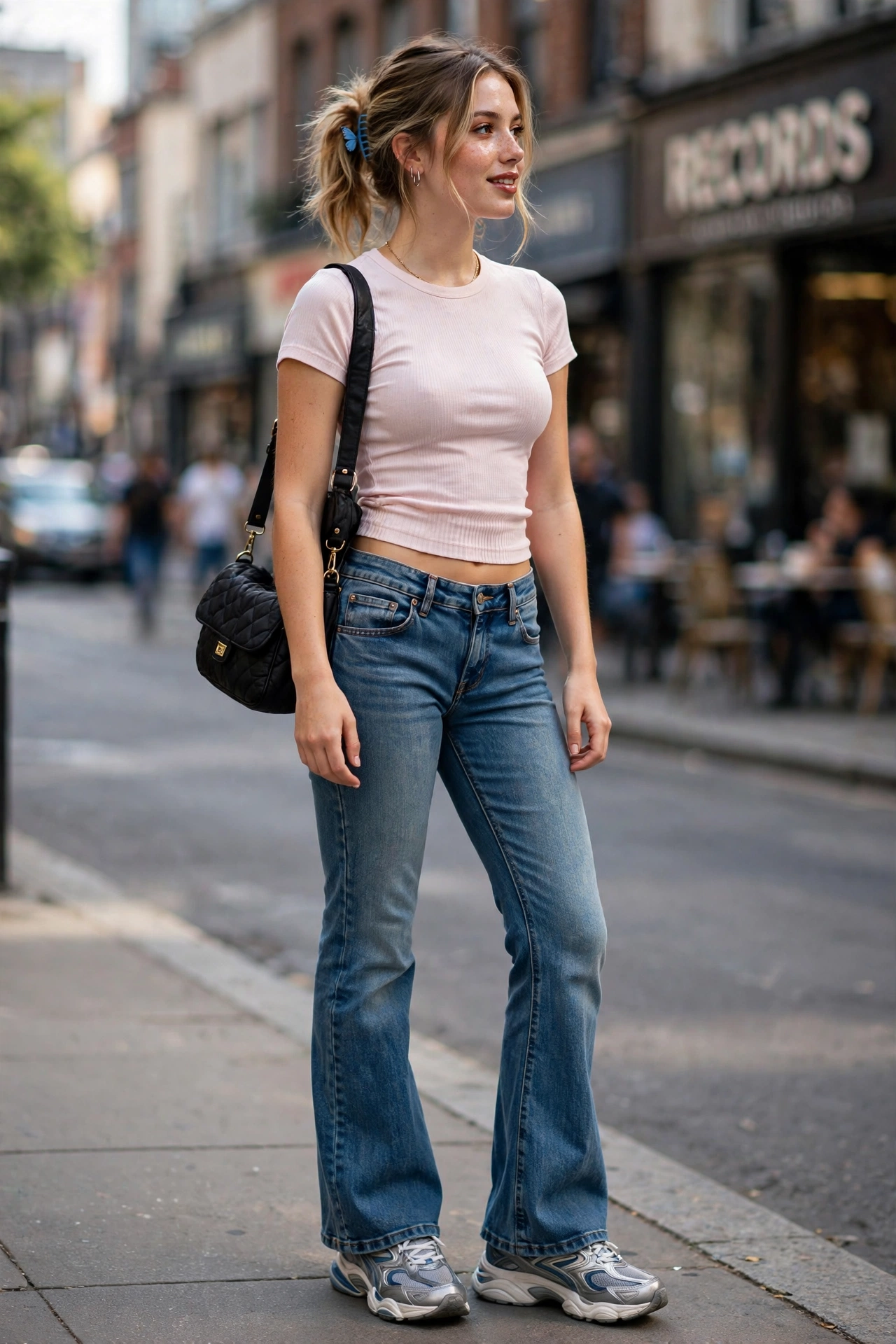
The Low-Rise Bootcut Formula
The archetype. The jeans need a genuine low rise, 7 to 8 inches, sitting on the hip bones, in a medium wash with subtle whiskering; heavy distressing pushes it toward 2010s. The bootcut should start flaring below the knee and break over the shoe. The baby tee does structural work: ribbed cotton spandex (95/5), fitted, ending an inch above the waistband to create the era's skin window. A regular tucked tee doesn't create the same line. Footwear is non-negotiable: genuinely chunky retro runners with sculpted soles and visual mass.
Fit note: slim sneakers make the bottom half look spindly against the bootcut's width, so keep the sole volume in proportion to the flare. If you love the logo side of this era, the Von Dutch outfits guide shows how the same chunky shoe works with visible branding, and our 14 minimalist outfits with sneakers show the same sole volume worn quietly. Small gold hoops and a baguette bag finish it. Daytime city dressing, casual weekends, the codes read clearly but every piece is ordinary.
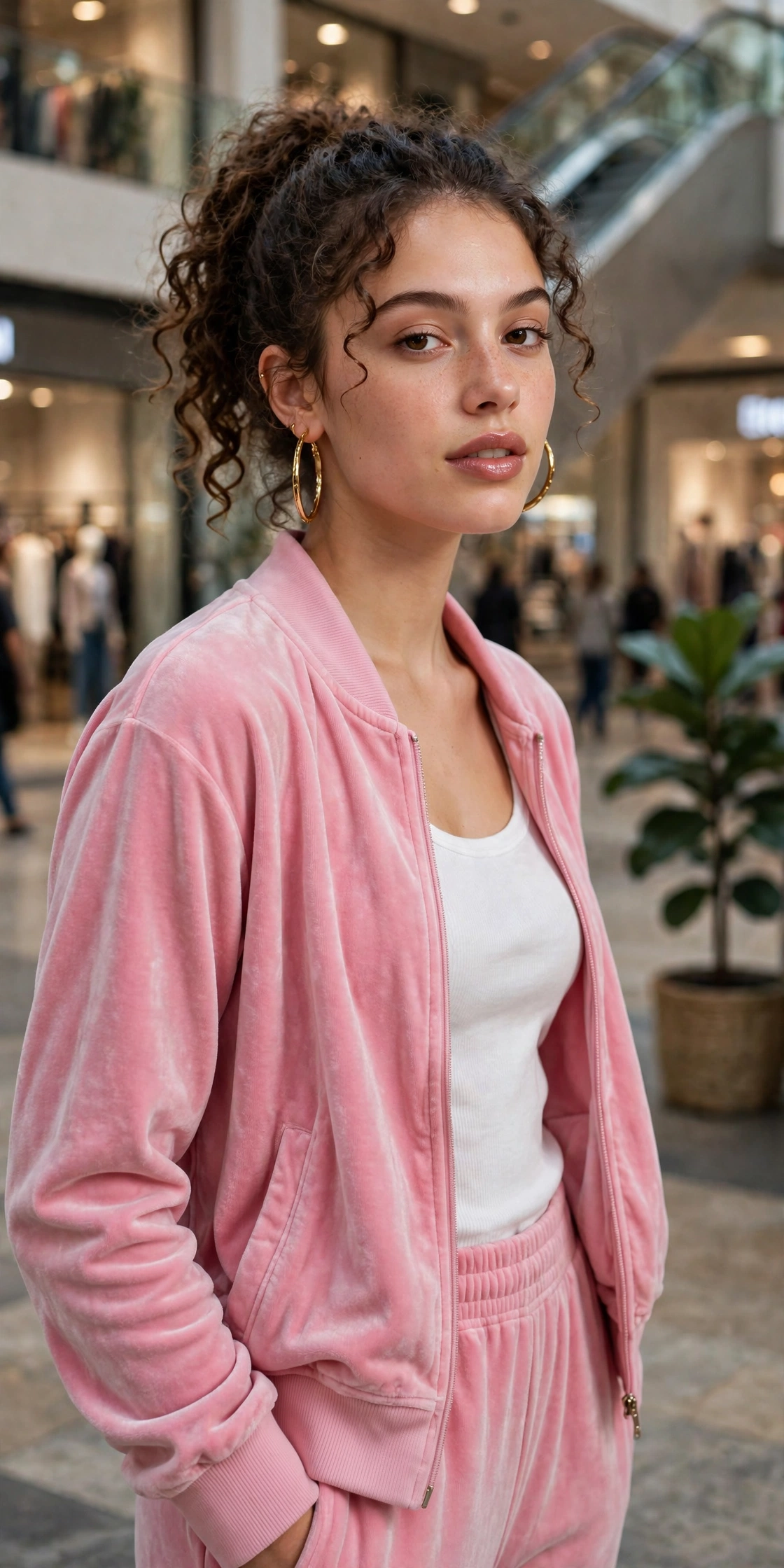
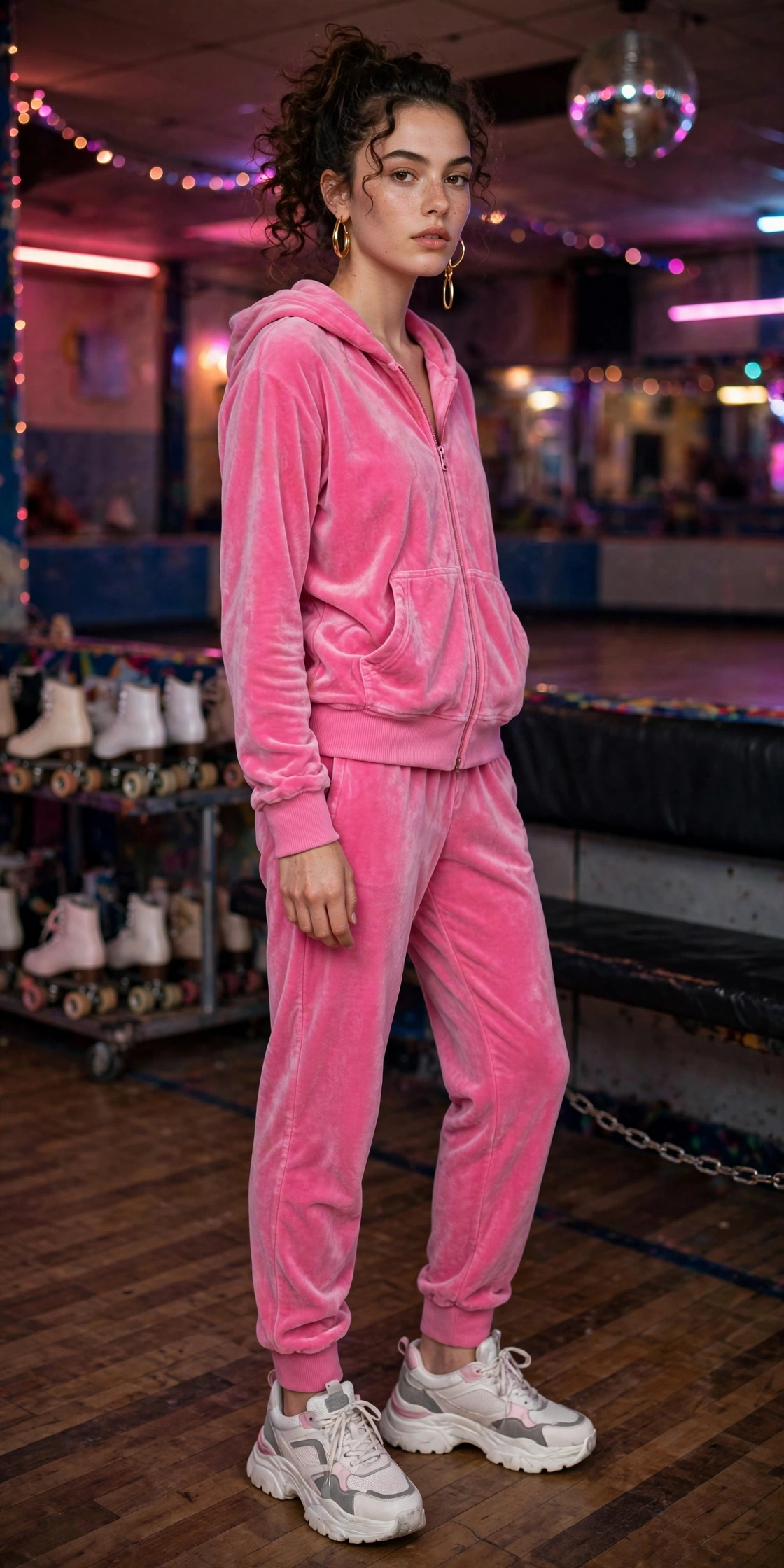
Velour Tracksuit, Dressed Up
A matching velour set in a jewel tone or pastel pink, zip jacket worn half up, straight-leg pants pooling slightly over sneakers. Velour quality is everything: cotton-blend velour (around 80/20) has a rich nap that shifts tone as it moves; cheap all-polyester velour looks flat and costume-like. Run your hand across it before buying — good velour has depth. The jacket must be fitted through the shoulders, hitting at the hip; oversized velour reads as pajamas. Monochrome elongates while the soft structure keeps it casual.
Wear it with: gold hoops and a tiny structured shoulder bag, which tip it from gym to street. The bag's rigidity contrasts the tracksuit's softness, and that contrast is the whole styling move. Travel days, coffee runs, off-duty polish.
Why the Denim Mini Needs a Dark Rinse
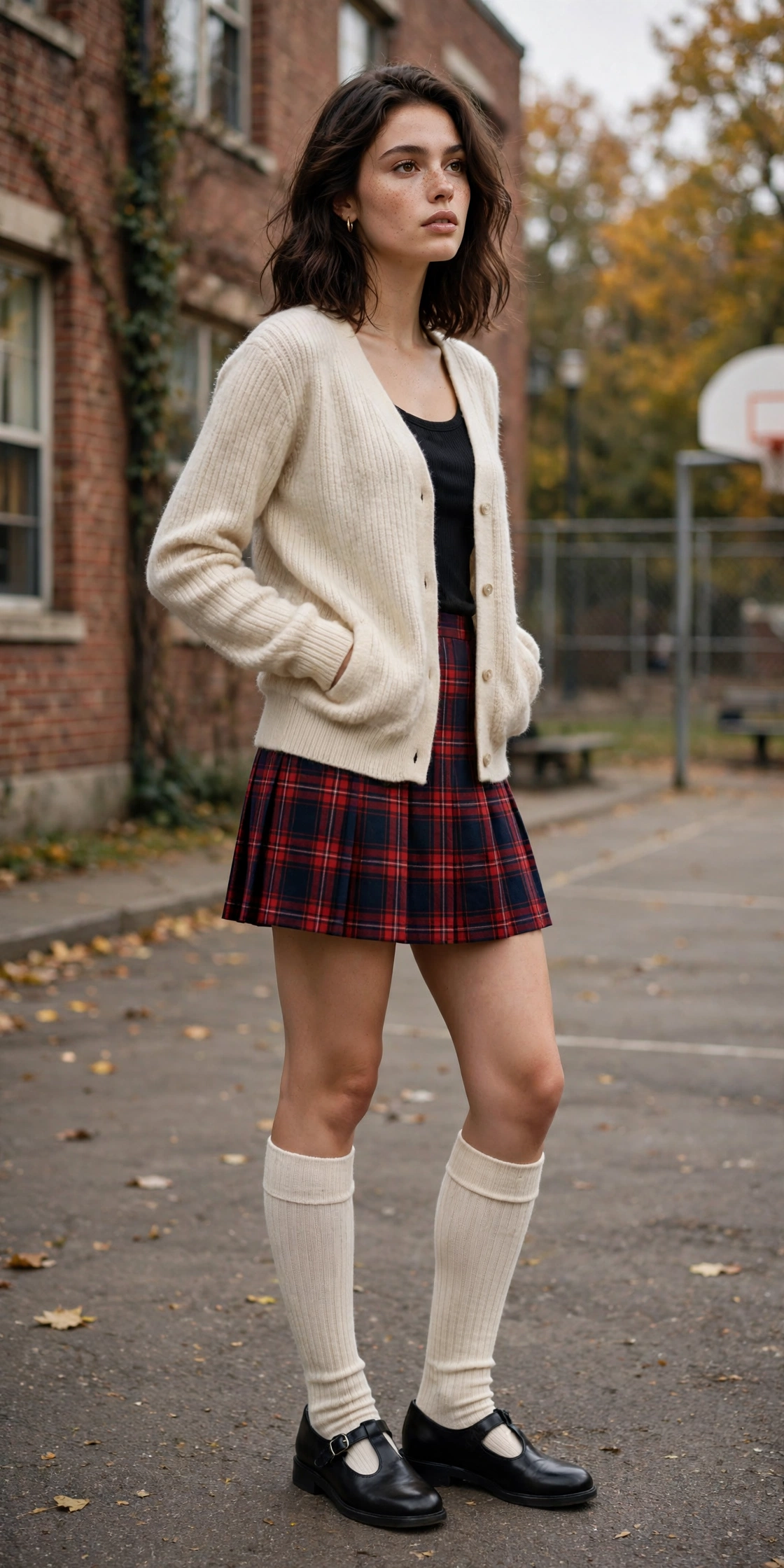
An A-line denim mini in a dark rinse, dark indigo or washed black, which keeps the short hem from reading juvenile. Light-wash minis skew teenage; the rinse does real work here. The cardigan is the technical piece: shrunken, fine-gauge knit (cotton or cotton cashmere), buttoned only at the top two buttons. It needs structure — flimsy knits collapse and the whole thing goes soft. The cropped length against the short hem creates the era's signature waist skin window.
Fabric note: knee-high boots with a block heel balance the exposed leg; the shaft's vertical line grounds the outfit and the block heel keeps it walkable. Small top-handle bag, simple studs. Dinners, dates, evenings that call for intention over a bodycon dress.
Cargo Pants and the Compression Rule
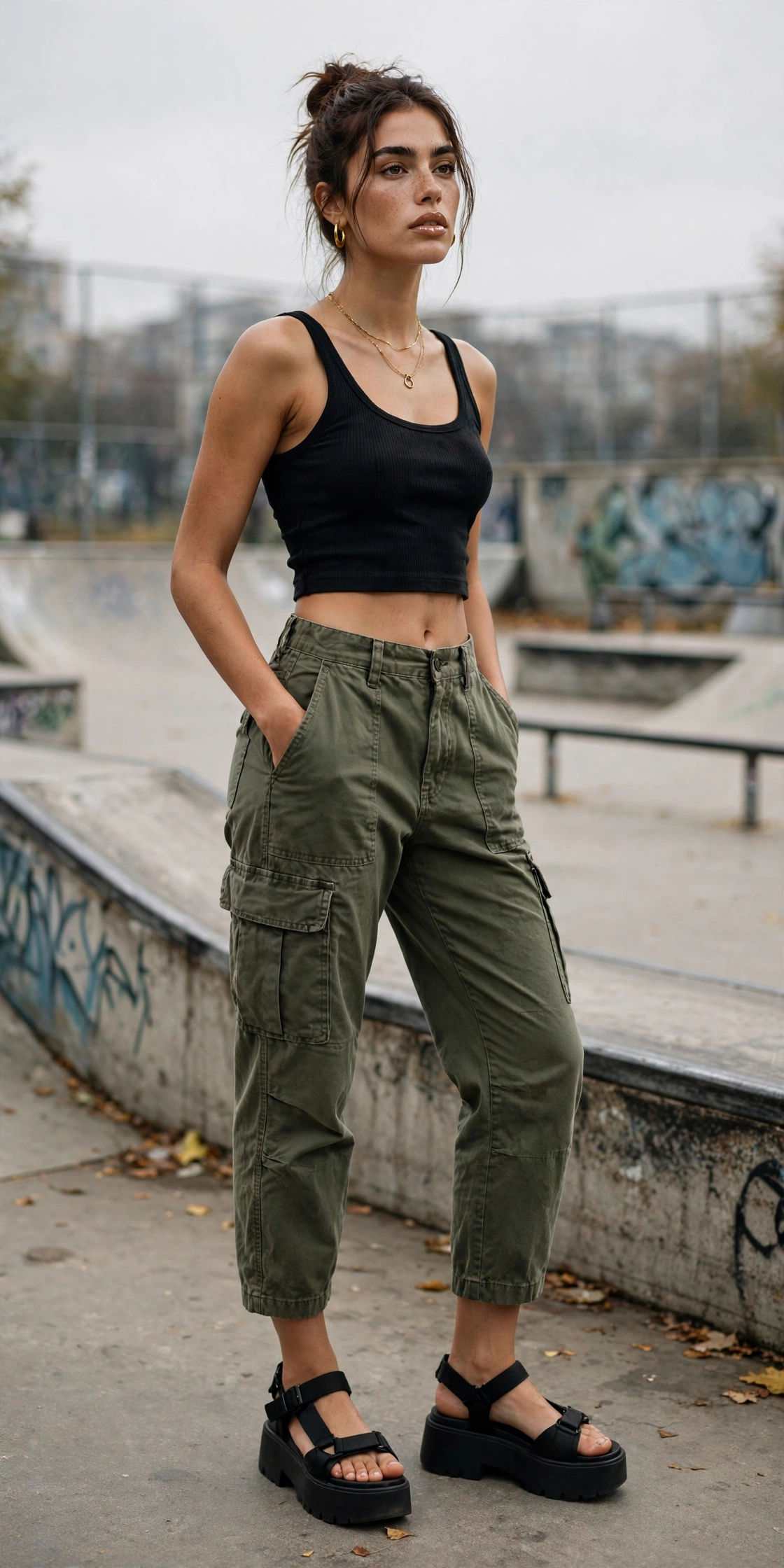
Low-slung cargo pants with the classic bellows side pockets, in khaki, washed black, or olive — the washed versions read more authentic than crisp new ones. The pockets add interest at the hip, which is exactly why the top must compress: a ribbed cropped tank, fitted, tucked at the front or ending above the waistband. That's the era's proportion contract: volume below demands compression above, or the silhouette goes shapeless.
Fit note: platform flip-flops or chunky sandals with at least a two-inch sole. The platform restores leg length the low rise takes away, and its visual weight matches the cargo's bulk. A delicate belly chain is period-correct. Warm-weather daytime, markets, festivals, long city days where comfort and attitude both matter.
One Shine Source: Metallic Pleats
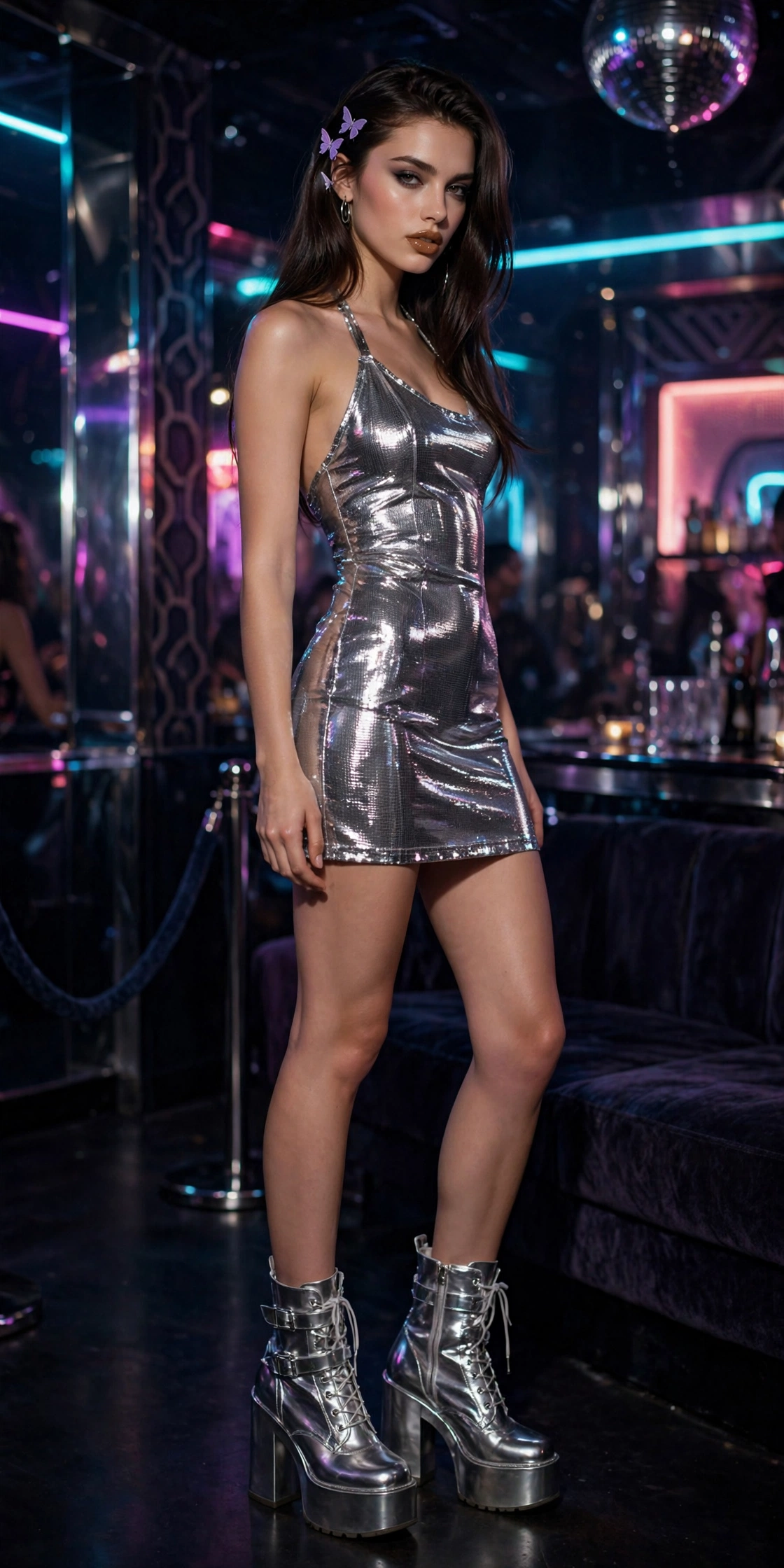
A silver, champagne, or pewter pleated midi with a black fitted turtleneck and pointed boots. The metallic skirt is the loudest item in the room, so everything else goes quiet: matte black top, small studs, dark boots. One shine source — that's the discipline. Pleats matter mechanically: knife pleats move when you walk, activating the shine. Metallic looks flat in still photos but electric in motion, so this outfit is better in real life than on camera.
Fabric note: the turtleneck must be fine-gauge merino or cotton modal. A chunky knit fights the skirt's fluidity, and its high neckline offsets the flash below. Coverage up top balances shine below. Evening dinners, gallery nights, anywhere one conversation piece is exactly right.
The Butterfly Top, Kept in Check
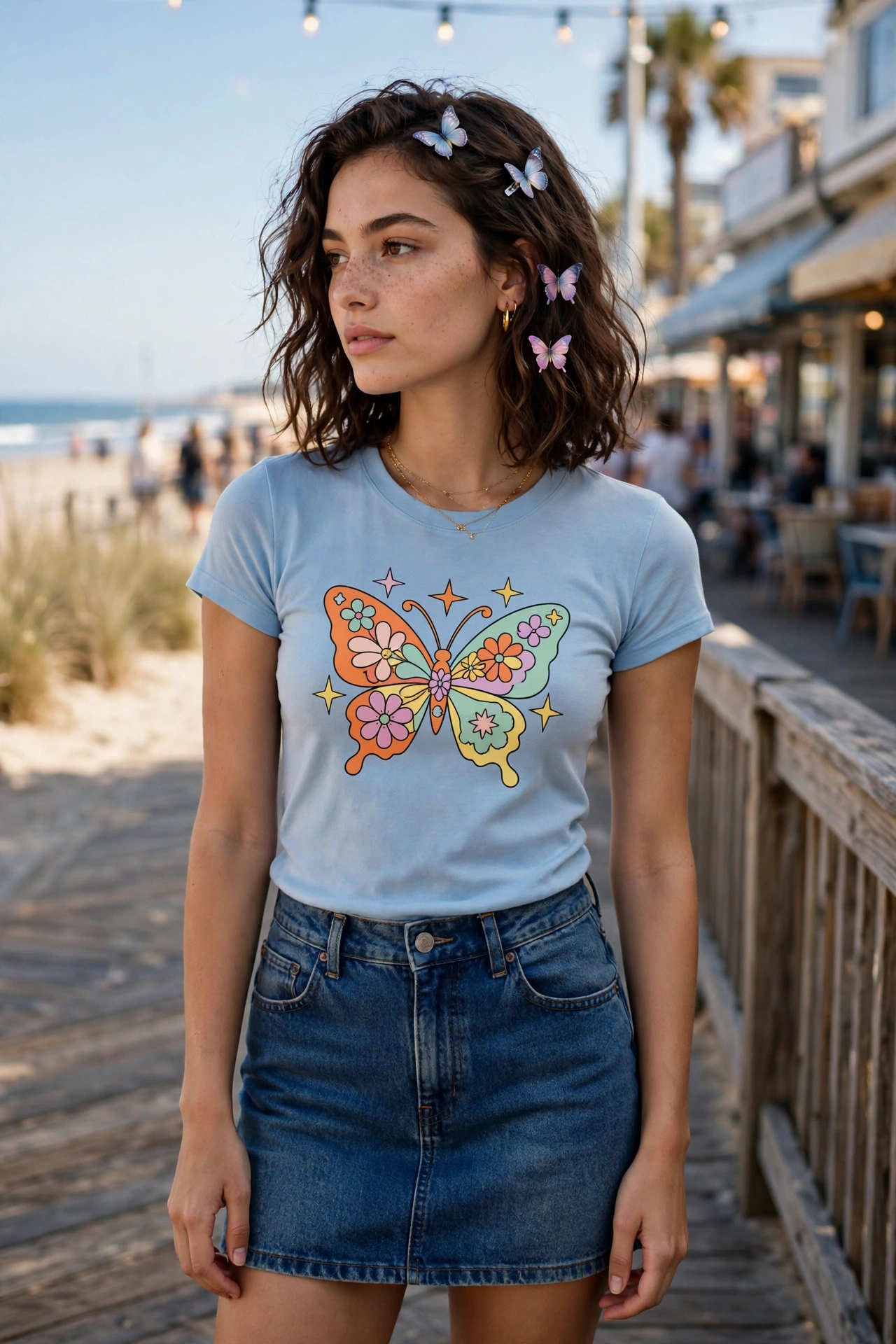
The butterfly motif is the most literal Y2K print: a mesh long sleeve with butterfly graphics over a nude bralette, or a printed baby tee worn solo. The same romantic print runs softer in our 12 nostalgic 2000s coquette fall outfits, where bows and pastels replace the mesh and hardware. Keep everything else solid and era-neutral; a second motif turns it into noise.
Fit note: the jeans need a real flare — fitted through the thigh, breaking below the knee, hemmed to kiss the top of the platform. Too long and you trip; too short and it reads 2010s. Medium wash keeps it daytime. Platform sneakers in white or cream continue the era's sole-volume rule. The mesh version's layering is the look, not an accident: the bralette underneath should be intentional, nude for you, opaque. Small shoulder bag, tinted sunglasses by day. Concerts, festivals, creative weekends — playful and referential, with solid denim keeping it grounded.
The Belt Is the Outfit
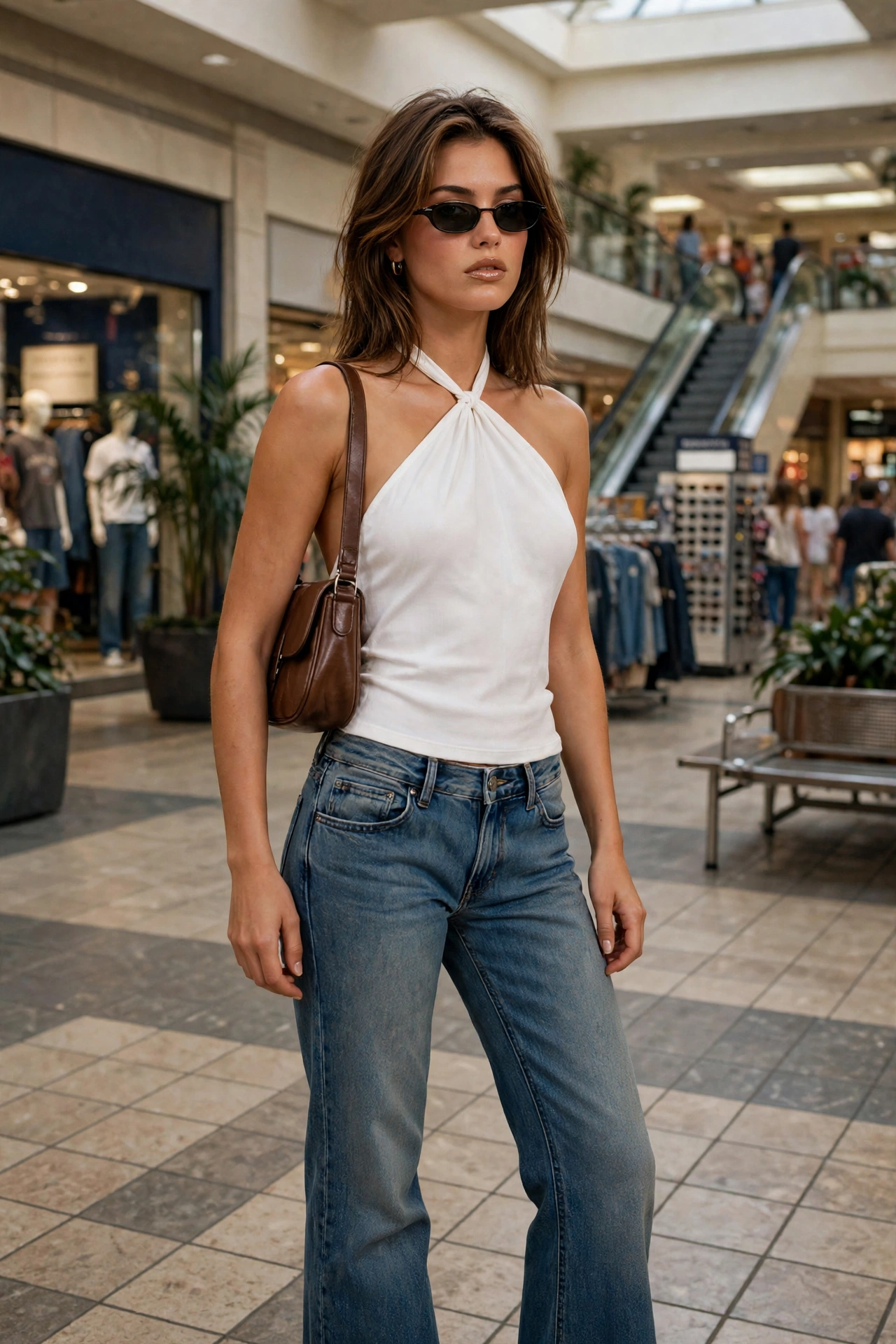
This lives or dies on the belt: a visible logo or western-buckle belt worn over low-rise flares, sitting on the hips, fully visible. Pulled up to the waist, the whole line breaks — the exposed waistband zone is the point. The belt is the focal point, so the halter stays simple: black, white, or washed red in matte jersey. Halter necklines do structural work, widening the visual shoulder line to balance the flare's width at the hem. Geometry, not decoration. Without that top width, wide hems read bottom-heavy.
Wear it with: clean medium- or dark-wash flares with minimal distressing, so the belt remains the single detail. Heeled boots or platforms carry the flare's length. Night-out energy, best after dark when the hardware catches light.
Side-Stripe Track Pants, Done Properly
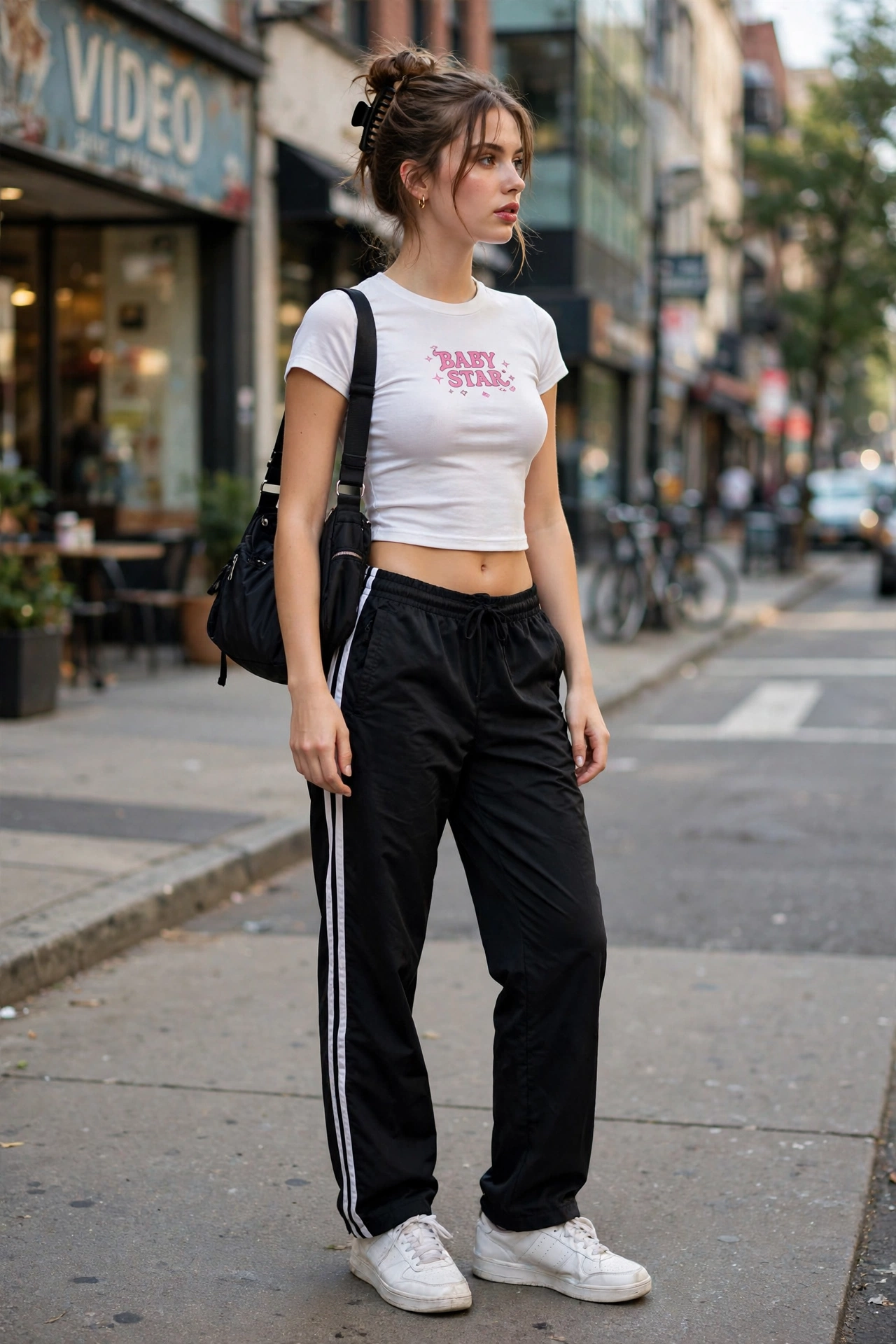
Track pants with a contrast side stripe, black with white, navy with red, straight leg, sitting on the hips. The stripe creates a vertical line down the leg that lengthens — the only lengthening trick in a playbook that otherwise shortens everything. Tapered jogger cuffs kill the line and the reference. The baby tee must be tucked or cropped; a long tee erases the waist and turns it into actual gym clothes. Fitted, ribbed, ending at or above the waistband.
Wear it with: classic court sneakers in white leather, slim and crisp, since the look is sporty-preppy rather than chunky. A nylon shoulder bag, hair up. The stripe and the tuck are what separate this from workout clothes. Daytime errands, elevated.
Double Denim, But Cropped
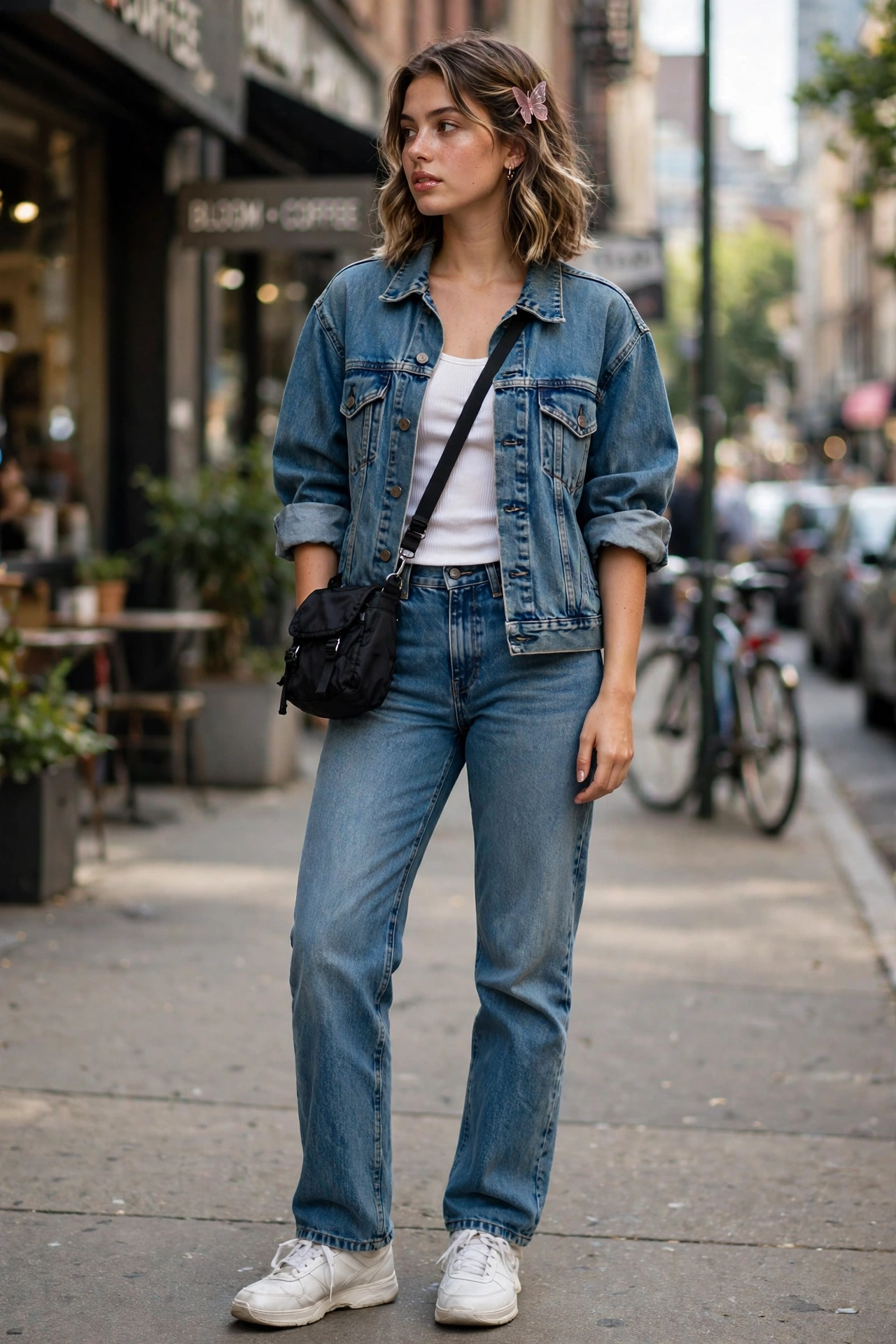
Double denim, but cropped: a boxy cropped trucker over a white ribbed tank, with straight-leg jeans in a matching wash. If your trucker is thrifted, our 13 upcycled denim jacket ideas show how to revive it before you style it. The wash match is the discipline — contrasting denims look accidental, matching reads as a suit. Medium wash on both, or washed black on both. The cropped length preserves the waist definition a full-length trucker would swallow; boxy through the shoulders, hitting at the waistband.
Fit note: roll the sleeves once. The exposed forearm keeps heavy denim from feeling stiff and signals intention. White leather sneakers or simple flats; the denim is already doing enough. Small crossbody. Daytime, casual, foolproof — the matching wash does the work so nothing else has to.
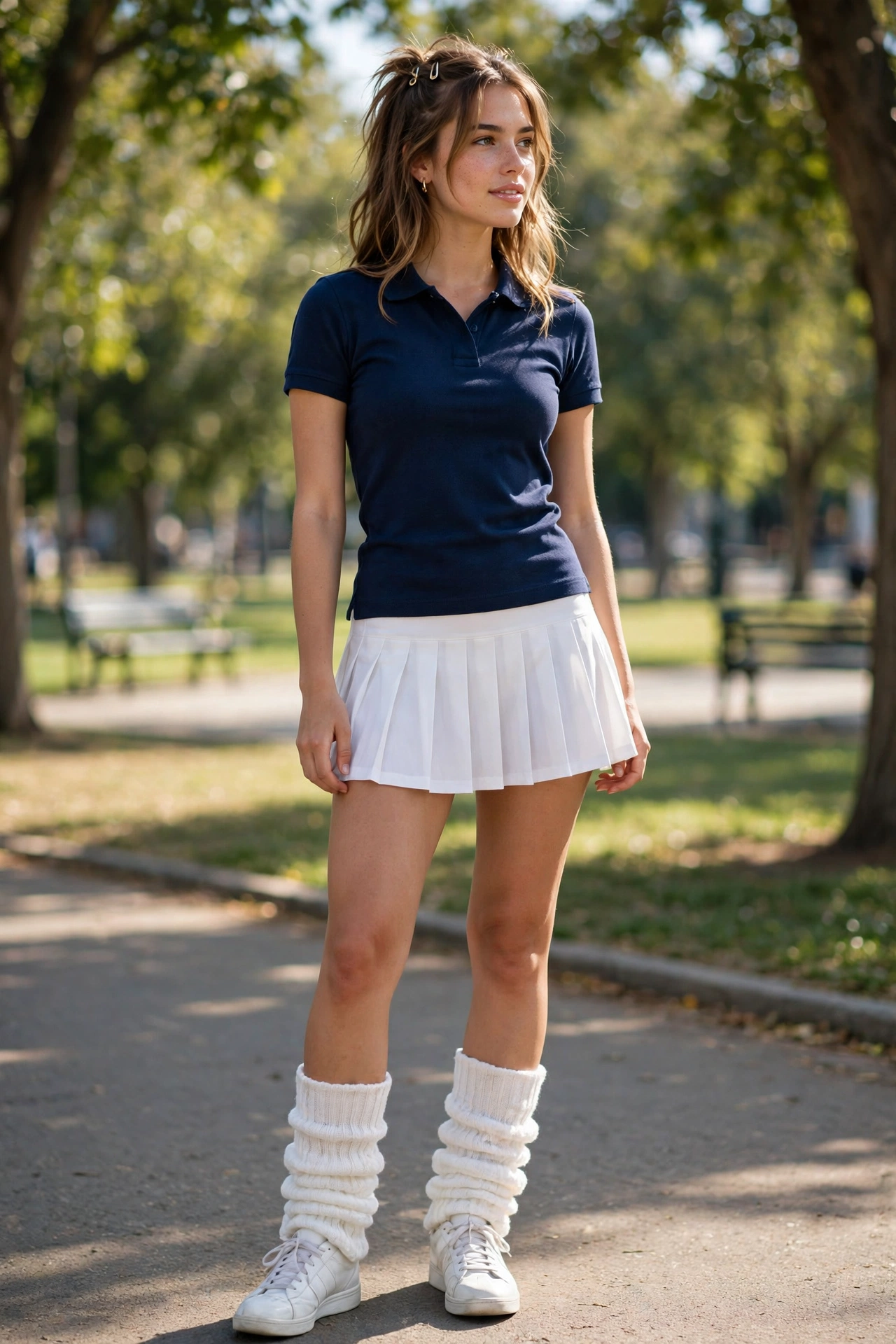
Tennis Skirt, Polo, and the Leg-Warmer Test
A white or navy pleated tennis skirt, a fitted piqué polo, white crew socks or scrunched leg warmers, and court sneakers. The preppy-sporty hybrid is pure 2000s country-club cosplay, and the details sell it: leg warmers add accessory density at the ankle, and without them it reads as 2020s athleisure. Scrunch them, don't pull smooth — the scrunch is the texture. The skirt must sit on the hips; waist-sitting with a polo reads 1950s. Pleats stitched at the hip, free below, so they move.
Fit note: the polo should be fitted — boxy reads golf dad. Brunch, campus, park days, fair weather only, and every piece has to commit, because half measures just look like gym clothes.
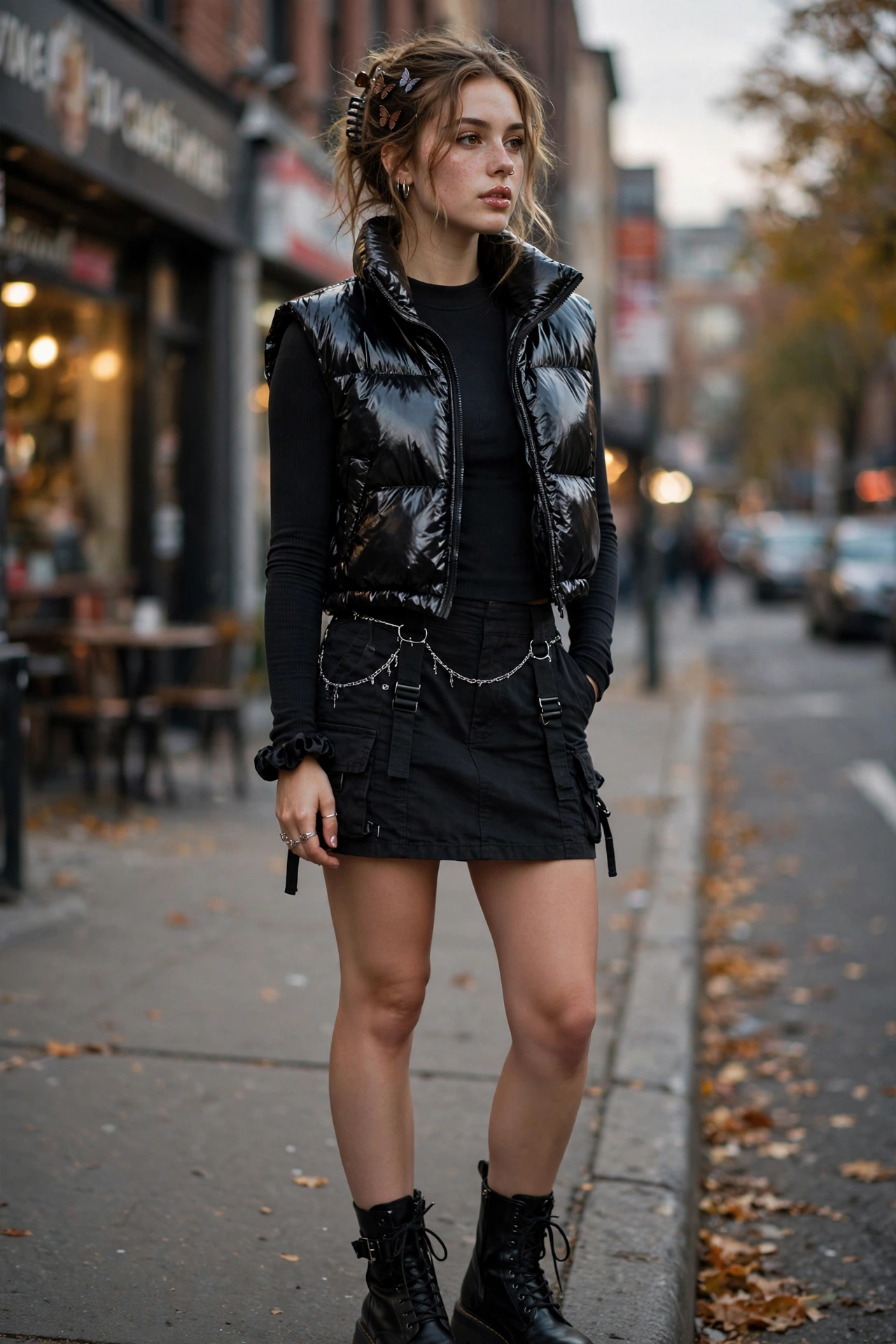
Shiny Puffer Vest Over a Cargo Mini
A cropped shiny nylon puffer vest, black or jewel tone, over a fitted matte thermal (cotton or waffle knit, never shiny), with a cargo mini skirt and lace-up boots. The cropped length is structural: a full-length puffer would bury the mini's proportion. It should hit at the waistband, no lower. The cargo mini's bellows pockets echo the vest's quilting — both are segmented, technical surfaces, which is why they belong together. The boots need heft: lace-up combat or lug-sole in black leather.
Fit note: delicate footwear gets visually lost against the vest's volume. Opaque black tights optional in cold weather, keeping the leg line continuous. Fall and winter street style, best when the sheen catches low afternoon light.
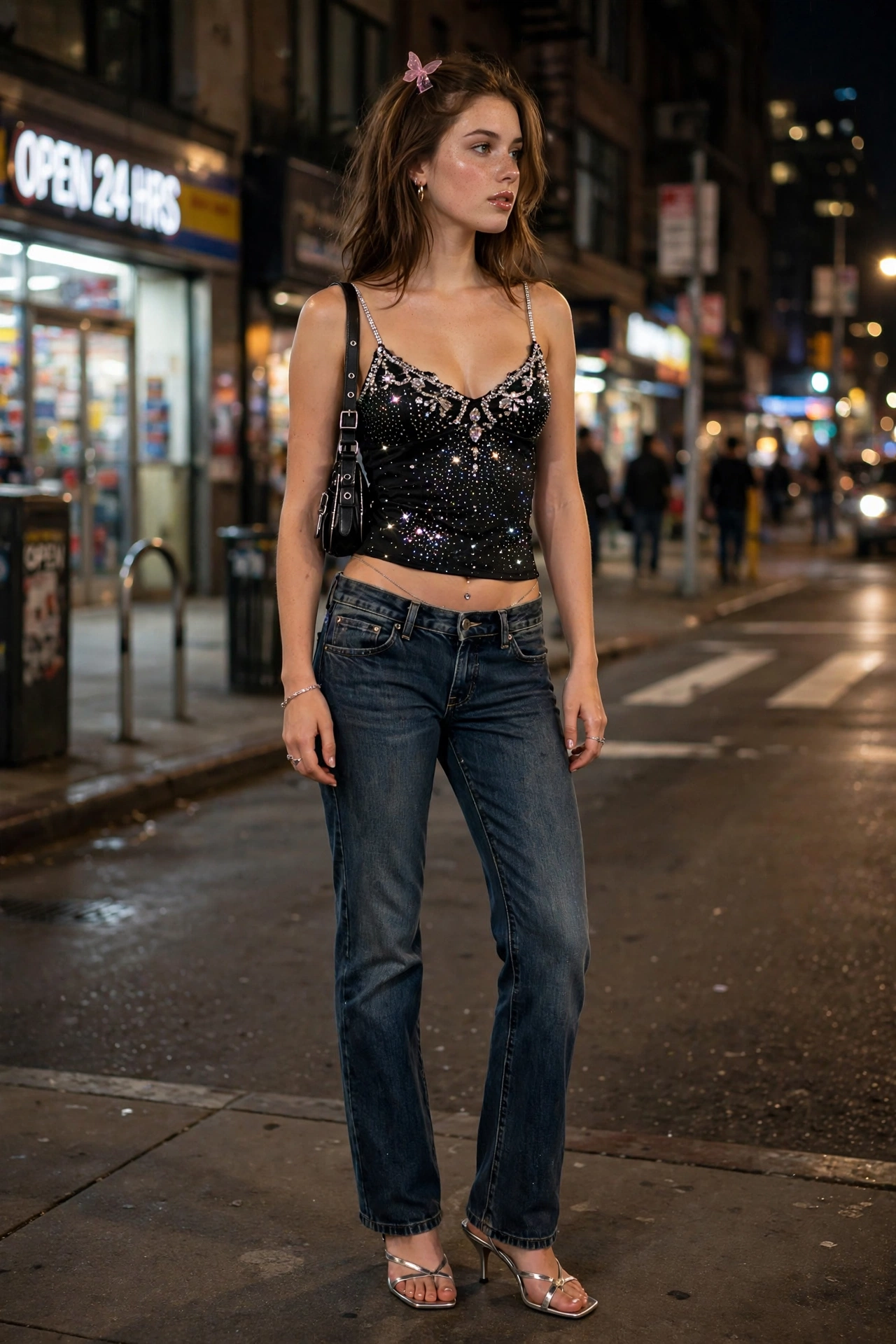
Rhinestones Against Dark Denim
A rhinestone-embellished camisole, all-over crystal or a concentrated neckline motif, with dark-rinse low-rise straight jeans and heeled sandals. Dark denim anchors the sparkle; the contrast between workwear denim and evening embellishment is the whole tension. A lighter wash would read daytime casual and fight the top. The jeans should be clean dark indigo, no distressing, almost severe. The camisole needs adjustable straps and enough structure to stay put — a collapsing cami ruins the line. Slim-strap heeled sandals, metallic or black.
Care tip: hair and makeup simple and modern; competing glamour turns it into costume. Strictly night out: dinners, parties, evenings where one sparkling thing is exactly right.
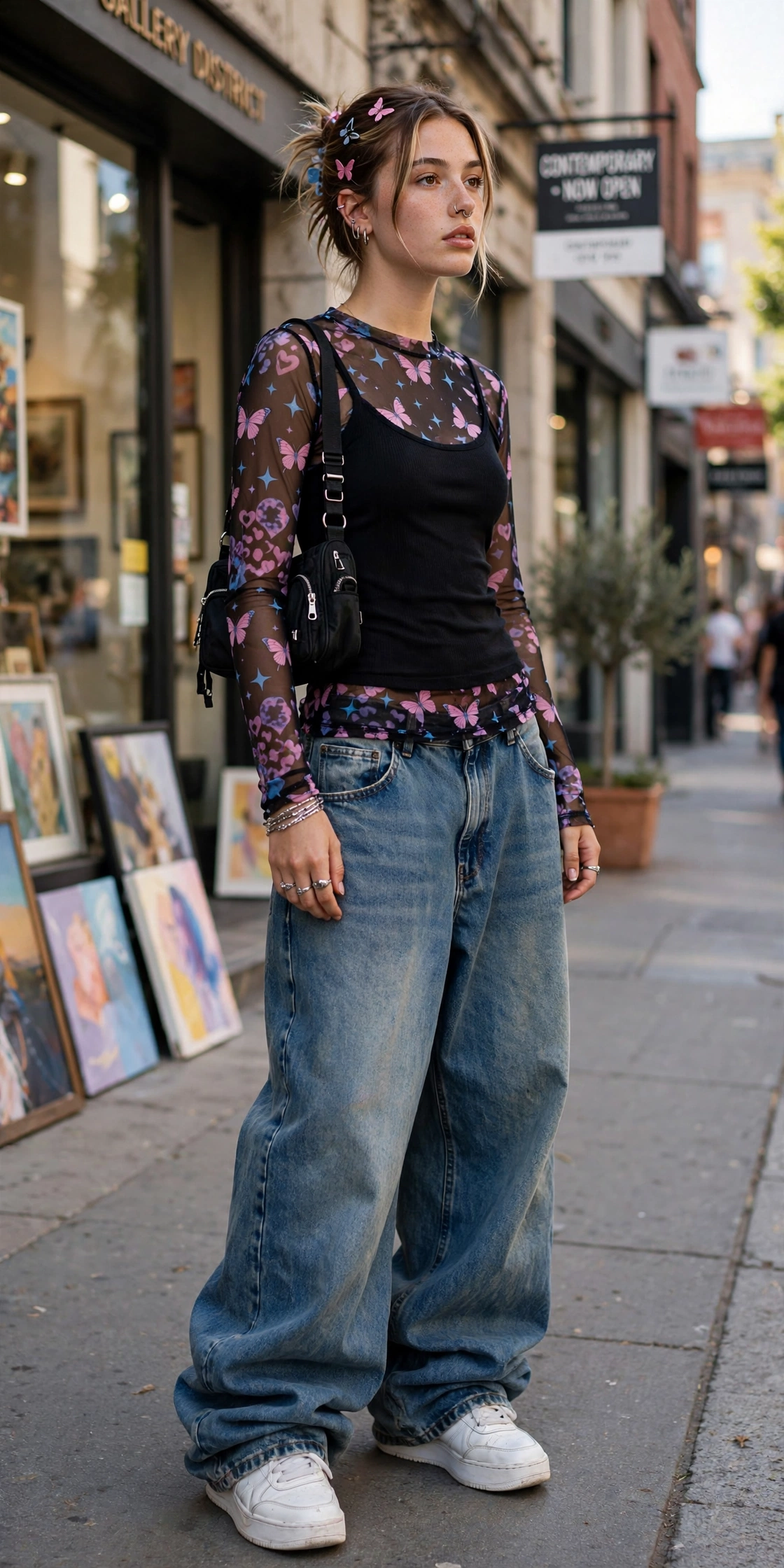
Mesh Under a Camisole, Baggy Jeans Below
A printed mesh long sleeve, small-scale tattoo graphics or micro florals, under a solid camisole, with baggy low-rise jeans and clean sneakers. The mesh adds visual complexity without bulk, the era's favorite trick for making a simple outfit look considered. The same early-2000s hardware shows up on denim in our 20 senior year jeans ideas, where grommets and safety pins do the same job on jeans.
Fabric note: the camisole must be opaque and structured, matte jersey, straight neckline, because it reads as the real top; the mesh is garnish. The jeans go relaxed through hip and thigh, stacking slightly over the shoe; the bagginess balances the fitted top half. One print only — mesh plus another graphic is noise. White leather courts or simple runners, since the top half already carries the detail. Mini shoulder bag. Daytime creative casual: galleries, markets, anywhere the dress code is "interesting."
The Matching Sweatsuit, Elevated
A matching sweat set in heather gray, pastel, or washed black, loopback cotton or smooth-face fleece, never pilled or thin, with sneakers and a structured shoulder bag. The bag elevates it from errands to outfit: without it, loungewear; with rigid structure against the softness, a choice. The set must actually match, same dye lot, because near matches look accidental. Slightly fitted, not oversized: the 2000s off-duty look was neat, with set-in sleeves, not slouchy.
Fit note: push the sleeves to show the wrist; that small break separates intentional from accidental. Clean sneakers, gold hoops for the full reference. Travel days, coffee runs, maximum comfort that still photographs as an outfit.
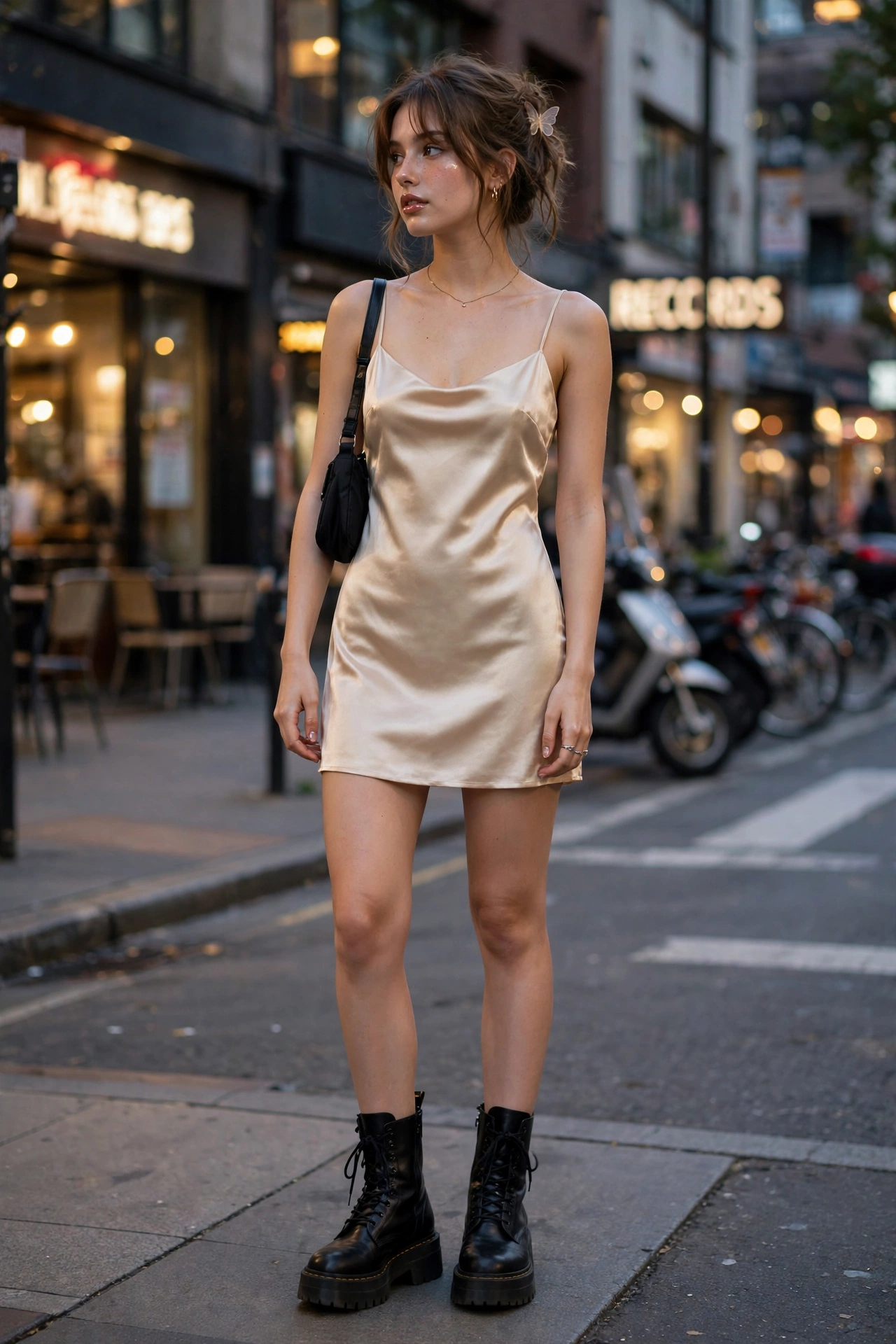
Slip Dress, Chunky Boots: The Contrast Play
A bias-cut mini slip in champagne, black, or deep jewel tone with chunky combat or lug-sole boots. The liquid drape against the boot's aggression is the contrast that makes it work: two soft pieces would read as lingerie, two hard pieces as armor. The bias cut is essential — it skims and moves; a straight-cut mini looks static and cheaper. If the neckline feels exposed, add a cropped cardigan hitting at the waist; a long layer chops the dress's line. Adjustable straps, mid-thigh hem.
Wear it with: minimal jewelry, thin chain or small hoops, because the dress is talking and the boots are shouting. Evening range: dinners, concerts, nights out where you want to look dressed without looking done.
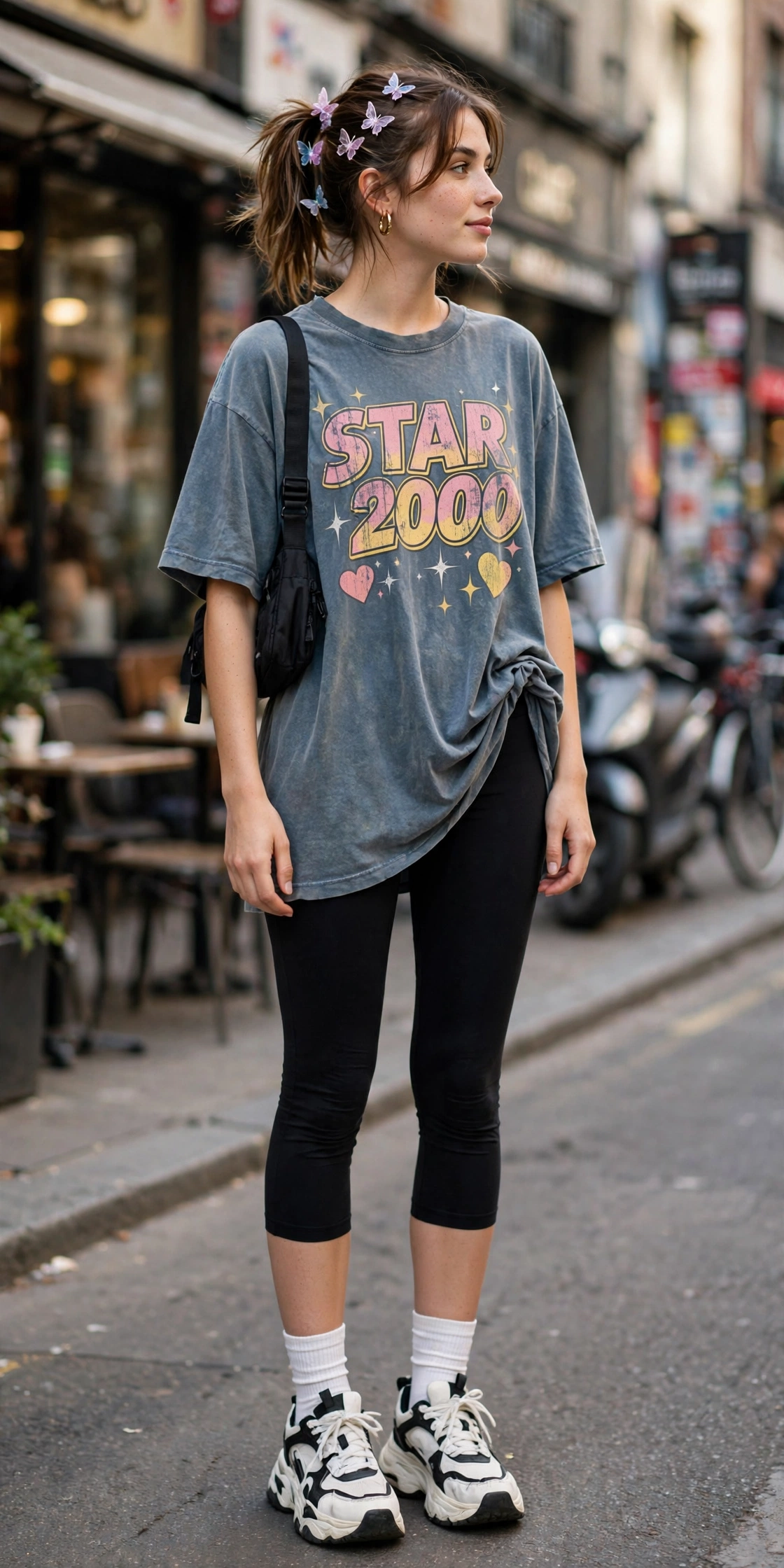
Capri Leggings and the Oversized Tee
Capri leggings, below the knee, above the calf, with a genuinely oversized vintage-wash tee, half tucked, and chunky sneakers. The capri length is the era marker: full leggings read 2010s, bike shorts 2020s. The tee must be truly oversized, not just loose; the volume contrast with the fitted capri is the proportion play. Legging quality matters most here: matte, squat-proof, wide waistband that doesn't roll. White crew socks with the sneakers — the ankle band is a period detail tying shoe to leg.
Fabric note: this is the most comfortable outfit on the list, still intentional because every proportion is doing something. Gym to street, travel days, long days on your feet.
Corduroy Mini: The Fall-Friendly Entry Point
A fine-wale corduroy mini in rust, chocolate, or olive — pinwale reads more refined than wide wale — with a fitted fine-gauge turtleneck tucked in, opaque tights, and loafers or ankle boots. Corduroy's ridges catch light in a way flat fabrics don't, giving the skirt presence without shine or print. The turtleneck's clean matte line lets the texture dominate; a textured top would compete. Tights in black or espresso keep the leg line continuous into the boot; nude breaks it and fights the fall palette.
Fit note: A-line, mid-thigh, tuck flat. The fall-friendly entry point to the era: mini length, texture interest, boots, with full coverage and warmth. September through November, office-casual to weekend.
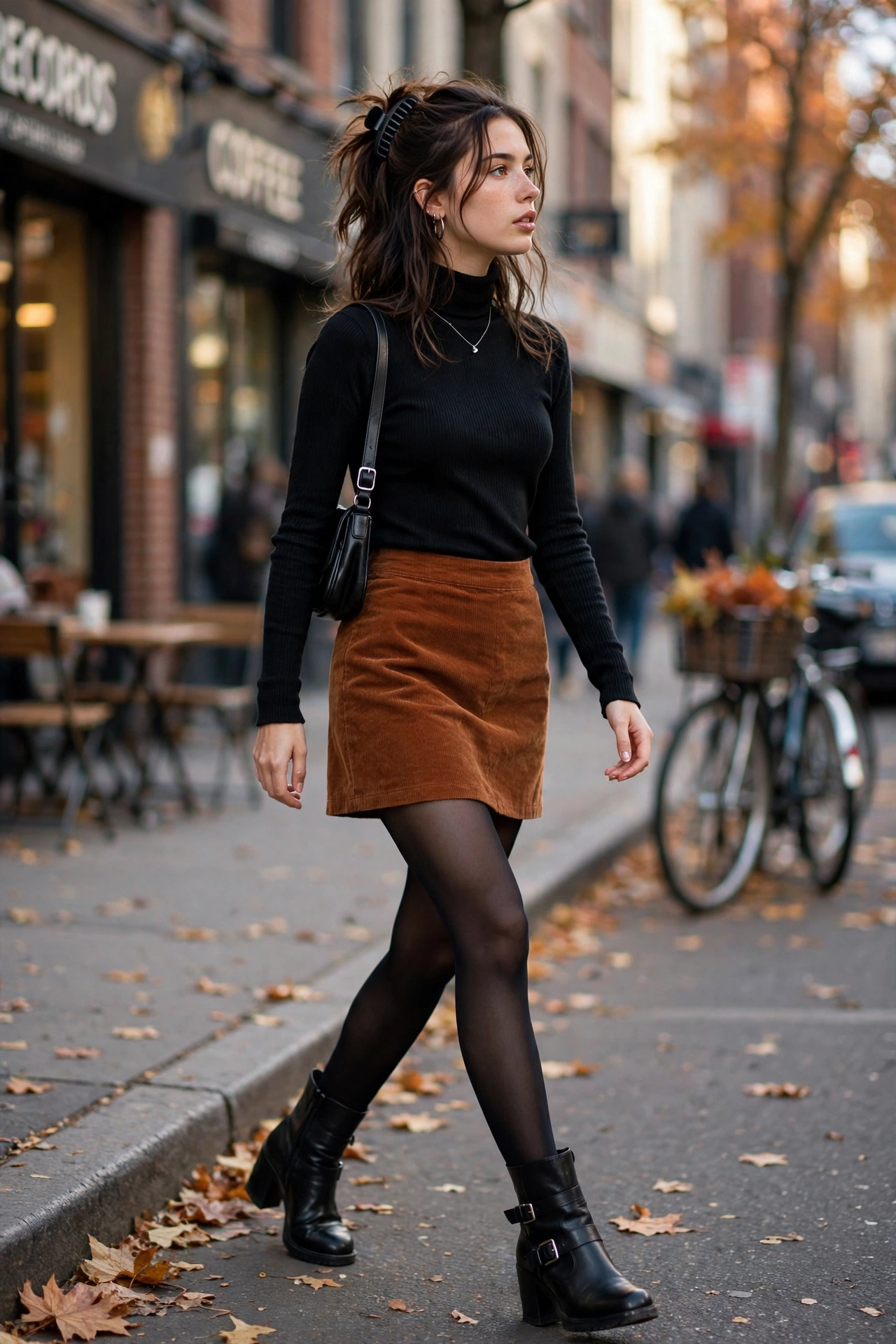
Bandana Top, Quiet Everything Else
A bandana-print halter or tube top, classic paisley in red, navy, or black, with low-rise denim shorts and flat leather sandals. Strictly warm weather, strictly casual. The print is loud, so the shorts stay plain: clean medium wash, no distressing competing with it. Low-rise shorts need a three-to-four-inch inseam, longer than you'd think, or the proportion tips from Y2K into uncomfortable. The top needs structure — boning in a tube, a secure halter tie — because this is a daytime top, not a going-out one.
Wear it with: a woven straw tote and sunglasses; natural textures calm the print's busyness. One loud print, everything else quiet — the rule that keeps it wearable.
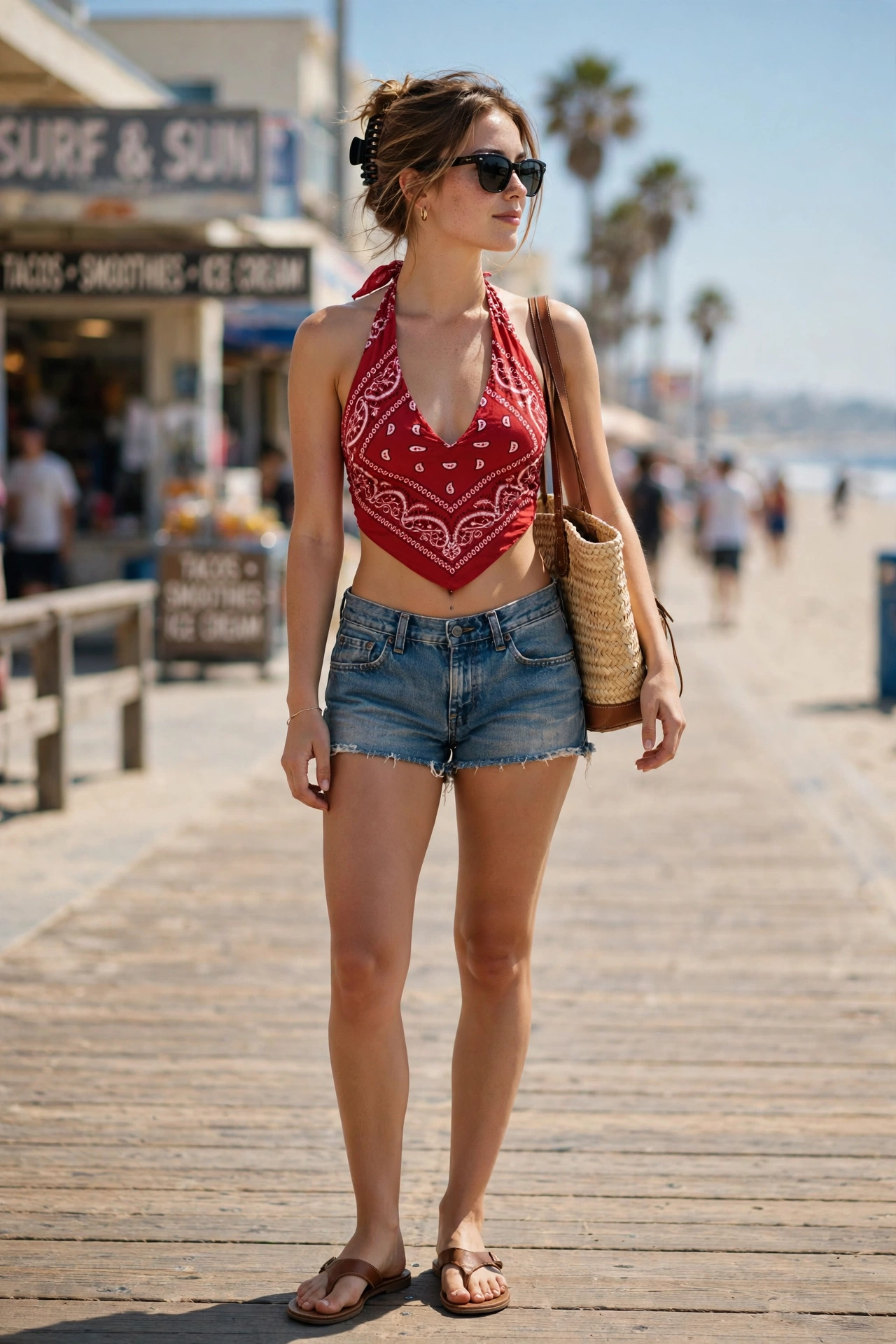
Faux-Fur Trim: Density Is the Difference
A fitted cardigan with dense faux-fur trim at cuffs, collar, or hem — the trim is the era's luxury signal, reading expensive even when it isn't. Sparse trim reads cheap instantly, so check density. Fitted through the body; oversized plus fur becomes a bathrobe situation. Dark, clean, straight-leg jeans offset the trim's extravagance with workwear discipline. Heeled ankle boots in black or espresso, shaft meeting the jean hem cleanly. One fur-trimmed item per outfit, never two — cardigan plus fur boots is a costume. Simple studs, clean hair.
Care tip: evening-casual flex: dinners, holiday parties, nights you want to look plush without trying hard. Brush the trim lightly after wear so it keeps its loft instead of matting flat.
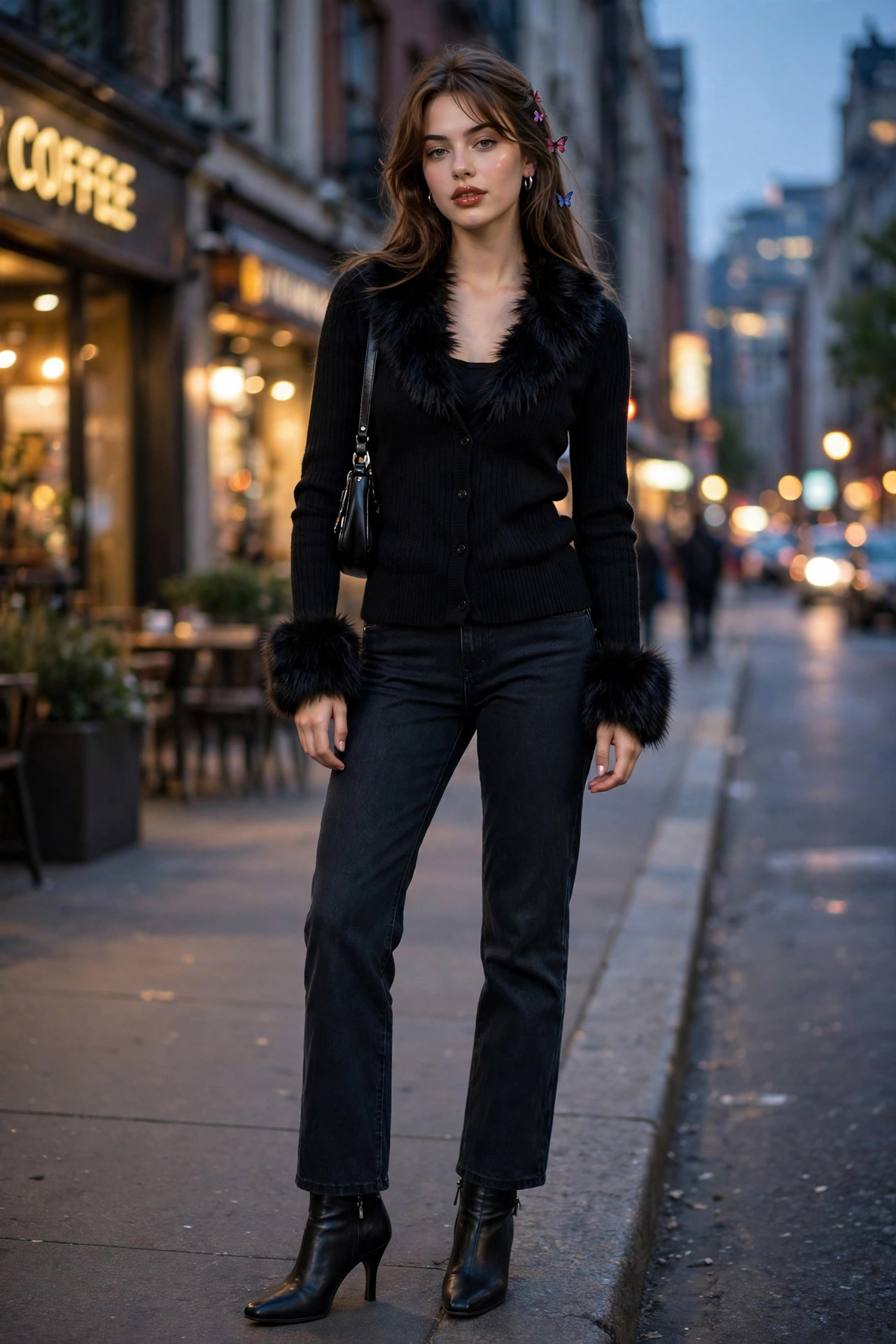
Monochrome Pastel, the Easiest Win
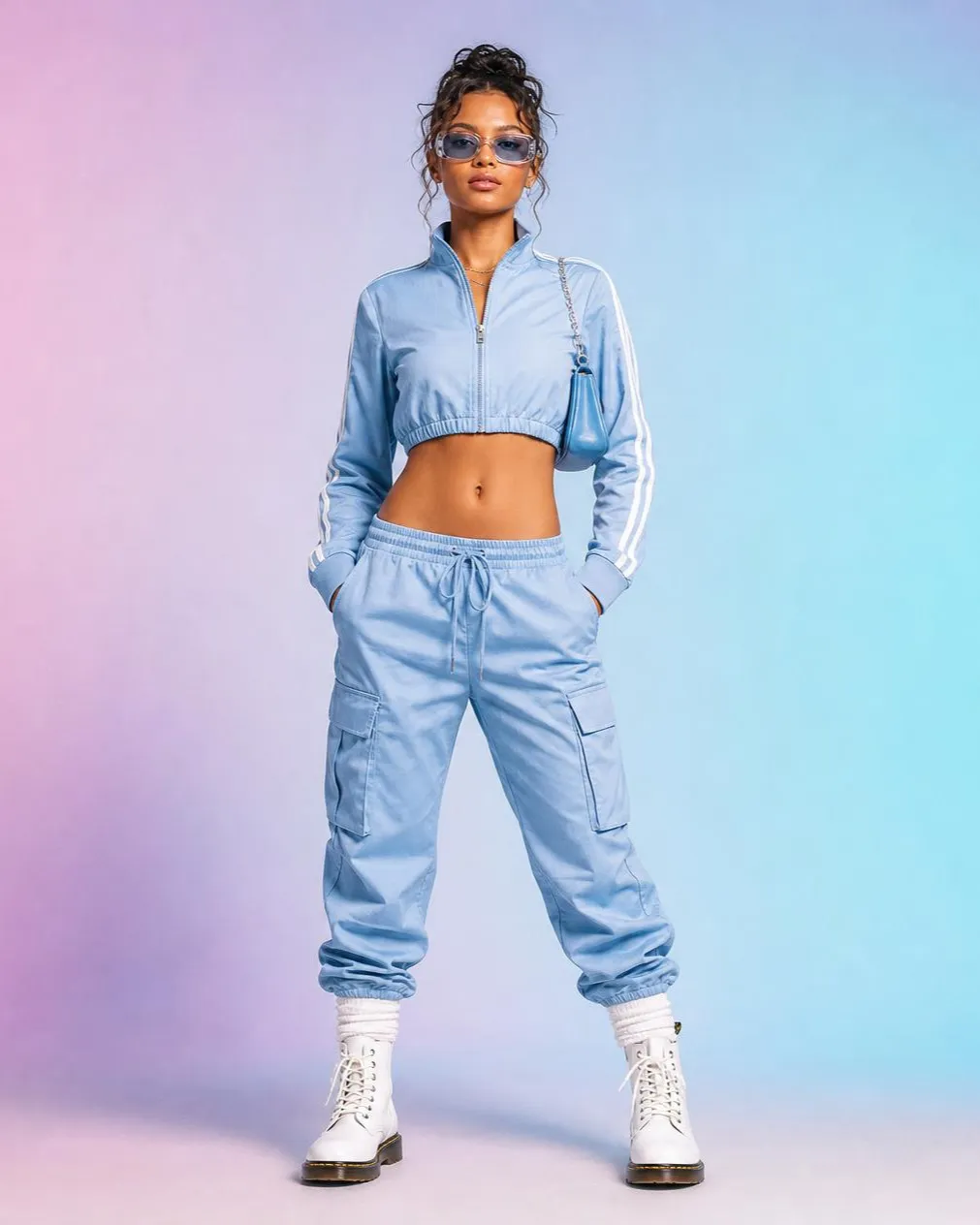
A matching knit set in lavender, baby blue, or mint, same tone, same texture, top and bottom, with pristine white sneakers. Monochrome is the cheat code: it elongates by removing every horizontal break, looks expensive because matching reads intentional, and lets the Y2K codes read clearly. The knit needs some structure — cotton or cotton modal with body, not flimsy. Keep the top slightly cropped or the bottom high-waisted to preserve a waist line; a completely straight pastel column can read as pajamas.
Care tip: the sneakers must be spotless — the outfit's power is its cleanliness, and dirty white sneakers collapse it. Minimal jewelry, clean hair. Easiest to pull off, hardest to get wrong.
Before You Wear It: A Quick Y2K Checklist
- One code at a time. Low rise, baby tee, chunky sole, or shine — pick one as the lead and let the rest of the outfit stay modern.
- Measure the rise. True low rise is 7–8 inches; ignore tagged sizes, which have drifted over twenty years.
- Test the fabric. Stretch ribbed tops to check the elastane snaps back; hold velour to the light to check the nap; check metallic lamination at the folds for flaking.
- One shine source. Velour against denim, metallic against cotton, nylon against jersey — one technical surface per outfit, everything else matte.
- One color family. Icy pastels or saturated primaries, never both in one outfit; white, black, medium denim, and gray are free agents.
- Shoes carry weight. Chunky runners, platforms of two inches or more, or lug-sole boots — the sole volume balances low, wide bottoms.
- Thrift for cut, buy new for function. Vintage cuts are more accurate, but dead elastic, compressed shoe cushioning, and stretched-out knits are not worth reviving; modern cotton-spandex baby tees beat most surviving originals.
The Color and Texture System in One Paragraph
Colors come in two families, icy pastels (baby blue, lavender, frosted pink, mint) and saturated primaries (cobalt, cherry, kelly green, tangerine), and an outfit should live inside one. Cross-family mixing is what makes Y2K look chaotic instead of referential. Neutrals (white, black, medium denim, gray) are free agents. Texture follows a friction rule: every outfit needs one shiny or technical surface against matte ones — velour against denim, metallic against cotton, nylon against jersey. Two technical fabrics fight, so pick one. Matte on matte in era cuts can look like plain 2000s clothes; the shine is what signals the reference. The formula: identify the outfit's one technical fabric, keep everything else matte. If you can't find it, add it — a patent bag, a metallic shoe — and the whole look snaps into focus.
Frequently Asked Questions
What is the single easiest Y2K outfit to try first?
The monochrome pastel knit set with white sneakers. Matching pieces do the styling work for you, the color family is built in, and there is no tricky proportion to solve — just keep the knit structured and the sneakers clean.
How do I wear low-rise jeans without the look falling apart?
Anchor them with a cropped or tucked top so the waistline reads as a deliberate line, and choose footwear with real sole volume. A mid-rise flare gives the same 2000s flavor with leg-lengthening geometry if the low rise itself is the problem.
Which Y2K shoes are actually worth buying?
Three silhouettes cover the whole era: chunky retro runners, platform sandals or flip-flops of two inches or more, and lug-sole or combat boots. The common thread is sole volume — the era's bottoms sat low and wide, so shoes needed presence to balance them. When in doubt, choose the heavier shoe.
Can any Y2K pieces work for a smart-casual setting?
Yes, the tailored ones: a cropped blazer, a pleated midi, a fitted turtleneck, or a monochrome knit set all read polished with the right shoe. Keep rhinestones, butterfly prints, and bandana tops for off-duty hours. The office-safe rule is one subtle era code with everything else classic.
Should I thrift Y2K pieces or buy them new?
Thrift for authentic cuts — true low-rise jeans and baby tees have proportions reproductions miss. Buy new for stretch-based pieces, where old elastic is usually dead, and for shoes, where old cushioning is compressed. When thrifting denim, check the rise in inches rather than the tagged size; check velour's nap and metallics' lamination before buying.
How should petite women adjust Y2K proportions?
Manage the era's shortening effects with the vertical tricks it allows: side-stripe track pants, monochrome dressing, pointed boots, platform soles. Keep the skin window small — an inch, not three — so the torso doesn't become the whole outfit. And hem everything; pooling Y2K bottoms erase the proportion entirely on a petite frame.
What works for plus-size bodies in this trend?
Choose structure over cling: a structured baby tee in ponte or heavy rib where a thin one collapses. Pick one skin window, not three — the cropped top or the low rise, not both plus a mini. Velour tracksuits, cargos, and monochrome sets are naturally generous cuts that carry the reference unmodified.
How do I keep the white sneakers in these outfits clean?
Clean before they look dirty: soft brush and mild soap every few wears, protectant spray before the first wear, never machine wash, since it breaks glues and yellows midsoles. Rotate two pairs so neither gets daily abuse.
Is the butterfly print too literal to wear now?
As the single print in an otherwise solid, modern outfit, it reads as a knowing reference. Head-to-toe butterflies, or the print plus two other era codes, reads as costume. Unsure? Choose the mesh layered version over a solid camisole — the layering adds modern complexity that keeps the literal print in check.