NYC Winter Street Style: Outfits That Survive Wind, Slush and the Subway

How to use this guide
Treat trend ideas as styling prompts rather than rules. Start with pieces already in your wardrobe and adjust fabrics, layers, and proportions for your climate, comfort, occasion, and personal style.
Picture a January Tuesday in Manhattan: the avenue is a wind tunnel, the subway platform is freezing, the car is overheated, and the sidewalk is coated in a salt-slush mixture that destroys nice shoes. Every indoor space you enter is heated to a different temperature. That is the New York winter — not just cold, but a specific set of hostile conditions — and outfits that work here are not just warm; they are engineered for transitions.
Every look below is built on that reality: wind protection where it counts, layers you can shed in seconds, footwear that survives the street, and enough style logic that you do not look like you dressed for a ski trip.
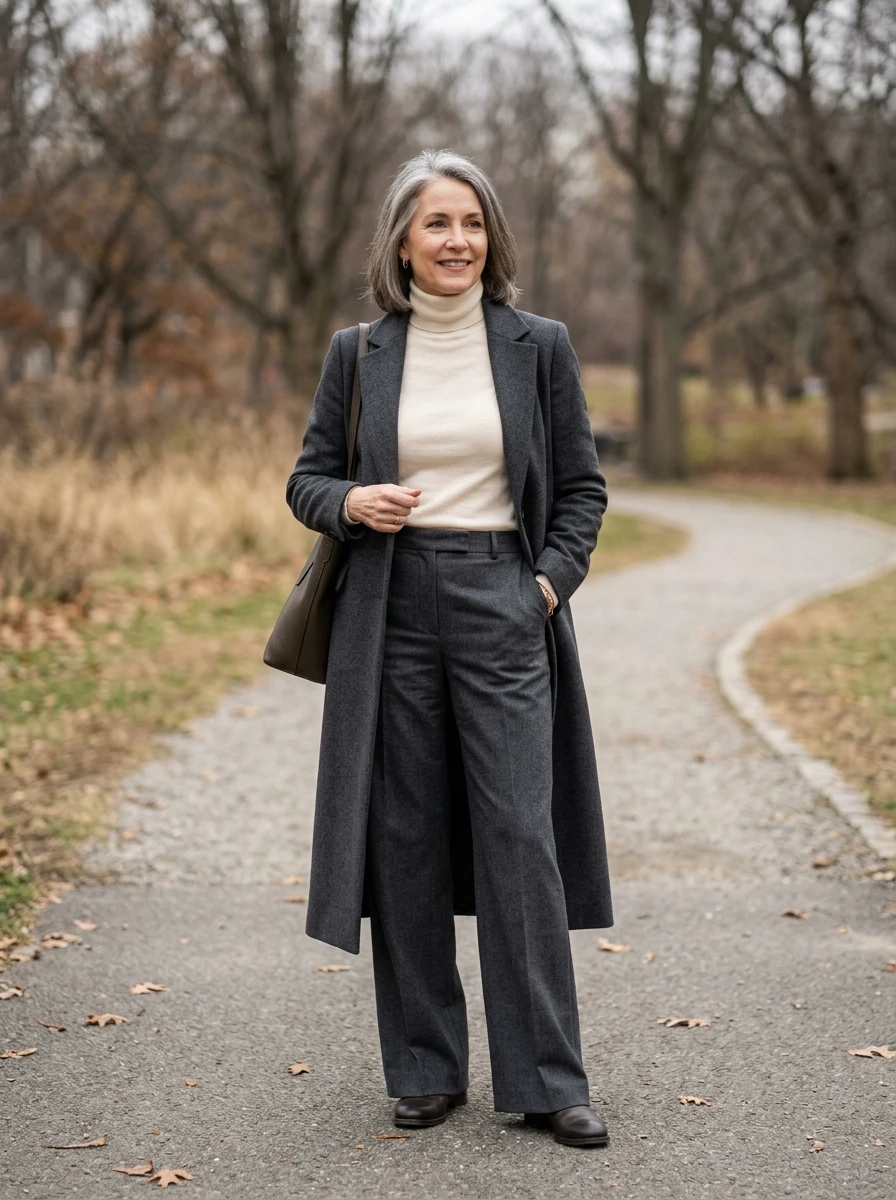
Heavyweight Wool Overcoat — The City Default
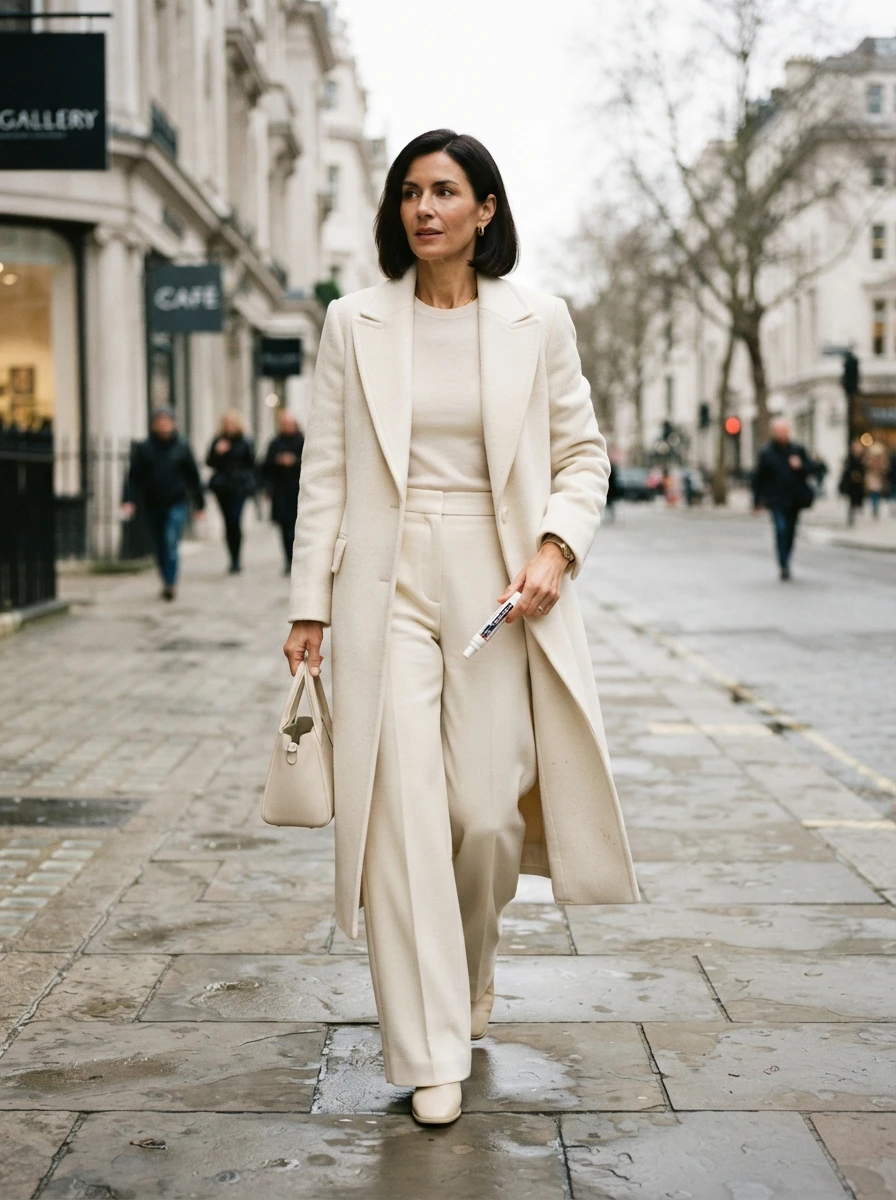
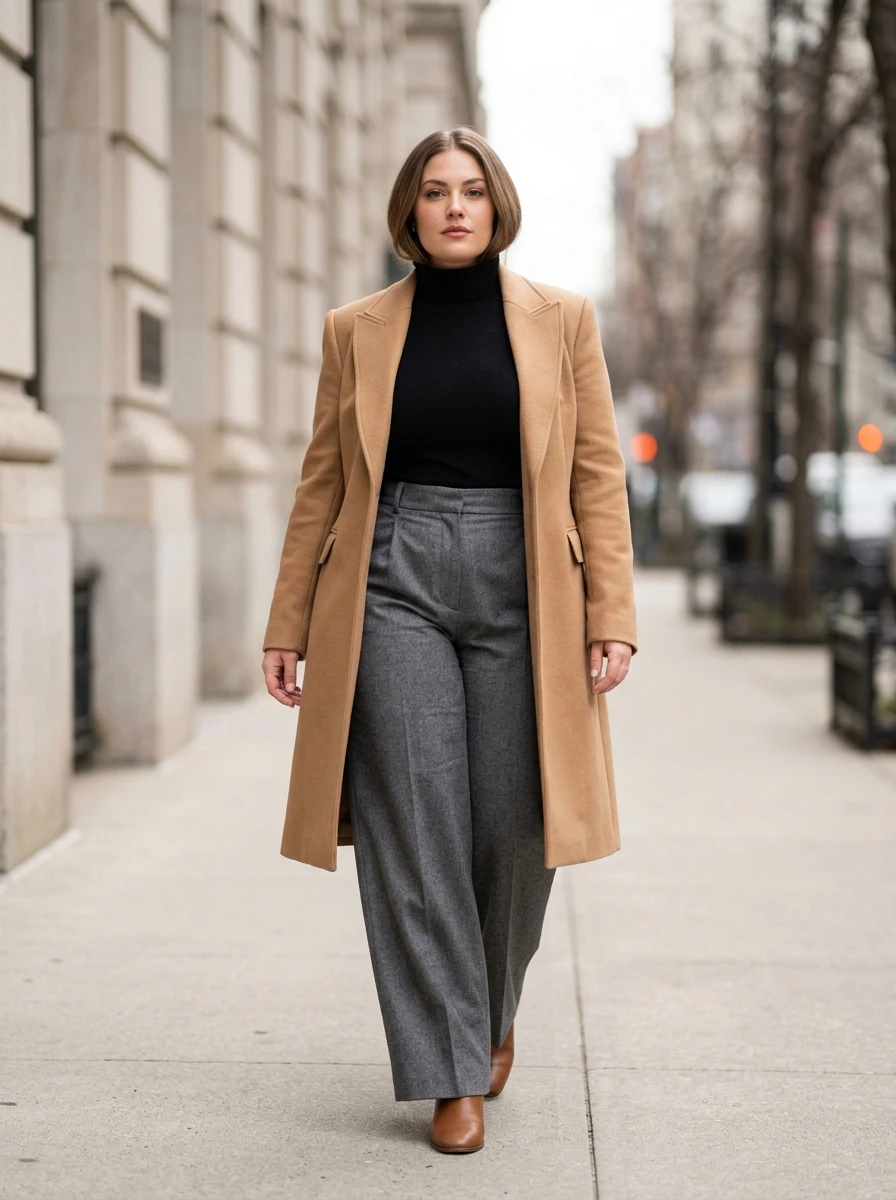
The overcoat is the city's default for a reason: wool blocks wind far better than its weight suggests, because the dense weave does not let air pass through the way looser knits do. The silhouette logic is the long vertical line — coat, trousers, boots in one continuous column reads as intentional and elongates.
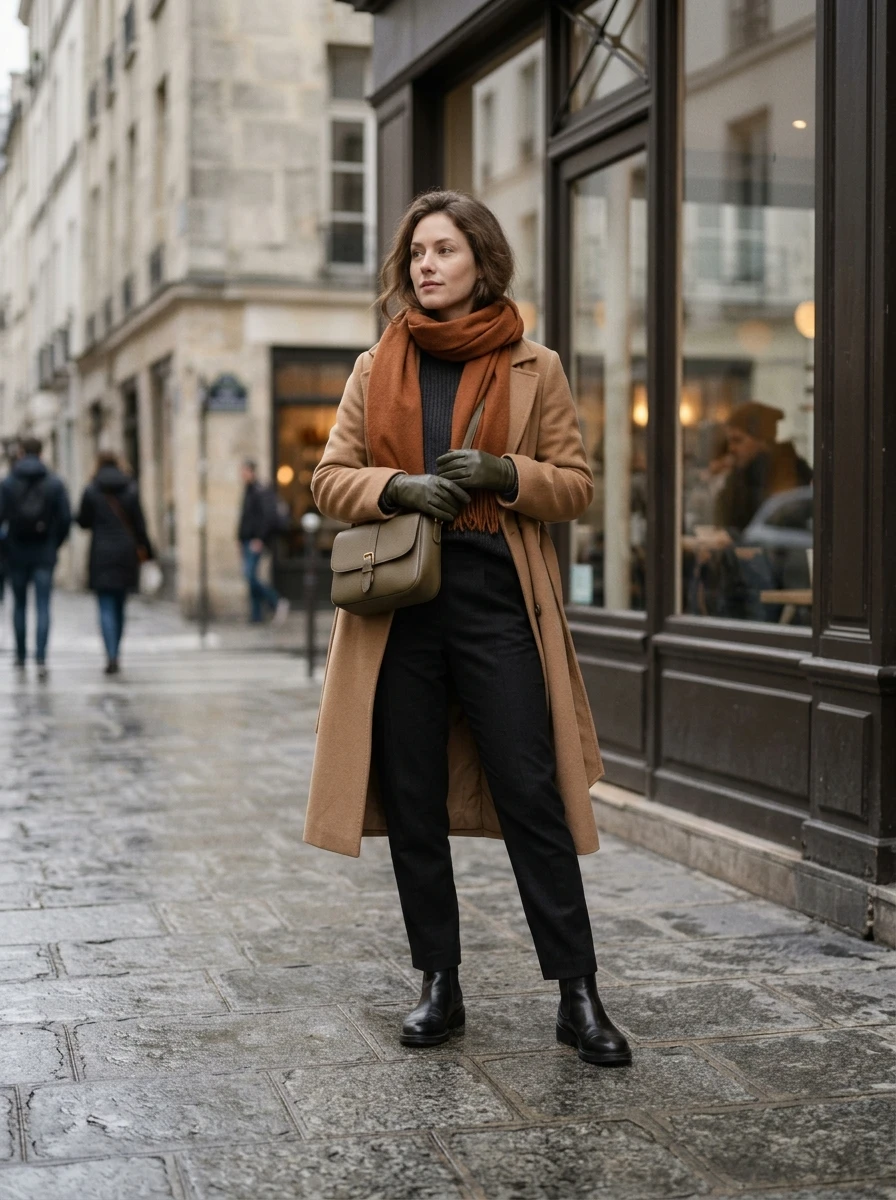
Fit note: for the subway reality, the coat needs to be easy to open and close one-handed while holding a bag and a MetroCard; big buttons or a simple wrap closure beat fiddly toggles. A slim turtleneck underneath (not a chunky sweater) keeps the coat's line clean and prevents overheating the moment you step into a heated lobby. For more cold weather ideas, these winter outfits cover coats, layers and boots for the season.
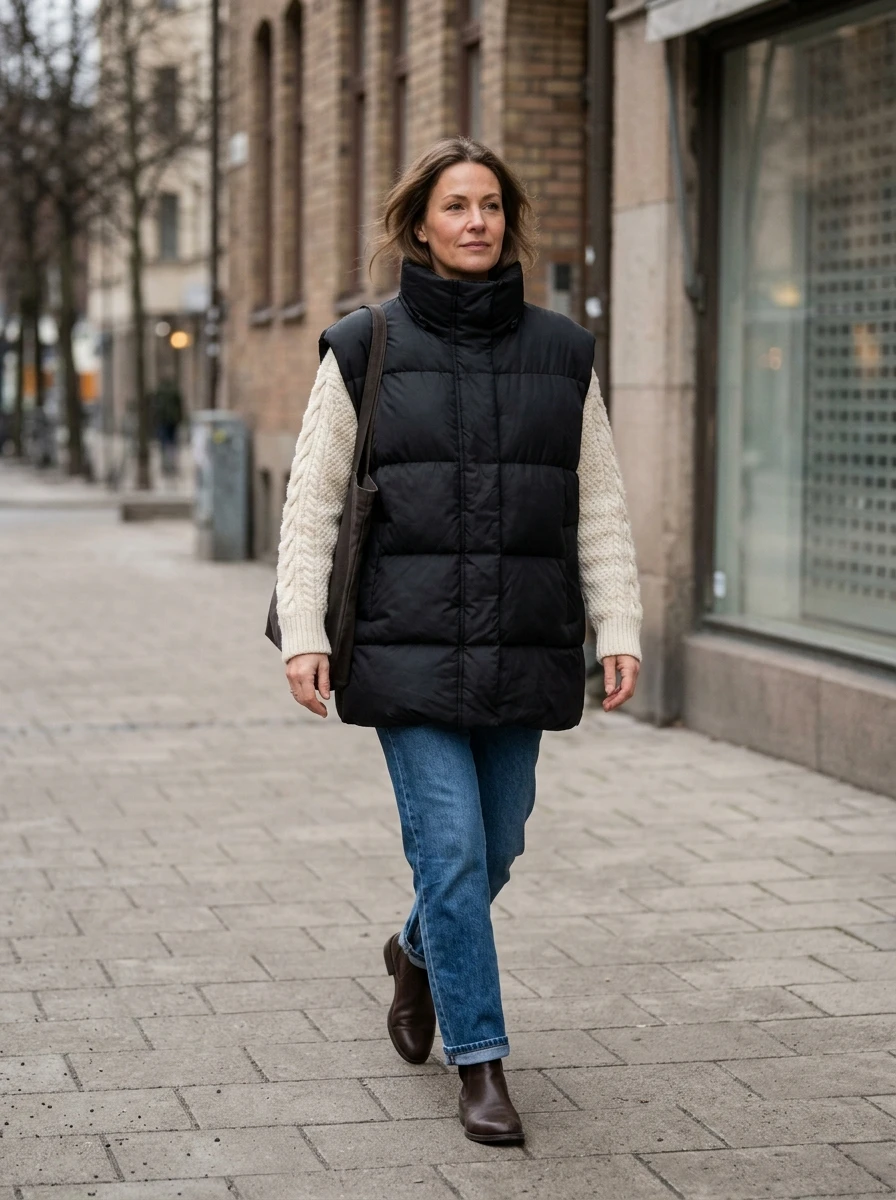
Oversized Puffer Vest — The Subway Solution
The vest solves the subway problem elegantly: your core stays warm on the platform, and when the car turns into a sauna, you unzip and your arms are free. No coat to carry, no overheating. The oversized cut matters — a fitted vest over a sweater restricts arm movement when you are grabbing subway poles; an oversized one gives you room.
Fabric note: the proportion underneath needs to be slim (fitted sweater, straight denim) because the vest is already providing all the volume the outfit can handle. Down or high-loft synthetic both work; the synthetic is actually the smarter city choice since it insulates when damp and costs less to replace.
Leather Trench Coat — Sharp, Windproof, Evening-Ready
Leather's real advantage in the city is wind resistance — it simply does not let air through, which is why a leather trench feels warmer than its insulation would suggest. For evening, when you are moving between restaurants and bars rather than commuting, it is the right call: sharp, weatherproof, and it does not absorb the cooking smells the way wool does.
Care tip: the limitation is real cold — below about 25°F, leather without a quilted lining becomes a windproof shell around a cold body. Waxed cotton is the honest alternative — similar windproofing, better rain performance, and it develops character instead of just wearing out.

Monochromatic Grey Tones — Dressing With the City
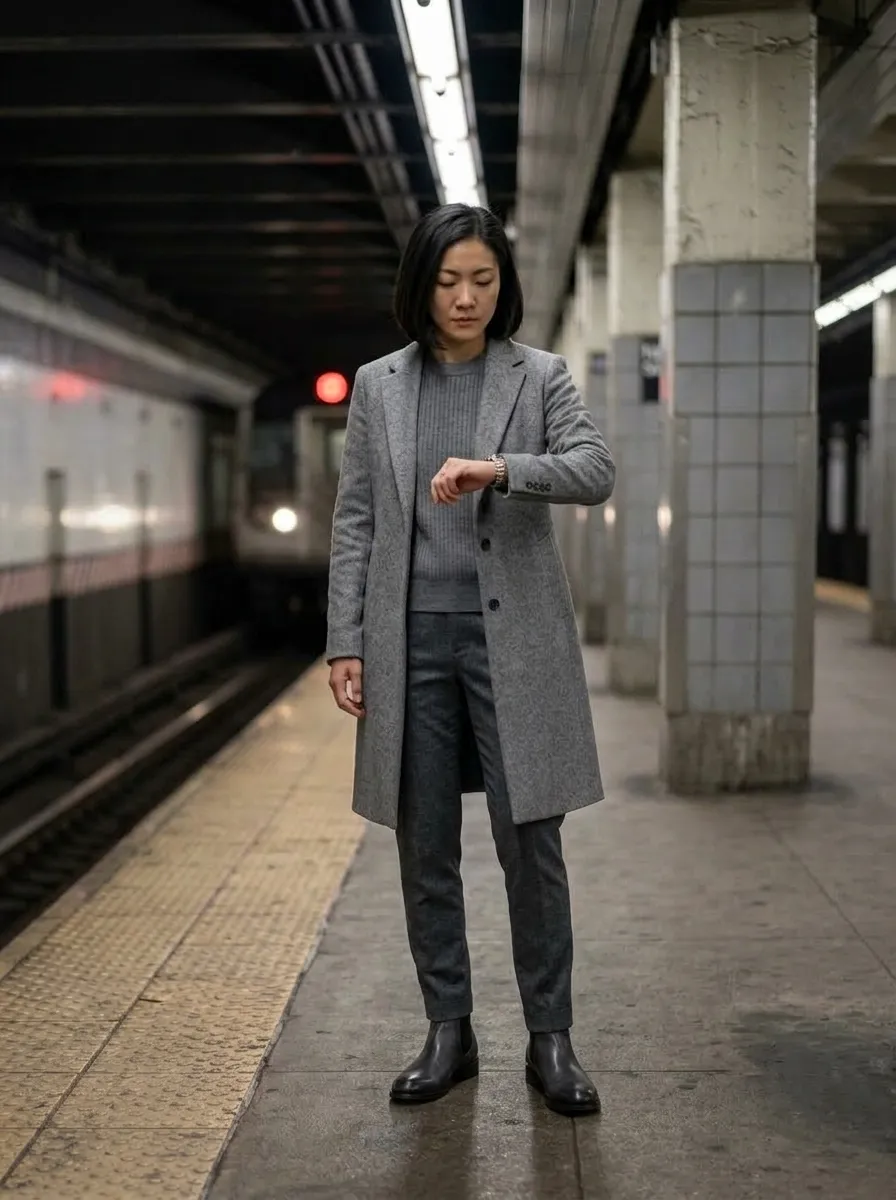
Head-to-toe grey works in New York because the city itself is grey — concrete, steel, overcast skies. Tonal dressing against that backdrop looks intentional rather than washed out. The mechanism is the unbroken vertical line: heather sweater, charcoal trousers, slate boots, no horizontal color breaks, and the eye travels the full length of the body.
Colour pairing: the texture rule for monochrome is to vary the surfaces (matte wool, smooth leather, soft cashmere) so the outfit has depth. One texture in one color reads as a uniform; three textures in one color reads as style.
Shearling Lined Jacket — Weekend Warmth Without the Commitment
Shearling works on the principle of trapped air — the dense pile holds warm air against the body, which is why even a thin shearling lining outperforms a much thicker flat fabric. For weekend city life (brunch, markets, gallery afternoons), it is the right warmth-to-effort ratio: substantial without the commitment of a full winter coat.
Wear it with dark jeans and boots, and keep the rest simple — the jacket's texture does the visual work. If you are choosing between genuine and synthetic shearling, be honest about maintenance: synthetic is machine-washable and fine for daily wear; genuine is warmer but needs care.

Wide Leg Trousers — The Secret Thermal Trick
Wide-leg wool trousers are secretly the most practical winter city pant, for a reason nobody talks about: you can wear thermal leggings underneath and nobody can tell. Try that under skinny jeans and you get visible bulk at the knee; under a wide leg, the thermals disappear entirely. That is the difference between being warm and looking warm.
Fit note: the hem needs to just graze the top of your boots — longer and the wool wicks up slush from the sidewalk, which is how good trousers get ruined in February. For the office, this is the move: professional on the outside, thermal underwear on the inside.
Cashmere Turtleneck Layer — The Invisible Base
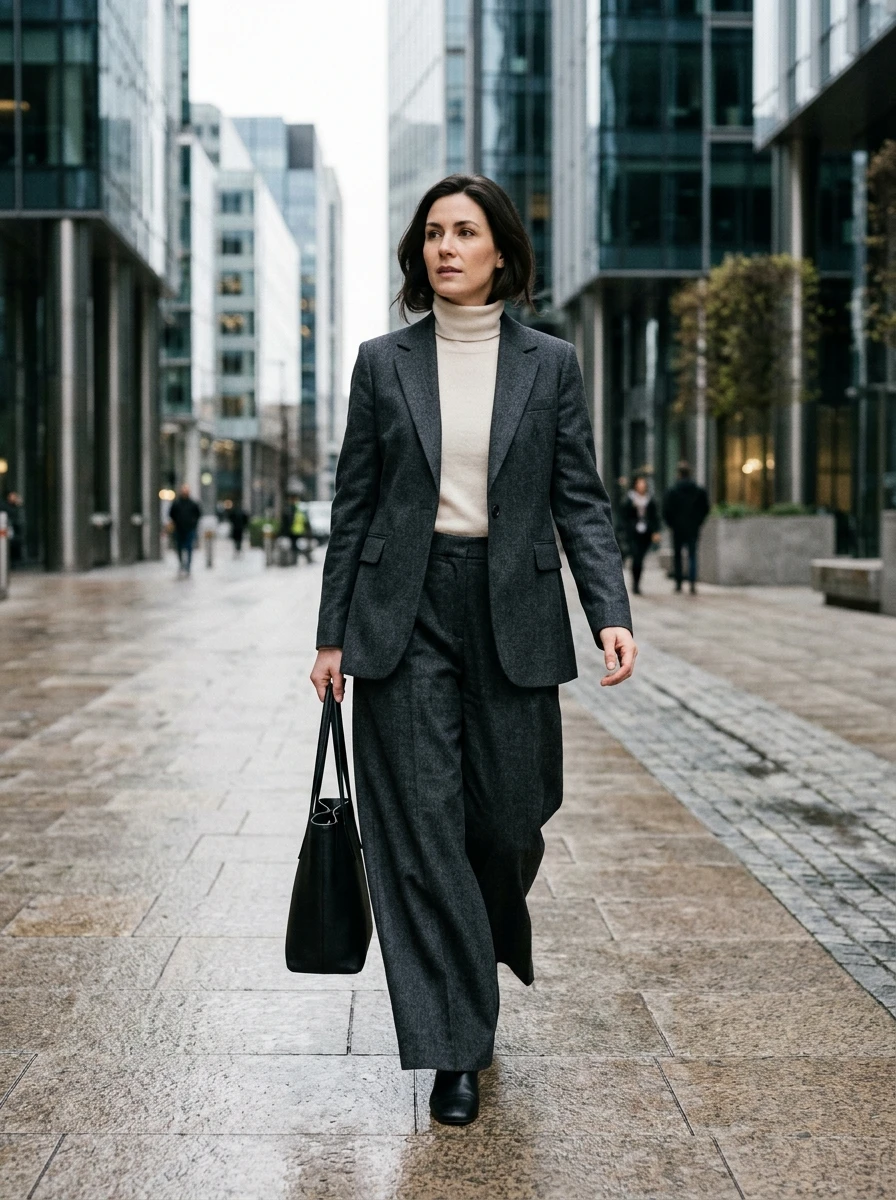
The thin turtleneck is the base layer that makes every other outfit on this list work. The logic: a fitted, lightweight warm layer against the skin means your outer layers do not have to work as hard, which means you can wear a sharper, lighter coat instead of a bulky one.
Fabric note: cashmere's advantage is warmth-to-weight — nothing else gives you this much insulation this thin — but merino wool gets you 80% of the way there at a fraction of the price and survives machine washing. Either way, the turtleneck does its job invisibly; nobody sees it, everybody sees the coat it enables. The city itself is one of the great street style capitals, where the sidewalk is the runway.
Chunky Knit Scarf — The Highest-Impact, Lowest-Cost Tool
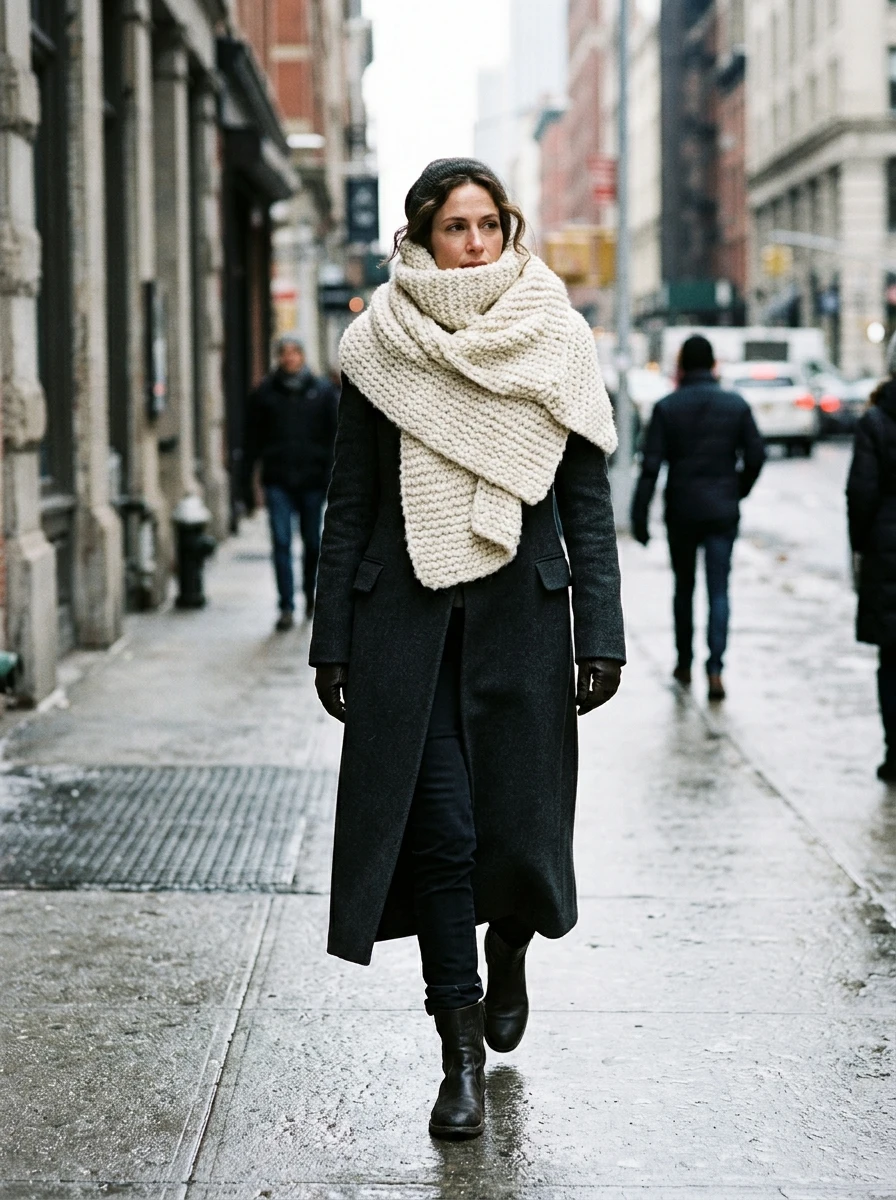
A massive scarf is the highest-impact, lowest-cost winter styling tool in existence. It changes the entire read of a coat — the same black overcoat looks different with a cream chunky knit versus a plaid wool wrap — and it protects the exact zone (neck, lower face) where wind chill hits hardest on the avenues.
Wear it wrapped twice for the coldest days; let it hang long when you want the vertical line. The styling logic is focal point: when everything else is dark and simple, the scarf becomes the outfit's personality. Just keep it clear of subway doors — this warning exists because it happens.
Earth Tone Layers — Small Warm Accents Against Grey
Against New York's grey winter palette, rust, camel, and olive read as warmth — literally and visually. The way to wear them without looking like autumn leftovers: use them as accents against a dark base, not as the main event. A camel scarf, olive gloves, a rust bag against black and charcoal.
Colour pairing: the color temperature logic matters — warm earth tones advance visually (they pop forward), cool greys recede, so the earth tones become focal points even in small doses. One warm accent is sophisticated; head-to-toe earth tones in January can look muddy against the city's concrete.
Quilted Midi Skirt — The Winter Answer to Not Wearing Pants
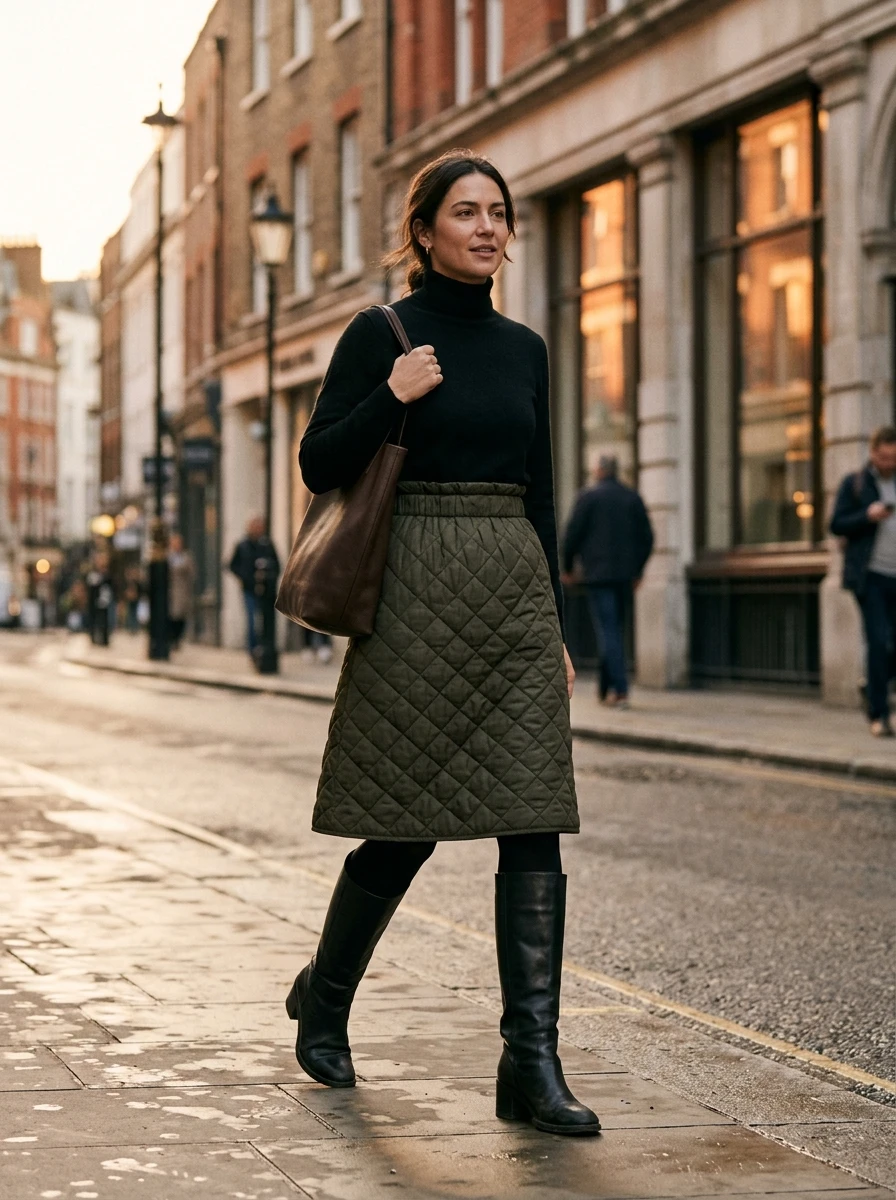
The quilted skirt is the winter answer to "I don't want to wear pants again." The quilting traps air like a puffer jacket, so your legs stay genuinely warm — this is not a fashion-over-function choice. The midi length is practical for the city specifically: long enough for coverage, short enough to clear subway stairs and turnstiles without catching.
Fit note: opaque tights plus tall boots close the remaining gap, and the whole lower half becomes a sealed warm column. The quilted texture is the visual interest, so the top half stays simple — a fitted sweater, tucked, done.
Faux Fur Stole — Occasion Warmth, Concentrated at the Neckline
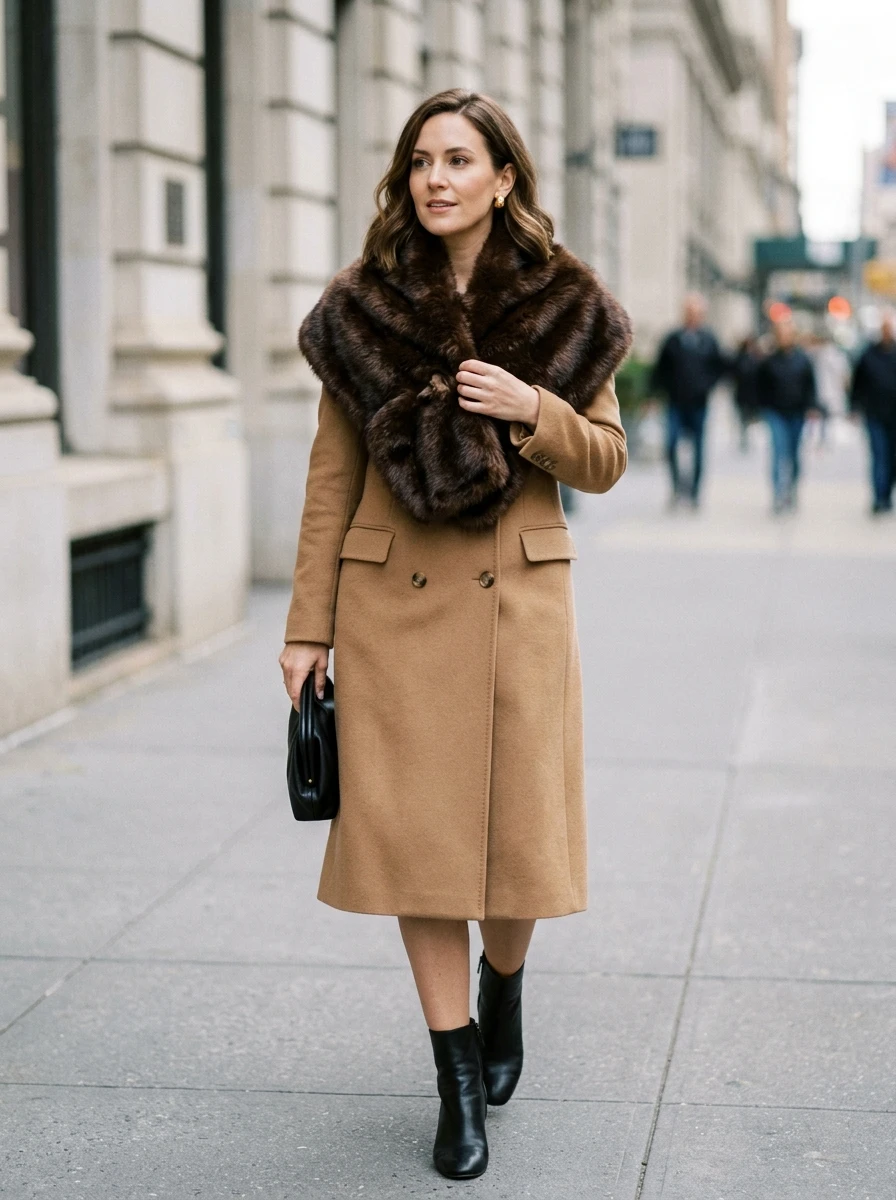
For evenings when a full winter coat would be overkill but bare shoulders are not an option — restaurant week, gallery openings, theater — a faux fur stole over a wool coat (or even over a blazer, indoors) adds the right amount of occasion. The logic is concentration: all the visual richness is at the neckline and shoulders, exactly where the eye goes in conversation, while the rest of the outfit stays quiet.
Fabric note: it is also the warmest accessory per ounce you will own — fur (even faux) traps an enormous amount of air. A detachable collar version gives you the same effect on any coat you own.
Technical Parka — When Survival Comes First
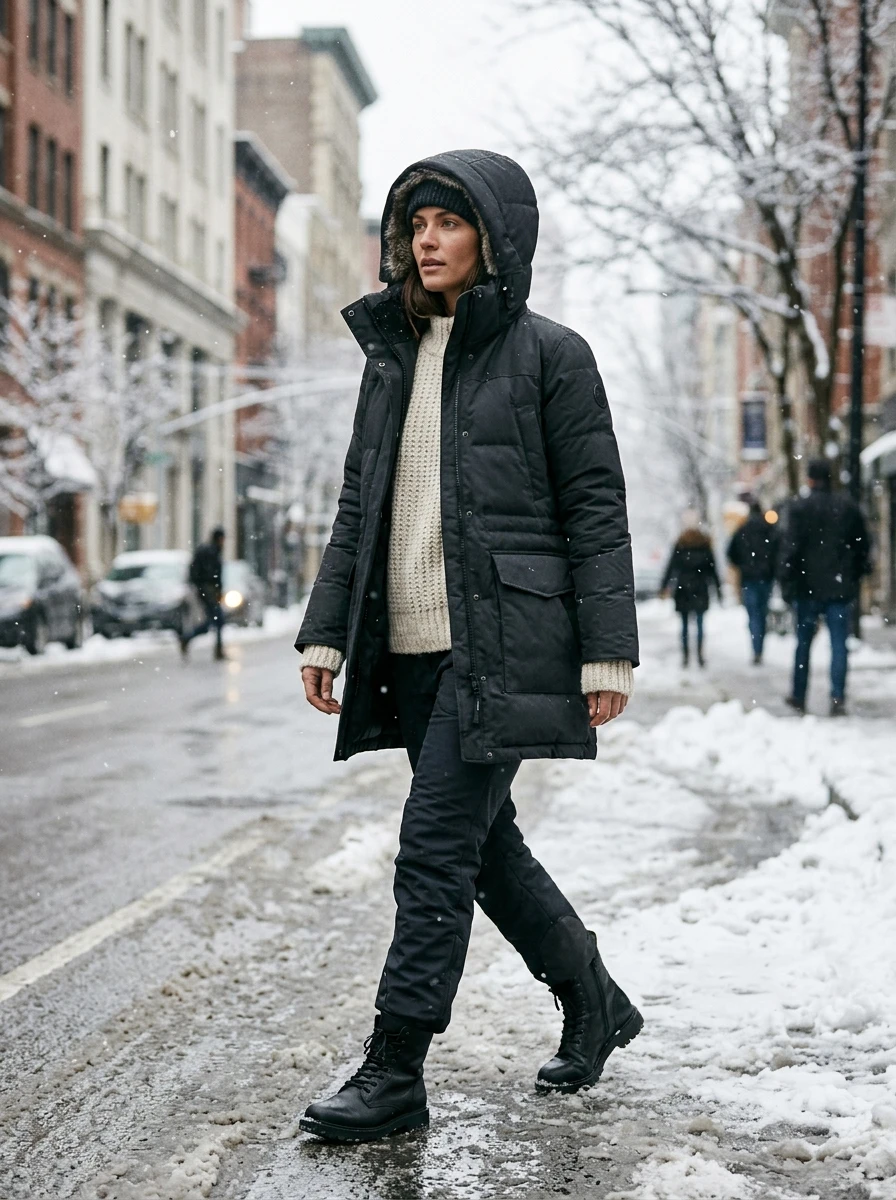
There are days — subzero wind chills, sleet, the February stretch — when style takes a back seat to survival, and the parka is the honest answer. The things that actually matter: a windproof shell (wind is what makes NYC cold dangerous, more than the temperature number), a hood with a drawcord that actually closes around your face, and length that covers the hip. Fill power matters less than the shell in city conditions.
Wear it with your real outfit underneath — the parka comes off indoors, and what you are wearing beneath is what people actually see for 90% of the day.
For more on winter layering systems, see best aesthetic winter outfit looks to pin and wear.
Velvet Blazer — Evening Texture That Catches the Light
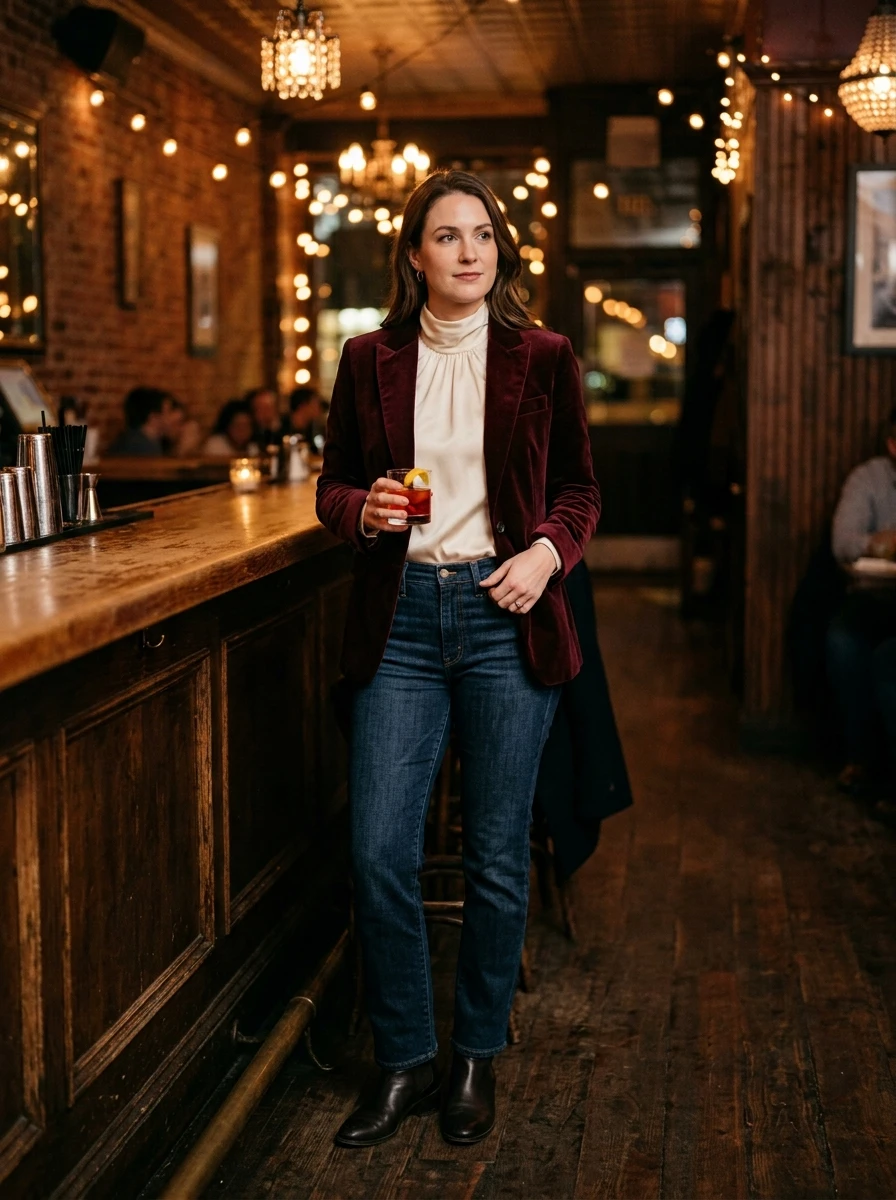
Velvet in winter works because of light: the pile catches and reflects indoor lighting in a way flat fabrics do not, which is why velvet looks richer at evening events. For a city dinner or holiday party, a velvet blazer over a silk shirt and dark denim hits the exact register — dressed up without being formal.
Care tip: the practical note is real — velvet attracts lint and pet hair relentlessly, so a roller in your bag is not optional. And velvet plus a heavy winter coat is overkill; this is an indoors outfit with a coat you remove at the door.
Navy and Black Mix — The Rule the City Ignores
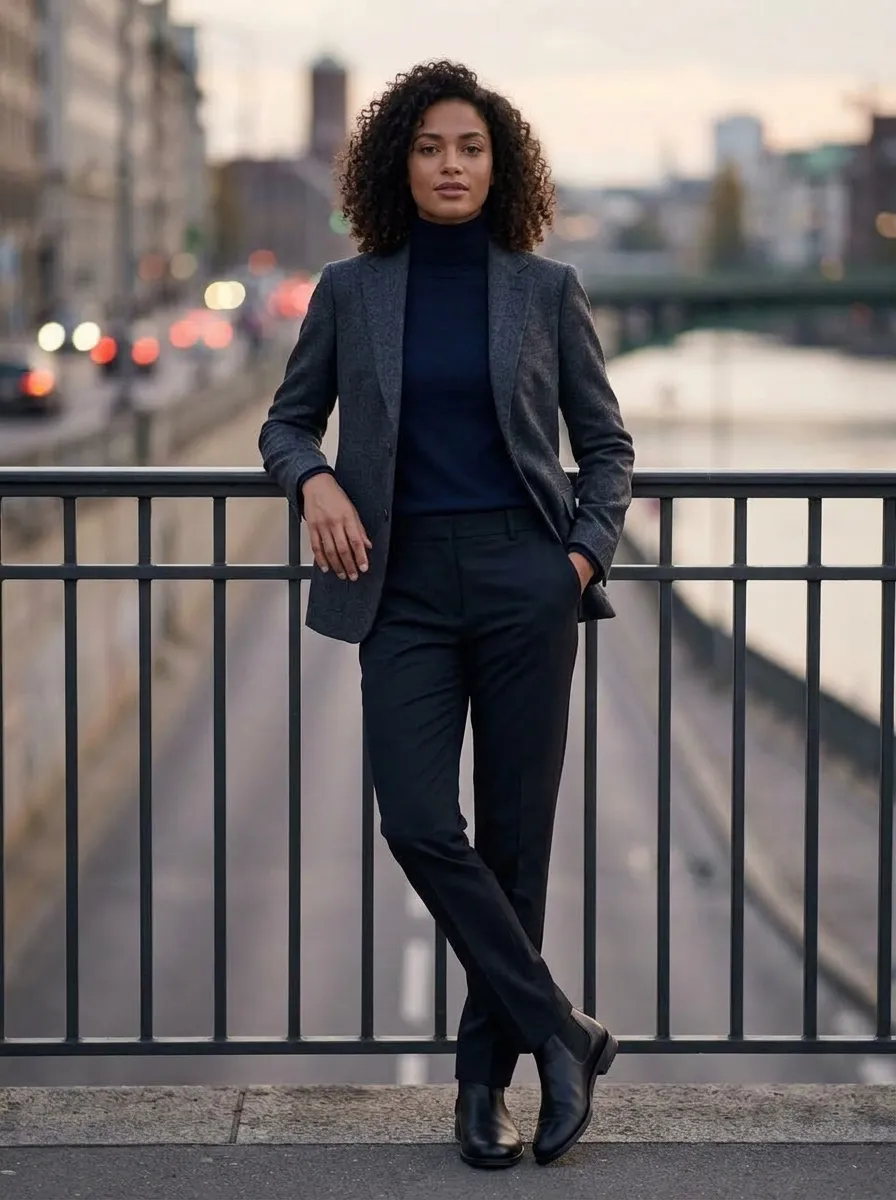
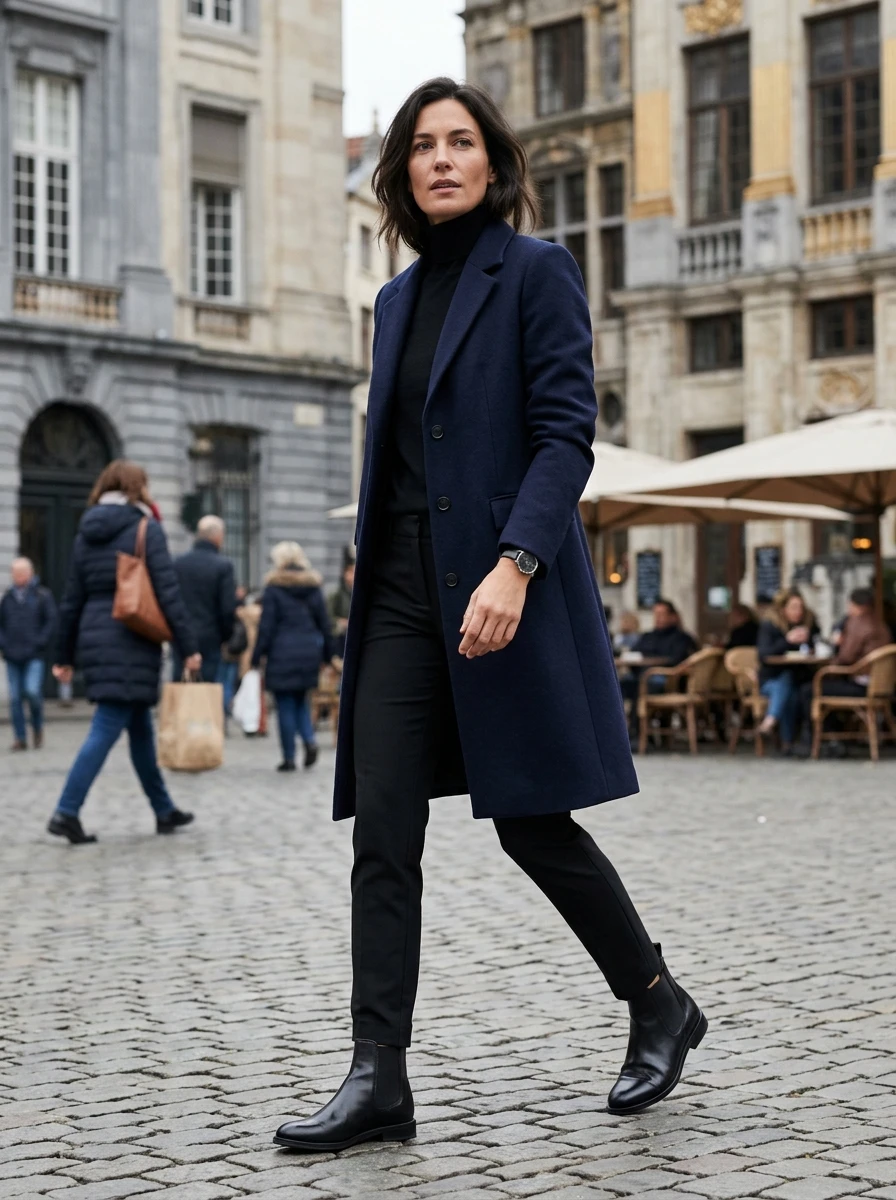
The old rule said never mix navy and black. The city never listened, because midnight navy against black creates depth — two darks with different undertones read as richer than either alone. The execution rule: the navy must be dark enough. A mid-wash navy next to black looks like a mistake; midnight navy looks like a decision.
Colour pairing: texture helps sell it — a wool navy coat over black leather boots, say. This is the outfit for people who find all-black boring but do not want color: maximum sophistication, zero effort, works for work and weekends alike.
Leather Chelsea Boots — The One Non-Negotiable
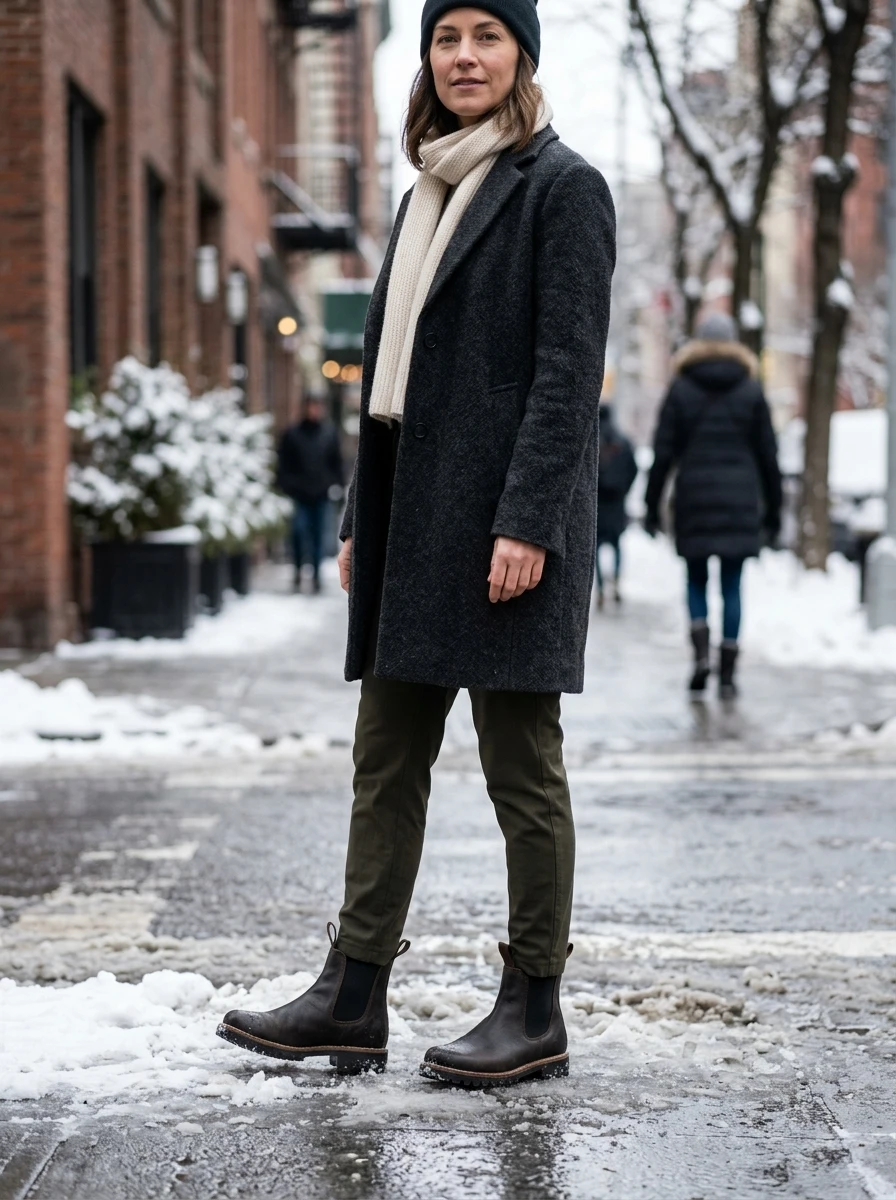
If there is one non-negotiable for NYC winter, it is the boots. The sidewalk salt will destroy anything delicate — suede, light colors, thin soles — within weeks. Leather Chelseas survive because: the leather can be wiped clean of salt daily (do it — salt left overnight cracks leather), the lug or rubber sole grips ice, and the pull-on design means no laces to freeze or zippers to jam with grit.
Care tip: treat them with a water-repellent spray before the first wear, wipe the salt off every evening, and a good pair will last you five winters. Everything else on this list is negotiable; the boots are not.
Common Questions About NYC Winter Style
How do I dress for the wind-tunnel avenues?
Wind is the real enemy, more than temperature. A windproof outer layer — leather, waxed cotton, a technical shell, or dense wool — matters more than how thick your sweater is. Wind cuts through loose knits instantly. If your coat's fabric lets air pass, no amount of layering underneath will save you on a gusty avenue.
What layering system works for subway commuting?
Three layers, each removable in under ten seconds: a thin warm base (merino or cashmere turtleneck), a mid layer (sweater or cardigan), and the outer coat. The subway will be 75 degrees while the platform is 20 — you need to vent fast. Avoid anything that requires effort to remove; if it is annoying to take off, you will overheat instead.
How do I keep my shoes from being destroyed by salt?
Wipe leather boots with a damp cloth every single evening — salt left overnight draws out moisture and cracks the leather permanently. A water-repellent spray before the season starts buys you margin. And accept the reality: winter city boots are tools, not treasures. Buy for durability, maintain them, and they will last.
Can I wear skirts in a New York winter?
Absolutely — the quilted midi (outfit 10) proves the concept. The formula is: insulated skirt + opaque tights + tall boots = a sealed warm column from waist to toe. Wool and quilted fabrics work; thin polyester does not. The only real constraint is wind, which is what the tights and boots are solving.
How do I look polished when everything is about survival?
Put the polish where people look: the coat, the boots, the scarf. Nobody sees your base layers for most of the day — the parka comes off indoors and what is underneath is your real outfit. Invest in the outer shell and the footwear, keep the middle layers simple and warm, and you will look intentional even in February.
The Four Things to Get Right
Windproof shell, removable layers, salt-proof boots, and one good scarf. Get those four things right and the rest of the season is just getting dressed — NYC winter style is not about suffering beautifully, it is about understanding the specific conditions and dressing for them on purpose. Check the shell first, then the boots, then build everything else around layers you can shed in ten seconds.