Fall Outfits for Women Over 40: How to Layer Trendy Looks Without the Bulk
How to use this guide
Treat trend ideas as styling prompts rather than rules. Start with pieces already in your wardrobe and adjust fabrics, layers, and proportions for your climate, comfort, occasion, and personal style.
What if the problem with your fall wardrobe is not the clothes at all, but the way two good pieces argue with each other? A beautiful coat over a beautiful sweater can still look bulky if both pieces are fighting for the same space, and a closet full of lovely separates can feel useless on a cold morning when nothing seems to go together.
The answer is not dressing younger, and it is not buying a whole new wardrobe. It comes down to three habits: controlling volume (one oversized piece per outfit, never two), choosing fabrics with actual structure, and keeping your colors in one temperature family so separate pieces read as one outfit.
Here is the good news nobody says out loud: you probably already own most of what follows. Fall is the most remix friendly season in the closet, and this guide is the trend led companion to our prescription guide, 19 classy fall outfits for women over 40. That guide tells you the rules; this one tells you what is current right now, and the two lists share no outfit formula, so read them as a pair.
A blazer you bought three years ago, the boots from last winter, a scarf you forgot about, the skill is not buying more, it is seeing new combinations in what you have. Every outfit below is built from ordinary wardrobe staples, with notes on why each combination works so you can rebuild it from your own closet rather than shopping for an exact replica.
The Double-Breasted Camel Coat, Done Sharply
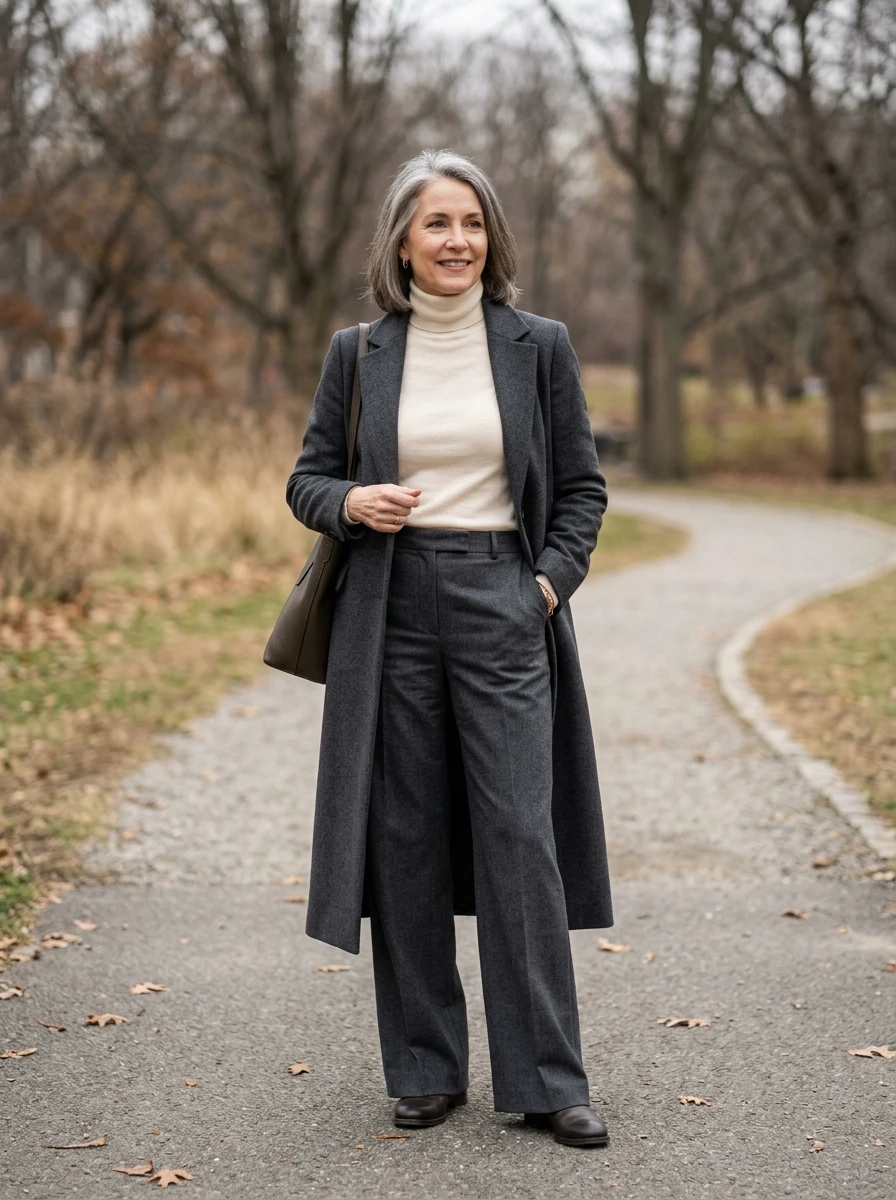
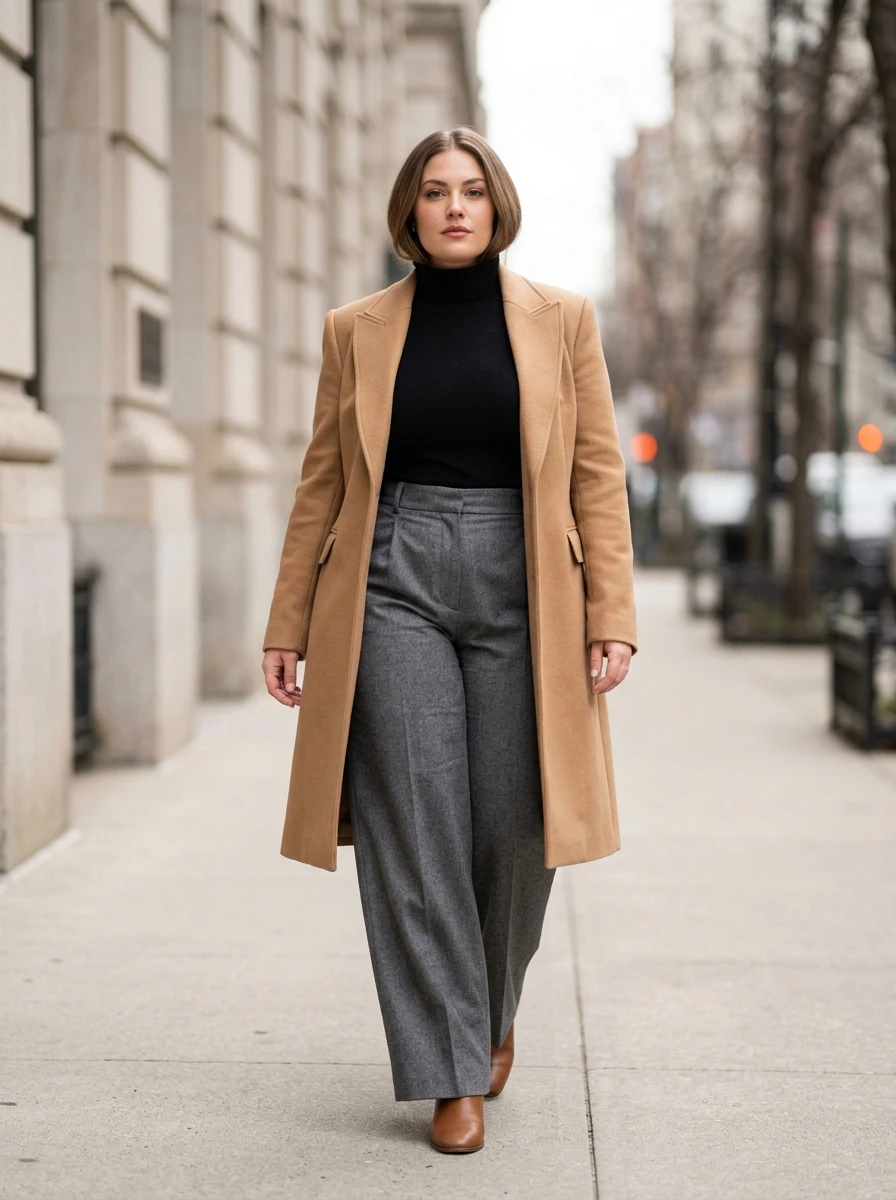
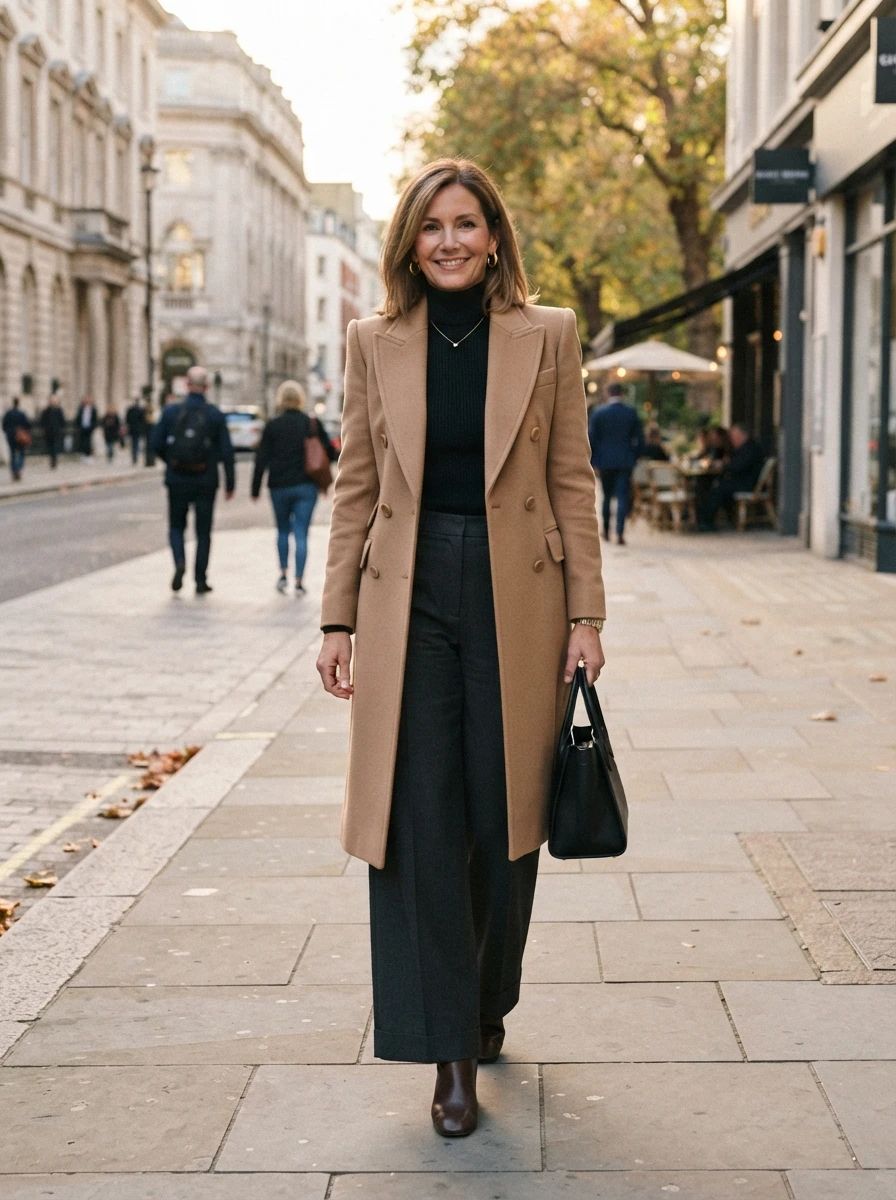
This season the camel coat is double breasted and sharp shouldered, and that structure is the whole trend: the coat does the tailoring, so everything underneath can stay simple. A knee length camel coat over high waisted wide leg trousers in charcoal creates one long column of neutrals, which reads taller and leaner than the pieces would separately.
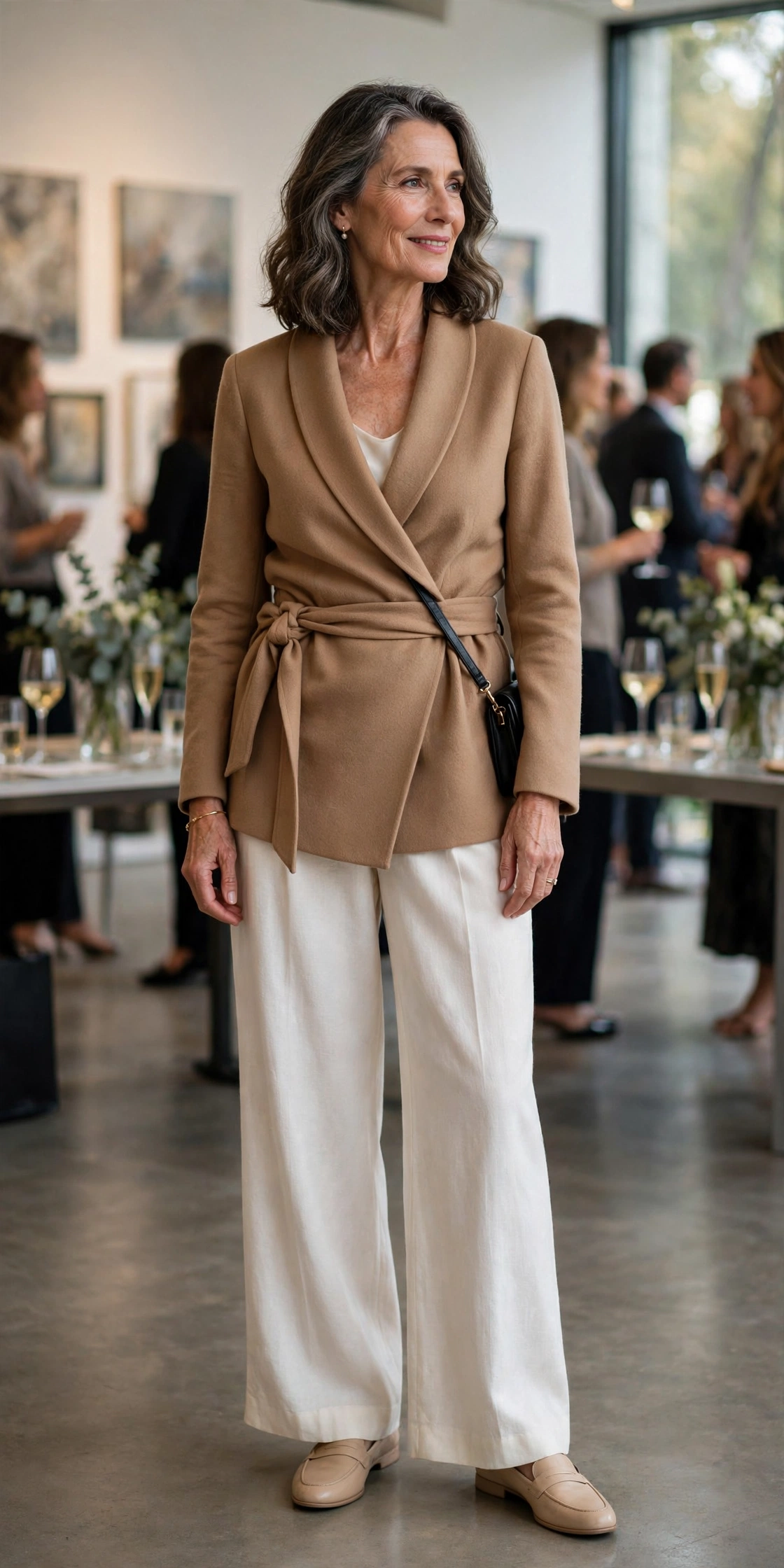
Fit note: the trouser hem should just graze the top of your shoe. Too long and the fabric pools and shortens you; too short and the proportion breaks. A fitted black turtleneck underneath keeps the volume on the bottom half only, which is the whole trick: volume lives in one place, structure everywhere else. Brown ankle boots and a black structured tote finish it. The classy version of the camel coat is a different outfit, a belted wrap coat over a cream crewneck with tapered trousers and loafers, so pick the silhouette that suits your frame.
Chunky Knit Cardigan + Satin Midi Skirt
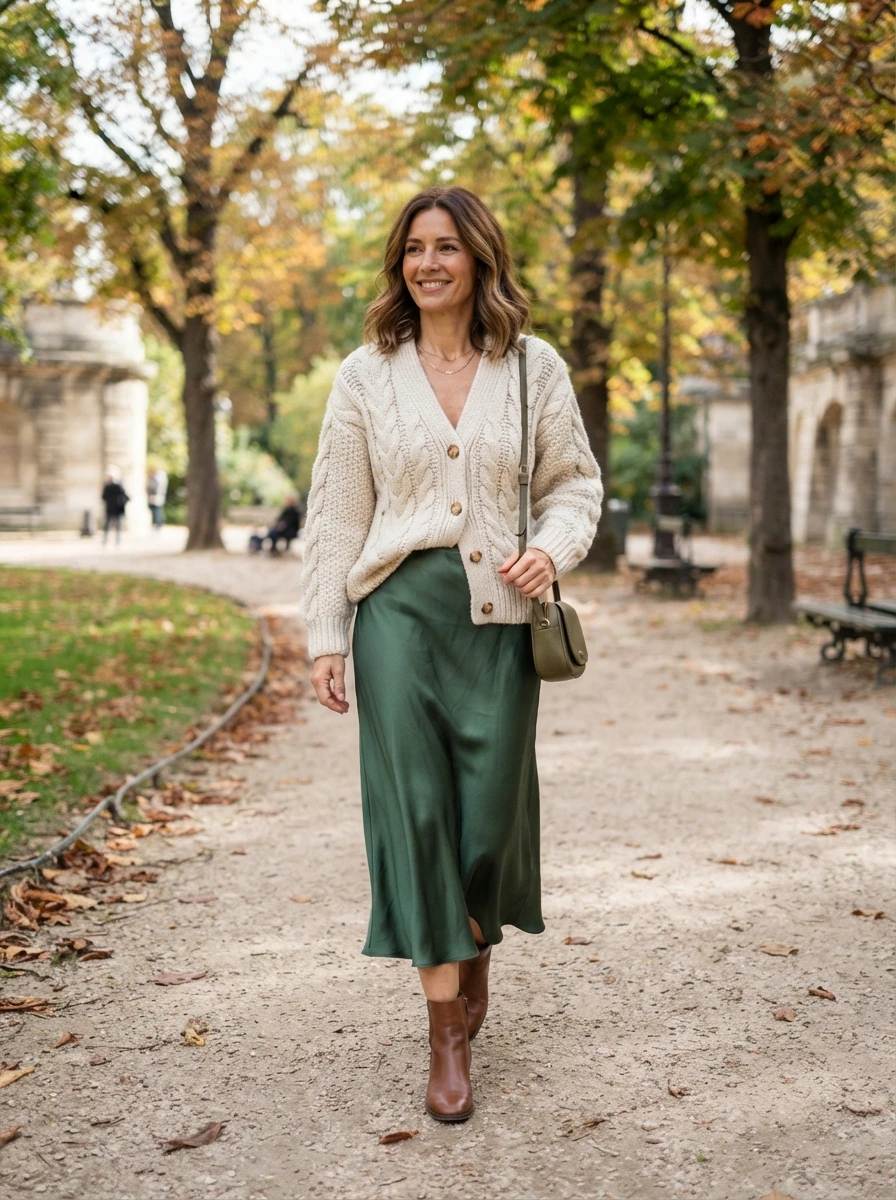
Texture contrast does the heavy lifting here. A heavy cable knit against a smooth satin or silk midi skirt gives the eye two different surfaces to move between, which makes a simple outfit look considered. The cardigan should be open or only loosely closed, buttoning a chunky knit all the way up creates a solid wall of wool that hides your shape.
Wear it with: tuck just the front corner into the skirt's waistband; that single tuck creates a waistline without any belt, and the skirt's fluidity keeps the bottom half from competing with the knit's bulk. A fine gauge knit in wool or a wool blend holds its shape better than a loose acrylic, which tends to sag by midday.
Leather Jacket, Straight-Leg Denim: The Restraint Test
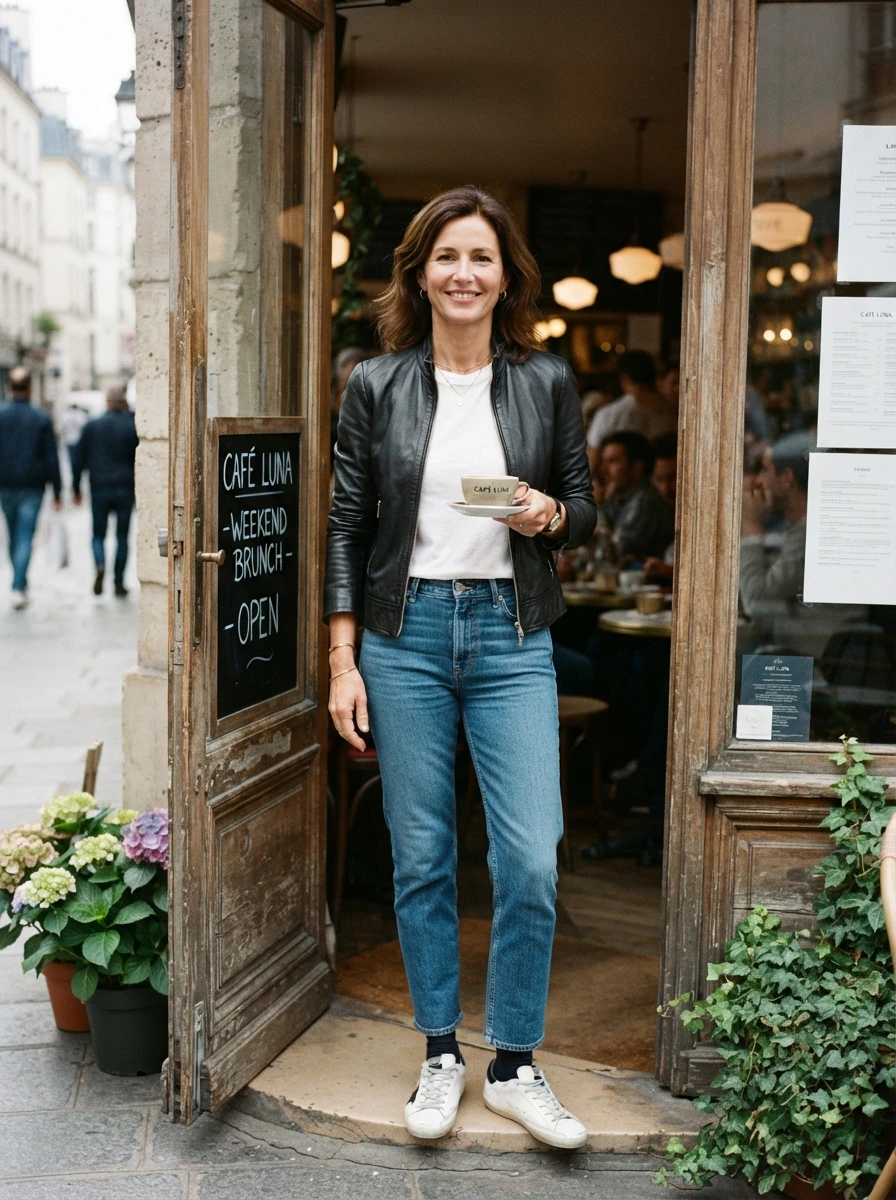
A leather jacket works at this age precisely because it is a hard edged piece worn with restraint, it adds attitude without trying too hard. The mechanism: the jacket's cropped, structured shape ends at the hip, while straight leg jeans (not skinny, not wide) keep the leg line clean and unbroken. Medium wash denim is the sweet spot; very dark reads formal, very light reads summery.
Keep everything else quiet, a plain white tee, simple boots, because the jacket is already doing the talking, and a second statement piece would tip it into costume.
Care tip: wipe a leather jacket with a dry cloth after rain and hang it on a wide shouldered hanger, never a wire one, so the shoulders keep their shape.
One Colour, Three Tones: The Cream Column
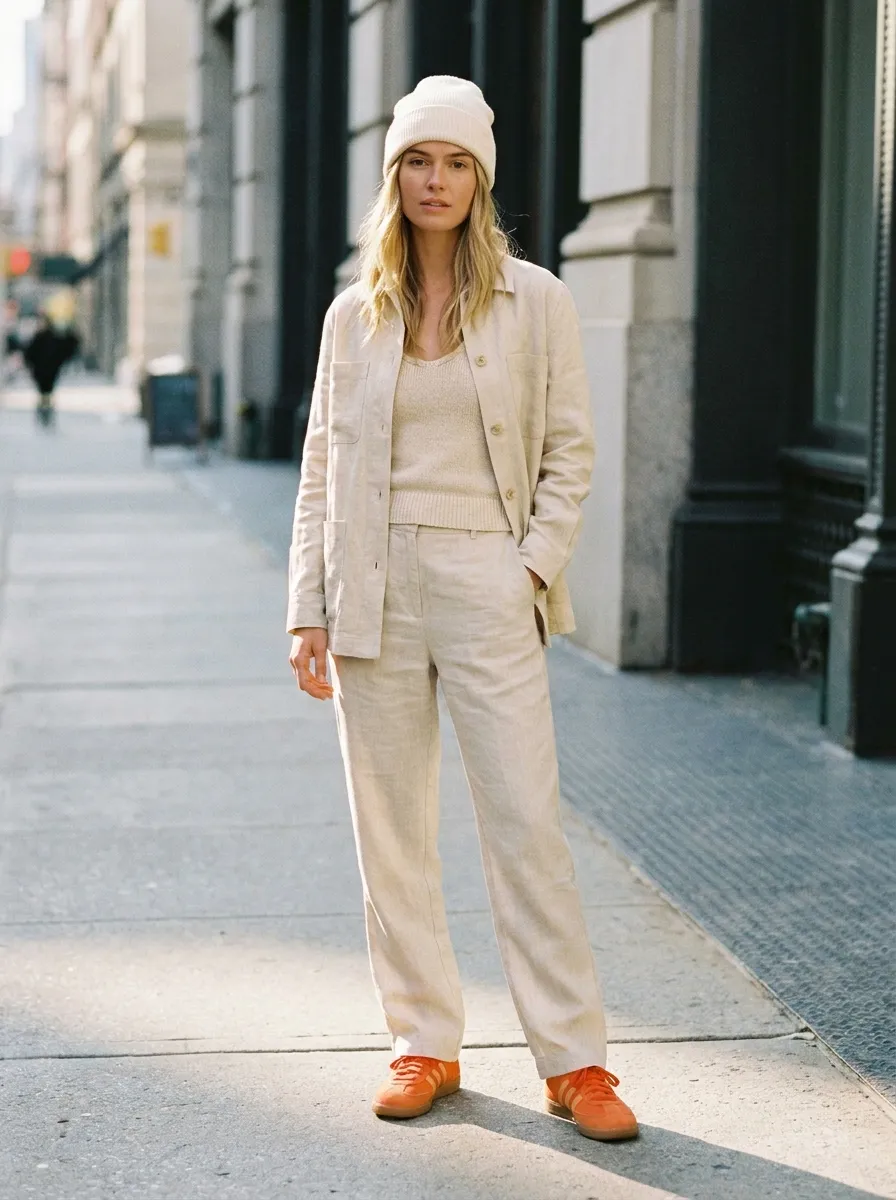
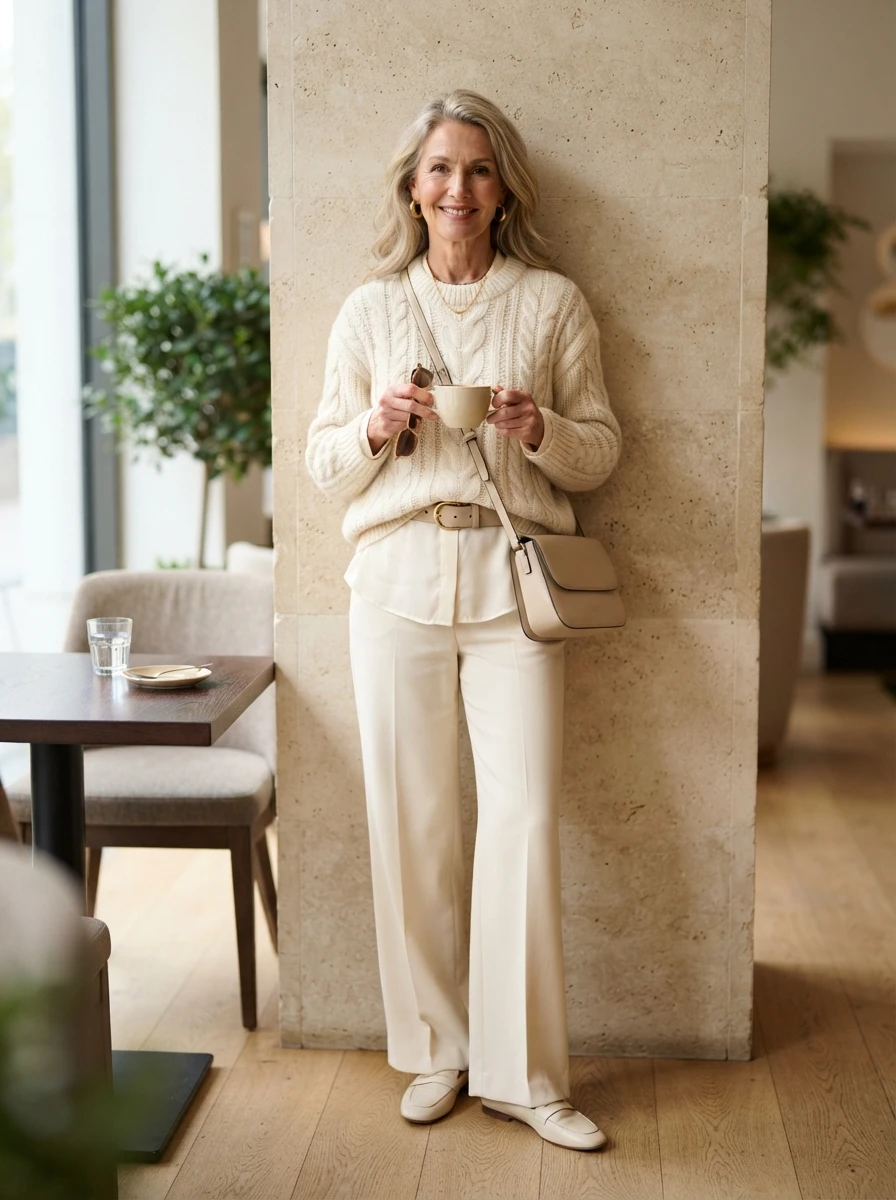
Wearing one color head to toe is the oldest elongating trick in the book, and cream does it better than black in fall because it catches the season's low light instead of absorbing it. The catch: identical cream top to bottom looks flat and washed out. The fix is tonal variation, ivory trousers, oatmeal knit, beige coat, so the eye reads depth rather than a single block. Mixing textures (smooth trouser, nubby knit) adds the separation that color alone cannot provide.
Fabric note: this is the outfit that most rewards good fabric; cheap cream looks cheap, so this is where your best knit earns its keep. Wool, cashmere blends and heavy cotton all hold cream's softness better than thin synthetics.
The Green Plaid Blazer
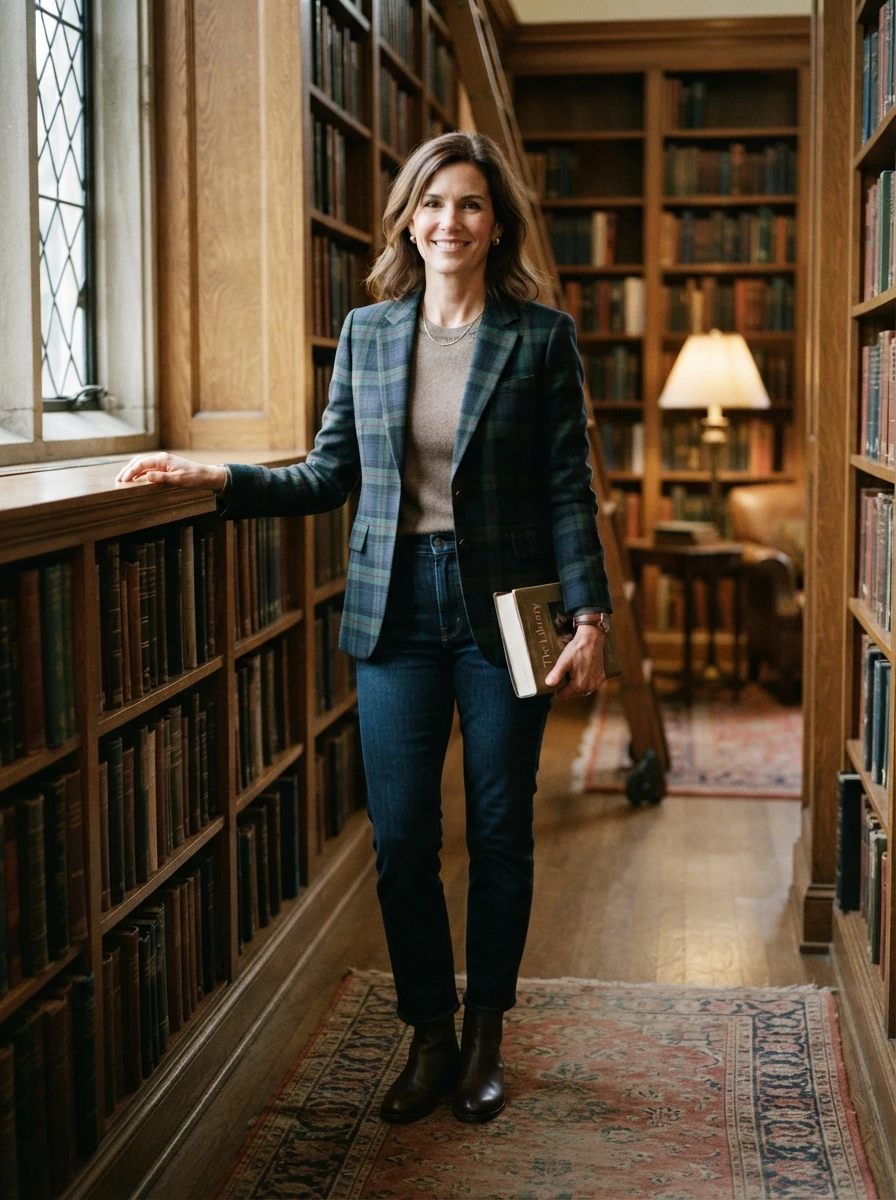
This season plaid goes green, and the blazer is the trend piece, not the jeans. A green and navy plaid blazer with a structured shoulder gives your frame a clean line that denim alone never provides, while the pattern adds visual interest up top where people actually look. Underneath, a taupe fine gauge knit in a solid color lets the plaid be the only pattern in the outfit.
Dark wash jeans with no distressing keep the bottom half quiet and polished; distressing would fight the blazer's polish and drag the whole thing toward weekend only. Brown ankle boots warm up the green, and one pattern per outfit is a reliable rule, because two is where things start arguing. The classy plaid blazer is the office opposite, a grey check over a black top with a silk scarf and no jeans at all.
The Rib-Knit Dress That Needs No Decisions
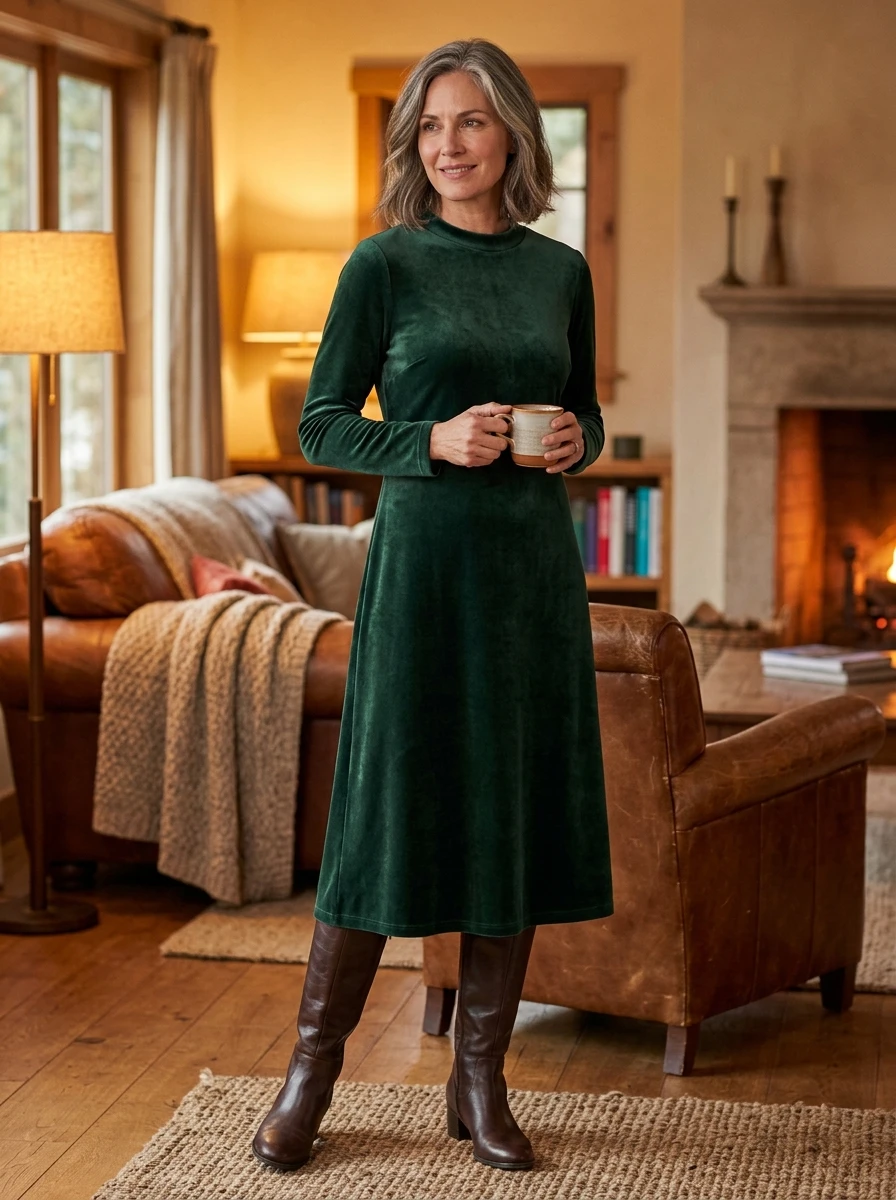
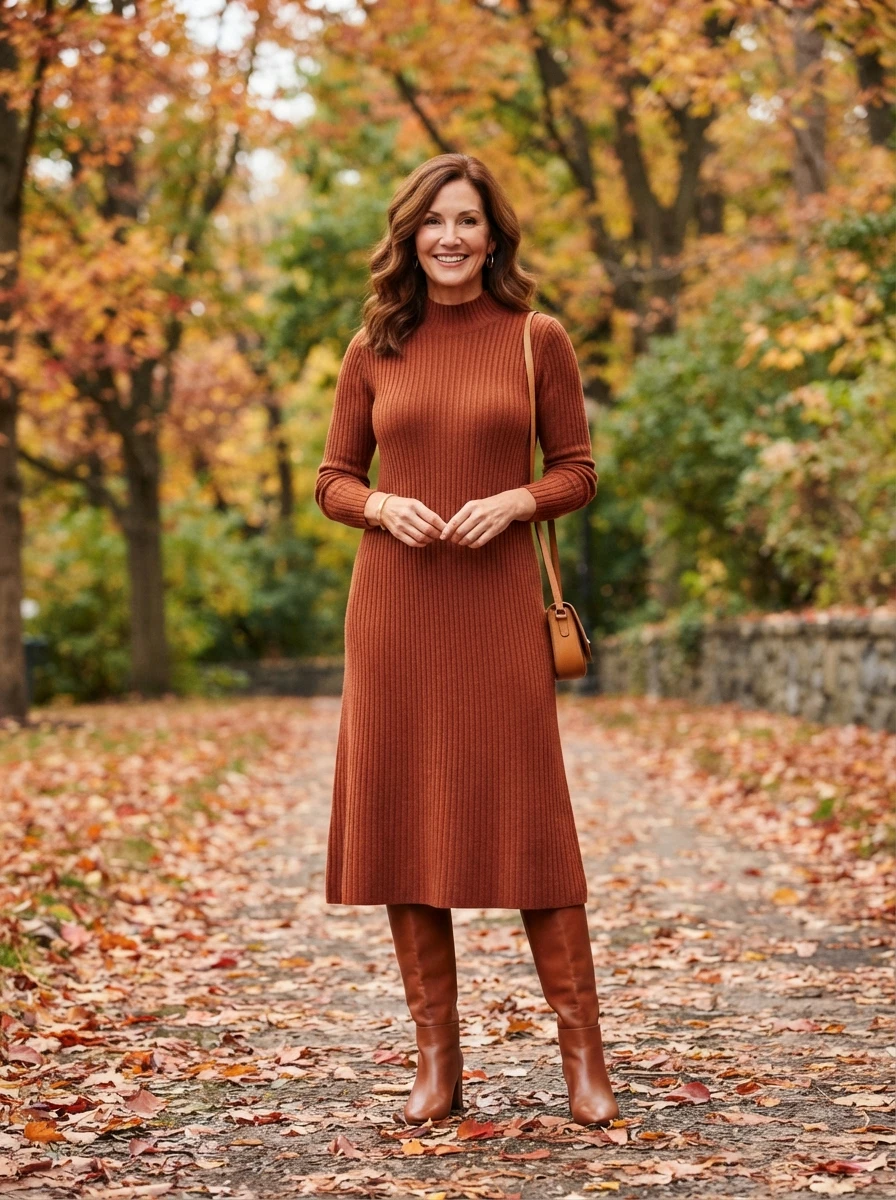
A rib knit midi dress is essentially a one piece outfit, no coordination required, and the ribbing is doing quiet work: vertical ribs create subtle vertical lines that skim rather than cling. The same boot logic carries into winter in our 22 chic winter outfits, and the best UGG outfits with a winter aesthetic show the cozy version of the same silhouette.
Fit note: the boot choice matters more than the dress. Knee high boots eliminate the gap of bare leg between hem and shoe, which keeps the silhouette continuous and weather appropriate. If a full turtleneck feels restrictive, a mock neck gives the same elongated neck line with less fabric. This is the lowest effort outfit on this list, which is exactly why it works for busy mornings.
Denim Shirt, Corduroy Trousers: Texture Over Colour
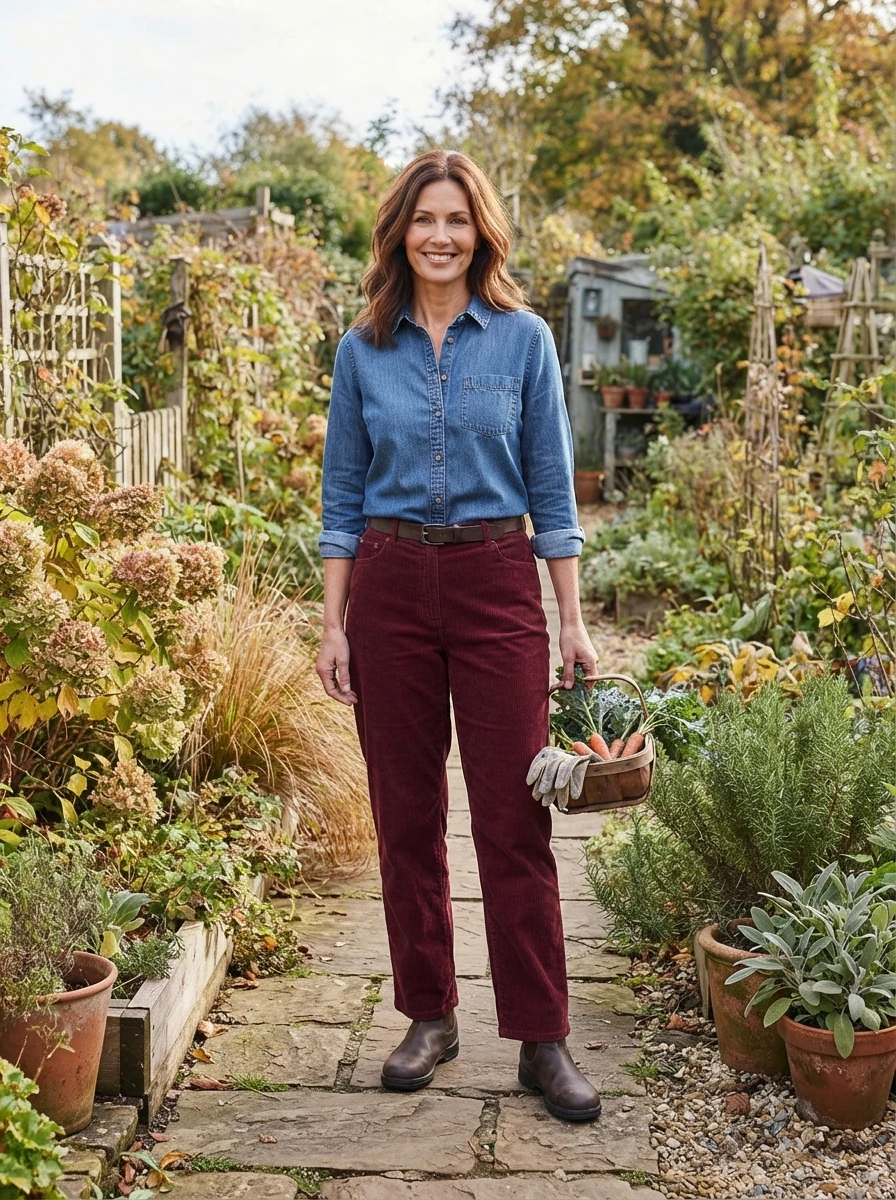
Corduroy is fall's most underrated texture, the ridges catch light in a way flat cotton never does, which gives even a simple outfit dimension. Wide wale corduroy in burgundy or forest green reads richer than the same color in denim, because the texture breaks up the color and stops it looking flat. Tuck the denim shirt in fully; a half tuck with corduroy's bulk looks sloppy rather than relaxed. Keep the two blues and browns in clearly different tones so the shirt and pants do not blur into one muddy column.
Fabric note: corduroy softens with wear, so choose a medium weight with a firm weave; very fine wale reads dressier, very wide wale reads more casual.
One Great Scarf, One Quiet Base
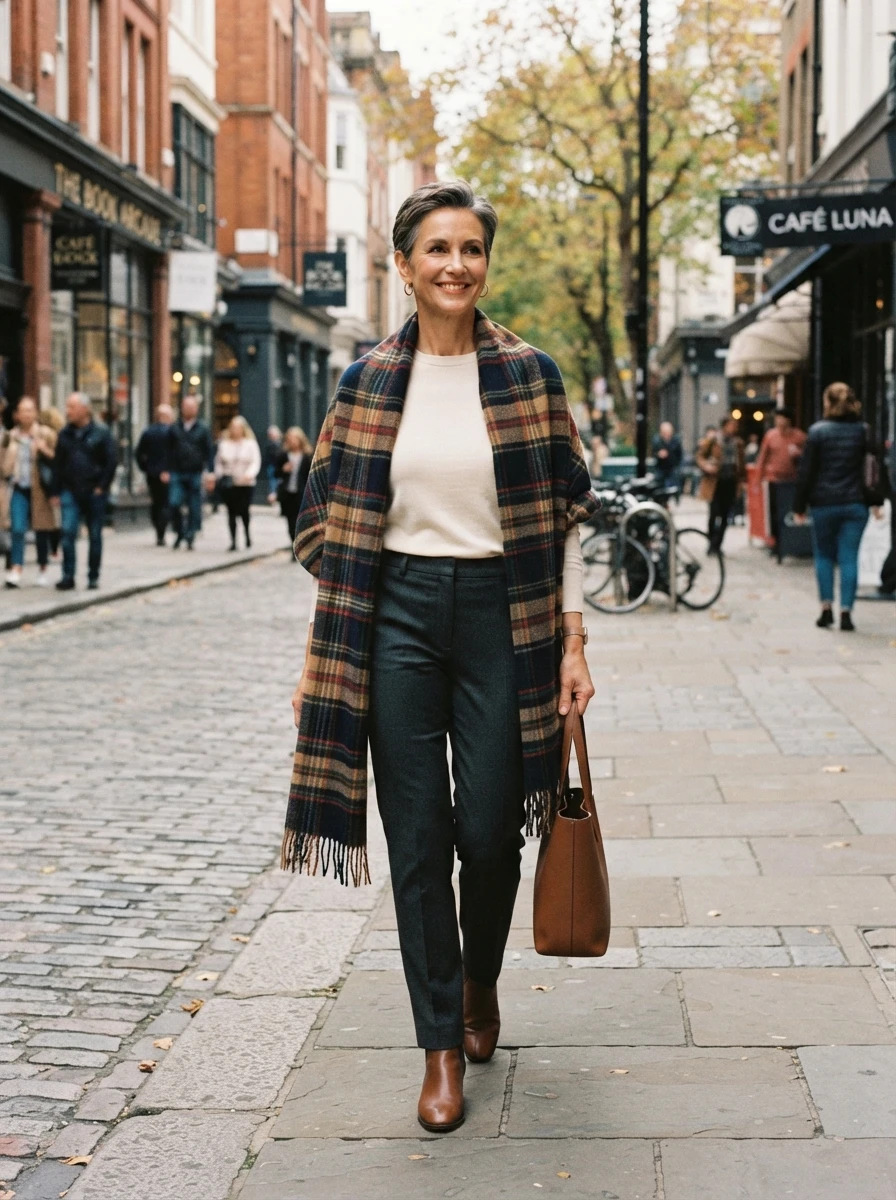
Some days the outfit is just a delivery system for one great accessory. A large plaid or patterned scarf over a neutral base (black trousers, grey tee) works because the scarf carries all the color and pattern while the base stays invisible. The proportion rule: the scarf is the volume piece, so everything underneath stays slim and tailored. Drape it long rather than wrapping it into a bulky ring around your neck, length extends the torso line, while a thick wrap shortens it.
Wear it with: this is the cheapest outfit refresh on this list, one good scarf, endless neutral bases. A wool or cashmere blend scarf drapes better and stays put; a stiff acrylic scarf tends to puff up at the neck.
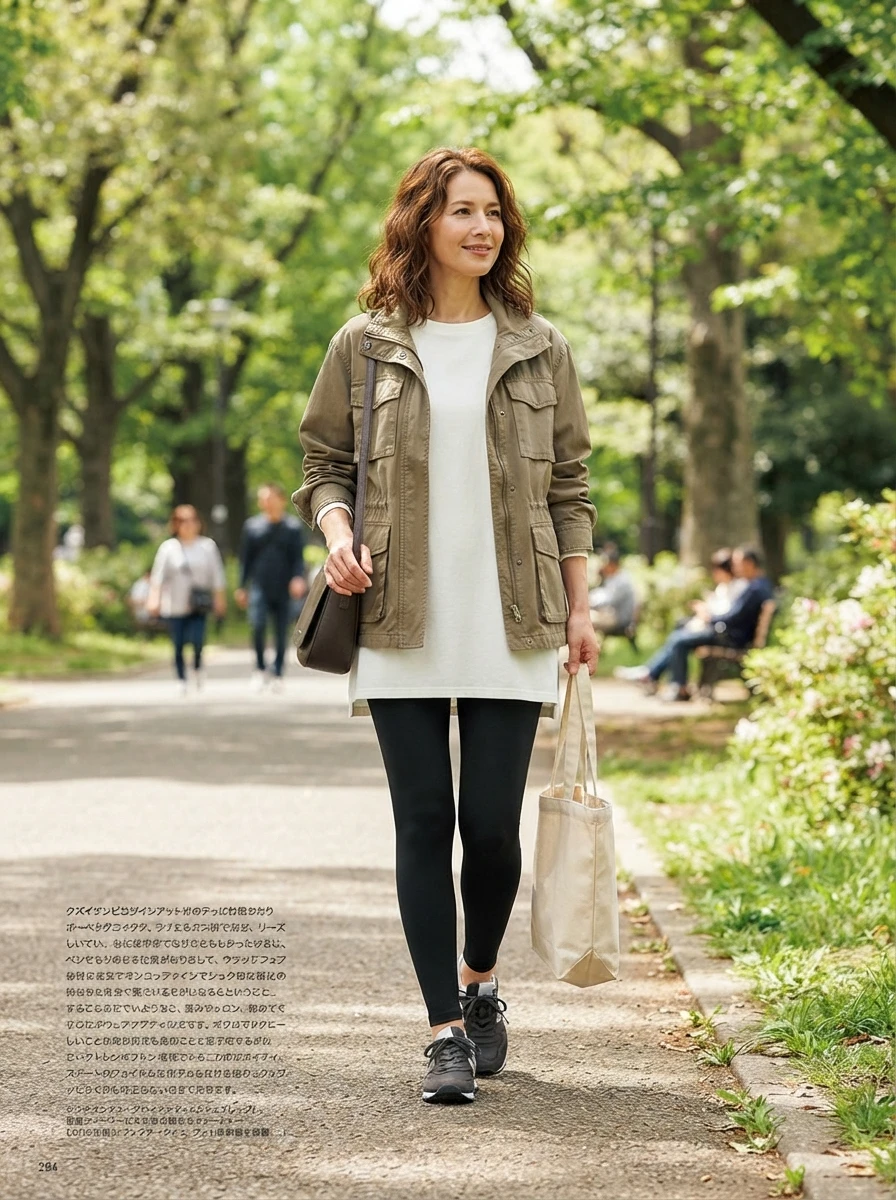
The Utility Jacket Rule
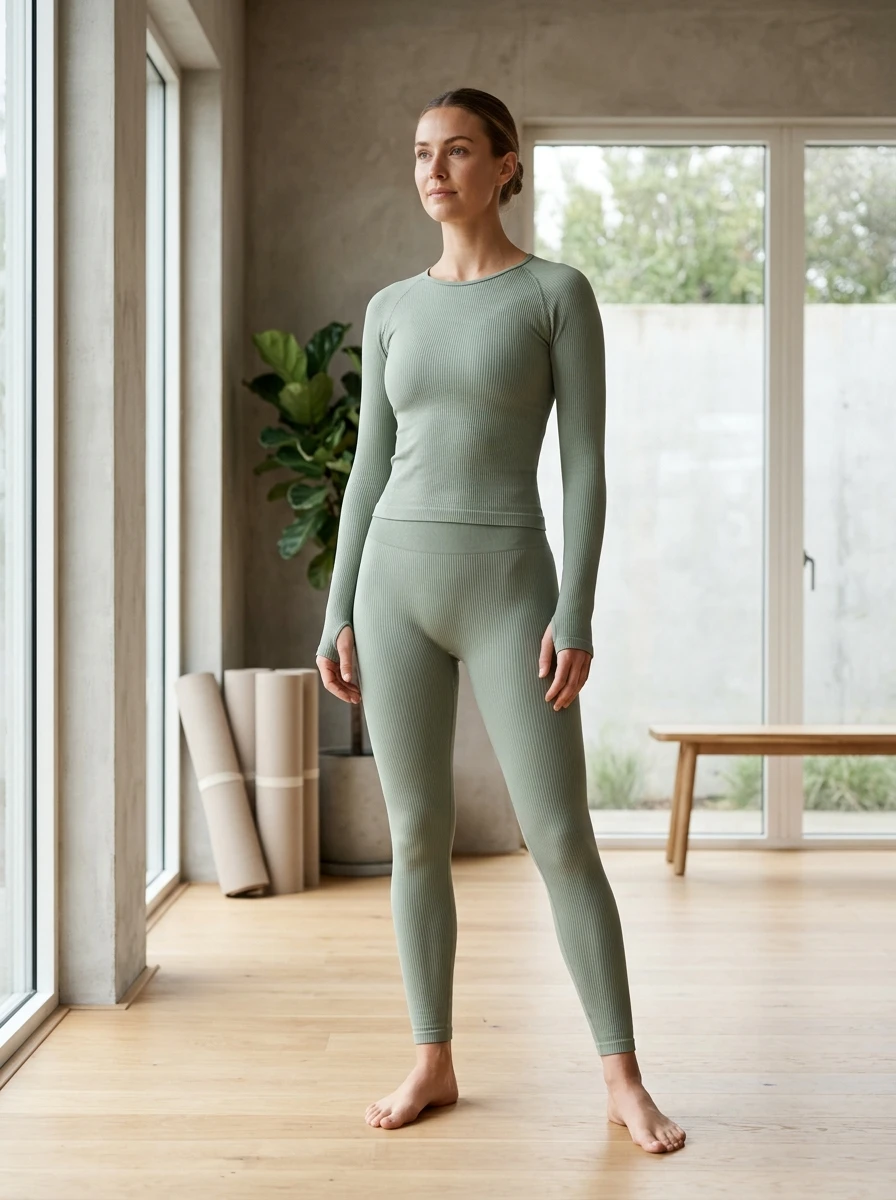
The utility jacket succeeds where most casual jackets fail because it has structure, epaulettes, pockets, a defined shoulder, which keeps leggings from reading as gym wear. The tunic underneath needs to cover the hip; that single coverage decision is what separates "outfit" from "errand clothes." Olive or khaki utility jackets pair best with black leggings because the military green reads intentional against black, while black on black would disappear. This is a formula outfit, and that is fine, formulas you can repeat without thinking are what get you out the door.
Fit note: the tunic should end just below the hip bone, long enough to cover, short enough to show the leg line. A cotton or cotton blend tunic holds its shape better than a thin jersey one.
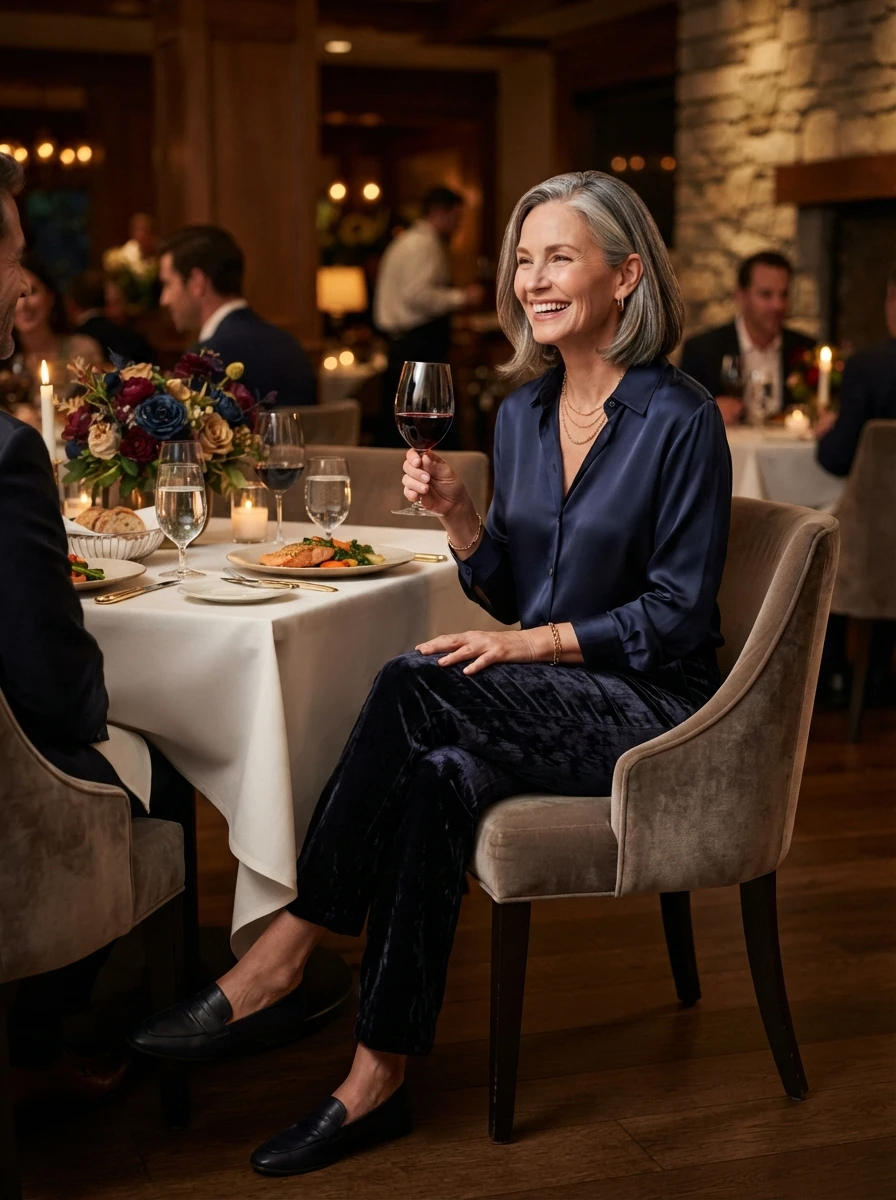
Silk and Velvet After Dark
Evening fall dressing is about fabric weight: silk against velvet gives you light against heavy, shine against matte, the kind of contrast that reads luxurious without a single logo. Deep jewel tones (emerald, burgundy, sapphire) flatter mature skin far better than black, which can drain color from the face in evening light. Keep the blouse untucked or half tucked; a full tuck into velvet trousers creates bulk at the waistband where velvet is already thick. One piece of real jewelry, not five, the fabrics are already the statement.
Care tip: velvet crushes easily, so hang trousers by the waistband and never fold them under heavy items. Steam, do not iron, to lift the pile back up.
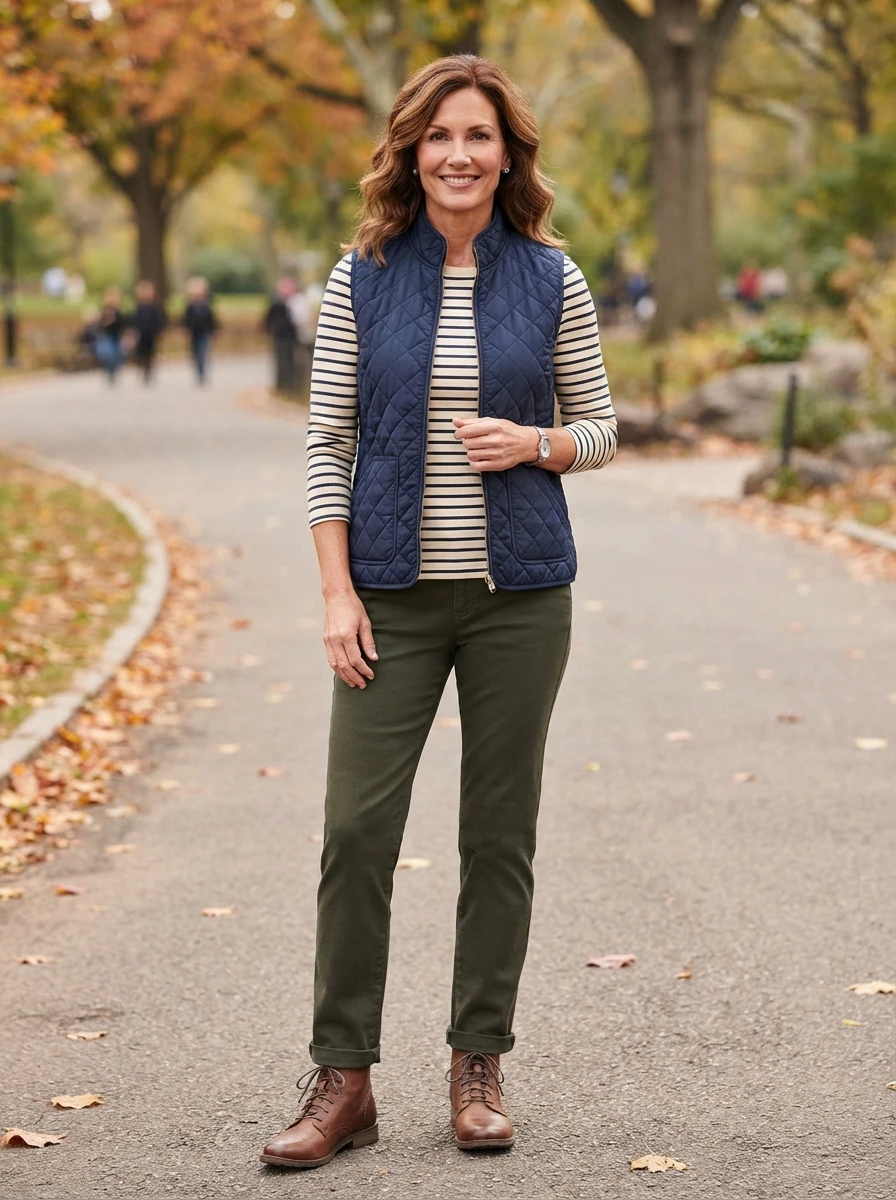
Quilted Vest, Striped Tee: Half-Zipped on Purpose
The vest is fall's most practical layer because it warms your core while leaving your arms free, but the fit is everything. A vest that stands away from the body adds a full size visually; one that skims close reads tailored. Wear it over a fitted striped long sleeve tee (Breton stripes are the classic for a reason, they add pattern without bulk) and slim chinos.
Wear it with: zip it only halfway. A fully zipped vest creates a solid front panel, while the open V at the neck keeps the eye moving vertically. A lightweight quilted nylon or cotton vest layers cleanly; a heavy filled vest is better saved for colder days.
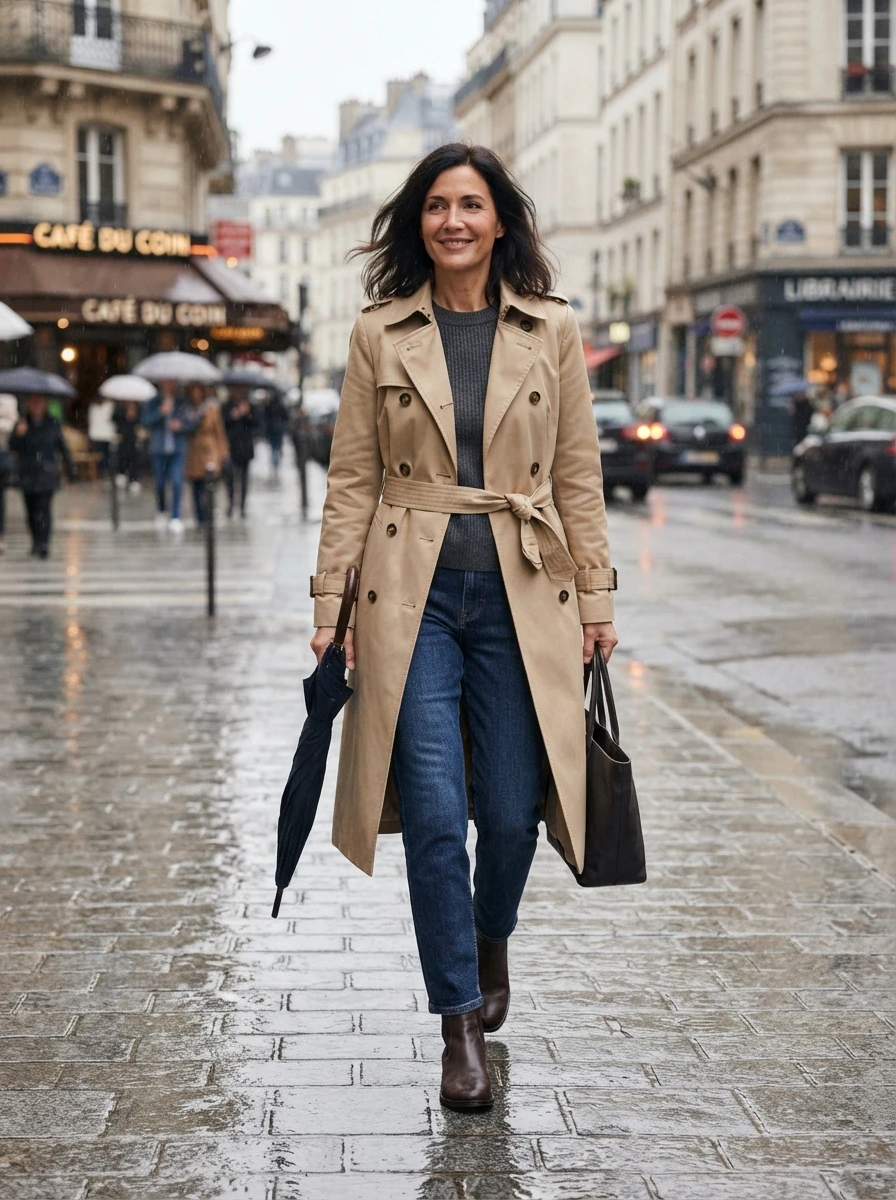
The Rain-Day Trench
The trench is the season's rain proof staple, and this is how it earns that title on a wet day: belted and closed over a grey crewneck knit and straight blue jeans, with brown ankle boots and an umbrella. The trench is the only coat that works open or closed, belted or loose, which makes it the hardest working piece in a fall wardrobe. Belted and closed, it creates an hourglass; open over a sweater and jeans, it creates two long vertical panels that elongate everything underneath.
Fit note: the boot matters. Ankle boots that hit right at the ankle bone keep the leg line clean, while taller boots under a trench can chop the leg visually. A trench in classic khaki goes with everything, but navy is the sleeper pick, because it reads richer against fall's palette and hides city grime better. The classy trench is the dry day version, a belted coat over a black turtleneck and dark jeans with no umbrella in sight.
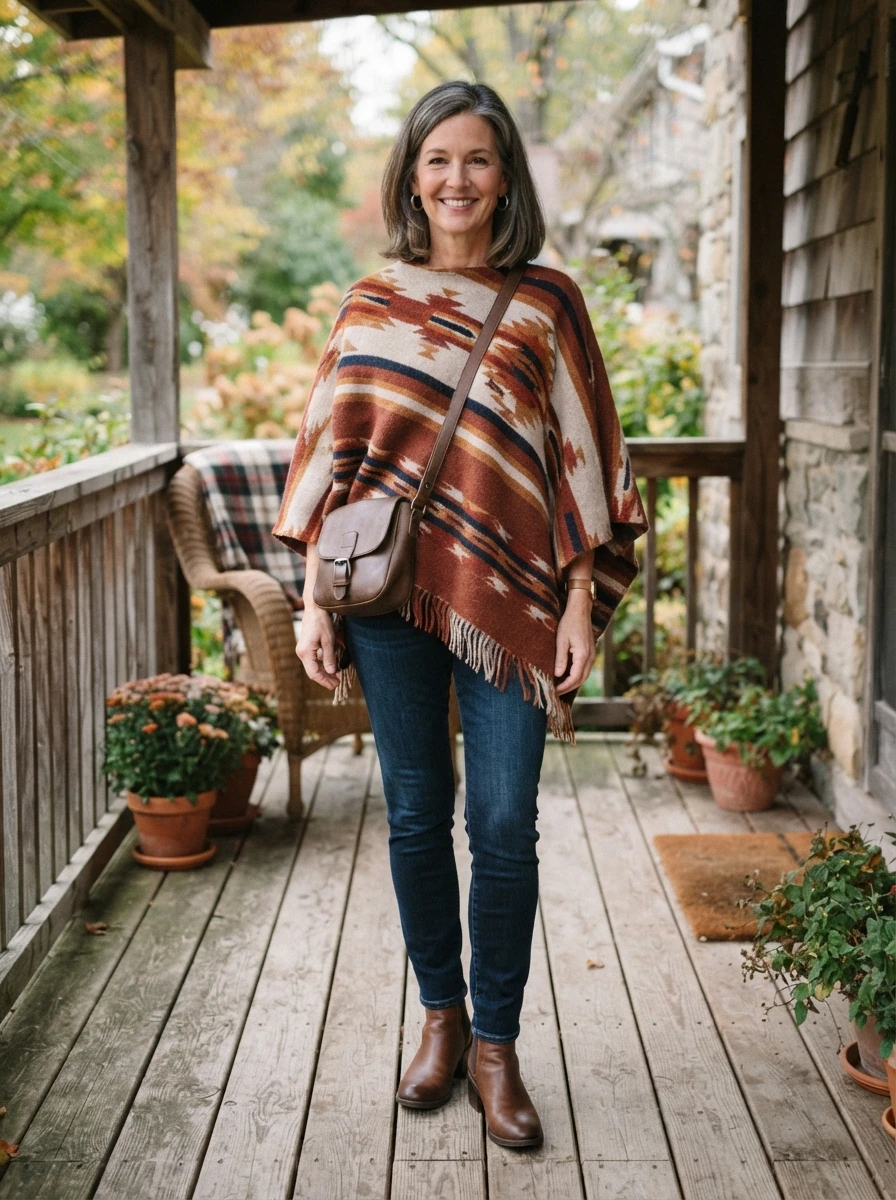
Poncho Season, With Structure Underneath
A poncho is essentially a wearable blanket, and the only thing stopping it from looking like one is what is underneath: slim jeans, a fitted top, and visible shape at the legs and arms. The poncho provides all the volume, so the base must provide all the structure, that is the trade. Let the poncho's hem hit mid hip; longer swallows your frame, shorter looks like a shawl.
Wear it with: because the poncho covers your torso completely, your shoes and bag become the visible style signals, this is where good boots and a structured bag do disproportionate work. A wool blend poncho drapes better than a chunky knit one and is easier to layer over a fitted top.
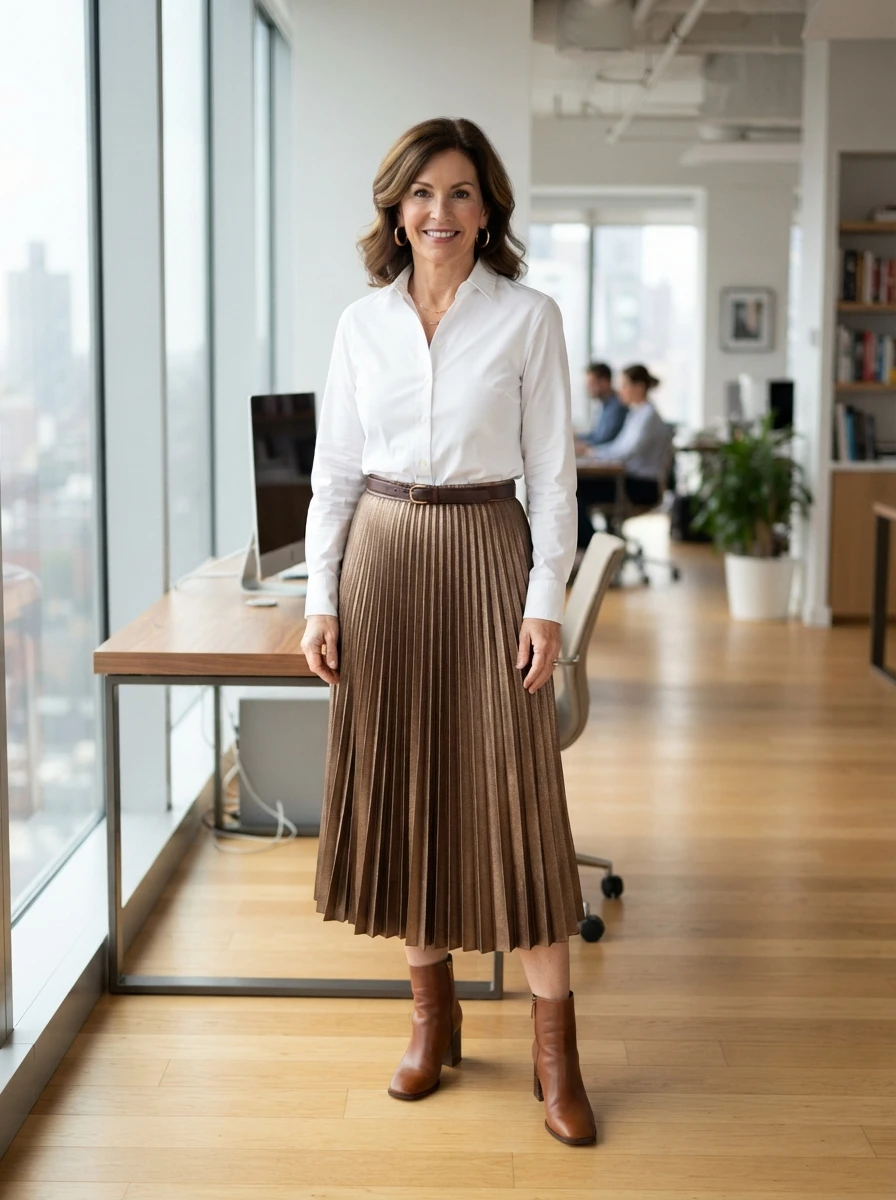
Crisp Shirt, Moving Skirt
Crisp cotton against a pleated skirt is a study in controlled structure: the shirt's sharp collar and cuffs frame the face, while the pleats move when you walk, keeping the outfit from feeling stiff. The tuck is non negotiable here, an untucked shirt over a midi skirt erases the waist and turns two good pieces into one shapeless column. A slim belt at the tuck point sharpens it further.
Fabric note: choose the skirt in a fall metallic adjacent tone (bronze, copper, deep plum) rather than basic black; the color does the seasonal work so the white shirt can stay classic. A polyester blend pleat holds its fold far longer than pure cotton, which needs pressing after every wear.
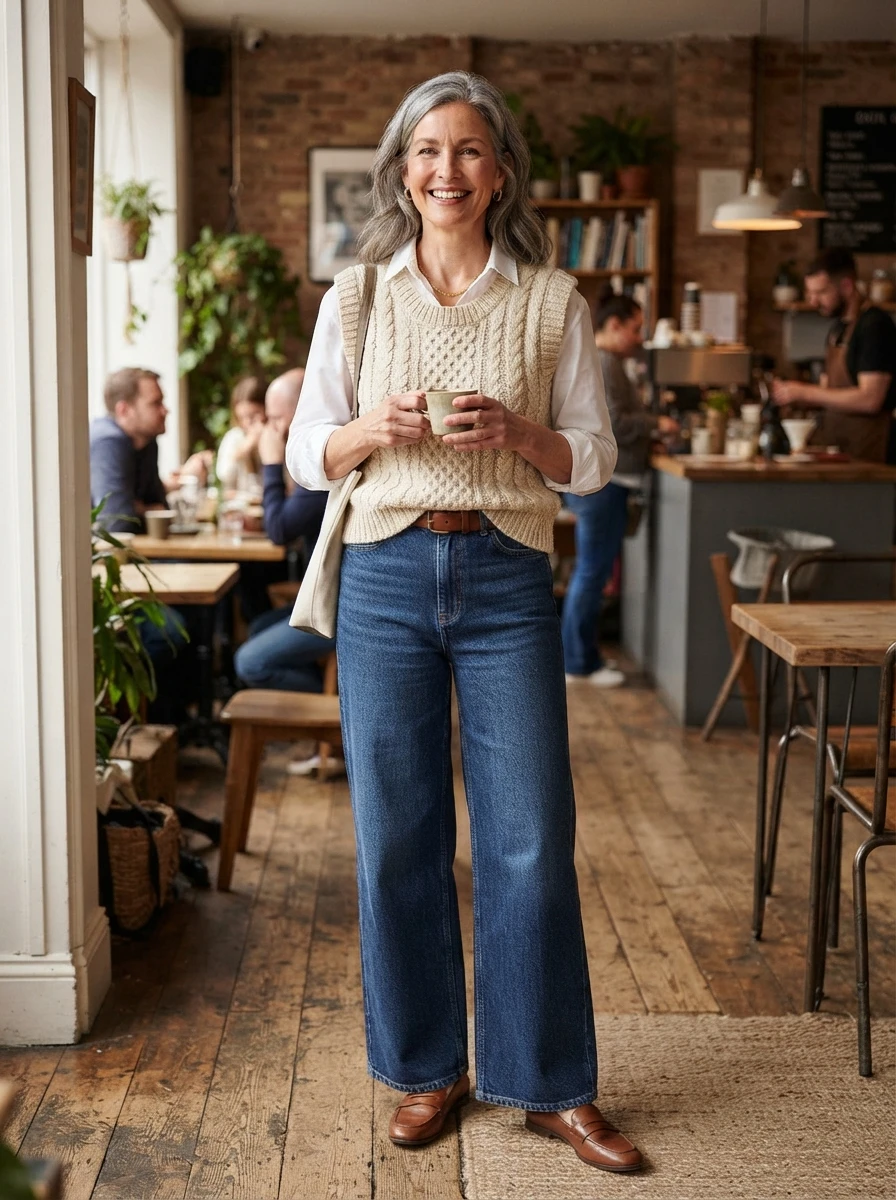
The Sweater Vest, Layered Properly
The sweater vest revival works because it is a sleeveless layer, it adds torso warmth and visual interest without the arm bulk that makes layered outfits feel heavy. Over a crisp button down, the collar and cuffs peeking out give you three visible layers at the neck and wrist, which reads deliberate and styled. Wide leg jeans balance the vest's cropped, boxy shape: fitted top half, flowing bottom half, the classic proportion seesaw. Keep the vest in a neutral (oatmeal, grey, navy) so it layers over anything you own.
Care tip: wash a knit vest inside out on a gentle cycle and dry it flat, hanging a wet vest stretches the shoulders out of shape.
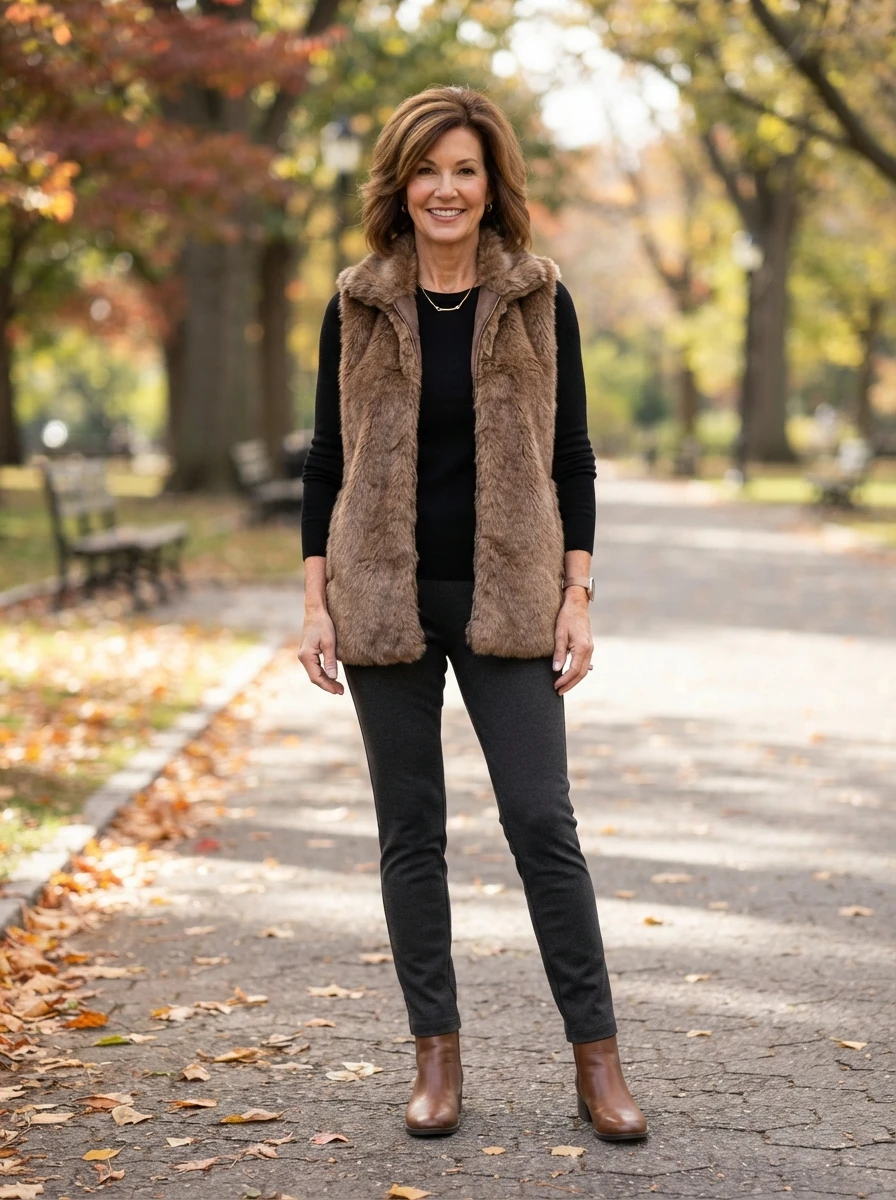
Faux Fur, Kept Quiet Everywhere Else
Faux fur is pure texture, and texture is what keeps a simple outfit from looking plain. The rule with fur (real or faux): it is the loudest thing in the room, so everything else goes quiet, dark slim trousers, a simple long sleeve tee, minimal jewelry. A vest that ends at or above the hip keeps your leg line long; longer fur vests cut you in half visually.
This is an evening or weekend piece, not an office one, context matters, and fur at a morning meeting sends a confusing signal no matter how it is styled.
Puffer Meets Wool Trousers: The High-Low Mix
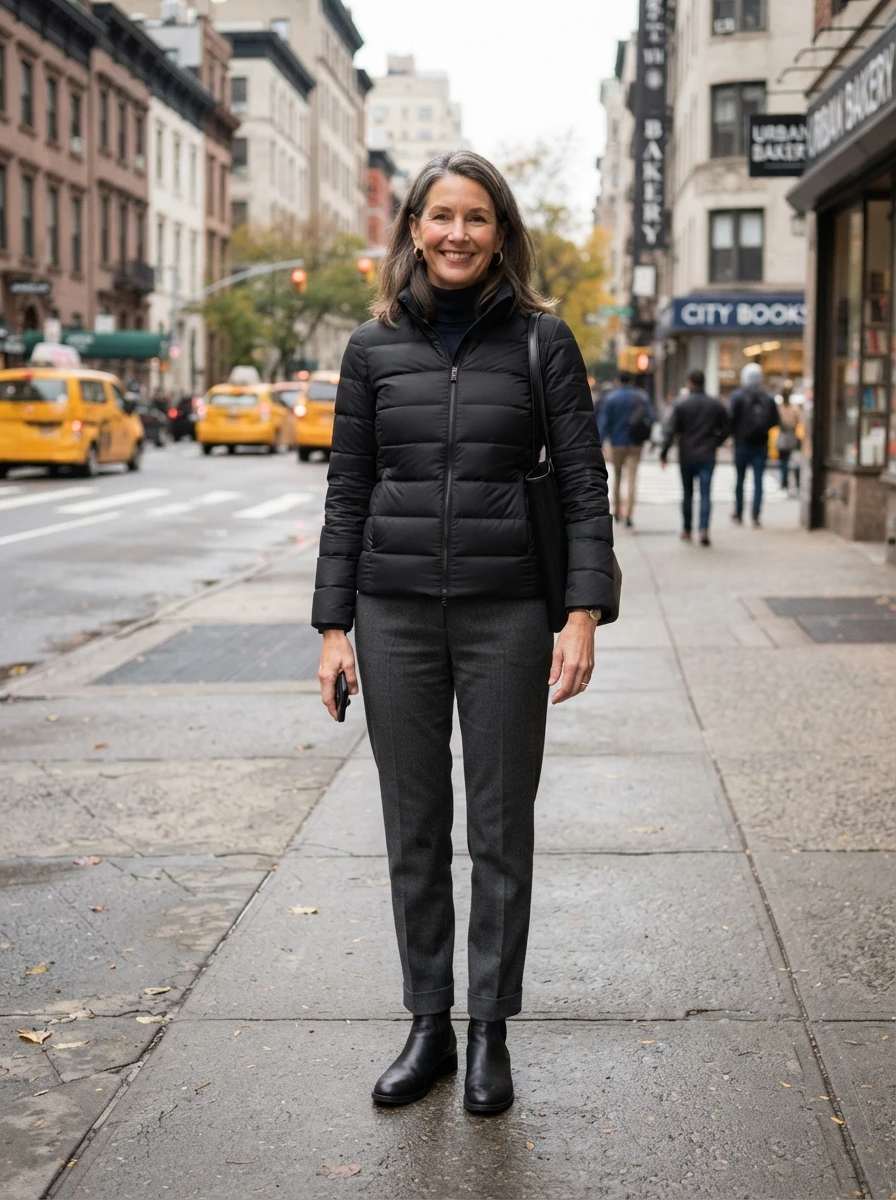
The high low mix, technical puffer with tailored wool trousers, is what makes this feel current rather than confused. The 8 casual winter outfits use the same contrast on relaxed days. It works because the contrast is deliberate: sporty top, refined bottom, with the trousers' clean line keeping the puffer from reading purely athletic. Choose a matte finish puffer; shiny nylon looks cheaper and fights the wool's sophistication. Keep the puffer hip length or cropped, a long puffer over tailored trousers hides the very proportion that makes the outfit interesting.
Wear it with: clean leather sneakers or Chelsea boots finish it; running shoes would tip the balance too far toward gym. Wool trousers with a touch of stretch keep their crease through a full day of sitting.
The Navy Floral Wrap Dress
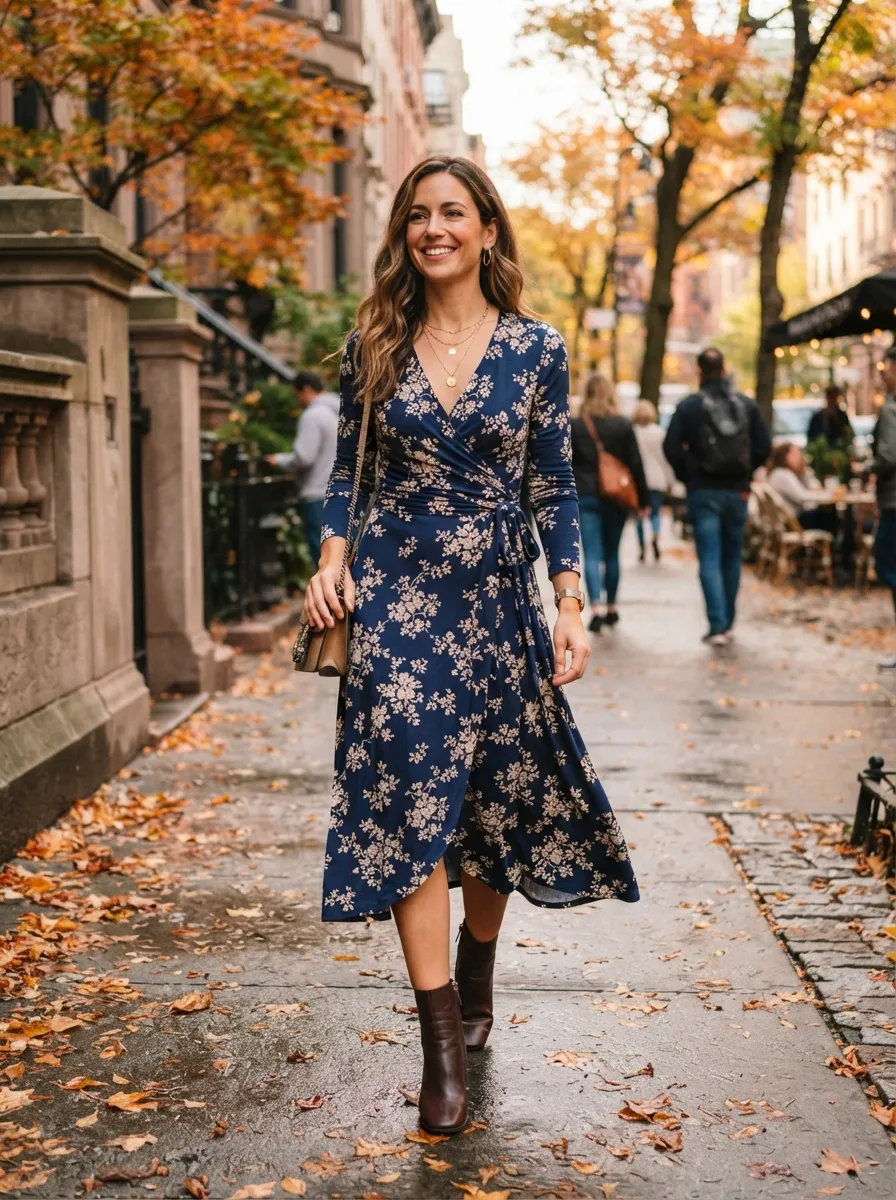
The wrap dress is the rare garment with built in fit logic: the tie defines the waist exactly where yours is, and the V neckline draws the eye up to the face. This season the print does the work, a navy midi wrap dress in a small cream floral, worn bare with brown ankle boots and a small tan shoulder bag. In a jersey or wool blend it skims without clinging, which is why it flatters more body types than almost any other dress shape.
Fit note: midi length with ankle boots is the fall formula, and the small gap of leg between hem and boot keeps it seasonal without needing tall boots. A small scale print hides wrinkles and wear better than solid colors, which matters for a dress you will reach for weekly. The classy wrap dress is the evening opposite, a solid espresso dress under a long camel coat with gloves and knee boots.
Your Summer Maxi, Given a Second Season
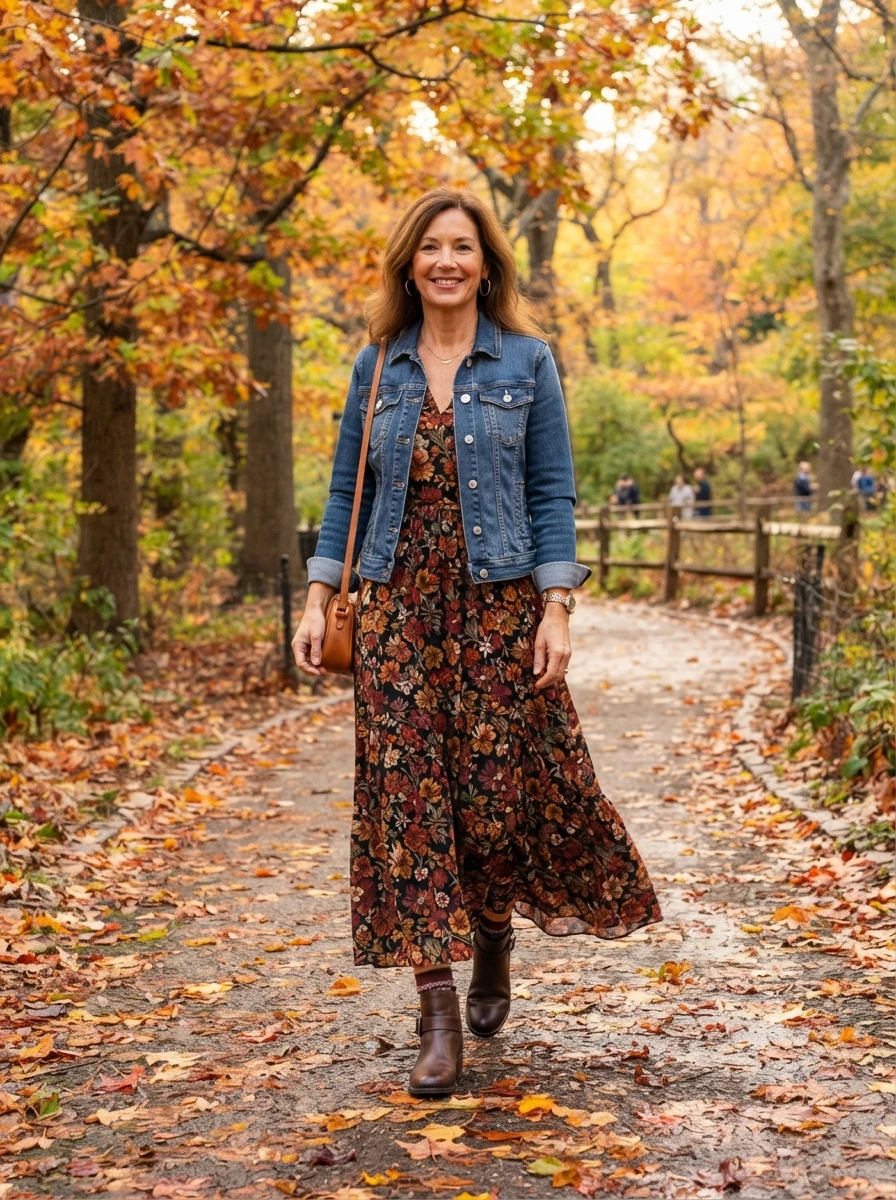
This is the closet remix outfit: your summer maxi dress gets a second season the moment a denim jacket goes over it. It works because the jacket's structured shoulders and cropped length contrast with the dress's softness and length, hard over soft, short over long. The jacket must be fitted enough to sit on your shoulders rather than slide; an oversized trucker over a maxi reads sloppy, not relaxed.
Wear it with: ankle boots instead of sandals complete the seasonal shift, footwear is what tells the eye which season an outfit belongs to, more than any other single piece. A medium wash denim jacket bridges summer and fall better than a very light or very dark wash.
Mock Neck + Slip Skirt: The Simplest Formula
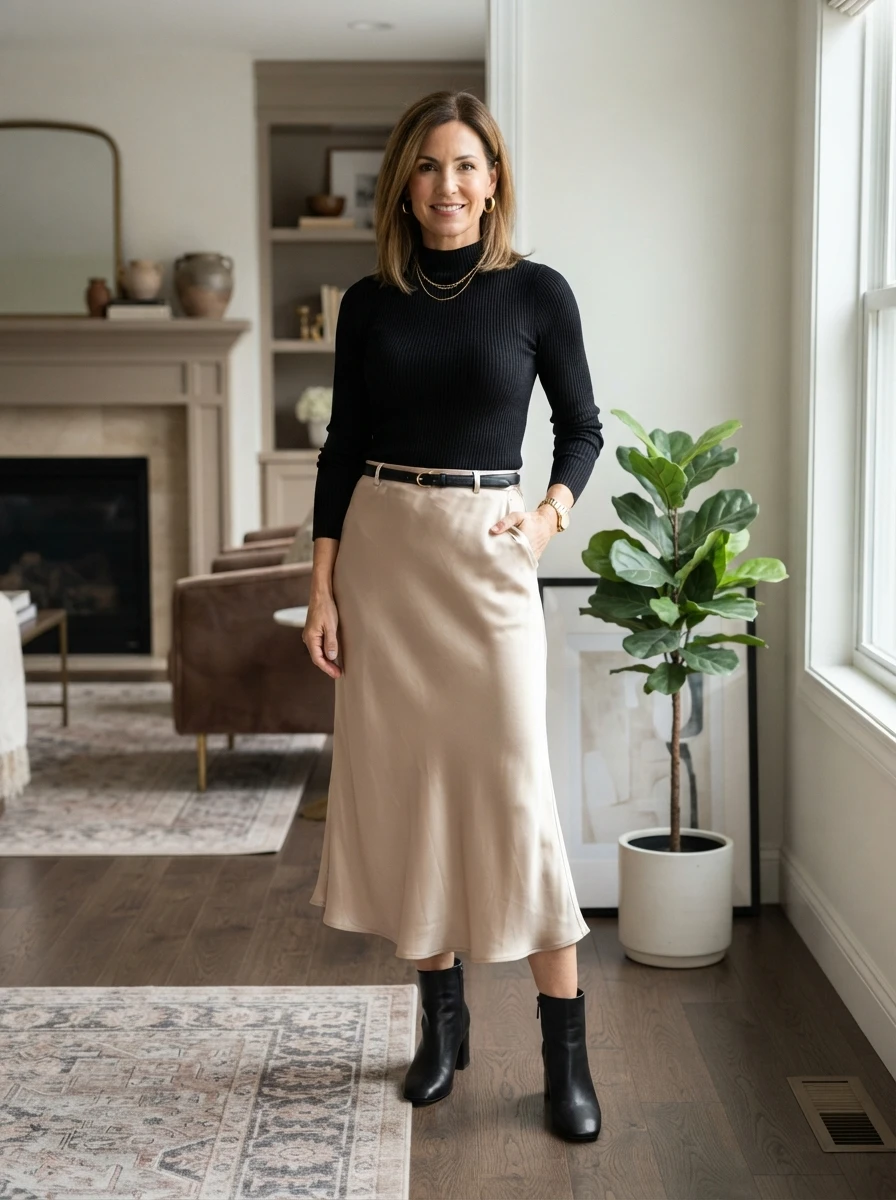
The final formula is the simplest: a fitted mock neck top with a fluid slip skirt. The high neckline balances the skirt's simplicity by adding interest up top, and the matte against sheen texture contrast (knit vs. satin) keeps two basic pieces from looking boring. A slip skirt needs a lining, unlined satin clings to tights and shows every line. This is the outfit that proves the whole list's thesis: you do not need new clothes, you need new combinations.
Fabric note: the top and skirt probably already live in your closet; the idea is the only new thing here. A satin or silk blend skirt with a matte knit top gives the cleanest contrast, and a lined skirt will sit smoothly over tights all day.
Common Questions About Fall Outfits for Women Over 40
How do I wear a puffer jacket without looking bulky?
Keep the puffer short and matte, and pair it with something tailored underneath, like wool trousers. The contrast is the whole point: sporty on top, refined on the bottom. One volume piece per outfit is the rule, so if the puffer is the volume, everything else stays slim and structured.
What is the one-volume rule, and why does it matter so much in fall?
Fall layering stacks volume fast. A chunky sweater plus a puffer vest, or an oversized coat over wide leg pants with a thick knit, and the volumes add up until your shape disappears. Pick one volume piece per outfit and keep everything else fitted or structured, and the layers start working for you instead of against you.
Which fall fabrics flatter mature skin best?
Fabrics with softness and structure near the face: wool, cashmere blends, silk, velvet and good cotton. Warm, rich tones near the face, camel, burgundy, forest green, warm navy, cream, flatter far better than stark black at the neckline, which can drain color from mature skin in flat daylight. If you love black, wear it on the bottom half and put a warmer tone near your face.
How do I style a wrap dress for fall?
Let the wrap dress do the fitting work, the tie defines the waist and the V neckline draws the eye up. For fall, choose a jersey or wool blend in a small scale print, wear it bare with ankle boots, and keep the gap between hem and boot short. A small scale print hides wrinkles and wear better than solid colors, which matters for a dress you will reach for weekly.
Do I need to buy new clothes to follow these outfits?
No. Change the combination, not the clothes. Who What Wear's fashion over 40 guide shows the same remix principle on current outfits, and Patagonia's layering basics explains the fabric side, which is why the knits in this list earn their keep. The blazer you always wear with jeans goes over a slip dress instead. The boots you wear with pants go under a midi skirt. New pairings read as new outfits to everyone including you, that is the entire closet remix principle behind half the looks above.
What shoes anchor a fall wardrobe?
Three pairs cover everything: leather ankle boots (jeans, skirts, dresses), clean white or neutral sneakers (casual days), and knee high boots (midi skirts and dresses). If a shoe does not work with at least five outfits you own, it does not earn closet space.
Your Fall Outfit Checklist
Before you leave the house, run through this quick check:
- One volume piece only, everything else fitted or structured
- Colors in one temperature family, warm with warm, cool with cool
- Textures mixed, smooth against nubby, matte against sheen
- Hem and boot line checked, no pooling fabric, no awkward gap
- One statement piece at most, the rest of the outfit stays quiet
- At least one piece is something you already owned, remixed a new way
Fall is the easiest season to dress well in because the clothes themselves, wool, leather, corduroy, denim, do half the styling work through texture alone. Trust the fabrics, mind the proportions, and let the closet you already have do the rest.