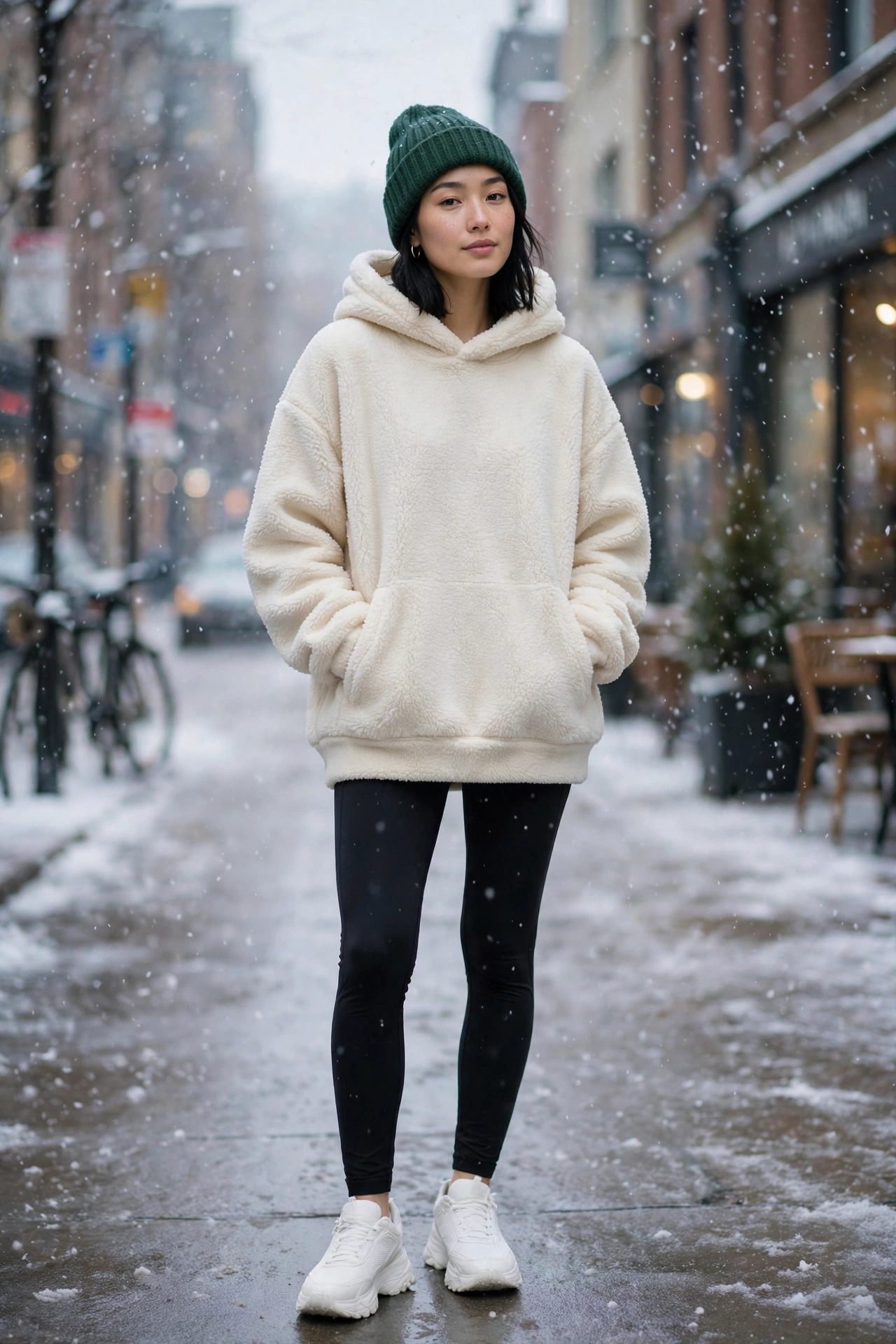
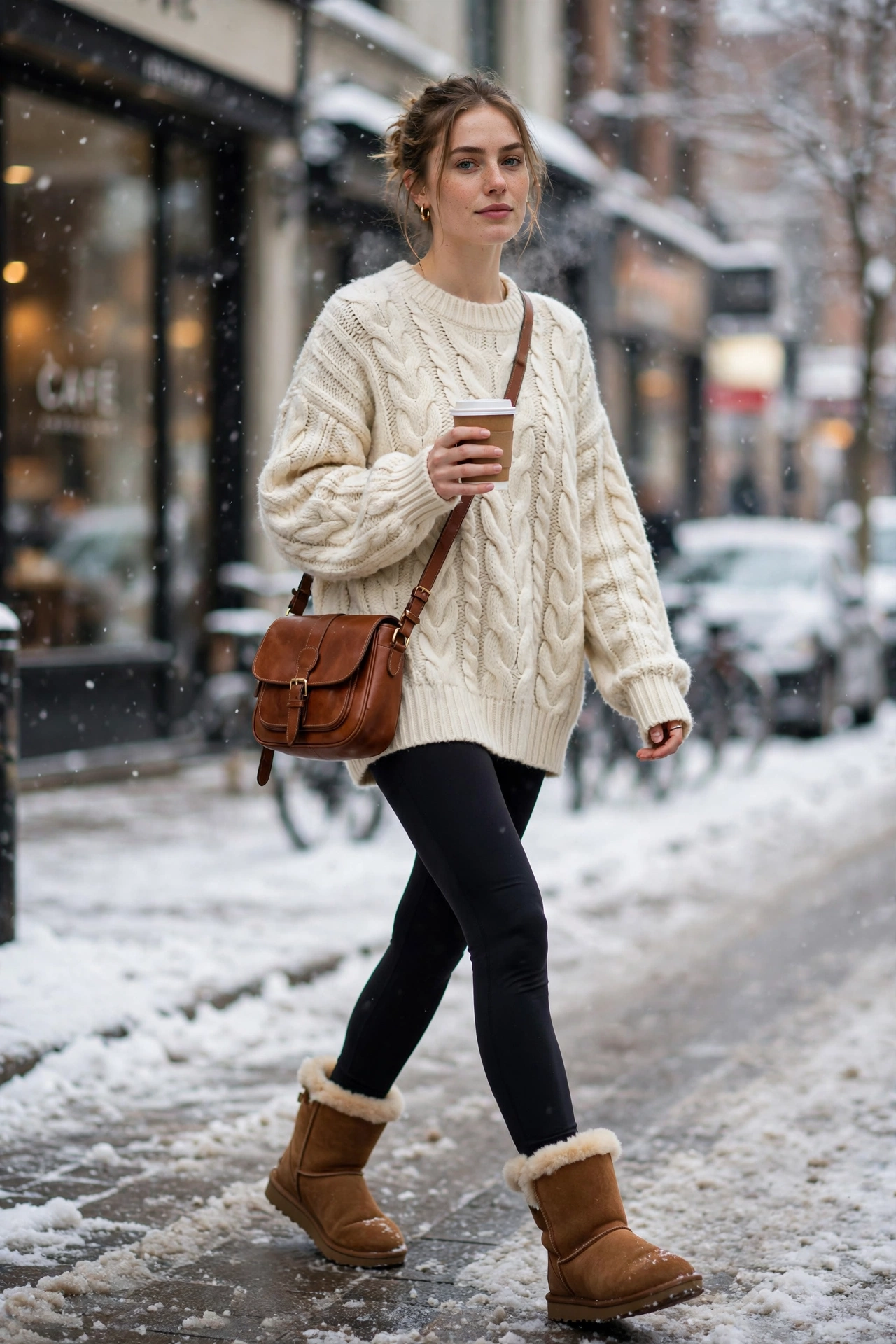
16 Chic Looks for a Minimalist Winter Capsule Wardrobe
How to use this guide
These are editorial styling suggestions, not a one-size-fits-all formula. Adapt each look to your wardrobe, proportions, climate, comfort, budget, and the occasion; the most useful idea is the one you can genuinely wear.
A winter capsule wardrobe isn't about owning less for the sake of it — it's about owning pieces that multiply. Twelve to fifteen well-chosen pieces in a tight palette can produce dozens of outfits — when everything matches, everything goes together. Winter is the easiest season for this: more layers per outfit means more combinations.
The operating principles: a 3-color palette (black, grey, camel — or black, white, navy) plus one metal tone, every piece matching at least 80% of what you own. Texture is your pattern — wool against leather, cashmere against denim, ribbing against crepe. Layer thin to thick, fitted to relaxed. Monochrome elongates: one color head to toe in varying textures is minimalism's most expensive-looking trick. Cost-per-wear is the real metric — a $300 coat worn 100 times beats a $60 top worn twice. In minimalism there is nowhere to hide, so the fabric and fit notes below are the whole game.
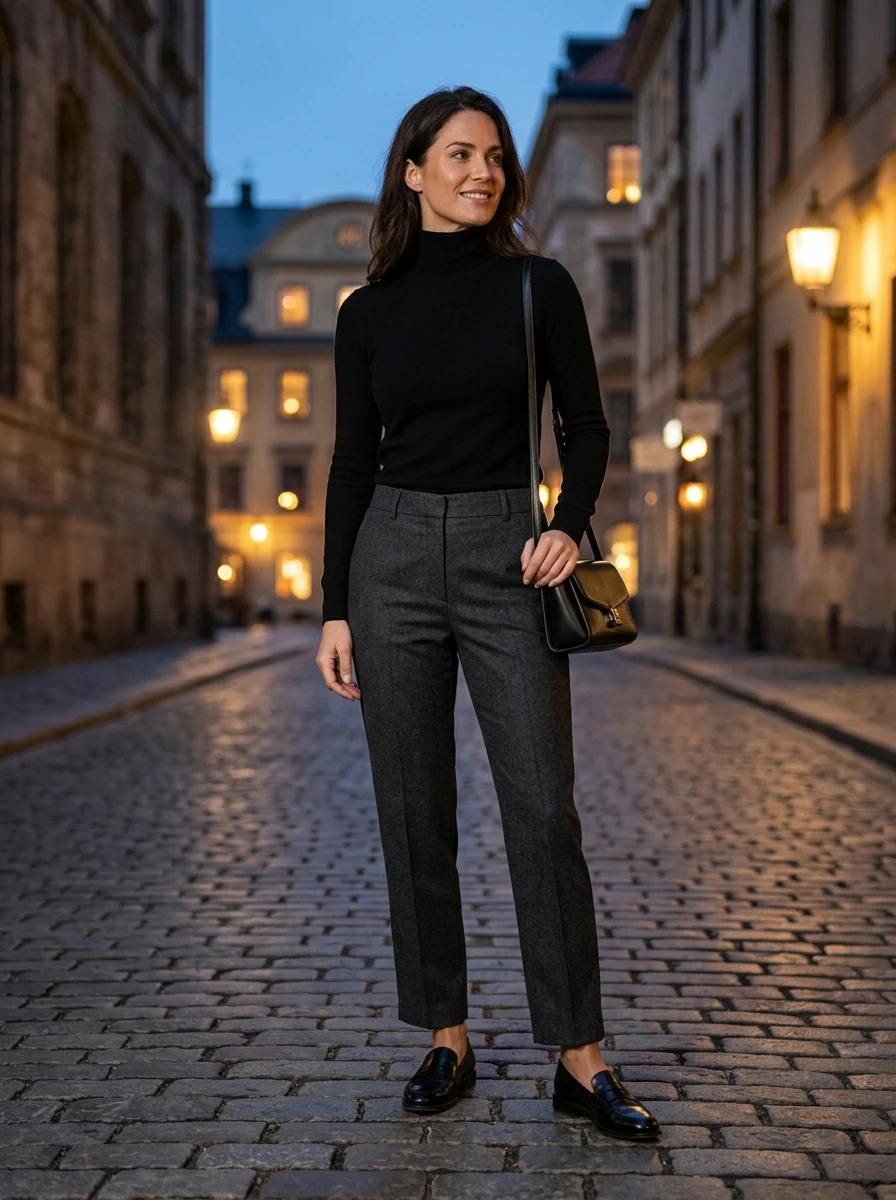
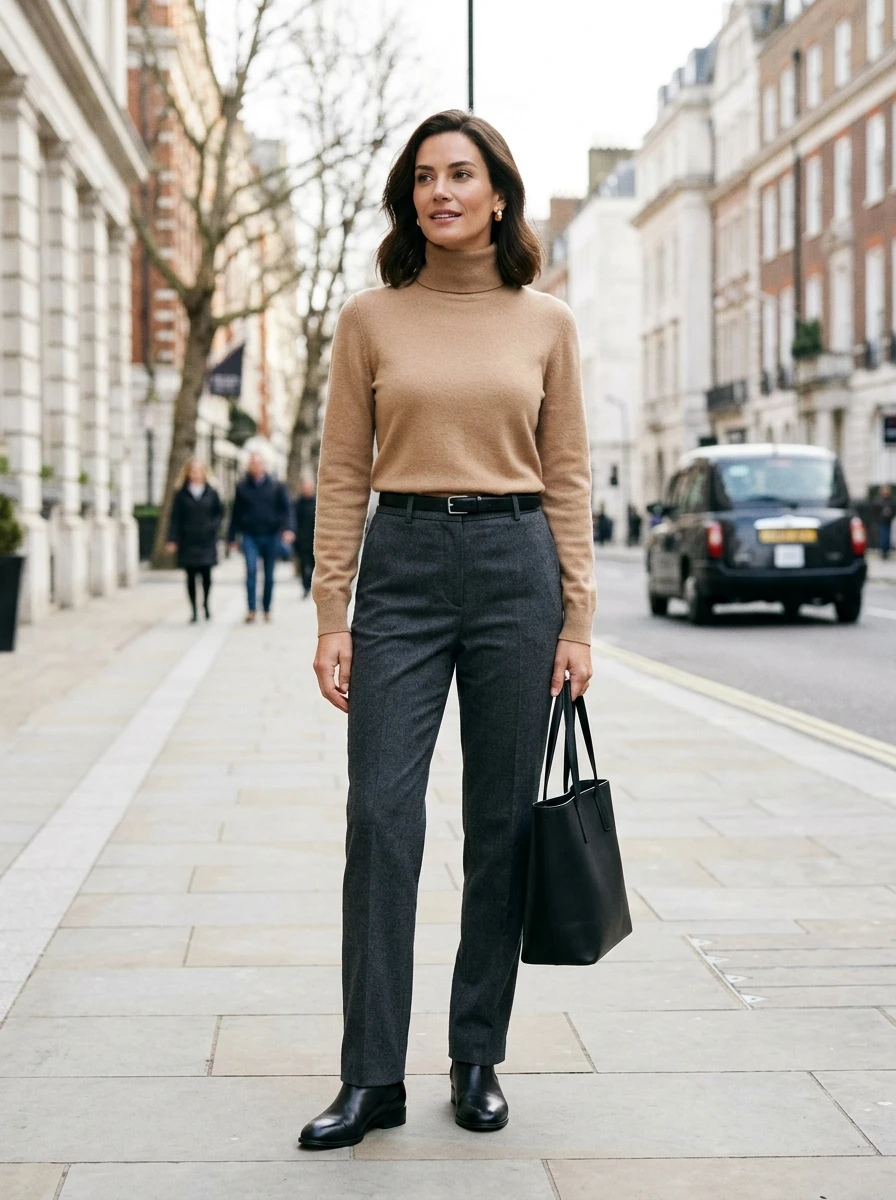
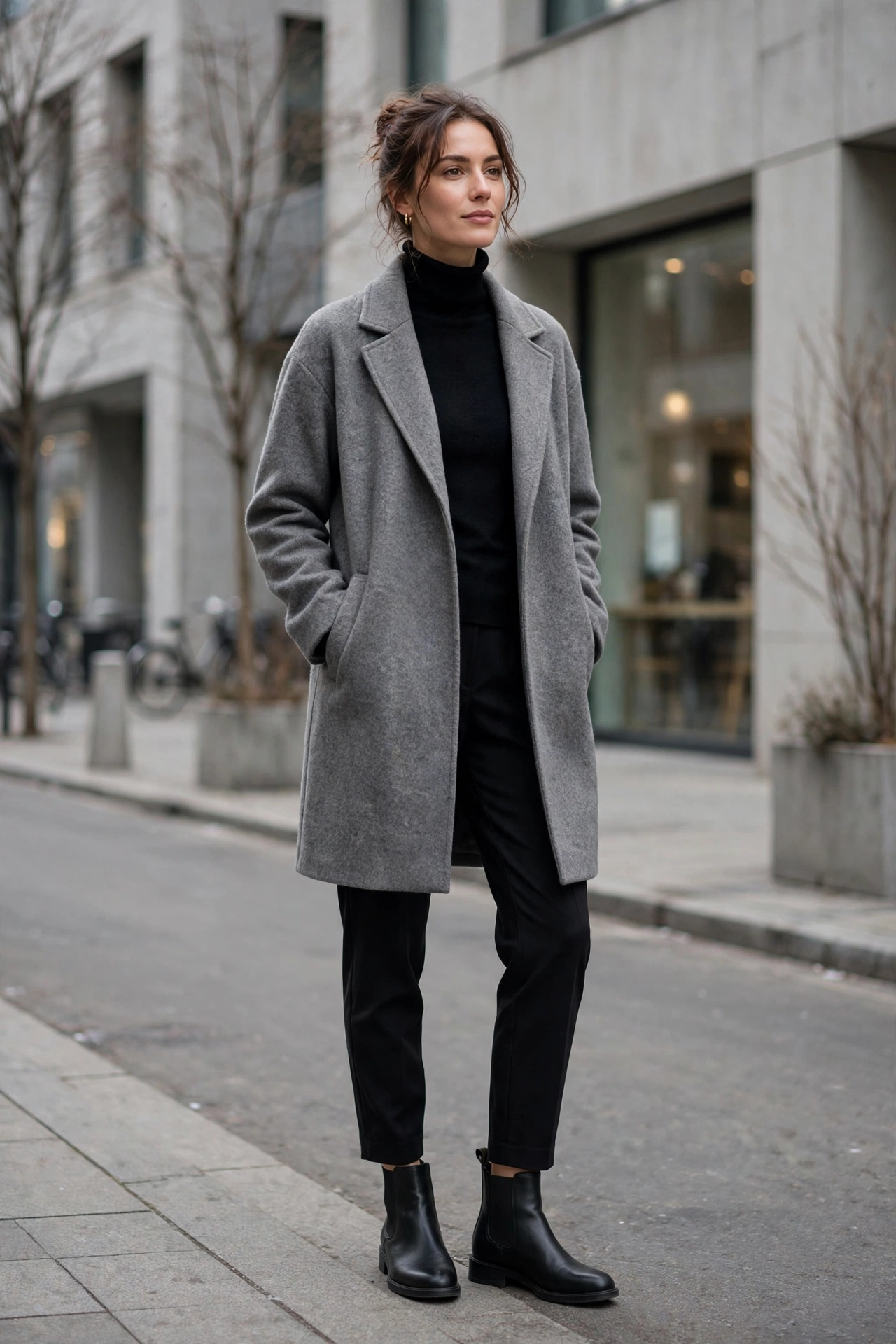
Black Turtleneck, Grey Wool Coat, and Tailored Black Trousers
The minimalist uniform in its purest form. The turtleneck should be 100% merino or merino-cashmere at 12–16 gauge — fine enough to layer, substantial enough that the neck stands on its own. Fit it close with an inch of ease; choose a neck tall enough to fold once. Skip cotton: it bags at the elbows within a month.
The coat is the anchor: grey wool, relaxed single-breasted cut at the knee, minimum 60% wool so it holds its shape. A flannel finish beats a flat solid; sleeves end at the wrist bone. Trousers: flat-front, tapered, mid-weight wool crepe with a pressed crease, natural waist, hemmed to kiss the black ankle boot. A low stacked heel continues the leg line. The logic — knit against woven wool against crepe, three matte surfaces at three weights — is why two colors read rich. A simple watch is the only jewelry needed. Best for strict offices and dinners. Invest in the coat and boots; replace the turtleneck yearly.
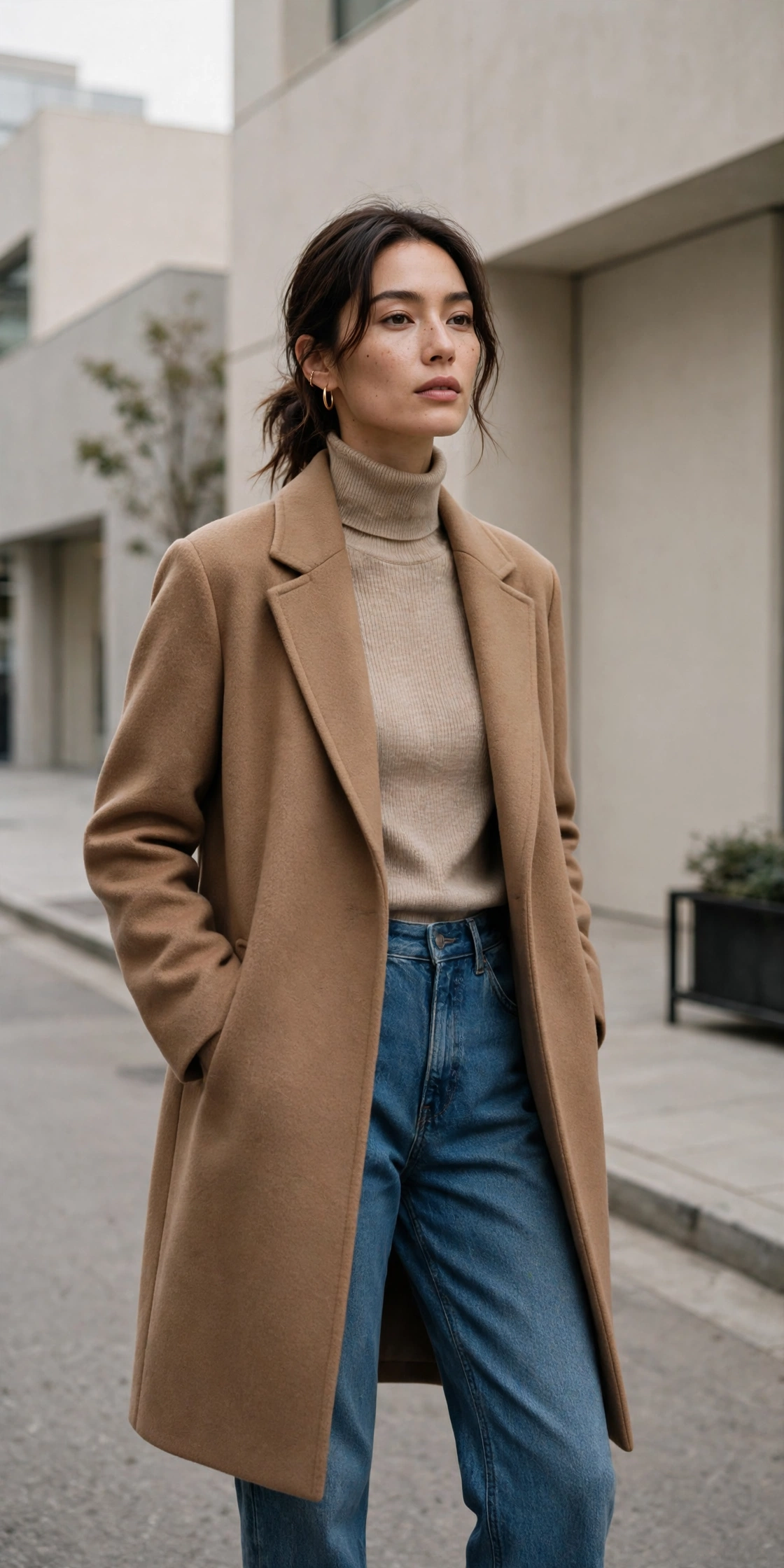
Cream Cable-Knit Sweater with a Camel Coat and Dark Jeans
Warm minimalism at its most photogenic: cream, camel, dark indigo. The cable-knit is the texture engine — Aran or chunky cable in lambswool or a lambswool-cashmere blend, relaxed with a slightly dropped shoulder. Too-fitted cables pull at the pattern. Prefer a crew or mock neck; a turtleneck plus the coat's lapel crowds the neck.
The camel coat should be slightly oversized in the shoulder so it drapes over the sweater — test it wearing your chunkiest knit. Double-breasted reads classic, single-breasted modern. Dark jeans in a true dark rinse, rigid or comfort-stretch denim, straight or slim-straight. The dark wash grounds the cream-and-camel softness the way black grounds an outfit, but warmer. Cuff to show tan or brown ankle boots — suede softens, polished leather sharpens. This is the outfit that prompts "where is your coat from," because camel always reads expensive. Best for weekend lunches and gallery days. The coat is the investment; jeans and sweater can be mid-range.
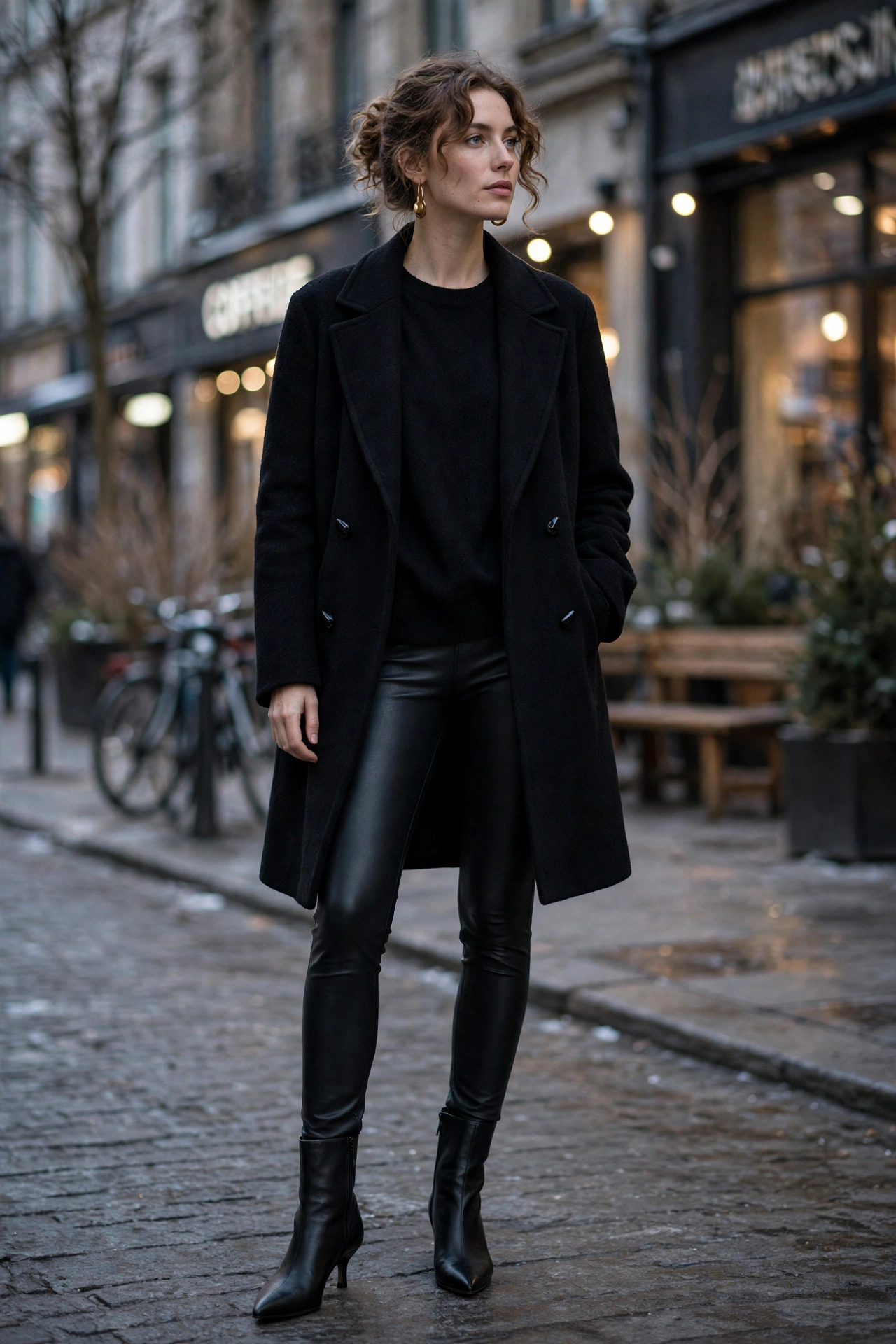
All-Black Monochrome with Mixed Textures
Four blacks, four textures — the capsule's most slimming combination. Start with ponte-backed faux-leather leggings (or real leather) in a matte, satin-low finish. The ponte backing keeps them opaque when you bend — the difference between chic and cheap.
Over that, a relaxed black cashmere crewneck, 2-ply, ribbed cuffs holding their shape. The cashmere's soft matte surface against the leather's sheen is the central contrast. Then a black wool coat in a different weave — melton or boiled wool reads smooth and structured where cashmere reads soft, stopping four blacks collapsing into one blob. Black ankle boots with a slightly pointed toe finish the column. One warm element is structural: gold hoops or tortoiseshell sunglasses keep all-black from reading severe. Keep the blacks honest — faded leggings beside a rich coat show the gap, so retire black basics when they fade. Best for evenings and city days, and the most forgiving outfit for cheaper pieces, since texture variation disguises thin fabric.
Charcoal Overcoat with a White Shirt and Black Trousers
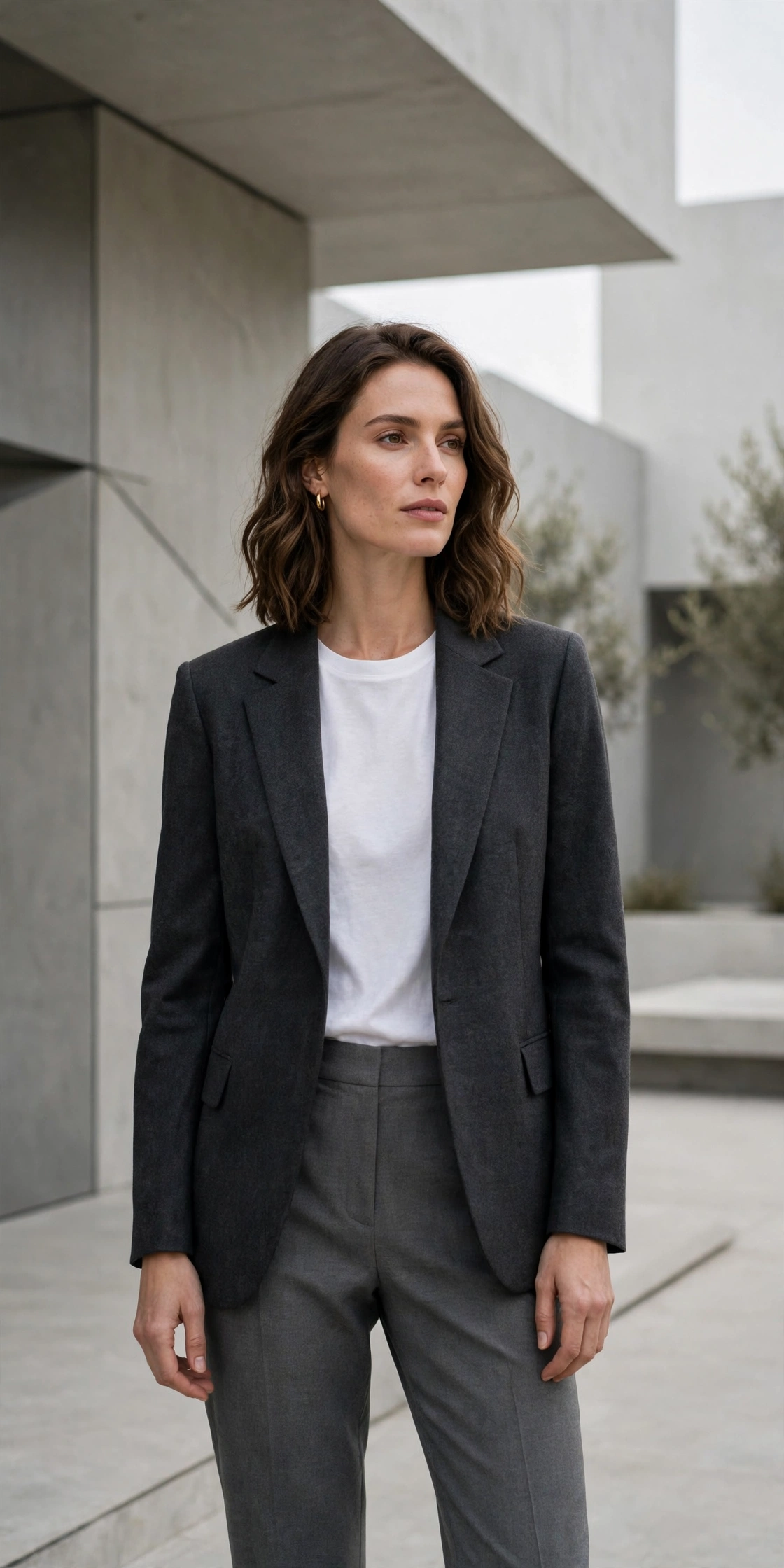
The white shirt under winter layers is a brightness trick — white at the collar and cuffs lifts the face when everything else is dark. Choose structured cotton poplin or oxford with body enough to hold a collar under a coat; flimsy shirts collapse and the collar vanishes. Semi-spread collar, fit smooth enough to layer without button pulling.
The charcoal overcoat — single-breasted, notch lapel, knee length — does the authority work. Charcoal instead of black stops the white shirt reading like a waiter's uniform. Aim for 70%+ wool so shoulders hold their line. The styling detail is the peek: collar above the coat's neckline, cuffs half an inch below the coat sleeve. Black tapered trousers in wool crepe, hemmed to the ankle boot; the taper keeps the silhouette controlled. Loafers for the office, ankle boots elsewhere. Best for offices and client dinners. The shirt is the cheapest piece and needs replacing most — a dingy white shirt kills this instantly, so keep two in rotation.
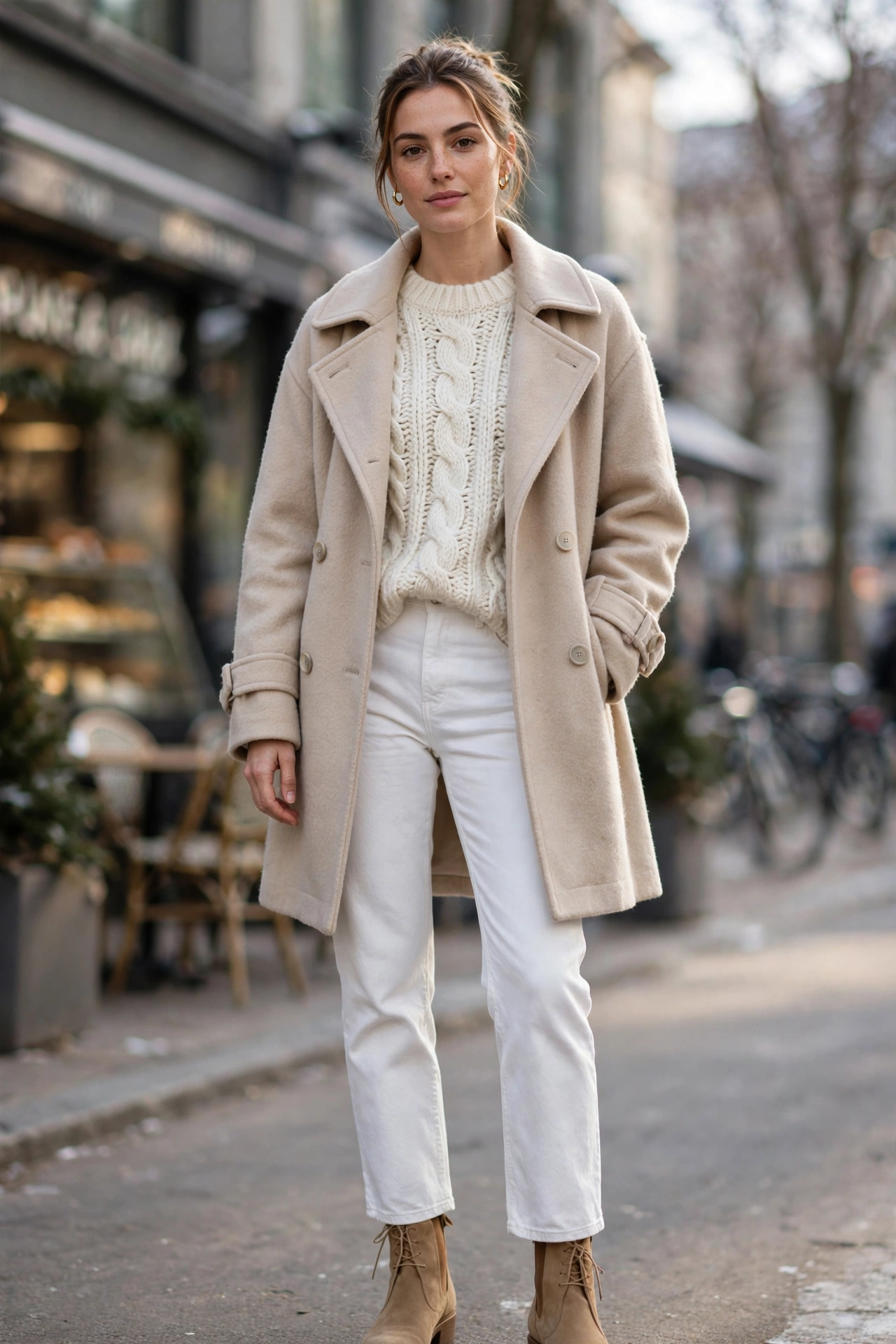
Ivory Knit with a Beige Trench and White Jeans
Winter white is advanced minimalism — it photographs like nothing else in winter light. The ivory sweater: chunky knit (fisherman rib or soft cable) in warm ivory, never optic white, which turns harsh against winter skin. Lambswool or wool-cashmere with enough texture to carry the outfit.
The beige trench-style wool coat bridges ivory and white jeans: soft beige — greige or oatmeal, never yellow-tan — in smooth wool or wool-blend twill, relaxed almost-coatigan cut. Sharp tailoring would fight the softness. The tonal logic is everything: ivory, beige, white, and nude must share one warmth family; a single cool grey creates visible discord. White jeans need heavyweight denim (12 oz+) to stay opaque, straight or relaxed — skinny whites plus a chunky sweater wreck the proportions. Nude or tan boots bridge the palette downward; an ungrounded pale outfit reads unfinished. Best for bright winter days and brunches. Carry a stain stick and accept the dry-cleaning bill as the cost of the aesthetic.
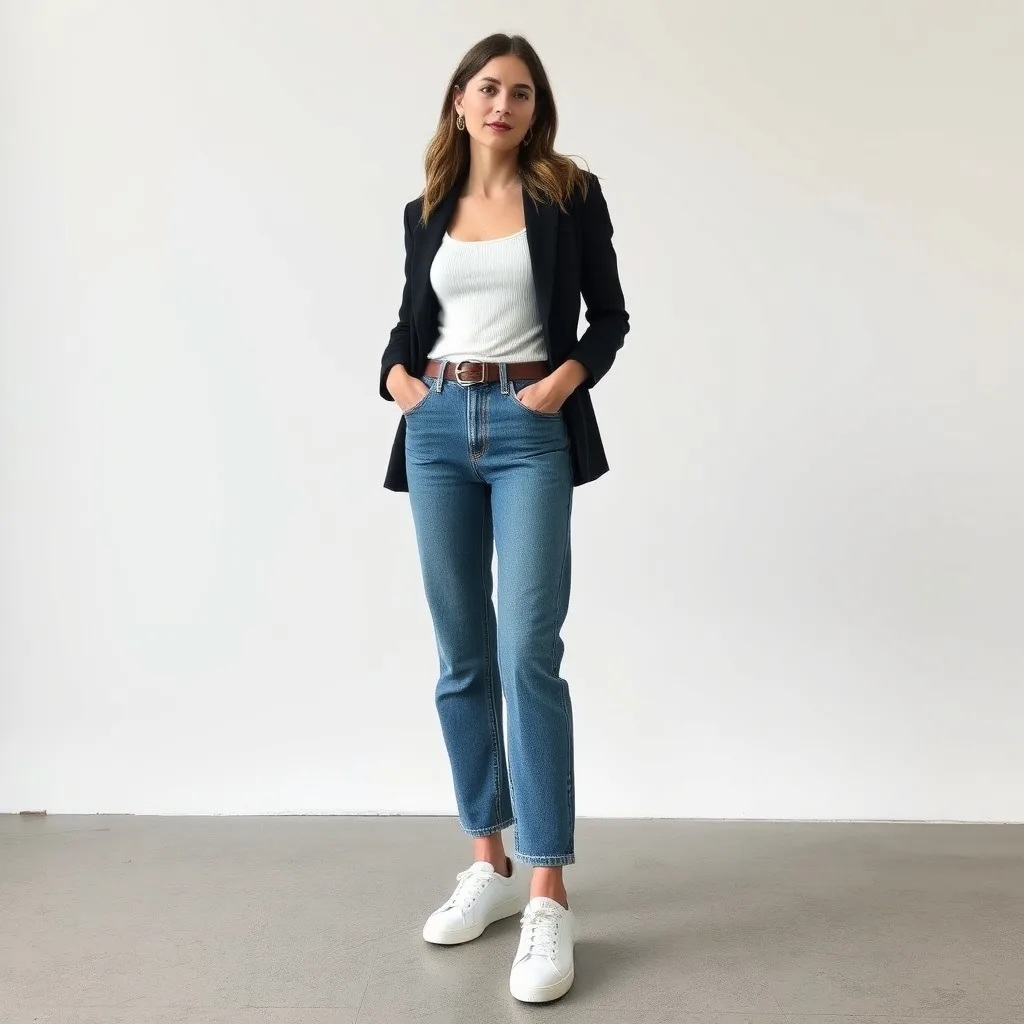
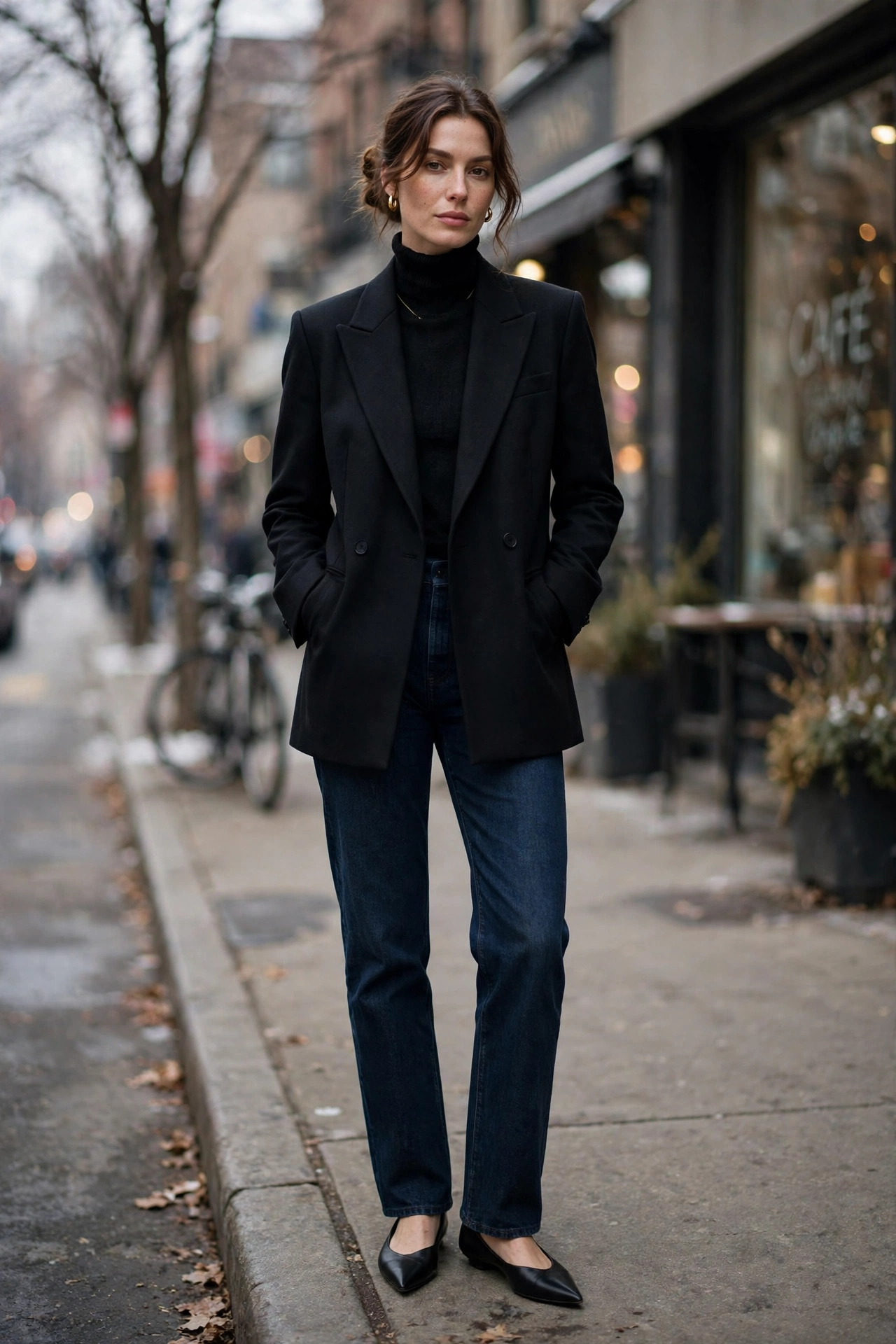
Black Blazer with a Black Turtleneck and Dark Straight Jeans
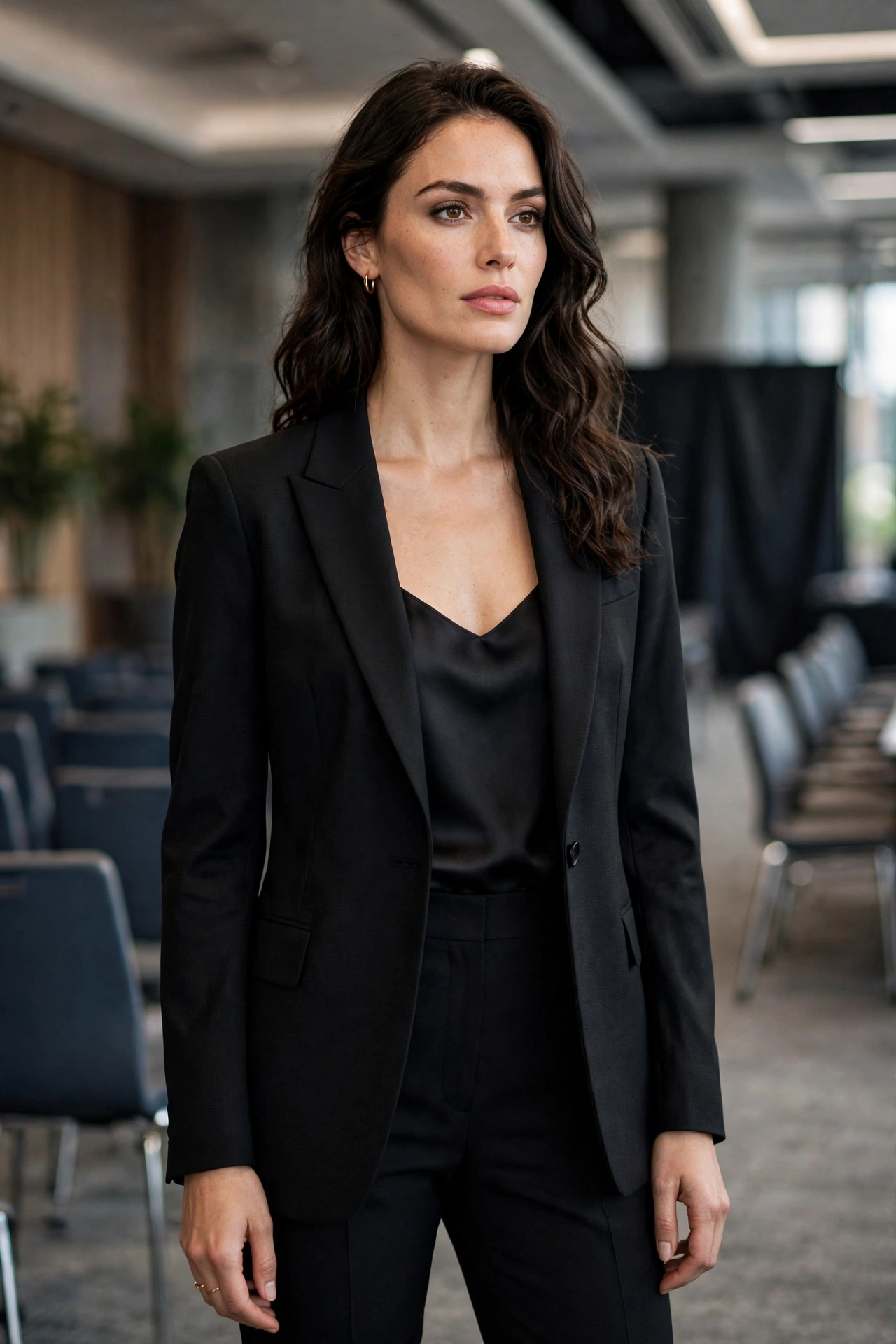
The blazer tailors, the turtleneck sleekens, the jeans ease. Get the blazer right: defined shoulder (not oversized), single-breasted, shaped side seam. In black, an unstructured blazer reads as a cardigan — you need canvas and shoulder construction to signal tailoring. Sleeve to the wrist bone, body covering the seat, wool or wool-blend with stretch.
Underneath, fine-merino black turtleneck thin enough for the blazer to close without strain; chunky knits pull at the button and bunch at the shoulder. Dark straight-leg jeans in deep indigo, rigid or low-stretch, hemmed to the shoe — the straight cut gives a clean column under the structured top, where skinnies would make the blazer look oversized. Pointed flats sharpen for the office; ankle boots toughen for evening. The monochrome top half elongates the torso while denim keeps it wearable, not severe. Best for the "meeting but casual" brief and smart dinners. The blazer is the investment — a good one lasts a decade.
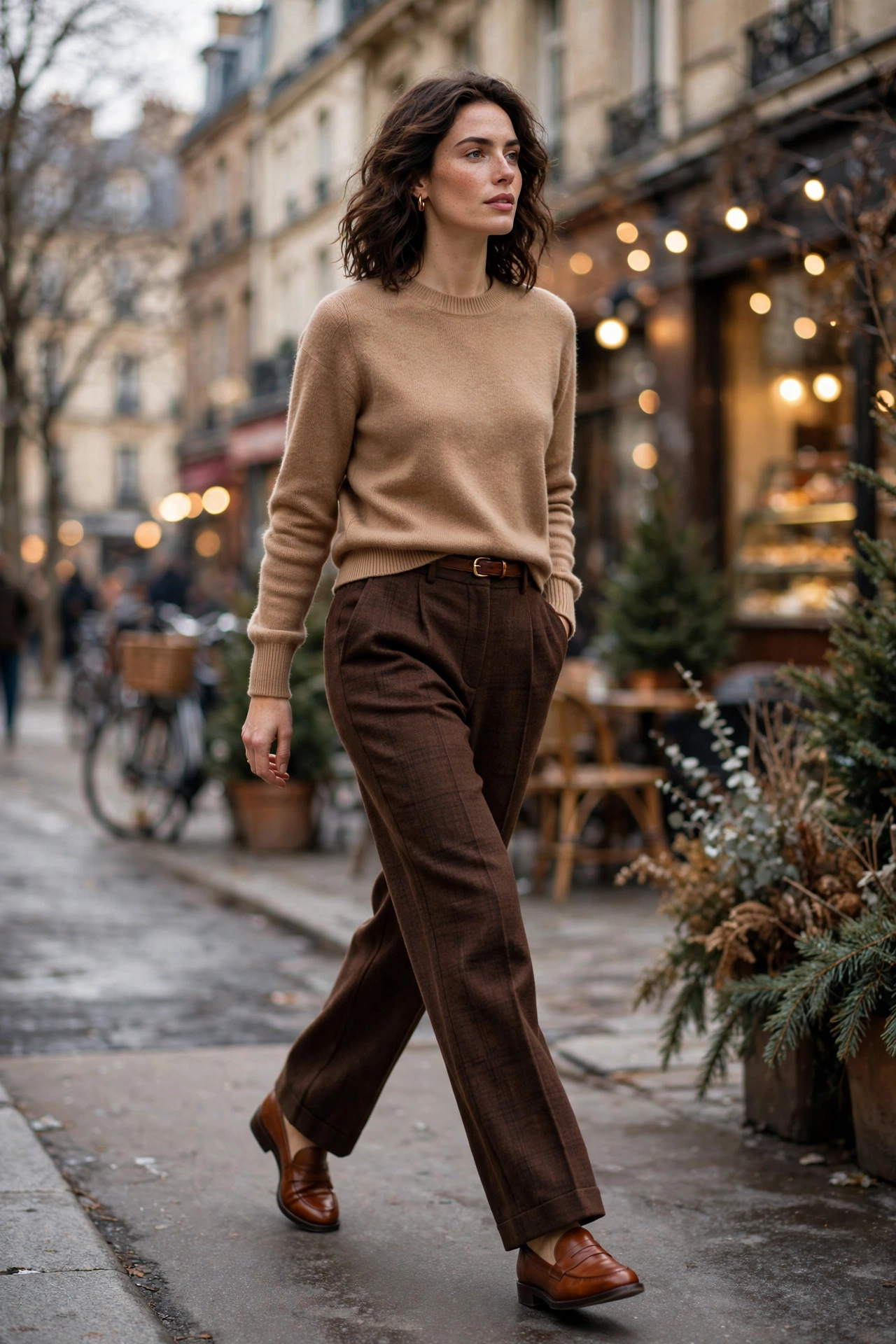
Camel Sweater with Brown Wool Trousers and Loafers
Tonal brown dressing is minimalism's warm answer to black. The camel crewneck: true camel — warm, golden — in fine or mid-gauge merino or cashmere blend, relaxed with length to tuck. The tuck works hard: a half or full tuck into high-rise trousers defines the waist and stops two soft pieces merging into a sack.
The trousers are the tone decision: high-rise, flat front, brown wool clearly darker than the sweater — chocolate or espresso against camel, never camel on camel. Adjacent tones blur; separated tones build the gradient that makes this interesting. Wool flannel or cavalry twill gives body; thin fabric bags at the knee by noon. Brown loafers between the two tones (cognac or mid-brown) tie the gradient. A cream or white tee peeking at the neckline adds the light point this warm palette needs. Gold jewelry is the natural metal. Best for warm-toned offices and transition weeks. Brown flatters more skin tones than black — the most forgiving neutral.
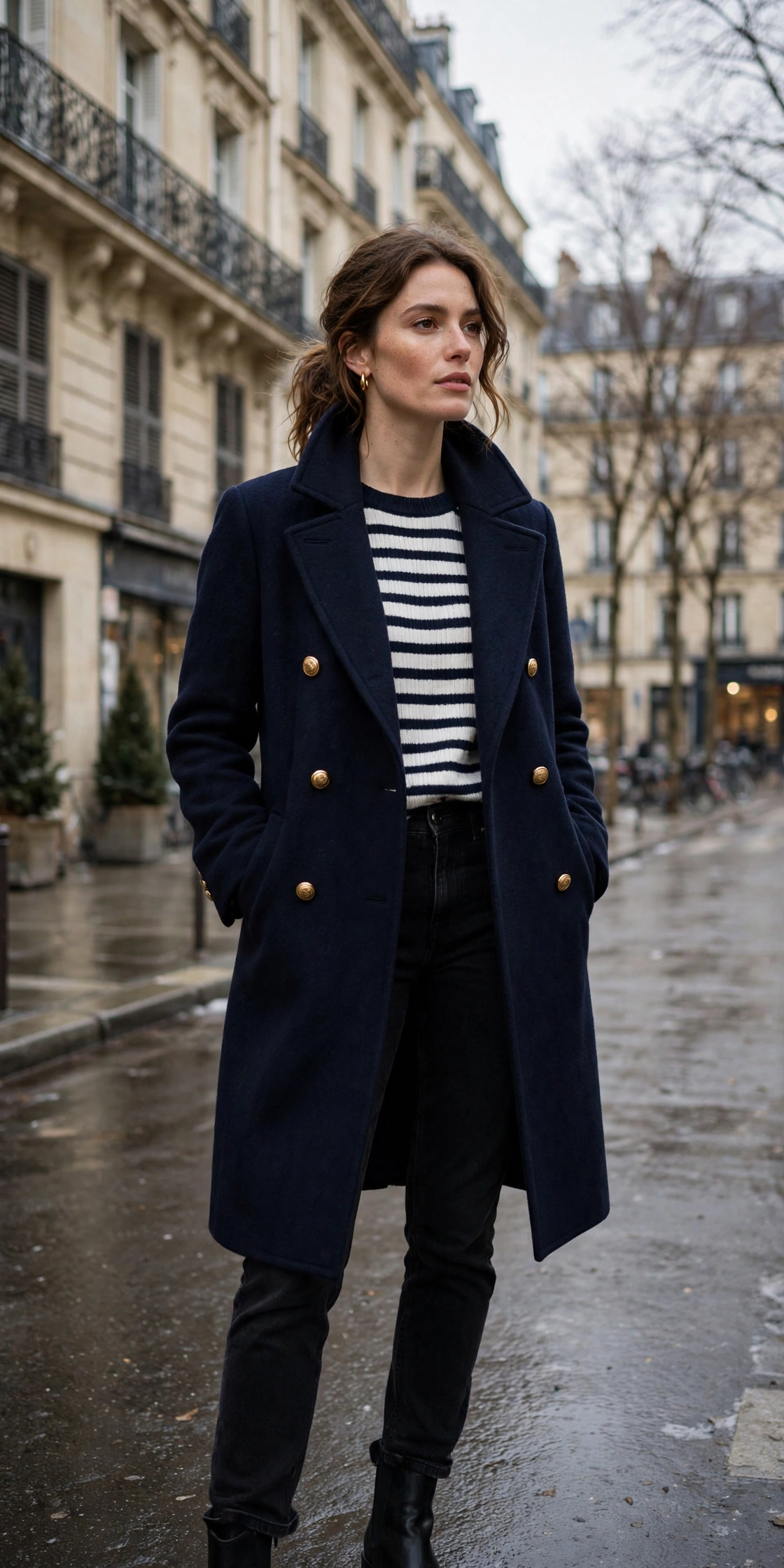
Navy Wool Coat with a Grey Knit and Dark Denim
Navy is black's softer sibling — all the versatility, none of the severity. The coat: true deep navy (not midnight, not royal), knee-length, smooth wool, clean lines, no busy hardware. Navy acts as a neutral while adding real color, pairing with grey, white, black, camel, and denim effortlessly. Double-breasted reads classic; single-breasted modern.
Under it, a mid-grey marle crewneck — heathered texture adds depth flat grey lacks — in merino or merino blend, mid-gauge, relaxed. Navy plus grey is cool-toned tonal dressing, which is why it looks intentional rather than random. Dark-rinse jeans, straight or slim, ground it. Shoes set the register: white leather sneakers for casual weekends, black ankle boots for polished-casual. Note the sneaker version — white sneakers against navy and grey is among the cleanest color stories in casual dressing. Best for errands, weekend lunches, travel: the zero-thought outfit you'll reach for constantly. The coat is the investment; knit and jeans do the daily work.
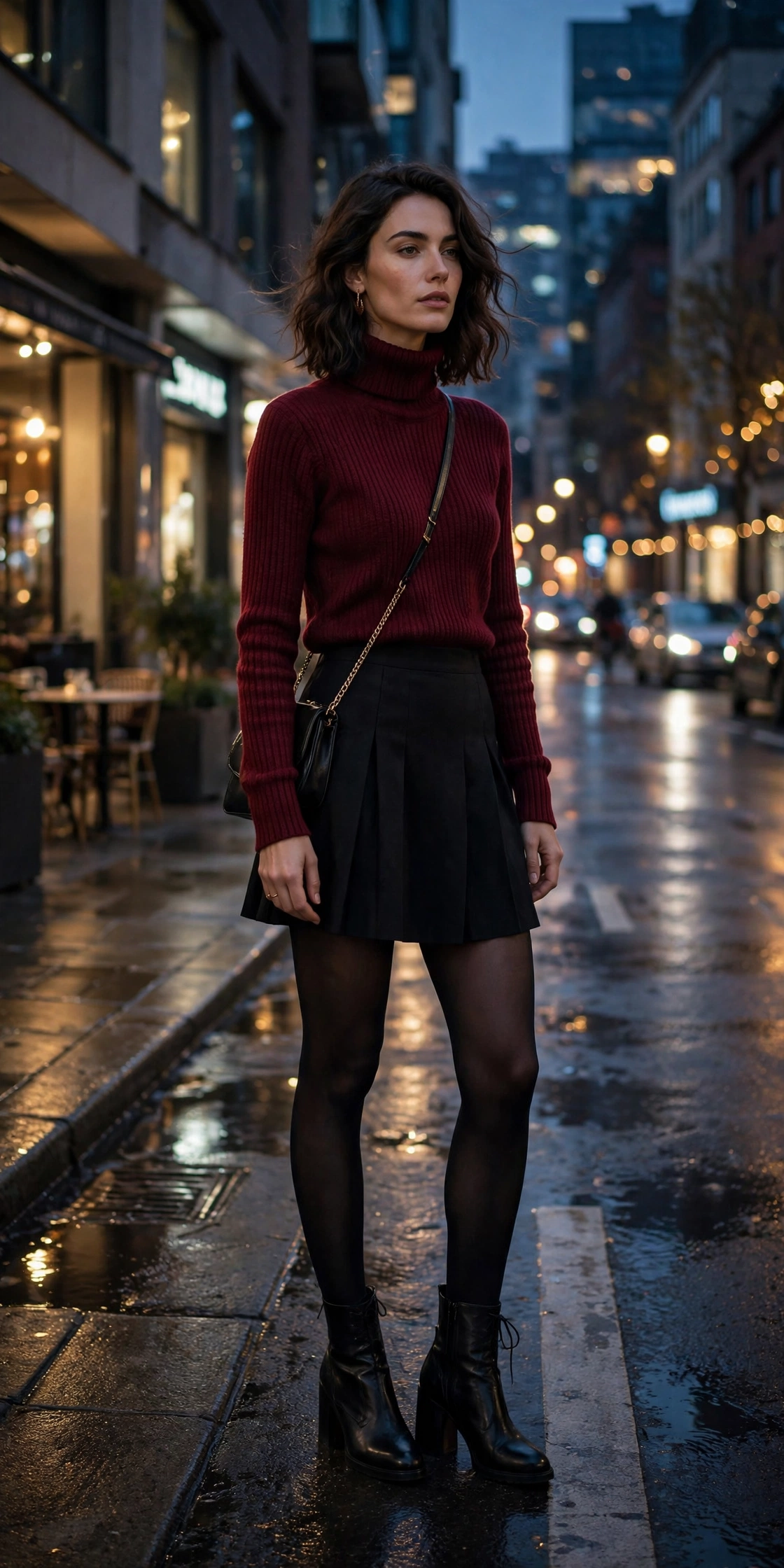
Black Midi Skirt with a Black Turtleneck, Tights, and Knee Boots
A black knit midi plus black turtleneck is a column that lives or dies on shape — decided three ways. First, the skirt: knit pencil or A-line (never bodycon) in substantial ponte or ottoman knit at mid-calf, finished waistband at the natural waist. Cheap elastic waists roll; flimsy jersey shows everything.
Second, the tuck: fully tucked, no exceptions — without it there's no waist and the eye has nowhere to rest. Use fine-gauge merino; chunky knits bulk at the waistband, so match knit weight to skirt. Third, the leg line: opaque 60+ denier tights with knee-high boots meeting or overlapping the hem, drawing one continuous line from waist to toe. Any gap of leg between hem and boot breaks it. A grey or camel wool coat adds the third texture. Best for offices, dinners, and events wanting dress polish with trouser warmth — knit plus opaque tights plus knee boots plus wool coat is genuinely winter-proof.
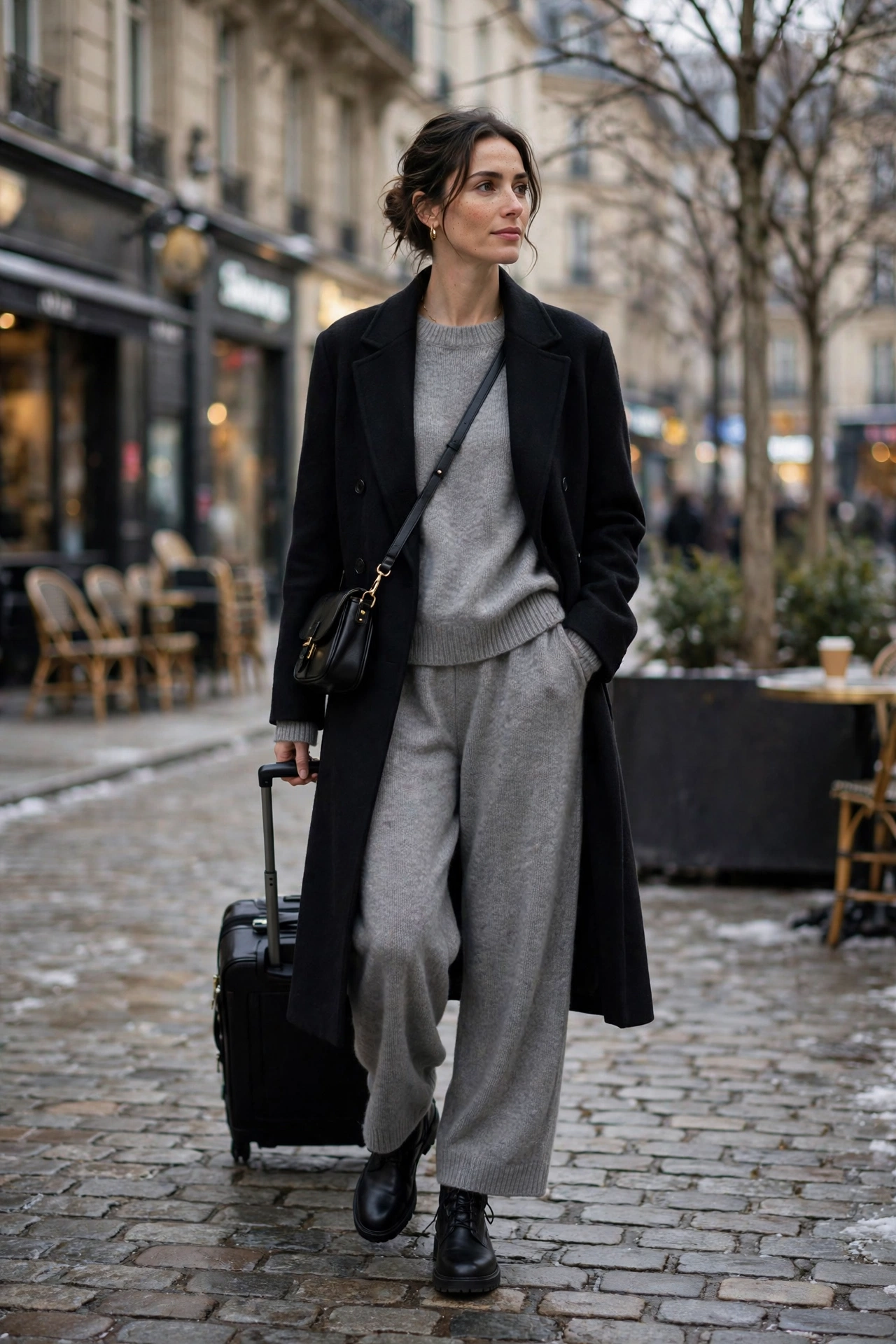
Grey Cashmere Set with a Long Black Coat
Matching knit sets are the capsule's cheat code: two pieces, one decision, monochrome built in. Choose a true match — same dye lot, same knit — in mid-grey: relaxed sweater plus wide-leg knit trousers. The wide leg matters; slim knit trousers read as leggings, while a wide leg with clean drape reads as intentional knit tailoring. Proper waistband, length grazing the shoe.
The long black coat does the structural work: crisp wool and sharp shoulders stop the soft set reading as pajamas. That contrast — structured over soft — is the outfit's entire logic, so the coat must be genuinely tailored and longer than the sweater hem, ideally mid-calf. Black sneakers keep it off-duty; ankle boots smarten for office or travel. Monochrome grey elongates; the black coat frames it like a border. Best for travel days and work-from-cafe days. A cashmere set is a real investment — cheap ones pill within weeks, visibly, across the whole outfit.
Stone-Colored Coat with Cream Layers and Taupe Boots
Stone, oatmeal, cream — minimalism at its softest, demanding warmth-matching discipline. The stone wool coat: warm greige, never cool concrete grey — hold it against your cream sweater in daylight before committing. Relaxed, slightly oversized cut; sharp tailoring fights the mood. 60%+ wool so the pale fabric holds shape.
Underneath, cream layers: fine or chunky cream sweater with cream or white trousers in substantial fabric — wool crepe, heavy cotton twill, structured knit. Thin pale fabric shows every pocket outline, so check opacity in natural light before buying. Taupe ankle boots are the grounding element — the single mid-tone stopping the pale palette floating away, sitting exactly between stone coat and cream layers. An ungrounded head-to-toe pale outfit reads unfinished. Best for bright winter days, galleries, lunches — this palette lives in light. Keep a lint roller handy: pale wool shows everything, and the pristine surface is part of the effect.
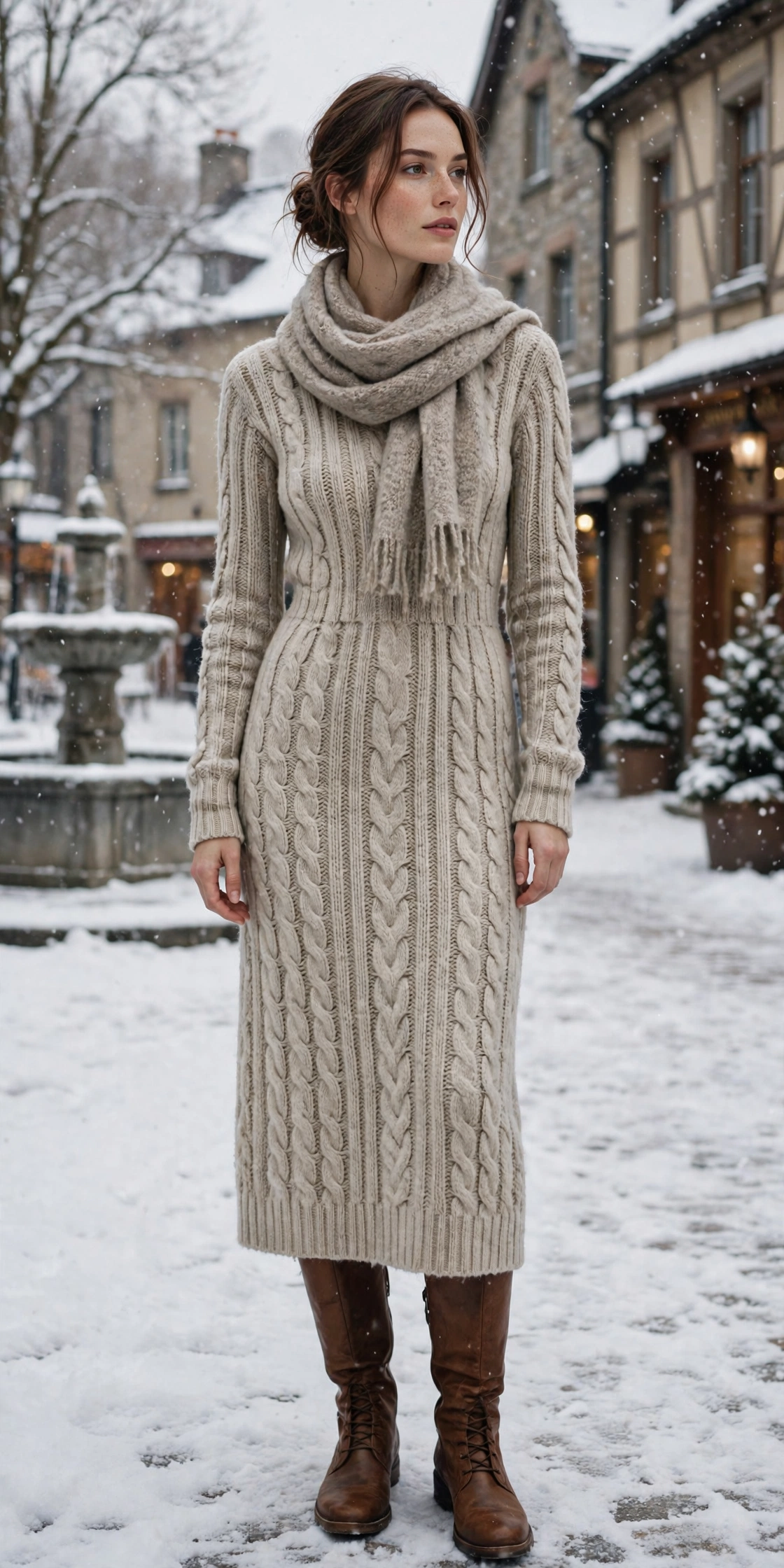
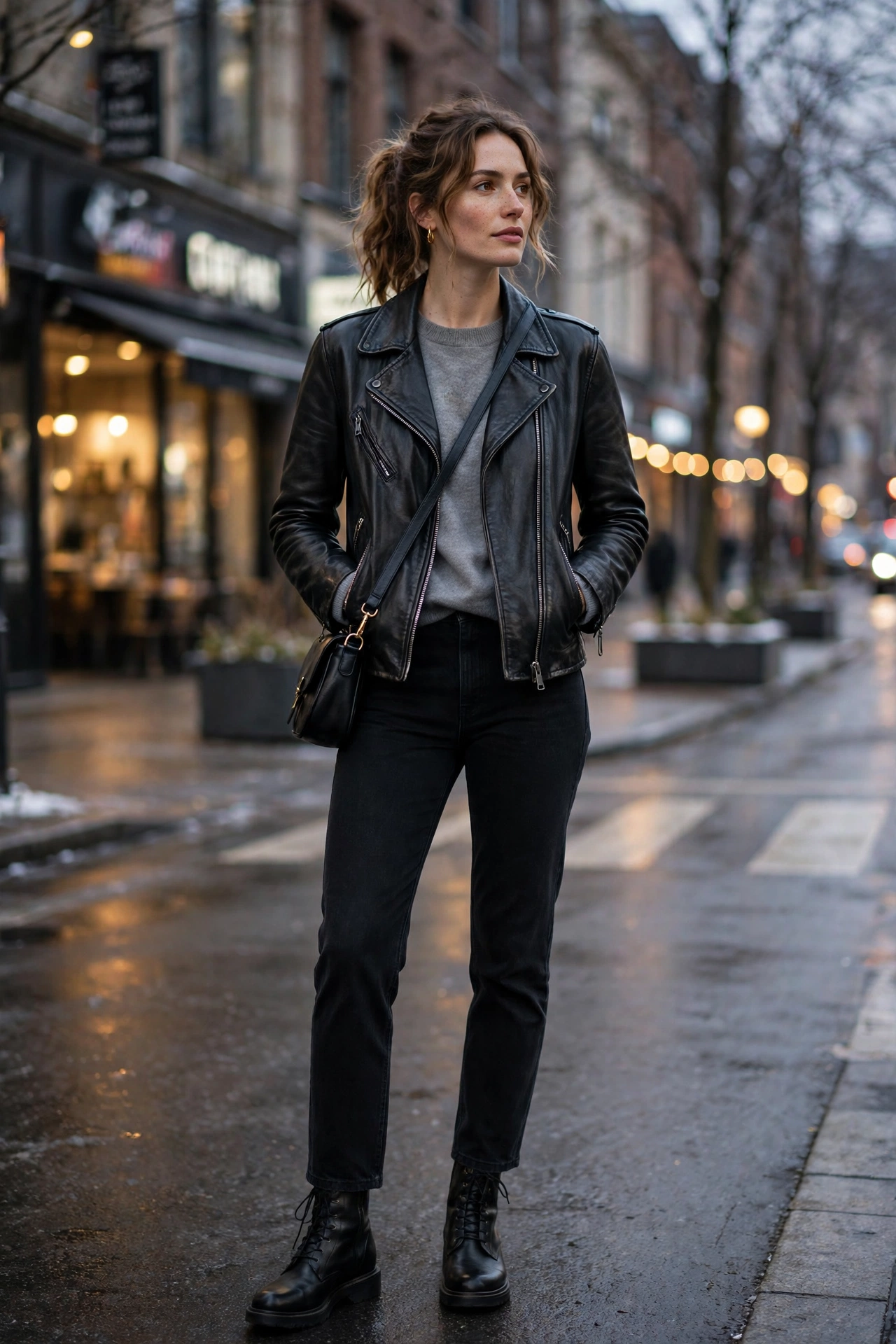
Black Leather Jacket with a Grey Knit and Black Jeans
The leather jacket is the capsule's edge — what keeps minimalism from reading boring, and the piece that improves with age. Fit is everything: hip length, shoulders exactly on your line, room to zip over a mid-weight knit without strain. A strained zipper announces the misfit — size for the knit, not the tee. Classic cut, minimal hardware: one or two zips, low-sheen pebbled or smooth leather. High-gloss reads evening; matte reads day.
Under it, a mid-grey mid-gauge crewneck — matte knit against leather sheen is the texture contrast working. Black jeans, straight or slim, black ankle boots complete the column. The grey knit is breathing room: all-black leather can go full uniform, but grey softens it to daily wear. Real leather molds to you; good faux works minus plastic smell or uniform grain. Best for evening-casual — dinners, drinks, concerts. The jacket is the investment: a decade of wear, and the piece that makes the capsule feel less serious.
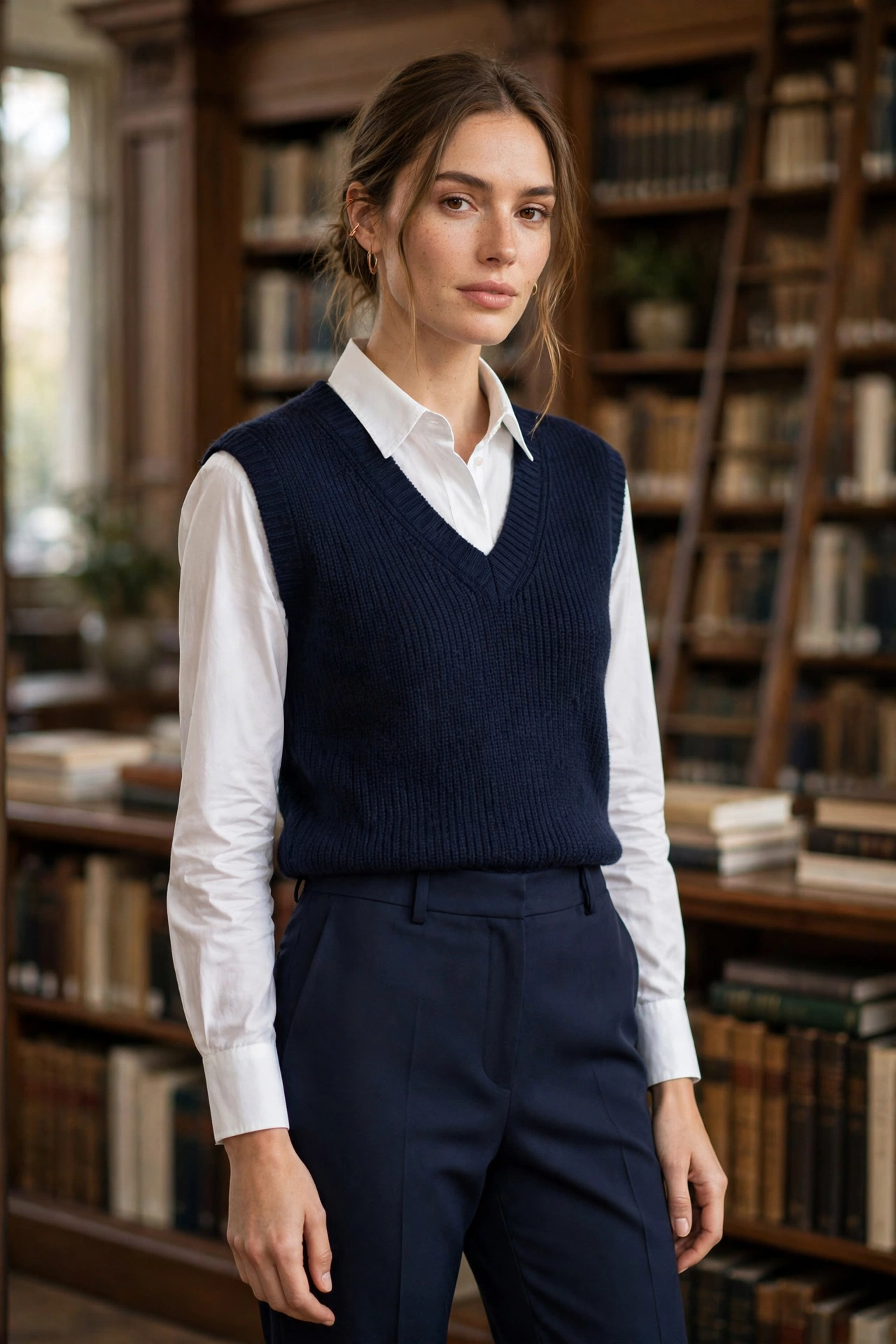
White Shirt with Camel Wide-Leg Trousers and Loafers
Crisp meets soft, and the tension is the outfit. The white shirt: structured cotton poplin or broadcloth, proper collar, clean finishing. Never oversized here — the crispness is the point. Tuck fully (a French tuck blouses against the trousers' clean line) and roll sleeves once to show the wrist, keeping crispness from reading corporate.
The camel wide-leg wool trousers are the fashion piece: high-rise, full through the leg, pooling slightly over the shoe or grazing it. Width balances the shirt's crispness — slim trousers plus crisp shirt reads office-uniform; wide legs make it fashion. Wool flannel or wool-blend crepe supplies the drape a wide leg needs; stiff fabric stands off the body and looks costumey. A thin tan belt defines the waist and bridges white to camel. Tan loafers in polished leather (not suede, echoing the shirt's crispness) finish. Best for desk-to-dinner and creative offices. A proportion masterclass: fitted top, voluminous bottom, defined waist.
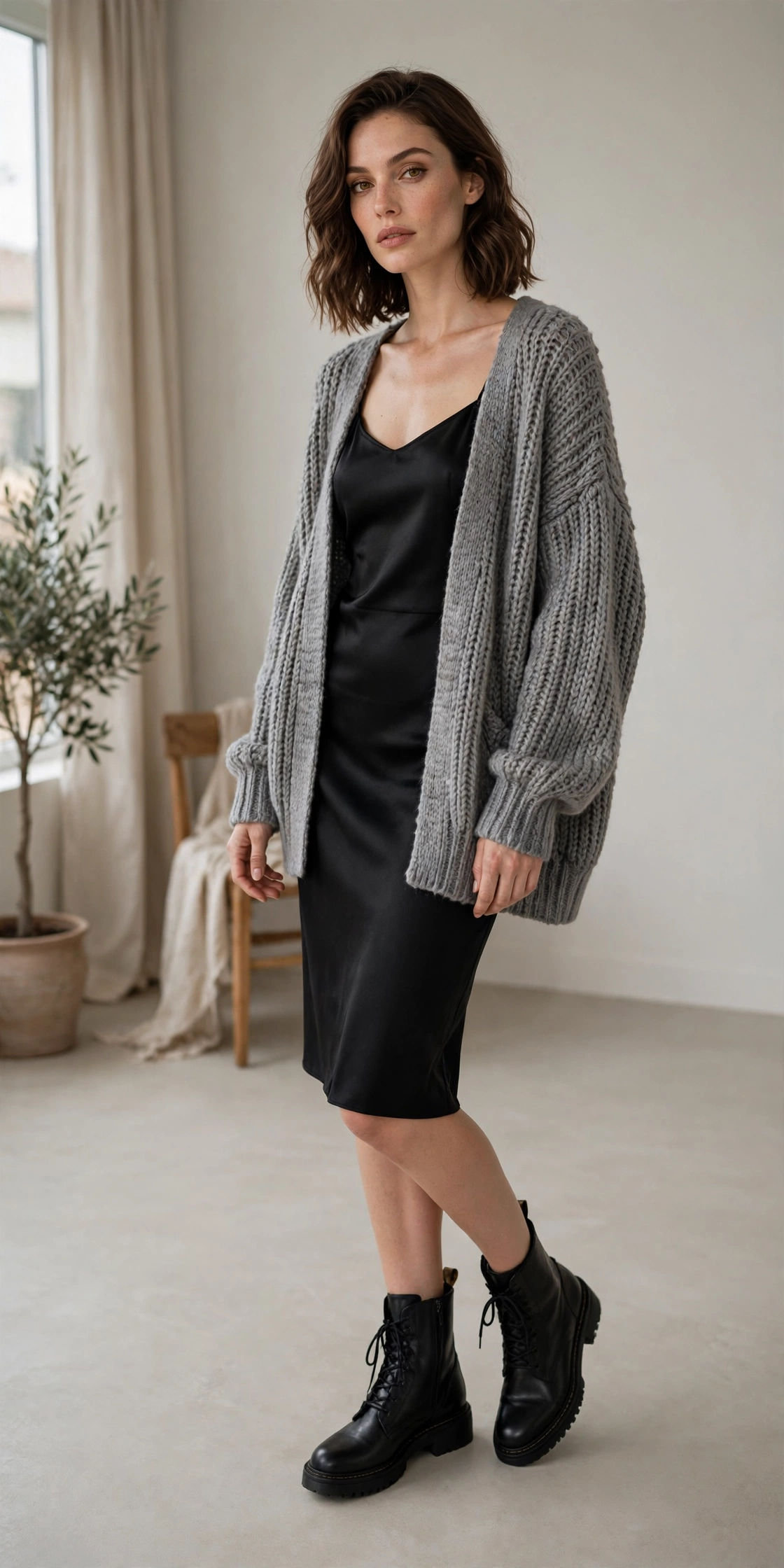
Black Wrap Coat with a Charcoal Knit Dress and Tights
A knit dress under a wrap coat is winter's easiest elegance, with subtle tone work: charcoal against black, not black on black. That slight step builds depth the eye registers unconsciously — dimensional rather than flat monochrome. The dress: midi, substantial knit (ottoman, ponte, heavy jersey), skimming not clinging — following shape without mapping it. A-line or straight skim; bodycon clings.
The wrap coat's tie waist shapes — belt at the natural waist, never slung low. No buttons fight the knit, and the tie defines shape over soft layers. Knee-length or just below suits a midi dress; a much shorter coat chops the line. Opaque black tights and knee boots continue the column; a soft grey scarf (not charcoal — keep separation from the dress) adds the third tone at the face, draped not knotted to death. Best for dinners, events, and offices where a dress is right but bare legs aren't — dress plus tights plus knee boots plus wrap coat is a full insulation system.
Forest Green Coat as the Capsule's Single Statement
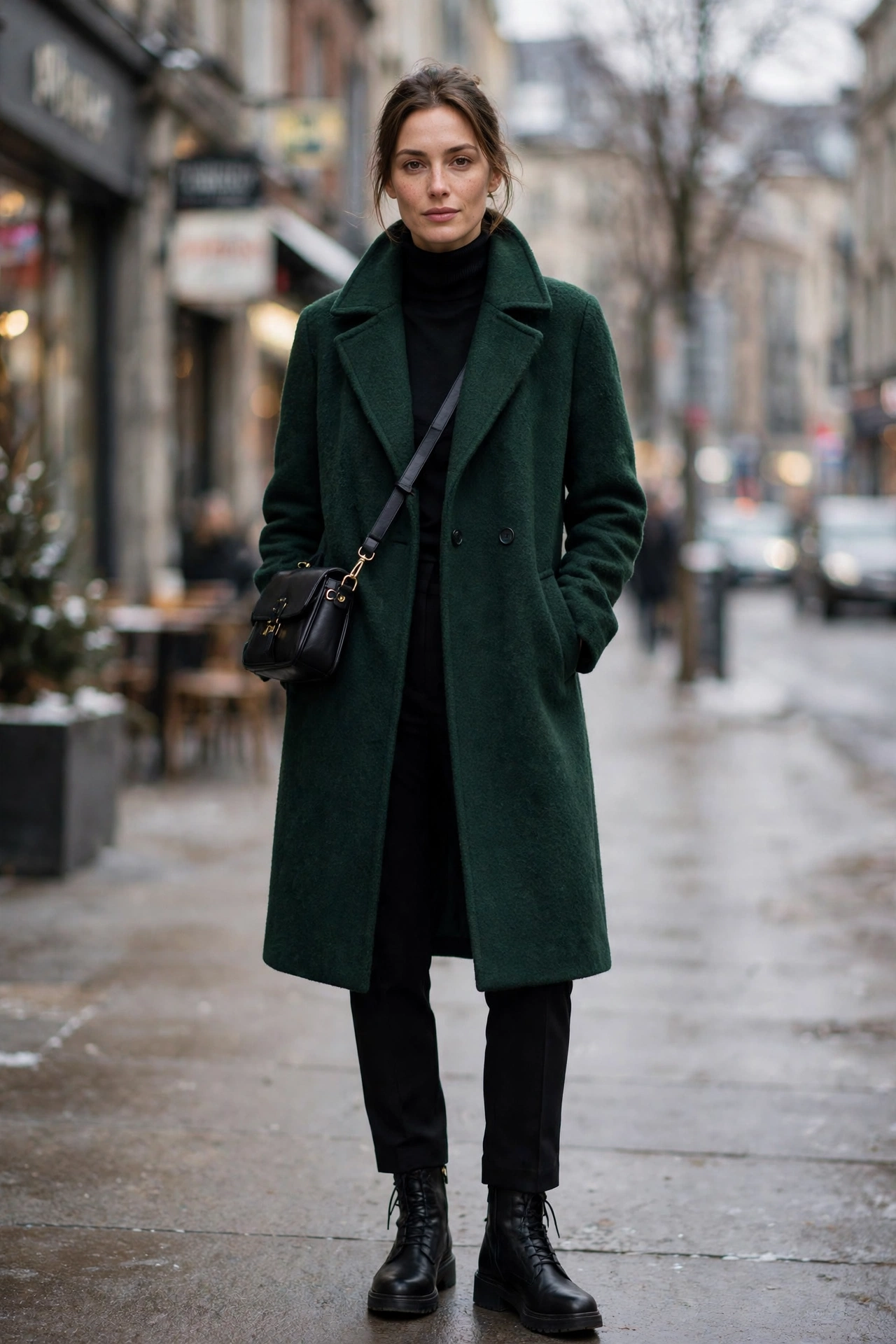
Every minimalist wardrobe earns one statement piece — the coat, since in winter it's what people see. Forest green is the ideal minimalist statement: rich, natural, compatible with every neutral, seasonal without literalness (pine forest, not tinsel). Choose deep saturated green in quality wool — washed-out or yellow-green reads cheap instantly, so dye richness is what you pay for.
The rule is strict: the base stays neutral — all black, all grey, or black-and-grey — so the coat owns the color story. Black turtleneck, trousers, boots, green coat: a clean stage. A second color dilutes the statement into busyness. Minimal jewelry — the coat is the jewelry. Keep the cut as quiet as the color is loud: single or double-breasted, knee length, clean lines. Dramatic cut plus dramatic color breaks minimalism. Best anywhere you want to be remembered — the coat people describe you by. Cost-per-wear applies double: a statement coat gets worn constantly because it renews every neutral base.
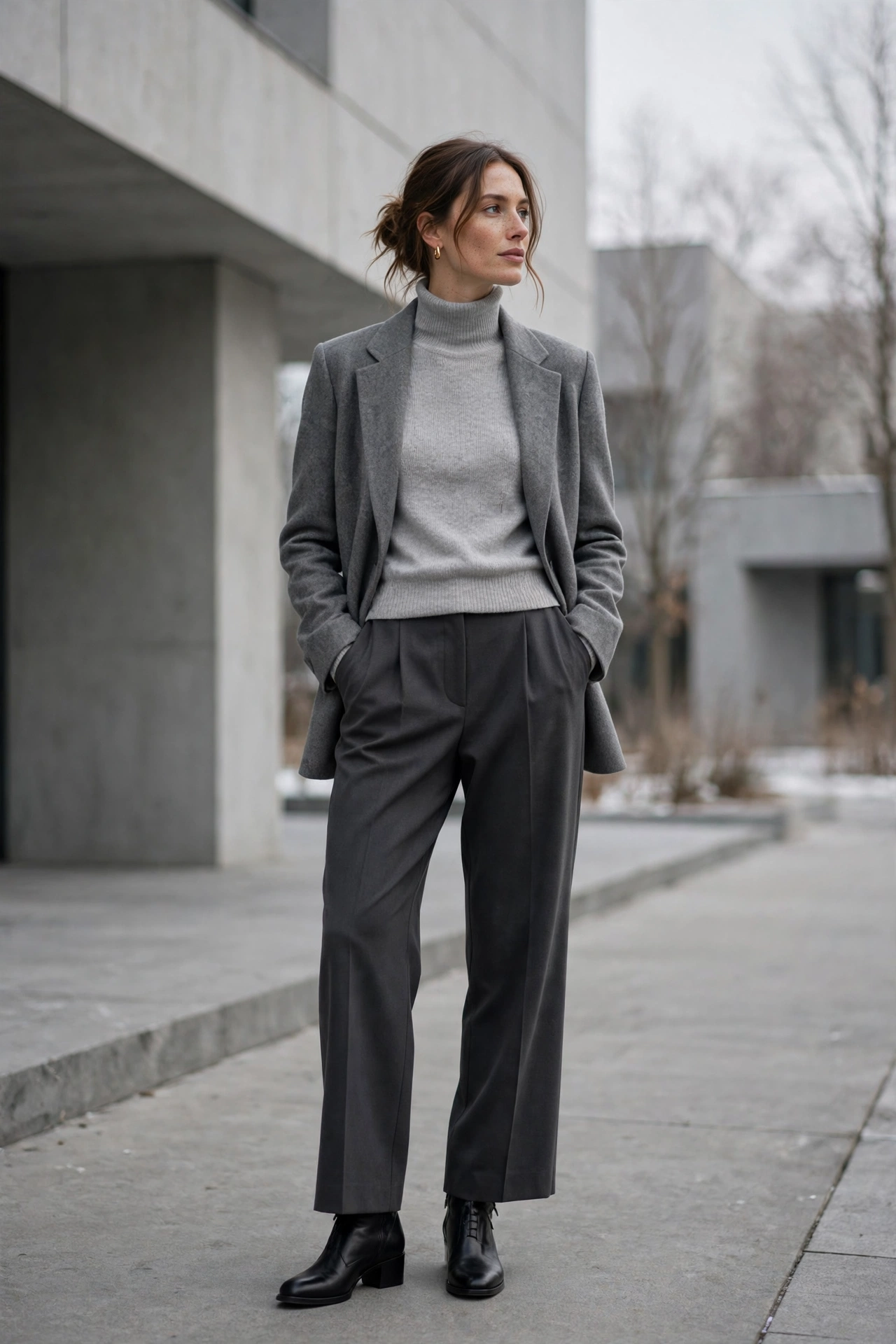
Turtleneck, Blazer, and Trousers in Three Tones of Grey
The advanced move: light grey turtleneck, medium grey blazer, charcoal trousers — three tones, three textures. Tonal dressing at its most refined, demanding confidence with nothing to hide behind: no black to slim, no camel to warm. Tones must sit two full shades apart — adjacent greys blur and the effect collapses.
Texture variation prevents flatness: fine-knit turtleneck (smooth), wool blazer (woven structure), crepe or flannel trousers (matte depth). Same color, three surfaces — the eye reads difference as interest. Keep one temperature throughout: cool light grey against warm charcoal creates ruinous discord. Black ankle boots ground it — the full stop ending the grey sentence. Silver jewelry only (never gold — stay cool), kept minimal. Best for creative offices, fashion settings, dinners where you want to look like you think about clothes. Photograph this one — it converts people to minimalism by proving precise restraint is the most striking choice in the room.
Building Your Capsule: The 15-Piece Shopping List
Look for — and avoid — per piece. 1. Wool coat (grey/camel): 60%+ wool, flannel/melton finish, wrist-bone sleeves, closes over your thickest sweater. Avoid thin "wool-look" coats. 2. Second coat (black/statement): same standards, second-most-worn color. Avoid doubling one color family. 3. Black blazer: structured shoulder (pinch it — feel canvas), single-breasted. Avoid unstructured cardigan-blazers. 4. Leather jacket: hip length, true shoulders, zips over a knit, minimal hardware. Avoid cropped cuts, crack-prone faux. 5. Black turtleneck: 12–16 gauge merino/cashmere, foldable neck, inch of ease. Avoid cotton, sheer fabric. 6. Cream knit: defined texture (cable/fisherman rib), lambswool blend, warm ivory. Avoid optic white, pilling acrylic. 7. Grey crewneck: mid-grey marle, mid-gauge merino, relaxed — your workhorse. Avoid flat solid grey. 8. Camel crewneck: true camel, fine/mid-gauge, tuckable length. Avoid dirty-white beige, scratchy wool. 9. White shirt: structured poplin, bodied collar, smooth layering fit. Avoid flimsy fabric. 10. Black trousers: flat front, tapered, mid-weight wool crepe, natural waist. Avoid pleats, knee-bagging fabric. 11. Wide-leg trousers: high rise, draping full leg, wool flannel/crepe, grazing hem. Avoid stiff fabric, sweater-matching tones. 12. Dark jeans: true dark rinse, straight/slim-straight, rigid or low-stretch. Avoid heavy fading, jegging stretch. 13. Knit midi: substantial ponte/ottoman, midi length, flat waistband. Avoid bodycon, flimsy jersey. 14. Ankle boots: low stacked heel or flat, almond/pointed toe, polishable leather. Avoid stilettos. 15. Second shoe: clean polished loafers or minimal unbranded white sneakers. Avoid chunky soles.
Checkout test: matches 80% of your closet? Names three outfits it completes? Fabric honest? Fail one — it stays.
The Capsule Color Matrix
Without prints or brights, harmony comes from temperature, not hue. Neutrals are warm (yellow-based: camel, ivory, brown, cream) or cool (blue-based: black, grey, navy, white). Cross temperatures and you get discord; stay in one family and tonal dressing looks expensive.
Rules: stay in your lane (gold with warm, silver with cool); separate adjacent tones two shades; add one light point per outfit; monochrome needs texture, tonal needs separation — never mix the strategies.
Three systems. Warm: camel coat, ivory knits, chocolate trousers, tan boots, gold — rich, soft, approachable. Cool: black coat, grey knits, white shirt, dark denim, silver — sharp, architectural. Mixed (advanced): black + camel + white with grey bridging — never place warm and cool adjacent without the bridge. Choose before shopping; release what doesn't fit.
Cost-Per-Wear Math: Where to Spend vs. Save
Cost-per-wear = price ÷ wears. A $300 coat worn 100 times = $3/wear; a $60 top worn twice = $30/wear. Spend on anchors: wool coat ($250–400; ~80 wears/winter × 3 winters ≈ $1.25/wear at $300); ankle boots ($150–250; ~300 wears ≈ $0.67/wear — the capsule's best value); blazer ($150–250; ~300 wears over 5 years ≈ $0.60/wear); leather jacket ($200–400; ~400 wears over a decade ≈ $0.75/wear). Save on replaceables: white shirt ($30–50 — yellows at any price; buy two mid-range); black turtleneck ($40–70 — pills in 1–2 seasons; buy the $60 version twice); tights ($10–15 — consumable); trends (cap $30–60).
Deciding calculation: $280 coat × 4 winters × 80 wears = 320 wears = $0.88/wear. $90 wool-look coat × one winter (60 wears) = $1.50/wear — then you buy four coats instead of one. "Cheap" costs nearly double per wear and looks worse daily.
Frequently Asked Questions
How many pieces do I need for a winter capsule wardrobe?
Twelve to fifteen: 2 coats, 3 knits, 2 trousers, 2 jeans, 1 skirt or dress, 2 boot pairs, 1 sneaker, 2 bags — 30+ combinations when everything matches. Audit your closet first.
How do I keep minimalist outfits from looking boring?
Texture is your pattern: leather on cashmere, ribbing on smooth wool, denim on crepe. Vary silhouettes too — slim trousers yesterday, wide-leg today. Same palette, different shapes.
What colors work best for a minimalist winter palette?
Black, white, grey, camel, navy, ivory — pick three. Warm: camel/ivory/brown; cool: black/grey/navy. Match metals: gold with warm, silver with cool.
Can a capsule wardrobe include trends?
Yes — small and cheap: a trendy bag, a current shoe. Never the anchors (coat, boots, blazer); cost-per-wear collapses if the trend was the $300 item. One trend at a time keeps it timeless.
How do I layer without looking bulky?
Thin to thick, fitted to relaxed: thermal, thin knit, coat — each layer slightly looser beneath. Never double chunky layers; keep the longest outside.
How do I build a capsule wardrobe on a tight budget?
Buy in priority order: coat first (most-seen), then boots, trousers, knits. Thrift the anchors — wool coats and leather jackets are fashion's best secondhand buys. Upgrade one anchor per season; two winters of building beats one weekend of cheap buying.
How often should I replace capsule pieces?
By piece: white shirts yearly (yellowing); turtlenecks every 1–2 seasons (fade/pill); jeans and knits every 2–3 years; coats, blazers, leather, good boots every 5–10 years. Daylight test: hold old against new — if it looks tired, it's done.
Can I do a minimalist winter capsule if I run cold?
Yes — layering is the system. Go invisible: silk/merino thermal under the turtleneck, fleece-lined tights under the skirt, thin down vest under the wool coat. None show; together they equal an extra coat. Pick the warmer fabric each time — cashmere over cotton, knee boots over ankle. The warmest single upgrade is always a better coat.
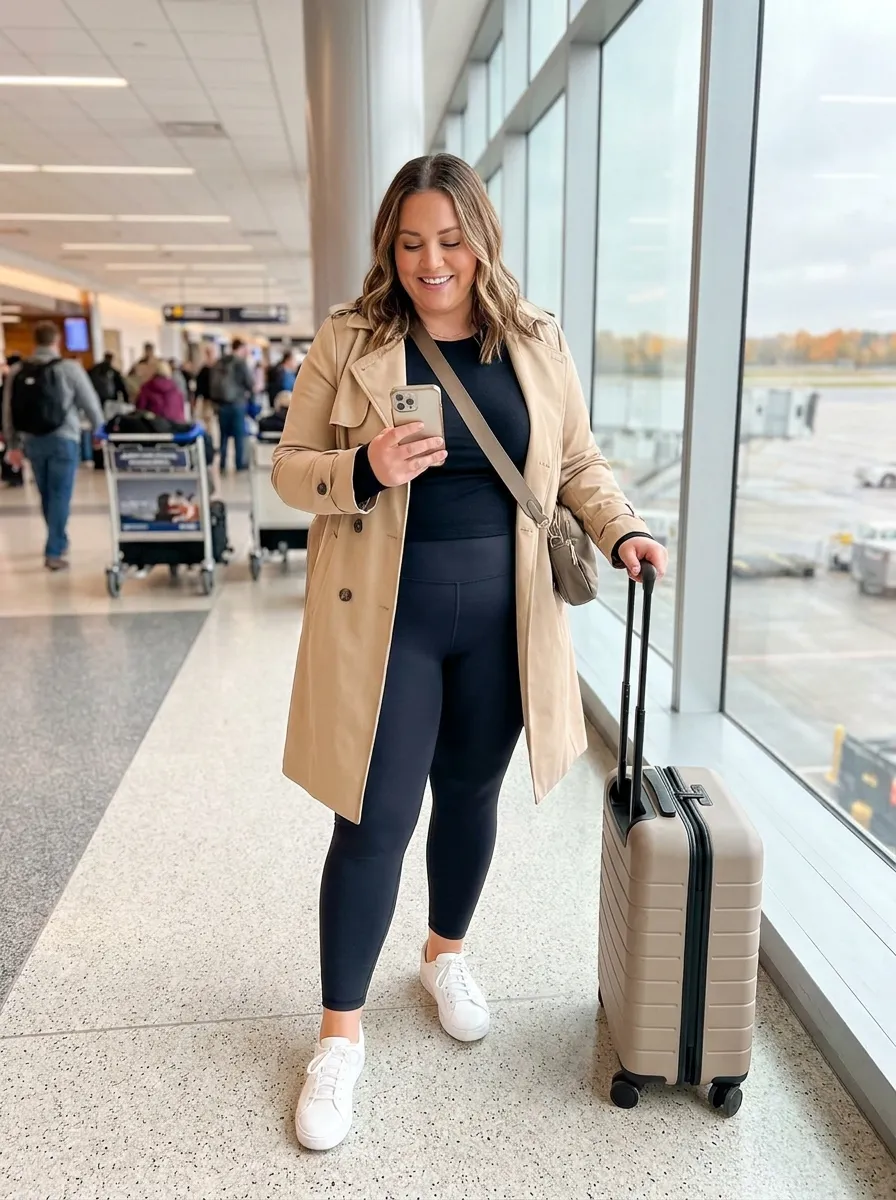
How do I travel with a capsule wardrobe?
Pack the system: one coat (worn on the plane), two knits, two bottoms, one dress or skirt, boots (worn) plus one flat shoe — a carry-on week, since everything matches. Roll knits, fold trousers on the crease, stuff boots with socks. The grey cashmere set (look 10) is the ideal travel outfit.