10 Sweater Dress Outfits for Fall and Winter
How to use this guide
These are editorial styling suggestions, not a one-size-fits-all formula. Adapt each look to your wardrobe, proportions, climate, comfort, budget, and the occasion; the most useful idea is the one you can genuinely wear.
A sweater dress solves the "comfortable but still dressed" problem better than almost anything else in a fall closet — until it doesn't, and you end up looking like you're wearing a blanket with sleeves. The difference between the two outcomes almost always comes down to one thing: does anything define where your waist is. For the boot half of that pairing, UGG boots get their own breakdown of what keeps the cozy factor from tipping into sloppy.
Ten outfits below, each using a different tool for that job — a belt, a vest, tights, a tuck — so you can see the range of ways to keep a sweater dress from reading shapeless.
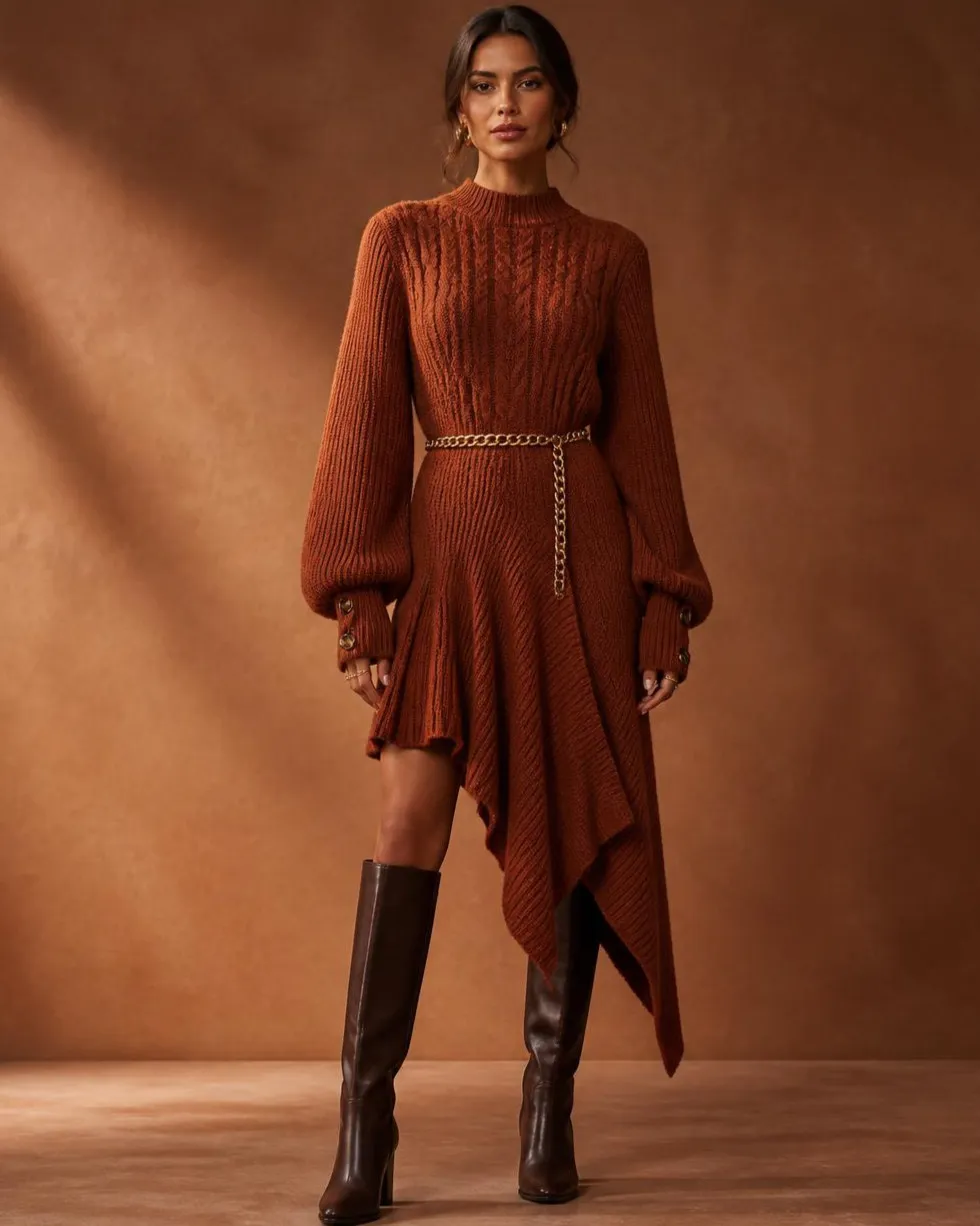
Chestnut Cable Knit Belted Dress
A chestnut cable knit dress, bishop sleeves tapering to buttoned cuffs, a gold chain belt, an asymmetric raw hem, knee-high boots. A chain belt does the waist-defining job here without adding bulk the way a fabric belt would — against a chunky cable knit, that matters, since a wide fabric belt would just compete with the dress's own texture instead of cutting through it.
Cream Ribbed Dress with Sherpa Vest
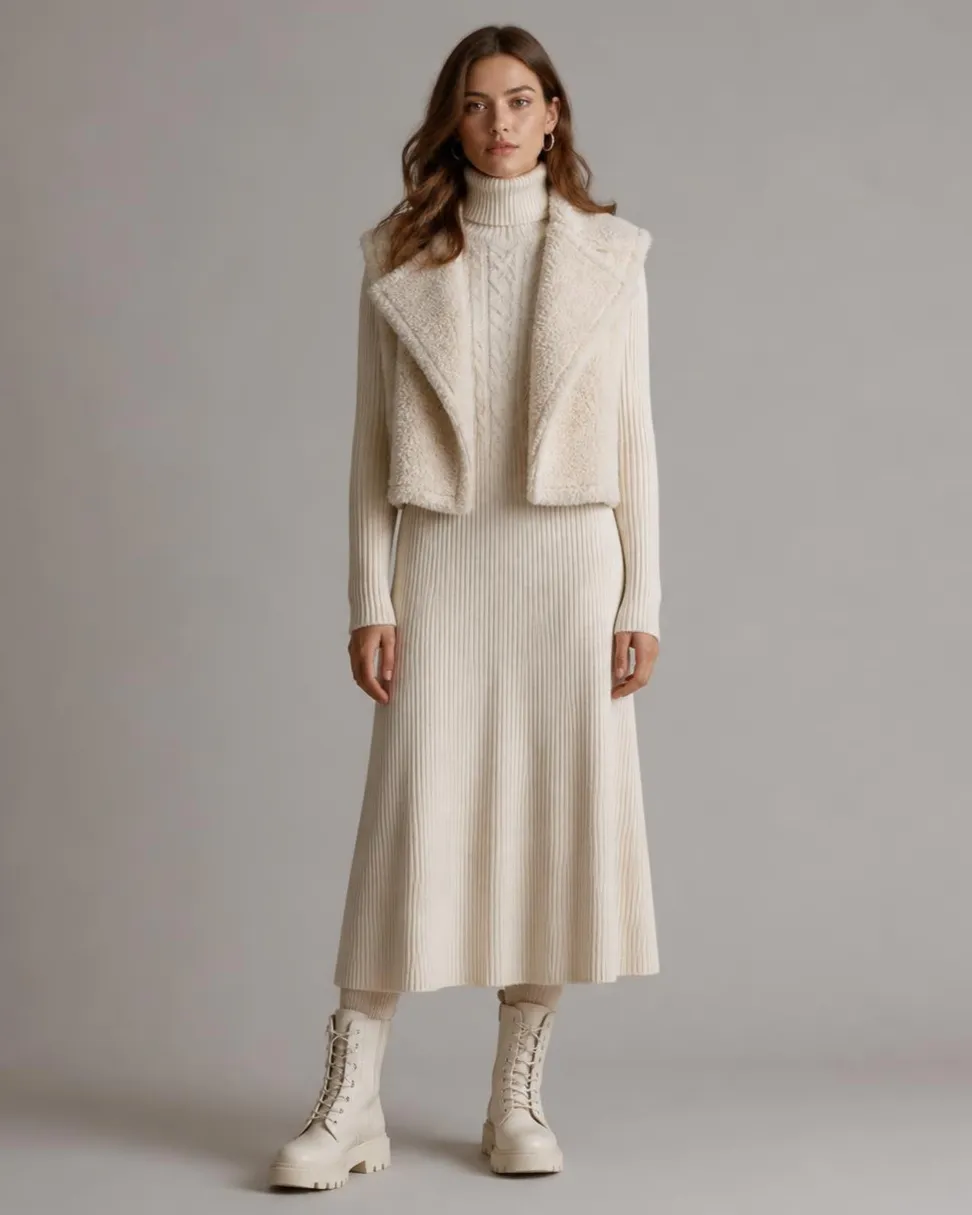
A ribbed turtleneck sweater dress, a cropped sherpa vest, cream combat boots. No belt in this one — the ribbed knit itself skims close enough to the body that the dress defines its own waist, and the cropped vest length is what keeps a second warm layer from erasing that shape. A hip-length vest here would have the opposite effect, covering exactly the part of the silhouette doing the work.
Rust Fringe Dress with Western Belt
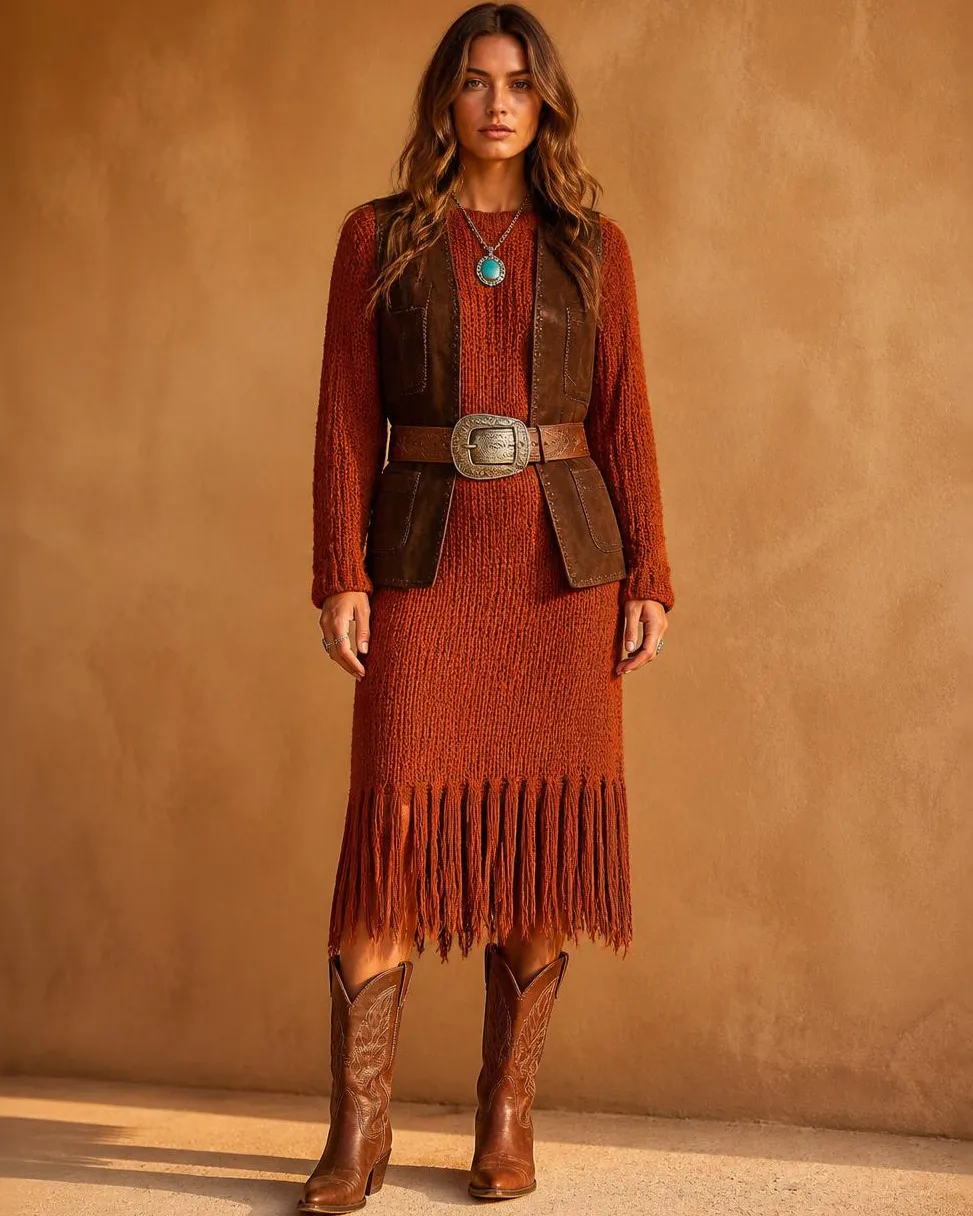
A rust knit dress with a fringe hem, a suede vest, an oversized engraved belt buckle, turquoise jewelry, cowboy boots. The buckle is sized deliberately large — a small belt would get lost against the chunky knit and the fringe both competing for attention below it. Fringe adds its own kind of movement-based shaping too: it draws the eye down and out at the hem, which visually balances a fitted waist above it.
Gold Shimmer Bodycon Dress
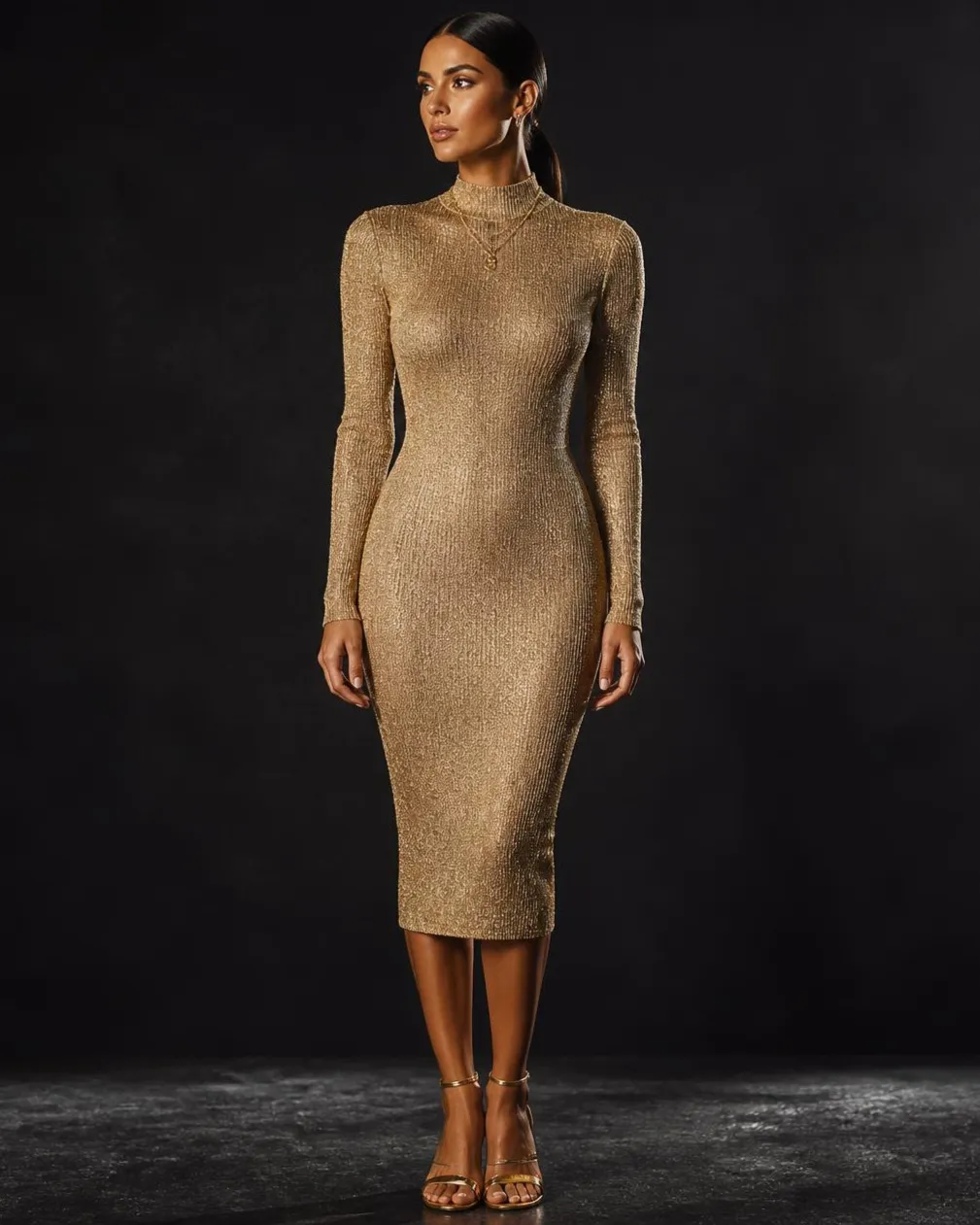
A metallic gold bodycon sweater dress, a side slit, strappy gold heels, a delicate pendant. This is the one dress on the list that needs no belt at all, since bodycon knit already defines the waist on its own. The side slit is doing the only structural job left: letting fabric this fitted actually move with a stride instead of restricting it.
Cream Duster over Oversized Knit
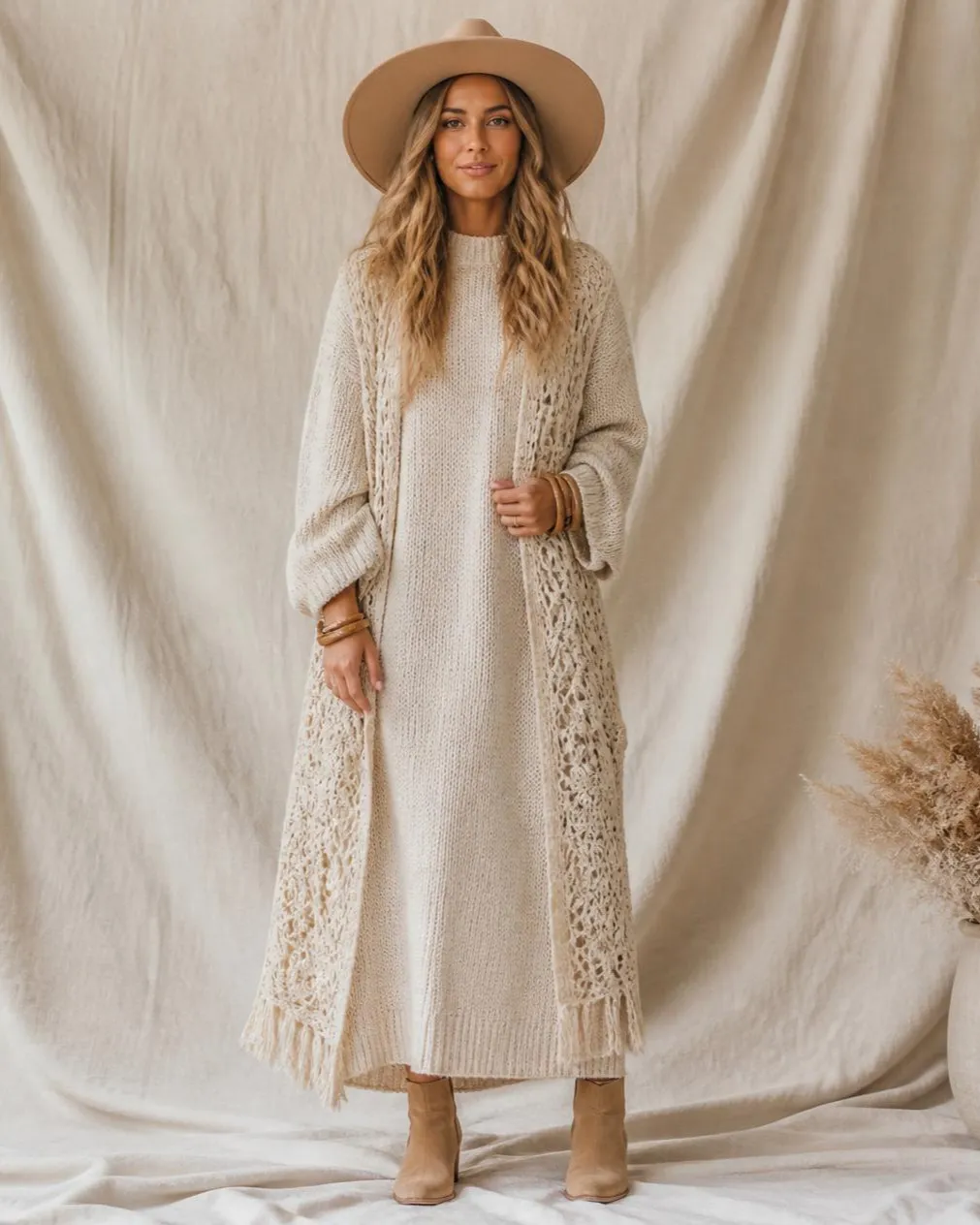
A relaxed cream sweater dress, a long crochet duster with fringe, a wide-brim hat, wooden bangles. This is the deliberate exception — nothing here defines a waist, and that's the point. Boho layering works by building volume in a consistent direction (both pieces loose, both textured) rather than contrasting fitted against relaxed, so the "shapeless" read never triggers even without a belt.
Charcoal Mini Dress with Camel Blazer
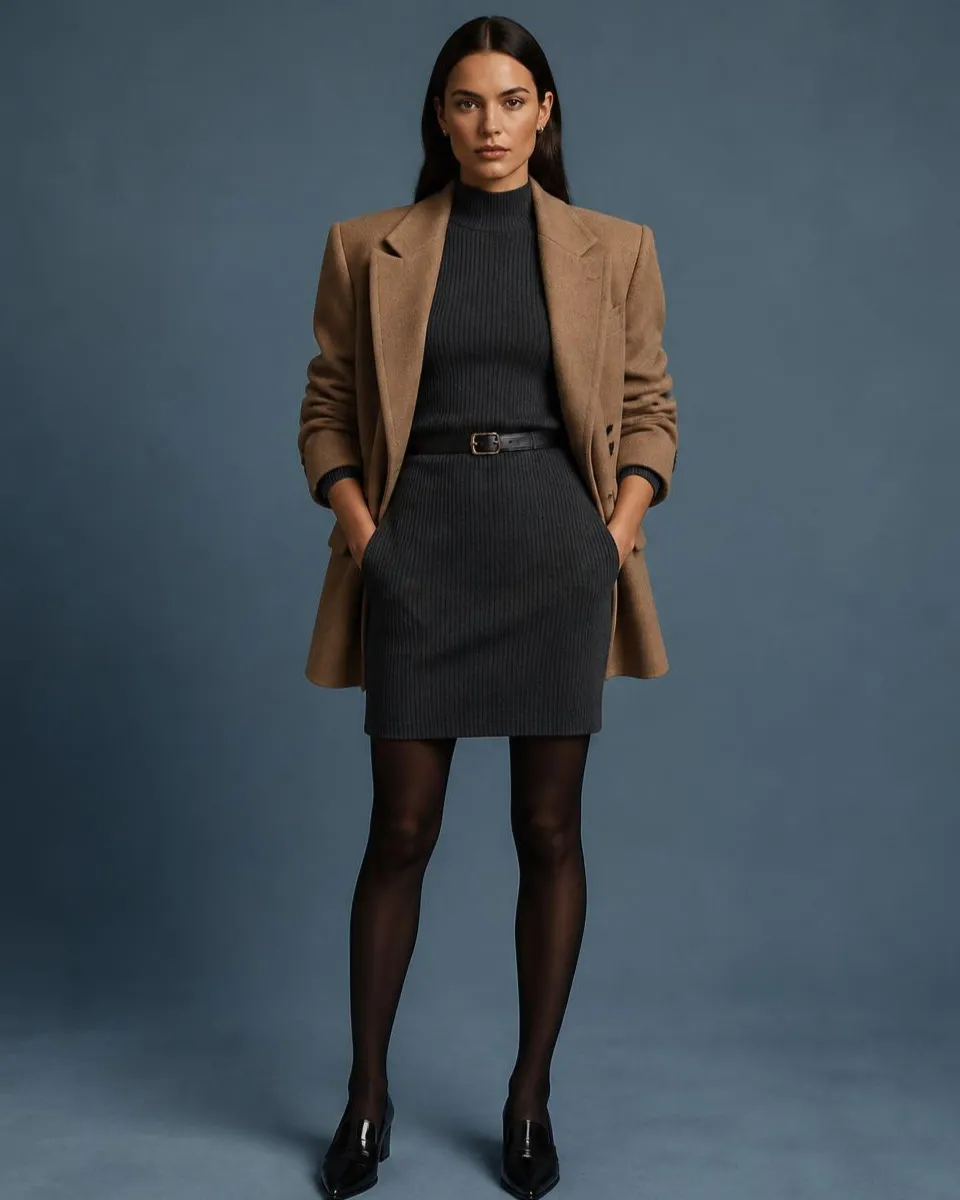
A charcoal ribbed mini dress, a camel blazer draped over the shoulders, opaque tights, a thin black belt, pointed loafers. The blazer worn draped rather than buttoned matters twice over here: it keeps the outfit from reading like "dress with a jacket," and it leaves the thin belt visible as the actual waist-definer, rather than letting the blazer's own shape do that job and compete with the belt.
Grey Midi Dress with Puffer Vest
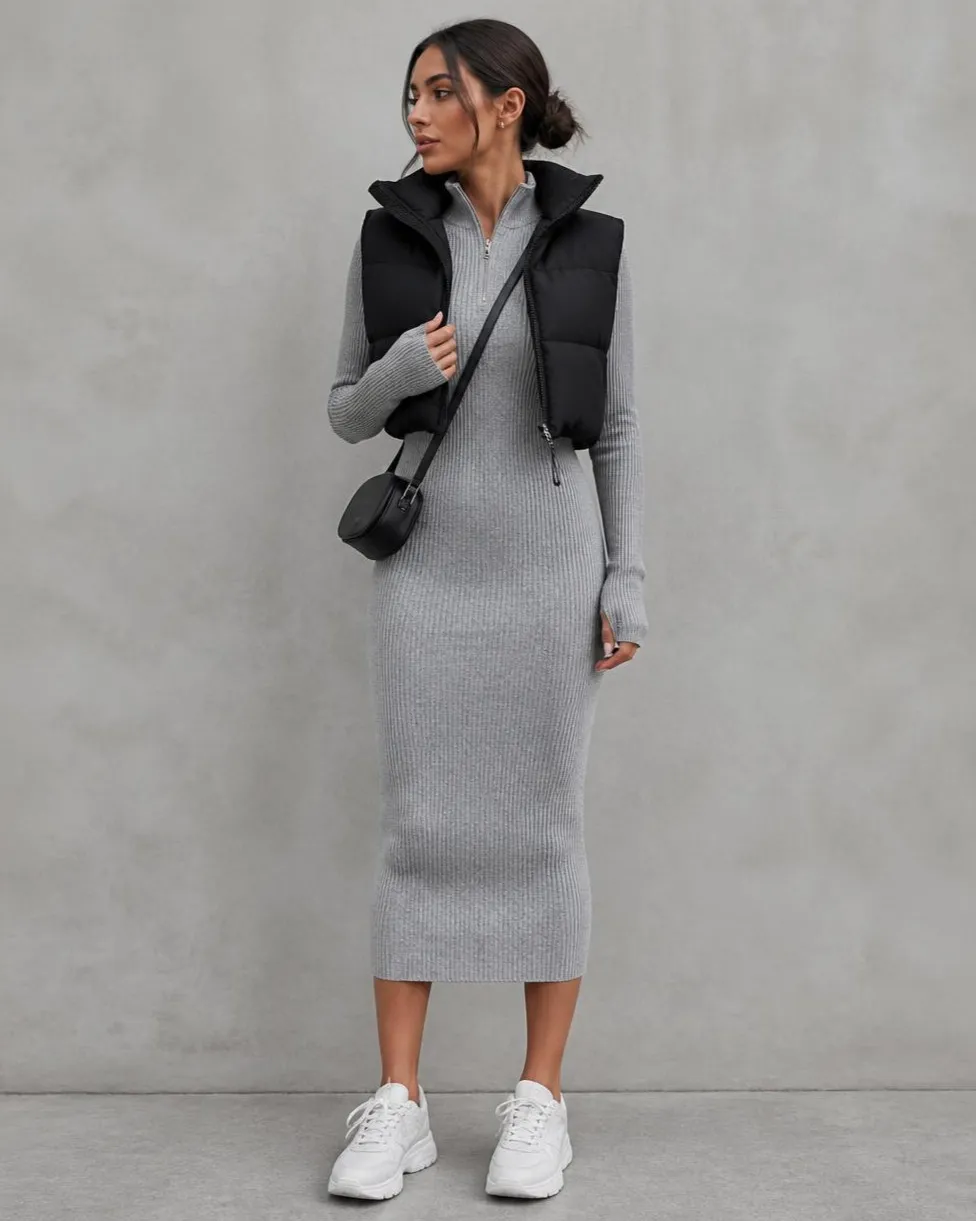
A grey ribbed midi dress, a quilted puffer vest, white sneakers, a small crossbody bag. No belt here either — the dress skims the body loosely but the ribbed knit still has enough structure to avoid the shapeless read, and the puffer vest's fitted armholes (as opposed to a boxy coat) keep the layered silhouette from ballooning outward.
Chocolate Ribbed Dress with Coin Necklaces
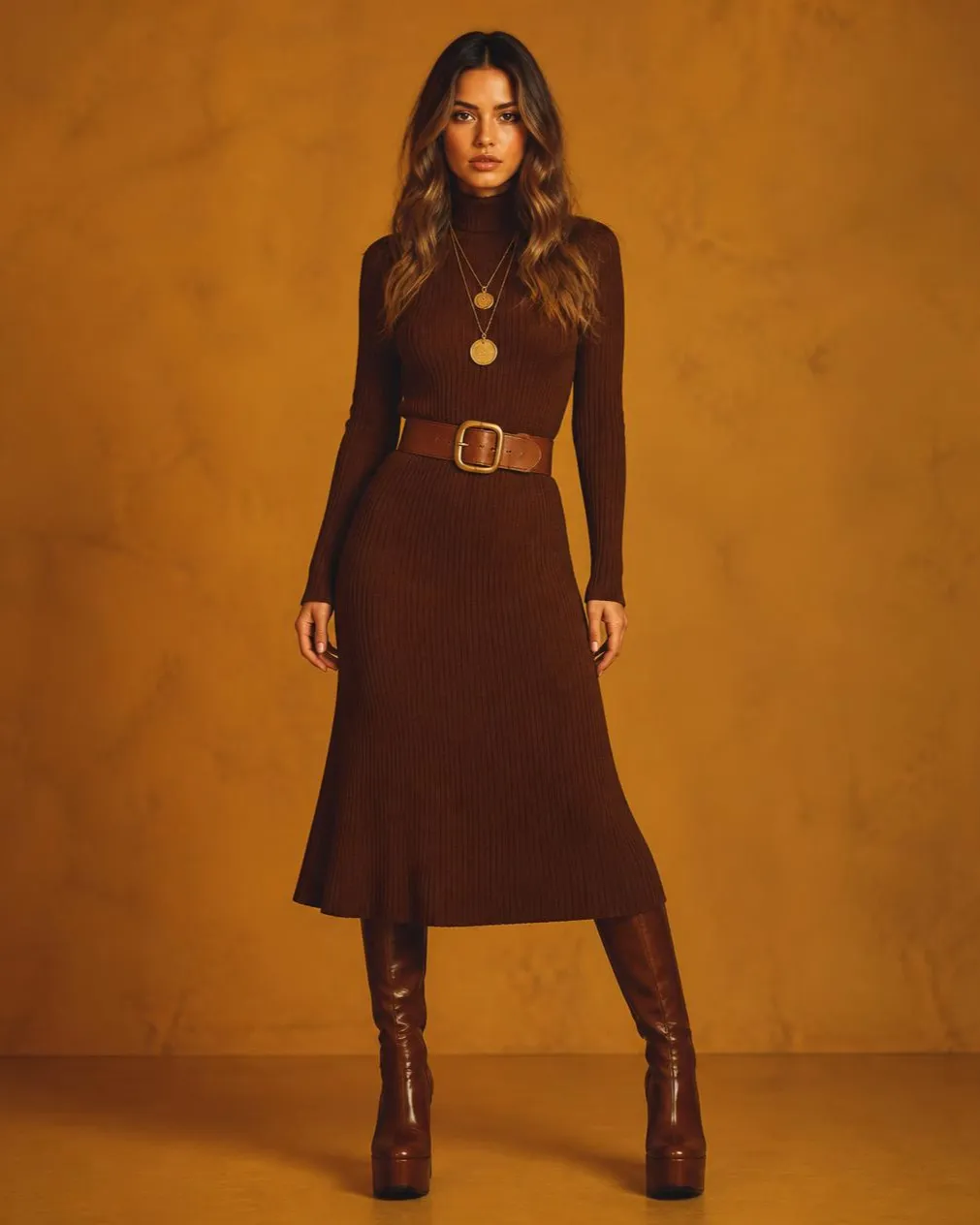
A fitted ribbed midi dress with a flared skirt, layered gold coin necklaces, a wide leather belt with a brass buckle, platform boots. The belt sits right at the point where the fitted bodice releases into the flared skirt — placing it exactly there, rather than higher or lower, is what makes the flare below read as a deliberate silhouette change instead of the dress just losing shape partway down.
Ivory Turtleneck Sweater Dress
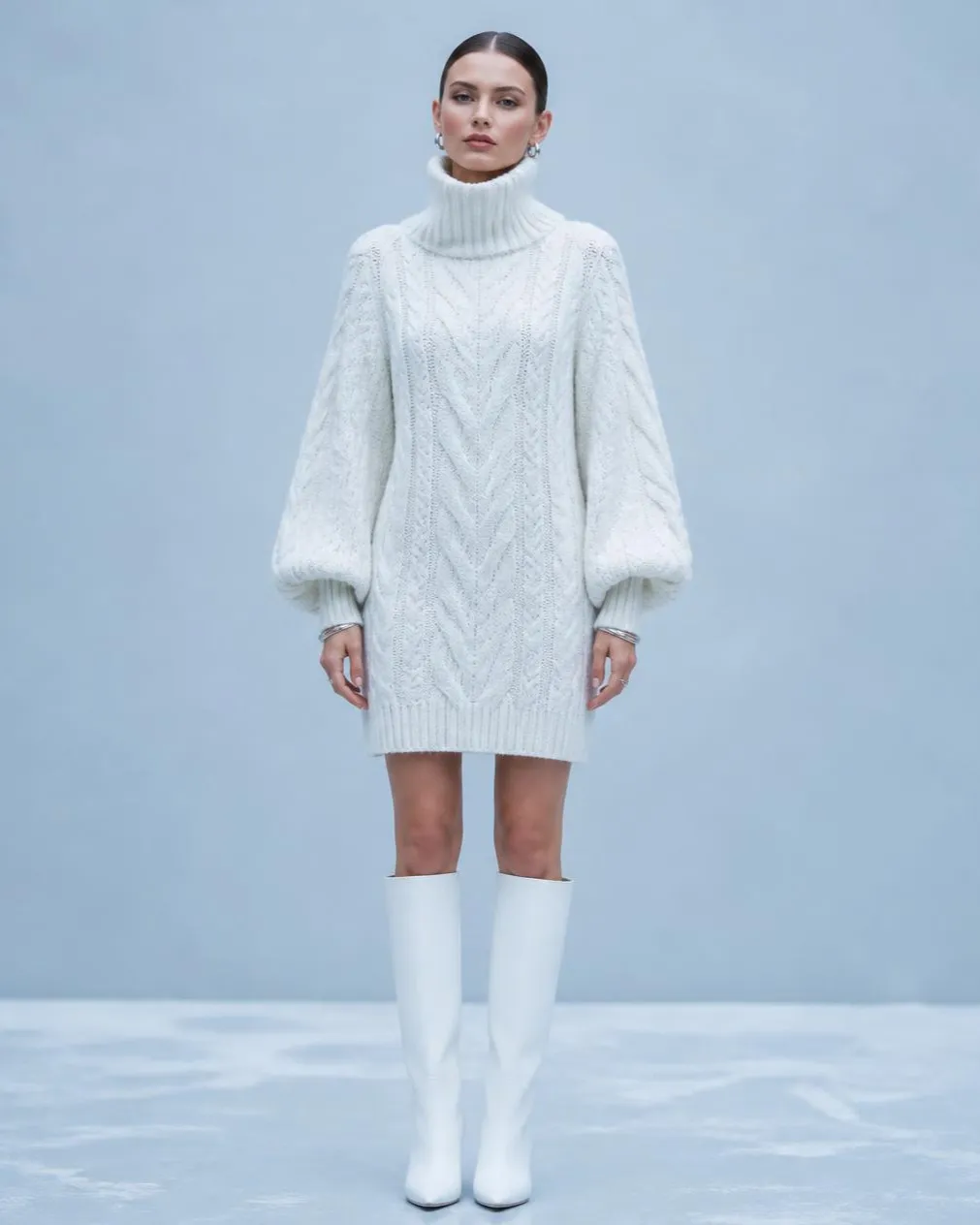
An ivory dress with oversized balloon sleeves, a turtleneck collar, vertical cable knit, white knee-high boots. Volume is concentrated entirely at the sleeve here, which is what keeps balloon sleeves from reading costumey — the vertical knit lines running down the body pull the eye lengthwise, so the outfit reads tall and structured everywhere except the one place it's meant to be dramatic.
Forest Green Dress with Oversized Shirt
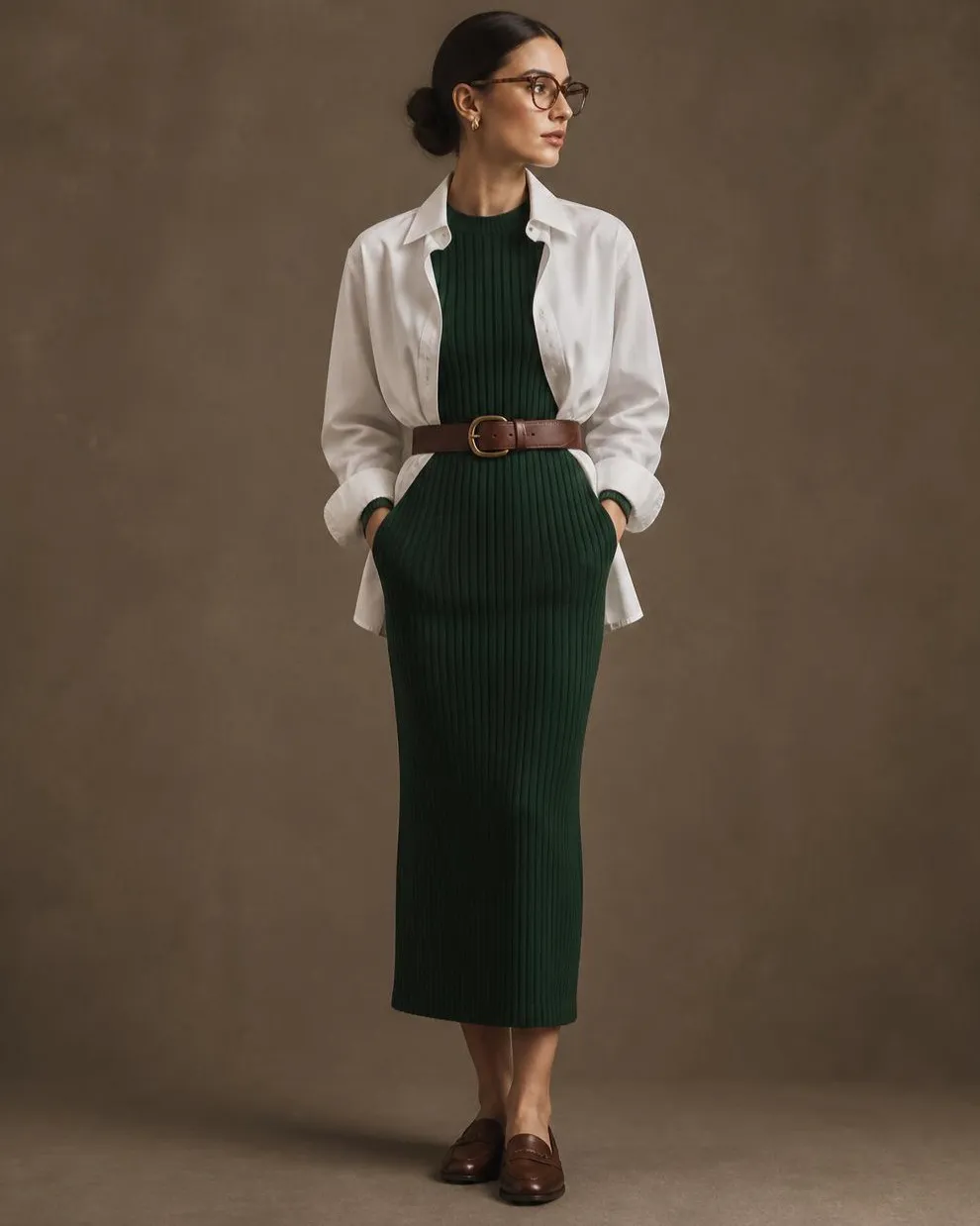
A fitted forest green ribbed dress, an oversized white shirt worn open, a wide leather belt, tortoiseshell glasses, penny loafers. The belt here is doing double duty — it defines the dress's waist and it's the only thing separating "shirt" from "dress" visually, since both pieces would otherwise blend into one undifferentiated layer without it.
Getting the Silhouette Right
Something has to mark the waist. A belt, a fitted bodice, or tights that continue the dress's line downward — pick one. The two exceptions on this list (boho duster, puffer vest) get away without one because the surrounding volume is consistent rather than mismatched.
Belt width should match knit weight. A thin belt gets lost against chunky cable knit; a wide belt can overwhelm a fine ribbed knit. Match the belt's visual weight to the dress's texture, not just the color.
Layered outerwear needs to leave the waist visible. A vest, a draped blazer, or an open shirt all work because none of them cover the point where the dress is doing its shaping. A closed, hip-length coat undoes that work entirely.
Frequently Asked Questions About Styling a Sweater Dress
How do you style a sweater dress for the office?
Choose a fitted knit in charcoal, navy, or forest green for a professional base. Layer a blazer over the top and add opaque tights underneath. Finish with loafers or block heel boots. A thin belt at the waist adds structure without looking casual.
What shoes go with a sweater dress?
Knee high boots work for most fall and winter occasions. Sneakers suit errands or travel days for a relaxed finish. Heeled sandals fit shimmer or bodycon styles for evening events. Match the shoe formality to the dress silhouette and setting.
Can you wear a sweater dress in warmer weather?
Lightweight knit blends work for early fall or cool spring evenings. Skip bulky cable knit styles in favor of thinner ribbed fabric. Pair with sandals instead of boots. Layer a light jacket for temperature swings between morning and afternoon.
How do you keep a sweater dress from looking sloppy?
Add structure with a belt at the natural waist. Choose fitted or semi fitted silhouettes over loose, shapeless cuts. Tuck in loose layers like open shirts or cardigans at one side. Accessories like jewelry and boots pull the whole outfit together.
How should you wash and care for a sweater dress?
Check the label first, since wool and cashmere blends often need hand washing. Lay the dress flat to dry and avoid hanging it, since wet knit stretches easily. Store folded rather than on a hanger during off season months to keep the shape intact.
What is budget friendly ways to style a sweater dress?
Reach for accessories already in your closet, like a basic belt or simple boots. Layer with a denim jacket instead of buying new outerwear. Costume jewelry works just as well as fine pieces for adding shine. Thrifted knits often rival new ones in quality and texture.
The Short Version
Every one of these ten works for the same underlying reason: something in the outfit tells the eye where the waist is, whether that's the dress's own fit, a belt, or consistent volume everywhere else. Find that anchor first, and the rest of the styling — color, texture, layering — is just preference.