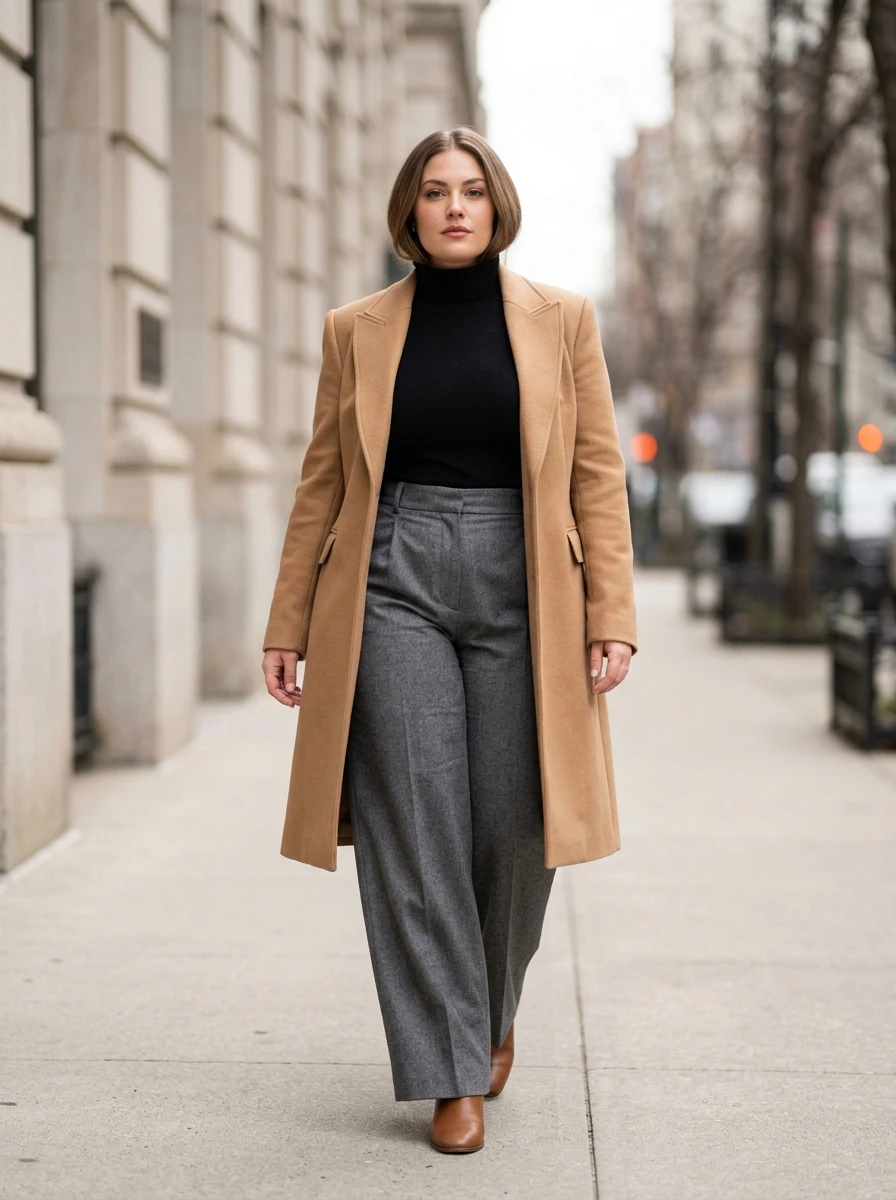
How to Style Fall Outfits for Women in 2026: 5 Looks That Flex With the Weather
How to use this guide
These are editorial styling suggestions, not a one-size-fits-all formula. Adapt each look to your wardrobe, proportions, climate, comfort, budget, and the occasion; the most useful idea is the one you can genuinely wear.
7:40 a.m., and the weather cannot make up its mind. The morning air is cold enough for a coat, the forecast promises a warm afternoon, and whatever you put on now has to survive both halves of the day without a change of clothes in between. That is the real fall problem. It is not the cold — it is the swing.
The outfits that survive the swing are built the same way: every piece does one clear job, and any piece can come off at noon without the look falling apart. A belt defines a waist. A textured fabric carries a color. A structured outer layer holds the silhouette when the temperature drops between lunch and the school run. The five looks below run on two rules — one structural anchor, one deliberate contrast — and each one shows the mechanism, not just the pieces. Swap in what you already own, keep the mechanism, and the outfit holds.
The Belt That Turns a Blazer Into an Outfit
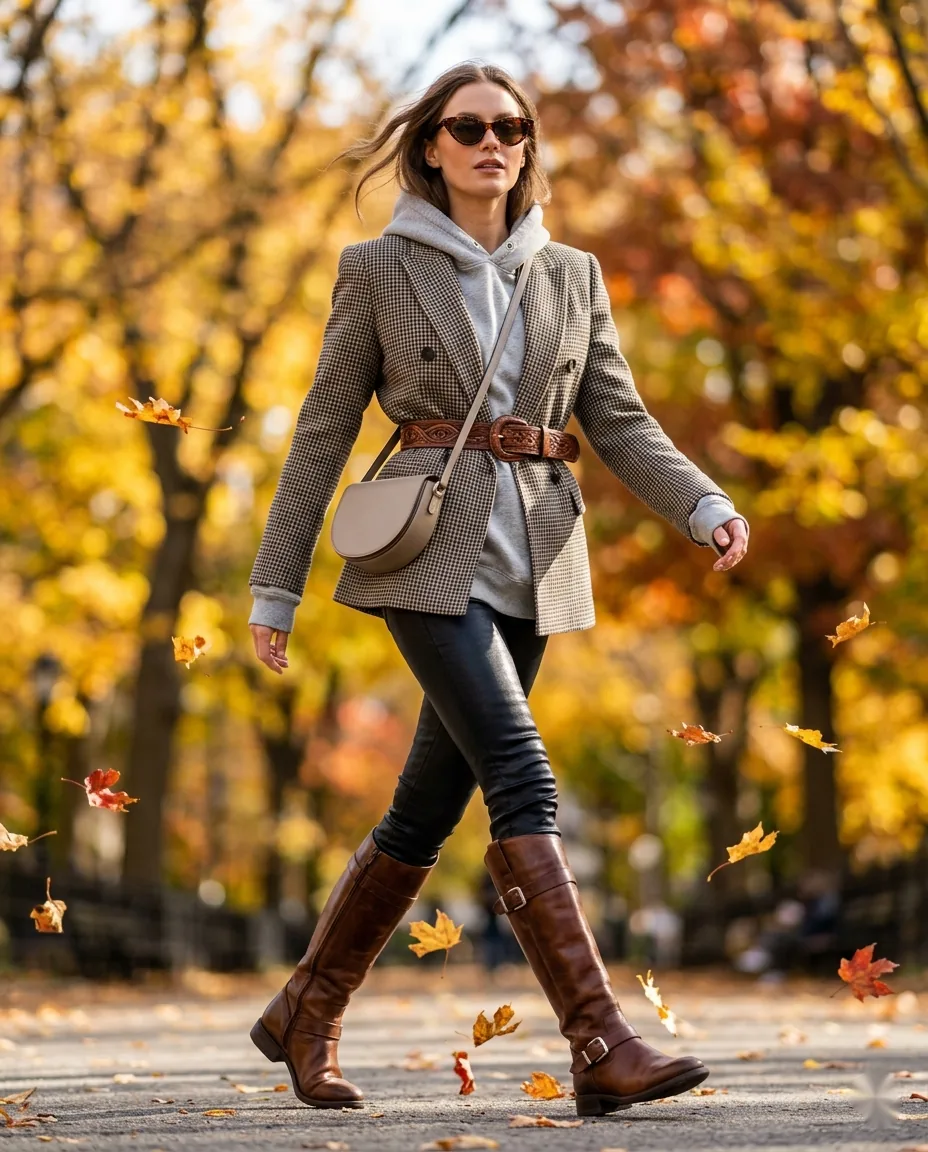
A houndstooth blazer over a grey hoodie, a wide leather belt, black leather leggings, tall brown riding boots, a beige saddle bag. The belt is the piece making this outfit work rather than just look thrown together. A blazer over a hoodie without one is two casual pieces stacked with no structure; cinched at the waist, the same two pieces suddenly read as a deliberate silhouette instead of an accident of temperature layering. More fall looks are in these fall outfit ideas, from belted blazers to tonal knits.
The houndstooth does quiet work here too. Its small-scale pattern reads as texture from a distance, which is why it sits so comfortably next to a plain grey hoodie. A loud check would fight the hoodie for attention, but houndstooth in black and cream lets the hoodie stay soft while the blazer supplies the polish. The brown riding boots warm up the whole palette, and the beige saddle bag picks up the same warm tone so the outfit has a top and a bottom that talk to each other. Black leggings keep the lower half slim, which matters under a blazer that already adds volume at the shoulder.
Wear it with: swap the hoodie for a fine knit turtleneck and the same blazer and belt read as office ready; swap the riding boots for ankle boots and it turns into a weekend errand outfit.
Fit note: the one piece that should not change is the belt. Without it, the blazer hangs straight from the shoulder and the hoodie underneath turns the whole upper half into one shapeless block. Keep the belt, change everything else, and the look survives.
Sage Meets Mustard: The Buffer Trick
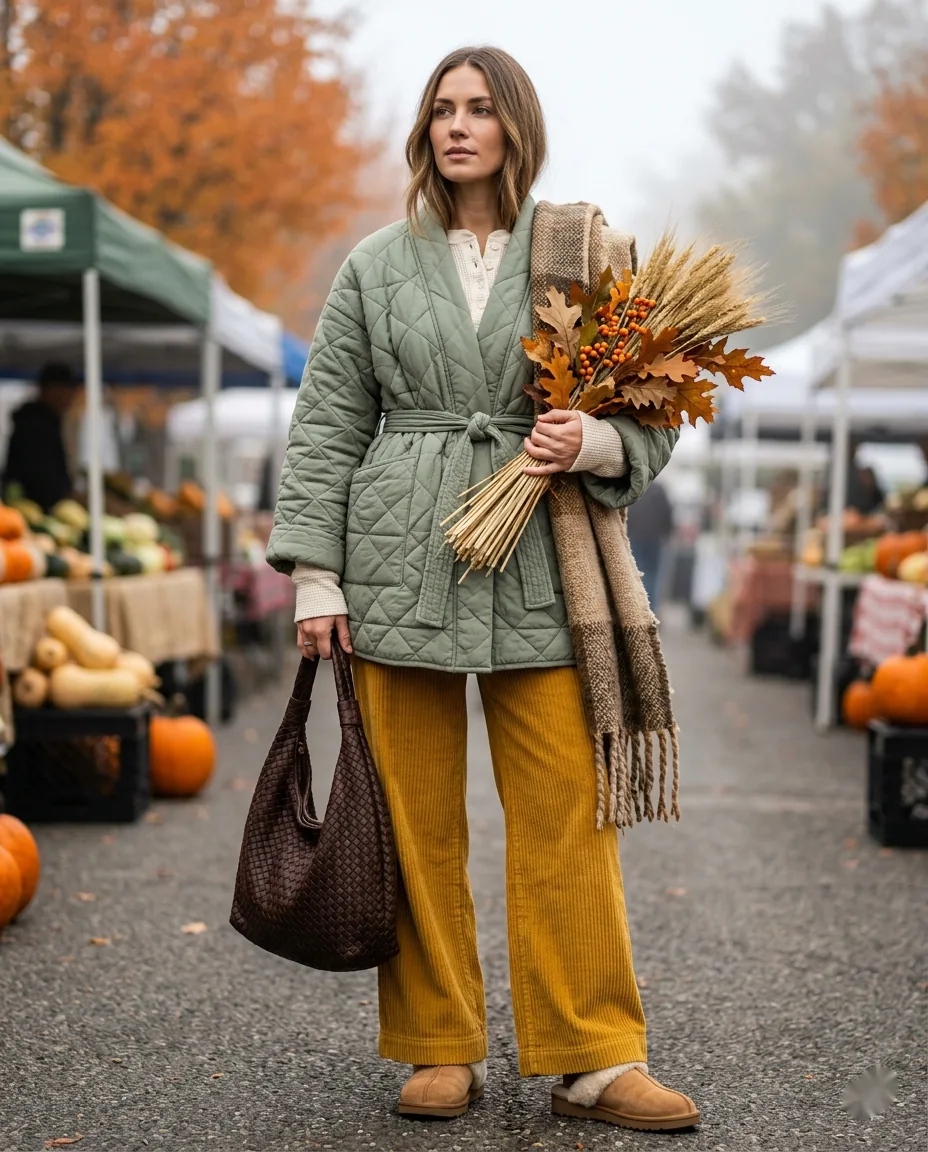
A sage quilted jacket belted at the waist, mustard corduroy wide leg trousers, a cream ribbed top, a woven scarf, UGG platform clogs, a woven tote. Corduroy's ridged texture is what makes mustard work here as a color choice. The same shade in a flat, smooth fabric would read almost neon, but texture breaks up the saturation enough that it lands as "autumnal" rather than "loud." The belt at the jacket's waist does the same proportion job as the blazer look above, just in a softer register.
The color pairing is the real lesson. Sage and mustard sit on opposite sides of the warm and cool divide, which is why they make each other look richer instead of competing. The cream ribbed top sits between them as a neutral buffer, so the two strong colors never touch directly. A woven scarf adds a third texture without adding a third color, and the woven tote echoes the scarf so the accessories feel chosen rather than random. Platform clogs keep the outfit grounded in comfort, and their chunky sole balances the width of the corduroy trousers.
Fabric note: corduroy's ridges do the color work — they scatter light so a saturated mustard reads as texture first, color second. The same trick works in reverse: a flat fabric in a loud color has nowhere to hide.
This look is built for mornings that start cold and end warm. The quilted jacket unzips and drapes over an arm without ruining the outfit, because the cream top and the belted waist are doing the shaping on their own. If the clogs feel too casual for your day, swap them for suede ankle boots in the same tan family and nothing else needs to change. The trousers are the statement, so keep everything above the waist quiet and let the mustard do the talking.
A closer look at this is in adidas samba outfits for fall.
One Rigid Piece, One Relaxed Piece
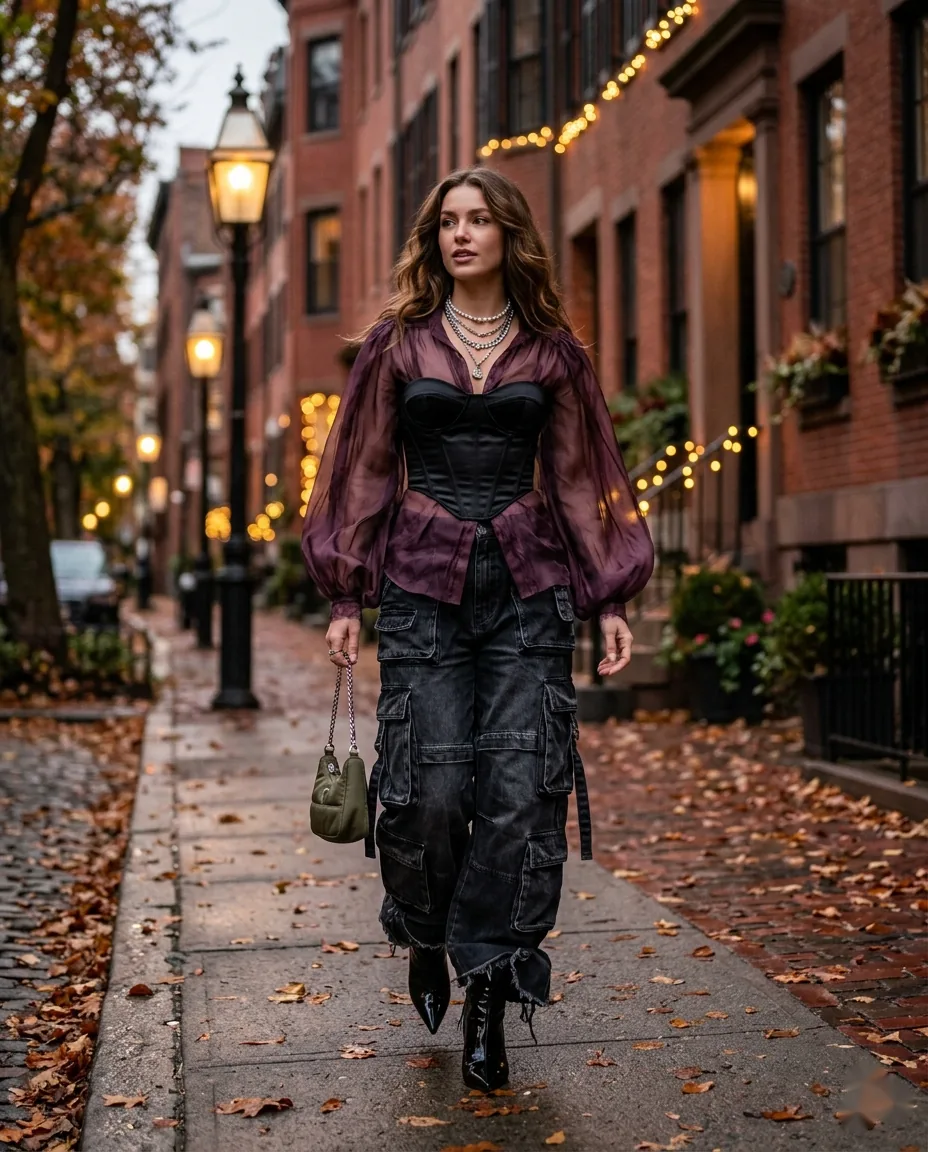
A plum organza blouse over a black structured corset, black cargo pants, patent pointed toe boots, stacked silver necklaces, a small olive chain strap bag. Cargo pants under a corset is a genuine study in proportion contrast. One piece is fitted and rigid, the other loose and utilitarian, and the pairing only reads as intentional because the top half commits fully to structure. A softer, unstructured blouse in the same outfit would make the cargo pants look like an afterthought instead of a choice.
The organza is doing the most delicate work in the outfit. It softens the corset without hiding it, so the structure shows through a sheer layer and the whole top half gains depth. Plum is the right color for that job, dark enough to sit with black, warm enough to keep the outfit from reading as pure goth. Silver jewelry is the correct metal here, since gold would warm the palette toward autumn coziness and silver keeps the edge. The olive bag is the one quiet note, a muted green that stops the black and plum from becoming a two-color uniform.
Wear it with: the corset and the patent boots are already evening ready, so all it takes is swapping the cargo pants for a slim black trouser and the outfit moves from street to dinner without a full change.
Fit note: if the corset feels too bold for daytime, layer the organza blouse over a plain black camisole first and add the corset on top only once you are out for the night. The mechanism stays the same either way: one rigid piece on top, one relaxed piece below, and nothing in between to blur the line.
The Warm Color That Rescues Navy Satin
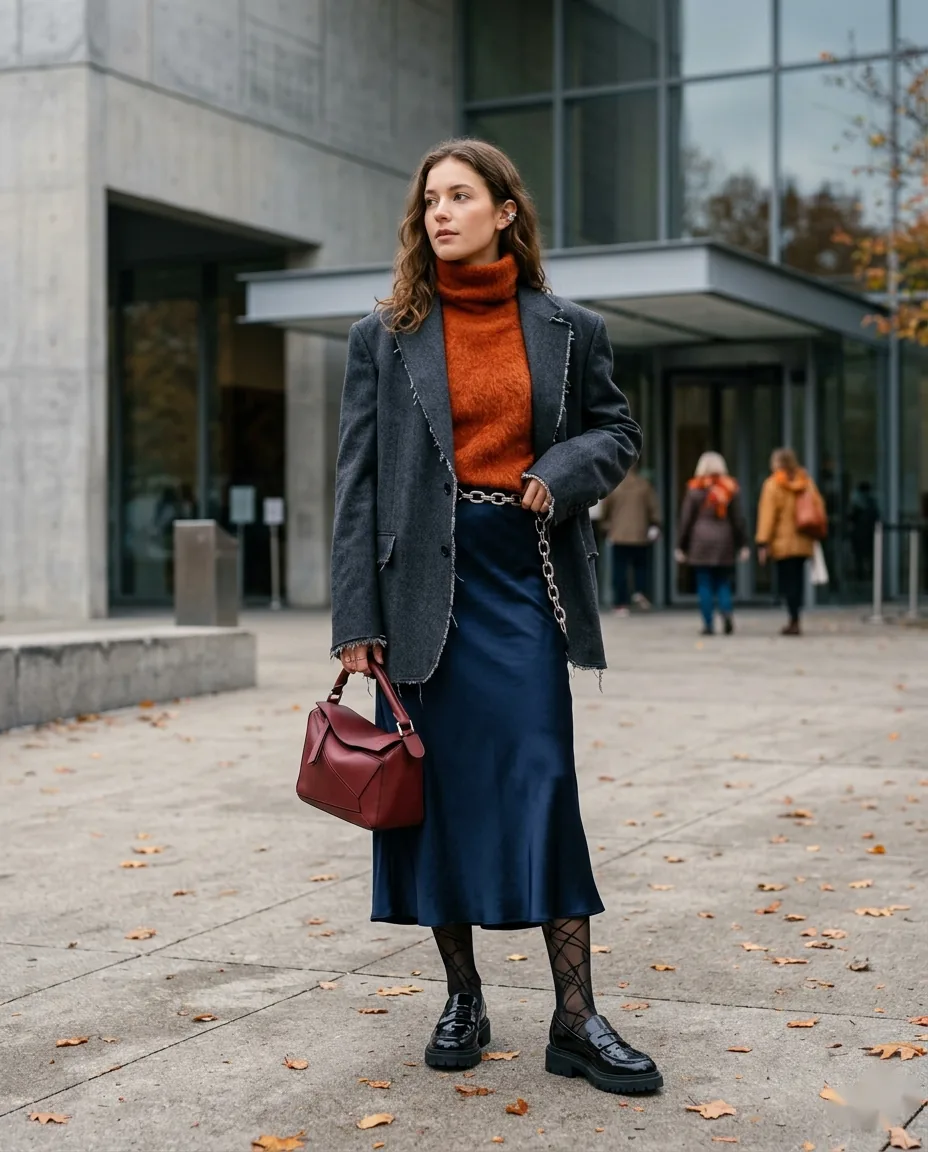
A burnt orange fuzzy turtleneck, a frayed hem grey blazer, a navy satin midi skirt, a silver chain belt, fishnet tights, patent loafers. Satin against chunky knit is a genuine fabric weight contrast, not just a color pairing. The skirt's sheen catches light in a way the turtleneck's texture absorbs, so even in a muted palette the outfit has visual movement between matte and shine. The chain belt worn loose rather than cinched tight keeps it reading as jewelry, which matters since a fitted belt here would compete with the frayed blazer hem for attention.
The burnt orange is doing a specific job that a safer color could not. Navy satin on its own can read as evening wear, and grey blazer on its own can read as office wear, but the warm orange turtleneck pulls both pieces into daytime. It is the color that makes the outfit feel like fall rather than like a formal event. Fishnet tights add a small amount of edge without adding color, and patent loafers repeat the satin's shine at the floor so the gloss is not confined to one half of the outfit. The frayed hem on the blazer is the deliberate imperfection that keeps all this polish from feeling stiff.
Care tip: this is the most office friendly of the five with one swap. Trade the fishnet tights for opaque black tights and the patent loafers for plain leather ones, and the outfit walks into a meeting without losing its character. The turtleneck stays, the satin stays, and the contrast between chunky knit and smooth satin still does the styling work. If the morning is cold, add a long wool coat in charcoal over the top. The coat covers the blazer but the turtleneck collar and the satin hem still show, so the outfit underneath keeps reading.
A closer look at this is in blockette outfit ideas: the viral coquette sportswear trend.
Rust on Rust: One Tonal Family, One Break
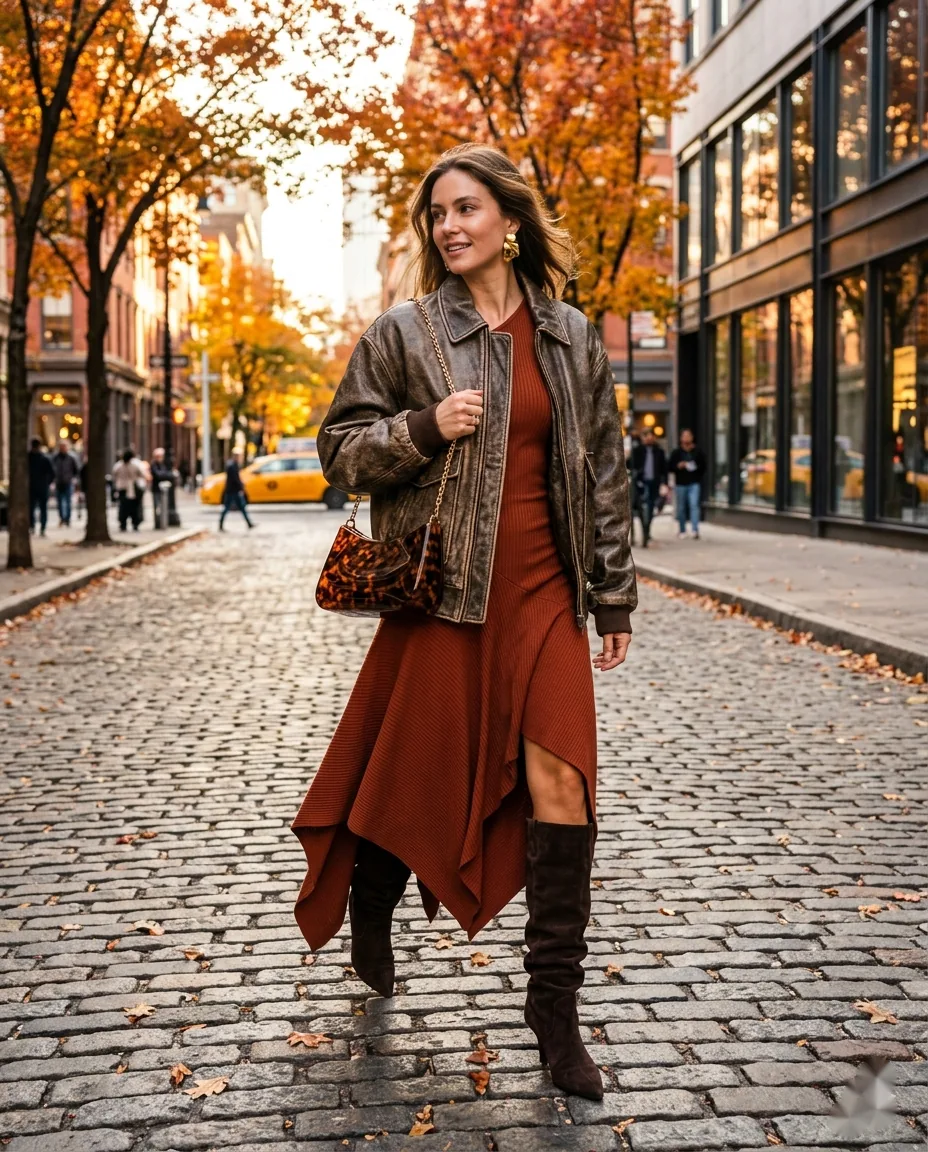
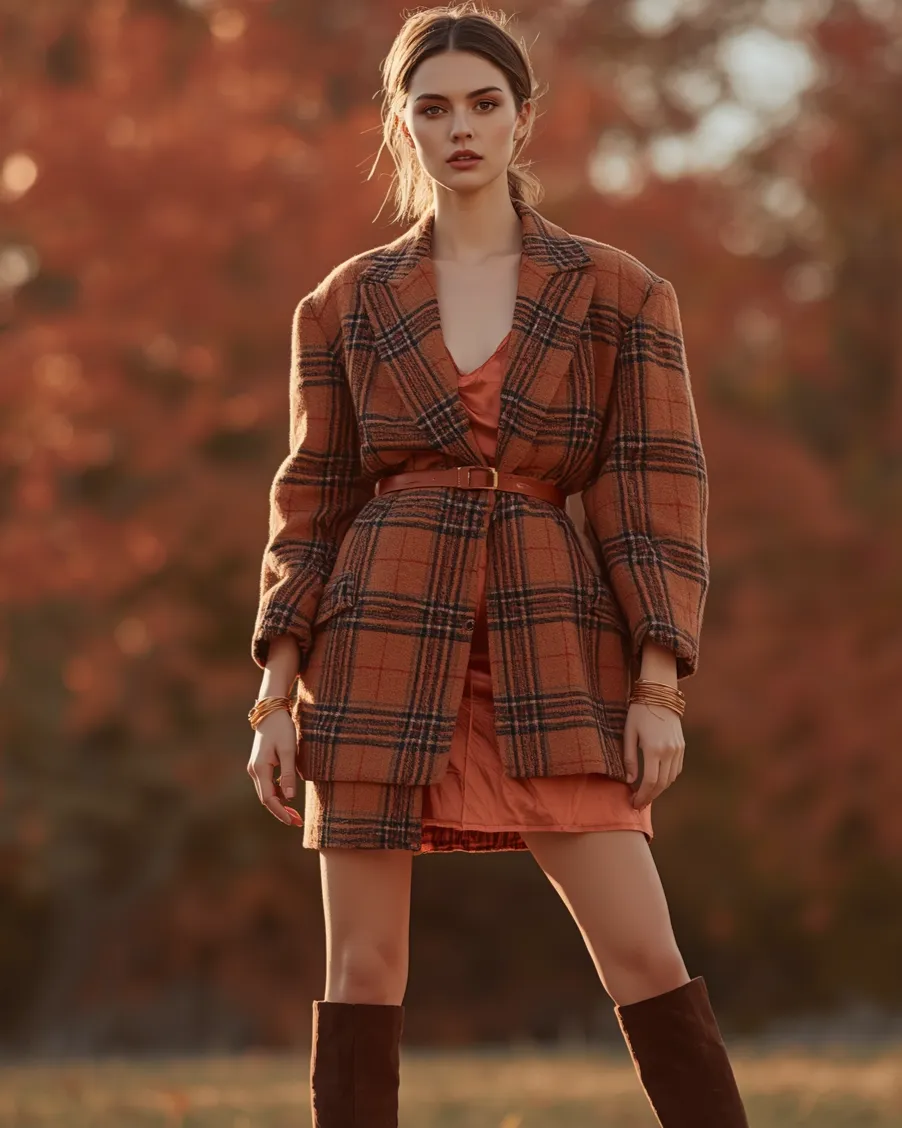
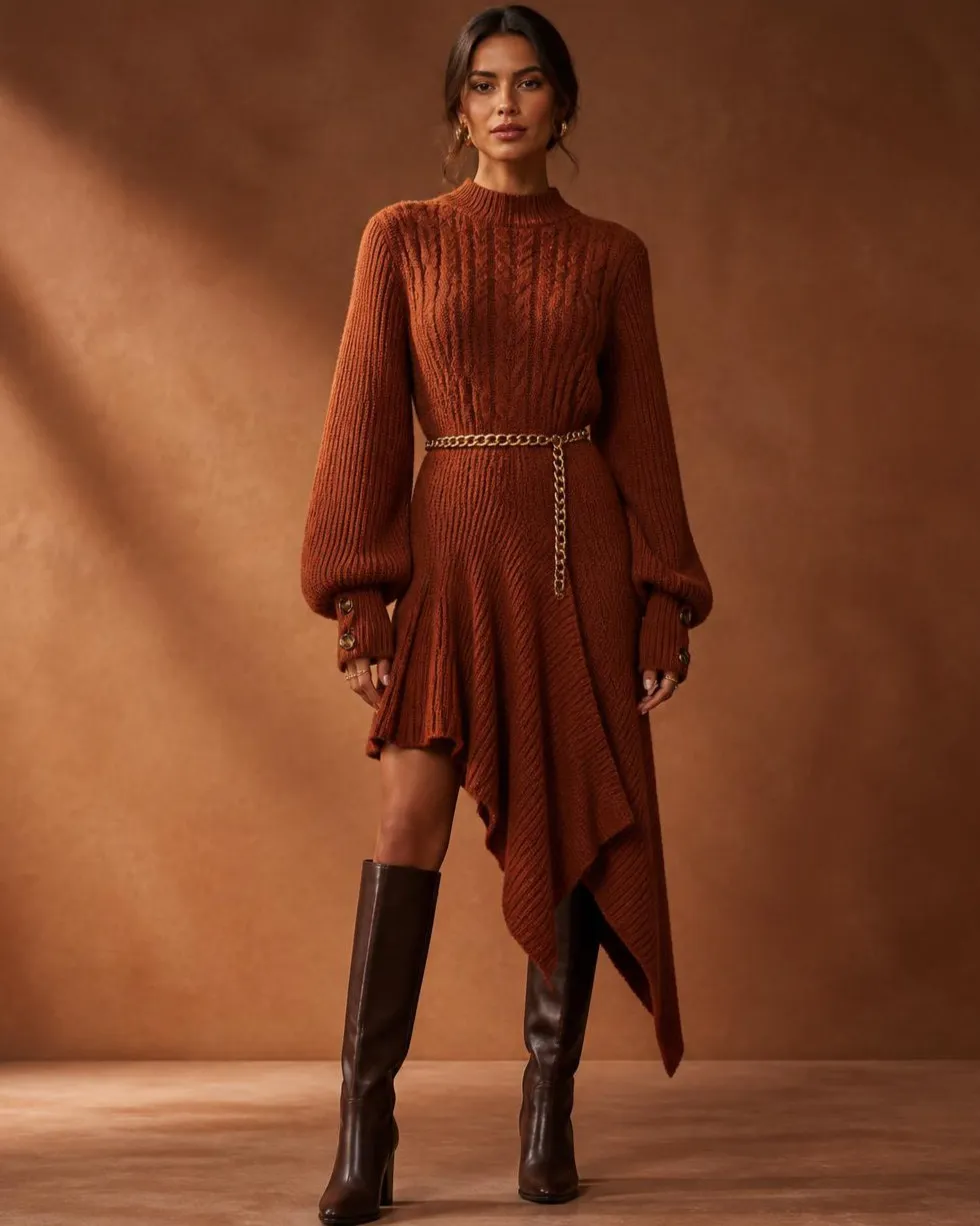
A rust ribbed knit dress with an asymmetric hem, a distressed brown leather bomber, suede over the knee boots, a tortoiseshell velvet bag, gold earrings. Staying within one tonal family, rust, brown, chocolate, from dress to jacket to boots is what makes this read as intentional monochrome rather than just "things that happened to be brown." The asymmetric hem is the one deliberate break in an otherwise uniform silhouette, which is what keeps the outfit from looking flat despite the single-tone palette.
A knit dress is the easiest version of this tonal trick, since the dress already supplies the color, the warmth, and the silhouette in one piece, and the bomber only has to add edge. The distressed leather matters here. A clean, polished leather jacket would make the outfit read as too finished, while the worn finish matches the softness of the knit and keeps the whole look relaxed. Suede over the knee boots extend the tonal story down the leg, and their matte finish stops the outfit from going glossy. Gold earrings are the right metal against rust and brown, since gold picks up the warmth in both colors where silver would sit cold against them.
Wear it with: gold jewelry over silver here — gold picks up the warmth in rust and brown, while silver would sit cold against the whole palette.
A knit dress is also the easiest piece in this guide to style on a busy morning, and these sweater dress outfits for fall and winter show ten ways to keep the knit from reading shapeless. The same waist defining logic applies: a belt, a fitted bodice, or a cropped layer that leaves the waist visible. Here the bomber does that job by ending at the hip, so the dress's shape shows below it. For a colder day, add opaque tights and a long coat in chocolate brown over the bomber. The coat adds warmth without hiding the tonal palette, and the boots still show below the hem.
The Palette Is the Plan
All five looks share one palette, which is why they work as a capsule rather than five separate outfits. When the colors agree, the pieces start to combine on their own: the grey blazer from the silk skirt outfit works over the rust knit dress, and the brown riding boots from the blazer look work under the corduroy trousers.
| Role | Colors |
|---|---|
| Base neutrals | Charcoal, navy, black |
| Warm anchors | Rust, camel, burgundy |
| Supporting players | Olive, cream |
Build the palette before you build the outfits. Pick the two colors you already wear most, then add one new color per outfit rather than buying a whole new wardrobe in one go. If you live in black and denim, start with burgundy and camel. If you live in cream and brown, start with rust and olive. Two base neutrals plus two accent colors will carry a whole season, and every piece you add after that should earn its place by fitting the palette first. A shared palette only works if the layers underneath cooperate, which is where the layering guide earns its keep.
Three Habits That Keep Fall Layers Clean
Start with a fitted base
Layer with intention: start with a fitted base layer, add one mid-weight piece like a sweater or vest, and finish with a structured outer layer such as a blazer or coat. The order matters as much as the pieces. A fitted base stops the layers above it from sliding around, a mid-weight piece supplies the warmth, and the outer layer supplies the shape. Skip the fitted base and the whole stack turns into a shapeless pile by noon.
One matte, one shine
Stick to a seasonal palette of rust, camel, burgundy, and charcoal to tie separate pieces together, and don't be afraid to mix textures like silk and knitwear in the same outfit for visual depth without adding bulk. Texture is the cheapest way to make a simple outfit look considered. A smooth satin skirt next to a chunky knit reads as deliberate, while two smooth fabrics in the same color read as a uniform. Mix one matte texture with one shine in every outfit and the look gains movement without gaining weight.
Let one accessory do the swapping
Keep one or two statement accessories in rotation, like a structured bag or a bold boot, so the same core outfits feel refreshed without buying anything new each week. Accessories are also the easiest way to change the register of an outfit. Swap a woven tote for a structured leather bag and the farmers market look turns into a lunch outfit. Swap loafers for over the knee boots and the silk skirt look turns into an evening outfit. Footwear does the most work of any single swap, so if you buy one new thing for fall, make it a boot in a color your palette already holds.
Questions About These Five Looks
Which of these five looks should I build first?
The blazer and boots look. It is the easiest to adapt — the belt is the only piece that must stay, and everything else swaps freely: a fine knit turtleneck for the hoodie makes it office ready, ankle boots instead of riding boots make it a weekend outfit. The rust knit dress is the second-easiest start, because the dress does most of the work in a single piece.
How do I layer without looking bulky?
Choose one fitted piece and one looser piece per outfit rather than stacking multiple oversized layers. A slim turtleneck under a relaxed blazer, for example, keeps the silhouette balanced instead of shapeless. The fitted base is the part that matters most — without it, the layers above slide around and the whole stack turns into a pile by noon.
Can the silk skirt look actually go to the office?
Yes, with one swap: trade the fishnet tights for opaque black tights and the patent loafers for plain leather ones. The turtleneck and the satin stay, so the chunky-knit-versus-smooth-satin contrast still does the styling work — it just reads as polished instead of edgy. Add a long charcoal wool coat on cold mornings and the outfit still shows its collar and hem.
What colors are trending for fall 2026?
Deep, warm neutrals dominate this season, including rust, camel, burgundy, and chocolate brown, alongside darker accent tones like forest green and black. These pair easily across denim, knitwear, and outerwear — and they are the same palette the five looks above are built on, so one new color at a time is enough to stay current.
Before You Leave the House: The Fall Checklist
- One anchor doing the shaping — a belt, a corset, a fitted base layer, or a cropped jacket that ends where the skirt begins?
- One contrast — matte against shine, fitted against loose, soft knit against hard leather?
- Palette agrees — two base neutrals plus one or two warm accents, nothing fighting the rest?
- A layer you can shed at noon without the outfit collapsing underneath it?
- Shoes matched to the day — boots for the swing, loafers for the office?
Get the anchor and the contrast right and the outfit reads as styled even when every piece in it came from your own closet.
For more ideas along these lines, browse dark academia outfit ideas for fall and autumn color trends this year.