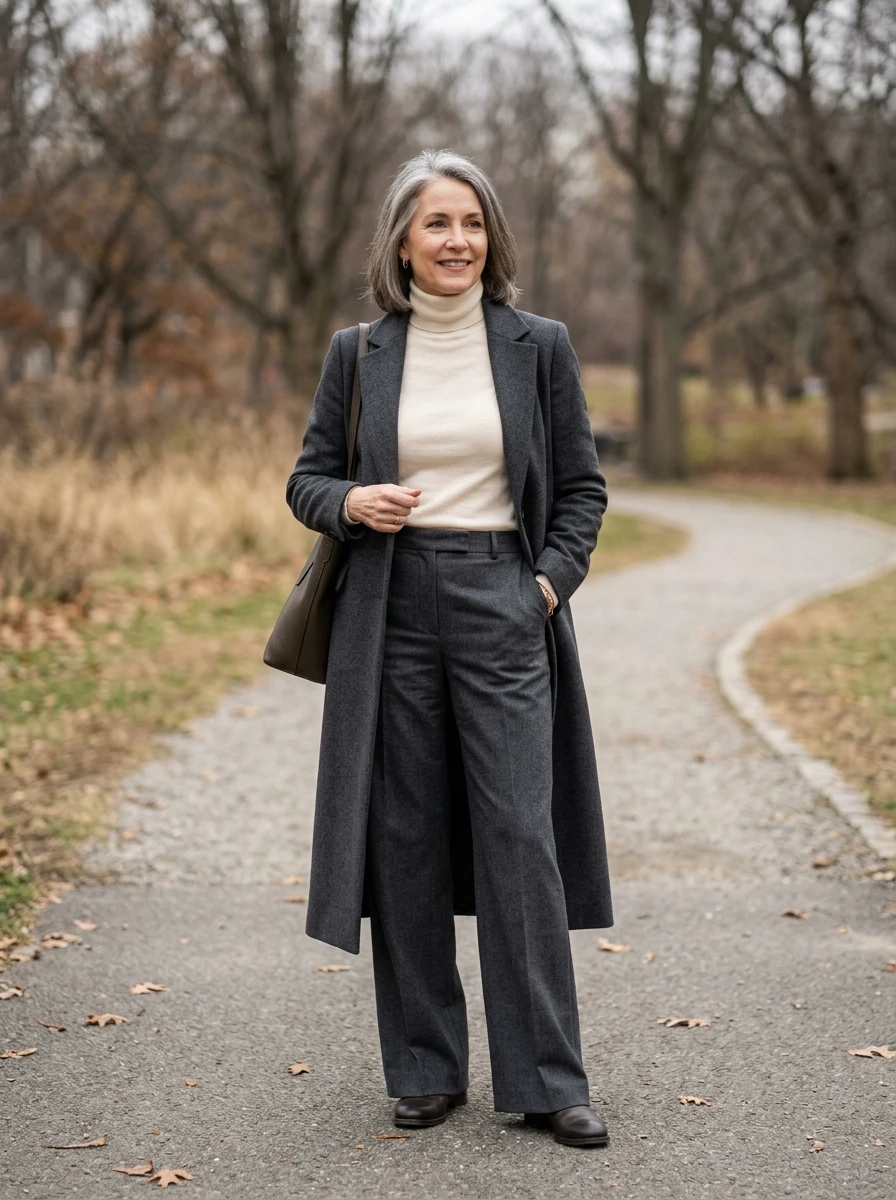
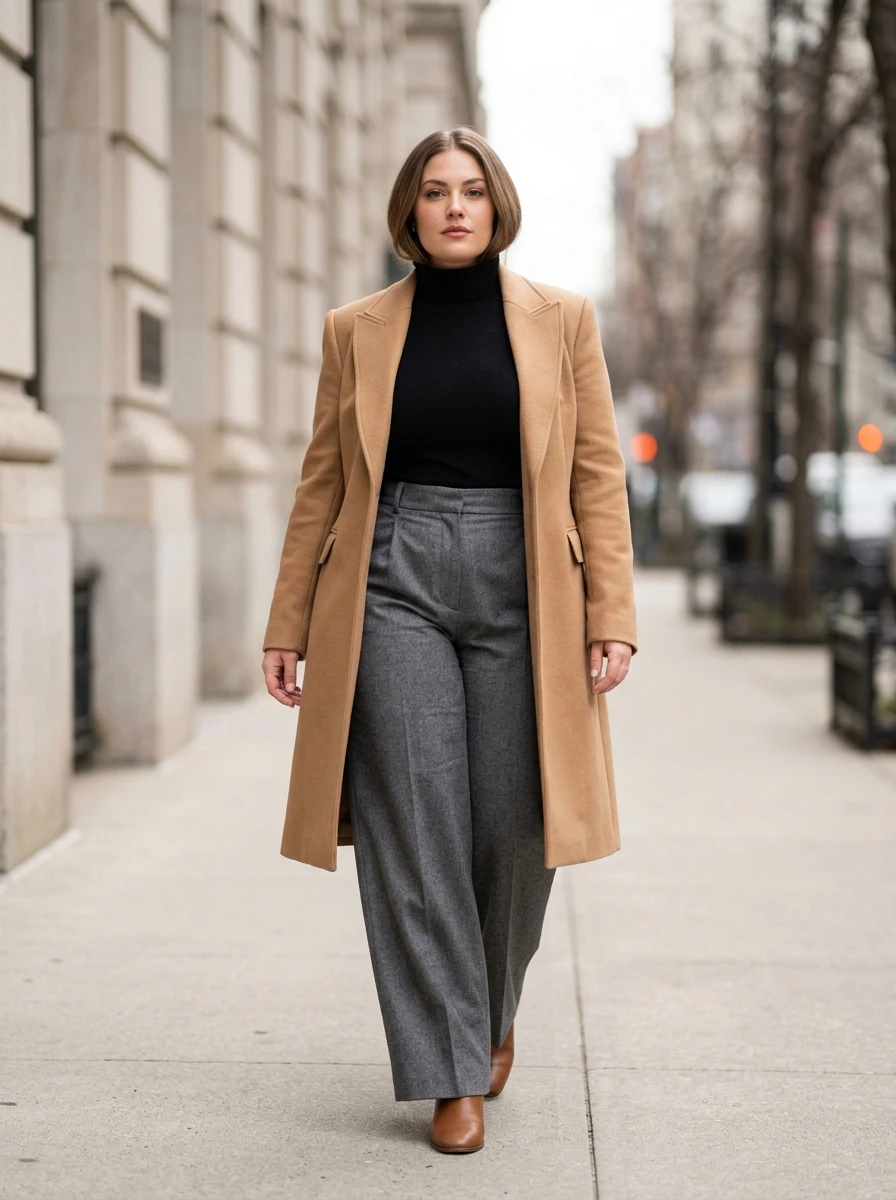
Club Outfits for Women: How to Dress for a Night Out
How to use this guide
These are editorial styling suggestions, not a one-size-fits-all formula. Adapt each look to your wardrobe, proportions, climate, comfort, budget, and the occasion; the most useful idea is the one you can genuinely wear.
What makes a night out outfit work has very little to do with how it looks on the hanger. A nightclub is a strange environment to dress for, and most club outfits fail for the same three reasons: they disappear under low light, they fight your body once you start moving, and they turn into a sauna by midnight.
So before the ideas, the principles I actually dress by. First, light behavior. Strobes and phone flashes rule here. Satin, sequins, metallics, and patent finishes catch that light and throw it back — matte black cotton just absorbs it and you vanish in photos. Second, movement. Everything gets danced in: A-line and slip cuts move with you; bodycon and stiff tailoring resist you. Third, heat. A packed club runs much warmer than outside — breathable fabrics and minimal layers are thermodynamics, not styling. And the golden rule: pick one statement zone — legs, neckline, or back.
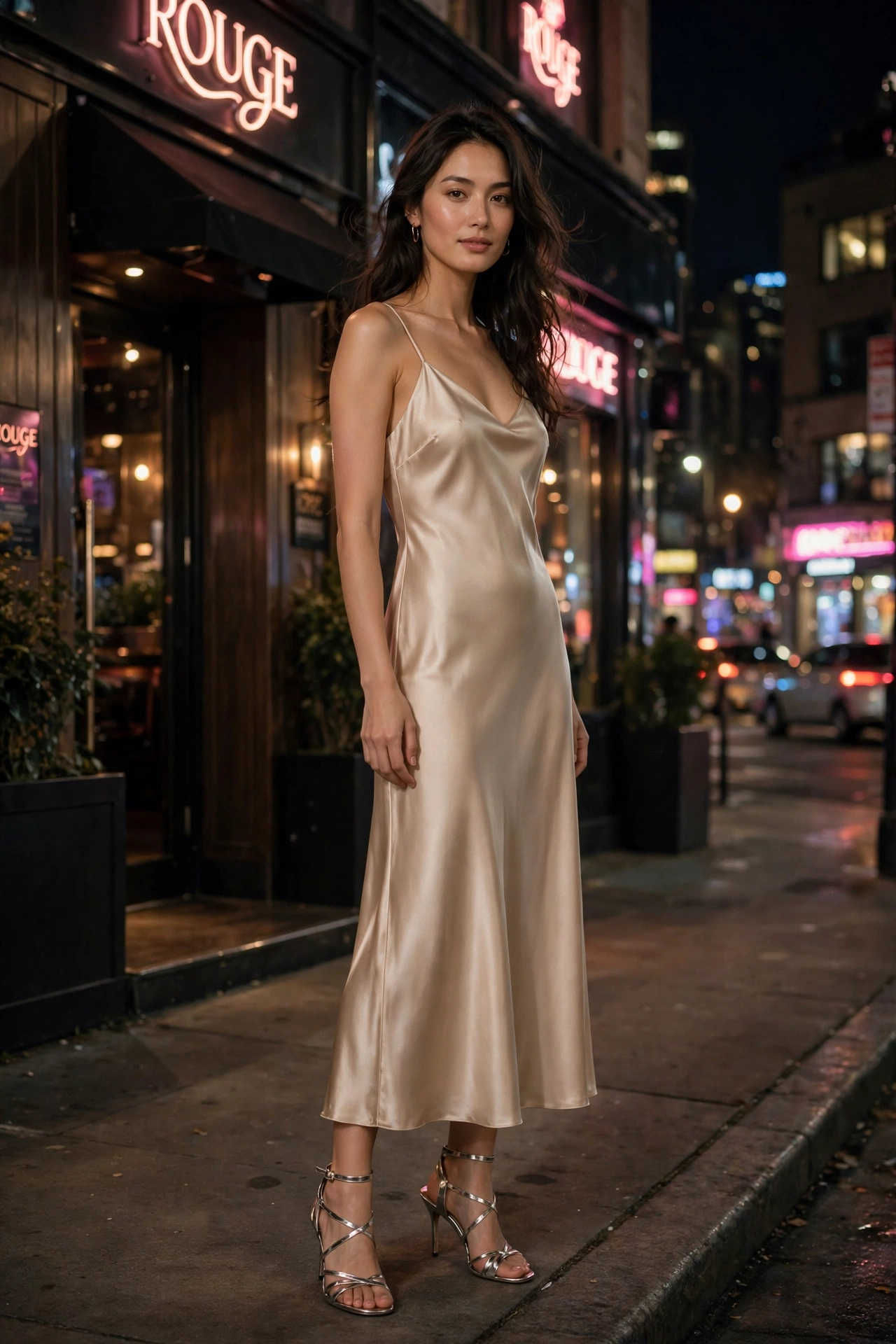
Champagne Satin Slip Dress with Strappy Heels
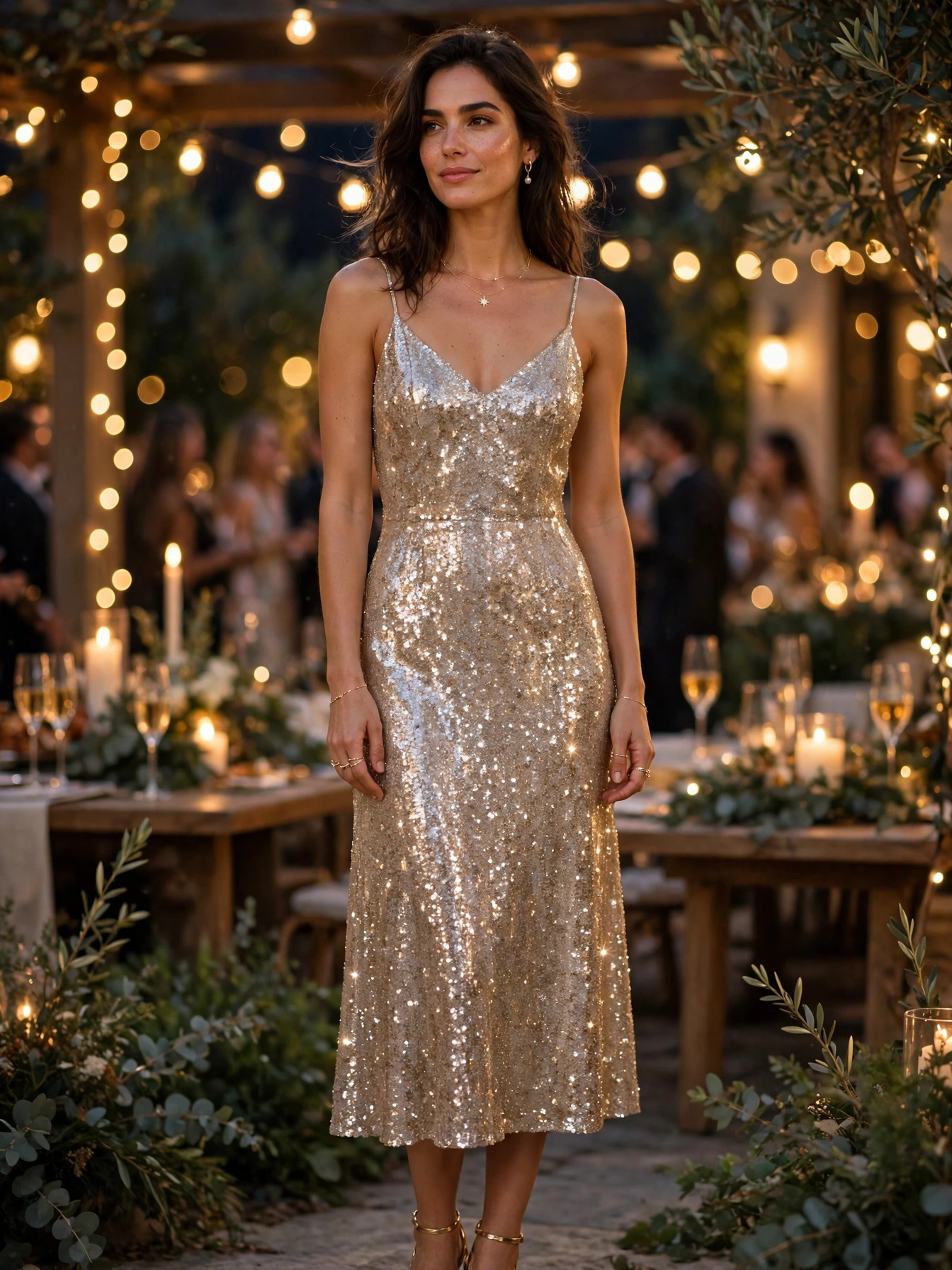
A bias-cut satin slip in champagne or warm gold drapes instead of clinging, skimming the body and moving like liquid when you dance, while satin's smooth face reflects strobe light in long highlights that photograph beautifully. Choose a midi length hitting mid-calf — it keeps the look expensive rather than obvious — with barely-there strappy heels in a matching metallic tone. Keep jewelry minimal: small hoops or a single cuff, because the fabric is already doing the visual work. Fabric choice decides everything: charmeuse drapes beautifully but snags and shows every line, demanding seamless undergarments; crepe-back satin is heavier, more forgiving, and holds its shape all night. Champagne flatters warm undertones, silver-champagne suits cool ones — both beat stark white, which blows out under flash. A 2.5 to 3-inch strappy heel with an ankle strap stays put while dancing. For cooler months, layer a cropped faux-fur jacket over the shoulders — plush texture against sleek satin is a classic evening contrast that also solves the warmth problem.
Fabric note: crepe-back satin is the safer pick for a long night; charmeuse looks liquid but needs seamless undergarments and snags easily. More night out ideas are in these party outfits, from slip dresses to sequins.
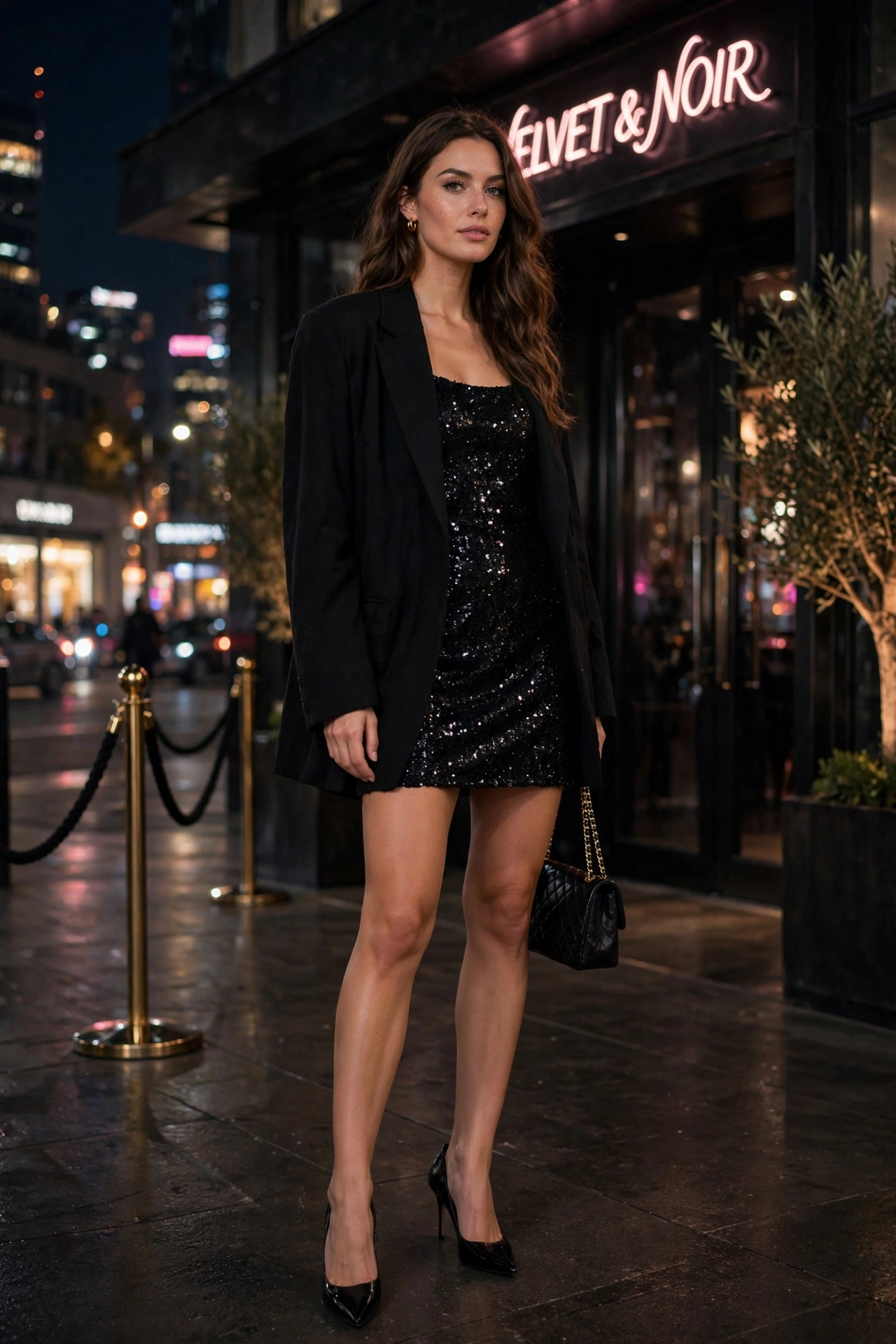
Black Sequin Mini, Balanced with an Oversized Blazer
Sequins under club lighting are wearable light fixtures — every disc catches a different strobe angle, which is why sequin minis dominate dance-floor photos. The oversized blazer keeps it from reading costume-y: a single-breasted wool-blend blazer worn open, sleeves pushed to the elbow, adds a long vertical line balancing the mini's flash of leg. A simple black bralette underneath keeps the neckline clean. Finish with pointed-toe pumps to extend the leg line. Shop sequins by density: overlapping fish-scale sequins on mesh backing breathe and move, while sparse glued discs shed and trap heat. A lined interior is non-negotiable. The blazer should be genuinely oversized — borrowed-from-him proportions — because the volume contrast is the whole trick. Pointed-toe pumps in black patent echo the sequins' shine. If the blazer feels too much indoors, drape it over your shoulders like a cape — the off-shoulder drape reads effortlessly chic and preserves the vertical line.
Wear it with: black patent pointed-toe pumps and a simple black bralette; keep the blazer genuinely oversized so the volume contrast works. If sequins feel like too much, the little black dress is the quieter classic that works for the same night.
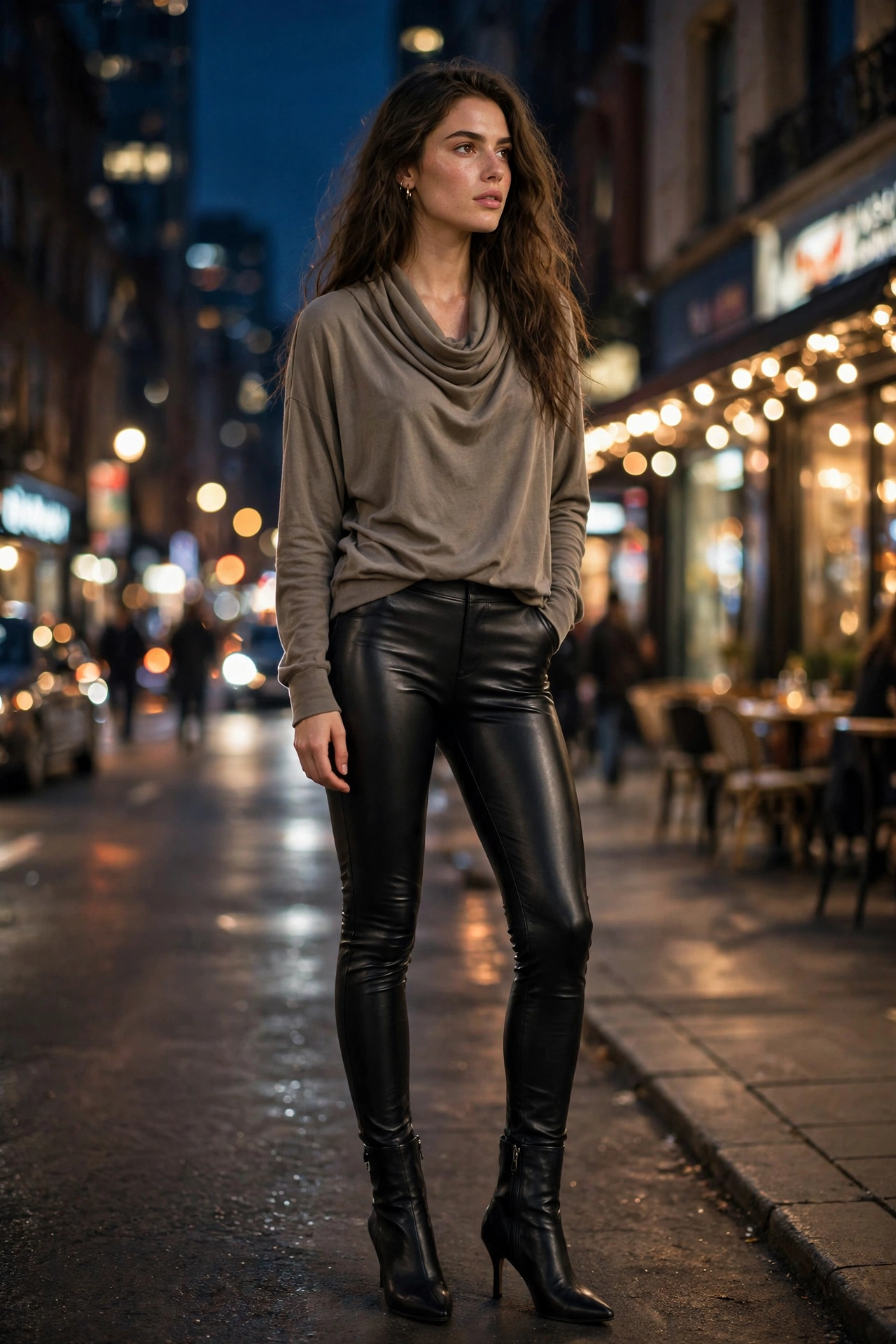
Leather-Look Leggings and a Draped Cowl Top
Faux-leather leggings solve the club equation: the coated surface has a subtle sheen that reads under low light, the high waist and stretch hold everything smooth through hours of movement, and unlike real leather they breathe enough to survive the heat. A draped cowl-neck top in fluid jersey creates soft folds at the neckline — shadow and depth that flat tops can't — drawing the eye up and balancing the leggings' second-skin lower half. Check construction: polyurethane-coated leggings with jersey backing stretch and recover; cheap PVC cracks within months. A 4-inch waistband with internal elastic stays put dancing. The cowl works best in medium-weight viscose jersey — fluid but substantial. Heeled ankle boots with a block heel and a long pendant complete it. For extra polish, choose a cowl top with a subtle metallic thread — the faint shimmer ties the top to the leggings' sheen without matching exactly. A sleek low bun keeps focus on the neckline drape, which is the whole point of the cowl.
Fit note: the waistband should sit high with internal elastic; a narrow waistband rolls down once you start dancing.
Velvet Wrap Dress in Emerald or Burgundy
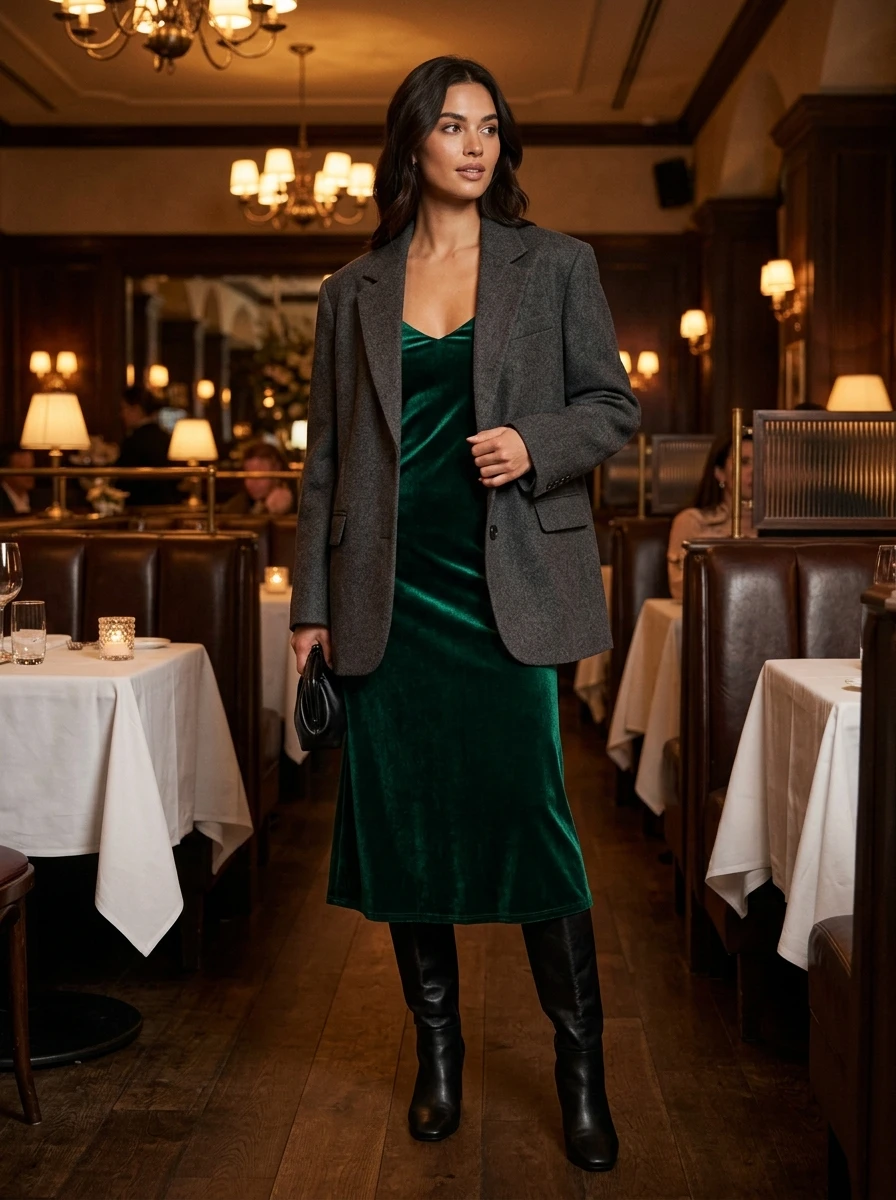
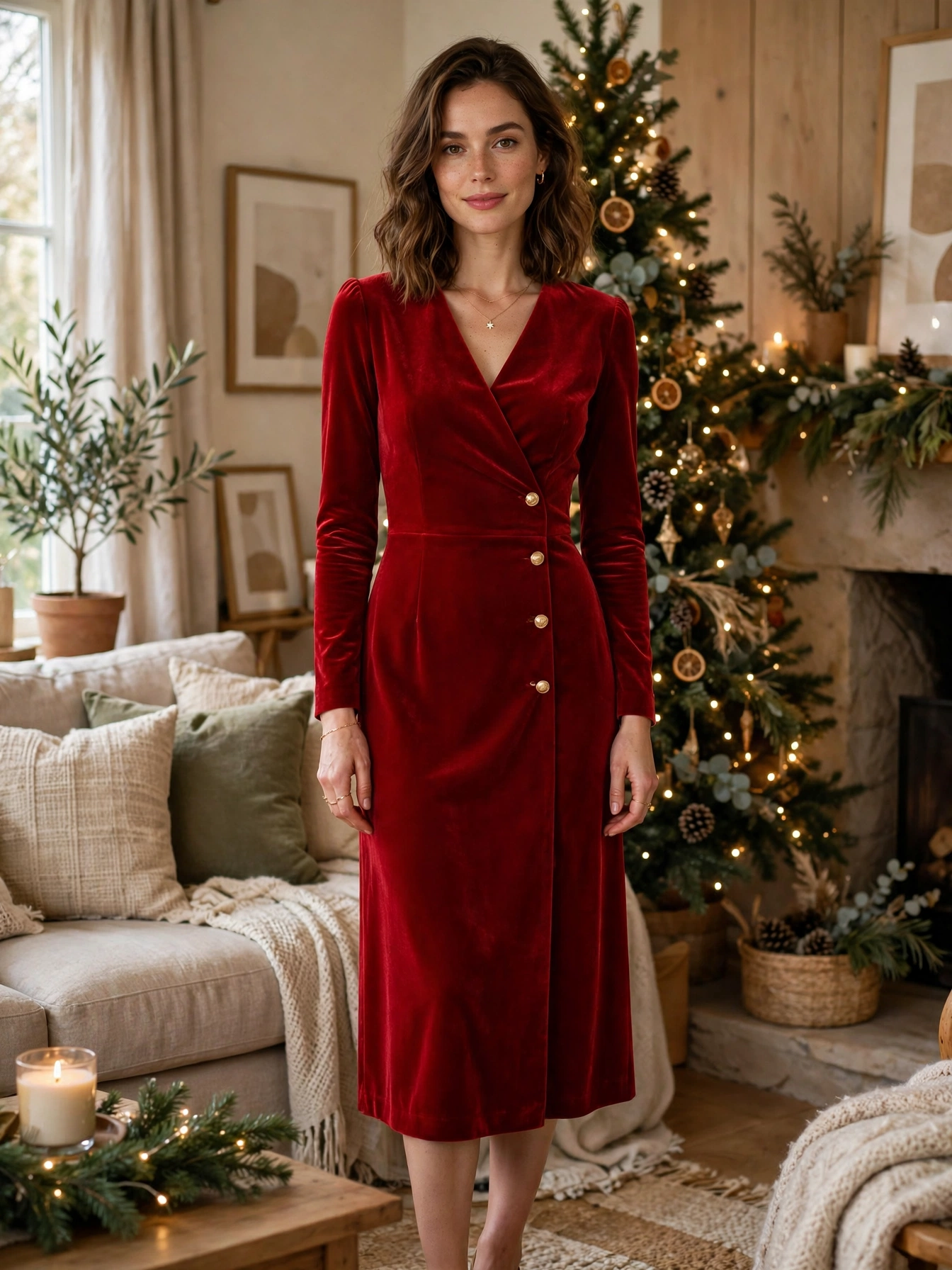
Velvet's pile absorbs light in the folds and reflects it on the ridges, creating depth that reads as richness even in near-darkness — the cold-weather club fabric. A wrap silhouette doubles the smart: the V-neckline elongates the neck, the tie waist defines shape without boning, and you can loosen it as the night heats up. Emerald and burgundy outperform black velvet because their color survives colored club lighting, where black goes flat. Choose stretch velvet over rigid cotton — the elastane transforms comfort and resists crushing. The tie should fasten at the natural waist with enough sash for a proper bow. Strappy metallic sandals in gold or bronze; skip necklaces, the neckline is the jewelry. A cuff or cocktail ring is enough. The wrap's adjustability also suits fluctuating temperatures — tighten the tie when the room cools, loosen it as the dance floor heats up. For petite frames, choose knee-length over midi so the V-neckline's elongating effect isn't swallowed by fabric.
Fabric note: stretch velvet resists crushing and moves with you; rigid cotton velvet creases and runs hot on a packed floor.

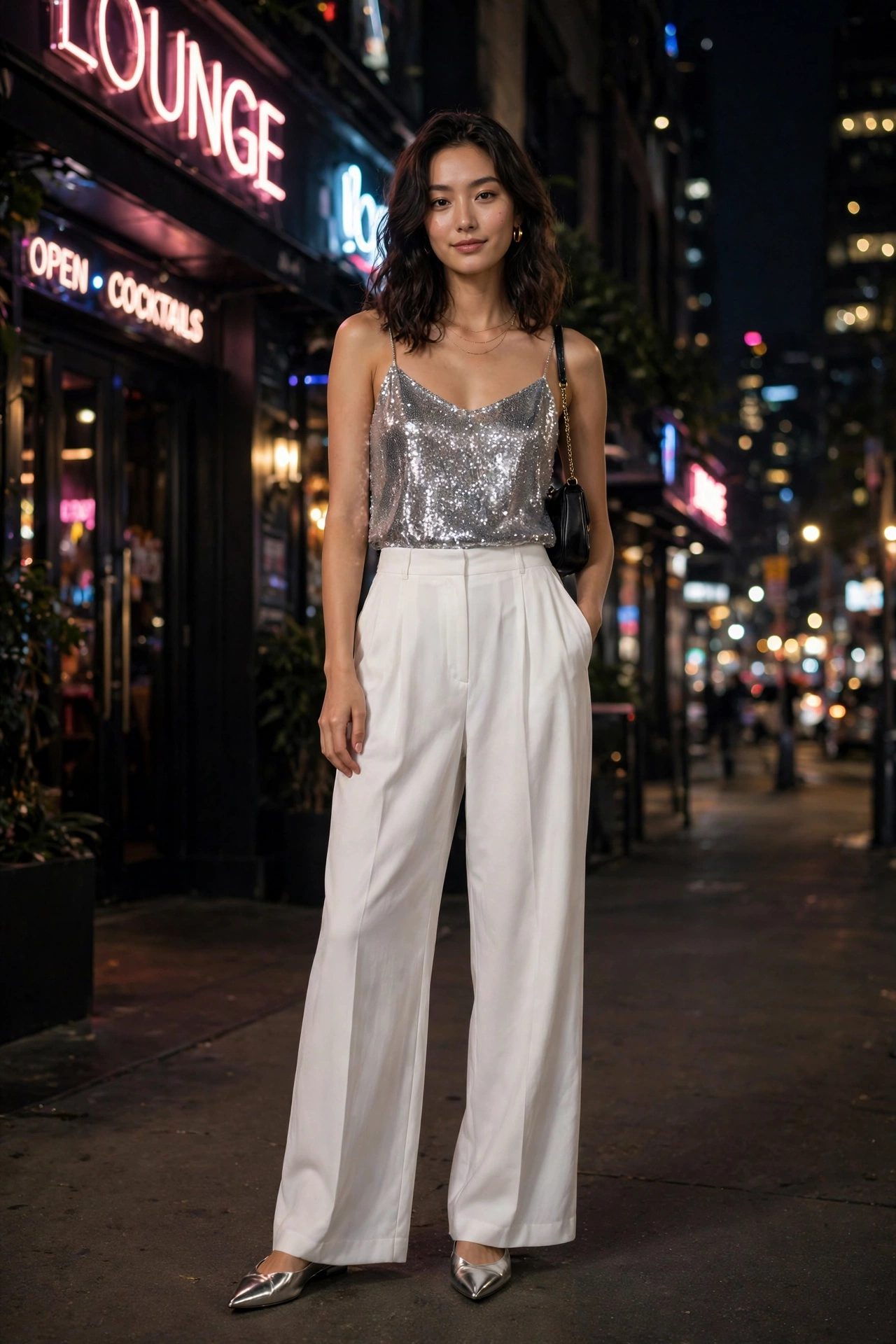
White Wide-Leg Trousers with a Sequin Camisole
A proportion masterclass: voluminous fluid trousers below, a close-fitting sequin camisole above. The wide leg creates dramatic movement — fabric in motion catches light — while the fitted top keeps the torso defined so the volume reads intentional. Choose a high-rise cut (11+ inches) with a pressed front crease; fluid crepe holds the shape, thin rayon collapses. The camisole should be fully lined with adjustable straps and a shelf-bra lining. Tuck it fully — any blouse-out ruins the proportion. White is a commitment: pick a fabric with some stain resistance and skip the red wine. Pointed flats in metallic or nude keep the hem clean. A red lip and slicked-back hair complete the old-Hollywood energy. If white feels too stark, ivory or champagne trousers give the same visibility with a softer edge. Keep camisole straps adjusted short — a higher neckline balances the trousers' volume and keeps the proportion sharp.
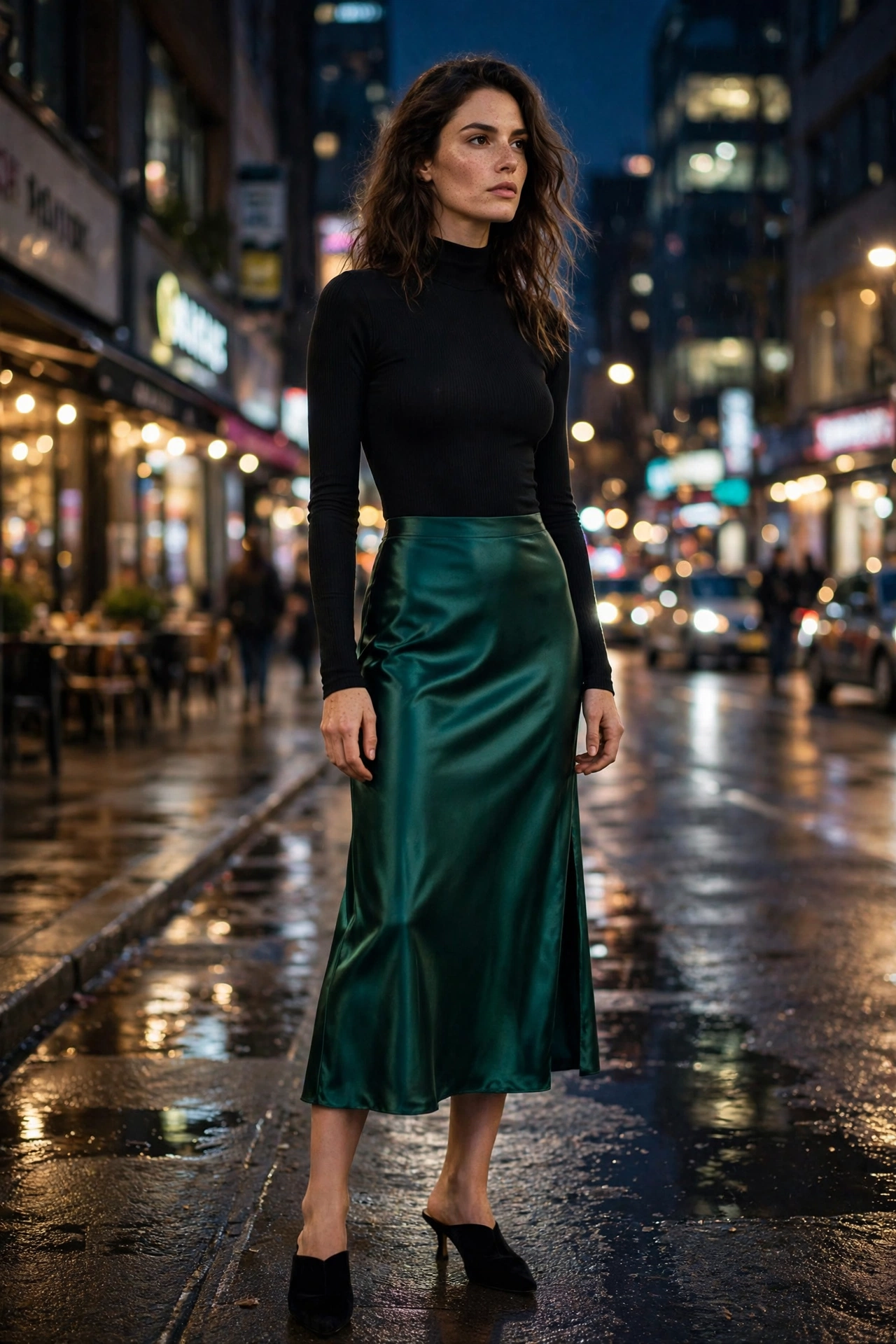
Satin Midi Skirt and a Fitted Black Bodysuit
Separates give control dresses don't: a satin midi skirt in a jewel tone delivers light-catching drape, while a fitted black bodysuit creates one unbroken torso line — no tucking, no riding up on the dance floor. The bodysuit's matte black acts as a visual anchor, letting the skirt's shine be the single focal point. Pick the skirt in crepe-back satin — the weight keeps the midi from flying while dancing. Jewel tones (sapphire, emerald, ruby) hold under club lighting where pastels die. The bodysuit needs snap closures and enough torso length; thong-back avoids visible lines. A midi baring the ankle looks best with a heeled mule or slingback. Delicate necklace, small structured bag. This separates formula also travels brilliantly — the skirt and bodysuit pack flat, resist wrinkling, and create three outfits with one added top. If the bodysuit feels too bare, add a cropped bolero — the short layer preserves the waist definition the look depends on.
Fit note: check the bodysuit's torso length before buying; too short and the snaps pull open when you sit or dance.
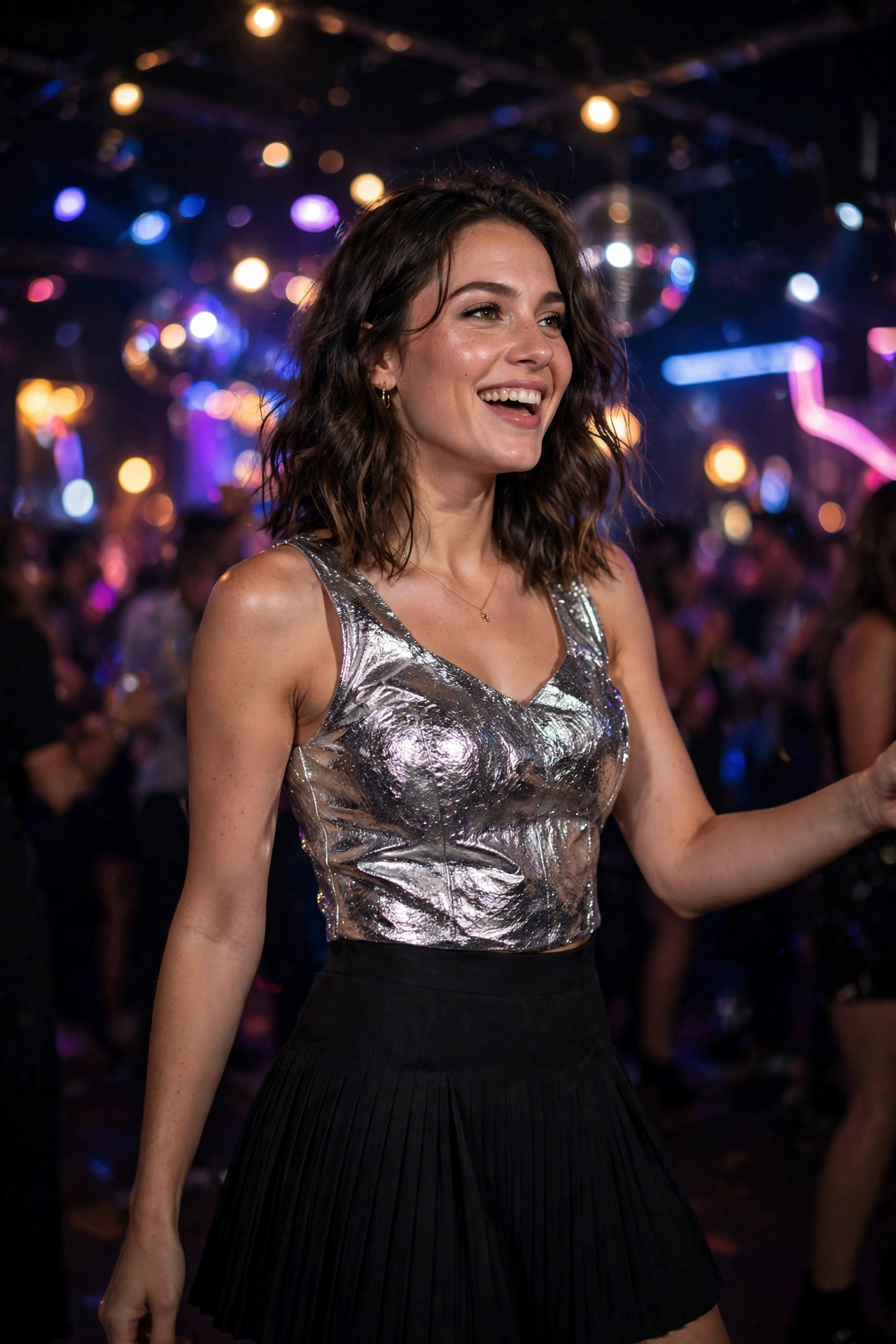
Metallic Pleated Mini Skirt and a Turtleneck
Pleats and metallics are a cheat code: each fold alternates between catching light and falling into shadow, so the skirt shimmers with every step — no sequins needed. A gold or silver knife-pleat mini with a fitted black turtleneck is the sharpest contrast: reflective geometry below, matte simplicity above. Check that pleats are heat-set, not just pressed — pressed pleats relax after one wear. The turtleneck should be fine-gauge matte black; anything shiny competes with the skirt. The high neckline keeps it classy despite the short hem, which matters for dress codes. Opaque 80-denier tights and heeled Chelsea boots make it winter-viable; bare legs and strappy sandals for warmer months. Small hoops, structured mini bag. Match metals deliberately: gold skirt with gold jewelry, silver with cool tones — mixed metals fight the skirt's clean geometry. For larger thighs, a mid-thigh (not upper-thigh) mini keeps the pleats' movement with more comfort dancing.
Fabric note: heat-set pleats hold their shape all night; pressed pleats relax after one wear and one wash.
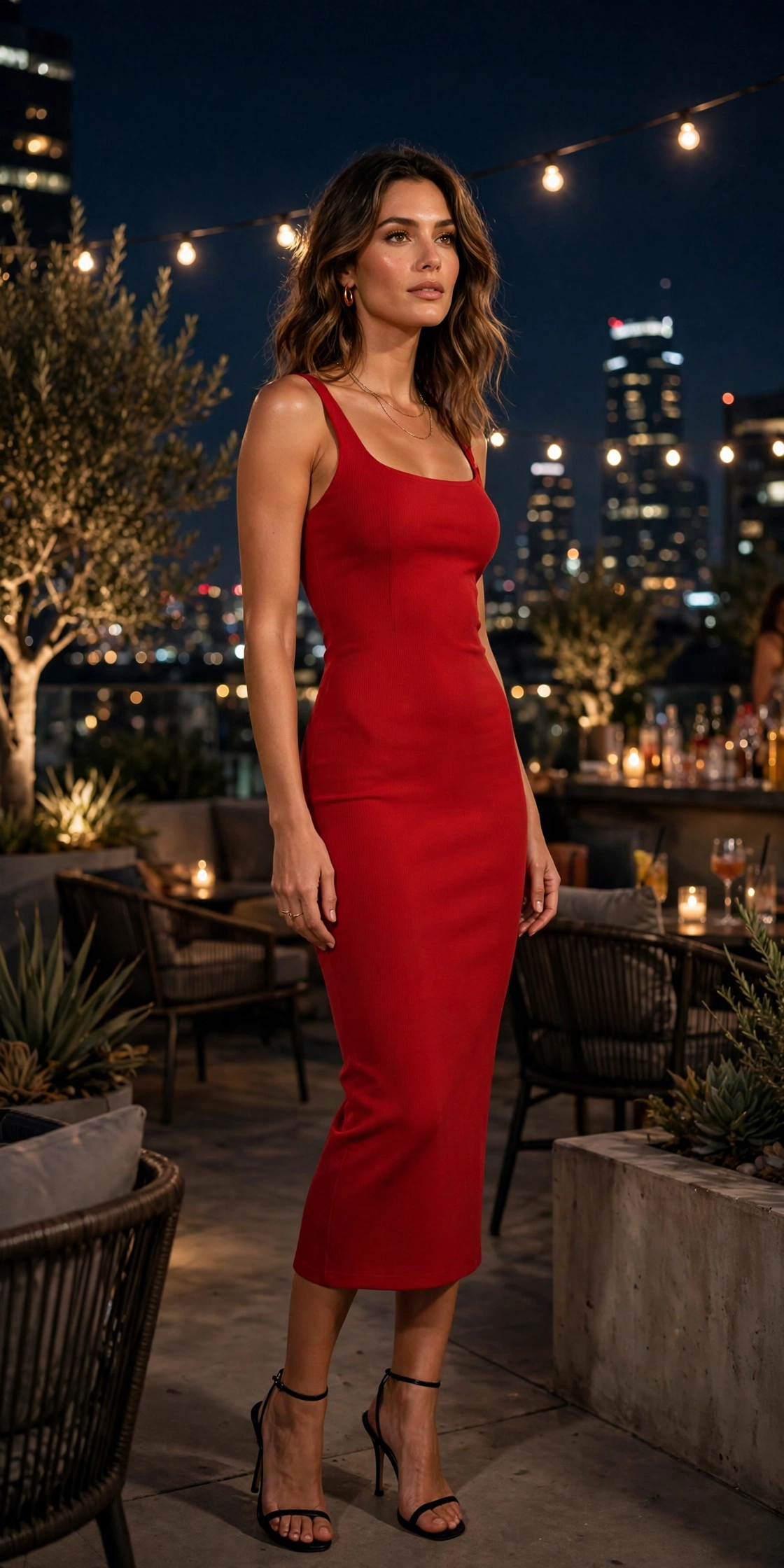
Red Bodycon Dress with Bare Shoulders
Red holds its hue under strobes where pastels wash out and black disappears — the highest-visibility color in low light. A bodycon in thick scuba-knit or ponte (never thin jersey, which shows everything under flash) with an off-shoulder neckline concentrates drama at the collarbone. Fabric weight is everything: ponte at 300gsm+ or substantial scuba. Do the bend test — if it goes sheer sitting down, it's too thin for flash photography. Built-in support or silicone gripper tape keeps the neckline placed while dancing. True red flatters cool undertones, orange-red warms; both read vividly under gels. Barely-there black heels, no necklace, hair up to show the collarbone. A red lip ties it together. For larger busts, look for princess seams and a wider off-shoulder band — structure distributes support instead of relying on elastic alone. A long-line strapless bra underneath smooths the back and gives backup support that never shows. Test the dress under your phone's flashlight before leaving — daylight can hide what flash reveals.
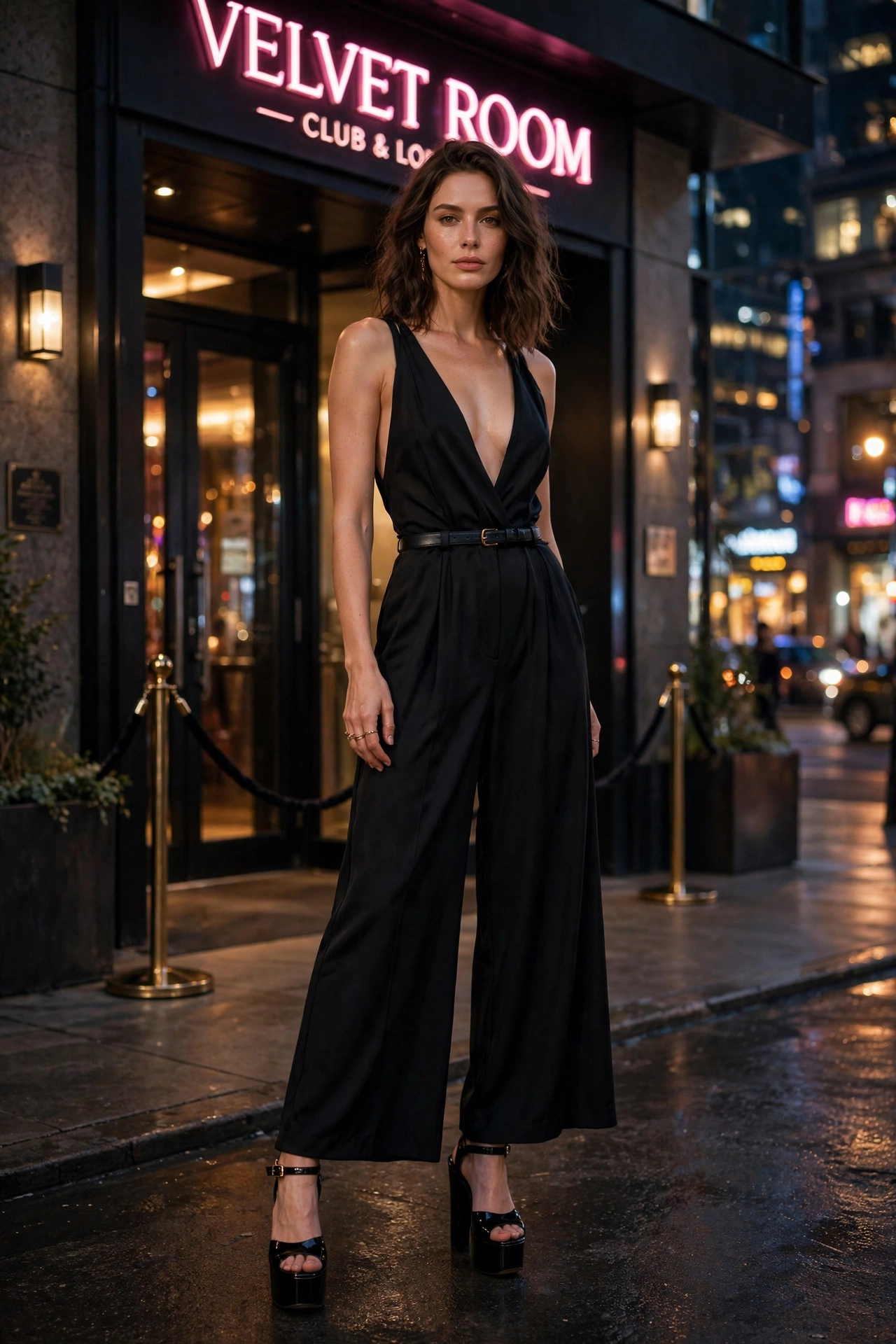
Black Jumpsuit with a Plunging Neckline
A jumpsuit is the thinking woman's club outfit: one piece, no matching decisions, and a single unbroken vertical line from shoulder to ankle that elongates like nothing else. The plunging neckline provides the evening drama while the full-length leg keeps it sophisticated. Choose a wide-leg cut in crepe or fluid twill — the drape moves beautifully and lets air circulate. Check the rise: the waist seam should hit your natural waist standing straight, or you won't be able to sit. A front zip or wrap closure beats a back zip for practicality. Fashion tape on each side of the V keeps everything placed. Platform heels give height with a stable, danceable base. A long pendant following the V emphasizes the line; keep earrings small. In winter, layer a fitted turtleneck underneath — the high neckline against the plunge creates a striking covered-bare contrast that also adds warmth. Check the inseam before buying — legs that pool at the ankle ruin the vertical line; they should just kiss the heel top.
Fit note: sit down in the fitting room before buying; if the waist seam rides up off your natural waist, the rise is wrong for your torso.
Sheer Mesh Top, Satin Bralette, High-Waist Trousers
Sheer mesh works in clubs because darkness is forgiving — what feels exposed in daylight reads as texture under club lighting. A black mesh long-sleeve over a satin bralette gives layered visual interest with almost zero added heat, since mesh is essentially ventilated. Look for power mesh with a soft hand and finished edges; cheap mesh itches and goes cloudy. The bralette needs real support — wide band, adjustable straps — since it's visible. A jewel-tone bralette (emerald, burgundy) under black mesh adds photographic depth. High-waist tailored trousers (11+ inch rise) keep the lower half polished and the look deliberate. Slicked-back hair, small studs, no necklace. The mesh top also works over a lace bralette for a softer effect, or a bandeau for maximum minimalism. A black blazer over the shoulders for arrival handles dress codes and cold queues, then comes off inside. If you add tights, keep them dark and opaque — sheers under mesh muddy the layered effect.
Wear it with: high-waist tailored trousers and slicked-back hair; keep jewelry to small studs so the layered neckline stays the focus.
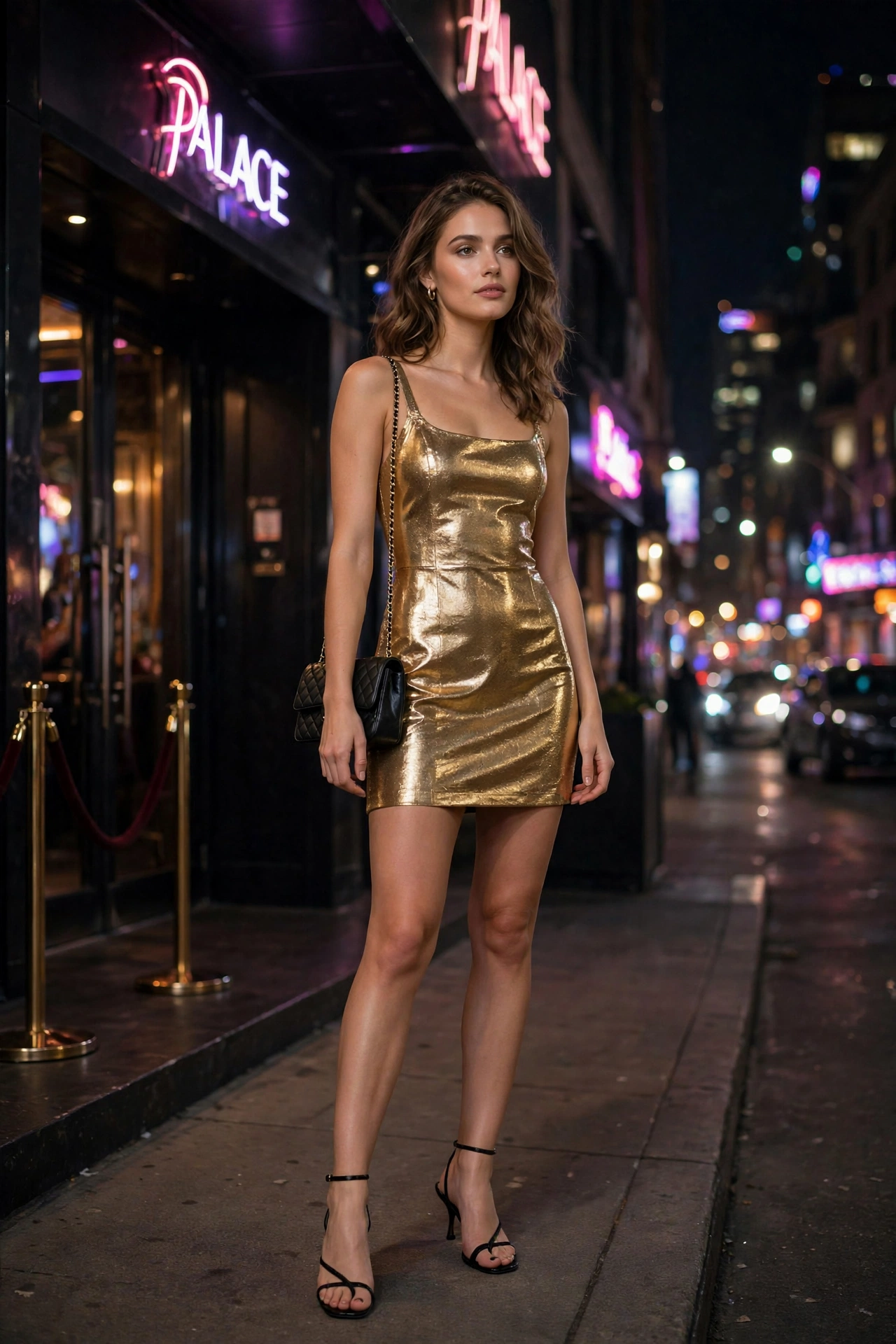
Gold Lamé Mini Dress
Lamé — metallic yarns woven into fabric — gives sequin-level reflectivity with knit comfort, the insider's alternative to sequins. A simple shift or slip in gold lamé needs no design details; the fabric is the entire outfit. Because it's a knit, it moves and breathes far better than sequined fabric — but check the weight: medium-weight lamé skims, tissue-weight needs a slip underneath. Copper and bronze are softer and more modern than classic gold, and more forgiving across skin tones. Keep the silhouette simple; black accessories ground it — small black bag, black heeled sandals, black eyeliner. One caution: lamé reflects direct flash hard, so angle three-quarters to the camera rather than facing it head-on. Copper lamé deserves special mention — the most universally flattering metallic, warm enough for most skin tones without gold's yellow cast. Size up if between sizes — lamé shows tension lines across the hips when too tight, and ease is what makes it look expensive.
Fabric note: medium-weight lamé skims the body; tissue-weight lamé needs a slip underneath or it clings and shows every line.
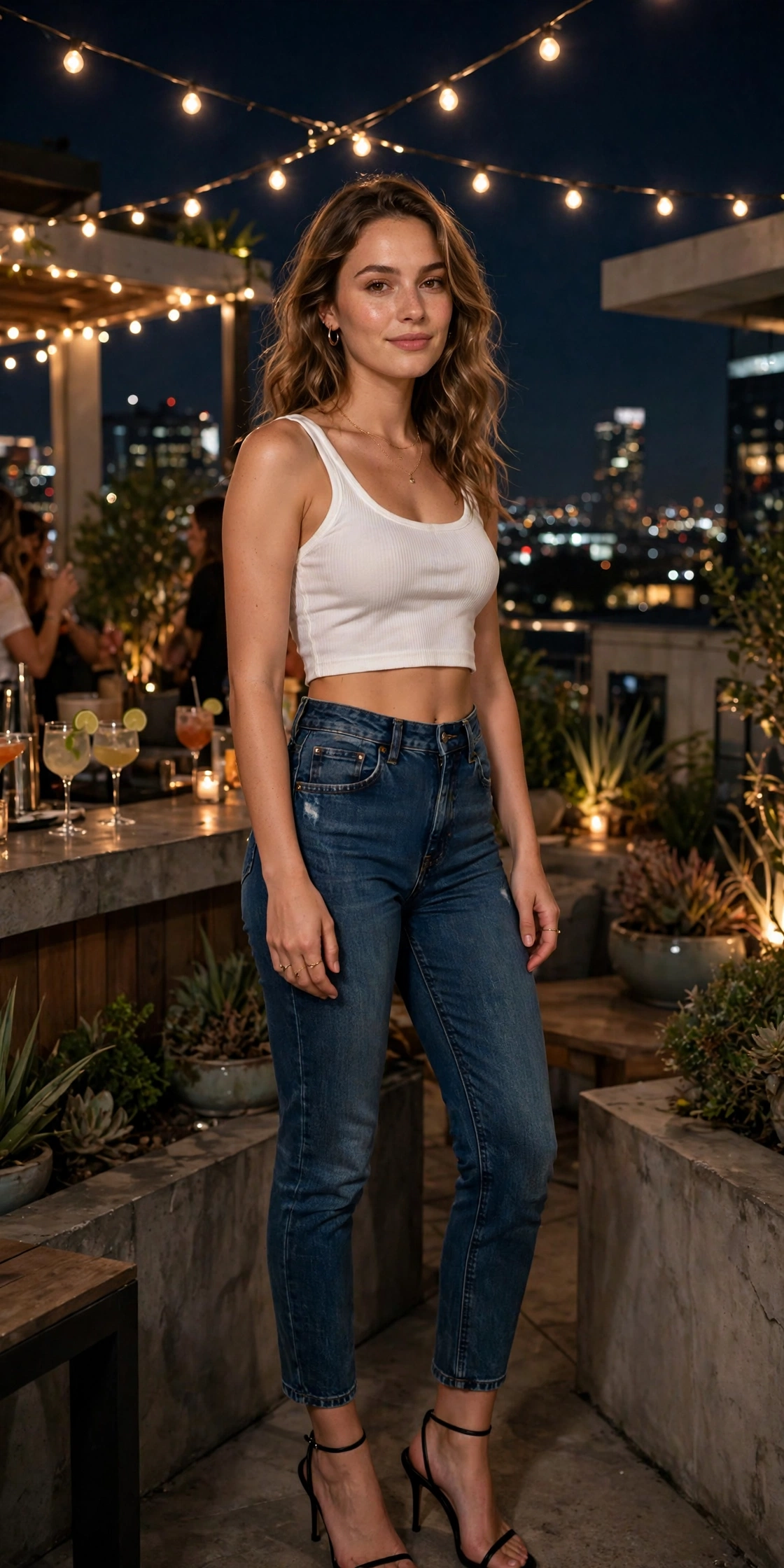
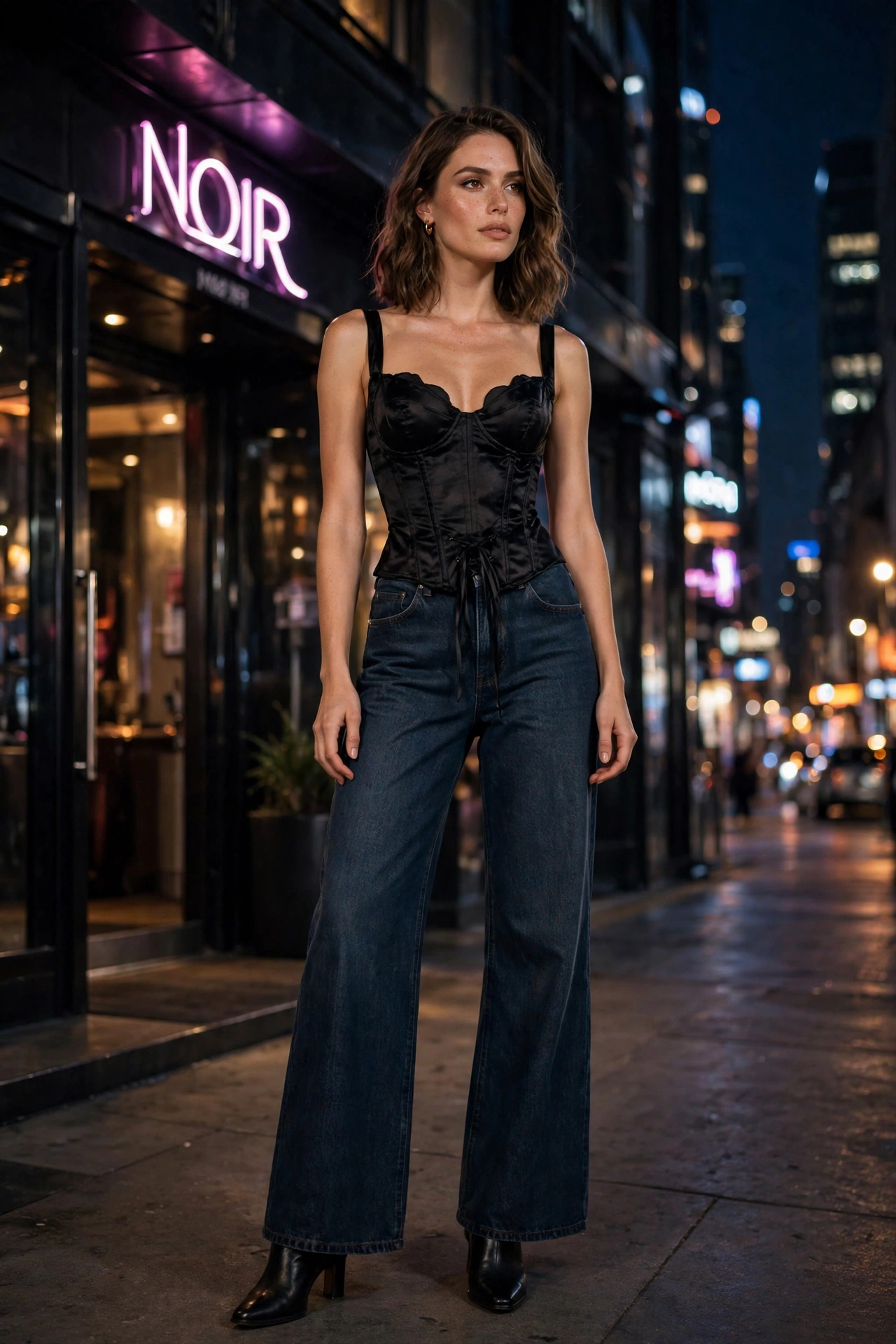
Corset Top with Dark Denim Wide-Leg Jeans
The corset-top-and-jeans formula endures on high-low contrast: structured corsetry up top signals evening, while dark-rinse wide-leg denim keeps it grounded and danceable. Modern corset tops have flexible boning and stretch backs — nothing like historical corsetry — so you get the cinched waist without misery. Shop them like shapewear: flexible boning, laced or stretch back for adjustability, real cup support. Satin reads dressiest, lace romantic, leather-look edgy. The jeans must be dark rinse, wide-leg, and long enough to cover most of the boot heel — the floor-grazing hem creates the long line. Rigid denim holds the architecture; look for a contoured waistband that doesn't gap. Heeled boots (2-3 inch block heel) under the hem give the height the proportions demand. For a softer take, swap the corset for a satin bustier with wider straps — same cinched effect with more coverage and easier dancing. Wash denim inside-out in cold water to preserve the dark rinse — fading turns evening denim back into daytime jeans.
Care tip: wash the dark denim inside-out in cold water; fading is what turns evening denim back into daytime jeans.
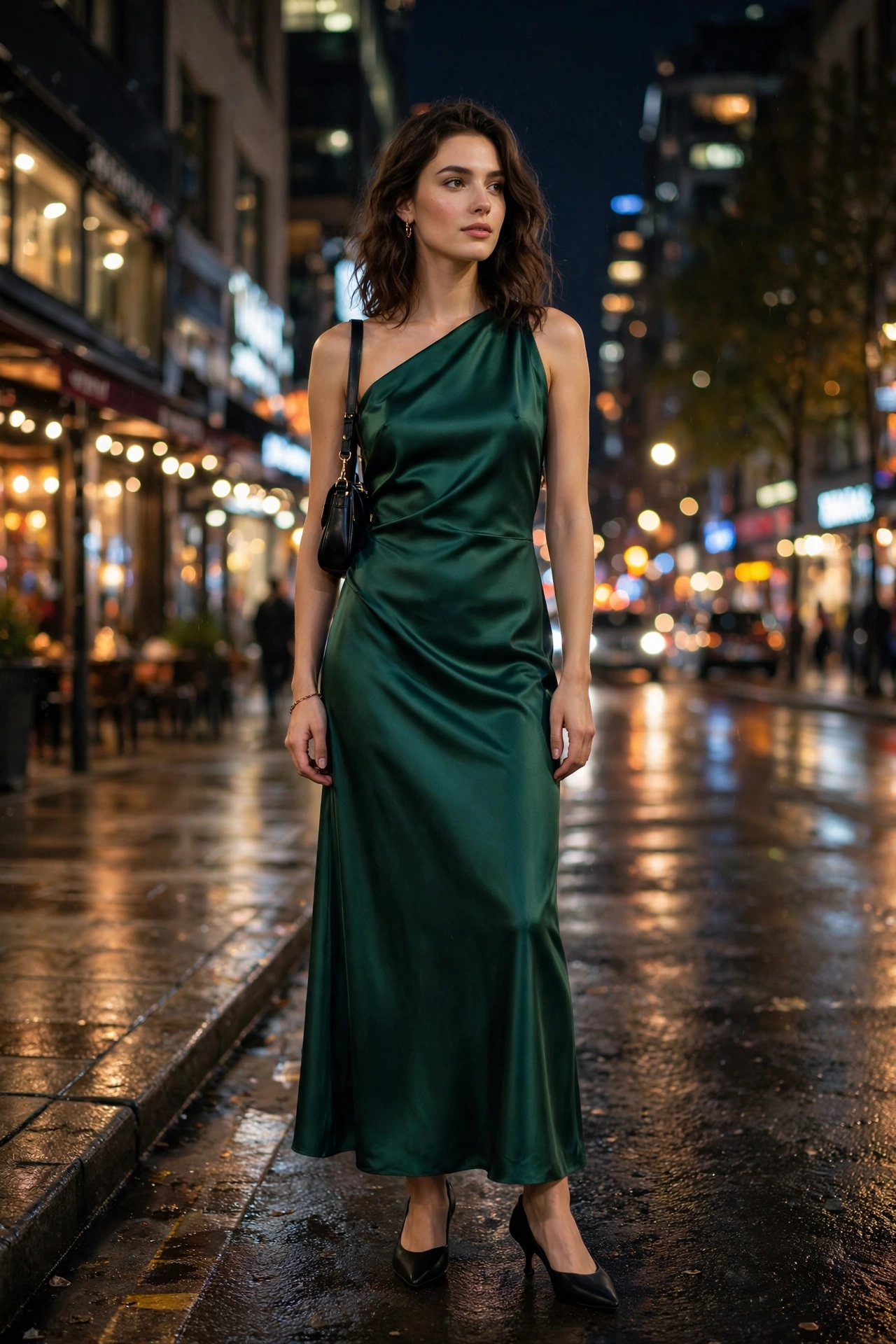
Asymmetric One-Shoulder Dress in Jewel-Toned Satin
Asymmetry is a compositional trick: a single diagonal line creates visual movement even when you're standing still — exactly what you want in photos. A one-shoulder satin dress in sapphire, emerald, or fuchsia pairs that diagonal energy with satin's light-catching drape. The engineering detail is grip: look for silicone tape along the top edge and a structured bodice — pure strapless one-shoulder styles migrate. Crepe-back satin has the body to hold the drape. Jewel tones hold saturation under colored gels where softer colors shift. Styling is directional: hair swept to the covered side, one statement earring on the exposed side, simple heels. Knee length reads modern; midi reads formal. The single-shoulder line also photographs beautifully in motion — the diagonal stays dynamic in candids where symmetrical dresses go static. Carry the clutch on the covered-shoulder side to balance visual weight — the bare side is already the statement. Avoid competing prints anywhere else; the diagonal needs a clean field to read.
Fit note: silicone gripper tape along the top edge is what keeps a one-shoulder style in place; without it, the bodice migrates all night.
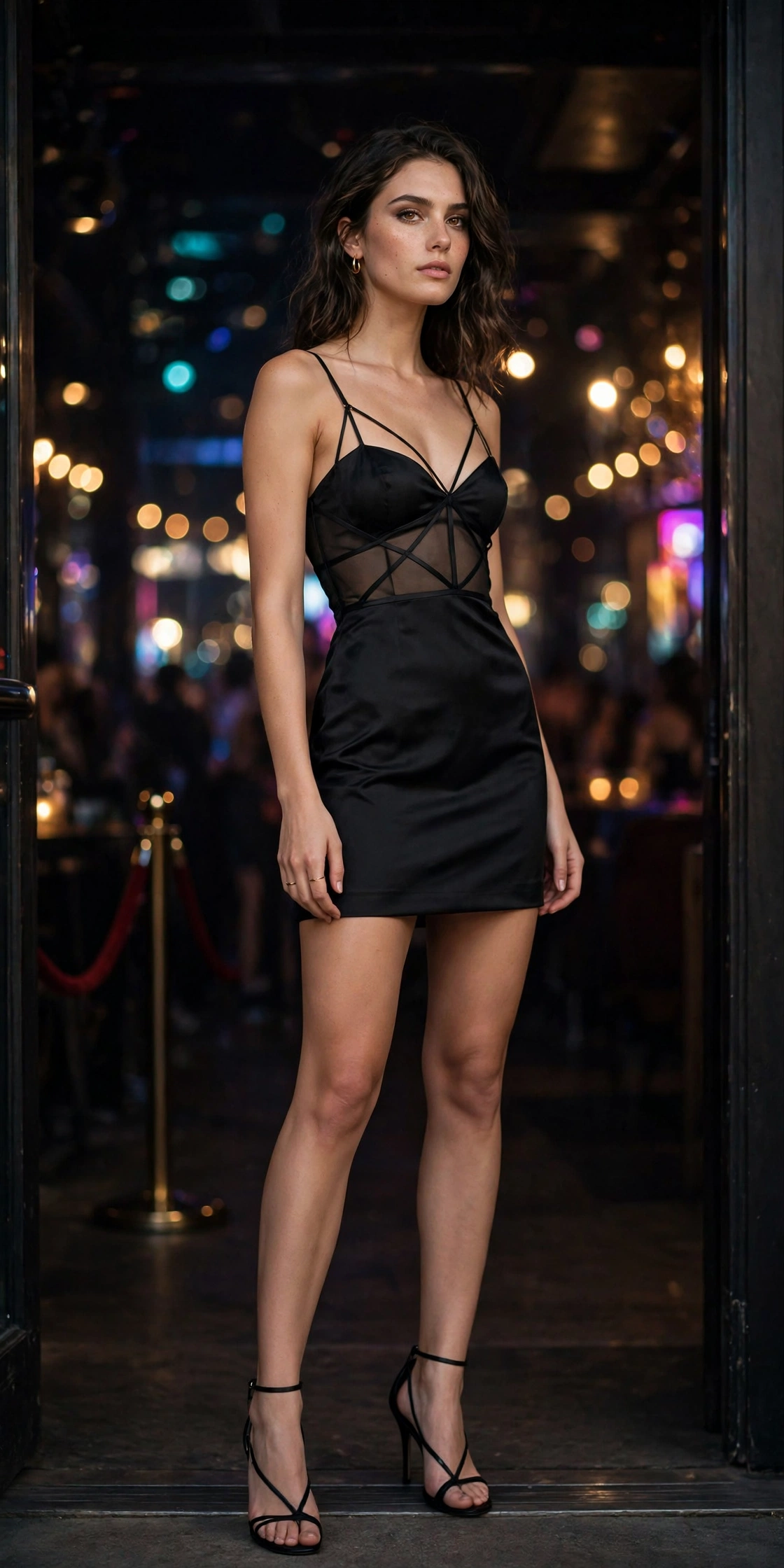
Black Feather-Trim Mini Dress
Feathers are the texture maximalist's answer to sequins: instead of reflecting light, they diffuse it, creating a soft halo around the hem or cuffs that looks incredible in motion and flash photos. A simple black mini with feather trim concentrates all the drama at the edges, leaving the body's core line clean. Feather quality is visible: dense, soft marabou looks luxurious; sparse, wiry feathers look craft-store. Tug gently — shedding in the store means shedding all night. Keep trim to one location (hem or cuffs, never both), since feathers add visual volume. Care note: feathers and rain are enemies — air the dress out after wearing, never machine wash. Store it hung with feathers fluffed, never folded — compression creases in feather trim are nearly impossible to restore. If feathers get crushed in transit, hold the trim over kettle steam for a few seconds to revive the loft. Keep a lint roller handy — dark feather trim collects every speck visibly.
Care tip: hang the dress with the feather trim fluffed, never folded; compression creases in feathers are nearly impossible to restore.
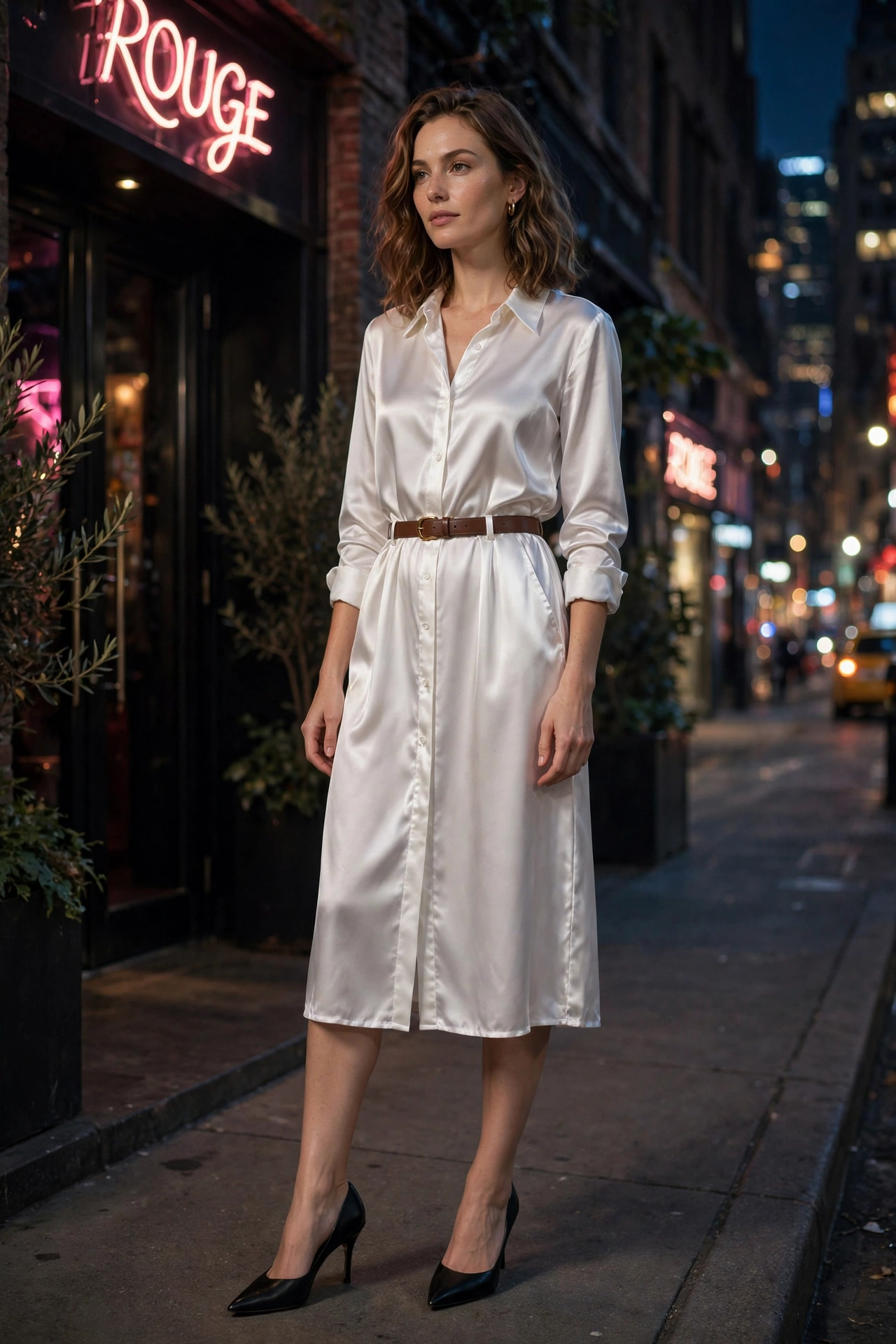
White Satin Shirt Dress with Bare Legs
Borrowed-wardrobe dressing works in clubs when the fabric upgrades the concept: a white satin shirt dress reads crisp and expensive, the collar, cuffs, and buttons add structure that slip dresses lack, and bare legs keep it firmly evening. Look for a proper interfaced collar, real buttonholes, and a back yoke — the tailoring markers. Crepe-back satin or sandwashed silk reads expensive; shiny polyester charmeuse in white can read cheap. Belt it at the natural waist with a slim metallic belt — the belt creates the hourglass the straight cut lacks. Roll sleeves to just below the elbow and add a cuff. Pointed-toe heels sharpen the leg line the short hem starts. Leave the top two buttons undone with a delicate pendant sitting in the V — the jewelry draws the eye vertically, elongating the torso. A nude heel closest to your skin tone disappears under the hem, making legs look longest.
Fabric note: crepe-back satin or sandwashed silk reads expensive in white; shiny polyester charmeuse in white can read cheap.
Two-Piece Sequin Set: Cropped Top and Mini Skirt
A matching set removes all guesswork — top and skirt cut from the same sequin fabric read as one continuous column of shine, more elongating than separates in different finishes. The cropped top shows a sliver of midriff (1-3 inches) that breaks the column just enough, raising the perceived waistline so legs look longer. Fit is everything: sequins don't stretch, so the top should skim, not compress. Check both pieces are cut from the same dye lot — hold them together in natural light. Fully lined interiors prevent scratching. Because the set is a complete statement, accessories stay nearly invisible: nude heels, small metallic clutch, tiny earrings. For cooler venues, layer an oversized blazer over the set — structured shoulders against all-over shine is a sharp high-low contrast. Store the set hung together on one hanger — sequin pieces kept with their match never suffer the lost-half problem. A quick steam before wearing relaxes any packing creases in minutes.
Wear it with: nude heels, a small metallic clutch, and tiny earrings; the set is the statement, so accessories stay nearly invisible.
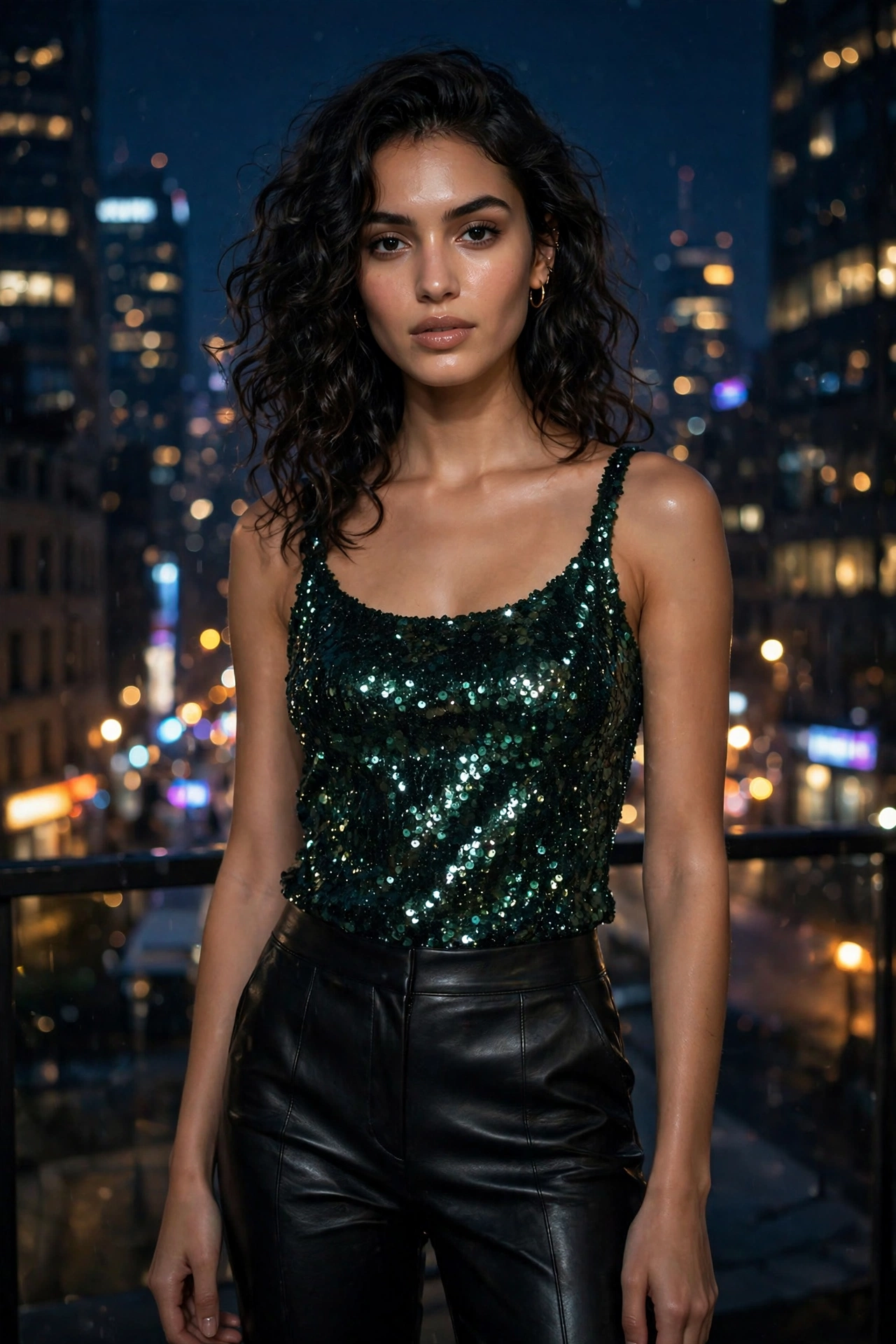
Dark Floral Slip Dress with Heeled Boots
For bar-lounge clubs over mega-clubs, a dark-ground floral slip hits the sweet spot: the small-scale print reads as texture under low light, and the dark background keeps it evening-appropriate. Print scale is critical: small-to-medium florals read as texture, large bold prints look busy and daytime. Bias-cut is non-negotiable for the drape. Heeled ankle boots (2-3 inch block heel) in black leather toughen the romance and solve the sticky-floor problem; the shaft should hit at or just above the ankle. Add a leather jacket for the queue — matte leather against satin print is the perfect texture contrast. This is also the best travel club outfit here: the slip packs to nothing, the boots are already on your feet, and the jacket works for the flight. In summer, swap boots for strappy flat sandals and lose the jacket — the same dress becomes daytime with zero effort. Boot heel height is the day-night lever: lower for day, higher for night.
Fit note: the slip must be bias-cut to drape properly; a straight-cut slip in a floral print hangs stiff and reads daytime.
Buying Club Outfits: Fabric and Fit Checks
Buying right matters more than styling right, because no styling fixes bad fabric under club conditions. Satin: charmeuse drapes like liquid but snags and shows every line — it demands seamless shapewear. Crepe-back satin is heavier and more forgiving. Do the scrunch test: ball the fabric for ten seconds; if it springs back smooth, it'll survive the night. Sequins: density is quality — overlapping sequins on mesh backing breathe; sparse glued discs shed and trap heat. Always lined. Velvet: stretch velvet dances and resists crushing; cotton velvet is richer but hotter. Bodycon knits: ponte at 300gsm+ or substantial scuba — do the bend-and-sit test for sheerness. Faux leather: polyurethane with jersey backing stretches and recovers; cheap PVC cracks. Fit checks: metal (not plastic) strap sliders, silicone gripper tape on strapless necklines, zips that don't gap sitting down. Do the full movement test in the fitting room — sit, raise your arms, twist.
Color Pairing for Low Light
Club lighting is a color filter. Survivors (hold under strobes): true red, emerald, sapphire, fuchsia, white, all metallics. Casualties (wash out or vanish): pastels, beige and nude tones, navy (reads as black), grey (goes flat), olive (turns muddy under yellow gels). Skin tone: warm metallics (gold, bronze) flatter warm undertones; cool metallics (silver, platinum) flatter cool ones; jewel tones are nearly universal. Hold fabric to your face in harsh store light — if your skin looks alive, it works. Makeup: match intensity, not color. A shiny dress wants matte skin (both glossy reads sweaty in flash); a matte outfit can take a glossy lip. One shimmer zone on the face, mirroring the outfit's one-statement-zone rule.
Matching the Outfit to the Venue
Not all clubs are the same room. Mega-clubs (big rooms, heavy strobes, packed floors): prioritize shine and movement — sequin sets, lamé, red bodycon. You'll be photographed from far away, so bold beats subtle. Lounges and cocktail bars (seated, dim but not dark): texture and tailoring win — velvet wrap, satin shirt dress, dark floral slip. People see you up close, so fabric quality matters more than flash. Rooftops (wind, variable light): weight your hems — bias slips fly, so choose crepe-back satin or add the blazer; block heels handle uneven flooring. Themed nights: interpret the theme through one element rather than costuming head to toe. When you don't know the venue, the jumpsuit or blazer-over-sequin-mini read correctly everywhere.
Night Out Checklist
Before you leave, run the outfit through these checks:
- Light test: hold the fabric under your phone flashlight. If it vanishes or goes sheer, it will do the same under strobes.
- Movement test: sit, raise your arms, twist in the fitting room. If anything rides up, gaps, or pulls, it will do worse on the dance floor.
- Heat plan: one breathable layer, open backs and necklines where you run hot, and a coat you can check at the door.
- One statement zone: legs, neckline, or back. Everything else stays quiet.
- Bag check: phone, card, ID, lipstick, nothing more. Hands stay free.
Frequently Asked Questions
Can I wear flats to the club instead of heels?
Yes — pointed flats, embellished loafers, or sleek low boots work with every idea here. A pointed toe visually recovers the leg line you'd lose. Being able to actually move matters far more than heel height.
What bag should I bring to a club?
The smallest one that holds phone, card, ID, and lipstick — a mini crossbody or wristlet. Your hands stay free.
How do I stop overheating while dancing?
One breathable layer, open backs and necklines, fabrics that ventilate — satin and mesh over velvet and heavy sequins if you run hot. Most 1am misery is dehydration, so drink water between drinks.
What if the club has a strict dress code?
Default to the blazer look, the jumpsuit, or the satin shirt dress — structured pieces pass every door. Avoid sneakers, sportswear fabrics, and anything distressed; door staff decide in about three seconds.
How do I take a club outfit to an after-party?
Add one layer and swap one element: blazer over the sequin mini, heeled boots instead of strappy heels, leather jacket over the slip dress. Same base, adjusted coverage.
What should I wear to a club in winter?
Plan for two climates: freezing outside, sauna inside. Wear a real coat for the queue, then coat-check it immediately. Underneath, winterize the outfit: opaque tights, closed-toe heels, the velvet wrap dress. Never try to dance in outerwear.
What are the best club outfits for plus-size women?
Wrap silhouettes and ruching define the waist without squeezing; vertical lines (blazers, jumpsuits, monochrome columns) elongate; substantial fabrics (ponte, scuba, crepe) support where thin jerseys collapse. The velvet wrap, the jumpsuit, and corset-top-and-jeans here are all excellent starting points.
I want more coverage — which club outfits still work?
The jumpsuit, the satin shirt dress, and the pleated mini with a turtleneck all cover substantially while reading completely evening-appropriate. A high neckline with a short hem, or a covered silhouette in a light-catching fabric, is often more striking than maximum exposure.
How do I keep my hair and makeup intact all night?
Updos outlast loose hair in heat. For makeup: primer, setting spray before and after, waterproof mascara, blotting papers instead of powder (powder cakes; blotting removes shine without buildup). Start with less — heavy makeup melts; strategic makeup endures.