How a Fall Plus Size Capsule Wardrobe Packs 15 Travel Outfits
How to use this guide
These are editorial styling suggestions, not a one-size-fits-all formula. Adapt each look to your wardrobe, proportions, climate, comfort, budget, and the occasion; the most useful idea is the one you can genuinely wear.
What if twelve pieces could cover a whole week of fall travel — fifteen outfits, no repeats that feel obvious, and nothing in the suitcase that only works with one other thing? A fall travel capsule for plus size travelers works when twelve pieces in one color family combine into fifteen outfits, with every piece chosen for fit, fabric, and packability. Most packing advice assumes a straight-size wardrobe where everything is thin, stretchy, and interchangeable. In reality, well-fitting plus size pieces tend to have more structure, more fabric, and more specific fit requirements, which means thoughtless packing fills a suitcase fast and still leaves you with nothing that feels right.
The fix is not packing more. It is packing with intent. MasterClass explains how a capsule wardrobe earns its keep through mixing, not volume. A travel capsule works when every piece earns its place twice: once for how it looks, once for how it behaves in a suitcase. Below is the actual math — twelve core pieces that combine into fifteen complete outfits — plus the reasoning behind each combination, so you understand the fit and proportion logic well enough to adapt it to your own closet.
The capsule math: 12 pieces, 15 outfits
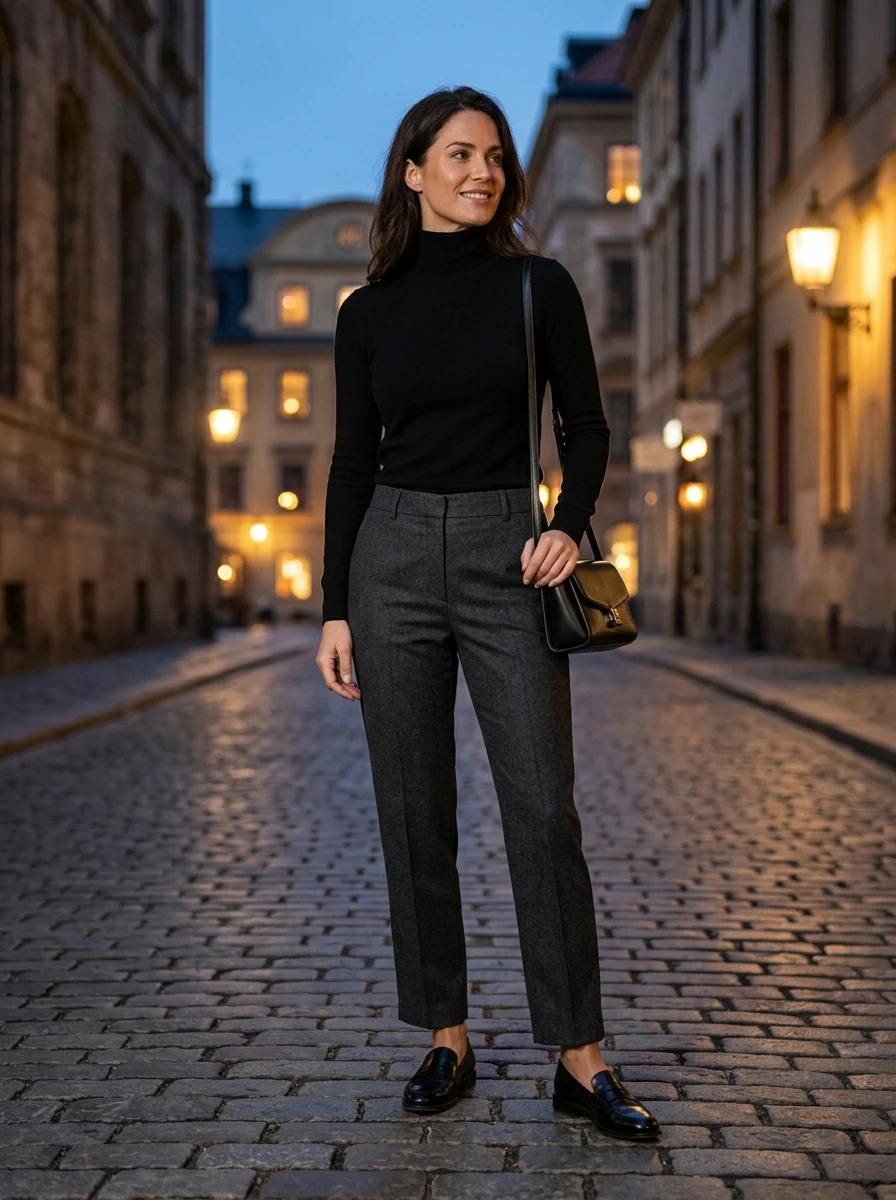
Before the outfits, here is the foundation they all draw from. The principle is simple: pick pieces in one color family (black, navy, camel, cream, olive) so everything mixes, choose fabrics that resist wrinkles, and make sure every top works with every bottom.
Tops: fitted long sleeve tee, ribbed turtleneck, button down shirt, graphic tee, slip dress (doubles as a top layer) Bottoms: dark jeans, wide leg trousers, leggings, midi skirt, sweater dress (a one piece outfit) Layers: trench coat, denim jacket, moto jacket, long cardigan, quilted vest, shacket, blazer
You do not need all of these — the fifteen outfits below show how the combinations work.
Fit notes: how each piece should fit
| Piece | Fit note | Watch out for |
|---|---|---|
| Trench coat | Belt sits at your natural waist | Dropped shoulders that swallow the frame |
| Wide leg trousers | High rise with a hem that skims the shoe | Fabric pooling at the floor |
| Bodysuit | Snap closure keeps the line clean | Sizing down on a long torso |
| Blazer | Shoulders sit at your shoulder line | Rigid wool that fights airplane seats |
| Knit set | Texture contrast within one tone | One flat texture that reads as pajamas |
| Long cardigan | Ends just below the knee | Floor length styles on petite plus frames |
Universal Standard builds plus size pieces with fit first construction if your closet needs a better fitting base layer. Notice that each outfit names the mechanism: why these pieces work together, not just that they do.
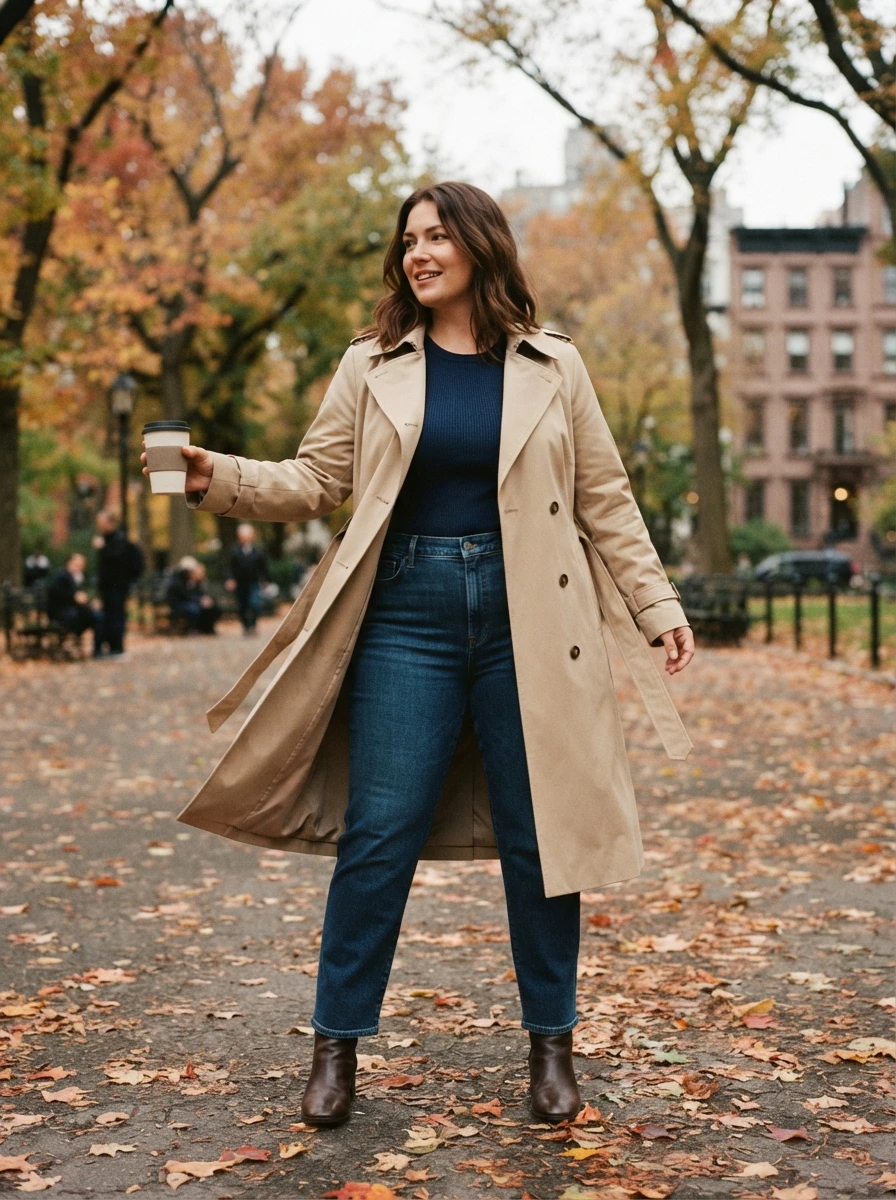
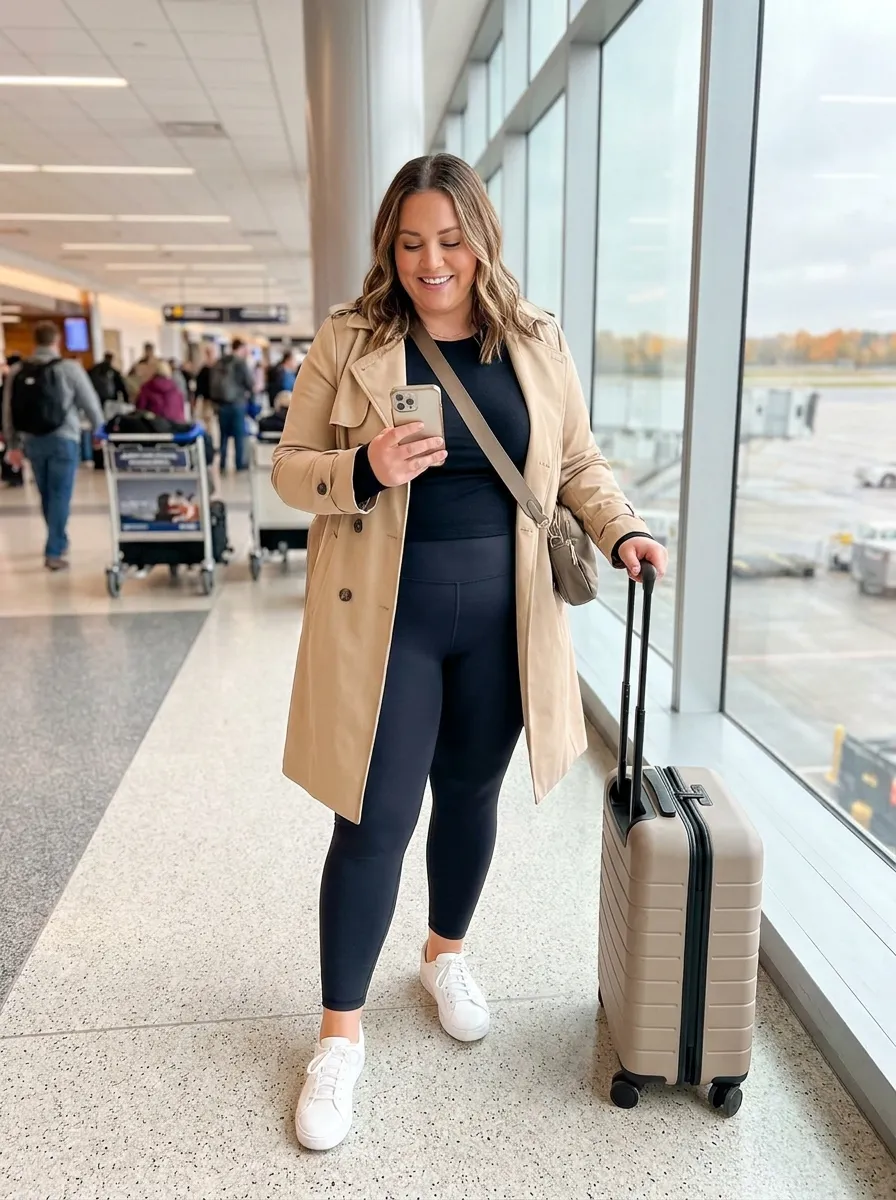
Structured Trench Coat and Leggings — The Third Piece Does the Work
This works because of the third-piece rule. For the cold weather version, winter capsule wardrobe travel outfits extend the same math. Leggings and a tee on their own read as gym wear; add one structured layer and the same base reads as intentional. A trench that hits mid thigh is the right length here — long enough to cover the hip and upper thigh, short enough that your leg line stays visible below it.
Fit note: the belt matters more than people think — cinched, it creates a waist breakpoint that stops the coat from hanging like a rectangle. Leave it loose and the whole outfit loses its shape.
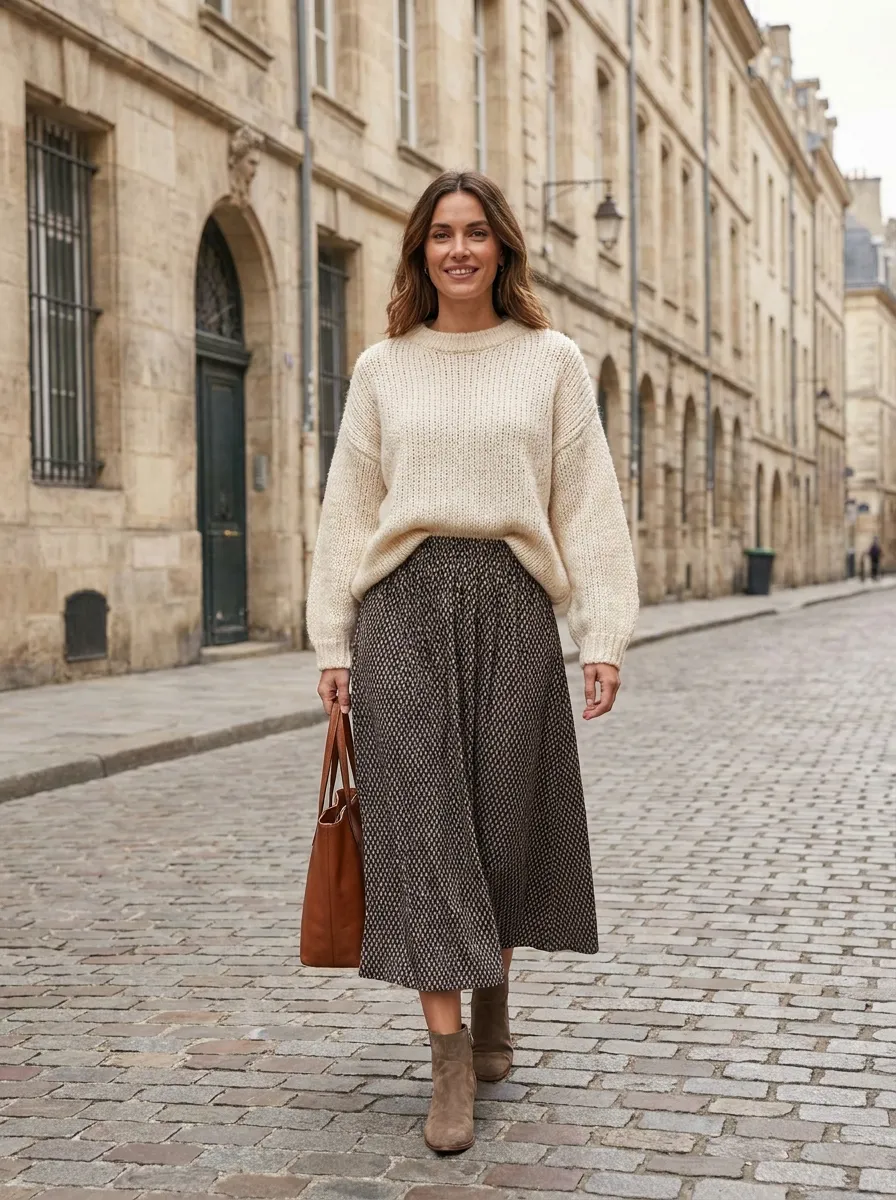
Oversized Knit Sweater and Midi Skirt — Volume With an Anchor
Volume on top needs an anchor somewhere, or the eye reads the whole silhouette as shapeless. Here the anchor is the front tuck — just the front six inches of the sweater pushed into the skirt's waistband. That single breakpoint tells the eye where your waist is, and suddenly the oversized knit looks deliberate instead of swallowing. The midi skirt does the second half of the work: its vertical drape pulls the eye downward, balancing the width of the knit.
Fabric note: choose a skirt in jersey or heavy crepe; both resist the suitcase wrinkles that ruin lighter fabrics.
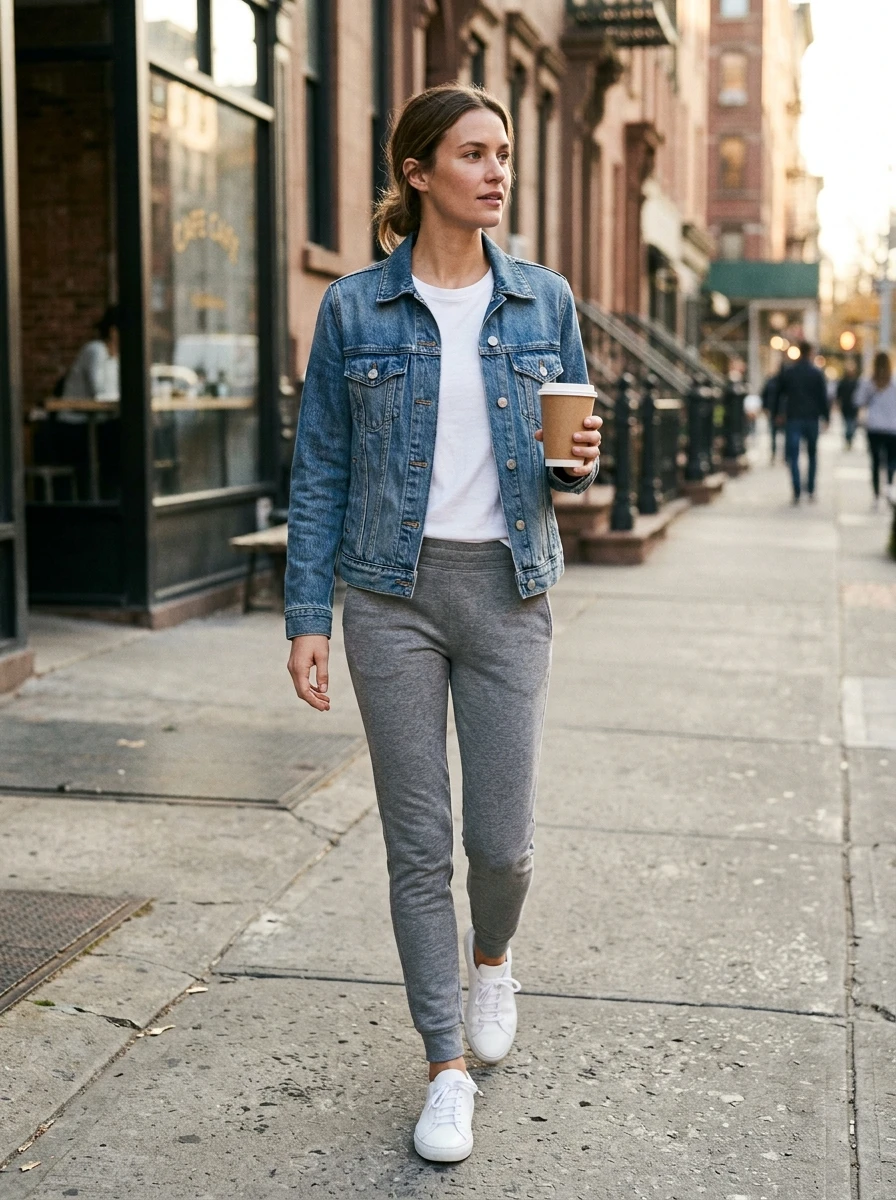
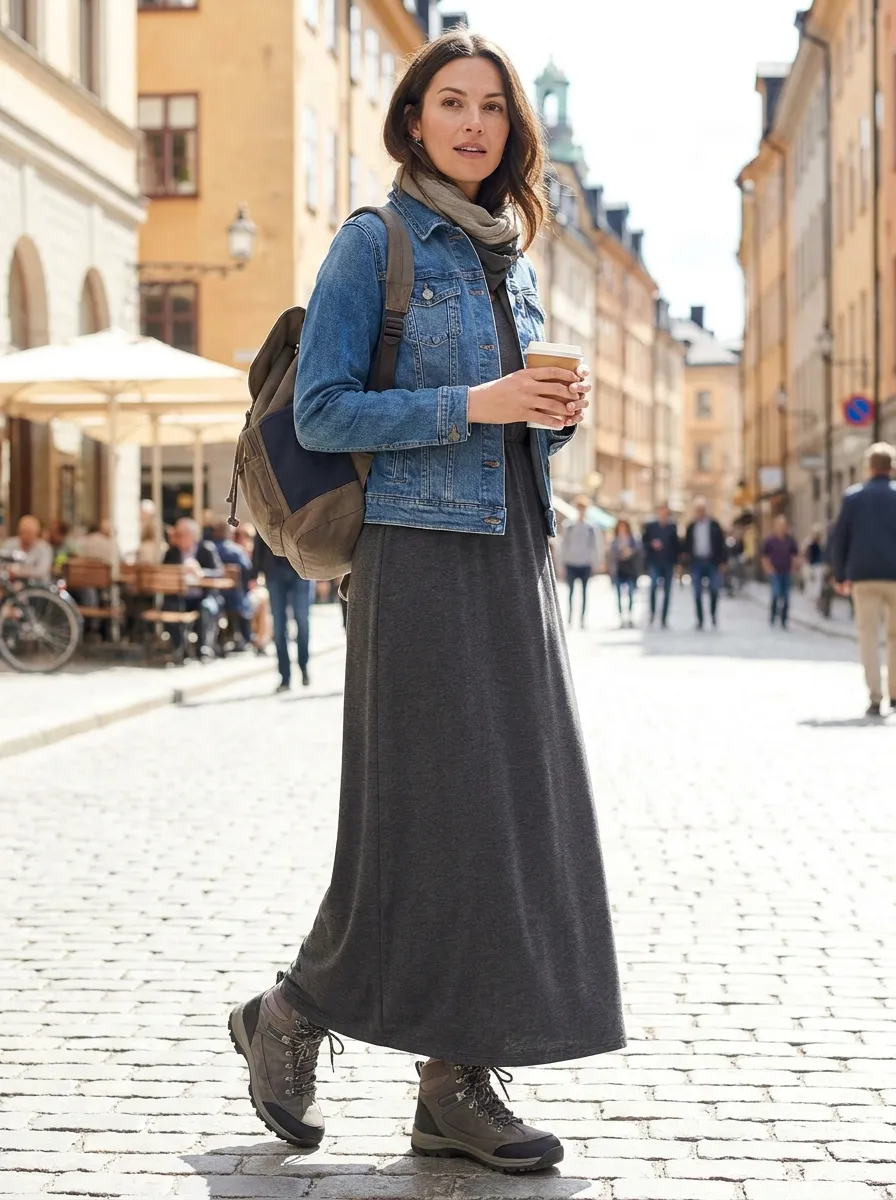
Denim Jacket and Maxi Dress — Texture Contrast, Borrowed Structure
The logic here is texture contrast. A fluid jersey maxi dress has no structure of its own, so it borrows all of its shape from what you layer over it. A denim jacket — rigid, seamed, with defined shoulders — gives the soft dress an architectural frame. Keep the jacket cropped at the hip rather than oversized; a long denim jacket over a maxi dress stacks two long lines and shortens the leg visually.
Wear it on the plane: the jacket is the bulkiest thing in this outfit and the easiest way to save suitcase space.
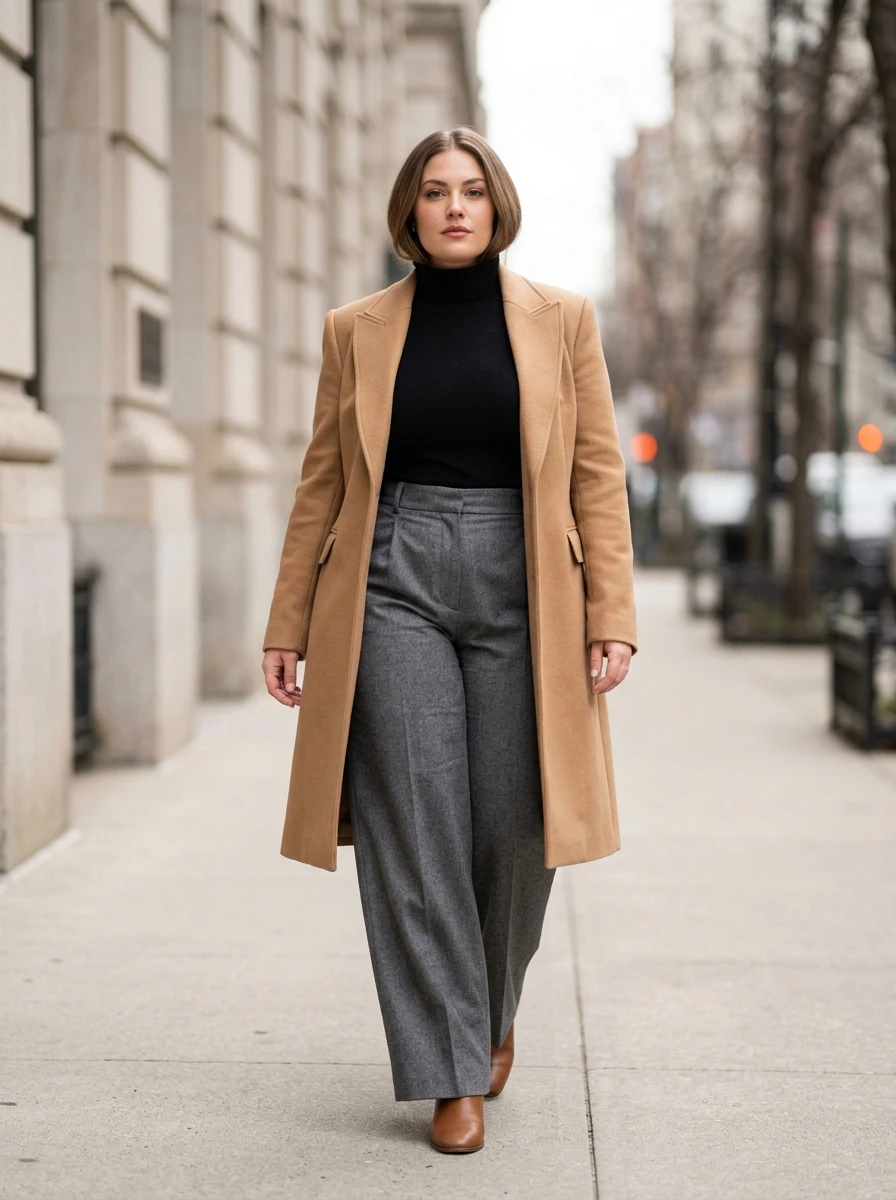
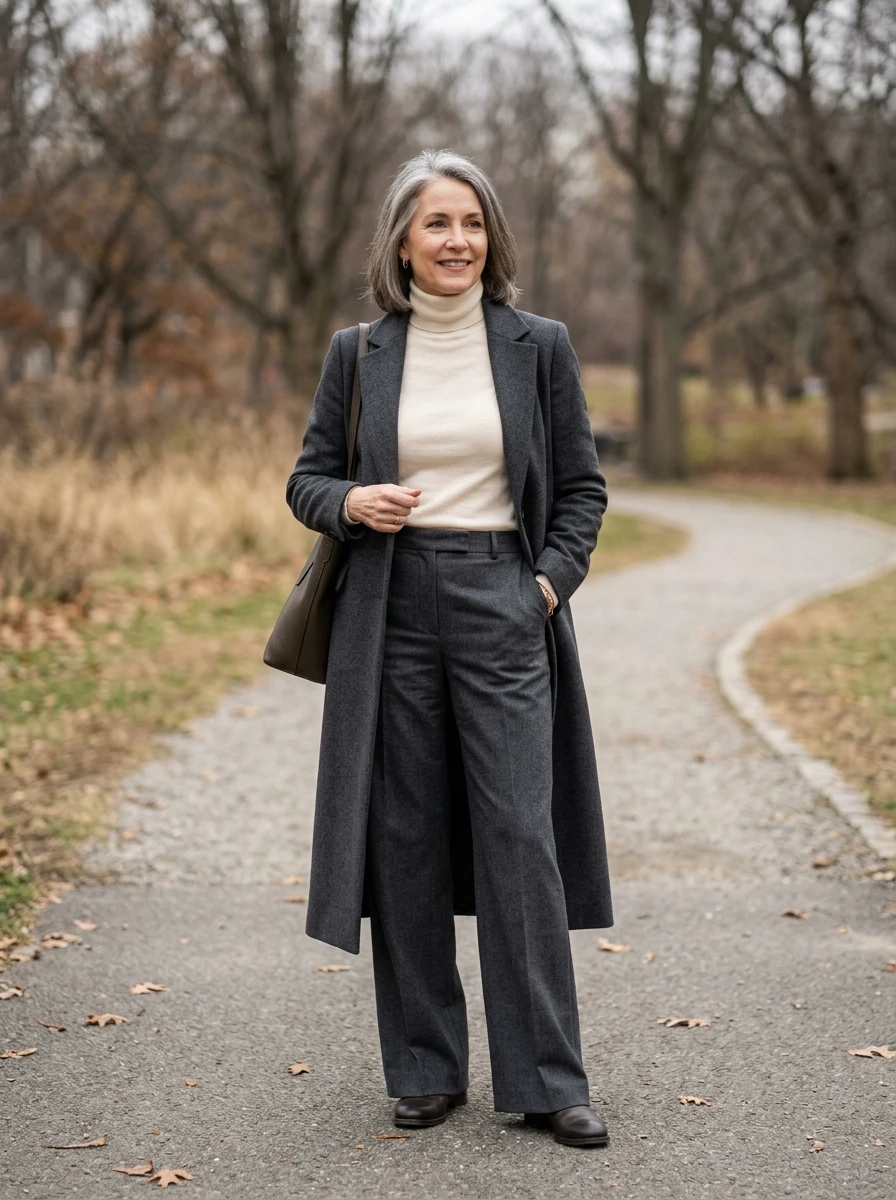
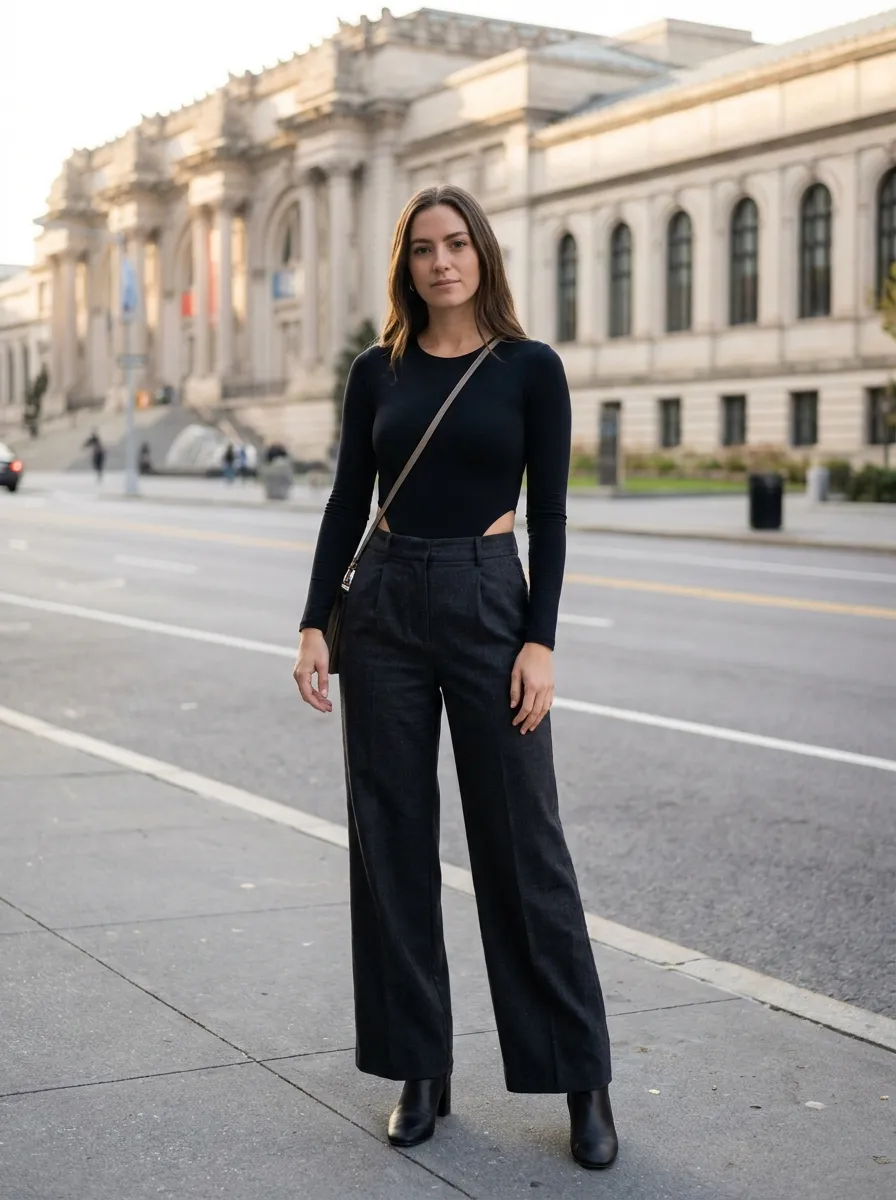
Wide Leg Trousers and Fitted Bodysuit — No Tuck Bulk
Wide leg trousers only work when the top is fitted. The same anchor rule drives wide leg jeans outfits that balance proportions: volume on both halves with no breakpoint in between reads as a single shapeless column. A bodysuit solves the specific plus size problem of tuck bulk — a regular tee tucked into high waisted trousers creates a gathered ring of fabric at the waistband, which is exactly where you do not want extra volume.
Fit note: the bodysuit's snap closure keeps the line clean from shoulder to hip, letting the trousers drape from a smooth foundation. For travel, this is also a wrinkle-proof pairing — no tucked fabric means nothing to untuck and smooth again after sitting.
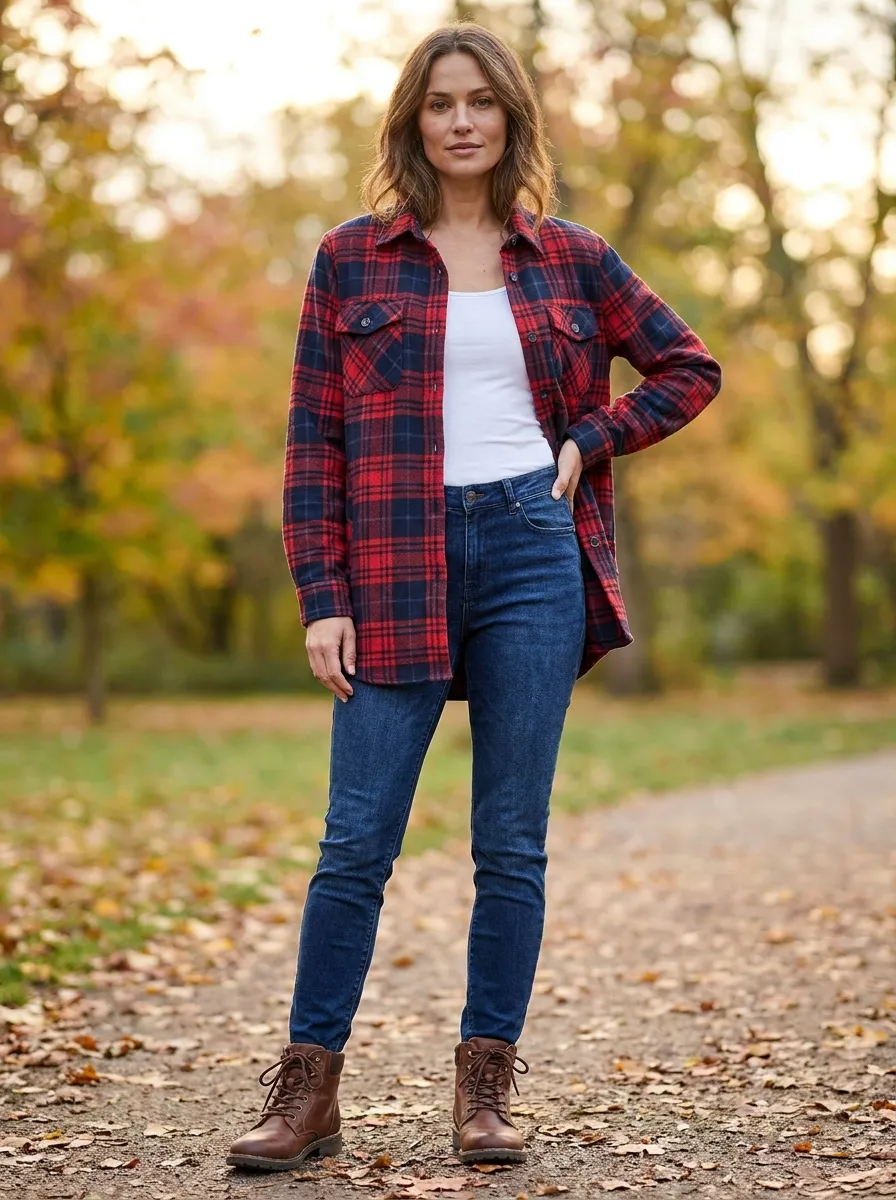
Plaid Shacket and Dark Jeans — Pattern Scale Matters
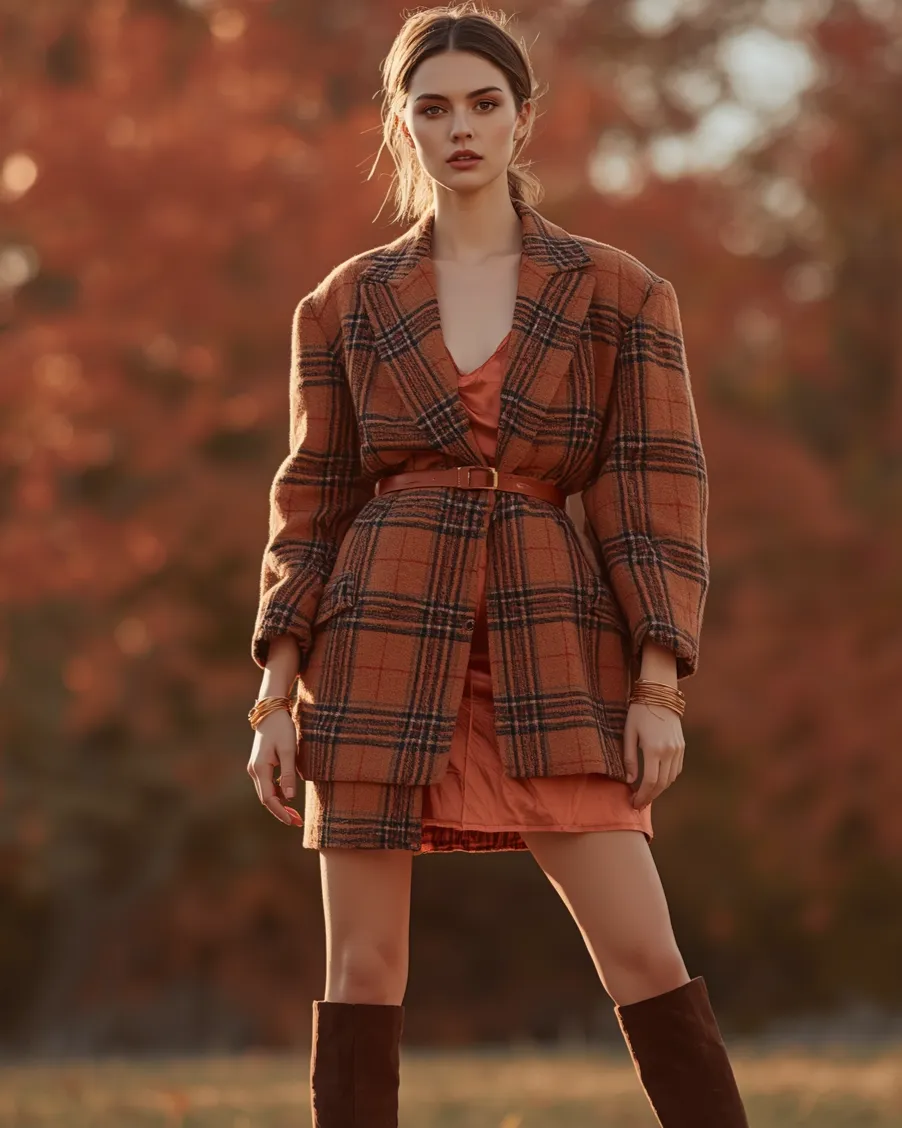
Pattern scale matters more than most packing guides admit. A large-scale plaid reads as intentional on a plus frame; a tiny micro check can look busy and fussy. The shacket works here as a mid-weight third piece — warmer than a shirt, lighter than a coat — which is exactly the layer autumn travel demands. Keep everything under it solid and dark: the plaid is the single statement, and a second pattern (or a competing texture) would fight it.
Colour pairing: dark jeans rather than blue keep the palette grounded so the outfit works for dinner, not just daytime.
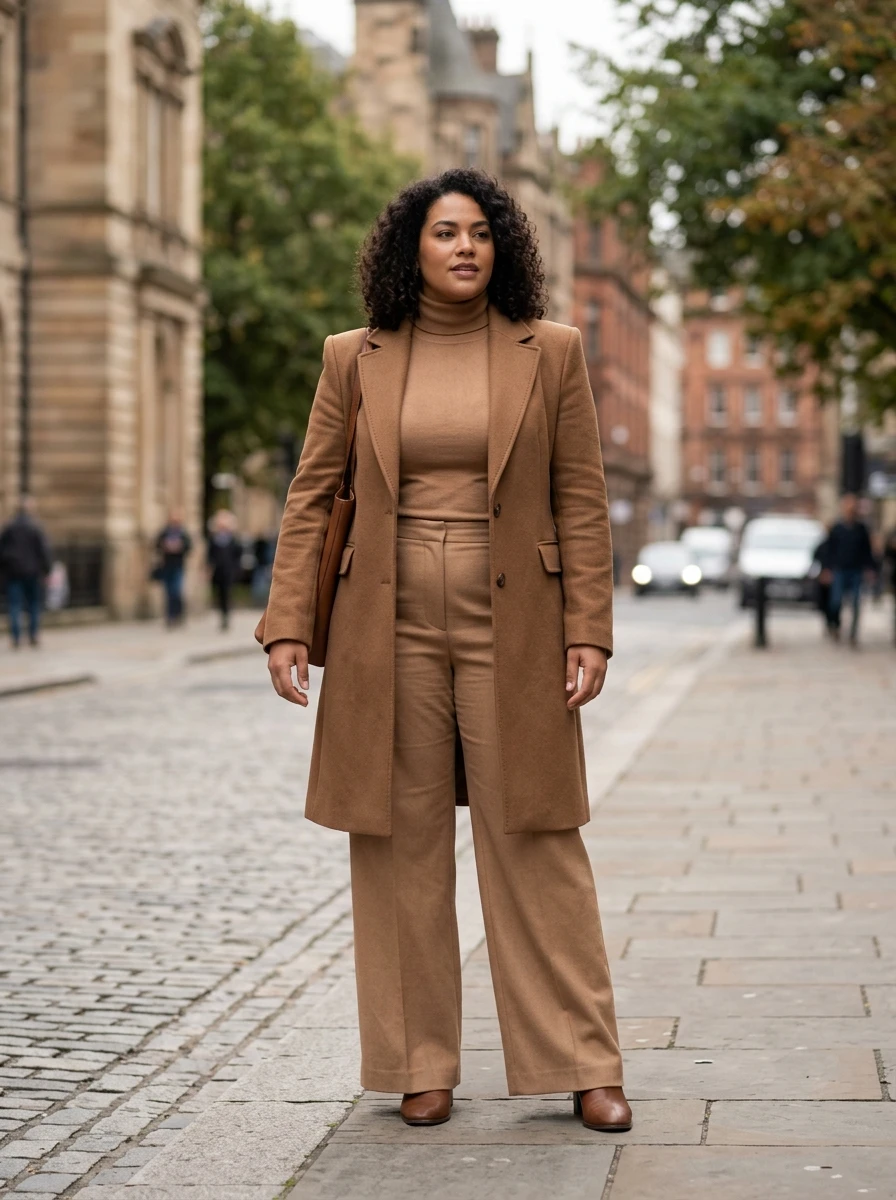
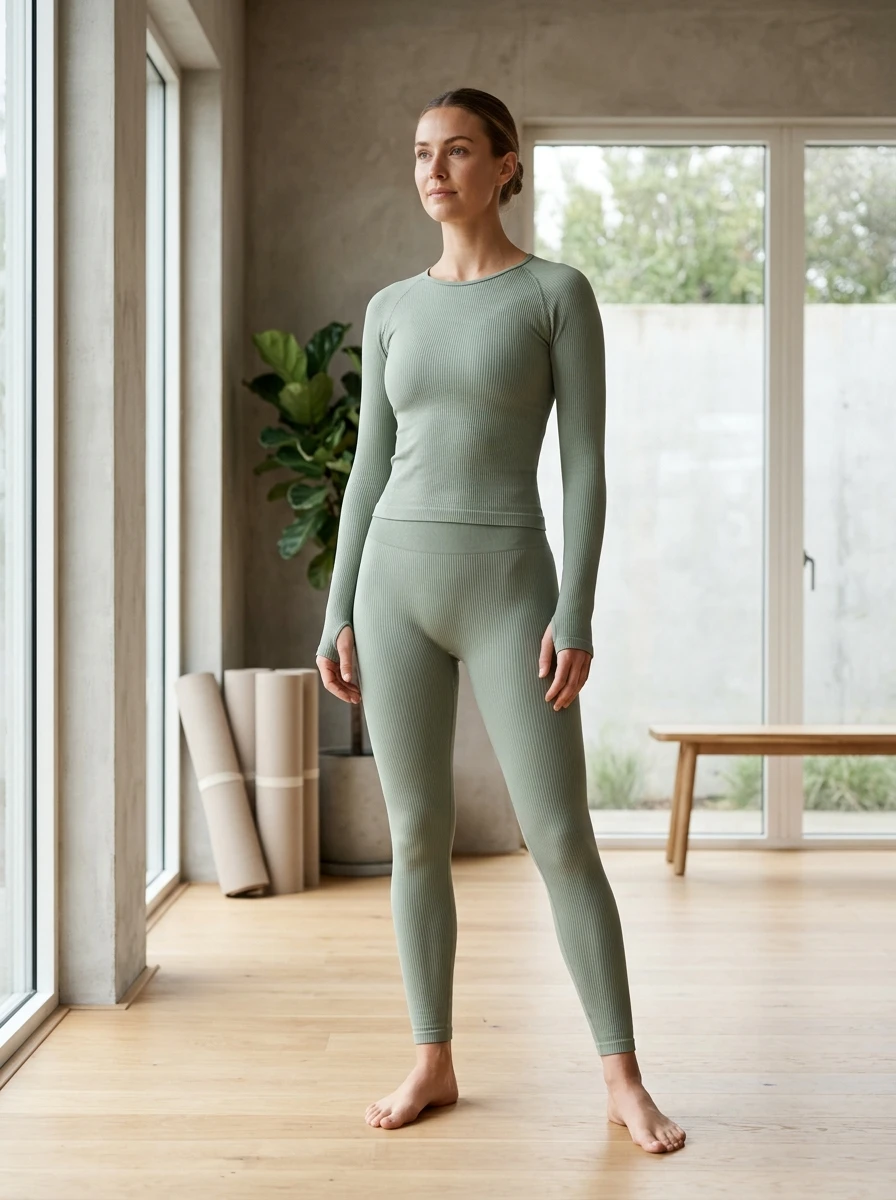
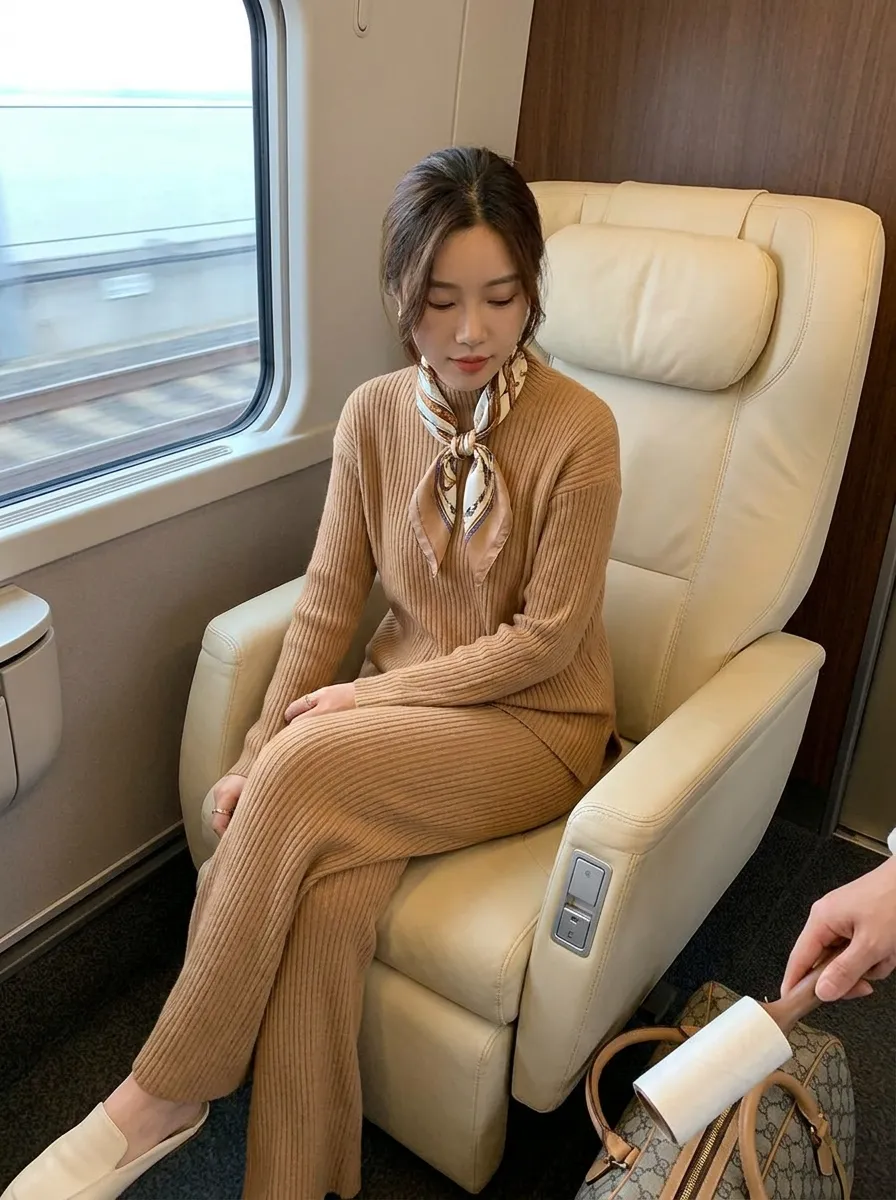
Monochromatic Knit Set — One Tone, Three Textures
Tonal dressing — one color head to toe — is the oldest elongating trick in the book. The five piece version of this system is timeless capsule wardrobe pieces for fall, and it works because the eye travels uninterrupted from shoulder to ankle with no horizontal breaks. The risk is flatness: one texture in one color can look like pajamas. The fix is texture variation within the tone — a ribbed knit top with a smoother knit bottom, or a waffle texture against a flat jersey.
Wear it with a silk scarf or a pendant necklace, which gives the eye one place to land. This is the outfit to wear on the actual travel day: maximum comfort, zero wrinkles, and it looks pulled together in transit photos.
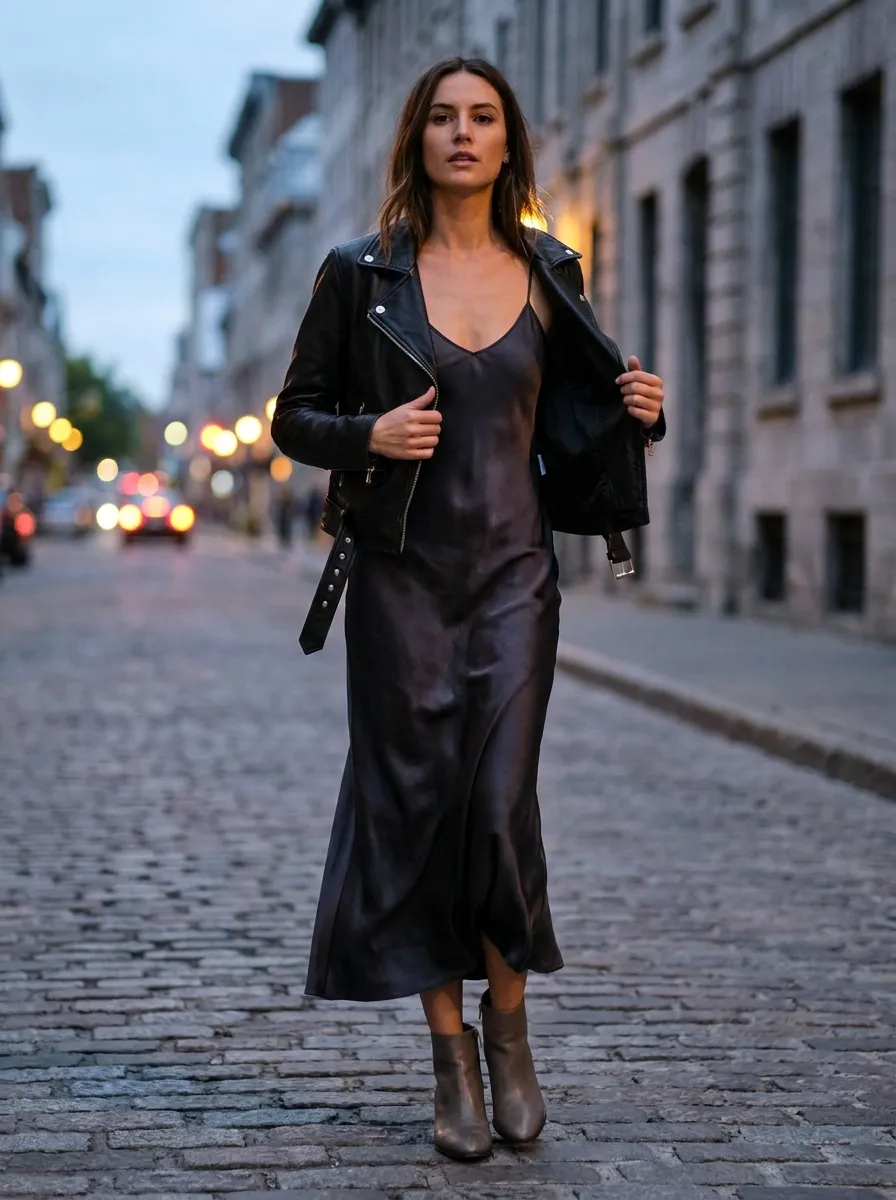
Leather Moto Jacket and Slip Dress — Soft Meets Structured
This pairing runs on contrast: the slip dress is soft, fluid, and minimal; the moto jacket is hard, structured, and detailed. Contrasts like this work because each piece makes the other look more deliberate — the jacket keeps the dress from reading as sleepwear, the dress keeps the jacket from reading as costume.
Fit note: fit matters at the shoulder — a moto jacket that is too wide there will slide and bunch, ruining the line. The jacket should hit at or just above the hip so the dress's drape continues uninterrupted below it.
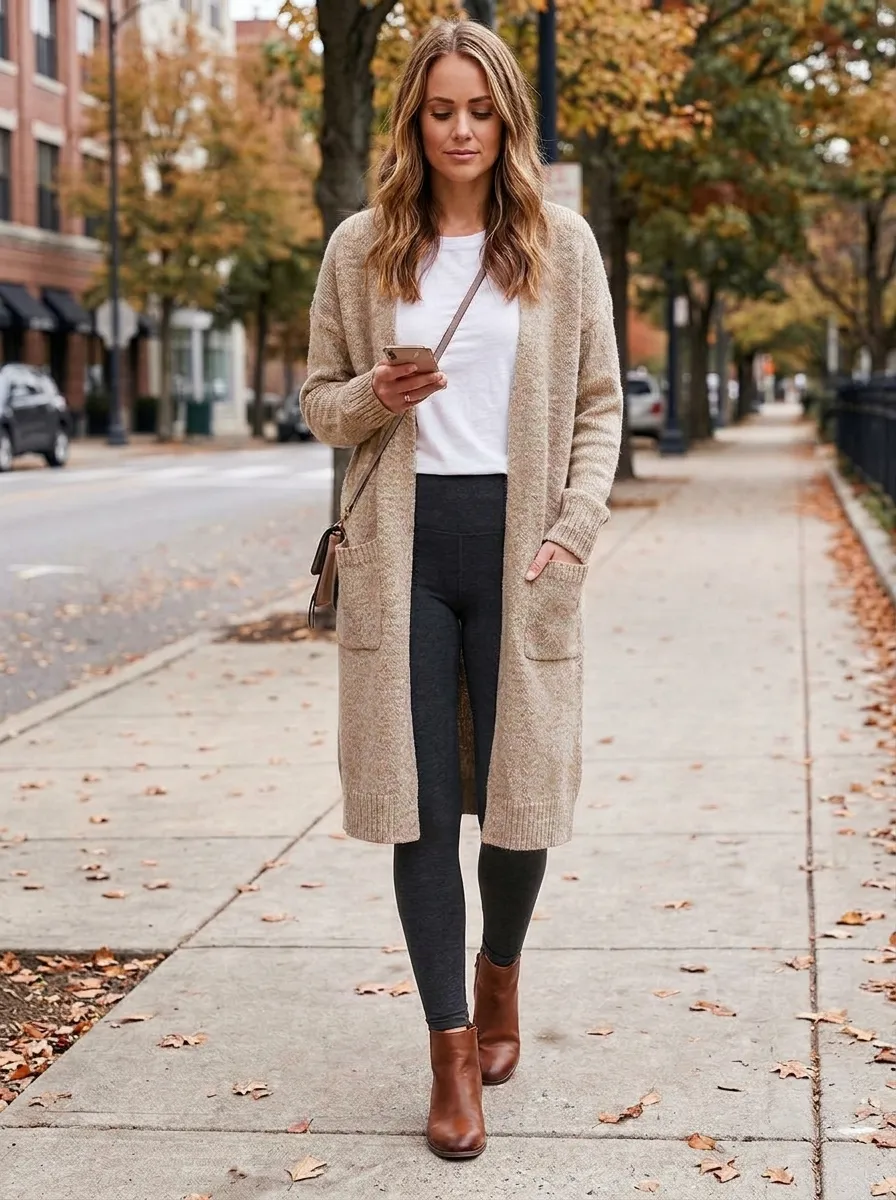
Long Cardigan and Leggings — Two Long Lines
An open long cardigan creates two long vertical lines down the front of the body, which is why this combination is so flattering despite being so simple. The eye follows those lines downward, which elongates the torso. Length matters: just below the knee is the sweet spot. Shorter and you lose the line; much longer and the cardigan starts to wear you, especially on a petite plus frame.
Wear it with pockets in mind — phone, boarding pass, lip balm — which is why this is a travel-day workhorse, not just a cute outfit.
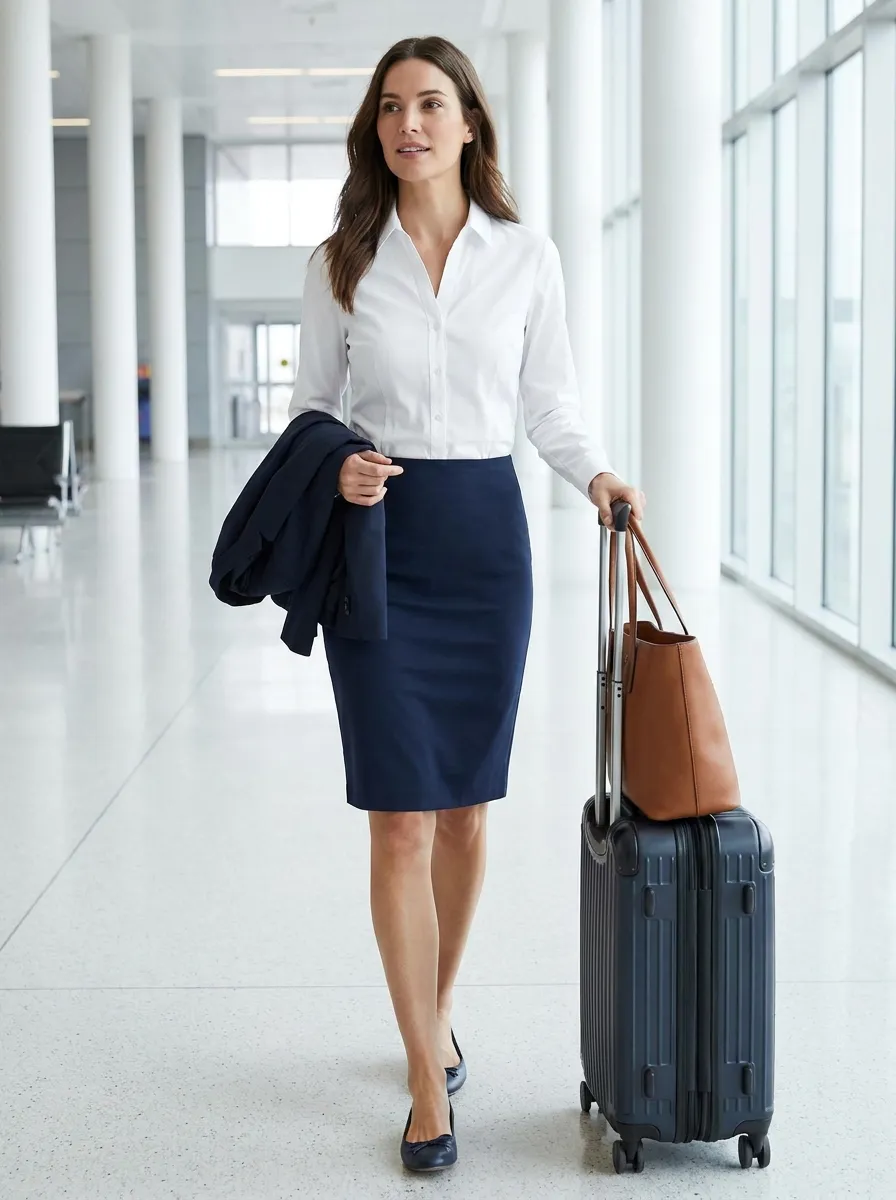
Button Down Shirt and Pencil Skirt — The Business-Travel One
The pencil skirt gets a bad reputation for travel because people picture rigid, dry-clean-only versions. A stretch pencil skirt in a ponte or heavy jersey behaves completely differently: it holds its shape, resists wrinkles, and moves when you move. The shirt half of the equation is about the tuck.
Fit note: the shirt itself starts with a white button down shirt that actually fits at the shoulder. A full tuck into a pencil skirt works if the shirt is fitted; if it is oversized, do a front tuck instead so you do not get billowing at the waistband. For business travel, this is the one outfit in the capsule that reads as professional without needing a blazer.
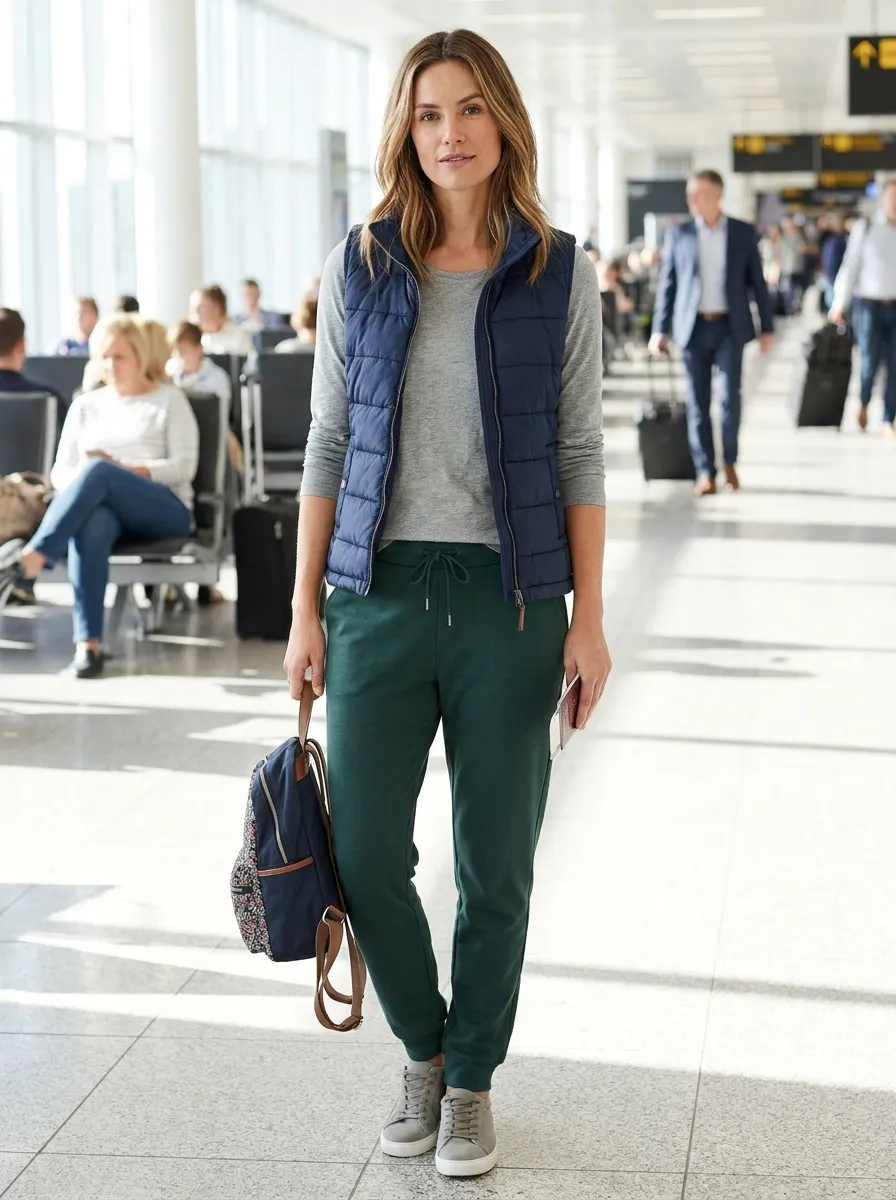
Quilted Vest and Long Sleeve Tee — The Most Packable Layer
A vest is the most packable layer in this entire list — it compresses to almost nothing and adds genuine core warmth. That is the travel logic. The style logic is that it adds visual interest at the torso without adding sleeve bulk, which keeps your arms free and your silhouette clean. This matters for plus size layering specifically: sleeveless layers do not add width at the shoulders the way a full jacket does.
Wear it unzipped over the tee so the vertical opening continues the elongating line from outfit 8.
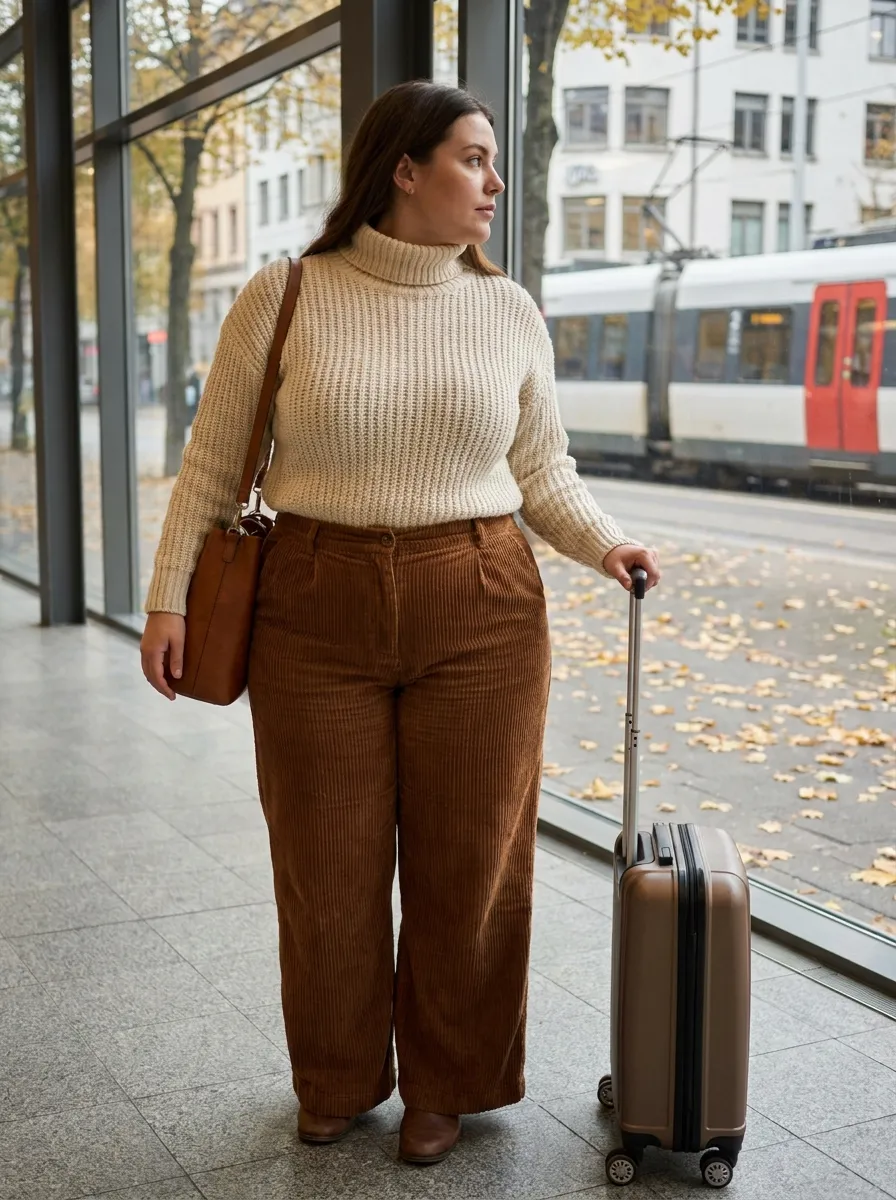
Turtleneck Sweater and Corduroy Pants — Related Textures, One Family
Texture on texture works when the textures are related but not identical — here, the fine rib of the turtleneck against the wide wale of corduroy. Keep them in the same color family (camel turtleneck, rust cords, or all black) so the textures do the talking instead of competing colors. Corduroy's real advantage for travel is durability: it does not show wear, it holds its shape all day, and the texture hides the wrinkles that would be obvious on flat fabrics.
Fit note: high waisted cords are worth seeking out — the rise keeps the waistband sitting flat instead of digging in during long travel days.
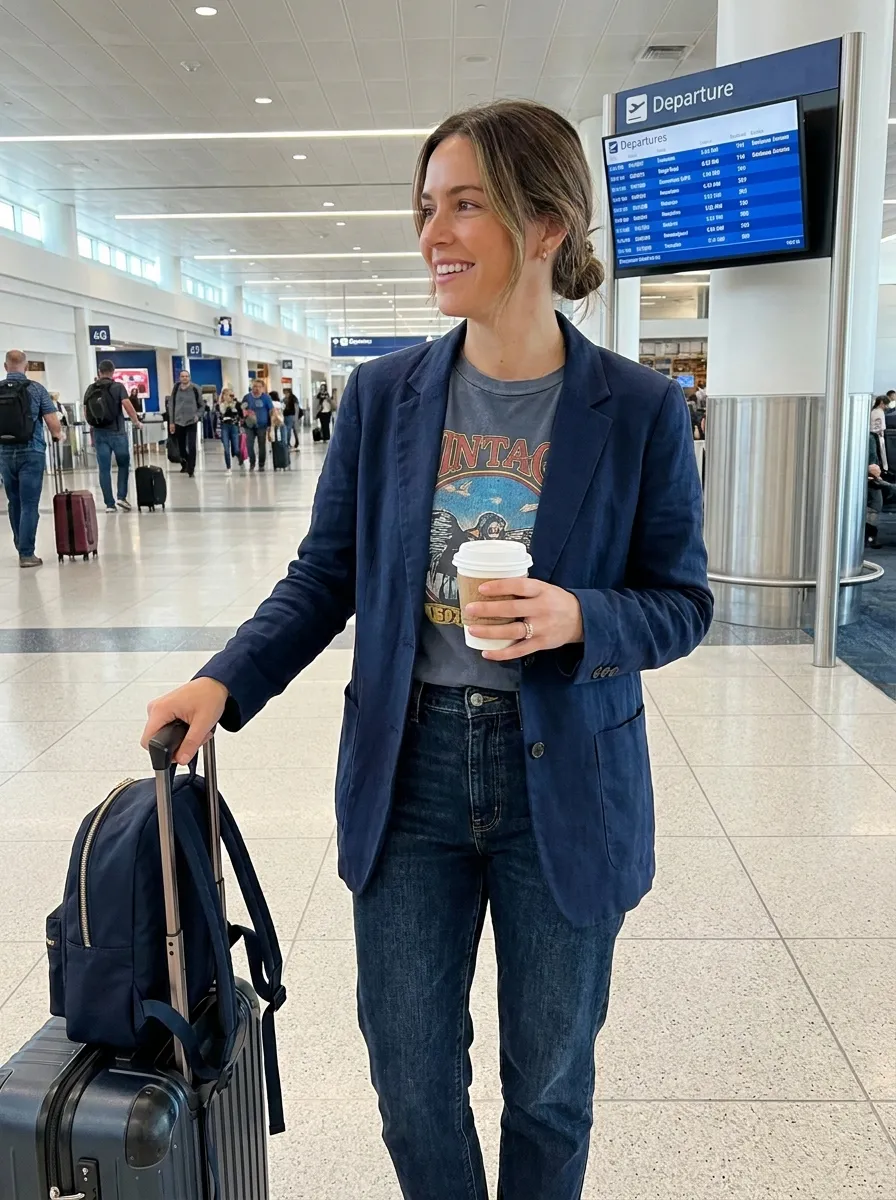
Blazer and Graphic Tee — High-Low in Its Purest Form
This is the high-low formula in its purest form: the blazer contributes all the structure and polish, which frees the tee and jeans to be as relaxed as they want. It works because the eye reads the outfit's formality level from the most structured piece — one blazer outweighs a whole casual base.
Fit note: for the blazer to do this job, it needs to actually fit — shoulders sitting at your shoulder line, sleeves ending at the wrist. An ill-fitting blazer over a tee just looks like you borrowed someone's jacket. A blazer with a touch of stretch travels better than a rigid wool one and will not fight you in an airplane seat.
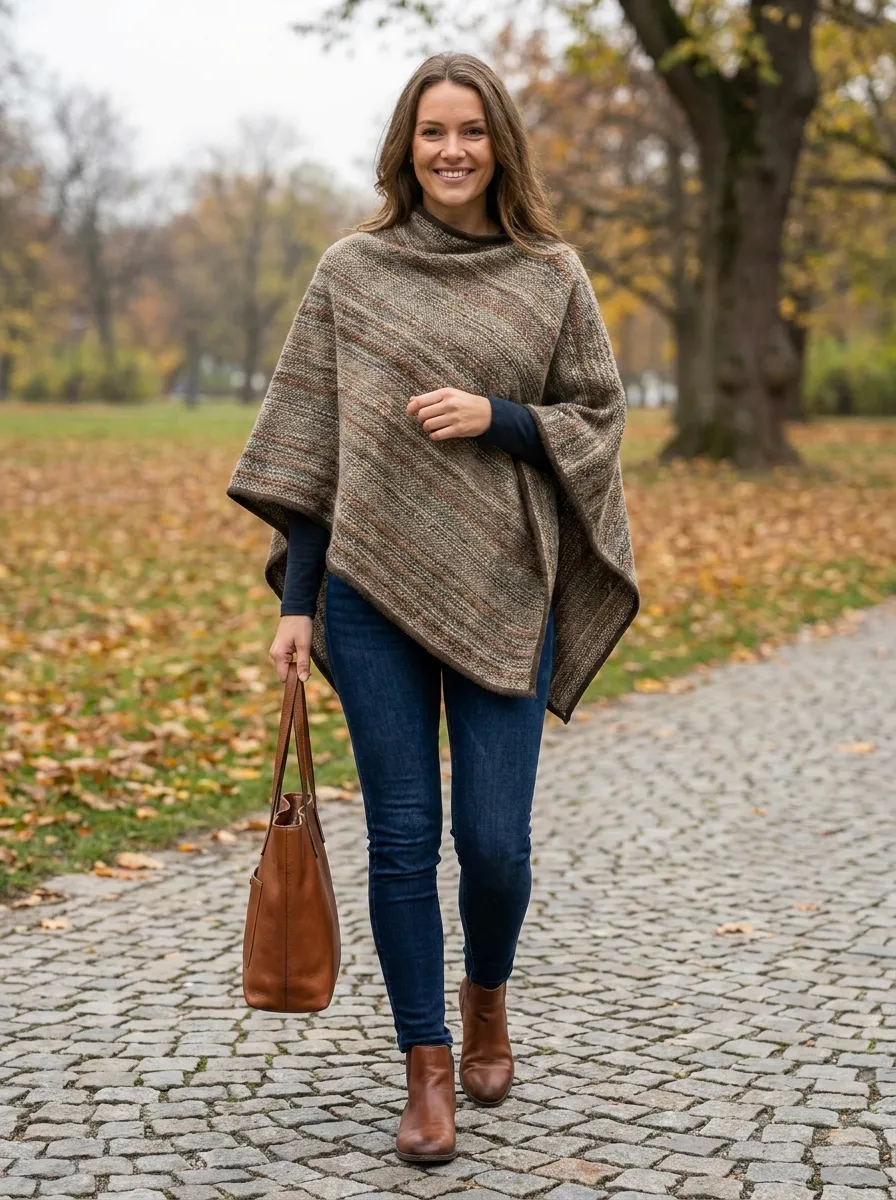
Poncho and Skinny Jeans — Volume on Top, Narrow Below
A poncho is pure volume on top, so the bottom half has to be narrow — that is the entire logic of this outfit. Skinny jeans (or any slim straight leg) anchor the width above and keep the silhouette from going shapeless. The poncho's advantage for travel is that it is one size, packable, and works as a blanket on cold flights.
Fit note: the thing to watch is proportion — if the poncho hits below the hip, it can swallow a shorter frame, so look for one that ends mid thigh. A crossbody bag worn over the poncho also helps by creating a diagonal line that breaks up the width.
If this is your direction, cute plus size fall outfits for curvy women this fall goes further.
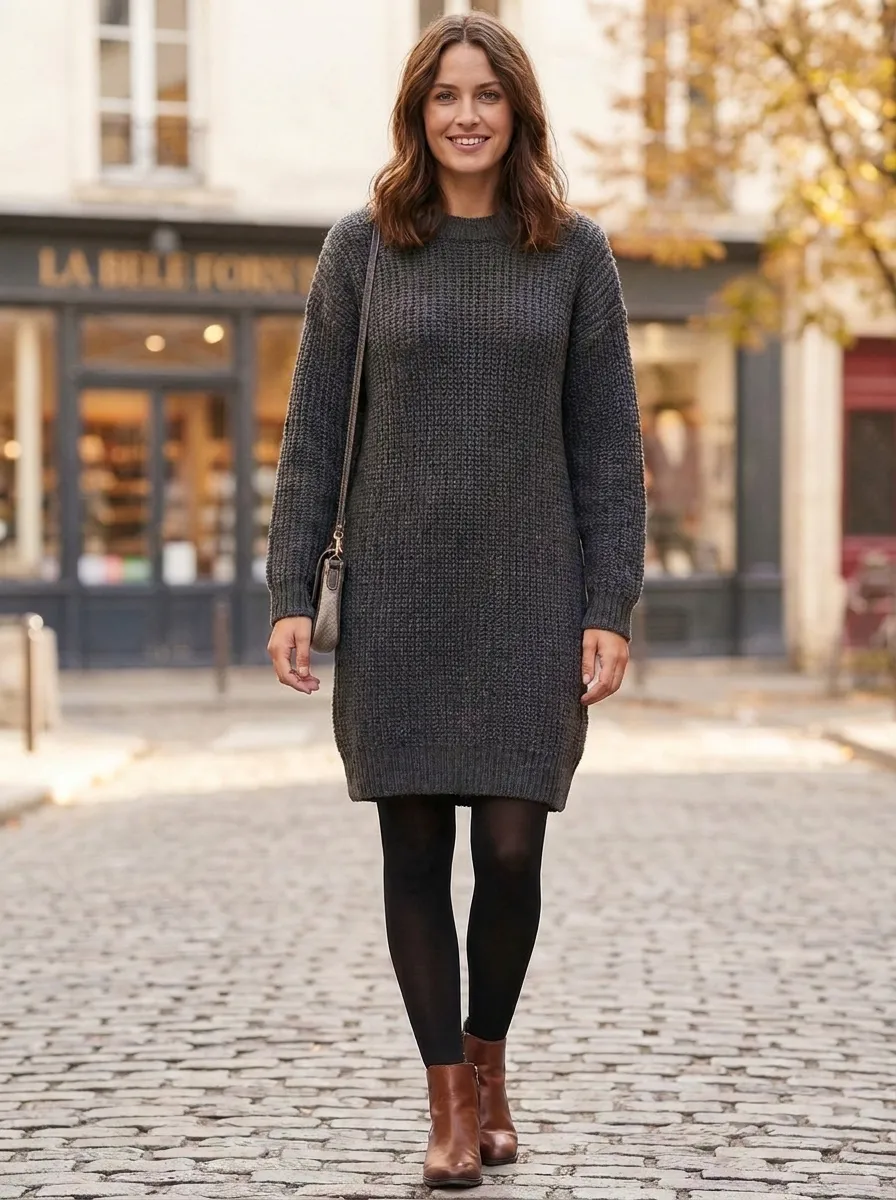
Sweater Dress and Tights — One Piece, Zero Coordination
One-piece dressing is the ultimate packing efficiency: one item, one decision, zero coordination required. The one piece version is covered in ways to style a sweater dress. The sweater dress works when the knit has enough weight to drape rather than cling — a thin, flimsy knit will show every line underneath, while a medium-weight ribbed knit skims.
Fabric note: opaque tights do quiet work here — they create an unbroken dark line from hem to boot, which lengthens the leg far more than bare legs or sheer hose would. Ankle boots that hit just above the ankle bone keep that line clean; taller boots cut it.
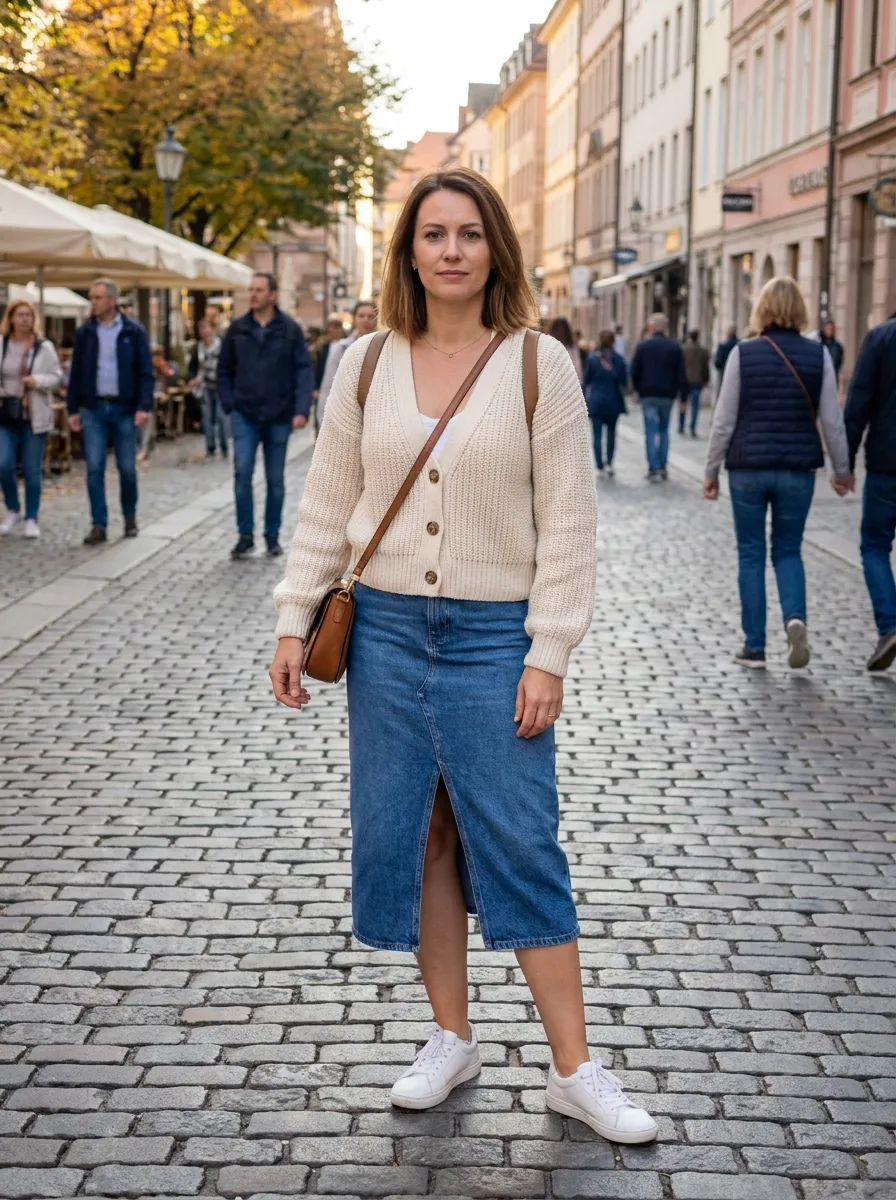
Denim Skirt and Chunky Cardigan — Structure Balances Width
An A-line denim skirt is doing structural work: its shape holds away from the body, which balances the width of a chunky cardigan on top. A pencil denim skirt with the same cardigan would stack width on width. The camisole underneath is not an afterthought — it is your temperature control, letting you open or close the cardigan as the day warms and cools.
Fabric note: denim's travel advantage is that it looks better slightly rumpled, so it is the rare skirt fabric you do not have to baby in a suitcase.
Common Questions About Fall Travel Capsules
How many pieces do I need for a week-long fall trip?
Twelve to fifteen well-chosen pieces will cover seven days without repeats that feel obvious. The key is that every top must work with every bottom — if a piece only pairs with one other item, it does not earn its suitcase space. Stick to one color family so mixing is automatic.
Which fabrics survive a suitcase best?
Jersey, ponte, merino wool, and polyester blends come out of a packed bag looking close to how they went in. Linen, silk, and lightweight cotton wrinkle if you look at them wrong — beautiful at home, miserable in transit. When in doubt, scrunch a corner of the fabric in the store: if the wrinkles fall out in ten seconds, it travels well.
How do I layer without adding visual bulk?
One fitted layer against the body, then one piece with structure on top — that is the whole formula. Two fitted layers look flat; two loose layers look shapeless. The structured piece (blazer, trench, moto jacket) is what gives the outfit its silhouette, so make sure it actually fits at the shoulders.
What is the smartest shoe strategy for fall travel?
Three pairs maximum: broken-in walking sneakers, ankle boots with a low stable heel, and one flat for dinners. Wear the bulkiest pair on the plane. Every shoe should work with at least three outfits in your capsule, or it stays home.
How do I stop capsule outfits from looking repetitive in photos?
Change the third piece, not the base. The same black tee and jeans look like three different outfits with a trench, a moto jacket, or a long cardigan on top. Accessories do the same work: a scarf, a belt, or different earrings change the read of an outfit without changing the clothes.
Packing Checklist: Before You Zip the Suitcase
One color family, every top pairing with every bottom, three pairs of shoes maximum, and one structured layer that actually fits at the shoulders. Start by pulling the pieces you already own that fit the formula: dark bottoms, neutral tops, one structured layer. The fall version of this system lives in fall outfits every woman needs. You will probably find you are closer to a working capsule than you think — twelve pieces, fifteen outfits, zero morning panic in a hotel room.
For cold weather trips, chic plus size winter outfits for a flattering look continues where this guide leaves off.