10 Cut Up T Shirt DIY Ideas for Summer
How to use this guide
Choose ideas based on the materials, time, skill level, and finish you can realistically manage. For any dye, bleach, paint, or alteration project, test on a spare piece first and follow the product safety instructions.
Old tees pile up in drawers because throwing them out feels wasteful yet wearing them as is feels tired. A stack of worn cotton crew necks sits untouched for months, each one too faded for the office and too plain for a night out. Scissors solve what donation bins never do, turning a shirt bound for the back of a drawer into something worth reaching for again. If a full redesign feels like too much commitment, these quicker ten-minute cuts cover the same fabric with a lot less effort.
This guide breaks down 10 distinct cutting techniques, from woven front panels to laced corset backs, each rated by difficulty and finished in under an hour with basic tools. Some need only scissors, others call for eyelets or cord, but every method works on cotton already sitting in a closet. Warm weather looks dominate the list, though a few techniques suit layering once temperatures drop.
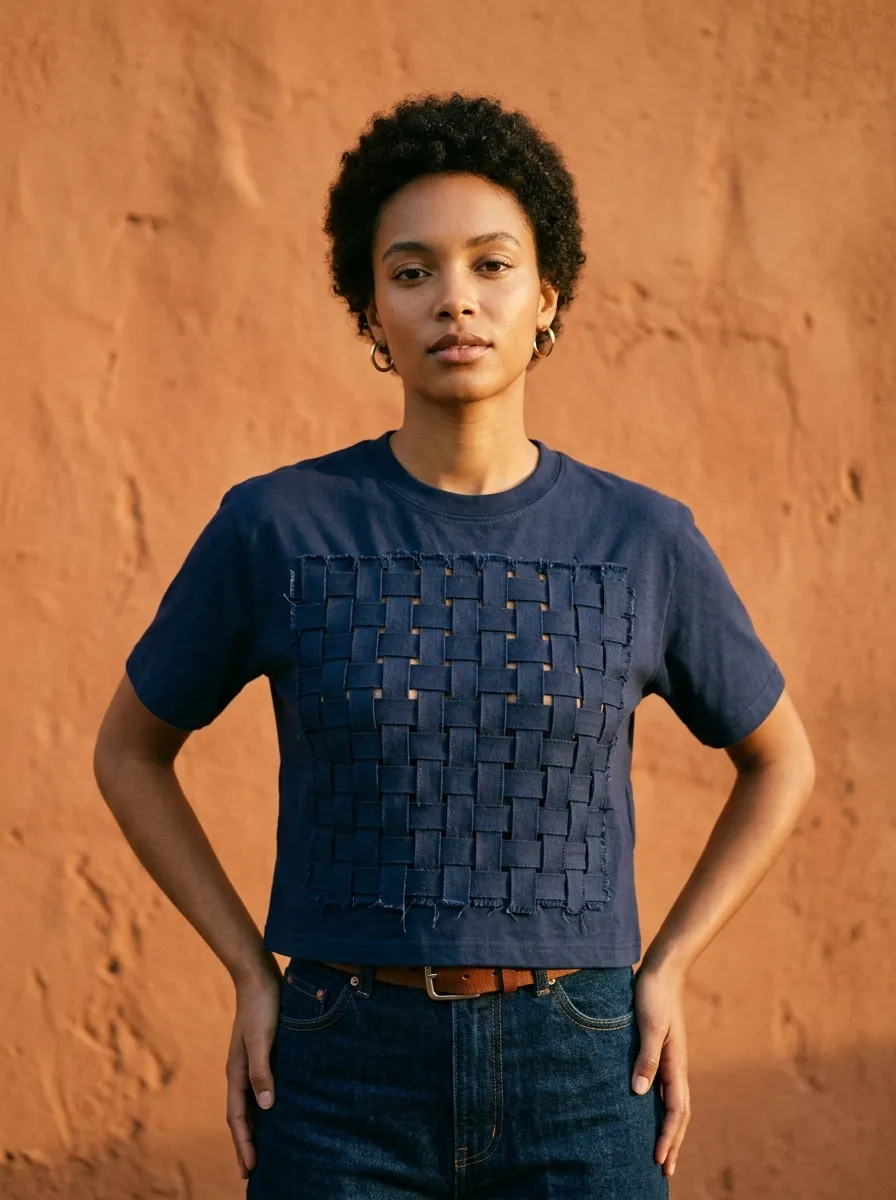
Woven Checkerboard Front Panel
This navy tee turns a plain front into a woven grid. Strips of fabric get cut and interlaced across the chest, leaving raw edges that fray with wear. Sunlight catches the gaps between each strip, giving the panel real texture instead of a flat print. Gold hoops and a leather belt keep the styling grounded, so the shirt reads as intentional rather than accidental. Denim on the bottom balances the busy top half. Anyone with basic scissors and patience can trace this pattern onto an old crew neck. Wash the shirt first so the strips fray naturally over time. This technique works best on thicker cotton, since thin jersey tends to curl at the cut edges instead of holding shape.
Asymmetric One Shoulder Drape
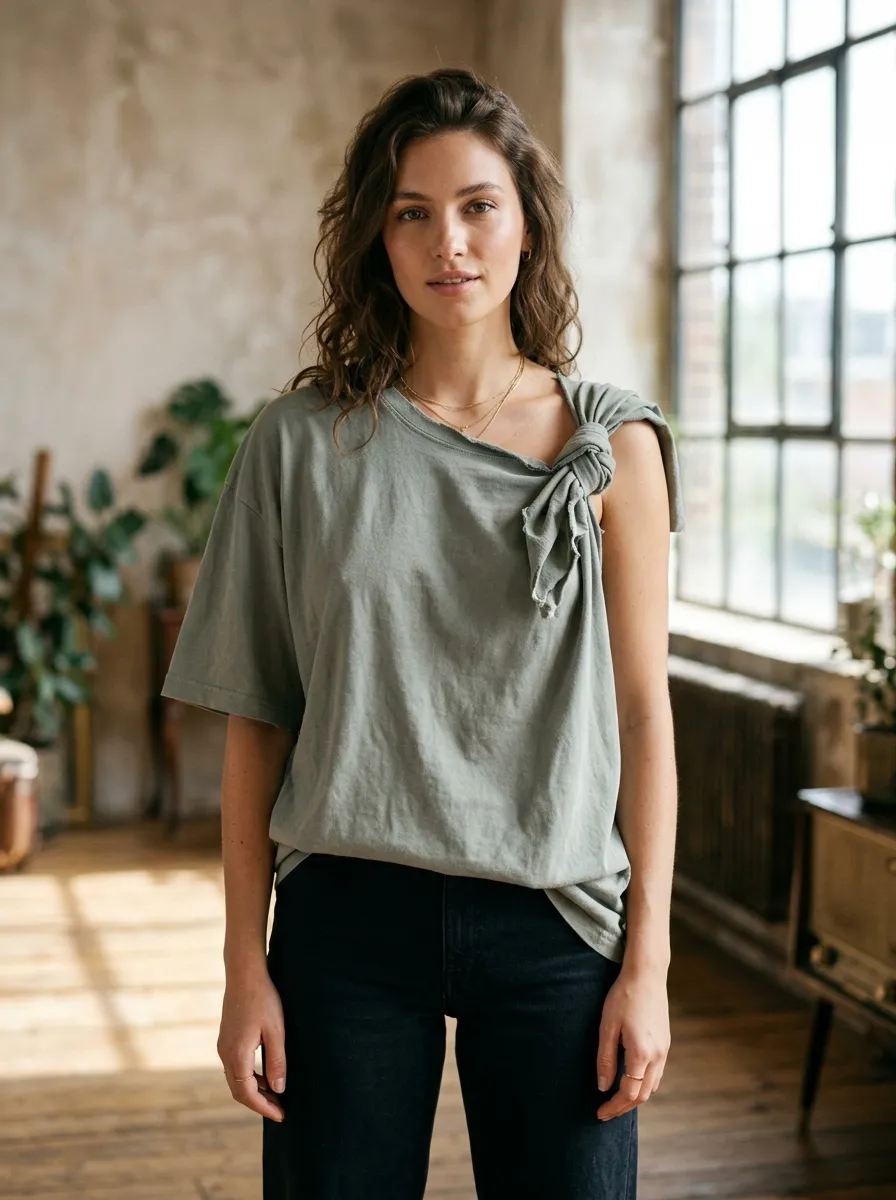
One shoulder disappears entirely in this reworked tee, replaced by a soft knot that gathers the fabric into a loose rosette. The raw hem near the collarbone shows exactly where the scissors went, and that unfinished look is the whole point. Sage green keeps the piece easy to pair with black denim or trousers. Loose sleeves on the other side balance the exposed skin, so the shirt still feels wearable for daytime. A knotted strap holds tension without needing a single stitch. Anyone starting out with cut shirts should try this look first, since it only needs one clean cut and one knot. Necklaces layer nicely against the bare shoulder, adding a bit of shine without competing with the fabric.
Geometric Star Cutout Panel
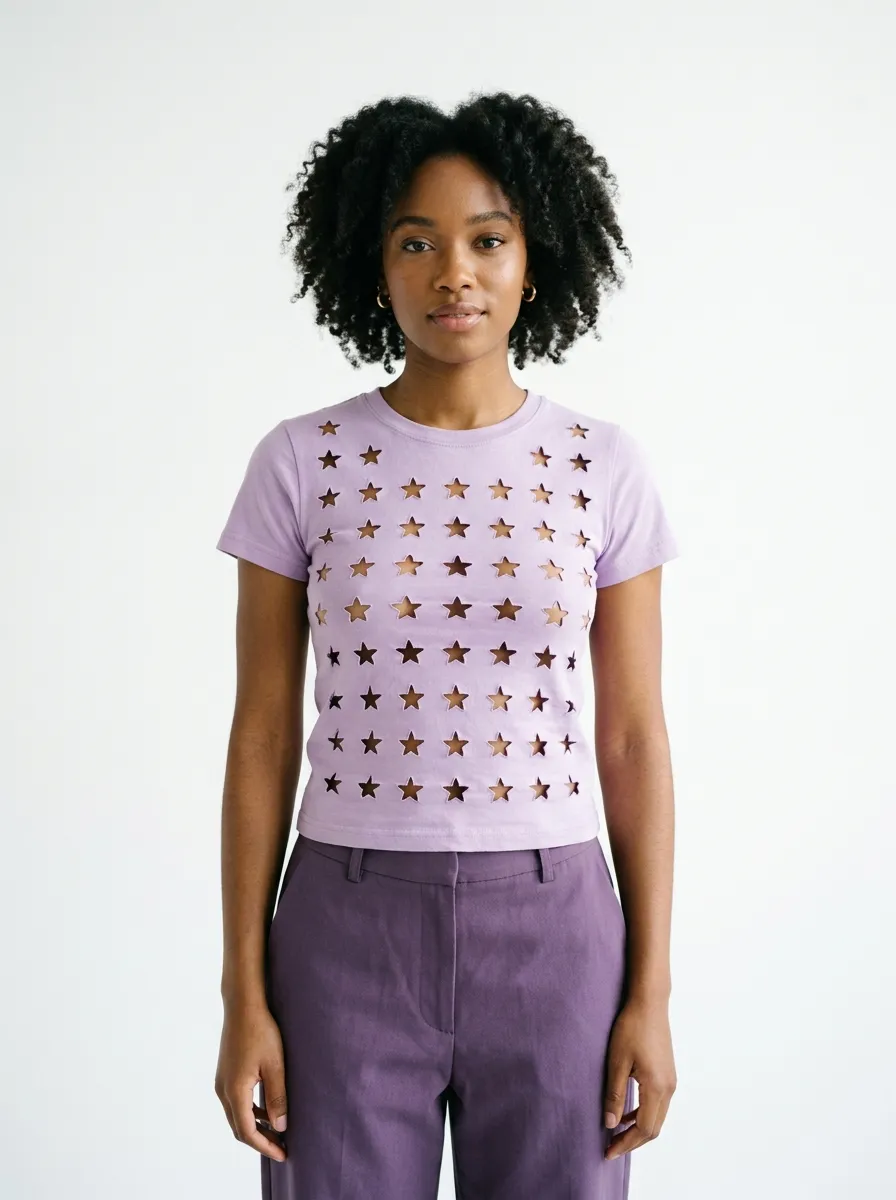
Dozens of tiny stars punch through this lilac tee, each one laser cut to leave a clean edge with no fraying. Rows repeat down the chest in a grid, catching light through the small gaps as the wearer moves. Purple trousers echo the tee's tone, keeping the whole outfit in one colour family. Small gold hoops finish the look without pulling focus from the pattern. This method suits anyone who owns a laser cutter or a steady hand with tiny craft scissors, since uneven stars will stand out against the tight grid. Fitted crew tees work better than boxy ones here, because the stars need to sit flat against the body to read clearly from a distance.
Shredded Cap Sleeve Fringe
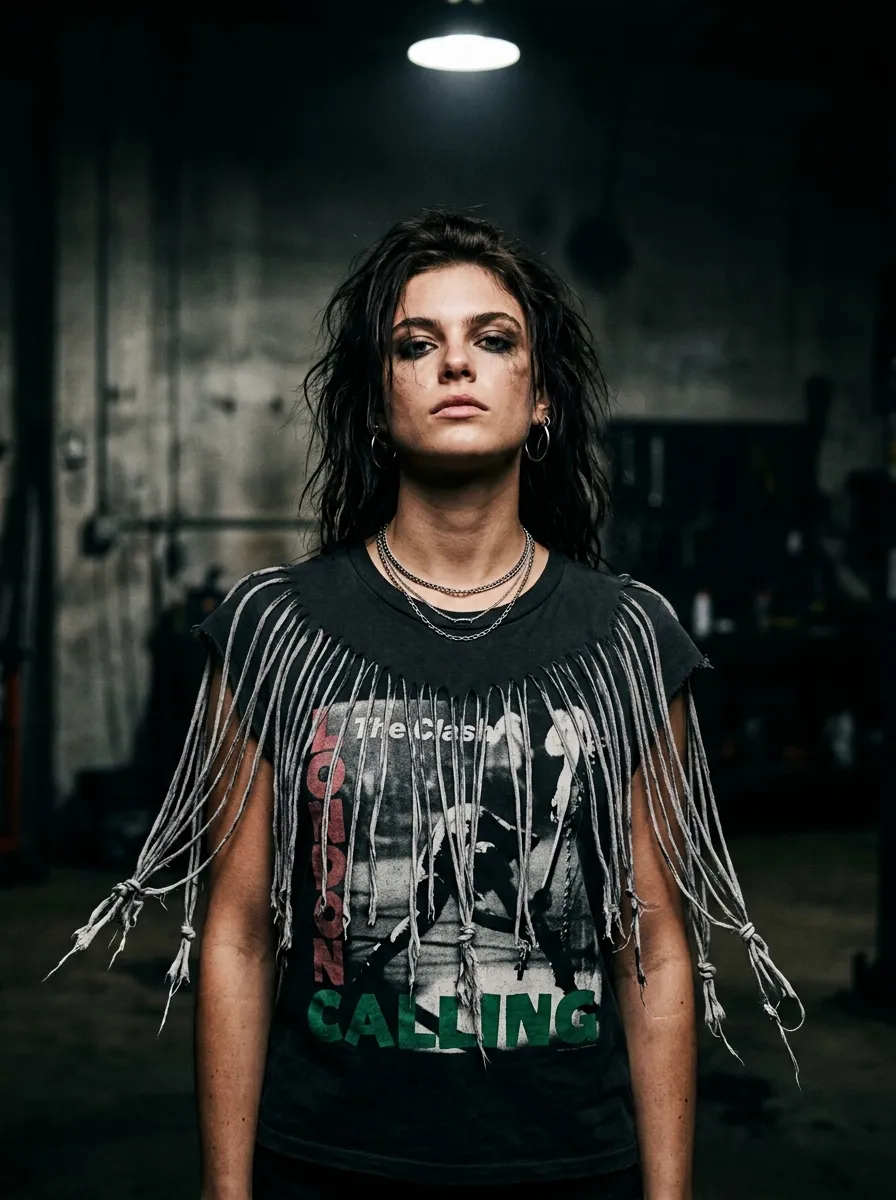
A vintage band graphic survives while the rest of this tee gets torn into long strands. The neckline and sleeves shred into fringe that sways with every step, turning a plain crew neck into something closer to a cape. Smudged eyeliner and layered chains push the styling toward a rock inspired mood, though the technique works on any thrifted graphic tee. Strips get cut by hand and left unfinished, so they curl at the ends over time. Thin cotton frays fastest, which suits this look, while thicker fabric holds its shape longer. Anyone attempting this should mark strand width with chalk first, since uneven fringe throws off the whole silhouette once the shirt starts moving.
Front Twist Knot Crop

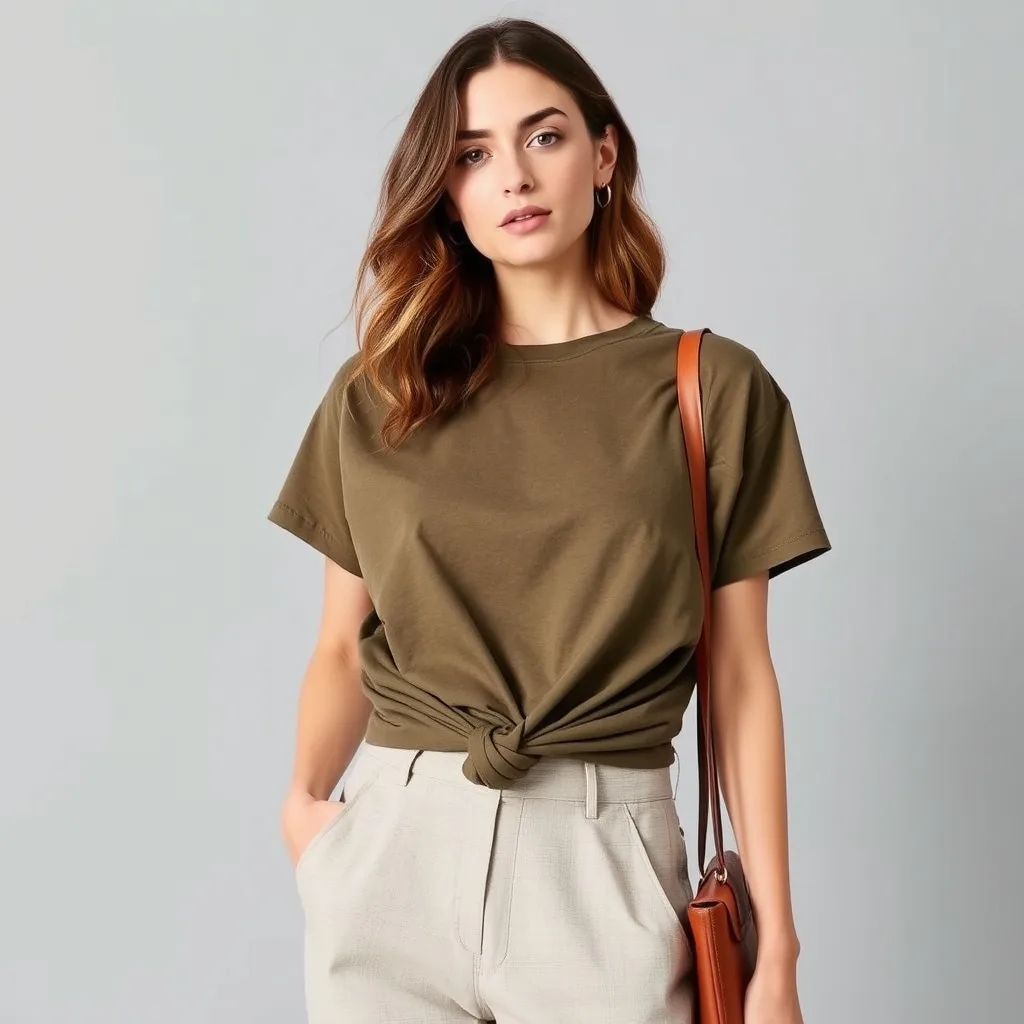
Mustard cotton gets tied into a thick knot at the front hem, pulling the whole tee upward into a cropped shape. Loose ends hang down over denim, adding movement that a plain hem never gives. A small slit cut near the collarbone lets a bit of skin show without going too far. Rolled sleeves keep the proportions relaxed rather than tight. This trick works on oversized tees especially well, since extra fabric gives the knot enough length to hang properly. No cutting tools beyond scissors are needed, just a length of fabric torn from the hem itself. Bright colours like mustard photograph well against weathered doors and brick walls, which makes this a strong pick for outdoor shoots.
Braided Halter Back Conversion
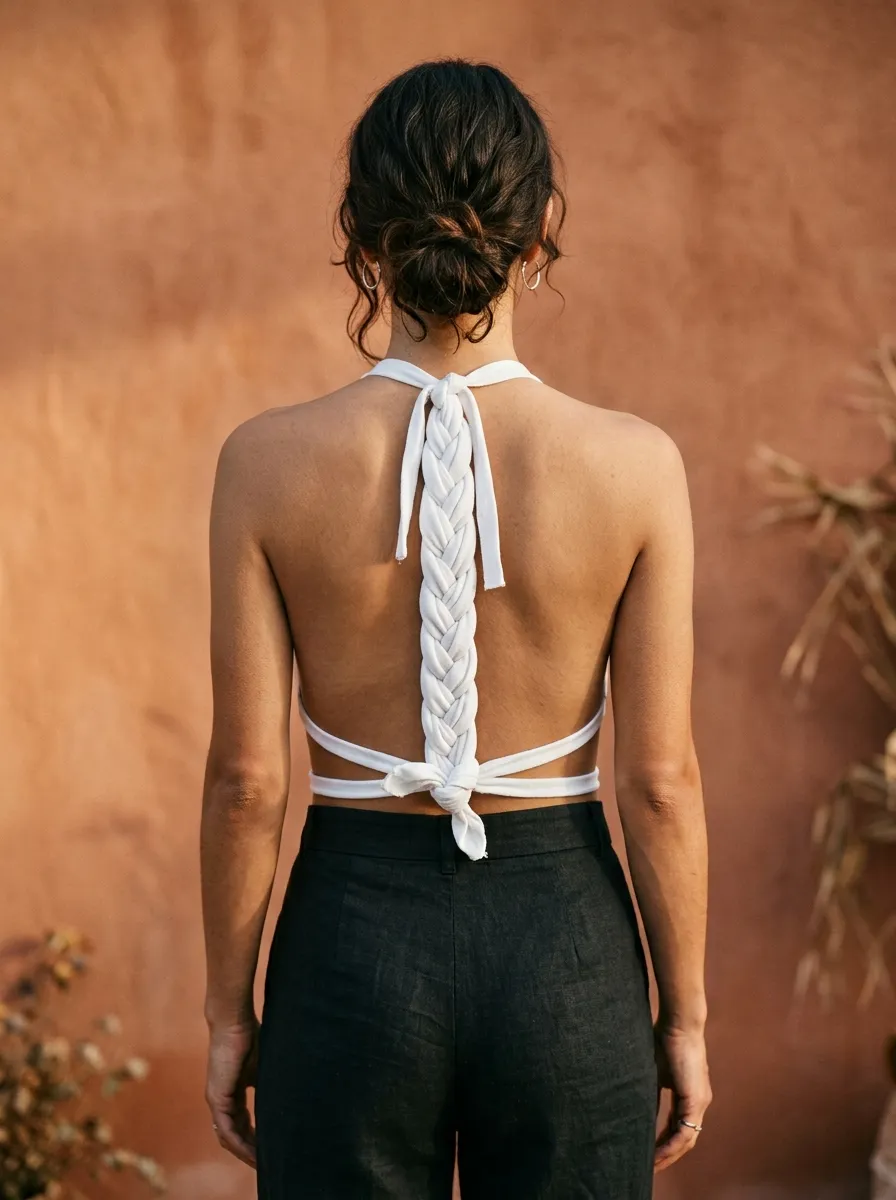
Seen from behind, this white tee reveals a full transformation. The back panel gets cut away entirely, replaced with two long strips that braid down the spine and tie at the waist. Bare shoulders and an open back turn a basic crew neck into a piece suited for warm evenings. A low bun keeps the braid visible instead of hidden under loose hair. Black trousers offer contrast against the white cotton. This project takes more effort than most on this list, since the strips need even width to braid cleanly. Beginners should practice braiding scrap fabric before cutting the actual shirt, since a lopsided braid is hard to fix once the strips are already sewn or knotted at the ends.
Slashed Off Shoulder Neckline

Small horizontal slits run along the collar of this maroon tee, each one widened just enough to slip off one shoulder. The neckline sits loose and uneven on purpose, giving the shirt a worn in feel that pairs naturally with faded colour. A thin necklace draws the eye toward the exposed collarbone. Sleeves stay untouched, keeping the rest of the shirt casual and easy to wear. This technique needs only small fabric scissors and a steady hand, since the slits should stay narrow rather than turning into large holes. Brick steps and natural light suit this look well for photos. Sun faded cotton in deep colours like maroon or rust tends to hide small fraying better than bright shades.
Side Corset Lace Up Cutouts
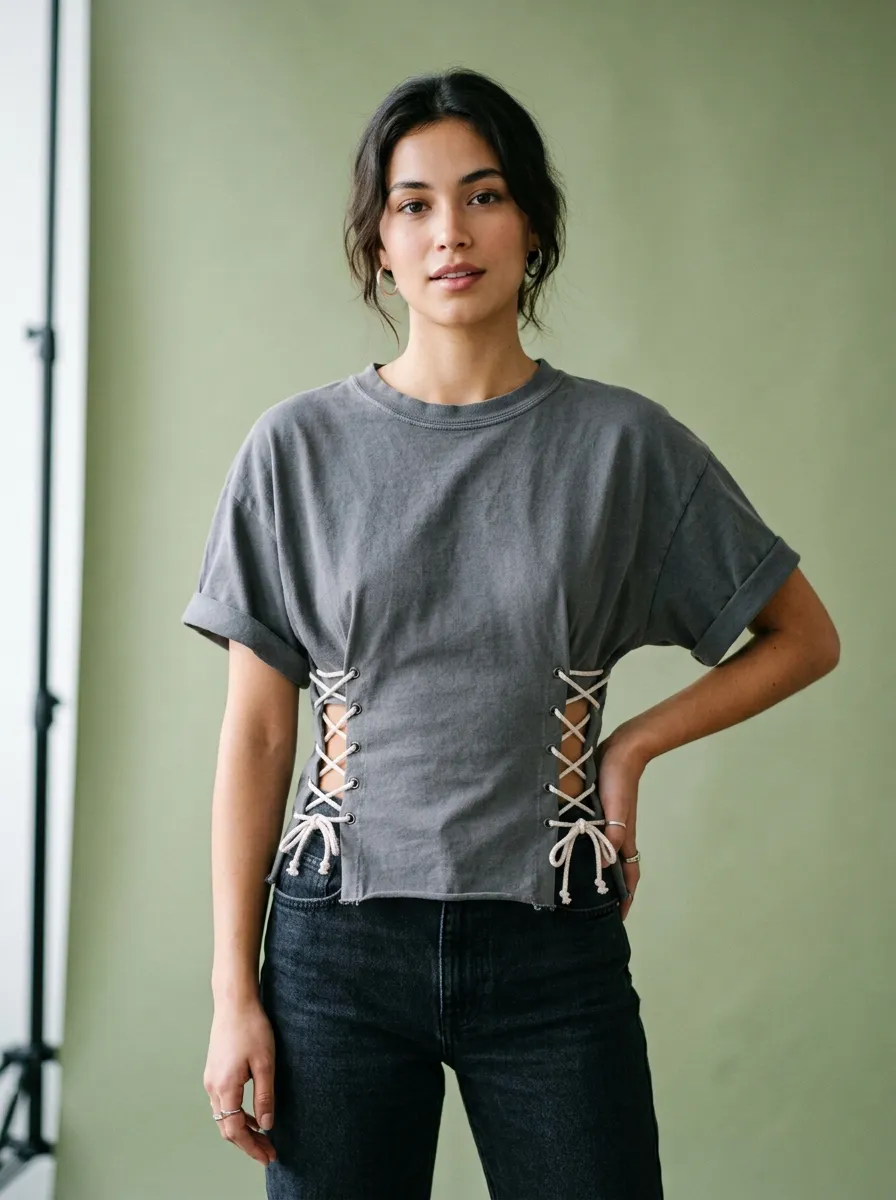
Grey cotton gets punched with eyelets down both sides, then laced with cream cord in a crossing pattern that pulls the tee in at the waist. Small triangular cutouts appear between each lace, showing skin without removing the shirt's boxy shape up top. Rolled cuffs and a relaxed neckline keep the upper half loose, letting the laced sides do the shaping work. Black denim grounds the outfit. This project needs an eyelet kit alongside scissors, since raw fabric holes will tear under lacing tension. Cord length should run longer than expected, since the crossing pattern eats up more length than a straight lace. Tying a bow at the bottom hem finishes the corset effect cleanly.
Shredded Fringe Crop Hem
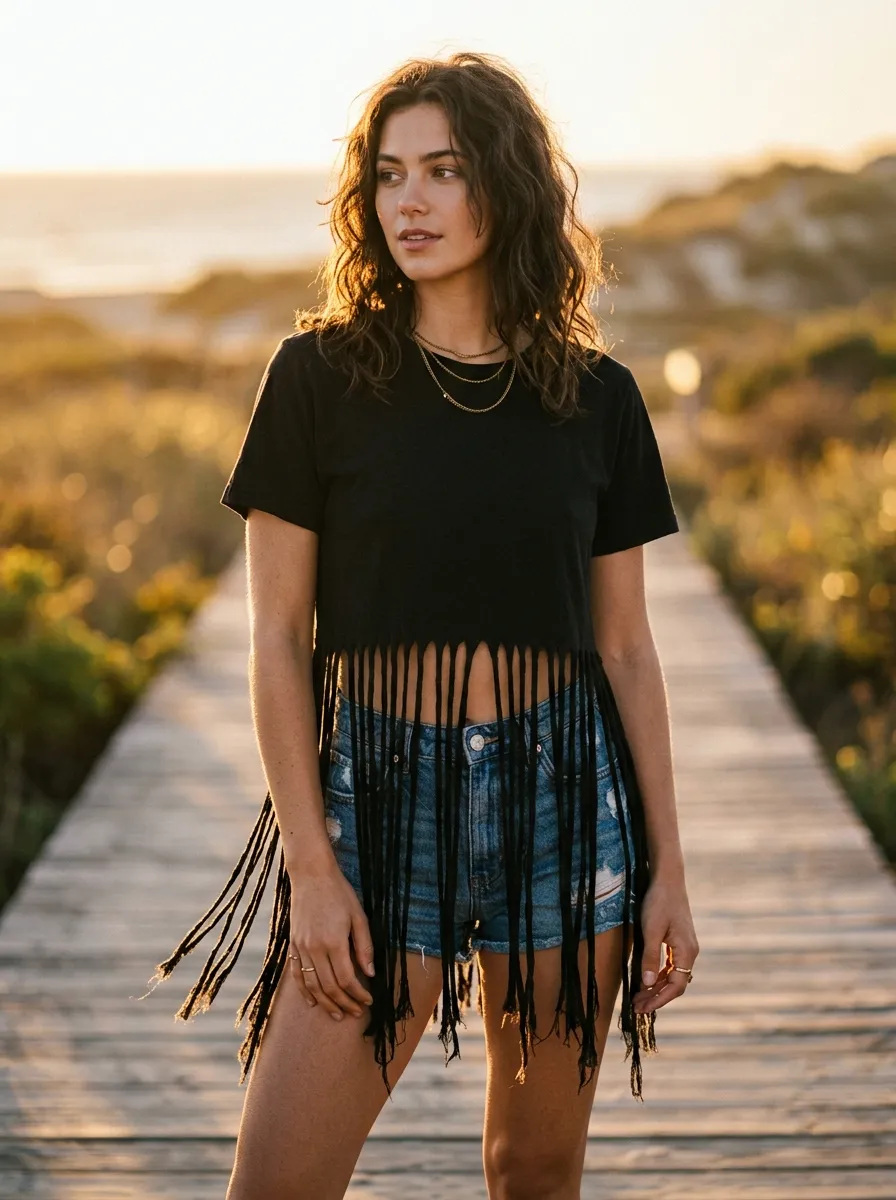
Black cotton stops short at the waist, and everything below the crop line turns into long, thin fringe that brushes against denim shorts. Strands hang unevenly on purpose, moving with the breeze on a boardwalk or beach path. The top half of the tee stays untouched, keeping the boxy crew neck shape intact above the fringe. Layered gold chains add a bit of shine against the plain black cotton. Cutting fringe works best with a ruler and chalk to mark even strand widths before scissors ever touch the fabric. Softer, worn cotton frays into better fringe than stiff new fabric, so an older tee often gives cleaner results than something fresh off the shelf.
Criss Cross Lattice Corset Back Tee
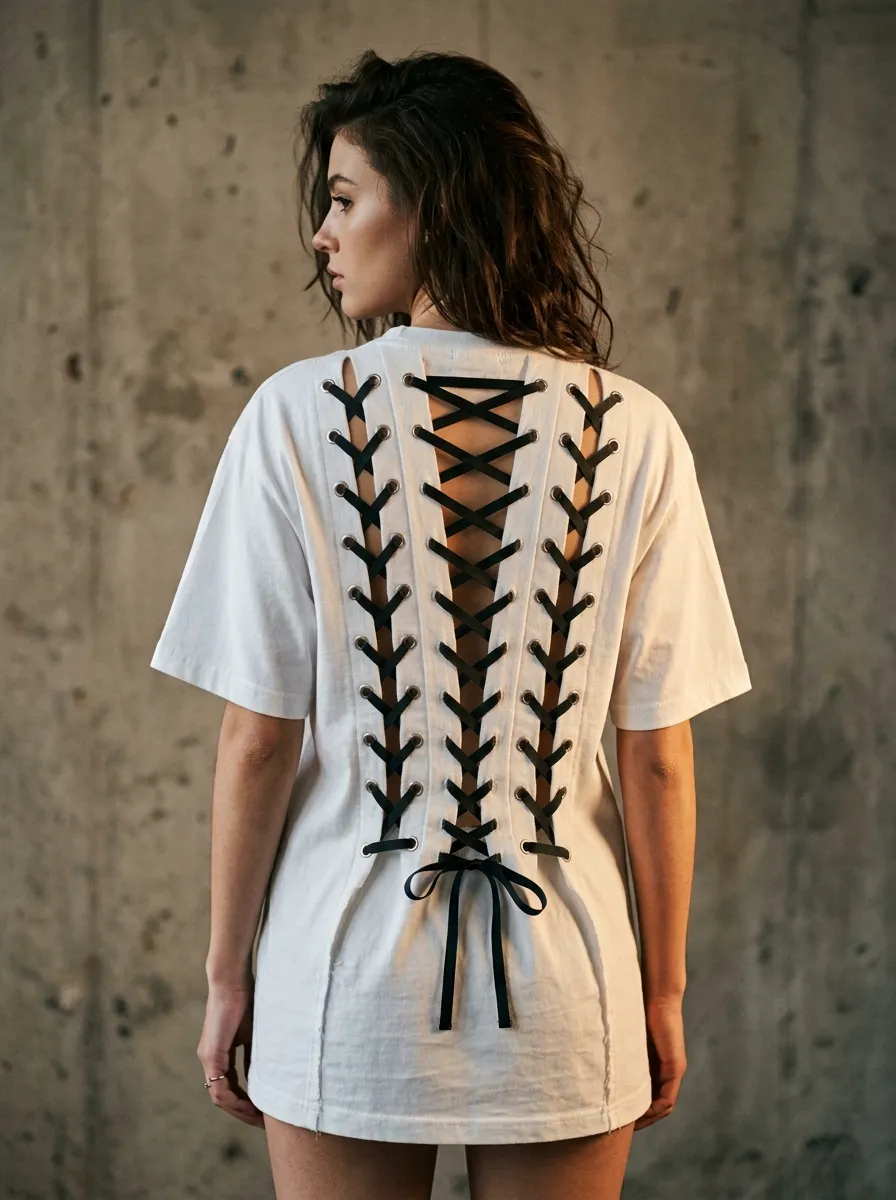
An oversized white tee gets split down the back into three laces up columns, each rigged with metal eyelets and black ribbon that crosses in a tight lattice. Skin shows through the crossing pattern from neck to lower back, turning a shapeless shirt into something closer to a corset dress. The front stays completely plain, so the drama only reveals itself once the wearer turns around. A loose profile pose lets the lacing catch shadow and light. This build takes real planning, since three columns of eyelets must line up evenly or the lattice will pull crooked. Ribbon should be doubled in length for tying, since a short cord runs out before the crossing pattern finishes.
Cut Up T Shirt DIY Questions, Answered
What is the easiest cut up t shirt DIY for beginners?
Fringe hems and front knots need only scissors and no measuring tools. Both forgive small mistakes since uneven fringe still looks intentional. Save eyelet or lace up techniques for later once basic cuts feel comfortable. A worn cotton tee works better than stiff new fabric for a first try.
Can you wear a cut up t shirt to work?
Small slashed necklines or subtle cutout panels can pass in casual offices when paired with tailored trousers. Skip fringe, shredded hems, or open back styles for work settings. Layer a blazer over a slashed neckline tee to keep the look polished enough for daytime meetings.
What kind of t shirt works best for cutting techniques?
Thicker cotton crew necks hold shape better than thin jersey, which curls at raw edges. Oversized or boxy fits give more fabric to work with for knots, braids, and lace patterns. Avoid ribbed or stretch blend shirts since they run instead of fraying cleanly along a cut line.
How do you keep a cut t shirt from fraying too much?
Wash the shirt in cold water before cutting to shrink the fibers slightly. A line of fabric glue or a quick zigzag stitch along raw edges slows fraying without changing the look. Some styles, like fringe, rely on fraying, so skip sealing edges on those entirely.
Are cut up t shirts still in style?
Deconstructed denim and reworked basics have kept cut tees relevant for several seasons running. Brands now sell pre-cut versions at higher prices, which makes DIY versions a practical alternative. The trend leans toward visible construction, like exposed lacing or raw hems, rather than hiding the rework.
What can you pair with a cut up t shirt for a night out?
Corset back or lace up styles pair well with tailored black trousers or a leather skirt. Add hoop earrings and a low bun to keep focus on the shirt's back detail. Fringe hem tees suit denim shorts for a beach or festival setting instead of dressier occasions.
Bonus I: Crop Top Conversions Worth Knowing
Crop tops are the most-requested t-shirt transformation, and the good news is that the best methods need no sewing — just cuts, knots, and lacing. These six cover the range from afternoon-easy to genuinely impressive.
1. Corset lace-up front or back — Intermediate
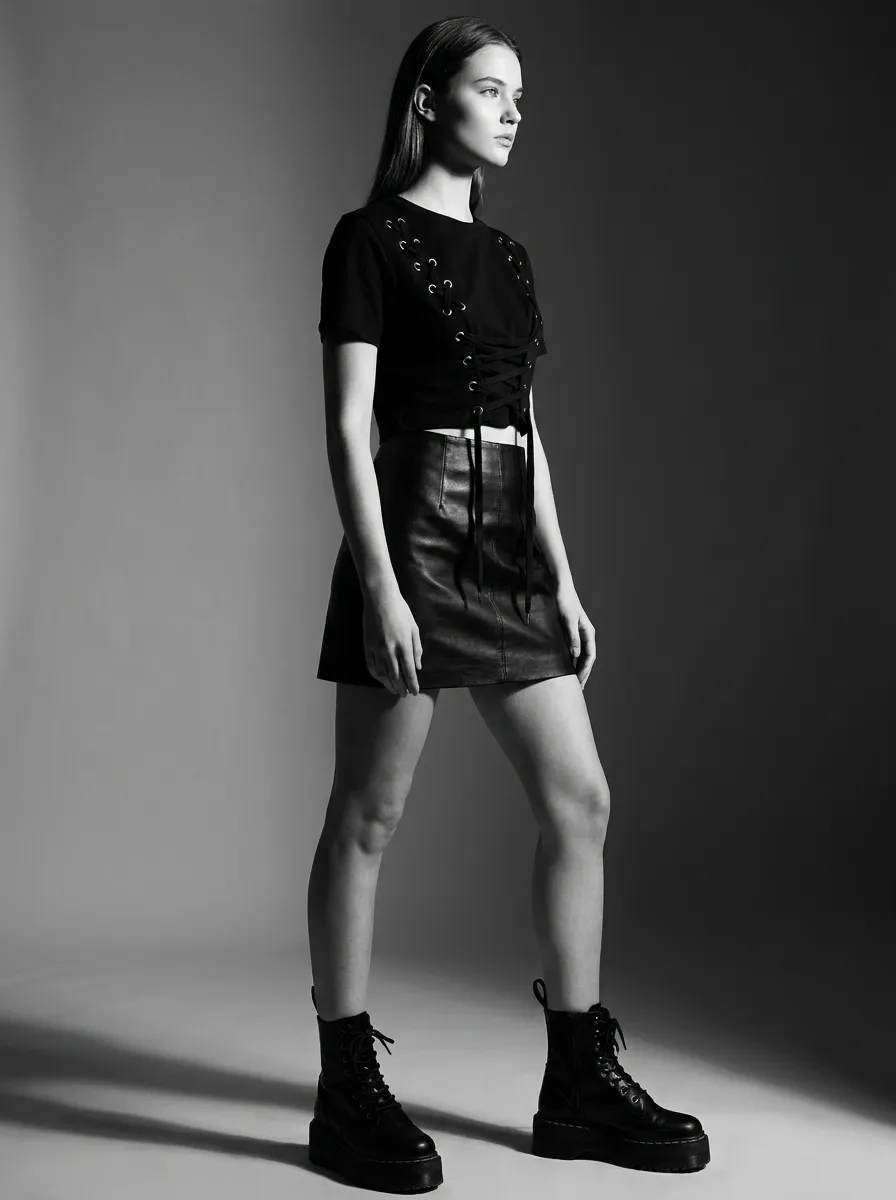
Corset lace front crop: the lacing shapes the waist and becomes the decoration.
cut two parallel columns of eyelets (or simple slits) down the front or back, then lace with ribbon, cord, or strips cut from the shirt itself. The lacing does double duty — it takes in the width for a fitted shape and becomes the decorative element. Front lacing reads bolder; back lacing is the classic concert look. Keep the lacing snug but not tight; over-tightening puckers the jersey.
2. Bandeau with spaghetti straps — Beginner
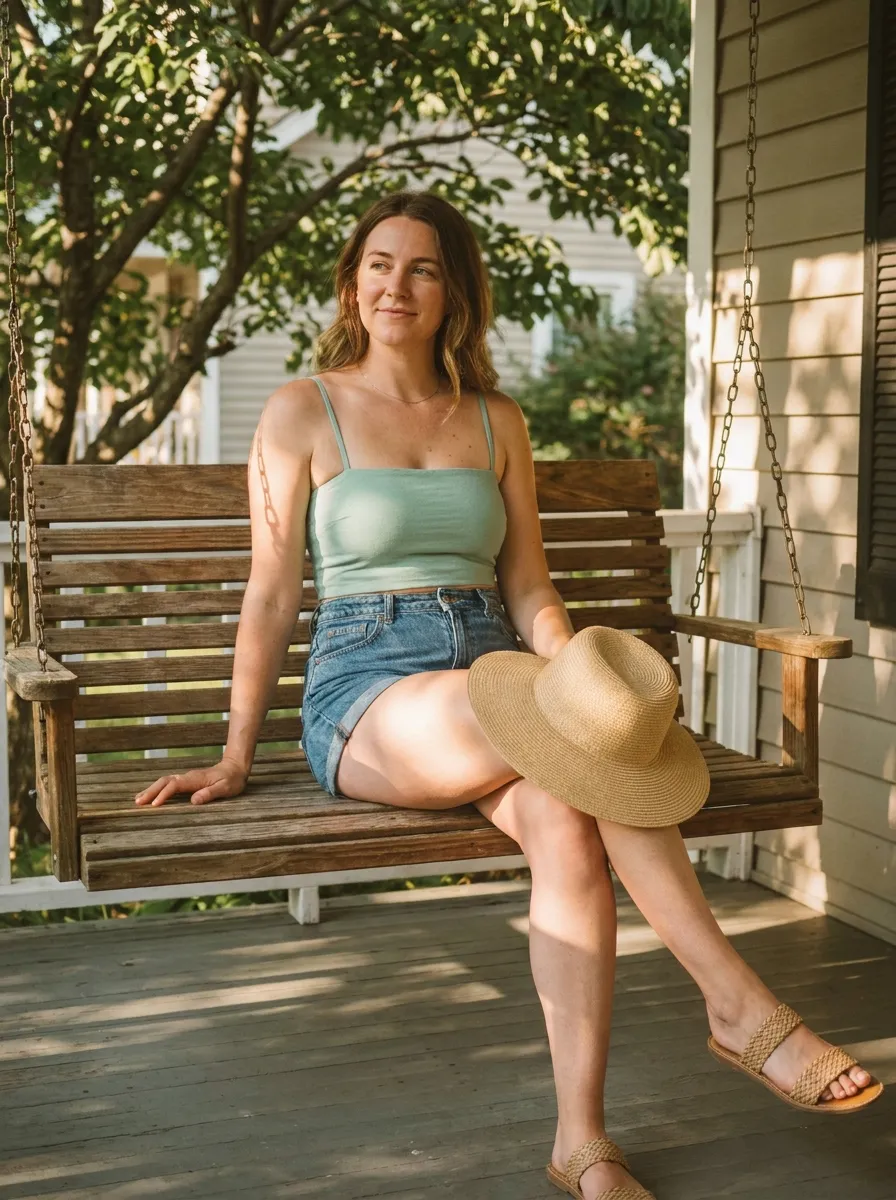
Bandeau with spaghetti straps: the straight cut has to be level, so chalk your line first.
cut straight across below the armscyes, then use the removed top portion's strips as straps. The straight cut must be level — mark it with chalk first, because a crooked bandeau never sits right. Best on fitted tees; oversized ones need the sides taken in with a second set of ties. Soft jersey drapes well in this style, making it flattering on nearly every body type.
3. Wrap-style asymmetrical crop — Beginner

Wrap style asymmetrical crop: the diagonal cut does the design work, the ties do the fitting work.
cut the hem on a diagonal and add long ties at the high corner. Wrapping the ties around the waist creates the asymmetrical drape — the diagonal cut does the design work, the ties do the fitting work. Striped fabric photographs beautifully in this shape, and ties at the hip let the fit adjust through the day. Loose-weave cotton knits wrap and knot most smoothly.
4. Lettuce-edge scoop tank — Beginner

Lettuce edge scoop tank: stretching raw edges ripples them into the "lettuce" wave.
cut the neckline into a deep scoop and the sleeves off entirely, then stretch every raw edge firmly. Jersey's knit structure makes stretched edges ripple into the "lettuce" wave on its own — no hemming, no tools beyond scissors. Practice the stretch on a scrap first; tentative pulling gives you nothing, confident pulling gives you the wave. The technique works on any knit fabric.
5. Bandana halter — Intermediate
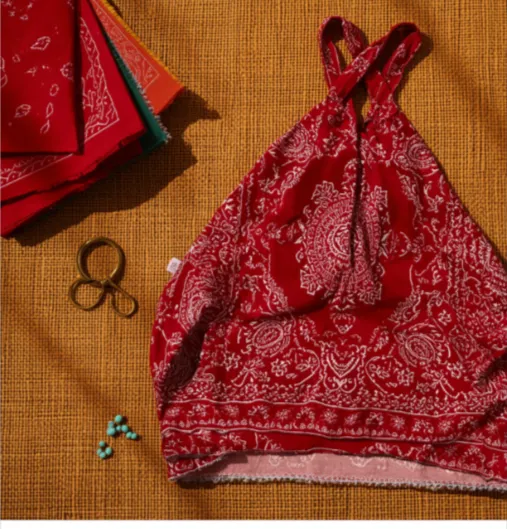
Bandana halter: trim the front into a triangle and knot twisted straps behind the neck.
for oversized tees, cut away the back panel entirely and trim the remaining front into a fitted triangle across the chest, then tie it into a halter using twisted straps cut from the shirt's own fabric. Bandana prints lean boho and festival-ready, but the technique works on any oversized tee — removing the shoulder width is what kills the sloppy look. Strap placement needs trial and error; tie, adjust, and tie again until it sits right across the shoulders.
6. Origami pleat halter — Intermediate
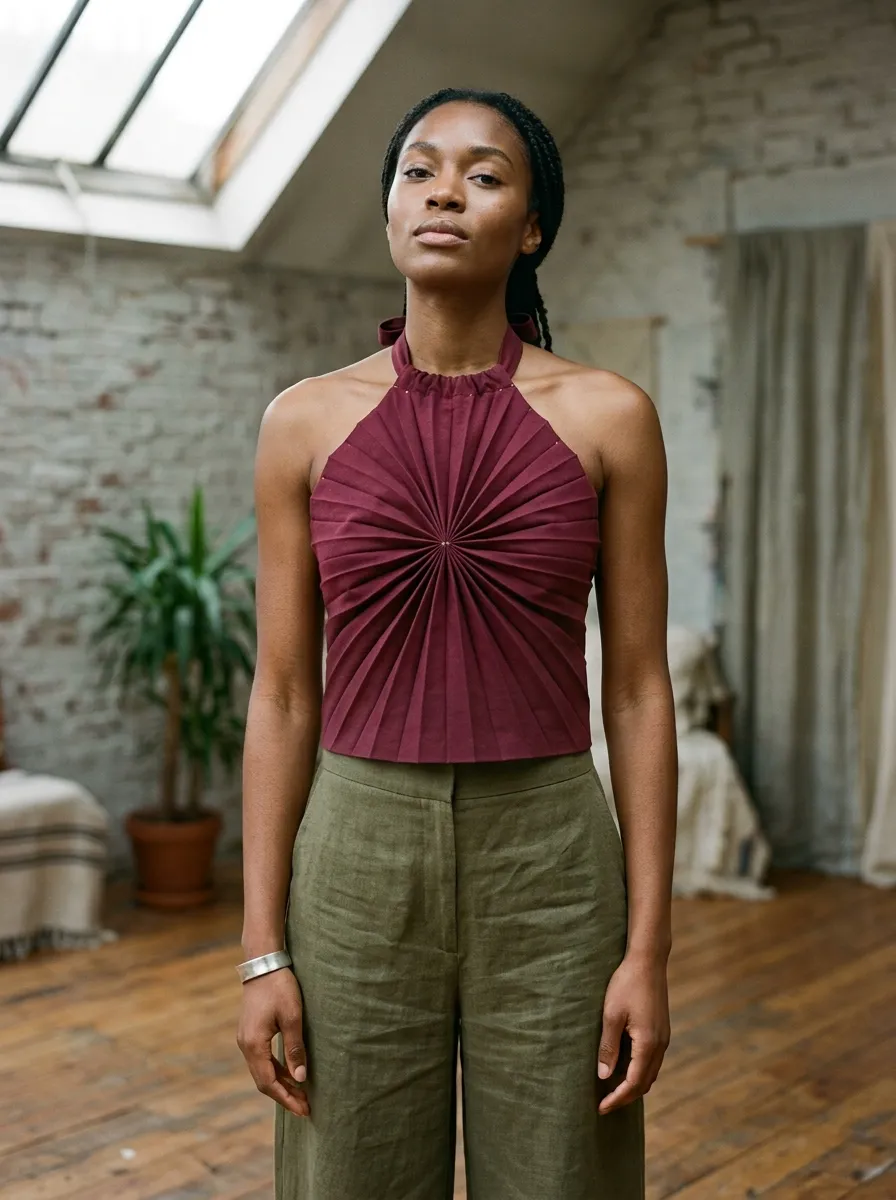
Origami pleat halter: accordion folds turn flat jersey into a sculpted front.
fold the front panel into accordion pleats and secure at the neck with a knot or a strip tie. The pleats create structure and texture from flat jersey, and the folded layers add coverage where a single-layer halter would be too revealing. Press the folds with your fingers as you go — the creases hold surprisingly well in cotton. This one asks for patience, but the payoff is a top that looks tailored rather than homemade.
The universal crop-top rule: fit the top half first, then decide the hem. A crop that fits the bust and shoulders but hangs loose at the hem looks unfinished; one that's snug all the way through looks intentional. When in doubt, take it in with side ties or lacing rather than cutting more off.
Bonus II: Concert and Festival Cuts
Concert tees play by different rules — they're meant to be seen in low light, from a distance, while moving. Bold beats precise here. These are the cuts built for that environment.
1. Braided back — Beginner
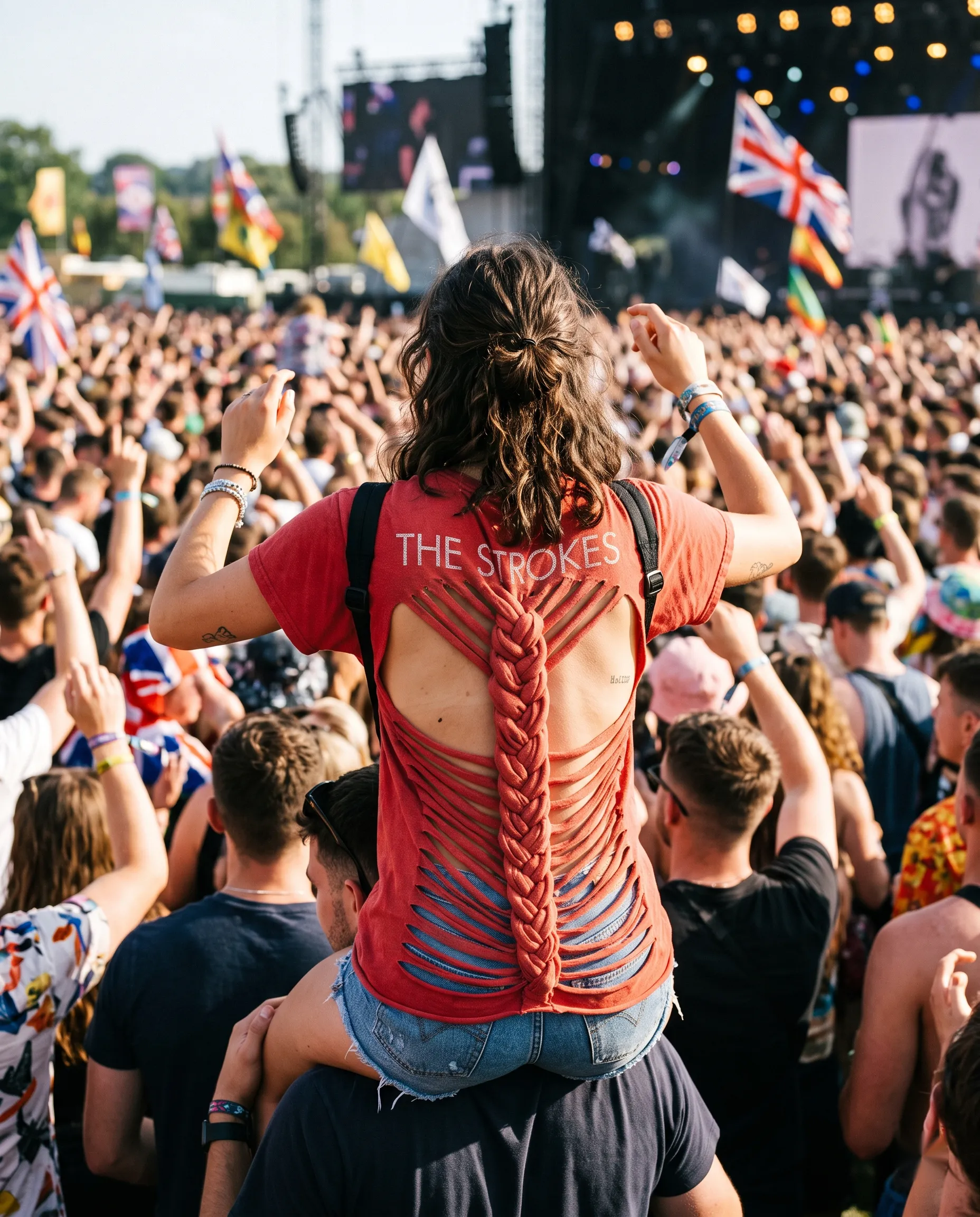
Braided back concert tee: the braid becomes a textured focal point that reads in low light.
cut the back panel into horizontal strips and braid them down the center into one thick fishtail plait, knotting at the bottom. The braid becomes a textured focal point that reads clearly even in a dark venue. Keep the front of the shirt intact — the surprise-back construction is what makes it work. Twenty minutes with scissors and patience; skin shows through the open slits on both sides, keeping it airy for outdoor festival heat.
2. Rib-cage cut with neon underlayer — Beginner
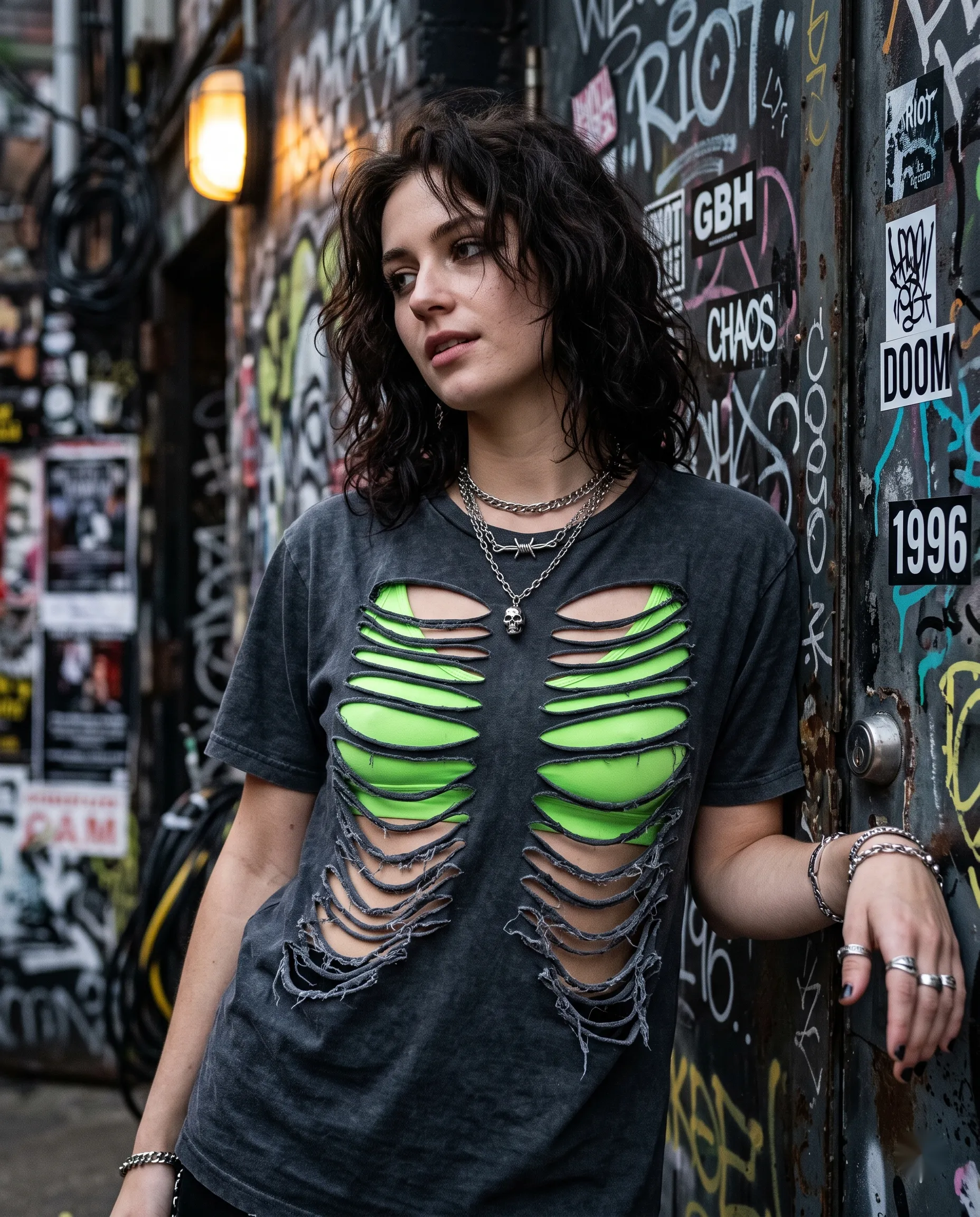
Rib-cage cut: the neon underlayer does all the work under stage lighting.
slash the tee across the chest in two symmetrical columns of horizontal cuts — the rib-cage pattern — and pull each cut open just enough to flash a neon bralette underneath. Black tee over neon is the classic; the contrast does all the work. Frayed edges on every strip add texture without extra effort. Swap the bralette color and the whole outfit shifts.
3. Chain-laced back — Intermediate
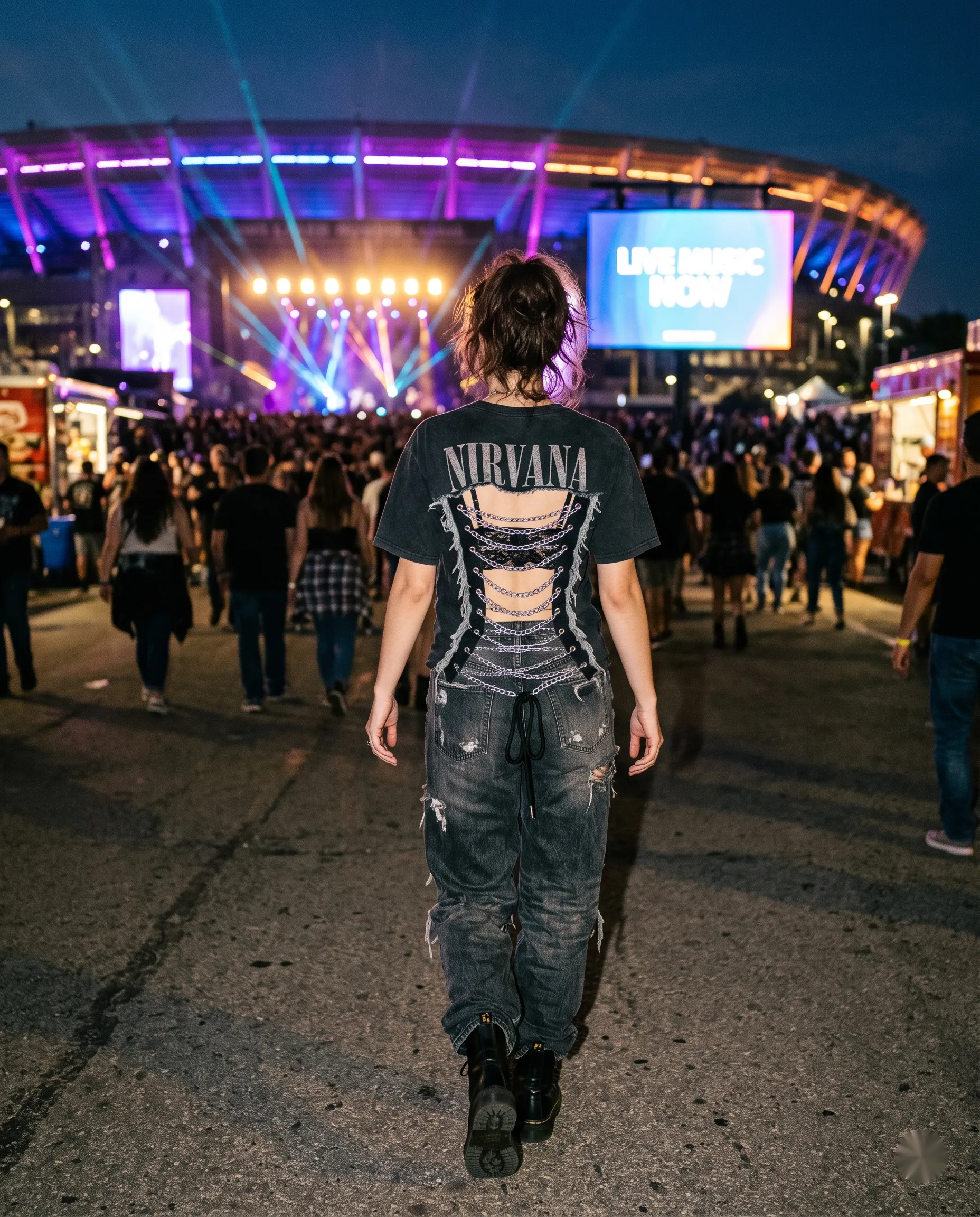
Chain laced back festival tee: metal against jersey catches light when you move.
cut the back open down the center spine and lace it back together with fine chain crossing side to side like a corset, instead of ribbon. Each chain link catches the stage lights as you move. Keep the raw edges unfinished, and secure the chain ends with small jump rings so they don't pull through the fabric.
4. Safety-pin lacing — Beginner

Safety-pin lacing: the pins are both fastener and decoration.
slash the tee down one side and lace it back together with a row of oversized safety pins running hem to chest. The pins hold the fabric open just enough to flash the layer underneath — punk-derived, zero sewing, endlessly adjustable. Use pins with locking closures; standard pins work loose with movement.
5. Macramé fringe hem — Intermediate

Macramé fringe hem: knotted strands have weight and swing that plain fringe lacks.
cut the hem into long strips and knot them in macramé patterns rather than leaving them straight. Knotted fringe moves differently than cut fringe — it has weight and swing, which photographs well and feels more finished. This is the festival-hem upgrade over basic fringe.
6. Studded deep-V — Intermediate

Studded deep-V: the V elongates the neck, the studs finish the raw edge.
cut a deep V at the neck and line it edge to edge with silver studs. The V elongates the neck visually — useful under harsh venue lighting — and the studs give the neckline a finished edge that raw cuts lack. Press studs with pliers rather than hammering; jersey tears under impact.
Concert-cut principle: design for distance and motion, not for the mirror. Details smaller than a coin disappear past ten feet; go bigger and bolder than your instinct suggests.
Your Old Tees Still Have Something to Give
Ten techniques cover a wide range, but the real point runs deeper. Cutting up a shirt says something about how you dress. Some people reach for scissors and a plan. Others grab a needle and eyelets. Either way, that drawer full of forgotten tees just became a resource instead of clutter.
Send this guide to a friend staring down her own overstuffed drawer. Save it for the next slow weekend, when a stack of old shirts and a pair of scissors sound like a good afternoon. Cut up t shirt projects tend to multiply once you start.