How to Style a White Button Down Shirt for Work, Weekends, and Evenings
How to use this guide
These are editorial styling suggestions, not a one-size-fits-all formula. Adapt each look to your wardrobe, proportions, climate, comfort, budget, and the occasion; the most useful idea is the one you can genuinely wear.
What if the hardest-working piece in your closet is the one you reach for least? A white button down shirt can carry a golf morning, a desk day, and a dinner out without ever changing — only the way it is worn changes. Buttoned or open, tucked or knotted, fitted or oversized, layered or left alone: four small decisions, ten very different outfits. Paired with baggy jeans instead of a fitted pair, for instance, the same shirt immediately reads more relaxed while still looking put together.
The trick is to stop treating the shirt as a single outfit and start treating it as a set of controls. Tuck, knot, buttons, and size are the only variables in play below, and every look here turns on just one or two of them. Work through them in order, and the shirt stops being the safe default and starts doing real work in a wardrobe.
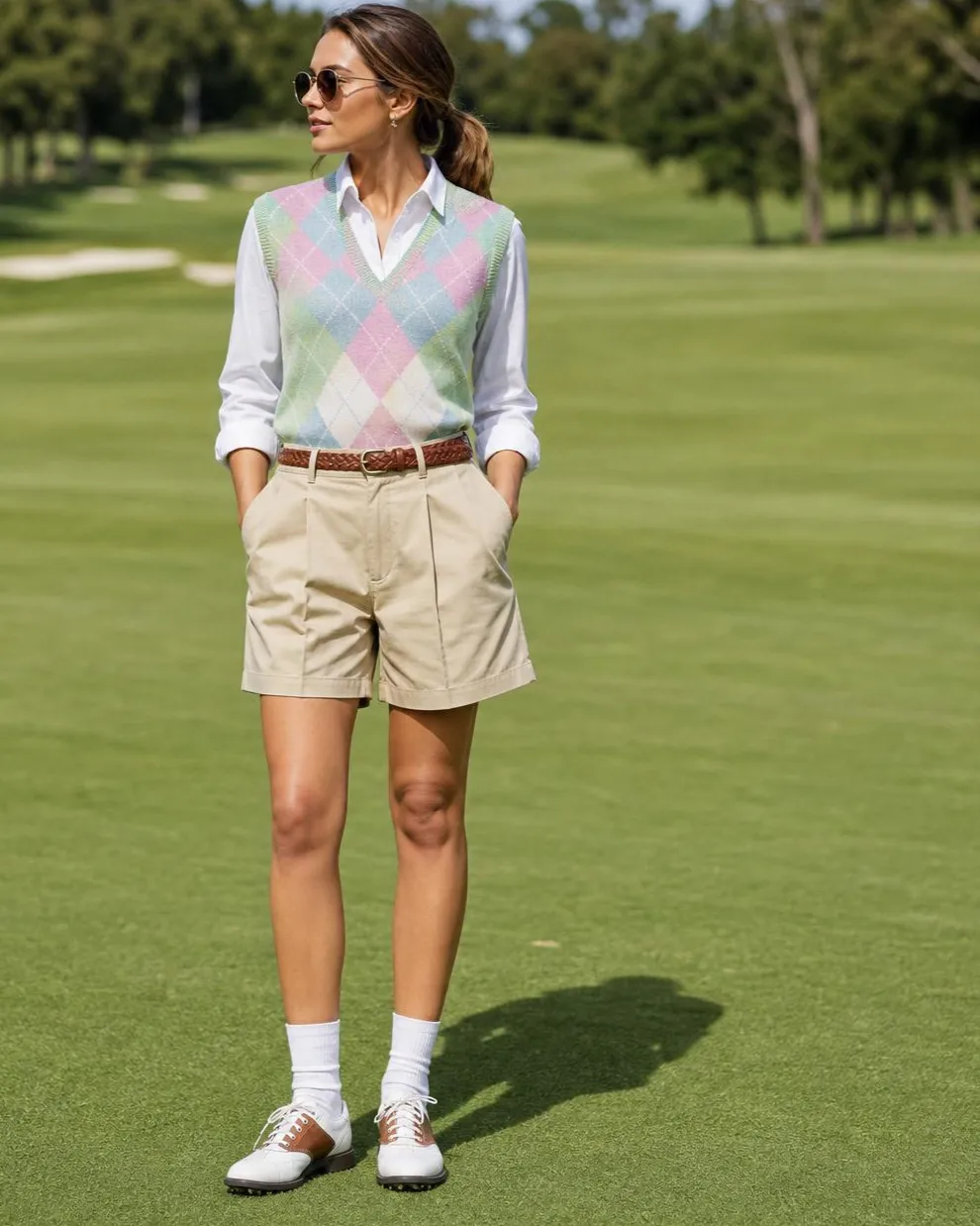
Argyle Vest Golf Look
A pastel argyle vest layered over the shirt, sleeves rolled to the forearm, a braided leather belt, tailored khaki shorts, and saddle shoes. Only the front of the shirt is tucked in here — the tail stays loose underneath the vest. That half-tuck is what keeps the outfit from sliding into uniform territory. A fully tucked shirt under a vest reads like a dress code; a front tuck reads like a choice.
The vest carries the outfit's only pattern, so everything else stays solid: plain shirt, plain shorts, plain shoes. Rolled sleeves do more than they look like they do, breaking up the preppy formality by showing the forearm. The braided belt picks up the knit texture of the vest, a quiet material echo that ties the top half to the bottom half. Pastel and khaki sit close together in tone, so pattern and texture have to supply the interest — and here they do.
Fit note: keep the vest fitted enough to show the shirt's collar and cuffs; a boxy vest swallows both and the shirt disappears entirely.
Tied Linen Trouser Look
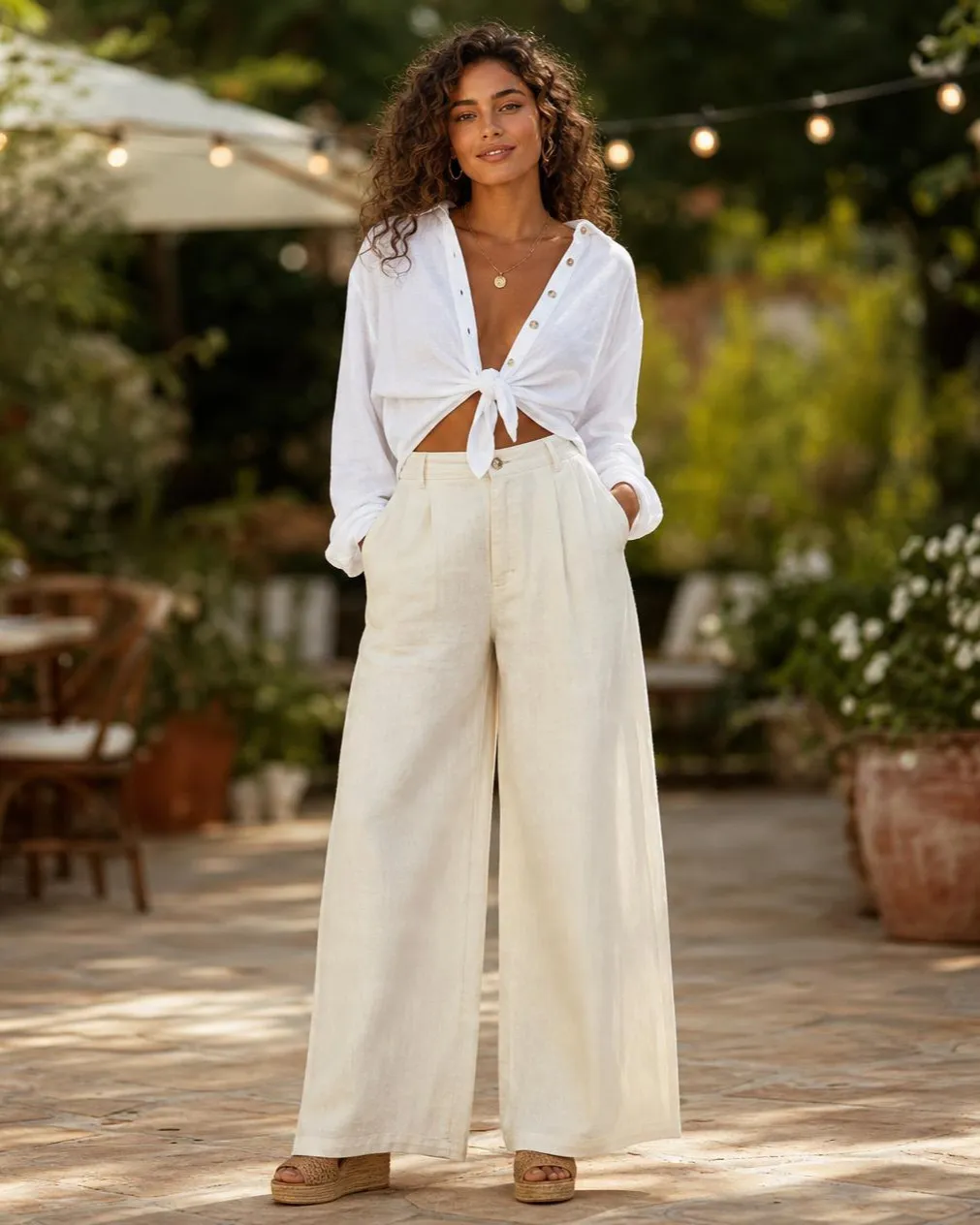
The shirt knotted at the hem over wide linen trousers, the top buttons left open past the collarbone, espadrille wedges finishing the look. Knotting instead of tucking is the move to remember when a belt feels like too much fuss: it defines the waist just as a tuck does, and it shortens the shirt's visual length, which matters over wide-leg trousers. Two long, loose pieces stacked together would blur the waistline completely; the knot restores it.
The open collar creates a V at the neck that lengthens the torso and balances the horizontal sweep of the trousers. Linen and cotton make a natural warm-weather pairing — both fabrics wrinkle, so the wrinkles read as intentional rather than careless. Espadrille wedges continue the same natural-fibre language of rope, canvas, and linen, so the whole outfit speaks in one material dialect. The wide trousers here follow the same rise and hem rules as the wide leg jeans guide.
Fabric note: choose a lightweight cotton or cotton-linen blend for the shirt; a heavy poplin fights the linen's softness and knots into a bulky lump instead of a clean tie.
Utility Vest Cargo Look
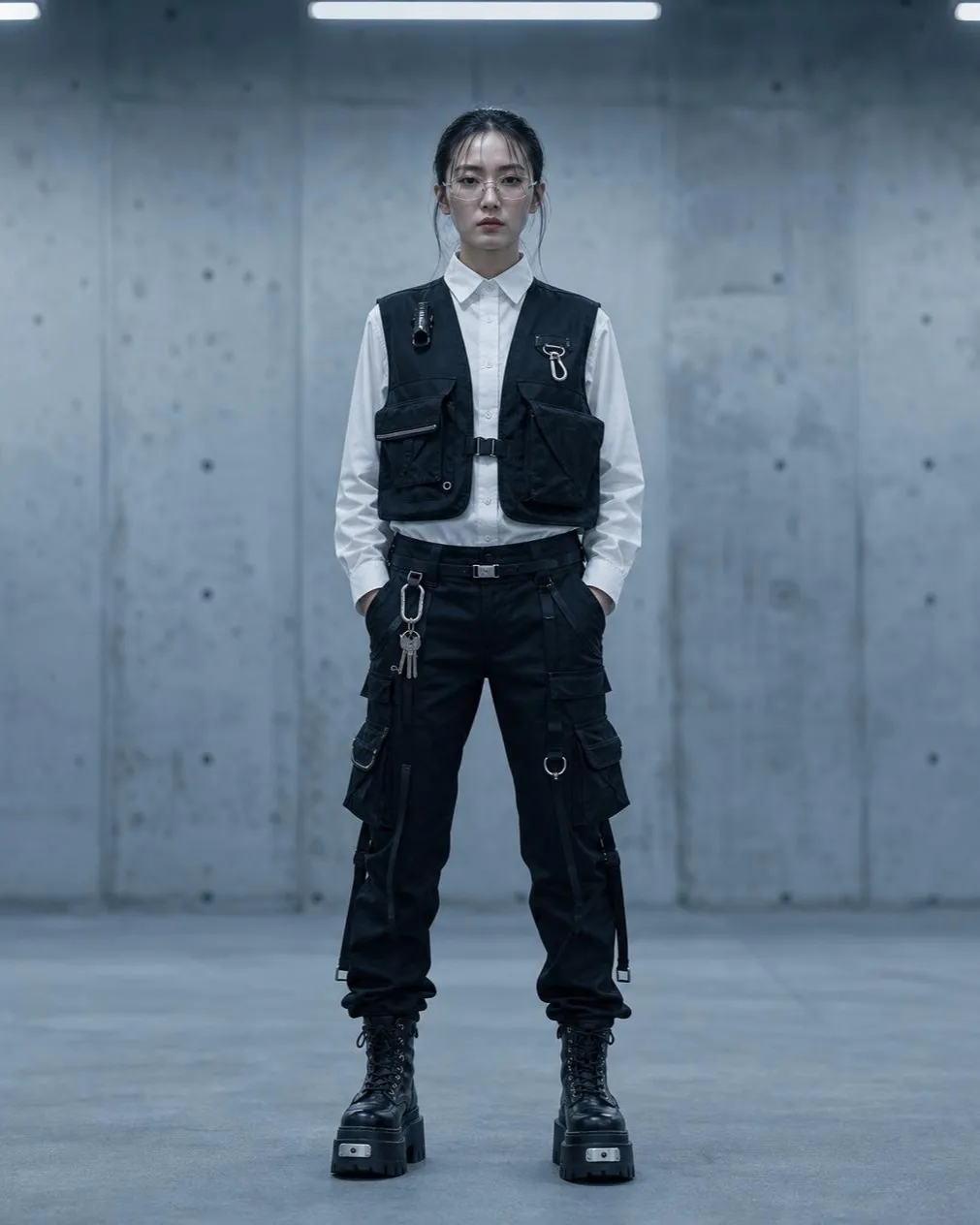
A tactical vest worn over the shirt, black cargo pants, lace-up boots, and clear-frame glasses. In this outfit the shirt barely shows — just the collar and the cuffs — and that is exactly the point. A soft cotton collar peeking out from under rigid hardware is the one detail that keeps head-to-toe utility gear reading as styling rather than costume.
Think of the shirt here as a softness signal. Vests, cargo pockets, and lace-up boots are all hard, functional elements; without the cotton collar and cuffs, the outfit would be pure hardware. The white is also the only light note in an otherwise all-black look, giving the eye somewhere to rest and defining a neckline the vest would otherwise swallow.
Wear it with: keep accessories minimal and matte — the vest already supplies all the visual hardware this outfit needs.
Silk Scarf Midi Skirt Look
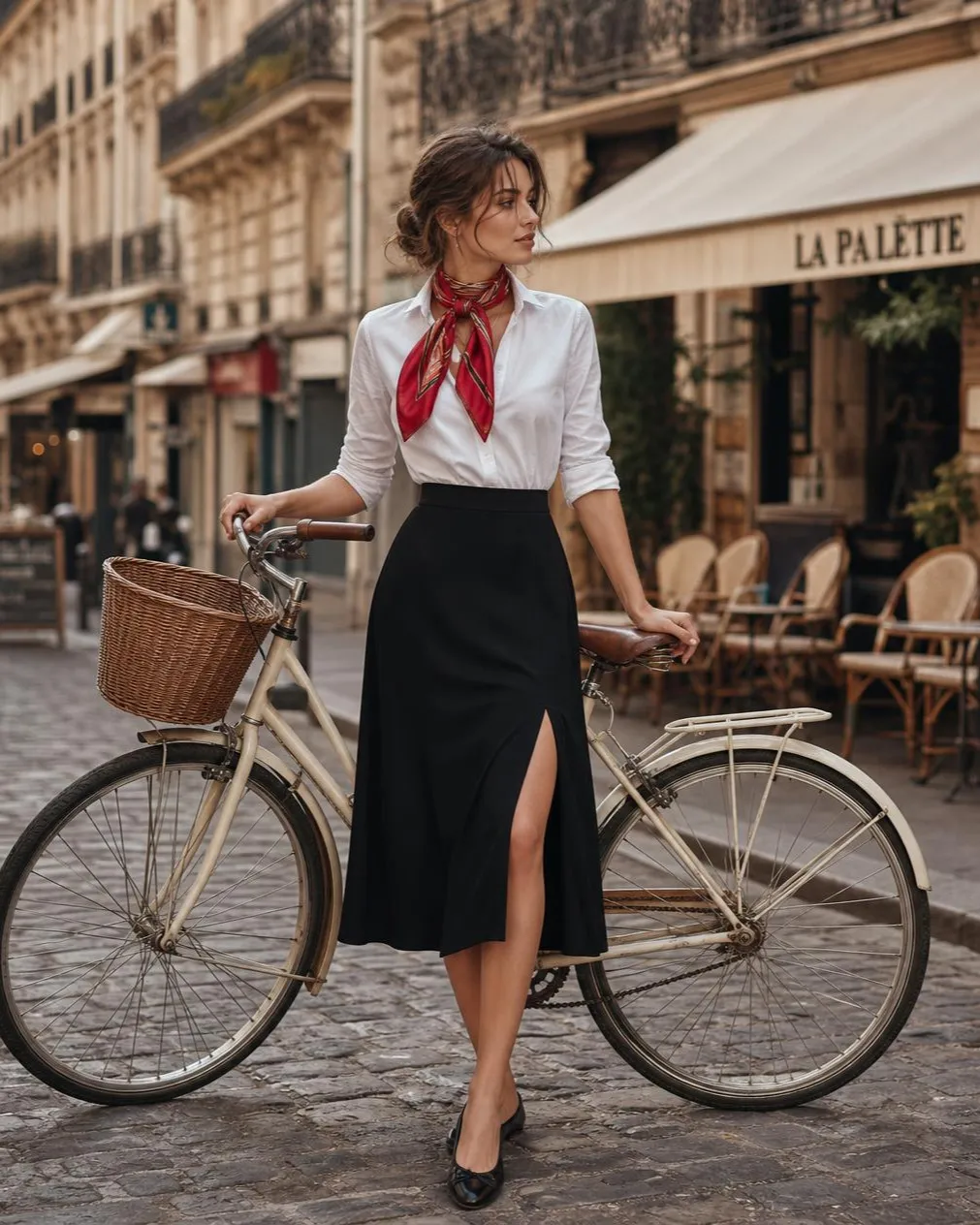
A red silk scarf knotted at the throat, the shirt buttoned high and fully tucked into a black midi skirt, ballet flats below. Buttoning up high enough to frame the scarf is deliberate: the collar becomes a frame and the scarf becomes the art. An open collar would compete with the scarf instead of setting it off.
A full tuck, rather than the knot used two looks earlier, is what makes this version formal enough for a midi skirt — a knot would read too casual against the skirt's polish, while a clean tuck matches it. The red scarf is the outfit's single colour event against a black-and-white base, the one saturated accent the eye goes to first. That same restraint — one colour event, nothing else shouting — is what the old money outfits guide builds its whole aesthetic on.
Ballet flats keep the formality from tipping into corporate. A heel would turn this into an office outfit; flats keep it in the realm of personal style. The ratio to remember: formal base, one romantic accent, flat shoes.
Care tip: silk scarves crease easily in storage, so roll rather than fold, and steam the shirt collar before buttoning it high — a limp collar will not hold the frame.
Open Shirt Striped Dress Look
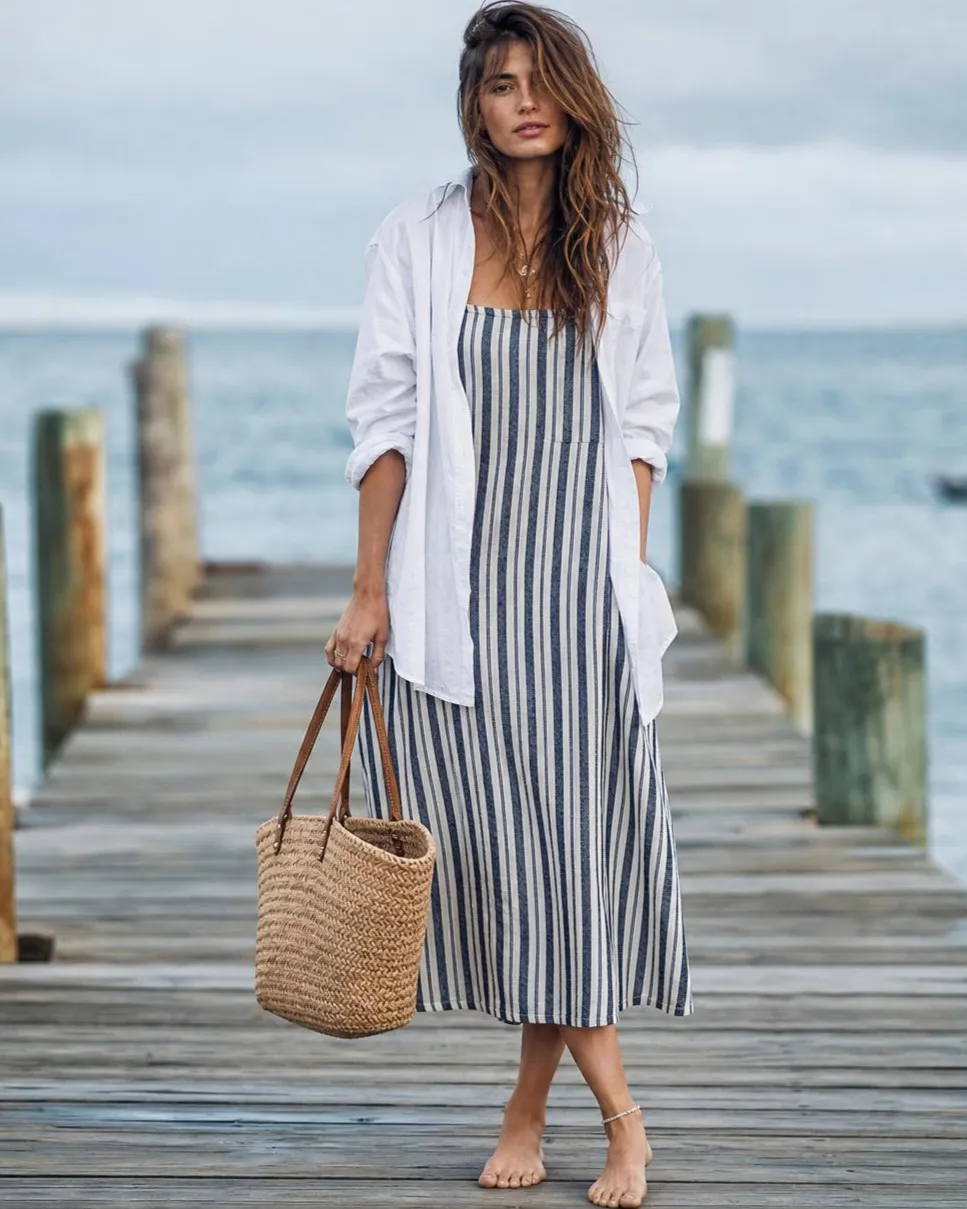
Worn fully open over a striped slip dress, sleeves rolled, the shirt hem sitting just above the dress hem. This is the shirt acting as a jacket rather than a top, a role it can only play fully unbuttoned and slightly shorter than whatever sits underneath. The point is a layer that can be knotted at the waist the moment the wind picks up, not a garment worn buttoned.
The stripe question resolves itself because the scales differ: the dress carries the pattern and the plain white shirt frames it. An open shirt creates a vertical white frame around a print, which contains the pattern instead of competing with it. Rolled sleeves are the signal that the openness is deliberate — without the roll, the layer can look like an afterthought rather than a decision.
This open-layer move is also the one the aesthetic anchor outfits guide uses, where a single outer layer carries the silhouette. It is the shirt's most useful warm-weather role: sun protection and a wind layer that never actually needs buttoning.
Fabric note: a light poplin or washed cotton works best here; a stiff, heavy shirt worn open stands away from the body and looks like a tent over the dress.
Pencil Skirt Office Look
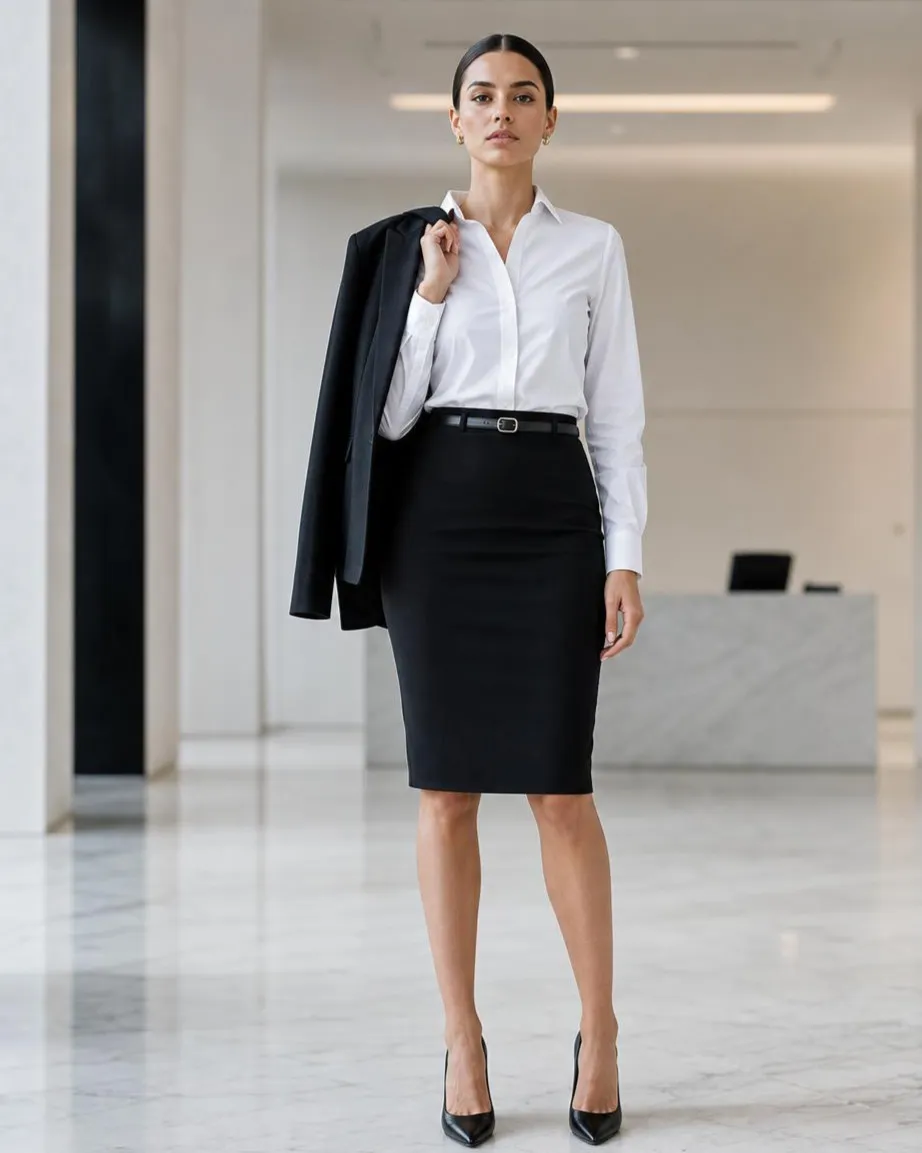
Tucked into a black pencil skirt, a thin belt, pointed heels, and a blazer draped over the shoulders rather than worn. Draping the blazer instead of putting it on has an outsized effect: worn fully, the jacket becomes the outfit's focal point, but draped, it turns into an accessory, and the shirt's crisp collar and cuffs stay the centre of attention.
The monochrome palette — white shirt, black skirt, black heels — is what makes this read powerful rather than plain. High contrast always reads as intentional. The thin belt does precise work, marking the exact waistline where shirt meets skirt so the tuck cannot blur. Against a smooth pencil skirt, every crease shows, so iron the collar and cuffs specifically. Pointed heels extend the leg line the pencil skirt starts; a round toe would stop that line short.
A black blazer draped the same way covers similar ground in a darker register. Every detail here is about line continuity: collar to cuff to waist to heel, one unbroken vertical.
Fit note: the shirt should be fitted enough to tuck smoothly without billowing at the waist — excess fabric bunched under a pencil skirt ruins the clean line.
Knotted Shirt Fringe Skirt Look
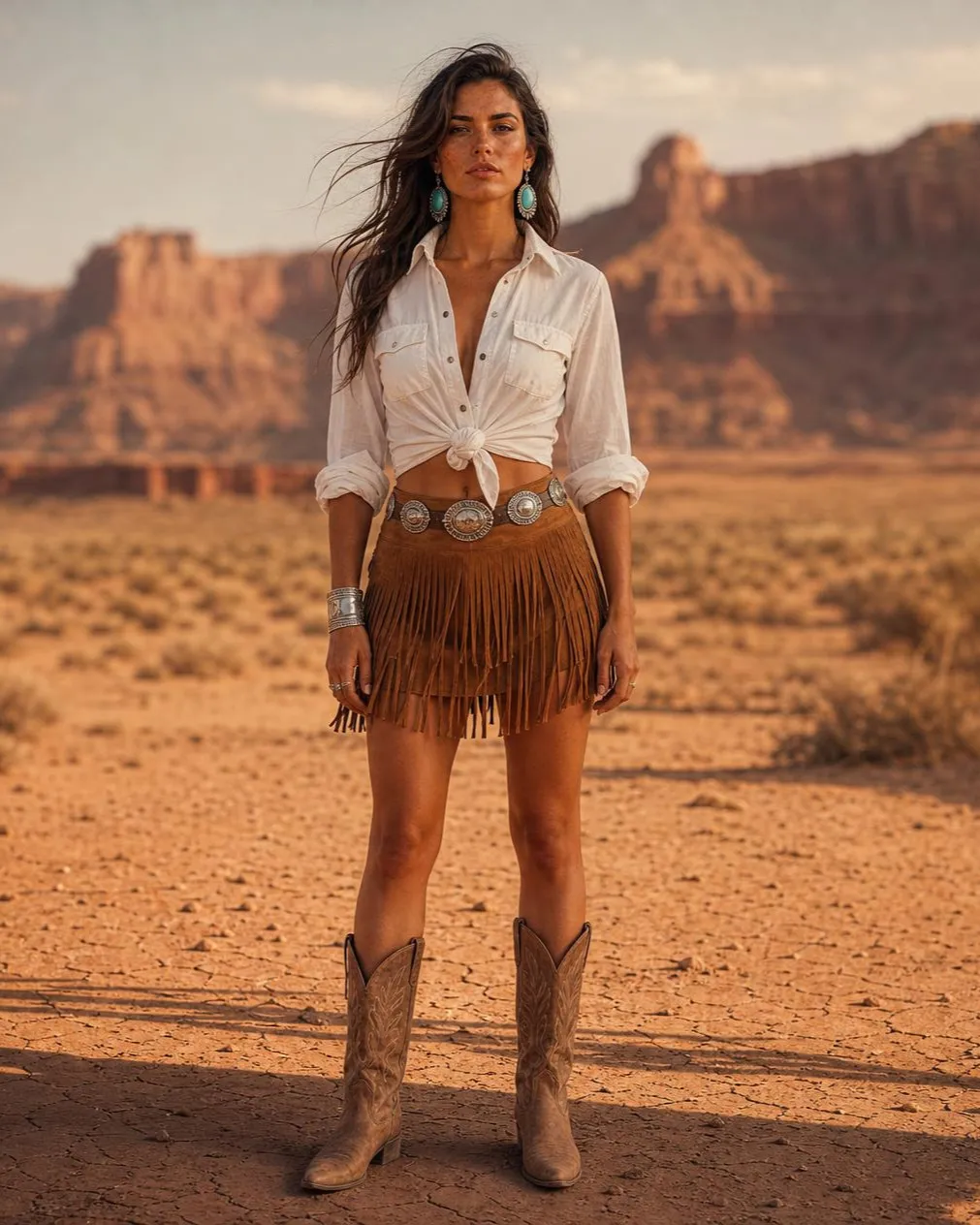
Knotted below the chest over a fringe suede skirt, turquoise jewellery, pointed boots. Knot height is the variable to play with: tie it higher for more midriff and a cropped effect, lower for more coverage. The rule of thumb is balance — more fringe volume below calls for a higher knot above, so the proportions stay in conversation with each other.
Turquoise against white and tan is a classic Southwestern colour story, and it works because turquoise is the only cool tone in a warm outfit, one cool accent the eye registers immediately. The pointed boots extend the leg under the fringe, which matters because fringe visually shortens whatever it covers; a pointed toe recovers that length. The knot turns the shirt into a crop, the right scale against a statement skirt — a full-length tucked shirt would compete with the fringe for the outfit's lower half.
Fringe and suede sit naturally in autumn, and the fall outfits guide shows the same warm textures in a seasonal rotation.
Wear it with: keep the rest of the jewellery quiet — the turquoise pieces are the accent, and a second competing statement would crowd them out.
Sheer Shirt Wide Trouser Look
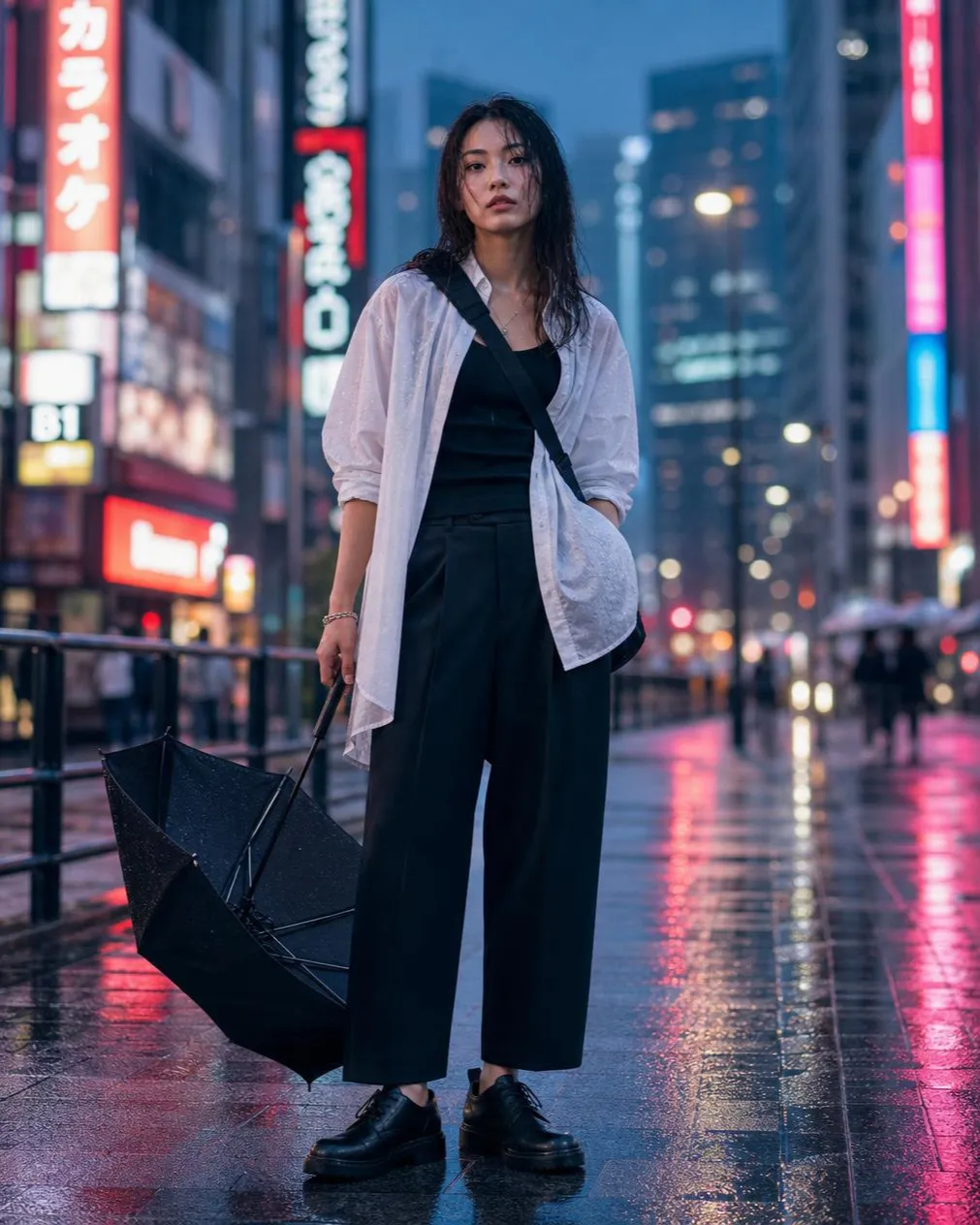
Unbuttoned over a black cami, sheer fabric, wide-leg black trousers, chunky lace-up shoes. Choosing sheer over opaque changes what the shirt is doing structurally. An opaque shirt worn open still reads as a shirt, while a sheer one reads as an atmospheric layer, closer to outerwear than to clothing. That is a fabric choice rather than a styling trick, so it only works if the shirt was bought specifically for this kind of layering.
The black-on-black base of cami and trousers lets the sheer white layer float visually, like a separate plane hovering over a dark column. Against a light base a sheer white shirt would disappear; against black it turns luminous. The chunky shoes ground the ethereality — a sheer, floating layer with delicate shoes would drift into preciousness, but heavy footwear anchors it firmly in streetwear. That tension is the whole point of the outfit: delicate layer, aggressive shoe, dark base.
Sheer layers over dark bases work in cold months too, as the chic winter outfits guide shows with wool coats over dark columns.
Fabric note: sheer voile and organza hold this look; a semi-sheer cotton lawn is too substantial and reads as an ordinary shirt left unbuttoned.
Tucked Shirt Riding Pant Look
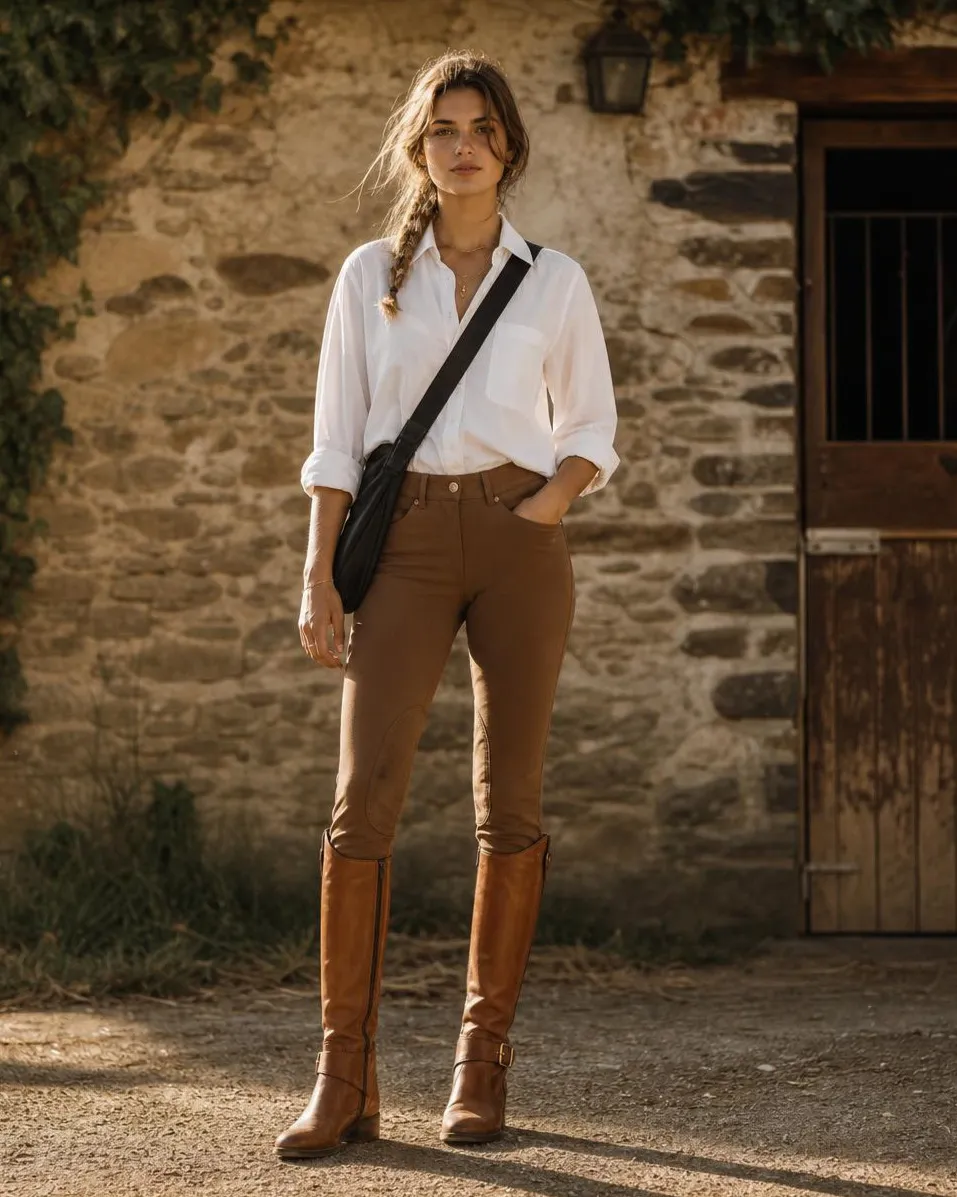
Tucked into fitted brown riding pants, tall boots, sleeves rolled, buttoned to the second button rather than the first. That one open button is the whole difference between this look and a strict equestrian uniform: it keeps a fitted, tucked silhouette from reading buttoned-up tight, even though everything else about the outfit is fairly formal.
Brown on brown — pants plus boots — creates a continuous leg line, which is why the white shirt can be the outfit's only contrast without the look feeling split. Rolled sleeves do the same casualising work as the open button, two small relaxations that together move the outfit from riding lesson to riding inspired. Tall boots need the pants tucked into them smoothly; any bunching at the knee breaks the line the whole outfit depends on. The same tucked shirt works with loafers for a flatter, everyday version.
Precision matters most in the simplest outfits. There is nowhere for a mistake to hide.
Fit note: riding pants should sit smooth through the thigh with no pulling at the knee; if the shirt adds bulk at the waistband, switch to a lighter-weight cotton.
Oversized Shirt Slip Dress Look
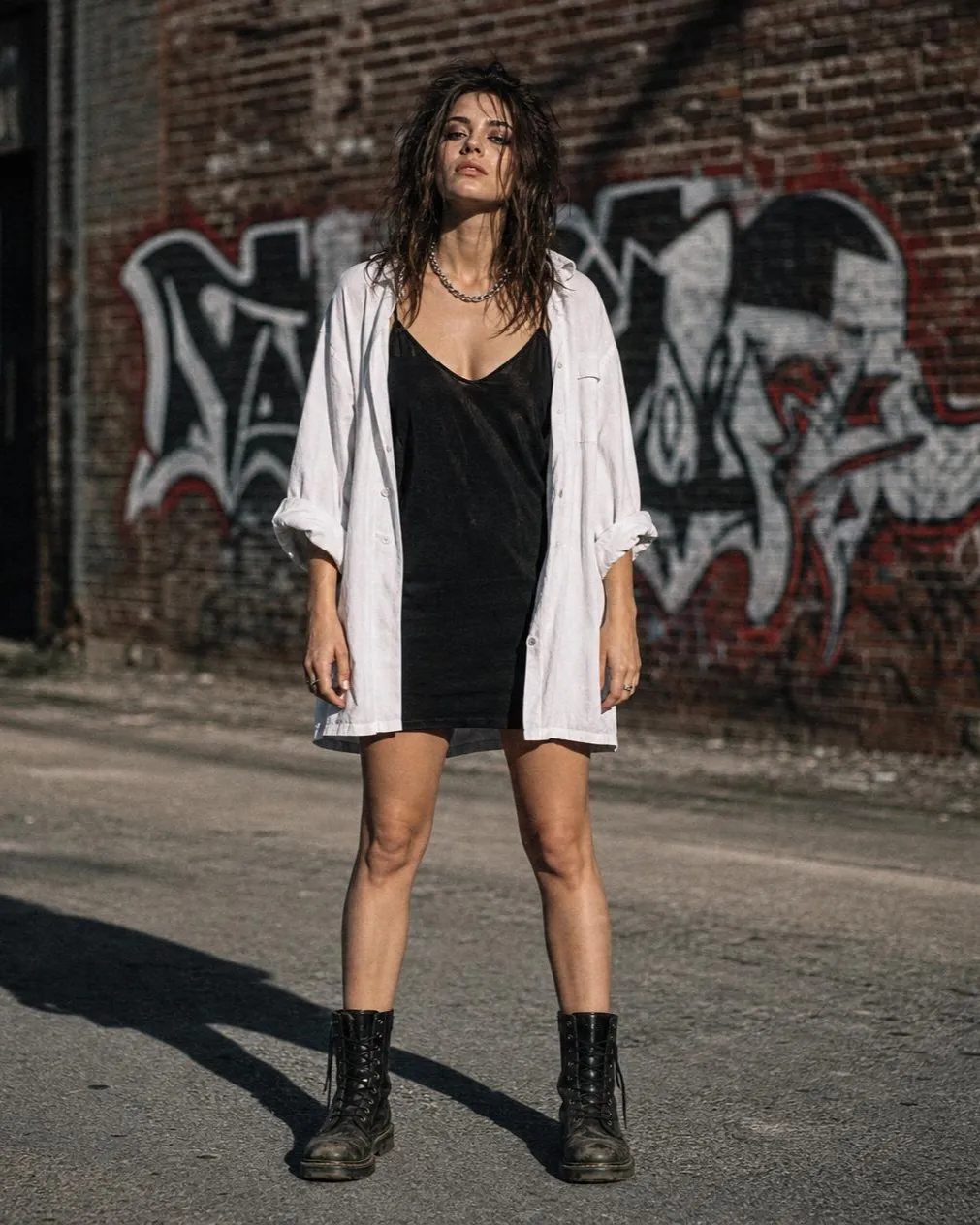
Oversized and open over a black slip dress, combat boots, a chunky chain necklace. Sizing up on purpose — a men's shirt, or your own a size or two large — is the specific move here. A shirt fitted to your actual size worn open just hangs, while genuine oversizing gives it enough fabric to drape like a jacket. That is worth remembering when thrifting: an oversized white shirt is more useful for this kind of layering than one that fits.
The black slip dress is the ideal partner because it is the visual opposite of the shirt: dark against light, sleek against voluminous, minimal against abundant fabric. Opposites create the tension that makes the outfit interesting. The combat boots and chain necklace push the look into grunge territory, which works because the shirt's oversized drape already leans that way — the accessories confirm the direction rather than introducing a new one. When layering oversized over sleek, the accessories should agree with the outer layer's mood.
Fabric note: a soft washed cotton drapes best at oversized scale; crisp poplin in a large size holds its shape too rigidly and the drape turns boxy instead of fluid.
Four Levers, One Shirt: A Quick Checklist
Before reaching for a second shirt, run through the four controls that built every look above:
- Tucked, knotted, or open. Tucked is the most formal; knotted defines the waist without a belt; open turns the shirt into a light jacket. Match the method to the bottom half — tuck for skirts and tailoring, knot for wide trousers and casual bottoms, open for dresses and layers.
- How many buttons. Buttoned to the collar reads formal; open to the second or third button reads relaxed; open all the way turns the shirt into outerwear. One button is never just one button — it is the outfit's formality dial.
- Fitted or oversized. A shirt sized to fit works for tucked, tailored looks; a shirt sized up works for open jacket layers. The same shirt usually cannot do both well, so if this piece is a wardrobe backbone, one of each is worth having. Two shirts, one fitted and one oversized, are also the backbone of the five piece capsule wardrobe, which builds a season from a handful of pieces.
- Fabric weight. Crisp poplin holds a tuck and a collar; soft washed cotton drapes for knots; sheer voile becomes an atmospheric layer. Buy the fabric for the job the shirt will do most.
MasterClass has a guide to styling a white button down shirt that covers the same four variables, tuck, knot, buttons and size, with more outfit examples.
Frequently Asked Questions About Styling a White Shirt
What should you wear a white button down shirt with to the office?
Tuck it into tailored trousers or a pencil skirt, add a thin belt to mark the waist, and keep jewellery minimal. The collar and cuffs are the visible craftsmanship, so iron those specifically. Loafers or block heels keep it office appropriate without stiffness, and a blazer draped over the shoulders adds polish without hiding the shirt.
Does a white shirt work with jeans, or does it look too plain?
It works, and the tuck method sets the tone. A front tuck with straight-leg denim reads polished casual; a knot at the waist with wide-leg denim reads relaxed; worn open over a tee with jeans it becomes a light jacket. Roll the sleeves in all three versions so the look reads intentional rather than thrown on.
How do you style an oversized white shirt without looking shapeless?
Leave it open over something sleek and dark — a slip dress, or a cami with trousers — so the volume has a contrast to play against. The oversized shirt needs a fitted partner underneath; oversized over oversized just becomes shapeless. Add one strong accessory, like a chunky chain or boots, to give the drape a direction.
What is the easiest way to keep a white shirt looking crisp all day?
Wash cold, skip the dryer, since heat sets wrinkles into cotton, and iron while the fabric is slightly damp, focusing on the collar and cuffs. Hang the shirt rather than folding it — a crease across the body from folding shows immediately under a tuck. A crisp poplin holds its shape far longer than a soft washed cotton.
Can the same white shirt work in summer and in winter?
Yes — the shirt itself is seasonless and the styling changes. In summer, wear it knotted, open, or as a beach layer over a dress. In winter, tuck it under sweaters with the collar and cuffs showing, layer it under a blazer, or use it as the crisp base under a wool coat. Fabric weight decides the range: a medium poplin covers both seasons.
How many white button down shirts do you actually need?
Two cover nearly everything: one fitted, for tucks, tailoring, and formal looks, and one oversized, for open layer looks and knots. A third in a different fabric — linen for summer or sheer for evening — covers the edge cases. Beyond that, the collection is growing faster than the outfits are.
The Verdict: One Shirt, Ten Outfits
Ten outfits, one shirt, and the only real variable is how the shirt is worn rather than what gets added to it. Once tucking, knotting, buttoning, and sizing feel like tools instead of afterthoughts, the shirt stops being a laundry-day default and becomes the most flexible thing in the closet. Learn the four levers, and a plain white shirt will never look plain again.