How to Style Low Rise Flare Jeans: 8 Outfits That Actually Flatter

How to use this guide
These are editorial styling suggestions, not a one-size-fits-all formula. Adapt each look to your wardrobe, proportions, climate, comfort, budget, and the occasion; the most useful idea is the one you can genuinely wear.
You found the pair. They fit through the thigh, the flare kicks out exactly where it should, and then you stand in front of the mirror in a top you already own — and suddenly the whole thing looks like a costume from a decade you never lived in. That is the low rise flare trap: the jeans are fine, the top is fine, but nothing is telling the eye where the outfit begins and ends.
The fix is not a different pair of jeans. It is three rules, and every outfit below runs on them. One: define the waist — low rise sits on the hips, so the top has to mark where the torso ends, with a tuck, a belt, or a cropped hem. Two: control the hem — flares need the right shoe and the right length; too long and they drag, too short and they read as bootcut. Three: balance the volume — a wide hem wants something fitted or cropped up top, never volume on volume. Get those three right and flares stop wearing you.
The same proportion thinking runs the whole jeans fit family: baggy jeans balance volume with a fitted top the same way, and wide leg jeans use the same hem and shoe rules with a higher rise.
Sage Flares, Sheer Wrap, and the Waist You Can Actually See
A lilac tank under an iridescent sheer wrap, sage green flare jeans, strappy heels. The tank does the waist work here: it sits close to the body, so the low waistband has a defined top edge underneath it. A boxy top would erase the waist entirely, and with low rise denim, no visible waist means no structure at all.
The sheer wrap is the clever part — it adds movement and visual interest without adding bulk at the waist, which is exactly what low rise flares need. A heavy jacket would compete with the hip line; a sheer layer floats above it. And the shoe choice matters: strappy heels add height without adding visual weight, because the flare already brings all the volume at the floor. A chunky shoe down there would be a second volume event in the same spot.
Wear it with: a plain fitted tank in a dusty tone and minimal strappy heels — sage and lilac are both muted, so the palette's softness is what keeps the retro silhouette from reading as a period costume.
The Cropped Knit That Solves the Waist Problem
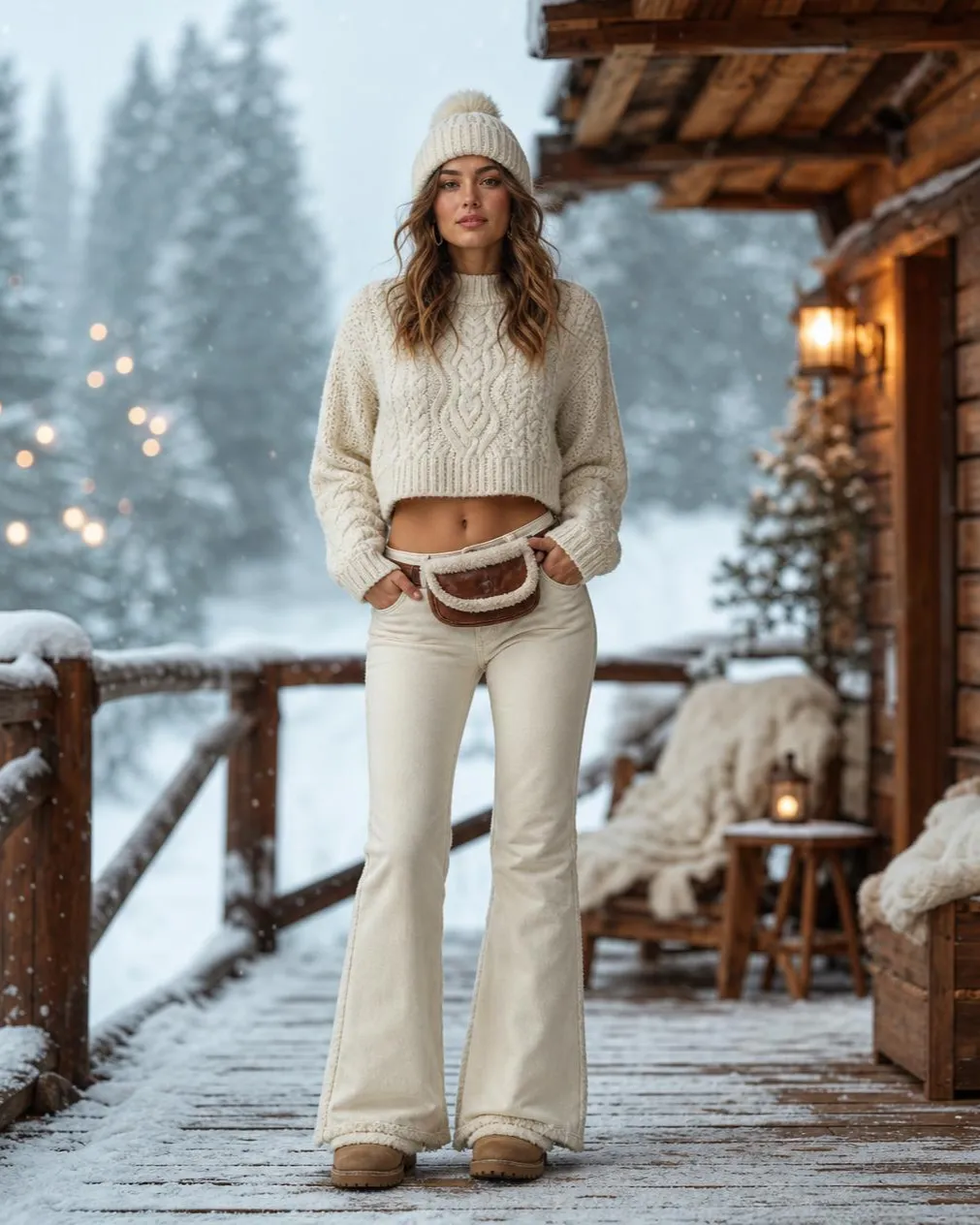
A cropped cream cable knit sweater, sherpa trimmed flare jeans, suede boots, pom beanie. A cropped sweater is the waist solution in its purest form — it ends above the waistband, so the low rise is fully visible and the torso-to-leg ratio stays balanced. A full-length sweater over low rise flares would hide the waistband and turn the whole lower half into an undefined column.
Texture is carrying this outfit: nubby cable knit, soft denim, worn suede, fuzzy sherpa trim. In a cream-on-cream palette, texture is the only thing creating visual interest, and there is enough of it to work.
Care tip: the suede boots disappear under the flare hem, which is correct — with flares, the shoe should peek, not star. A statement boot under a wide hem creates two competing volume events at the floor. Let the hem be the event and keep the shoe quiet; brush suede after wear and keep it dry, since water marks show fast. For more fall layering, see these early fall outfit trends anyone can try this season.
Grunge, But the Waist Is Knotted on Purpose
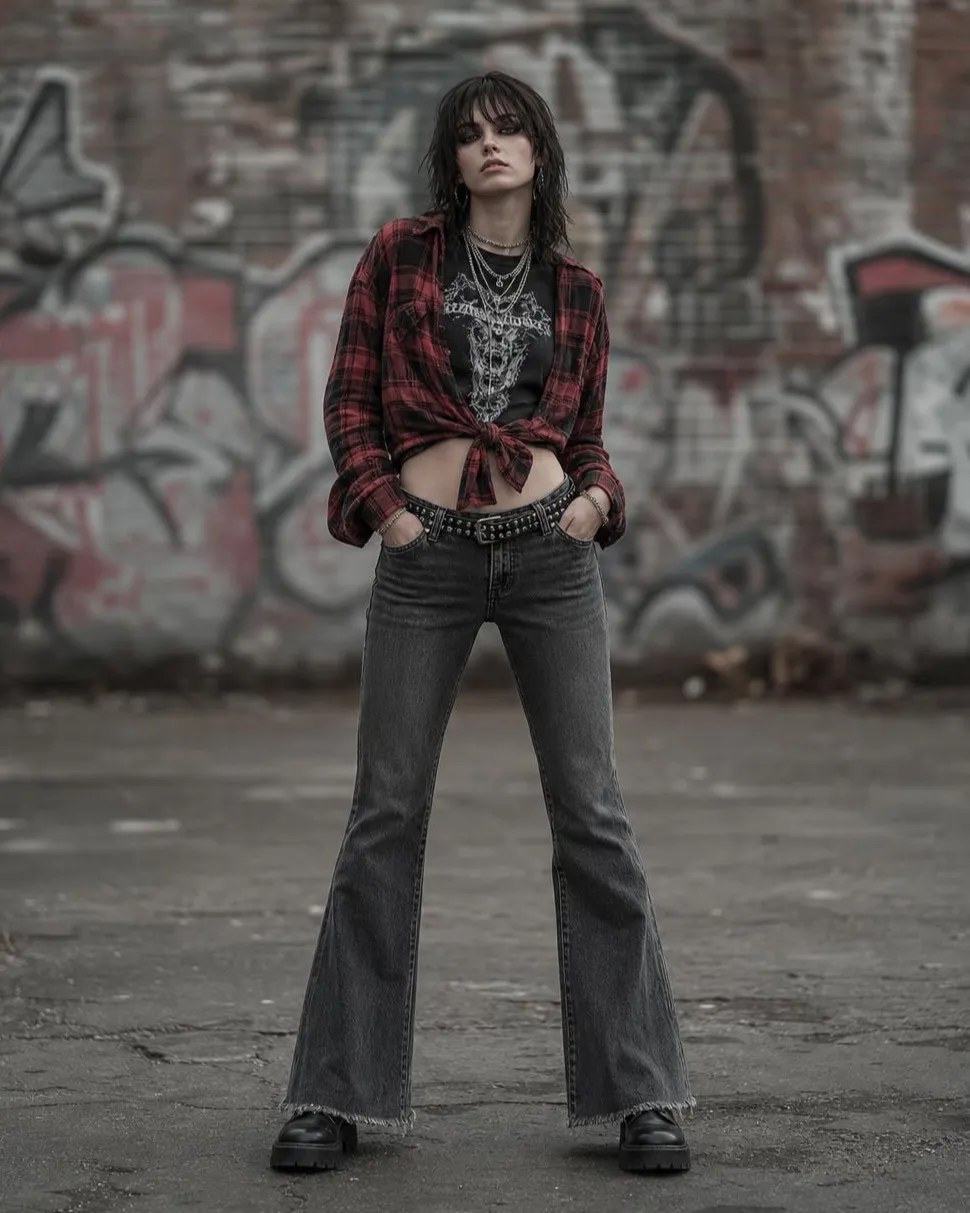
A red and black plaid shirt knotted at the waist over a graphic tee, faded charcoal flares with a raw hem, studded belt, chunky boots. The knot is the waist definition: it gathers the shirt exactly at the low waistband, turning two loose pieces into one defined silhouette. Without the knot, plaid shirt plus low rise flares would be shapeless; with it, the waist is the outfit's clearest line.
Fit note: the studded belt sits on the hips rather than the natural waist, which is the correct placement for low rise — a belt at the natural waist over a low rise jean would fight the jean's own waistband. Raw hems on the flares add the unfinished edge grunge requires; a clean hem would look too polished against the plaid and studs. Chunky boots work here because the outfit's language is already heavy — studs, plaid, dark denim — but the top stays knotted and fitted, so there is exactly one volume zone (the floor), not two. The same retro energy runs through these Y2K inspired outfits featuring vintage Von Dutch shoes.
The Office Version: Silk, a Tuck, and a Slim Belt
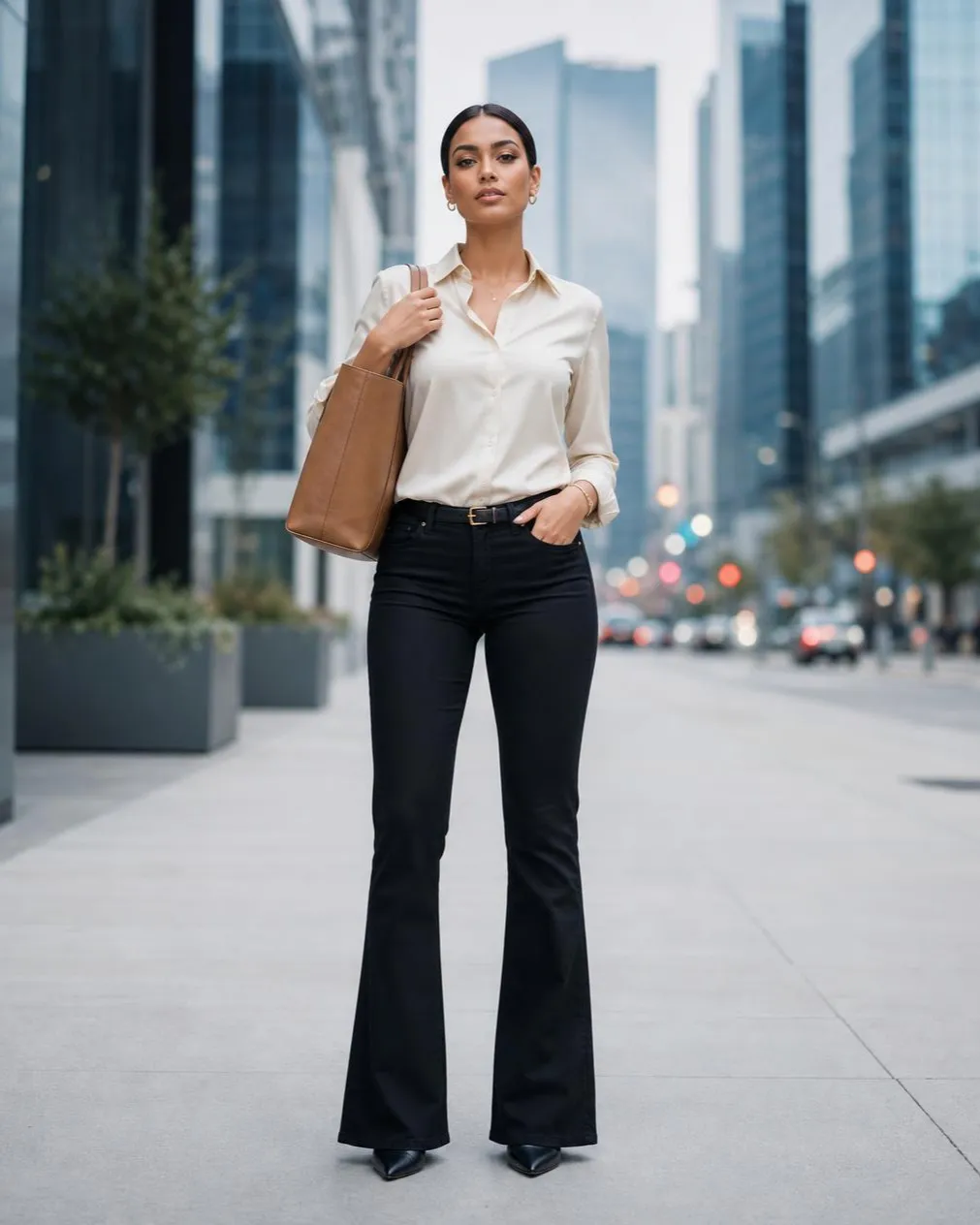
A cream silk shirt tucked into black flare jeans, slim black belt, pointed heels, cognac structured tote. The tuck is essential for the office version of flares — it is the cleanest possible waist definition, and against a silk shirt it reads as polish rather than effort. The slim belt marks the waistband's exact line, which matters because a low waistband without a marker can look like the jeans are sliding.
Fabric note: this is the volume rule at its most disciplined — fitted silk on top, wide hem below, nothing in between competing. Pointed heels do two jobs: they add the height that lengthens the leg under a wide hem, and their sharp toe contrasts the hem's softness, keeping the bottom half from going entirely round. The cognac tote is the outfit's single warm accent in a black and cream base — one warm note that keeps the monochrome from feeling stark. Flares at work succeed when everything above the waist is tailored and everything below is controlled; polish on top earns the drama below.
Puffed Sleeves, Lace, and the Hourglass Exception
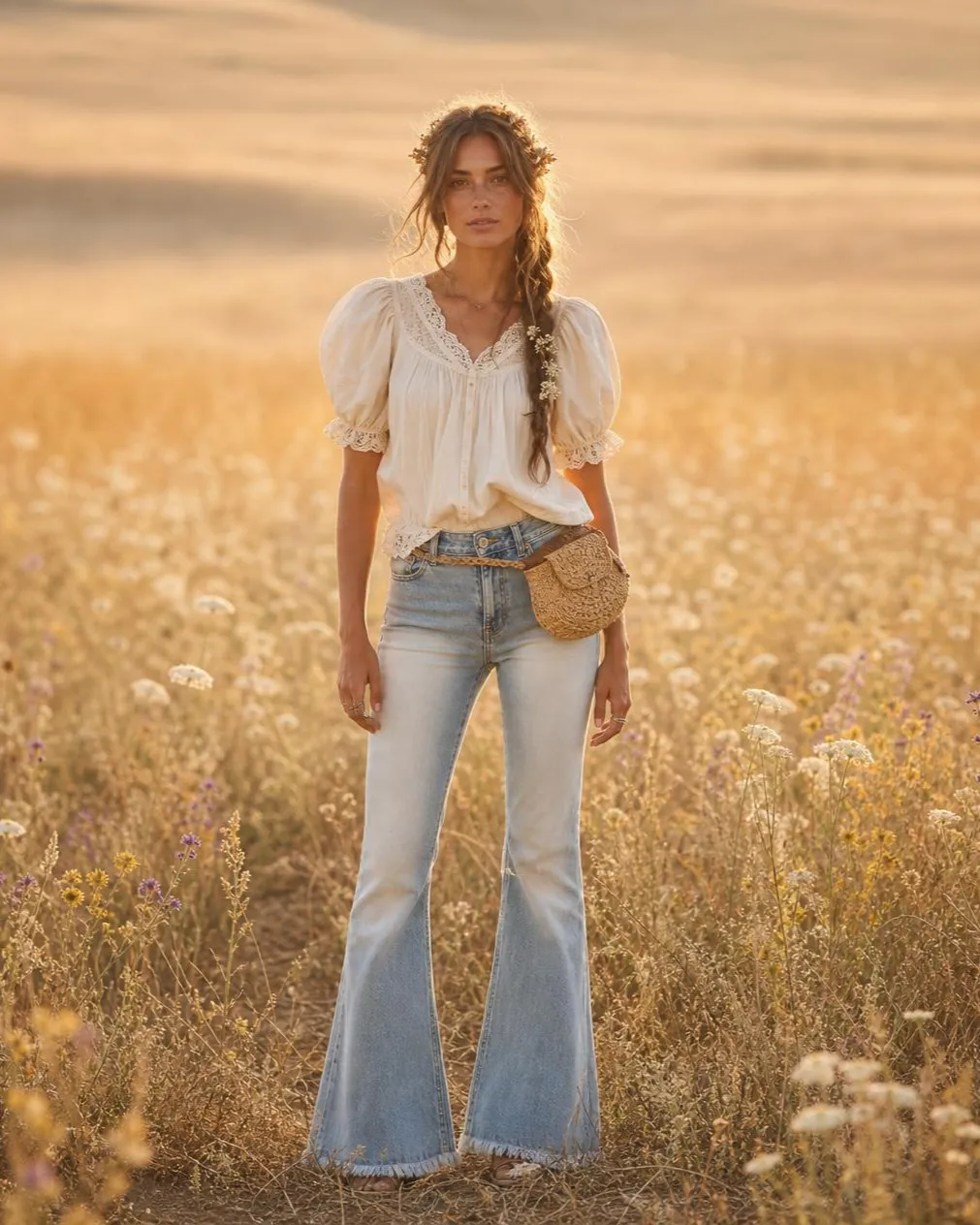
A cream lace trim blouse with puffed sleeves, light wash flare jeans, woven bag. The blouse's slight tuck — just the front — defines the waist without the formality of a full tuck, which suits the romantic mood.
Puffed sleeves add volume at the shoulder, and here is where the volume rule gets interesting: shoulder volume plus hem volume works because the waist between them is defined. It is an hourglass of volume — wide, narrow, wide — a classic flattering shape. Volume at shoulder and hem with no waist would be a very different, much worse story.
Tip: light wash denim keeps the outfit in daylight territory; dark flares with a lace blouse would push evening. The woven bag continues the natural texture language (lace, worn denim, woven straw) so the whole outfit speaks one material dialect. Braided hair keeps the neckline clear, which matters because the blouse's lace trim is the neckline's detail — covered hair would hide the outfit's most delicate work.
Tweed, Corduroy, and Three Layers That All Fit
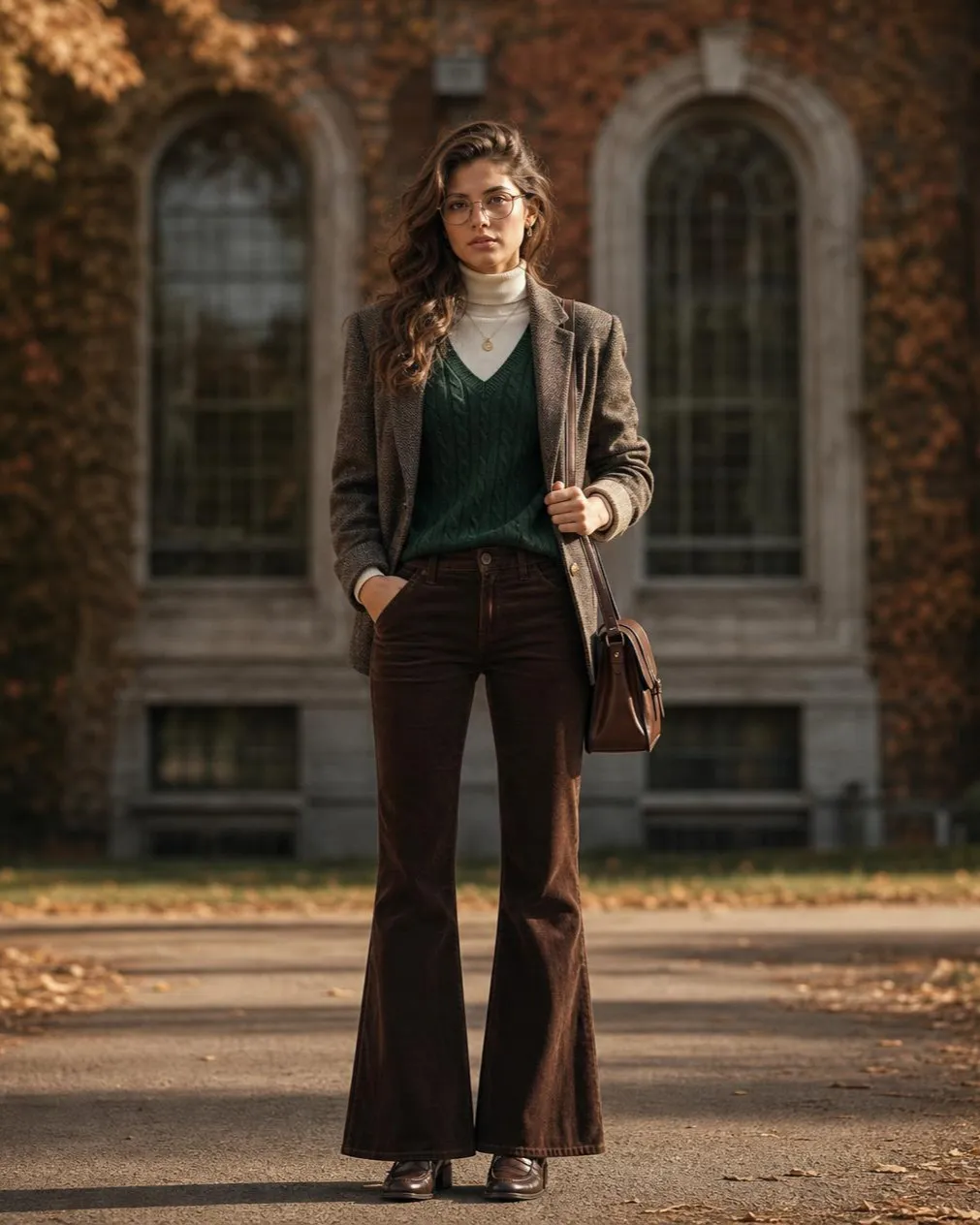
A tweed blazer over a forest green sweater and cream turtleneck, brown corduroy flare jeans, brown loafers. Corduroy flares instead of denim — the ribbed texture adds a formality denim can't, which is why this reads as the scholarly version of the silhouette. The triple-layer top (tweed, sweater, turtleneck) is a lot of warmth, and it works over low rise flares because every layer is fitted through the torso; the volume lives only in the blazer's shoulders and the jeans' hem.
Fit note: brown loafers are the right shoe because they continue the leg line in the same color family — brown shoe under brown hem, no visual break. A contrasting shoe would chop the long line the flares are trying to create. The turtleneck's cream is the palette's light note, preventing the browns and greens from going muddy. Glasses and a satchel complete the academic reference, but the outfit's real achievement is structural: three textures (tweed, knit, corduroy) in one tonal family, waist defined by the sweater's fit, hem controlled by the loafer.
White on White, With One Rough Edge

A cream tie front blouse with balloon sleeves, white flare jeans with a frayed hem, thin rope belt. The tie front is the waist definition and the neckline interest in one move — it gathers the blouse at exactly the low waistband and creates a V at the neck that lengthens the torso. With low rise denim, a tie front top is almost cheating: it puts the waist exactly where the jeans need it.
White on white is the highest contrast version of the tonal dressing flares love. White denim reflects light, which makes the wide hem look intentional and crisp rather than heavy; dark flares absorb light and can look weighty, white flares glow.
Care tip: the frayed hem keeps the white from reading precious — it is the small rough edge that makes the outfit feel worn rather than styled. The rope belt continues the coastal language without adding hardware weight. Wash white denim cold and inside out so it stays bright; a greyed-out white flare loses the whole effect. Barefoot or sandal is the correct finish — anything heavier would sink the outfit's lightness.
Metallic Halter, Dark Denim, and the Boot That Fills the Hem
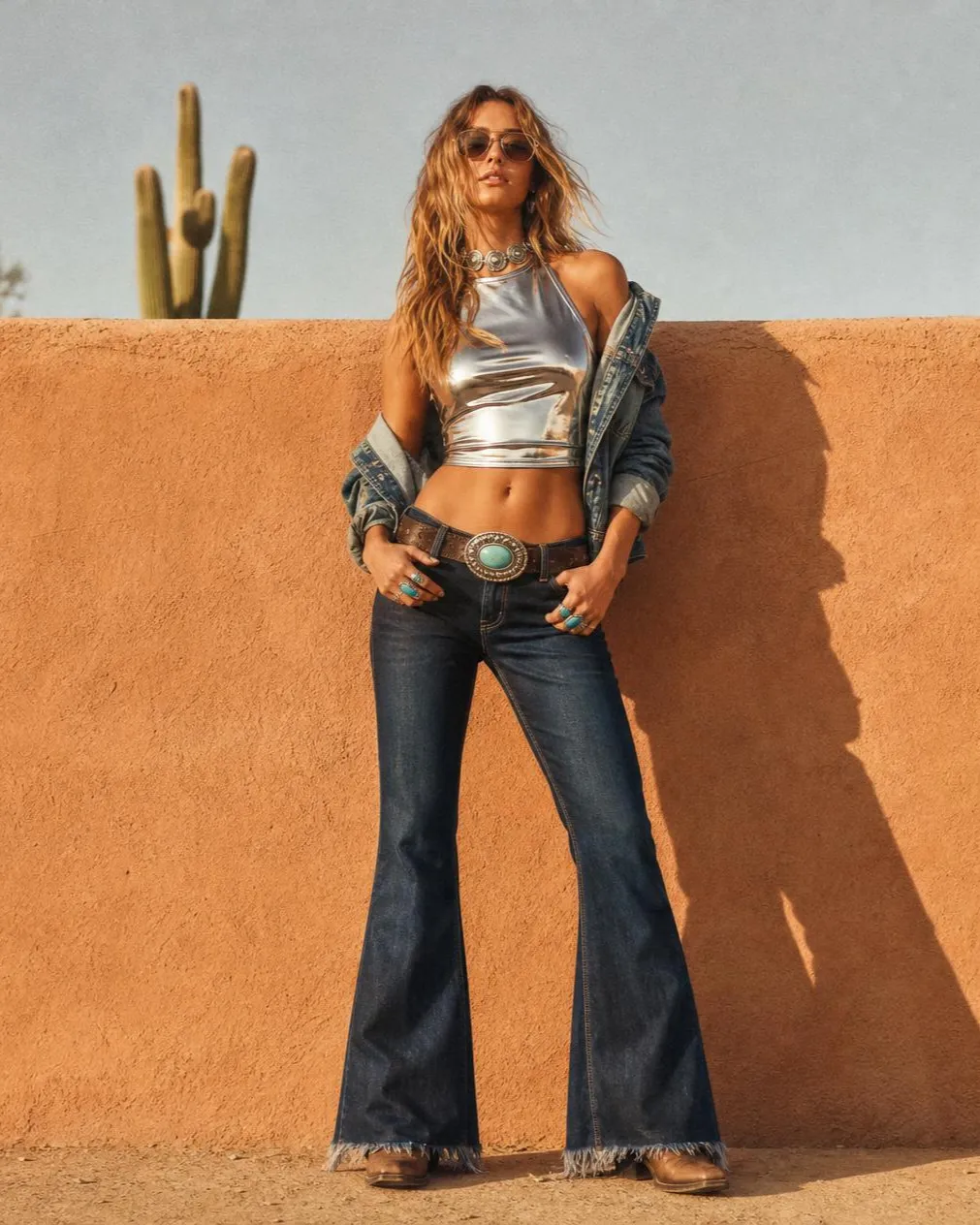
A liquid silver halter top, dark wash flare jeans, cowboy boots, turquoise statement belt buckle. The halter's bare shoulders and open back balance the jeans' full coverage — skin showing up top against denim down below is the proportion trade that keeps a going-out look from feeling heavy. A long sleeve top with these jeans would bury the outfit in fabric.
The metallic top is the outfit's light source: it catches light while the dark denim absorbs it, creating a top-bright, bottom-dark contrast that draws the eye up. That is strategic — it keeps attention on the face and shoulders rather than letting it pool at the wide hem.
Fit note: the turquoise buckle sits at the low waistband, marking the waist with color instead of a belt's structure — a Western solution to the waist rule. Cowboy boots under flares are the classic pairing for a reason: the boot's shaft fills the hem's interior so the flare drapes instead of collapsing, and the pointed toe extends the leg line past the wide opening.
Before You Put On Flares: A Checklist
- Waist marked? Tuck, knot, belt, or cropped hem — pick one. Low rise without a marked waist is the single fastest way to look unstructured.
- Hem kissing the shoe? The shoe should peek, not star. Heels and pointed toes lengthen the leg under a wide hem; heavy boots need a heavy outfit to match. Never let the hem drag — get it hemmed.
- One volume zone? Wide hem means fitted or cropped up top. The only exception is the hourglass: volume at shoulder and hem with a hard defined waist between them.
- Top and hem in conversation? The top should define the waist and the shoe should finish the leg — if either end is unresolved, the middle sags.
The jeans haven't changed since the seventies; the styling knowledge around them finally caught up. Define the waist, control the hem, keep the volume to one zone, and the silhouette that used to wear you starts working for you.
Low Rise Flare Questions, Answered
My flares make me look shorter — what am I doing wrong?
Usually the waist or the hem. An untucked, boxy top erases the waist, so the torso and legs blur into one column. And a hem that pools on the floor eats the leg length. Tuck or crop the top, hem the jeans to kiss the shoe, and add a pointed toe or heel — the leg line comes back immediately.
Can low rise flares work for the office?
Yes, with a tucked silk shirt or tailored blouse, a slim belt, and pointed heels in a dark wash. The top half must be polished enough to earn the denim below. Skip distressed hems and keep the fit clean through the thigh — that is what separates office flares from weekend flares.
What is the easiest fall version of this silhouette?
Cropped cable knits that show the waist, corduroy or tweed layers, and ankle boots. Rich tones — brown, olive, burgundy — suit the season and the silhouette's retro roots. Keep the top half fitted so the layers don't add a second volume zone.
Which shoes actually work under a wide flare hem?
Heeled boots and pointed pumps lengthen the leg, and a boot shaft fills the hem so it drapes properly. Minimal strappy heels work when the outfit is light. Avoid flat sneakers with very wide hems — the hem collapses without the lift, and the shoe disappears entirely.
Are low rise flares still in style, or is this a nostalgia trap?
The Y2K revival brought them back and they have held as a denim option since. The current styling is more controlled than the original era — defined waists, intentional hems — which is why they read as fashion now rather than nostalgia. The silhouette is the same; the rules around it are what changed.
If flares feel like too much volume, wide leg jeans give you the same long line with a calmer hem, and baggy jeans are the relaxed end of the same family. For current flare cuts and washes, Levi's flare jeans range shows how the same three rules apply across light, dark, and white denim.