College Outfit Ideas for Class That Actually Work: A Practical Guide
How to use this guide
These are editorial styling suggestions, not a one-size-fits-all formula. Adapt each look to your wardrobe, proportions, climate, comfort, budget, and the occasion; the most useful idea is the one you can genuinely wear.
What does a class outfit actually have to survive? An 8am lecture in a hall that runs colder than the walk outside, a mile of walking between buildings, a library session that stretches past dinner, and a presentation somewhere in the middle of it all. Most outfits fail one of those tests by noon: the coat you cannot carry once it warms up, the shoes that start hurting at the second building, the top that wrinkles the moment you sit down for two hours.
That is why the ten looks below are built around three decisions you make the night before, not the morning of: one warm layer you can take off, shoes you can walk a mile in without thinking about them, and a bag that holds a laptop, a water bottle and a sweater at the same time. Get those three right and almost any top and bottom underneath will pass. Get them wrong and even a good outfit falls apart by the second lecture.
Each look shows the same rule working in a different register, from a linen set on a warm morning to a wool coat on a presentation day. After the looks you will find the layering table for cold lecture halls, the shoe and bag rules for campus walking, and a student budget capsule that covers all ten looks from one small set of pieces.
Linen Set with Woven Tote
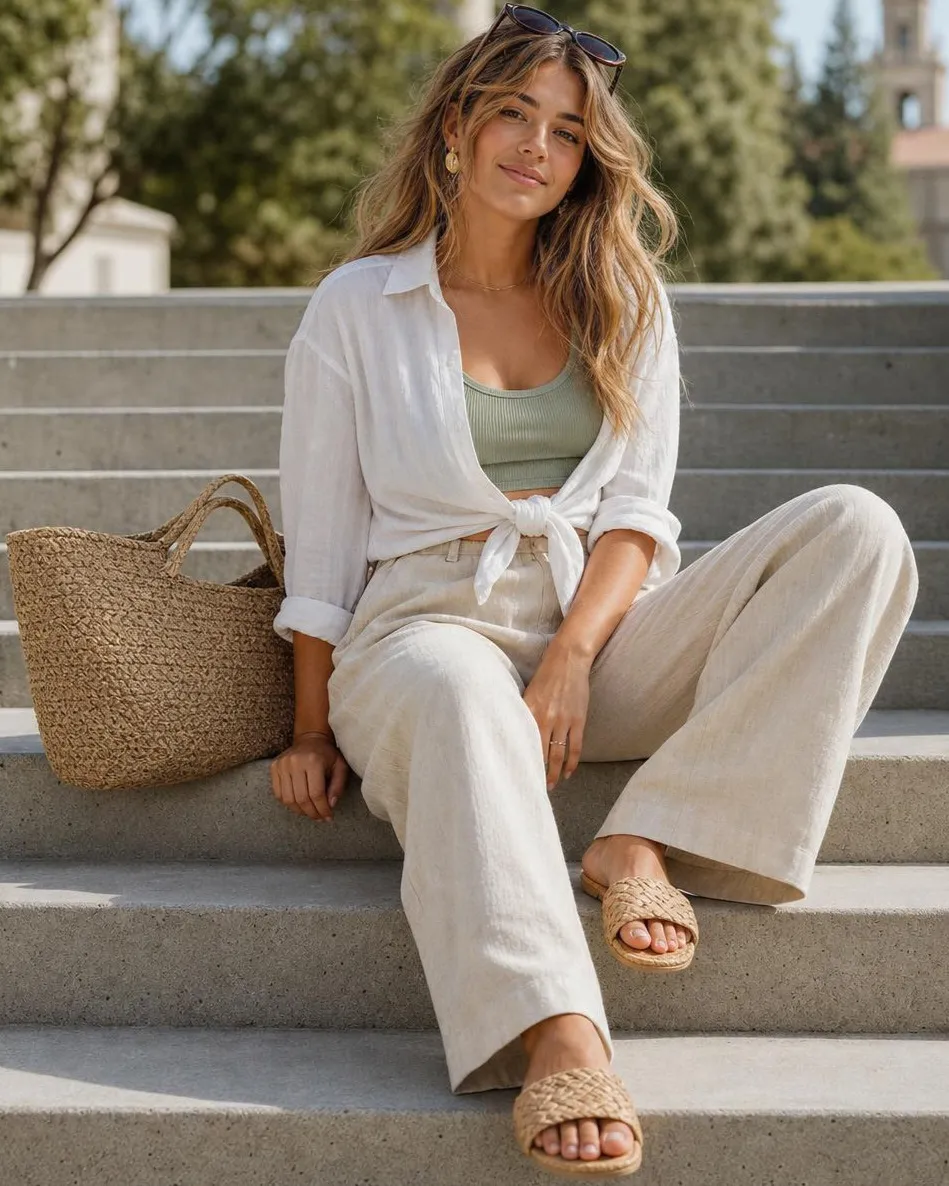
A sage crop top under a white shirt tied at the waist, wide leg linen pants, woven slide sandals, a straw tote. Linen's real advantage over cotton here is not just breathability. It is that its natural wrinkle reads as casual by design, so the outfit still looks intentional after hours of sitting in lecture halls, which a crisper fabric would show wear on by midday.
The tied shirt does the waist marking that linen pants on their own cannot, and the tote carries a laptop flat against a book without the bulk of a backpack.
Fabric note: keep the palette to two colours plus the straw tone. Linen in three competing colours starts to look like sleepwear rather than an outfit, while two colours plus a natural straw read as a deliberate choice.
Oversized Denim Jacket with Wide Leg Jeans: The Proportion Fix
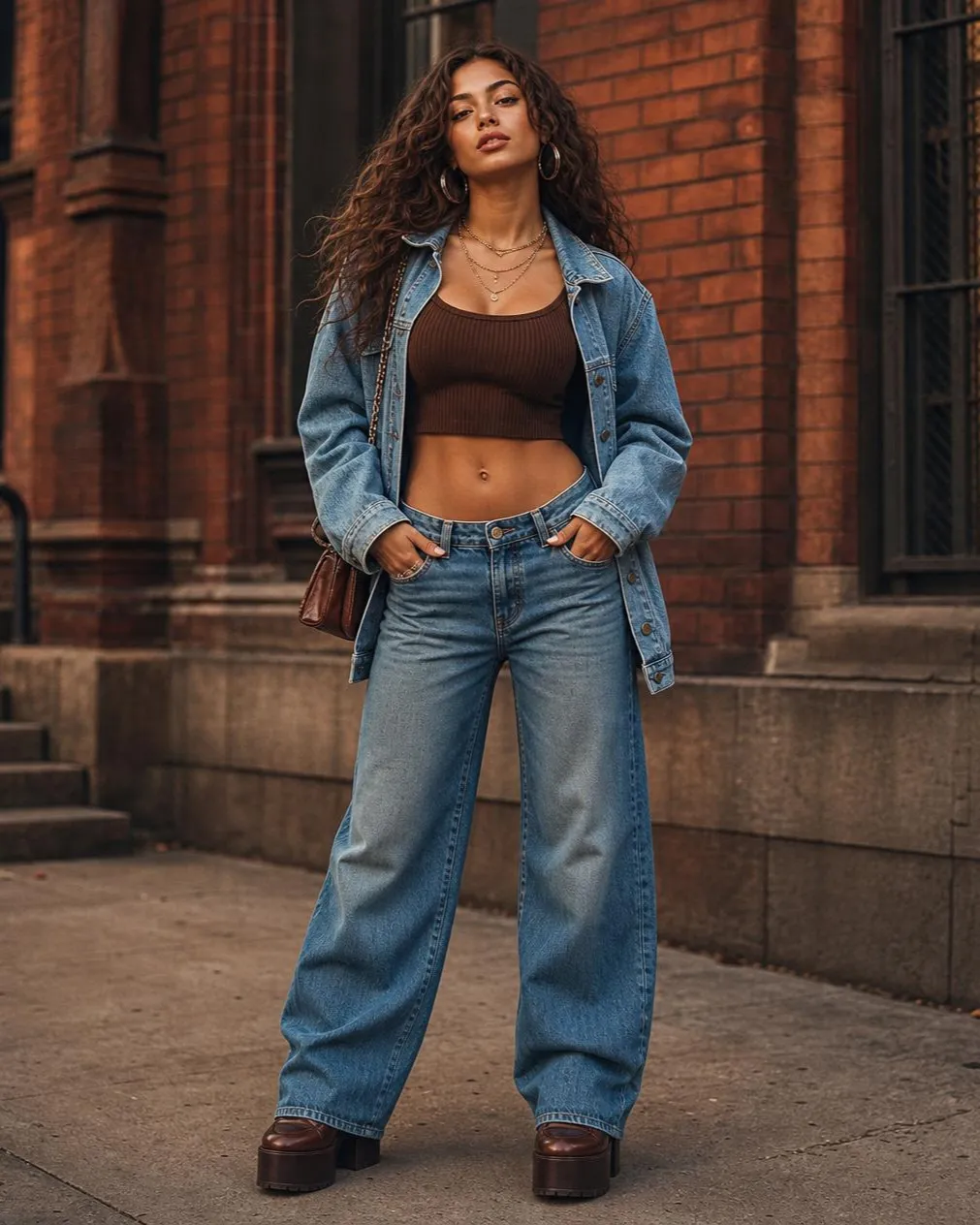
A brown ribbed crop top, an oversized denim jacket, wide leg jeans, chunky platform boots. Platform boots are doing real proportion work against wide leg denim. A flat shoe here would get visually swallowed by the volume of the jeans, while the platform's height keeps the leg line from disappearing entirely under all that fabric.
The crop top matters too: with an oversized jacket and wide jeans, you need one short layer to show where your waist is, or the whole outfit reads as one big rectangle.
Fit note: this is the look for days with a long walk across campus, when you want denim that moves instead of denim that pinches. Let the jacket sit open so the crop top breaks up the volume, and the outfit stays balanced rather than boxy.
Preppy Sweater Vest with Pleated Skirt
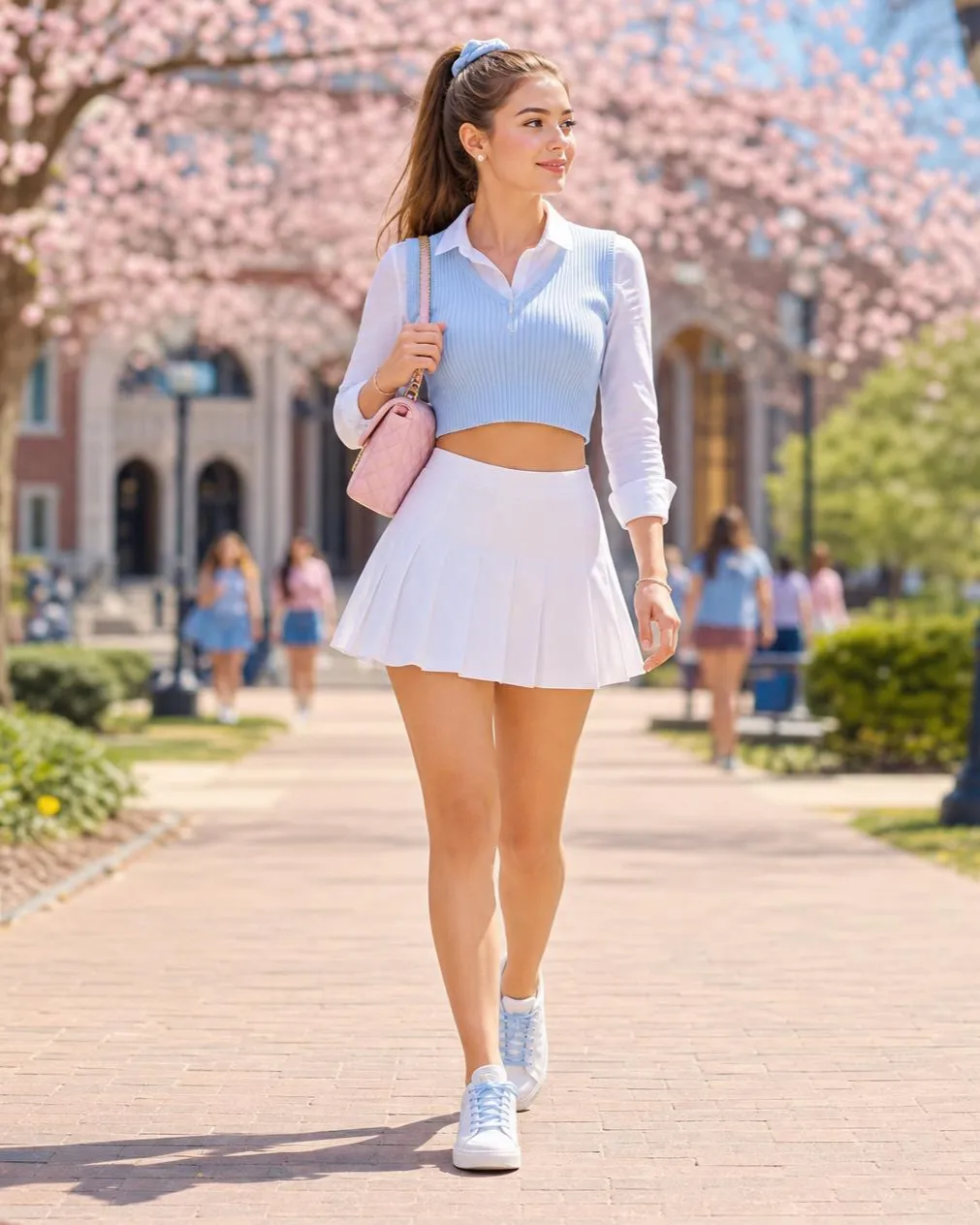
A light blue sweater vest over a white collared shirt, a white pleated skirt, sneakers, a pink quilted bag. The vest over collar combination adds a second visible layer of structure at the neckline without any sleeve bulk, which is what keeps an all pastel outfit from reading soft to the point of shapeless.
The same vest over collar layering shows up in aesthetic outfit ideas for any day as an easy way to look put together without trying too hard. The pleats do quiet work here as well: they hold their shape through sitting, so the skirt looks the same at 3pm as it did at 8am, which a plain cotton skirt rarely manages.
Care tip: keep the sneakers clean and white. Scuffed trainers drag a preppy outfit back toward gym wear, and white sneakers show every mark, so a quick wipe the night before is part of the outfit, not an afterthought.
Rust Corduroy and Straight-Leg Jeans: The Cold-Morning Default
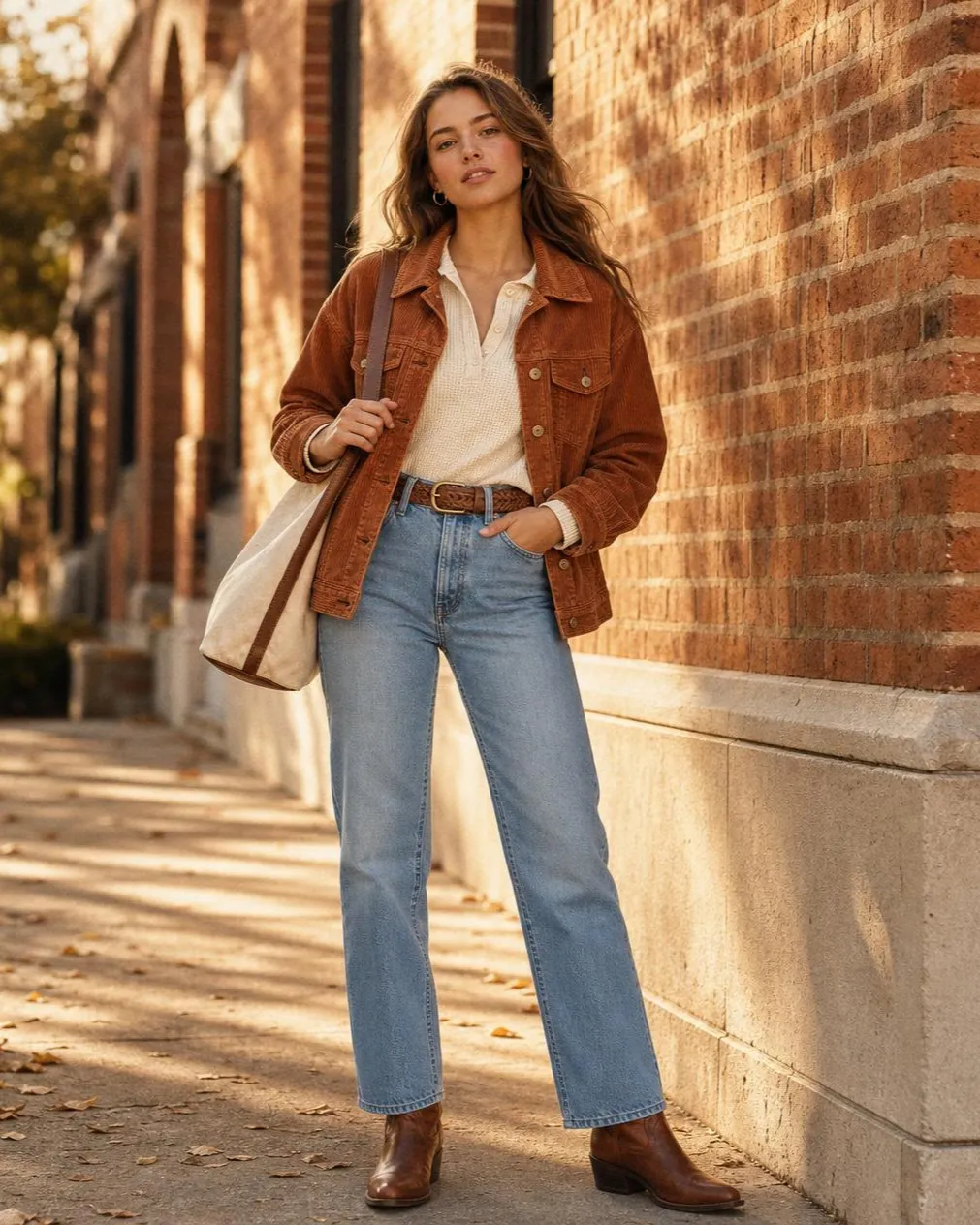
A rust corduroy jacket, a cream knit henley, straight leg jeans, a braided belt, ankle boots. Corduroy's texture is doing work a flat cotton jacket could not in the same silhouette. The visible wale catches light differently depending on angle, which is part of why this specific rust shade reads richer than the same color would in a smooth fabric.
The henley underneath is the right weight: a heavy sweater would fight the jacket for space at the shoulders, while a thin tee would leave you cold on the walk in. The braided belt is the one detail that stops the outfit from looking like a uniform, so do not skip it.
Fit note: this is the most reliable cold morning look on the list, and the one that needs the least thinking. Straight leg jeans keep the bottom half narrow enough that the textured jacket stays the focus, instead of two wide pieces competing.
Cropped Bomber, Cargo Pants, and a Beanie
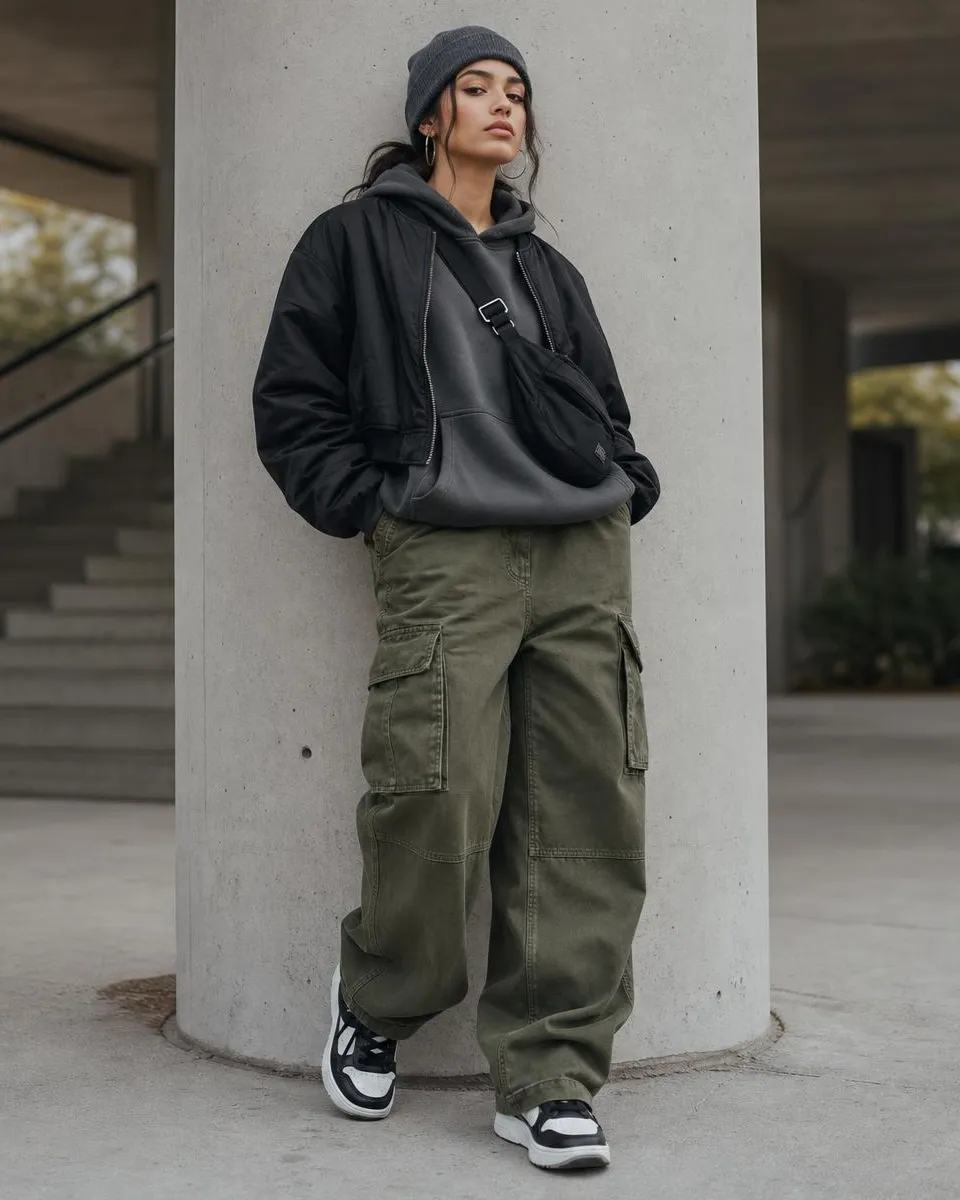
A black cropped bomber over a heather grey hoodie, olive cargo pants, a beanie, a crossbody sling. Cropping the bomber rather than wearing it hip length is the choice that keeps this from becoming three stacked loose layers, since a shorter jacket length gives the eye a break point instead of one continuous block of volume top to bottom. The cargo pockets are genuinely useful on a class day: phone, keys, and a transit card all fit without opening the bag.
For more cargo styling, these ways to style cargo pants for men show how the same pocketed silhouette works with different tops. The beanie is doing real work here too, not just decoration: it keeps the hood down and out of the way on a windy walk, which is the difference between a bomber outfit that looks sharp and one that looks slept in.
Wear it with: a crossbody sling worn high on the hip, so the strap does not cut across the cropped jacket and the pockets stay easy to reach.
Puff Sleeve Blouse with Corduroy Midi Skirt
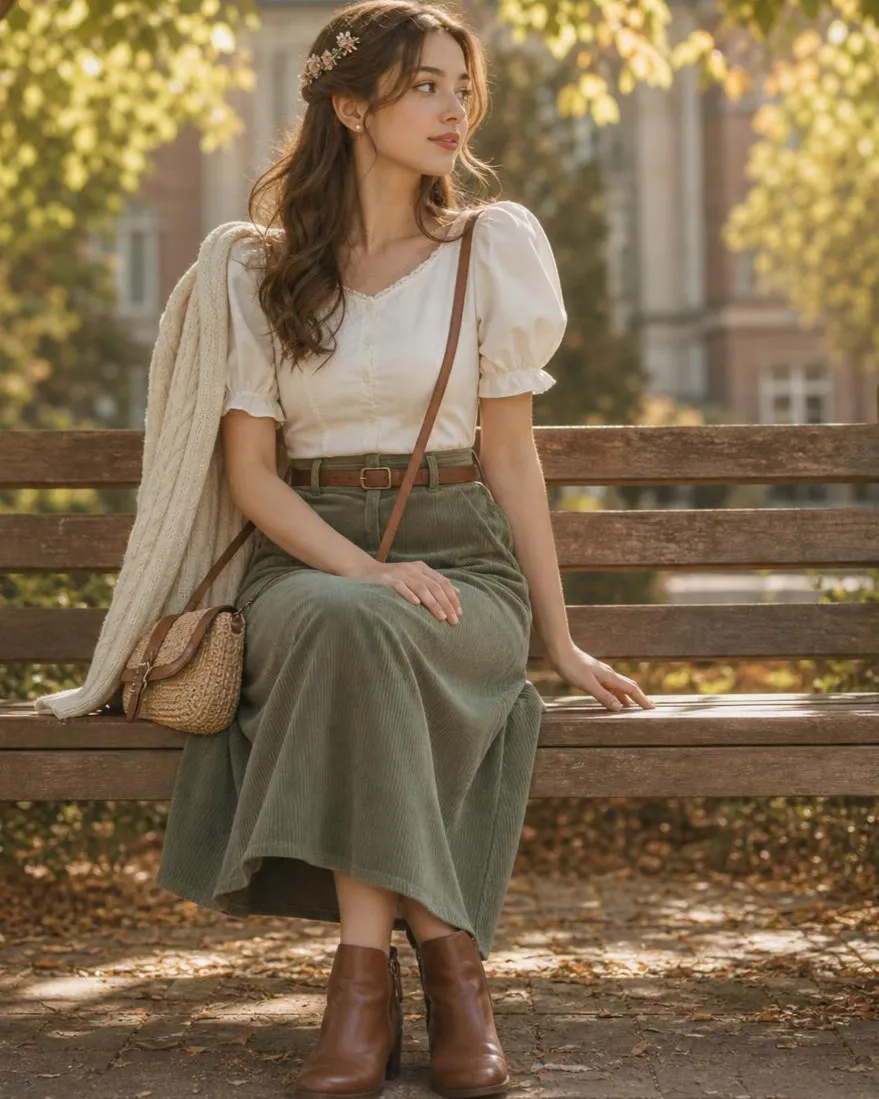
A cream puff sleeve blouse, a sage corduroy midi skirt, a thin brown belt, ankle boots. The belt is the single defining choice in this outfit. Puff sleeves add volume up top, a midi skirt adds volume below, and without a belt marking the waist between them, the two volumes would blend into one shapeless column instead of reading as a deliberate silhouette.
The corduroy skirt is the warmer half of this pairing, which is why it works from the first cool week of fall through the last mild week of spring. Ankle boots, not sneakers, are the right call here: the skirt's midi length needs a shoe with a little structure at the ankle, or the whole outfit drifts toward loungewear.
Fit note: this is the look for a day with a presentation, because the blouse reads polished while the skirt keeps you comfortable sitting through it. Keep the belt thin and brown, so it marks the waist without adding another competing colour.
Navy Cardigan, Plaid Skirt, White Sneakers
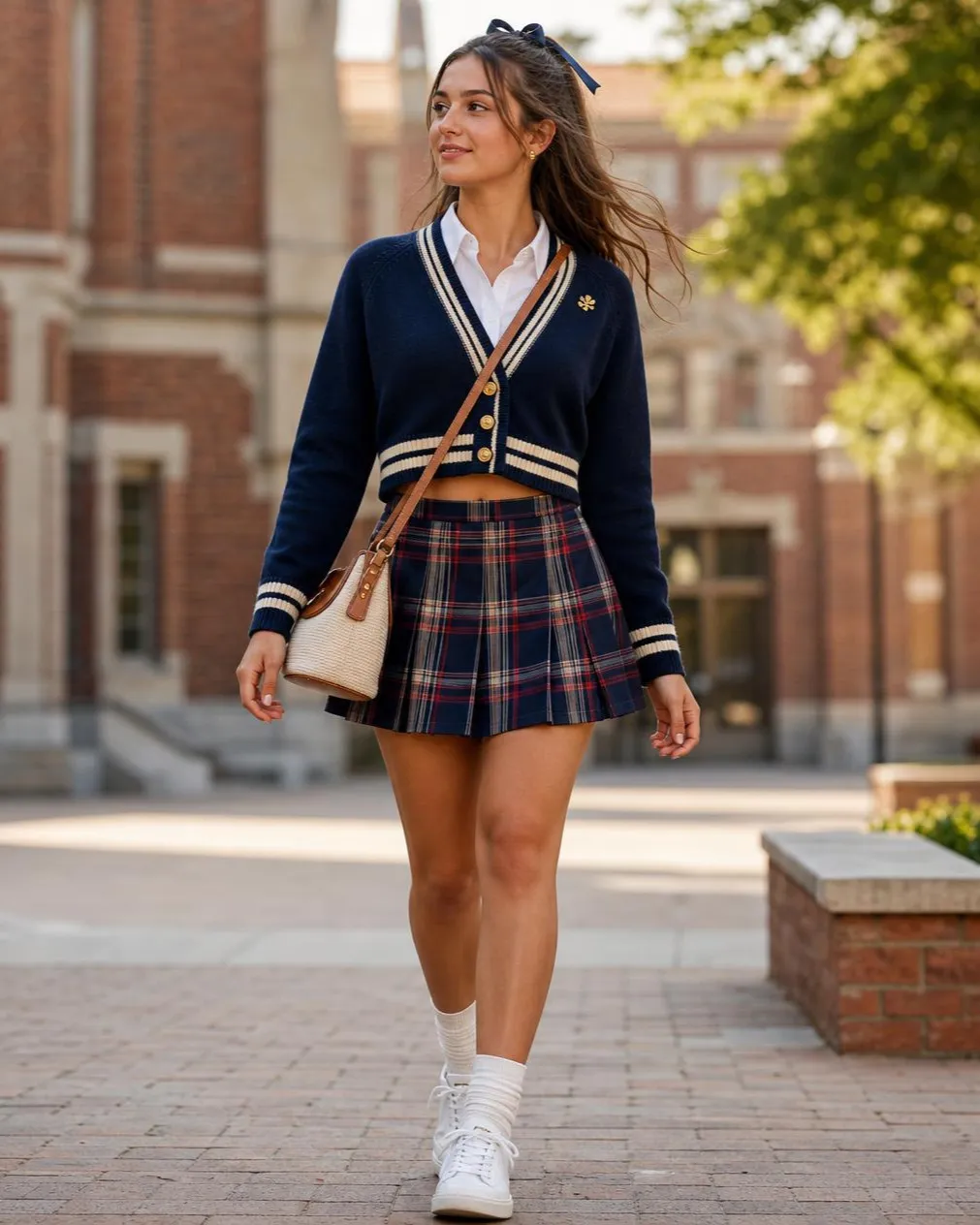
A navy cropped cardigan with stripe trim over a white collared shirt, a plaid pleated skirt, white sneakers. Cropping the cardigan to hit above the skirt's waistband is deliberate. A longer cardigan would cover the collared shirt entirely, losing the layered collar detail that is doing most of the structured yet playful work this outfit is going for.
The plaid skirt carries the pattern so nothing else needs to: keep the cardigan solid, the shirt plain white, and the bag a single quiet colour. White sneakers are the right shoe because they match the shirt and keep the outfit grounded on a day with a lot of walking.
Wear it with: opaque tights in navy rather than black on a cold morning, so the leg line stays in the same colour family as the cardigan instead of introducing a third dark tone.
Wool Coat with Tailored Trousers
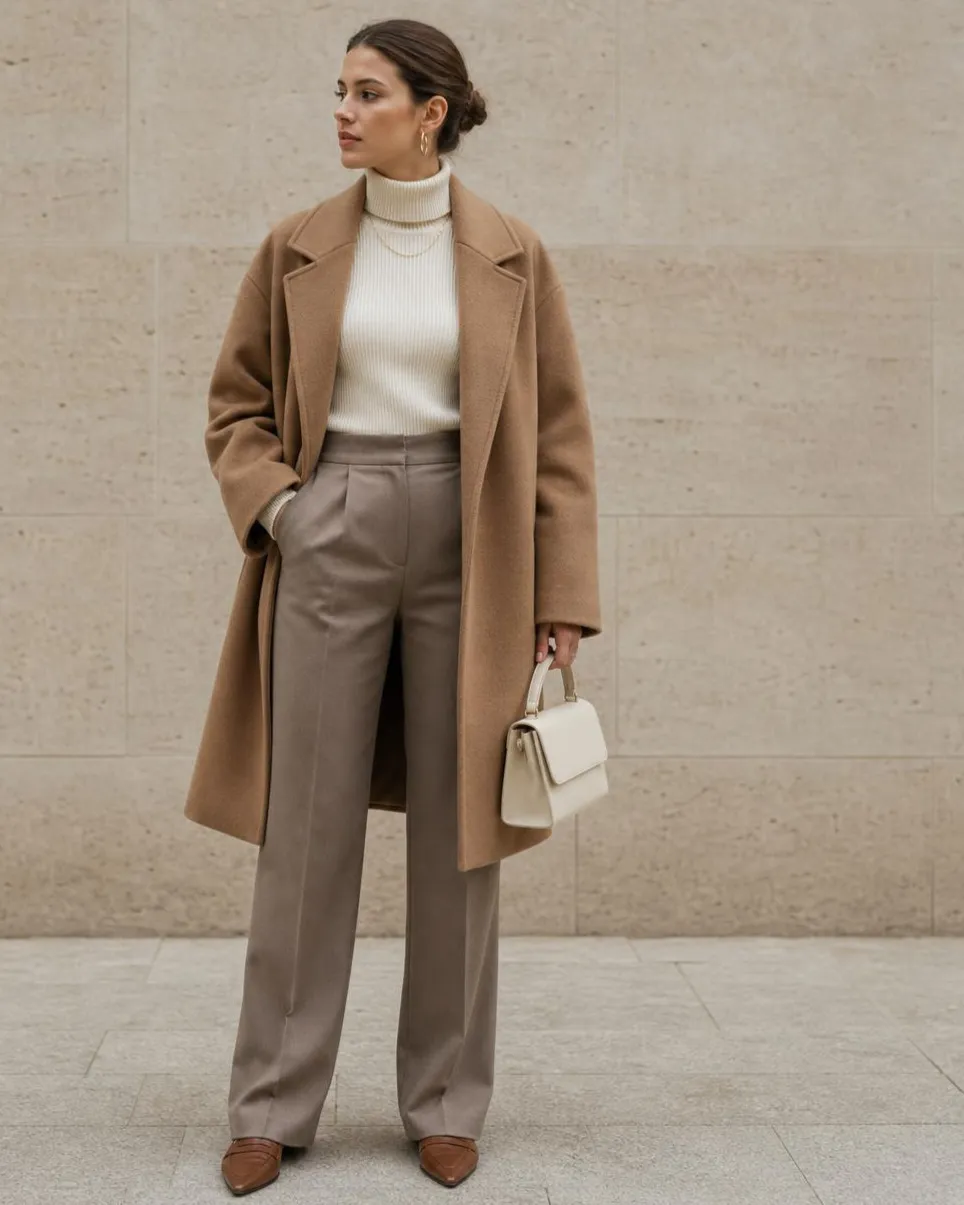
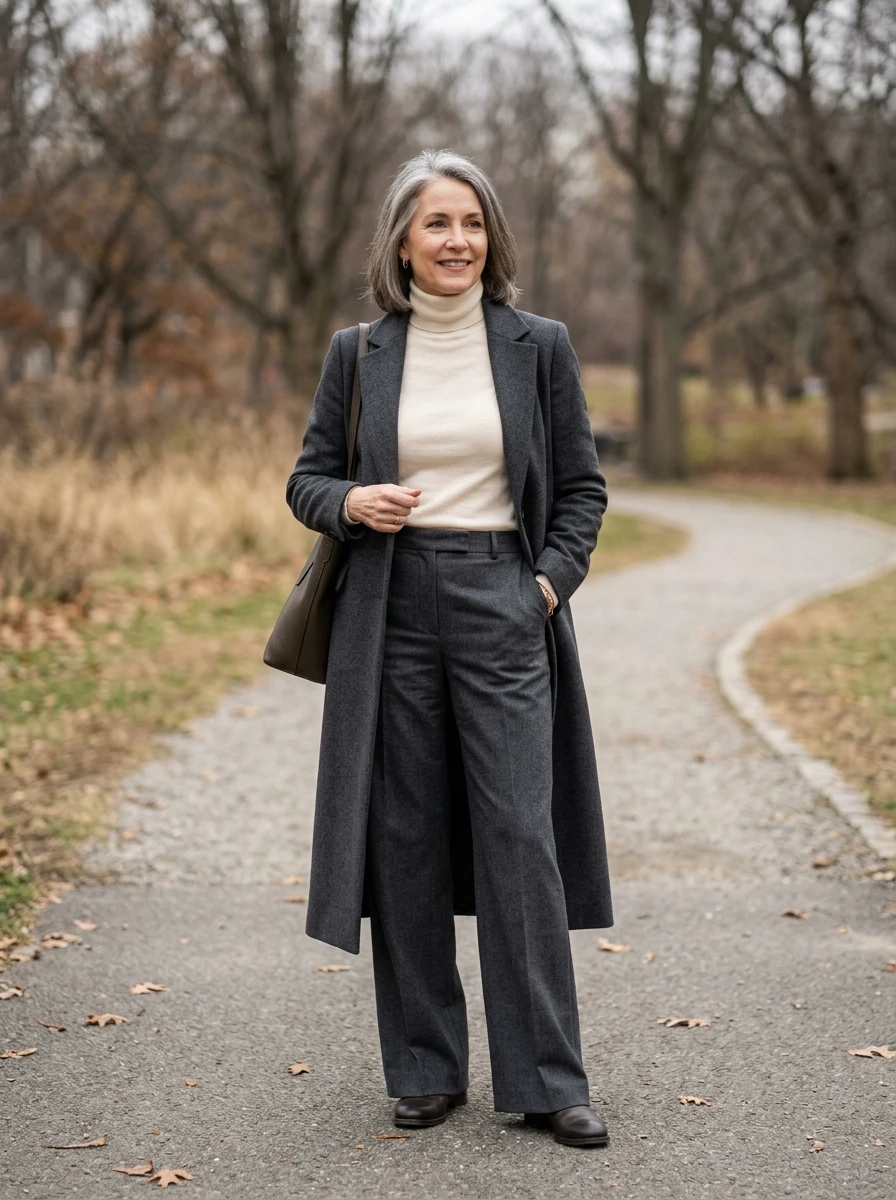
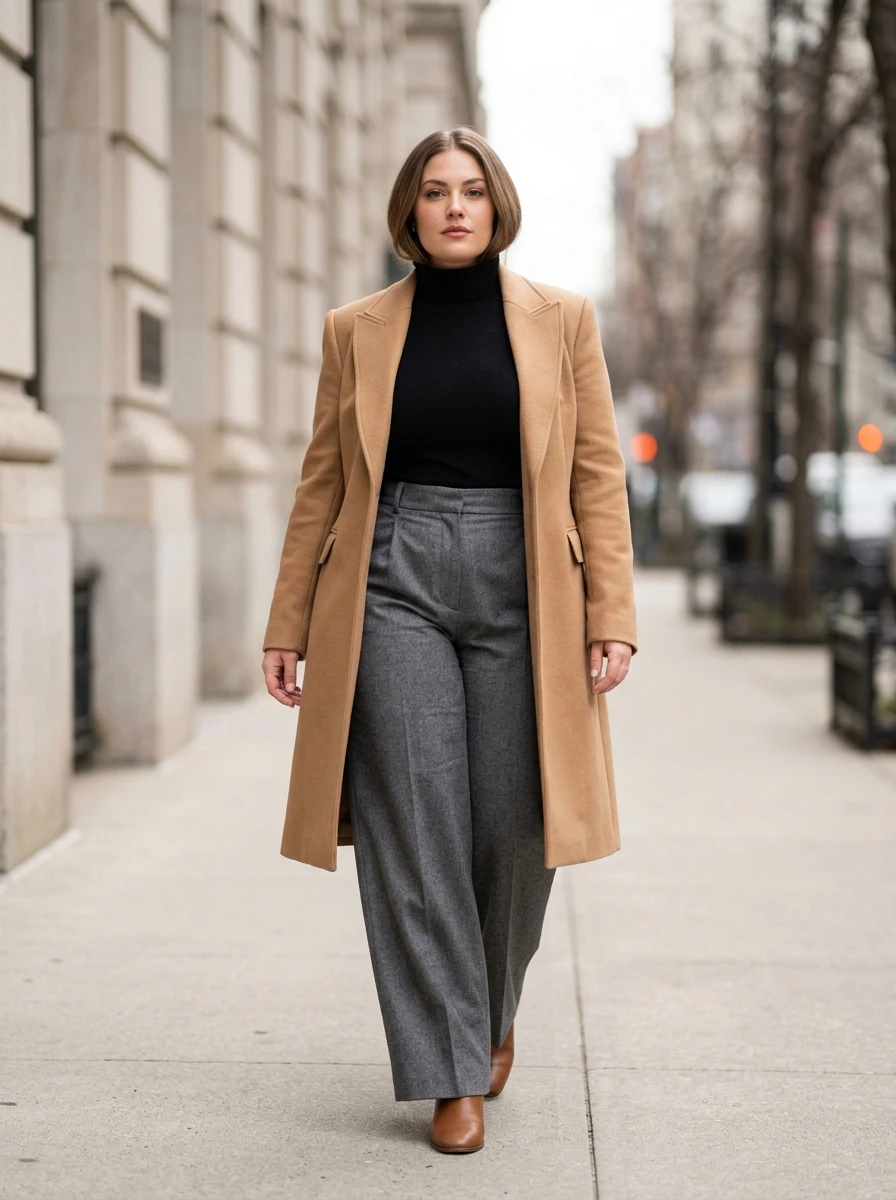
A camel wool coat, a cream turtleneck, pleated taupe trousers, pointed mules. Tonal dressing, camel, cream, and taupe all sitting close together on the color wheel, is what pushes this outfit from campus casual toward presentation ready without needing anything more formal than a coat and trousers.
The narrow palette itself reads as more considered than a wider color mix would. This is the one look on the list where a black blazer can replace the wool coat on a milder day and keep the same effect, because the trousers and turtleneck are doing the structured work underneath.
Fit note: pointed mules are the risk here. They look sharp, but they are a bad choice on a day with stairs and a long walk, so swap them for loafers if you have more than a mile of campus to cover. The coat is the investment piece in this outfit, and it earns its price by making three simple pieces underneath look deliberate.
Pink Track Jacket and Cargo Jeans: The Friday Look
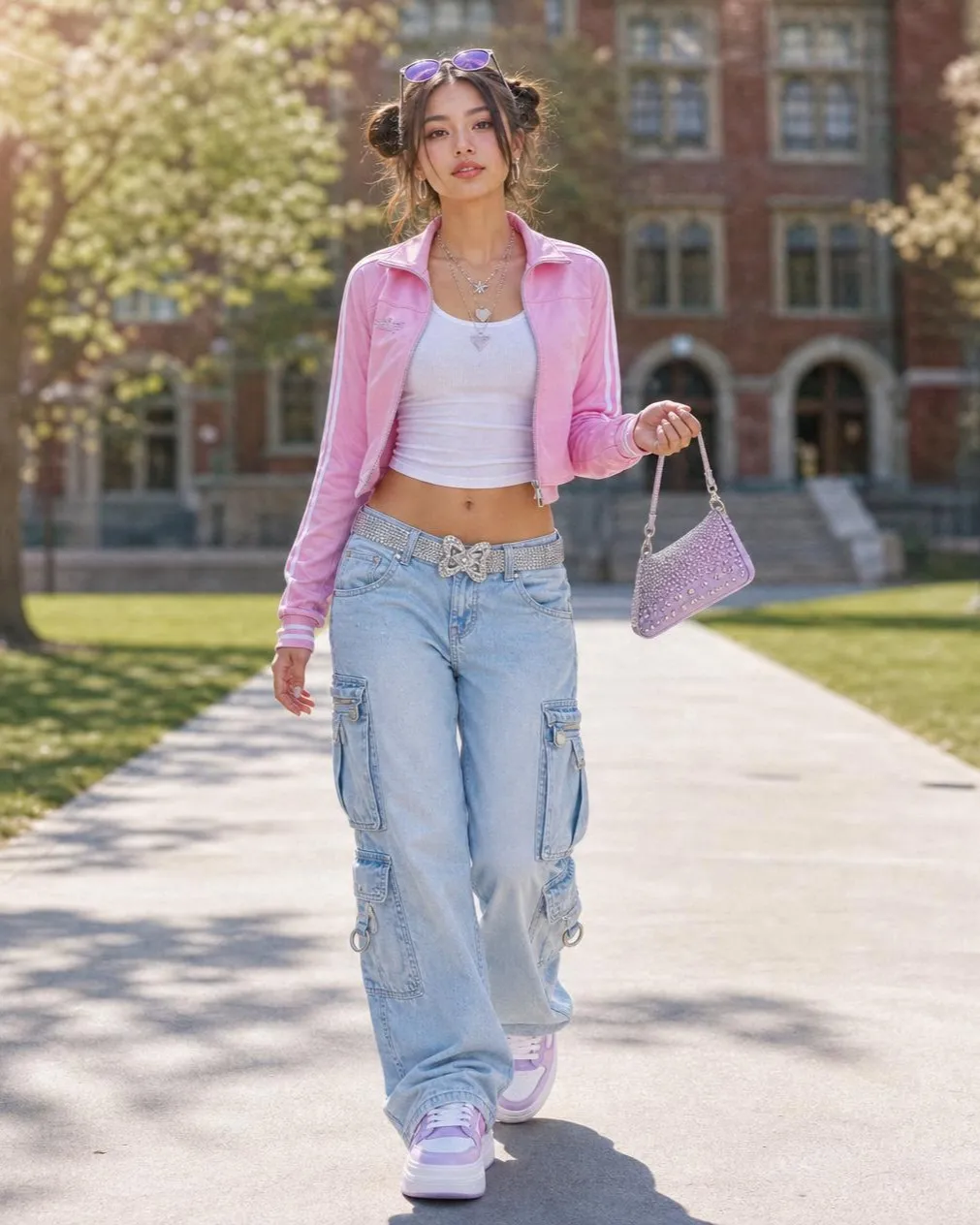
A pink zip track jacket, a white tank, light wash cargo jeans, a rhinestone belt, platform sneakers. Y2K styling runs on exactly this kind of low rise, high volume contrast: cargo pockets at the hip, a cropped jacket above, and the rhinestone belt is doing the same waist marking job every belt on this list does, just dressed up for the aesthetic.
The white tank is the quiet anchor: without a plain layer underneath, the pink jacket and light jeans would compete for attention and the outfit would read as costume rather than style. Platform sneakers keep the proportion honest against the wide cargo leg, the same way platform boots do in the denim jacket look.
Fabric note: this is the outfit for a Friday with no presentations, when the goal is to look like you tried without actually trying very hard. Keep the tank cotton and fitted, so the one plain layer sits flat under the jacket instead of bunching.
Flannel Shirt with Distressed Jeans
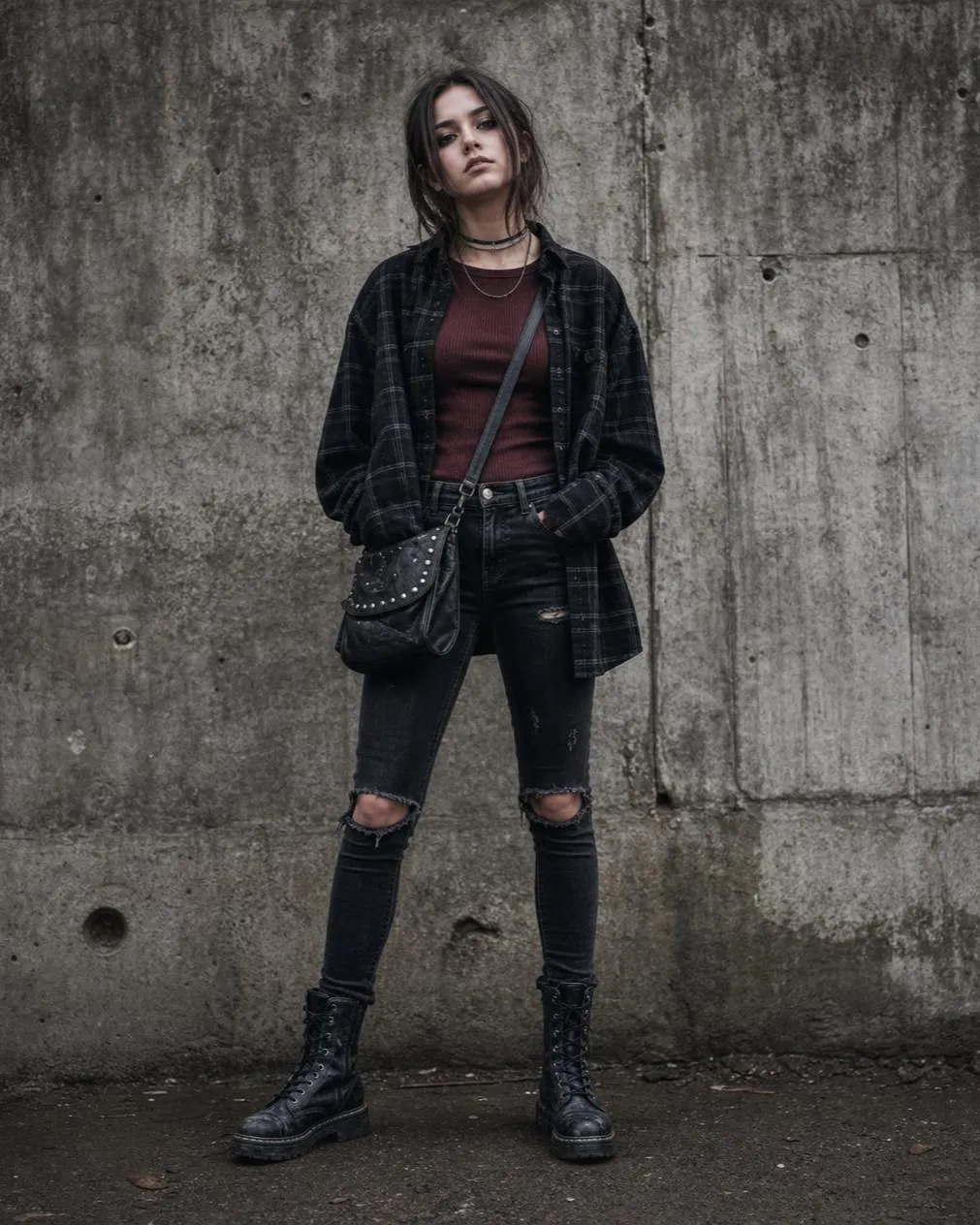
A black plaid flannel worn open over a maroon top, distressed black jeans, a studded bag, combat boots. Distressing does real visual work on denim volume. Rips and frayed patches break up what would otherwise be one solid block of fabric, which is part of why worn in jeans can carry more texture without reading as bulkier than a clean, unbroken pair.
The flannel worn open is a layering choice, not just a shirt: it frames the maroon top the way a jacket would, and it comes off in a warm classroom without leaving you in just a tank.
Care tip: combat boots are the right shoe because their weight matches the visual weight of the distressed denim; a light sneaker would make the bottom half look unfinished. This is the most forgiving look on the list for a day that starts cold and ends warm, because every layer comes off or goes on without changing the outfit underneath.
How to Layer for a Lecture Hall at Any Temperature
Lecture halls are cold in the morning and warm by midday, and the outfit that handles both is the one with a layer you can remove without a second outfit underneath. The table below is the rule for the whole list: dress for the coldest part of the day, and make the warm layer removable.
| Morning temperature | Wear this | Skip this |
|---|---|---|
| Above 20C | A tee or tank, with a light shirt worn open | A heavy jacket you will carry all day |
| 12 to 20C | A long sleeve tee or henley, with a cardigan, denim jacket or bomber | A coat with no bag to stash it in |
| Below 12C | A turtleneck or thermal base, with a wool coat or UGG boots weather layer | A single thin layer with nothing over it |
| Rain or wind | A fitted base that dries fast, with a hooded waterproof layer | Suede shoes and open weave knits |
The layering guide from MasterClass explains the same principle: a moisture moving base, an insulating middle, and a weather shell on top. The campus version is simpler, but the logic is identical. If your middle layer is a hoodie, it doubles as the warm layer; if it is a blazer, it doubles as the polished layer. Either way, the layer you remove needs somewhere to go, which is why the bag rules below matter as much as the clothing.
Shoes and Bags: The Two Rules That Decide a Class Day
Shoes decide whether an outfit survives a class day, and the rule is simple: if you cannot walk a mile in them without thinking about your feet, they are not class shoes. Sneakers and loafers pass that test; pointed mules, new boots, and thin soled flats usually do not.
Break in any new pair on a short day first, never on a day with back to back classes across campus. A second pair of flat shoes in your bag costs almost nothing in weight and saves the day when a heel starts to hurt, which is the single most useful trick on this whole page.
The bag rule is just as strict: it must hold a laptop, a water bottle, and the layer you take off by midday. A backpack built for campus does this best, but a large tote works if it has a flat base and a zip top, so nothing falls out when you set it down.
A small crossbody looks good and fails the test, because the moment you need to carry a jacket you have no free hands. Pick the bag first on a heavy day, then build the outfit around it, not the other way round.
One Small Capsule That Covers All Ten Looks
You do not need ten outfits worth of clothes to wear ten looks. The capsule below costs less than most students spend on two impulse orders, and it covers every look on this page with pieces that repeat across outfits.
Buy the jeans and the shoes first, because those are the pieces that touch the ground and the chair all day, then fill in the tops from thrift or sale racks. ThredUp is a useful source for the jackets and skirts here, since secondhand outerwear costs a fraction of new and the quality difference is small once you check the seams and zips.
| Piece | Budget range | What it does across the ten looks |
|---|---|---|
| Straight leg jeans | 25 to 40 dollars | The base for the corduroy jacket, flannel, and blazer looks |
| Wide leg jeans | 25 to 40 dollars | The base for the denim jacket and track jacket looks |
| White collared shirt | 12 to 20 dollars | The layer under the vest and the cardigan |
| Oversized denim jacket | 20 to 35 dollars | The outer layer for two looks and a spare layer for the rest |
| Black cropped bomber | 20 to 35 dollars | The outer layer for the cargo look and a cold morning spare |
| White sneakers | 30 to 50 dollars | The walking shoe for four looks |
| Ankle boots | 30 to 50 dollars | The structured shoe for the skirt and coat looks |
| One tote or backpack | 20 to 35 dollars | Carries the laptop, bottle, and removed layer |
| Two belts, brown and black | 8 to 15 dollars | The waist marking detail in five looks |
The timeless capsule wardrobe pieces follow the same logic at a slightly dressier level: a small number of pieces that repeat, chosen for fit rather than novelty. A white button down shirt is the single most versatile piece in either capsule, because it works under a vest, under a blazer, tucked into jeans, or open over a tank. If you buy one new thing this semester, make it that shirt in a fabric that does not need ironing.
Frequently Asked Questions About College Class Outfits
What should I wear to class when I want to look put together but not overdressed?
Aim for one structured piece over simple basics. A blazer over a plain top, tailored trousers with a tucked tee, or a corduroy skirt with ankle boots all read polished without feeling stiff. The rest of the outfit can stay casual, because that single structured piece is what signals effort. Avoid gym wear and anything heavily wrinkled, and the balance lands on its own.
How do I get ready for an 8am class in twenty minutes and still look intentional?
Build the outfit around pieces that need no ironing and layer without fuss. Sweater vests, wide leg jeans, and slip on sneakers are fast because they go on in any order and still look finished. Add one structured detail, like a collared shirt or a belt, so the outfit looks planned even when you put it together half asleep.
Are jeans actually fine for class, or do they read too casual?
Jeans are fine for class in almost every setting, as long as one other piece adds polish. Straight leg or wide leg jeans with a tucked blouse, a belt, and boots look more finished than the same jeans with a plain tee and trainers. The denim itself is not the problem; it is whether anything else in the outfit is doing the structured work.
What do I wear to class in fall when the morning is cold and the afternoon is warm?
Layer for the coldest part of the day and make the warm layer removable. Corduroy jackets, knit sweaters, and midi skirts handle the swing between a cold morning and a warm afternoon, because the outer layer comes off by midday and the outfit underneath still works on its own. Pick boots over sandals once the weather starts cooling down consistently, and keep the removable layer light enough to fit in your bag.
How do I build class outfits on a student budget without buying ten new outfits?
Focus on versatile basics instead of full new sets. One good pair of jeans, a few tops, and one jacket can create several different looks when the pieces repeat across outfits. Thrift stores work well for jackets and denim, where secondhand quality is close to new once you check the seams and zips. Spend more on shoes than on tops, since shoes get worn the most and decide whether the outfit survives the walk.
What shoes can I actually walk a mile in across campus?
Sneakers are the safest choice for long walking days, and loafers and ankle boots hold up well when you want something slightly dressier. The test is simple: if you are thinking about your feet by the second building, the shoes are wrong for class. Never wear a brand new pair on a first day or a back to back class day, since unbroken shoes tend to cause blisters, and keep a flat spare pair in your bag.
Your Class-Day Checklist
Before you leave the room, run through this:
- One warm layer you can take off, with somewhere for it to go once it comes off
- Shoes you have already walked a mile in, not a brand new pair
- A bag that holds a laptop, a water bottle, and the removed layer
- One detail doing the proportion work: a belt, a jacket length, or a fabric texture
- Two colours plus one neutral at most, so the outfit reads as one choice
The pattern across all ten looks is the same: one belt, jacket length, or fabric texture doing the proportion work that turns comfortable into put together. Once you notice which single detail is doing that job in the outfits you already reach for, building new ones from the same closet gets a lot faster. Start with the capsule table, add one piece at a time, and let the layering rules do the rest.