How to Dress Warm Without Looking Bundled: 8 Flattering Winter Outfits
How to use this guide
These are editorial styling suggestions, not a one-size-fits-all formula. Adapt each look to your wardrobe, proportions, climate, comfort, budget, and the occasion; the most useful idea is the one you can genuinely wear.
You step outside on a cold morning in everything you own — sweater, scarf, coat, boots — and catch your reflection in a shop window. Warm, yes. But the person looking back has no shape at all, just layers stacked on layers. That is the winter problem in one glance: dressing for the cold usually means dressing for bulk, and bulk is what makes an outfit look accidental.
The way out is not fewer clothes or a thinner coat. It is a handful of structural rules — proportion, texture contrast, and color temperature — that let you wear everything you need and still look like you chose the outfit on purpose. The eight formulas below are built on those rules, not on a pile of disconnected "ideas." Once you see why each combination works, you can run the same logic on the clothes already in your closet. They cover weekends, casual workdays, evenings out, and bitter-cold errands.
How this guide differs from the winter listicles: 22 chic winter outfit ideas and 20 classy elegant winter outfits give you twenty plus finished outfits to copy, while this guide gives you eight principles to reuse on clothes you already own. Use this page to learn the system, then borrow the finished looks from those two guides. For workdays, 19 chic winter office outfits apply the same principles to the commute, and 17 chic UGG outfits show the same proportion rules with shearling boots.
One Volume, One Line: The Proportion Rule
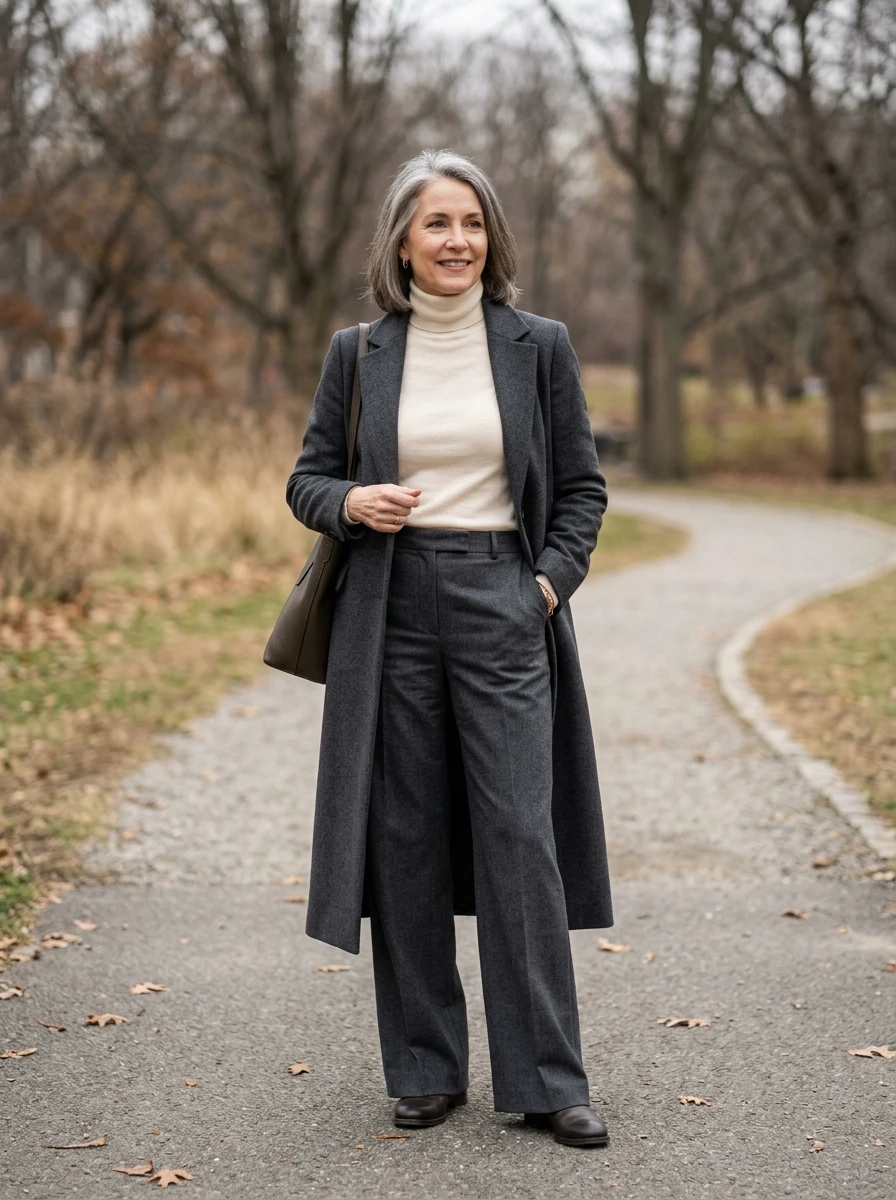
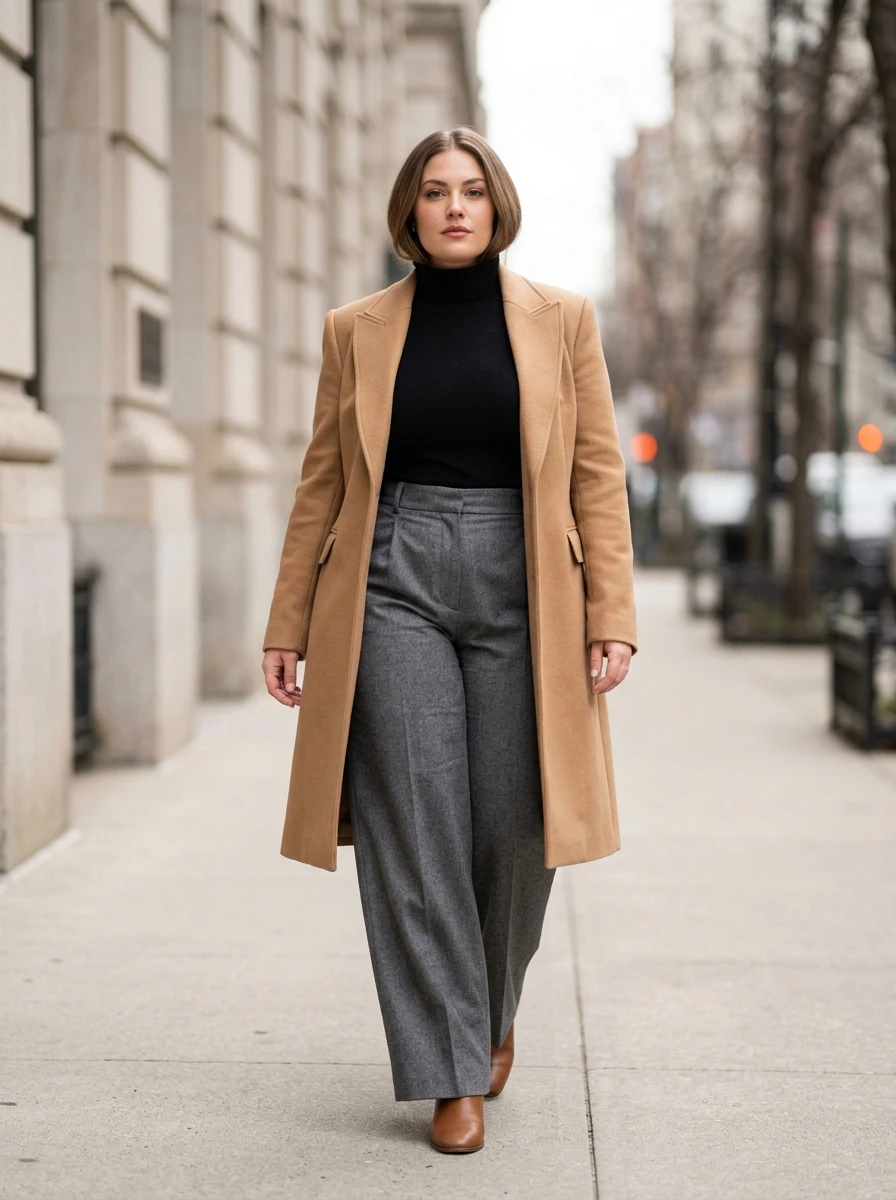
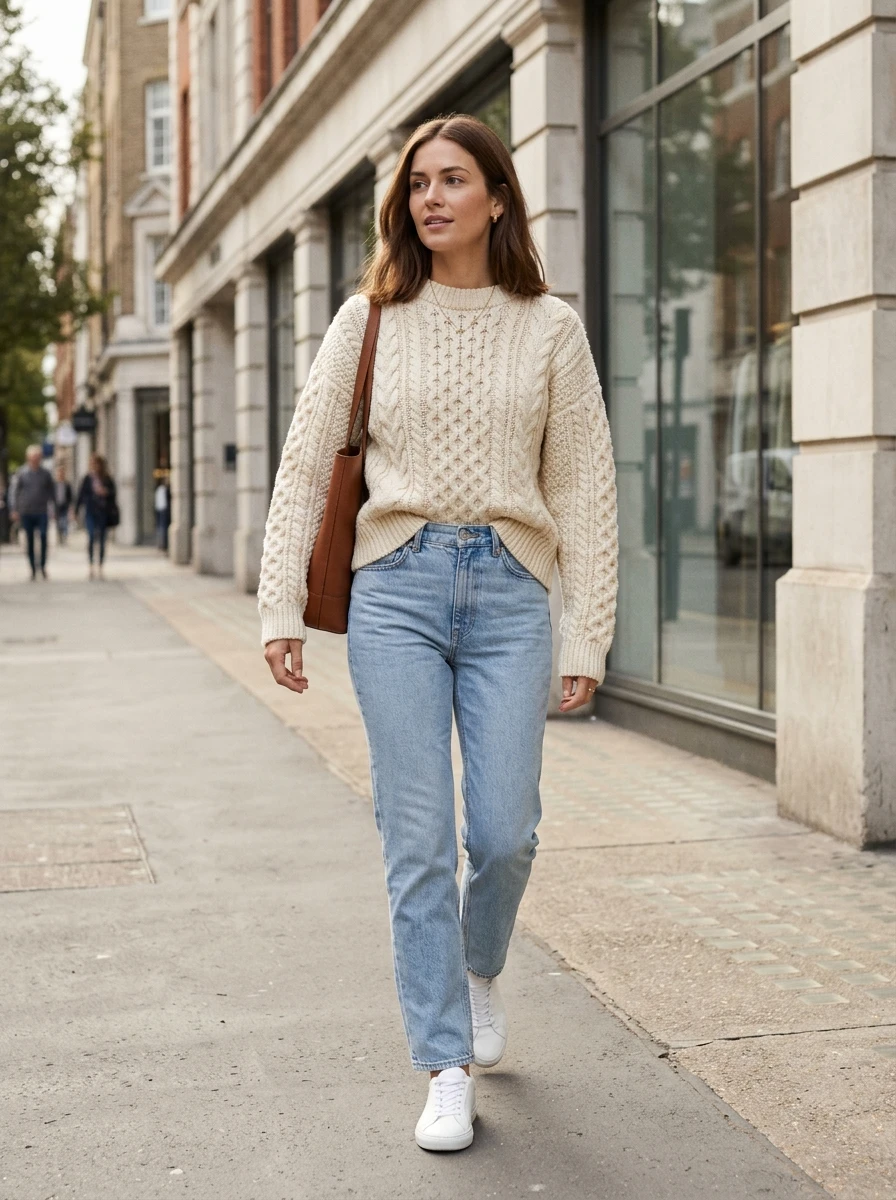
Every flattering winter outfit obeys the same rule: one piece of volume, one line of structure. A chunky cable knit sweater works because it sits over straight leg denim with a front tuck that creates a clear break at the waist — volume on top, clean line below. Reverse it and it still works: a slim turtleneck tucked into wide leg wool trousers, with a long coat skimming over both.
The mistake is doubling up on volume. Two oversized pieces erase your shape; two skin tight pieces look underdressed for the season. Check yourself in the mirror and ask where the fabric breaks. A cropped puffer jacket works with high rise jeans precisely because the shortened hem lets the waistband show, creating a styling line that keeps the jacket's bulk from swallowing your frame.
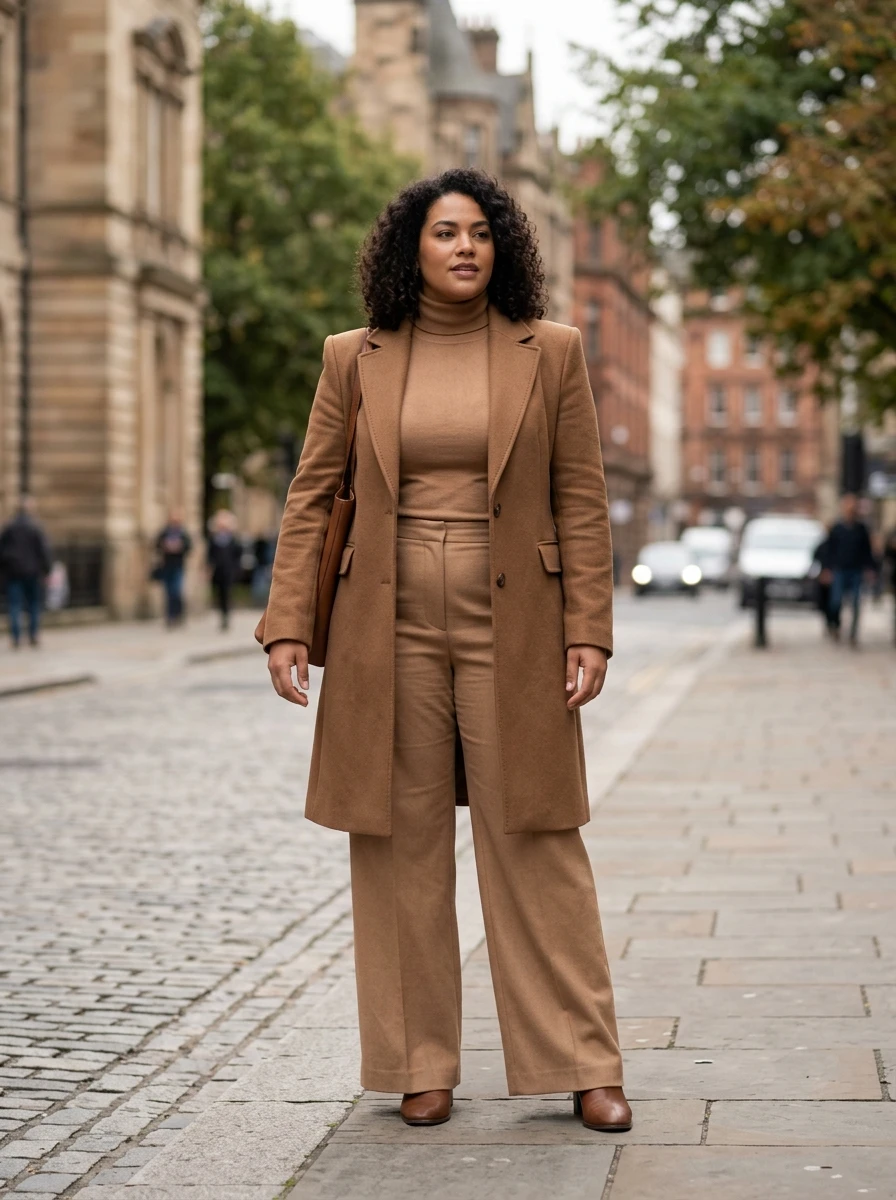
A maxi length wool coat works with wide leg trousers only when the hem falls well below the knee — cut it off at mid thigh and the proportions collapse.
Fit note: the waistband or tuck of the slim piece should always be visible, and your outermost layer should be cut generously enough to close comfortably over everything underneath. If you are yanking a coat shut over a sweater, the coat is too small, not the sweater too big. The same wide leg balance appears in wide leg jeans outfits that balance proportions.
Texture Is What Makes Neutrals Look Expensive
When an outfit is built on neutrals — black trousers, cream sweater, gray coat — texture is what separates "intentional" from "unfinished." A single smooth surface head to toe reads as flat; two or three different surfaces in the same palette read as deliberate.
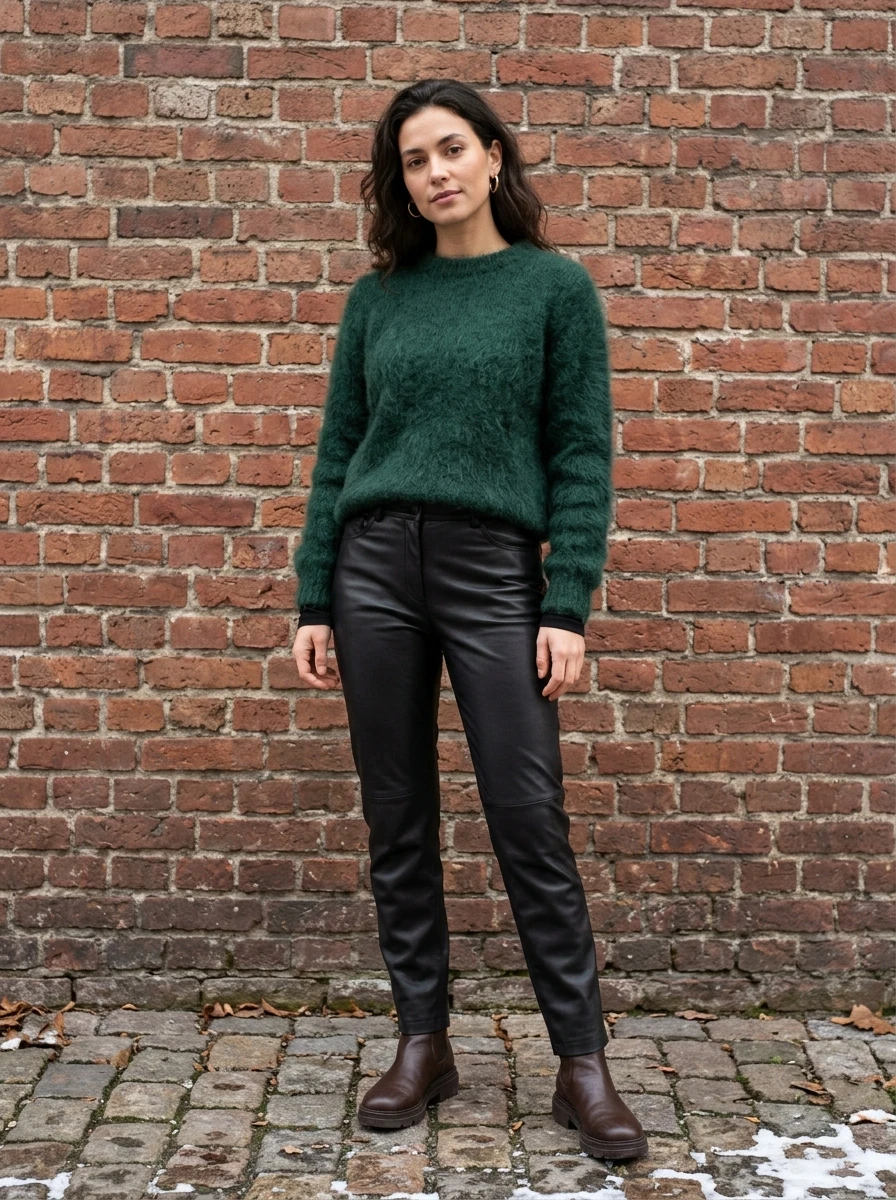
Black leather trousers with a fuzzy mohair or chunky cable knit sweater are the classic example. The leather's sheen against the knit's softness creates a visual tension that makes the whole outfit look considered, even though the color palette is almost entirely black and cream. The same logic works in reverse: a smooth silk blouse under a nubby tweed jacket, or a suede boot against a wool coat.
Wear it with: a few pairings that consistently deliver — corduroy trousers with a silk blouse, where the blouse's sheen keeps the corduroy from reading as heavy; a cashmere scarf over a leather jacket, where the softness tempers the jacket's edge; and a faux fur collar on a wool coat, where the fur's volume makes the coat's structure look intentional.
Warm or Cool: Pick a Color Temperature and Stay In It
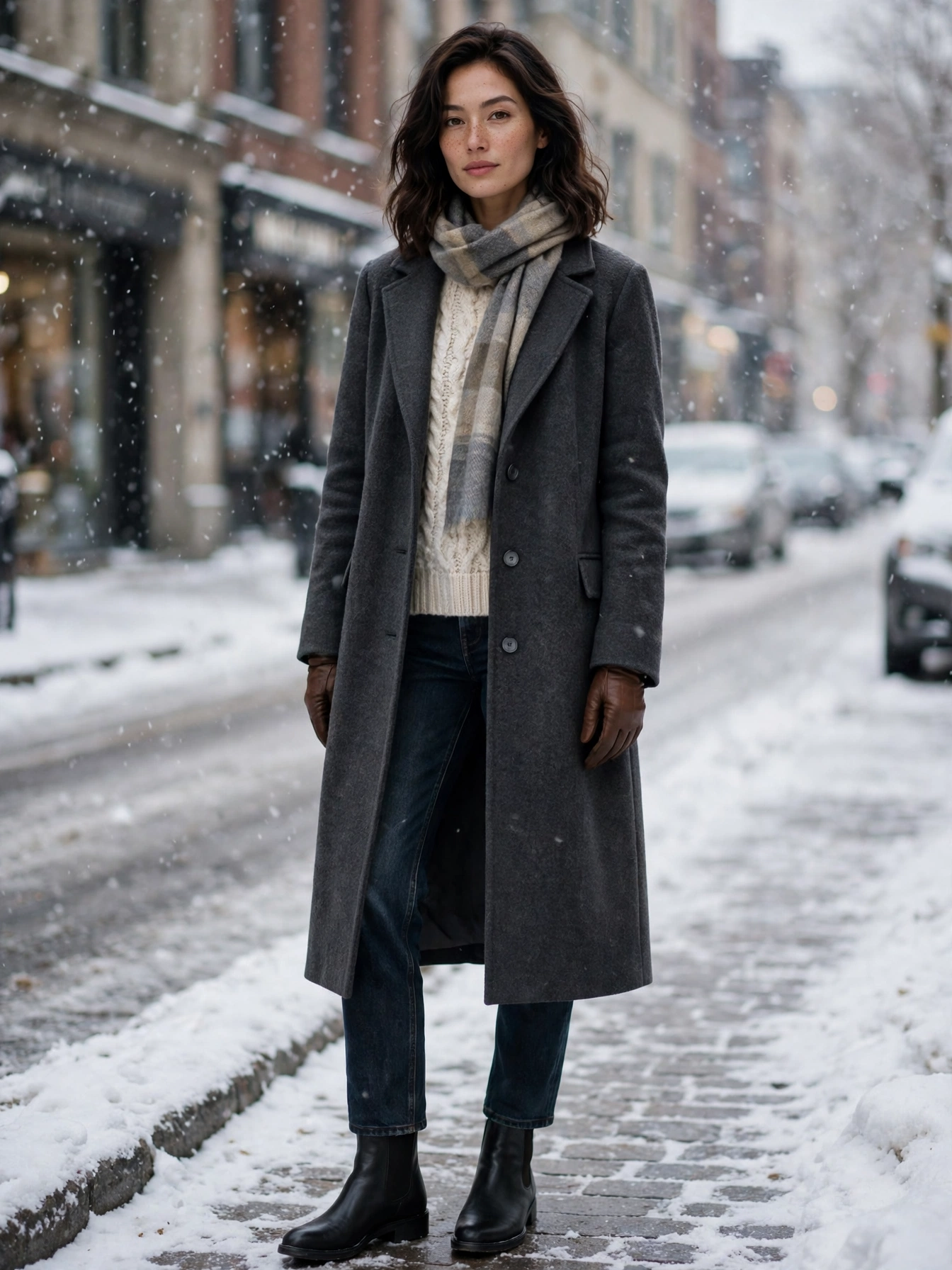
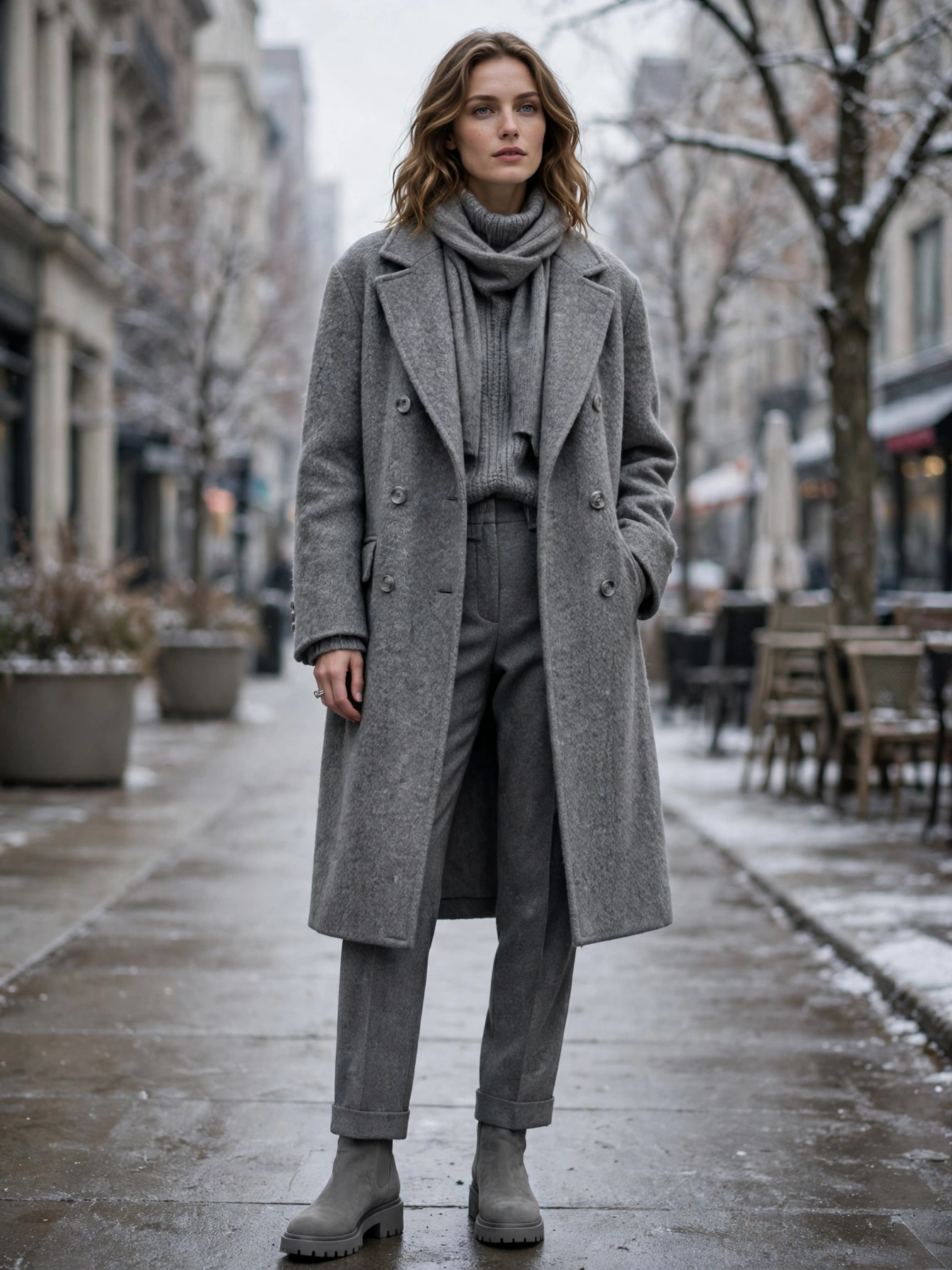
Winter palettes skew neutral, which is an advantage if you control the temperature. Monochromatic grey — charcoal trousers, a mid grey sweater, a light grey coat — works because the three greys are in the same cool family; the tonal variation comes from texture (wool, cashmere, flannel) rather than color. Warm greys with warm greys, cool with cool: mix them and the outfit starts competing with itself.
Cream monochrome works the same way with more warmth: cream knit trousers, a slim oatmeal turtleneck, and a cream wool coat create a long, unbroken line that reads as height. The risk is looking washed out, and the fix is a single darker anchor — a chocolate leather bag, dark brown boots — that gives the eye a place to rest. The same one color thinking shapes old money outfits for women with a timeless aesthetic.
If monochrome feels like too much commitment, anchor one warm piece against a neutral base. A camel coat over an all black outfit is the classic example: the camel is the only warm note, which is why it reads as deliberate. A burgundy scarf over a grey coat does the same work on a smaller scale. The rule is one warm accent, not three — a camel coat, a burgundy scarf, and a rust bag in the same outfit is a theme, not an outfit.
Care tip: cream wool trousers with an oatmeal chunky knit work best on dry, crisp days, when light colors stay clean — keep them for the cold snap, not the slush.
Put the Warmth Against Your Skin
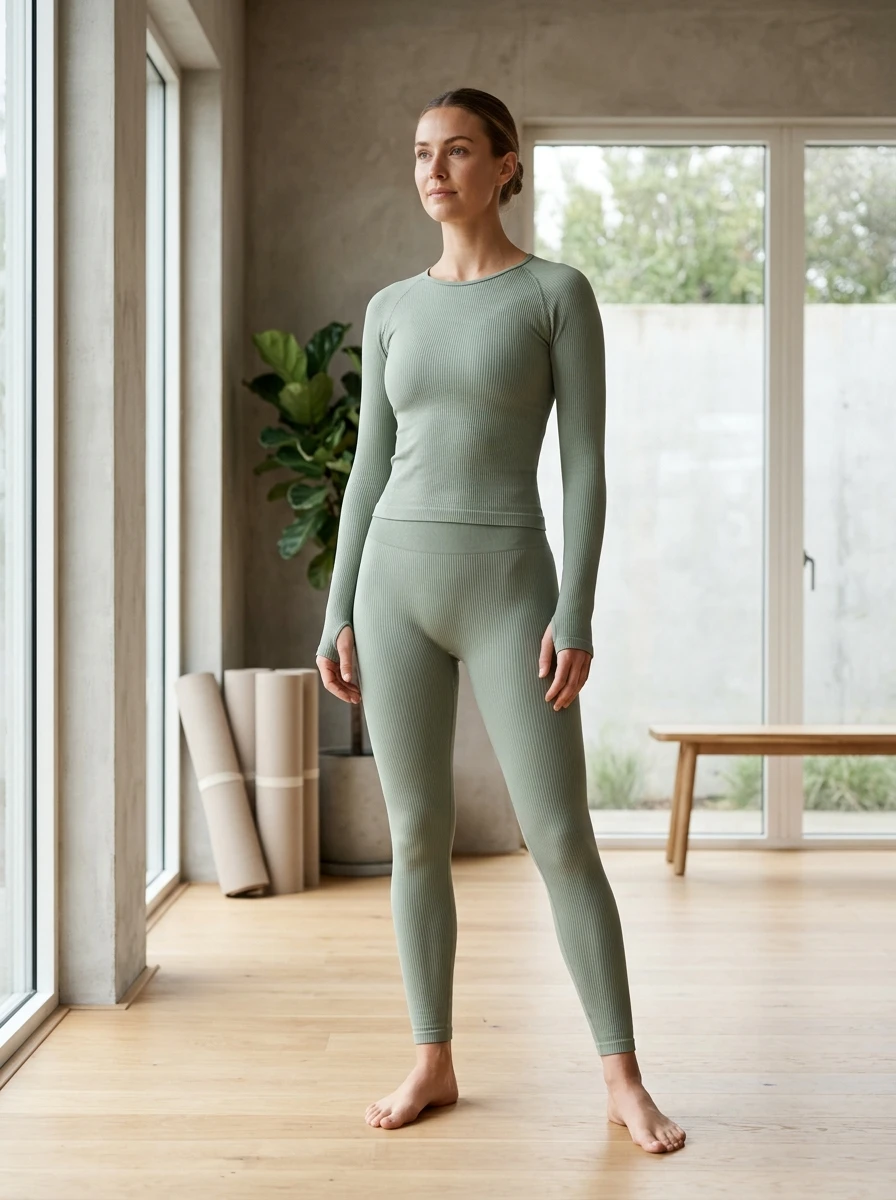
Here is the technical fix for the bulk problem: warmth should come from layers that hug the skin, not from layers that add volume. A thin thermal base layer, merino wool or a synthetic thermal, adds real warmth without changing your silhouette at all. Woolmark's wool care guide explains how merino keeps warmth without bulk, and Smartwool lists merino base layers built for exactly this job. Over it, a fitted knit or a thin sweater provides the visible layer, and the coat provides the structure.
The coat is the only piece that should add volume, and it should add it in a controlled way: a structured shoulder, a defined waist, a clean hem.
Fabric note: the mistake is putting the warmth in the visible layer. A chunky knit over a chunky sweater over a thermal is three bulky layers, and no coat can make that look intentional. Put the warmth against the skin, keep the visible layers thin and fitted, and let the coat do the shaping. The result is an outfit that is warm, flattering, and, crucially, comfortable to sit in for hours.
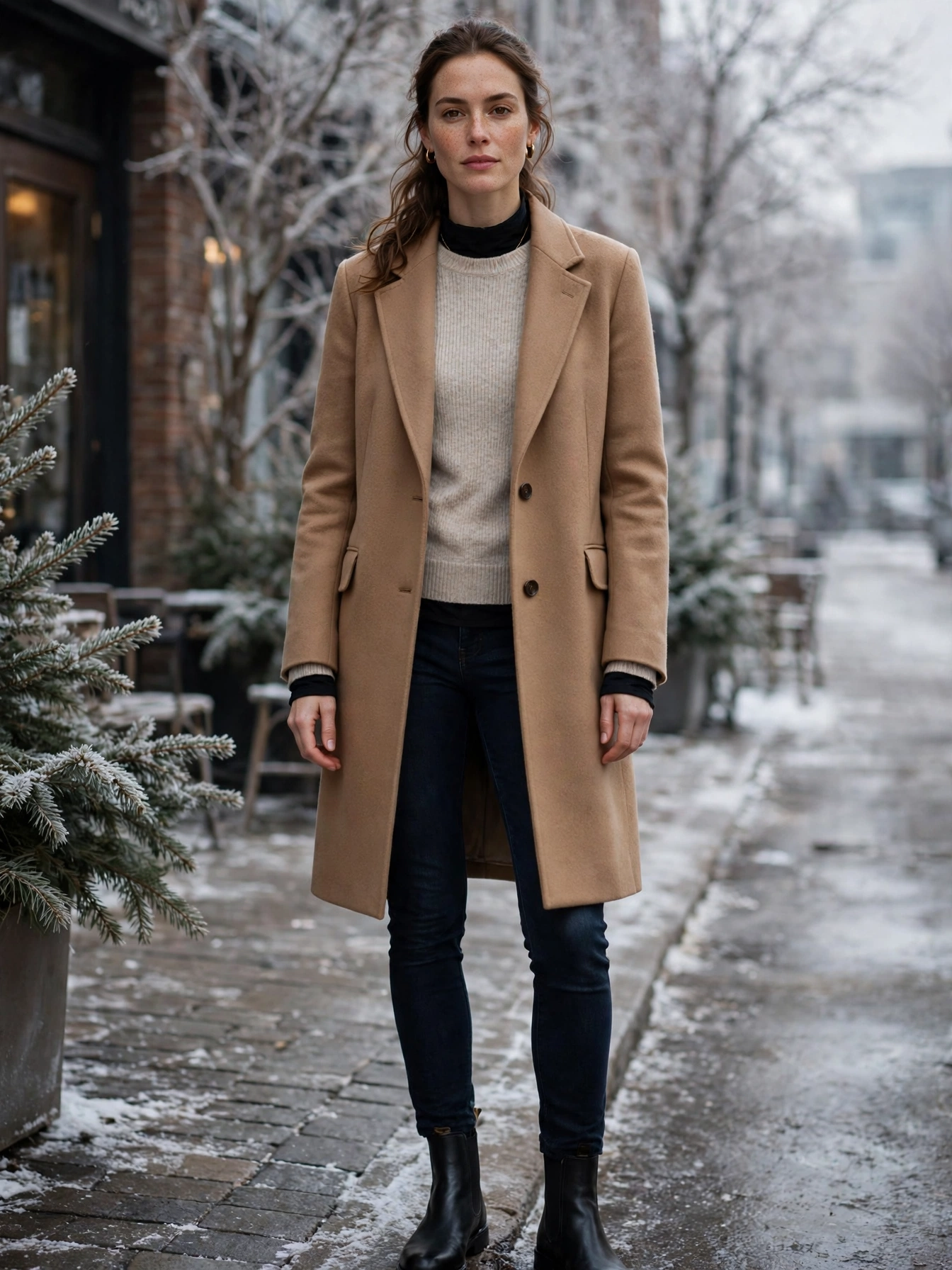
Let the Coat Do the Tailoring
A coat is not just warmth, it is the outfit's architecture. A structured wool coat with a defined shoulder and a belted waist creates a silhouette that makes everything underneath look intentional, even if the layers below are simple. The coat's structure is doing the work of making the outfit look considered: it gives the outfit a shape, a line, and a focal point.
The coat should be in a classic cut — single breasted, knee length, with a defined waist — and in a neutral color (camel, navy, charcoal, black) so it works with everything underneath. The belt is doing the tailoring work: it marks the waist and keeps the coat's volume from swallowing the outfit. A shacket (a shirt jacket hybrid) works the same way on a smaller scale: its structure makes a casual outfit look intentional. In every case, fit is the test: structured outerwear should close over your layers without strain.
Wear it with: the blazer half of this equation gets a closer look in black blazer outfits for work and weekends.
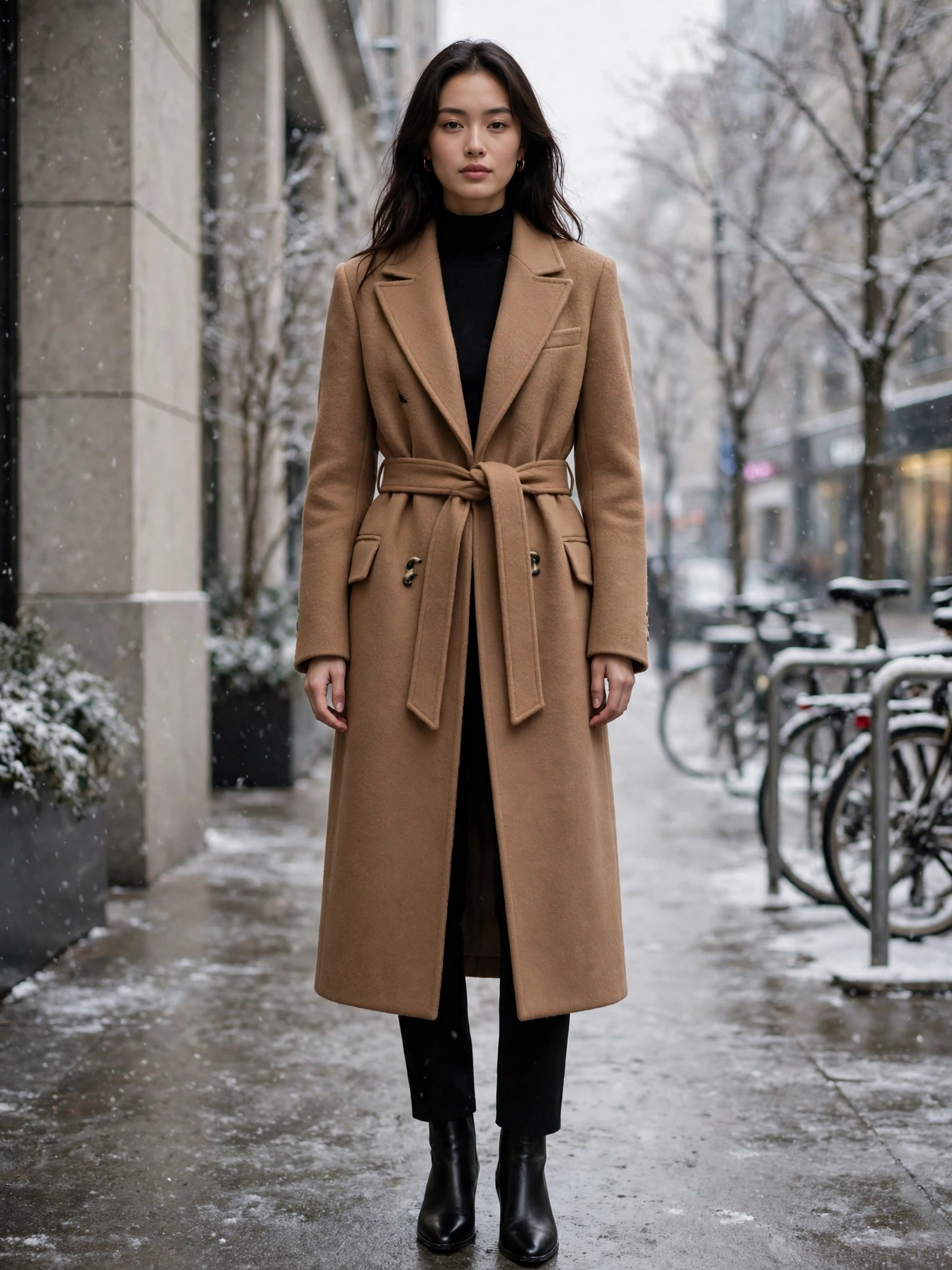
The Third Piece Is the Punctuation
A winter outfit without a third piece — a scarf, a hat, a structured bag — reads as unfinished, because the coat is doing all the work and nothing is adding personality. The third piece is the outfit's punctuation: it adds color, texture, or structure in exactly one place.
A wool scarf in a muted tone (grey, camel, burgundy) over a simple base adds the one note of color and texture that makes the outfit feel finished. A beanie in a matching tone does the same work on a smaller scale. A structured bag in dark leather adds polish: its shape contrasts with the coat's softness, and its hardware is the outfit's only metal. One finishing piece is enough; two more on top of it turn a finished outfit into a crowded one.
Tip: choose the one that does the most work and let it carry the outfit — then stop. The scarf, the hat, or the bag, not all three.
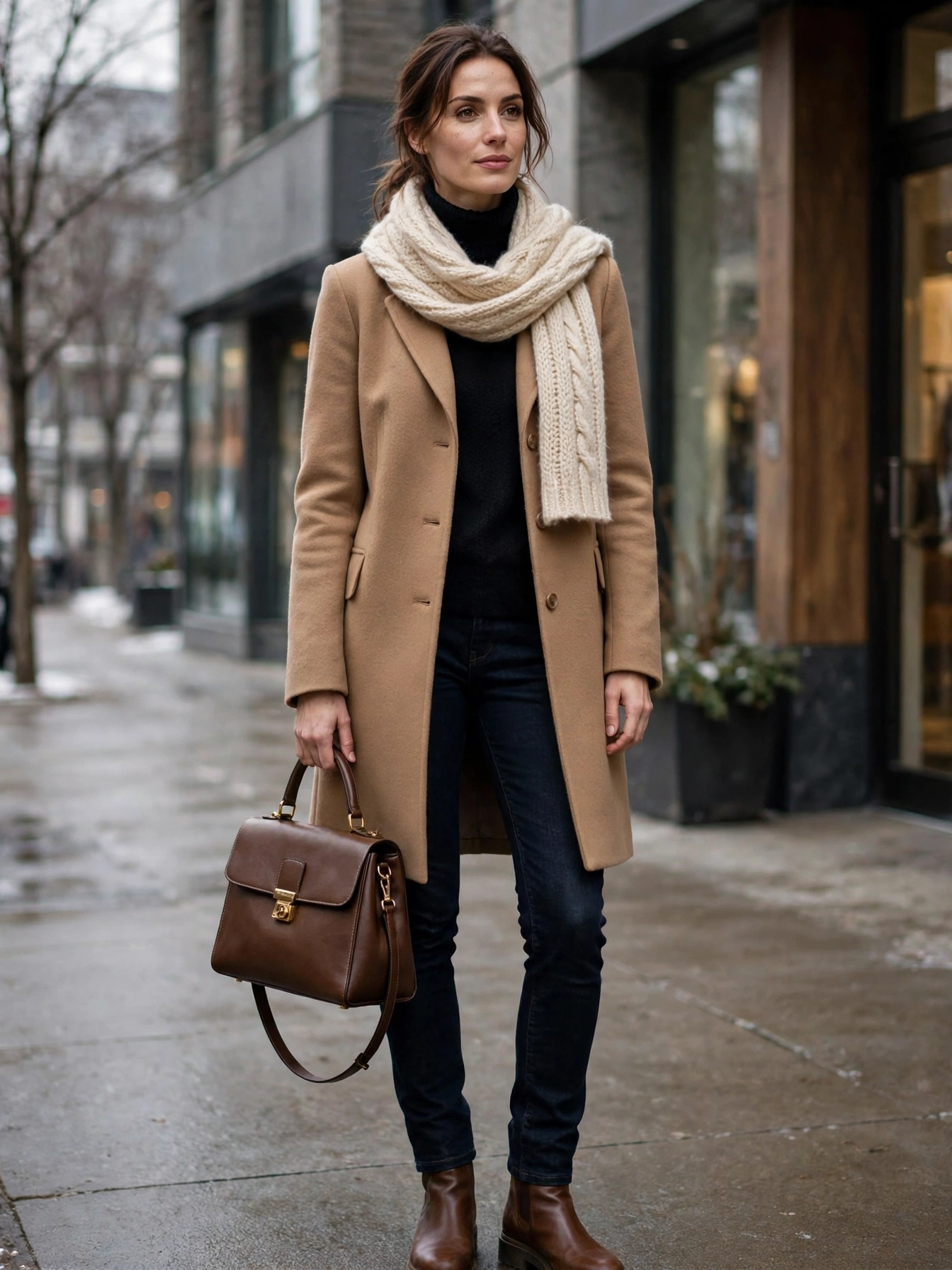
One Piece, One Decision: Dresses and Jumpsuits
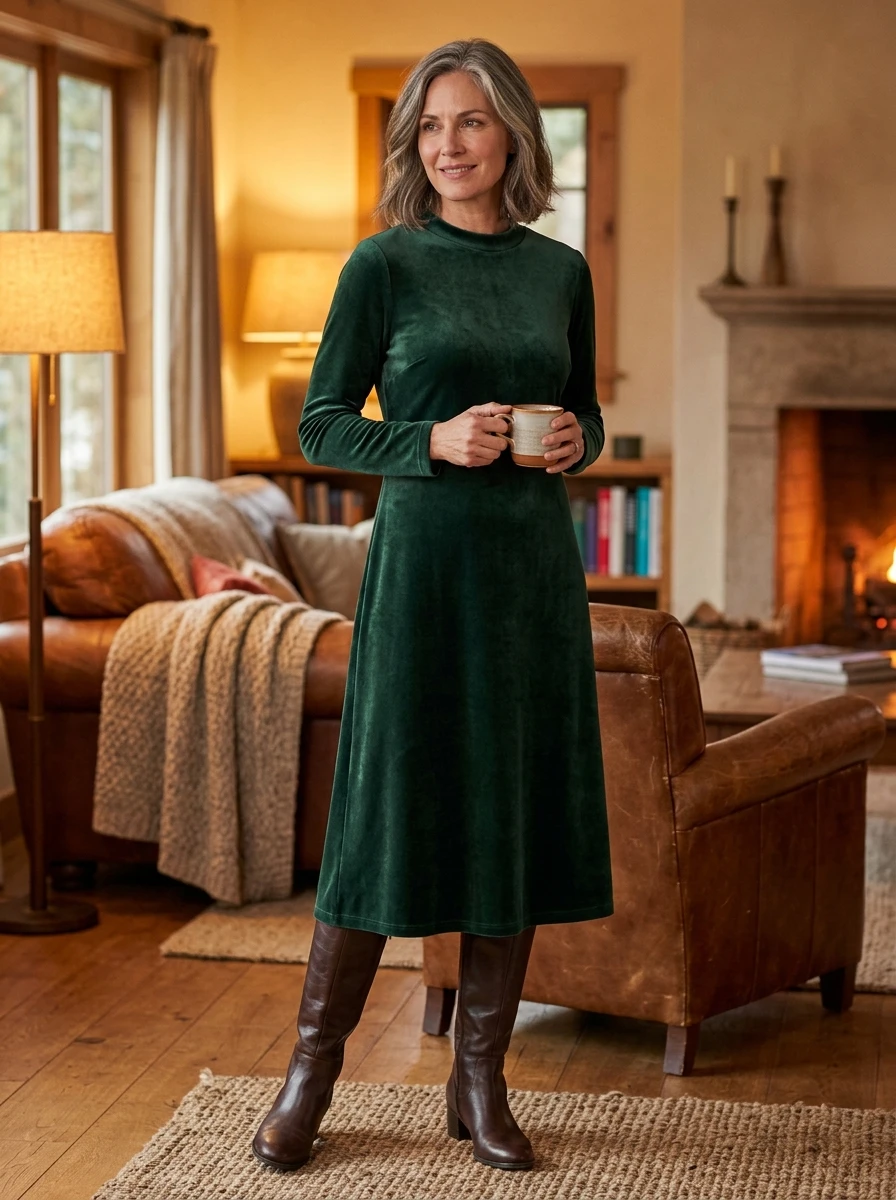
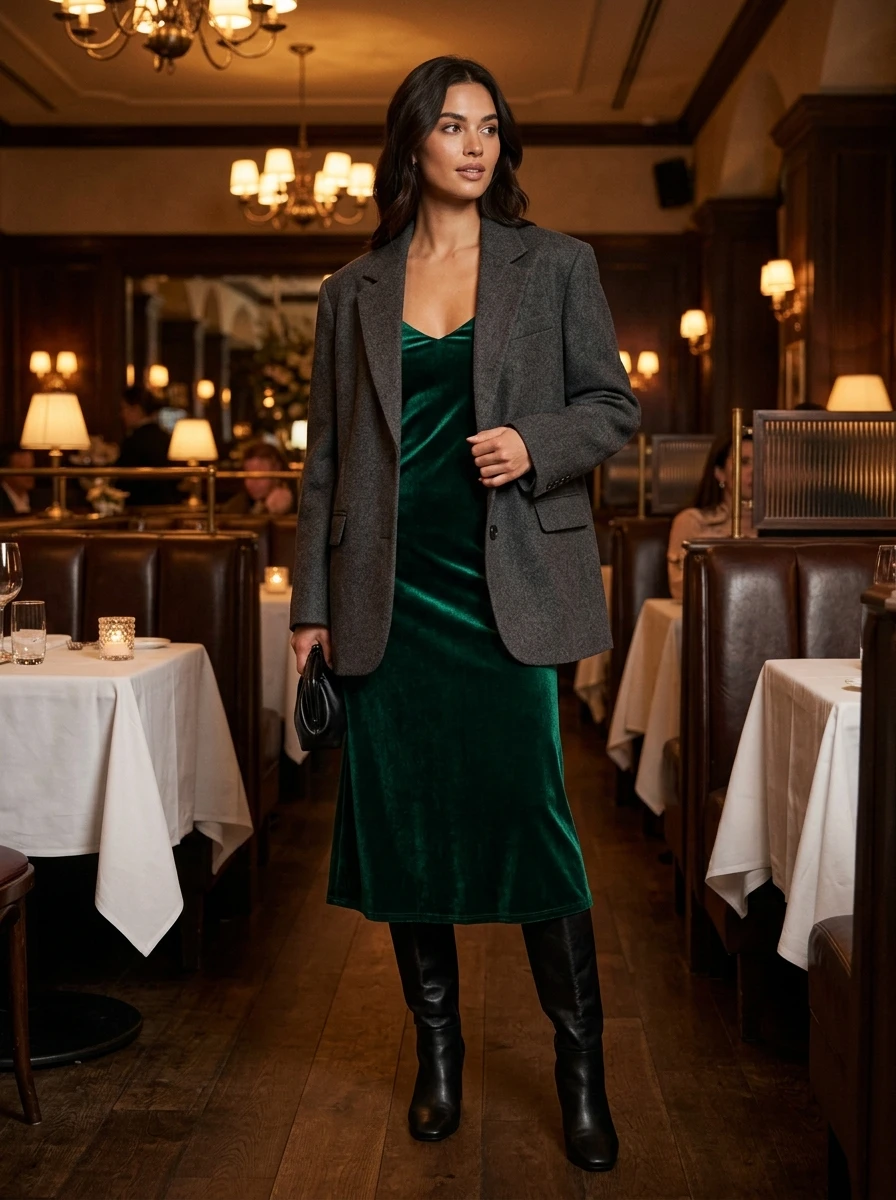
A knit dress or a wide leg jumpsuit is the one piece answer to the winter proportion question: the dress or jumpsuit provides the silhouette, and the coat provides the structure. A ribbed knit midi dress with knee high boots is the easiest flattering winter outfit — one piece, one pair of boots, done. The ribbing creates vertical lines that elongate, and the boots extend the leg line under the midi hem.
A wide leg jumpsuit in a structured fabric (wool, crepe, or a heavy cotton) works the same way: the jumpsuit's waist definition is the key, and the wide leg creates drama below. Pair with a coat that hits at the same length as the jumpsuit's hem, so the lines stay clean. In each case the formula is the same — one dominant piece, one supporting texture, and footwear that echoes the bottom half. A similar cold weather system appears in cozy winter college outfits that still look cute.
Fit note: the coat and the jumpsuit hem should land at roughly the same length — a coat that ends well above or below the hem breaks the clean line this formula depends on.
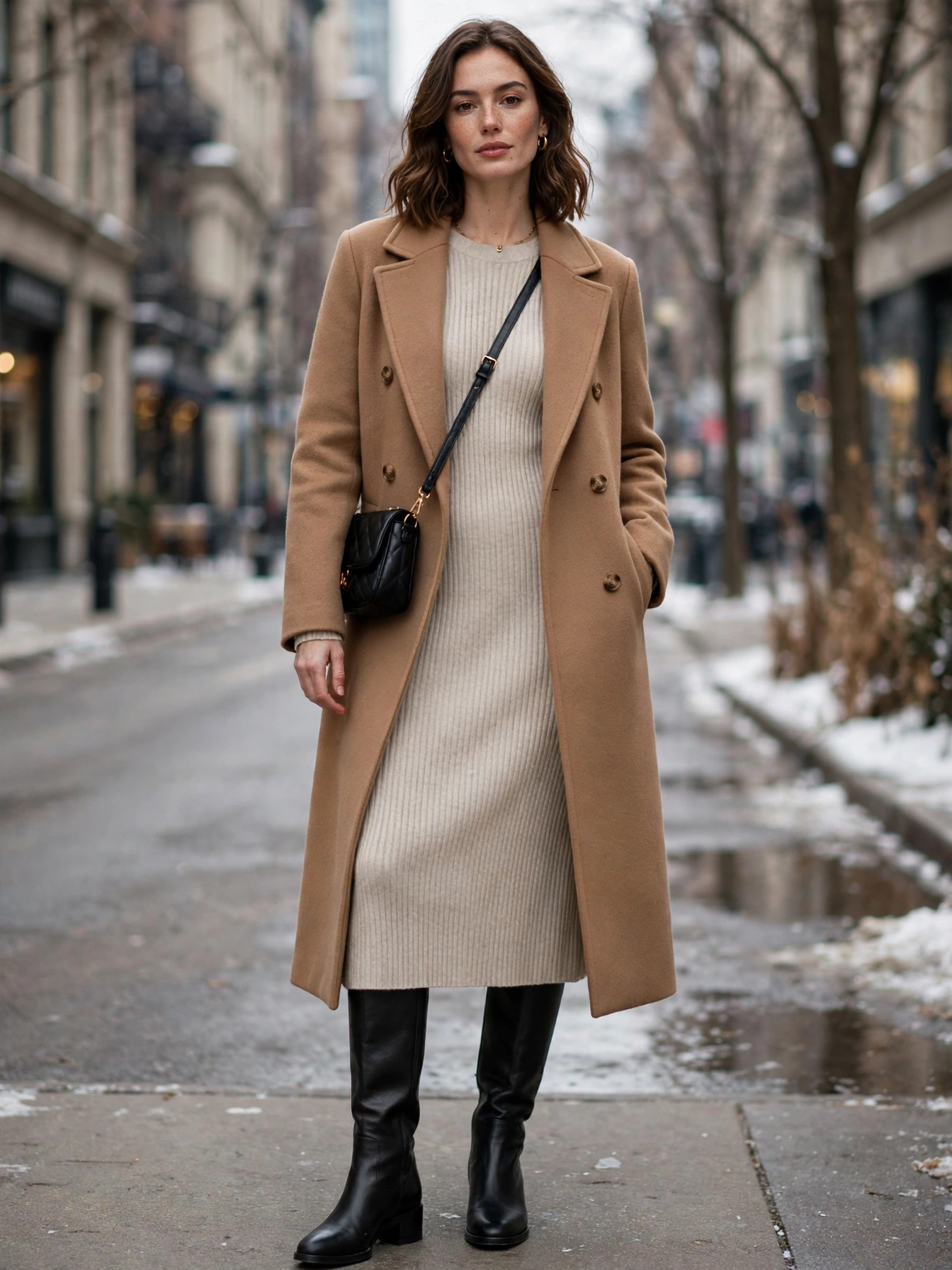
Cozy Pieces Still Need One Structured Element
The shacket, the oversized hoodie, the chunky cardigan — these are the cozy pieces that make winter bearable, and they only read as fashion when they are paired with something structured. A shacket over a fitted turtleneck with straight leg jeans is the formula: the shacket's structure makes the turtleneck look intentional, and the jeans' clean line keeps the outfit from reading as loungewear.
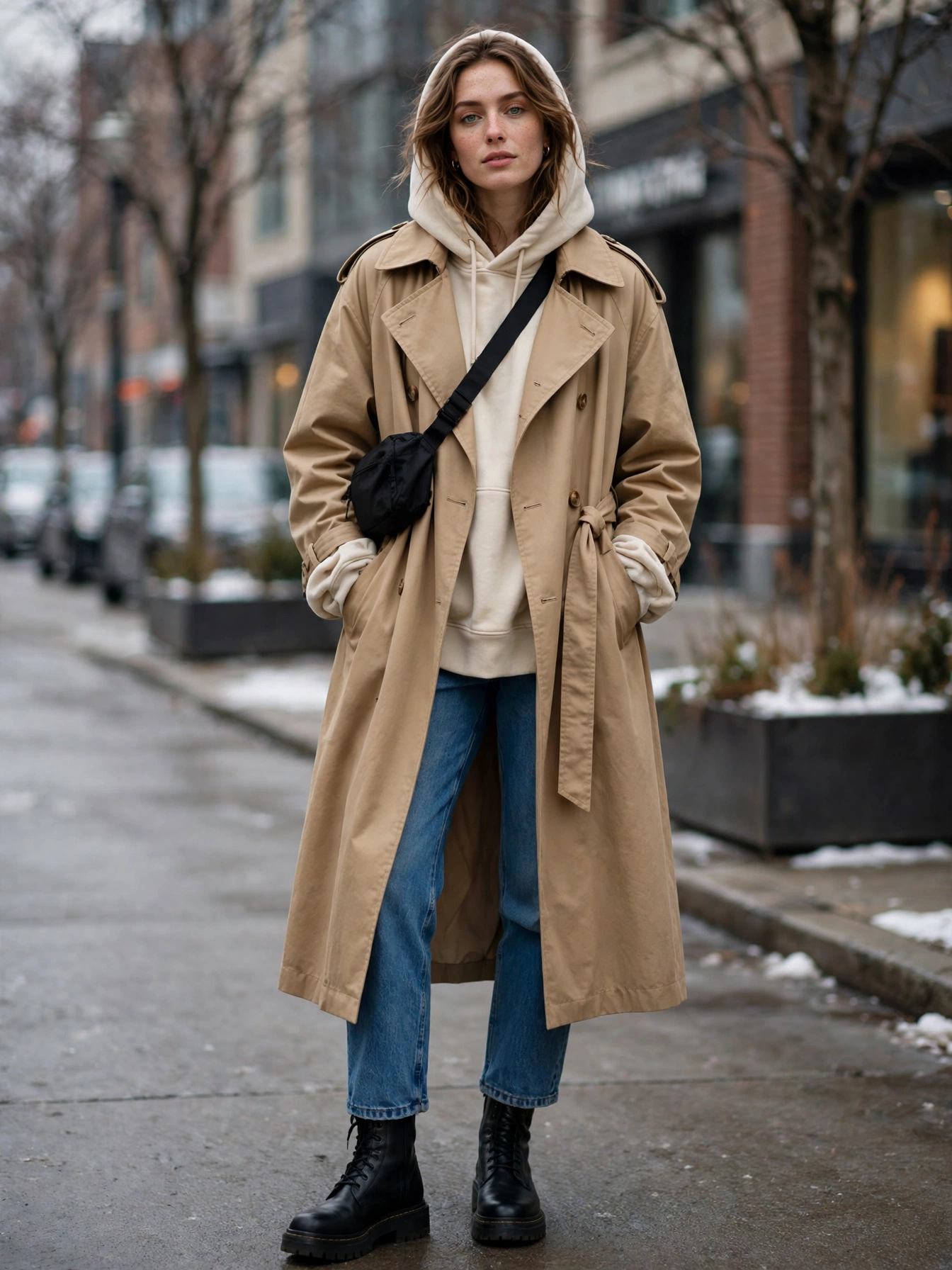
An oversized hoodie under a longline trench is the same logic at a larger scale: the trench's length and structure make the hoodie look like a styling choice. A chunky cardigan over a slip dress works the same way — the cardigan's bulk against the dress's fluidity, the knit's warmth against the dress's lightness. The test for every cozy outfit is simple: is there one structured or high contrast element that looks like a choice? If yes, it reads as fashion. If no, it reads as pajamas.
Fabric note: the cozy piece and the structured piece should differ in texture as well as shape — soft knit against crisp trench, brushed fleece against smooth wool — so the contrast reads even before the silhouette does.
Common Questions About Flattering Winter Outfits
How do I stay warm without looking bulky?
Layer thin, warm pieces instead of one thick one: a thermal base, a fitted knit, and a structured coat. Thin layers trap warm air between them, and the coat's structure keeps the silhouette clean — warmth from the skin out, not from piling on visible bulk.
What shoes work best with a flattering winter outfit?
Knee high boots for leg length, ankle boots for versatility, and loafers for a polished look — shoes with structure that ground the outfit and keep the proportions clean. The boot should echo the bottom half: knee highs under a midi, ankle boots with a cropped hem.
Can I wear a puffer jacket and still look flattering?
Yes — choose a cropped puffer that hits at the waist, so the waistband is visible, and pair it with high rise jeans or tailored trousers. The cropped length creates a styling line that keeps the puffer's bulk from swallowing your frame, the same one-volume-one-line rule as the rest of this guide.
How do I make a simple winter outfit look expensive?
Texture contrast: pair a smooth fabric with a textured one in the same palette. Leather against knit, silk against tweed, suede against wool — the contrast makes a simple outfit read as deliberate, even when the colors are almost entirely neutral.
What if I am petite and winter layers overwhelm me?
Keep the proportions clean: one volume piece, one slim piece, and a defined waist. A cropped coat, a fitted knit, and straight leg trousers create a long line that reads as height, even under layers — and a visible waistband matters more than the coat's length.
Your Winter Outfit Checklist
- One volume, one line: a chunky piece on top means a clean line below, and vice versa.
- Warmth against the skin: thermals and fitted knits first, the coat is the only piece allowed to add volume.
- One temperature family: warm greys with warm greys, cool with cool — never both.
- One warm accent at most: a camel coat or a burgundy scarf, not a camel coat and a burgundy scarf and a rust bag.
- One third piece: a scarf, a hat, or a structured bag — the one that does the most work, then stop.
- Waistband visible: the slim piece's tuck or waistband should always show, or the proportions collapse.
Flattering winter dressing is not about owning the perfect coat — it is about the rules that make any outfit work. Proportion, texture contrast, color temperature, and one structured element per outfit: those are the rules, and they work whether you are wearing a puffer or a wool coat. Build your rotation around them, and winter stops being the season you survive and becomes the season you style.