15 Chic Looks for Trendy Midsize Outfits for Fall and Summer
How to use this guide
These are editorial styling suggestions, not a one-size-fits-all formula. Adapt each look to your wardrobe, proportions, climate, comfort, budget, and the occasion; the most useful idea is the one you can genuinely wear.
Midsize dressing isn't about hiding anything — it's fit engineering. Three variables control almost every outcome: rise (where the waistband sits determines where the eye reads your waist), drape (fabric weight determines whether cloth skims or clings — midweight jersey, crepe, and Tencel skim; thin rayon and cheap polyester cling), and waist definition (belts, wrap ties, and seaming placed at the smallest point of the torso).
Then there's vertical logic. V-necks, open layers, and column dressing create unbroken vertical lines that elongate; horizontal seaming and cropped-everything chop the line into segments. Color temperature plays its part too: warm skin tones glow in camel, rust, and olive, while cool tones sharpen in navy, emerald, and true red. None of this is about "flattering" as a euphemism — it's about controlling where the eye travels, which is a skill anyone can learn.
The seasons demand different mechanics. Summer's enemy is cling — heat plus thin fabric equals sticking, and the fix is structure (smocking, lining, woven fabrics) plus air gap (A-lines, wide legs, anything that holds itself away from the body). Fall's enemy is bulk — layers add visual weight, and the fix is varying layer lengths while keeping the innermost layer fitted. The fifteen formulas below are built on these mechanics: seven for warm weather, eight for cool.
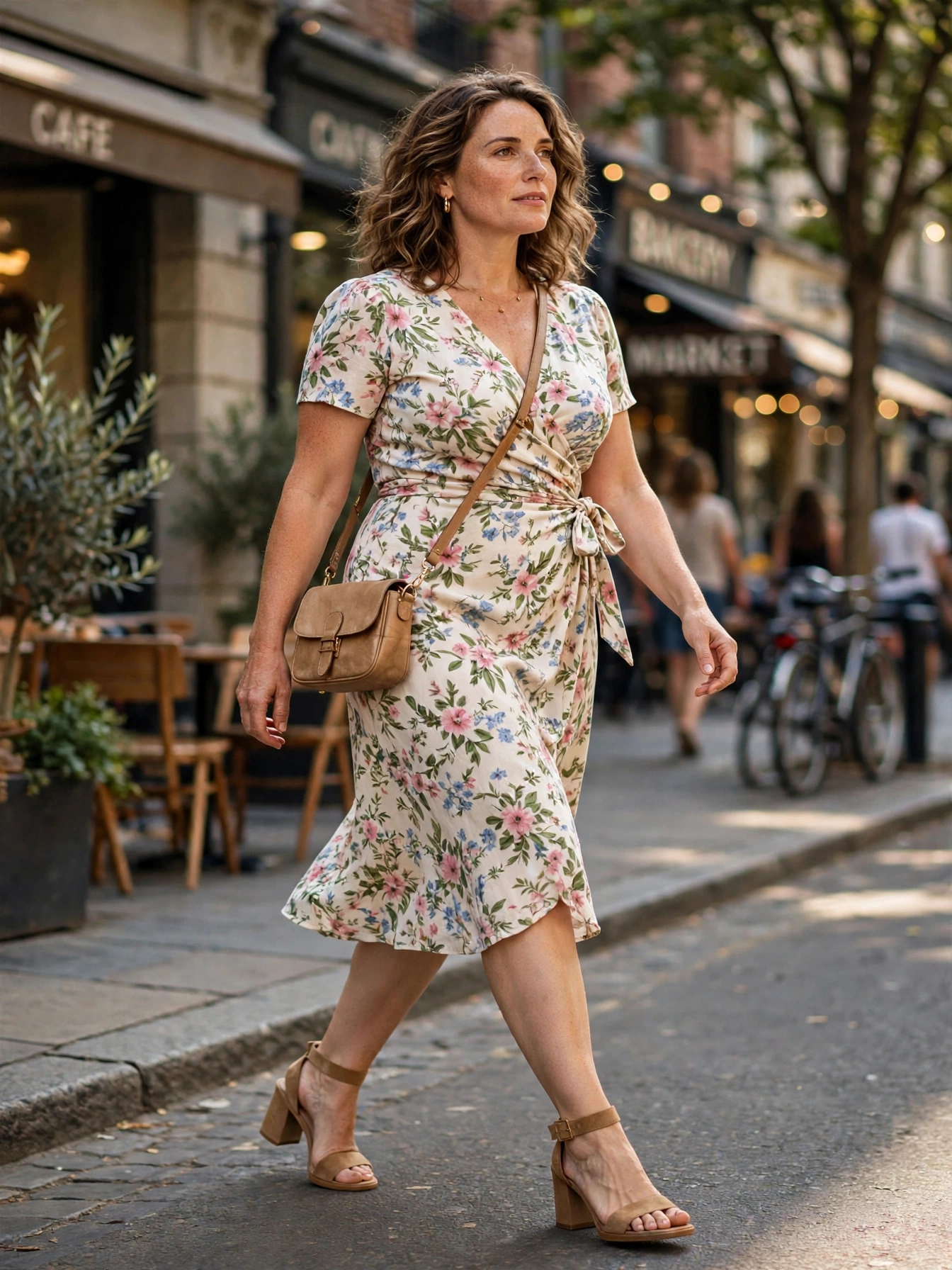
Wrap Dress and Block-Heel Sandals
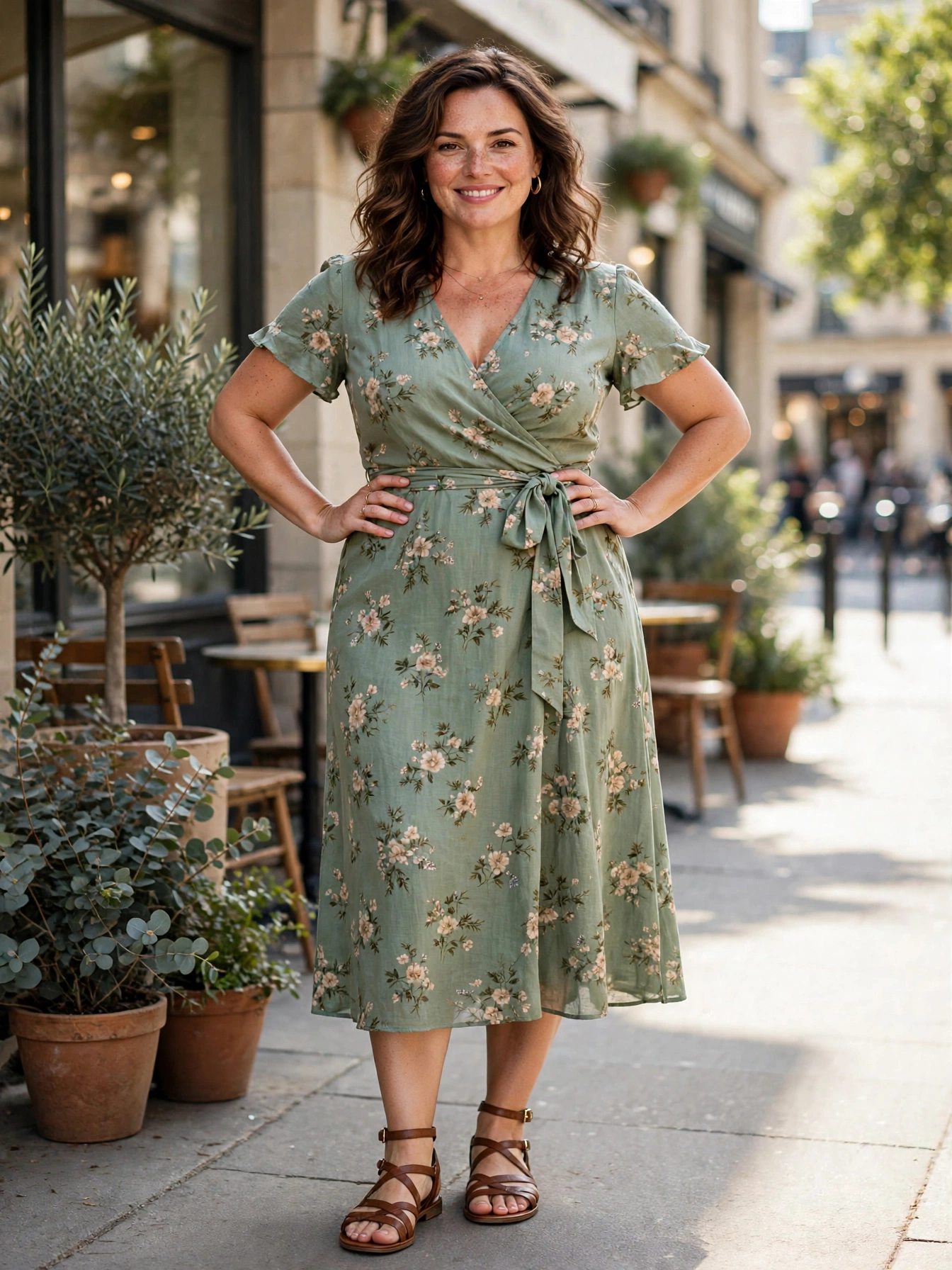
The wrap dress works mechanically, not magically. The diagonal tie creates a V at the neckline (a vertical line) and cinches at the smallest point of the torso (waist definition), while the skirt flares into an A-line with natural air gap over the hips. Choose midweight jersey or crepe — thin fabrics collapse the wrap, gap at the bust, and show every line underneath. The wrap should overlap generously with an interior snap; a skimpy overlap is the number one fit failure in wrap dresses. Block heels give height without the instability of stilettos on summer pavement, and the block's width balances the dress's fluidity. Keep the length at the knee or midi; mini wraps ride up when you walk. A small crossbody worn high keeps the waist zone clean. This is the wedding-guest, dinner-date, event formula — one garment doing the work of three fit tricks. To compare silhouettes before buying, this roundup of the best wrap dresses shows how the same shape works across fabrics and price points.
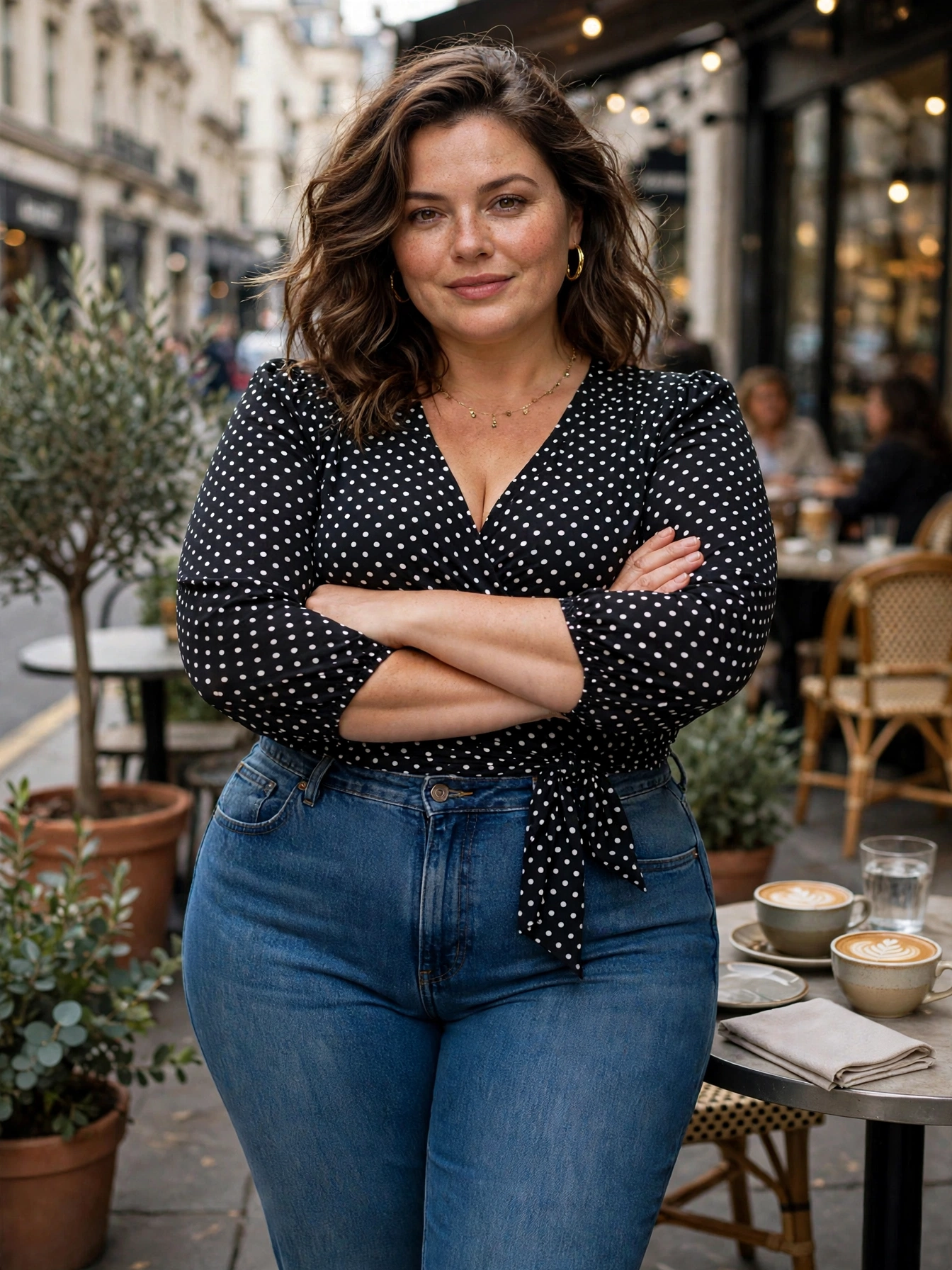
High-Rise Straight Jeans, Ribbed Tank, and Blazer
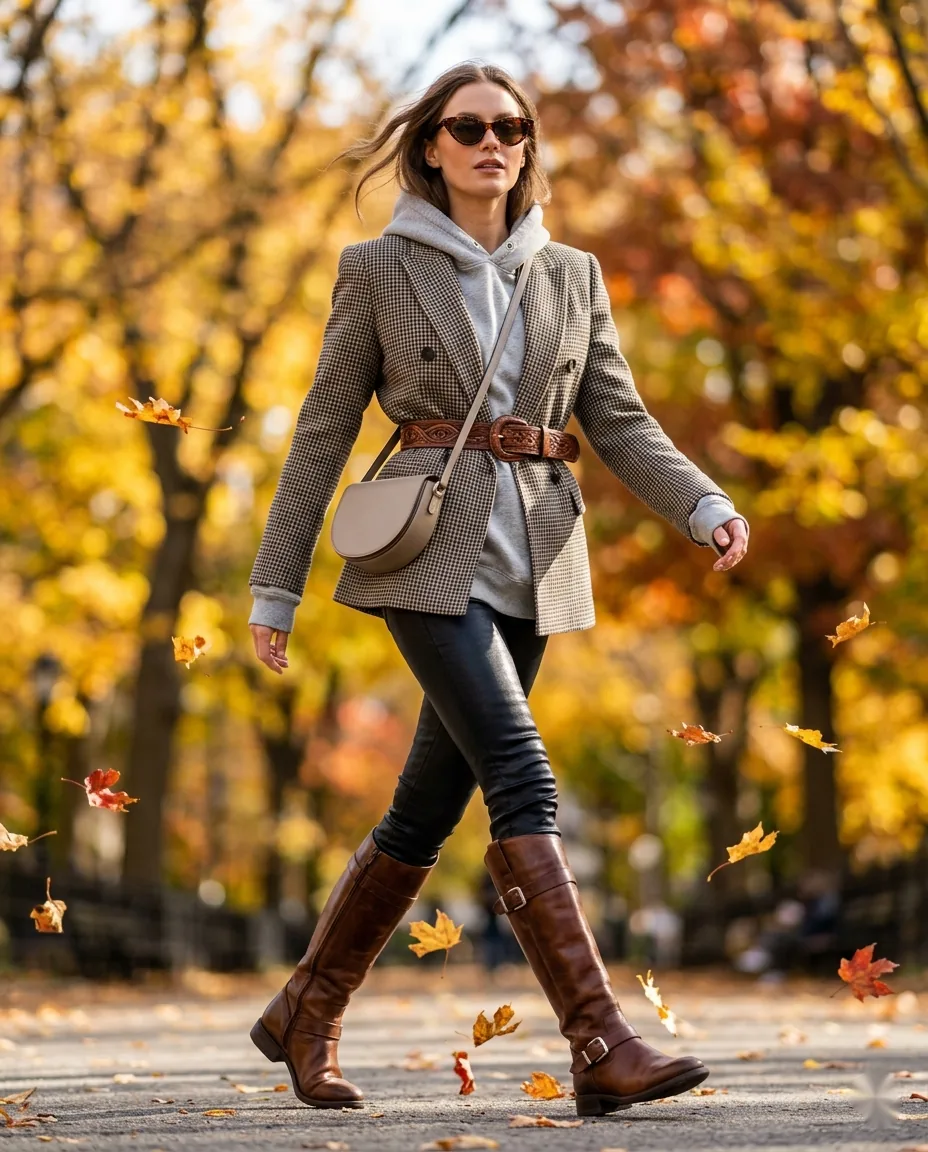
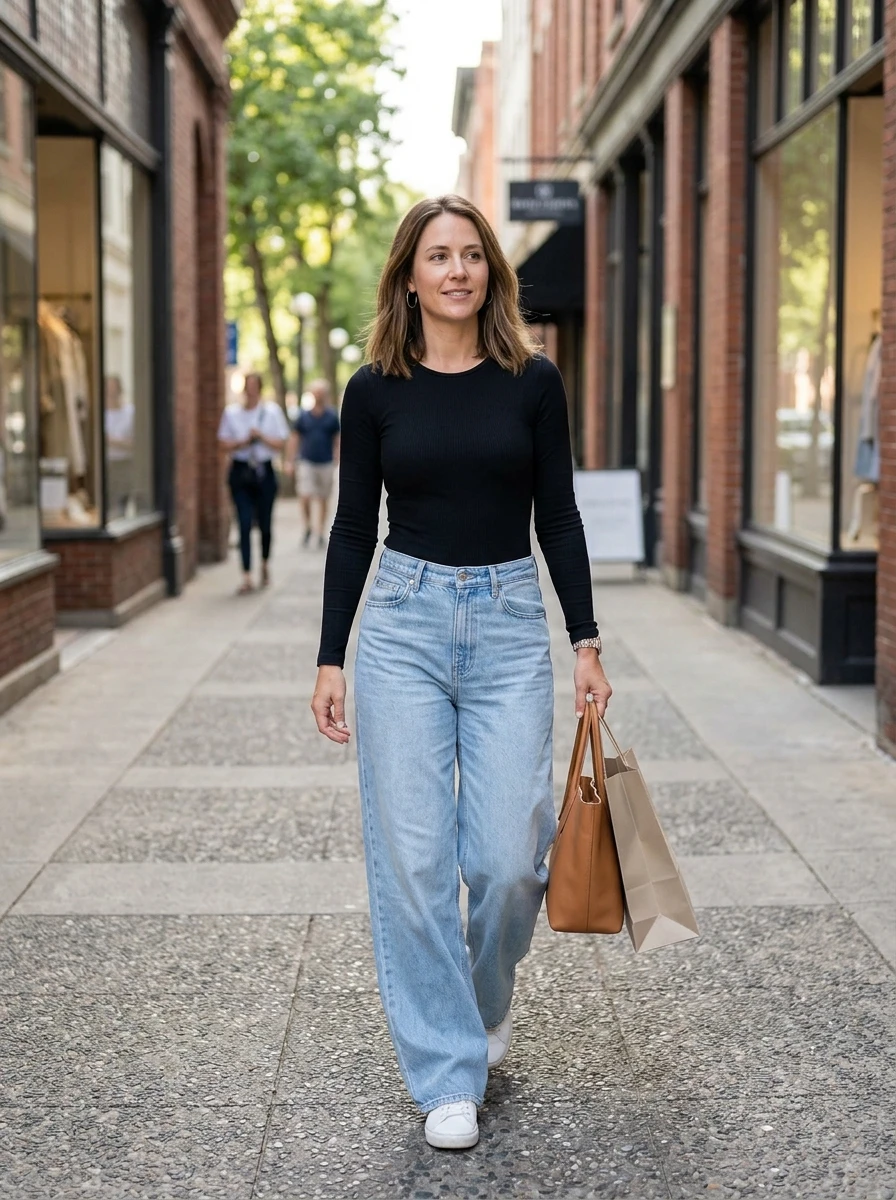
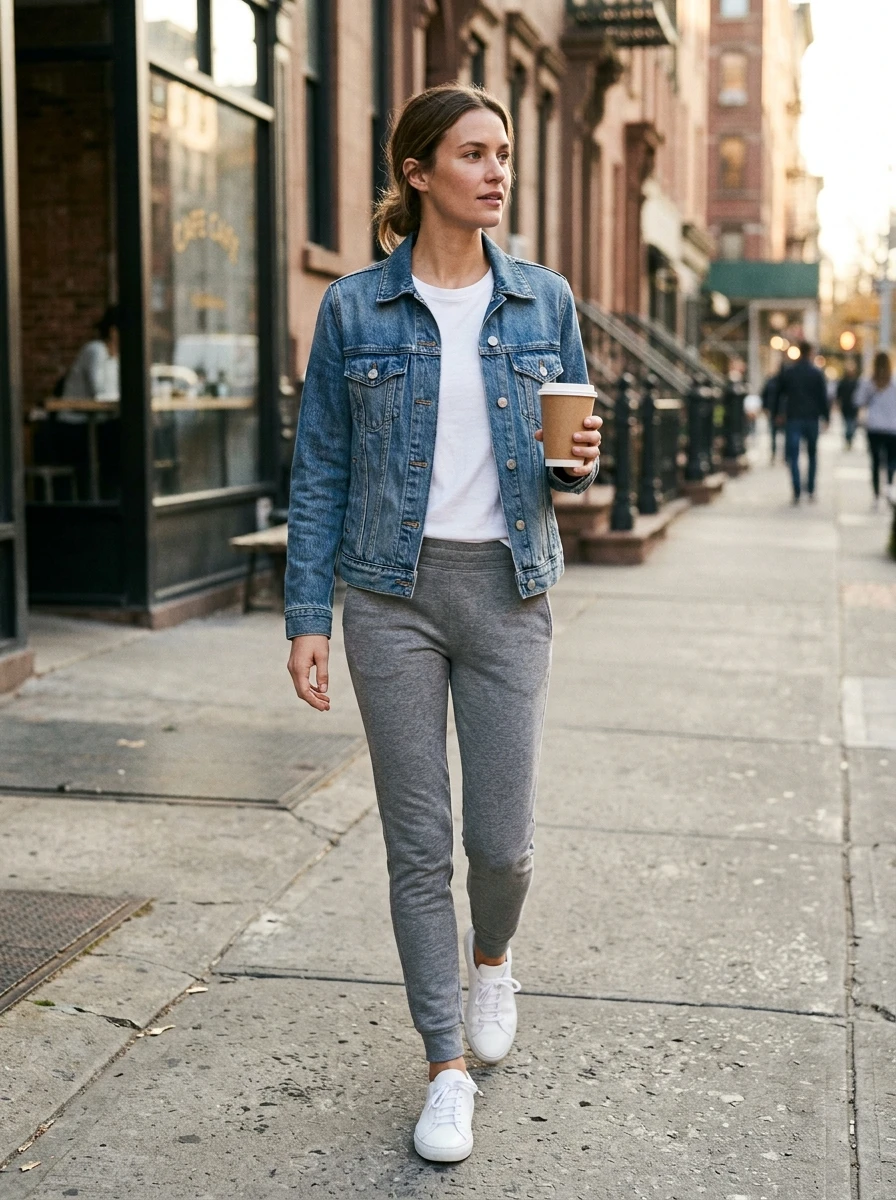
High-rise denim with a 10 to 11 inch rise anchors at the natural waist, which lets a fitted ribbed tank skim rather than squeeze — the rise does the containing so the top doesn't have to. Look for rigid or comfort-stretch denim (98/2 cotton-elastane); over-stretchy denim bags at the knee by evening. Straight legs (not skinny, not wide) keep the line clean from hip to ankle. The tank should be heavyweight ribbed cotton that holds its shape, not tissue-thin. Throw an unstructured blazer over it for fall; the blazer's vertical front edges add the elongating line, and soft shoulders keep it casual rather than corporate. Roll the sleeves to show the wrist — small breaks in the silhouette keep it from looking heavy. White sneakers for day, loafers or ankle boots for evening. The everyday uniform, engineered. For more blazer formulas, see these 12 ways to style a black blazer.
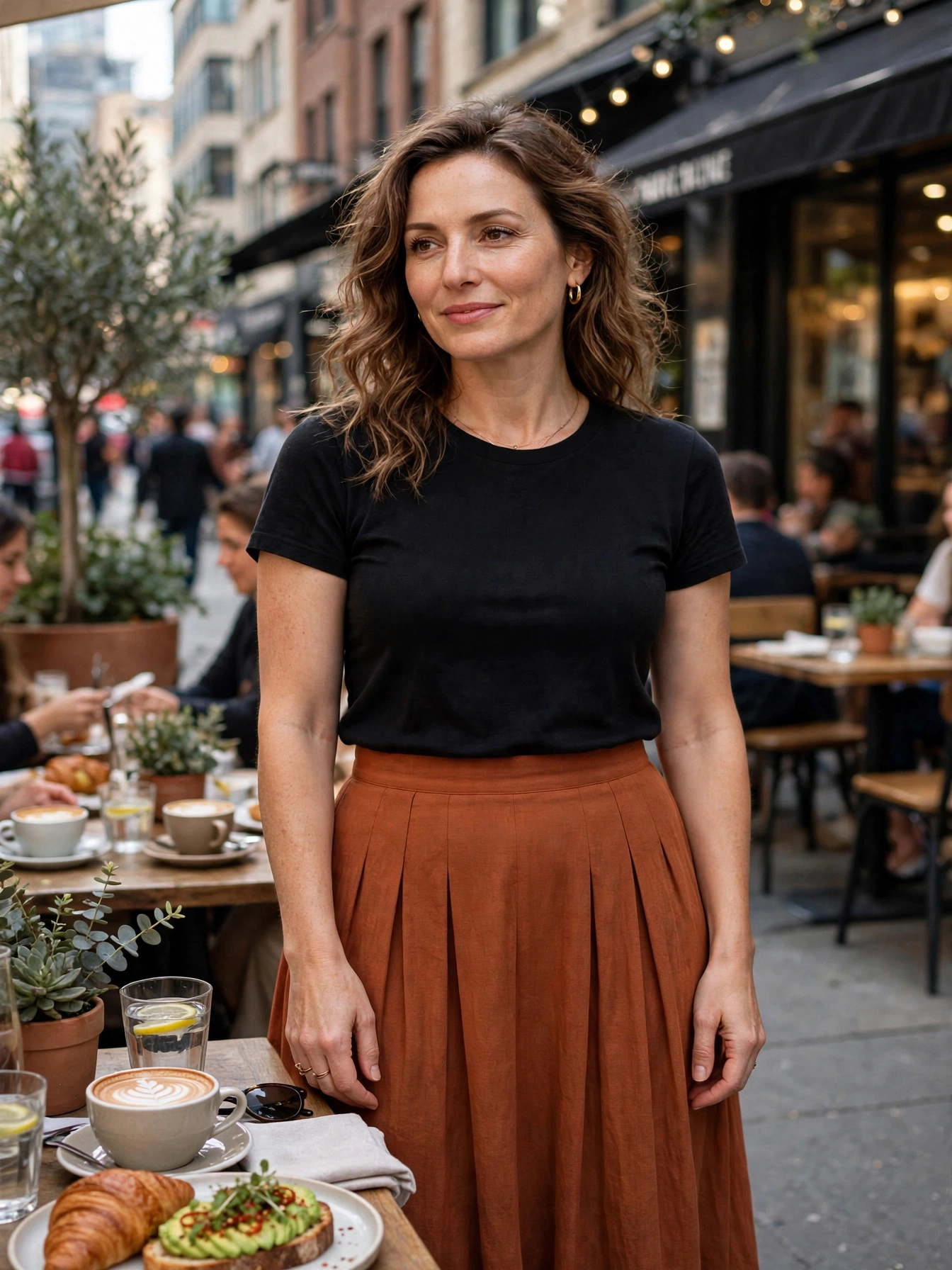
Smocked Midi Skirt and Tucked Tee
Smocking is structure disguised as decoration. The elasticized panel grips the waist without a rigid waistband, and the skirt below falls in an A-line with built-in air gap. Tuck a simple tee into the smocked section — the texture hides the tuck line completely, which is why this works better than a tucked tee in a flat waistband. Choose skirts where the smocking is at least two inches tall; narrow smocked bands roll, dig, and flip. The skirt fabric should be a lightweight woven (cotton voile, rayon challis) that moves — heavy fabrics fight the smocking's give. The tee can be simple cotton; nobody sees the tuck zone anyway. Flat sandals or espadrilles for summer days. This is the heatwave formula: defined waist, zero cling, nothing touching you below the ribs.
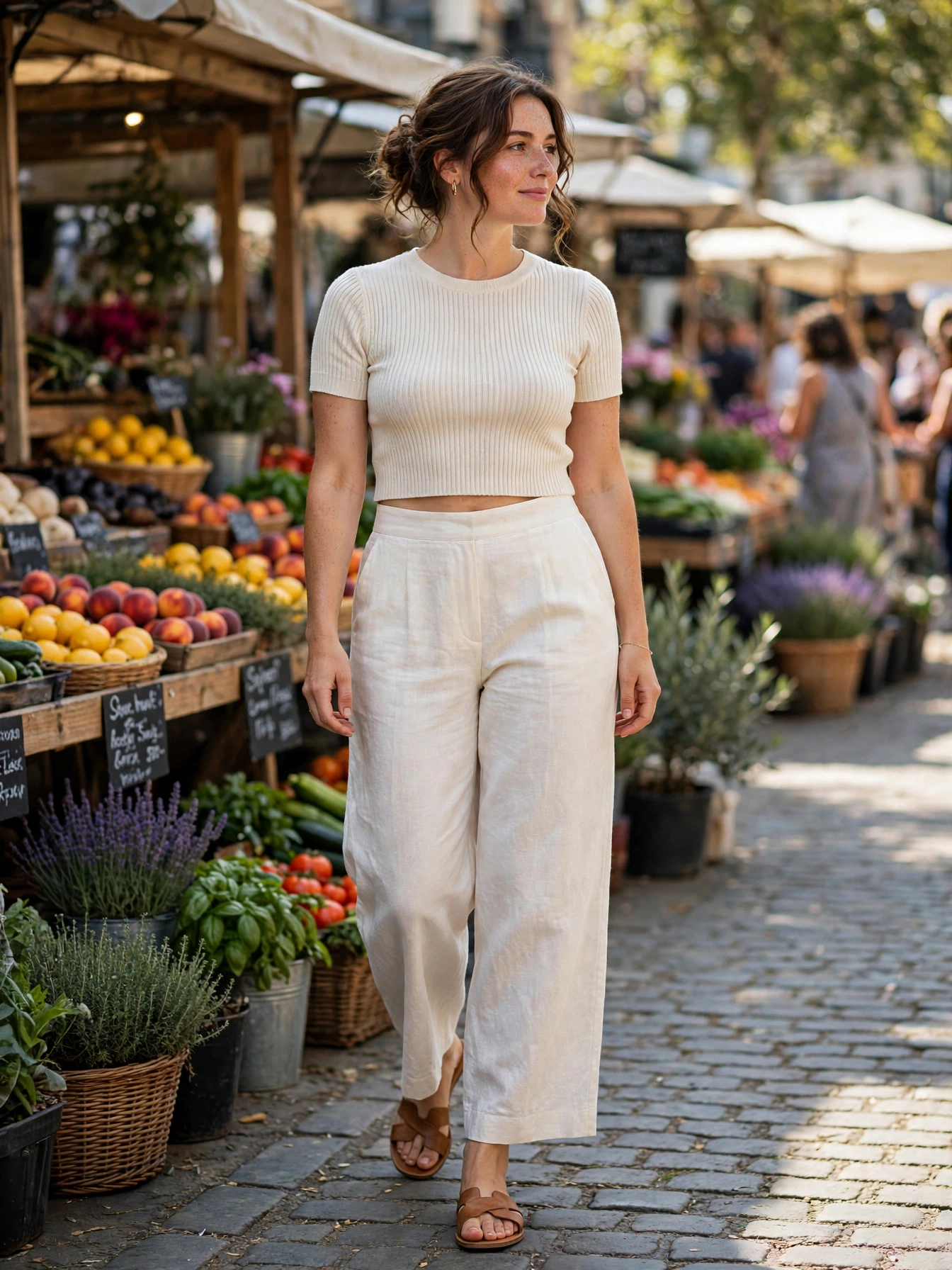
Wide-Leg Linen Trousers and Cropped Knit
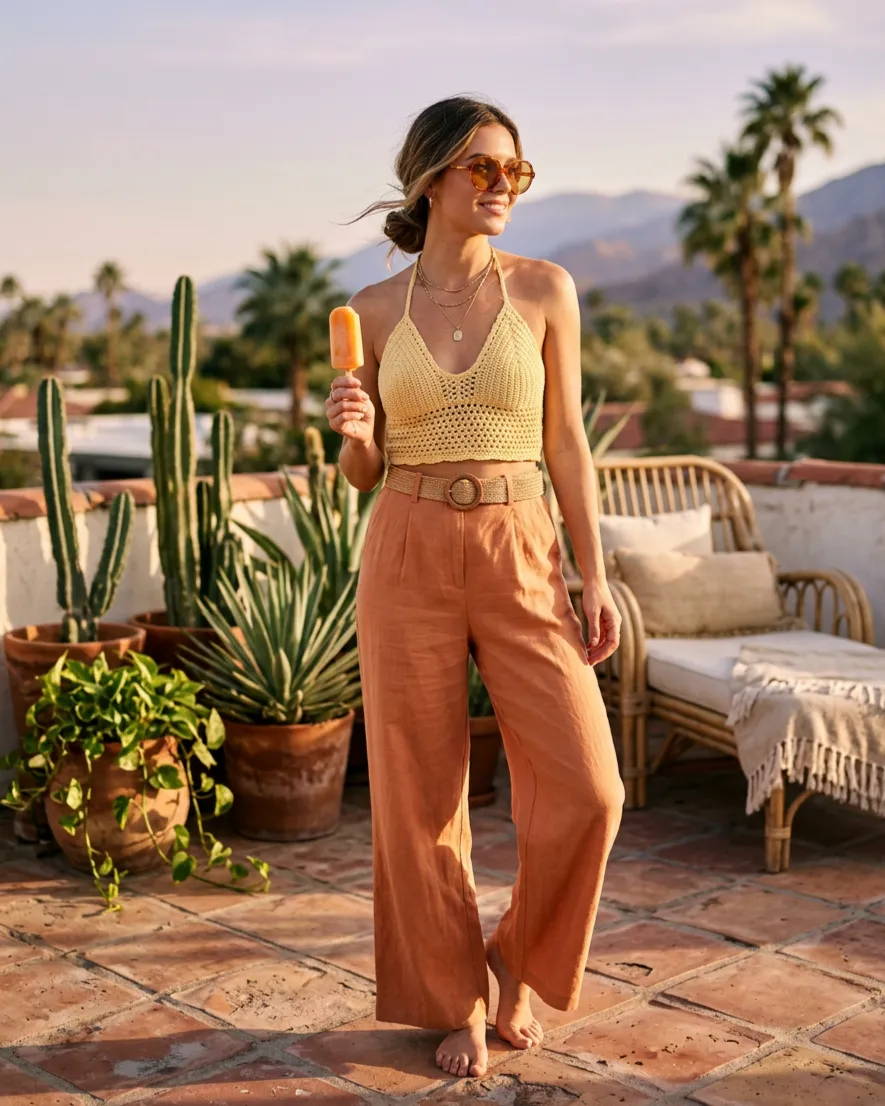
Wide-leg linen gives maximum air gap — summer's answer to cling. The cropped knit, hitting right at the waistband, defines the waist that the wide trousers deliberately obscure; without that crop, the waist disappears entirely. The trousers must sit at the natural waist, not the hips — low wide-legs erase the waistline and add visual width. Look for a drawstring or elastic-back waist with a flat front: comfort plus a clean line. Linen's natural wrinkle is part of the deal; embrace it, or choose a linen-Tencel blend for a smoother hand and better drape. The knit should be fine-gauge, fitted, in a solid color — texture here would compete with the linen's. Flat leather sandals keep it grounded. Weekend markets, vacations, anywhere hot where you want to look put-together without trying. For more wide-leg styling, see these 12 ways to style wide-leg jeans.
A-Line Midi Dress and Denim Jacket
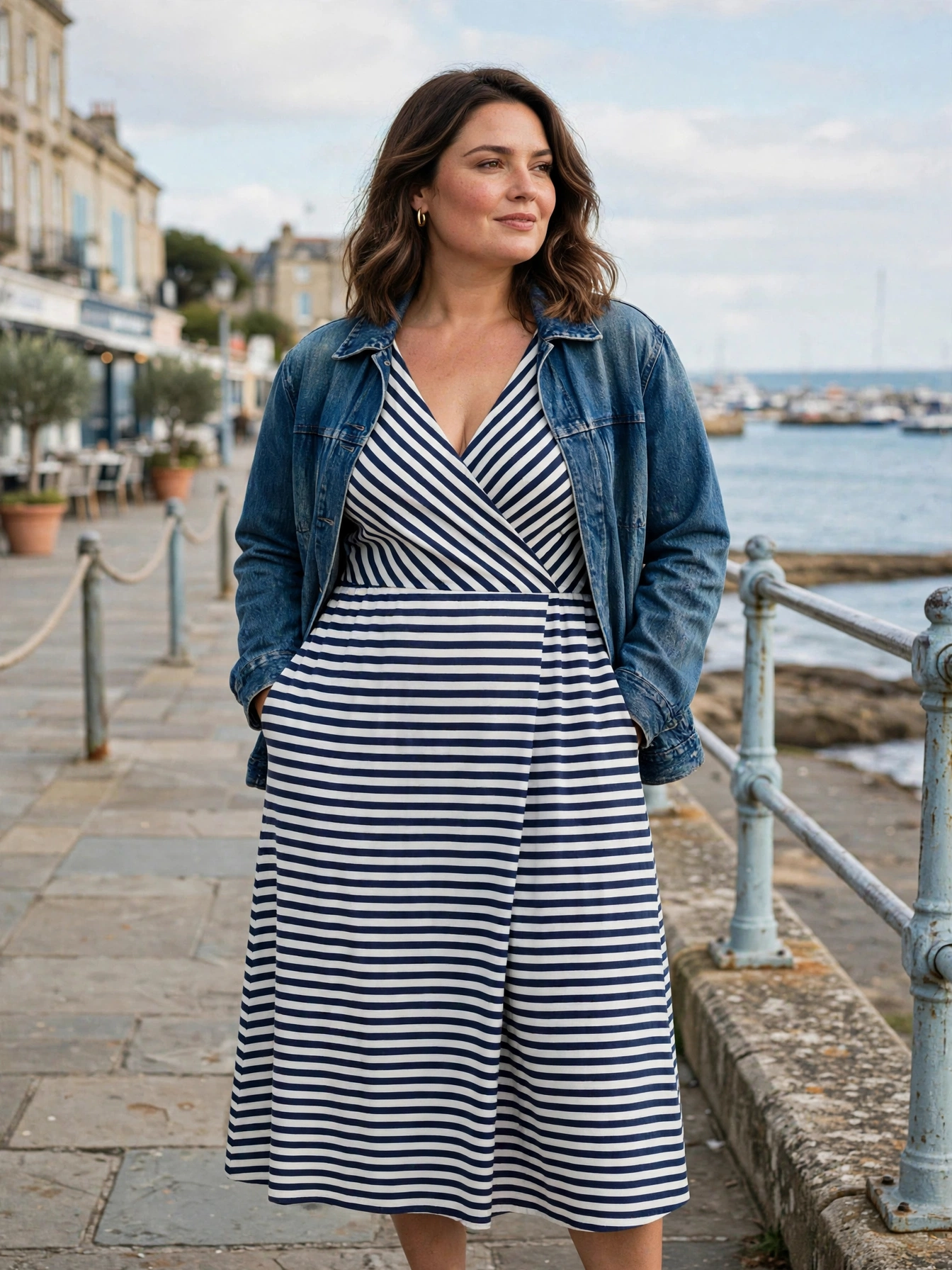
An A-line midi in a woven fabric holds its own shape away from the body — that's the air gap doing the work, and woven beats jersey here because jersey collapses inward and finds every curve. Chambray or cotton poplin for summer, corduroy or brushed twill for fall: same silhouette, seasonal fabric swap. Layer a cropped denim jacket over it; the cropped length preserves the dress's waistline, and denim's stiffness contrasts the dress's flow. The jacket should hit at or above the natural waist — a hip-length trucker swallows the waist you just defined. Roll the sleeves once. White sneakers or ankle boots depending on season. The transitional-weather workhorse: one dress, two fabrics, endless wear. For more denim-jacket ideas, see these 13 upcycled denim jacket ideas that look insanely expensive.
Paperbag-Waist Shorts and Breezy Blouse
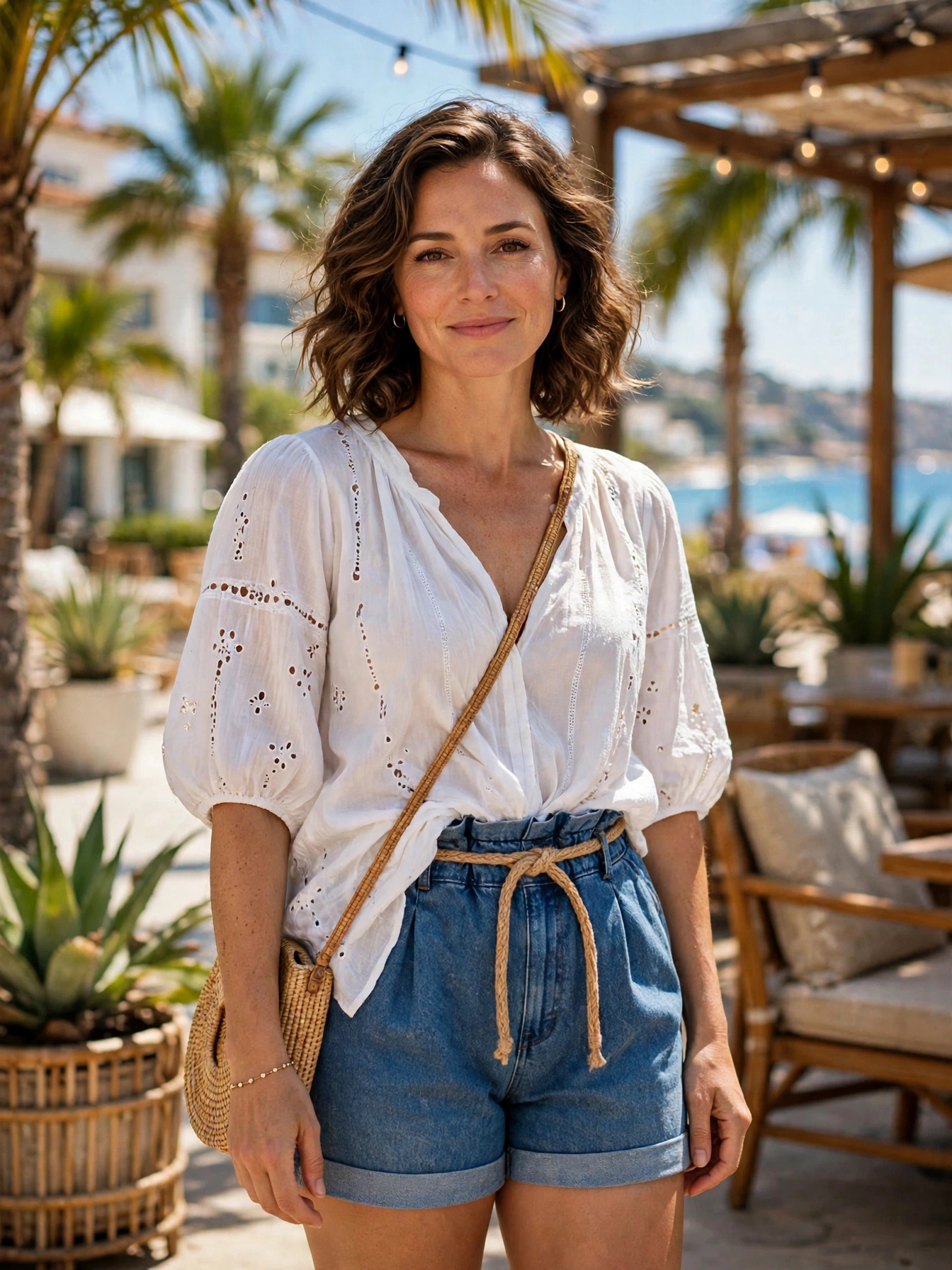
Paperbag waists gather fabric at the waist with a tie or elastic, creating definition and ease in one move — the gathering marks the waistline while softening its exact contour, which is more forgiving than a rigid waistband. Pair with a fluid blouse, half-tucked to show the paperbag detail; a full tuck hides the feature you're paying for. The shorts need a four to five inch inseam in a woven fabric (linen, cotton twill) — shorter and the gathering has nowhere to sit, longer and it reads as Bermuda. This is a summer-only formula: the volume at the waist needs bare legs to balance it. Flat sandals, woven tote, sunglasses. The vacation and hot-weekend outfit — ease with intention.
Knit Co-ord Set for Fall
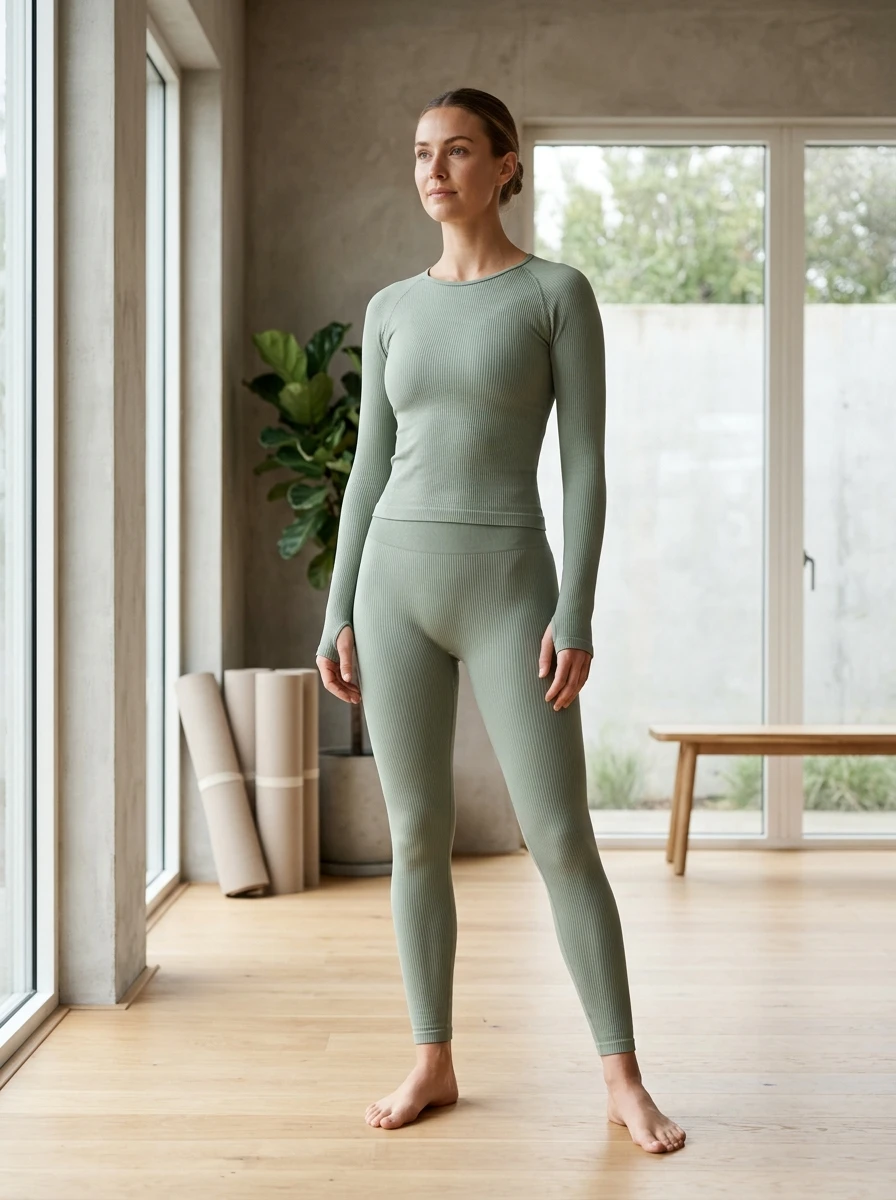
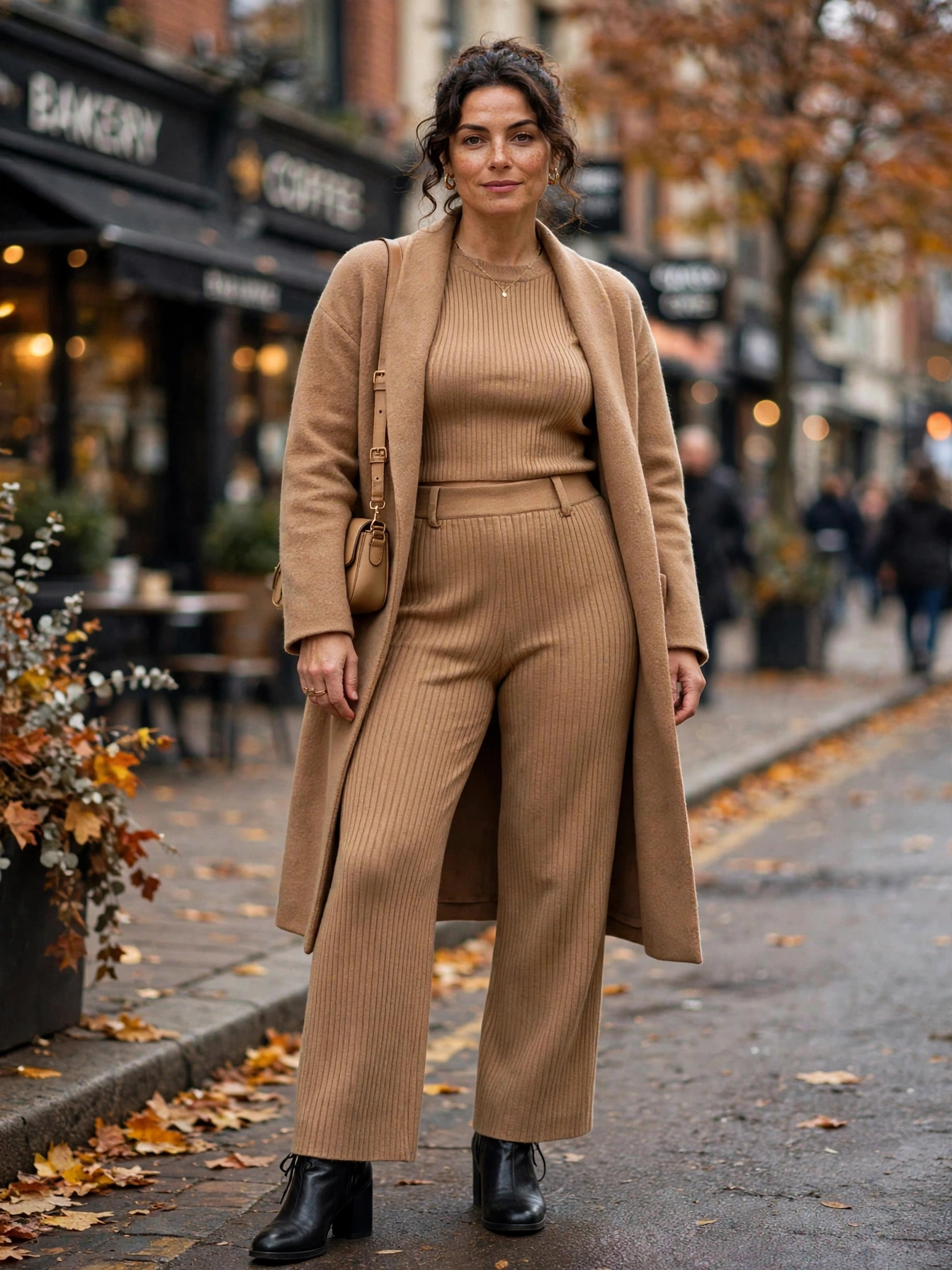
A matching knit top and bottom in one color creates column dressing — an unbroken vertical line that elongates more reliably than any single styling trick. The co-ord's power is in the match: same color, same texture, no horizontal break at the waist. Choose a midweight knit with structure and recovery — ribbed cotton or a viscose-nylon blend; thin co-ords show everything and bag by evening. The top should hit at the waistband, the bottom sit at the natural waist. Add a long coat or open cardigan in a contrasting texture for fall — the outer layer adds its own vertical line while the co-ord stays clean underneath. Sneakers or ankle boots. Travel days, casual Fridays, the "I look pulled together with zero effort" formula. For more knit layering ideas, see these 5 cozy ways to style a mock-neck sweatshirt.
Slip Skirt and Half-Tucked Oversized Sweater
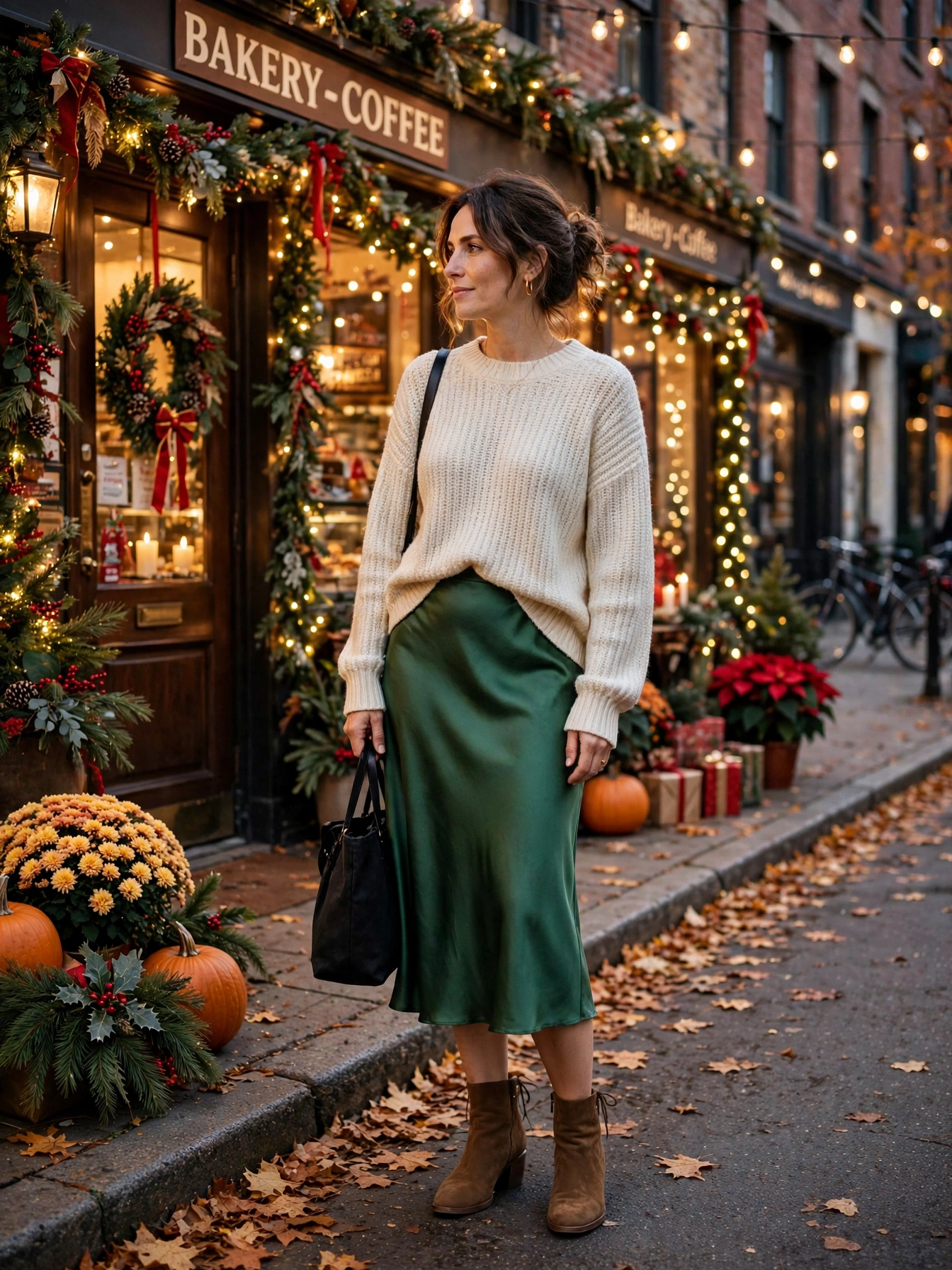
A satin or crepe slip skirt in midi length with an oversized sweater half-tucked at the front. The half-tuck does precise work: it marks the waist on one side while the sweater's volume drapes over the hip on the other — definition without exposure. The slip's bias cut skims rather than clings, and its slight sheen elevates the cozy sweater; matte skirt plus matte sweater would read as pajamas. The sweater should be midweight with a soft hand — fine merino or a cotton-cashmere blend — genuinely oversized, not just relaxed. Ankle boots with a heel balance the sweater's bulk; flats make the bottom half disappear under the volume. This is the fall-weekend formula: cozy on top, polished below, the tuck doing all the architectural work.
Tailored Shorts Suit for Summer
A blazer with matching shorts in a lightweight suiting fabric — summer's answer to the pantsuit. The blazer's structure gives the polish; the shorts keep it seasonal. The shorts must be tailored, with a proper waistband, fly closure, and a five-inch inseam — structure is what separates this from casual, and elastic-waist shorts with a blazer read as a mistake. Wear the blazer open over a simple camisole so the open front creates the vertical line; buttoned up, it shortens the torso. The suiting should be tropical wool or a wool-blend that breathes — polyester suiting in heat is miserable. Loafers or low block heels. Summer events, creative offices, dinners where you want authority without pants. For more loafer pairings, see these 12 ways to style loafers.
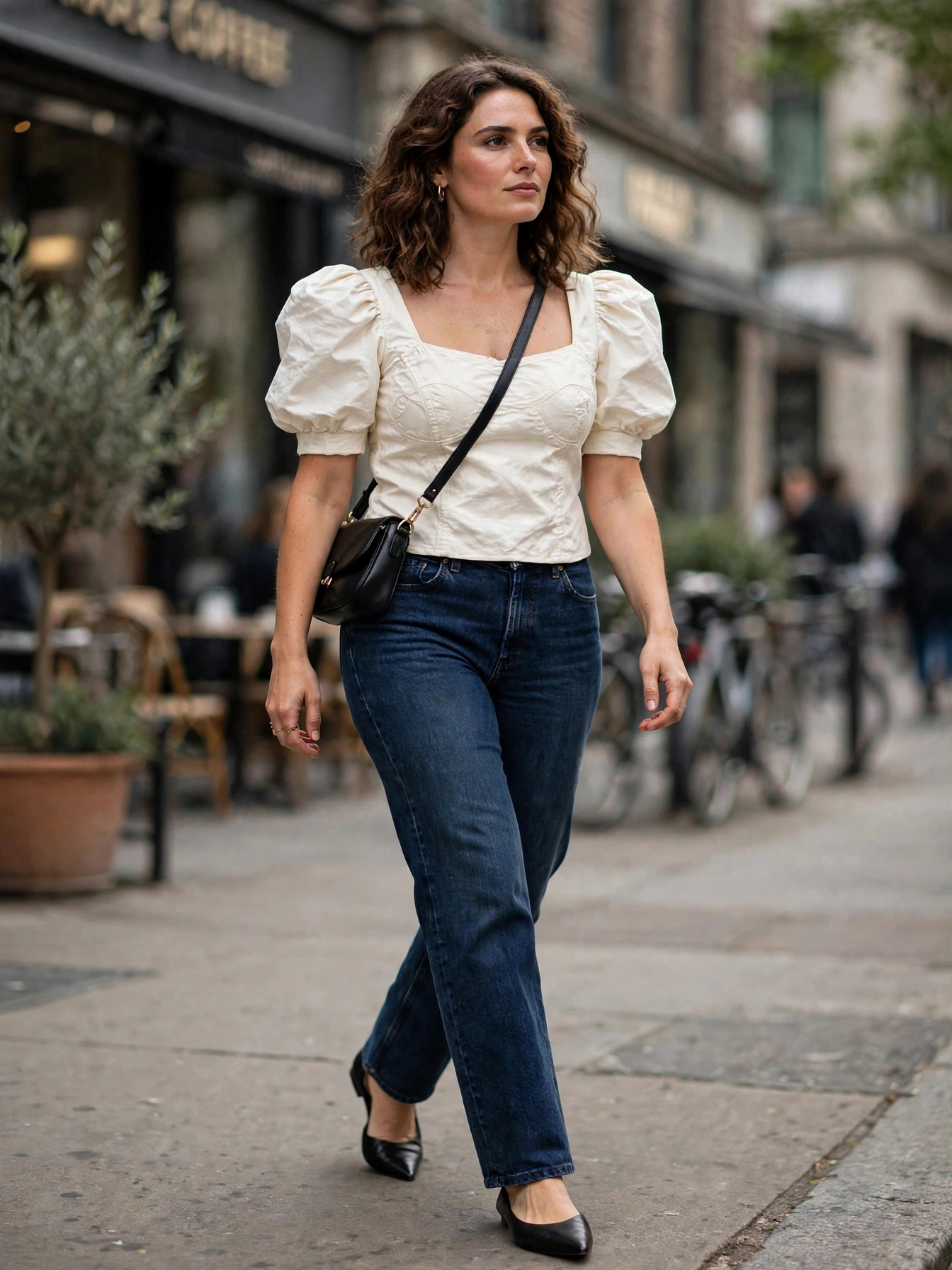
Dark Straight-Leg Jeans, Pointed Flats, and Structured Top
Dark-rinse straight-leg jeans — the hardest-working denim, since the dark wash recedes and the straight leg adds volume nowhere — with pointed flats and a structured top that has some shoulder or seaming. The pointed toe extends the leg line by inches, the cheapest lengthening trick in footwear; round toes stop the line dead. The top needs architecture: a puff sleeve, a square neckline, princess seaming, something with intent. A plain clingy top with dark jeans reads as an afterthought; the structure is what makes it an outfit. Every piece does one quiet job and none compete — that's why this uniform formula works. Day to night, desk to dinner, the most repeated outfit in any midsize wardrobe for good reason. For more everyday formulas built on the same foundation, see these 30 casual outfits for women's everyday chic.
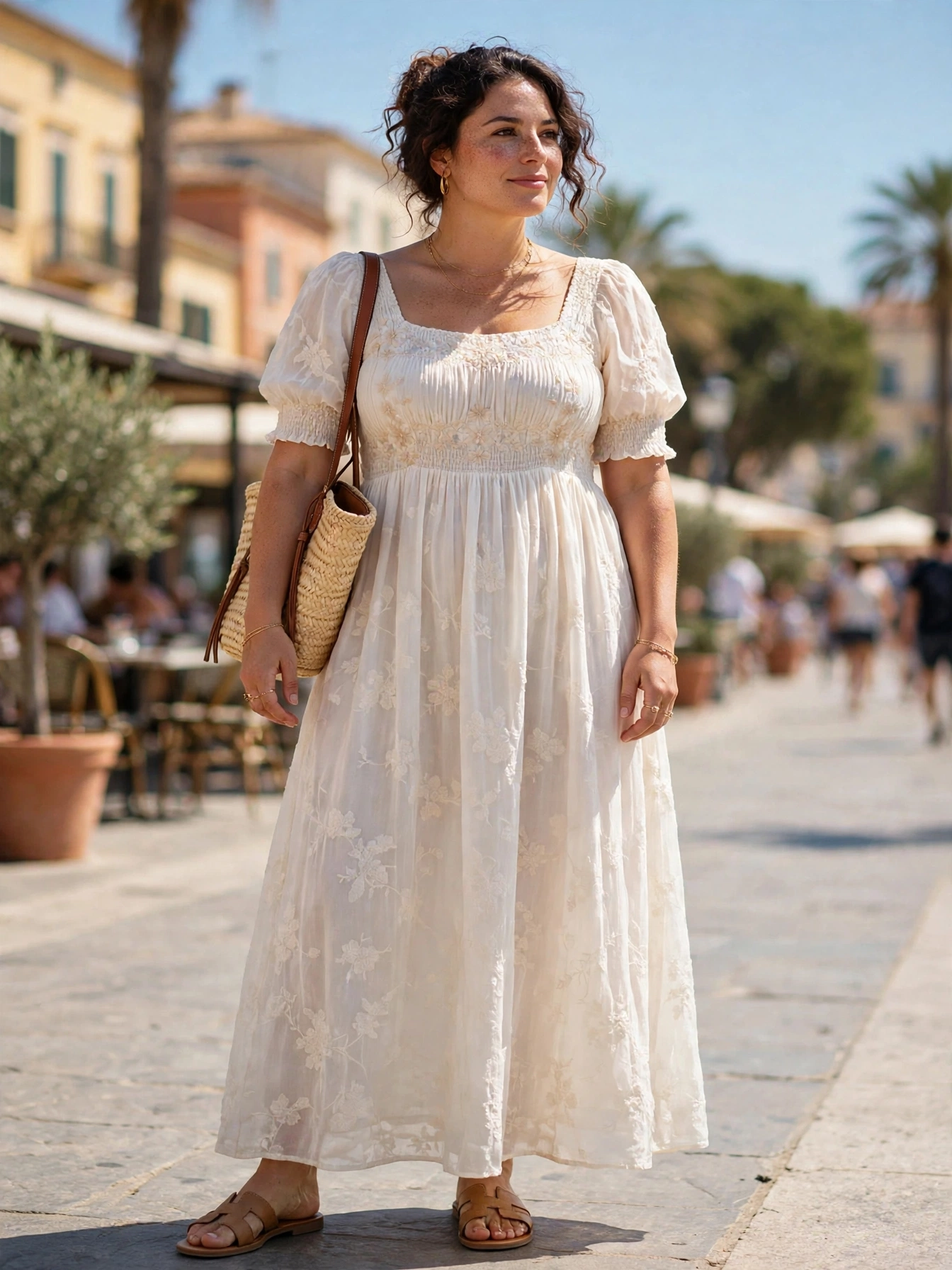
Empire-Waist Maxi for Summer
The empire waist is the exception to the horizontal-seam rule: because the seam sits just under the bust — the narrowest point of most torsos — it defines without dividing. The skirt falls free from there: maximum air gap, zero cling. Choose lightweight wovens like cotton voile or rayon challis that move; heavy fabrics turn the empire into a tent. A defined shoulder, via cap sleeve or wide strap, keeps the top from looking shapeless — the empire needs that upper structure or the whole thing drifts. Smocking at the empire seam adds flexibility across sizes and through the day. Flat sandals, straw bag. The hottest-day formula: nothing touches, nothing clings, everything moves.
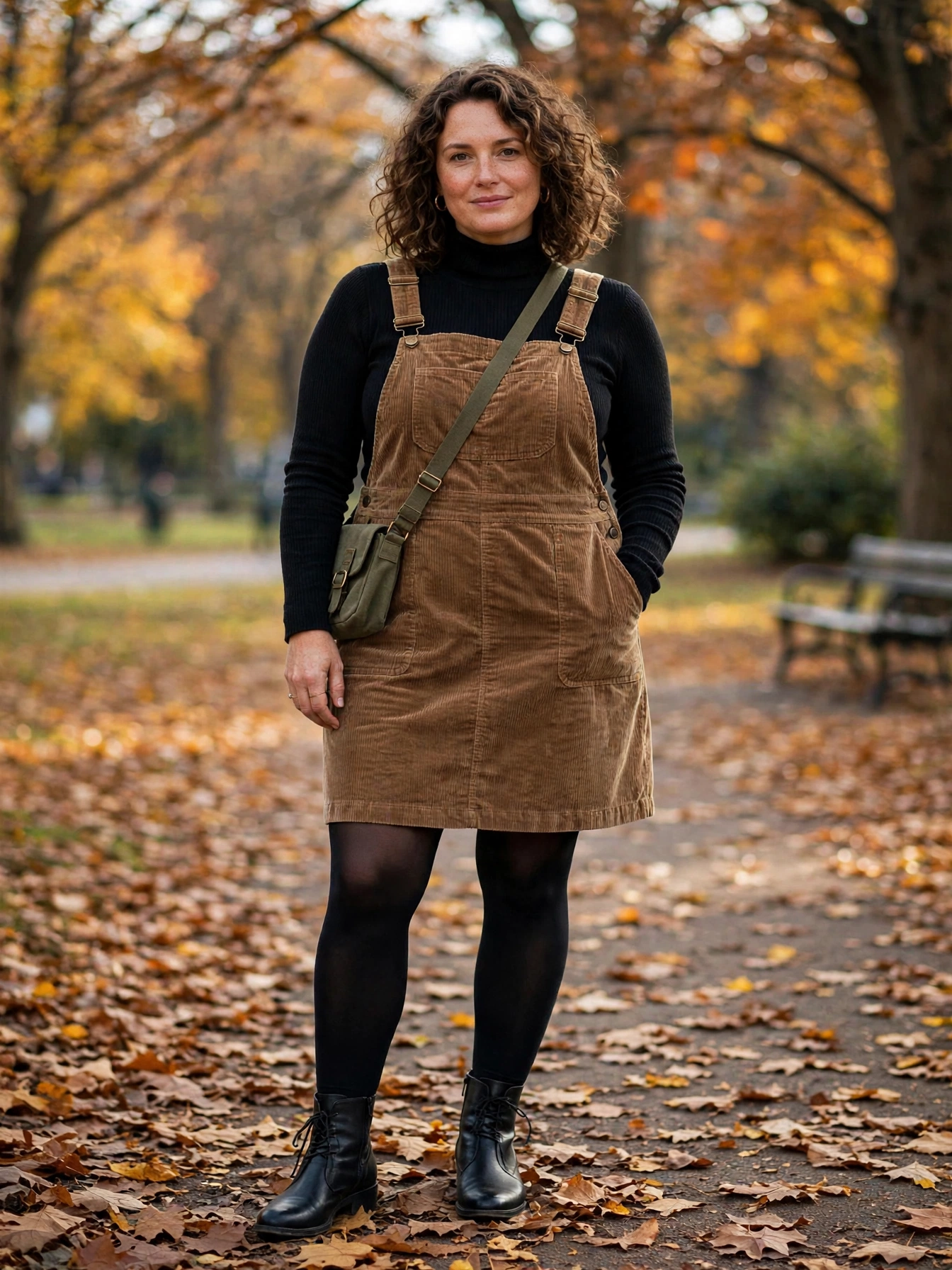
Corduroy Pinafore and Turtleneck for Fall
A corduroy pinafore dress over a fitted turtleneck: the pinafore's straps draw vertical lines down the torso, the turtleneck provides the fitted base, and corduroy's texture adds fall-appropriate weight and light-play. The pinafore should skim, not squeeze — look for side buttons or back elastic that allow movement; a rigid pinafore fights you all day. Fine-wale corduroy reads more refined than wide wale. The turtleneck must be fitted, fine-gauge merino or cotton-modal — a loose one under a pinafore adds bulk at exactly the wrong place. Tights in black or espresso and ankle boots complete the fall column. The straps' verticals plus the turtleneck's clean line make this one of the most elongating fall formulas. Weekend through casual office, October to December.
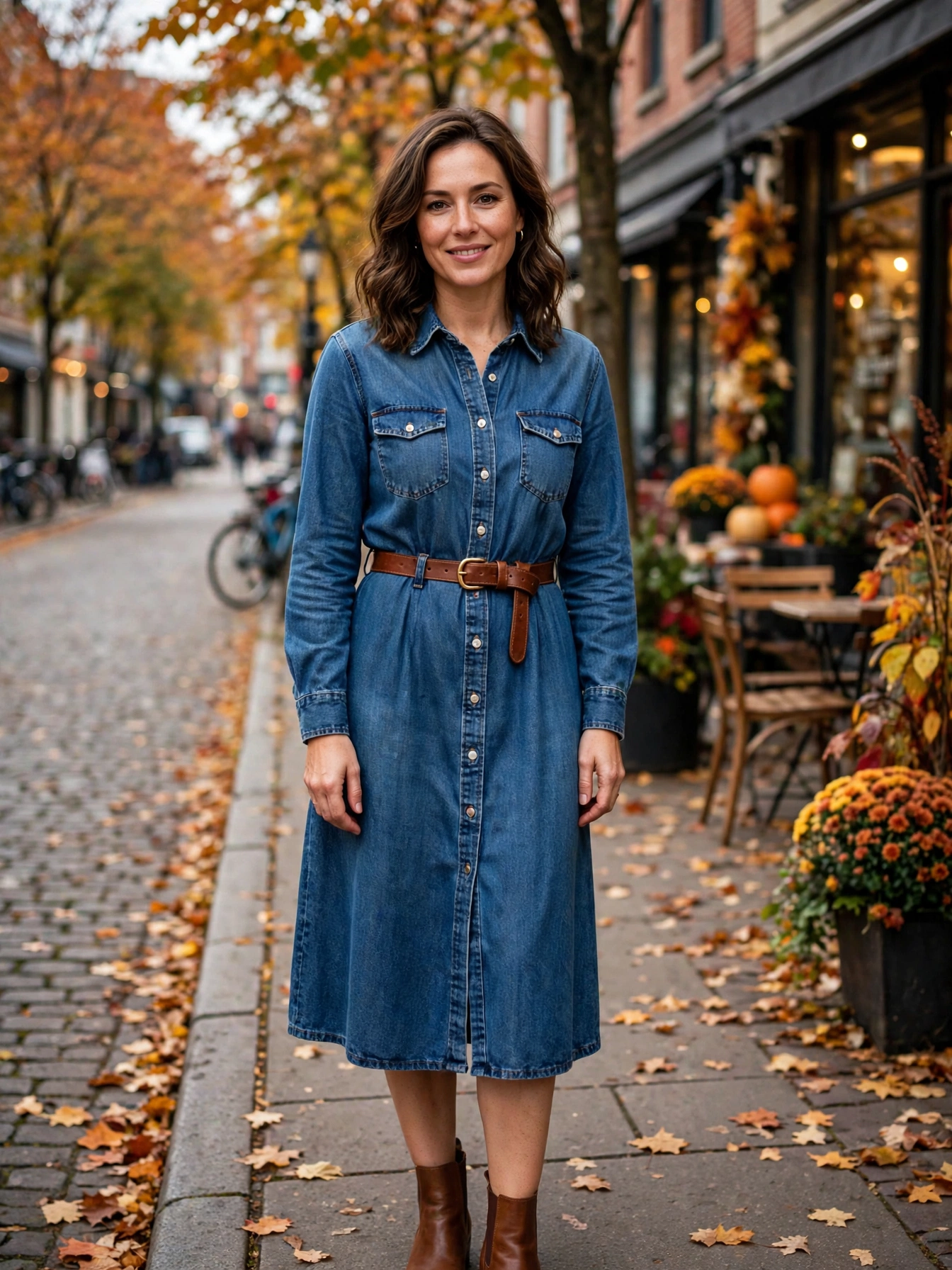
Belted Shirtdress for Transitional Weather
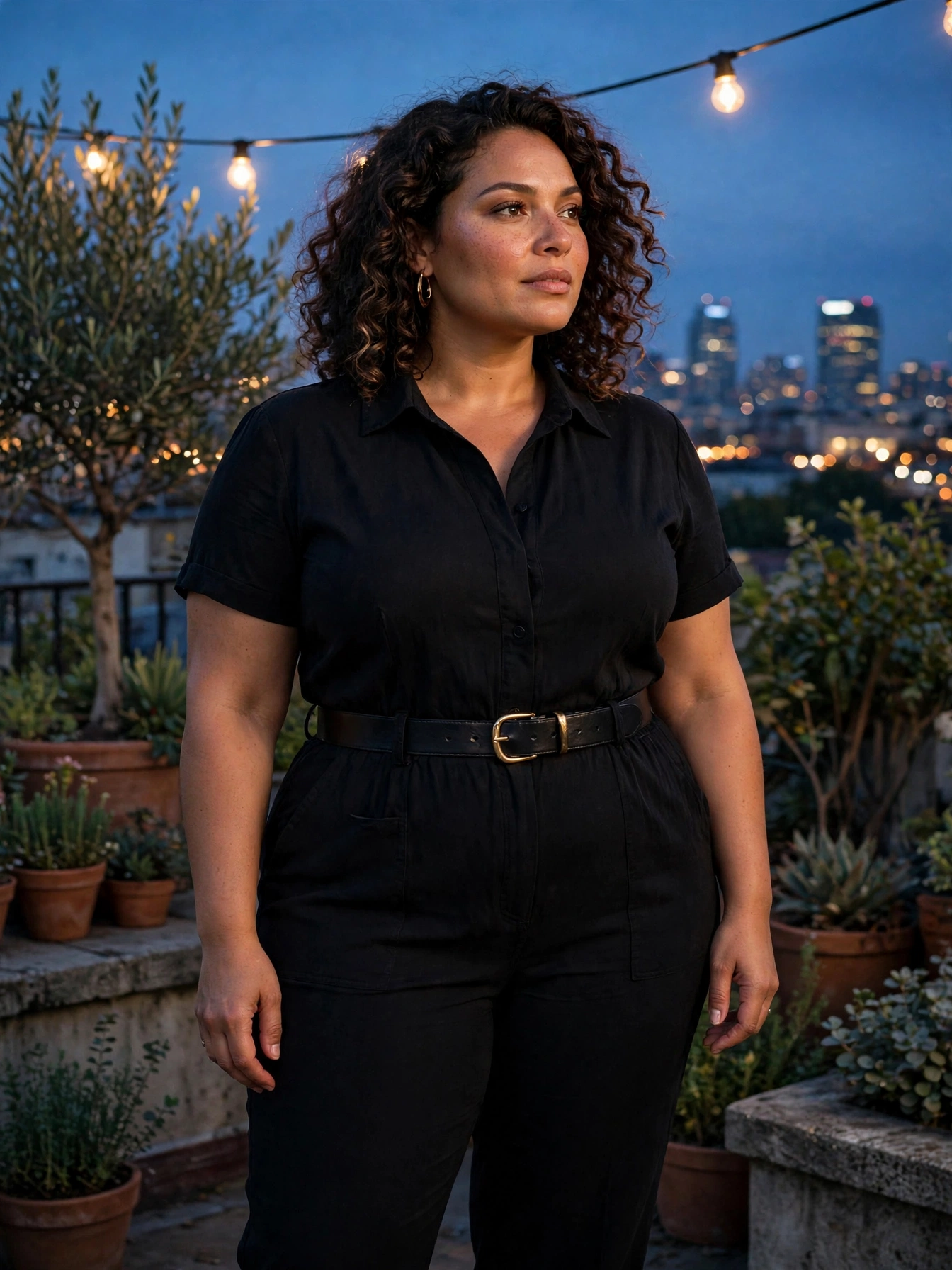
A shirtdress with its belt worn at the natural waist — the shirt's vertical button placket is a built-in elongating line, and the belt marks the waist over it. Never drop the belt to the hips; that's where the line breaks and the dress turns shapeless. Shirtdresses work because they're structured up top (collar, buttons, sleeves) and free below — the structure carries the polish while the skirt provides air gap. Choose a midweight cotton or Tencel with enough body to hold the placket straight; flimsy shirtdresses collapse at the buttons. Roll the sleeves to the elbow and add ankle boots for fall, flat sandals for late summer. The belt should be the dress's own or a slim leather one in a tonal color — a wide contrasting belt chops the column. The single-garment solution for unpredictable weather.
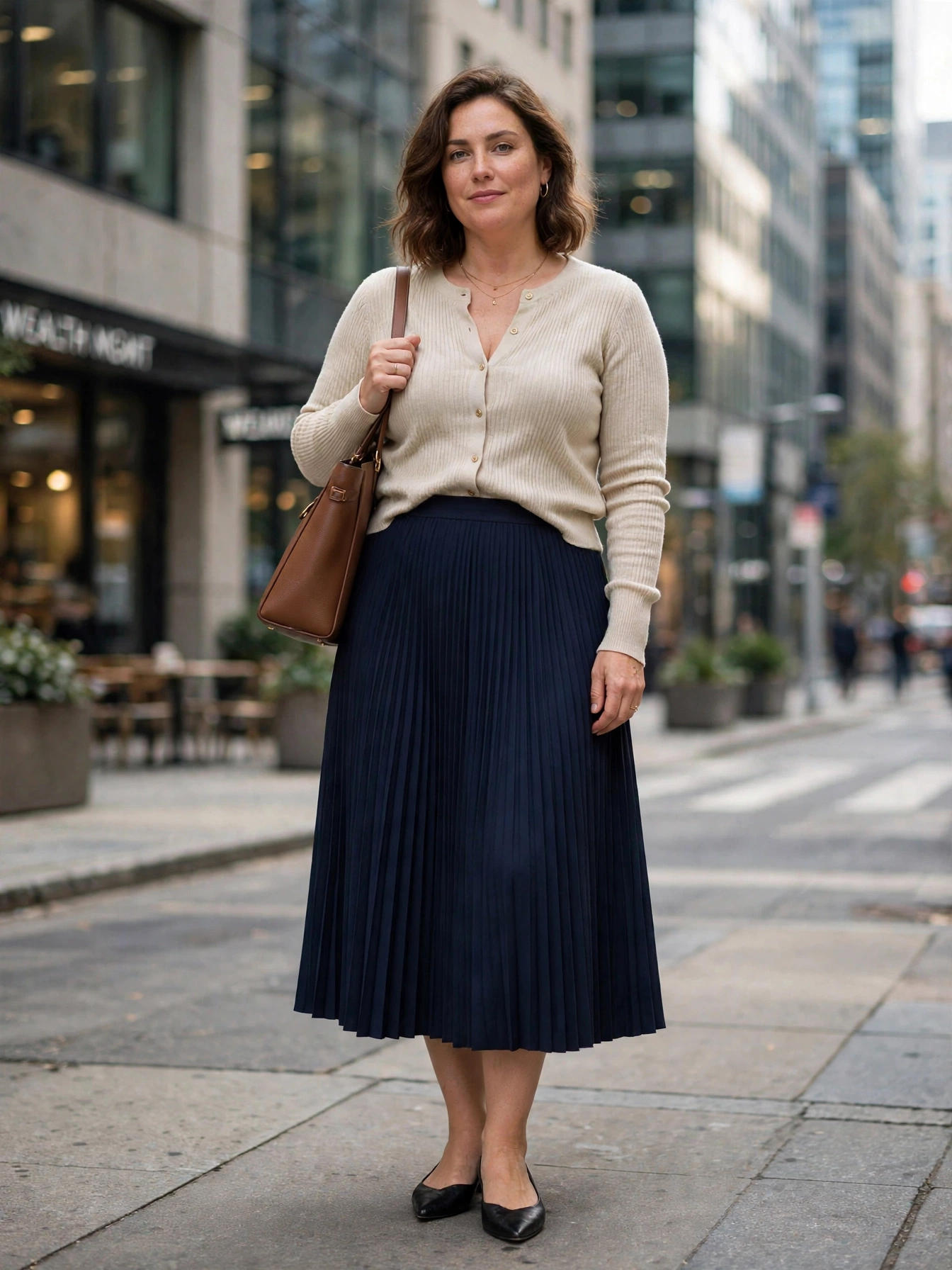
Pleated Midi Skirt and Fitted Cardigan
A pleated midi — the pleats' vertical folds are automatic elongating lines — with a fitted cardigan, buttoned or worn open. The cardigan must be fitted; oversized over a pleated midi is all volume, no line. Worn open, the cardigan's front edges frame the torso vertically; buttoned, tuck the front into the waistband to mark the waist. The skirt's waistband should be flat and smooth — elastic-gathered waists add bulk under a fitted top, which defeats the purpose. Knife pleats in a crepe or heavy satin hold their folds; accordion pleats in thin fabric go limp by afternoon. Fine-gauge cardigan in a solid color that relates to the skirt — tonal dressing extends the line. Loafers or pointed flats. Office to dinner, the polished-knit formula.
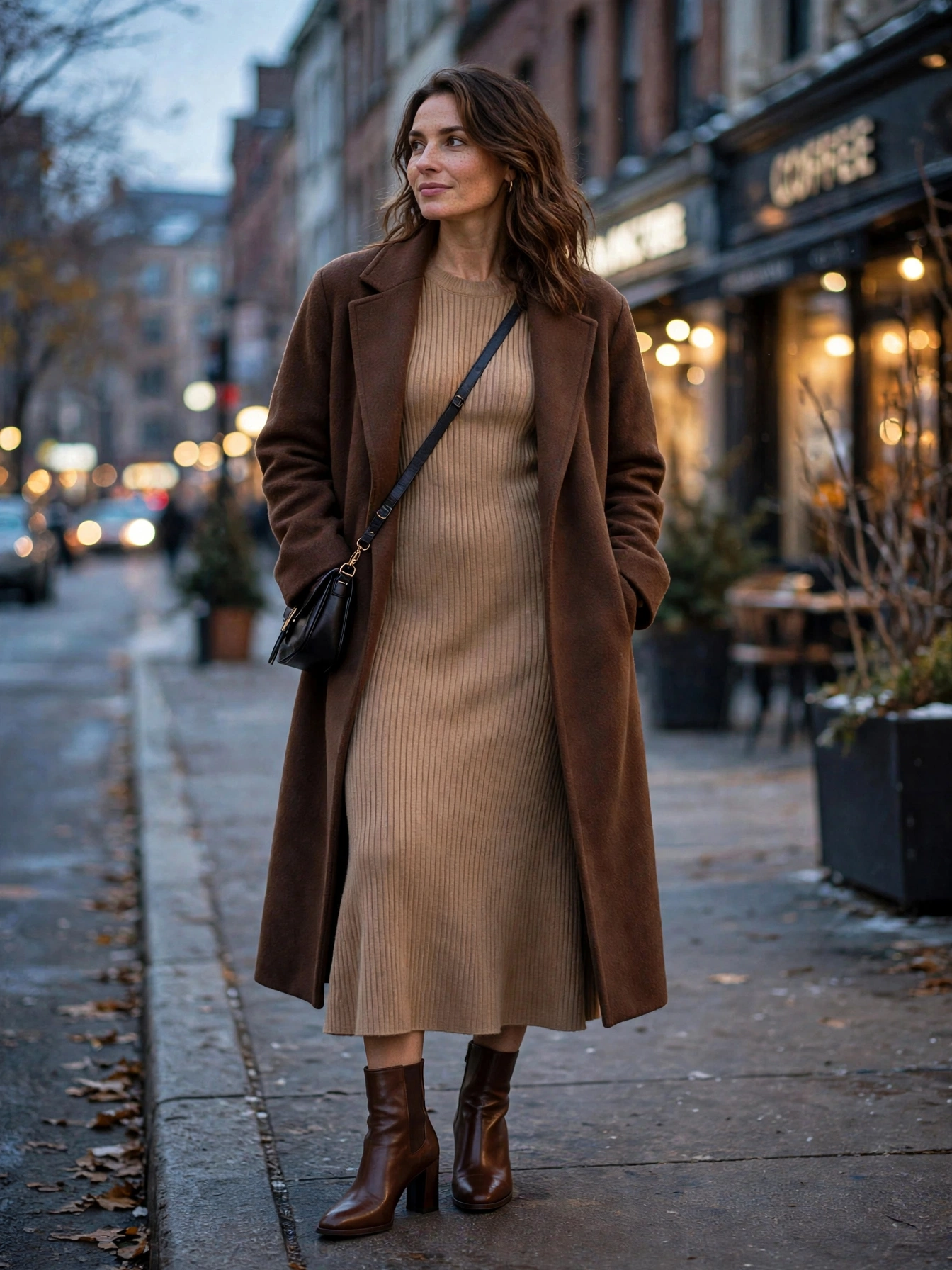
Monochrome Knit Dress and Long Coat
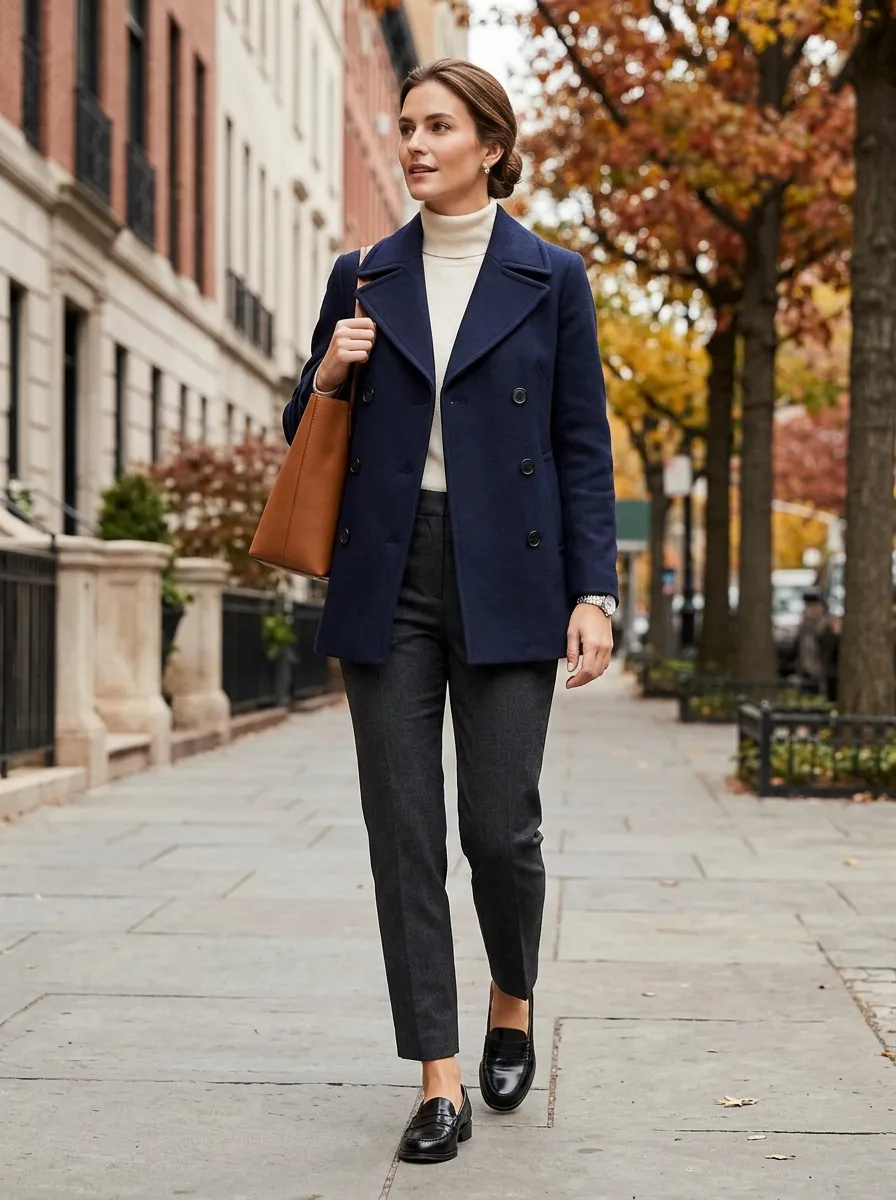
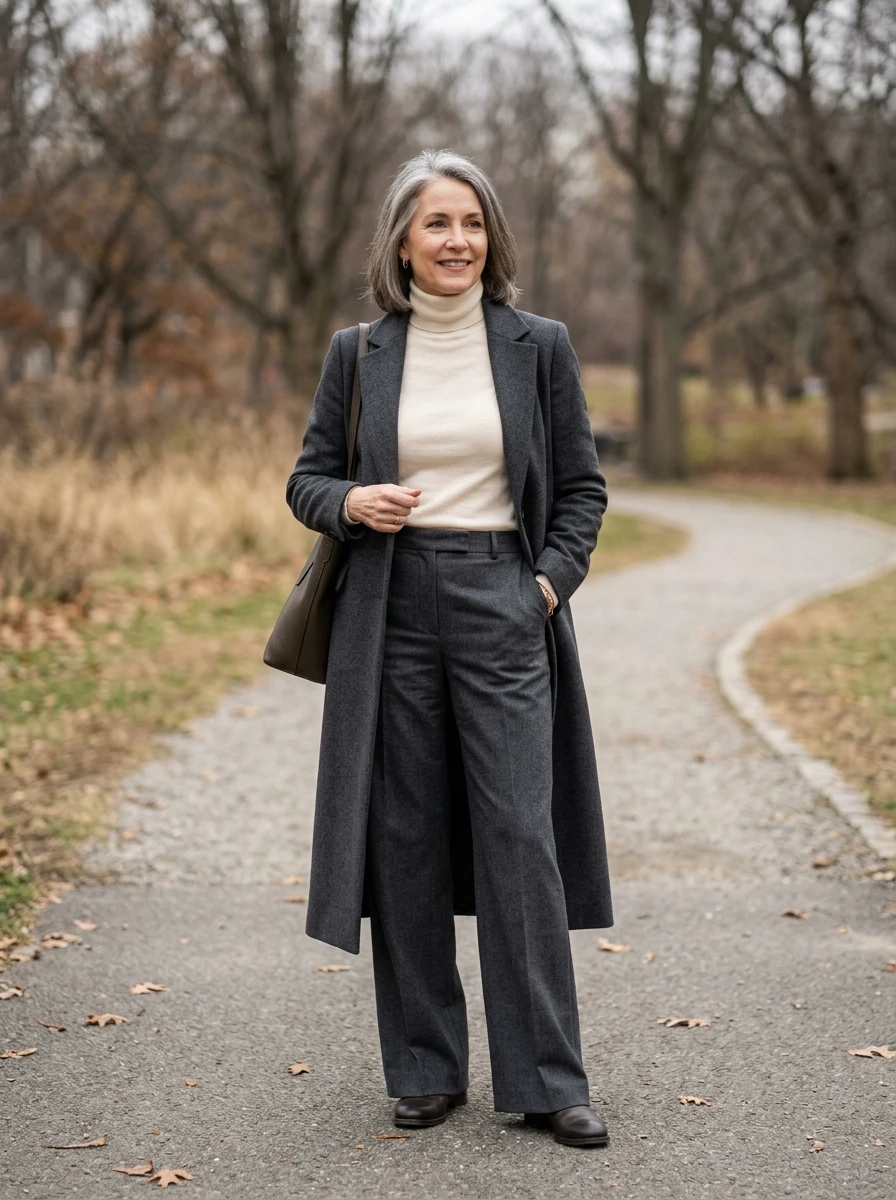
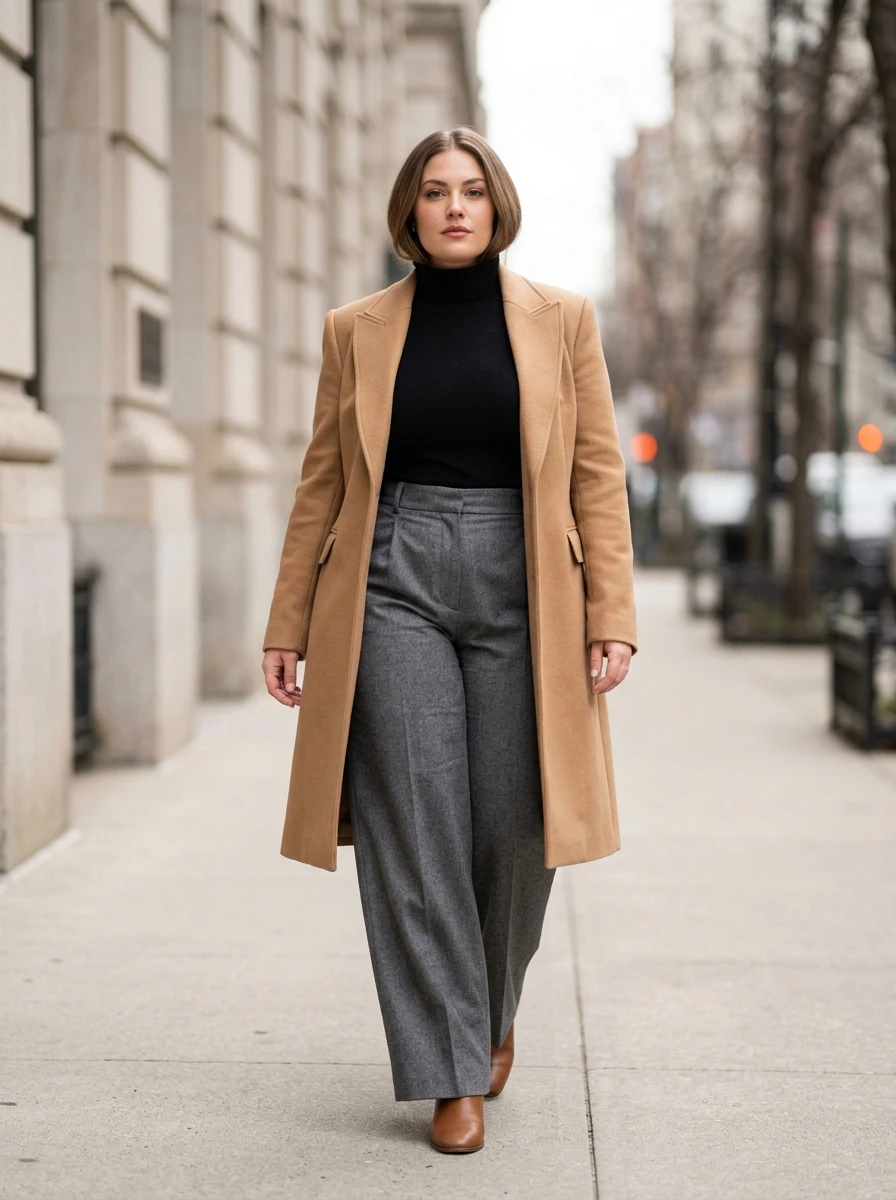
A midi knit dress with a long coat in the same color family — camel dress with chocolate coat; they needn't match exactly, and near-tones look more expensive than exact matches. The near-monochrome builds an extended vertical column, and the coat's length adds drama without width. The knit must be midweight with recovery — ribbed knits snap back while cheap jersey bags at the seat by evening. Wear the coat open: the open front is the vertical line, and a closed coat just makes a bigger column. Nothing should break the eye's path from shoulder to hem, which makes this the most elongating formula on the list. Heeled boots, one sculptural accessory. The cold-weather event outfit — gallery openings, winter dinners, anywhere you arrive in a coat. For more cold-weather event looks, see these 22 chic winter outfit ideas for women.
The midsize shopping checklist: numbers, fabrics, and construction
Stop trusting size labels and start trusting measurements — they don't vary by brand. For jeans, the rise number is everything: 10 to 11 inches for most midsize frames, measured from crotch seam to top of waistband. Below 9, the band cuts across the hip; above 12, it shortens the torso visually. For background on how denim construction evolved, the history of jeans is a useful reference. For skirts, check the waistband construction before the style: flat, smooth waistbands (with back elastic if needed) disappear under fitted tops, while gathered elastic adds bulk exactly where you don't want it. Smocking should be at least two inches tall — narrow bands roll.
Fabric weight is the second number that matters, even though nobody prints it. Hold fabric to the light: if you can see through it easily, it will cling. Midweight jersey, ponte, crepe, Tencel, and cotton poplin are the workhorses — they skim. Thin rayon, cheap polyester, and tissue knits cling, bag, or both. For knits, do the scrunch test: squeeze a handful, release, and count — if it hasn't mostly recovered in three seconds, it won't recover on your body either. For fall layers, ribbed cotton, ponte, and merino blends hold shape; thin jersey layered under anything bunches at the elbows and waist.
Construction details to check in the fitting room: wrap dresses need an interior snap or tie (not just the outer tie); blazers need the shoulder seam sitting at your actual shoulder; trousers need a full rise that doesn't pull when you sit. Sit down in everything — standing fit lies. And check linings: a lined skirt or dress in summer is worth more than any "cooling" marketing claim, because lining is what creates the air gap mechanically.
Color and print strategy for midsize frames
Vertical logic applies to color too. Column dressing — one color head to toe, or near-tones — is the most reliable elongator because the eye never stops. It doesn't have to be black: camel, navy, olive, and chocolate columns all work, and they're more interesting. When you do contrast, put the darker color where you want recession and the lighter where you want focus — dark bottom, lighter top is the classic for a reason, but a dark top with a lighter bottom works when the bottom has strong structure (dark jeans are doing the containing, so the top can be light).
Print scale matters more than print itself. Medium-scale prints (florals you can identify from six feet, not ten) hold their own against the body's scale; tiny ditsy prints can look busy and large-scale prints can overwhelm unless they're placed with intent. One print per outfit — a printed top with solid bottoms, or vice versa. And place prints where you want the eye: a printed top draws the eye up, which is why it pairs so well with dark, simple bottoms.
Color temperature is the quiet variable. Warm skin tones (gold jewelry glows, you tan easily) come alive in camel, rust, olive, and warm reds; cool tones (silver glows, you burn) sharpen in navy, emerald, true red, and crisp white. This isn't about rules — it's about noticing which colors make you look rested. When in doubt, hold the garment to your face in natural light; the right temperature visibly brightens you.
Frequently Asked Questions
What jean rise actually works best for midsize bodies?
A 10 to 11 inch rise in most cases — it sits at the natural waist, which contains the midsection so tops can skim instead of squeeze. Below 9 inches the waistband cuts across the widest part of the hip; above 12 you're into ultra-high territory that shortens the torso visually. Measure the rise in inches rather than trusting "high-rise" marketing, which varies wildly between brands. And check the back rise too — a high front with a low back creates the gaping so many midsize shoppers complain about.
How do I stop thin summer fabrics from clinging?
Three fixes: choose structure (smocked bodices, lined skirts, woven fabrics instead of jersey), create air gap (A-lines, wide legs, anything that holds away from the body below the waist), and mind fabric weight — midweight Tencel, linen blends, and cotton poplin resist cling far better than thin rayon or cheap polyester. A travel anti-static spray handles whatever's left. And when in doubt, size up in thin fabrics and tailor the waist — ease is the anti-cling.
Why does everyone recommend wrap dresses — what's the actual mechanics?
Two things: the diagonal wrap line creates a V at the neckline, which is a vertical elongating line, and the tie cinches at the smallest point of the torso, which is waist definition. Then the skirt flares into an A-line with air gap. It's three fit mechanics in one garment, not magic. The caveats are fabric (must be midweight, or the wrap collapses and gaps) and overlap (needs an interior snap — a wrap held only by its outer tie will betray you when you sit).
What fabrics should I look for in fall layers?
Midweight knits with recovery (ribbed cotton, ponte, merino blends), woven bottoms with structure (corduroy, twill, denim), and outer layers with clean lines (wool coats, structured blazers). Avoid thin jersey layered under anything — it bunches at the elbows and waist — and fully oversized-on-oversized combinations, since volume needs one fitted anchor per outfit to read as intentional. Do the scrunch test on every knit before buying.
How do I layer for fall without looking bulky?
Vary the layer lengths so each is visible by two to three inches, keep the innermost layer fitted, and let the longest layer sit outermost. The bulky illusion comes from layers ending at the same point — staggered hems create lines instead of mass. Half-tucks, open fronts, and pushed-up sleeves all break up the silhouette without adding a single extra garment. And keep the bulkiest piece (usually the coat) open rather than belted.
I'm between sizes — should I size up or down in structured pieces?
Size up and tailor down. It's always easier to take in a waist or shorten a hem than to add fabric that isn't there. For blazers, fit the shoulders first — everything else can be altered, shoulders can't (or rather, can't affordably). For jeans, fit the waist and hem the length; hemming is cheap, waist alterations are not. The alteration budget is part of the garment's real price — a $60 blazer plus $25 in tailoring beats a $120 blazer that almost fits.
What about prints — do they work or should I stick to solids?
Prints work, with two controls: scale and placement. Medium-scale prints hold their own; tiny prints look busy, huge prints overwhelm unless placed deliberately. One print per outfit, placed where you want the eye to go — printed tops draw attention up, which pairs beautifully with dark structured bottoms. Vertical elements within the print (stripes, vertical florals) elongate; large horizontal bands do the opposite. When trying a print, check it in a full-length mirror from ten feet away, not just up close.
How do I dress midsize for summer weddings and events?
The wrap dress or a structured midi in midweight crepe, block heels, one good bag — that's the formula, and it works because every piece is doing structural work. Avoid thin jersey for events (it photographs badly and clings by the second hour), avoid all-black in daylight (it reads funereal, not formal), and bring a layer: venues are air-conditioned to arctic levels. A cropped jacket or pashmina that complements the dress beats suffering elegantly.
What's the single most versatile midsize piece across both seasons?
Dark straight-leg jeans with a 10-11 inch rise. They anchor summer looks with sandals and tees, carry fall looks with boots and knits, and the dark wash plus straight leg is the most forgiving combination in denim. If you buy one thing from this entire guide, make it the right pair of these — everything else gets easier once the foundation is right.