Casual Black Girl Winter Outfits: A Styling Guide for Deeper Skin Tones and Protective Hairstyles
How to use this guide
These are editorial styling suggestions, not a one-size-fits-all formula. Adapt each look to your wardrobe, proportions, climate, comfort, budget, and the occasion; the most useful idea is the one you can genuinely wear.
What changes when a winter outfit is built around deeper skin, coily hair, and real cold — not a generic mannequin? Most winter outfit guides skip the question entirely. Yet saturated colour glows where pale pastels wash out, rich textures look more luxurious against melanin-rich skin, and an outfit whose polish comes from silhouette and colour — not a "done" hairstyle — lets braids, twists, locs, and wraps be part of the look.
The eighteen outfits below work from those principles: warm or saturated colour near the face, texture doing the visual work, and layers that protect hair rather than crushing it. Start with the neutrals in outfits 1, 9, and 18, add one jewel tone and one texture piece, and the rest shows how far those few pieces stretch.
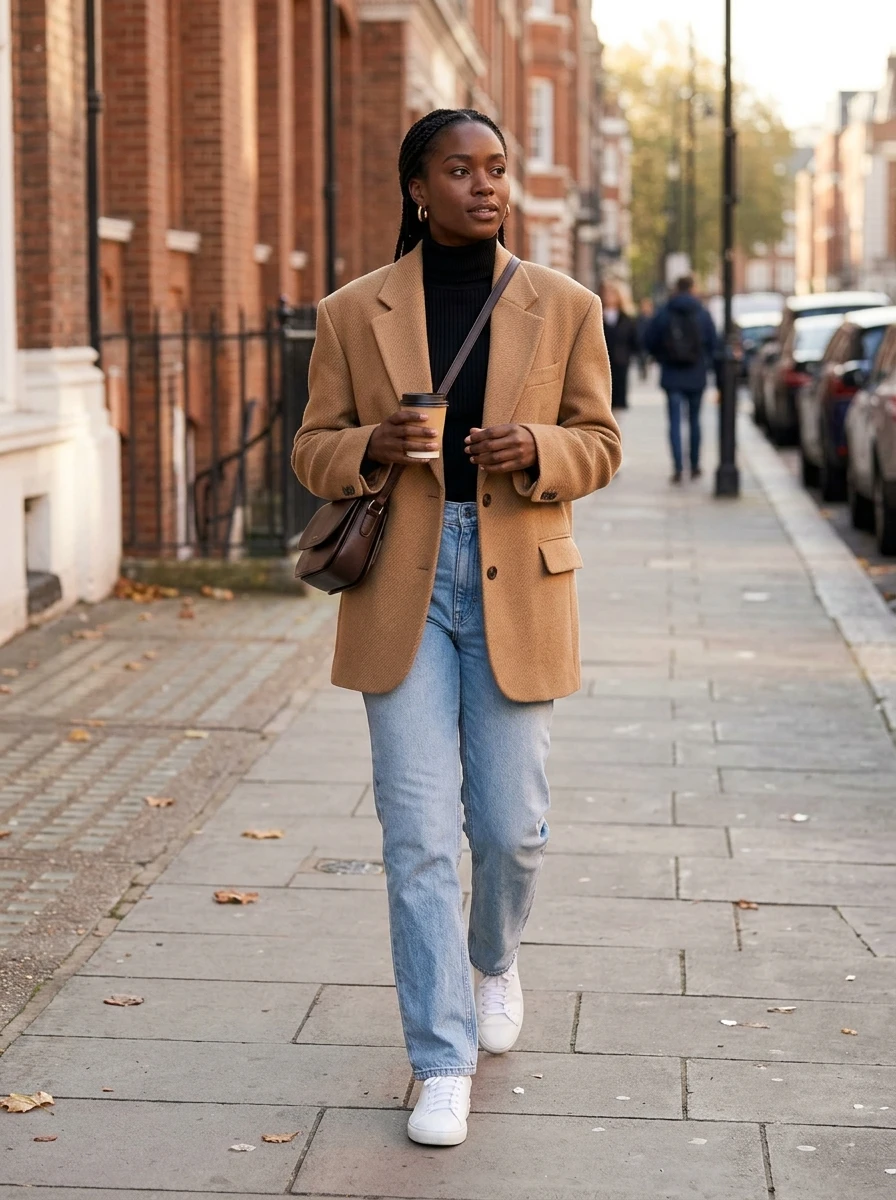
Camel Wool Blazer Over Straight-Leg Denim
An oversized wool blazer in camel or chocolate over dark straight-leg denim is a strong foundation because warm neutrals glow against deeper skin — camel near the face brightens where grey can flatten. The blazer's strong shoulder gives the outfit structure, while the denim keeps it grounded and casual. Keep the top underneath fitted and dark so the blazer remains the focal point. Gold jewellery finishes the look better than silver.
Wear it with: dark ankle boots and a fitted crew-neck top in black or chocolate. More cold weather looks are in these winter outfits, from wool coats to tall boots.
Black Faux Leather, Three Finishes
Head-to-toe black faux leather — leggings, top, jacket in varying finishes — creates a sleek, powerful line, and black monochrome is particularly striking on deeper skin because the contrast makes the skin itself glow. Vary the finishes — matte leggings, slight-sheen top, structured jacket — so the monochrome has dimension rather than flatness. Keep accessories minimal and gold-toned.
Fabric note: faux leather softens with wear, so choose a jacket with a lined body — unlined styles cling to knit tops and bunch at the shoulders.
Why Emerald Works With Charcoal
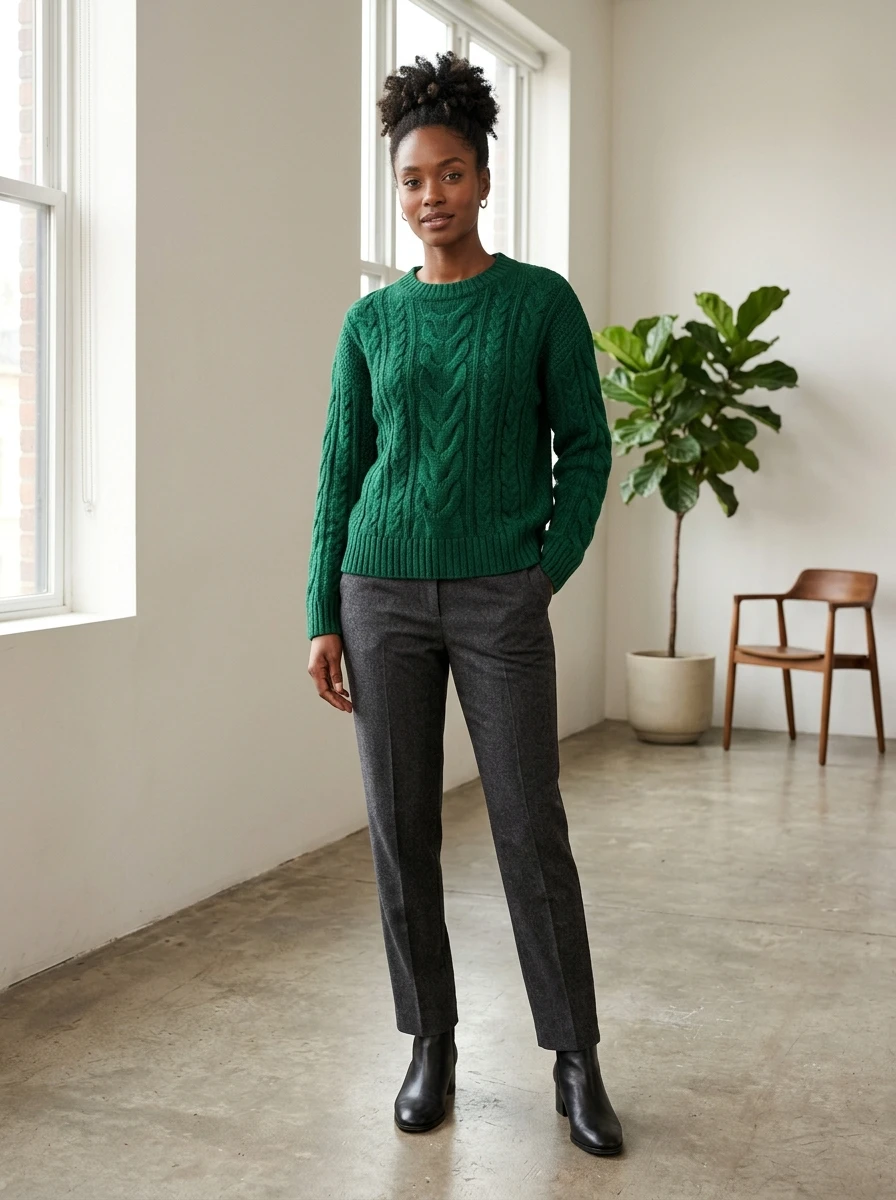
Emerald green is one of the most flattering colours for deeper skin tones — the rich saturation creates a luminous contrast that makes both the colour and the skin look more vibrant. Against charcoal, the emerald stays sophisticated rather than loud. A deep emerald sweater with charcoal trousers or a charcoal coat over an emerald dress both work on the same principle: saturated jewel tone as the statement, dark neutral as the ground.
Colour pairing: emerald with charcoal, plus gold; avoid pairing emerald with icy pastels, which dull the contrast.
Wide-Leg Trousers in a Rich Tone
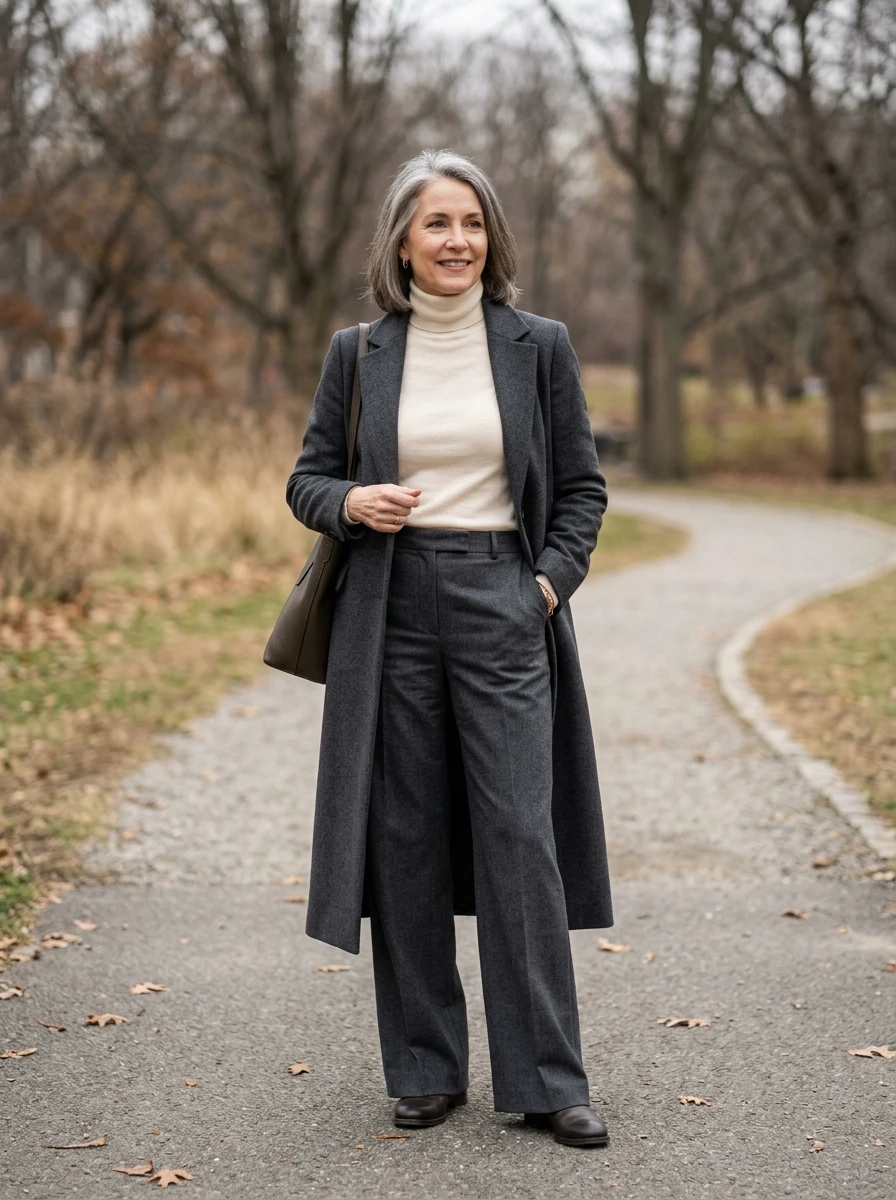
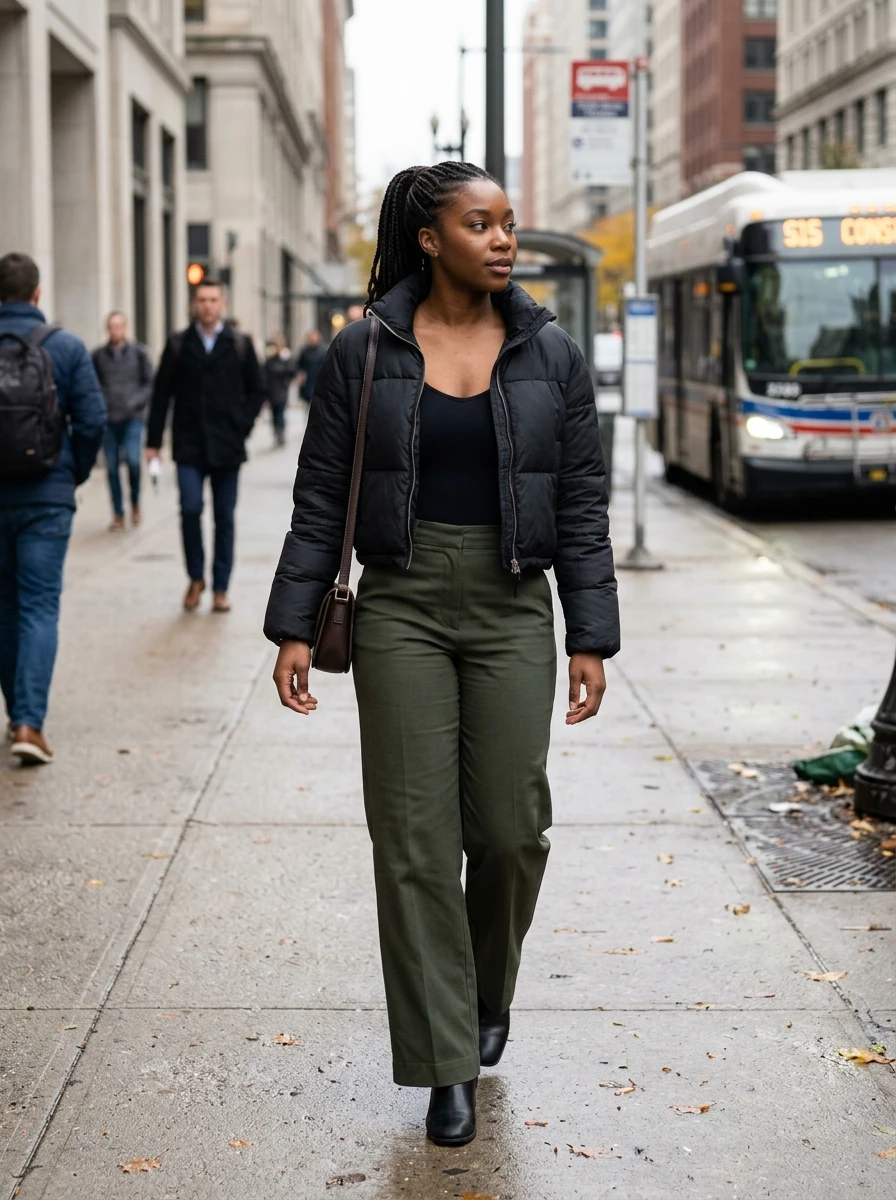
Wide-leg trousers in a rich tone — burgundy, forest, chocolate — give you drama and comfort simultaneously, and saturated colours hold their richness beautifully against deeper skin. The fitted top keeps the volume balanced; the trousers' wide hem should graze the shoe for the intentional break. The silhouette is protective-style friendly too: its polish comes from the trousers' drape, so braids, twists, or a wrap all work without a "done" hairstyle.
Fit note: if the hem pools on the floor, the drape is lost — have the trousers hemmed to just graze the top of the shoe.
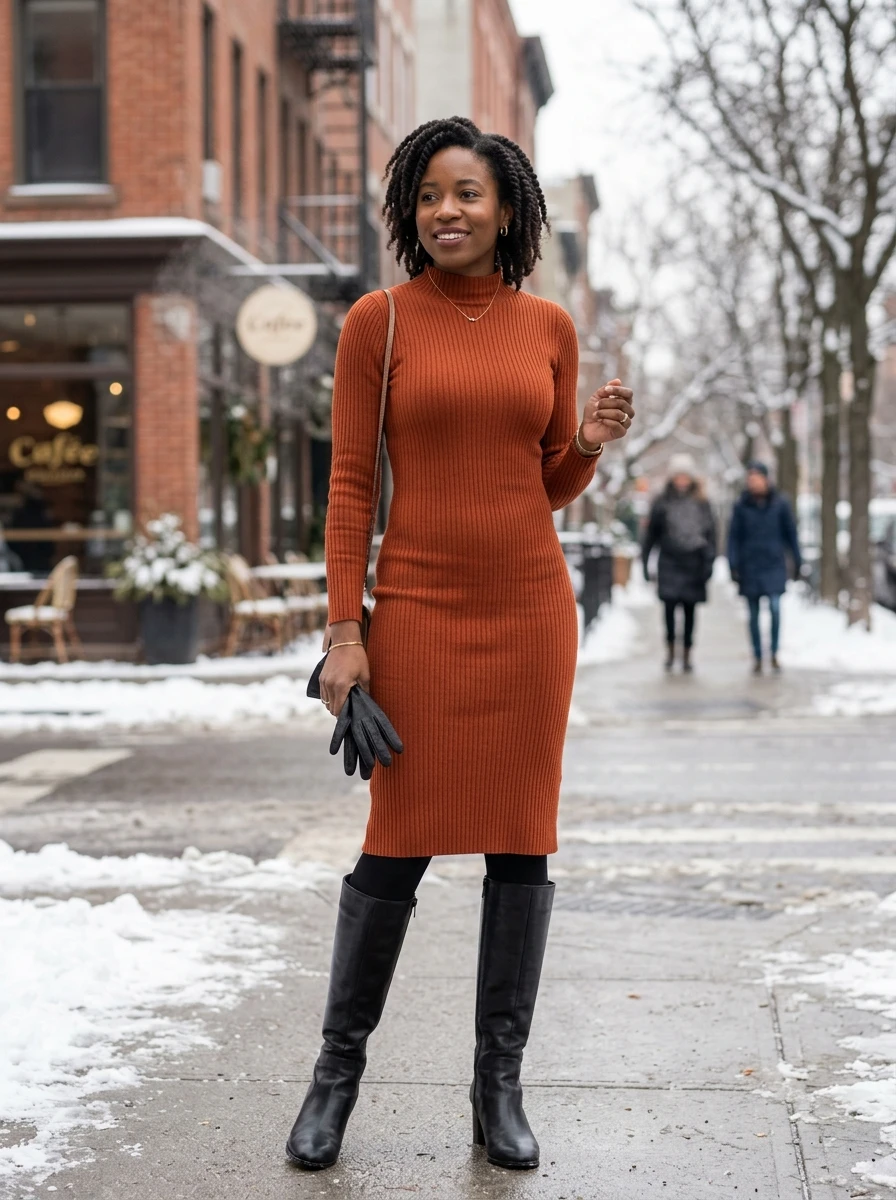
Midi Dress, Tall Boots, One Unbroken Line
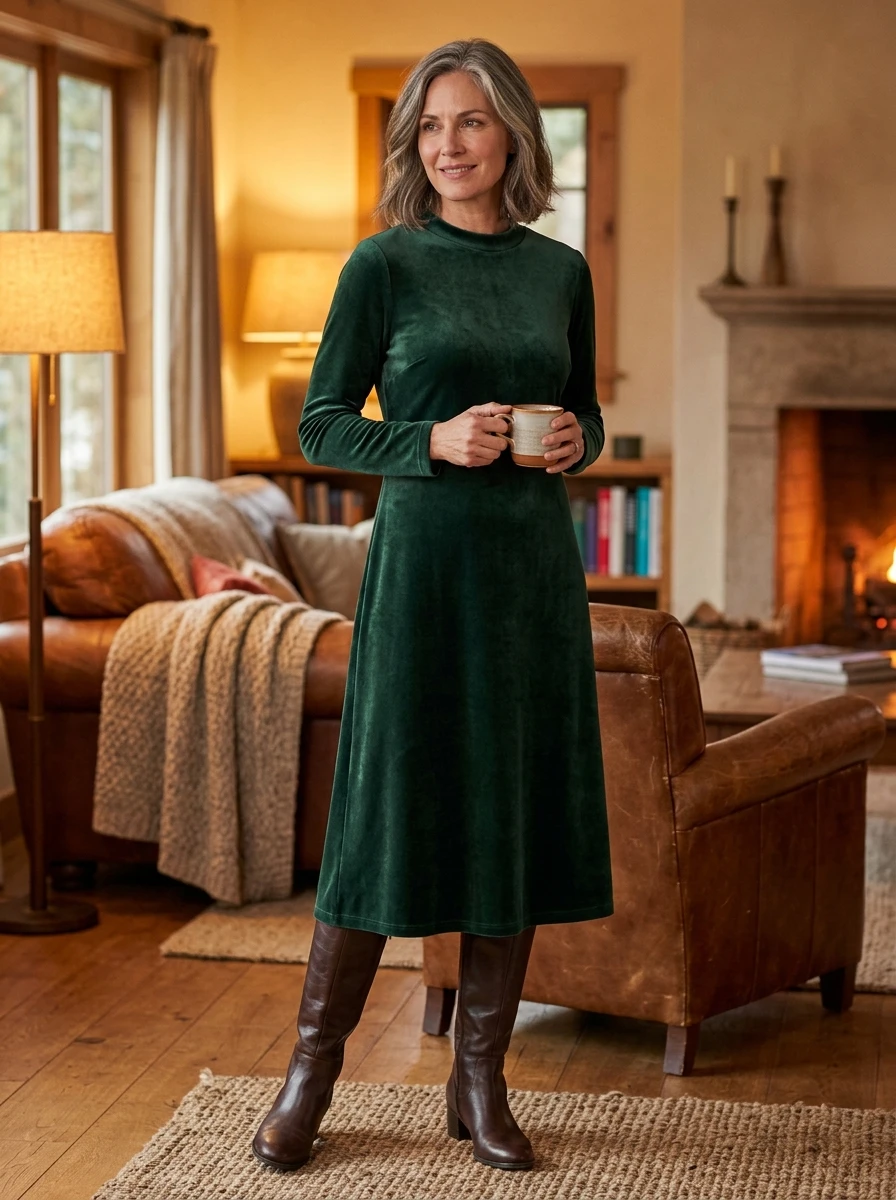
A midi dress with tall boots creates one continuous leg line — and in a rich solid (wine, teal, mustard), the colour does the work of making the outfit memorable. The boot shaft should meet the hem so the line stays unbroken. For natural or protective hairstyles, a midi dress with boots is ideal because the outfit's interest is all below the neck — your hair can be exactly as it is. A long coat adds warmth without breaking the line.
Wear it with: a long wool coat in a matching neutral, and a structured tote rather than a crossbody that breaks the line.
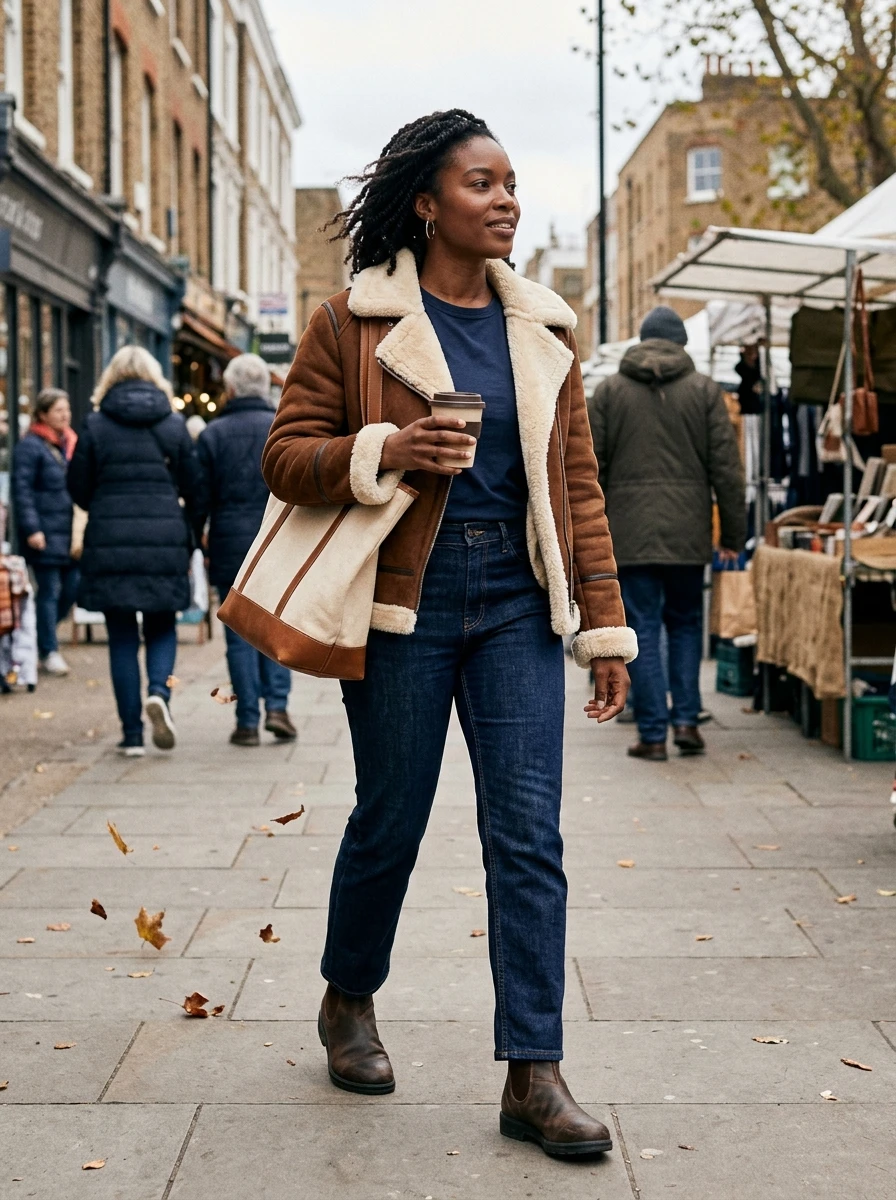
Suede Against Denim
Suede's napped texture against denim's flat twill is a tactile contrast that photographs beautifully — and texture is where winter outfits for deeper skin can really shine, since rich textures complement rich skin tones. A suede jacket in tan or cognac over dark denim is the classic version; the warm suede glows against the skin at the collar and cuffs. Keep the denim dark and simple so the suede holds focus.
Care tip: suede marks easily in wet weather, so brush it after wear and keep it out of rain and snow — save it for dry cold days.
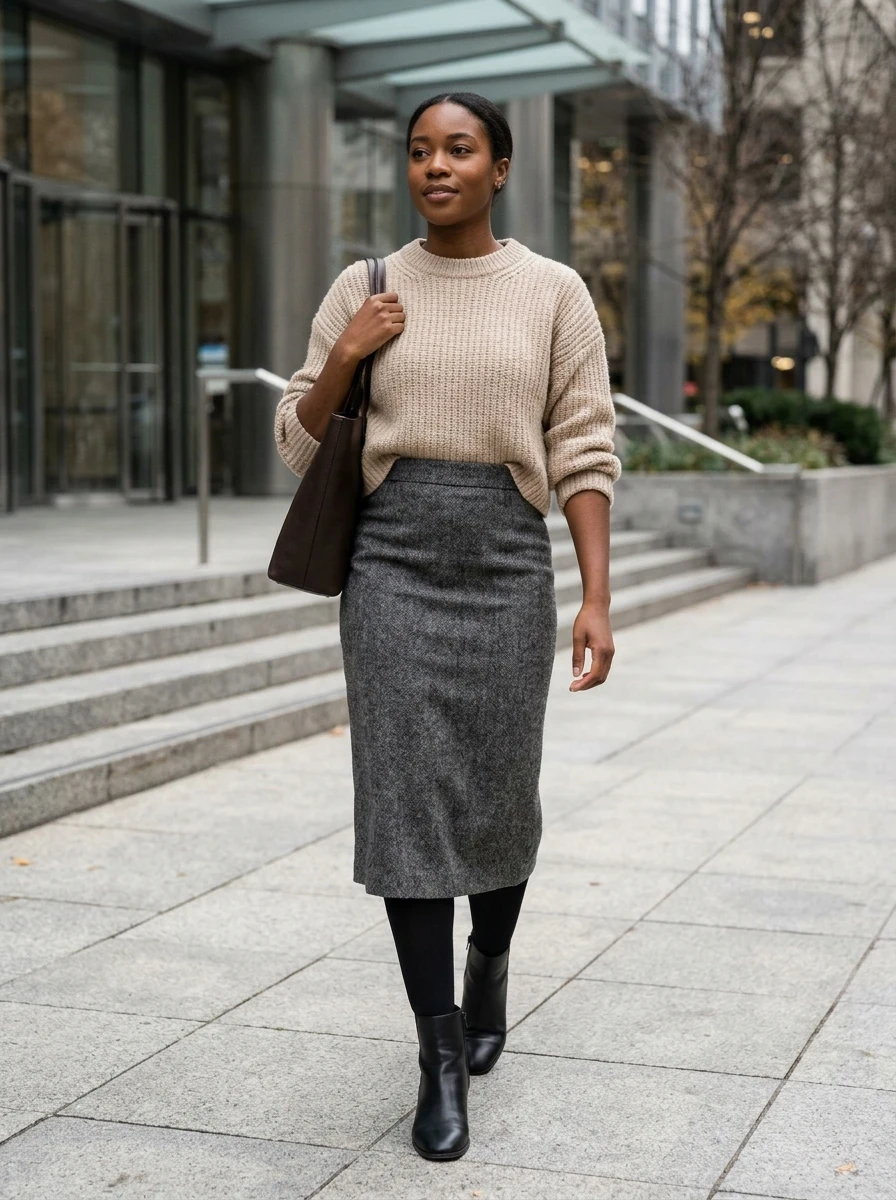
Cropped Sweater Meets High-Rise Skirt
The cropped sweater plus high-rise skirt defines the waist through the meeting point of the two pieces — no skin required, which makes it a true winter formula. In a saturated colour (cobalt, magenta, emerald), the sweater becomes the focal point that lights up the face. The high rise must genuinely meet the sweater's hem; any gap breaks both the warmth logic and the proportion. This outfit works especially well with statement earrings — the neckline is clean, the hair can be pulled back or in a protective style, and the earrings get full visibility.
Fit note: try the pair seated as well as standing — a high-rise skirt that gaps at the waist when you sit needs a different size, not a belt.
The Statement Puffer as the Whole Outfit
A puffer in a rich colour — deep red, emerald, royal blue — transforms the basic legging outfit into something with real presence, and saturated outerwear is particularly striking against deeper skin. The leggings stay black and simple; the puffer is the entire statement. Make sure the puffer is long enough (mid-thigh minimum) to balance the leggings' slim line. On the coldest days, the colour does the styling work.
Fabric note: matte nylon reads more polished than high-shine shells; if the puffer is glossy, keep everything underneath completely plain. The puffer itself is a modern winter staple, and the winter clothing guide covers how insulation actually works.
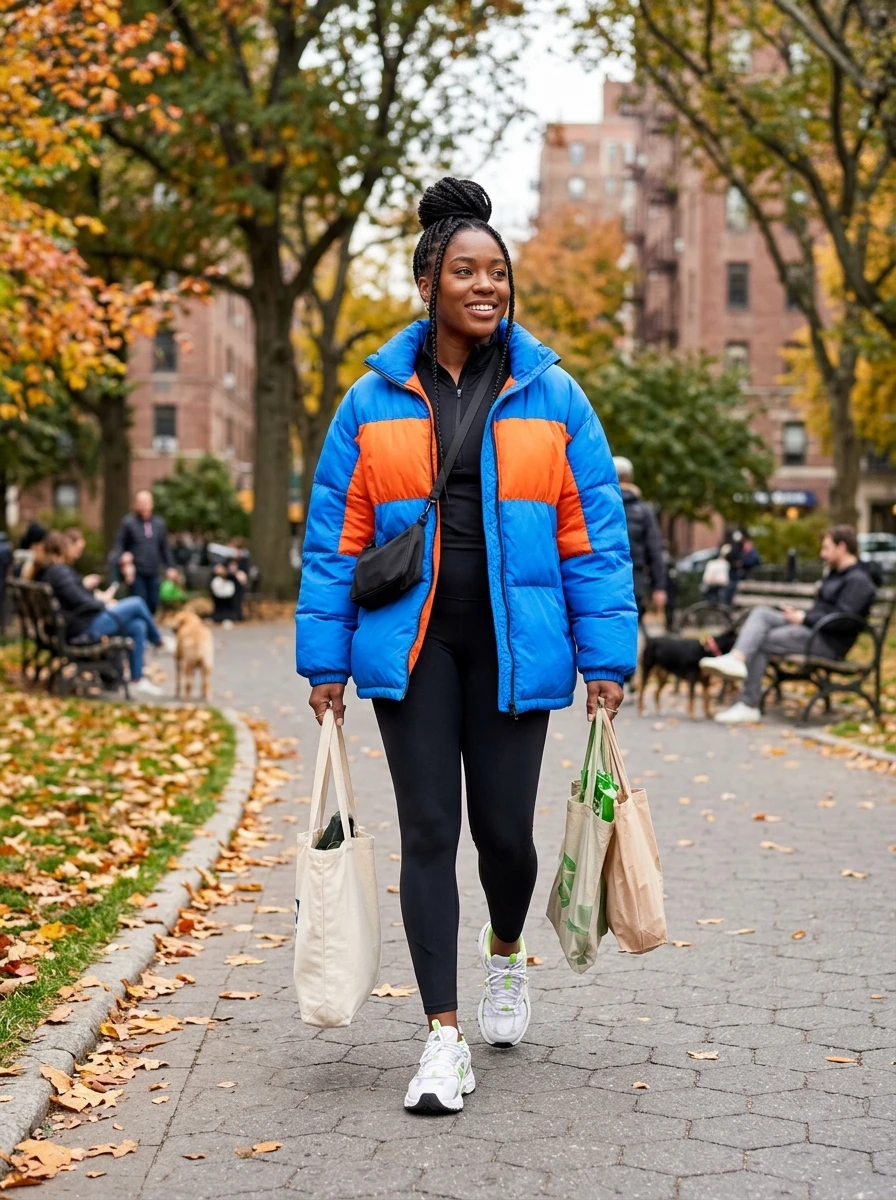
Camel and Neutrals, Worn Near the Face
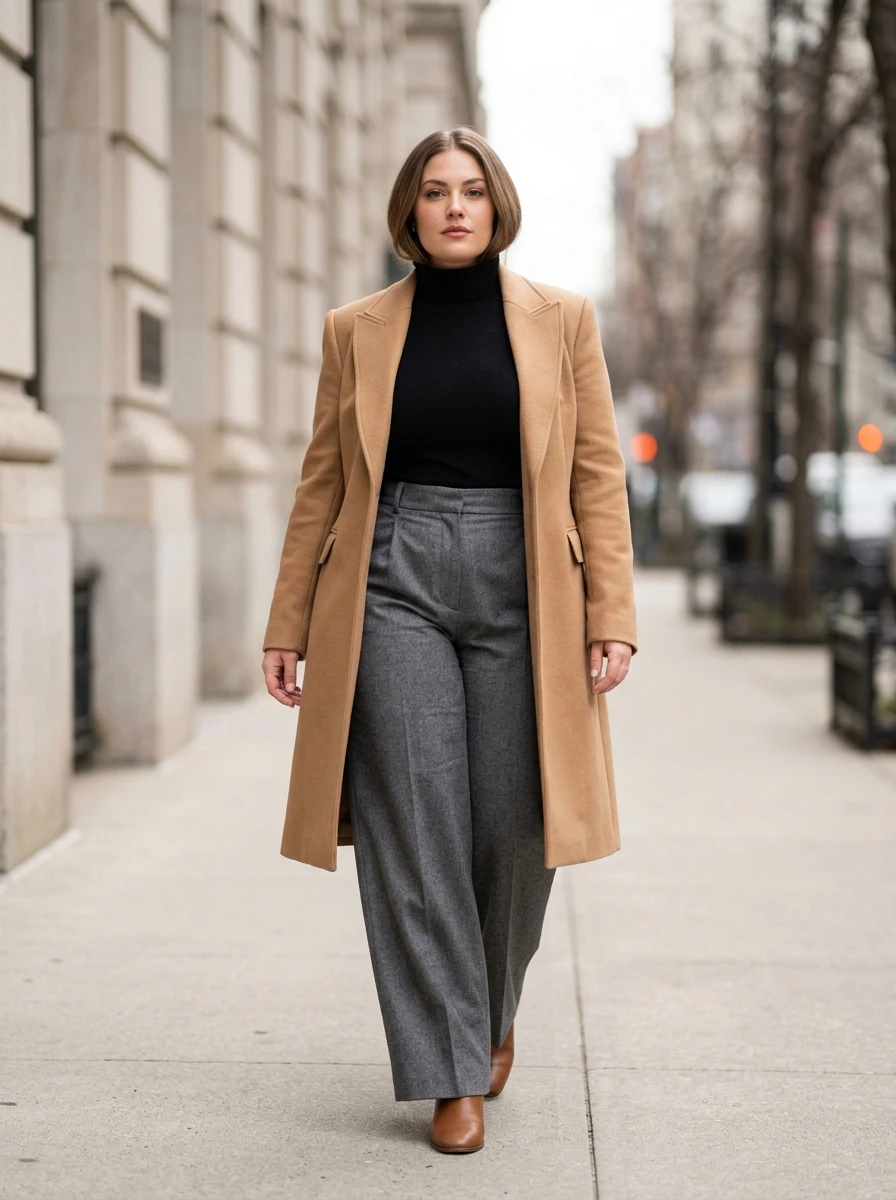
Camel is arguably the single most flattering neutral for deeper skin — its warmth harmonises rather than contrasts, creating a glow effect that grey and black don't provide. A camel coat over an all-neutral base (cream knit, tan trousers, brown boots) is understated luxury. The key is keeping the camel near the face — coat, scarf, or sweater — where its brightening effect works. This palette also pairs perfectly with gold jewellery, which shares camel's warm undertones.
Colour pairing: camel, cream, tan, and chocolate in one outfit; add black only in small doses, such as the boots or bag.
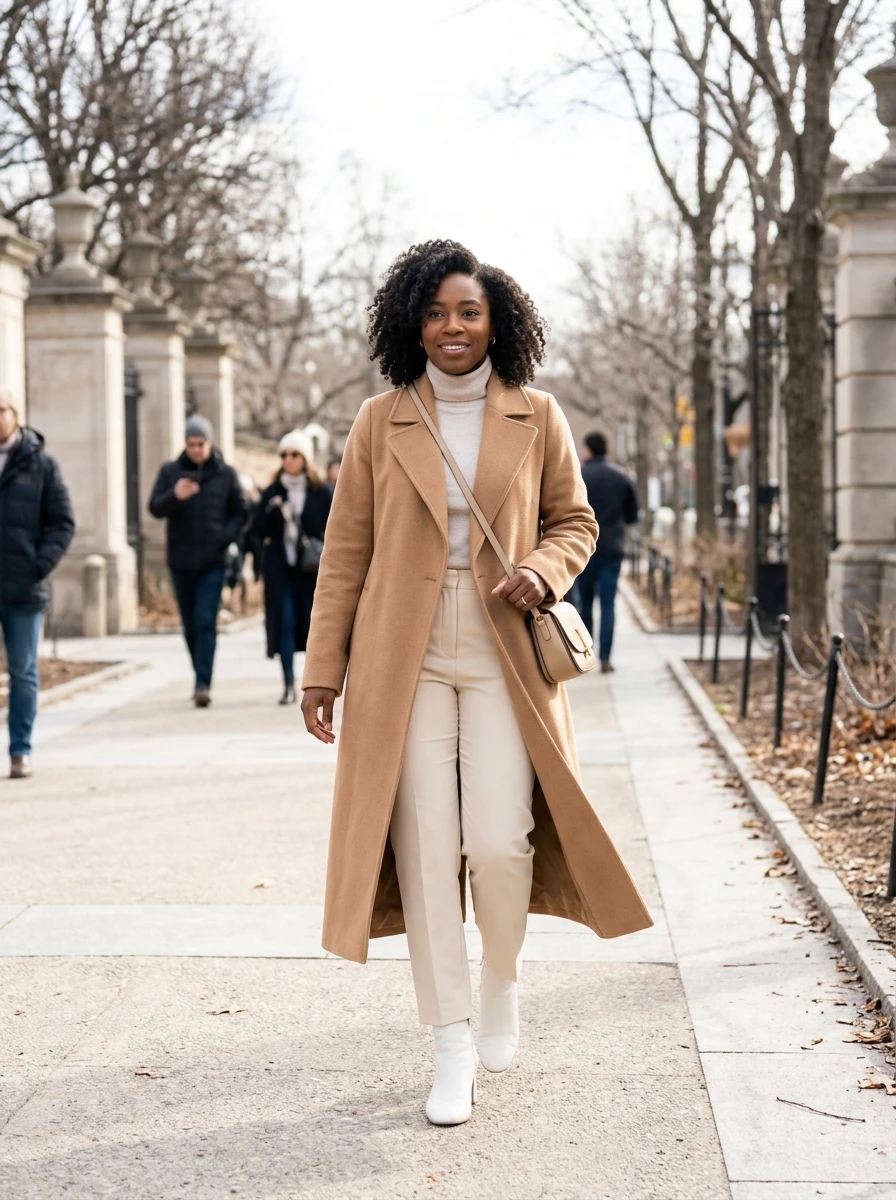
Velvet After Dark
Velvet's light-catching pile is magical on deeper skin — the fabric's sheen and the skin's natural luminosity amplify each other, especially in evening light. A velvet blazer, trousers, or dress in jewel tones (sapphire, emerald, ruby) is the evening formula that needs no additional embellishment. Keep the rest of the outfit simple and matte so the velvet is the single reflective surface.
Care tip: velvet crushes if it is folded tightly or sat on for hours; hang it, steam it lightly, and never iron it flat.
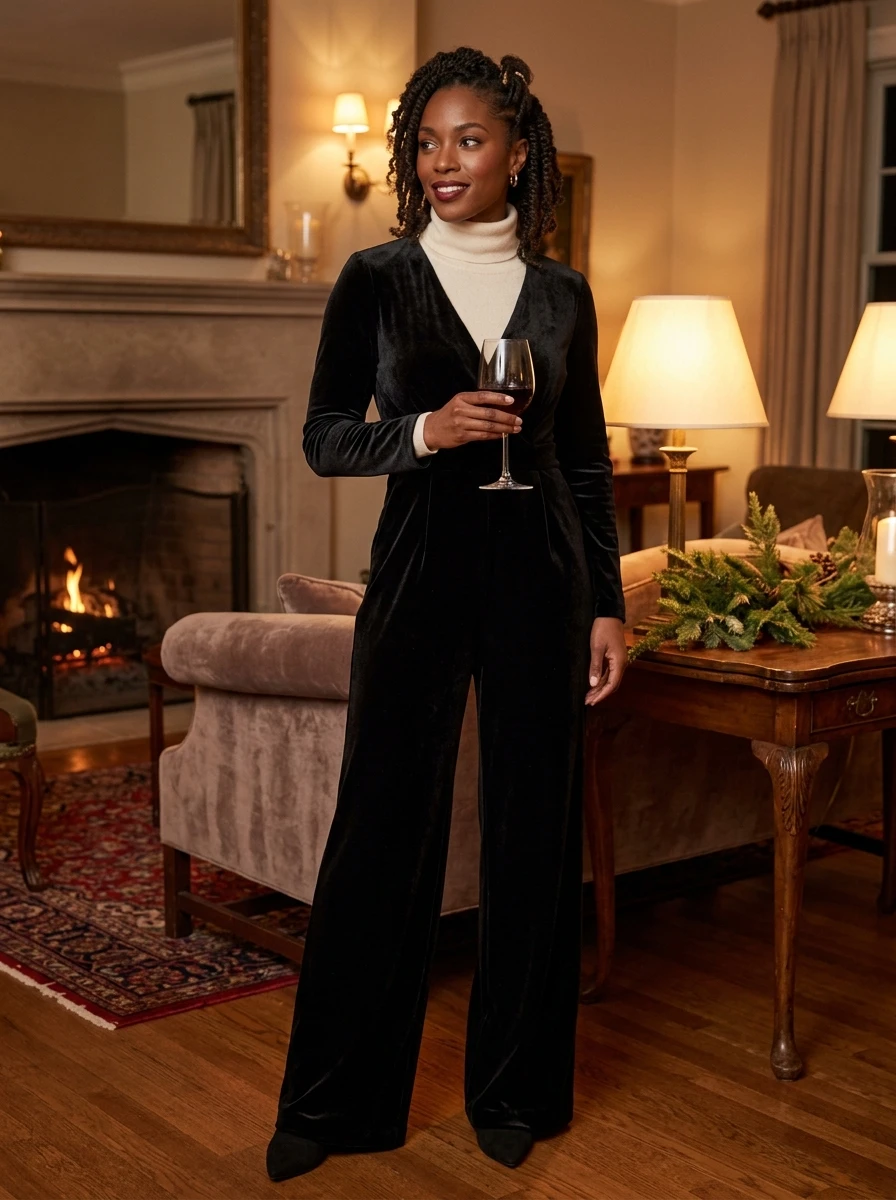
Trench Coat, Leather Pants, City Ready
The trench coat's structure plus leather pants' edge is a combination that works in any city — polished enough for dinner, practical enough for a full day. The trench should be belted to define the waist; worn open it still frames the outfit. In classic camel or stone, the trench brings the warm neutral that flatters deeper skin at the neckline. The leather pants add the modern edge that keeps the classic coat from reading conservative.
Wear it with: a fitted knit in cream or black, and heeled ankle boots that clear the leather's hem.
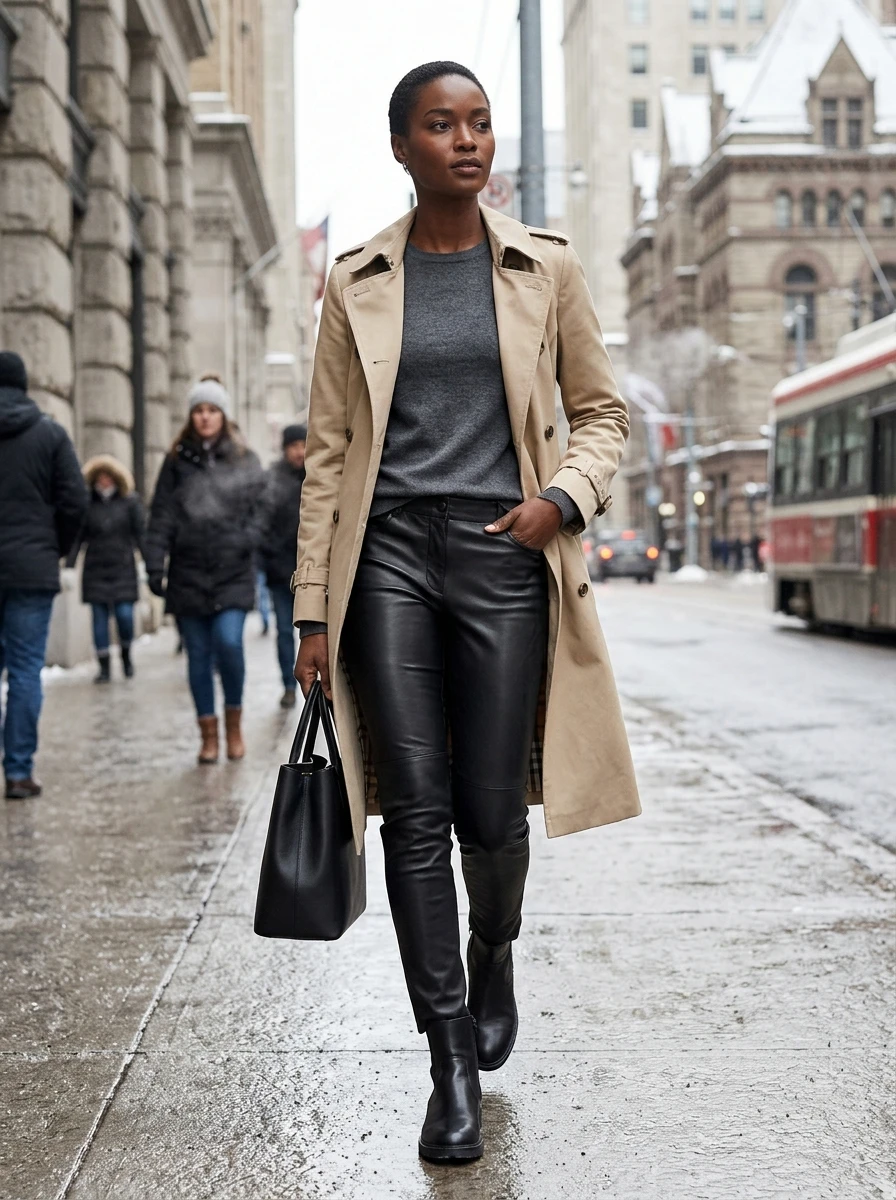
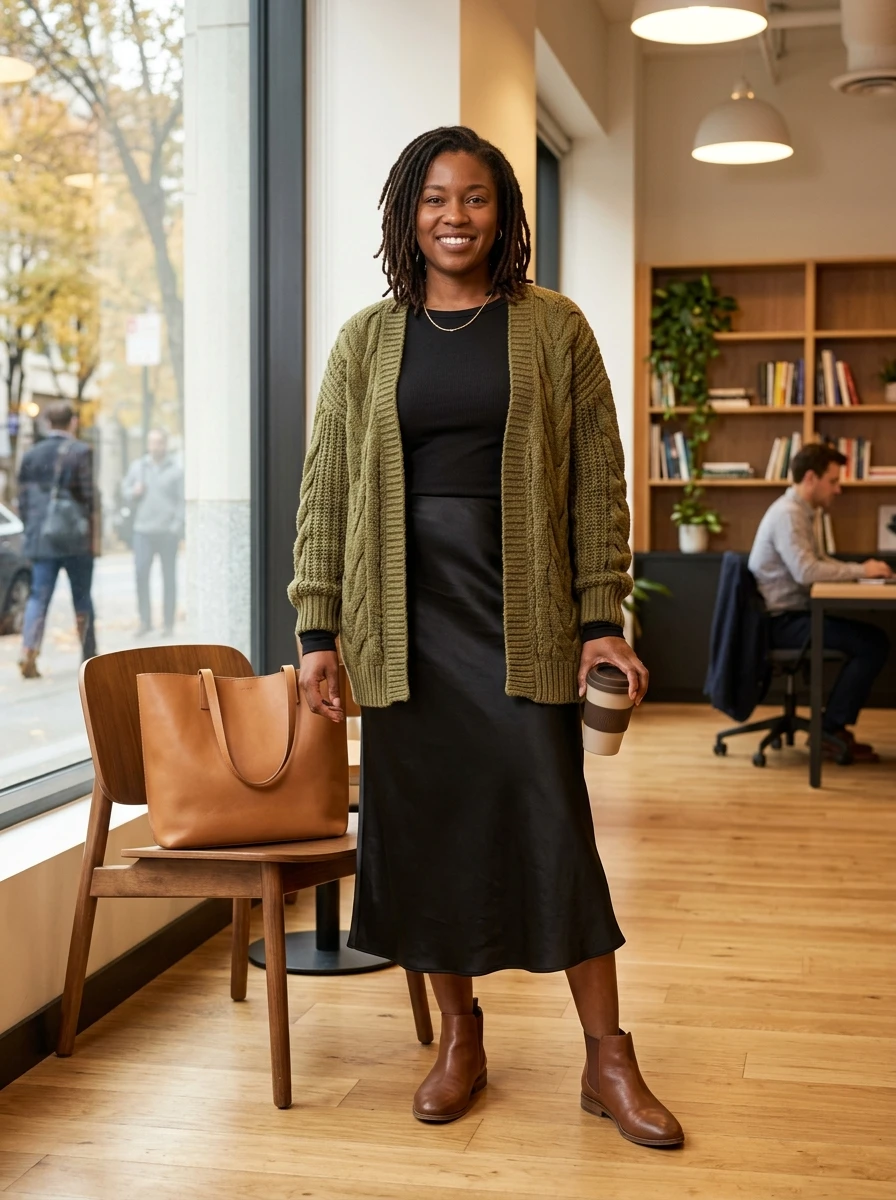
Chunky Cardigan Over a Midi Skirt
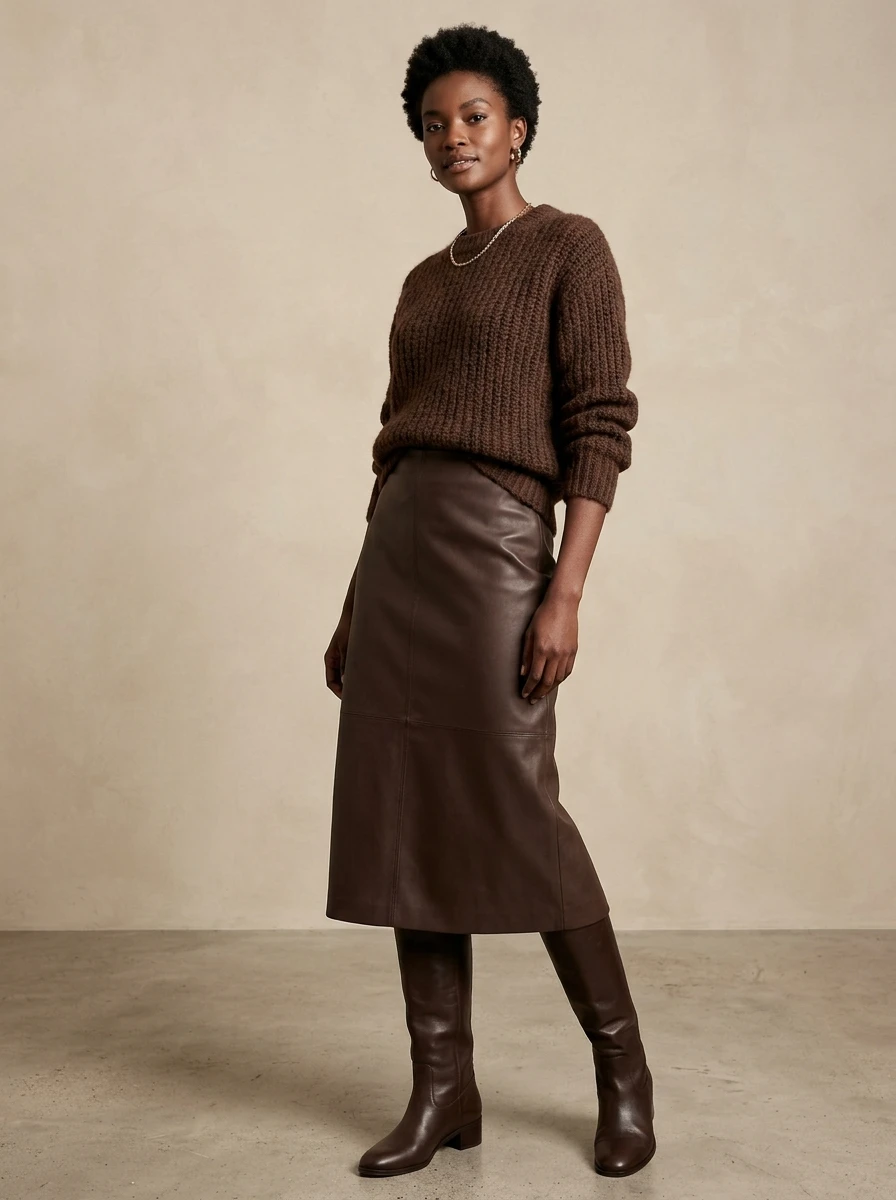
A chunky open cardigan over a midi skirt and fitted top is the cosy-elegant formula — the cardigan's texture provides the visual interest while the skirt keeps the silhouette refined. In warm tones (rust cardigan, chocolate skirt, cream top), the palette glows. Belt the cardigan if it lacks closure; the waist definition is what keeps it styled rather than shapeless. This outfit is also hijab- and wrap-friendly — the layers accommodate full coverage beautifully while the textures keep it interesting.
Fabric note: a wool-blend cardigan holds its shape far better than pure acrylic, which pills and sags by mid-season.
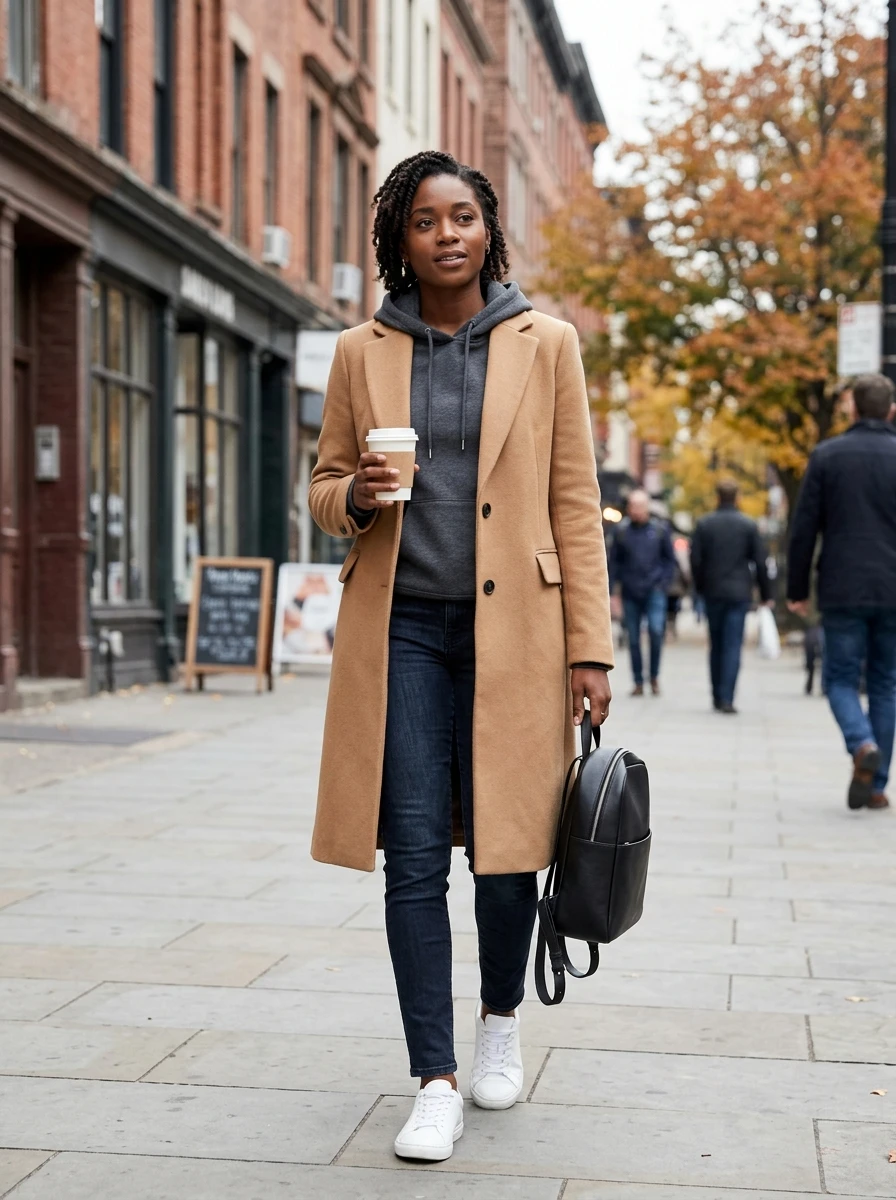
Tailored Overcoat Over a Hoodie
The overcoat-over-hoodie works through deliberate contrast: sharp tailoring against soft casual, and it's a combination that looks particularly good with the hood worn up over braids, locs, or twists — the hood frames the face while protecting the hair. The overcoat must be genuinely tailored (clean shoulder, below-knee length) to carry the polished half; the hoodie should be plain and well-fitting. It's the rare outfit that accommodates protective hairstyles without compromise.
Fit note: the coat's shoulder seam should sit on your own shoulder — if it droops, the tailored half of the contrast collapses.
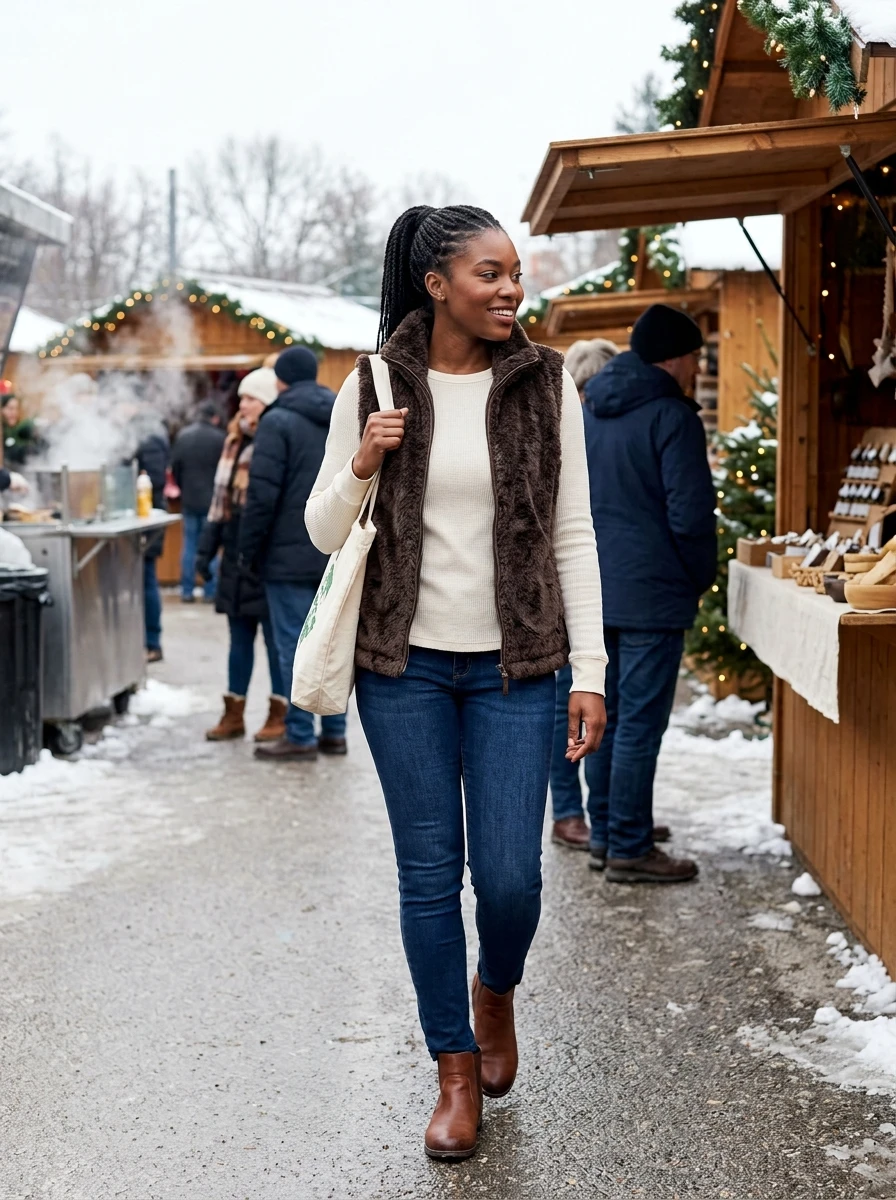
Faux Fur, Denim, Nothing Else Competing
Faux fur's deep pile against denim's flat weave is a texture contrast that reads as luxurious — and rich textures have a special affinity with deeper skin tones, each amplifying the other. A faux fur vest or cropped jacket over dark denim keeps the outfit grounded; the fur is the single statement. Keep everything else simple and matte. No bright colours, no patterns — just the interplay of surfaces.
Care tip: shake faux fur out after wear and store it hanging, never compressed — crushed pile is what makes it look cheap.
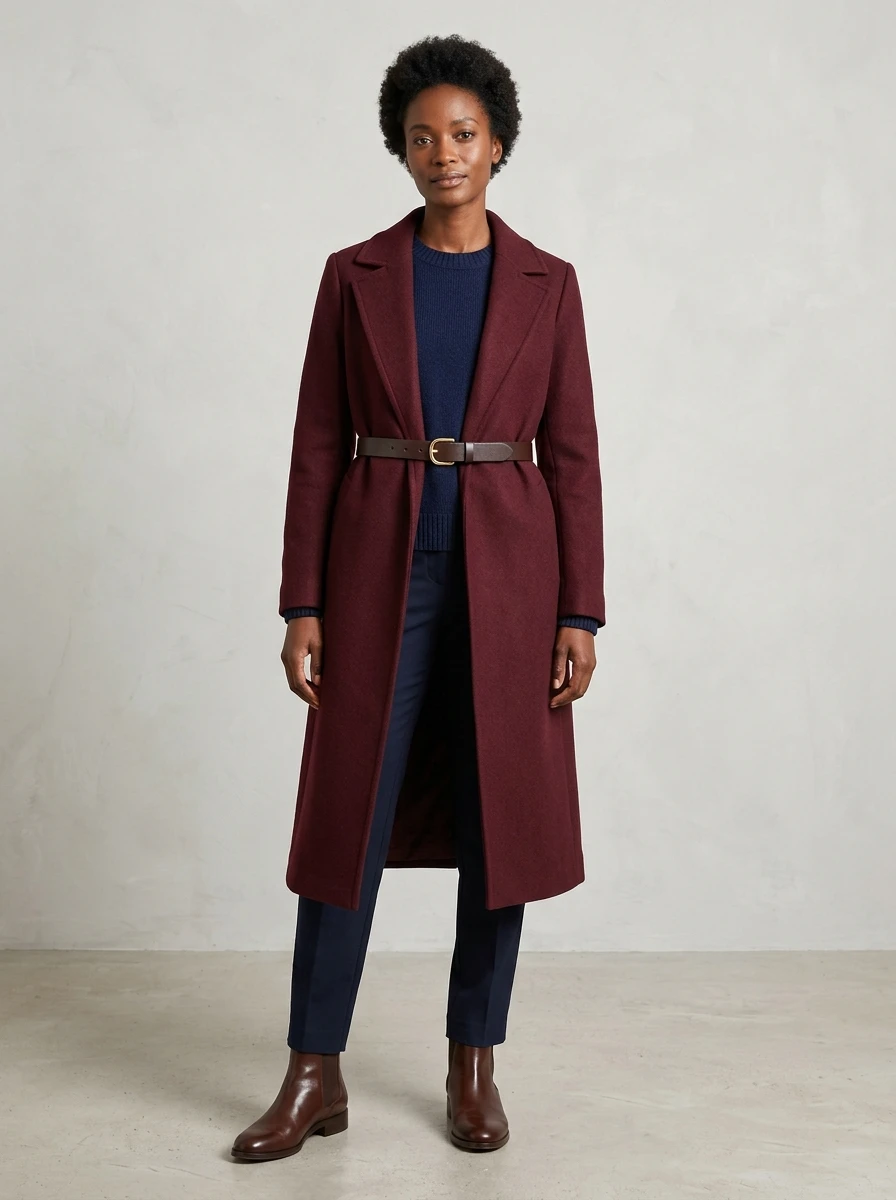
Navy and Burgundy, Blocked Along the Body
Navy and burgundy is a sophisticated pairing where the burgundy's warmth keeps the navy's coolness from flattening deeper skin — the combination has built-in balance. Colour-block along the body's lines: burgundy sweater with navy trousers, or a navy coat over burgundy layers. Keep both colours deep and saturated; pale versions of either wash out the effect. Gold accessories tie the palette together, picking up the burgundy's warmth.
Colour pairing: navy plus burgundy plus gold; keep the third colour out entirely so the two blocks stay clean.
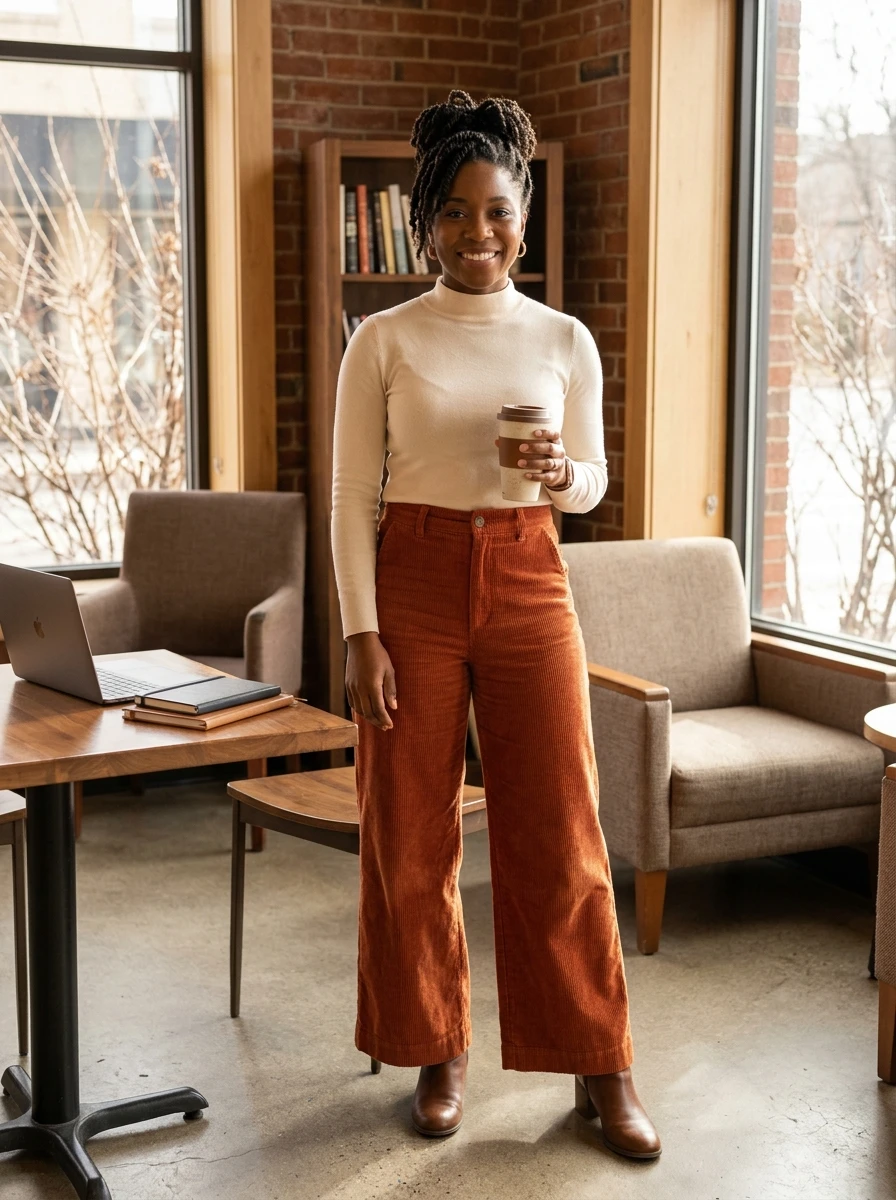
Corduroy Trousers With a Mock Neck
Corduroy's vertical ribs lengthen the leg while the fabric's weight gives the trouser a clean drape — and in rich tones (burgundy, forest, mustard), corduroy's texture breaks up saturated colour so it reads rich rather than loud. A mock neck top keeps the neckline clean and warm; the mock neck also frames the face beautifully, which matters when the outfit's colour is doing the talking. This is the textured alternative to plain trousers — same function, much more interest.
Fabric note: wide-wale corduroy reads casual and retro; fine-wale corduroy reads smarter and drapes better under a coat.
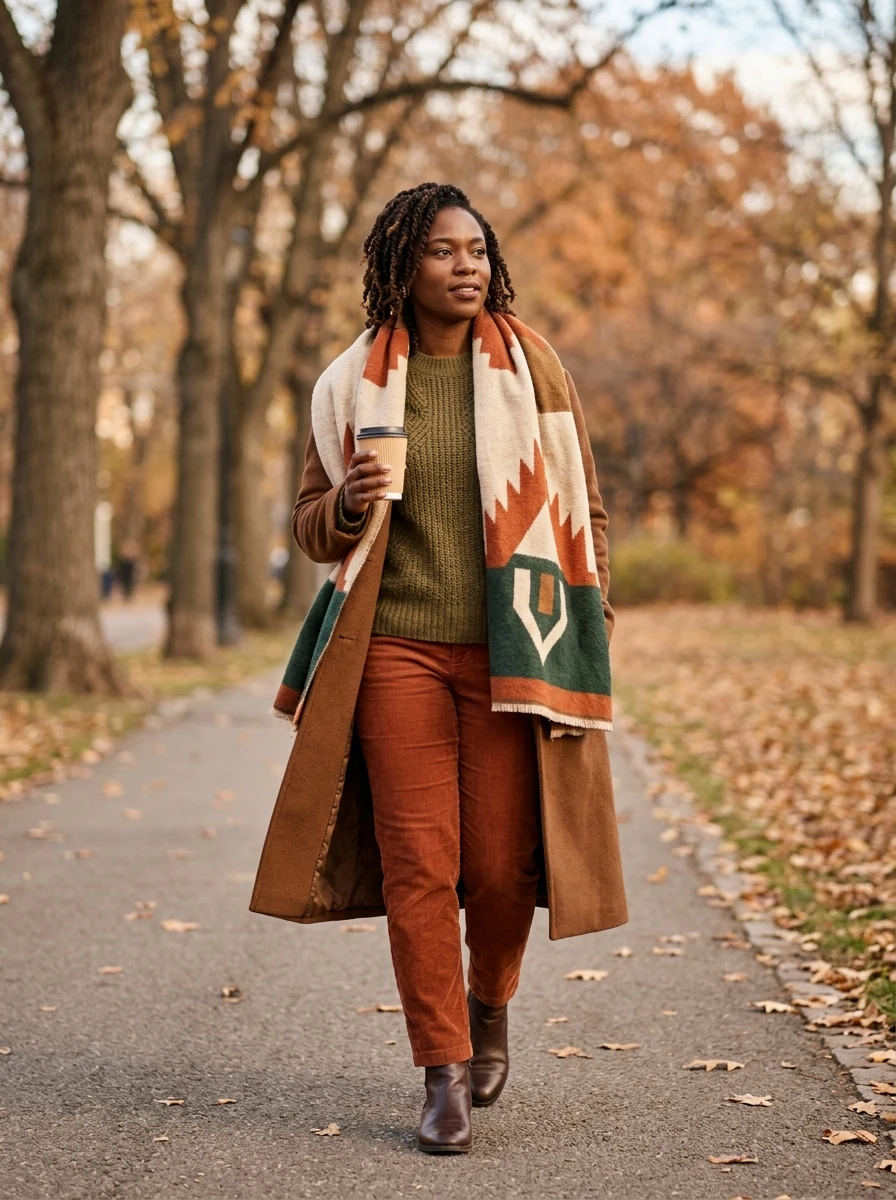
Earth Tones Finished With a Patterned Scarf
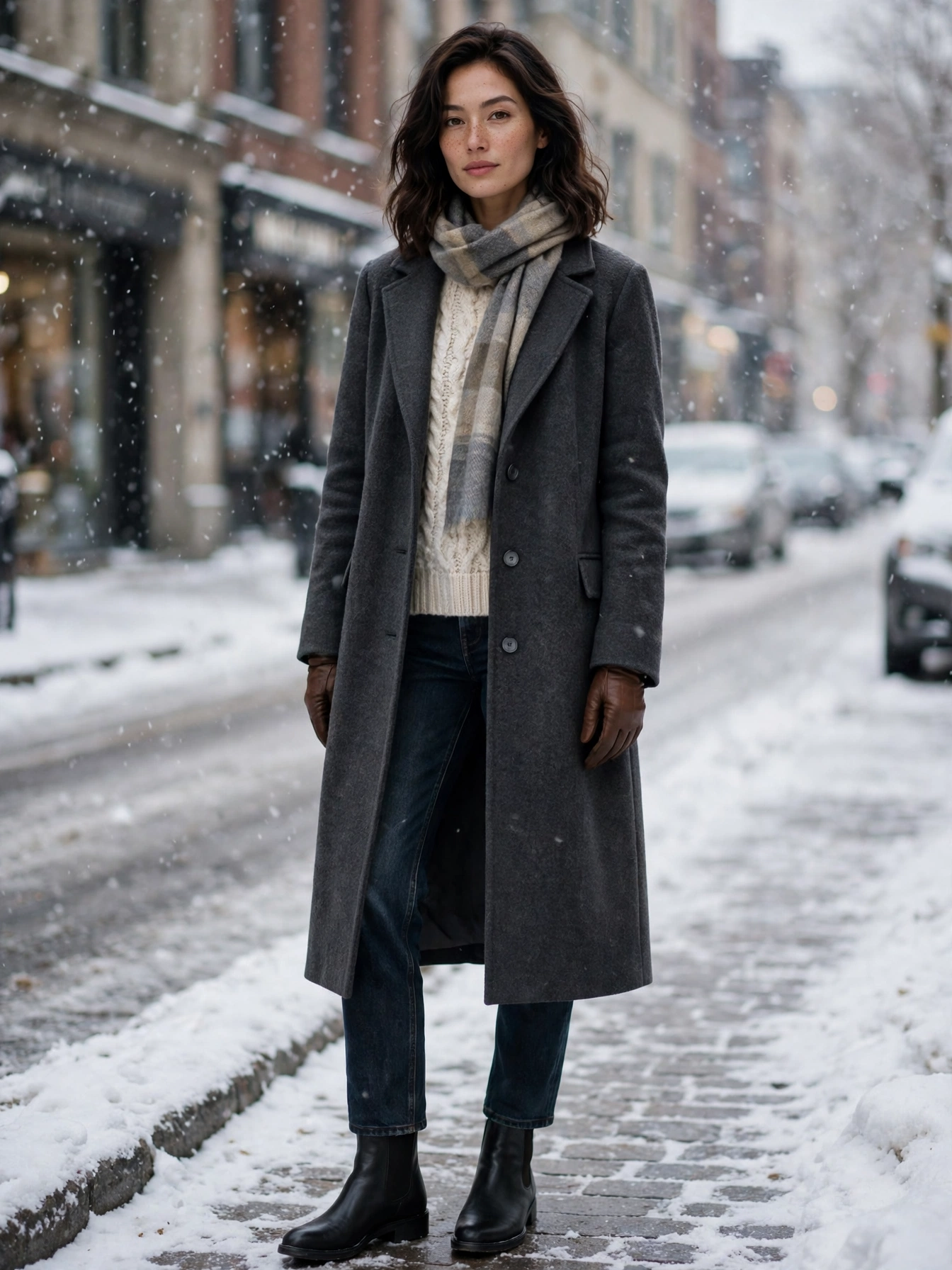
Earth tones (rust, olive, camel, chocolate) share warm undertones that harmonise with deeper skin — the palette feels cohesive and glowing. A patterned scarf in those tones, worn near the face, is the highest-impact accessory in winter dressing: it brings colour exactly where it flatters most. Silk or satin scarves have a double function here — they're also the hair-friendly choice, protecting edges and ends where cotton scarves cause friction. Style the scarf loosely; a tight wrap compresses both the pattern and the hair.
Wear it with: a plain rust knit and chocolate trousers, so the scarf is the only pattern in the outfit.
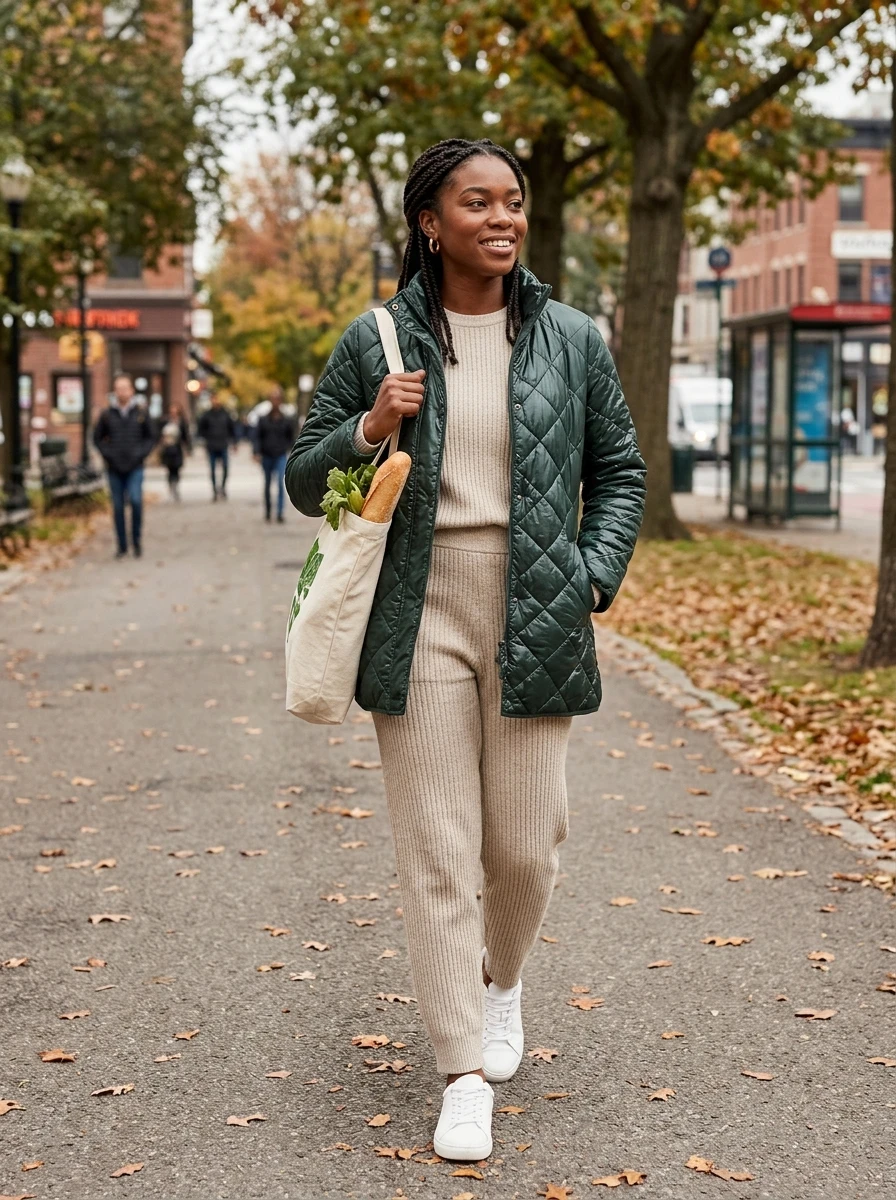
Quilted Jacket Over a Matching Knit Set
A quilted jacket over a matching knit set is the elevated casual uniform — the quilting adds tailored detail that a plain puffer lacks, while the knit set keeps everything comfortable. In a warm neutral (camel, taupe, olive), the combination is polished enough for lunch and practical enough for errands. The jacket should hit at the hip; longer quilted coats lose the set's clean line.
Fit note: if the knit set's top and bottom are the same tone, the jacket can be one shade deeper — matching exactly can flatten the whole look.
A Note on Hair-Conscious Winter Styling
Winter is hard on textured and protective hairstyles: dry air, wool hats, and cotton scarves all cause friction and moisture loss. A few principles worth building into your wardrobe choices: satin or silk linings (in hats, hoods, and scarves) protect where cotton damages — it's worth seeking out lined winter hats. High collars and turtlenecks are your friends; they frame the face without disturbing braids, twists, or wraps. Oversized hoods accommodate more volume than tight beanies. When an outfit's polish comes from silhouette and colour, your hair gets to be exactly what it needs to be that week.
Common Questions About Winter Dressing
What winter colours actually flatter deeper skin?
Saturated jewel tones (emerald, sapphire, ruby, burgundy) and warm neutrals (camel, chocolate, cream) create luminous contrast against deeper skin. Pastels and icy tones tend to wash out in winter's flat light.
How do I keep braids or twists safe under winter hats and hoods?
Choose satin- or silk-lined hats and hoods, wear silk scarves instead of cotton ones, and favour outfits whose polish doesn't depend on your hairstyle — strong silhouettes, rich colours, and good outerwear. High collars and oversized hoods protect without compressing, and a lined beanie is worth the search.
Gold or silver jewellery in winter — which works better here?
With warm undertones (common in deeper skin), gold harmonises beautifully — it shares the skin's warmth, and it matches camel, chocolate, and burgundy especially well. Silver can work as a deliberate contrast, but gold is the effortless choice. Match your hardware (bag clasps, belt buckles) to your jewellery for cohesion.
My skin looks ashy in winter — is that a fabric problem?
Partly. Moisturise before dressing (fabrics cling less to hydrated skin), and favour fabrics with a bit of sheen — silk, satin, velvet — near the face, since matte fabrics can emphasise dryness. Rich colours near the face also counteract the flat look that winter light creates.
Can an all-black winter outfit work without looking flat?
Yes — vary the textures. Matte leggings, a slight-sheen top, and a structured wool coat are all "black" but read as three different blacks, which creates depth. Black monochrome on deeper skin is striking because the contrast makes the skin glow; the texture variation keeps it from looking one-dimensional.
Before You Build Your Rotation: A Quick Checklist
- One warm neutral anchor — a camel coat or blazer that sits near the face
- One jewel tone — emerald, burgundy, or sapphire in a sweater or coat
- One texture piece — velvet, suede, faux fur, or corduroy for depth
- One satin- or silk-lined hat or scarf, so winter layers protect rather than damage hair
- Gold jewellery and matching hardware, kept consistent across the rotation
- Boots that meet the hem — midi hems and tall boots, wide-leg hems grazing the shoe
- Every outfit checked on the "hair test": does it still look finished with braids, twists, or a wrap?
Tick those seven off and the eighteen outfits above become combinations you can build from pieces you already own.