15 Comfy Aesthetic Winter Outfits to Help You Plan Ahead
How to use this guide
These are editorial styling suggestions, not a one-size-fits-all formula. Adapt each look to your wardrobe, proportions, climate, comfort, budget, and the occasion; the most useful idea is the one you can genuinely wear.
Winter comfort and winter style are usually presented as a trade-off. They're not — they're a sequencing problem. Warmth comes from the base and mid layers; style comes from the outermost visible layer and the silhouette. Get the hidden layers right and the visible ones can be anything you like. Get them wrong and no coat in the world saves the outfit, because you'll be cold and it will show.
Every outfit below is built on that principle: real warmth underneath, deliberate shape on top. Plan around it and winter dressing stops being a morning negotiation.
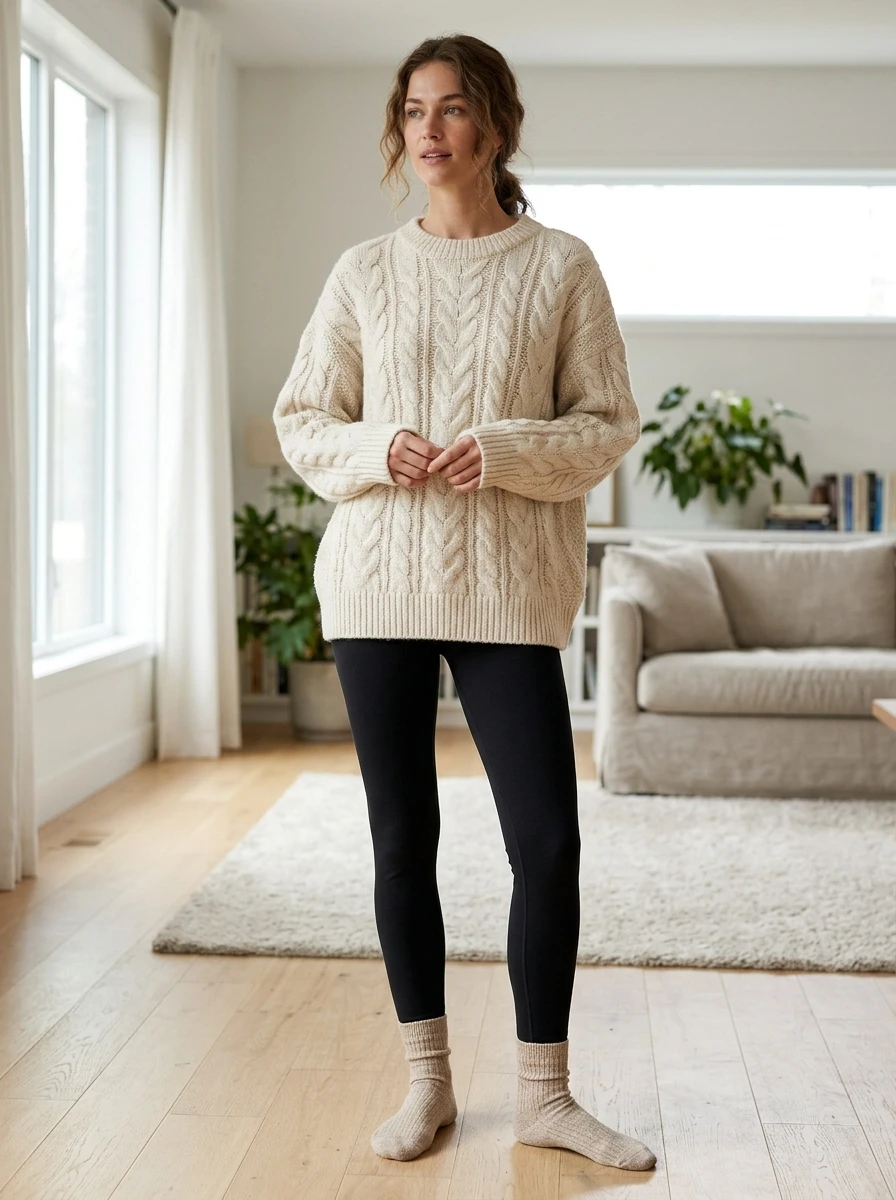
Oversized Knit and Leggings
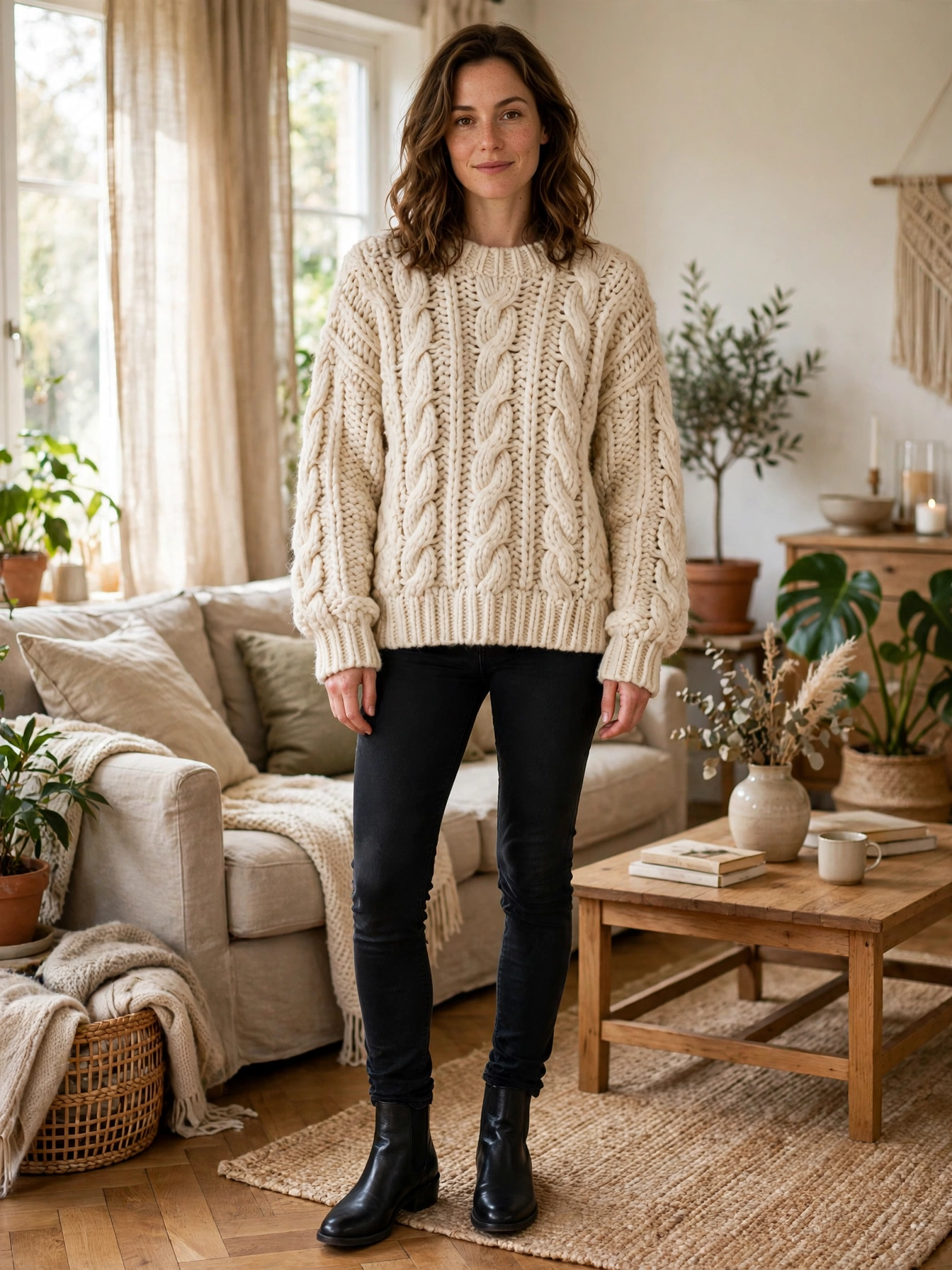
The oversized knit works over leggings because of a single proportion decision: the sweater must end mid-thigh, covering the hip and upper leg where leggings are least forgiving, while the legging's slim line below balances the knit's volume above. A knit that ends at the waist over leggings looks unfinished; one that hits mid-thigh looks styled. The knit itself should have some structure — a fisherman rib or chunky cable holds its shape, while a thin drapey knit collapses and clings. Thermal leggings underneath make this genuinely warm, not just warm-looking.
Monochrome Wool Ensemble
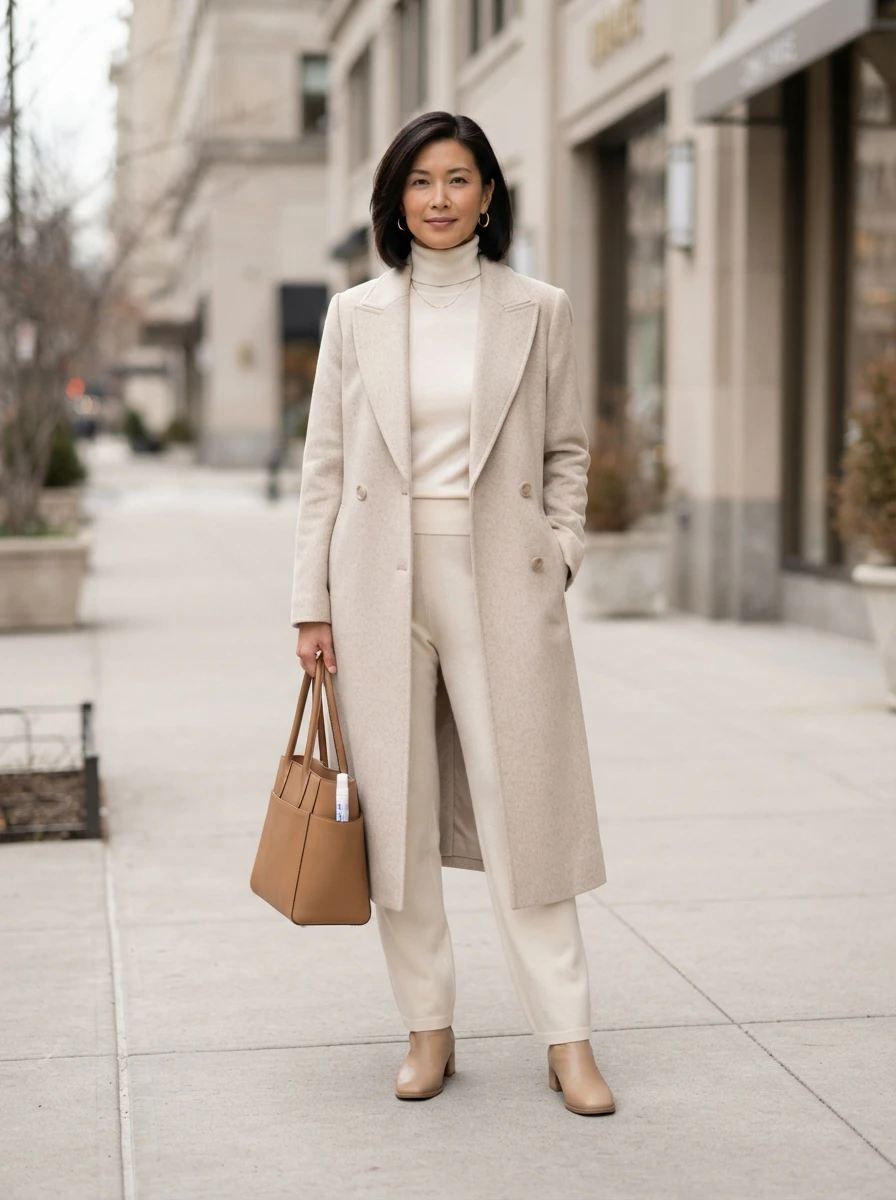
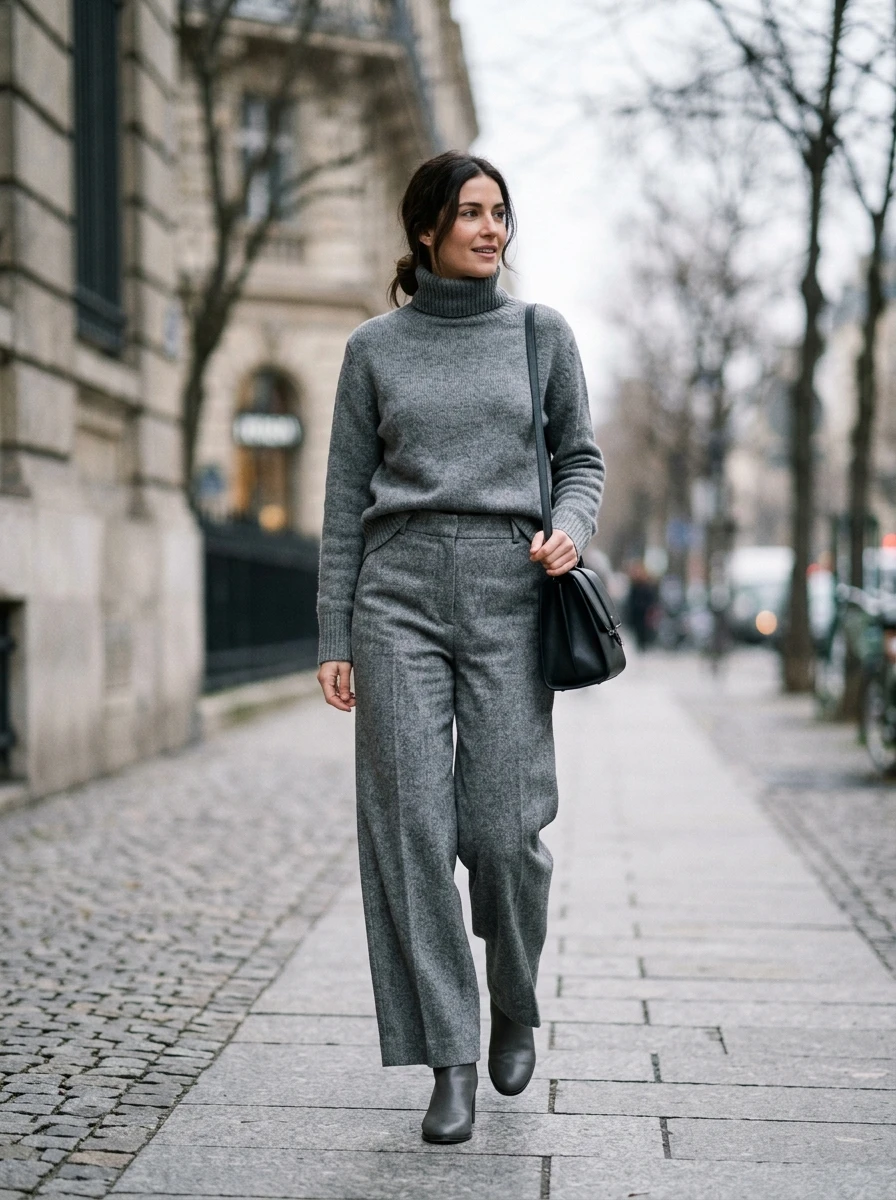
Head-to-toe wool in one color is winter's easiest win: wool regulates temperature better than any synthetic, and monochrome removes every visual break, so the outfit reads as long and polished even though every piece is soft. The texture variation within the single color is what keeps it from looking like pajamas — a smooth merino turtleneck against a nubby wool skirt, for instance. Charcoal, camel, and cream are the hardest-working choices because they layer with everything else you own. This is also the warmest way to wear a skirt in winter: wool tights plus a wool skirt is a double insulation layer most people underestimate.
Fleece Lined Denim Look
Fleece-lined jeans solve winter's denim problem — regular denim is essentially uninsulated, which is why jeans feel cold the moment temperatures drop. The fleece lining adds warmth without changing the exterior, so all your normal denim styling still applies. The key detail is the fit: fleece-lined denim runs slightly snugger than its unlined equivalent, so size for comfort, not vanity. Pair with a tucked-in thermal and a cropped puffer, and you've got a jeans outfit that actually functions below freezing instead of just looking like one.
Puffer Vest and Sweatshirt
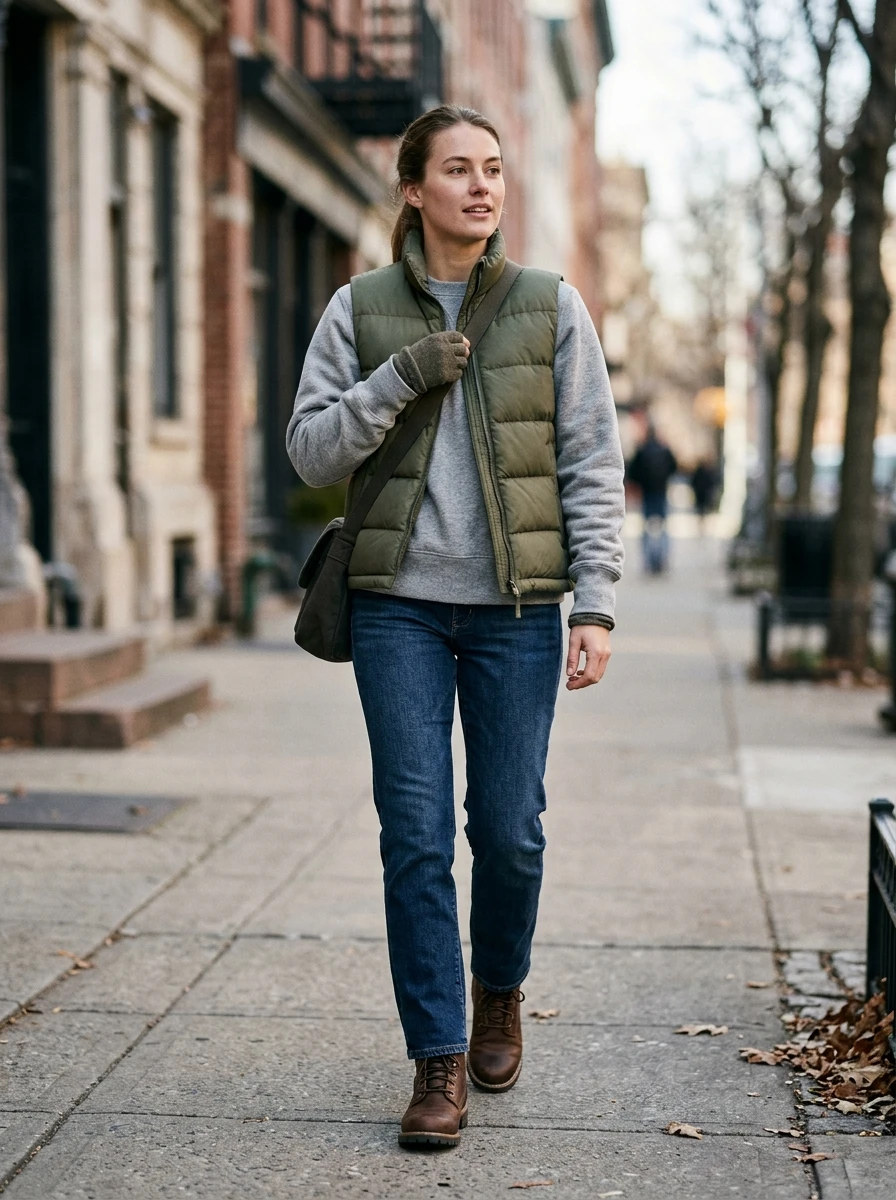
The puffer vest is the most honest layer in winter dressing: it admits that your core needs the most insulation while your arms need freedom. Over a heavyweight sweatshirt, it creates a two-texture torso — quilted nylon against soft fleece — that looks deliberately layered rather than thrown together. The vest must fit closely enough that it doesn't billow over the sweatshirt; a vest swimming in excess fabric reads as borrowed gear. This combination handles the 35-to-50-degree range better than a full coat, because you can unzip the vest as the day warms without losing the outfit.
Earth Tone Cardigan Layering
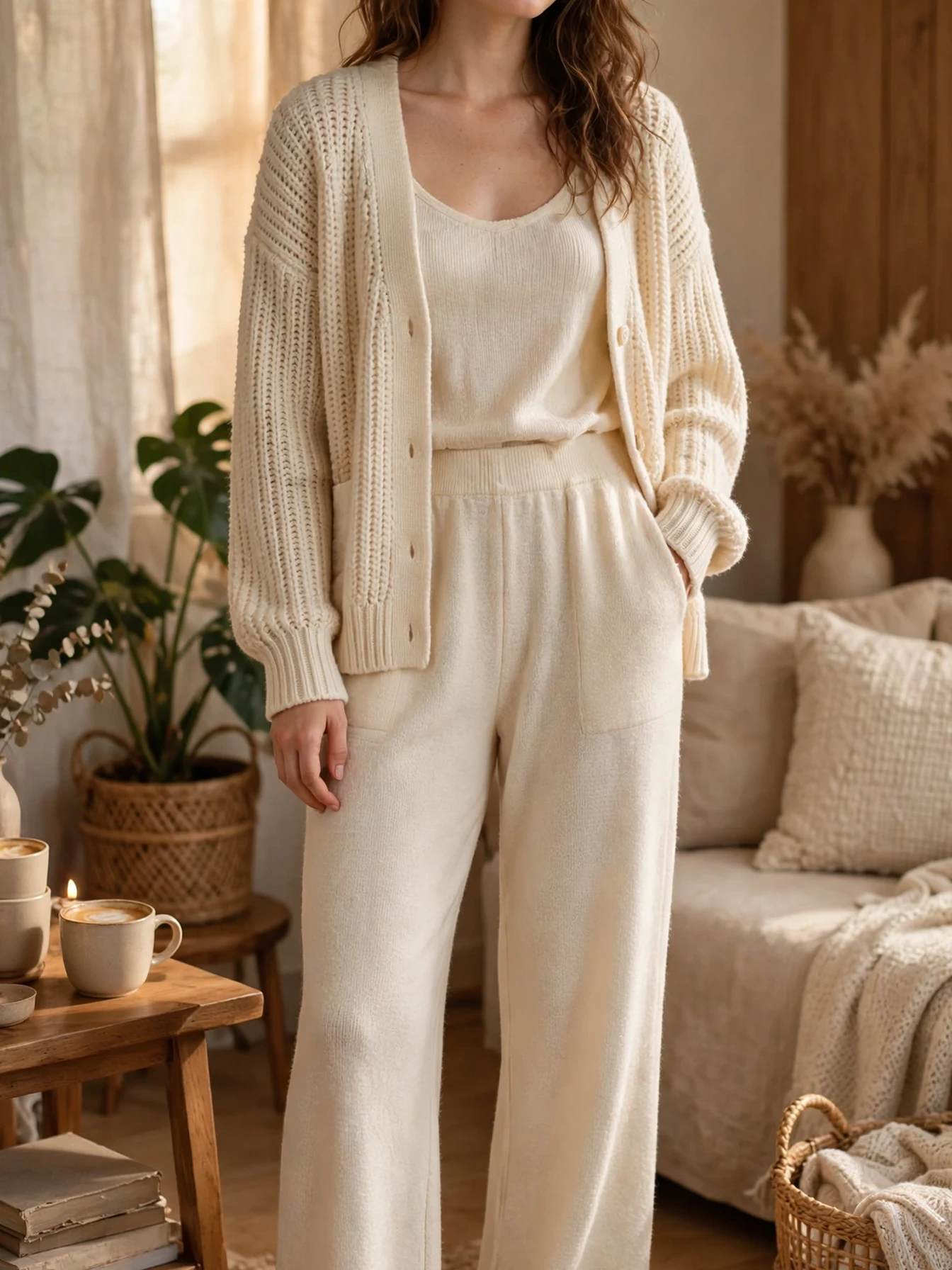
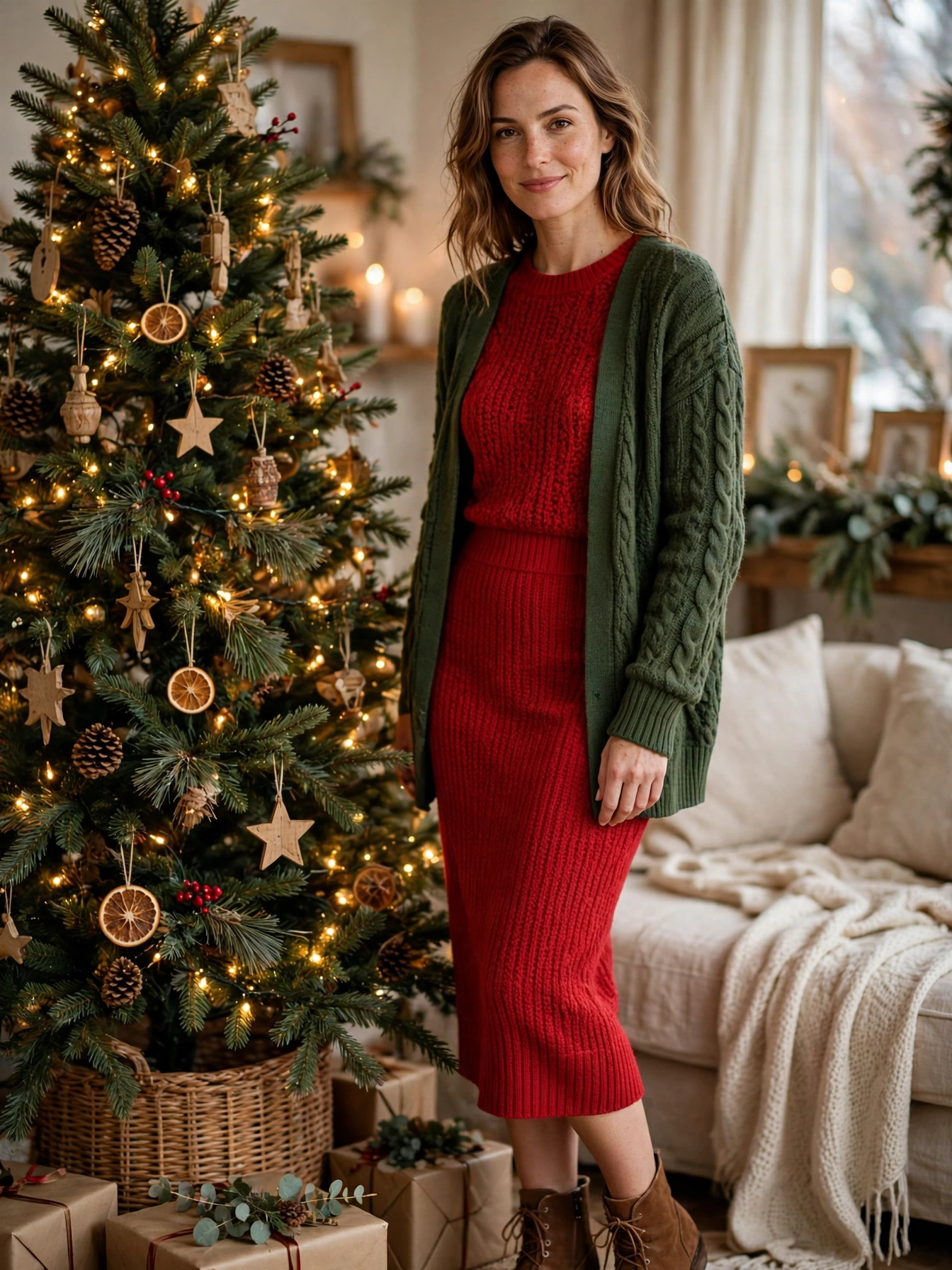
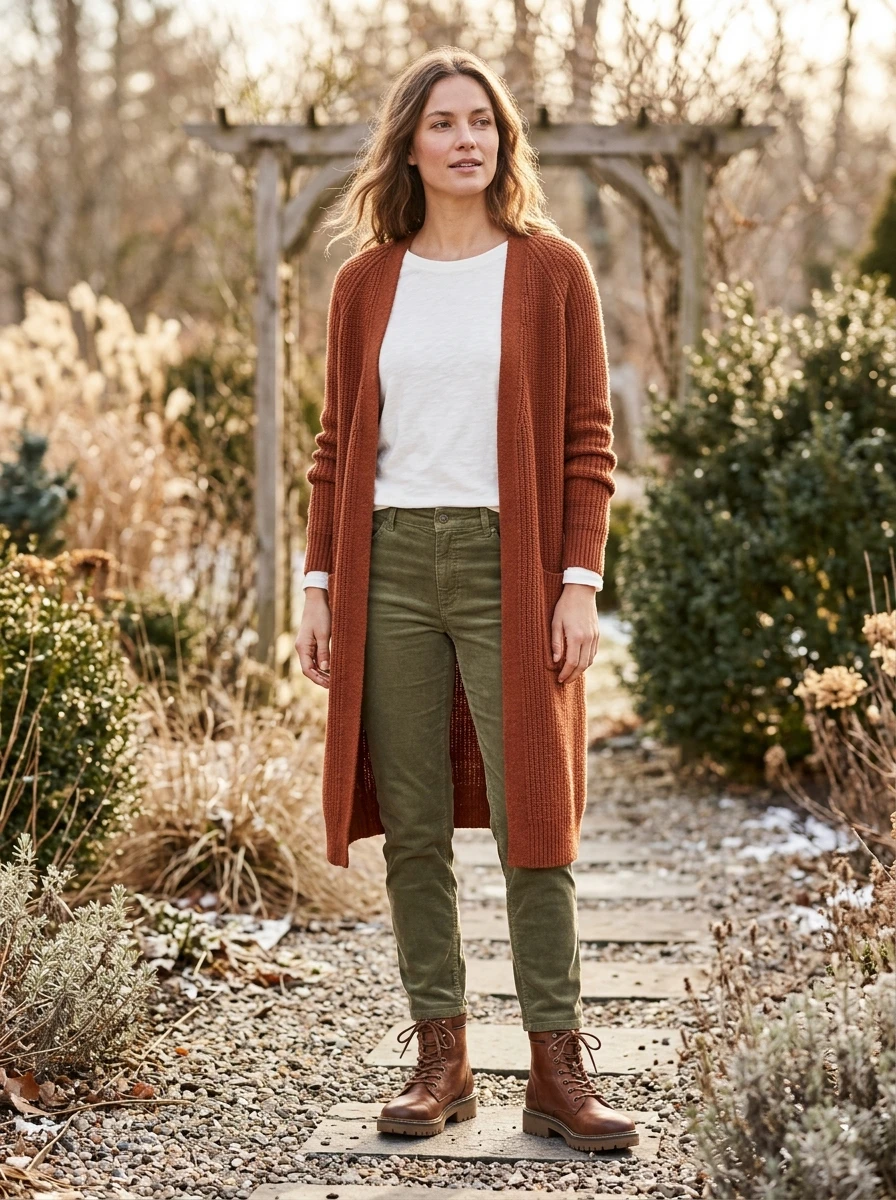
An open earth-tone cardigan over a fitted base works through color temperature: rust, camel, and olive share warmth, so the layers feel cohesive even when the garments are simple. The cardigan should be the statement — chunky, textured, visibly cozy — while everything underneath stays fitted and quiet. Belt the cardigan if it has no closure; an open cardigan with a defined waist reads as styled, while an open cardigan hanging straight reads as a robe. This is a work-from-home hero outfit that also survives a coffee run without a costume change.
Velvet Midi Skirt Style
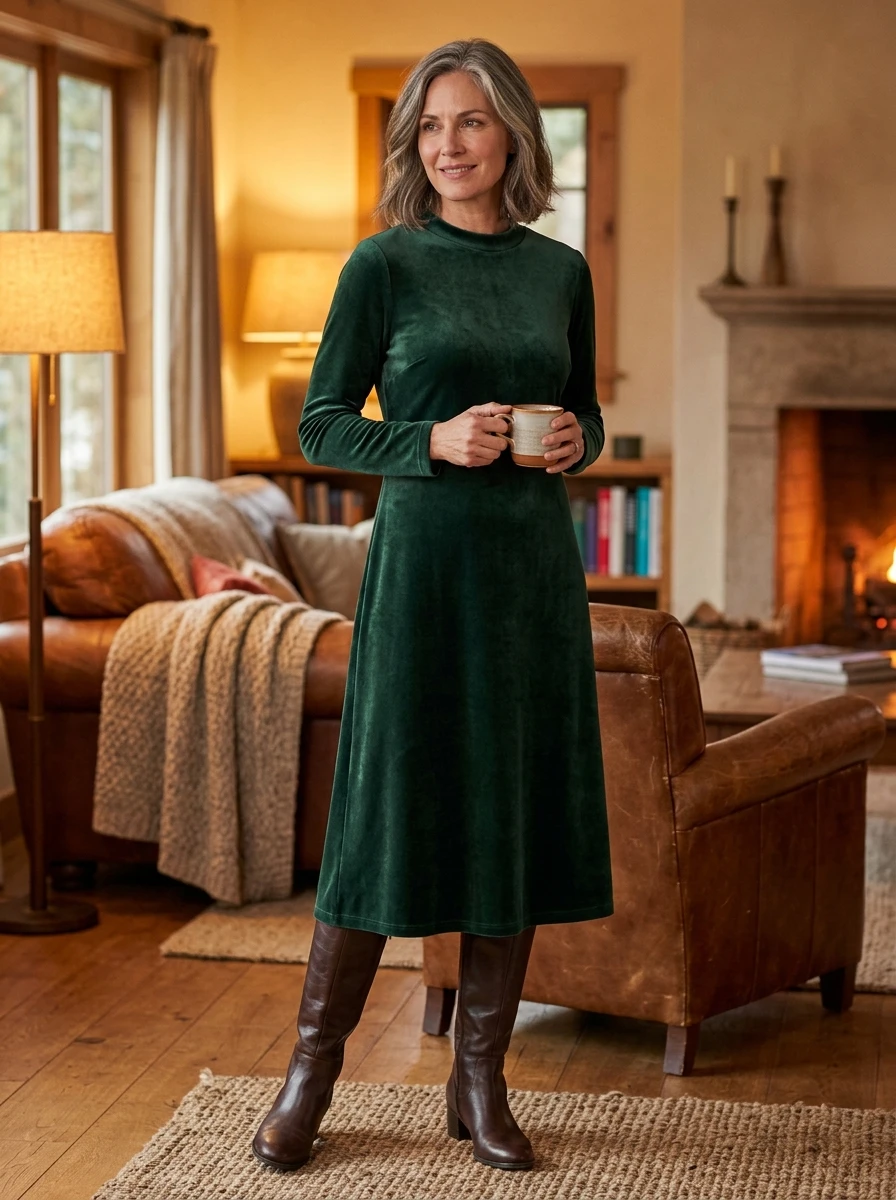
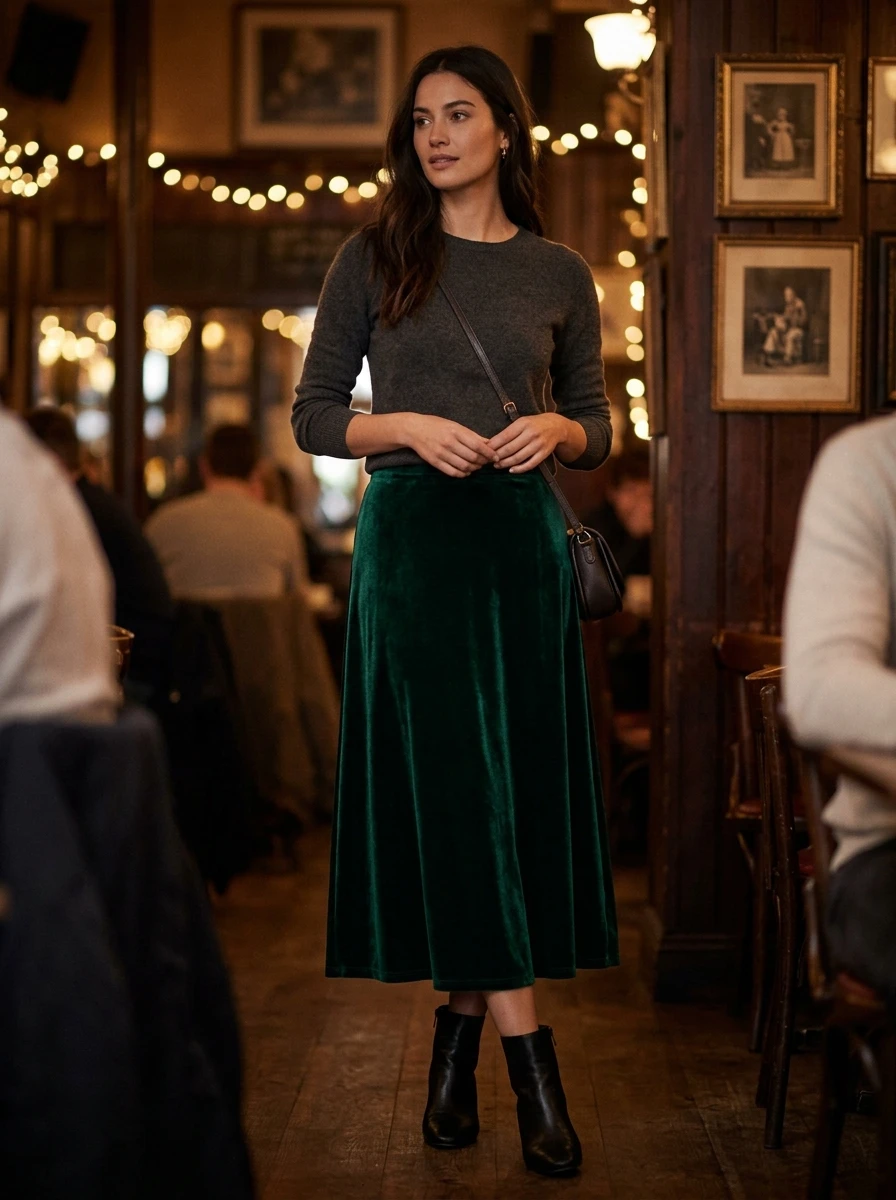
Velvet in winter isn't just aesthetic — the dense pile traps air, which makes it genuinely warmer than flat fabrics at the same weight. A velvet midi skirt with a tucked-in fine knit gives you the texture contrast (plush against smooth) that makes winter outfits interesting, while the midi length keeps the leg coverage serious. The knit should be fine-gauge; a chunky sweater with a velvet skirt doubles the volume and loses the skirt's drape. Knee-high boots underneath complete the insulation so the whole lower half is covered.
Oversized Scarf and Coat
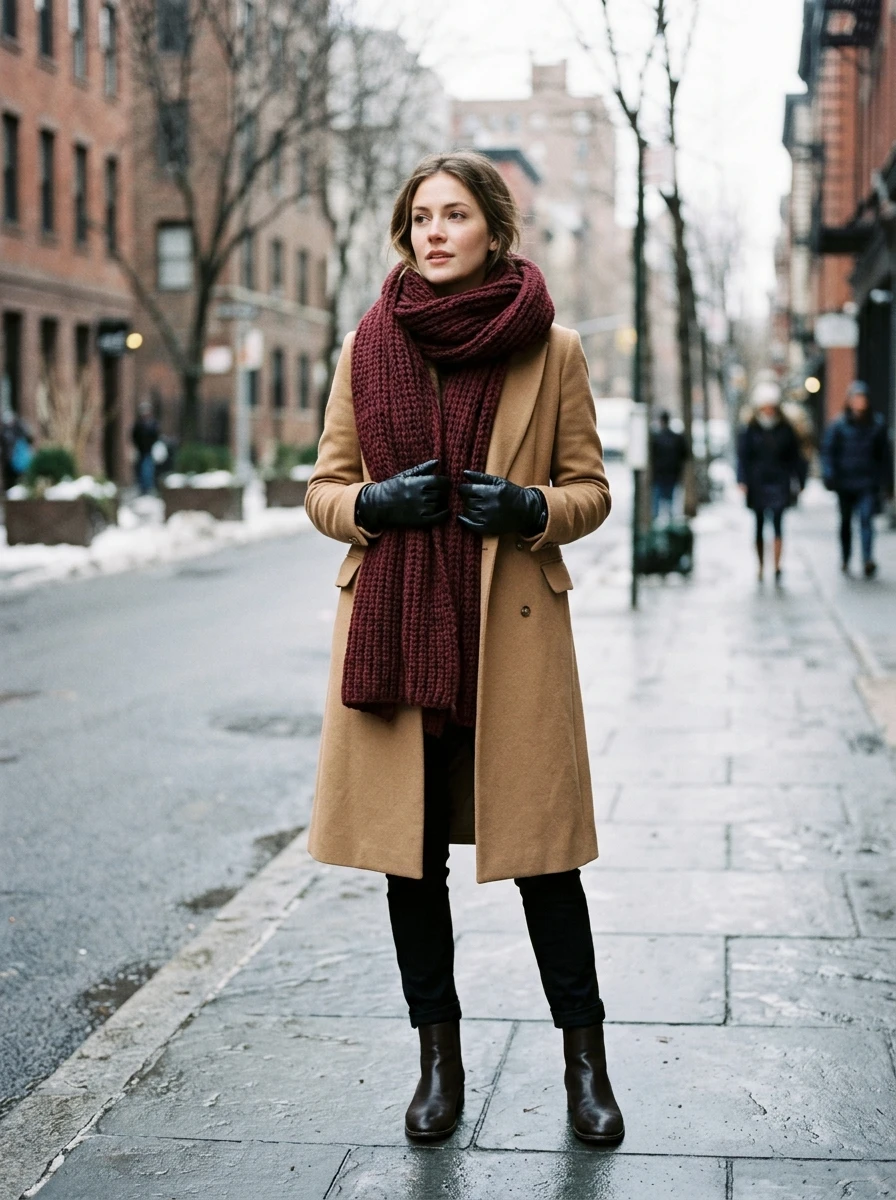
An oversized scarf does triple duty: insulation for the neck and chest (where coats gap), a color statement, and a proportion tool that adds volume exactly where a streamlined coat needs softening. The wrapping technique matters — loop it loosely rather than winding it tight, because a compressed scarf loses both its insulating loft and its visual softness. Let the ends hang unevenly; symmetry in a scarf looks fussy, asymmetry looks effortless. This is the fastest way to make last year's coat feel like this year's outfit.
Fitted Turtleneck and Jumpsuit
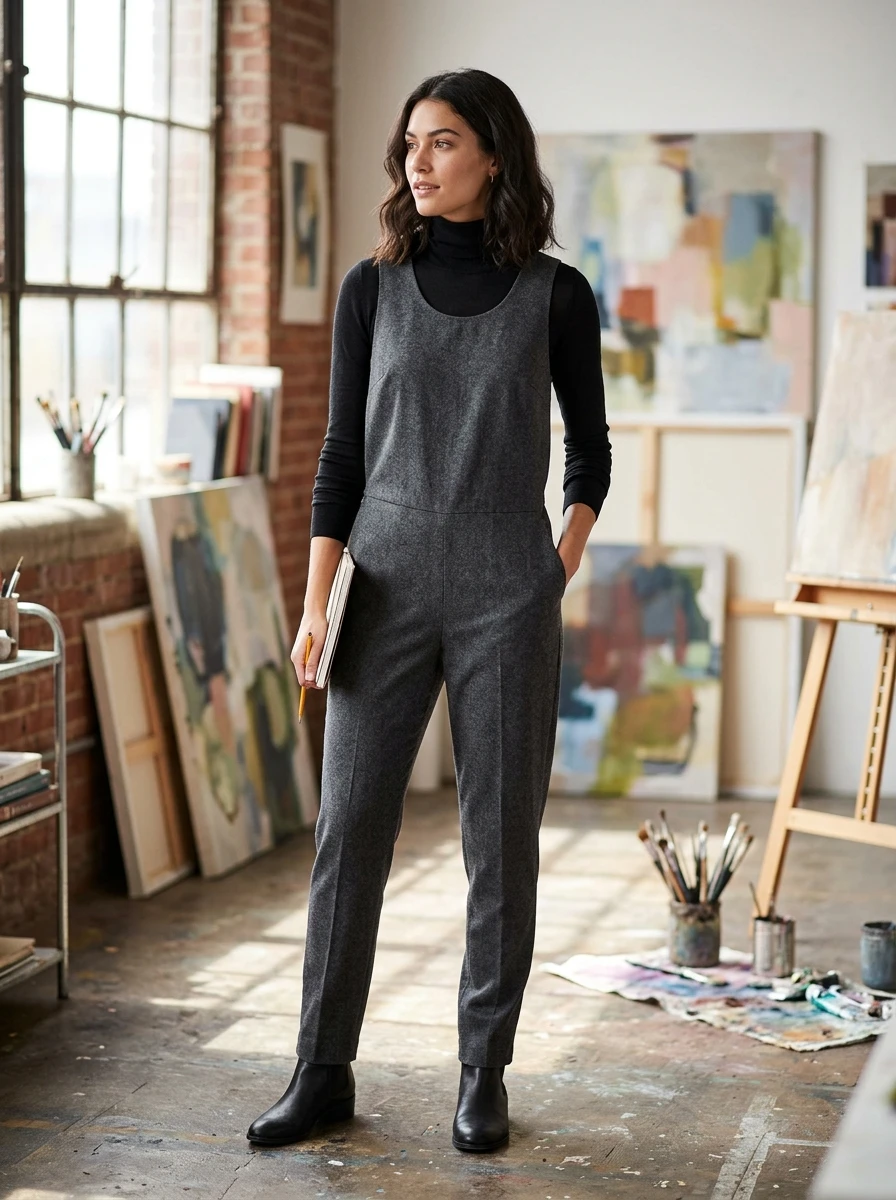
A jumpsuit is winter's secret weapon because it's a one-piece foundation — no gaps at the waistband where cold air sneaks in, no untucked shirt to fuss with. The fitted turtleneck underneath adds a neck layer (the most cold-sensitive zone after the hands) while the jumpsuit's own structure provides the silhouette. The jumpsuit should have some tailoring — a defined waist or tapered leg — because an unstructured jumpsuit over a turtleneck reads as pajamas. One piece, two layers of warmth, zero morning decisions: that's the appeal.
Shearling Jacket and Jeans
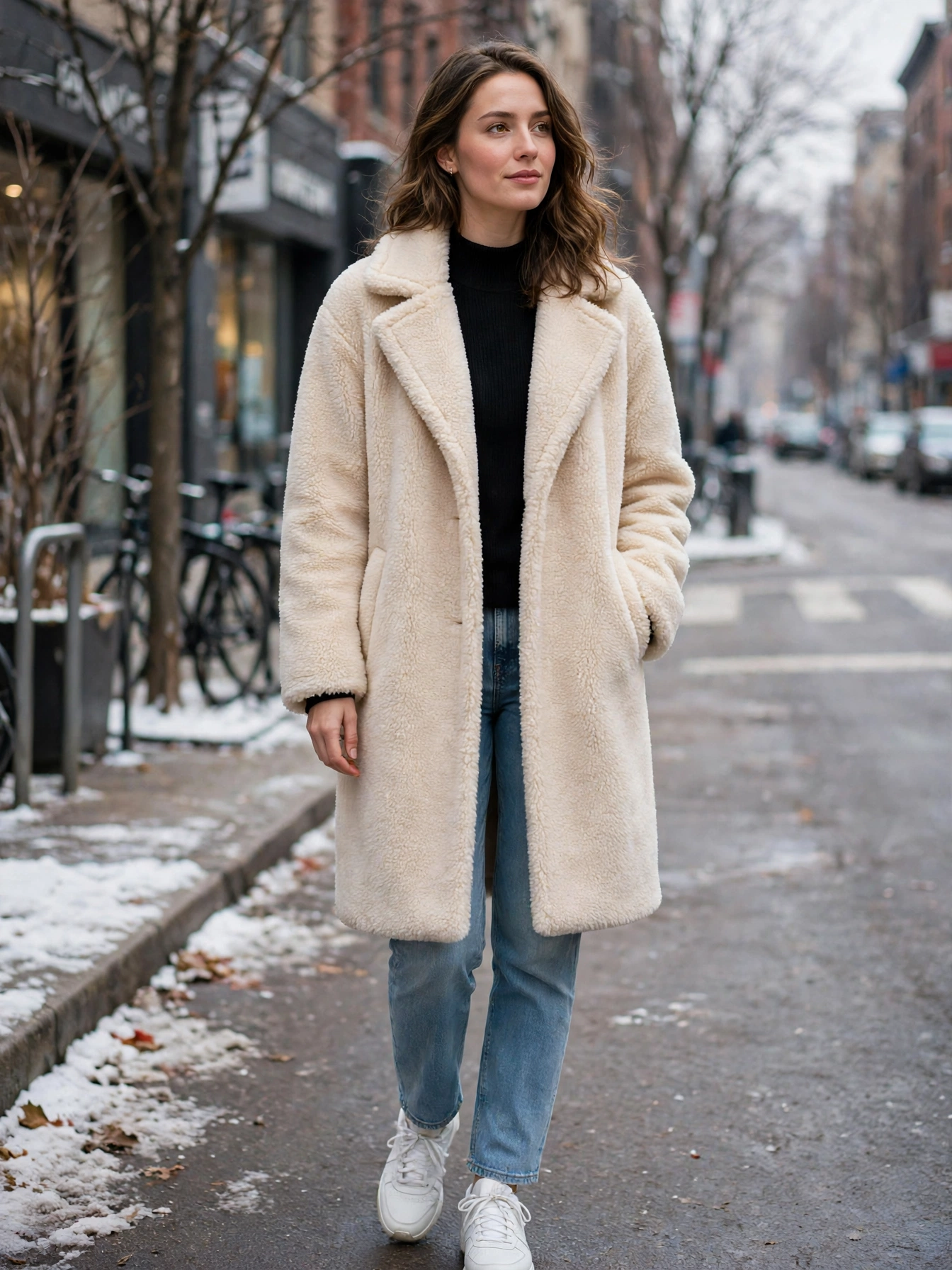
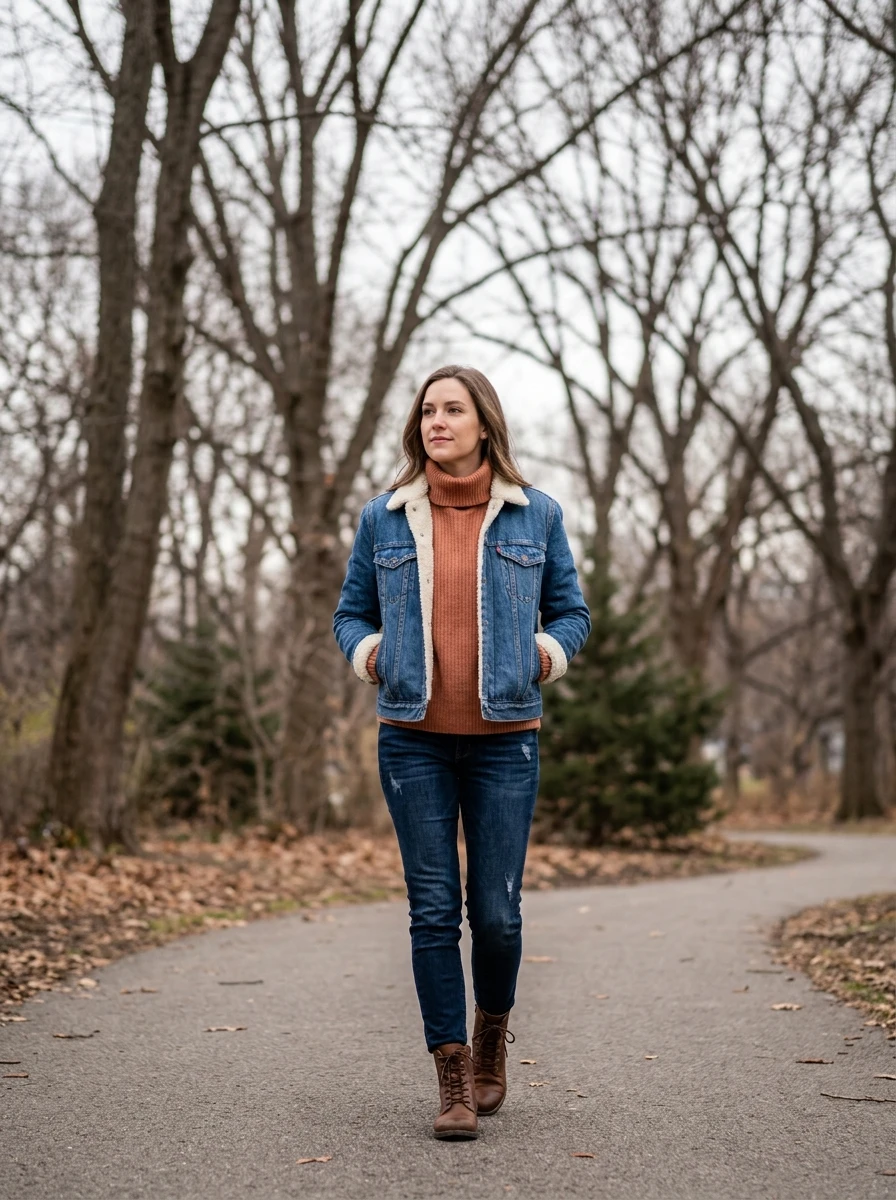
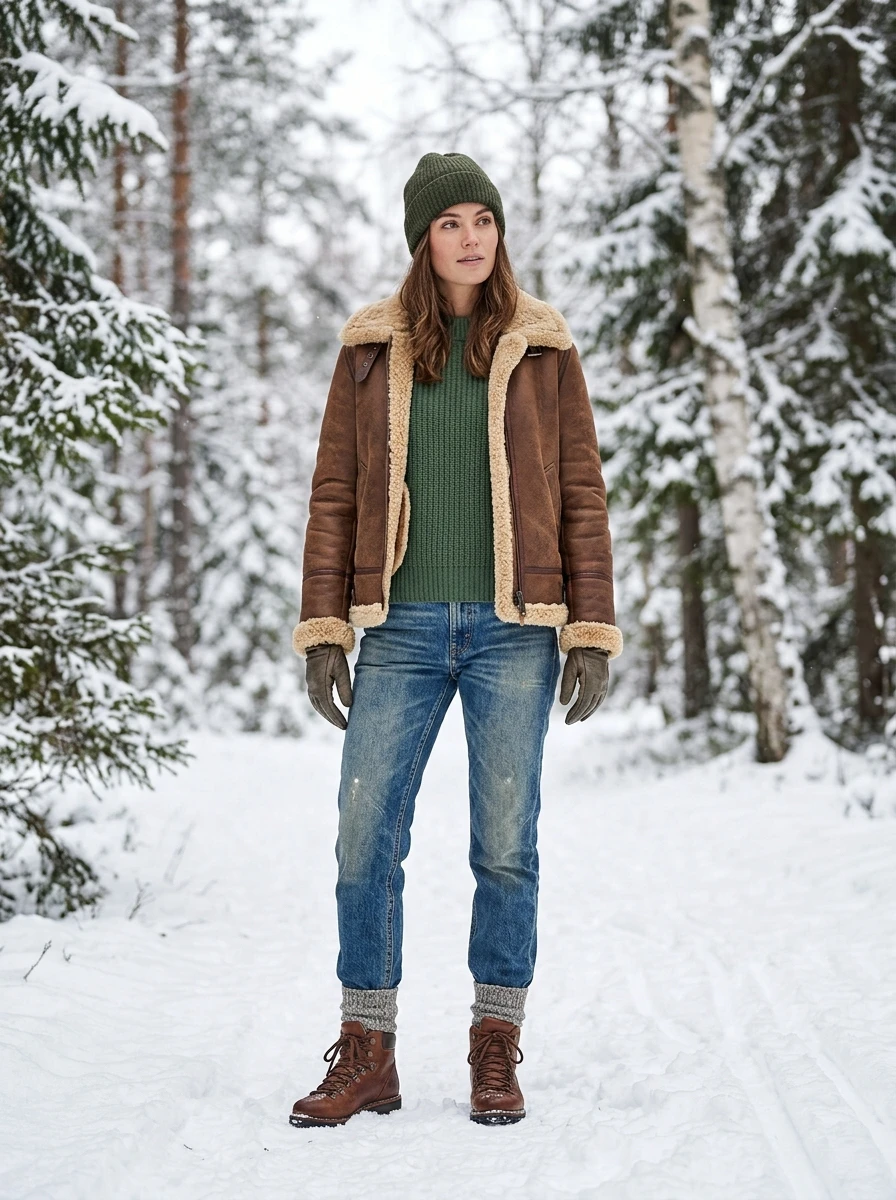
Shearling works through honest materials: real or good faux shearling is one of the warmest linings available, and wearing it visibly (collar, cuffs, lining peeking out) signals that warmth is the point. Against straight-leg jeans, the jacket's cropped, boxy shape balances the denim's length — the proportions echo the classic aviator silhouette that has worked for decades. Keep the jeans dark and simple; the shearling carries enough texture for the whole outfit. This is a true cold-weather jacket, not a fashion layer — it earns its place below 40 degrees.
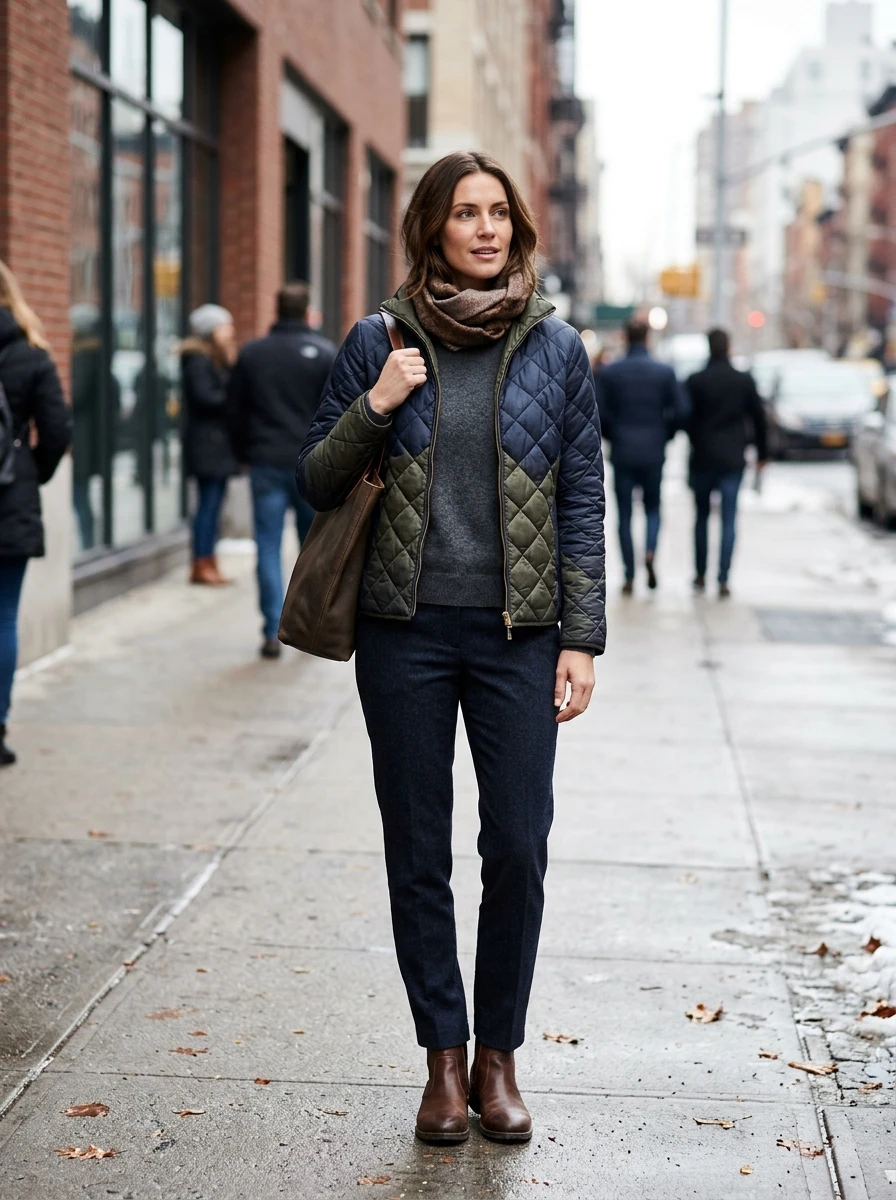
Quilted Jacket and Trousers
A quilted jacket over tailored trousers is the smart-casual winter uniform because the quilting adds visual interest that a plain puffer lacks, while the trousers keep the lower half refined. The jacket should hit at the hip — longer quilted coats trend toward shapeless, shorter ones look cropped against trousers. Diamond quilting reads more classic, horizontal channel quilting reads more modern; pick the one that matches the rest of your wardrobe's personality. This outfit handles the office-to-weekend transition without a change because neither piece is strongly coded to either.
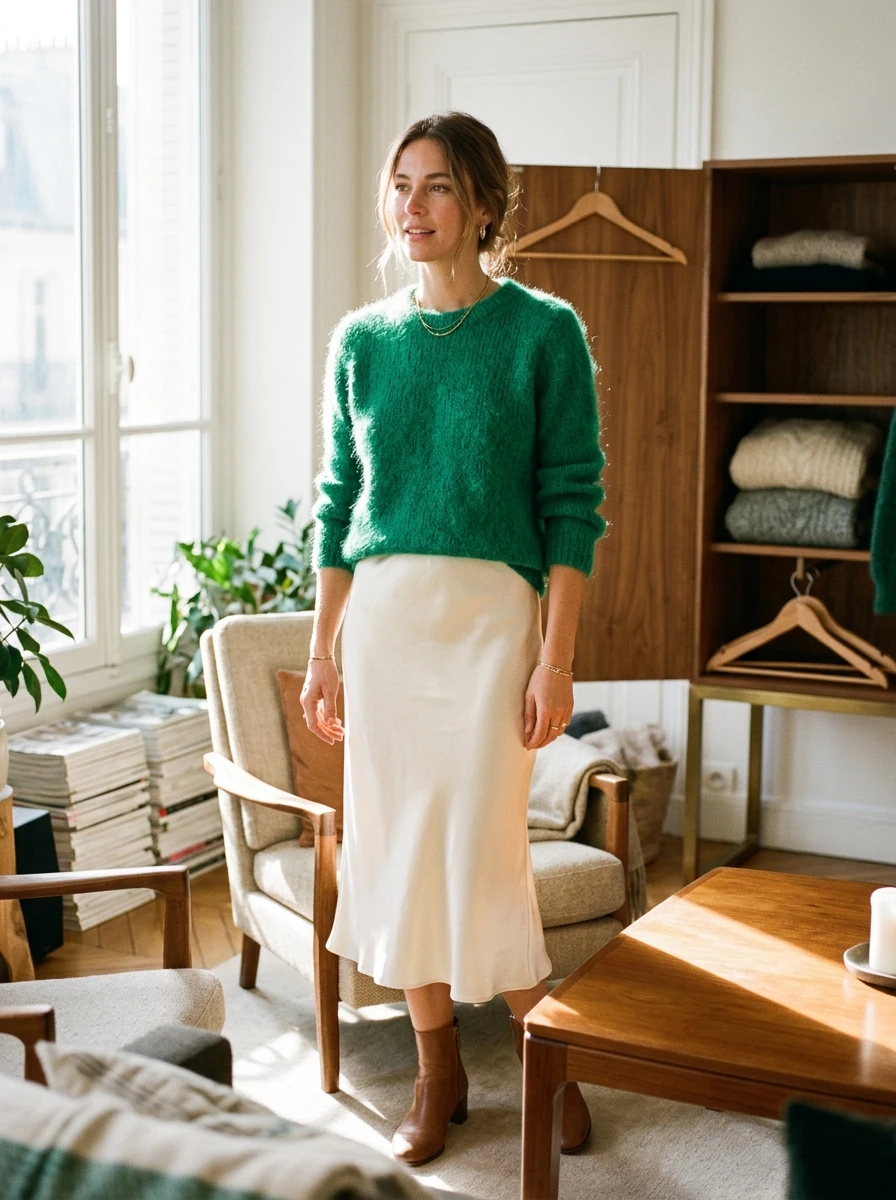
Mohair Sweater and Skirt
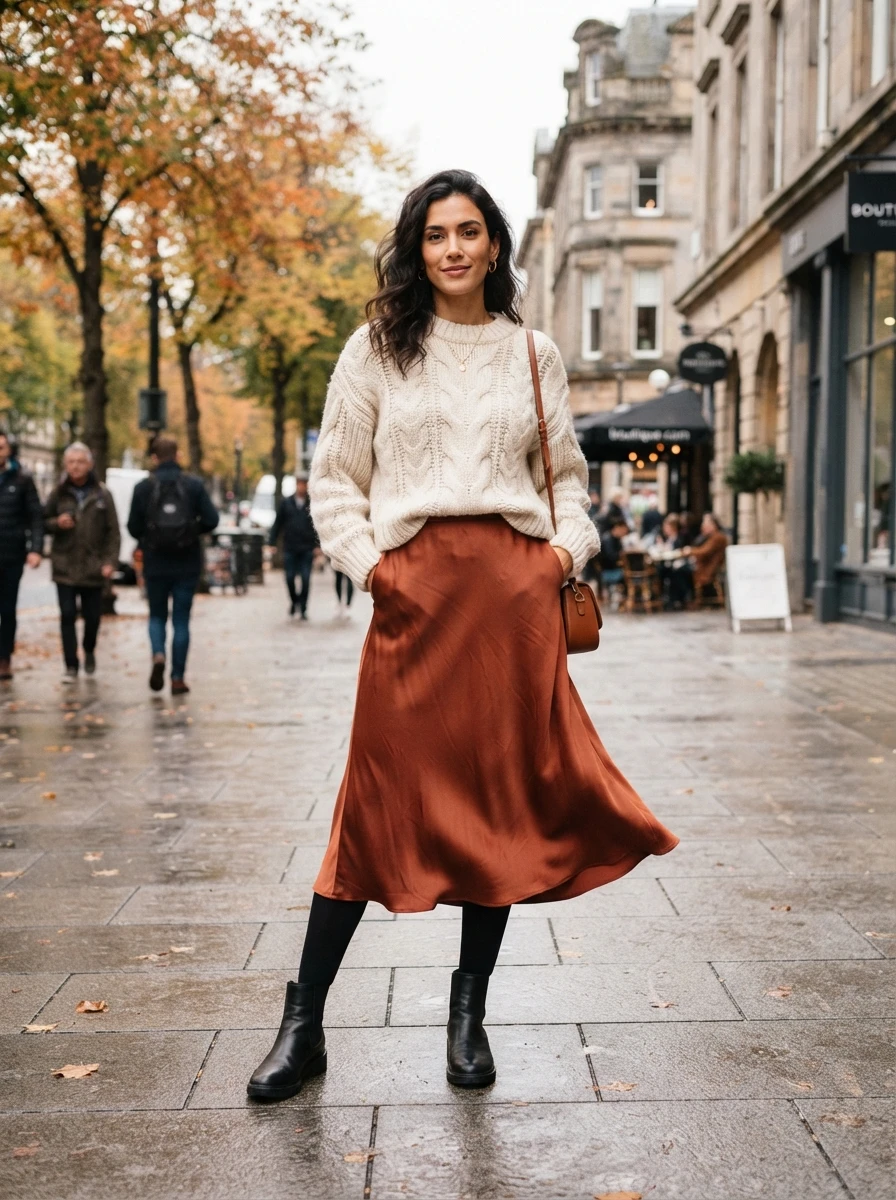
Mohair's fuzzy halo is what makes this combination work visually — the soft-focus texture blurs the sweater's edges, which is flattering and romantic in a way flat knits aren't. Against a smooth skirt (satin, leather, or fine wool), the texture contrast is the entire outfit: fuzzy above, sleek below. Mohair sheds and pills, so this is a lower-rotation piece — wear it for the look, not for daily durability. A camisole underneath is non-negotiable; mohair against bare skin is an itch most people regret by noon.
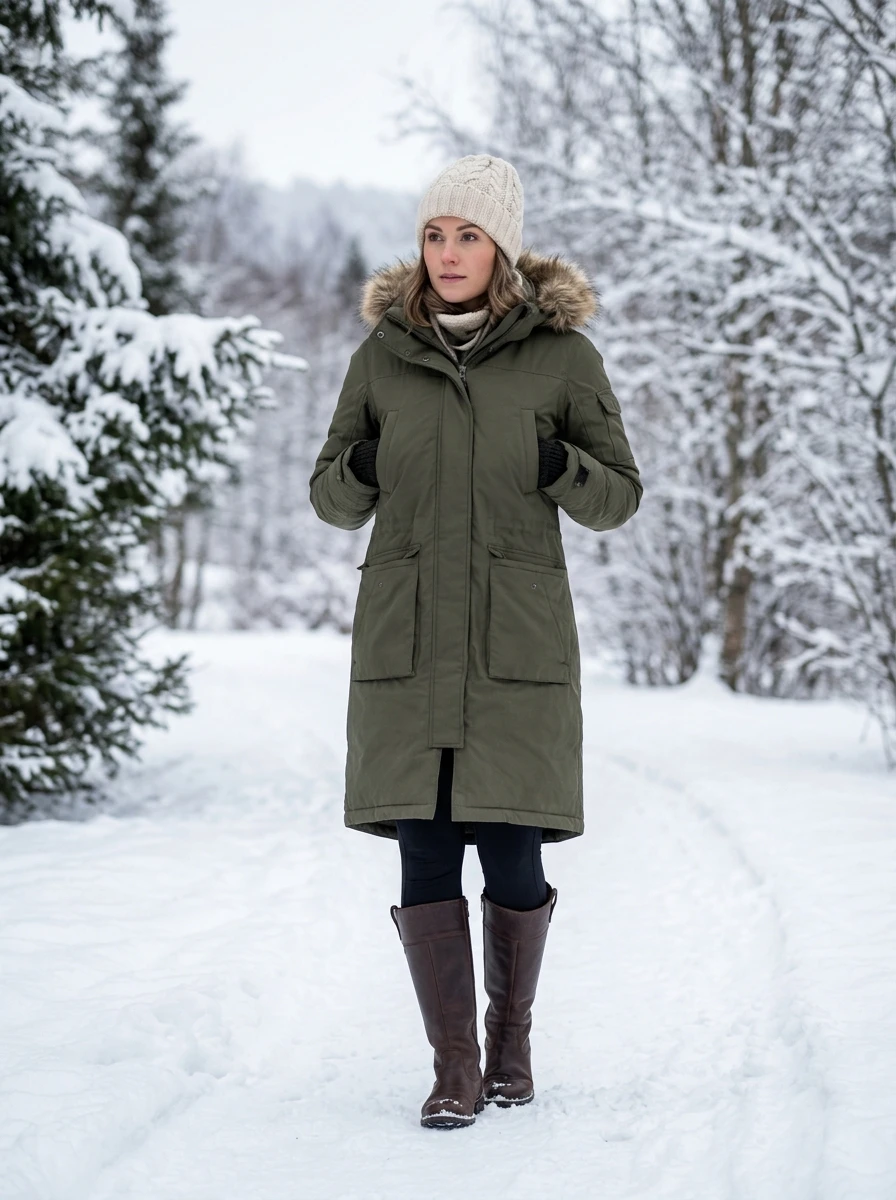
Parka and Legging Combo
The parka-legging combination works when the parka is long enough to cover what the leggings reveal — mid-thigh minimum, knee-length ideal. This isn't modesty policing; it's proportion. A long parka over slim leggings creates the same balanced silhouette as a dress over tights, which is why it looks right. The parka's utilitarian details (pockets, drawstrings, fur-trimmed hood) give the outfit its character, so keep the leggings and boots simple and dark. Thermal leggings underneath make this genuinely functional in real cold, not just cold-looking.
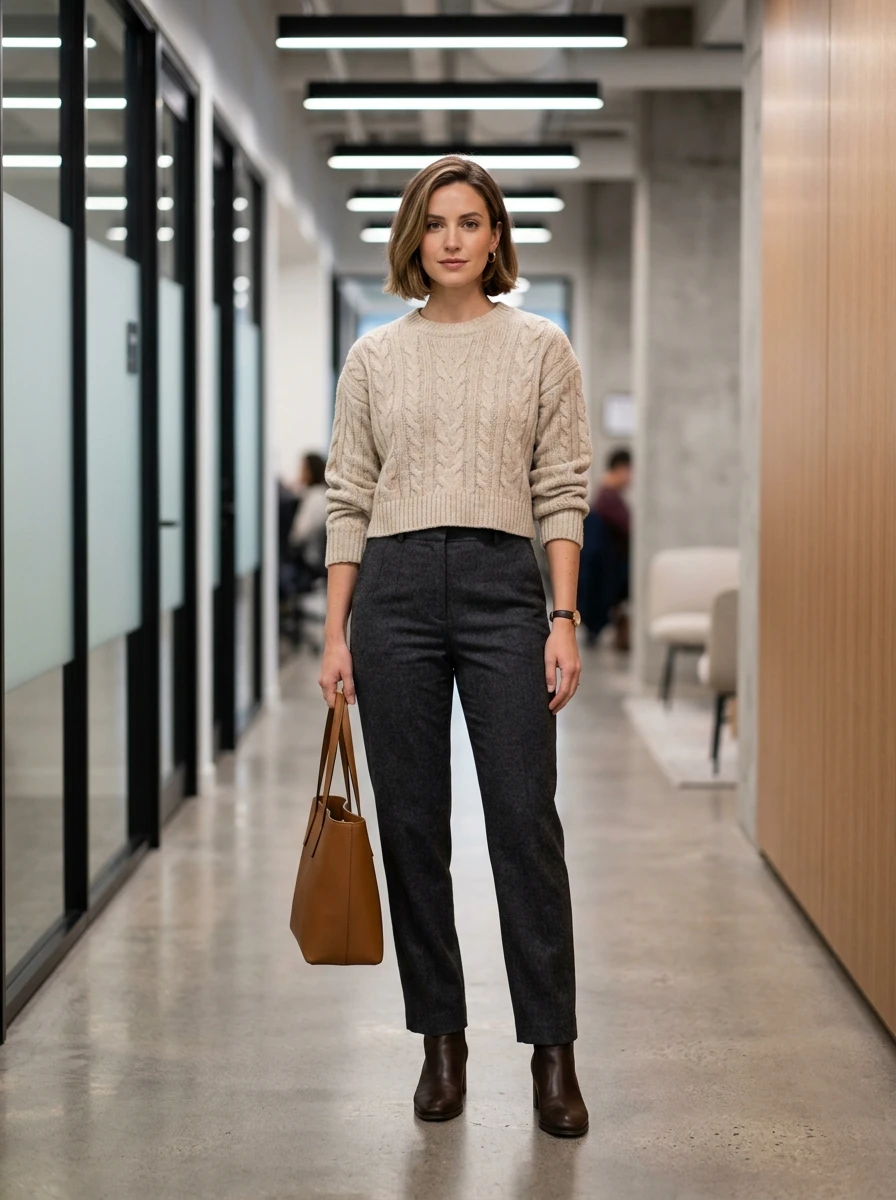
Cropped Sweater and High-Rise Pants
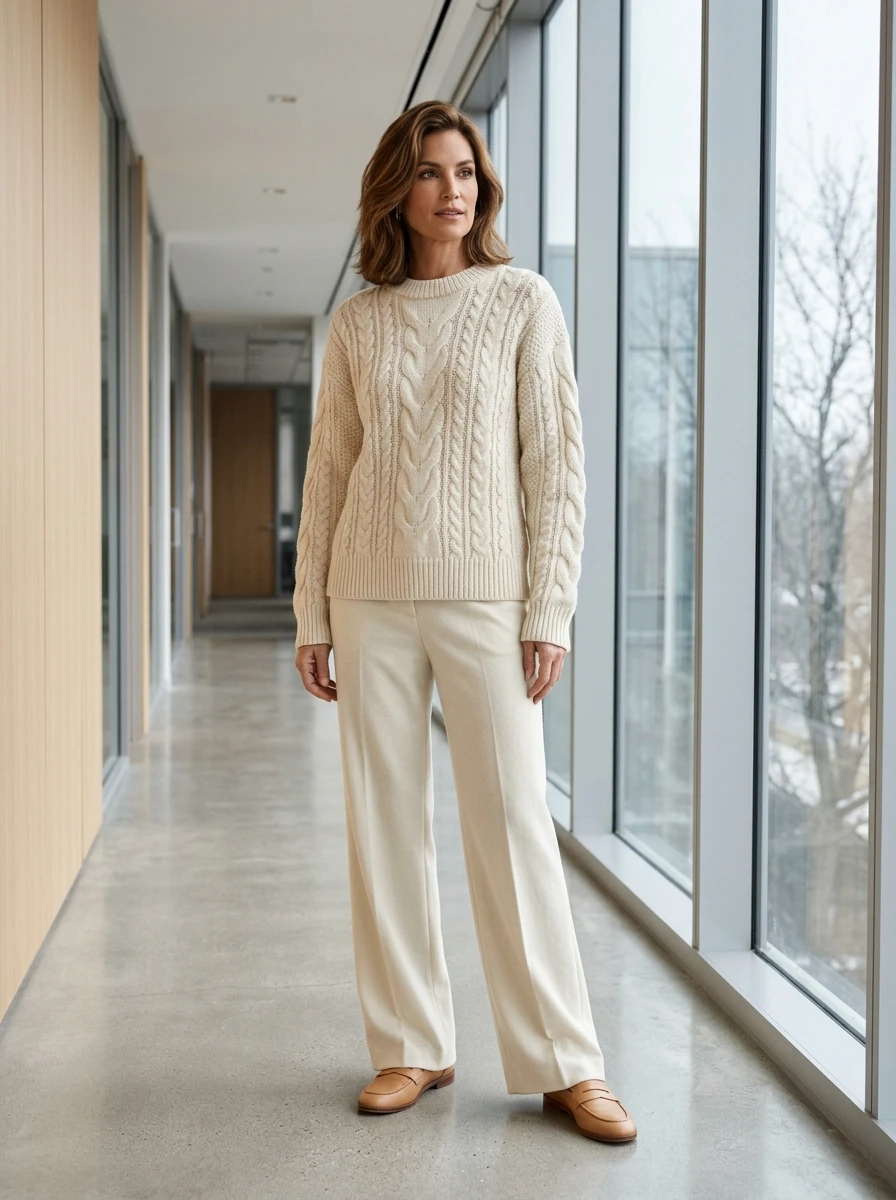
The cropped sweater plus high-rise pant is winter's answer to showing shape without showing skin: the sweater ends exactly where the pants begin, so the waist is defined by the meeting point, not by exposure. This only works when the rise is genuinely high — the waistband must reach the sweater's hem with no gap, or the insulation logic fails along with the style logic. A half-tuck is unnecessary here; the clean meeting of the two pieces is the whole design. Add a long coat over it and the outfit gains a third layer without any bulk at the waist.
Layered Vest and Turtleneck
A knit vest over a turtleneck is armhole engineering: the vest adds core warmth and a visible layering story while leaving the arms in the turtleneck's slim sleeve, which fits under coats far better than a bulky sweater. The vest should be slightly oversized to drape over the turtleneck rather than compress it — a tight vest over a turtleneck just looks like one thick sweater. Patterned or textured vests (cable, Fair Isle) carry the outfit's interest; the turtleneck underneath should be solid and simple. It's the thinking person's alternative to a cardigan.

Colourful Knit and Jeans
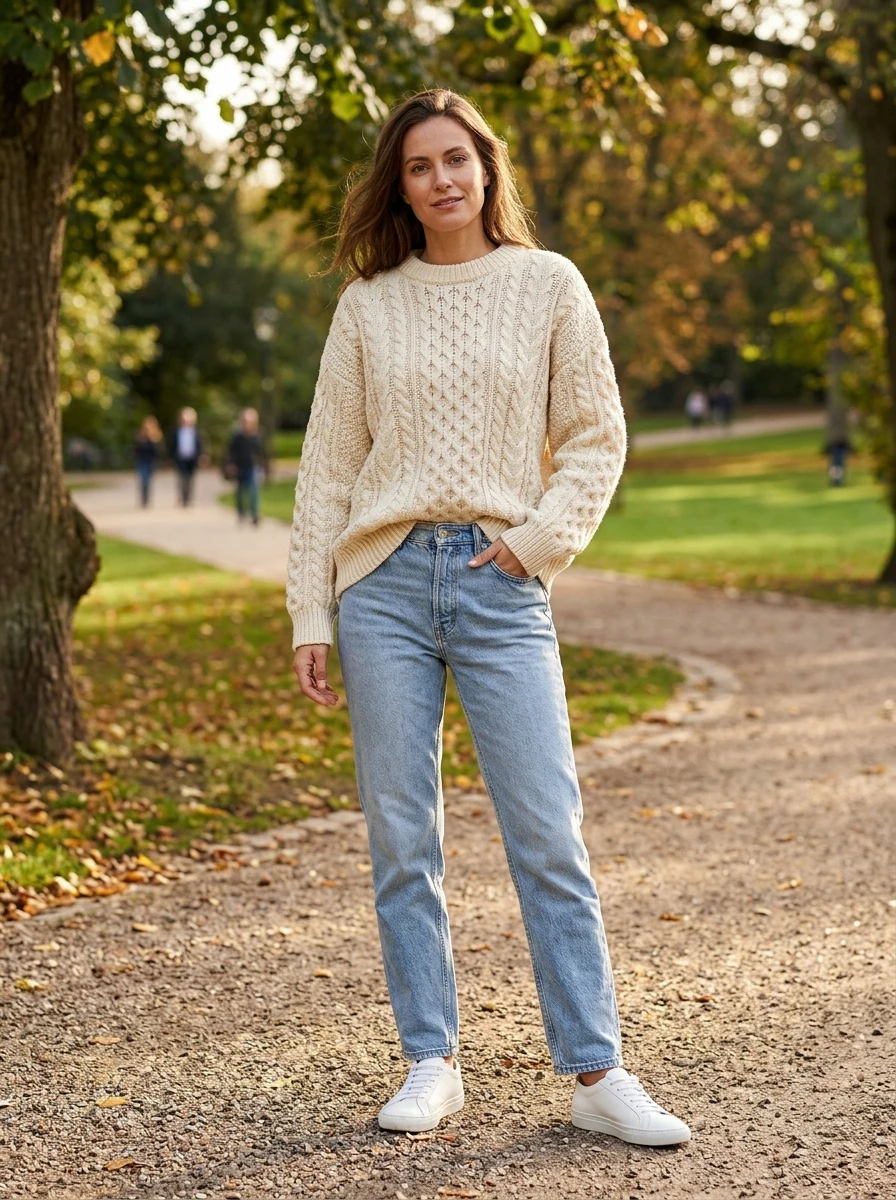
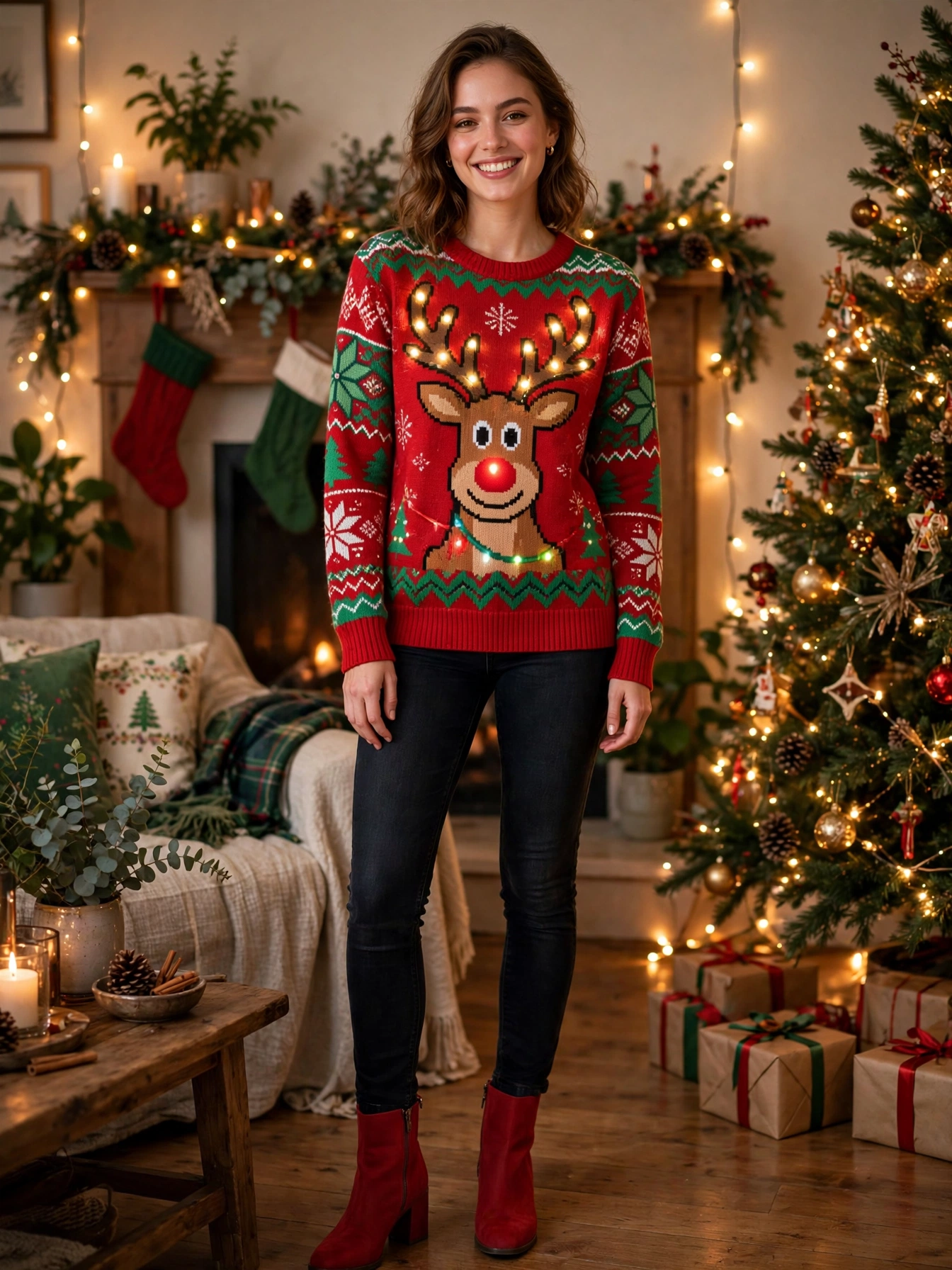
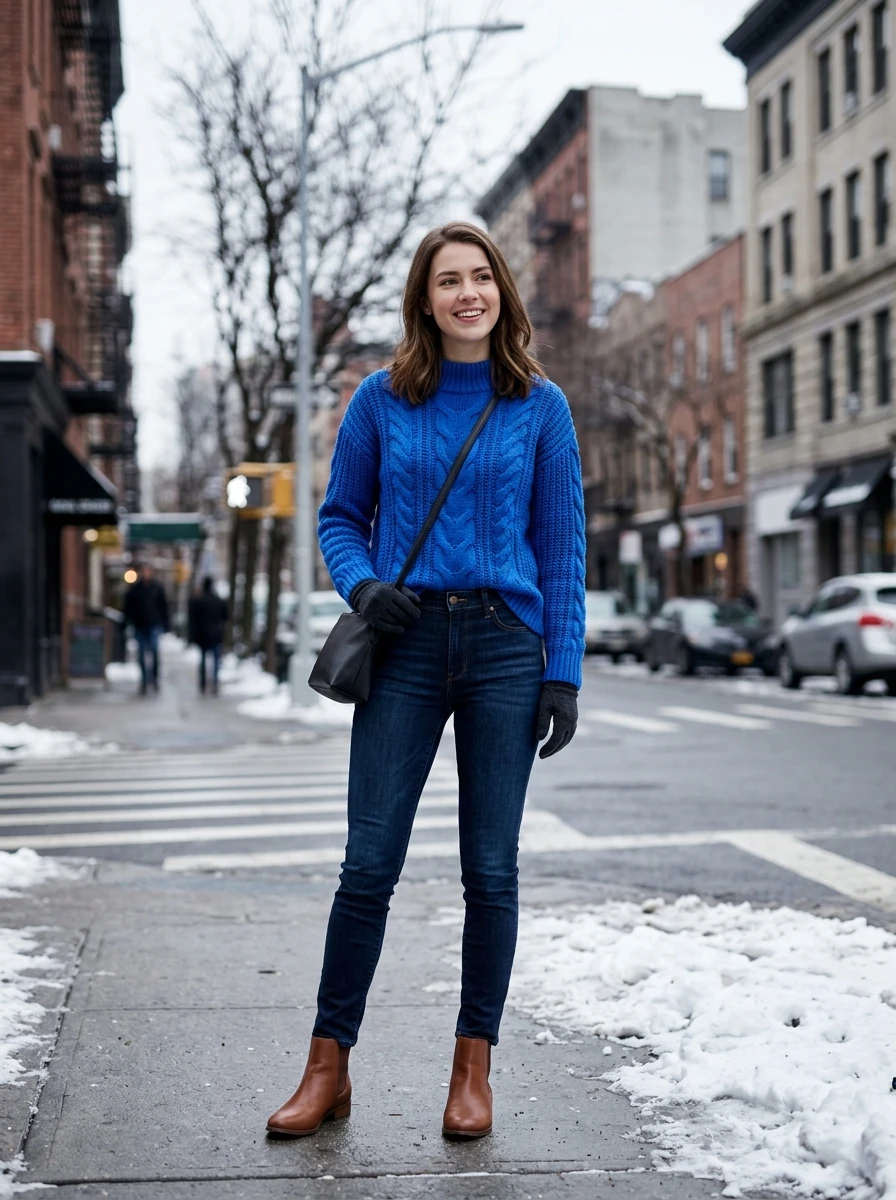
A colorful knit — cobalt, cherry, emerald — against plain denim works because the color does 90% of the styling work, which means everything else can be simple. This is the lowest-effort outfit on the list and arguably the most effective: one saturated sweater, dark straight-leg jeans, boots, done. The color should sit near your face (sweater, scarf) rather than on your legs, because that's where color flatters. In the greyest weeks of winter, a single saturated knit is also a mood intervention — dressing for the weather you want, not the one you have.
Common Questions About Winter Outfits
How do I stay warm without looking bulky?
Separate insulation from silhouette in your mind. Thermals, fleece-lined leggings, and thin down layers provide warmth invisibly; your visible pieces then only need to provide shape. Bulk happens when visible pieces try to do both jobs. A thermal under a fitted turtleneck is warmer and slimmer than a single giant sweater.
What fabrics are actually warmest for winter?
Wool (especially merino), cashmere, and down are the top tier for warmth-to-weight. Fleece is warm but bulky; cotton is the worst winter fabric because it holds moisture and loses insulation when damp. If you remember one fabric rule: never let cotton be your base layer in real cold.
How do I layer without overheating indoors?
Build in a sheddable layer. The puffer vest, the oversized scarf, and the quilted jacket in this guide all come off easily indoors, leaving a complete outfit underneath. Avoid the trap of a single heavy sweater with nothing under it — you'll be cold outside and stuck overheating inside. For a stylist's take, see how to layer clothes for winter.
Can comfortable winter outfits still look put-together?
Comfort reads as sloppy only when the silhouette is undefined. Every outfit above has a clear shape — a defined waist, a deliberate proportion, a visible structure somewhere. Comfort plus structure equals polished; comfort without structure equals pajamas. That's the whole distinction.
What's the one piece worth investing in?
A great wool coat or a quality down parka, depending on your climate. It's the most visible thing you wear all winter and the hardest-working. Everything underneath can be simpler when the outer layer is excellent.
Choosing Your Winter Aesthetic
Comfort-first winter dressing isn't about owning fifteen outfits — it's about owning the right layers and knowing the two or three silhouettes that work for your life. Pick the formulas above that match your actual days (commute, home office, weekends), make sure your base layers are doing the thermal work, and let the visible pieces be the fun part. Warmth underneath, intention on top: that's the whole plan. For more inspiration, explore these cozy winter outfit ideas.