How to Customize a Backpack with Pins for High School
How to use this guide
These are editorial styling suggestions, not a one-size-fits-all formula. Adapt each look to your wardrobe, proportions, climate, comfort, budget, and the occasion; the most useful idea is the one you can genuinely wear.
Walk down a high school hallway in the first week of September and you can read every backpack at a glance. Some are blank, straight off the shelf. Some are so covered in pins and charms you can't tell what color the bag was. And a few — the ones people actually notice — look like somebody made a decision: a tight cluster of pins, one clear idea, nothing fighting for attention.
That third kind isn't about spending more. It's about restraint, placement, and knowing how pins actually attach to fabric without wrecking it. This guide starts with the rules that keep a bag looking curated, then five themed directions you can copy or adapt.
Three rules before the first pin
Start with three to five pins, not fifteen. A tight cluster reads intentional; a bag covered edge to edge reads noisy. You can always add more later — you can't un-stretch fabric.
Cluster, don't scatter. Group pins in one or two spots (the front pocket, one corner of the flap) rather than spreading them evenly across the whole bag. The eye reads a cluster as a composition and scattered pins as clutter.
Protect the fabric. Enamel pins are safe on canvas and nylon, but every pin is two holes in your bag. Use locking pin backs (the flat rubber or metal locking kind, sold in multi-packs) instead of the butterfly clutches pins ship with — butterfly backs work loose and you'll lose pins to hallway floors. Don't overload one small area, either; concentrated weight stretches fabric faster than the same pins spread across a cluster.
Mix pin types on purpose. Hard enamel pins (smooth, polished, sold singly by independent artists) are the workhorses — durable and detailed, so buy fewer of them. Add one or two soft enamel or printed pins for texture variety, and consider a single iron-on or sew-on patch as an anchor piece. Iron-on patches need a hot iron and a hard surface; sew-on lasts longer through rain and washing.
Where to find pins that don't look like everyone else's
Etsy is the best source for pins that don't look like everyone else's: independent artists sell hard enamel designs priced per pin, and buying small means your bag won't match half the school. BoxLunch and Hot Topic carry licensed and trend pins if you want something specific fast, and their enamel pin pages are the quickest way to check what is in stock this week.
Amazon multi-packs are fine for filler and experimenting — bulk packs of twenty or thirty pins cost less per pin — but the plating wears faster. For the truly committed, pin trading communities and artist Patreon shops release limited designs monthly.
Pin types at a glance
Not every pin behaves the same on a backpack. Pick the type for the job, and the bag lasts longer.
| Pin type | Best for | Watch out for |
|---|---|---|
| Hard enamel | Everyday clusters, detailed art | Costs more per pin, so buy fewer |
| Soft enamel | Texture variety, raised details | Recessed areas catch dirt over time |
| Printed or acrylic | Big bold graphics, light weight | Scratches show faster than enamel |
| Iron on patch | Large anchor pieces, grunge looks | Edges peel unless you sew them down |
| Sew on patch | Permanent anchors, heavy use | Needs a needle and time to attach |
| Button badge | Cheap filler, band art, rotation | Pins bend and rust if they get wet |
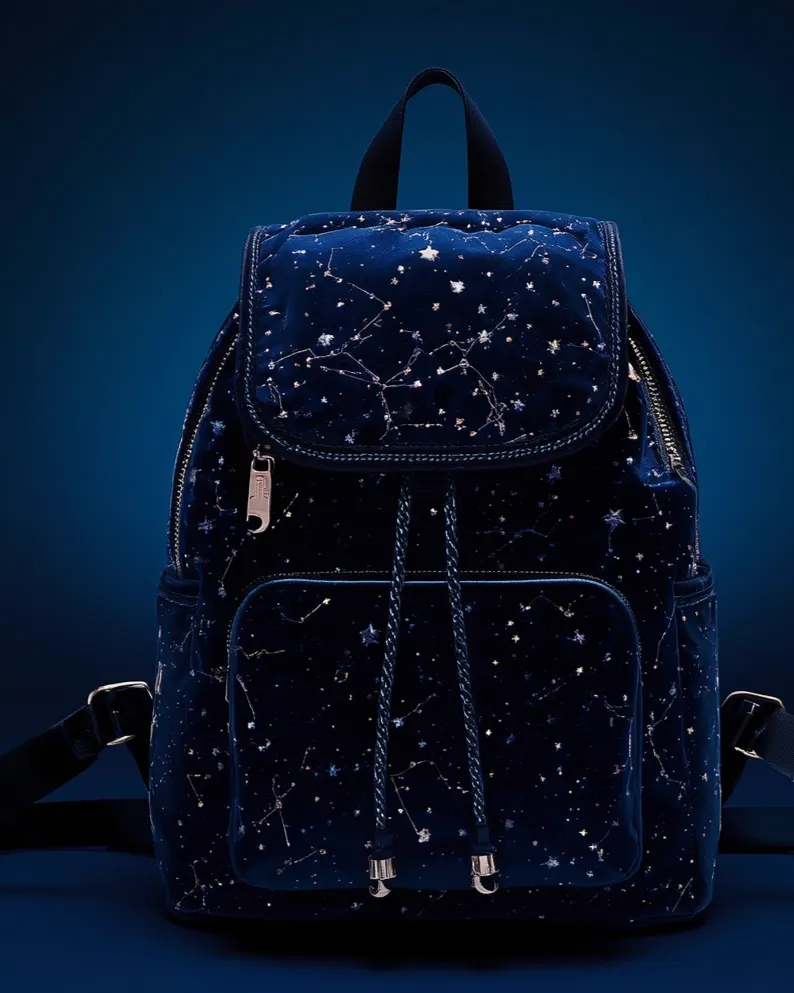
The Night Sky Bag: Celestial Pins on Dark Canvas
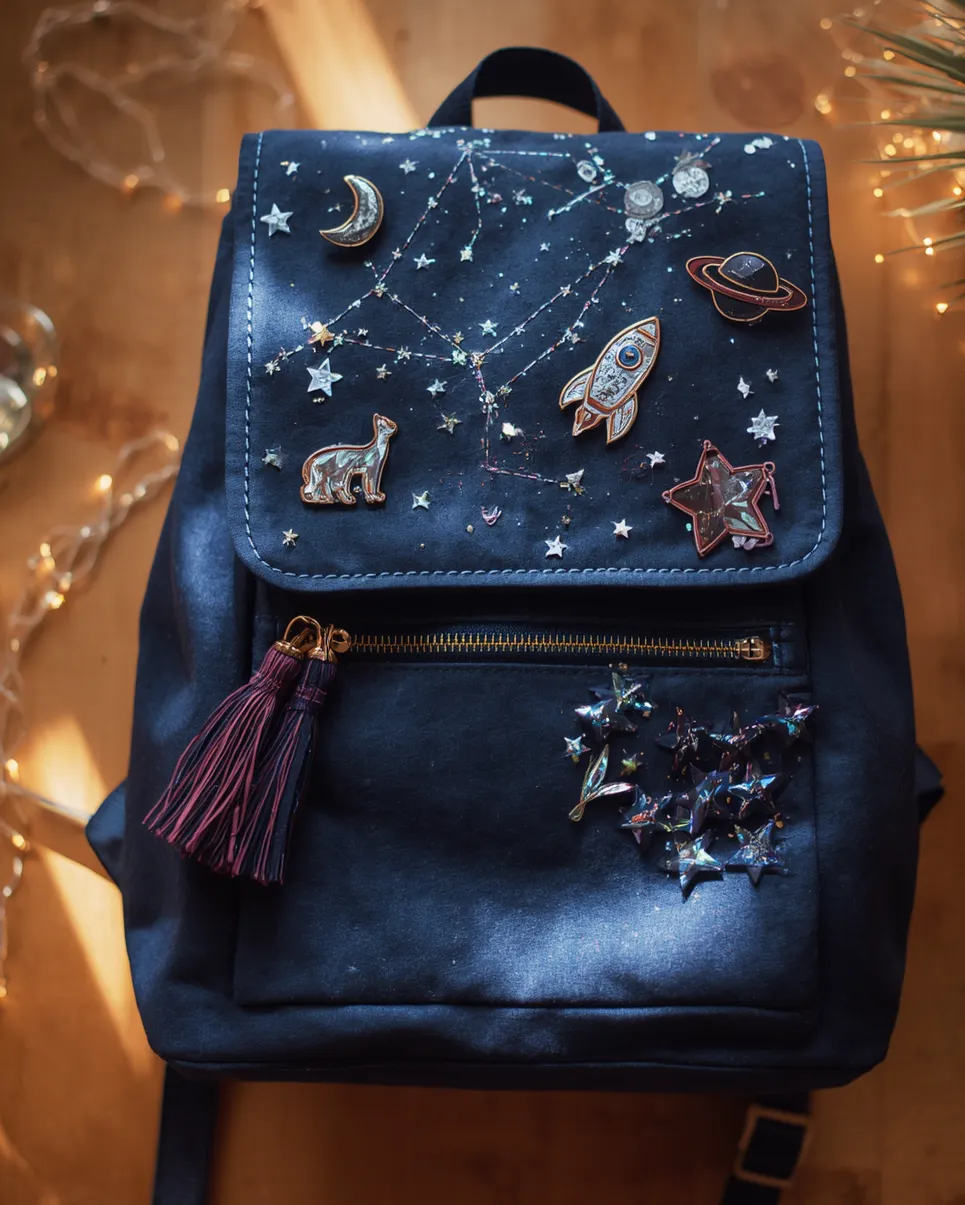
Navy or black canvas is the ideal base — dark fabric makes metallic pins glow. Build around three anchor pieces: a crescent moon pin, a ringed planet pin, and one constellation or star chart pin, arranged in a loose triangle on the front pocket. Fill the gaps with tiny star studs rather than more big pins; small fillers create depth without visual noise.
Why this theme works: celestial designs are almost entirely gold and silver on dark backgrounds, so everything coordinates automatically even when the pins come from different artists. It also ages well — space imagery doesn't date the way meme pins do.
Placement tip: keep the palette disciplined (gold plus silver plus one copper accent at most) and the whole cluster will look designed rather than accumulated. Three anchors in a triangle, then stop; the temptation to keep adding is what turns a night sky into a junk drawer.
Y2K Gloss — When More Is the Point
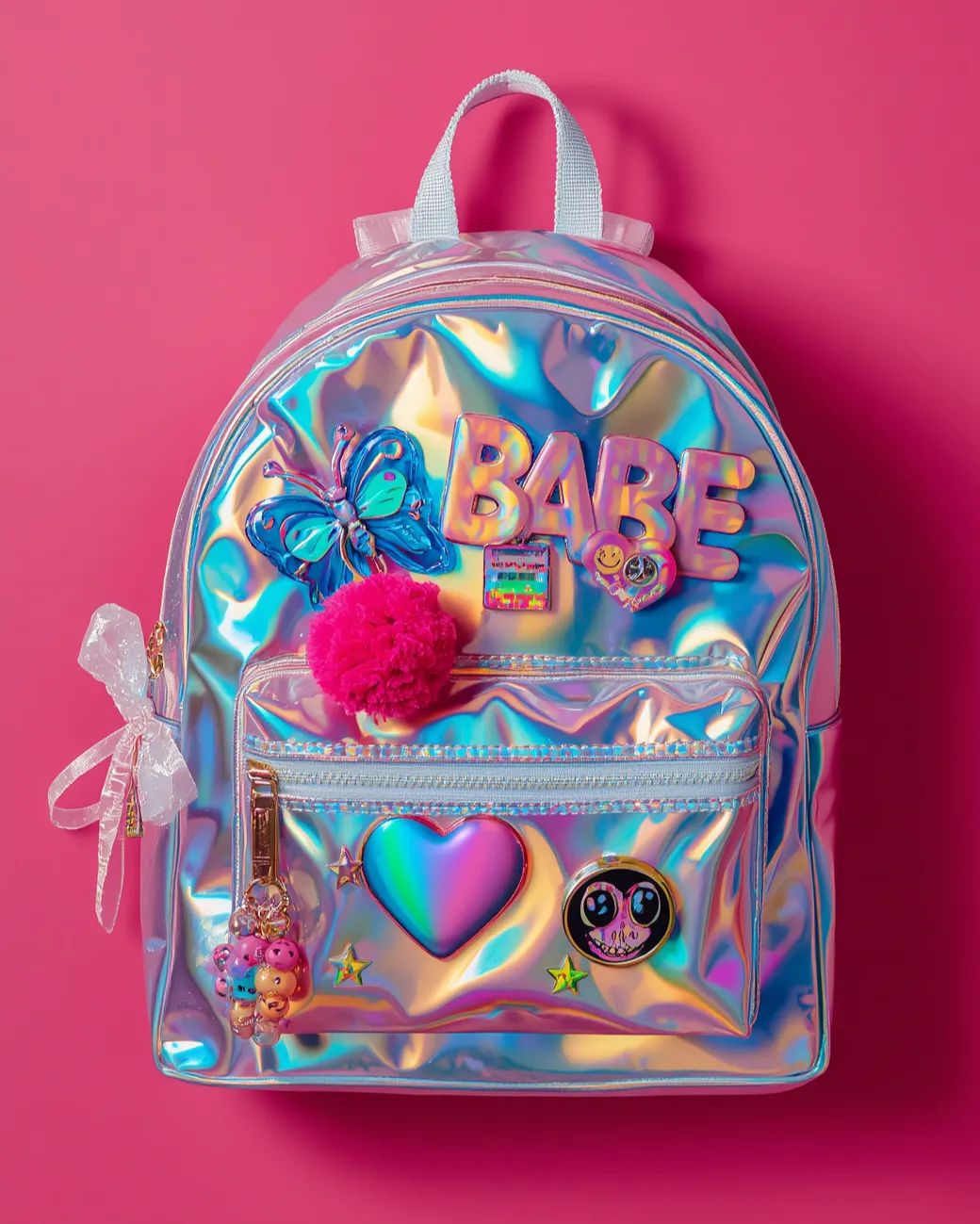
Holographic vinyl or clear bags are the right base here: the Y2K look is about shine, and matte canvas fights it. The same shine rules drive our 20 easy Y2K outfit ideas, and the softer romantic cousin is our 12 nostalgic 2000s coquette fall outfits. This is the one theme where "more" is the point: chunky letter patches, butterfly pins, pom pom charms, beaded dangles, star studs.
The trick to keeping maximalism from tipping into mess is a limited color story — pick two or three brights (hot pink, baby blue, silver) and let everything live inside that palette. The same Y2K energy works beyond bags, see these Y2K inspired outfits featuring vintage Von Dutch shoes.
Attachment note: vinyl and holographic fabrics show pin holes permanently and can tear if overloaded. Use fewer pins with real presence rather than many small ones, and put charms on zipper pulls and keyrings instead of through the vinyl wherever possible. A beaded charm cluster on one zipper gives you the dangling texture without a single new hole.
The Soft Bag: A Cottagecore Vine That Grows Down the Pocket
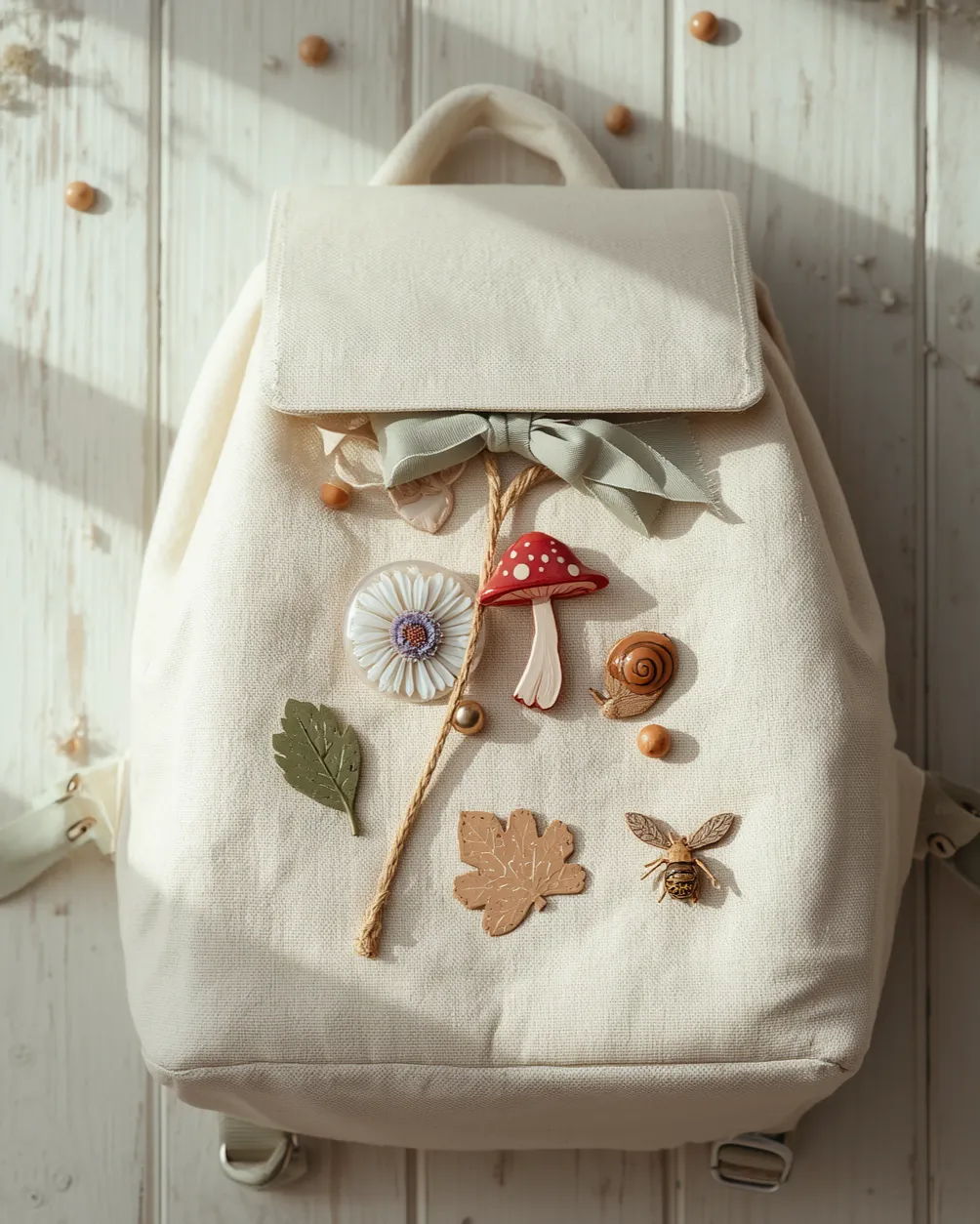
Cream or natural canvas is the base — light fabric makes the greens, terracottas, and golds of botanical pins read clearly. The composition trick for this theme is a trailing layout: start with your largest pin (a mushroom, a moth, a botanical illustration) near the top of the pocket and trail smaller pieces (tiny flowers, a bee, leaves) downward like a vine. A piece of twine or a sage ribbon tied to a zipper pull extends the handmade feeling without more pins.
Fabric note: this theme rewards restraint more than any other — five well-chosen botanical pins beat fifteen random cute ones. Look for artists who do actual botanical illustration rather than generic flower clip art; the detail difference is visible from across the hallway. Wooden and brass finish pins blend better here than chrome.
Dark Academia — One Vertical Line of Brass and Gold
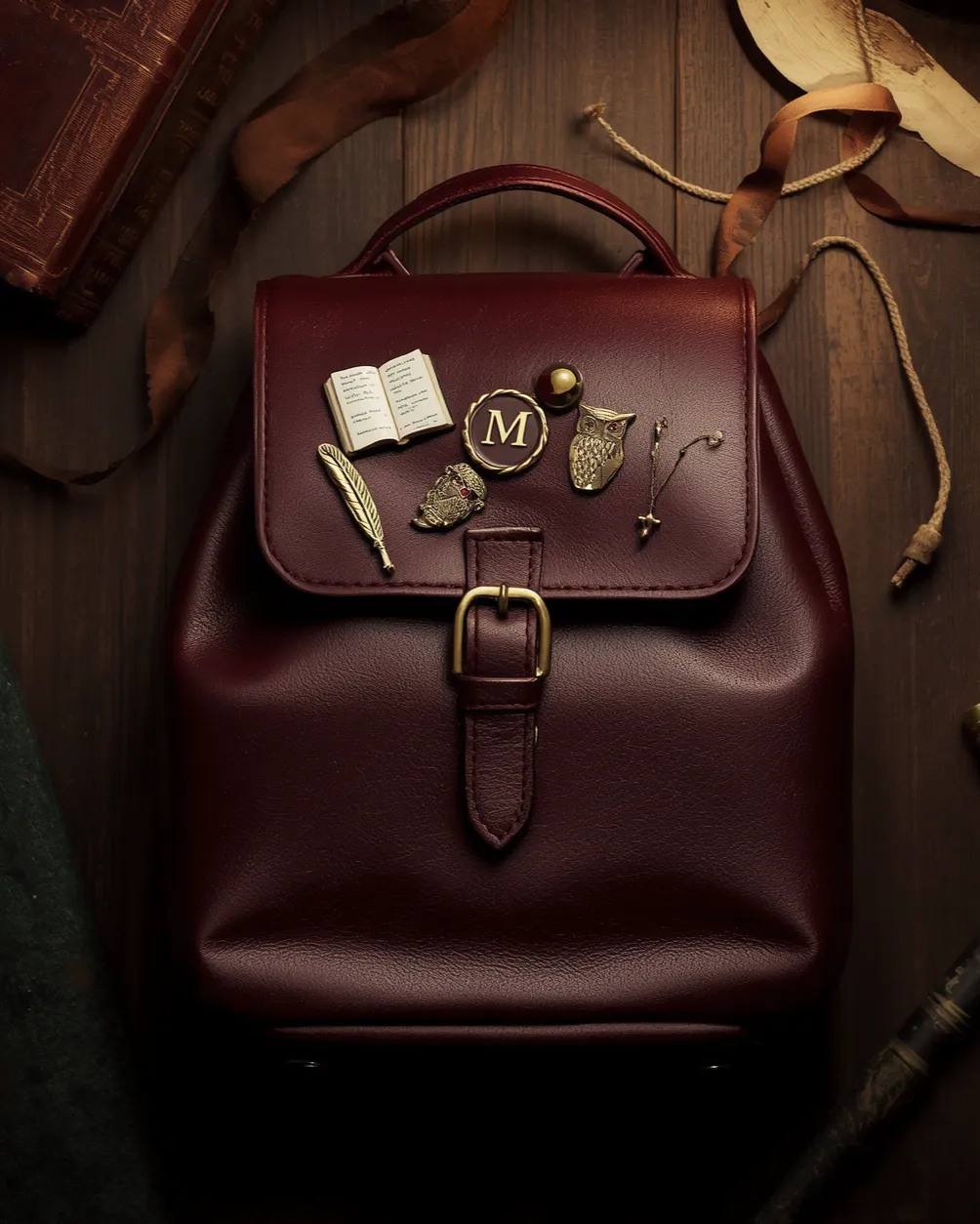
Burgundy, forest, or brown leather (or good faux leather) is the base — the rich background does half the work. The pin vocabulary for dark academia is specific: open books, owls, quills, keys, celestial maps, museum and library pins. Brass and antique gold finishes only; chrome looks wrong against this palette the way sneakers look wrong with a ballgown.
Placement matters more here because the aesthetic is about restraint. A single vertical line of three pins down the front pocket — book on top, key in the middle, moth or owl at the bottom — reads more "dark academia" than a scattered dozen. Add a monogram initial pin if you want personalization without breaking the mood.
Watch out for: skip the bright colors entirely; one neon pin will undo the whole effect. The discipline is the aesthetic — the moment a hot pink pin appears, the library mood is gone.
The Patched Bag: Grunge Chaos, On Purpose
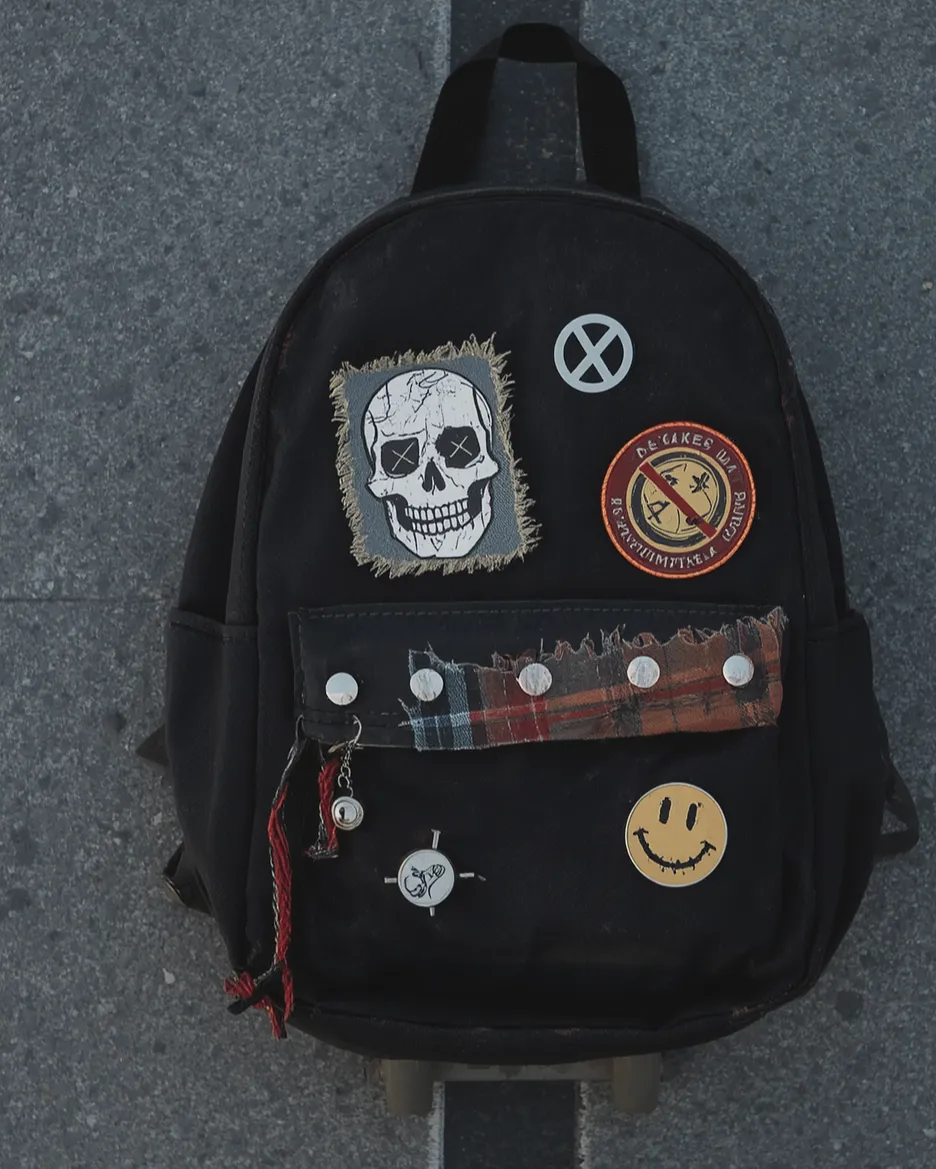
Faded black canvas or washed denim is the base, and this is the theme where patches outrank pins. If your base bag is a thrifted denim jacket instead, our 13 upcycled denim jacket ideas use the same patch logic on a bigger canvas. One large back patch or flap patch (band, skull, or graphic — iron it on, then sew the edges for permanence) anchors everything; pins become the supporting cast around it. Circular button badges, a couple of enamel pins, studs along a pocket edge.
The grunge look has one rule that overrides the "cluster, don't scatter" guidance: asymmetry is the point. Off-center placement, overlapping a pin on a patch edge, a single pin far from the cluster — all fine here, because the aesthetic is controlled chaos rather than composition.
Care tip: what still applies is the practical side — don't put pins where straps rub (they'll get ripped off) and locking backs are non-negotiable, because a skater's bag takes more abuse than any other style on this list.
Pin care and rotation
Rotate a few pins seasonally — it keeps the same backpack feeling new without buying a new bag, and it gives stressed fabric a rest. When you remove pins, the holes in canvas mostly close up on their own; on coated fabrics, dab a tiny amount of clear fabric glue on the back of persistent holes. Store off-season pins on a pin banner or a cork board rather than loose in a drawer, where the posts bend.
And once a semester, check every back — the ones that have worked loose get locking backs before they become hallway casualties. If you want a fresh base bag first, see these aesthetic backpacks to style for school.
Backpack pin questions, answered
How many pins should a high school backpack actually have?
There's no number, but there's a test: step back six feet. If you see one composition, you're fine. If you see confetti, remove the three smallest pins and reassess. Most great-looking bags land between five and nine pins total.
Will pin holes ruin my backpack?
On canvas and nylon, pin holes are minor and mostly self-healing. The real risks are overloading one spot (fabric stretches and sags), cheap butterfly backs (pins fall off and the empty holes look worse than the pins did), and pinning through waterproof coatings (compromises water resistance in that spot). Locking backs and sane quantities eliminate nearly all of it.
Pins or patches — which lasts longer on a school bag?
Different jobs. Enamel pins are precise, detailed, and easy to rearrange — ideal for curated clusters. Patches cover more visual area per item and handle the grunge/punk aesthetic better. Most of the best bags in this guide use both: a patch as the anchor, pins as the detail work.
Where do I find pins nobody else at school has?
Etsy artist shops first, then convention artist alleys, museum gift shops (surprisingly good enamel pins), and small batch drops from pin maker collectives. Avoid buying the same Amazon bulk pack everyone else bought unless you're using them as filler around distinctive centerpiece pins.
Before the first day: a pin checklist
- One idea per bag: pick a theme (celestial, Y2K, cottagecore, dark academia, grunge) and let every pin serve it.
- Three to five pins to start: one cluster, one spot — add more only after two weeks of living with it.
- Locking backs on every pin: butterfly clutches are how pins end up on hallway floors.
- Palette check: two or three colors max (one accent for celestial, brass-only for dark academia).
- Strap test: no pins where straps rub, and nothing poking through a waterproof coating.
The best customized backpacks look like they were assembled over months, because they were. Start with your base bag, add three pins in one cluster, live with it for two weeks, then decide what it needs. A bag that grows with you beats a bag you decorated in one frantic Sunday — and it'll still look good in June.